Most popular books published in 1962

Books most frequently added to Goodreads members' shelves, updated weekly

Monthly data available for the current year, the year prior and the next year.
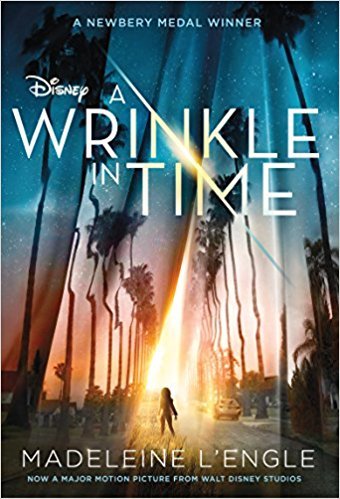
A Wrinkle in Time Book Cover
2m shelvings
It was a dark and stormy night; Meg Murry, her small brother Charles Wallace, and her mother had come down to the kitchen for a midnight snack when they were upset by the arrival of a most disturbing stranger.

"Wild nights are my glory," the unearthly stranger told them. "I just got caught in a downdraft and blown off course. Let me sit down for a moment, and then I'll be on my way. Speaking of ways, by the way, there is such a thing as a tesseract."

A tesseract (in case the reader doesn't know) is a wrinkle in time. To tell more would rob the reader of the enjoyment of Miss L'Engle's unusual book. A Wrinkle in Time, winner of the Newberry Medal in 1963, is the story of the adventures in space and time of Meg, Charles Wallace, and Calvin O'Keefe (athlete, student, and one of the most popular boys in high school). They are in search of Meg's father, a scientist who disappeared while engaged in secret work for the government on the tesseract problem.

A Clockwork Orange Book Cover
2m shelvings
In Anthony Burgess's influential nightmare vision of the future, criminals take over after dark. Teen gang leader Alex narrates in fantastically inventive slang that echoes the violent intensity of youth rebelling against society. Dazzling and transgressive, A Clockwork Orange is a frightening fable about good and evil and the meaning of human freedom. This edition includes the controversial last chapter not published in the first edition, and Burgess’s introduction, “A Clockwork Orange Resucked.”
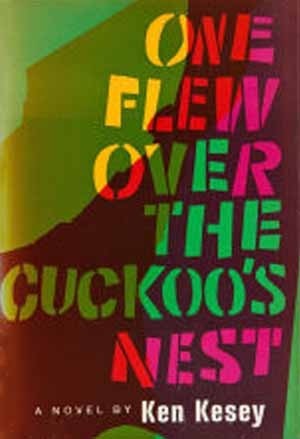
One Flew Over the Cuckoo's Nest Book Cover

2m shelvings
You've never met anyone like Randle Patrick McMurphy, the hero of Ken Kesey's One Flew Over the Cuckoo's Nest.

He's a boisterous, brawling, fun-loving rebel who swaggers into the ward of a mental hospital and takes over...

He's a lusty, profane, life-loving fighter who rallies the other patients around him by challenging the dictatorship of Big Nurse. He promotes gambling in the ward, smuggles in wine and women. At every turn, he openly defies her rule.

The contest starts as sport (with McMurphy taking bets on the outcome) but soon it develops into a grim struggle for the minds and hearts of the men, into an all-out war between two relentless opponents: Big Nurse, backed by the full power of authority... McMurphy, who has only his own indomitable will.
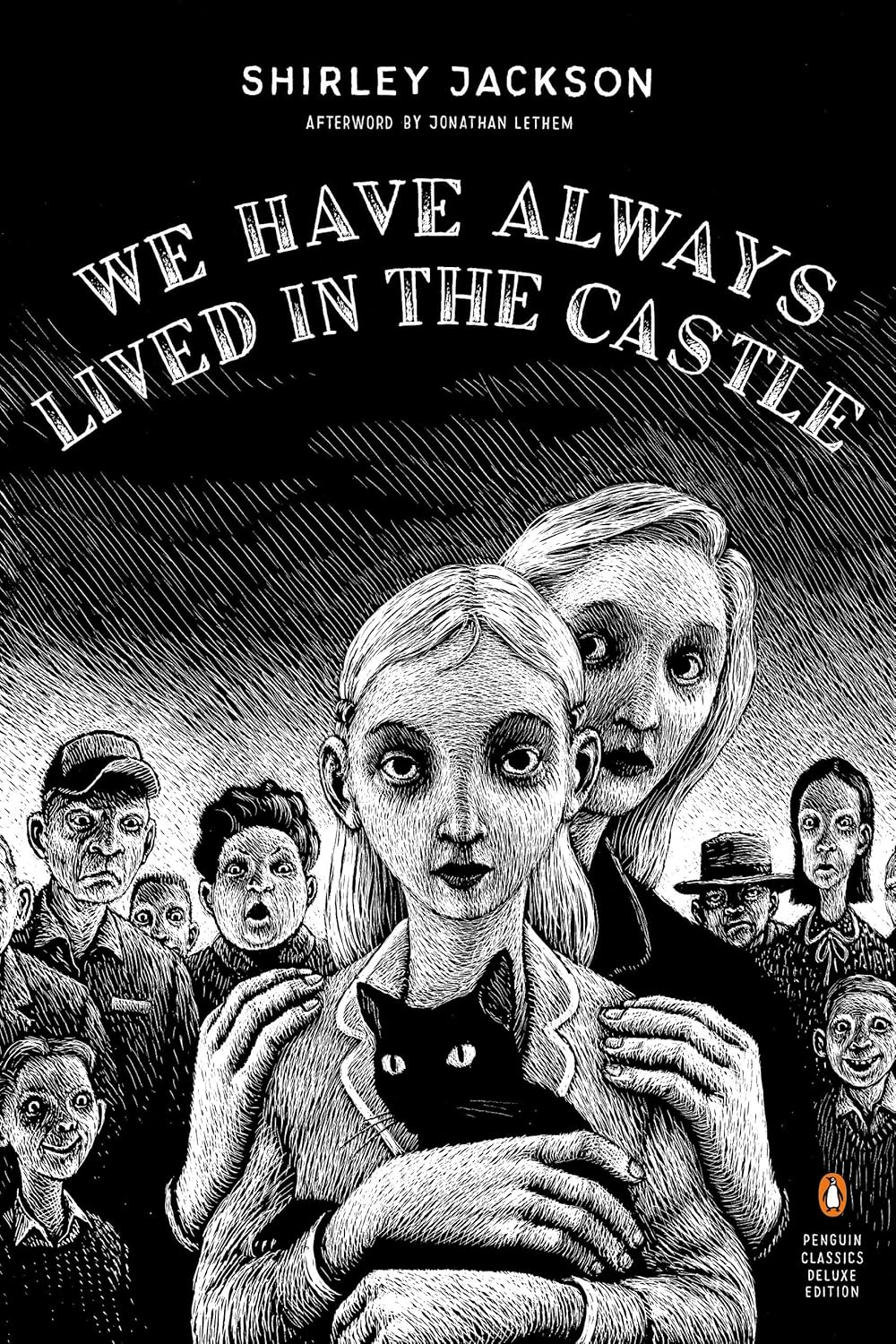
We Have Always Lived in the Castle Book Cover
848k shelvings
Shirley Jackson's beloved gothic tale of a peculiar girl named Merricat and her family's dark secret.

Taking readers deep into a labyrinth of dark neurosis, We Have Always Lived in the Castle is a deliciously unsettling novel about a perverse, isolated, and possibly murderous family and the struggle that ensues when a cousin arrives at their estate. This edition features an afterword by Jonathan Lethem.
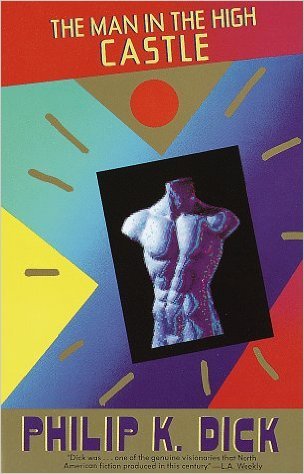
The Man in the High Castle Book Cover
574k shelvings
It's America in 1962. Slavery is legal once again. The few Jews who still survive hide under assumed names. In San Francisco, the I Ching is as common as the Yellow Pages. All because some twenty years earlier the United States lost a war—and is now occupied by Nazi Germany and Japan.

This harrowing, Hugo Award-winning novel is the work that established Philip K. Dick as an innovator in science fiction while breaking the barrier between science fiction and the serious novel of ideas. In it Dick offers a haunting vision of history as a nightmare from which it may just be possible to wake.
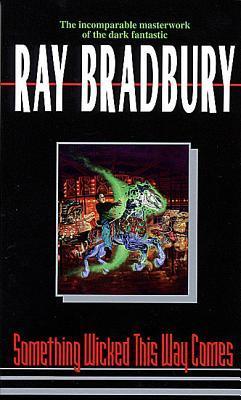
Something Wicked This Way Comes Book Cover
417k shelvings
Quelques jours avant Halloween, la foire est arrivée à Green Town en pleine nuit, dans un train mystérieux. Jim et Will ont entendu le chant de l'orgue et le sifflet du train, ils ont vu la foire débarquer. Seuls témoins d'événements inquiétants, ils savent qu'elle a de noirs desseins. Un carrousel qui, en tournant à rebours, inverse le cours du temps, la plus belle femme du monde endormie dans un bloc de glace, un homme qui a le pouvoir d'exaucer les vœux les plus fous... telles sont les attractions de cette foire de cauchemar.

Jouant sur les peurs de l'adolescence, Bradbury mêle poésie et surnaturel pour nous entraîner dans une terrifiante aventure.
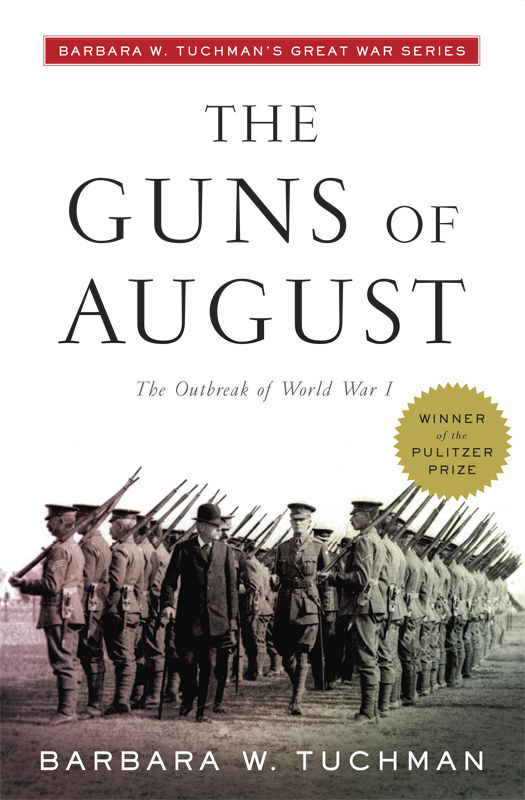
The Guns of August Book Cover
293k shelvings
The Pulitzer Prize-winning classic about the outbreak of World War I.

Selected by the Modern Library as one of the 100 best nonfiction books of all time.


In this landmark, Pulitzer Prize–winning account, renowned historian Barbara W. Tuchman re-creates the first month of World War I: thirty days in the summer of 1914 that determined the course of the conflict, the century, and ultimately our present world. Beginning with the funeral of Edward VII, Tuchman traces each step that led to the inevitable clash. And inevitable it was, with all sides plotting their war for a generation. Dizzyingly comprehensive and spectacularly portrayed with her famous talent for evoking the characters of the war’s key players, Tuchman’s magnum opus is a classic for the ages.

Praise for The Guns of August

“A brilliant piece of military history which proves up to the hilt the force of Winston Churchill’s statement that the first month of World War I was ‘a drama never surpassed.’”—Newsweek

“More dramatic than fiction . . . a magnificent narrative—beautifully organized, elegantly phrased, skillfully paced and sustained.”—Chicago Tribune

“A fine demonstration that with sufficient art rather specialized history can be raised to the level of literature.”—The New York Times

“[The Guns of August] has a vitality that transcends its narrative virtues, which are considerable, and its feel for characterizations, which is excellent.” —The Wall Street Journal
One Day in the Life of Ivan Denisovich Book Cover
271k shelvings
The only English translation authorized by Aleksandr Solzhenitsyn

First published in the Soviet journal Novy Mir in 1962, One Day in the Life of Ivan Denisovich stands as a classic of contemporary literature. The story of labor-camp inmate Ivan Denisovich Shukhov, it graphically describes his struggle to maintain his dignity in the face of communist oppression. An unforgettable portrait of the entire world of Stalin's forced work camps, One Day in the Life of Ivan Denisovich is one of the most extraordinary literary documents to have emerged from the Soviet Union and confirms Solzhenitsyn's stature as "a literary genius whose talent matches that of Dosotevsky, Turgenev, Tolstoy"--Harrison Salisbury

This unexpurgated 1991 translation by H. T. Willetts is the only authorized edition available, and fully captures the power and beauty of the original Russian.
Pale Fire Book Cover
239k shelvings
The American poet John Shade is dead. His last poem, 'Pale Fire', is put into a book, together with a preface, a lengthy commentary and notes by Shade's editor, Charles Kinbote. Known on campus as the 'Great Beaver', Kinbote is haughty, inquisitive, intolerant, but is he also mad, bad - and even dangerous? As his wildly eccentric annotations slide into the personal and the fantastical, Kinbote reveals perhaps more than he should be.

Nabokov's darkly witty, richly inventive masterpiece is a suspenseful whodunit, a story of one-upmanship and dubious penmanship, and a glorious literary conundrum.

Part of a major new series of the works of Vladimir Nabokov, author of Lolita and Pale Fire, in Penguin Classics.
Silent Spring Book Cover
223k shelvings
An alternate cover edition of ISBN 9780618249060 can be found here

Silent Spring is an environmental science book. The book documents the adverse environmental effects caused by the indiscriminate use of pesticides. Carson accused the chemical industry of spreading disinformation, and public officials of accepting the industry's marketing claims unquestioningly.

The book appeared in September 1962 and the outcry that followed its publication forced the banning of DDT and spurred revolutionary changes in the laws affecting our air, land, and water. Carson’s book was instrumental in launching the environmental movement.
Another Country Book Cover
171k shelvings
From one of the most important American novelists of the twentieth century—a novel of sexual, racial, political, artistic passions, set in Greenwich Village, Harlem, and France.

Stunning for its emotional intensity and haunting sensuality, this book depicts men and women, blacks and whites, stripped of their masks of gender and race by love and hatred at the most elemental and sublime.
Memories, Dreams, Reflections Book Cover

167k shelvings
In the spring of 1957, when he was eighty-one years old, Carl Gustav Jung undertook the telling of his life story. Memories, Dreams, Reflections is that book, composed of conversations with his colleague and friend Aniela Jaffé, as well as chapters written in his own hand, and other materials. Jung continued to work on the final stages of the manuscript until shortly before his death on June 6, 1961, making this a uniquely comprehensive reflection on a remarkable life. Fully corrected, this edition also includes Jung's VII Sermones ad Mortuos.
The Snowy Day Book Cover
165k shelvings
Winner of the 1963 Caldecott Medal!

No book has captured the magic and sense of possibility of the first snowfall better than The Snowy Day. Universal in its appeal, the story has become a favorite of millions, as it reveals a child's wonder at a new world, and the hope of capturing and keeping that wonder forever.

The adventures of a little boy in the city on a very snowy day.

"Keats's sparse collage illustrations capture the wonder and beauty a snowy day can bring to a small child."—Barnes & Noble

"Ezra Jack Keats's classic The Snowy Day, winner of the 1963 Caldecott Medal, pays homage to the wonder and pure pleasure a child experiences when the world is blanketed in snow."—Publisher's Weekly

"The book is notable not only for its lovely artwork and tone, but also for its importance as a trailblazer. According to Horn Book magazine, The Snowy Day was "the very first full-color picture book to feature a small black hero"—yet another reason to add this classic to your shelves. It's as unique and special as a snowflake."—Amazon.com
Who's Afraid of Virginia Woolf? Book Cover
157k shelvings
"Twelve times a week," answered Uta Hagen when asked how often she'd like to play Martha in Who's Afraid of Virginia Woolf? In the same way, audiences and critics alike could not get enough of Edward Albee's masterful play. A dark comedy, it portrays husband and wife George and Martha in a searing night of dangerous fun and games. By the evening's end, a stunning, almost unbearable revelation provides a climax that has shocked audiences for years. With the play's razor-sharp dialogue and the stripping away of social pretense, Newsweek rightly foresaw Who's Afraid of Virginia Woolf? as "a brilliantly original work of art--an excoriating theatrical experience, surging with shocks of recognition and dramatic fire [that] will be igniting Broadway for some time to come."
The Structure of Scientific Revolutions Book Cover
141k shelvings
A good book may have the power to change the way we see the world, but a great book actually becomes part of our daily consciousness, pervading our thinking to the point that we take it for granted, and we forget how provocative and challenging its ideas once were—and still are. The Structure of Scientific Revolutions is that kind of book. When it was first published in 1962, it was a landmark event in the history and philosophy of science. Fifty years later, it still has many lessons to teach.

With The Structure of Scientific Revolutions, Kuhn challenged long-standing linear notions of scientific progress, arguing that transformative ideas don’t arise from the day-to-day, gradual process of experimentation and data accumulation but that the revolutions in science, those breakthrough moments that disrupt accepted thinking and offer unanticipated ideas, occur outside of “normal science,” as he called it. Though Kuhn was writing when physics ruled the sciences, his ideas on how scientific revolutions bring order to the anomalies that amass over time in research experiments are still instructive in our biotech age.

This new edition of Kuhn’s essential work in the history of science includes an insightful introduction by Ian Hacking, which clarifies terms popularized by Kuhn, including paradigm and incommensurability, and applies Kuhn’s ideas to the science of today. Usefully keyed to the separate sections of the book, Hacking’s introduction provides important background information as well as a contemporary context.  Newly designed, with an expanded index, this edition will be eagerly welcomed by the next generation of readers seeking to understand the history of our perspectives on science.