

What do you think?

The Train
Against all expectations Marcel Ferón has made a “normal” life in a bucolic French suburb in the Ardennes. But on May 10, 1940, as Nazi tanks approach, this timid, happy man must abandon his home and confront the “Fate” that he has secretly awaited. Separated from his pregnant wife and young daughter in the chaos of flight, he joins a freight car of refugees hurtling southward ahead of the pursuing invaders. There, he meets Anna, a sad-looking, dark- haired girl, whose accent is “neither Belgian nor German,” and who “seemed foreign to everything around her.” As the mystery of Anna’s identity is gradually revealed, Marcel leaps from the heights of an exhilarating freedom to the depths of a terrifying responsibility—one that will lead him to a blood-chilling decision.
When it first appeared in English in 1964, British novelist and critic Brigid Brophy declared The Train to be “the novel his admirers had been expecting all along from Simenon.” Until The Train, she wrote, the dazzlingly prolific novelist had been “a master without a masterpiece.”
When it first appeared in English in 1964, British novelist and critic Brigid Brophy declared The Train to be “the novel his admirers had been expecting all along from Simenon.” Until The Train, she wrote, the dazzlingly prolific novelist had been “a master without a masterpiece.”
144 pages, Paperback
First published January 1, 1961
About the author
Georges Simenon
2,689 books2,457 followersGeorges Joseph Christian Simenon (1903 – 1989) was a Belgian writer. A prolific author who published nearly 500 novels and numerous short works, Simenon is best known as the creator of the fictional detective Jules Maigret.
Although he never resided in Belgium after 1922, he remained a Belgian citizen throughout his life.
Simenon was one of the most prolific writers of the twentieth century, capable of writing 60 to 80 pages per day. His oeuvre includes nearly 200 novels, over 150 novellas, several autobiographical works, numerous articles, and scores of pulp novels written under more than two dozen pseudonyms. Altogether, about 550 million copies of his works have been printed.
He is best known, however, for his 75 novels and 28 short stories featuring Commissaire Maigret. The first novel in the series, Pietr-le-Letton, appeared in 1931; the last one, Maigret et M. Charles, was published in 1972. The Maigret novels were translated into all major languages and several of them were turned into films and radio plays. Two television series (1960-63 and 1992-93) have been made in Great Britain.
During his "American" period, Simenon reached the height of his creative powers, and several novels of those years were inspired by the context in which they were written (Trois chambres à Manhattan (1946), Maigret à New York (1947), Maigret se fâche (1947)).
Simenon also wrote a large number of "psychological novels", such as La neige était sale (1948) or Le fils (1957), as well as several autobiographical works, in particular Je me souviens (1945), Pedigree (1948), Mémoires intimes (1981).
In 1966, Simenon was given the MWA's highest honor, the Grand Master Award.
In 2005 he was nominated for the title of De Grootste Belg (The Greatest Belgian). In the Flemish version he ended 77th place. In the Walloon version he ended 10th place.
Although he never resided in Belgium after 1922, he remained a Belgian citizen throughout his life.
Simenon was one of the most prolific writers of the twentieth century, capable of writing 60 to 80 pages per day. His oeuvre includes nearly 200 novels, over 150 novellas, several autobiographical works, numerous articles, and scores of pulp novels written under more than two dozen pseudonyms. Altogether, about 550 million copies of his works have been printed.
He is best known, however, for his 75 novels and 28 short stories featuring Commissaire Maigret. The first novel in the series, Pietr-le-Letton, appeared in 1931; the last one, Maigret et M. Charles, was published in 1972. The Maigret novels were translated into all major languages and several of them were turned into films and radio plays. Two television series (1960-63 and 1992-93) have been made in Great Britain.
During his "American" period, Simenon reached the height of his creative powers, and several novels of those years were inspired by the context in which they were written (Trois chambres à Manhattan (1946), Maigret à New York (1947), Maigret se fâche (1947)).
Simenon also wrote a large number of "psychological novels", such as La neige était sale (1948) or Le fils (1957), as well as several autobiographical works, in particular Je me souviens (1945), Pedigree (1948), Mémoires intimes (1981).
In 1966, Simenon was given the MWA's highest honor, the Grand Master Award.
In 2005 he was nominated for the title of De Grootste Belg (The Greatest Belgian). In the Flemish version he ended 77th place. In the Walloon version he ended 10th place.
Ratings & Reviews
Friends & Following
Create a free account to discover what your friends think of this book!
Community Reviews
Displaying 1 - 30 of 363 reviews

November 25, 2012
NAVI IN BOTTIGLIA

C’è chi con gli stuzzicadenti o i fiammiferi costruisce splendidi velieri.
Simenon, con due personaggi qualunque, anonimi, senza spessore - un lui scialbo, banale, mediocre, noioso, mite, una lei invece potenzialmente notevole ma tenuta sottotono, molto sfumata – costruisce un romanzo che è anche una storia d’amore molto bella – insolita per le sue corde, e toccante per le mie.
Un thriller: perché il piacere di leggere la sua bella prosa non elimina la voglia di sapere come vanno a finire le sue storie.
Ambientando il tutto in un momento storico di grande interesse, l’invasione della Francia da parte dei nazisti.

Il film del 1973 diretto da Pierre Granier-Deferre. Il titolo originale mantenne quello del romanzo, in italiano diventò invece “Noi due senza domani”.
Dal Nord la gente sfolla verso il Sud, ma l’invasore arriva lo stesso.
Intanto Marcel e Anna s’incontrano e vivono qualcosa che resterà in loro per sempre.
Lui è sposato e sta per avere il secondo figlio, è un piccolo borghese che vende e ripara radio, e possiede una villetta monofamiliare. Vive in Belgio, e quando i nazisti invadono, come tanti,, anche lui sale su un treno e parte verso sud, seppure senza una meta precisa.
Lungo il viaggio incontra una profuga ebrea, qualcosa si risveglia, qualcosa potrebbe cambiare, per sempre, prendere una svolta come il treno imbocca uno scambio di binario, qualcuno potrebbe perdersi per ritrovarsi e finalmente cominciare a vivere.

I due splendidi interpreti del film, Romy Schneider (Vienna, 23 settembre 1938 – Parigi, 29 maggio 1982) e Jean-Louis Trintignant (11 dicembre 1930).
Ma non succede. La passione s’accende, sembra concludere un lungo sonno letargico, ma dopo ognuno andrà per la sua strada, lui tornerà nella cuccia dove ha sempre vissuto protetto. È stata una parentesi, un abbaglio di vita e amore. C’è chi nasce senza la volontà, e neppure il desiderio, di costruirsi una vita sua. Meglio vivere in una latente infelicità che cogliere l’occasione, meglio la sicurezza dell’abitudine che il brivido della novità, culla di cambiamento.
Sullo sfondo della guerra, dei bombardamenti degli Stuka, delle divise naziste, Simenon crea un’indimenticabile tavolozza di grigi, inventando tonalità dello stesso colore che non si credeva potessero esistere.
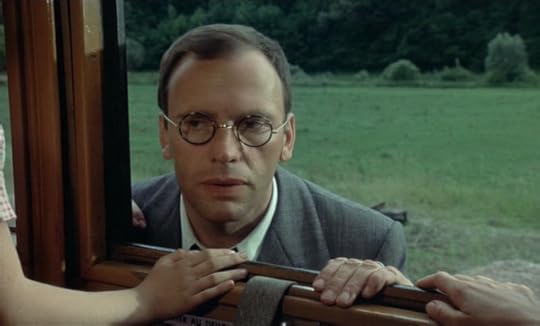
Jean-Louis Trintignant, magnifico attore, si è specializzato nel ruolo di uomini senza qualità, scialbi anonimi. Buffo che il titolo del capolavoro di Musil venga sempre usato nell’interpretazione letterale, mentre Ulrich è tutt’altro che un uomo senza qualità. Un po’ come il bovarismo è diventato sinonimo di chi si trascina nell’insoddisfazione senza nulla fare per cambiare, senza reagire, pur smaniando di evadere dalla sua realtà: mentre la protagonista del capolavoro di Flaubert invece…
C’è chi con gli stuzzicadenti o i fiammiferi costruisce splendidi velieri.
Simenon, con due personaggi qualunque, anonimi, senza spessore - un lui scialbo, banale, mediocre, noioso, mite, una lei invece potenzialmente notevole ma tenuta sottotono, molto sfumata – costruisce un romanzo che è anche una storia d’amore molto bella – insolita per le sue corde, e toccante per le mie.
Un thriller: perché il piacere di leggere la sua bella prosa non elimina la voglia di sapere come vanno a finire le sue storie.
Ambientando il tutto in un momento storico di grande interesse, l’invasione della Francia da parte dei nazisti.
Il film del 1973 diretto da Pierre Granier-Deferre. Il titolo originale mantenne quello del romanzo, in italiano diventò invece “Noi due senza domani”.
Dal Nord la gente sfolla verso il Sud, ma l’invasore arriva lo stesso.
Intanto Marcel e Anna s’incontrano e vivono qualcosa che resterà in loro per sempre.
Lui è sposato e sta per avere il secondo figlio, è un piccolo borghese che vende e ripara radio, e possiede una villetta monofamiliare. Vive in Belgio, e quando i nazisti invadono, come tanti,, anche lui sale su un treno e parte verso sud, seppure senza una meta precisa.
Lungo il viaggio incontra una profuga ebrea, qualcosa si risveglia, qualcosa potrebbe cambiare, per sempre, prendere una svolta come il treno imbocca uno scambio di binario, qualcuno potrebbe perdersi per ritrovarsi e finalmente cominciare a vivere.
I due splendidi interpreti del film, Romy Schneider (Vienna, 23 settembre 1938 – Parigi, 29 maggio 1982) e Jean-Louis Trintignant (11 dicembre 1930).
Ma non succede. La passione s’accende, sembra concludere un lungo sonno letargico, ma dopo ognuno andrà per la sua strada, lui tornerà nella cuccia dove ha sempre vissuto protetto. È stata una parentesi, un abbaglio di vita e amore. C’è chi nasce senza la volontà, e neppure il desiderio, di costruirsi una vita sua. Meglio vivere in una latente infelicità che cogliere l’occasione, meglio la sicurezza dell’abitudine che il brivido della novità, culla di cambiamento.
Sullo sfondo della guerra, dei bombardamenti degli Stuka, delle divise naziste, Simenon crea un’indimenticabile tavolozza di grigi, inventando tonalità dello stesso colore che non si credeva potessero esistere.
Jean-Louis Trintignant, magnifico attore, si è specializzato nel ruolo di uomini senza qualità, scialbi anonimi. Buffo che il titolo del capolavoro di Musil venga sempre usato nell’interpretazione letterale, mentre Ulrich è tutt’altro che un uomo senza qualità. Un po’ come il bovarismo è diventato sinonimo di chi si trascina nell’insoddisfazione senza nulla fare per cambiare, senza reagire, pur smaniando di evadere dalla sua realtà: mentre la protagonista del capolavoro di Flaubert invece…

June 2, 2023
Extraordinary, brilliant, surprising, beautiful, and magnificent. With the talent we know, Simenon recounts the exodus of French families facing the advance of German troops. We are in the 40s, and the tragedy is the same everywhere when the war breaks out. Simenon offers us, behind closed doors and aboard a train that flies away from the enemy, the chance to finally realize that leaving means nothing, since he has ruined everything anyway!

February 12, 2024
This is the first novel I’ve read of Georges Simenon. I’ve always been slightly put off by the fact he wrote nearly 500 novels. Where to start? I picked this because the synopsis at the top of the page grabbed my interest.
I would say this is a novel about someone who is suddenly disconnected from their normal life, and how that changes their behaviour. In May 1940 our lead character, Marcel Féron, has a small shop in the French town of Fumay, on the Belgian border, in which he sells and repairs radios. He has a wife and 4 year old daughter, with another child expected. The family are almost the epitome of lower-middle-class respectability. Marcel hasn’t been called up because he is very short-sighted. When the German attack begins they try to flee westwards by train, but Marcel is separated from his wife and child after women and children are given priority for evacuation. On his own journey he meets a woman called Anna, who has come from Namur and who has an accent “neither Belgian nor German”.
Before starting this I had thought it might be about how people act under stress, but Marcel doesn’t seem to be at all stressed during his journey as a refugee. Actually he seems to treat it like an extended holiday. I was reminded of people today who go on holiday and act differently from when they are at home, because they no longer fear the social disapproval of the people they know.
I thought this was a interesting variation on the WW2 novel. Marcel seems indifferent to the fate of his family, his home and business, and his country. For him the war seems to present more as an opportunity.
Up until the last chapter I would have described this novel as simply “unusual”, but the last chapter was really excellent, and made Marcel into a character I won’t easily forget.
I would say this is a novel about someone who is suddenly disconnected from their normal life, and how that changes their behaviour. In May 1940 our lead character, Marcel Féron, has a small shop in the French town of Fumay, on the Belgian border, in which he sells and repairs radios. He has a wife and 4 year old daughter, with another child expected. The family are almost the epitome of lower-middle-class respectability. Marcel hasn’t been called up because he is very short-sighted. When the German attack begins they try to flee westwards by train, but Marcel is separated from his wife and child after women and children are given priority for evacuation. On his own journey he meets a woman called Anna, who has come from Namur and who has an accent “neither Belgian nor German”.
Before starting this I had thought it might be about how people act under stress, but Marcel doesn’t seem to be at all stressed during his journey as a refugee. Actually he seems to treat it like an extended holiday. I was reminded of people today who go on holiday and act differently from when they are at home, because they no longer fear the social disapproval of the people they know.
I thought this was a interesting variation on the WW2 novel. Marcel seems indifferent to the fate of his family, his home and business, and his country. For him the war seems to present more as an opportunity.
Up until the last chapter I would have described this novel as simply “unusual”, but the last chapter was really excellent, and made Marcel into a character I won’t easily forget.

July 16, 2019
What happens when you find yourself from one day to another in a world apart from normal life as you have always known it? When the Germans pass into Belgium at the beginning of WW-II, the protagonist, a dull and dutiful small town man with an equally dull wife and small child, boards a train, climbs into a cattle car (well, yes!) and steps into a life which turns him into a totally different being and which turns out to fit him perfectly. He never misses nor worries about his wife and child who boarded a regular train carriage which got separated and sent on a different route. Although almost penniless and without possessions, he feels happier than he has ever been before. In the small cosmos of the train carriage and later refugees camp, he is not anxious about anything, even having a passionate love affair and enjoying life at a beach next to his camp at the Atlantic Coast.
I thought this book had an almost alien feel to it. Another impressive roman dur by Simenon. Must say you can never catch Simenon telling a boring tale!
I thought this book had an almost alien feel to it. Another impressive roman dur by Simenon. Must say you can never catch Simenon telling a boring tale!

November 30, 2019
On a l'histoire de Marcel Féron, propriétaire d'un atelier de réparation de radios, qui commence son récit aux premières heures de l'invasion allemande des Pays-Bas, le 10 mai 1940.
La vie est indécise alentour à mesure que les nouvelles de l'invasion se précisent : certains partent, d'autres restent.
Il se met en route avec sa femme Jeanne et leur fille Sophie.
Il faut attraper un train. Après l'attente, on les installe dans deux wagons différents, le train se met en marche et Marcel les perd de vue. Il raconte la suite de son histoire.
-------
- 1) Point de vue du mirador
Au départ, tout est indécis. Le narrateur, les occupants de sa maison, l'organisation de son atelier/boutique.
Marcel mène sa vie comme à regret, et malgré soi. Comme s'il se sentait piégé par lui-même. Homme amer et passif, il se laisse mener en affectant de ne rien décider. Sa vie n'est plus vécue mais observée, comme un évènement extérieur.
Et pourtant... à l'ouverture de son récit... j'ai l'impression d'observer un opérateur radio à l'affut.
Comme si Marcel était tendu tout entier dans l'attente de quelque chose, d'un évènement qui viendrait tout changer, et peut-être tout justifier. Finalement, pour celui qui se laisse mener mollement par la vie, est-ce que la catastrophe n'est pas souhaitable ?
- 2) L'Exode
Après cette description faussement posée du quotidien faussement banal de Marcel, la petite histoire entre en collision avec l'Histoire avec sa grande hache. C'est la peinture de l'Exode qui commence.
On suit l'écoulement vague des jours, les manœuvres obscures du train de réfugiés, les changements d'aiguillage, le décrochage et la nouvelle répartition des wagons sans qu'on en avertisse les occupants. On en arrive fatalement à un mélange de wagons belges et de wagons français, et personne n'est en mesure de renseigner les occupants sur leur destination finale.
Le wagon de Marcel traverse la France (Fumay, Auxerre, Bourges, Tours, Nantes, Pornic, Saint-Jean de Monts, Saint-Gilles Croix de Vie, Vendée, Luçon, Fontenay-le-Comte) pour arriver à La Rochelle, où se trouve un camp de réfugiés belges. Il parvient à se faire admettre avec Anna, une jeune femme qui l'accompagne depuis le début de ce voyage.
- 3) L'existence irrégulière de Marcel et Anna.
Au cours du trajet en train, Marcel fait connaissance avec une jeune femme sans bagages qui se tient à l'écart des occupants du wagons, qui ne se mêle pas aux conversations, qui est là sans être là... Absorbée en elle-même, comme retranchée, elle se méfie. De quoi exactement ? Elle a l'air d'être une étrangère, son accent n'est ni français, ni belge, ni allemand.
Bientôt à bord du train, l'ordinaire et les habitudes sont abandonnés par les occupants. À la faveur de la promiscuité des wagons, Anna, se rapproche de lui. À une étape de leur route en Vendée, la jeune femme découvre un étrange point commun entre eux.
Le récit que Marcel fait de son enfance tendrait à lui donner raison, à cette jeune femme.
Le père de Marcel est revenu du front de la Première guerre mondiale marqué, instable, alcoolique, dissolu, tandis qu'il se souvient entendre parler sa mère comme une poissarde, suivie de jeunes gens, dans la rue, qu'on dirait perdue par la débauche...
De ce qu'il nous en raconte, dès l'enfance, Marcel fait figure de jouet du sort.
Comme si sa vie ne lui appartenait pas en propre.
Comme si elle lui était seulement consentie et dispensée par Mme Jamais qui le garde et Mme Jacques Delmotte sa bienfaitrice, par sa femme et son beau-père qui ont consenti à son mariage, sous certaines conditions.
Comme si Marcel s'employait toujours à satisfaire les attentes des autres, à se prêter à ce qui convient aux autres.
Dès lors, l'aventure du train de réfugiés, les habitudes suspendues, les conventions abolies, le vide qui rend tout possible... Tout ça doit ressembler un peu à une seconde enfance aux yeux de Marcel.
- 4) Le pourquoi du récit ?
Marcel est un narrateur disert. Il est bavard et insistant. On ne sait pas bien où il veut en venir.
Homme passif, qui mène une vie rangée et tranquille, tout ce qui l'environne prend l'allure d'un véritable évènement. C'est un observateur. Il vérifie à plusieurs reprises que ses lunettes sont là. Comme par crainte de ne plus observer un monde auquel il prétend ne plus prendre vraiment part.
Pourtant, quelque chose le travaille, c'est ce qui le pousse à entreprendre ce journal du passé.
Il fait acte de comptabilité, répertorie tout ce qui lui revient de cette période de sa vie...
Pour faire un retour dessus, l'observer à distance ? Fixer les souvenirs de sa mémoire flottante et capricieuse, qui souligne ici et estompe là les évènements ? Narrateur évasif et obscur par endroits, je crois que Marcel essaie laborieusement d'éclaircir son vécu, et de s'éclaircir du même coup. Pour ça, il faut faire de sa vie vécue un objet vu de l'extérieur. Et ça doit passer par la mise à distance, par l'écriture donc.
L'évènement central de ce récit, c'est la rencontre entre Marcel et Anna. On peut bien se demander avec Marcel quel a été le sens de cette rencontre. Est-ce que c'est la simple manœuvre d'une ancienne prisonnière dans le besoin du côté de la jeune femme ? Une prisonnière sans papiers d'identité, qui a besoin d'un garant ?
C'est un service que Marcel lui rend.
Il n'avait pas cru à une autre nature de relations, c'est ce que Marcel dit à Anna en tout cas.
Il lui donne même de l'argent au moment de la quitter.
Alors la mission est remplie, en toute honnêteté, non ?
- 5) La chute (spoiler).
La jeune femme le suit jusqu'à la ville où Marcel doit retrouver sa femme enceinte, à la maternité.
Le couple Féron repart pour Fumay, ils ont d'autres enfants, la vie se passe sous l'occupation. Le temps passe.
Un jour, en péril de mort, Anna revient. Elle lui demande s'il peut la cacher, le temps qu'elle fasse passer la frontière à un soldat allié.
Marcel refuse. La jeune femme comprend.
C'est qu'il y a eu deux perquisitions par les Allemands. La maison est sous surveillance. Par son activité de réparateurs de postes radio, il est naturellement soupçonné par l'occupant allemand.
Marcel a couvert Anna par le passé, mais ce n'était pas une fin pour lui, il le lui a d'ailleurs fait comprendre, en toute honnêteté. Et puis finalement, cette aventure a constitué une sorte de trompe-l'ennui, une sorte de jeu innocent pour éprouver sa liberté gratuitement, sans jamais vraiment mettre sa vie en jeu. Un innocent passe-temps, librement consenti, ça n'a jamais fait de mal à personne, au fond.
Marcel et Jeanne ont leur petite vie tranquille de couple modèle à protéger.
Cette parenthèse est refermée. Les choses étaient très claires, elles l'ont toujours été. Pas vrai ?
HISTOIRES PROCHES :
La Chute
Salido / O.K., Joe!
Cette terre promise
BANDE-SON :
Mon plus beau cauchemar - Ez3kiel
La vie est indécise alentour à mesure que les nouvelles de l'invasion se précisent : certains partent, d'autres restent.
Il se met en route avec sa femme Jeanne et leur fille Sophie.
Il faut attraper un train. Après l'attente, on les installe dans deux wagons différents, le train se met en marche et Marcel les perd de vue. Il raconte la suite de son histoire.
-------
- 1) Point de vue du mirador
Au départ, tout est indécis. Le narrateur, les occupants de sa maison, l'organisation de son atelier/boutique.
Marcel mène sa vie comme à regret, et malgré soi. Comme s'il se sentait piégé par lui-même. Homme amer et passif, il se laisse mener en affectant de ne rien décider. Sa vie n'est plus vécue mais observée, comme un évènement extérieur.
'Je n'étais pas révolté contre ce mode de vie. Je l'avais choisi. J'avais réalisé patiemment un idéal qui, jusqu'à la veille, je le répète en toute sincérité, m'avait donné satisfaction.' (pp.73-74)
Et pourtant... à l'ouverture de son récit... j'ai l'impression d'observer un opérateur radio à l'affut.
Comme si Marcel était tendu tout entier dans l'attente de quelque chose, d'un évènement qui viendrait tout changer, et peut-être tout justifier. Finalement, pour celui qui se laisse mener mollement par la vie, est-ce que la catastrophe n'est pas souhaitable ?
'Je n'étais pas parti de Fumay pour avoir à penser et à prendre des responsabilités' (p.113)
'C'était une affaire entre le sort et moi' (p.54)
- 2) L'Exode
Après cette description faussement posée du quotidien faussement banal de Marcel, la petite histoire entre en collision avec l'Histoire avec sa grande hache. C'est la peinture de l'Exode qui commence.
On suit l'écoulement vague des jours, les manœuvres obscures du train de réfugiés, les changements d'aiguillage, le décrochage et la nouvelle répartition des wagons sans qu'on en avertisse les occupants. On en arrive fatalement à un mélange de wagons belges et de wagons français, et personne n'est en mesure de renseigner les occupants sur leur destination finale.
Le wagon de Marcel traverse la France (Fumay, Auxerre, Bourges, Tours, Nantes, Pornic, Saint-Jean de Monts, Saint-Gilles Croix de Vie, Vendée, Luçon, Fontenay-le-Comte) pour arriver à La Rochelle, où se trouve un camp de réfugiés belges. Il parvient à se faire admettre avec Anna, une jeune femme qui l'accompagne depuis le début de ce voyage.
- 3) L'existence irrégulière de Marcel et Anna.
Au cours du trajet en train, Marcel fait connaissance avec une jeune femme sans bagages qui se tient à l'écart des occupants du wagons, qui ne se mêle pas aux conversations, qui est là sans être là... Absorbée en elle-même, comme retranchée, elle se méfie. De quoi exactement ? Elle a l'air d'être une étrangère, son accent n'est ni français, ni belge, ni allemand.
Bientôt à bord du train, l'ordinaire et les habitudes sont abandonnés par les occupants. À la faveur de la promiscuité des wagons, Anna, se rapproche de lui. À une étape de leur route en Vendée, la jeune femme découvre un étrange point commun entre eux.
'- Je comprends, maintenant, a-t-elle murmuré.
- Tu comprends quoi ?
- Toi.
- Qu'est-ce que tu as découvert ?
- Que tu as passé des années enfermé.' (p.105)
Le récit que Marcel fait de son enfance tendrait à lui donner raison, à cette jeune femme.
Le père de Marcel est revenu du front de la Première guerre mondiale marqué, instable, alcoolique, dissolu, tandis qu'il se souvient entendre parler sa mère comme une poissarde, suivie de jeunes gens, dans la rue, qu'on dirait perdue par la débauche...
De ce qu'il nous en raconte, dès l'enfance, Marcel fait figure de jouet du sort.
Comme si sa vie ne lui appartenait pas en propre.
Comme si elle lui était seulement consentie et dispensée par Mme Jamais qui le garde et Mme Jacques Delmotte sa bienfaitrice, par sa femme et son beau-père qui ont consenti à son mariage, sous certaines conditions.
Comme si Marcel s'employait toujours à satisfaire les attentes des autres, à se prêter à ce qui convient aux autres.
Dès lors, l'aventure du train de réfugiés, les habitudes suspendues, les conventions abolies, le vide qui rend tout possible... Tout ça doit ressembler un peu à une seconde enfance aux yeux de Marcel.
'Cette fois, ce n'était plus un microbe, un virus, une malformation congénitale de je ne sais quelle partie de l'œil - les médecins ne se sont jamais mis d'accord au sujet de mes yeux. C'était une guerre qui lançait des hommes les uns contre les autres par dizaines de millions.' (p.16)
- 4) Le pourquoi du récit ?
Marcel est un narrateur disert. Il est bavard et insistant. On ne sait pas bien où il veut en venir.
Homme passif, qui mène une vie rangée et tranquille, tout ce qui l'environne prend l'allure d'un véritable évènement. C'est un observateur. Il vérifie à plusieurs reprises que ses lunettes sont là. Comme par crainte de ne plus observer un monde auquel il prétend ne plus prendre vraiment part.
Pourtant, quelque chose le travaille, c'est ce qui le pousse à entreprendre ce journal du passé.
Il fait acte de comptabilité, répertorie tout ce qui lui revient de cette période de sa vie...
Pour faire un retour dessus, l'observer à distance ? Fixer les souvenirs de sa mémoire flottante et capricieuse, qui souligne ici et estompe là les évènements ? Narrateur évasif et obscur par endroits, je crois que Marcel essaie laborieusement d'éclaircir son vécu, et de s'éclaircir du même coup. Pour ça, il faut faire de sa vie vécue un objet vu de l'extérieur. Et ça doit passer par la mise à distance, par l'écriture donc.
L'évènement central de ce récit, c'est la rencontre entre Marcel et Anna. On peut bien se demander avec Marcel quel a été le sens de cette rencontre. Est-ce que c'est la simple manœuvre d'une ancienne prisonnière dans le besoin du côté de la jeune femme ? Une prisonnière sans papiers d'identité, qui a besoin d'un garant ?
C'est un service que Marcel lui rend.
Il n'avait pas cru à une autre nature de relations, c'est ce que Marcel dit à Anna en tout cas.
'J'ai eu mal aussi. Stupidement. J'ai compris tout de suite que ce n'était pas vrai.
- Tu en es sûr ?
- Oui.
- Viens.'
(p.114)
Il lui donne même de l'argent au moment de la quitter.
Alors la mission est remplie, en toute honnêteté, non ?
- 5) La chute (spoiler).
La jeune femme le suit jusqu'à la ville où Marcel doit retrouver sa femme enceinte, à la maternité.
Le couple Féron repart pour Fumay, ils ont d'autres enfants, la vie se passe sous l'occupation. Le temps passe.
Un jour, en péril de mort, Anna revient. Elle lui demande s'il peut la cacher, le temps qu'elle fasse passer la frontière à un soldat allié.
Marcel refuse. La jeune femme comprend.
C'est qu'il y a eu deux perquisitions par les Allemands. La maison est sous surveillance. Par son activité de réparateurs de postes radio, il est naturellement soupçonné par l'occupant allemand.
Marcel a couvert Anna par le passé, mais ce n'était pas une fin pour lui, il le lui a d'ailleurs fait comprendre, en toute honnêteté. Et puis finalement, cette aventure a constitué une sorte de trompe-l'ennui, une sorte de jeu innocent pour éprouver sa liberté gratuitement, sans jamais vraiment mettre sa vie en jeu. Un innocent passe-temps, librement consenti, ça n'a jamais fait de mal à personne, au fond.
Marcel et Jeanne ont leur petite vie tranquille de couple modèle à protéger.
Cette parenthèse est refermée. Les choses étaient très claires, elles l'ont toujours été. Pas vrai ?
HISTOIRES PROCHES :
La Chute
Salido / O.K., Joe!
Cette terre promise
BANDE-SON :
Mon plus beau cauchemar - Ez3kiel

September 6, 2013
We were running away. But as far as I was concerned, it wasn't from the Germans, from the bullets and bombs. from death...It was the hour of my meeting with Fate.
1940, Marcel Feron with his pregnant wife and daughter flee from their small French town, Fumay, in anticipation of the German invasion. Having boarded the train in different carriages, he eventually becomes separated from them when the carriages were unhitched along the way.
As the journey progresses without them, Marcel finds an unexpected escape from his otherwise formulated life to an unconventional, primal existence, free of the responsibilities he has just left behind.
"The idea of going back to my street, my house, my workshop, my garden, my habits, the labeled radios waiting on the shelves to be repaired, struck me as unbearable."
As the train frequently stops and starts, Marcel changes from passiveness to passion. He has an affair with a stranger, becoming even a little obsessed with her.
"It was just that, for an indeterminate period, I was living on another level, where the values had nothing in common with those of my previous existence."
His behavior seems cold and irrational, seeing that he has been disunited from his family. Yet, having had survived TB as a teen and four years in a sanatorium, Marcel somehow feels his appointment with Fate has finally arrived, and he is sampling what it has brought him.
"I am not ashamed to say that I was happy, with the happiness which bore the same relation to everyday happiness as the sound produced by passing a violin bow across the wrong side of the bridge bears to the normal sound of a violin. It was sharp and exquisite and deliciously painful."
The prose is finespun, not giving in to the harshness of a wartime tale. Simenon writes with control, intending not to overpower his story with atrocities of war; rather to describe simply the effects of war on his main character, who, for just a short period as a refugee, oddly received a taste of a different kind of freedom.
This was a satisfying, short psychological teaser at 153 pages. Some other Georges Simenon's psychological stories: Act of Passion and The Strangers In The House were a bit longer and more dramatic.
1940, Marcel Feron with his pregnant wife and daughter flee from their small French town, Fumay, in anticipation of the German invasion. Having boarded the train in different carriages, he eventually becomes separated from them when the carriages were unhitched along the way.
As the journey progresses without them, Marcel finds an unexpected escape from his otherwise formulated life to an unconventional, primal existence, free of the responsibilities he has just left behind.
"The idea of going back to my street, my house, my workshop, my garden, my habits, the labeled radios waiting on the shelves to be repaired, struck me as unbearable."
As the train frequently stops and starts, Marcel changes from passiveness to passion. He has an affair with a stranger, becoming even a little obsessed with her.
"It was just that, for an indeterminate period, I was living on another level, where the values had nothing in common with those of my previous existence."
His behavior seems cold and irrational, seeing that he has been disunited from his family. Yet, having had survived TB as a teen and four years in a sanatorium, Marcel somehow feels his appointment with Fate has finally arrived, and he is sampling what it has brought him.
"I am not ashamed to say that I was happy, with the happiness which bore the same relation to everyday happiness as the sound produced by passing a violin bow across the wrong side of the bridge bears to the normal sound of a violin. It was sharp and exquisite and deliciously painful."
The prose is finespun, not giving in to the harshness of a wartime tale. Simenon writes with control, intending not to overpower his story with atrocities of war; rather to describe simply the effects of war on his main character, who, for just a short period as a refugee, oddly received a taste of a different kind of freedom.
This was a satisfying, short psychological teaser at 153 pages. Some other Georges Simenon's psychological stories: Act of Passion and The Strangers In The House were a bit longer and more dramatic.

August 31, 2014
Well that was the most pointless, meaningless, chauvinistic story I've read in awhile.

Let me summarize it for you:
Dude runs from the war with his wife/kid. Dude gets separated from said wife/kid. Dude screws random girl over the course of a month or so until reunion with wife/kid. Dude leaves screwed girl in the dust and goes back to his life. Dude becomes ULTIMATE douchebag at the very end due to spoiler that I won't say.
Dude needs to go to hell.
Let me summarize it for you:
Dude runs from the war with his wife/kid. Dude gets separated from said wife/kid. Dude screws random girl over the course of a month or so until reunion with wife/kid. Dude leaves screwed girl in the dust and goes back to his life. Dude becomes ULTIMATE douchebag at the very end due to spoiler that I won't say.
Dude needs to go to hell.

August 14, 2017
Il primo romanzo di Simenon che ho letto – La neve era sporca - mi era piaciuto moltissimo. Poi sono incappata in I complici, Le signorine di Concarneau, Il treno, e quella scintilla che si era accesa è andata progressivamente spegnendosi. Intendiamoci, sono libri che ho letto volentieri, scritti bene, ma in un certo senso deludenti. Mi piacciono le ambientazioni, le atmosfere che Simenon sa creare, però ho l’impressione (almeno per quanto riguarda questi tre romanzi) che la storia sia sempre un po’ uguale a se stessa: uomini annoiati, o frustrati, o delusi, o insoddisfatti, che cercano una via di fuga dalla routine quotidiana, dall’ipocrisia dei rapporti familiari, da una vita che considerano mediocre.
Marcel – il protagonista di questo romanzo – per me è soltanto l’ennesimo noioso omuncolo, egoista, squallido e vigliacco della galleria simenoniana.
Quella che avrei voluto conoscere di più, invece, è Anna, la donna incontrata sul treno. Mi sarebbe piaciuto vedere la guerra attraverso i suoi occhi, capire il perché delle sue scelte coraggiose, conoscere ciò che ha pensato prima di morire. Purtroppo di lei so soltanto quello che dice Marcel: "Si sarebbe detto che avesse passato la sua vita a seguire un uomo, che fosse stata creata per questo".
Troppo poco.
Ed anche ingiusto.
https://youtu.be/0i4v51szchM
Marcel – il protagonista di questo romanzo – per me è soltanto l’ennesimo noioso omuncolo, egoista, squallido e vigliacco della galleria simenoniana.
Quella che avrei voluto conoscere di più, invece, è Anna, la donna incontrata sul treno. Mi sarebbe piaciuto vedere la guerra attraverso i suoi occhi, capire il perché delle sue scelte coraggiose, conoscere ciò che ha pensato prima di morire. Purtroppo di lei so soltanto quello che dice Marcel: "Si sarebbe detto che avesse passato la sua vita a seguire un uomo, che fosse stata creata per questo".
Troppo poco.
Ed anche ingiusto.
https://youtu.be/0i4v51szchM

February 23, 2024
It’s hard to find the right word to describe the emotional state of the first person narrator, who complacently embraces detachment from his pregnant wife and their four year old daughter when they are separated from each other on a French refugee train as German invaders near.
He feels free, elevated almost. He expresses no sorrow or fear, and writes quite straightforwardly about his almost immediate falling in love with a young woman in the same train carriage and their passionate attachment in a refugee camp.
All the while he searches for his wife and daughter. Once he finds them he simply abandons the young woman he has loved, again without regret or qualm. He reports dispassionately, with the tone of a third party observer.
He is insulated, disconnected from what we would think of as normal emotional responses in these circumstances. Anxiety, distress, remorse? Missing. Though there may be a slice of remorse about his final encounter with the young woman.
It’s as though any anchor ropes he might have had to his pre-war life, family and community had simply been severed. And he welcomes that severance.
Within the book, Simenon also notes the ways in which recognition that they are in fact refugees, affects all the occupants of the cattle train carriage. It’s a bleak vision, and made me think about the millions who are now forced out of their homes by war. How do refugees recover from their trauma?
The very strange thing about this man is that he was so isolated from himself that he felt no trauma.
Here is a link to a review by someone who knows much more that I do about Simenon: https://swiftlytiltingplanet.wordpres...
He feels free, elevated almost. He expresses no sorrow or fear, and writes quite straightforwardly about his almost immediate falling in love with a young woman in the same train carriage and their passionate attachment in a refugee camp.
All the while he searches for his wife and daughter. Once he finds them he simply abandons the young woman he has loved, again without regret or qualm. He reports dispassionately, with the tone of a third party observer.
He is insulated, disconnected from what we would think of as normal emotional responses in these circumstances. Anxiety, distress, remorse? Missing. Though there may be a slice of remorse about his final encounter with the young woman.
It’s as though any anchor ropes he might have had to his pre-war life, family and community had simply been severed. And he welcomes that severance.
Within the book, Simenon also notes the ways in which recognition that they are in fact refugees, affects all the occupants of the cattle train carriage. It’s a bleak vision, and made me think about the millions who are now forced out of their homes by war. How do refugees recover from their trauma?
The very strange thing about this man is that he was so isolated from himself that he felt no trauma.
Here is a link to a review by someone who knows much more that I do about Simenon: https://swiftlytiltingplanet.wordpres...

January 1, 2018
Un borghese piccolo piccolo
Lui è Marcel, uomo miope (particolare simbolico), abbandonato dalla madre collaborazionista, durante la prima guerra mondiale, abbandonato dal padre che, al ritorno della guerra, gli riserva un rapporto di amore e odio, malaticcio, vive una vita normale.
Una moglie al settimo mese di gravidanza, una figlia quatrenne, l'invasione delle truppe della Wehrmacht fanno sì che Marcel e la moglie decidano di abbandonare la loro casa salendo su un treno, un treno qualsiasi, che non si sa dove li porterà.
Ma è il treno, che metaforicamente corrisponde alla vita, il protagonista di questo splendido romanzo di Simenon.
Il treno col suo corso incognito, il treno che deresponsabilizza Marcel perchè su quel treno non è piu lui a dover guidare.
Il treno che porta in un luogo terra di nessuno in cui smettono di vigere regole, in cui è possibile abbandonarsi [agli istinti, alle emozioni, alla vita] ed è possibile l'abbandono [degli affetti, dei familiari, delle convenzioni].
"Per la prima volta dicevo «ti amo» in quel modo, dal profondo di me stesso. Ma era poi lei che amavo, o la vita? Non so spiegarmi: io ero nella sua vita; avrei voluto rimanerci per ore, non pensare più a nient'altro, diventare come un albero al sole."
Il senso cupo del destino in qualunque momento può far deragliare il treno della vita davanti a un bivio: uno scambio di rotaie può mettere tutto in gioco.
Un finale amarissimo in cui l'uomo Marcel appare in tutta la sua piccola mediocrità.
Lui è Marcel, uomo miope (particolare simbolico), abbandonato dalla madre collaborazionista, durante la prima guerra mondiale, abbandonato dal padre che, al ritorno della guerra, gli riserva un rapporto di amore e odio, malaticcio, vive una vita normale.
Una moglie al settimo mese di gravidanza, una figlia quatrenne, l'invasione delle truppe della Wehrmacht fanno sì che Marcel e la moglie decidano di abbandonare la loro casa salendo su un treno, un treno qualsiasi, che non si sa dove li porterà.
Ma è il treno, che metaforicamente corrisponde alla vita, il protagonista di questo splendido romanzo di Simenon.
Il treno col suo corso incognito, il treno che deresponsabilizza Marcel perchè su quel treno non è piu lui a dover guidare.
Il treno che porta in un luogo terra di nessuno in cui smettono di vigere regole, in cui è possibile abbandonarsi [agli istinti, alle emozioni, alla vita] ed è possibile l'abbandono [degli affetti, dei familiari, delle convenzioni].
"Per la prima volta dicevo «ti amo» in quel modo, dal profondo di me stesso. Ma era poi lei che amavo, o la vita? Non so spiegarmi: io ero nella sua vita; avrei voluto rimanerci per ore, non pensare più a nient'altro, diventare come un albero al sole."
Il senso cupo del destino in qualunque momento può far deragliare il treno della vita davanti a un bivio: uno scambio di rotaie può mettere tutto in gioco.
Un finale amarissimo in cui l'uomo Marcel appare in tutta la sua piccola mediocrità.

December 27, 2024
Mi ero forse sbagliato nel pensare che avevo un appuntamento con il destino?
#35
Ok, credo sia il veicolo giusto, saliteci, son poco più di cento pagine, dal treno vedrete la Vandea, ma soprattutto viaggerete a fianco di George Simenon, colui che scrisse 119 romanzi così duri da resistere alla fine del millennio. Il treno sta portando il suo carico di profughi da Fumay a La Rochelle, loro non sanno che arriveranno là. Fuggono dalla guerra, Hitler ha invaso l’Olanda e ora vuol fare un sol boccone della Francia. Fra questi uomini in fuga c’è un tale che si chiama Marcel Féron e vive la costrizione come un’occasione.
I personaggi di Simenon quasi sempre cercano proprio un’occasione e con altrettanta frequenza la colgono. Quale occasione può rappresentare un viaggio in un carro bestiame? Questo non lo scriverò, ricopierò invece un breve passaggio
Assistetti a una conversazione telefonica, in una deliziosa stazione inondata dal rosso dei gerani, dove un cane era steso di traverso sulla porta del capostazione
Possibile che questa scena lui non l’abbia vista con i propri occhi? Come si può restituirla così bene da far desiderare a chi legge di essere su quel treno per vederla? I gerani, il cane, il capostazione mentre sta arrivando la guerra. I gerani e il cane ignorano la guerra, il capostazione la sente avvicinarsi con passo minaccioso e ignora la bellezza dei gerani e la fedeltà del cane steso di traverso sulla sua porta. D’accordo, io ho un debole per questo autore, son qui a fare la conta delle stelle e ne accenderei cinque dopo aver letto
Per questo mi è venuta l'idea di lasciare a mio figlio un'altra immagine di me. Non si sa mai
Non si sa mai, però lo si spera sempre, si spera che almeno in lui sopravviva il nostro ricordo. Il finale è magistrale come il resto. Se sei George Simenon in cento pagine riesci a mettere ciò che ai tuoi colleghi annaspando ne servirebbero almeno il doppio.
Salite sul treno, se per qualche ragione il viaggio non sarà di vostro gradimento, venite qui sotto a chiedere il rimborso. Se invece il viaggio vi piacerà, cercate gli altri 34 opuscoli che ho pubblicato prima di questo.
#35
Ok, credo sia il veicolo giusto, saliteci, son poco più di cento pagine, dal treno vedrete la Vandea, ma soprattutto viaggerete a fianco di George Simenon, colui che scrisse 119 romanzi così duri da resistere alla fine del millennio. Il treno sta portando il suo carico di profughi da Fumay a La Rochelle, loro non sanno che arriveranno là. Fuggono dalla guerra, Hitler ha invaso l’Olanda e ora vuol fare un sol boccone della Francia. Fra questi uomini in fuga c’è un tale che si chiama Marcel Féron e vive la costrizione come un’occasione.
I personaggi di Simenon quasi sempre cercano proprio un’occasione e con altrettanta frequenza la colgono. Quale occasione può rappresentare un viaggio in un carro bestiame? Questo non lo scriverò, ricopierò invece un breve passaggio
Assistetti a una conversazione telefonica, in una deliziosa stazione inondata dal rosso dei gerani, dove un cane era steso di traverso sulla porta del capostazione
Possibile che questa scena lui non l’abbia vista con i propri occhi? Come si può restituirla così bene da far desiderare a chi legge di essere su quel treno per vederla? I gerani, il cane, il capostazione mentre sta arrivando la guerra. I gerani e il cane ignorano la guerra, il capostazione la sente avvicinarsi con passo minaccioso e ignora la bellezza dei gerani e la fedeltà del cane steso di traverso sulla sua porta. D’accordo, io ho un debole per questo autore, son qui a fare la conta delle stelle e ne accenderei cinque dopo aver letto
Per questo mi è venuta l'idea di lasciare a mio figlio un'altra immagine di me. Non si sa mai
Non si sa mai, però lo si spera sempre, si spera che almeno in lui sopravviva il nostro ricordo. Il finale è magistrale come il resto. Se sei George Simenon in cento pagine riesci a mettere ciò che ai tuoi colleghi annaspando ne servirebbero almeno il doppio.
Salite sul treno, se per qualche ragione il viaggio non sarà di vostro gradimento, venite qui sotto a chiedere il rimborso. Se invece il viaggio vi piacerà, cercate gli altri 34 opuscoli che ho pubblicato prima di questo.

July 9, 2022
Δεύτερο βιβλίο του Ζορζ Σιμενόν που διαβάζω φέτος, δέκατο τρίτο συνολικά. Για καιρό αναρωτιόμουν γιατί στο διάτανο οι εκδόσεις Άγρα δεν είχαν μεταφράσει αυτό το τόσο γνωστό μικρό μυθιστόρημα που αποτελεί και τη βάση για την ομότιτλη ταινία του 1973 με τους Ζαν-Λουί Τρεντινιάν και Ρόμι Σνάιντερ, αλλά τελικά μάλλον κατάλαβαν την παράλειψή τους και φέτος το έφεραν και στη χώρα μας. Λοιπόν, εδώ έχουμε να κάνουμε με έναν σχετικά διαφορετικό Ζορζ Σιμενόν, μιας και το βιβλίο δεν περιέχει ούτε ίχνος αστυνομικού, μυστηρίου ή θρίλερ, όπως φυσικά περιέχουν αυτά με πρωταγωνιστή τον επιθεωρητή Μαιγκρέ ή ακόμα και τα "σκληρά" μυθιστορήματά του. Όμως αν μη τι άλλο μια αγωνία υπάρχει σε όλη τη διάρκεια της ιστορίας, γιατί όπως και να το κάνουμε ο πρωταγωνιστής φεύγει κακήν κακώς μαζί με την έγκυο γυναίκα του και τη μικρή του κόρη από το χωριό κοντά στα σύνορα με το Βέλγιο στο οποίο μένει (μιας και οι Γερμανοί πλησιάζουν επικίνδυνα), ενώ στη διαδρομή με το τραίνο για τον Γαλλικό Νότο χωρίζεται ξαφνικά από την οικογένειά του και γνωρίζει μια νέα και μυστηριώδη γυναίκα, με την οποία θα ενωθεί σαρκικά και ψυχικά για όσο κρατήσει η περιπλάνησή του. Εννοείται ότι ο Σιμενόν έκανε εξαιρετική δουλειά με τη σκιαγράφηση του πρωταγωνιστή και αφηγητή της ιστορίας, μέσα σε λίγες σελίδες κατάφερε και δημιούργησε ένα πλήρες ψυχολογικό πορτρέτο ενός ανθρώπου που ζει μια μάλλον βαρετή και συμβατική ζωή, που όμως θέλει να ζήσει κάτι έντονο, κάτι διαφορετικό, κάτι που να τον κάνει να νιώσει πάθος, έστω και για μικρό χρονικό διάστημα, έστω κι αν έτσι προδίδει ολίγον τι την οικογένειά του... Σίγουρα έχει και ορισμένες υπαρξιακές προεκτάσεις σαν έργο, όμως παράλληλα λειτουργεί και σαν μια ακόμα ενδιαφέρουσα και καλογραμμένη ιστορία που διαδραματίζεται κατά τον Β' Παγκόσμιο Πόλεμο, με αρκετά έντονο ρεαλισμό χάρη και στις εμπειρίες του ίδιου του Σιμενόν. Όσον αφορά τη γραφή, είναι φυσικά εξαιρετικά ποιοτική, οξυδερκής και λιτή, δεν είναι απαραίτητο να το λέω κάθε φορά αυτό, έτσι; Ένα ακόμα πολύ καλό βιβλίο από τον αγαπημένο Ζορζ Σιμενόν!

July 4, 2018
I was tempted to click "classic newly-read," one of my shelves, but then Simenon falls into one of those categories of confusion. Is he "classic" because he is so well-known? I don't know. I do know Hemingway was reading him in A Moveable Feast, one of my favorite misspelled classics in literature. The Lodger, it was.
Here I tried The Train, penned in 1961 when Simenon was a young, pipe-toking 58-years-young. A wonderful economy with words, the Frenchman had, and he invokes a mood of sorts, too. Old France ending after one and now a second paroxysm. This is about the Nazi invasion of France and a particular middle-class gent's experience as a train bound refugee.
It's first-person POV, and our man who repairs radios for a living is rather indifferent to uprooting his whole life and training south with his pregnant wife and 4-year-old daughter. He gets separated from wife and child -- they on the carriages with seats and he on a cattle car -- until numerous unexpected divisions of train cars carried off by new engines separate them for good.
Miraculously, the narrator meets a Czech woman, much younger and half Jewish, who is also a refugee. More than that, she is yet another vehicle, only in this case for a missed part of his life. A dream, then. A fantasy of sorts, set to the tune of invasion in an almost idyllic (outside the train, at least) landscape.
The plot is a bit convenient, but the atmosphere is nice, and breathing the pages of an old, Kennedy-era hardcover while reading in the sun will send you back. Back to Camelot, when the smell of book paper and ink were perfumes of the Gods!
Here I tried The Train, penned in 1961 when Simenon was a young, pipe-toking 58-years-young. A wonderful economy with words, the Frenchman had, and he invokes a mood of sorts, too. Old France ending after one and now a second paroxysm. This is about the Nazi invasion of France and a particular middle-class gent's experience as a train bound refugee.
It's first-person POV, and our man who repairs radios for a living is rather indifferent to uprooting his whole life and training south with his pregnant wife and 4-year-old daughter. He gets separated from wife and child -- they on the carriages with seats and he on a cattle car -- until numerous unexpected divisions of train cars carried off by new engines separate them for good.
Miraculously, the narrator meets a Czech woman, much younger and half Jewish, who is also a refugee. More than that, she is yet another vehicle, only in this case for a missed part of his life. A dream, then. A fantasy of sorts, set to the tune of invasion in an almost idyllic (outside the train, at least) landscape.
The plot is a bit convenient, but the atmosphere is nice, and breathing the pages of an old, Kennedy-era hardcover while reading in the sun will send you back. Back to Camelot, when the smell of book paper and ink were perfumes of the Gods!

December 21, 2021
“A break had occurred. That didn’t mean that the past had ceased to exist, still less that I repudiated my family and had stopped loving them. It was just that, for an indeterminate period, I was living on another level, where the values had nothing in common with those of my previous existence.”
Published in 1961, this is the story of Marcel Féron, who flees his home by train with a group of Belgians at the start of WWII. He is separated from his wife and daughter and is befriended by a mysterious woman. This is a novel of the dissociation that can occur when life is suddenly and traumatically disrupted.
When the Germans invade Belgium, Marcel escapes into an ambiguous zone, very unlike his normal life, where he finds himself no longer in control. He finds this state oddly “freeing.” He no longer feels the weight of his responsibilities and acts on his whims. The focus of the book is his unusual relationship with the enigmatic woman.
The war is kept mostly at a distance, with only a few disturbing scenes. It is a psychological portrayal of a man under stress. During a period of upheaval, some people find ways to rise above these pressures. Others do not. Something happens toward the end that will make everything clear to the reader.
Published in 1961, this is the story of Marcel Féron, who flees his home by train with a group of Belgians at the start of WWII. He is separated from his wife and daughter and is befriended by a mysterious woman. This is a novel of the dissociation that can occur when life is suddenly and traumatically disrupted.
When the Germans invade Belgium, Marcel escapes into an ambiguous zone, very unlike his normal life, where he finds himself no longer in control. He finds this state oddly “freeing.” He no longer feels the weight of his responsibilities and acts on his whims. The focus of the book is his unusual relationship with the enigmatic woman.
The war is kept mostly at a distance, with only a few disturbing scenes. It is a psychological portrayal of a man under stress. During a period of upheaval, some people find ways to rise above these pressures. Others do not. Something happens toward the end that will make everything clear to the reader.

July 7, 2022
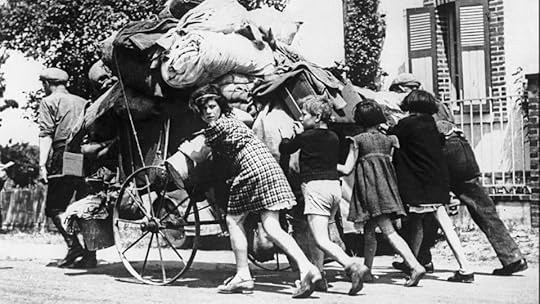
A háborús regényeken belül van egy hercig kis alosztály, ami a menekülteknek van fenntartva, akik a front közeledtével kénytelenek szedni a sátorfát, és nekivágni az ismeretlennek. Simenon könyve ezek közé tartozik, központi motívuma az a tapasztalat, amikor az ember muszájból kilép a hétköznapokból, és valami kozmikus bizonytalanságba zuhan: tisztes polgárból varázsütésre földönfutóvá válik. Várakozásaimmal ellentétben azonban Simenon nem a kétségbeesés felől közelíti meg a témát, nem az érdekli, hogyan dolgozza fel egy konvencionális egyén azt, amikor Franciaország összeomlásakor a létezés a káosz játszóterévé lesz. A hangulat meglepő módon nem borús – sokkal inkább tűnik úgy, mintha az elbeszélő egy régen várt nyári táborba csöppent volna, ahol kevés ugyan a komfort és bizonytalan az étkeztetés, de cserébe feledhetetlen élmények várnak ránk. A feledhetetlen élmények között pedig ki kell emelnünk Annát, a menekültet, aki mellé hősünk odacsapódik, miután a kavarodásban elveszítette szem elől terhes feleségét és lányát. Innentől kezdve a tény, hogy a komplett Wehrmacht lohol a nyomukban, és Stukák géppuskázzák őket zuhanórepülésben, másodlagossá válik – a lényeg a szerelem, ez a vadonatúj tapasztalat, ami az egész zűrt aranyfüsttel fújja le. Közben persze tudjuk, hogy ez a szerelem nem lehet tartós, hisz véletlen körülmények idézték elő, és előbb-utóbb győzedelmeskedik a pillanaton a normális életbe való visszatérés kényszere – de ez csak kiemeli az egész „nyári tábor”-feelingjét.
Simenon elbeszélője inkább lelkiismeretes, mint sziporkázó krónikás – és ezzel a megállapítással voltaképpen meg is jelöltem a regény határait. Tisztességes, jól felépített, takarékos próza, világos mondanivalóval. Kölcsönöz némi elevenséget abból, hogy egy most is aktuális élethelyzet (a menekült-lét) problémáit vizsgálja, de végeredményben kevésbé ütött meg, mint amennyire szerettem volna. Talán a céljai voltak túl szerények – egyszerűen csak egy egyént akart láttatni, aki a normalitásból történő kényszerű kiszakadást arra használja fel, hogy (bátortalanul) megéljen egy másik lehetséges életet. Mondjuk ha Simenon úgy érezte, hogy többet vállalni túlzott merészség lett volna, akkor ki vagyok én, hogy vitatkozzak vele?

September 19, 2012
Un romanzo con alcune pagine folgoranti.
Simenon, come un grande regista, punta i riflettori per illuminare con luce fortissima, che penetra anche negli angoli più riposti, uno squarcio di esistenza di Marcel, un uomo qualunque, né bello né brutto –anzi piuttosto bruttino, malaticcio per le conseguenze di una tubercolosi infantile, molto miope- sposato con una donna qualsiasi, con una vita mediocre nel suo negozietto, il suo giardino da curare e le galline. Un evento che per ognuno costituisce tragica fonte di sofferenza, l’abbandono della propria casa a causa dello scoppio della seconda guerra mondiale e l’occupazione nazista del Belgio, provoca una “rivoluzione” nella sua vita e diventa per lui fonte di felicità, “una felicità che stava alla felicità di ogni giorno come il suono che viene fuori passando l’archetto dal lato sbagliato del ponticello sta al suono normale di un violino. Un suono acuto, squisito, che faceva deliziosamente male”.
Sì, la fuga in treno dal suo paese al confine con il Belgio verso il mare determina, all’improvviso e senza alcuna motivazione logica, la nascita di un secondo Marcel, che si ritrova in un vagone merci con degli sconosciuti, separato dalla moglie incinta e dalla figlioletta, indifferente della guerra e delle sue tragedie, e che, come se vivesse all’interno di un cerchio magico, costruisce la sua quotidianità con i passeggeri del treno ed instaura una particolare simbiosi con una donna, Anna, anch’essa in fuga –non dalla guerra, ma dal carcere-. Due profughi che si incontrano e si scelgono per vivere un brevissimo momento di felicità.
Ecco dove sta la grandezza di Simenon: illuminare tutti i lati, anche quelli oscuri e nascosti, di un attimo fuggente di passione, vissuto con ingordigia perché consapevoli della sua caducità.
Simenon, come un grande regista, punta i riflettori per illuminare con luce fortissima, che penetra anche negli angoli più riposti, uno squarcio di esistenza di Marcel, un uomo qualunque, né bello né brutto –anzi piuttosto bruttino, malaticcio per le conseguenze di una tubercolosi infantile, molto miope- sposato con una donna qualsiasi, con una vita mediocre nel suo negozietto, il suo giardino da curare e le galline. Un evento che per ognuno costituisce tragica fonte di sofferenza, l’abbandono della propria casa a causa dello scoppio della seconda guerra mondiale e l’occupazione nazista del Belgio, provoca una “rivoluzione” nella sua vita e diventa per lui fonte di felicità, “una felicità che stava alla felicità di ogni giorno come il suono che viene fuori passando l’archetto dal lato sbagliato del ponticello sta al suono normale di un violino. Un suono acuto, squisito, che faceva deliziosamente male”.
Sì, la fuga in treno dal suo paese al confine con il Belgio verso il mare determina, all’improvviso e senza alcuna motivazione logica, la nascita di un secondo Marcel, che si ritrova in un vagone merci con degli sconosciuti, separato dalla moglie incinta e dalla figlioletta, indifferente della guerra e delle sue tragedie, e che, come se vivesse all’interno di un cerchio magico, costruisce la sua quotidianità con i passeggeri del treno ed instaura una particolare simbiosi con una donna, Anna, anch’essa in fuga –non dalla guerra, ma dal carcere-. Due profughi che si incontrano e si scelgono per vivere un brevissimo momento di felicità.
Ecco dove sta la grandezza di Simenon: illuminare tutti i lati, anche quelli oscuri e nascosti, di un attimo fuggente di passione, vissuto con ingordigia perché consapevoli della sua caducità.

July 3, 2011
War breaks out on a beautiful spring day in Belgium. The Germans are coming! Feron, a radio repairman, and his seven and a half month pregnant wife grab their four year old daughter and join the queue to the local train station to try to outrun tragedy. They get separated on the train and when Feron realizes his wife and daughter have been sent on ahead of him he forms a relationship with a mysterious stranger. The relationship quickly becomes sexual. Oddly World War II is not the main focus of this book. The war acts as a backdrop or permission to suspend normal behavior. Feron and Anna live in the moment; their bond is immediate and concrete, almost primitive though Feron never stops searching for his family.
“The Train” is dark and quietly horrifying. Simenon shows people at their ugliest with little glints of light showing through. The gore is minimal but motives are honed to an instinctual level. Sadly it all reads true to life. In my opinion Simenon is a master at subtly.
“The Train” is dark and quietly horrifying. Simenon shows people at their ugliest with little glints of light showing through. The gore is minimal but motives are honed to an instinctual level. Sadly it all reads true to life. In my opinion Simenon is a master at subtly.

April 5, 2023
Un treno in fuga dalle responsabilità
Si tratta di un Simenon molto diverso dal consueto. Non pretendo certo di conoscere l’intera sterminata bibliografia dell’autore ma, fra i molti “romans durs” che ho letto e altri di cui conosco la sinossi, nessuno mi risulta talmente impregnato dal tema della guerra.
Una guerra che, a partire dalla fulminea invasione tedesca di Belgio e Francia nel maggio del 1940, è descritta dal punto di vista della popolazione civile in fuga verso la costa atlantica ed in particolare del suo protagonista Marcel, un tipico uomo qualunque, radiotecnico riformato dalla leva militare per grave miopia, che fin dalle prime pagine si trova forzatamente separato da moglie e figlia.
Per certi versi il contesto del romanzo di Simenon mi ha richiamato alla memoria la prima delle due parti di “Suite francese” di Irène Nemirowski con il medesimo drammatico e caotico esodo dei francesi sotto l’incalzare delle armate tedesche e dei bombardamenti. Ma mentre quello è un romanzo corale che segue le vicende di vari personaggi in fuga con ogni mezzo ma per lo più sulle strade di Francia, Simenon si concentra sulla ferrovia indirizzando fin dal titolo il romanzo verso differenti soluzioni narrative.
La più evidente è la casuale e prolungata vicinanza e promiscuità fra il gruppo di sconosciuti costretti a condividere per giorni il carro bestiame a destinazione ignota purché in direzione Ovest, situazione che a sua volta è alla base del legame che Marcel instaura progressivamente con Anne, man mano che il pensiero di moglie e figlia disperse chissà dove si affievolisce in Marcel così come ogni senso di responsabilità.
Ma soprattutto il lungo e tortuoso viaggio permette a Simenon di tratteggiare l’elemento più suggestivo e riuscito del libro ben più, a mio avviso, della storia d’amore sviluppata all’interno della trama: sono gli scorci dei numerosi paeselli attraversati dalla ferrovia, intravisti di sfuggita e come incorniciati dai finestrini del treno, gesti fugaci di gente intenta alle consuete occupazioni di ogni giorno e non ancora coinvolta dalla guerra che Marcel e gli altri fuggiaschi colgono con tenerezza e quasi con meraviglia: una famiglia che esce da una chiesetta, una donna che stende il bucato, uomini seduti davanti a un caffè sui quali pende l’inconsapevolezza del destino che sappiamo incombere su tutta la Francia.
Quanto al protagonista, l’epilogo finale permetterà al lettore di constatare come, nonostante promesse e dichiarazioni pronunciate nel momento della passione, l’irresponsabilità e la debolezza del carattere di Marcel lo portino infine a sconfinare nella vigliaccheria e nel tradimento nei confronti della fiducia, della dedizione e della generosità della figura di Anne. E poi dicono che Simenon sia un autore misogino…
Si tratta di un Simenon molto diverso dal consueto. Non pretendo certo di conoscere l’intera sterminata bibliografia dell’autore ma, fra i molti “romans durs” che ho letto e altri di cui conosco la sinossi, nessuno mi risulta talmente impregnato dal tema della guerra.
Una guerra che, a partire dalla fulminea invasione tedesca di Belgio e Francia nel maggio del 1940, è descritta dal punto di vista della popolazione civile in fuga verso la costa atlantica ed in particolare del suo protagonista Marcel, un tipico uomo qualunque, radiotecnico riformato dalla leva militare per grave miopia, che fin dalle prime pagine si trova forzatamente separato da moglie e figlia.
Per certi versi il contesto del romanzo di Simenon mi ha richiamato alla memoria la prima delle due parti di “Suite francese” di Irène Nemirowski con il medesimo drammatico e caotico esodo dei francesi sotto l’incalzare delle armate tedesche e dei bombardamenti. Ma mentre quello è un romanzo corale che segue le vicende di vari personaggi in fuga con ogni mezzo ma per lo più sulle strade di Francia, Simenon si concentra sulla ferrovia indirizzando fin dal titolo il romanzo verso differenti soluzioni narrative.
La più evidente è la casuale e prolungata vicinanza e promiscuità fra il gruppo di sconosciuti costretti a condividere per giorni il carro bestiame a destinazione ignota purché in direzione Ovest, situazione che a sua volta è alla base del legame che Marcel instaura progressivamente con Anne, man mano che il pensiero di moglie e figlia disperse chissà dove si affievolisce in Marcel così come ogni senso di responsabilità.
Ma soprattutto il lungo e tortuoso viaggio permette a Simenon di tratteggiare l’elemento più suggestivo e riuscito del libro ben più, a mio avviso, della storia d’amore sviluppata all’interno della trama: sono gli scorci dei numerosi paeselli attraversati dalla ferrovia, intravisti di sfuggita e come incorniciati dai finestrini del treno, gesti fugaci di gente intenta alle consuete occupazioni di ogni giorno e non ancora coinvolta dalla guerra che Marcel e gli altri fuggiaschi colgono con tenerezza e quasi con meraviglia: una famiglia che esce da una chiesetta, una donna che stende il bucato, uomini seduti davanti a un caffè sui quali pende l’inconsapevolezza del destino che sappiamo incombere su tutta la Francia.
Quanto al protagonista, l’epilogo finale permetterà al lettore di constatare come, nonostante promesse e dichiarazioni pronunciate nel momento della passione, l’irresponsabilità e la debolezza del carattere di Marcel lo portino infine a sconfinare nella vigliaccheria e nel tradimento nei confronti della fiducia, della dedizione e della generosità della figura di Anne. E poi dicono che Simenon sia un autore misogino…

February 12, 2022
Tutto accadeva terribilmente in fretta e terribilmente adagio
Spesso si associa Simenon al commissario Maigret, trascurando altri suoi romanzi che non hanno niente di giallo, ma che sono altrettanto coinvolgenti. E questo è stato anche per me una vera rivelazione. Durante l'invasione tedesca del 1940, nel nord della Francia, Marcel fugge in treno da Fumay, al confine col Belgio, per andare verso ovest, attraverso luoghi sconosciuti, paesaggi diversi, nuovi rumori,...: un viaggio verso l'incontro con il destino, un appuntamento da tempo, da sempre, atteso.
Un vagone diventa per alcuni giorni il luogo ristretto di una nuova socialità, un piccolo mondo a parte, che rimaneva come sospeso, senza tempo, e che Simenon descrive con ricchezza di caratteristiche pur nella semplicità della scrittura.
La storia è raccontata in prima persona da Marcel come in un difficile diario della memoria scritto "per onestà": è possibile che io mi ripeta, che mi ingarbugli, persino che mi contraddica, poiché scrivo soprattutto per il bisogno di scoprire una determinata verità.
La breve passione vissuta con Anna è raccontata con delicatezza, presentata come una necessità di sopravvivenza e ha in sé qualcosa di puro: avrei voluto esprimere tutta la mia tenerezza per quella donna [...] che era un essere umano, che diventava ai miei occhi l'essere umano; si tratta di un incontro tra due solitudini che si sostengono e che scelgono di percorrere una parentesi di vita insieme, in un tempo "fermo", senza passato né futuro (il tempo non esisteva più [...] e, dal momento che non si poteva tornare indietro, il resto mi era indifferente. [...] Si era prodotta una frattura. Vivevo contemporaneamente in due dimensioni diverse).
Romanzo molto coinvolgente, fino all'ultima pagina, e che ha tenuto attenta e interessata anche la mia ascoltatrice quasi centenaria.
Spesso si associa Simenon al commissario Maigret, trascurando altri suoi romanzi che non hanno niente di giallo, ma che sono altrettanto coinvolgenti. E questo è stato anche per me una vera rivelazione. Durante l'invasione tedesca del 1940, nel nord della Francia, Marcel fugge in treno da Fumay, al confine col Belgio, per andare verso ovest, attraverso luoghi sconosciuti, paesaggi diversi, nuovi rumori,...: un viaggio verso l'incontro con il destino, un appuntamento da tempo, da sempre, atteso.
Un vagone diventa per alcuni giorni il luogo ristretto di una nuova socialità, un piccolo mondo a parte, che rimaneva come sospeso, senza tempo, e che Simenon descrive con ricchezza di caratteristiche pur nella semplicità della scrittura.
La storia è raccontata in prima persona da Marcel come in un difficile diario della memoria scritto "per onestà": è possibile che io mi ripeta, che mi ingarbugli, persino che mi contraddica, poiché scrivo soprattutto per il bisogno di scoprire una determinata verità.
La breve passione vissuta con Anna è raccontata con delicatezza, presentata come una necessità di sopravvivenza e ha in sé qualcosa di puro: avrei voluto esprimere tutta la mia tenerezza per quella donna [...] che era un essere umano, che diventava ai miei occhi l'essere umano; si tratta di un incontro tra due solitudini che si sostengono e che scelgono di percorrere una parentesi di vita insieme, in un tempo "fermo", senza passato né futuro (il tempo non esisteva più [...] e, dal momento che non si poteva tornare indietro, il resto mi era indifferente. [...] Si era prodotta una frattura. Vivevo contemporaneamente in due dimensioni diverse).
Romanzo molto coinvolgente, fino all'ultima pagina, e che ha tenuto attenta e interessata anche la mia ascoltatrice quasi centenaria.

June 5, 2017
"My hair has receded. I need glasses with increasingly thick lenses. I am a fairly prosperous, quiet, rather dull man."
As the Germans invade Netherlands and Belgium at the start of the Second World War the small French town of Fumay in the Ardennes, is evacuated. Our narrator, Marcel Feron, is one of those boarding a train to a safer place. He is separated from his pregnant wife and daughter as Simenon's story begins.
It is a very special story also, quite like no other because of the Feron's character. He is less bothered by air attacks on the train and nearby villages, and more interested by the mundanity of local life. He doesn't worry about his wife and daughter, and actually enjoys the break from his usual life. It is a story of selfishness and a very honest one.
In those dreadful days in the aftermath of a terrorist attack or a particularly bloody episode of a war, media and the public want heroes. Even small acts of selflessness make headline news. This is a story of the opposite, and because the full picture Marcel Feron reveals itself slowly, the twist in the last two pages is unexpected and extremely powerful, and make this a memorable read.
As the Germans invade Netherlands and Belgium at the start of the Second World War the small French town of Fumay in the Ardennes, is evacuated. Our narrator, Marcel Feron, is one of those boarding a train to a safer place. He is separated from his pregnant wife and daughter as Simenon's story begins.
It is a very special story also, quite like no other because of the Feron's character. He is less bothered by air attacks on the train and nearby villages, and more interested by the mundanity of local life. He doesn't worry about his wife and daughter, and actually enjoys the break from his usual life. It is a story of selfishness and a very honest one.
In those dreadful days in the aftermath of a terrorist attack or a particularly bloody episode of a war, media and the public want heroes. Even small acts of selflessness make headline news. This is a story of the opposite, and because the full picture Marcel Feron reveals itself slowly, the twist in the last two pages is unexpected and extremely powerful, and make this a memorable read.

June 6, 2023
Né passato, né avvenire. Solo un fragile presente, che divoravamo e assaporavamo al tempo stesso.
In poche pagine, con una prosa perfetta, Simenon racconta di un amore intenso tra due persone pressoché anonime, che si ritrovano a viaggiare su un carro merci allacciato ai vagoni di un treno che trasporta profughi in fuga dal Belgio invaso dai nazisti. È il maggio del 1940. Per i paesi al confine francese c’è l’ordine di evacuazione. Fuggono in tanti. Anche loro.
Lui è Marcel, un lavoro ben avviato, una casetta, sposato, ha già una bimba e la moglie sta per avere il secondo figlio, viaggiano in vagoni diversi che verranno staccati e divisi, seguendo ognuno binari e destinazioni differenti; lei è Anna, ceca di origine ebrea, evasa dalla prigione di Namur, è sola e ha un suo fascino, anche se lievemente dimesso. Tra i due si instaura da subito una sorta di affinità che rasenta l’amore, o forse è più passione, o forse è la vita che si sarebbe voluta, sono attimi, giorni di intensa felicità, di tenerezza, un periodo in cui si riesce ad assaporare una sorta di libertà, nonostante le bombe, nonostante i disagi.
Ma questo rapporto è una meteora, una parentesi, uno scorcio di vita, perché il ritorno alla realtà presenta presto il conto e le strade di Marcel e di Anna inevitabilmente si divideranno.
Un racconto intenso. Quasi non pare Simenon. Eppure la scrittura è la sua, asciutta, mai una parola fuori posto.
🌍 LdM: Belgio 🇧🇪 (autore)
✍️ GS
In poche pagine, con una prosa perfetta, Simenon racconta di un amore intenso tra due persone pressoché anonime, che si ritrovano a viaggiare su un carro merci allacciato ai vagoni di un treno che trasporta profughi in fuga dal Belgio invaso dai nazisti. È il maggio del 1940. Per i paesi al confine francese c’è l’ordine di evacuazione. Fuggono in tanti. Anche loro.
Lui è Marcel, un lavoro ben avviato, una casetta, sposato, ha già una bimba e la moglie sta per avere il secondo figlio, viaggiano in vagoni diversi che verranno staccati e divisi, seguendo ognuno binari e destinazioni differenti; lei è Anna, ceca di origine ebrea, evasa dalla prigione di Namur, è sola e ha un suo fascino, anche se lievemente dimesso. Tra i due si instaura da subito una sorta di affinità che rasenta l’amore, o forse è più passione, o forse è la vita che si sarebbe voluta, sono attimi, giorni di intensa felicità, di tenerezza, un periodo in cui si riesce ad assaporare una sorta di libertà, nonostante le bombe, nonostante i disagi.
Ma questo rapporto è una meteora, una parentesi, uno scorcio di vita, perché il ritorno alla realtà presenta presto il conto e le strade di Marcel e di Anna inevitabilmente si divideranno.
Un racconto intenso. Quasi non pare Simenon. Eppure la scrittura è la sua, asciutta, mai una parola fuori posto.
🌍 LdM: Belgio 🇧🇪 (autore)
✍️ GS

March 29, 2012
It's a little strange for me to read a Simenon without tagging it as a mystery. Over the years, I have probably read about twenty of his works, most of them being Inspector Maigret novels, the rest his romans durs, or "hard novels." The Train falls into this latter category.
The so called "Phony War" between the Nazi invasion of Poland and the invasion of France and the Low Countries has come to an end. A family from Furay in the Ardennes Forest near the Belgian border, has packed up all their belongings and gone to the railroad station to board one of the refugee trains. At the station, Marcel Feron is separated from his pregnant wife and little child, who are put in one of the first-class coaches, while the others are relegated to boxcars.
We follow Marcel in the boxcar. Somewhere along the journey, he discovers that the boxcars have been separated from the passenger cars, and that his wife and child are missing.
Not to worry, however, for Marcel has found a new sweetie, one Anna Kupfer, a Czech Jew who had been released from a Belgian prison (for what? -- we never learn) and joined the throng of refugees headed south. As Marcel and Anna become more involved, making open love in their boxcars (many of the others are doing the same), we begin to notice that Marcel is strangely dissociated from the ones he loves. Although he tries repeatedly to find out what happens to his family, Marcel has blossomed:
This dissociation is very typical of the author's romans durs. It was not unlikely that this had much to do with Simenon's own dissociations connected with his rather strange love life: Like Wilt Chamberlain, he claimed to have slept with over ten thousand women. A friend of mine who was living in Paris for a while knew a woman who claimed that Simenon raped her.
I won't divulge the ending, but this dissociation works both ways, as we see as we read the book.
Although this is a somewhat strange work in Simenon's vast oeuvre, it is not only superbly written, but reminiscent of other great French writers. As Albert Camus said (quoted on the inside front page), "If I hadn't read Ticket of Leave ... I couldn't have written The Stranger." Camus's Meursault is in turn the ancestor of Marcel Feron.
The so called "Phony War" between the Nazi invasion of Poland and the invasion of France and the Low Countries has come to an end. A family from Furay in the Ardennes Forest near the Belgian border, has packed up all their belongings and gone to the railroad station to board one of the refugee trains. At the station, Marcel Feron is separated from his pregnant wife and little child, who are put in one of the first-class coaches, while the others are relegated to boxcars.
We follow Marcel in the boxcar. Somewhere along the journey, he discovers that the boxcars have been separated from the passenger cars, and that his wife and child are missing.
Not to worry, however, for Marcel has found a new sweetie, one Anna Kupfer, a Czech Jew who had been released from a Belgian prison (for what? -- we never learn) and joined the throng of refugees headed south. As Marcel and Anna become more involved, making open love in their boxcars (many of the others are doing the same), we begin to notice that Marcel is strangely dissociated from the ones he loves. Although he tries repeatedly to find out what happens to his family, Marcel has blossomed:
I am not ashamed to say that I was happy, with a happiness which bore the same relation to everyday happiness as the sound produced by passing a violin bow across the wrong side of the bridge bears to the normal sound of a violin. It was sharp and exquisite, and deliciously painful.Earlier on, while they were still on the train, Marcel notes that "smells existed as they had in my childhood, the quivering of the air, the imperceptible noises of life." At one point, Anna tells him that she has just seen what he must have been like when he was five years old.
This dissociation is very typical of the author's romans durs. It was not unlikely that this had much to do with Simenon's own dissociations connected with his rather strange love life: Like Wilt Chamberlain, he claimed to have slept with over ten thousand women. A friend of mine who was living in Paris for a while knew a woman who claimed that Simenon raped her.
I won't divulge the ending, but this dissociation works both ways, as we see as we read the book.
Although this is a somewhat strange work in Simenon's vast oeuvre, it is not only superbly written, but reminiscent of other great French writers. As Albert Camus said (quoted on the inside front page), "If I hadn't read Ticket of Leave ... I couldn't have written The Stranger." Camus's Meursault is in turn the ancestor of Marcel Feron.

May 6, 2020
The more Simenon you read, the better he gets. It is extraordinary to think one writer produced such a high quality body of work, created so many memorable characters and plots and of such volume. It is also incredible that he is mostly remembered for the Maigret novels - as good as they are - when he also wrote books as outstanding as this one. A war novel without battles or high action or heroism, just one man's tale of his own events, with romance, loss, pain, death and life. Exquisite.

June 12, 2023
Μια ιστορία πάθους που αξίζει να διαβάσετε!!

April 22, 2026
Nella vita del protagonista si apre uno squarcio ed è in questa zona grigia che scopre di potersi abbandonare alla passione.
Cosa accadrà quando la vita riprenderà il suo consueto corso?
Cosa accadrà quando la vita riprenderà il suo consueto corso?

February 9, 2020
I found this to be a very boring book. Simenon must have knocked out this book in a week or less. I realize this was a novel about refugees on the move from their hometown in the early days of WW II when Belgium and Holland were invaded by Germany but nothing much happened.
The story was told in the first person by Marcel. He had a wife, and she was pregnant and the baby’s birth was imminent and they had a youngster also. The book is about when they leave their house to escape the Germans in northern France on the border near Belgium (Fumay) and they are on a train…the wife and daughter get separated from him…he is in a cattle car with a bunch of people (wife and daughter were in a passenger car and it got separated from the train). He meets a younger woman and they make love ad nauseum on and off the train. I am not sure what the point of the book is….I know he feels he is no longer in control of his own fate and maybe he feels liberated in a way…to behave differently...live for the moment. He reminisces about growing up and being sent to a sanitorium because he had contracted tuberculosis and therefore at present is not fit to serve in the military. Per Simenon’s style something happens in the last few paragraphs of the novel but this time around for me it was nothing that moved me, or made me think, “oh so the reason that event happened was such-and-such that happened earlier on in the book”.
I’ll leave it at that – again I am anxious to read the reviews of others. What did I miss ( ☹ ) that others have found?
The story was told in the first person by Marcel. He had a wife, and she was pregnant and the baby’s birth was imminent and they had a youngster also. The book is about when they leave their house to escape the Germans in northern France on the border near Belgium (Fumay) and they are on a train…the wife and daughter get separated from him…he is in a cattle car with a bunch of people (wife and daughter were in a passenger car and it got separated from the train). He meets a younger woman and they make love ad nauseum on and off the train. I am not sure what the point of the book is….I know he feels he is no longer in control of his own fate and maybe he feels liberated in a way…to behave differently...live for the moment. He reminisces about growing up and being sent to a sanitorium because he had contracted tuberculosis and therefore at present is not fit to serve in the military. Per Simenon’s style something happens in the last few paragraphs of the novel but this time around for me it was nothing that moved me, or made me think, “oh so the reason that event happened was such-and-such that happened earlier on in the book”.
I’ll leave it at that – again I am anxious to read the reviews of others. What did I miss ( ☹ ) that others have found?

January 30, 2022
Alle soglie dell'invasione della Francia da parte dell'esercito tedesco, Marcel riesce fortunosamente a fuggire con la famiglia da un piccolo paese delle Ardenne; tuttavia il caso lo dividerà dalla moglie e dalla figlia permettendogli di vivere per alcuni mesi in un'atmosfera sospesa prima sul treno e poi in un campo profughi a La Rochelle. Pochi mesi in cui potrà vivere per davvero, al di là delle restrizioni di una vita piccolo borghese e di una storia pregressa di paziente tubercolotico. Pochi mesi in cui si legherà ad una donna, se ne innamorerà, la proteggerà, sarà felice; tuttavia questa pausa dalla quotidianità non può durare per sempre.
E' triste vedere il Marcel che torna a riunirsi con la sua famiglia e rinnega completamente i mesi di felicità con Anna. Alla fine una felicità piccolo borghese è più importante per lui di qualsiasi eroismo.
Romanzo molto bello, molto realistico e per questo anche amaro, narrato in prima persona dal protagonista che non si sottrae al giudizio del lettore sia in quanto di meglio che in quanto di peggio ha fatto.
E' triste vedere il Marcel che torna a riunirsi con la sua famiglia e rinnega completamente i mesi di felicità con Anna. Alla fine una felicità piccolo borghese è più importante per lui di qualsiasi eroismo.
Romanzo molto bello, molto realistico e per questo anche amaro, narrato in prima persona dal protagonista che non si sottrae al giudizio del lettore sia in quanto di meglio che in quanto di peggio ha fatto.

Read
April 30, 2022Che cosa fa la vita di un uomo?
Le giornate trascorse sempre uguali, ad accudire la moglie e la figlioletta, a prendersi cura di loro, ogni giorno per tutta la vita oppure un momento di lucida consapevolezza che lo porta ad estraniarsi da se stesso e a scegliere un pochi giorni di essere un uomo diverso?
Quale è la verità? Quale è il vero Marcel? Quello premuroso con la moglie o l’uomo passionale e ardimentoso con Anna, donna sconosciuta con cui si ritrova, in un treno che dovrebbe essere la sua salvezza dall’occupazione tedesca, ad intessere una relazione che è carne e sangue?
Sullo sfondo di un’Europa che vive l’occupazione il dramma di un uomo che per un momento alza la testa e si scopre libero per poi tornare ad essere invisibile.
Marcel è un ignavo, si lascia vivere, si lascia scegliere dalla moglie, persino dalla donna del treno. Solo dopo la scelta i suoi sensi si infiammeranno. Ma non sarà sufficiente a farlo bruciare per sempre.
Le riflessioni che muove sono interessanti, la scrittura scorrevole come sempre.
Le giornate trascorse sempre uguali, ad accudire la moglie e la figlioletta, a prendersi cura di loro, ogni giorno per tutta la vita oppure un momento di lucida consapevolezza che lo porta ad estraniarsi da se stesso e a scegliere un pochi giorni di essere un uomo diverso?
Quale è la verità? Quale è il vero Marcel? Quello premuroso con la moglie o l’uomo passionale e ardimentoso con Anna, donna sconosciuta con cui si ritrova, in un treno che dovrebbe essere la sua salvezza dall’occupazione tedesca, ad intessere una relazione che è carne e sangue?
Sullo sfondo di un’Europa che vive l’occupazione il dramma di un uomo che per un momento alza la testa e si scopre libero per poi tornare ad essere invisibile.
Marcel è un ignavo, si lascia vivere, si lascia scegliere dalla moglie, persino dalla donna del treno. Solo dopo la scelta i suoi sensi si infiammeranno. Ma non sarà sufficiente a farlo bruciare per sempre.
Le riflessioni che muove sono interessanti, la scrittura scorrevole come sempre.

February 19, 2026
3.5
I read this novella in connection with my side interest in WWII stories. As such, 'The Train' is tangential; not really tackling WWII proper. Still, one feels its specter-in-advance quality.
Without a plot to speak of, the work emerges as the character study of a young French radio repairman - Marcel (father of a very young child; husband with a pregnant wife) - who, with his family, becomes swept up in an attempt to protect non-targeted villagers from approaching Nazis.
Tons of sort-of collateral damage folk are herded into a train caravan that heads south, presumably to be out of harm's way. (Nevertheless, German planes are at times still too close for comfort.)
In the expected confusion of it all, Marcel becomes separated from his loved ones. The upshot is his gradual involvement with another woman - the mysterious Anna, who takes to Marcel in a subservient way that appeals to his self-effacing nature.
You may easily guess where this leads, and that's about all there is here.
What the narrative lacks in story it compensates for by way of tone, palpable atmosphere and well-observed attention to detail. Simenon fans may find it a solid-enough work, even if it pales somewhat next to the author's harder-hitting tale of Occupied France: 'Dirty Snow'.
I read this novella in connection with my side interest in WWII stories. As such, 'The Train' is tangential; not really tackling WWII proper. Still, one feels its specter-in-advance quality.
Without a plot to speak of, the work emerges as the character study of a young French radio repairman - Marcel (father of a very young child; husband with a pregnant wife) - who, with his family, becomes swept up in an attempt to protect non-targeted villagers from approaching Nazis.
Tons of sort-of collateral damage folk are herded into a train caravan that heads south, presumably to be out of harm's way. (Nevertheless, German planes are at times still too close for comfort.)
In the expected confusion of it all, Marcel becomes separated from his loved ones. The upshot is his gradual involvement with another woman - the mysterious Anna, who takes to Marcel in a subservient way that appeals to his self-effacing nature.
You may easily guess where this leads, and that's about all there is here.
What the narrative lacks in story it compensates for by way of tone, palpable atmosphere and well-observed attention to detail. Simenon fans may find it a solid-enough work, even if it pales somewhat next to the author's harder-hitting tale of Occupied France: 'Dirty Snow'.

February 7, 2021
Mi sono accorta che nell'ultimo mese, questo è il terzo libro che mi è capitato di leggere che al suo interno vede tra gli elementi principali il treno (il primo è stato Cose che succedono la notte, seguito da Tokyo express, che ho amato moltissimo). Totalmente casuale eh, non è che sia particolarmente amante di Trenitalia e dei suoi ritardi.
Tornando a questo libro, racconta la passione che nasce tra un uomo e una donna qualunque su un treno merci diretto al sud della Francia. I due protagonisti, Marcel e Anna, così come gli altri passeggeri, stanno fuggendo dall'invasione nazista durante la seconda guerra mondiale. Marcel si è ritrovato sbalzato dalla sua ordinarietà, separato in questa fuga dalla moglie e dalla figlia, e in un clima di guerra trova conforto nell'amore verso una nuova donna, Anna. Ma è solo una situazione precaria.
Devo dire che Simenon non mi ha lasciato del tutto convinta. Ho trovato la narrazione troppo lenta per i miei gusti e non avevo quella voglia di sapere cosa sarebbe successo nella pagina dopo. Mi aspettavo delle risposte alle mie curiosità, ma non sono arrivate.
Tornando a questo libro, racconta la passione che nasce tra un uomo e una donna qualunque su un treno merci diretto al sud della Francia. I due protagonisti, Marcel e Anna, così come gli altri passeggeri, stanno fuggendo dall'invasione nazista durante la seconda guerra mondiale. Marcel si è ritrovato sbalzato dalla sua ordinarietà, separato in questa fuga dalla moglie e dalla figlia, e in un clima di guerra trova conforto nell'amore verso una nuova donna, Anna. Ma è solo una situazione precaria.
Devo dire che Simenon non mi ha lasciato del tutto convinta. Ho trovato la narrazione troppo lenta per i miei gusti e non avevo quella voglia di sapere cosa sarebbe successo nella pagina dopo. Mi aspettavo delle risposte alle mie curiosità, ma non sono arrivate.
Displaying 1 - 30 of 363 reviews