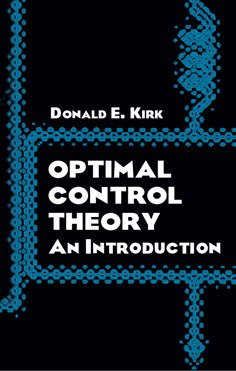
Optimal control theory is the science of maximizing the returns from and minimizing the costs of the operation of physical, social, and economic processes. Geared toward upper-level undergraduates, this text introduces three aspects of optimal control dynamic programming, Pontryagin's minimum principle, and numerical techniques for trajectory optimization. Chapters 1 and 2 focus on describing systems and evaluating their performances. Chapter 3 deals with dynamic programming. The calculus of variations and Pontryagin's minimum principle are the subjects of chapters 4 and 5, and chapter 6 examines iterative numerical techniques for finding optimal controls and trajectories. Numerous problems, intended to introduce additional topics as well as to illustrate basic concepts, appear throughout the text.
This is a good book, but it does not explicitly provide intuition. It's a survey of the core ideas I guess. Definitely something that needs to be revisited as a cookbook, rather than something that provides long-lasting knowledge or insights that can be applied to other problem domains. It's on my list to re-read later and probably the best, most concise book for learning about optimal control problems.
Very good introduction to Optimal Control. Focus is on the theory behind the concept rather than practical application. You can tell it’s from the 70s. Readers should probably supplement with modern text on the subject.