

What do you think?

A Train of Powder
Like most all of Rebecca West's reportage, A Train of Powder approaches great literature. Written between 1946 and 1954, these accounts of four controversial trials explore the nature of crime and punishment, innocence and guilt, retribution and forgiveness. The centerpiece of the book is "Greenhouse with Cyclamens," a three-part essay on the Nuremberg trials written with precision, clarity, and daring insight. She also reports on two particularly brutal murder trials - one for a lynching in North Carolina, the other for a "torso murder" in England - and the espionage trial of a British telegrapher.
Throughout, the question of guilt inspires Ms. West to feats of psychological detection wherein unerring craftsmanship and a powerful narrative sense combine to a high purpose - the pursuit of truth.
Throughout, the question of guilt inspires Ms. West to feats of psychological detection wherein unerring craftsmanship and a powerful narrative sense combine to a high purpose - the pursuit of truth.
309 pages, Paperback
First published January 1, 1946
About the author
Rebecca West
134 books483 followersCicely Isabel Fairfield, known by her pen name Rebecca West, or Dame Rebecca West, DBE was an English author, journalist, literary critic, and travel writer. She was brought up in Edinburgh, Scotland, where she attended George Watson's Ladies College.
A prolific, protean author who wrote in many genres, West was committed to feminist and liberal principles and was one of the foremost public intellectuals of the twentieth century. She reviewed books for The Times, the New York Herald Tribune, the Sunday Telegraph, and the New Republic, and she was a correspondent for The Bookman. Her major works include Black Lamb and Grey Falcon (1941), on the history and culture of Yugoslavia; A Train of Powder (1955), her coverage of the Nuremberg trials, published originally in The New Yorker; The Meaning of Treason, later The New Meaning of Treason, a study of World War II and Communist traitors; The Return of the Soldier, a modernist World War I novel; and the "Aubrey trilogy" of autobiographical novels, The Fountain Overflows, This Real Night, and Cousin Rosamund. Time called her "indisputably the world's number one woman writer" in 1947. She was made CBE in 1949, and DBE in 1959, in recognition of her outstanding contributions to British letters.
A prolific, protean author who wrote in many genres, West was committed to feminist and liberal principles and was one of the foremost public intellectuals of the twentieth century. She reviewed books for The Times, the New York Herald Tribune, the Sunday Telegraph, and the New Republic, and she was a correspondent for The Bookman. Her major works include Black Lamb and Grey Falcon (1941), on the history and culture of Yugoslavia; A Train of Powder (1955), her coverage of the Nuremberg trials, published originally in The New Yorker; The Meaning of Treason, later The New Meaning of Treason, a study of World War II and Communist traitors; The Return of the Soldier, a modernist World War I novel; and the "Aubrey trilogy" of autobiographical novels, The Fountain Overflows, This Real Night, and Cousin Rosamund. Time called her "indisputably the world's number one woman writer" in 1947. She was made CBE in 1949, and DBE in 1959, in recognition of her outstanding contributions to British letters.
Ratings & Reviews
Friends & Following
Create a free account to discover what your friends think of this book!
Community Reviews
Displaying 1 - 30 of 40 reviews

May 24, 2016
PONTE AEREO
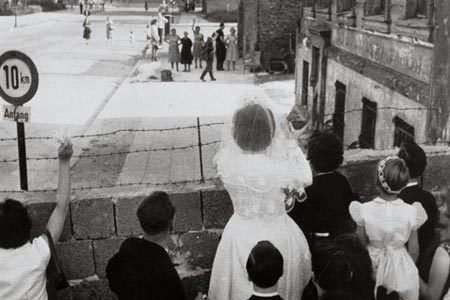
Berlino: sposi divisi dal Muro. Il 30 settembre 1949 fu interrotto il ponte aereo verso Berlino Ovest.
Un reportage importante, ben oltre la dimensione giornalistica (tradotto da Masolino D’Amico).
I tre soggiorni di Rebecca West (pseudonimo di Cicely Isabel Fairfield) in terra di Germania dopo la fine della seconda guerra mondiale:
nel 1946 a Norimberga per seguire le fasi finali del celebre processo;
nel 1949 a Berlino per capire come se la cava l’ex capitale divisa tra le quattro potenze vincitrici, a loro volta divise in due blocchi contrapposti;
infine nel 1954 a seguire il progresso della possente macchina della ricostruzione tedesca.
Dieci milioni di esuli a spasso in terra di Germania, pesanti costrizioni imposte dai Paesi vincitori, i conflitti fra gli stessi ‘Alleati’, una nazione distrutta oltre l’immaginabile…
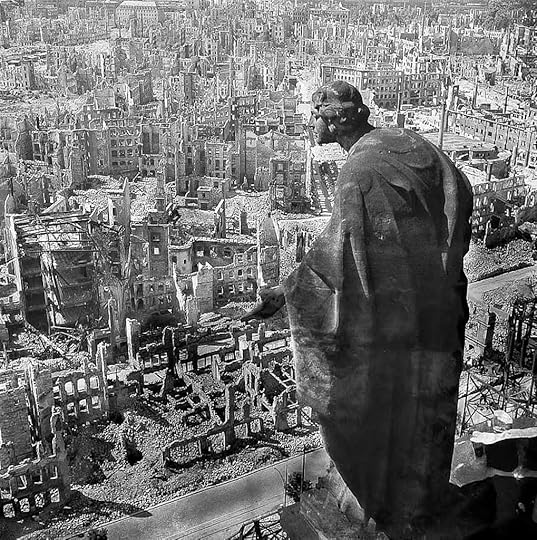
Dresda dopo il bombardamento alleato (Royal Air Force britannica e dalla United States Army Air Force) avvenuto tra il 13 e il 15 febbraio 1945: il 13 febbraio 1945 più di 800 aerei inglesi volarono su Dresda, scaricando circa 1.500 tonnellate di bombe esplosive e 1.200 tonnellate di bombe incendiarie. Il giorno dopo la città fu attaccata dai B-17 americani che in quattro raid la colpirono con altre 1.250 tonnellate di bombe. Nella mattinata del 15 febbraio ci fu l'ultima incursione di 200 bombardieri statunitensi sulla città ancora in fiamme. I bombardieri alleati rasero al suolo una gran parte del centro storico di Dresda con un bombardamento a tappeto, causando una strage di civili, con obiettivi militari solo indiretti. È ricordato come uno degli eventi più tragici del conflitto.
L’occhio di Rebecca West coglie tutto, niente tralascia, scrive come se fosse un romanzo, con prosa ricca ma secca, tagliente e sarcastica.
E individua l’immagine che riassume la situazione generale: una villa poco fuori Norimberga appartenuta a un ricco fabbricante di matite, espropriata dalle forze alleate, ospitava i tanti giornalisti corrispondenti arrivati per il processo – un anziano reduce di guerra con una gamba sola, aiutato da una bambina di dodici anni, con organizzazione passione e lavoro assiduo coltiva piantine, tra cui i ciclamini del titolo, i cui fiori sono spesso paragonati a delle farfalle visto che i loro petali sono come le loro ali.
Piante che crescono in mezzo a ruderi e rovine a rappresentare la rinascita tedesca, l’inizio di una nuova vita.
Non voleva fuggire dalla sua serra, voleva fuggire dentro di essa…voleva evadere nel suo lavoro manuale perché lui e quelli come lui avevano dimostrato un'eccezionale incapacità di rendere gradevole il resto dell'esistenza. Era fuggito in un’altra dimensione, in cui il dolore non aveva potere su di lui. Era fuggito nel suo lavoroI.
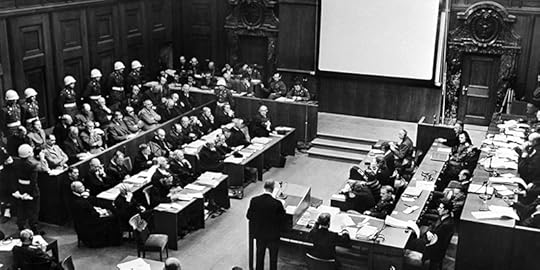
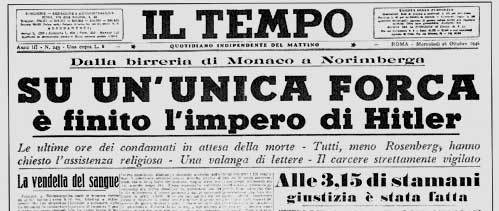
Il processo di Norimberga iniziò il 20 novembre 1945 e si concluse il 1 ottobre 1946. Furono in realtà due distinti processi: il primo e più famoso fu ai principali criminali di guerra davanti al Tribunale militare internazionale (IMT), che giudicò ventiquattro dei più importanti capi nazisti catturati o ancora ritenuti in vita. Il secondo fu per criminali di guerra inferiori, tenuto sotto la Legge numero 10 del Consiglio di Controllo dal Tribunale militare di Norimberga (NMT), e comprese anche il famoso processo ai dottori. Il primo processo si concluse con 12 condanne a morte, 3 assoluzioni, l’industriale Krupp non venne processato per motivi di salute, 3 ergastoli, tre sentenze di carcere con pene di 10, 15 e 20 anni. Un imputato si suicidò in carcere.
Berlino: sposi divisi dal Muro. Il 30 settembre 1949 fu interrotto il ponte aereo verso Berlino Ovest.
Un reportage importante, ben oltre la dimensione giornalistica (tradotto da Masolino D’Amico).
I tre soggiorni di Rebecca West (pseudonimo di Cicely Isabel Fairfield) in terra di Germania dopo la fine della seconda guerra mondiale:
nel 1946 a Norimberga per seguire le fasi finali del celebre processo;
nel 1949 a Berlino per capire come se la cava l’ex capitale divisa tra le quattro potenze vincitrici, a loro volta divise in due blocchi contrapposti;
infine nel 1954 a seguire il progresso della possente macchina della ricostruzione tedesca.
Dieci milioni di esuli a spasso in terra di Germania, pesanti costrizioni imposte dai Paesi vincitori, i conflitti fra gli stessi ‘Alleati’, una nazione distrutta oltre l’immaginabile…
Dresda dopo il bombardamento alleato (Royal Air Force britannica e dalla United States Army Air Force) avvenuto tra il 13 e il 15 febbraio 1945: il 13 febbraio 1945 più di 800 aerei inglesi volarono su Dresda, scaricando circa 1.500 tonnellate di bombe esplosive e 1.200 tonnellate di bombe incendiarie. Il giorno dopo la città fu attaccata dai B-17 americani che in quattro raid la colpirono con altre 1.250 tonnellate di bombe. Nella mattinata del 15 febbraio ci fu l'ultima incursione di 200 bombardieri statunitensi sulla città ancora in fiamme. I bombardieri alleati rasero al suolo una gran parte del centro storico di Dresda con un bombardamento a tappeto, causando una strage di civili, con obiettivi militari solo indiretti. È ricordato come uno degli eventi più tragici del conflitto.
L’occhio di Rebecca West coglie tutto, niente tralascia, scrive come se fosse un romanzo, con prosa ricca ma secca, tagliente e sarcastica.
E individua l’immagine che riassume la situazione generale: una villa poco fuori Norimberga appartenuta a un ricco fabbricante di matite, espropriata dalle forze alleate, ospitava i tanti giornalisti corrispondenti arrivati per il processo – un anziano reduce di guerra con una gamba sola, aiutato da una bambina di dodici anni, con organizzazione passione e lavoro assiduo coltiva piantine, tra cui i ciclamini del titolo, i cui fiori sono spesso paragonati a delle farfalle visto che i loro petali sono come le loro ali.
Piante che crescono in mezzo a ruderi e rovine a rappresentare la rinascita tedesca, l’inizio di una nuova vita.
Non voleva fuggire dalla sua serra, voleva fuggire dentro di essa…voleva evadere nel suo lavoro manuale perché lui e quelli come lui avevano dimostrato un'eccezionale incapacità di rendere gradevole il resto dell'esistenza. Era fuggito in un’altra dimensione, in cui il dolore non aveva potere su di lui. Era fuggito nel suo lavoroI.
Il processo di Norimberga iniziò il 20 novembre 1945 e si concluse il 1 ottobre 1946. Furono in realtà due distinti processi: il primo e più famoso fu ai principali criminali di guerra davanti al Tribunale militare internazionale (IMT), che giudicò ventiquattro dei più importanti capi nazisti catturati o ancora ritenuti in vita. Il secondo fu per criminali di guerra inferiori, tenuto sotto la Legge numero 10 del Consiglio di Controllo dal Tribunale militare di Norimberga (NMT), e comprese anche il famoso processo ai dottori. Il primo processo si concluse con 12 condanne a morte, 3 assoluzioni, l’industriale Krupp non venne processato per motivi di salute, 3 ergastoli, tre sentenze di carcere con pene di 10, 15 e 20 anni. Un imputato si suicidò in carcere.

May 8, 2020
CYCLAMENS FROM NURENBERG
I have two requests. Before you look at the photograph below, please imagine that...
1. You can't see any guards in this photo.
2. Your knowledge of history has been erased for a moment.
What do you think about these men?
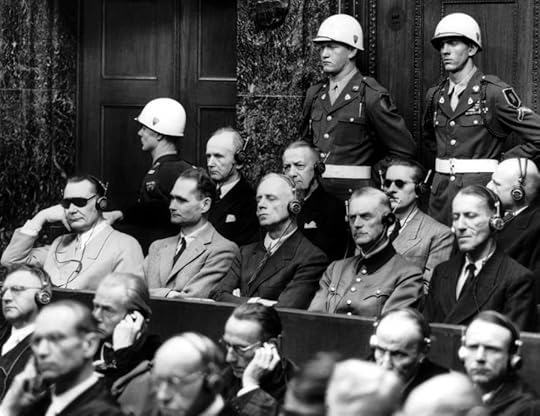
[Source]
To me, it looks like a snapshot from a congress or a conference. There is nothing suspicious in these people, isn't it? Would you feel repelled if you saw them in the street? I would not. Perfectly normal middle-aged men, maybe a bit stressed out. Things would be different if I realized they were Nazi leaders, the convicts of Nuremberg trials.
The Banality of Evil – a part of Hanne Arendt’s book title keeps lingering in my mind when I look at this photo. I can see nothing disturbing, nothing that could warn me against distilled evil pulsating underneath. As it seems, it is true that ordinary people can be beasts at heart. The title of aquatint by Francisco Goya is so true: The Sleep of Reason Produces Monsters. Although it was created in the 18th century, its message is the best summary of Train of Powder (1955) by Rebecca West, a collection of six reportages.
The writing style is out of the top drawer, but the literary quality of the collection turned out to be hit-or-miss. I was hypnotised by Greenhouse with Cyclamens, a three-part coverage of the Nuremberg trials and author’s impressions from post-war Germany, originally published in The New Yorker, and consider it one of the best reportages ever. Unfortunately, the other three disappointed me.
What makes Greenhouse with Cyclamens so unique and engrossing? First of all, Rebecca West avoided traps typical for authors writing about war: you will find neither pretentious pathos nor teary mawkishness here. The author’s precise eye for detail impressed me, along with her ability to encapsulate a personality in a few words only. This is how she describes Baldur von Schirach: 'It was as if a neat and mousy governess sat there, not pretty, but with never a hair out of place, and always to be trusted never to intrude when there were visitors: as it might be Jane Eyre'. I appreciated occasional glimpses of Rebecca West’s wry, sardonic sense of humour. Yes, humour. The last thing you would expect in reportage about the Nuremberg trials. I think irony helps her to tame the horrors she has to face on a daily basis.
Interestingly, West is almost transparent in her texts. She presents facts, readers should draw conclusions. We witness only one situation, which reveals her feelings. During a guided tour in Hitler’s bunker in Berlin, emotions overwhelmed her and she had to run outside. The scope of her observations is wide: she describes briefly and precisely not only the convicts and their behaviour but also lawyers, guards, interpreters, journalists. Serious matters coexist with quirky details from backstage.
There are many ways to depict war criminals and the easiest would be to present them as ruthless monsters. Rebecca West took a less travelled path though. While observing the convicts, she desperately seeks human reactions, for example, empathy: she notices that Ribbentrop was trying to comfort Hess after his nervous breakdown. Besides, she argues the defendants should not be photographed during the announcement of the verdict 'It might be right to hang such men. But it could not be right to photograph them when they were being told that they were going to be hanged'.
Although I imagined the Nuremberg trials as dramatic, actually it was a long (11 months), tedious, emotionally drenching process: no wonder 'All these people wanted to leave Nuremberg as urgently as a dental patient enduring the drill wants to up and leave the chair'.
The portrayal of post-war Germany in Greenhouse with Cyclamens is also impactful and poignant. A metaphoric refrain, which returns five times in the book, is a scene Rebecca West saw in a greenhouse in Nuremberg and could not forget: 'the one-legged man who grew enormous cyclamens with the help of a child of twelve'. For me, these cyclamens are a symbol of endurance, survival and victory against unimaginable hardships. We cling to life with such greed. Coincidentally (or maybe not?), in many cultures, cyclamen symbolizes empathy, devotion and love.
Speaking of coincidences, a few days after I had finished A Train of Powder, while browsing the digital gallery of National Museum in Warsaw, I came across this Polish photo from 1949:
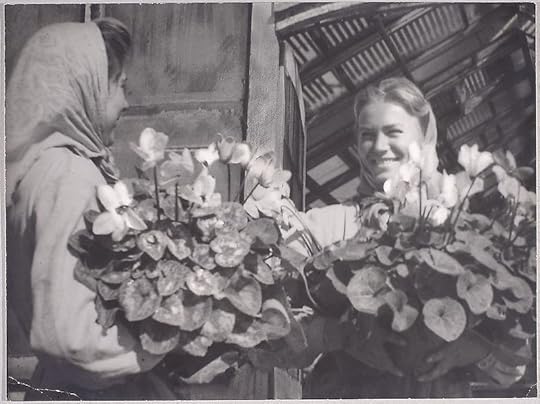
Alina Świętosławska, Worker with Flowers
It made me smile.
PS 1
I owe A Train of Powder ride to Orsodimondo and his enticing review. Thank you so much!
PS 2
You can watch glimpses of Nuremberg trials here and here. The moment when the defendants claim they are not guilty and do not seem to be faking at all...
I have two requests. Before you look at the photograph below, please imagine that...
1. You can't see any guards in this photo.
2. Your knowledge of history has been erased for a moment.
What do you think about these men?
[Source]
To me, it looks like a snapshot from a congress or a conference. There is nothing suspicious in these people, isn't it? Would you feel repelled if you saw them in the street? I would not. Perfectly normal middle-aged men, maybe a bit stressed out. Things would be different if I realized they were Nazi leaders, the convicts of Nuremberg trials.
The Banality of Evil – a part of Hanne Arendt’s book title keeps lingering in my mind when I look at this photo. I can see nothing disturbing, nothing that could warn me against distilled evil pulsating underneath. As it seems, it is true that ordinary people can be beasts at heart. The title of aquatint by Francisco Goya is so true: The Sleep of Reason Produces Monsters. Although it was created in the 18th century, its message is the best summary of Train of Powder (1955) by Rebecca West, a collection of six reportages.
The writing style is out of the top drawer, but the literary quality of the collection turned out to be hit-or-miss. I was hypnotised by Greenhouse with Cyclamens, a three-part coverage of the Nuremberg trials and author’s impressions from post-war Germany, originally published in The New Yorker, and consider it one of the best reportages ever. Unfortunately, the other three disappointed me.
What makes Greenhouse with Cyclamens so unique and engrossing? First of all, Rebecca West avoided traps typical for authors writing about war: you will find neither pretentious pathos nor teary mawkishness here. The author’s precise eye for detail impressed me, along with her ability to encapsulate a personality in a few words only. This is how she describes Baldur von Schirach: 'It was as if a neat and mousy governess sat there, not pretty, but with never a hair out of place, and always to be trusted never to intrude when there were visitors: as it might be Jane Eyre'. I appreciated occasional glimpses of Rebecca West’s wry, sardonic sense of humour. Yes, humour. The last thing you would expect in reportage about the Nuremberg trials. I think irony helps her to tame the horrors she has to face on a daily basis.
Interestingly, West is almost transparent in her texts. She presents facts, readers should draw conclusions. We witness only one situation, which reveals her feelings. During a guided tour in Hitler’s bunker in Berlin, emotions overwhelmed her and she had to run outside. The scope of her observations is wide: she describes briefly and precisely not only the convicts and their behaviour but also lawyers, guards, interpreters, journalists. Serious matters coexist with quirky details from backstage.
There are many ways to depict war criminals and the easiest would be to present them as ruthless monsters. Rebecca West took a less travelled path though. While observing the convicts, she desperately seeks human reactions, for example, empathy: she notices that Ribbentrop was trying to comfort Hess after his nervous breakdown. Besides, she argues the defendants should not be photographed during the announcement of the verdict 'It might be right to hang such men. But it could not be right to photograph them when they were being told that they were going to be hanged'.
Although I imagined the Nuremberg trials as dramatic, actually it was a long (11 months), tedious, emotionally drenching process: no wonder 'All these people wanted to leave Nuremberg as urgently as a dental patient enduring the drill wants to up and leave the chair'.
The portrayal of post-war Germany in Greenhouse with Cyclamens is also impactful and poignant. A metaphoric refrain, which returns five times in the book, is a scene Rebecca West saw in a greenhouse in Nuremberg and could not forget: 'the one-legged man who grew enormous cyclamens with the help of a child of twelve'. For me, these cyclamens are a symbol of endurance, survival and victory against unimaginable hardships. We cling to life with such greed. Coincidentally (or maybe not?), in many cultures, cyclamen symbolizes empathy, devotion and love.
Speaking of coincidences, a few days after I had finished A Train of Powder, while browsing the digital gallery of National Museum in Warsaw, I came across this Polish photo from 1949:
Alina Świętosławska, Worker with Flowers
It made me smile.
PS 1
I owe A Train of Powder ride to Orsodimondo and his enticing review. Thank you so much!
PS 2
You can watch glimpses of Nuremberg trials here and here. The moment when the defendants claim they are not guilty and do not seem to be faking at all...

Read
August 19, 2013Justly famous for the long (long, long) Nuremburg New Yorker articles, but my favourites were actually the shorter ones about the flashy gangster's murder and the would-be Russian spy, which is like a Smiley novel in miniature.
(Reading old, lengthy New Yorker articles on the Paperwhite is sort of nightmarish -- there's no sense of pagination or even paragraphing whatsoever, it just goes on and on and on, and no way to check to see how much of the chapter's left, either.)
(Reading old, lengthy New Yorker articles on the Paperwhite is sort of nightmarish -- there's no sense of pagination or even paragraphing whatsoever, it just goes on and on and on, and no way to check to see how much of the chapter's left, either.)

January 26, 2020
This book collects essays by Rebecca West from 1946 to 1953 or so, all dealing in some respect with justice as embodied in trials. Around half of the book is a three-part essay about the Nuremberg trials, and aside from that there are three other essays about: a trial for a lynching in South Carolina, one for a murder where the corpse was dismembered, and the last for espionage committed by a young British man.
West was also a novelist as well as an essayist, and here it shows in her depictions of "character" and "setting." In clear, dense prose, she describes people and places in a way that makes the reader believe that they know them, even if they haven't met the person or been to the place she's talking about. Nuremberg during the trials, the defendants in that trial, Berlin during the post-war occupation, the small house that espionage defendant William Martin Marshall's parents lived in, the titular greenhouse, and the man and young girl who work in it, and many more. There's a feeling of distrust, dread and even absurdity when dealing with the USSR that reflects the time period these pieces were written in.
For me, although West's prose is excellent, and at times affecting without even the slightest concession to sentiment, it's also a little too difficult. I tried to read this book a couple of years ago and got through the first section or two of "Greenhouse and Cyclamens" before giving up. This time, motivated by A Train of Powder filling in a space on a reading challenge (selfish!), I put some more effort into it. While there was a satisfying feeling of getting smarter as consistently thorny sentences and paragraphs got easier to read, I only rarely got into the "reading zone" with it. Maybe I'll try it again in a few years and see what I think of it.
The whole book with its four trials opens questions that it leaves to the reader to ponder. The trial systems in the U.S. and U.K. have their faults, and every trial in this book ends with an equivocal result. Obviously guilty men are set free, an unsophisticated man is trapped in an unclear espionage plot and ends up in jail, the intention of the Nuremberg trials is warped in the public consciousness through the simple fact of very few people having witnessed it from beginning to end. But those results show how important the trial system is, how important the rule of law is. Better a guilty person go free than an innocent person be hanged.
West was also a novelist as well as an essayist, and here it shows in her depictions of "character" and "setting." In clear, dense prose, she describes people and places in a way that makes the reader believe that they know them, even if they haven't met the person or been to the place she's talking about. Nuremberg during the trials, the defendants in that trial, Berlin during the post-war occupation, the small house that espionage defendant William Martin Marshall's parents lived in, the titular greenhouse, and the man and young girl who work in it, and many more. There's a feeling of distrust, dread and even absurdity when dealing with the USSR that reflects the time period these pieces were written in.
For me, although West's prose is excellent, and at times affecting without even the slightest concession to sentiment, it's also a little too difficult. I tried to read this book a couple of years ago and got through the first section or two of "Greenhouse and Cyclamens" before giving up. This time, motivated by A Train of Powder filling in a space on a reading challenge (selfish!), I put some more effort into it. While there was a satisfying feeling of getting smarter as consistently thorny sentences and paragraphs got easier to read, I only rarely got into the "reading zone" with it. Maybe I'll try it again in a few years and see what I think of it.
The whole book with its four trials opens questions that it leaves to the reader to ponder. The trial systems in the U.S. and U.K. have their faults, and every trial in this book ends with an equivocal result. Obviously guilty men are set free, an unsophisticated man is trapped in an unclear espionage plot and ends up in jail, the intention of the Nuremberg trials is warped in the public consciousness through the simple fact of very few people having witnessed it from beginning to end. But those results show how important the trial system is, how important the rule of law is. Better a guilty person go free than an innocent person be hanged.

December 9, 2017
Questo non e' un libro, ma una raccolta di tre articoli scritti dalla West per vari giornali, esattamente nel 1946, nel 1949 e nel 1954.
Chi voleva un resoconto del processo di Norimberga restera' sicuramente deluso, in quanto la West ha una scrittura molto anticonformista, quasi cinica, e piu' che riportare fatti nudi e crudi descrive quello che era il "feeling" del processo: gli Alleati annoiati, che non vedevano l'ora di tornare a casa, i Russi cattivissimi che non vogliono collaborare, e dall'altra parte gli imputati, che sapevano benissimo che alla fine ci sarebbe stata per loro una condanna a morte e cercavano ogni occasione ed ogni cavillo per allungare il brodo e rimandare le sentenze.
Una cosa che mi ha stupito negli altri due articoli (quello del '49 e quello del '54) e' il profondo rispetto, quasi ammirazione, per il popolo tedesco: sicuramente lo ha guadagnato riorganizzandosi prontamente, tanto da diventare di nuovo un colosso economico in Europa, ma non sono tanto sicura che sia stato una vittima di Hitler e non un avventato complice. Non scordiamoci che Hitler ando' al potere eletto democraticamente, non certo con un colpo di mano come e' stato per Mussolini.
Un ultimo appunto: ho trovato la traduzione di Masolino D'Amico purtroppo molto carente, sembra quasi una prima bozza di una traduzione quasi letterale su cui poi lavorare: peccato che nessuno ci abbia poi lavorato!
Chi voleva un resoconto del processo di Norimberga restera' sicuramente deluso, in quanto la West ha una scrittura molto anticonformista, quasi cinica, e piu' che riportare fatti nudi e crudi descrive quello che era il "feeling" del processo: gli Alleati annoiati, che non vedevano l'ora di tornare a casa, i Russi cattivissimi che non vogliono collaborare, e dall'altra parte gli imputati, che sapevano benissimo che alla fine ci sarebbe stata per loro una condanna a morte e cercavano ogni occasione ed ogni cavillo per allungare il brodo e rimandare le sentenze.
Una cosa che mi ha stupito negli altri due articoli (quello del '49 e quello del '54) e' il profondo rispetto, quasi ammirazione, per il popolo tedesco: sicuramente lo ha guadagnato riorganizzandosi prontamente, tanto da diventare di nuovo un colosso economico in Europa, ma non sono tanto sicura che sia stato una vittima di Hitler e non un avventato complice. Non scordiamoci che Hitler ando' al potere eletto democraticamente, non certo con un colpo di mano come e' stato per Mussolini.
Un ultimo appunto: ho trovato la traduzione di Masolino D'Amico purtroppo molto carente, sembra quasi una prima bozza di una traduzione quasi letterale su cui poi lavorare: peccato che nessuno ci abbia poi lavorato!

January 27, 2013
This was a Kindle Daily Deal on Amazon, and advertised as being solely about the Nurnberg trials, which is why I bought it. But the stories about other criminal trials were just as compelling -- in fact, I liked them better than the second and third parts on Nurnberg. Although Rebecca West tends to wander off on tangents, her writing is always evocative, and it's more like listening to a fascinating storyteller than reading a book and wondering when the writer will come to the point.

March 28, 2017
Em 1946 - contratada pelo Daily Telegraph - a escritora e jornalista política Rebecca West deslocou-se à Alemanha para assistir à fase final dos julgamentos de Nuremberga. Sobre eles escreve três ensaios sobre o ambiente que se vivia na sala do tribunal e na cidade onde, após treze meses de julgamentos, dominava o tédio. Todos ansiavam pelo fim desse aborrecimento, excepto os réus que desejavam que nunca acabasse.
Dos vinte e um réus, doze foram condenados à morte por enforcamento; três foram absolvidos e os restantes condenados a prisão entre dez anos a perpétua.
Ler sobre o nazismo causa-me sempre angústia e horror. E espanto. A dada altura, Rebecca West refere Joseph Goebbels que, no dia a seguir à morte de Hitler, se suicida junto com a mulher depois de terem matado os filhos; seis crianças entre os treze e os cinco anos.
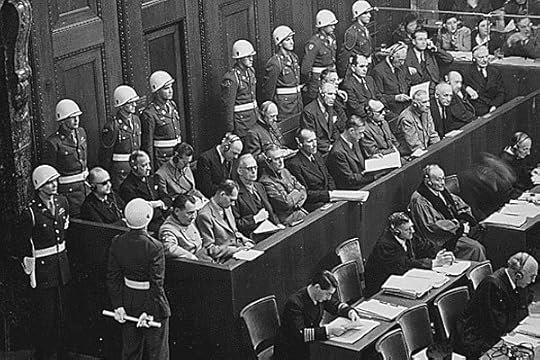
Dos vinte e um réus, doze foram condenados à morte por enforcamento; três foram absolvidos e os restantes condenados a prisão entre dez anos a perpétua.
Ler sobre o nazismo causa-me sempre angústia e horror. E espanto. A dada altura, Rebecca West refere Joseph Goebbels que, no dia a seguir à morte de Hitler, se suicida junto com a mulher depois de terem matado os filhos; seis crianças entre os treze e os cinco anos.

September 14, 2014
Rebecca West has an eye for detail, an astute judgement of character, an ability to see the obvious when it is clouded by detail, propaganda or misreporting and a use of language that is up there with the best. Her book covers the end of the Nuremberg trials, a look at post war Germany, an unfortunate English spy and a racist trial in South Georgia. All interesting stories, all uniquely told.
May 1, 2013
love loved, except for the hints of racism in one of last essays, and the recurrent appearance of "feminine" and synonyms as a negative (homophobic) description of males. of its time and all.
what i loved was the precision of description, as though she saw and understood all, and among the quotes i noted here's one i've returned to several times in the month since i've read it: "It was one of the events which do not become an experience." cutting!
other favorite:
"If a man stranded on a desert island should become a saint under the coconut palm but is never rescued, it should not be pretended that what happened to him is of no importance; for if that be conceded, then nothing is important, since humanity is stranded on this desert world and will certainly never be rescued."
what i loved was the precision of description, as though she saw and understood all, and among the quotes i noted here's one i've returned to several times in the month since i've read it: "It was one of the events which do not become an experience." cutting!
other favorite:
"If a man stranded on a desert island should become a saint under the coconut palm but is never rescued, it should not be pretended that what happened to him is of no importance; for if that be conceded, then nothing is important, since humanity is stranded on this desert world and will certainly never be rescued."
July 4, 2019
Rebecca West was a writer of remarkable nuance, intuition and wit. I'll admit that the dense, old-fashioned style took some work, but it is that immense sense of style in Ms. West's prose that makes it so enjoyable. I wish people still wrote like this from time to time...
August 11, 2025
Verbose, self-righteous, and judgmental. In the last bit about Nuremberg she pops off about Fritzsche and his book- which I didn’t know existed- so if nothing else I found another account of the Nuremberg trials to read.

December 29, 2016
Writing style is the protagonist in this collection of essays. Ms West's elliptical approach to English requires acclimation--I found myself reading sentences two or three times simple to parse them. Yet that strain eased within 50 pages.
Rebecca West was a criminal voyeur: the stories here are accounts of various trials from Nuremberg to Greenville, South Carolina. The German sequences are about half the book: most from the War Crimes trial, to a (non-trial) account of the Berlin Airlift; these were serialized in The New Yorker--and it shows: she constantly addresses the attitudes of GIs to Germans and visa-versa:
"The situation would have been more tolerable if these conquerors had taken the slightest interest in their conquest; but they did not. They were even embarrassed by it. 'Pardon my mailed glove,' they seemed to murmur as they drove in the American automobiles, which were all the Nuremberg roads then carried save the few run by the British and French. [Unlike British Officers, who tended to be professionals, here] were men who were wearing the laurels of the fastest and most improbable military victory in history, and all they wanted to do was to be back doing well where they came from.… Lines on a young soldier's brow proclaimed that he did not care what decoration he won in the Ardennes; he wanted to go home and pretend Pearl Harbor had never been troubled and get in line for the partnership which should be open for the right man in a couple of years' time."
Of course, it's easy to read this as back-handed contempt, or (at least) confusion. And, at first glance, one could say the same of West's account of a lynching trial in Greenville, South Carolina--an event she compares to an opera. West doesn't doubt the guilt of 30 of the 31 white men tried for dragging from jail a black man accused of murdering a white taxi driver and beating him savagely before shooting him to death. She's properly contemptuous that such events could occur. But -- as in all her trial narratives -- she's scrupulously fair. Two defense attorneys made outrageously prejudicial arguments, true; but the prosecution failed to prove its case beyond a reasonable doubt: there were no eye-witnesses, and none of the multiple confessions obtained shortly after the murder were sworn under penalty of perjury--all were recanted.
There are other accounts of English trials--a headless and legless body dropped from an airplane and a British spy. In each case, West's observations about otherwise minor characters are the most interesting. The spy chapter didn't work for me at all--too much time spent speculating without evidence or purpose.
Still, the book is worth it for the German pieces alone. Once you get used to her style.
Rebecca West was a criminal voyeur: the stories here are accounts of various trials from Nuremberg to Greenville, South Carolina. The German sequences are about half the book: most from the War Crimes trial, to a (non-trial) account of the Berlin Airlift; these were serialized in The New Yorker--and it shows: she constantly addresses the attitudes of GIs to Germans and visa-versa:
"The situation would have been more tolerable if these conquerors had taken the slightest interest in their conquest; but they did not. They were even embarrassed by it. 'Pardon my mailed glove,' they seemed to murmur as they drove in the American automobiles, which were all the Nuremberg roads then carried save the few run by the British and French. [Unlike British Officers, who tended to be professionals, here] were men who were wearing the laurels of the fastest and most improbable military victory in history, and all they wanted to do was to be back doing well where they came from.… Lines on a young soldier's brow proclaimed that he did not care what decoration he won in the Ardennes; he wanted to go home and pretend Pearl Harbor had never been troubled and get in line for the partnership which should be open for the right man in a couple of years' time."
Of course, it's easy to read this as back-handed contempt, or (at least) confusion. And, at first glance, one could say the same of West's account of a lynching trial in Greenville, South Carolina--an event she compares to an opera. West doesn't doubt the guilt of 30 of the 31 white men tried for dragging from jail a black man accused of murdering a white taxi driver and beating him savagely before shooting him to death. She's properly contemptuous that such events could occur. But -- as in all her trial narratives -- she's scrupulously fair. Two defense attorneys made outrageously prejudicial arguments, true; but the prosecution failed to prove its case beyond a reasonable doubt: there were no eye-witnesses, and none of the multiple confessions obtained shortly after the murder were sworn under penalty of perjury--all were recanted.
There are other accounts of English trials--a headless and legless body dropped from an airplane and a British spy. In each case, West's observations about otherwise minor characters are the most interesting. The spy chapter didn't work for me at all--too much time spent speculating without evidence or purpose.
Still, the book is worth it for the German pieces alone. Once you get used to her style.

December 24, 2015
If you're looking for a book dealing solely with the subject of the post-World War II Nuremberg trials, this one won't satisfy your thirst, despite the product description.
However, that doesn't mean you shouldn't give West's book your attention. The book is actually a series of short stories, all dealing with trials occurring in the aftermath of World War II. She begins with an account of Nuremberg, and the details West is known for shine through in her descriptions of the accused, of the town, of the supporting characters all shine. But she also delves deeper, giving insight into what she feels is the true goal of international law.
Some of the other stories are even stronger. West describes the trial of a man accused of murder, who allegedly threw the pieces of the body into the sea. Again, the details are poignant: she presents both sides of the story, describes the marsh and the family of the man who found the body, the wife of the accused. These are small pieces, often left unnoticed in accounts that chillingly recite facts.
Over and over, West contemplates the guilt of the accused, and often the reasons behind bringing him to stand trial. Her observations are nuanced, and rather than a simple rendering of both sides of the story, you can almost imagine that she's having an inner dialog with herself.
However, that doesn't mean you shouldn't give West's book your attention. The book is actually a series of short stories, all dealing with trials occurring in the aftermath of World War II. She begins with an account of Nuremberg, and the details West is known for shine through in her descriptions of the accused, of the town, of the supporting characters all shine. But she also delves deeper, giving insight into what she feels is the true goal of international law.
Some of the other stories are even stronger. West describes the trial of a man accused of murder, who allegedly threw the pieces of the body into the sea. Again, the details are poignant: she presents both sides of the story, describes the marsh and the family of the man who found the body, the wife of the accused. These are small pieces, often left unnoticed in accounts that chillingly recite facts.
Over and over, West contemplates the guilt of the accused, and often the reasons behind bringing him to stand trial. Her observations are nuanced, and rather than a simple rendering of both sides of the story, you can almost imagine that she's having an inner dialog with herself.

December 19, 2021
A collection of essays on a range of topics, the main one being the Nuremberg trials which is covered in 3 parts under the title "Greenhouse with Cyclamens". It is fascinating to read the essays about 70 years after their original publication and consider the changes brought in the world over this time and how perspectives have changed. Highly recommend this collection. The essays do not convey the full complexity of the matters, but provide valuable insight in the time and events.

November 18, 2022
I wonder if I patterned my early writing style after Rebecca West's, though writing as rococo & brilliant as hers is rarely to be found. These essays, some about the Nuremberg trials, some about other crimes, solved & unsolved, are riveting. Also riveting the way she strings a vignette throughout a piece, e.g., the child & the one-legged man who grow cyclamens in a greenhouses in Germany after WWII, or the physical peculiarities of the radio telegrapher being tried for betraying the British empire to the Soviet Union. She was a novelist best known for her in depth journalism. I'd say there's no comparable journalist today.

June 21, 2023
Una escritura precisa y detallada. Aunque la comencé a leer por el interés que siempre me han generado los juicios de Nuremberg, termine disfrutando mucho mas los otros tres relatos, escritos en un tono y con un estilo trepidante , comparable a la mejor ficción del género policíaco o de terror inglés. La escritora nunca desaprovecha la oportunidad de introducir reflexiones muy agudas y oportunas, que fueron mi parte favorita del libro.
January 30, 2021
A book containing 6 essays, 3 of which describing the proceedings and aftermath of the prosecution of 21 high ranking Nazi members before the first ever international military tribunal in Nuremberg. Rebecca West, a British journalist working for the New Yorker, reports on countless characteristics of the trial and zooms in with eerie detail on the final public moments of prominent nazis like Göring, Hess and Ribbentrop. A truly sensational book.

June 6, 2026
Such an interesting contrast of the banality of post war Germany (and the German post war psyche), and the inner workings of such a foundational trial
March 5, 2020
A rebarbative style that befuddles rather than enlightens. Rebecca West possibly has something profound to say but is incapable of saying it clearly and succinctly. Like wading through mud. Couldn't finish this one.
May 21, 2020
A Train of Powder gave me my first taste of Rebecca West’s work, and it was incredible from sentence one. (And speaking of sentences, this book led to the only time in memory that I can recall noting a sentence as one of the best I’ve ever read.) She makes incredible, and incredibly smart, connections, proving herself an unbelievably imaginative thinker. At one point, she describes a lawyer’s speech as “superb,” “as free from humbug and tricks as Euclid, and it lived in the memory by its logic and lucidity,” and she might well have been describing her own prose styling; I had, in fact, previously listed lucid and logical (alongside witty) as descriptors to use in this review. She routinely utilizes wonderful turns of phrase, yes, but is also concise in her incisive brilliance, and never flashy.
Even as she writes with both a rhetoric and an understanding that are timeless, nearly every sentence is a reminder that a journalist like West would never be permitted to thrive in the distorted climate of the present day, when readers are all to happy to accept liberties with facts but are nearly always unwilling to allow that a writer has a personal point of view on matters. Not only does she embed her point of view inextricably, but she does not even remove herself and her actions from the reporting. Her approach aside, however, even small concepts and ideas that she incorporates resonate forward in time, let alone the large ones—it’s impossible to read West’s description of post–Second World War Berliners as being “sure that the United States had had most say in [a] matter [over Great Britain and France], for they suspected that the British were on their way down to join the French in the dusk where great powers outlive their greatness” without thinking of the United States having since joined them in that gloom.
It is not as though she were working completely without restraint. She describes the legal restrictions on crime reporting in Great Britain as “far beyond American conception,” and admirable, in their way: “If a gentleman were arrested carrying a lady’s severed head in his arms and wearing her large intestine as a garland round his neck and crying aloud that he and he alone had been responsible for her reduction from a whole to parts, it would still be an offence for any newspaper to suggest that he might have had any connection with her demise until he had been convicted of this offense by a jury and sentenced by a judge.” As a result, the passion of reporters and editors “seeps into the newsprint and devises occult means by which the truth becomes known,” allowing readers to “learn with absolute certainty, from something too subtle even to be termed a turn of phrase, which person involved in a case is suspected by the police of complicity and which is thought innocent.” Four of these dispatches were written originally for The New Yorker, and so West was not necessarily subject to such standards, but nevertheless at time chooses to alter the angle of her portrayals, not so much to subtly impart her opinion as to formally highlight the arbitrariness of not being able to state it more openly. A delicious example of judgement by way of hypothetical: “Had the outburst been simply an unlovely piece of hypocrisy, based on a profound contempt for his fellow men, it would have sounded much the same; and it would have sounded equally irreconcilable with liberalism as that word is generally understood.” (Elsewhere, in less delicate circumstances, she might feel comfortable openly expressing less specific, and less charged, opinions, for example, noting that the making of a certain mistake “was a measure of the lightly furnished state of the boy’s mind,” or describing a radio telegraphist “whose every word betrayed a simplicity of mind so great that its effect was as disconcerting as complexity.”)
There is a deep consistency to West’s thinking, so much so that in “Greenhouse with Cyclamens III,” when she quite logically made an oblique reference back to a previous installment, I was thinking that it was a reference to one of the unrelated pieces, so closely would the same construct, the same perception, have fit another of the scenarios. The key to this consistency is that she joins her intelligence with a deep humanism, and a deep humanity, which she masterfully allows to coexist with an equally deep understanding of the inexplicability of human behavior; as a result, she necessarily had to embrace the accompanying ambiguities that perhaps more than ever surface when it comes to matters of guilt and punishment. She notes that “[t]he position of man is obviously extremely insecure unless he can find out what is happening around him. That is why historians publicly pretend that they can give an exact account of events in the past, though they privately know that all the past will let us know about events above a certain degree of importance is a bunch of alternative hypotheses.” West understood that these ambiguities were at the heart of the stories she was telling (see her summation of the wife of a convicted accessory to murder: “What amazed her was the incongruity between the facts which the police told her about her husband and what she herself knew about him. [...] She did not deny that what the police said was true, she simply made a claim that what she knew was also true.”); to resolve them would be beside the point, and likely even diminish the power of the reporting.
More than anything else, A Train of Powder gives one the sense of being in good hands, and more than that, even manages to dispense with the usual accompanying feeling, one of continued fervent hope that the author will manage to keep progressing forward without making a mis-step. Here, any such fear was dispelled rather quickly, and even after that point, West keeps pulling from her literary carpet-bag, showing off her brilliance in deftly misdirecting the reader’s focus; waiting until just the right moment to disclose certain information; and repeatedly topping herself when it comes to producing the perfect button to cap off a paragraph, section, or piece (or book—indeed, the very last sentence here once again references those ambiguities: “But it can be said of this larger mystery only what can be said of the lesser mystery [...]: the facts admit of several interpretations.”). I savored every moment of it.
Even as she writes with both a rhetoric and an understanding that are timeless, nearly every sentence is a reminder that a journalist like West would never be permitted to thrive in the distorted climate of the present day, when readers are all to happy to accept liberties with facts but are nearly always unwilling to allow that a writer has a personal point of view on matters. Not only does she embed her point of view inextricably, but she does not even remove herself and her actions from the reporting. Her approach aside, however, even small concepts and ideas that she incorporates resonate forward in time, let alone the large ones—it’s impossible to read West’s description of post–Second World War Berliners as being “sure that the United States had had most say in [a] matter [over Great Britain and France], for they suspected that the British were on their way down to join the French in the dusk where great powers outlive their greatness” without thinking of the United States having since joined them in that gloom.
It is not as though she were working completely without restraint. She describes the legal restrictions on crime reporting in Great Britain as “far beyond American conception,” and admirable, in their way: “If a gentleman were arrested carrying a lady’s severed head in his arms and wearing her large intestine as a garland round his neck and crying aloud that he and he alone had been responsible for her reduction from a whole to parts, it would still be an offence for any newspaper to suggest that he might have had any connection with her demise until he had been convicted of this offense by a jury and sentenced by a judge.” As a result, the passion of reporters and editors “seeps into the newsprint and devises occult means by which the truth becomes known,” allowing readers to “learn with absolute certainty, from something too subtle even to be termed a turn of phrase, which person involved in a case is suspected by the police of complicity and which is thought innocent.” Four of these dispatches were written originally for The New Yorker, and so West was not necessarily subject to such standards, but nevertheless at time chooses to alter the angle of her portrayals, not so much to subtly impart her opinion as to formally highlight the arbitrariness of not being able to state it more openly. A delicious example of judgement by way of hypothetical: “Had the outburst been simply an unlovely piece of hypocrisy, based on a profound contempt for his fellow men, it would have sounded much the same; and it would have sounded equally irreconcilable with liberalism as that word is generally understood.” (Elsewhere, in less delicate circumstances, she might feel comfortable openly expressing less specific, and less charged, opinions, for example, noting that the making of a certain mistake “was a measure of the lightly furnished state of the boy’s mind,” or describing a radio telegraphist “whose every word betrayed a simplicity of mind so great that its effect was as disconcerting as complexity.”)
There is a deep consistency to West’s thinking, so much so that in “Greenhouse with Cyclamens III,” when she quite logically made an oblique reference back to a previous installment, I was thinking that it was a reference to one of the unrelated pieces, so closely would the same construct, the same perception, have fit another of the scenarios. The key to this consistency is that she joins her intelligence with a deep humanism, and a deep humanity, which she masterfully allows to coexist with an equally deep understanding of the inexplicability of human behavior; as a result, she necessarily had to embrace the accompanying ambiguities that perhaps more than ever surface when it comes to matters of guilt and punishment. She notes that “[t]he position of man is obviously extremely insecure unless he can find out what is happening around him. That is why historians publicly pretend that they can give an exact account of events in the past, though they privately know that all the past will let us know about events above a certain degree of importance is a bunch of alternative hypotheses.” West understood that these ambiguities were at the heart of the stories she was telling (see her summation of the wife of a convicted accessory to murder: “What amazed her was the incongruity between the facts which the police told her about her husband and what she herself knew about him. [...] She did not deny that what the police said was true, she simply made a claim that what she knew was also true.”); to resolve them would be beside the point, and likely even diminish the power of the reporting.
More than anything else, A Train of Powder gives one the sense of being in good hands, and more than that, even manages to dispense with the usual accompanying feeling, one of continued fervent hope that the author will manage to keep progressing forward without making a mis-step. Here, any such fear was dispelled rather quickly, and even after that point, West keeps pulling from her literary carpet-bag, showing off her brilliance in deftly misdirecting the reader’s focus; waiting until just the right moment to disclose certain information; and repeatedly topping herself when it comes to producing the perfect button to cap off a paragraph, section, or piece (or book—indeed, the very last sentence here once again references those ambiguities: “But it can be said of this larger mystery only what can be said of the lesser mystery [...]: the facts admit of several interpretations.”). I savored every moment of it.

July 19, 2015
She's been called the greatest news reporter ever -- I see why. West saw every situation from the largest possible perspective, yet often broke them down to the most minute particles. At times it was too much for me -- either her Britishness, or my lack of historical knowledge, or maybe her tendency to write so expansively, but for the most part, especially her reporting on the Nuremberg trials, were absolutely fascinating.

Read
January 1, 2013Nowadays this would probably have been written by Jon Ronson, and would have been very funny but lacked the intellectual and emotional depth of West's writing - I wish there were more people writing like this now

April 25, 2008
Where does reporting become literature? I'd say about right here.

September 6, 2019
I was looking for a historical take on Nuremberg and got...well, I didn't get that.

January 31, 2024
Astonishingly brilliant. West is at the height of her powers here, producing an amalgamation of crime essay, psychological examination, history, and story telling that is readable, insightful, and deeply human. It is the writing itself that is the star attraction here more so than the subject matter, though that is in no way lacking. The prose is erudite, gorgeous, and cinematic. My favorite example, a description of the Berlin Airlift:
The blockade of Berlin still held. So the plane, packed tight with green vegetables and officials, went straight up into the air, as if it were a ball a giant child were throwing at the clouds. There was so much traffic on the Berlin run that a plane which was seven minutes late at its journey's end had lost its place in the queue at Gatow Airport and had to go back to its starting point and try its luck the next day. So the pilots dared not waste a second on those spiral ascents which coddle the passenger off the ground in an ordinary commercial flight, and there was no nonsense about the descent either. The ground rushed up and stopped just in time, while ears popped and silted up with deafness. The passengers were whisked off the ground, for each plane had just fifty minutes at the Berlin airport to unload and fuel. This athletic miracle was performed not only by the slim and the straight and the young and the male. A great many women worked on the loading, and among them were some of the lusty old girls who three years before had been clearing up the rubble. Their eyes glittered among their wrinkles as they cawed together like crows and hurled the trolleys along. They had never missed a good fight in their neighborhood yet, and this was the best of all. (140)
West describes the beauty of the American South in a manner where the words themselves drip with molasses, painting a stark contrast between geographical splendor and the horrors which take place there. She elucidates profound examinations of people on both sides of evil, yet offers no conclusions. This is simply put, a book about ambiguities in human nature. It is possibly the best book on that subject.
The blockade of Berlin still held. So the plane, packed tight with green vegetables and officials, went straight up into the air, as if it were a ball a giant child were throwing at the clouds. There was so much traffic on the Berlin run that a plane which was seven minutes late at its journey's end had lost its place in the queue at Gatow Airport and had to go back to its starting point and try its luck the next day. So the pilots dared not waste a second on those spiral ascents which coddle the passenger off the ground in an ordinary commercial flight, and there was no nonsense about the descent either. The ground rushed up and stopped just in time, while ears popped and silted up with deafness. The passengers were whisked off the ground, for each plane had just fifty minutes at the Berlin airport to unload and fuel. This athletic miracle was performed not only by the slim and the straight and the young and the male. A great many women worked on the loading, and among them were some of the lusty old girls who three years before had been clearing up the rubble. Their eyes glittered among their wrinkles as they cawed together like crows and hurled the trolleys along. They had never missed a good fight in their neighborhood yet, and this was the best of all. (140)
West describes the beauty of the American South in a manner where the words themselves drip with molasses, painting a stark contrast between geographical splendor and the horrors which take place there. She elucidates profound examinations of people on both sides of evil, yet offers no conclusions. This is simply put, a book about ambiguities in human nature. It is possibly the best book on that subject.

December 22, 2020
"Rebecca West is one of the most stimulating and brilliant writers living today. Nothing that she writes can be ignored or treated other than as a major pronouncement on its particular subject. Wit is characteristic of her style; her mind is richly stacked with ideas; she seems to have at her fingertips a wealth of historical allusion; to the reader she appears an expert on politics, sociology, and all the humanities. She is a novelist, poet, critic, historian, political commentator; and above all, a shrewd and lively judge of human nature". (Author profile, from the dustjacket of my 1955 edition of A Train of Powder).
Rebecca West (1892-1983) was indeed an extraordinary writer. Her first novel was The Return of the Soldier (1918, see my review) and she went on to write prolifically in both fiction and non-fiction. A Train of Powder — a collection of major essays on the nature of evil — was her ninth book of non-fiction and its account of the Nuremburg Trials is justly famous. 'Greenhouse with Cyclamens', I, II and III was originally written for the New Yorker, and it is magnificent.
But there's also a quietly devastating report called 'Opera in Greenville', about a trial of a lynch mob in the American South, and how for reasons we all now know, there was no hope of a conviction. She delivers a powerful analysis of proceedings, without a word of anger and looking at everything from everyone's point-of-view, to expose the appalling racism on public display almost as if to say, well, it can't be helped, this is how it is. And that is shocking, as it is meant to be.
But then — having exposed the violence and the extreme cruelty of the crime, committed by otherwise unexceptional men, mostly taxi-drivers of varying ages — she concludes that this public exposure has served a purpose despite the acquittals.
To read the rest of my review please visit https://anzlitlovers.com/2020/12/21/a...
June 26, 2021
But destiny cares nothing about the orderly presentation of its material. Drunken with an exhilaration often hard to understand, it likes to hold its cornucopia upside down and wave it while its contents drop anywhere they like over time and space. Brave are our human attempts to counteract this sluttish habit (250).
Rebecca West's elegant travelogue of the Nuremberg Trials is a type of reporting journalists should revive.
GREENHOUSE WITH CYCLAMENS I II and III
• In the Palace of Justice, the criminals occupied various states of disassociation, while the German
public peered over fences toward Nuremberg, the trial a stand-in for exculpation, politeness, or
spectacle.
• Post-war Germany made the trial look pathetic. There, the world's enemy snipped cyclamens in a
greenhouse, straddling fairy tale fantasy, Nazi discipline, and re-industrialization.
• Tasked with conquering Germany are reluctant American kids, stationed there to — smoke? Slouch
against a tree trunk outside the vacant Führerbunker? Both totalitarianism and retribution
(connected as they are...) can't distinguish man from mass.
• The out-of-town journalists who visited the courtroom for sentencing sensationalized the result
before their arrival. For those lodged in the castle with the curlicued turrets, sentencing was a
somber occasion. A funeral. ("If a trial for murder last too long, more than the murder will out. The
man in the murderer will out; it becomes horrible to think of destroying him," 43).
• The kooky rules inside the courtroom put Germany in an unfamiliar position: kneeling and nodding
beneath the orders of others.
• West levels pity for these defendants with calculation, careful to distinguish their sputtering,
shaking, and choking from the legal leaps they took toward genocide.
• War has pitted the decorum of international law; the trial took place amid present and future chaos.
And it taught us nothing we didn't know before.
• In describing the defendants' courageous reaction to their sentencing, West offers a corrective to the
adjectives people prefer to apply to the S.S.: monstrous, etc.
• In moments of highly-publicized moral retribution (think: a battle between darkness and light), the
conquerers managed to mistreat the conquered. Of the punishment, West called it an "obscene
regression."
• Some Germans are champions of true democracy, others are hoarders, more were capitalists; the
British and Americans, who abandoned thousands of refugees, could thank Germany for shouldering
the burden of moral guilt; life in the Russian zone is more instructive than any criminal trial; in
Berlin, a true faith — not a theory — was being born...
OPERA IN GREENVILLE
• This is the sensibility of a Southern town at the precipice of Jim Crow, unmoved by any trial
outcome, filtered through West's ex-pat perspective.
• Among the white taxi drivers, a clean-cut trial persona, they hoped, spoke to their sense of
provincial pride, their loathing of outsiders, and their troubled reaction to the prosecution
recounting their crimes.
• The trial was mishandled and messy, marred by the town's inner-workings; to construct a legal
case, attorneys exploited the town's attitudes on race and class.
• This deliverance of the law actually plunged the town into a sort of oblivious chaos, its foolish
danger a mandate for more...
etc. etc. etc.
Rebecca West's elegant travelogue of the Nuremberg Trials is a type of reporting journalists should revive.
GREENHOUSE WITH CYCLAMENS I II and III
• In the Palace of Justice, the criminals occupied various states of disassociation, while the German
public peered over fences toward Nuremberg, the trial a stand-in for exculpation, politeness, or
spectacle.
• Post-war Germany made the trial look pathetic. There, the world's enemy snipped cyclamens in a
greenhouse, straddling fairy tale fantasy, Nazi discipline, and re-industrialization.
• Tasked with conquering Germany are reluctant American kids, stationed there to — smoke? Slouch
against a tree trunk outside the vacant Führerbunker? Both totalitarianism and retribution
(connected as they are...) can't distinguish man from mass.
• The out-of-town journalists who visited the courtroom for sentencing sensationalized the result
before their arrival. For those lodged in the castle with the curlicued turrets, sentencing was a
somber occasion. A funeral. ("If a trial for murder last too long, more than the murder will out. The
man in the murderer will out; it becomes horrible to think of destroying him," 43).
• The kooky rules inside the courtroom put Germany in an unfamiliar position: kneeling and nodding
beneath the orders of others.
• West levels pity for these defendants with calculation, careful to distinguish their sputtering,
shaking, and choking from the legal leaps they took toward genocide.
• War has pitted the decorum of international law; the trial took place amid present and future chaos.
And it taught us nothing we didn't know before.
• In describing the defendants' courageous reaction to their sentencing, West offers a corrective to the
adjectives people prefer to apply to the S.S.: monstrous, etc.
• In moments of highly-publicized moral retribution (think: a battle between darkness and light), the
conquerers managed to mistreat the conquered. Of the punishment, West called it an "obscene
regression."
• Some Germans are champions of true democracy, others are hoarders, more were capitalists; the
British and Americans, who abandoned thousands of refugees, could thank Germany for shouldering
the burden of moral guilt; life in the Russian zone is more instructive than any criminal trial; in
Berlin, a true faith — not a theory — was being born...
OPERA IN GREENVILLE
• This is the sensibility of a Southern town at the precipice of Jim Crow, unmoved by any trial
outcome, filtered through West's ex-pat perspective.
• Among the white taxi drivers, a clean-cut trial persona, they hoped, spoke to their sense of
provincial pride, their loathing of outsiders, and their troubled reaction to the prosecution
recounting their crimes.
• The trial was mishandled and messy, marred by the town's inner-workings; to construct a legal
case, attorneys exploited the town's attitudes on race and class.
• This deliverance of the law actually plunged the town into a sort of oblivious chaos, its foolish
danger a mandate for more...
etc. etc. etc.

September 27, 2018
On the one hand Rebecca West's A Train of Powder is infinitely valuable: it's hard hitting questions about Human Rights, its examination of the law, and its guiding voice in the chaos of the post-war make her study of the Nuremberg trials (among other cases) very noteworthy. These are all great points worth exploring, but I won't do that here. Unfortunately the book's pacing is a disaster. In what I imagine is West's attempt to explore the human dimension of each scenario through great detail, is instead a method that ends up drowning her readers in useless information and makes this book feel more like a law textbook than an essay of nonfiction journalism. Petty or not, this is a serious problem as (easily) 40% of this book's length is unnecessary and a chore to get through.
I don't think I'm alone in this criticism.
I wish this unnecessary detailing weren't the case because West is really on the ball when she talks about law, justice, philosophy, and history. A good book is able to burn the chafe regardless of its genre - and this optimization is not only simply absent here, but completely ignored.
I don't think I'm alone in this criticism.
I wish this unnecessary detailing weren't the case because West is really on the ball when she talks about law, justice, philosophy, and history. A good book is able to burn the chafe regardless of its genre - and this optimization is not only simply absent here, but completely ignored.

July 1, 2018
I bought this book for the trilogy of essays in it about the Nuremberg Trials and post-war Germany ("Greenhouse with Cyclamens" parts I, II and III). The first of these essays in particular, written in 1946, is utterly engrossing and quite devastating. West is unsparing and sometimes downright cruel in her characterization of others, and her acid commentary is perfectly suited to describing the defendants in the Nuremberg Trial (and the unrepentant German civilians who were never put on trial). I felt as though I were sitting in the courtroom with her, shuddering at the horrors and laughing at the absurdities. It's a really remarkable piece of writing.
The other essays in the book, while impressive in their own right, didn't live up to the immersiveness of the first one, but that may just be because the Nuremberg Trials were my main interest here. In any case, "Greenhouse with Cyclamens I" was worth of the price of the book for me.
The other essays in the book, while impressive in their own right, didn't live up to the immersiveness of the first one, but that may just be because the Nuremberg Trials were my main interest here. In any case, "Greenhouse with Cyclamens I" was worth of the price of the book for me.
March 28, 2020
Cut the crap. Laud this writer you might, but her writing style is turgid and unrelentingly dull, like reading an IRS code. Have tried three of her books and can conclude she is simply a bad writer, with bad instincts. How, for example, can you take the Nuremberg Trials’s final days, and make them uninteresting. Well, she has done that. Avoid this writer. Her stuff don’t travel well, as they say.
No spoiler, except to warn that you’ll doubtless reach same conclusion.
No spoiler, except to warn that you’ll doubtless reach same conclusion.
Displaying 1 - 30 of 40 reviews