What do you think?
Rate this book

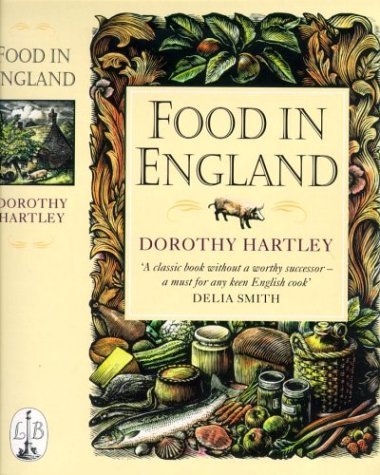
Paperback
First published January 1, 1954
I'm moving this off the "currently reading" shelf, because, while I've read big chunks of it and will consult it in the future, reading 600 pages of recipes is tough going. Hartley wrote wonderful stuff about the agriculture, husbandry, cooking, homemaking, and eating of England from the Neolithic Age onwards, concentrating mostly on medieval and early modern food practices that continued and/or were adapted, mostly in country foodways, through the 19th and 20th centuries.
The book suggests a much more varied, rich, and bizarre English cuisine than the stereotype allows, listing native plants and garden plants that were once widely consumed but now are forgotten (e.g., few people make sea holly toffee anymore, or gather cowslips or English laver or maidenhair ferns and know how they were combined with dozens of other herbs and flavorings); describing fuels, hearths/ovens, and other kitchen technologies, not to mention food sources, that were altered or lost in the Industrial Revolution and in times of war (how much of English cooking survived WWII and rationing?); and, most of all, stressing a regional view of English food: peat fires v. coal, different pasture for different breeds of cow, cultivated fruits v. wild, and the type and quality of flour grown in a region all change the cuisine ("We expect the last dish of sucking pig will be served in Gloucestershire"). So if you're into Slow Food, food history, or just English plain cookery, you'll find a lot of great stuff here and might get some questions answered. (Since I was 10 and read Jane Eyre, I've been trying to picture the "sago" Grace Poole ate for supper in the attic. What the hell was it? Now I have 3 recipes.) One complaint: the lack of footnotes and sources.
Hartley's tone is generally calm and didactic; she waxes enthusiastic over certain flavors, and is strict about good and bad food preparation. But once in a while she really lets go; under the heading "Hedgehog," she gets so emotional she has to put a sentence in all-italics: "[H:]edgehogs are completely harmless, and do an enormous amount of good in the fields and gardens by devouring snails and slugs. They become very tame, especially in dry weather, when they are glad of water. They are very fond of bread and milk, which trait has caused them to be accused of stealing it from cows--a complete fallacy. They also eat fallen fruit in the orchard, and are credited with rolling in it in order to carry it off on their backs. Thousands of these harmless little Furze-pigs are run over by motorists on the roadways at night; they do not bolt when frightened, but roll up, lie still, and are crushed to death. No one should harm a hedgehog."
AN UNHARTLEYLIKE RANT ON BEHALF OF PLUM PUDDING AND FRUITCAKE:
On a not entirely related note, I'd just like to say that I love plum pudding and fruitcake, and I'm tired of people's complaints about them. First, everybody hates plum pudding and fruitcake, so what kind of cachet do you think you earn for hating them? Oh, so you wear shoes and know who the president of the U.S. is too? Bully for you. Second, PP and FC fit into the category of foods that sophisticated eating adults should test out and reassess from time to time, like oysters, blue cheese, and foie gras: decadent, intense, and grown up (in PP's case, slightly bitter, alcoholic, and fatty). Third, so you had a bad fruitcake experience once: get over it!