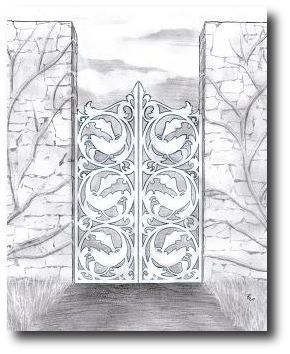
"Ex Oblivione" is a prose poem by American horror fiction writer H. P. Lovecraft, written in late 1920 or early 1921 and first published in The United Amateur in March 1921, under the pseudonym Ward Phillips.
It is written in first person and tells of the dreams of a presumably dying man. In his dreams, the man is walking through a valley and encounters a vine-covered wall with a locked bronze gate therein. He longs to know what lies beyond the gate.
Howard Phillips Lovecraft, of Providence, Rhode Island, was an American author of horror, fantasy and science fiction.
Lovecraft's major inspiration and invention was cosmic horror: life is incomprehensible to human minds and the universe is fundamentally alien. Those who genuinely reason, like his protagonists, gamble with sanity. Lovecraft has developed a cult following for his Cthulhu Mythos, a series of loosely interconnected fictions featuring a pantheon of human-nullifying entities, as well as the Necronomicon, a fictional grimoire of magical rites and forbidden lore. His works were deeply pessimistic and cynical, challenging the values of the Enlightenment, Romanticism and Christianity. Lovecraft's protagonists usually achieve the mirror-opposite of traditional gnosis and mysticism by momentarily glimpsing the horror of ultimate reality.
Although Lovecraft's readership was limited during his life, his reputation has grown over the decades. He is now commonly regarded as one of the most influential horror writers of the 20th Century, exerting widespread and indirect influence, and frequently compared to Edgar Allan Poe. See also Howard Phillips Lovecraft.
A first person narrator intends to stay forever in his dreams to enter the golden valley of happiness. He takes drugs for this reason. One day the latch is open and he can pass. Escapism, suicide solution, world weariness... Lovecraft comes up with a fine poem turned story here. Recommended!
Lovecraft strikes again with his silky-smooth dream-like prose. He writes about ideas that, at the time, were totally foreign and thought provoking, but now are widely accepted and old news. Evidence of his genius? I think.
In Ex Oblivione, the way the prose feels otherworldly and somehow connected to the themes of the story--afterlife and dreams--is pretty cool.
And even though it stands out like the Call of Cthulhu, and even though you can look back and see why people before were wild about him, the prose seems out of place while the ideas seem commonplace in modern literature. So there's not a whole lot to love about Lovecraft.
كتابة لافكرافت من النوع اللي بيخليني أسرح، او انا كنت خلاص جبت آخري و هسرح بالفعل مش عارف حسيت اللغة شاعريه، بعد كده اكتشفت ان دي أصلًا قصيدة نثرية، الكتاب اللي قرأتها فيه مش موضح ايه قصة قصيرة و ايه شعر و ايه اي حاجة الحقيقة قرأتها في كتاب المترجم 2 لهشام فهمي
I'm really enjoying this Lovecraft phase. Ex Oblivione is another story that's considerably more pure fantasy-esque than I'm used to with the weird horror master and creator of the Cthulhu mythos. This story, like Azathoth, The Quest of Iranon and many more short-form texts, provide Lovecraft's fictional musings on dreams and their connection to the unknown and the supernatural.
"I knew not which to believe, yet longed more and more to cross for ever into the unknown land; for doubt and secrecy are the lure of lures, and no new horror can be more terrible than the daily torture of the commonplace."
"Cuando me llegaron los últimos días, y las feas trivialidades de la vida me hundieron en la locura como esas gotas de agua que el torturador deja caer sin cesar sobre un punto del cuerpo de su víctima, dormir se convirtió para mí en un refugio luminoso. En mis sueños encontré un poco de la belleza que había buscado en vano durante la vida, y pude vagar por viejos jardines y bosques encantados."
ترجمة موقع "ويكي مصدر" لقصيدة "إلى النسيان" بقلم هوارد فيليبس لافكرافت، مع بعض التصرف =============================================
عندما أحسستُ بدنوّ أيامي الأخيرة وأن توافهَ الوجودِ القبيحةَ بدأت تقودُني إلى الجنون.. - مثل قطراتِ الماء الصغيرة التي يُنزِلُها المعذِّبون دون انقطاعٍ على بقعةٍ واحدةٍ من أجسادِ ضحاياهُم - وجدتُ نفسي أحبُّ ملجأ النوم.. وجدت في أحلامي قليلا من الجمالِ الذي بحثتُ عنه - عبثًا - في الحياة، وتجوّلتُ عبر الحدائقِ القديمة والغاباتِ المسحورة.
ذات مرة كانت الريحُ هادئةً وعطرة وسمعتُ الجنوبَ يناديني، وأبحرتُ بلا نهايةٍ - وأنا أحُس بالإعياء يعتريني - تحت النجوم الغريبة.
ذات مرة عندما هطل المطر اللطيف دخلتُ في مركَبٍ على جدولٍ لا تراه الشمس تحت الأرض حتى وصلتُ إلى عالمٍ آخرَ من الغسق الأرجواني، والأشجارِ قُزَحيةِ اللون، والوردِ الأبدي.. مشيتُ عبر وادٍ ذهبي يؤدّي إلى بساتينَ وأطلالَ غامضة، ووصلتُ إلى حائطٍ هائلٍ تحيط به الكَرمَات العتيقة، وتثقبه بوابةٌ صغيرة من البرونز.
مَشَيْتُ من خلال هذا الوادي عدة مرات، وكثيرا ما كنت أطيلُ الوقوفَ وَسْطَ الضوء الخفيف، حيث تتلوى الأشجار العملاقة وتلتفُّ بشكل غريب، وامتدّت الأرض الرمادية الرطبة من جذع إلى جذع، وكشفَتْ عن بعض الأحجار التي يغطيها الفطر، والتي تخص معابد مدفونة.
وكان محط نظري هو الحائط الهائل الذي تعلوه الكُروم والذي يقع بوسْطِهِ ذاك الباب البرونزي الصغير. . . . بعد فترة، لم أعد أحتمل أيام الوعي بسبب كآبتها وتشابهها. وفي أغلب الأحيان كنت أنجرفُ - في سلامِ الدواء المنوم - في الوادي والبساتين الغامضة، وأتساءلُ: كيف أجعلها مسكني الأبدي، حتى لا أعودَ إلى عالمٍ مملٍ تخلو منه المباهج والألوان الجديدة.
نظرتُ إلى الباب الصغير في الحائط الهائل، شعرت بأنّ خلفه تقعُ أرضٌ من الأحلام متى يدخلها المرء، فلا رجوع منها.
في كلِ ليلةٍ جاهدتُ في نومي لأجدَ مزلاجَ الباب المخفي في الحائط الأثري، رغم أنه كان مخفيا بشكلٍ جيد. وكنت أخبر نفسي بأن العالمَ خلف الحائطِ كان أكثر ديمومةً، بل وكان أكثرَ روعة وتألقا.
وفي إحدى الليالي كنتُ في زاكاريون - مدينةِ الحُلم - ووجدت ورقةَ برديِّ مُصفَرّة امتلأتْ بأفكارِ حكماءِ الأحلامِ الذين سكنوا قديما في تلك المدينة، وبلغوا من الحكمةِ أنهم لم يولدوا في عالم اليقظين. في ذلك المكان كُتِبَتْ عديدُ الأشياءِ التي تتعلّقُ بعالم الأحلام، وبينها حديثٌ عن وادٍ ذهبي وبستانٍ مقدس به معابد، وحائطٍ عالٍ به بابٌ برونزي صغير. عندما رأيتُ هذه الكتابة، عرَفتُ أنها نفس المشاهد التي تراودني، فقرأت مطولا بالبردية.
كَتبَ بعض حكماء الأحلام عن العجائب خلف الباب المنيع، لكن آخرين تحدثوا عن الرعب والإحباط. لم أعرف من أُصدِّق، لكن رغبتي زادت بعبور الباب نحو الأرض المجهولة إلى الأبد؛ ذلك الشكّ والسرية هما أشد أنواع السحر، ولا يوجدُ رعبٌ يتجاوزُ - في غرابته وفظاعته - العذابَ اليوميّ الذي يلقيه المكانُ العادي. لذا عندما علمتُ بالمخدّر الذي يفتح الباب ويوصلني إلى هناك، صمّمت على أخذه عندما أصحو.
ليلةَ أمس ابتلعتُ المخدّر وطفوت بحُلمي إلى الوادي الذهبي والبساتين الغامضة؛ وعندما وصلتُ هذه المرة إلى الحائط الأثري، رأيت بأن الباب البرونزي الصغير كان مفتوحا. من ورائه أتى وهجٌ غريب من الأشجارِ الملتفة العملاقة وقممِ المعابدِ المدفونة، وسبحتُ بتناغمٍ مع الفضاء، وأنا أتوقعُ أمجادَ الأرضِ التي لن أعود منها أبدا.
لكن في الوقت الذي فُتح فيه الباب عن آخره ودفعني سحرُ المخدّر والحُلم إلى الداخل، عرَفتُ بأنّ كلَّ المشاهدِ والأمجادِ كانت لها نهاية؛ ذلك العالمُ الجديدُ لم يكن أرضا أو بحرا، لكنه - فقط - فراغٌ أبيضُ لفضاءٍ خالٍ من الناس ولا حدود له. لذا، كانت سعادتي أكبر مما كنت آمُل، ودخلتُ إلى تلك اللانهاية.. إلى النسيان.. حيث دعاني شيطانُ الحياةِ لأقضيَ ساعةً قصيرةً ومقفرة. ...
This prose poem reminds me a bit of Celephaïs. It is beautiful. It is written in the first person and told by someone who found beauty and peace in dreams. While roaming through dream lands the narrator finds a papyrus that tells about a locked gate that can be unlocked using a special drug. Beyond the gate he finds two truths.
I've never read anything by H.P. Lovecraft. The story is a single-page short story that is very beautifully written. Hopefully, this won't be my last Lovecraft. I totally recommend this to everyone.
A short enjoyable story about an unnamed narrator who wishes to stay in the dream world and takes substances to try and do so. Once again the imagery from HP Lovecraft is fantastic, vivid and leads to an enjoyable short story with deeper musings upon life.
This was a nice, well written story that avid dreamers will especially enjoy. It has an eerie vibe that makes you question the different between reality and dream life, and how dreams can directly relate to who you are. Very similar vibe to the rest of his stories. Recommend for a quick short story!
A drug induced trip into oblivion. Feels like a fragment of a journal rather than an actual story or "prose poem" as I've seen it described.
On a tangent, it feels a bit like a cheat to be logging all these Lovecraft stories separately, but I'm working my way through a digital Complete Works, and I want to have a record of everything I've read. Maybe I should pull these off my feed. Since I'm on vacation right now, I've been reading quite a bit.
"I knew not which to believe, yet longed more and more to cross for ever into the unknown land; for doubt and secrecy are the lure of lures, and no new horror can be more terrible than the daily torture of the commonplace."
"So, happier than I had ever dared hope to be, I dissolved again into that native infinity of crystal oblivion from which the daemon Life had called me for one brief and desolate hour."
A passage from dream/hallucination to a pressumed death.
My first H.P. Lovecraft short story. This man is famous for horror, and I've dying to get to some of his works, but I'm so glad that I started with this. Enchanting, gripping, and absolutely trancelike writing. This story's use of metaphor and dreamscape is worthy of being studied in English class. (And as an English major, I'm sad that genres like horror are looked down upon in terms of their literary merit.)
"After a while, as the days of waking became less and less bearable from their greyness and sameness, I would often drift in opiate peace through the valley and the shadowy groves, and wonder how I might seize them for my eternal dwelling-place, so that I need no more crawl back to a dull world stript of interest and new colours..."
"Some of the dream-sages wrote gorgeously of the wonders beyond the irrepasable gate, but others told of horror and disappointment. I knew not which to believe, yet I longed more and more to cross forever into the unknown land; for doubt and secrecy are the lure of lures, and no new horror can be more terrible than the daily torture of the commonplace."
Φιλοσοφικό, λυρικό, υπαρξιακό, ονειρικό.Η ψυχή που ψάχνει ένα πέρασμα στην ελευθερία μέσα από την λήθη, αθόρυβα, χωρίς πόνο ή επιθυμία. Άραγε η λήθη προκαλεί τρόμο ή παρηγοριά;
Ex Oblivione is one of those rare Lovecraft pieces where he doesn’t just whisper cosmic despair. This dread and insignificance is practically sighed into your soul. It’s short, poetic, and beautifully miserable, like a dream you wake from too soon and immediately wish you hadn’t.
This isn’t horror in the usual sense. There are no monsters, no tentacles, no ancient cults, no oogie boogies. Just the quiet allure of nonexistence. The sweet release of death. Oblivion. It’s Lovecraft’s ultimate comfort blanket: the sweet release of nothingness. There’s a strange kind of peace in it, the acceptance that maybe the void isn’t to be feared, but welcomed.
It’s haunting, serene, and oddly comforting in that bleak, existential way only Lovecraft could make feel poetic instead of alarming. A small, melancholic masterpiece.
The transition between the waking world and the wisdom of dreams, and reading the text after reading similar texts about the dreams realm make me wonder, why do I read about the worlds of dream? Is it a trigger from my subconscious to seek the wisdom of texts for consultation about the dilemmas of my restless sleep? Am I trying to find a way to remember the composure of my dreams? Am I supposed to know what I dream of? Will I, if I remember, be capable of comprehending, or is it a language that only my subconscious, with all its wisdom, can master? I don't, sincerely, know. All I know is, I enjoyed this short story.
When the last days were upon me, and the ugly trifles of existence began to drive me to madness like the small drops of water that torturers let fall ceaselessly upon one spot of their victims body, I loved the irradiate refuge of sleep. In my dreams I found a little of the beauty I had vainly sought in life, and wandered through old gardens and enchanted woods.
Once when the wind was soft and scented I heard the south calling, and sailed endlessly and languorously under strange stars.
Once when the gentle rain fell I glided in a barge down a sunless stream under the earth till I reached another world of purple twilight, iridescent arbours, and undying roses.
And once I walked through a golden valley that led to shadowy groves and ruins, and ended in a mighty wall green with antique vines, and pierced by a little gate of bronze.
Many times I walked through that valley, and longer and longer would I pause in the spectral half-light where the giant trees squirmed and twisted grotesquely, and the grey ground stretched damply from trunk to trunk, sometimes disclosing the mould-stained stones of buried temples. And always the goal of my fancies was the mighty vine-grown wall with the little gate of bronze therein.
After awhile, as the days of waking became less and less bearable from their greyness and sameness, I would often drift in opiate peace through the valley and the shadowy groves, and wonder how I might seize them for my eternal dwelling-place, so that I need no more crawl back to a dull world stript of interest and new colours. And as I looked upon the little gate in the mighty wall, I felt that beyond it lay a dream-country from which, once it was entered, there would be no return.
So each night in sleep I strove to find the hidden latch of the gate in the ivied antique wall, though it was exceedingly well hidden. And I would tell myself that the realm beyond the wall was not more lasting merely, but more lovely and radiant as well.
Then one night in the dream-city of Zakarion I found a yellowed papyrus filled with the thoughts of dream-sages who dwelt of old in that city, and who were too wise ever to be born in the waking world. Therein were written many things concerning the world of dream, and among them was lore of a golden valley and a sacred grove with temples, and a high wall pierced by a little bronze gate. When I saw this lore, I knew that it touched on the scenes I had haunted, and I therefore read long in the yellowed papyrus.
Some of the dream-sages wrote gorgeously of the wonders beyond the irrepassable gate, but others told of horror and disappointment. I knew not which to believe, yet longed more and more to cross forever into the unknown land; for doubt and secrecy are the lure of lures, and no new horror can be more terrible than the daily torture of the commonplace. So when I learned of the drug which would unlock the gate and drive me through, I resolved to take it when next I awaked.
Last night I swallowed the drug and floated dreamily into the golden valley and the shadowy groves; and when I came this time to the antique wall, I saw that the small gate of bronze was ajar. From beyond came a glow that weirdly lit the giant twisted trees and the tops of the buried temples, and I drifted on songfully, expectant of the glories of the land from whence I should never return.
But as the gate swung wider and the sorcery of the drug and the dream pushed me through, I knew that all sights and glories were at an end; for in that new realm was neither land nor sea, but only the white void of unpeopled and illimitable space. So, happier than I had ever dared hope to be, I dissolved again into that native infinity of crystal oblivion from which the daemon Life had called me for one brief and desolate hour.
Not my cup of tea. (Of course I don't like tea either...)
From wikipedia: "An H. P. Lovecraft Encyclopedia suggests that the theme of "Ex Oblivione"—that nothingness is preferable to life—was derived from Lovecraft's reading the philosopher Arthur Schopenhauer. Lovecraft expressed similar sentiments in non-fiction work at the time, writing in In Defense of Dagon, "There is nothing better than oblivion, since in oblivion there is no wish unfulfilled.""