

What do you think?

Little One
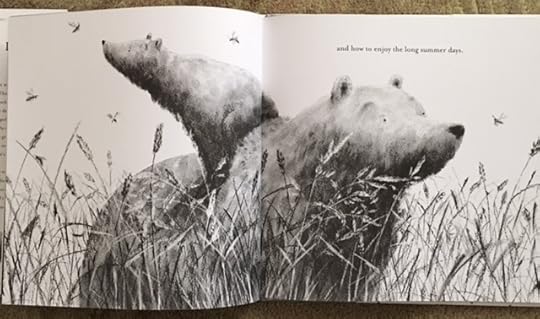
Spring is here and new life is stirring. There is so much for Big Bear to teach her new cub as they step out into the forest. Together they eat, swim, fish, and play as one season becomes the next. With Big Bears help, Little One grows more and more confident, until winter comes once more and it's time to head home. With gentle text and stunning black and white illustrations, Jo Weaver reveals the wonder of nature, the first steps of independence, and the strength of parental love.
Hardcover
First published March 1, 2016
About the author
Jo Weaver
13 books13 followersHello! I am an illustrator and picture book maker.
I work mostly by hand using willow charcoal and a putty rubber.
I live and work on the east coast of Scotland with my young family and an ever expanding brood of chickens. When not at my drawing board I can often be found wandering the wild and windy beaches near our home.
I was lucky enough to complete an MA in Children's Book Illustration at the Cambridge School of Art (ARU) in 2015 - a course I would highly recommend to any aspiring illustrator/storyteller. My books have since been translated into six languages for publishers including:
Hodder Children's Books (Hachette UK)
Oxford University Press (UK)
Walker Books (UK)
Kaleidoscope (France)
Orecchio Acerbo Editore (Italy)
Peach Tree (USA)
Eerdlings (USA)
Ars Edition (Germany)
Jei Publishing (Korea)
AWARDS
CILIP Greenaway Medal 2018, nominated (A Story Like The Wind)
Award Nati per Leggere 2017, winner (Little One)
CILIP Greenaway Medal 2017, long-listed (Little One)
Klaus Flugge Award 2017, long-listed (Little One)
"Read It Again!" Cambridgeshire Children's Book Award 2017, shortlisted (Little One)
AOI Illustration New Talent Awards 2014, shortlisted.
I work mostly by hand using willow charcoal and a putty rubber.
I live and work on the east coast of Scotland with my young family and an ever expanding brood of chickens. When not at my drawing board I can often be found wandering the wild and windy beaches near our home.
I was lucky enough to complete an MA in Children's Book Illustration at the Cambridge School of Art (ARU) in 2015 - a course I would highly recommend to any aspiring illustrator/storyteller. My books have since been translated into six languages for publishers including:
Hodder Children's Books (Hachette UK)
Oxford University Press (UK)
Walker Books (UK)
Kaleidoscope (France)
Orecchio Acerbo Editore (Italy)
Peach Tree (USA)
Eerdlings (USA)
Ars Edition (Germany)
Jei Publishing (Korea)
AWARDS
CILIP Greenaway Medal 2018, nominated (A Story Like The Wind)
Award Nati per Leggere 2017, winner (Little One)
CILIP Greenaway Medal 2017, long-listed (Little One)
Klaus Flugge Award 2017, long-listed (Little One)
"Read It Again!" Cambridgeshire Children's Book Award 2017, shortlisted (Little One)
AOI Illustration New Talent Awards 2014, shortlisted.
Ratings & Reviews
Friends & Following
Create a free account to discover what your friends think of this book!
Community Reviews
Displaying 1 - 30 of 162 reviews

May 3, 2016
This book makes me feel grateful that my children still allow me to read picture books to them. This quiet story contains such breathtaking charcoal drawings that it could have been wordless and still conveyed it's gentle message. I'm more than a little awestruck by this beautiful debut. My children were equally impressed with the illustrations. Just lovely. 5 stars.

December 1, 2016
Have you ever sat down with a little one and taken a pencil and made simple drawings to entertain them? No color. Just a simple black lead pencil. To the child you have just done something wondrous and special.
In Little One the artist and author has taken the simplicity of black and white with muted shading and told a simple story. Simple visually. Simple text. A few words that share how the mama bear gently leads baby bear as they emerge from den and winter slumber into an awakening world of spring. She leads him on through the summer and into the fall until it is again time to sleep in the den for another winter.
Yes, a spot of color here and there (example: the spring flowers, the fall leaves) might have lent more interest visually; but I chose to enjoy the book as Joe Weaver has drawn it in its beautiful black and white simplicity.
I think this book is a treasure for its lovely story and also for its ability to detail beauty with stark simplicity.
GIVEAWAY - click here - http://chatwithvera.blogspot.com/2016... - Begins December 1 - ENDS December 11 @ 12:01 a.m. ET - Open to USA addresses only
DISCLOSURE: I was provided a complimentary copy from Peachtree Publishing to facilitate a review of my own opinions which are freely given. Giveaway copy is provided directly to the winner by Peachtree.
In Little One the artist and author has taken the simplicity of black and white with muted shading and told a simple story. Simple visually. Simple text. A few words that share how the mama bear gently leads baby bear as they emerge from den and winter slumber into an awakening world of spring. She leads him on through the summer and into the fall until it is again time to sleep in the den for another winter.
Yes, a spot of color here and there (example: the spring flowers, the fall leaves) might have lent more interest visually; but I chose to enjoy the book as Joe Weaver has drawn it in its beautiful black and white simplicity.
I think this book is a treasure for its lovely story and also for its ability to detail beauty with stark simplicity.
GIVEAWAY - click here - http://chatwithvera.blogspot.com/2016... - Begins December 1 - ENDS December 11 @ 12:01 a.m. ET - Open to USA addresses only
DISCLOSURE: I was provided a complimentary copy from Peachtree Publishing to facilitate a review of my own opinions which are freely given. Giveaway copy is provided directly to the winner by Peachtree.

March 12, 2016
I love this little book. It's sweet and simple (which is a compliment), and simply charming. Looking back on it some time after I first read it, I honestly couldn't remember if there were even words in it, or if it was told purely in pictures. There are words – "There's so much to discover in your new world, Little One," said Big Bear – but they're spare and undemanding, and perfect. I never would have thought I'd be so enthusiastic over a picture book with black and white illustrations, but I love this. Big Bear is solid and reassuring; Little One is energetic and every bit as adorable as baby animals are supposed to be. There is a lovely rhythm to the story, looping from the end of hibernation to the beginning, leading naturally to encouraging a child to settle down and hibernate for the night. It's pretty close to perfect.
The usual disclaimer: I received this book via Netgalley for review.
The usual disclaimer: I received this book via Netgalley for review.

December 27, 2020
The illustrations are black and white which can be used in art through different mediums. The story has many links to science such as hibernation, seasons and the life cycle. Bear is small in comparison to the forest which could show that the forest is huge and bear might be vulnerable.

February 27, 2026
Beautiful charcoal drawings accompany the first year of a young bear.

February 17, 2018
I was first drawn to this book by the front cover with it’s seemingly simple and expressive black and white picture of two bears. One would assume that the relationship between the two bears is one of a child and parent, due to the difference in size and the fact that the body of the little bear is being shielded by the big bear, and they seem to be looking at each other caringly. This relationship is then confirmed through the blurb.
The story is about a mother bear and how she introduces her cub to its new world. Together they experience the changing seasons and the cub learns how to explore and survive. This mirrors the relationship of how a human mother nurtures her child, as the cub learns from following the mothers example. This is further strengthened by the size of the big bear, compared to the little bear, as the story unfolds little bear can be seen to grow in size, signifying his development and growing up. Furthermore, little bear’s growth can be seen with how at the start of the book he stays in close proximity to the big bear, but as their journey progresses the cub becomes more explorative and moves away from the mother.
The book uses simple short text and full bleed double page spread monochromatic charcoal illustrations, which seems to enhance the sense of wonder and discovery in the bears journey. This makes it is easy to understand and enjoy and is a nice introduction to the changing seasons and the life cycle of an animal.
It is a good storybook for parents to share with their child as the pictures are clear and easy to understand and link well with the text. As the book does not use any colour other than its shades of black, it can be used to engage children in imaginative questioning about their knowledge and understanding of the world.
Overall, I really enjoyed this story especially the world that Weaver has constructed with its changing landscapes that enhanced the bond between the bears. Weaver’s underlying message of “Whatever the season, a mother’s love is strong and true” can be clearly seen throughout the book, especially in the end when the bears begin to hibernate; curling up together to go to sleep in their dark den, surrounded by white. A powerful image to finish on.
The story is about a mother bear and how she introduces her cub to its new world. Together they experience the changing seasons and the cub learns how to explore and survive. This mirrors the relationship of how a human mother nurtures her child, as the cub learns from following the mothers example. This is further strengthened by the size of the big bear, compared to the little bear, as the story unfolds little bear can be seen to grow in size, signifying his development and growing up. Furthermore, little bear’s growth can be seen with how at the start of the book he stays in close proximity to the big bear, but as their journey progresses the cub becomes more explorative and moves away from the mother.
The book uses simple short text and full bleed double page spread monochromatic charcoal illustrations, which seems to enhance the sense of wonder and discovery in the bears journey. This makes it is easy to understand and enjoy and is a nice introduction to the changing seasons and the life cycle of an animal.
It is a good storybook for parents to share with their child as the pictures are clear and easy to understand and link well with the text. As the book does not use any colour other than its shades of black, it can be used to engage children in imaginative questioning about their knowledge and understanding of the world.
Overall, I really enjoyed this story especially the world that Weaver has constructed with its changing landscapes that enhanced the bond between the bears. Weaver’s underlying message of “Whatever the season, a mother’s love is strong and true” can be clearly seen throughout the book, especially in the end when the bears begin to hibernate; curling up together to go to sleep in their dark den, surrounded by white. A powerful image to finish on.

October 9, 2017
Really beautiful charcoal art. Perfect for babies who prefer black and white pictures.

October 11, 2018
A basic storyline about a adult bear looking after a cub, and all the struggles they will face up to winter. Whilst the illustrations are beautiful I feel like it may have been more effective to match the colours of the art with the seasons discussed. The black and white throughout creates less impact on the imagery moving into the winter season for me, as perhaps it would if it moved from autumn colours. However, it is still a lovely simple story for children to enjoy.

November 11, 2015
Mellow, Quiet, Expressive Black and White Picture Book
This is a quiet meditation on maternal love, growth and independence. There isn't a story, as such, since we basically move through the seasons as we follow the drawings from page to page. This is a picture book, and it rises or falls on the pictures. They are in black and white but have beautiful shading and detail. The characters are distinct and appealing and the moods and atmospheres of the different seasons are conveyed very clearly.
I don't see this as a bedtime read, since there isn't much to read or to listen to. This struck me as a book to be looked at together, in a quiet moment, and to be discussed, with little details being discovered and pointed out. It's not jazzy or grabbing, and certainly not antic. Think of it as an illustrated lullaby or a baby bear photo album, where you can make up your own stories to go with the drawings. And it's good to have a few of those on the shelf.
Please note that I received a free advance will-self-destruct-in-x-days Adobe Digital copy of this book in exchange for a candid review. Apart from that I have no connection at all to either the author or the publisher of this book.
This is a quiet meditation on maternal love, growth and independence. There isn't a story, as such, since we basically move through the seasons as we follow the drawings from page to page. This is a picture book, and it rises or falls on the pictures. They are in black and white but have beautiful shading and detail. The characters are distinct and appealing and the moods and atmospheres of the different seasons are conveyed very clearly.
I don't see this as a bedtime read, since there isn't much to read or to listen to. This struck me as a book to be looked at together, in a quiet moment, and to be discussed, with little details being discovered and pointed out. It's not jazzy or grabbing, and certainly not antic. Think of it as an illustrated lullaby or a baby bear photo album, where you can make up your own stories to go with the drawings. And it's good to have a few of those on the shelf.
Please note that I received a free advance will-self-destruct-in-x-days Adobe Digital copy of this book in exchange for a candid review. Apart from that I have no connection at all to either the author or the publisher of this book.

November 3, 2015
Lovely black & white picture book. The story is rather peaceful and calming, probably better suited for bedtime than afternoon group storytime.
Note: I received a digital ARC through NetGalley. I also received an F&G from the publisher at an ALA conference.
Note: I received a digital ARC through NetGalley. I also received an F&G from the publisher at an ALA conference.

September 30, 2016
A telling of a mother bear and her cub as they awake from hibernation and go exploring through all the seasons. It is hard to believe that this a debut book for this author. The illustrations resemble charcoal.

November 4, 2015
Cute book detailing the seasons and bears

October 12, 2019
I'm so amazed by the artwork.
December 5, 2015
Spring is here and mom bear has so many thing to teach her little cub before winter comes again. The fish and hunt. They wander through the forest and through the night. They meet other animals, and eat ripe berries. They enjoy each other until the day comes. Back to their old den, they curl up together dreaming of the next spring.
Sweet story and lovely illustrations. Perfect for a bed time story.
Age range 2 to 5 years old
Check out more children's book reviews in my Reviews in Chalk Blog!
Sweet story and lovely illustrations. Perfect for a bed time story.
Age range 2 to 5 years old
Check out more children's book reviews in my Reviews in Chalk Blog!
May 25, 2021
Beautiful black and white, sketched illustrations, so appealing and full of texture, movement and subtle detail. Some beautiful vocabulary helps tell the story of Big Bear waking up after winter in her den and leading Little One to discover the new world as spring arrives and awakens the woods and trees around them. I realy like the way the year passes and the fact that the story brings us back to winter and the warmth and comfort of home, the den, once again.

September 4, 2016
Super simple and those gorgeous black and white illustrations make it even more lovely.

July 21, 2024
This was really cute, and once again, seriously: Jo Weaver is an incredible artist. These pictures were amazing.

May 9, 2025
Big Bear emerges from her winter den with her cub, Little One, in this lovely picture book from British author/illustrator Jo Weaver. Together the two make their way through the world, mother teaching child how to live—where to go, how to act with others, when to catch salmon or eat wild berries. Eventually winters comes again, and Big Bear leads Little One back to their mountain cave, to spend another cold season deep in sleep...
Published in 2016, Little One was Weaver's debut, and is a book I sought out after enjoying the illustrations she did for Justin Anderson's 2019 Narwhal: The Arctic Unicorn . I'm certainly glad I did, as I found it an appealing book, with its gentle narrative about an ursine mother and child exploring the world together, and its lovely black and white illustrations, which look to have been done in graphite, and which beautifully capture a world full of shadow and light. While it references basic scientific and naturalistic realities, I think it's stronger as a story about the bond between mother and child, and that it would make an excellent bedtime book.
Published in 2016, Little One was Weaver's debut, and is a book I sought out after enjoying the illustrations she did for Justin Anderson's 2019 Narwhal: The Arctic Unicorn . I'm certainly glad I did, as I found it an appealing book, with its gentle narrative about an ursine mother and child exploring the world together, and its lovely black and white illustrations, which look to have been done in graphite, and which beautifully capture a world full of shadow and light. While it references basic scientific and naturalistic realities, I think it's stronger as a story about the bond between mother and child, and that it would make an excellent bedtime book.

May 6, 2017
First impressions of this are great. It is a big, wide book (27cm by 27cm) with the title on the cover being in gold, whilst the rest of the book is black and white with the same charcoal art used as on the cover throughout. Flicking through there are little details to add to the luxury, like the airborne dandelion seeds on the inside covers.
I read this with my 6-year-old daughter. The story follows the first year in the life of "Little One" through all four seasons. It makes a comforting bedtime story for little ones as mother bear is always with Little One every step of the way, and they snuggle up to each other at the end, as the cold descends. My daughter says the book is "good and they go on an adventure".
Perhaps if I was being critical I would say it is short, but I like the art and the story and the feel of the book.
I read this with my 6-year-old daughter. The story follows the first year in the life of "Little One" through all four seasons. It makes a comforting bedtime story for little ones as mother bear is always with Little One every step of the way, and they snuggle up to each other at the end, as the cold descends. My daughter says the book is "good and they go on an adventure".
Perhaps if I was being critical I would say it is short, but I like the art and the story and the feel of the book.
January 24, 2019
Little One tells a story of a momma bear teaching her baby about how to do things through the seasons. It starts out as they are ending hibernation and the book goes through the year to the start of the following year's hibernation.
I liked this book, I thought the story was simple and sweet and the illustrations were nice. I can see how children would like this book because of the easy to follow storyline.
The only way I can realistically see myself using this book is having it for a read-aloud one day for class. Most of the time when I read a book I can instantly tell how I would use it and for what type of lesson. This book is good, but other than using it for a read-aloud or just having it in my library for my students to check out, I would not use it much.
I liked this book, I thought the story was simple and sweet and the illustrations were nice. I can see how children would like this book because of the easy to follow storyline.
The only way I can realistically see myself using this book is having it for a read-aloud one day for class. Most of the time when I read a book I can instantly tell how I would use it and for what type of lesson. This book is good, but other than using it for a read-aloud or just having it in my library for my students to check out, I would not use it much.

April 1, 2019
Un album absolument magnifique, les illustrations en noir et blanc sont tendres et lumineuses, de veritables tableaux. Parfait pour aborder le thème des saisons, l'hibernation, et le lien qui unit une maman et son petit.

June 29, 2020
Little One by Jo Weaver is a story of a bear who gets out of hibernation and explores the world. He learns to be gentle with friends. He learns to play, fish, swim, and pick berries. Winter was coming again and they then hibernated again.

December 17, 2022
Love the black and white illustrations and the easy story of connectedness between a mama bear and her cub. There's a sense of the security, protection and play as well as careful lessons and boundless love in this very simple book.
Recommend to read to little ones.
Recommend to read to little ones.

January 7, 2017
I picked up this picture book because the illustrations looked absolutely beautiful, and they were. The story was cute, but Jo Weaver's illustrations are truly magical.

January 30, 2017
A solid choice for a more realistic view of bear life through the year. Not really inspiring or heartwarming but nice.
May 11, 2017
beautiful book!

May 16, 2017
4.75 stars for the illustrations alone!

June 7, 2017
Weaver's illustrations are incredible!

June 22, 2017
Guaranteed to bring a smile to your face.

October 20, 2017
Loved the artwork and the simple story.
Displaying 1 - 30 of 162 reviews