Jump to ratings and reviews
Rate this book

English Passengers

Rate this book
In 1857 when Captain Illiam Quillian Kewley and his band of rum smugglers from the Isle of Man have most of their contraband confiscated by British Customs, they are forced to put their ship up for charter. The only takers are two eccentric Englishmen who want to embark for the other side of the globe. The Reverend Geoffrey Wilson believes the Garden of Eden was on the island of Tasmania. His traveling partner, Dr. Thomas Potter, unbeknownst to Wilson, is developing a sinister thesis about the races of men. Meanwhile, an aboriginal in Tasmania named Peevay recounts his people's struggles against the invading British, a story that begins in 1824, moves into the present with approach of the English passengers in 1857, and extends into the future in 1870. These characters and many others come together in a storm of voices that vividly bring a past age to life.

462 pages, Paperback

First published March 14, 2000

286 people are currently reading
9022 people want to read

About the author

Matthew Kneale

20 books168 followers
Matthew Kneale was born in London in 1960, read Modern History at Oxford University and on graduating in 1982, spent a year teaching English in Japan, where he began writing short stories.

Kneale is the son of writers Nigel Kneale and Judith Kerr, and the grandson of essayist and theatre critic Alfred Kerr.

Ratings & Reviews

What do you think?
Rate this book

Friends & Following

Create a free account to discover what your friends think of this book!

Community Reviews

5 stars
2,950 (38%)
4 stars
2,803 (37%)
3 stars
1,344 (17%)
2 stars
341 (4%)
1 star
136 (1%)
Displaying 1 - 30 of 707 reviews
Profile Image for Vit Babenco.
1,781 reviews5,777 followers
October 11, 2024
The narration of English Passengers is situated on two different planes…
The first is the high farce of the seafaring expedition in search of Eden:
Out through the door I went and behind me I heard what wasn’t any kind of word at all, but a kind of well-spoken howl. Well, given the right day I can be swift enough on my feet. Down those stairs I went, leaping three at a time, then through that sitting-room window clean as a ball through a barrel, and till I was dashing away towards the river. The rest of them hadn’t yet reached the boat and were taking daintiest little steps to keep from slipping in the mud. They stopped and looked round when they saw me coming in my chase, and looked like they were about to start asking foolish questions – which I was in no mood to stop and answer – but fortunately just that moment there was a bright flash from the upstairs window of the house, and also a mighty bang, that settled their curiosity nice as nip.

And the second – the low tragedy of the aborigines and convicts:
What our kindly friend Mr. Crane doesn’t understand is that His Majesty’s colony of Van Diemen’s Land is not intended to reform criminals, but simply to store them, like so much rubbish in a dust heap, so that England can be emptied of troublemakers once and for all.

And in the end these both seemingly immiscible genres merge into a fine tragicomedy.
Pride is a deadly sin and what can be a better disguise for pride than to hide it behind humility and piety.
Profile Image for Metodi Markov.
1,726 reviews435 followers
August 21, 2025
Книга за един малко познат, но ужасяващ геноцид, това е в същността си "Английските пасажери" от Матю Нийл.

Не знаех почти нищо за историята и коренното население на остров Тасмания ("Земя на Ван Димен") преди да я започна и по време на прочита ѝ на няколко пъти я оставях, за да ровя в нета за допълнителна информация.

При пристигането на първите английски колонизатори и каторжници (четири от всеки десет престъпници изпратени към Австралия са се озовали именно на Тасмания), палава, както са се наричали местните, са били между три и десет хиляди човека - ловци и събирачи, разделени на девет различни племена, всяко със своя строго определена територия.

За седемдесет години те са безжалостно избити, изселени и загинали от пренесените от англичаните болести, до край... Оцеляват известно количество мелези, плод главно на насилие спрямо брутално и безнаказано отвлечени местни жени. Почти нищо не е запазено от езика, нравите и обичаите на аборигените, което прави унищожението им пълно и безвъзвратно.

В началото на ХХ век, в забвението ги последва и най-големия торбест хищник на света към този момент - тасманийският вълк.

Авторът е написал комплексен и много интересен роман, в който са застъпени идеи и случки от тези времена, които далеч не са известни на широката публика.

Всичко в романа започва с намерението на капитан Илям Куилян Кюли от остров Ман, да начене кариера на контрабандист на стоки от Франция за Англия. Но едно неправилно назоваване на "свинчото" на борда още в самото начало на първия му курс води до поредица от нещастия и нашите моряци се оказват въвлечени в налудничава експедиция за търсене на Райската градина на другия край на света. Тя е оглавена от пастор-геолог и фанатик, включва още незаинтересуван ботаник и един хирург с интереси в областа на френологията, усърдно търсещ доказателства за естественото превъзходство на белия човек над всички останали земни раси.

Другата гледна точка е показна през погледа на Пийвей, мелез палава, участник във всички бурни събития на народа си до самия им край. И само той си знае, какво му е на душата...

Книгата е доста увлекателна, написана отлично и повод за доста размисли за епохата и нравите ѝ. Ще се хареса на всички любители на приключенията.

Снимка на последните оцелели палава, направена към 1860 година.


Снимка на един от последните тасманийски вълци, направена в зоопарка в град Хобарт, Тасмания през 1936 година.


P.S. Втората снимка я имах още като дете в една книга и си спомням, как безмерно ме натъжаваше - вълкът изглежда толкова нещастен, затворен в клетка, а самия факт, че е изтребен целия му род означаваше, че никога не бих могъл да го видя в природата на родната му Тасмания.

Сега такава тъга ме обзе, гледайки снимката на последните палава, нелепо облечени в английски дрехи, с уморени и безнадеждно помръкнали лица, загубили безвъзвратно света и наследството на дедите си...
Profile Image for Helle.
376 reviews452 followers
September 28, 2016
An immensely satisfying read and a literary adventure! That’s what this book was. It began with the first line:

Say a man catches a bullet through his skull in somebody’s war, so where’s the beginning of that?

How can you not be pulled into a story that begins thus? On top of that, the man behind this first line bears the auspicious name of Captain Illiam Quillian Kewley, and he is as delightful as his name suggests (though you cannot see his more piratical side from the name, but it is there). Captain Kewley is the light of the story, the comic relief, the voice that steers the reader through the story and indeed through the waters of the globe, from Britain to Tasmania. And there we encounter an atrocious chapter of British imperial history and the denigration of the Tasmanian Aboriginals.

So, we have here the big story – the atrocities in Tasmania, historically accurate and probably unknown to most people; and we have the smaller stories, those of Captain Kewley and his passengers, notably an insufferable reverend and an old-fashioned doctor, the former in search of the Garden of Eden, which he has every reason to believe is located in Tasmania, the latter in search of ‘specimens’ (the story begins in 1857, two years prior to the publication of The Origin of Species). It is a story about men’s fates.

The shift in, and authenticity of the, narrators reminded me of Cloud Atlas, the old-fashioned storytelling of Wilkie Collins. (I would add that the novel also requires the patience that these two authors demand. That sounds unkind, but it actually reflects that this is a Big book, if also a bit long). Reverend Wilson has a distant cousin in the sanctimonious Mr. Collins from Pride and Prejudice, and the Aboriginal boy, Peevay, has his own language as original as Harri’s in Pigeon English. The result is utterly convincing, and through these characters – and the big and the small stories – Matthew Kneale manages to be alternately outrageously funny and monstrously tragic. At all times, the story is exquisitely told, uniquely so.

No wonder this was shortlisted for the Booker Prize (2000). This book was written by an enormously talented writer at a time when it seems to me few books like this are being written this expertly.
Profile Image for Colin Baldwin.
233 reviews80 followers
December 19, 2023
4.5 STARS

An impressive read that brings together a collection of interconnecting storylines and multiple characters, all speaking to the reader in the first person, the most affecting being a young, insightful Tasmanian Aborigine whose account of HIS place in HIS world is compelling. His own personal struggles as a so-called half-caste are a complete contrast to that of the often bumbling whites.
Although fictitious, Matthew Kneale also writes about known historical events that took place during the colonisation of Van Diemen’s Land/Tasmania. There is no shying away from the atrocious treatment of the Tasmanian Aborigines.
If some of this is known to the reader, Kneale’s research and storytelling brings a persuasive, non-text book respresentation of this period in history, albeit no less disturbing, and a few times lengthy, hence not quite reaching the 5 stars from me.
His descriptions of landscapes are captivating. He shows the wild and wonderful aspects of the Tasmanian wilderness as a complex character in itself.
Profile Image for Fionnuala.
886 reviews
Read
September 4, 2017
The last book I read in 2016 becomes the first I review in 2017.
That sounds neat but it also sounds over obvious and not especially interesting - what else should I review first, you might ask (actually I reviewed little of what I read in November and December, and I've already read three books in January so in that sense it is not as obvious as it might seem).

There are some neat things about this book too but some others that are over obvious and definitely not specially interesting (and though I've tried, I can't find them less obvious or more interesting).

One of the really neat things is the name of the narrator: Illiam Quillian Kewley. I thought that name had enormous promise, and the man himself, being a Manx smuggler, and therefore wonderfully jaunty and disrespectful, especially when speaking in a mixture of Manx and English about mainland English people, shows great promise (in the parts of the book which he gets to narrate. But Illiam Quillian Kewley turns out to be only one of many narrators and therefore he gets to tell only a small amount of this very very long story. There must be upwards of twenty other narrators, and it's even hard to be accurate as to their number since many of them sound alike or only narrate very small sections here and there so that they are instantly forgotten).

Another neat thing is that a lot of the story takes place on a ship and Illiam Quillian Kewley describes his ship so well that I could hear the wind in her sails as she ploughed her way across the globe. My favourite quote was from this section: Each and every rope of the ship’s rigging was regularly examined, and perhaps painted with tar, while constant adjustments were made to maintain their tautness: a painstaking business, as the ropes formed quite a cat’s cradle, and to tighten one invariably meant altering half a dozen others thereafter. That quote could have come directly out of the 'loose end' scene on board ship in Rabelais' Le Quart Livre if the author had been feeling ironic about his own story - as Rabelais always is.

The nub of the story amused me too, or at least the (hopefully intentional) irony of it: a ridiculous group of nineteenth-century English scientists setting out to prove that the allegorical Garden of Eden was located on the island of Tasmania which up until the nineteenth century, we remember, had been a paradise for its native population, who were then expelled from their 'real' Garden of Eden by overly righteous English settlers and their governors, some of whom narrate the story.

But the book disappointed me in the way it tried to mimic too obviously a historical document. Each piece of narrative was prefixed with the name of the narrator and the exact date of his or her account therefore implying that the accounts were all written ones. This was plausible when it concerned a character who might have had reason to keep notes but not for the cat's cradle of characters who get to narrate here. Sure, we have plenty of occasion to admire the skill with which the author selects who recounts which sections, and how he takes care to include all the relevant plot details in one or other of those various accounts. We also get to see how he manages to vary the five principal narrative voices though he has to resort to some odd styles in the process: an almost Morse-like code for one of them and a very bizarre syntax for another. So in that sense, the author keeps some of the ropes of his cat's cradle separate, and I imagine that if he altered one, he must have had to alter them all. A lot of work for little result, because, for me, the least interesting thing about the book, and yet the biggest part, was the documentary nature of it. The various accounts sounded like 'evidence' in some trial, but there was no reason given for such evidence to have been gathered. No one was tried for the extermination of the native population of Tasmania or for the plunder of their graves and other artifacts. The only one who risked a trial was the smuggler Illiam Quillian Kewley and most of the testimony had little to do with him or his paradoxically harmless and hopeless but very entertaining smuggling efforts.

I would have preferred to read a real fiction about Illiam Quillian Kewley's adventures aboard his beloved Sincerity rather than a faux-historical account of the rape of Van Diemen's land in the 1800s.
Profile Image for mark monday.
1,874 reviews6,305 followers
March 24, 2020
Kinda hard to enjoy a "farcical tragicomedy" when it features an actual genocide. Tone deaf much?

Not a bad book by any means and the author clearly had good intentions. The sort of good intentions that many bougie white intellectuals have when deconstructing race, personal tragedy, and large-scale atrocity. Too bad he didn't understand that playfulness is sometimes a bizarrely inappropriate and unempathetic approach to take when examining these sorts of topics. Especially when all three are combined into one rollicking adventure! ugh
Profile Image for Maciek.
573 reviews3,836 followers
January 24, 2013
Say a man catches a bullet through his skull in somebody's war, so where's the beginning of that?

This perfectly fine question is posed by captain Illiam Quillian Kewley at the beginning of English Passengers. The year is 1857, and Kewley and his crew of Manx sailors only wished to transport some duty-free liquor from the Isle of Man - strategically located right in the middle of the Irish Sea - to mainland England, where the ruthless British Customs officials were waiting for them to do just that, so they could impose a fine on the more prosperous sailors. The enormous fine forces Kewley to rebrand his vessel (whis is named - wait for it - Sincerity) into a travelling ship, and offer to take anyone pretty much anywhere, as long as it's soon and sufficiently away from British customs officials. This is when the Reverend Geoffrey Wilson enters the scene: he is a vicar devoted to proving the accuracy of Scripture and through close reading grew convinced that the Garden of Eden is located not in Arabia, as it was previously thought, but in a small island called Tasmania, south of Australia. Accompanying him is Timothy Renshaw, a botanist, and Dr. Thomas Potter, a racial theorist who has his own reasons for taking the journey. Captain Kewley has little choice but to take them on board, and Sincerity sets the course to the distant island.

Now, for a bit of historical trivia! The English passengers of the title are not limited to those aboard the Sincerity. The 19th century was the age of British colonialism, a time when the nation had no equal in global dominance. Even the loss of the thirteen colonies in North America, which were among its oldest and most populous, did not stop the empire from growing: it soon expanded into Asia and Africa, along with Australia and various other islands on the Pacific. The English people colonized and settled, and traveled around the globe - many of them with malicious intent of benefitting from the new colonies, paying little heed to the native populations; even the colonist which intended to spread education and progress could have inflicted harm by their ignorance. Not all emigrants left willingly: 19th century Britain was ridden with poverty, unemployed and crime, and one of the main reasons for British settlement of Australia was the establishment of penal colonies there, and subsequent transportation of convicts from overpopulated British correction centers. Approximately 165,000 convicts have been sent to Australia, where they had to work for the government as a part of their sentence, thus freeing Britain from spending money on them and offering almost free labor for its colonies. What's slightly less known is that not all British deportees were adults: the infamous "Home Children" program forcefully sent more than 100,000 British children from various child care organizations to provide for labor in Australia, New Zealand, Canada and other parts of the Commonwealth. Not all of them were orphans; many parents gave their children to such organizations during hard times, and when they came back they were told that the child has died. The practice continued well into the 20th century, and thousands of children were expatriated to Australia between the 40's and 70's. Men who smiled and wore suits, and told them about this wonderful place called Australia - where the sun shines all the time and where you can pick up oranges straight from the trees and eat them for breakfast, where they will ride to school on horses. They were told that their parents died, and they had no family in Britain - why not go?
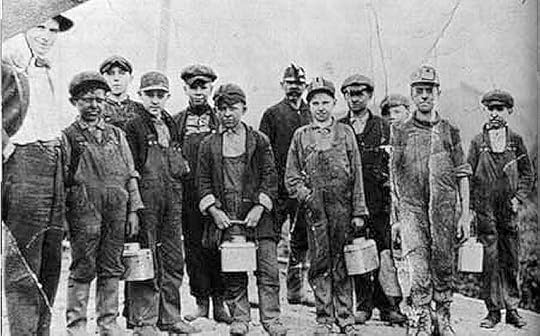
The colonists paid little attention to silly kid dreams of oranges and horses. They saw children as particularly attractive immigrants; they thought of them as able to accomodate to new conditions much more easily than adults. Children also had a long working life ahead of them, and it cost much less to feed and house them in the colonies than in the UK. After arrival in Australia they were immediately placed in state institutions and orphanages, where they often experienced psychical and mental abuse. To earn their keep they were forced to work in severe conditions - out in the open, without any protection from scorching weather, or deep down underground in dangerous mines. Some of these children found foster families, but the majority were not as lucky; they would help build the empire worth millions for pennies.


Child miners in Australia in the 1800's. Thousand of British children deported to Australia are remembered today as the "Forgotten Australians".

Now let us get back to the book. Structurally, it is a small wonder. Kneale pays homage to the polylogic epistolary novel, and employs over 19 separate narrators; this is no mean feat of literary ventriloquism, as his characters have distinctive voices and personalities. He makes full use of discrepant awareness - the unequal distribution of knowledge among the protagonists, used to heighten suspense and dramatic tension. This device allows the reader to cross-examine the characters, often to comical and/or ironic effect. The quirky voice of Manx captain Kewley is probably the favorite and funniest, as his sense of irony and biting humor are spot on and a delight to read. The old salty smuggler who is always scheming could easily fill up a whole novel, and the bad luck which seems to send plague after plague upon his person will gain him sympathy even in the most hardhearted of readers.
The animosity between Reverend Wilson and Doctor Potter - both men of immense egos - is fantastic, especially because the omniscient narration does not get in the way and we can see what both men think of one another - Wilson brands Potter as a heretic, while Potter thinks Wilson is an old lunatic. Their respective approach to the journey and what they consider to be their goals reflect the conflict between Biblical creationist and naturalistic evolutionists, prominent in the 19th century. Hit heavily by the discoveries of Darwin and Wallace, creationists still sought ways of defending the Biblical story of creation - as does Reverend Wilson with his own theory of "Divine Refrigeration" which makes it possible for the Garden of Eden to be located in Tasmania. Dr. Potter is convinced that the Saxon race is above all in intelligence and capabilities, destined to rule above other races: he keenly observes the people and notes down their behavior, being most efficient with his words and underlining a lot, making sure that his observations confirm his already made conclusions - which interestingly they always do. He has his own interest in the Australian aborigines, and works tirelessly on what he considers to be the accomplishment of his life: a volume he titled The Destiny of Nations, which he is sure will bring him fame and recognition. Their utter cluelesness combined with the vivid animosity for one another serves for many a comic moment.
Beside the sailors, scientists and a priest, the novel features the voice of Peevay, a Tasmanian aboriginal. His storyline begins in 1828, 30 years before Sincerity will begin her fateful journey. Back in 1828, Tasmania was experiencing what could be called a British Invasion - only it's not the Beatles, it's the settlers! They have been slowly sneaking into the island, swallowing it piece by piece, until relations with aboriginal tribes escalated into violence. Peevay is a half-bred child, whose aboriginal mother was kidnapped and raped by an escaped convict. She is now fueled with a hatred towards all whites and Peevay, who reminds her of his father - and her only desire is to find and kill him. Wanting to win back her love, desperate Peevay joins her in her fight, even though he does not understand why the whites are in Tasmania, their greed for his land and atrocities against his people. Peevay's narration is almost Faulkneresque; written from a perspective who is intelligent and interested in words, but wholly separate from a culture which invented and used them. Therefore, each discovery of a new word requires capitalization; one can almost feel his sense of wonder.

Truly it was a mystery to confuse how they ever could kill all my ones and steal the world, or even why they wanted it, as it was no place they could endure. Why, they couldn't live here just alone but had to carry some HOBART TOWN with them hither and thither.

Peevay's sections progress towards the future, where Sincerity is sailing for Tasmania, and are alternated with chapters narrated by the crew and those composed of letters and dispatched from other English settlers: the two eventually intersect, and merge. Kneale never lets the reader drown in his sea of voices, and although the sails of his ship might feel to be losing wind at times the currents will carry it through to its very end, along with reader. And is it some story! Well written, rich with everything one can wish for in a novel, and best of all - it really works!

Matthew Kneale managed to skilfully weave so many voices into a tale which could easily ended up as incoherent babble, full of insulting stereotypes, hopeless cliches and lame jokes. But not only is it genuinely funny - it's also genuinely moving, as it tackles serious issues with respect they deserve, reserving the pokes for the silly ones. It's cast of characters is wonderful and memorable, and the storyline is quite brilliant because of them and it's a pleasure to see them interact and explore that wild land, untamed by man. Kneale obviously did his research to render both the setting and characters authentic, as he even provides a 75 word lexicon of Manx words at the end of the book to understand captain Kewley's more seasoned retorts. Full of intelligence, wit and feeling, which are so rare to find together, English Passengers is an undiscovered gem which I am so glad to have found and will happily return to again in the future.
Profile Image for Cecily.
1,320 reviews5,327 followers
April 4, 2013
An excellently quirky, educational, thought-provoking, and often humourous book that avoids being confusing (despite multiple narrators) or off-putting when describing the more shocking aspects of the near extinction of Aborigines in Tasmania and the views of white supremacists. Even the potentially awkward mix of socio-political themes and jolly japes works.

PLOT
(Not saying more than is on the back cover.)

It is set in the 1800s and opens with the crew of Sincerity from the Isle of Man, intent on petty smuggling, but who end up taking some Englishmen to Tasmania, including a priest with a penchant for geology who thinks he will find the Garden of Eden, and a doctor intent on proving the superiority of white races in scientific terms. In Tasmania, relations between white settlers and local Aborigines are deadly and often shocking, whether those settlers be impoverished seal-hunters or rich and powerful soldiers or officials.

The general events in Tasmania are broadly true. Events on the boat provide a contrasting degree of levity.

A few of the plot twists were annoyingly predictable - but I loved the irony of the ending, plus the final post script, which fully justified the inclusion of some of the more unpleasant aspects in the novel itself.

NARRATION
I lost track of the number of narrators, but each has a distinct voice, and is explicitly introduced. Some tell one small part of the story, while others recur many times. A difficult trick for a writer to make work, but Kneale manages it.

THEMES
It opens with a philosophical conundrum that defines the book: "Say a man catches a bullet through his skull in somebody's war, so where's the beginning of that?... the day our hero goes marching off to fight... when he's just turned six and sees soldiers striding down the street... that night when a little baby is born?" By extrapolation, who is to blame for the near extinction of the Tasmanian Aborigines?

Conflict and opportunism are at the heart of the book; no one gets on with anyone else (with the general exception of the Manx crew) and everyone is trying to achieve personal success at the expense of others (not generally financial, though). This is often fuelled by self-deceit and the desire to see evidence and patterns where none exists.

Class, science, religion, nationalism, colonialism (paternalism, exploitation), evangelism, culture clashes, racial identity and tension, crime and punishment (redemption, reform), murder, revenge, and genocide are the main themes. Smuggling and survival are minor, but pertinent distractions.

The book is crawling with hypocrites, including the three, very different, main characters. Some are amusing, like Captain Kewley who justifies smuggling as altruistic capitalism, but others, especially Rev Wilson, have few redeeming features, while Peevay's personal history means he starts off in credit with the reader (and for most, probably remains so). Rev Wilson is the worst, though he is an easy target. His modus operandi is pious prayer that demeans and criticises those he dislikes: he always prays for their improvement, rather than his tolerance, whist stating "I am not one to judge", just as he does so.

Captain Kewley does have some redeeming features. In particular,

Dr Potter's racist "notions" are troubling to read: "The Chinese posses a unique impulse of delight in bright colours, while among the savages of Africa there was a complete absence of the impulse of civilisation." This is partly because of what they say, partly because they are mentioned at such length but most guiltily because he expresses them so ludicrously that it's often hard not to laugh (mainly when he's comparing the Celts, Saxons and Normans). However, people really did (and do) publish such tracts, and the book thoroughly ridicules and refutes such ideas.

Creationists and young Earthers don't come out of this well, so I wouldn't expect them to enjoy it.


COLONIAL POWERS
Some of the whites genuinely want to help the Aborigines, thinking clothes, crafts, farming and Bible stories will bring salvation, civilisation and happiness.

Others want to expunge all trace of Aboriginal life and have less care for the people than for their own animals.

The Aborigines are given new names: some are Biblical, others almost heretical, but most are deliberately, and often nastily, chosen for reasons that the bearers do not realise. "The older and more exalted of the natives were rewarded with names of quaint grandeur, such as King Alpha... a girl who was dreamy and sad was now Ophelia.. the monstrous female... became Mary, and while this might seem innocent enough, I had little doubt as to which murderous monarch was in Mr Robinson's mind."

One tells an Aborigine "You must speak English now... only English", which is observed by another white as "Thus he displayed... his resolve to bring improvement to the unfortunate creature". A youngster with a newly discovered talent and passion for maths is told "it was neither useful nor practical for him to learn" and is given more Bible instruction instead.

It's not all one-way though: some of the Aborigines are determined to survive, whether in a confrontational way, or from within, by learning about European belief and culture.

LANGUAGE
Kneale clearly thought carefully about the language he used. He includes a glossary of Manx terms, though I never needed to refer to it, because context made the meanings clear. He also has a caveat at the beginning about Peevay's speech, which is how he imagines an Aboriginal of the time might speak English, given the influence of white settlers and preachers. Personally, I thought the intent was pretty clear, and the echoes of biblical language obvious.

The real skill with language is the way each of the many narrators has a clear personality and self-justifying way of telling their bit of the story.

Examples that caught my eye include:

* A Manx way of using "dream" without a preposition; "A few might have dreamed every penny on a new jacket or boots" and "I dreamed my great-grandfather, Juan, who I never met".

* "Particular words that must never be spoken aboard a Manx boat when she's out at sea", including rabbit, herring, cat, mouse, wind, sun, moon and pig! If someone slips up, they must "shout 'cold iron' and then touch the ship's cold iron as quick as he can".

* On first hearing English, an Aborigine recalls "it never was said properly but was just murmured, like wombat coughing. Now... they hardly are words to me any more but just thinkings that are said".

* Learning English swear words has a pleasingly powerful effect: "Once I said these at Smith, just to see their magic, and it was strong, as he hated me for them very much".

* Peevay's English has a quaint, simple lyrical and somewhat Biblical style. For example:
- "By and by I grew taller and got lustings, so I noticed females in a new way, and their bubbies and fluffs were tidings of joy and filled me with new hungry wanting."
- "Mother was transported with lamentation... [his] getting dead made her even worse... she never would speak to me at all, even for hating."


OTHER QUOTES
* "Publication is a powerful thing. It can bring a man all manner of unlooked-for events, making friends and enemies of perfect strangers." Even truer in the days of the internet.
* Suburbs are "houses marooned in fields being an advance colony of ever-spreading London".
* "His Majesty's colony of Van Diemen's land is not intended to reform criminals, but simply to store them, like so much rubbish."
* "There are few things worse than being forgiven, as you never have a chance of answering back."


PS Further thoughts, arising from discussion.
This book immediately reminded me of the first story in Cloud Atlas (https://www.goodreads.com/review/show...), which I had reread not long before reading this. As it progressed, parallels with Cloud Atlas continued, not just in terms of the period the voyage was set, but in the themes related to exploitation.
Profile Image for Steve.
251 reviews1,050 followers
February 28, 2019
Kneale’s book tries and largely succeeds in being multiple things. First of all, it’s good historical fiction—the kind where the education comes sans textbook aridity. Much of the story is set in Tasmania in the 1800s where the native Aborigines were underfoot and too many British imperialists were wearing heavy boots. A character named Peevay is one of the principal narrators, offering a unique perspective as the son of an English father and a resistant, indigenous mother. The other storyline was a seafaring adventure. The captain and crew were Manxmen and as such had a different language and culture that added color to the mix. They had failed in their attempts at smuggling and had no other recourse than to take a small but paying set of passengers from England to Tasmania. Yet another goal of the book was to expose some of the day’s more egregious notions related to colonialism, evangelism, racism, and class.

Somebody counted the number of narrators in this book to be 19. Only a handful were major, though, with repeated chances to tell their side of things. The first was Captain Illiam Quillian Kewley who had a plan to run brandy and tobacco from the Isle of Man to England for a quick profit. Customs officials had other ideas, of course, forcing Kewley and his crew to scramble to pay their fine. They chartered out their ship, ironically named Sincerity, to Reverend Wilson, who had convinced himself with God’s presumed guidance that the Garden of Eden was actually in Tasmania, and Dr. Potter, who wanted to collect evidence supporting his wrong-headed theories about race and ethnicity. There were some humorous moments when Wilson’s cluelessness was on full display. My astute Goodreads friend, Helle, likened him in her review to Mr. Collins in Pride and Prejudice. The following gives you an idea of what we mean:
I began my ministry with some zeal, endeavouring to improve the lives of my flock by launching a little campaign to have the alehouse open only three days in the week instead of seven, and offering--as a nobler recompense--two extra church services. Sadly this little initiative was answered, in certain quarters, with something like hostility.

Potter was vile in his own way, but at least he served as a pain in the pious Reverend’s rear end. They were joined by a third Englishman, a young botanist who was lazy and self-centered, but a possible candidate for redemption. The interplay among the passengers and the crew shed plenty of light on the vast sea of moral philosophy. Conflict was easy to come by, especially in close quarters.

Peevay, his defiant mother, and their dwindling tribe faced conflict of a different sort: sickness, murder, and oppression. Their spears were no match for the firearms and bad intent directed their way. Even putatively good intentions often worked against them. Peevay’s narrative began decades before Sincerity’s arrival, but ultimately caught up. The convergence of these two storylines brought about even more folly and hypocrisy. And let’s not forget atrocities. The book definitely did not turn a blind eye to them.

The multifold narration, in my view, mostly worked. As a rule, it kept the stories from growing stale. The subtle humor helped, too, where the butts of the jokes invariably had it coming. I also consider the language a strength—varied and slightly archaic. My only real criticism is that it seemed to drag in places, and a few of the characters seemed superfluous. In the end, though, the four stars I’m giving it should tell you that the pleasures and education I gained outweighed the tedium. The Booker committee evidently agreed, and in fact, saw their own scales tipping even more to that side.
Profile Image for zed .
598 reviews155 followers
October 22, 2023
A historical novel with some characters and incidents that are based on real life events. The author makes mention of this in an epilogue. I was also aware while reading that I was familiar with a lot of the history of the times, the mid 1800’s, in Van Diemen's Land / Tasmanian via both fact and fiction. Van Diemen's Land / Tasmanian writers of both history and novels are easily my most interesting and/or enjoyable reads in terms of Australia. This wonderful book just adds to that thought.

Told in the first person by a large cast with the major character’s having the most input I found myself racing along as each and every character, be they repulsive or pleasing made this plot driven book a kind of pleasure and pain. The sheer buffoonery of the English colonialist made me laugh out loud at times. On the other hand, the genocide committed on the inhabitants by the English colonialists left one aware that there is that stain on English history. English? I think some may ask. Yes English as this is the point of the story.

My favourite characters were Captain Illiam Quillian Kewley the Manx speaking captain of a smugglers ship and Peevay, the aboriginal man who plays a big part in this story. He is the voice of his peoples sad and slow death via genocide and illness. In this reader's opinion, the author Mathew Kneale has done an exceptional job of giving each and every character their own distinctive voice throughout the story told.

Recommend to both the lover of historical fiction and fact.
Profile Image for Martine.
145 reviews781 followers
December 2, 2007
English Passengers is one of the best novels I have ever read. A story told by multiple narrators, it initially focuses on a Manx smuggling vessel which sets off for England only to get chartered to set sail to Van Diemen's Land (Tasmania) because some crazy reverend is convinced that Van Diemen's Land is the site of the Garden of Eden. Among the ship's many larger-than-life passengers are the reverend himself, a doctor with some rather alarming racial theories and a captain desperate to keep his secret cargo hidden from his passengers and make a profit from the unexpected detour to the other side of the planet. Their adventures on board the ship alternate with those of Peevay, a Tasmanian Aborigine boy who describes his people's struggle against the white settlers who seek to displace them. Eventually the two storylines intersect, setting the stage for war, mutiny and shipwreck and a very satisfying finale that had me grinning for hours.

English Passengers paints a vivid (and frequently shocking) picture of Australian history and the Victorian era in general, and is worth reading for that reason alone. However, the real reason to pick up the book is Kneale's phenomenal writing. Like David Mitchell, Kneale has mastered the art of telling a story from different perspectives, and then some. English Passengers is told from about twenty vastly different points of view, and while some of them ring a bit false, the majority are utterly convincing, not to mention gripping. Both the characterisation and the use of language are superb. Add a ferocious black sense of humour and a ring of truth (part of the Tasmanian chapters is based on true events) and you have a magnificent book, at turns thought-provoking and funny. Highly recommended to anyone who likes a good, entertaining work of fiction with a message.
Profile Image for Jan-Maat.
1,684 reviews2,490 followers
Read
August 10, 2013
This is one of the few books that I have given up on reading. I had a strong sense of wrongness from many of the point of view (POV) characters and quickly began to skim read before skimming off the book all together.

By wrongness I mean that the POVs seemed to me to strike false notes: they didn't seem fictional enough to me. All novels are constructed things. Fiction is the deliberate choice of unreal elements to achieve the effect chosen by the author, but in this case it felt too obviously so for me and I simply found it too didactic, which I suppose is hard to avoid in a novel dealing with the extermination of the Tasmanian Aborigines. (The settlers were familiar with their Herodotus and swept across the island in the same style as the Kings of Persia went hunting for game, its how we made the modern world).

I abandoned with the book with prejudice, I feel awkward about this because the author's mother is Judith Kerr who delighted me in childhood with The Tiger who came to Tea and Mog the Forgetful Cat.

Anyhow within the novel are subsumed nationalities, nineteenth century race science, a plurality of voices and various other things that many other readers have enjoyed as a complete edifice, while for me this was one of those books were I was painful aware of the building blocks it was constructed from.
Profile Image for Daisy.
283 reviews100 followers
April 24, 2022
Never having been keen on anything nautical – books, art or cruises – I have recently watched two BBC series set aboard Victorian sailing vessels and now read this novel which charts a Manx crewed voyage from England to Van Diemens Land (modern day Tasmania).
It’s a strangely pitched novel, which pitches comedy and high farce against the annihilation of the Aboriginal people on the island. Whilst it could be argued that it is inappropriate to have scenes of a group of seaman attempting to catch an escaped wombat that is causing havoc aboard ship juxtaposed with the scenes of Aboriginals being herded into camps and dying of disease, I felt that the whole tawdry episode in history was made more tragic and anger-inducing by the fact that the colonists had so little regard for the people they were obliterating, and the fact that such tragedy was unleashed by such fools. It also highlights the various reasons for wanting to travel to such a far flung place, from the ridiculous (the religious man who believes that The Garden of Eden is situated there), the nefariously misguided (the doctor who believes that races have distinct skeletons and intelligence) and the criminal.
Reading it there were a lot of parallels to White Trash: The 400-Year Untold History of Class in America, the ill-treatment is not exclusively along race lines, more along socio-economic ones. The lot of the whites who were shipped to the other side of the world is no better than the native Australians; it matters little the hue of those you are exploiting in the pursuit of greater riches and power.
Technically the book is a triumph. Numerous characters all telling their own experience, creating a coherent narrative while maintaining distinct voices that cover a span of over 30 years. A long book but one which I would happily have read another few hundred pages of.
Profile Image for Penny.
378 reviews39 followers
July 28, 2013
This is a wonderfully original book. A mix of history, intrigue and human suffering this is a unique book with an accessible story that is nevertheless 'literary'.

We follow several threads of this story - first a vicar who is obsessed with finding the Garden of Eden in Tasmania. He finds a rich benefactor who funds an expedition to find the garden. Added to the expedition are a doctor with extreme racial views - concerning mental attainment, scientific experimentation etc - and a young man who is sent against his will by his parents as he has not decided what to do with is life.

Meanwhile a local boat from the Isle of Man with a whole crew of quirky characters, is suspected of smuggling and held in a prison dock in London - so the vicar's benefactor pays the boat's fine and prevents the crew going to prison if they agree to go to Tasmania.

And in Tasmania itself we follow a young native boy and his family, tribe and the settlers that are already there. This part of the narrative is extremely well-done and at times excruciating.

This author weaves these elements together in a layered, detailed, sometimes comic,violent, and awful story. I read this in 2 days and was swept up in it. There are many unexpected twists and turns to this and each narrative is has a strong voice so that it is almost a wrench to leave them to find out what is happening to the others - only to have the same situation occur again.
This is not a light read or an especially easy read but it is exciting, engrossing and very, very well written.

One of the best books I have read this year.
Profile Image for Desislava Filipova.
360 reviews56 followers
December 17, 2022
"Английски пасажери" Матю Нийл е книга, която имам от няколко години и много исках да прочета и точно сега сякаш уцелих идеалния момент. Книгата разказва много повече от събитията свързани с едно необичайно морско пътуване, разказът се води от първо лице от много различни герои и така дава различни гледни точки и оформя една пъстра и тъжна картина за един далечен и екзотичен свят, Тасмания, който ще бъде завинаги променен след колонизирането му от англичаните, но това всъщност важи за всяко място, където се срещат и сблъскват различни култури (цивилизации). Хронологичната рамка на разказа е между 1820 и 1870 г.
Много ми харесва решението, повествованието да се води от различни гледни точки, някои от героите са просто допълващи събитията, те са управници и бюрократи или техните съпруги, живеят в своя подреден английски свят, нищо че част от тях се намират в другия край на земното кълбо, а други присъстват само чрез кореспонденцията си с жители на колонията, те всички са плод на средата и възпитанието си. На съвременния читател би му се сторило, че в тях има нещо фалшиво и лицемерно, нещо жестоко, но за техния свят аборигените са примитивни и екзотични,те гледат на тях с превъзходство, покровителство и симпатия, изразена в желанието да ги "образоват" и "цивилизоват". Те са обикновени и ограничени, някои от тях са добродушни, други са готови на всичко, за да се издигнат, но за всички тях животът се изчерпва с подредения английски стереотип, липсва им любознателност и емпатия.
Аборигенът Пийвей е свързваща нишка в наглед фрагментарните странични истории, роден в един див и спокоен свят, доминиран от природата в нейната първичност, животът му и животът на всички аборигени, които познава, ще се променят след срещата с белия човек и неизбежната "война", която още от самото си начало е предварително обречена. Пийвей е мелез, майка му е отвлечена от ловец на тюлени и това предопределя нейния образ, изпълнен с горчивина и омраза, Пийвей и брат му Таялеа остават разкъсани между стария и новия свят.
Именно бащата на Пийвей е натоварен с всички негативни характеристики на белия преселник, авантюрист, готов на всичко за печалба и удоволствия, чрез него читателят ще опознае каторжническия живот.
Капитан Илям Куилян Кюли е обикновен моряк от остров Ман, който търси допълнителни възможности за печалба в прекарването на контрабандни стоки и така е въвлечен в странно пътуване до Тасмания, заветната цел на "английските пасажери", преподобният Джефри Уилсън и доктор Потър. Екипажът от Ман е колоритен и забавен, а капитан Кюли буди искрени симпатии. Преподобният е обсебен от идеята да докаже, че Райската градина се намира на остров Тасмания и така да защити вярата, от надигащата се научна общност, която изпълва обществото със съмнения към устоите на религията и търси факти и обяснения. От друга страна доктор Потър е обсебен от своята теория за човешките раси.
Историята е вълнуваща, напрегната и поднесена с тънък английски хумор, но в крайна сметка носи много тъга.
Profile Image for Matt Quann.
819 reviews450 followers
August 23, 2016
Engaging, challenging, witty, and multifaceted, English Passengers is a thrilling, albeit drawn out, romp.

Jumping between an immense cast of characters and following to separate storylines, Kneale’s novel is nothing if not ambitious. Indeed, the alternating narratives with their disparate casts would be taxing enough on any reader, but the novel also alternates its style for each and every character who serves as a POV. While the opening stretch of the novel proved to be quite tedious, I soon found myself warming to the lilt of Captain Kewley’s passages and even more enthralled by Peevay’s account of the savaging of the Aboriginal population in Tasmania.

In brief, one storyline follows the adventure of three passengers from England aboard the Manx ship, Sincerity, as they travel to Australia in search of the Garden of Eden. Running parallel to this story are the English colonists in Tasmania and Peevay, an Aboriginal boy, as continuing horror is inflicted upon the native population.

Eventually, these two storylines converge, though I found it frustrating that it occurs so late into the novel. Rather than allowing some of these passages room to breathe, the meeting between the character is short-lived. Though it is a fine way to establish setting, the one-shot letters from various ancillary characters began to grate on me as the novel progressed. Some added depth to the novel, while others dragged on with seemingly no benefit. As an example, I found the penal colony tale to be tangential to the main story that detracted from the reading experience. Despite these misgivings, the novel is so meticulously detailed that I may draw more meaningful conclusions on a future reading.

Though the rapidly switching styles can be difficult to handle (Dr. Potter’s sections verge on unbearable), the story is built with a beautiful sense of time and place. Characters and sections of seemingly no value come around to powerful and humorous climaxes that fit in perfectly with what has come before. What’s more, the prose is beautifully written, and the style of writing for each character complements their personality in such a way that it seems entirely appropriate rather than tired.

English Passengers also deals with race, colonization, amongst many other themes which are presented so that they are both in line with the setting (1850s) and quite thoughtful. Crafted with precision and a deft eye for plot English Passengers is a challenging read that is quite an undertaking; this book is no page-turner, and I found myself struggling through some of the duller sections. Despite its habit for taking the scenic route around a plot point rather than a direct path, the novel will reward those who stick around through to the end with a memorable cast of characters and an interesting tale.
Profile Image for Roger Brunyate.
946 reviews740 followers
August 24, 2016
Colonizing Eden

Three Englishmen set out on a Manx sailing vessel to reach Tasmania. One is a cleric who believes the island is the site of the Garden of Eden, another is a surgeon with pre-Hitlerian ideas about racial stereotypes, and the third is a young botanist. Interwoven with this is the story of the exploitation and near-extermination of the aboriginal peoples at the hands of the English colonists, whether exploitative or well-intentioned. Taken together, the various interwoven stories, told in a variety of different voices, present a well-researched but damning portrait of colonialism and other nineteenth-century attitudes. Kneale's multiple-narrator technique permits a good deal of irony and even outright humor, and his inclusion of the Manx sea captain and part-time smuggler among these voices adds the picaresque flavor of a sea yarn. My only disappointment, though, is that the author ends by tying up these narrative threads on the comic and adventure-story level, without rising to the kind of spiritual catharsis that his brilliant exposition might have made possible.

The book makes an interesting companion to Barry Unsworth's Sacred Hunger, another novel that deals with English attitudes towards other races in the context of a sea story, though Unsworth's book is set almost a century earlier. Both books also touch upon the concept of a utopian society, and the various forces which inevitably destroy it. Readers who have enjoyed one book should certainly try the other. While Unsworth has the greater gravitas, Kneale uncovers less well-known areas of history, introduces a more varied cast of characters, and makes the more enjoyable read.
Profile Image for Kelly.
885 reviews4,872 followers
Read
May 21, 2008
The beginning of this book LIES. I love the opening character, Captain Illiam Quilliam Kewley. He is a fabulous, interesting, quirky guy who you want to curl up in front of a fire and spend time with. However... the problem is that he doesn't narrate more than a 1/4 of the book. Author LIAR LIAR PANTS ON FIRE tries to draw you in with this good-time guy and then slams you with Tasmanian "savages" in chapters written in an insane dialect that requires a good strong shot of bourbon to get through, stories of these aborginies being horrifically mistreated by English ex-convicts, long indictments of colonialism and racism, and such. Nothing wrong with that, it just was sort of jarring and not what I thought I had signed up for. Also, the storylines seemed to often have NOTHING to do with each other. Kneale wants to do faaaaaaaar too much here. I thought I was getting into a frolic of a seafaring tale, with some incisive social commentary along the way, woven in to great characterizations and historical happenings.

Instead, Kneale seems to want to write both a long essay on the crimes of British colonialism in Tasmania and Australia as well as write his own version of Jack Sparrow and somehow make those mesh. I get the idea. Sparrow (Kewley)'s storyline should provide some comic relief in between the heavy stuff, but it just ends up being off putting and makes me want to skip about half the book.

It's very well written in terms of style and making his point, Kneale makes things all very poignant... but it is very ponderous, heavy going, due to the aforementioned problems. I just cannot get through this right now, not when I have so many other things I want to read. No no. Sorry, book. I promise, I'll be back to you later this summer.
Profile Image for Vaiva.
456 reviews77 followers
March 11, 2019
Istorija, primenanti Žiulio Verno pasakojimus, kuomet iškeliaujama ieškoti ir atrasti, kartais sukurti, bet dar dažniau sunaikinti. Papasakota su subtiliu jumoru ir net subtilia, bet aštria kritika didiesiems užkariautojams, kuriems viskas tarsi ištiko netyčia. Netyčia atnešta civilizacija (nors niekas jos nelaukė ir neprašė), netyčia išnaikintos ištisos gentys (nors linkėta tik gero), netyčia visi tapo krikščionimis (nors nesivadovauta nei vienu iš 10 Dievo įsakymų), netyčia atrastos naujos žemės ir “rojaus sodai” (lyg vietos pas save būtų maža). Tai tarsi ir istorija, kurios vaisius raškome iki šiol: kai kurios tautos vis dar kenčia nuvainikuotų užkariautojų gėdą ar kovoja su didžių laikų nostalgija, nuolat kovojame už toleranciją ir lygiateisiškumą, ieškome rasizmo šaknų, svarstome, ar garsiausiuose pasaulio muziejuose visuomenei rodomi seniai išnykusių ar prie išnykimo ribos esančių tautinių bendruomenių reliktai (ir net palaikai) turi būti grąžinti tikriesiems jų sąvininkams.
Iš tiesų, ši niūri istorija, kuri papaskota šiek tiek su anglišku jumoru, tačiau atveria skaudžias mūsų civilizacijos žaizdas, verta būti perskaityta kiekvieno, kuriam įdomu, iš kur mes atėjome ir kur galime nueiti.
Profile Image for Paul Dembina.
693 reviews162 followers
May 14, 2023
This is what I'd term an engaging literary page turner.

Set in the mid-19th century it follows the fortunes (or otherwise) of a number of characters. There's the sea captain who's smuggling contraband from the Isle of Man to the UK mainland forced by circumstances (I'm avoiding plot spoilers here) into taking an expedition all the way to Tasmania.

The expedition's lead is an English vicar who's expecting to find the Garden of Eden. Also on the expedition is a doctor who holds extreme racist views about the different species of man who's expecting to have his opinions verified by investigating the native aborigines.

Meanwhile in Tasmania another character (I don't want to give anything away) has reasons to despise white people and exact revenge on past hurts.

The book starts out gently taking the micky of the obsessions of the expedition members but it's main thrust is the appalling treatment visited on the native population of Tasmania by the white invaders.

I lopped 1 star off just because I thought some of later plot development stretched credibility somewhat.
Profile Image for Mindaugas.
123 reviews3 followers
September 4, 2019
★4.75/5★

★Writing--4.5★
★Plot--5★
★Logic--4.5★
★Characters--5★
★Ending--5★
★Enjoyment--4.5★
Profile Image for Ints.
846 reviews86 followers
October 6, 2016
Pie šīs grāmatas es tiku blogeru Ziemassvētku apdāvināšanās laikā. MsMarii domāja, ka šī ir tā grāmata, kuru man noteikti vajadzētu izlasīt. Solīja, ka tajā būs ceļojums uz Tasmāniju un daudz humora. Tasmānijas aborigēni un kolonizācija patiešām ir viens no maniem mīļākajiem vēstures tematiem, un tādēļ grāmatu pasūtīju nekavējoties oriģinālvalodā. Ar lasīšanu gan tik raiti neveicās, nevarēju saņemties. Ja godīgi, tad es labprāt būtu viņu pircis arī latviski, taču par šāda izdevuma eksistenci uzzināju tikai tad, kad grāmatā nelasītas bija palikušas vien pārdesmit lapaspuses.

1857. gads kapteinis Illiams Kvilians Kevlejs (Illiam Quillian Kewley) nolēmis piepelnīties ar kontrabandu. Viņam ir speciāli uzprojektēts kuģis un uzticama Menas salas vīru komanda. Kas gan varētu noiet greizi? Vikārs Džofrijs Vilsons (Geoffrey Wilson) savukārt ir veicis ievērojamus ģeoloģiskus atklājumus. Atšķirībā no daudziem citiem saviem kolēģiem viņš ticību neuzskata par vienu no ieņemamā posteņa atribūtiem, viņš uzskata, ka Bībelē rakstītais ir patiesība, nekāda tur abstraktā filozofiskā, bet burtiskā. Pēc pamatīgas rakstu studēšanas viņš ir atklājis, ka tieši Tasmānijā atrodams Ēdenes dārzs. Viņa ekspedīcijas loceklis Doktors Tomass Poters ceļojuma laikā cer attīstīt neapgāžamu rasu pārākuma teoriju.

Galvenā loma šajā stāstā ir uzticēta Pīvajam (Peevay), kurš ir viens no Tasmānijas aborigēniem. Šajā grāmatā atspoguļots viņa dzīvesstāsts no bērnības, kad aborigēni vēl brīvi klaiņoja savās teritorijās, līdz vecumdienām, kad bez viņa pāri bija palikuši tikai daži citi.

Grāmatas centrālais temats ir kolonizācija, tās attaisnošana un nevērīgā nežēlība pret kolonizējamajiem. Šeit būtisks ir Poters, kurš izstrādā savu rasu teoriju un diezgan labi vokalizē sava laika uzskatus. Ir zemākas rases un ir augstākas, pat baltie savā starpā nav vienlīdzīgi. Bet līdz brīdim, kamēr baltie tiks līdz savstarpējo attiecību kārtošanai, zemākās rases tiks lemtas iznīcībai. Jā, žēl, bet pasaule vispār ir nežēlīga. Kolonizatoriem uz vietas savas rīcības racionalizēšana ir daudz vieglāka, ja tu esi stiprāks, tev ir taisnība. Nepatīk aborigēni, uzrīko tīrīšanu vai pārvieto uz jaunu vietu. Pasaule pieder baltajiem, un citādi nemaz nevar būt.

Pīvaja skats uz kolonizāciju nemaz nav tik rožains, jo viņam visu to nākas izciest uz savas ādas. Viņš ir tiešs notikumu liecinieks. Sākot ar to, ka viņa tēvs ir baltais, kā dēļ viņu neieredz paša māte, un beidzot ar to, ka viņam ir vajadzīgs gandrīz viss savs mūžs, lai saprastu, ka kolonizatori respektē tikai spēku. Daudz kas par aborigēnu kultūru ir palicis nezināms, bet tās drumstalas, ko vēl zinām, autors ir meistarīgi iepinis stāsta, gan “humāno” nometināšanu, gan pievēršanu kristietībai, gan divkosīgo nožēlu par viņu izmiršanu.

Lai lasītājam nebūtu jālasa tikai koloniālisma kritika, tad autors visnotaļ veiksmīgi izmanto kapteini kontrabandistu un vikāru spriedzes kliedēšanai. Kapteinis ir no tiem cilvēkiem, kuriem sīks pārkāpums likuma priekšā rada lavīnveida efektu. Labi, kontrabanda, visi ar to nodarbojas, kuru noķer, to pakar, bet pārējie dzīvo cepuri kuldami. Taču ko darīt, ja pārpratuma pēc esi no jūras uzbrucis pavisam svešai mājai. Avīzes to publicē kā dīvainu noziegumu, bet tieši tas liks viņam mukt uz pasaules otru galu. Viņam nekad neveicas, lai ar ko viņš nedarītu, vienmēr paliek vēl sliktāk.

Vikārs ir apsēsts ar Paradīzes ideju. Grāmatas sākumā viņš vēl ir puslīdz normāls cilvēks, taču labi var redzēt, kā lēnām ceļojuma laikā attīstās viņa paranoja un mānija. Viņš nav radis piedzīvot grūtības un vajag vien pavisam nedaudz, lai viņa širmis aizkristu pavisam. No malas tas izskatās visai smieklīgi, lai ar’ patiesībā tas ir traģiski.

Grūti ir izsacīt to, kā man patika grāmatas beigas un tā daļa, kad ekspedīcija beidzot nonāca Tasmānijas mežos. Angļu pasažieru un vietējo aborigēnu lomas pēkšņi mainījās. Par to, kā viņi atsakās pieņemt acīmredzamo un labāk dzīvo iedomātā realitātē, neskatoties uz apkārt notiekošo. Par to, ko viņi patiesībā uzskata par civilizācijas pazīmēm, un kādi cilvēki viņi ir, mēģinot izdzīvot. Tāda smalka ironija, kas turpinās arī ceļā uz mājām.

Grāmatai lieku 10 no 10 ballēm. Ja vēlies izlasīt kaut ko vēsturisku, bet ne tikai sausu faktu uzskaitījumu, tad noteikti dod iespēju šai grāmatai. Tasmānijas kolonizācija ir viena no brutālākajām Britu Impērijas ekspansijas epizodēm, taču ar laiku tā ir nogrimusi aizmirstībā. Te ir pateikts viss būtiskākais un atmests mazsvarīgais, iesaku izlasīt!
Profile Image for Reid.
975 reviews77 followers
October 2, 2023
What a strange and wonderful book this is. It is all things, all at the same time. It is a historical novel, a travelogue, a bildungsroman, a horror story of racial violence, a dark comedy, a careless romp and a serious indictment.

The Reverend Geoffrey Wilson believes with all his soul that God has revealed to him the location of the Garden of Eden. Much to his misfortune, the location of this fabled, promised land is in Tasmania, all the way on the other side of the world. But no man of God can be deterred by such a terrestrial obstacle, so he seeks out the help he needs to make his dream come true. Soon he is outfitted for the journey. He also takes on two other members of the expedition, Dr. Thomas Potter, who has reasons of his own for traveling to the ends of the Earth, and Timothy Renshaw, a young and indifferent botanist strongly encouraged to go by a father concerned with his general shiftlessness.

The three adventurers charter a ship that has been forced into the charter business through an unfortunate encounter with the customs enforcement arm of the meddlesome British government. When they must choose between renting themselves out to these English passengers or forfeiting their ship for non-payment of fines, Captain Illiam Quillian Kewley grumblingly acquiesces in the first. Thus begins their adventures together.

But the place they are going has been inhabited for centuries by tribes of nomadic people with a long history of successful and sophisticated survival. Alas for them, this is the era of Manifest Destiny, and the colonizers (many of whom are cast off prisoners from the more civilized parts of the Empire) believe that the British way of life is the only proper one, and the way the natives live is simple savagery. Shown the right way and given the proper education, they will no doubt come around to a purer understanding of how right it is that they give dominion over their lives to white people who know better. Not that they are capable of actually rising to the level of civilization their white masters exhibit, but they can be tamed somewhat. That the natives seem at best sullen about these favors being blandished upon them, and at worst seek to kill the interlopers, seems to largely be lost on the invading hordes.

This really is a rather amazing accomplishment. Kneale has done his homework and the result is nothing short of enthralling. I must say that the return journey becomes a bit tedious (he paints himself into a plot corner which makes this somewhat inevitable), but otherwise this is a masterful and engaging read.
Profile Image for Justė Knygu_gurmane.
188 reviews80 followers
April 15, 2020
Labai mėgstu eksperimentuoti su žanrais. Kartais toks “žaidimas” pasiteisina, kartais ne. Ši knyga buvo vienas iš tokių bandymų, nes nuotykiai yra tai kas reta mano lentynoje. Patiko ar ne sužinosite truputėlį vėliau 😉 o dabar pereikime prie pačios istorijos. Tai gi kas tie anglai keleiviai, kur jie keliavo ir ar pasiekė tikslą?

“Anglai keleiviai” – tai XIXa kelionė buriniu laivu iš Didžiosios Britanijos į Tasmaniją. Vieni plaukė dėl to, kad uždirbtų (pabėgtų nuo teisėsaugos), kiti tam, kad atrastų Rojų žemėje, o dar kiti turėjo savo neatskleistų užmačių. Šioje istorijoje įdomu tai, jog ji pasakojama iš dvidešimties skirtingų personažų pozicijos. Dvidešimt žmonių, visiškai skirtingais tikslais, skirtingais likimais, skirtingomis aplinkybėmis susisaistę vienos istorijos pančiais. Buvo be galo smagu vis persikelti į kito veikėjo “kailį” ir pamatyti situaciją vis kitokiu žvilgsniu.

Pasakojimas paliečia skaudžias civilizacijos permainas – Tasmanijos aborigenų išnykimą (žinoma, ne be baltaodžių įsikišimo), kolonizacijos siaubą, katorgininkų “perauklėjamąsias stovyklas”. O visų svarbiausia – autorius remiasi realiomis istorijomis, tikrais žmonėmis ir ant tokių tikrais įvykiais paremtų pamatų “stato” šią knygą. Kai sužinai šį faktą pradedi matyti kūrinį visai kitomis akimis. Tai jau ne šiaip nuotykių romanas, tai sumaniai pateikiama mūsų istorija!

Dar vienas mane sužavėjęs aspektas – autoriaus humoro jausmas. Be galo smagu skaityti kūrinį, kuris užpildytas ironijos, smagių pastebėjimų, pajuokavimų ir sugebėjimų pasijuokti iš to kas gal labiau turėtų “kvepėti” tragedija. Toks komizmo ir tragizmo mišinys 🙂 Bet aš visada mieliau renkuosi tuos, kurie sugeba atskleisti pasaulio baisumus per tam tikrą juoko prizmę – tai nesumenkina pasaulio žiaurumo, bet leidžia į viską įsigilinti ir be “ašarų pakalnės”.

Iš ties puikus kūrinys! Tik supratau, jog nuotykiai netaps mano aistra. Galiu perskaityti vieną kitą knygą, bet tuo ir apsiribosiu. 🙂 O tiems, kurie dar nežino ar juos mėgsta tikrai rekomenduoju imtis šio kūrinio 🙂 Manau nenusivilsite 😉
Profile Image for Cathal Kenneally.
448 reviews12 followers
April 2, 2019
A voyage of exploration and discovery quickly turn into mutiny and disaster in more says than one when the crew fall out with their passengers. Added to that is the inhospitable natives they encounter. Since explorers have discovered new lands the natives have always been given a raw deal.
I'm the days of the British empire it was taken as a God given right to rule newly discovered lands and often the natives rebelled ,especially in places like India as mentioned in this book.
Profile Image for The Final Chapter.
430 reviews24 followers
August 16, 2015
High 5. This novel is Dickensian in its scope of characters and is a masterful feat of the interweaving of satire with a tragic yet deftly handled historical portrait of the genocide of the aborigines of Tasmania. Kneale accomplishes this through a sea of narrators and clever use of journals, diaries and official reports. He does so alternating two distinct narratives following their own projectory before allowing them to converge ariving at a denouement which is sublime in how it metes out a fate which each character deserves. Capt Kewley and his band of Manx smugglers are compelled to convey an expeditionary team to Van Diemen's Land. This team is led by an evangelical priest who cannot accept Darwinian theory and is stermined to prove biblical truth by establishing that Tasmania is the long-lost Eden. He is accompanied by Dr Potter, who has his own secret agenda to prove racial superiority. These two figures, who represent different aspects of late Victorian imperialistic zeal will confront Peevay, who himself bears all the scars of his people's tragic encounters with the white colonisers. Kneale has written an engaging and yet moving testament to the clash of cultures and their dark underbelly in the nineteenth century antipodes. A tour-de-force.
Profile Image for Patricia O'Brien.
298 reviews2 followers
January 18, 2022
This is one of the best books I have read in a long time! I've actually had it for years and heaven knows why I hadn't read it. I buy too many...
The skill Kneale shows in depecting the 19th century and its view of the world is just wonderful. It also serves as a reminder that people really WERE different then; their attitude towards other races and cultures was shaped by things we now find ludicrous. However, we would do well to acknowledge that, as ignorance rather than the evil which we ascribe to such acts now.
For each narrator, the author was able to be utterly authentic in thought, language and attitudes; the ludicrous piety of Wilson and the canny Captain Quilliam - so humorous.
This book is an adventure in reading -and a true adventure, sailing across the world and negotiating a wilderness (ill-prepared at that) in an unknown land. The most affecting part of course, is the plight of the Aboriginal which is truly 'heinous' as Pevay would have said.
A wonderful story which enlightens, educates AND entertains. Brilliant!
Profile Image for Fiona.
982 reviews526 followers
August 22, 2012
I just loved this book. A rip-roaring, bizarre, page turning adventure from the first page til the last. All of the characters are intriguing and multi-dimensional and we learn about the horrendous history of Van Diemen's Land, aka Tasmania.
Profile Image for Ana Ovejero.
96 reviews40 followers
December 29, 2015
This narrative is truly a historical adventure. The reader can feel the salt of the sea wind throughout the whole story along the humorous and dramatic moments lived by an expedition full of colourful characters.

It is the year 1857 and a voyage is leaving to Tasmania as it is believed to be heaven on earth (literally). One of the leaders is Reverend Geoffrey Wilson, who is hoping to find the true site of the Garden of Eden. Through letters and journals, he communicates his feelings and ideas as he faces the perils of the journey and the increasing discontent among the crew.

An antagonist of the reverend is the racial-theorist Dr Potter, whose logical thinking and scientific beliefs show the reader the ideas of the time regarding the aboriginal people and the exotic flora and fauna he is wishing to encounter.

Through the story, the reader is presented with the retellings of the experiences of different characters, like the captain of the ship, Captain Illiam Quillian Kewly, who keeps a secret from everybody: his ship is fleeing British Customs as it is a smuggling vessel. Another interesting point of view is Peevay's, an aboriginal young boy, member of a Tasmanian tribe unsuccessfully fighting the colonisers, their religious influences and the social customes they are trying to enforce in the local inhabitans.

Matthew Kneale uses irony and sarcasm to deal with the less likeable characters and moments. The explotation of the natural resources and the cruelty used with the aborigines are portrayed as the consequence of the stupidity of those who believed they were doing their best to bring civilisation to the corners of the world.

Nowadays, we are aware of the atrocities committed in the name of progress; however, surprises are waiting ahead for those who deserve being punished for their actions.
Displaying 1 - 30 of 707 reviews

Can't find what you're looking for?

Get help and learn more about the design.