

What do you think?
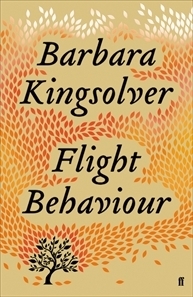
Flight Behaviour
Goodreads Choice Award
Nominee for Readers' Favorite Fiction (2012)Discontented with her life of poverty on a failing farm in the Eastern United States, Dellarobia, a young mother, impulsively seeks out an affair. Instead, on the Appalachian mountains above her farm, she discovers something much more profoundly life-changing — a beautiful and terrible marvel of nature. As the world around her is suddenly transformed by a seeming miracle, can the old certainties they have lived by for centuries remain unchallenged?
Flight Behaviour is a captivating, topical and deeply human novel touching on class, poverty and climate change. It is Barbara Kingsolver's most accessible novel yet, and explores the truths we live by, and the complexities that lie behind them.
Flight Behaviour is a captivating, topical and deeply human novel touching on class, poverty and climate change. It is Barbara Kingsolver's most accessible novel yet, and explores the truths we live by, and the complexities that lie behind them.
496 pages, Paperback
First published November 6, 2012
About the author
Barbara Kingsolver
70 books31.7k followersBarbara Ellen Kingsolver is a Pulitzer Prize-winning American novelist, essayist, and poet. Her widely known works include The Poisonwood Bible, the tale of a missionary family in the Congo, and Animal, Vegetable, Miracle, a nonfiction account of her family's attempts to eat locally. In 2023, she was awarded the Pulitzer Prize for Fiction for the novel Demon Copperhead. Her work often focuses on topics such as social justice, biodiversity, and the interaction between humans and their communities and environments.
Kingsolver has received numerous awards, including the Dayton Literary Peace Prize's Richard C. Holbrooke Distinguished Achievement Award 2011 and the National Humanities Medal. After winning for The Lacuna in 2010 and Demon Copperhead in 2023, Kingsolver became the first author to win the Women's Prize for Fiction twice. Since 1993, each one of her book titles have been on the New York Times Best Seller list.
Kingsolver was raised in rural Kentucky, lived briefly in the Congo in her early childhood, and she currently lives in Appalachia. Kingsolver earned degrees in biology, ecology, and evolutionary biology at DePauw University and the University of Arizona, and worked as a freelance writer before she began writing novels. In 2000, the politically progressive Kingsolver established the Bellwether Prize to support "literature of social change".
Kingsolver has received numerous awards, including the Dayton Literary Peace Prize's Richard C. Holbrooke Distinguished Achievement Award 2011 and the National Humanities Medal. After winning for The Lacuna in 2010 and Demon Copperhead in 2023, Kingsolver became the first author to win the Women's Prize for Fiction twice. Since 1993, each one of her book titles have been on the New York Times Best Seller list.
Kingsolver was raised in rural Kentucky, lived briefly in the Congo in her early childhood, and she currently lives in Appalachia. Kingsolver earned degrees in biology, ecology, and evolutionary biology at DePauw University and the University of Arizona, and worked as a freelance writer before she began writing novels. In 2000, the politically progressive Kingsolver established the Bellwether Prize to support "literature of social change".
Ratings & Reviews
Friends & Following
Create a free account to discover what your friends think of this book!
Community Reviews
Displaying 1 - 30 of 11,856 reviews

May 20, 2012
In 2004 Barbara Kingsolver moved from Tucson, where she had lived since 1978, to southern Appalachia. This marked a return to her roots, migrating back to an ancestral place, like the butterflies in her latest novel, Flight Behavior might once have done. She must feel right at home there as she has written a wonderful book set in the fictional Appalachian town of Feathertown, Tennessee. The flight of the title refers not only to the arrival of hordes of butterflies, but flights of various sorts undertaken by her characters.

Barbara Kingsolver - image from Envirolit
Like Moses, Dellarobia Turnbow climbs a mountain and sees a vision. Instead of a flaming bush she sees a flaming forest, alive with millions of Monarch butterflies. As with Moses, what she saw changed her life. Of course her motivation was a bit different. Big Mo was seeking guidance from God on how to lead his people. Dellarobia was leaving her husband and two kids to take up with her latest romantic entanglement, looking to fly rather than to lead. But visions have a way of changing people, or maybe enhancing them.
We see this world through Dellarobia’s eyes. She makes a careful examination of her life, in an environment in which unexamined is the way to go. She is a bright woman of 27, married as a result of an adolescent mistake to a decent, if unimaginative man, with two kids, staying in a small house on her in-laws’ property, stuck in her world with not much to look forward to.
An unseasonable season of rain (forty days worth, maybe?) has left the area soaked, even more impoverished and vulnerable than usual.
Kingsolver shows a wide range of perspectives on the event. She brings in the strong presence of a heavy-hitter scientist with an ironic, artsy name, Ovid Byron. He not only sets up shop to study the phenomenon, complete with a camper and crew, but sees Dellarobia’s intelligence and curiosity and encourages her, even hiring her to help with his project. Kingsolver got her masters and began her working life in biology, after all, not creative writing. It is clear that with her expertise as a biologist it is her scientist words Ovid speaks when explaining how the biology here works. And it is activist Kingsolver’s words he speaks when he takes on the media.
Can it be a coincidence that when red-haired (University of Tennessee orange) Dell and African American Ovid Byron come together they match the Monarch coloration?
The major underlying natural issue addressed here is global warming, how changes to the global environment can result in significant changes in peoples’ lives. The book opens with talk of the unnatural, relentless rain that has been watering remote Feathertown. What causes this? What happens when it rains so much? The same thing in Appalachia as has happened in places far away. Nothing good. It was surprising to learn that excessive rain can damage even the wool on living sheep.
What happens when you are not where you should be? If you are a person, it might mean unhappiness, a feeling of frustration and failure. If you are, say, a species of butterfly, it might mean an absolute existential crisis and an attempt to survive by setting up shop in a new, not-yet-completely-destroyed location.
Offering a local perspective is one of the primary elements of the novel. Barbara Kingsolver writes about places she knows. For the African setting of Poisonwood Bible, she drew on the time she had lived there with her family. But she was raised in Kentucky. And it is clear that she has a pretty good sense of the locals. Part of Kingsolver’s purpose here (we believe) is to offer up an image of what life is like for real people in Appalachia.
In recent years ecologically sustainable development in environmentally endangered areas has shifted methodology. These days attempts are made to engage local residents, and give them a reason for becoming involved with and gaining from protection efforts. Simply trotting out experts and telling the locals to change their evil ways is not exactly effective. That dynamic is given a nice, if somewhat staged look. A straw man of a northeastern liberal bent descends on the town and starts handing out leaflets urging people to take the pledge. In this case that means promising to change a whole list of behaviors. Turns out that this list is mostly irrelevant to the locals. Things like “eat less meat” when the problem for so many here is to get enough. His list urges a promise to re-cycle, to people who shop for clothing at the second hand shop, and so on. It is a brilliant way of making it clear that it is worth actually knowing something about local life before preaching.
It is a difficult life folks lead in Feathertown, a place in which the science teacher offers his students the option of shooting hoops instead of learning science, a place where a Christmas shopping trip is to the second hand store. What of the farmer unable to pay his mortgage unless he sells off wooded land to clear-cutters? What of the income lost because wool has been damaged by so much rain? Kingsolver points out the limitations on the lives of the locals, and how even those with abilities and dreams beyond what can be offered locally are confronted with roadblocks should they try to spread their wings. Her attention is not solely on the hardships of the place. There is also respect. She makes it very clear that even though they might not call it science, farmers practice an applied version, requiring as much scientific method as the search for a cancer cure. She points out the rugged beauty of a thing like hands-on sheep-shearing and clearly mourns its passing. Kingsolver actually raises sheep, so the craft may not be quite dead yet.
Kingsolver offers a nice cast of characters, to whom she gives substance. Dell has a snarky sense of humor that I particularly enjoyed. Hubby, Cub, is a decent sort, and we get a sense of him, limitations and all. Their son, Preston, is the kind of kid most intelligent parents dream of, an eager, hungry learner. The scenes of Dellarobia’s with her bff, Dovey, are invigorating. And it is fascinating to see the change over time in the relationship Dell has with her mother-in-law, Hester, and in learning the secret that Hester has so carefully hidden.
Kingsolver ingeniously counterpoints the nature events that define the story with the experiences of her characters. Dellarobia searches for the right place to be just as the butterflies do. There are parallels to the butterflies’ experience of having their homes washed away in floods. And, like the beautiful invaders, Dell must undergo a metamorphosis, gathering sustenance where she can find it, in order to wend her way to the next stage in her life.
Sometimes reflection alters one’s view of a film, a piece of music or a book. On the first run through, I felt that at times the book was a bit preachy. Kingsolver does drag out disposable characters to make a point here and there. But the process of reviewing causes one to look closer and with that effort my appreciation for the book grew. Initially I was taken with some passing humor. While there certainly is humor here, much of it centered around the doings at a local church, some of which might resonate for viewers of GCB, this is a serious book, addressing serious matters. The humor leavens the tale, but this is about our world becoming unhinged and about people finding their way to their best places. Kingsolver offers a caring, nuanced look at life in Appalachia and raises our awareness of what real global warming looks like to actual people. If you haven’t already gotten your hands on this volume, fly to your bookstore before it is too late. Ok, OK, I know it is not on sale until November, but you can still flutter over to the bookstore or library and put in an order, or a hold.
PS - For what it’s worth I see Amy Adams or maybe Jennifer Lawrence as Dellarobia, Lance Rettick as Ovid, Melissa Leo as Hester.
PPS – I am not much taken with the cover design, at least the one on the ARE. It consists of hundreds of tear-shapes that do not much suggest flight to me, but rather leaves floating on a pond, or even reptile scales. What am I missing here?
=============================EXTRA STUFF
The author’s personal site
Items of Interest
-----From the Butterfly website, on the Michoacan habitat
-----From the Texas Butterfly Ranch, on the reduction in the Monarchs’ travel numbers
-----January 25, 2019 - NY Times - Are We Watching the End of the Monarch Butterfly?
Reviews of other Kingsolver books
-----The Poisonwood Bible
-----The Lacuna
-----Unsheltered
Barbara Kingsolver - image from Envirolit
Like Moses, Dellarobia Turnbow climbs a mountain and sees a vision. Instead of a flaming bush she sees a flaming forest, alive with millions of Monarch butterflies. As with Moses, what she saw changed her life. Of course her motivation was a bit different. Big Mo was seeking guidance from God on how to lead his people. Dellarobia was leaving her husband and two kids to take up with her latest romantic entanglement, looking to fly rather than to lead. But visions have a way of changing people, or maybe enhancing them.
Unearthly beauty had appeared to her, a vision of glory to stop her in the road. For her alone these orange boughs lifted, these long shadows became a brightness rising. It looked like the inside of joy, if a person could see that. A valley of lights, an ethereal wind. It had to mean something. She could save herself.Not really understanding what it was she had seen, Dell takes the event as a sign and changes her course. Change can be good. The novel opens with
A certain feeling comes from throwing your good life away, and it is one part rapture.What is worth keeping and what should be tossed? In one’s life and in the wider world?
We see this world through Dellarobia’s eyes. She makes a careful examination of her life, in an environment in which unexamined is the way to go. She is a bright woman of 27, married as a result of an adolescent mistake to a decent, if unimaginative man, with two kids, staying in a small house on her in-laws’ property, stuck in her world with not much to look forward to.
An unseasonable season of rain (forty days worth, maybe?) has left the area soaked, even more impoverished and vulnerable than usual.
The tree was intact, not cut or broken by the wind. What a waste. After maybe centuries of survival it had simply let go of the ground, the wide fist of its root mass ripped up and resting naked above a clay gash in the wooded mountainside. Like herself, it just seemed to have come loose from its station in life. After so much rain upon rain this was happening all over the county…But this new, winged, arrival has caused some excitement. One may wonder what millions of Monarch butterflies are doing gathering en masse in rural Tennessee. When word of the wondrous visitation gets out, interests of all sorts try to interpret its significance and some try bending the event to their own purposes. Some see simple beauty. Those with a churchy bent see the hand of God. Those of a scientific inclination seek to find out why the butterflies chose this place for their nest, without regard to a higher power, seeing an alarming disruption in nature. These critters are supposed to gather in Michoacan, in Mexico, right? What are they doing here? Some property owners look to make a little cash by leading visitors. Some are eager to see the butterflies gone, so they can cut and sell the lumber on that land. Eco-warriors seek to use the event as a tool for spreading their message.
Kingsolver shows a wide range of perspectives on the event. She brings in the strong presence of a heavy-hitter scientist with an ironic, artsy name, Ovid Byron. He not only sets up shop to study the phenomenon, complete with a camper and crew, but sees Dellarobia’s intelligence and curiosity and encourages her, even hiring her to help with his project. Kingsolver got her masters and began her working life in biology, after all, not creative writing. It is clear that with her expertise as a biologist it is her scientist words Ovid speaks when explaining how the biology here works. And it is activist Kingsolver’s words he speaks when he takes on the media.
Can it be a coincidence that when red-haired (University of Tennessee orange) Dell and African American Ovid Byron come together they match the Monarch coloration?
The major underlying natural issue addressed here is global warming, how changes to the global environment can result in significant changes in peoples’ lives. The book opens with talk of the unnatural, relentless rain that has been watering remote Feathertown. What causes this? What happens when it rains so much? The same thing in Appalachia as has happened in places far away. Nothing good. It was surprising to learn that excessive rain can damage even the wool on living sheep.
What happens when you are not where you should be? If you are a person, it might mean unhappiness, a feeling of frustration and failure. If you are, say, a species of butterfly, it might mean an absolute existential crisis and an attempt to survive by setting up shop in a new, not-yet-completely-destroyed location.
Offering a local perspective is one of the primary elements of the novel. Barbara Kingsolver writes about places she knows. For the African setting of Poisonwood Bible, she drew on the time she had lived there with her family. But she was raised in Kentucky. And it is clear that she has a pretty good sense of the locals. Part of Kingsolver’s purpose here (we believe) is to offer up an image of what life is like for real people in Appalachia.
In recent years ecologically sustainable development in environmentally endangered areas has shifted methodology. These days attempts are made to engage local residents, and give them a reason for becoming involved with and gaining from protection efforts. Simply trotting out experts and telling the locals to change their evil ways is not exactly effective. That dynamic is given a nice, if somewhat staged look. A straw man of a northeastern liberal bent descends on the town and starts handing out leaflets urging people to take the pledge. In this case that means promising to change a whole list of behaviors. Turns out that this list is mostly irrelevant to the locals. Things like “eat less meat” when the problem for so many here is to get enough. His list urges a promise to re-cycle, to people who shop for clothing at the second hand shop, and so on. It is a brilliant way of making it clear that it is worth actually knowing something about local life before preaching.
It is a difficult life folks lead in Feathertown, a place in which the science teacher offers his students the option of shooting hoops instead of learning science, a place where a Christmas shopping trip is to the second hand store. What of the farmer unable to pay his mortgage unless he sells off wooded land to clear-cutters? What of the income lost because wool has been damaged by so much rain? Kingsolver points out the limitations on the lives of the locals, and how even those with abilities and dreams beyond what can be offered locally are confronted with roadblocks should they try to spread their wings. Her attention is not solely on the hardships of the place. There is also respect. She makes it very clear that even though they might not call it science, farmers practice an applied version, requiring as much scientific method as the search for a cancer cure. She points out the rugged beauty of a thing like hands-on sheep-shearing and clearly mourns its passing. Kingsolver actually raises sheep, so the craft may not be quite dead yet.
Kingsolver offers a nice cast of characters, to whom she gives substance. Dell has a snarky sense of humor that I particularly enjoyed. Hubby, Cub, is a decent sort, and we get a sense of him, limitations and all. Their son, Preston, is the kind of kid most intelligent parents dream of, an eager, hungry learner. The scenes of Dellarobia’s with her bff, Dovey, are invigorating. And it is fascinating to see the change over time in the relationship Dell has with her mother-in-law, Hester, and in learning the secret that Hester has so carefully hidden.
Kingsolver ingeniously counterpoints the nature events that define the story with the experiences of her characters. Dellarobia searches for the right place to be just as the butterflies do. There are parallels to the butterflies’ experience of having their homes washed away in floods. And, like the beautiful invaders, Dell must undergo a metamorphosis, gathering sustenance where she can find it, in order to wend her way to the next stage in her life.
Sometimes reflection alters one’s view of a film, a piece of music or a book. On the first run through, I felt that at times the book was a bit preachy. Kingsolver does drag out disposable characters to make a point here and there. But the process of reviewing causes one to look closer and with that effort my appreciation for the book grew. Initially I was taken with some passing humor. While there certainly is humor here, much of it centered around the doings at a local church, some of which might resonate for viewers of GCB, this is a serious book, addressing serious matters. The humor leavens the tale, but this is about our world becoming unhinged and about people finding their way to their best places. Kingsolver offers a caring, nuanced look at life in Appalachia and raises our awareness of what real global warming looks like to actual people. If you haven’t already gotten your hands on this volume, fly to your bookstore before it is too late. Ok, OK, I know it is not on sale until November, but you can still flutter over to the bookstore or library and put in an order, or a hold.
PS - For what it’s worth I see Amy Adams or maybe Jennifer Lawrence as Dellarobia, Lance Rettick as Ovid, Melissa Leo as Hester.
PPS – I am not much taken with the cover design, at least the one on the ARE. It consists of hundreds of tear-shapes that do not much suggest flight to me, but rather leaves floating on a pond, or even reptile scales. What am I missing here?
=============================EXTRA STUFF
The author’s personal site
Items of Interest
-----From the Butterfly website, on the Michoacan habitat
-----From the Texas Butterfly Ranch, on the reduction in the Monarchs’ travel numbers
-----January 25, 2019 - NY Times - Are We Watching the End of the Monarch Butterfly?
Reviews of other Kingsolver books
-----The Poisonwood Bible
-----The Lacuna
-----Unsheltered

June 13, 2012
I love Barbara Kingsolver. All of her books automatically go on my to-read list, because she's brilliant. One of the things I love about her is how unique her books are from one another. She writes different kind of characters in disparate environments and focuses on varying themes. I find it so impressive when authors can reinvent themselves so often. Flight Behavior is my fourth Kingsolver book. Unfortunately, unlike the others, this one failed to meet my expectations.
My first Kingsolver read was The Bean Trees, which centers around a girl desperate to get out of her small, hick town where most of the girls are pregnant before they even leave high school. She wants to be one of the ones to leave and never come back. Through some odd circumstances, she finds herself stuck raising a baby that's not hers, sort of falling into motherhood. The plot itself didn't have much appeal for me as a reader, but the book was utterly compelling and I loved it so much. Kingsolver's powerful writing and intriguing, quirky characters pulled me in despite myself.
In Flight Behavior, Kingsolver again focuses on a heroine who had dreams of escaping her hick town, but this one didn't make it. Dellarobia hoped to go to college, but wound up pregnant instead. Even worse, the baby boy died, leaving her stuck in a marriage with a man she doesn't respect and reliant on judgmental in-laws. Her unhappiness manifests itself in a wandering eye; she has had a number of crushes on men, flirted with the idea of an affair. The hook of the novel is when Dellarobia heads up the mountain to meet with one of her men and cheat on her husband. On her way, she sees the forest burning with butterflies, and interprets that as a sign from God that she needs to go back to her life and make good.
Dellarobia's life certainly is unfortunate, and it's such a shame that her promise was wasted on this small town, where kids only take two years of rudimentary math in school. Even the bright ones aren't given enough education to be able to get out of town. I feel for her, but I didn't connect with her or any of the other characters. In all of Kingsolver's previous works, I was held rapt in unfamiliar worlds by the power of the characters and the writing, but these characters simply failed to grab onto my heart and take hold.
Another problem too is that, while the writing is beautiful as always (and shows that you can not write in dialect but still achieve a southern feel), the story feels a bit like a combination of two of the Kingsolver books I'd previously read: The Bean Trees and Prodigal Summer. Revisiting old themes, while not what I know Kingsolver for, can be done well, but, in this case, it felt repetitive and less well done.
Flight Behavior feels like it was written not so much for the characters as to be the vehicle for a message: global warming is real and it's not just about changing temperatures. Now, of course, it's alright for books to have a moral, a message, but I don't like to feel like I'm being beat over the head with it or being talked down to.
The butterflies Dellarobia witnessed normally wintered in Mexico, but moved to her small town because of environmental changes and now the whole population of Monarch butterflies could be in danger of extinction. A lepidopterist comes to study them, and works with and teaches Dellarobia, highlighting her boredom with her husband and her desire for something bigger. Because of her rudimentary education, the reader receives both the scientific explanations for everything and the 'country' version, a cute little metaphor for everything that's happening. This felt a bit insulting to me, as though this setting was chosen to allow for global warming to be explained in a simplified way that the stupid disbelievers could fathom. Prodigal Summer also dealt with the importance of taking care of the environment, but did not make me feel so lectured.
Perhaps I'm being a bit harsh, but I'm disappointed to have not enjoyed a book by one of my favorite authors. Her writing is still gorgeous, but the book is massive, slow, and filled with a lot of minutiae about Dellarobia's life I could have done without. Surely others will appreciate this one (most of the reviews on Goodreads are highly flattering and NPR approves), but it fell flat with me.
My first Kingsolver read was The Bean Trees, which centers around a girl desperate to get out of her small, hick town where most of the girls are pregnant before they even leave high school. She wants to be one of the ones to leave and never come back. Through some odd circumstances, she finds herself stuck raising a baby that's not hers, sort of falling into motherhood. The plot itself didn't have much appeal for me as a reader, but the book was utterly compelling and I loved it so much. Kingsolver's powerful writing and intriguing, quirky characters pulled me in despite myself.
In Flight Behavior, Kingsolver again focuses on a heroine who had dreams of escaping her hick town, but this one didn't make it. Dellarobia hoped to go to college, but wound up pregnant instead. Even worse, the baby boy died, leaving her stuck in a marriage with a man she doesn't respect and reliant on judgmental in-laws. Her unhappiness manifests itself in a wandering eye; she has had a number of crushes on men, flirted with the idea of an affair. The hook of the novel is when Dellarobia heads up the mountain to meet with one of her men and cheat on her husband. On her way, she sees the forest burning with butterflies, and interprets that as a sign from God that she needs to go back to her life and make good.
Dellarobia's life certainly is unfortunate, and it's such a shame that her promise was wasted on this small town, where kids only take two years of rudimentary math in school. Even the bright ones aren't given enough education to be able to get out of town. I feel for her, but I didn't connect with her or any of the other characters. In all of Kingsolver's previous works, I was held rapt in unfamiliar worlds by the power of the characters and the writing, but these characters simply failed to grab onto my heart and take hold.
Another problem too is that, while the writing is beautiful as always (and shows that you can not write in dialect but still achieve a southern feel), the story feels a bit like a combination of two of the Kingsolver books I'd previously read: The Bean Trees and Prodigal Summer. Revisiting old themes, while not what I know Kingsolver for, can be done well, but, in this case, it felt repetitive and less well done.
Flight Behavior feels like it was written not so much for the characters as to be the vehicle for a message: global warming is real and it's not just about changing temperatures. Now, of course, it's alright for books to have a moral, a message, but I don't like to feel like I'm being beat over the head with it or being talked down to.
The butterflies Dellarobia witnessed normally wintered in Mexico, but moved to her small town because of environmental changes and now the whole population of Monarch butterflies could be in danger of extinction. A lepidopterist comes to study them, and works with and teaches Dellarobia, highlighting her boredom with her husband and her desire for something bigger. Because of her rudimentary education, the reader receives both the scientific explanations for everything and the 'country' version, a cute little metaphor for everything that's happening. This felt a bit insulting to me, as though this setting was chosen to allow for global warming to be explained in a simplified way that the stupid disbelievers could fathom. Prodigal Summer also dealt with the importance of taking care of the environment, but did not make me feel so lectured.
Perhaps I'm being a bit harsh, but I'm disappointed to have not enjoyed a book by one of my favorite authors. Her writing is still gorgeous, but the book is massive, slow, and filled with a lot of minutiae about Dellarobia's life I could have done without. Surely others will appreciate this one (most of the reviews on Goodreads are highly flattering and NPR approves), but it fell flat with me.

May 21, 2012
Redneck environmentalism. Now there's a contradiction in terms.
Kingsolver's writing is up to its usual high standards, and her character development is outstanding. She just tried to stuff way too many things into one sausage casing. The result is something tough to chew, sometimes bland, and slow to digest.
In this novel, BK was fixated on long conversations while the characters are shopping. There was one with Cub and Dellarobia in the dollar store, and another with Dovey and Dellarobia in the secondhand store. The conversations and the shopping that accompanied them felt endless. It was almost as bad as listening to all the idiots who natter away on their cell phones in public places.
Rating = 2.5 stars
Kingsolver's writing is up to its usual high standards, and her character development is outstanding. She just tried to stuff way too many things into one sausage casing. The result is something tough to chew, sometimes bland, and slow to digest.
In this novel, BK was fixated on long conversations while the characters are shopping. There was one with Cub and Dellarobia in the dollar store, and another with Dovey and Dellarobia in the secondhand store. The conversations and the shopping that accompanied them felt endless. It was almost as bad as listening to all the idiots who natter away on their cell phones in public places.
Rating = 2.5 stars

June 21, 2012
Barbara Kingsolver is one of those rare writers with whom you know what you are getting before you open the first page.
You know, for example, that the prose is going to be literary, dense, and luscious (take this descriptive line: Summer’s heat had never really arrived, nor the cold in turn, and everything living now seemed to yearn for sun with the anguish of the unloved.”) You know that the content will focus on some kind of social justice, biodiversity, or environmental issue. You know, too, that at some point, Ms. Kingsolver will cross the line into authorial intrusion based on her passion for the subject she is writing on.
But you keep coming back for more. At least, I do. There is something mesmerizing about a Barbara Kingsolver novel, and something refreshing about a writer who combines a solid scientific background with stunning prose.
This book is entitled Flight Behavior, and for good reason. It opens with a young Appalachian woman – Dellarobia Turnbow – ready to take flight from her shotgun marriage and closed-in life with two young children. On her way up the mountain to engage in an affair, she views an astounding natural phenomenon that changes everything for her.
The core of the novel focuses on that phenomenon,centering on the migratory patterns of the bright orange Monarch butterfly, usually viewed only in Mexico. The topic is climate change and Ms. Kingsolver slashes through the obtuse definitions with language anyone can understand. Dellarobia is paired thematically with a Harvard-educated scientist Ovid Byron, whose lifework is studying the butterflies. He says, “If you woke up one morning, Dellarobia, and one of your eyes had moved to the side of your head, how would you feel about that?” That, in effect, is the same as the butterflies migrating to Appalachia.
There is much to love about this novel. Dellarobia is authentically portrayed: a woman who is confined in a life she has outgrown, complete with two very genuinely created toddlers and a best friend who is not similarly constrained. The duality of science and religion is also tackled. While Barbara Kingsolver makes no secret of how she feels about those who piously say, “Weather is the Lord’s business” while polluting our environment, she also concedes to the majesty and mystery of nature, culling in parallels from Job and Noah.
Ultimately, Ms. Kingsolver leaves us with the most important question of all: “what was the use of saving a world that had no soul left in it. Continents without butterflies, seas without coral reef…What if all human effort amounted basically to saving a place for ourselves to park?” The interconnectedness of all nature’s creatures – and our true place in our own lives and in the lives of the universe – is a message that lives on in this reader’s mind long after the last page is closed.
You know, for example, that the prose is going to be literary, dense, and luscious (take this descriptive line: Summer’s heat had never really arrived, nor the cold in turn, and everything living now seemed to yearn for sun with the anguish of the unloved.”) You know that the content will focus on some kind of social justice, biodiversity, or environmental issue. You know, too, that at some point, Ms. Kingsolver will cross the line into authorial intrusion based on her passion for the subject she is writing on.
But you keep coming back for more. At least, I do. There is something mesmerizing about a Barbara Kingsolver novel, and something refreshing about a writer who combines a solid scientific background with stunning prose.
This book is entitled Flight Behavior, and for good reason. It opens with a young Appalachian woman – Dellarobia Turnbow – ready to take flight from her shotgun marriage and closed-in life with two young children. On her way up the mountain to engage in an affair, she views an astounding natural phenomenon that changes everything for her.
The core of the novel focuses on that phenomenon,centering on the migratory patterns of the bright orange Monarch butterfly, usually viewed only in Mexico. The topic is climate change and Ms. Kingsolver slashes through the obtuse definitions with language anyone can understand. Dellarobia is paired thematically with a Harvard-educated scientist Ovid Byron, whose lifework is studying the butterflies. He says, “If you woke up one morning, Dellarobia, and one of your eyes had moved to the side of your head, how would you feel about that?” That, in effect, is the same as the butterflies migrating to Appalachia.
There is much to love about this novel. Dellarobia is authentically portrayed: a woman who is confined in a life she has outgrown, complete with two very genuinely created toddlers and a best friend who is not similarly constrained. The duality of science and religion is also tackled. While Barbara Kingsolver makes no secret of how she feels about those who piously say, “Weather is the Lord’s business” while polluting our environment, she also concedes to the majesty and mystery of nature, culling in parallels from Job and Noah.
Ultimately, Ms. Kingsolver leaves us with the most important question of all: “what was the use of saving a world that had no soul left in it. Continents without butterflies, seas without coral reef…What if all human effort amounted basically to saving a place for ourselves to park?” The interconnectedness of all nature’s creatures – and our true place in our own lives and in the lives of the universe – is a message that lives on in this reader’s mind long after the last page is closed.

November 29, 2012
Yes, Ms. Kingsolver knows her way around a pretty turn of phrase.
In this book, however, she uses her pretty language to dress up an unlikeable bitch and then she harangues us - on and on - about global warming, the sins of buying shoddy goods made overseas, the shameful state of rural education, hmmm, did I miss anything? People make SPEECHES in this book, as if it were conversation.
And then she has the less-bitchy friend of the bitch woman throw in old chestnuts from church bulletin boards, which, trust me, you've read before, and they weren't that funny the first time.
Dude. Those of us who read your books are the choir. Quit preaching at US.
In this book, however, she uses her pretty language to dress up an unlikeable bitch and then she harangues us - on and on - about global warming, the sins of buying shoddy goods made overseas, the shameful state of rural education, hmmm, did I miss anything? People make SPEECHES in this book, as if it were conversation.
And then she has the less-bitchy friend of the bitch woman throw in old chestnuts from church bulletin boards, which, trust me, you've read before, and they weren't that funny the first time.
Dude. Those of us who read your books are the choir. Quit preaching at US.

August 25, 2012
The author has a real point to make here: global warming is bad, logging is bad, they're killing the monarch butterfly population and Attention Must Be Paid. That message is interwoven with the story of Dellarobia Turnbow, a poor farmer's wife who used to have dreams of college and something better.
Dellarobia married Cub at 17, pregnant with his child. She miscarried, and rather than leave Cub and continue with her plans for college she stays, eventually having Preston and Cordelia. One day, thinking she was so fed up that she was ready to have an affair with a much younger man, she walks up the hill from their farm and - it's a miracle. The valley at the top of the hill is alive with "flame". This sight turns her around, convinced that she should keep on the path she's already on.
We learn that this "field of flame" is really an aberration: millions(?) of monarch butterflies, who usually winter in Mexico, have descended on this valley in Tennessee. Soon it's national news, and then Dr. Ovid Byron moves in to an RV parked near their barn. Ovid (and his graduate students, post-docs and volunteers) study monarchs, occasionally pontificating on the horrors of global warming and the loss of the monarch. It's at those moments that the book lost me.
Dellarobia's journey was interesting, the monarchs a little less so. When characters start to serve as mouthpieces or deliver great scads of polemic, I tend to tune out. That's not to say that there isn't something to worry about, that I'm a denier of climate change, just that it felt as though Ovid could have been edited down a little more. The scene with him and the tv reporter? Totally unnecessary.
The ending also felt off: when did Dellarobia and Cub come to the decisions they did? What about her new insights into Hester and Bear? It was rushed, and had less Big Message been packed in perhaps we could have had a better ending.
ARC provided by publisher.
Dellarobia married Cub at 17, pregnant with his child. She miscarried, and rather than leave Cub and continue with her plans for college she stays, eventually having Preston and Cordelia. One day, thinking she was so fed up that she was ready to have an affair with a much younger man, she walks up the hill from their farm and - it's a miracle. The valley at the top of the hill is alive with "flame". This sight turns her around, convinced that she should keep on the path she's already on.
We learn that this "field of flame" is really an aberration: millions(?) of monarch butterflies, who usually winter in Mexico, have descended on this valley in Tennessee. Soon it's national news, and then Dr. Ovid Byron moves in to an RV parked near their barn. Ovid (and his graduate students, post-docs and volunteers) study monarchs, occasionally pontificating on the horrors of global warming and the loss of the monarch. It's at those moments that the book lost me.
Dellarobia's journey was interesting, the monarchs a little less so. When characters start to serve as mouthpieces or deliver great scads of polemic, I tend to tune out. That's not to say that there isn't something to worry about, that I'm a denier of climate change, just that it felt as though Ovid could have been edited down a little more. The scene with him and the tv reporter? Totally unnecessary.
The ending also felt off: when did Dellarobia and Cub come to the decisions they did? What about her new insights into Hester and Bear? It was rushed, and had less Big Message been packed in perhaps we could have had a better ending.
ARC provided by publisher.

July 10, 2012
When I first heard the title to Barbara Kingsolver’s seventh novel, I thought of airplanes. Such is the orientation of the 21st century. Well, prepare to step into the rural, economically depressed farming and sheepherding town of Feathertown, Tennessee, where the shepherds flock on Sundays to commune with Pastor Bobby Ogle, their beloved and kind preacher and spiritual leader. This is the kind of repressed, technologically challenged community who believes that weather is determined by God, not by science, and that the past year’s flooding was decreed by the heavens and can only be reversed by prayer.
In this story, the survival techniques of the Monarch butterfly, those bright orange, delicate but hardy creatures, and that of a diminutive, flame-haired young woman are inextricably intertwined and analogous. The Monarchs have had an atypical flight behavior this year. Floods and landslides led to felled trees everywhere in their usual roosting place in Mexico. Subsequently, they migrated to Feathertown to overwinter. Why Feathertown? That’s the big question that one team of scientists comes to examine. However, they are challenged by the residents, who are skeptical of science-based answers to climate-based questions. In the meantime, residents of Feathertown need to fill their coffers.
Dellarobia Turnbow, 27, has her own kind of flight behaviors, spurred on by too much domestic confinement too soon, and now she is primed to flee, restive—flying from pillar to post, as her mother always said. Unlike the rest of the townspeople, she wasn’t as inspired by religion.
“She was a…911 Christian: in the event of an emergency, call the Lord…Jesus was a more reliable backer, less likely to drink himself unconscious or get liver cancer. No wonder people chose Him as their number one friend. But if the chemistry wasn’t there, what could you do?”
Married in a shotgun wedding ten years ago, she lost a preemie before having two more children. Her husband, Cub, is a large, docile and complacent man, controlled and essentially managed by his mirthless parents. Dellarobia knows that to live in this town is to be under a microscope; she was the untamed child once, and that wildness is rearing its head again, her dormancy coming to an end.
The first chapter, “The Measure of a Man,” is the catalyst for both Dellarobia’s evolution and the arc of the story. (If you want to experience it fresh and unspoiled, avoid reading the jacket blurb.) Kingsolver’s time-honored talent for yoking the struggle and turmoil of man with the flux and beauty of nature is vividly drawn. She builds the final, dramatic scene of the chapter to a man/nature composition that is at once distilled and dynamic, serene and dramatic. Abundant, also, are Biblical allusions that reflect the community’s ethos.
Kingsolver is an agent of social change. She established the Bellwether prize in literature in order to award writers who effect change for the good of humanity. She is also a scholar with postgrad degrees in biology and environmental science. You are going to encounter a stout measure of activism in her writing, covering such issues as the degradation of the planet and its natural resources and the contentious class system of society. If her political evocations have bothered you in the past, they are likely to bother you here, too.
Nevertheless, the author weaves in her social issues with finesse, for the most part, and her vivid portrait of Feathertown is sympathetic and informed. Initially, she seems to lampoon the pious, science-fearing populace, but she gradually tenders the reader to an understanding of the religious community. She slowly develops dialogue between urban, rural, and academic minds and concerns. The biblical allusions are also ripe and fitting, relevant to the inhabitants of Feathertown and the way they see the “miracle” of nature. Dellarobia represents a connection between both worlds.
This is the second book I have read that highlights the migratory patterns and survival modes of the Monarch butterfly, and braids in the journey of self-actualization and coming to terms with loss. Sanctuary Line, by Jane Urquhart, is also socially and environmentally conscious, and is an apt companion piece to this book.
The clash of family, science, religion, media, politics, and environment takes Dellarobia on a quest beyond the emotional and intellectual borders she has known all her life, on a journey of discovery and transformation. Like a butterfly out of the chrysalis, she must follow the path of her future.
4.5 stars
In this story, the survival techniques of the Monarch butterfly, those bright orange, delicate but hardy creatures, and that of a diminutive, flame-haired young woman are inextricably intertwined and analogous. The Monarchs have had an atypical flight behavior this year. Floods and landslides led to felled trees everywhere in their usual roosting place in Mexico. Subsequently, they migrated to Feathertown to overwinter. Why Feathertown? That’s the big question that one team of scientists comes to examine. However, they are challenged by the residents, who are skeptical of science-based answers to climate-based questions. In the meantime, residents of Feathertown need to fill their coffers.
Dellarobia Turnbow, 27, has her own kind of flight behaviors, spurred on by too much domestic confinement too soon, and now she is primed to flee, restive—flying from pillar to post, as her mother always said. Unlike the rest of the townspeople, she wasn’t as inspired by religion.
“She was a…911 Christian: in the event of an emergency, call the Lord…Jesus was a more reliable backer, less likely to drink himself unconscious or get liver cancer. No wonder people chose Him as their number one friend. But if the chemistry wasn’t there, what could you do?”
Married in a shotgun wedding ten years ago, she lost a preemie before having two more children. Her husband, Cub, is a large, docile and complacent man, controlled and essentially managed by his mirthless parents. Dellarobia knows that to live in this town is to be under a microscope; she was the untamed child once, and that wildness is rearing its head again, her dormancy coming to an end.
The first chapter, “The Measure of a Man,” is the catalyst for both Dellarobia’s evolution and the arc of the story. (If you want to experience it fresh and unspoiled, avoid reading the jacket blurb.) Kingsolver’s time-honored talent for yoking the struggle and turmoil of man with the flux and beauty of nature is vividly drawn. She builds the final, dramatic scene of the chapter to a man/nature composition that is at once distilled and dynamic, serene and dramatic. Abundant, also, are Biblical allusions that reflect the community’s ethos.
Kingsolver is an agent of social change. She established the Bellwether prize in literature in order to award writers who effect change for the good of humanity. She is also a scholar with postgrad degrees in biology and environmental science. You are going to encounter a stout measure of activism in her writing, covering such issues as the degradation of the planet and its natural resources and the contentious class system of society. If her political evocations have bothered you in the past, they are likely to bother you here, too.
Nevertheless, the author weaves in her social issues with finesse, for the most part, and her vivid portrait of Feathertown is sympathetic and informed. Initially, she seems to lampoon the pious, science-fearing populace, but she gradually tenders the reader to an understanding of the religious community. She slowly develops dialogue between urban, rural, and academic minds and concerns. The biblical allusions are also ripe and fitting, relevant to the inhabitants of Feathertown and the way they see the “miracle” of nature. Dellarobia represents a connection between both worlds.
This is the second book I have read that highlights the migratory patterns and survival modes of the Monarch butterfly, and braids in the journey of self-actualization and coming to terms with loss. Sanctuary Line, by Jane Urquhart, is also socially and environmentally conscious, and is an apt companion piece to this book.
The clash of family, science, religion, media, politics, and environment takes Dellarobia on a quest beyond the emotional and intellectual borders she has known all her life, on a journey of discovery and transformation. Like a butterfly out of the chrysalis, she must follow the path of her future.
4.5 stars

November 13, 2013
Dellarobia Turnbow, an unhappy young farm wife living in Feathertown in Appalachia, is about to embark on an extramarital affair when the sight of a blazing orange forest changes her mind. It turns out the startling sight is caused by millions of Monarch butterflies covering the trees, far from their usual winter home in Mexico.

The biological oddity attracts widespread attention, and theories about its cause range from an act of God to a world gone haywire from climate change.
Dr. Ovid Byron, a butterfly expert, comes to Feathertown and sets up a temporary lab to study the insects.

Dellarobia, prevented from attending college by a shot-gun marriage at age 17, gets a job helping Dr. Byron and becomes engrossed in the research. This, in turn, magnifies the tediousness and poverty of Dellarobia's everyday life.

The book is partly a treatise on the dire consequences of climate change, and partly a character study of the Feathertown people, who tend to reject scientific explanations for changes in nature, regarding them as God's will.

The book didn't have a strong plot in the usual sense but the characters were interesting and the dangers of climate change were boldly drawn.

It's not my favorite Barbara Kingsolver book, but it's well-written and worth reading.
You can follow my reviews at https://reviewsbybarbsaffer.blogspot....

June 5, 2013
Barbara Kingsolver, in her novel “Flight Behavior”, has brilliantly succeeded where other novelists have failed. She has written an intelligent and moving novel about global climate change without sounding preachy or pandering to either side of the political spectrum. She also doesn’t resort to lame pyrotechnics or outrageous conspiracy theories. She addresses both sides of the issue compassionately, which is interesting in itself as there is really only one side---factual evidence----and the “other side” is simply a denial of those facts, based primarily on an anti-intellectual, faith-based political agenda. Yet she gives the climate deniers their undeserved due by not really blaming them for not seeing the dying forest for the trees. Instead, she makes a pretty decent argument that a large percentage of the population refuses to see the facts in front of them simply because they are incapable of seeing them.
Her protagonist, Dellarobia Turnbow, is one of those deniars. At least, she starts out being one, without really knowing it, mainly because she has never given much thought to it. She has left all that stuff up to others, because she doesn’t think she has the intelligence to deal with it. Her husband is a climate deniar, as well as her neighbors, and just about everyone in her church and community, so she has simply been brought up seeing no alternative viewpoint. It was never taught in her schools. At one point, she jokes that her science teacher was the wrestling coach, and she never paid much attention in class anyway. It’s not a funny joke.
Then, something amazingly wonderful---possibly even divine---happens to her; something that makes her begin to realize that she is smarter than she ever thought. Of course, as the novel progresses, and Dellarobia’s mind is expanded, she realizes that what happened to her is anything but divine or wonderful.
The novel starts with Dellarobia--- a young mother of two (she had her oldest at age 16) who is married to a sweet but not very exciting farmer named Cub, who is still bossed around by his parents---attempting to escape her life.
That’s how she puts it, anyway. It goes beyond being a bored Tennessee housewife. Something inside her tells her that she wasn’t quite meant for this life, a life of changing diapers and constant housework and never having enough money for groceries and never going to restaurants and having to endure her husband in his La-Z-Boy recliner zipping through channels with the remote, never remaining on a single channel for more than a minute.
So, she decides, one day, that she can’t take it anymore, and she starts walking through the forest behind her backyard leading up to the wooded hills, with thoughts of committing adultery with the young grocery store clerk she always flirts with. Then, she comes to a clearing and sees it: millions of brightly-colored Monarch butterflies, fluttering in the tree branches and filling the sky with their beauty.
Word spreads, and the community sees the phenomenon as a sign, a portent heavy with religious significance. A sign of what? That’s unclear, but it is definitely something wonderful.
Then, Dr. Ovid Byron, a scientist specializing in butterflies, arrives in town. A tall, handsome Jamaican, Byron’s skin color is just as strange as his name. The fact that he is a scientist, too, is equally unnerving. Except to Dellarobia, who finds him fascinating. Perhaps, at first, sexually, but over time, she also finds him intellectually stimulating. Mainly because he never talks down to her. He assumes that she knows what he is talking about most of the time, and he never makes fun of her when she doesn’t.
Of course, what he teaches her is terrifying: that the butterflies’ presence is anything but a positive occurrence. Indeed, their presence in those Tennessee hills is simply one more indication of a damaged and dying world. He begins to teach her about global climate change, or “global warming”, which she automatically dismisses as rubbish because she has been taught to think that way by her community. In essence, what he teaches her is that the world is coming to an end---not the quick, explosive, flashy end that she has seen in Michael Bay movies but the slow, encroaching end of a frog in boiling water, unaware that the end is very near.
At first, she vehemently refuses to believe it, but Byron is used to that response.
“People can only see things they already recognize,” he tells her. “They’ll see it if they know it." (p. 282)
It’s a telling and profound statement. It’s also one that can be illustrated by a recent Yale-George Mason study, which determined that climate change denial among the general public has actually increased.
According to the study, “Back in September 2012, only 43 percent of those who believed that global warming isn't happening said they were either "very sure" or "extremely sure" about their views. By November of last year, that number had increased to 56 percent.” (http://www.motherjones.com/blue-marbl...)
The possible reason given for this increase is “the so-called global warming "pause"—the misleading idea that global warming has slowed down or stopped over the the past 15 years or so. This claim was used by climate skeptics, to great effect, in their quest to undermine the release of the UN Intergovernmental Panel on Climate Change's Fifth Assessment Report in September 2013—precisely during the time period that is in question in the latest study.”(http://www.motherjones.com/blue-marbl...)
So, basically, Byron’s statement is correct. That belief or non-belief in global climate change is, for many people, hinging on an “out of sight, out of mind” mentality is kind of shocking. Then again, it isn’t. It’s human nature.
Simply put, the end of the world is incomprehensible to most people, so they write it off as an impossibility. They deny the facts because they NEED to deny the facts in order to get through the day. As Dellarobia explains, getting through the day, for her, means “meeting the bus on time... getting the kids to eat supper, getting teeth brushed. No cavities the next time. Little hopes, you know? There’s just not room at our house for the end of the world." (p. 283)
Denial, unfortunately, is no longer an option for Dellarobia. She has had her eyes and mind opened. It unfortunately comes with a cost. She can no longer look at science---and faith---in the same way.
In one of the more thoughtful, terrifying, and human conversations in the novel, Kingsolver, via Dellarobia, explains why denial has become a necessary defense mechanism for many people.
[Byron said,] “Science doesn’t tell us what we should do. It only tells us what is.”
“That must be why people don’t like it,” she said, surprised at her tartness.
Ovid, too, seemed startled. “They don’t like science?”
“I’m sorry. I’m probably speaking out of turn here. You’ve explained to me how big this is. The climate thing. That it’s taking out stuff we’re counting on. But other people say just forget it. My husband, guys on the radio. They say it’s not proven.”
“What we’re discussing is clear and present, Dellarobia. Scientists agree on that. These men on the radio, I assume, are nonscientists. Why would people buy snake oil when they want medicine?”
“That’s what I’m trying to tell you. You guys aren’t popular. Maybe your medicine’s too bitter. Or you’re not selling to us. Maybe you’re writing us off, thinking we won’t get it. You should start with kindergartens and work your way up.”
“It’s too late for that. believe me.” (p. 321)
As Byron explains, “Even the most recalcitrant climate scientists agree now, the place is heating up. Pretty much every one of the lot. Unless some other outcome is written on the subject line of his paycheck. (p.366)”
Byron’s explanation is backed up by a recent NASA study, which states, “Ninety-seven percent of climate scientists agree that climate-warming trends over the past century are very likely due to human activities,1and most of the leading scientific organizations worldwide have issued public statements endorsing this position.” (http://climate.nasa.gov/scientific-co...)
So, why, if an overwhelming majority of scientists agree on this, does the media and the general public still think that there is a “debate” about this issue? It’s not an easy question to answer, and “denial” is only a small part of it. Kingsolver shows that much of the blame goes to a media driven by ratings. Global climate change just isn’t “sexy” enough, and facing human extinction is something that the media has determined that the general public doesn’t want to hear. Possibly for good reason. After all, wouldn’t such news incite panic, depression, and anarchy?
Tina Ultner, a CNN reporter who originally broke the story of the butterflies on national news, confronts Byron. The exchange is brilliant:
“[Tina said,] “Scientists tell us they can’t predict the exact effects of global warming.”
“Correct. We tell you that, because we are more honest than other people. We know evidence will keep coming in. It does not mean we ignore the subject until further notice. We brush our teeth, for instance, even though we do not know exactly how many cavities we may be avoiding."
“Well, a lot of people are just not convinced. We’re here to get information.”
He rolled his eyes to the ceiling and showed his teeth in a grimace, the tip of his tongue just visible between his front teeth. When he finally looked at her again, this seemed to cause him actual pain. “If you were here to get information, Tina, you would not be standing in my laboratory telling me what scientists think."
She opened her mouth, but he cut her off. “What scientists disagree on now, Tina, is how to express our shock. The glaciers that keep Asia’s watersheds in business are going right away. Maybe one of your interns could Google that for you. The Arctic is genuinely collapsing. Scientists used to call these things the canary in the mine. What they say now is, the canary is dead. We are at the top of Niagara Falls, Tina, in a canoe. There is an image for your viewers. We got here by drifting, but we cannot turn around for a lazy paddle back when you finally stop pissing around. We have arrived at the point of an audible roar. Does it strike you as a good time to debate the existence of the falls?" (p.367)
The beautiful part of Kingsolver’s novel is that, despite the knowledge that one’s world is ending, it is human nature to keep hope alive, even when there is none.
Further resources:
http://www.edf.org/climate/climate-ch...
http://www.ucsusa.org/global_warming/
http://www.epa.gov/climatechange/impa...
Her protagonist, Dellarobia Turnbow, is one of those deniars. At least, she starts out being one, without really knowing it, mainly because she has never given much thought to it. She has left all that stuff up to others, because she doesn’t think she has the intelligence to deal with it. Her husband is a climate deniar, as well as her neighbors, and just about everyone in her church and community, so she has simply been brought up seeing no alternative viewpoint. It was never taught in her schools. At one point, she jokes that her science teacher was the wrestling coach, and she never paid much attention in class anyway. It’s not a funny joke.
Then, something amazingly wonderful---possibly even divine---happens to her; something that makes her begin to realize that she is smarter than she ever thought. Of course, as the novel progresses, and Dellarobia’s mind is expanded, she realizes that what happened to her is anything but divine or wonderful.
The novel starts with Dellarobia--- a young mother of two (she had her oldest at age 16) who is married to a sweet but not very exciting farmer named Cub, who is still bossed around by his parents---attempting to escape her life.
That’s how she puts it, anyway. It goes beyond being a bored Tennessee housewife. Something inside her tells her that she wasn’t quite meant for this life, a life of changing diapers and constant housework and never having enough money for groceries and never going to restaurants and having to endure her husband in his La-Z-Boy recliner zipping through channels with the remote, never remaining on a single channel for more than a minute.
So, she decides, one day, that she can’t take it anymore, and she starts walking through the forest behind her backyard leading up to the wooded hills, with thoughts of committing adultery with the young grocery store clerk she always flirts with. Then, she comes to a clearing and sees it: millions of brightly-colored Monarch butterflies, fluttering in the tree branches and filling the sky with their beauty.
Word spreads, and the community sees the phenomenon as a sign, a portent heavy with religious significance. A sign of what? That’s unclear, but it is definitely something wonderful.
Then, Dr. Ovid Byron, a scientist specializing in butterflies, arrives in town. A tall, handsome Jamaican, Byron’s skin color is just as strange as his name. The fact that he is a scientist, too, is equally unnerving. Except to Dellarobia, who finds him fascinating. Perhaps, at first, sexually, but over time, she also finds him intellectually stimulating. Mainly because he never talks down to her. He assumes that she knows what he is talking about most of the time, and he never makes fun of her when she doesn’t.
Of course, what he teaches her is terrifying: that the butterflies’ presence is anything but a positive occurrence. Indeed, their presence in those Tennessee hills is simply one more indication of a damaged and dying world. He begins to teach her about global climate change, or “global warming”, which she automatically dismisses as rubbish because she has been taught to think that way by her community. In essence, what he teaches her is that the world is coming to an end---not the quick, explosive, flashy end that she has seen in Michael Bay movies but the slow, encroaching end of a frog in boiling water, unaware that the end is very near.
At first, she vehemently refuses to believe it, but Byron is used to that response.
“People can only see things they already recognize,” he tells her. “They’ll see it if they know it." (p. 282)
It’s a telling and profound statement. It’s also one that can be illustrated by a recent Yale-George Mason study, which determined that climate change denial among the general public has actually increased.
According to the study, “Back in September 2012, only 43 percent of those who believed that global warming isn't happening said they were either "very sure" or "extremely sure" about their views. By November of last year, that number had increased to 56 percent.” (http://www.motherjones.com/blue-marbl...)
The possible reason given for this increase is “the so-called global warming "pause"—the misleading idea that global warming has slowed down or stopped over the the past 15 years or so. This claim was used by climate skeptics, to great effect, in their quest to undermine the release of the UN Intergovernmental Panel on Climate Change's Fifth Assessment Report in September 2013—precisely during the time period that is in question in the latest study.”(http://www.motherjones.com/blue-marbl...)
So, basically, Byron’s statement is correct. That belief or non-belief in global climate change is, for many people, hinging on an “out of sight, out of mind” mentality is kind of shocking. Then again, it isn’t. It’s human nature.
Simply put, the end of the world is incomprehensible to most people, so they write it off as an impossibility. They deny the facts because they NEED to deny the facts in order to get through the day. As Dellarobia explains, getting through the day, for her, means “meeting the bus on time... getting the kids to eat supper, getting teeth brushed. No cavities the next time. Little hopes, you know? There’s just not room at our house for the end of the world." (p. 283)
Denial, unfortunately, is no longer an option for Dellarobia. She has had her eyes and mind opened. It unfortunately comes with a cost. She can no longer look at science---and faith---in the same way.
In one of the more thoughtful, terrifying, and human conversations in the novel, Kingsolver, via Dellarobia, explains why denial has become a necessary defense mechanism for many people.
[Byron said,] “Science doesn’t tell us what we should do. It only tells us what is.”
“That must be why people don’t like it,” she said, surprised at her tartness.
Ovid, too, seemed startled. “They don’t like science?”
“I’m sorry. I’m probably speaking out of turn here. You’ve explained to me how big this is. The climate thing. That it’s taking out stuff we’re counting on. But other people say just forget it. My husband, guys on the radio. They say it’s not proven.”
“What we’re discussing is clear and present, Dellarobia. Scientists agree on that. These men on the radio, I assume, are nonscientists. Why would people buy snake oil when they want medicine?”
“That’s what I’m trying to tell you. You guys aren’t popular. Maybe your medicine’s too bitter. Or you’re not selling to us. Maybe you’re writing us off, thinking we won’t get it. You should start with kindergartens and work your way up.”
“It’s too late for that. believe me.” (p. 321)
As Byron explains, “Even the most recalcitrant climate scientists agree now, the place is heating up. Pretty much every one of the lot. Unless some other outcome is written on the subject line of his paycheck. (p.366)”
Byron’s explanation is backed up by a recent NASA study, which states, “Ninety-seven percent of climate scientists agree that climate-warming trends over the past century are very likely due to human activities,1and most of the leading scientific organizations worldwide have issued public statements endorsing this position.” (http://climate.nasa.gov/scientific-co...)
So, why, if an overwhelming majority of scientists agree on this, does the media and the general public still think that there is a “debate” about this issue? It’s not an easy question to answer, and “denial” is only a small part of it. Kingsolver shows that much of the blame goes to a media driven by ratings. Global climate change just isn’t “sexy” enough, and facing human extinction is something that the media has determined that the general public doesn’t want to hear. Possibly for good reason. After all, wouldn’t such news incite panic, depression, and anarchy?
Tina Ultner, a CNN reporter who originally broke the story of the butterflies on national news, confronts Byron. The exchange is brilliant:
“[Tina said,] “Scientists tell us they can’t predict the exact effects of global warming.”
“Correct. We tell you that, because we are more honest than other people. We know evidence will keep coming in. It does not mean we ignore the subject until further notice. We brush our teeth, for instance, even though we do not know exactly how many cavities we may be avoiding."
“Well, a lot of people are just not convinced. We’re here to get information.”
He rolled his eyes to the ceiling and showed his teeth in a grimace, the tip of his tongue just visible between his front teeth. When he finally looked at her again, this seemed to cause him actual pain. “If you were here to get information, Tina, you would not be standing in my laboratory telling me what scientists think."
She opened her mouth, but he cut her off. “What scientists disagree on now, Tina, is how to express our shock. The glaciers that keep Asia’s watersheds in business are going right away. Maybe one of your interns could Google that for you. The Arctic is genuinely collapsing. Scientists used to call these things the canary in the mine. What they say now is, the canary is dead. We are at the top of Niagara Falls, Tina, in a canoe. There is an image for your viewers. We got here by drifting, but we cannot turn around for a lazy paddle back when you finally stop pissing around. We have arrived at the point of an audible roar. Does it strike you as a good time to debate the existence of the falls?" (p.367)
The beautiful part of Kingsolver’s novel is that, despite the knowledge that one’s world is ending, it is human nature to keep hope alive, even when there is none.
Further resources:
http://www.edf.org/climate/climate-ch...
http://www.ucsusa.org/global_warming/
http://www.epa.gov/climatechange/impa...

June 30, 2012
Beautiful, moving, and articulate. Kingsolver has absolutely accomplished what she set out to do with this novel, that is, to write fiction that takes climate change for its backdrop--the first book of its kind, and momentous in doing such.
As Kingsolver puts it, poor, rural, Southerners are the people in the United States most likely to be affected by climate change. Unfortunately, they are also the demographic least likely to have any accurate information about what it is, and what that means for them, and the world. This book is amazing in its treatment of both academic science and the emotional, "how does it apply to me now?" sides of things. A wonderful portrait that treats with respect the rural poor, the immigrants who flee various catastrophic "natural" distasters due to climate change, and the scientists working so hard to uncover how and why our world is changing, and what we can do to save it.
A must read for every modern reader.
As Kingsolver puts it, poor, rural, Southerners are the people in the United States most likely to be affected by climate change. Unfortunately, they are also the demographic least likely to have any accurate information about what it is, and what that means for them, and the world. This book is amazing in its treatment of both academic science and the emotional, "how does it apply to me now?" sides of things. A wonderful portrait that treats with respect the rural poor, the immigrants who flee various catastrophic "natural" distasters due to climate change, and the scientists working so hard to uncover how and why our world is changing, and what we can do to save it.
A must read for every modern reader.

September 7, 2012
A very difficult book to rate. I almost gave up on it, but became engaged around page 100. Though not completely engaged. It's just not that interesting, though some of the writing is very good. Not Kingsolver's best. 3 1/2 stars.

February 24, 2014
Well-intentioned but slow, condescending, somewhat predictable, and disappointing, especially considering the issues at stake.
The story tries to illuminate the climate change crisis by explaining how alien and irrelevant it feels to people in a poor, southern, rural, white, American community; and how their attitudes conflict with those of educated, relatively wealthy outsiders who are scientists.
The vehicle is Dellarobia, a mother of two married to a lunk of a farmer called Cub, on whose land an immense migratory swarm of monarch butterflies, who have lost their way during their annual migration, settles. The fate of the butterflies is intended to be a larger reflection of the crisis of Dellarobia's failing marriage and her increasing desperation to escape.
The premise and plot sounds much better as summarized than as written. In practice the reader has to wade through a couple of hundred pages of the minutiae of Dellarobia's domestic life. Early on we get it -- Dellarobia is too smart to be trapped in this marriage to someone intellectually her inferior, with in-laws who are narrow and hostile, in a town that is ignorant and ornery. Bringing up two children with little income is hard. Bringing up children at all is hard -- one has to deal with diapers and feeding and cleaning ad nauseum. Got it, been there -- do we need two hundred pages of this?
Worse, and this is the book's fatal flaw, it is completely one sided. There is no compassion or understanding for the town's residents, and the pressures and backgrounds that cause them to regard any discussion of global warming with suspicion, if not outright hostility. If there was some insight here, something that would break the red-state/blue-state divide, the book would make a real contribution. Instead it preaches to the choir, and is smug in doing so. Similarly there is no compassion or understanding for Dellarobia's husband Cub, who may be a slow-witted slacker but does have virtues -- he is grounded and faithful.
Finally, the book uses clumsy devices. There is the best friend sidekick Dovey who plays the free spirit confidante, and serves as a vehicle to explicate Dellarobia's internal state -- this device is a mainstay of poorly written Hollywood chick flicks where the screenwriter does not have the skill to expose internal dialog through scene and action -- but why is it needed in a novel with a third person pov? The ending is pat and predictable, and not believable given the uncertain future we all face on this planet.
The concept of this book held a lot of promise but it was squandered by poor editing and self-indulgent, lazy plotting and writing.
The story tries to illuminate the climate change crisis by explaining how alien and irrelevant it feels to people in a poor, southern, rural, white, American community; and how their attitudes conflict with those of educated, relatively wealthy outsiders who are scientists.
The vehicle is Dellarobia, a mother of two married to a lunk of a farmer called Cub, on whose land an immense migratory swarm of monarch butterflies, who have lost their way during their annual migration, settles. The fate of the butterflies is intended to be a larger reflection of the crisis of Dellarobia's failing marriage and her increasing desperation to escape.
The premise and plot sounds much better as summarized than as written. In practice the reader has to wade through a couple of hundred pages of the minutiae of Dellarobia's domestic life. Early on we get it -- Dellarobia is too smart to be trapped in this marriage to someone intellectually her inferior, with in-laws who are narrow and hostile, in a town that is ignorant and ornery. Bringing up two children with little income is hard. Bringing up children at all is hard -- one has to deal with diapers and feeding and cleaning ad nauseum. Got it, been there -- do we need two hundred pages of this?
Worse, and this is the book's fatal flaw, it is completely one sided. There is no compassion or understanding for the town's residents, and the pressures and backgrounds that cause them to regard any discussion of global warming with suspicion, if not outright hostility. If there was some insight here, something that would break the red-state/blue-state divide, the book would make a real contribution. Instead it preaches to the choir, and is smug in doing so. Similarly there is no compassion or understanding for Dellarobia's husband Cub, who may be a slow-witted slacker but does have virtues -- he is grounded and faithful.
Finally, the book uses clumsy devices. There is the best friend sidekick Dovey who plays the free spirit confidante, and serves as a vehicle to explicate Dellarobia's internal state -- this device is a mainstay of poorly written Hollywood chick flicks where the screenwriter does not have the skill to expose internal dialog through scene and action -- but why is it needed in a novel with a third person pov? The ending is pat and predictable, and not believable given the uncertain future we all face on this planet.
The concept of this book held a lot of promise but it was squandered by poor editing and self-indulgent, lazy plotting and writing.

November 27, 2012
Kingsolver two stars? Yep, two stars which I realize is akin to admitting one kicks puppies. Let the stoning begin.
This book should have come with the disclaimer that the first chapter belongs to another book altogether. Unfortunately, the first chapter was the only one worth reading. After that it was one long, preachy slog to the finish line on page 433. No spoilers for the diehard Kingsolver fan who will seek out her musings written on reusable handi-wipes.
The protagonist’s name is Dellarobia – five syllables. Five syllables. Five syllables that appear numerous times on each and every page tripping up the reader like a slow walker attempting to run high hurdles in the Olympic Trials. And no, not a reference to the 15th c. Italian sculptor. Inexcusable.
This book should have come with the disclaimer that the first chapter belongs to another book altogether. Unfortunately, the first chapter was the only one worth reading. After that it was one long, preachy slog to the finish line on page 433. No spoilers for the diehard Kingsolver fan who will seek out her musings written on reusable handi-wipes.
The protagonist’s name is Dellarobia – five syllables. Five syllables. Five syllables that appear numerous times on each and every page tripping up the reader like a slow walker attempting to run high hurdles in the Olympic Trials. And no, not a reference to the 15th c. Italian sculptor. Inexcusable.

November 25, 2012
Holy fuck. That's a powerful ending.
I almost gave up on this book at first. Kingsolver brings us back to her homeland of Appalachia, where we meet Dellarobia, the main character, who feels trapped by her family life, her class, societal expectations, and Hestor, her evil-seeming mother-in-law. I felt stuck in church with Hestor, too, while reading this book but I kept on.
Warning: there's a lot of science in this book and probably more than you'll ever want to know about monarch butterflies, aka "king billies." I confess, I skimmed over some of it. But outside of all the science, Kingsolver writes some great scenes. Nice to read a novel with a working class female protagonist as well.
And damn, the last few chapters. Well worth it.
This book may not be The Lacuna, but I'm moved.
I almost gave up on this book at first. Kingsolver brings us back to her homeland of Appalachia, where we meet Dellarobia, the main character, who feels trapped by her family life, her class, societal expectations, and Hestor, her evil-seeming mother-in-law. I felt stuck in church with Hestor, too, while reading this book but I kept on.
Warning: there's a lot of science in this book and probably more than you'll ever want to know about monarch butterflies, aka "king billies." I confess, I skimmed over some of it. But outside of all the science, Kingsolver writes some great scenes. Nice to read a novel with a working class female protagonist as well.
And damn, the last few chapters. Well worth it.
This book may not be The Lacuna, but I'm moved.

November 1, 2012
Earlier this month, a writer in the Guardian lamented the scarcity of novels about “the most pressing and complex problem of our time”: climate change. “We don’t want to have this conversation,” complained Daniel Kramb, “and neither do most characters in most novels being published.”
As Paul Ryan would say, the dangers of this so-called crisis are debatable. Imagine if “most characters in most novels” lectured each other about climate change. I’d push the last polar bear off his melting ice floe to avoid that. And who exactly would be converted by these missing environmental stories? Are oil lobbyists just one good climate-change novel away from seeing the error of their ways?
Actually, unlike our cowardly presidential candidates, a number of major novelists have raised alarms about the Earth’s health, but novels aren’t particularly effective at articulating political positions or scientific facts. The weakest sections of Jonathan Franzen’s “Freedom” are those that hector us about the loss of songbirds. T.C. Boyle, Lydia Millet and Margaret Atwood are already preaching to the overheated choir. Two years ago, when Ian McEwan published, “Solar,” his novel about rising CO2 levels, he admitted that “the best way to tell people about climate change is through nonfiction.”
Now the sun rises on Barbara Kingsolver’s “Flight Behavior,” a climate-change novel described by the publisher as “her most accessible and commercial book to date” — the literary equivalent of whole-wheat pasta your kids will love! There are, of course, reasons to be skeptical. In 2000, Kingsolver established the Bellwether Prize to promote, among other liberal goals, novels that “advocate the preservation of nature.” Fortunately, her own books have been more subtle than the earnest Bellwether winners, and “Flight Behavior” is not the op-ed-in-story-form that one might fear.
The book’s success stems from Kingsolver’s willingness to stay focused on a conflicted young woman and her faltering marriage, while a strange symptom of the degraded environment overwhelms her remote Tennessee town. In the opening pages, we meet Dellarobia Turnbow, “lighting out her own back door to wreck her reputation.” She’s a mother of two, walking alone up a mountain to commit adultery with a 22-year-old telephone repairman. “Her betrayals shocked her,” Kingsolver writes. “It was like watching some maddened, unstoppable, and slightly cuter version of herself on television, doing things a person could never do with just normal life.”
There’s a propulsive moral tension in this opening scene, which is suddenly heightened by a vision. Before Dellarobia consummates her woodland tryst, she sees the whole mountainside on fire — blazing like Moses’ burning bush. “The flame now appeared to lift from individual treetops in showers of orange sparks, exploding the way a pine log does in a campfire when it’s poked. The sparks spiraled upward in swirls like funnel clouds. Twisters of brightness against gray sky.”But there’s no smoke and no sound — a spiritual revelation that changes Dellarobia’s heart and sends her scurrying back to her drab home.
Only later does she learn that what she took to be flames were, in fact, tens of millions of monarch butterflies. Thrown off course by climate change, the majestic insects have mistakenly landed here, behind Dellarobia’s house, instead of their usual winter sanctuary in Mexico.
Scientific probability aside, it’s an ingenious idea, and it makes for an eerie and gorgeous backdrop for this story about a woman emerging from her own chrysalis of ignorance and discontent. Dellarobia has been stuck in a bland marriage since she was 17, constantly fantasizing about taking flight, but the arrival of the monarchs transforms her life. Her church regards her testimony about the butterflies as a sign of grace. For the first time, she wins some begrudging respect from her hardhearted mother-in-law. Local and national reporters descend on Dellarobia’s water-logged sheep farm and transform her into an Internet meme. Tourists and wacky environmentalists take pilgrimages to her door. And a lepidopterist who’s been studying the butterfly migration for years sets up shop with his grad students in her barn.
Despite the elements of absurdity here, Kingsolver plays none of this for laughs or satire. She takes her time — probably too much time — and carefully draws the intricate ecosystem of faith, farming and debt in small-town America. Church-going Christians make such easy targets in literary fiction, and Kingsolver has written before, in “The Poisonwood Bible,” about the nastier side of religious obstinacy. But in “Flight Behavior,” the church is a moderating and inspiring influence, supported by dedicated but thoroughly realistic believers. In fact, there’s a marked absence of villains throughout this story, which, frankly, saps its drama a bit: no corrupt ministers or rapacious developers; Dellarobia’s unambitious husband is boring but never unkind; even Dellarobia’s bitter mother-in-law evolves into one of the more complicated characters.
What interests Kingsolver most is the metamorphosis that Dellarobia undergoes as she befriends the scientist in charge of figuring out what sent these monarchs so far off track. Without a college education or a computer in the house, she feels stupid and embarrassed around this brilliant man, but he’s eager to explain his work, which is both fascinating and, in its implications, deeply depressing. How will a young woman who fantasizes about leaving Appalachia and her moribund marriage react to learning that she lives on a wrecked planet?
Kingsolver is particularly astute about the blind spots created by extreme differences in class and education. (A tony environmentalist advises Dellarobia to bring her own Tupperware for leftovers when she eats out. She snaps back: “I’ve not eaten at a restaurant in over two years.”) Among many things, Kingsolver illustrates that climate-change denial, which strikes so many intelligent people as ignorant or self-destructive, is often a defense mechanism against overwhelming despair. And some of the sharpest scenes in the book critique the way journalists distort and neuter scientific discourse to satisfy what they imagine are their audience’s limitations.
Still, as in her previous novel, “The Lacuna,” Kingsolver has trouble maintaining forward momentum. “Flight Behavior” is never dull, but the energy leaks out of the story, which sometimes seems allergic to its own drama. And for a heroine reputed to have a wandering eye, Dellarobia has a remarkably low libido. This may be the saintliest novel ever predicated on the persistent temptation of adultery.
But even if the sheets don’t heat up, the earth does. Kingsolver has written one of the more thoughtful novels about the scientific, financial and psychological intricacies of climate change. And her ability to put these silent, breathtakingly beautiful butterflies at the center of this calamitous and noisy debate is nothing short of brilliant. “Flight Behavior” isn’t trying to reform recalcitrant consumers or make good liberals feel even more pious about carpooling — so often the purview of environmental fiction — it’s just trying to illuminate the mysterious interplay of the natural world and our own conflicted hearts.
http://www.washingtonpost.com/enterta...
As Paul Ryan would say, the dangers of this so-called crisis are debatable. Imagine if “most characters in most novels” lectured each other about climate change. I’d push the last polar bear off his melting ice floe to avoid that. And who exactly would be converted by these missing environmental stories? Are oil lobbyists just one good climate-change novel away from seeing the error of their ways?
Actually, unlike our cowardly presidential candidates, a number of major novelists have raised alarms about the Earth’s health, but novels aren’t particularly effective at articulating political positions or scientific facts. The weakest sections of Jonathan Franzen’s “Freedom” are those that hector us about the loss of songbirds. T.C. Boyle, Lydia Millet and Margaret Atwood are already preaching to the overheated choir. Two years ago, when Ian McEwan published, “Solar,” his novel about rising CO2 levels, he admitted that “the best way to tell people about climate change is through nonfiction.”
Now the sun rises on Barbara Kingsolver’s “Flight Behavior,” a climate-change novel described by the publisher as “her most accessible and commercial book to date” — the literary equivalent of whole-wheat pasta your kids will love! There are, of course, reasons to be skeptical. In 2000, Kingsolver established the Bellwether Prize to promote, among other liberal goals, novels that “advocate the preservation of nature.” Fortunately, her own books have been more subtle than the earnest Bellwether winners, and “Flight Behavior” is not the op-ed-in-story-form that one might fear.
The book’s success stems from Kingsolver’s willingness to stay focused on a conflicted young woman and her faltering marriage, while a strange symptom of the degraded environment overwhelms her remote Tennessee town. In the opening pages, we meet Dellarobia Turnbow, “lighting out her own back door to wreck her reputation.” She’s a mother of two, walking alone up a mountain to commit adultery with a 22-year-old telephone repairman. “Her betrayals shocked her,” Kingsolver writes. “It was like watching some maddened, unstoppable, and slightly cuter version of herself on television, doing things a person could never do with just normal life.”
There’s a propulsive moral tension in this opening scene, which is suddenly heightened by a vision. Before Dellarobia consummates her woodland tryst, she sees the whole mountainside on fire — blazing like Moses’ burning bush. “The flame now appeared to lift from individual treetops in showers of orange sparks, exploding the way a pine log does in a campfire when it’s poked. The sparks spiraled upward in swirls like funnel clouds. Twisters of brightness against gray sky.”But there’s no smoke and no sound — a spiritual revelation that changes Dellarobia’s heart and sends her scurrying back to her drab home.
Only later does she learn that what she took to be flames were, in fact, tens of millions of monarch butterflies. Thrown off course by climate change, the majestic insects have mistakenly landed here, behind Dellarobia’s house, instead of their usual winter sanctuary in Mexico.
Scientific probability aside, it’s an ingenious idea, and it makes for an eerie and gorgeous backdrop for this story about a woman emerging from her own chrysalis of ignorance and discontent. Dellarobia has been stuck in a bland marriage since she was 17, constantly fantasizing about taking flight, but the arrival of the monarchs transforms her life. Her church regards her testimony about the butterflies as a sign of grace. For the first time, she wins some begrudging respect from her hardhearted mother-in-law. Local and national reporters descend on Dellarobia’s water-logged sheep farm and transform her into an Internet meme. Tourists and wacky environmentalists take pilgrimages to her door. And a lepidopterist who’s been studying the butterfly migration for years sets up shop with his grad students in her barn.
Despite the elements of absurdity here, Kingsolver plays none of this for laughs or satire. She takes her time — probably too much time — and carefully draws the intricate ecosystem of faith, farming and debt in small-town America. Church-going Christians make such easy targets in literary fiction, and Kingsolver has written before, in “The Poisonwood Bible,” about the nastier side of religious obstinacy. But in “Flight Behavior,” the church is a moderating and inspiring influence, supported by dedicated but thoroughly realistic believers. In fact, there’s a marked absence of villains throughout this story, which, frankly, saps its drama a bit: no corrupt ministers or rapacious developers; Dellarobia’s unambitious husband is boring but never unkind; even Dellarobia’s bitter mother-in-law evolves into one of the more complicated characters.
What interests Kingsolver most is the metamorphosis that Dellarobia undergoes as she befriends the scientist in charge of figuring out what sent these monarchs so far off track. Without a college education or a computer in the house, she feels stupid and embarrassed around this brilliant man, but he’s eager to explain his work, which is both fascinating and, in its implications, deeply depressing. How will a young woman who fantasizes about leaving Appalachia and her moribund marriage react to learning that she lives on a wrecked planet?
Kingsolver is particularly astute about the blind spots created by extreme differences in class and education. (A tony environmentalist advises Dellarobia to bring her own Tupperware for leftovers when she eats out. She snaps back: “I’ve not eaten at a restaurant in over two years.”) Among many things, Kingsolver illustrates that climate-change denial, which strikes so many intelligent people as ignorant or self-destructive, is often a defense mechanism against overwhelming despair. And some of the sharpest scenes in the book critique the way journalists distort and neuter scientific discourse to satisfy what they imagine are their audience’s limitations.
Still, as in her previous novel, “The Lacuna,” Kingsolver has trouble maintaining forward momentum. “Flight Behavior” is never dull, but the energy leaks out of the story, which sometimes seems allergic to its own drama. And for a heroine reputed to have a wandering eye, Dellarobia has a remarkably low libido. This may be the saintliest novel ever predicated on the persistent temptation of adultery.
But even if the sheets don’t heat up, the earth does. Kingsolver has written one of the more thoughtful novels about the scientific, financial and psychological intricacies of climate change. And her ability to put these silent, breathtakingly beautiful butterflies at the center of this calamitous and noisy debate is nothing short of brilliant. “Flight Behavior” isn’t trying to reform recalcitrant consumers or make good liberals feel even more pious about carpooling — so often the purview of environmental fiction — it’s just trying to illuminate the mysterious interplay of the natural world and our own conflicted hearts.
http://www.washingtonpost.com/enterta...

February 9, 2013
Barbara Kingsolver has included a number of plot threads in her novel Flight Behavior, about subjects she cares about, including the primary one - climate change. Flight Behavior is more than either a story to get lost in or a carefully researched non-fiction book, because it is both and, to use a cliché, the whole is greater than the sum of the parts. The plot threads include: someone living a life that is less than her potential, bigotry against country culture, and the way the world is affected by climate change. These subjects seem unrelated, but Kingsolver makes them work together.
The novel opens with Dellarobia Turnbow walking up a mountain to throw her marriage away on an affair with an attractive telephone lineman. But along the path she encounters something that changes her life, thousands of Monarch butterflies wintering in southern Appalachia. When news of this event spreads to the people of Feathertown, most of the residents take it to be a miracle sent from God. The word spreads further than that small town and soon a scientist named Ovid Byron shows up to study the butterflies. Dellarobia's relationship with that man and with the event that brought him to her changes her life.
Dellarobia lives with her husband, Cub, and their two children in a house on land belonging to her in-laws. Prior to the arrival of the butterflies her life consists of taking care of the kids and shopping at second hand shops and dollar stores. Early in the novel Dellarobia thinks she's been named after a hand crafted wreath, something she isn't proud of. But she discovers later on that della Robbia is the name of a fifteenth century sculptor. Dellarobia's name is a great metaphor for her life, how she is much more than she thought she was.
One of my favorite quotes from the novel comes from a conversation between Ovid and his wife, Juliette. They are speaking about Dellarobia's theory concerning the reasons why many country people doubt that climate change exists. Ovid says, “Climate change denial functions like folk art for some people, a way of defining survival in their own terms.” Juliette's reply is that she had always thought the attitude came from “Corporate mantras via conservative media.” There is probably truth in both points, but Ovid's is less simplistic and respects the people of Appalachia for having the ability to come up with their own ideas.
I love Barbara Kingsolver's writing and her activism. This book is one of her best.
Steve Lindahl - author of White Horse Regressions and Motherless Soul
The novel opens with Dellarobia Turnbow walking up a mountain to throw her marriage away on an affair with an attractive telephone lineman. But along the path she encounters something that changes her life, thousands of Monarch butterflies wintering in southern Appalachia. When news of this event spreads to the people of Feathertown, most of the residents take it to be a miracle sent from God. The word spreads further than that small town and soon a scientist named Ovid Byron shows up to study the butterflies. Dellarobia's relationship with that man and with the event that brought him to her changes her life.
Dellarobia lives with her husband, Cub, and their two children in a house on land belonging to her in-laws. Prior to the arrival of the butterflies her life consists of taking care of the kids and shopping at second hand shops and dollar stores. Early in the novel Dellarobia thinks she's been named after a hand crafted wreath, something she isn't proud of. But she discovers later on that della Robbia is the name of a fifteenth century sculptor. Dellarobia's name is a great metaphor for her life, how she is much more than she thought she was.
One of my favorite quotes from the novel comes from a conversation between Ovid and his wife, Juliette. They are speaking about Dellarobia's theory concerning the reasons why many country people doubt that climate change exists. Ovid says, “Climate change denial functions like folk art for some people, a way of defining survival in their own terms.” Juliette's reply is that she had always thought the attitude came from “Corporate mantras via conservative media.” There is probably truth in both points, but Ovid's is less simplistic and respects the people of Appalachia for having the ability to come up with their own ideas.
I love Barbara Kingsolver's writing and her activism. This book is one of her best.
Steve Lindahl - author of White Horse Regressions and Motherless Soul

September 1, 2019
Flight Behavior is author Barbara Kingsolver's stunning novel where she returns to her roots in Appalachia to write an endearing and sobering tale of the life of Dellarobia Turnbow as she encounters the migration of the Monarch butterflies, normally from Canada to Mexico, but that process has somehow gone awry. This is the background of this exquisite novel that explores the comparison of the Monarch butterflies that are forced to alter their pattern due to the climate changes in order to survive, as well as Dellarobia Turnbow, also forced to alter her life because of a teen-age pregnancy. This was a beautiful and thoughtful book that has two parallel tracks and should make one consider what role each of us play in this world.
I must add that Barbara Kingsolver established and funds the PEN/Bellwether Prize for Socially Engaged Fiction. It was created to promote fiction that addresses issues of social justice and the impact of culture and politics. I have to give her kudos, not only for all of her magnificent books, but also her vision.
"A small shift between cloud and sun altered in the daylight, and the whole landscape intensified, brightening before her eyes. The forest blazed with its own internal flame."
"The sun slipped out by another degree, passing its warmth across the land, and the mountains seemed to explode with light. Brightness of a new intensity moved up the valley in a rippling wave, like the disturbed surface of a lake. Every bough glowed with an orange glaze."
"This butterfly forest was a great, quiet, breathing beast. Monarchs covered the trunks like orange fish scales. Sometimes the wings all moved slowly in unison. Once while she and Ovid were working in the middle of all that, he had asked her what was the use of saving a world that had no soul left in it. Continents without butterflies, seas without coral reefs, he meant. What if all human effort amounted basically to saving a place for ourselves to park? He had confessed these were not scientific thoughts."
I must add that Barbara Kingsolver established and funds the PEN/Bellwether Prize for Socially Engaged Fiction. It was created to promote fiction that addresses issues of social justice and the impact of culture and politics. I have to give her kudos, not only for all of her magnificent books, but also her vision.
"A small shift between cloud and sun altered in the daylight, and the whole landscape intensified, brightening before her eyes. The forest blazed with its own internal flame."
"The sun slipped out by another degree, passing its warmth across the land, and the mountains seemed to explode with light. Brightness of a new intensity moved up the valley in a rippling wave, like the disturbed surface of a lake. Every bough glowed with an orange glaze."
"This butterfly forest was a great, quiet, breathing beast. Monarchs covered the trunks like orange fish scales. Sometimes the wings all moved slowly in unison. Once while she and Ovid were working in the middle of all that, he had asked her what was the use of saving a world that had no soul left in it. Continents without butterflies, seas without coral reefs, he meant. What if all human effort amounted basically to saving a place for ourselves to park? He had confessed these were not scientific thoughts."

June 21, 2019
5 stars for the book + 5 stars for the narration
The Monarch Butterfly is the state insect of my home state, and while growing up they were everywhere, a fascination to me. Their perfectly symmetrical coloring and markings remind me of cut glass windows like those I used to get lost in during long sermons at my childhood church.
Both the butterflies and that church are relics of the past. Maybe we can bring back the Monarchs before it's too late.
This book, while a fictional account of butterfly migration gone astray, actually details a myriad of facts about the phenomenal Monarch. Barbara Kingsolver, a biologist and a scientist, really knows this subject, and knows how to take facts about insects and climate change and incorporate them into a fictional account of a rural Tennessee woman, her stagnant marriage, motherhood, and sheep farming, no less. I learn so much from her books while being entertained by the human stories and her perfect prose.
Things I learned:
■Monarchs have a lifespan of only about 6 weeks, meaning no butterfly ever makes the round trip of a full migration season, they just instinctively know this is what they do.
■Monarchs depend on milkweed to survive, but much of it is gone because we humans have decided it's an undesirable weed.
■You can save a lifeless newborn sheep by grabbing it by the hind feet and quickly swinging it around through the air in a circle.
There is a new movement to try to encourage cities to plant milkweed specifically to save our beautiful Monarchs. See:
https://blockclubchicago.org/2019/06/...
Even if you are not a nature lover, the human story here is worth the ride. But for those concerned about ecology, Kingsolver delivers, even seven years after publication.
Ms. Kingsolver is the perfect narrator for her own work. I love her voice and her barely noticeable Southern accent. I've said it before and I'll say it again, if an author narrates his or her own book, you are in for a real listening treat. I recall only one author reading that was a disappointment, because maybe the author really did not have the voice or talent for reading aloud.
I actually have owned this book for six years and think the only reason it remained unread was the number of pages (433), which would take me weeks to finish. The audiobook took me 3 days.
The Monarch Butterfly is the state insect of my home state, and while growing up they were everywhere, a fascination to me. Their perfectly symmetrical coloring and markings remind me of cut glass windows like those I used to get lost in during long sermons at my childhood church.
Both the butterflies and that church are relics of the past. Maybe we can bring back the Monarchs before it's too late.
This book, while a fictional account of butterfly migration gone astray, actually details a myriad of facts about the phenomenal Monarch. Barbara Kingsolver, a biologist and a scientist, really knows this subject, and knows how to take facts about insects and climate change and incorporate them into a fictional account of a rural Tennessee woman, her stagnant marriage, motherhood, and sheep farming, no less. I learn so much from her books while being entertained by the human stories and her perfect prose.
Things I learned:
■Monarchs have a lifespan of only about 6 weeks, meaning no butterfly ever makes the round trip of a full migration season, they just instinctively know this is what they do.
■Monarchs depend on milkweed to survive, but much of it is gone because we humans have decided it's an undesirable weed.
■You can save a lifeless newborn sheep by grabbing it by the hind feet and quickly swinging it around through the air in a circle.
There is a new movement to try to encourage cities to plant milkweed specifically to save our beautiful Monarchs. See:
https://blockclubchicago.org/2019/06/...
Even if you are not a nature lover, the human story here is worth the ride. But for those concerned about ecology, Kingsolver delivers, even seven years after publication.
Ms. Kingsolver is the perfect narrator for her own work. I love her voice and her barely noticeable Southern accent. I've said it before and I'll say it again, if an author narrates his or her own book, you are in for a real listening treat. I recall only one author reading that was a disappointment, because maybe the author really did not have the voice or talent for reading aloud.
I actually have owned this book for six years and think the only reason it remained unread was the number of pages (433), which would take me weeks to finish. The audiobook took me 3 days.

December 17, 2016
Oh Barbara Kingsolver, how I loved the Bean Trees and The Poisonwood Bible, and now I am finally catching up on some of her newer work. Here using an actual tragic incident in Mexico(2010) that affected the migration of the entire North American population of Monarch butterflies, Kingsolver has written a fictional story of their relocation to a small Appalachian town. As Dellarobia, a young mother who is discouraged with her life and the disappointing results of her "shotgun " marriage, steals up the mountainside away from the family farm she shares with her husband Cub, In-laws and two young children, to meet a would be clandestine lover, she stumbles upon the sight of millions of Monarch butterflies that have arrived in masse to inhabit a grove of trees reserved for future logging income on the family land. The breathtaking sight is inspiration enough to cause a "rethink" of her actions and soon her life is filled with adventure as scientists ( namely Ovid their charismatic leader), the media, and other onlookers invade the family farm. This is a beautifully written book with parallels drawn between the lives of butterflies and people driven to survive, and plot lines covering such diverse subjects as human nature and global warming. If you haven't yet read any of Barbara Kingsolver's work you're missing out. 4 stars

November 1, 2012
Disappointing.
I expect my Yankee Liberal credentials are a bit dinged up after living in the Deep South for 12 years, but still I am in Barbara Kingsolver's target audience and do not generally mind her sermonizing. Until now. This book is unspeakably preachy without being at all illuminating. Her key points are the standard whines of the well-educated progressive. The media is focused on sensationalism/ratings rather than information - check. There are poor people without access to technology, and they and their children are being held back from ever reaching the American dream - check. Global warming deniers are self-serving moronic idiots - check. Middle-class people judge poor people through their own lens, and that lens does not take into account what poor people's lives look like - check. Americans just want more stuff and have no appreciation for quality - check. What passes for comedy these days is really just cruelly mocking others - check. It is not even that I disagree with any of that. It's just that it has all been discussed ad nauseam in thousands of other places, from Salon to Rachel Maddow to The New York Times. Kingsolver provides no new angle or fresh insight to make her observations anything more than standard-issue lefty bromides.
Beyond the sermon, the story is not particularly compelling. The trajectory of the unappealing main character, Dellarobia (ugly, or ugliest name ever?), is pushed along in a manner that seems both endless and rushed at the same time. The metamorphosis of Dellarobia finds such a tortured metaphor in the butterflies that you can physically feel Kingsolver straining to make a list of possible parallels and dropping them into the book to support this "brilliant" idea. It all seems nauseatingly cute and convenient. And there are a lot of nauseatingly cute and convenient things in the book to keep the central metaphor company. The hero's name is "Ovid Byron." His wife is Juliet. Dellarobia knows who Ovid and Byron are from school. (Impressive! My very good high school education certainly did not include Ovid, or any other poets from Ancient Rome, in the curriculum). Apparently Shakespeare is more obscure, because she has no idea that her daughter's name, Cordelia, is from King Lear since, we are told, her Ovid-including education was substandard. The kicky best friend is straight out of a sitcom; she picks up random men, lives in a house with cars parked on the front lawn, is obsessed with curling irons, and has pithy, wry conversations with her best friend about the nature of loss and the moral compromises one faces when one works behind a meat counter.
Kingsolver writes a pretty sentence, but in this case she has not written a pretty book.
I expect my Yankee Liberal credentials are a bit dinged up after living in the Deep South for 12 years, but still I am in Barbara Kingsolver's target audience and do not generally mind her sermonizing. Until now. This book is unspeakably preachy without being at all illuminating. Her key points are the standard whines of the well-educated progressive. The media is focused on sensationalism/ratings rather than information - check. There are poor people without access to technology, and they and their children are being held back from ever reaching the American dream - check. Global warming deniers are self-serving moronic idiots - check. Middle-class people judge poor people through their own lens, and that lens does not take into account what poor people's lives look like - check. Americans just want more stuff and have no appreciation for quality - check. What passes for comedy these days is really just cruelly mocking others - check. It is not even that I disagree with any of that. It's just that it has all been discussed ad nauseam in thousands of other places, from Salon to Rachel Maddow to The New York Times. Kingsolver provides no new angle or fresh insight to make her observations anything more than standard-issue lefty bromides.
Beyond the sermon, the story is not particularly compelling. The trajectory of the unappealing main character, Dellarobia (ugly, or ugliest name ever?), is pushed along in a manner that seems both endless and rushed at the same time. The metamorphosis of Dellarobia finds such a tortured metaphor in the butterflies that you can physically feel Kingsolver straining to make a list of possible parallels and dropping them into the book to support this "brilliant" idea. It all seems nauseatingly cute and convenient. And there are a lot of nauseatingly cute and convenient things in the book to keep the central metaphor company. The hero's name is "Ovid Byron." His wife is Juliet. Dellarobia knows who Ovid and Byron are from school. (Impressive! My very good high school education certainly did not include Ovid, or any other poets from Ancient Rome, in the curriculum). Apparently Shakespeare is more obscure, because she has no idea that her daughter's name, Cordelia, is from King Lear since, we are told, her Ovid-including education was substandard. The kicky best friend is straight out of a sitcom; she picks up random men, lives in a house with cars parked on the front lawn, is obsessed with curling irons, and has pithy, wry conversations with her best friend about the nature of loss and the moral compromises one faces when one works behind a meat counter.
Kingsolver writes a pretty sentence, but in this case she has not written a pretty book.

August 7, 2013
1.5 stars - I didn't like it..
Despite the great opening sentence, this was a tedious and dull book about a loveless marriage between "a towering, morose man and his small, miserable wife" and "the Battle of the Butterflies". The author rehashes the same subplots over and over, which results in your ability to skim without being even the least bit lost or missing anything of significance. Extensive detail is used to discuss the mundane details of the character's daily lives such as shopping trips for household goods, with which every secondhand article of clothing or bedsheet that is considered for purchase is vividly described, as well as family holiday celebrations which includes festivities such as de-worming of the livestock. As a bonus, the novel also doubles as a manual for birthing lambs.
This was the first fictional book I have read by Kingsolver and I found her writing style to be painfully verbose as she rambles on forever about inconsequential things. I love imagery depictions when used appropriately and when they are beautiful. Unfortunately, these protracted passages appear every few pages and the prose never struck me as exceptional. For this reason alone, it will be difficult for me to pick up any other fictional novels by the author. For example, where some authors may have said something along the lines of, 'After a few days, the incessant rain finally ceased', Kingsolver says:
When the storm broke, the world was changed. Flat rocks dotted the pasture with their damp shine, scattered on a hillside that looked like a mud finger painting. The receding waters left great silted curves swaggering down the length of the hill, pulled from side to side by a current that followed its incomprehensible rules. Washed in the blood of the lamb were words that came to mind when Dellarobia ventured out, though it wasn't blood that had washed this farm but the full contents of the sky, more water than seemed possible from the ceiling of any one county.
Fear not. If you enjoy reading for pleasure/entertainment, at 91% through the book, a random tidbit gets thrown into the mix that finally adds a desperately needed spark of interest to the story.
-------------------------------------------
Favorite Quote: Absorbed in her own infatuations, so sure of herself as the fast horse in this race, she was last to know the joke was on her. A typical wife, blind as a bat, missing every sign as another woman angled for her husband.
First Sentence: A certain feeling comes from throwing your good life away, and it is one part rapture.
Despite the great opening sentence, this was a tedious and dull book about a loveless marriage between "a towering, morose man and his small, miserable wife" and "the Battle of the Butterflies". The author rehashes the same subplots over and over, which results in your ability to skim without being even the least bit lost or missing anything of significance. Extensive detail is used to discuss the mundane details of the character's daily lives such as shopping trips for household goods, with which every secondhand article of clothing or bedsheet that is considered for purchase is vividly described, as well as family holiday celebrations which includes festivities such as de-worming of the livestock. As a bonus, the novel also doubles as a manual for birthing lambs.
This was the first fictional book I have read by Kingsolver and I found her writing style to be painfully verbose as she rambles on forever about inconsequential things. I love imagery depictions when used appropriately and when they are beautiful. Unfortunately, these protracted passages appear every few pages and the prose never struck me as exceptional. For this reason alone, it will be difficult for me to pick up any other fictional novels by the author. For example, where some authors may have said something along the lines of, 'After a few days, the incessant rain finally ceased', Kingsolver says:
When the storm broke, the world was changed. Flat rocks dotted the pasture with their damp shine, scattered on a hillside that looked like a mud finger painting. The receding waters left great silted curves swaggering down the length of the hill, pulled from side to side by a current that followed its incomprehensible rules. Washed in the blood of the lamb were words that came to mind when Dellarobia ventured out, though it wasn't blood that had washed this farm but the full contents of the sky, more water than seemed possible from the ceiling of any one county.
Fear not. If you enjoy reading for pleasure/entertainment, at 91% through the book, a random tidbit gets thrown into the mix that finally adds a desperately needed spark of interest to the story.
-------------------------------------------
Favorite Quote: Absorbed in her own infatuations, so sure of herself as the fast horse in this race, she was last to know the joke was on her. A typical wife, blind as a bat, missing every sign as another woman angled for her husband.
First Sentence: A certain feeling comes from throwing your good life away, and it is one part rapture.

August 10, 2012
I am a big Kingsolver fan, but I was disappointed how this one dragged in the domestic life of its main character and the didactic themes about the impact of global warming on nature and about rural folk who deny its reality.
One could call this a character study about a woman in her late twenties, Dellarobbia, trapped in an unfulfilling sheep ranching life in rural Appalachian Tennessee. She was headed for college when she got pregnant at 17 and compromised her dreams by marrying Cub. He is sweet, but simple, content to haul gravel and carry out chores for his parents, who own the ranch. Dellarobbia’s main pleasures are from raising her young kids, working with the sheep, and half-hearted attempts to start affairs with men she gets crushes on.
Things change when she discovers a phenomenon in the woods that reflects an adverse impact of global warming and scientists come to investigate it. She gets involved with helping them, which creates conflicts within the community and with Cub’s family, which plans to clear cut the woods. I have to treat the nature of the “phenomenon” as a spoiler, though it quickly becomes clear beginning around page 50.
Dellarobbia’s support of the scientists opens her mind to her potential for meaningful work and a pathway out of her dependent conditions and narrow life horizon. It was great to experience her progressive flowering and the resolution she attains at the end. However, there was too much tedium along the way: her crushes, her perpetual thrifty shopping, her encounters with louts and hicks, her continual sneaking around about her smoking, her states of wonder over nature, and comic relief that didn’t do the trick. Kingsolver's efforts in portraying family dynamics and moral issues were much more rewarding with The Bean Trees and The Poisonwood Bible, and the theme of man’s discordance with nature was explored more successfully in The Prodigal Summer (which dealt with wolves). The Lacuna was more satisfying as a character study.
One could call this a character study about a woman in her late twenties, Dellarobbia, trapped in an unfulfilling sheep ranching life in rural Appalachian Tennessee. She was headed for college when she got pregnant at 17 and compromised her dreams by marrying Cub. He is sweet, but simple, content to haul gravel and carry out chores for his parents, who own the ranch. Dellarobbia’s main pleasures are from raising her young kids, working with the sheep, and half-hearted attempts to start affairs with men she gets crushes on.
Things change when she discovers a phenomenon in the woods that reflects an adverse impact of global warming and scientists come to investigate it. She gets involved with helping them, which creates conflicts within the community and with Cub’s family, which plans to clear cut the woods. I have to treat the nature of the “phenomenon” as a spoiler, though it quickly becomes clear beginning around page 50.
Dellarobbia’s support of the scientists opens her mind to her potential for meaningful work and a pathway out of her dependent conditions and narrow life horizon. It was great to experience her progressive flowering and the resolution she attains at the end. However, there was too much tedium along the way: her crushes, her perpetual thrifty shopping, her encounters with louts and hicks, her continual sneaking around about her smoking, her states of wonder over nature, and comic relief that didn’t do the trick. Kingsolver's efforts in portraying family dynamics and moral issues were much more rewarding with The Bean Trees and The Poisonwood Bible, and the theme of man’s discordance with nature was explored more successfully in The Prodigal Summer (which dealt with wolves). The Lacuna was more satisfying as a character study.

August 1, 2019
Climactic disruption has become ever more evident since this book’s publication in 2012, seven short years ago. Just look at the 2018 IPCC’s (Intergovernmental Panel on Climate Change) statement “even temporarily overshooting 1.5 degrees C may have irreversible impacts on our natural systems, including biodiversity loss or pushing past various climate tipping points.” Barbara Kingsolver targets the monarch butterfly to give readers some idea of the vast complexity and consequences of the world and its species under threat in a changing environment.
On a sheep farm in Tennesse, Dellarobia Turnbow goes up the mountain for a tryst with a telephone lineman in a hunting cabin. On the way, she is met with the incredible sight of a multitude of insects clinging to trees; she has no idea what they are. Her father-in-law, Bear, wants to bring loggers in to clear the mountain. Before they do that, Dellarobia tells her husband, Cub, they should go up there and check out the mountain. When they do, Cub and his parents are astonished. How did Dellarobia know? Cub tells their church that his wife had a vision of all these creatures on the mountain; it becomes Dellarobia’s miracle.
I listened to this as an audiobook narrated by the author. Kingsolver has a pleasant reading voice and did a good job of differentiating characters, especially biologist Ovid Byron’s voice who, Dellarobia decides, sounds like a ‘reggae singer.’ Byron is a Harvard educated African American who teaches at Devary University in New Mexico. His career has been all things monarch butterfly. His arrival signals an awakening in Dellarobia as she begins to take an interest in the science behind the butterfly’s arrival. Dellarobia’s awakening is not only intellectual but emotional as she begins to look at the reasons why she is restless and unhappy in her marriage. As Dellarobia begins to do some work with Byron and a team of student scientists, she becomes aware of what she has lost out on by not going to college.
I know men like Cub who pour their lives into farms, logging, and landscaping work and are not college-educated, so I wish Kingsolver had made him a little smarter, a little more with it. As Dellarobia shows, just because you’re not college-educated, doesn’t mean you’re dumb. His mother, Hester, on the other hand, is complex, and a little bitchy, with some secrets of her own. Kingsolver belongs to the kingdom of my favorite authors and this book keeps her solidly within the realm.
The ending is a humdinger.
On a sheep farm in Tennesse, Dellarobia Turnbow goes up the mountain for a tryst with a telephone lineman in a hunting cabin. On the way, she is met with the incredible sight of a multitude of insects clinging to trees; she has no idea what they are. Her father-in-law, Bear, wants to bring loggers in to clear the mountain. Before they do that, Dellarobia tells her husband, Cub, they should go up there and check out the mountain. When they do, Cub and his parents are astonished. How did Dellarobia know? Cub tells their church that his wife had a vision of all these creatures on the mountain; it becomes Dellarobia’s miracle.
I listened to this as an audiobook narrated by the author. Kingsolver has a pleasant reading voice and did a good job of differentiating characters, especially biologist Ovid Byron’s voice who, Dellarobia decides, sounds like a ‘reggae singer.’ Byron is a Harvard educated African American who teaches at Devary University in New Mexico. His career has been all things monarch butterfly. His arrival signals an awakening in Dellarobia as she begins to take an interest in the science behind the butterfly’s arrival. Dellarobia’s awakening is not only intellectual but emotional as she begins to look at the reasons why she is restless and unhappy in her marriage. As Dellarobia begins to do some work with Byron and a team of student scientists, she becomes aware of what she has lost out on by not going to college.
I know men like Cub who pour their lives into farms, logging, and landscaping work and are not college-educated, so I wish Kingsolver had made him a little smarter, a little more with it. As Dellarobia shows, just because you’re not college-educated, doesn’t mean you’re dumb. His mother, Hester, on the other hand, is complex, and a little bitchy, with some secrets of her own. Kingsolver belongs to the kingdom of my favorite authors and this book keeps her solidly within the realm.
The ending is a humdinger.

December 12, 2019
Audiobook read by the author
Dellarobia Turnbow is ten years into a marriage that has never satisfied her. Unsure how to deal with her restlessness she flirts with a younger man, a telephone lineman, and suggests a tryst in a hunter’s blind deep in the woods behind her home. But as she climbs to this ill-thought-out meeting, she encounters a strange sight that literally stops her in her tracks. The only way she can describe it is “a lake of fire.”
Kingsolver has crafted a story of one woman’s awakening, and simultaneously a warning about climate change. I found the story compelling from both perspectives.
Dellarobia is a fascinating character. She’s intelligent but lacks education, having gotten pregnant and married right out of high school. Her community is small and somewhat restrictive. People are mostly struggling to survive in deep Appalachia. They do not have time to ponder philosophy or global impact. And they are quick to judge anyone who tries to break out of the mold. Focus is on family and church. Dellarobia and her husband live on his parents’ land, in a house just a stone’s throw from his mother and father. Yet they have limited say in their own future. It’s no wonder she’s feeling suffocated and unfulfilled.
But when her in-laws discover the amazing sight on the mountain things begin to change. Dellarobia becomes the focus of media attention and her image goes viral. She begins helping the scientist who comes to study the phenomenon and this opens her eyes to new possibilities.
While the book begins with a self-described rash act, I found Dellarobia to be much more cautious than that initial impression. I liked the way she thought about, questioned, researched, and considered her life, her family, her relationships and her future. I liked that she begins to make some hard decisions that are first about her own survival, and ultimately about her family as well.
Certainly there are references to religion (just google “lake of fire” and the bible). And Kingsolver is questioning how people can believe something in the face of contradictory evidence – in this case about climate change. I know many people criticize Kingsolver for being preachy, but I did not find her message overbearing in this book. It certainly gave me plenty to think about.
I did find the ending somewhat abrupt and would love to have some discussion about it with one of my F2F book clubs. Unfortunately for me, this book has not yet made it to the reading list for any of them … yet.
Kingsolver narrates the audiobook herself, and she does a fine job. She makes no effort to give the characters significantly different voices, though she does attempt a vaguely “Caribbean” accent for Ovid.
Dellarobia Turnbow is ten years into a marriage that has never satisfied her. Unsure how to deal with her restlessness she flirts with a younger man, a telephone lineman, and suggests a tryst in a hunter’s blind deep in the woods behind her home. But as she climbs to this ill-thought-out meeting, she encounters a strange sight that literally stops her in her tracks. The only way she can describe it is “a lake of fire.”
Kingsolver has crafted a story of one woman’s awakening, and simultaneously a warning about climate change. I found the story compelling from both perspectives.
Dellarobia is a fascinating character. She’s intelligent but lacks education, having gotten pregnant and married right out of high school. Her community is small and somewhat restrictive. People are mostly struggling to survive in deep Appalachia. They do not have time to ponder philosophy or global impact. And they are quick to judge anyone who tries to break out of the mold. Focus is on family and church. Dellarobia and her husband live on his parents’ land, in a house just a stone’s throw from his mother and father. Yet they have limited say in their own future. It’s no wonder she’s feeling suffocated and unfulfilled.
But when her in-laws discover the amazing sight on the mountain things begin to change. Dellarobia becomes the focus of media attention and her image goes viral. She begins helping the scientist who comes to study the phenomenon and this opens her eyes to new possibilities.
While the book begins with a self-described rash act, I found Dellarobia to be much more cautious than that initial impression. I liked the way she thought about, questioned, researched, and considered her life, her family, her relationships and her future. I liked that she begins to make some hard decisions that are first about her own survival, and ultimately about her family as well.
Certainly there are references to religion (just google “lake of fire” and the bible). And Kingsolver is questioning how people can believe something in the face of contradictory evidence – in this case about climate change. I know many people criticize Kingsolver for being preachy, but I did not find her message overbearing in this book. It certainly gave me plenty to think about.
I did find the ending somewhat abrupt and would love to have some discussion about it with one of my F2F book clubs. Unfortunately for me, this book has not yet made it to the reading list for any of them … yet.
Kingsolver narrates the audiobook herself, and she does a fine job. She makes no effort to give the characters significantly different voices, though she does attempt a vaguely “Caribbean” accent for Ovid.

September 10, 2013
The only constant thing in life is change. The problem is that change is often difficult, sometimes heart-wrenching, and more and more commonly these days, devastating. Many say that Barbara Kingsolver's FLIGHT BEHAVIOR is a novel about climate change. I say that sells it a long way short. Perhaps we can look more closely and more broadly at the same time, and suggest that it is simply, complexly, a novel about change. Simplicity, complexity. It is very difficult to write a novel that contains these two antagonistically opposed elements and make it work. It is even more difficult to make it work beautifully. Kingsolver has my admiration and my gratitude for doing exactly that with FLIGHT BEHAVIOR.
The novel's prose is complex, heavily seasoned with adjectives, similes, and metaphors, but it is also simple, flowing lyrically so that not one word seems out of place. Our introduction to the story's protagonist, Dellarobia Turnbow, situates her as a simple small-town Tennessee girl whose choices have all been made for her. She dithers indecisively in an indifferent marriage brought about by a youthful mistake. She is the young mother of two small children, she is the young wife of one childlike husband, and she is the obedient young daughter-in-law of one tyrannical matriarch. She is the product of a town whose schoolchildren see the prospect of college as 'irrelevant'. Things happen to Dellarobia, she doesn't make things happen. It takes a force of nature, a mountain of fire, a displaced population of monarch butterflies to bring the opportunity of real change into her life.
The herald of change is Dr. Ovid Byron, a lepidopterist who follows this colony of butterflies wherever it may go. He seems to be everything Dellarobia is not, a complex being of whom she is in awe. He is highly educated, highly cultured, and brings in his wake a portable laboratory of highly technical scientific equipment and an entourage of college students and graduates. It is at that most simple level of human interaction, the level of the name, that Ovid and Dellarobia begin to find some common ground. Ovid surprises Dellarobia with the revelation that her own name is as reminiscent of the high arts as his own. And so the pendulum begins to swing. Slowly but surely, Ovid and the other scientists begin to find that Dellarobia has hidden talents and a very useful, practical kind of knowledge that they lack, and Dellarobia begins to find that science involves a lot of mundane, repetitive tasks that she can help with, picking up more and more complex scientific knowledge as she spends more and more time with the scientists who have landed, like the butterflies, in her backyard. In this book, what at first seems simple is actually complex, and what appears complex is essentially simple.
In art as in life, the most simple and the most complex characters are the children. FLIGHT BEHAVIOR contains two of the most authentically realized child characters I have encountered since TO KILL A MOCKINGBIRD. Preston and Cordelia are beguiling reminders that there is no such thing as a 'normal child'. Five-year-old Preston is solemn, inquisitive, often shy, but occasionally exuberant about his new favorite subject, monarch butterflies. Like a lot of small children, Preston is sophisticatedly canny at recognizing an adult worthy of a child's hero-worship, which he bestows upon Ovid at their first meeting. Preston's bookishness and scientific fervor make him the oracle of his kindergarten class in all things butterfly-related.
Dellarobia's youngest child, Cordelia, is loud, brash, supremely self-confident, and delightfully funny, providing much of the book's comic relief. Not surprisingly, a good deal of the story's poignancy comes from these vivid, wise, and willful children. Dellarobia's dread that Preston will grow up in a future without animals, a future rendered unrecognizable by climate change, is the most moving, most real account of our impending doom that I have ever heard. The reader is easily drawn into Dellarobia's 'whole new kind of panic' about it.
The simplest truth of all is that FLIGHT BEHAVIOR lives or dies depending on the reader's ability to identify with its complicated protagonist, Dellarobia Turnbow. Are you a flawed but well-meaning human being who is often frustrated with the hand life has dealt you? Do you sometimes feel that you could be so much more if only the circumstances of your life were different? Do you have troubled relationships with parents or parental figures? Do you feel undervalued by your spouse? Would you do anything for your children, even if said children are sometimes exasperating? Do you never back down from a fight? Do you speak your mind no matter the consequences? Do you have an ironic, self-effacing sense of humor? Are you loyal, stubborn, inquisitive, lazy, passionate, insightful, or strong? If you answered 'Yes' to any of the above, you can identify with Dellarobia.
In short, FLIGHT BEHAVIOR succeeds so emphatically because Dellarobia is everyhuman, and every corner of her world becomes accessible through her. While the author's warning of impending climate-driven calamity is blatantly obvious throughout the novel, it is Dellarobia who translates complicated global scientific concepts into local, familiar terms that she, and we, can fully appreciate. It is Dellarobia who much more subtly demonstrates that in the shadow of the global changes that occupy our collective mind, small changes also occur all around us: children grow up, people we have underestimated surprise us, relationships strengthen or break down, people's lives change direction, faith is lost or found. It is Dellarobia who shows us that appearances can be deceiving. It is Dellarobia we want to see succeed. And it is Dellarobia we miss when the story is ended.
The novel's prose is complex, heavily seasoned with adjectives, similes, and metaphors, but it is also simple, flowing lyrically so that not one word seems out of place. Our introduction to the story's protagonist, Dellarobia Turnbow, situates her as a simple small-town Tennessee girl whose choices have all been made for her. She dithers indecisively in an indifferent marriage brought about by a youthful mistake. She is the young mother of two small children, she is the young wife of one childlike husband, and she is the obedient young daughter-in-law of one tyrannical matriarch. She is the product of a town whose schoolchildren see the prospect of college as 'irrelevant'. Things happen to Dellarobia, she doesn't make things happen. It takes a force of nature, a mountain of fire, a displaced population of monarch butterflies to bring the opportunity of real change into her life.
The herald of change is Dr. Ovid Byron, a lepidopterist who follows this colony of butterflies wherever it may go. He seems to be everything Dellarobia is not, a complex being of whom she is in awe. He is highly educated, highly cultured, and brings in his wake a portable laboratory of highly technical scientific equipment and an entourage of college students and graduates. It is at that most simple level of human interaction, the level of the name, that Ovid and Dellarobia begin to find some common ground. Ovid surprises Dellarobia with the revelation that her own name is as reminiscent of the high arts as his own. And so the pendulum begins to swing. Slowly but surely, Ovid and the other scientists begin to find that Dellarobia has hidden talents and a very useful, practical kind of knowledge that they lack, and Dellarobia begins to find that science involves a lot of mundane, repetitive tasks that she can help with, picking up more and more complex scientific knowledge as she spends more and more time with the scientists who have landed, like the butterflies, in her backyard. In this book, what at first seems simple is actually complex, and what appears complex is essentially simple.
In art as in life, the most simple and the most complex characters are the children. FLIGHT BEHAVIOR contains two of the most authentically realized child characters I have encountered since TO KILL A MOCKINGBIRD. Preston and Cordelia are beguiling reminders that there is no such thing as a 'normal child'. Five-year-old Preston is solemn, inquisitive, often shy, but occasionally exuberant about his new favorite subject, monarch butterflies. Like a lot of small children, Preston is sophisticatedly canny at recognizing an adult worthy of a child's hero-worship, which he bestows upon Ovid at their first meeting. Preston's bookishness and scientific fervor make him the oracle of his kindergarten class in all things butterfly-related.
Dellarobia's youngest child, Cordelia, is loud, brash, supremely self-confident, and delightfully funny, providing much of the book's comic relief. Not surprisingly, a good deal of the story's poignancy comes from these vivid, wise, and willful children. Dellarobia's dread that Preston will grow up in a future without animals, a future rendered unrecognizable by climate change, is the most moving, most real account of our impending doom that I have ever heard. The reader is easily drawn into Dellarobia's 'whole new kind of panic' about it.
The simplest truth of all is that FLIGHT BEHAVIOR lives or dies depending on the reader's ability to identify with its complicated protagonist, Dellarobia Turnbow. Are you a flawed but well-meaning human being who is often frustrated with the hand life has dealt you? Do you sometimes feel that you could be so much more if only the circumstances of your life were different? Do you have troubled relationships with parents or parental figures? Do you feel undervalued by your spouse? Would you do anything for your children, even if said children are sometimes exasperating? Do you never back down from a fight? Do you speak your mind no matter the consequences? Do you have an ironic, self-effacing sense of humor? Are you loyal, stubborn, inquisitive, lazy, passionate, insightful, or strong? If you answered 'Yes' to any of the above, you can identify with Dellarobia.
In short, FLIGHT BEHAVIOR succeeds so emphatically because Dellarobia is everyhuman, and every corner of her world becomes accessible through her. While the author's warning of impending climate-driven calamity is blatantly obvious throughout the novel, it is Dellarobia who translates complicated global scientific concepts into local, familiar terms that she, and we, can fully appreciate. It is Dellarobia who much more subtly demonstrates that in the shadow of the global changes that occupy our collective mind, small changes also occur all around us: children grow up, people we have underestimated surprise us, relationships strengthen or break down, people's lives change direction, faith is lost or found. It is Dellarobia who shows us that appearances can be deceiving. It is Dellarobia we want to see succeed. And it is Dellarobia we miss when the story is ended.

January 28, 2014
The truest test of a book’s transcendence is that you leave it with three feelings: an infinite sensation of fullness, a sting of immeasurable loss for having to depart a place and a life you have lived in, even if only for a short time, and the seething envy that someone could write a book so phenomenal (and that you could never measure up as a writer — I guess that’s a fourth feeling).
“Flight Behavior” is my initiation into the land of Barbara Kingsolver, and I have no doubt that I will be visiting it again soon, and throughout my life. There are few writers I wish I could emulate more (another is Lionel Shriver, but even her lucidity and savage grace can’t quite match the heart-stopping imagery, natural lyricism, and emotional clarity of Kingsolver’s prose in this novel). Everything about Kingsolver’s scope is expansive, yet the story revolves around the thoughts of one Appalachian woman dealing with duty, belief, and personal truths smashing up against global ones. Dellarobia is a character with so much emotional depth that it seems murderous to have her existence end with the last page of the book.
“Flight Behavior” is a rare thing: a novel so perfect that it seems otherworldly, so lush as to be eternal.
“Flight Behavior” is my initiation into the land of Barbara Kingsolver, and I have no doubt that I will be visiting it again soon, and throughout my life. There are few writers I wish I could emulate more (another is Lionel Shriver, but even her lucidity and savage grace can’t quite match the heart-stopping imagery, natural lyricism, and emotional clarity of Kingsolver’s prose in this novel). Everything about Kingsolver’s scope is expansive, yet the story revolves around the thoughts of one Appalachian woman dealing with duty, belief, and personal truths smashing up against global ones. Dellarobia is a character with so much emotional depth that it seems murderous to have her existence end with the last page of the book.
“Flight Behavior” is a rare thing: a novel so perfect that it seems otherworldly, so lush as to be eternal.

February 3, 2013
Climate change, the single most important issue of our time, is one of those themes that are so vast, packed with complicated scientific concepts, obscured by political debates and made even more confusing by irresponsible media reporting, that any attempt to narrate a story that is remotely linked to it becomes an act of bravery. Barbara took the challenge a step further; she has set her story in the Bible Belt; where views on this particular issue collides the strongest but where also stereotypes and beliefs are ingrained and firmly held and created the most unusual and intriguing stage for her tale: A forest filled with Monarch butterflies.
The story goes like this: Dellarobia is a mum of two and an unhappy country wife. Her marriage was made in a haste at a young age and ever since she has been living on her husband's family farm, where she is treated more like an accesorry and nuisance rather than as a family member by her in laws. Her life began to unravel when she discovered that millions of Monarch butterflies have migrated into her backyard, turning it into a national sensation and a scientific curiosity. The discovery set off a chain of events that will open her eyes and the eyes of many around her to the alarming circumstances that the and her personal world are facing. The brilliance lies in the fact that the threats of climate change were all revealed and made clear to Dellarobia in a way that was matter-of-fact, unlike climate change alarmism that is has grown tiring. The ground beneath her feet soon started to shift and Dellarobia is faced with having to make important decisions for her future and the future of her children.
Kingsolver took her biological science background, mastery of prose and insight into the human psychology to create one of the best storytelling built around the man versus human narration that I have ever come across. This is a book about how worlds shift, both that of the internal and the external, and that is slow, gradual, stirring, but once it reaches a point of no return, the changes manifests itself dramatically and forcefully in eruptions of beauty and tragedy woven into one. Instead of littering the story with science mumbo jumbo seeking authenticity, here is an author that explains ecologically not only in a very simple and digestible manner, but does it so beautifully that invokes the reader's appreciation for science and nature.
Her characters are convincing and make lasting impressions; their stories are relatable and while they may start very stereotypical or caricaturish, Kingsolver is very good at peeling the layers one by one to reveal their true personalities. Dellarobia as the main character carried the story very well; I felt for her, I empathise with her regrets, sorrows, desires and needs, perhaps because I, too, am a mum and wife. Kingsolver also nailed all of Dellarobia's reflections on marriage, childbearing, girlish desires and personal ambitions on the head. I must say I am occassionally annoyed at some of her habits, her hesitation, her naivety and more, but in the end the author managed to create a character that grows on you and admittedly you do want to see her win.
She has done very well with all of the other key characters, too - we see them through Dellarobia's eyes and with every turn of the page they shed their stereotypes and subtly but firmly establish real human presence in the story, leaving lasting impression. Interaction between them, too, grow more complicated, as human interactions invariably, do. There are no bad guys here; human needs, desires have been blurred the line between good and bad, triggered by opportunity and natural forces. It represents the true story behind reports of ecological and environmental occurences, unlike the the classic take by headline chasing mainstream media going for either the "miracle" angle or the "freak of nature" angle.
The plot is simple and to some extent is predictable, but it's truly the storytelling that blew me away. The prose is lyrical, especially at the beginning and end. It sort of lends a biblical quality to it, which I am sure was Kingsolver's intention. Consistent with that style, each act and event are carefully crafted as an analogy linked to something bigger. They are masterfully interwoven to reveal new information, to introduce new plot twists, and I know I have been using this word way too many times, in a very skilled, precise way. A testament to Kingsolver's masterful storytelling. I particularly liked the ending - though, again, I saw it coming as it was fairly predictable - the bigger themes slowly fade into the background as Dellarobia embraces the changes, her new reality.
At that point the book had me ponder some of the important questions raised regarding man's relationship to nature. It has no doubt impacted the way I perceive certain ecological and social aspects related to climate change. I realised this was the book I wanted to write if I were to ever become an author. This is why this book is in my list of all time favorites and should be considered an instant classic. Highly recommended.
The story goes like this: Dellarobia is a mum of two and an unhappy country wife. Her marriage was made in a haste at a young age and ever since she has been living on her husband's family farm, where she is treated more like an accesorry and nuisance rather than as a family member by her in laws. Her life began to unravel when she discovered that millions of Monarch butterflies have migrated into her backyard, turning it into a national sensation and a scientific curiosity. The discovery set off a chain of events that will open her eyes and the eyes of many around her to the alarming circumstances that the and her personal world are facing. The brilliance lies in the fact that the threats of climate change were all revealed and made clear to Dellarobia in a way that was matter-of-fact, unlike climate change alarmism that is has grown tiring. The ground beneath her feet soon started to shift and Dellarobia is faced with having to make important decisions for her future and the future of her children.
Kingsolver took her biological science background, mastery of prose and insight into the human psychology to create one of the best storytelling built around the man versus human narration that I have ever come across. This is a book about how worlds shift, both that of the internal and the external, and that is slow, gradual, stirring, but once it reaches a point of no return, the changes manifests itself dramatically and forcefully in eruptions of beauty and tragedy woven into one. Instead of littering the story with science mumbo jumbo seeking authenticity, here is an author that explains ecologically not only in a very simple and digestible manner, but does it so beautifully that invokes the reader's appreciation for science and nature.
Her characters are convincing and make lasting impressions; their stories are relatable and while they may start very stereotypical or caricaturish, Kingsolver is very good at peeling the layers one by one to reveal their true personalities. Dellarobia as the main character carried the story very well; I felt for her, I empathise with her regrets, sorrows, desires and needs, perhaps because I, too, am a mum and wife. Kingsolver also nailed all of Dellarobia's reflections on marriage, childbearing, girlish desires and personal ambitions on the head. I must say I am occassionally annoyed at some of her habits, her hesitation, her naivety and more, but in the end the author managed to create a character that grows on you and admittedly you do want to see her win.
She has done very well with all of the other key characters, too - we see them through Dellarobia's eyes and with every turn of the page they shed their stereotypes and subtly but firmly establish real human presence in the story, leaving lasting impression. Interaction between them, too, grow more complicated, as human interactions invariably, do. There are no bad guys here; human needs, desires have been blurred the line between good and bad, triggered by opportunity and natural forces. It represents the true story behind reports of ecological and environmental occurences, unlike the the classic take by headline chasing mainstream media going for either the "miracle" angle or the "freak of nature" angle.
The plot is simple and to some extent is predictable, but it's truly the storytelling that blew me away. The prose is lyrical, especially at the beginning and end. It sort of lends a biblical quality to it, which I am sure was Kingsolver's intention. Consistent with that style, each act and event are carefully crafted as an analogy linked to something bigger. They are masterfully interwoven to reveal new information, to introduce new plot twists, and I know I have been using this word way too many times, in a very skilled, precise way. A testament to Kingsolver's masterful storytelling. I particularly liked the ending - though, again, I saw it coming as it was fairly predictable - the bigger themes slowly fade into the background as Dellarobia embraces the changes, her new reality.
At that point the book had me ponder some of the important questions raised regarding man's relationship to nature. It has no doubt impacted the way I perceive certain ecological and social aspects related to climate change. I realised this was the book I wanted to write if I were to ever become an author. This is why this book is in my list of all time favorites and should be considered an instant classic. Highly recommended.
April 29, 2022
Kind of a random pick for me, but my reading has been haphazard at best lately—so this is what y’all get! A kind of long-winded account about butterflies that’s actually about climate change.
There’s a common thread between Flight Behavior and the ‘family farm’, ‘nature’s destructive power’ and ‘mundanity of corporate greed’ themes represented in some mid-80s media. Think Country and Places in the Heart, but now set in the middle of the Obama years. What’s happened since then is an intentional polarization and misinformation campaign aimed at middle America which pushes a corporate agenda at the expense of their voting base, among others. But this isn’t news to anyone; we’ve all seen the consequences play out over the past several decades.
Looking through the reviews from when it first came out, it’s interesting how many people felt “beaten over the head” with the urgency Kingsolver approached the issue of climate change. This would be more understandable if we had made any tangible progress towards addressing it in the decade since this book was published, but obviously that is not the case. So many of the specific things mentioned—coastland flooding, Australia burning, etc. could have been direct references from the past couple of years, though they appear to be recurring themes. Maybe my skepticism of reviews from 2012 is unfair, but perhaps if the target audience of this book had been more receptive to these ideas at that time, they wouldn’t need these supposed “lectures” in the first place. Then again, if there was even a fraction of the interest necessary to push forward effective policy to fight climate change, she may not have felt the need to write this book at all.
As for the book itself, I wouldn’t say this was the most riveting thing I’ve read this year. Flight Behavior was long for a novel but short for a long book, if that makes sense. It definitely felt lengthy to me, and there were portions that dragged. Kingsolver has a sophisticated writing style that’s not going to appeal to anyone who need things to be ~happening~ in a book in order to enjoy it. But I listened to it on audio (from Hoopla!), and it was fine for passive listening. The ending was a very powerful send-off and managed to execute the hopeful-but-dire tone which a lot of recent Cli-Fi has fumbled in the final moments.
**For more book talk & reviews, follow me on Instagram at @elle_mentbooks!
There’s a common thread between Flight Behavior and the ‘family farm’, ‘nature’s destructive power’ and ‘mundanity of corporate greed’ themes represented in some mid-80s media. Think Country and Places in the Heart, but now set in the middle of the Obama years. What’s happened since then is an intentional polarization and misinformation campaign aimed at middle America which pushes a corporate agenda at the expense of their voting base, among others. But this isn’t news to anyone; we’ve all seen the consequences play out over the past several decades.
Looking through the reviews from when it first came out, it’s interesting how many people felt “beaten over the head” with the urgency Kingsolver approached the issue of climate change. This would be more understandable if we had made any tangible progress towards addressing it in the decade since this book was published, but obviously that is not the case. So many of the specific things mentioned—coastland flooding, Australia burning, etc. could have been direct references from the past couple of years, though they appear to be recurring themes. Maybe my skepticism of reviews from 2012 is unfair, but perhaps if the target audience of this book had been more receptive to these ideas at that time, they wouldn’t need these supposed “lectures” in the first place. Then again, if there was even a fraction of the interest necessary to push forward effective policy to fight climate change, she may not have felt the need to write this book at all.
As for the book itself, I wouldn’t say this was the most riveting thing I’ve read this year. Flight Behavior was long for a novel but short for a long book, if that makes sense. It definitely felt lengthy to me, and there were portions that dragged. Kingsolver has a sophisticated writing style that’s not going to appeal to anyone who need things to be ~happening~ in a book in order to enjoy it. But I listened to it on audio (from Hoopla!), and it was fine for passive listening. The ending was a very powerful send-off and managed to execute the hopeful-but-dire tone which a lot of recent Cli-Fi has fumbled in the final moments.
**For more book talk & reviews, follow me on Instagram at @elle_mentbooks!

August 10, 2014
Well that was my first Barbara Kingsolver book and since everyone seems to agree it is not her best then I certainly have some really good books still to read! I really enjoyed this one. She writes beautifully descriptive prose and some of her characters are delightful. The two children, Preston and Cordelia, are perfect and I grew quite attached to Dellarobia, Dovey and Hester. I also felt very sorry for Cub who really had never done anything wrong but eventually came out the one who lost the most. The book has left me with a yearning to visit Mexico one day and see the amazing gathering of the Monarch butterflies myself. Something for my bucket list.
November 13, 2012
I had a terrible time rating this book. In general, I love Barbara Kingsolver, and my experience is that readers either love or hate her. I was so looking forward to this, her newest novel... but I was disappointed. That said, there were many parts that I loved. As always, her prose is flawless and carries me away.
First of all, she makes Christians looks like idiots, as MANY authors do, although I have to admit that she had her moments of fairness. I have no idea if her portrayal of Tennessee Appalachian residents is accurate, but it seemed balanced. Dellarobia, the main character, was irritating to me -- smarter than everybody else and self-centered. And, my guess is that we were supposed to like her. I didn't.
Story-line regarding the butterflies was fascinating, and I'm assuming that since Ms. Kingsolver is a biologist, is well-researched. I liked Dr. Bryon and his crew, although they were quite 'understanding' and 'tolerant' and 'engaging' with the locals, I assume because they were so well-educated. Not necessarily an accurate picture of academics.
Surprisingly fair and generous was the revelation about Hester. And, there was a reason for the way she treated Dellarobia -- Hester knew she would skip. Hester didn't want to get attached to Dellarobia or the children because she knew they would leave her in the end. An understandable self-protection against loss. I ended up with much more affection for Hester than I would have thought.
What I hated most was the almost inevitable exit of Dellarobia from her 'I've-been-kept-back-from-what-I-deserve/I-need-my-education-because-I'm-smarter-than-everyone-else-around-me/there's-a-world-out-there-I-need-to-see' life. I just can't get my head around the idea that it is okay to break up a family - even good for it. I know I'm out of touch with modern thought, but I believe marriages are meant for the long-haul, and that if we change, we work through those changes for the betterment of the entire family. My heart ached for her children. And, I believe there was a different ending to the book had Ms. Kingsolver looked deeper.
All of my grousing aside, I did love the butterfly sections, as well many of the plot turns near the end. I will guarantee the reader that if you have trouble with the first half of the book, you will be page-turning engaged in the second half.
First of all, she makes Christians looks like idiots, as MANY authors do, although I have to admit that she had her moments of fairness. I have no idea if her portrayal of Tennessee Appalachian residents is accurate, but it seemed balanced. Dellarobia, the main character, was irritating to me -- smarter than everybody else and self-centered. And, my guess is that we were supposed to like her. I didn't.
Story-line regarding the butterflies was fascinating, and I'm assuming that since Ms. Kingsolver is a biologist, is well-researched. I liked Dr. Bryon and his crew, although they were quite 'understanding' and 'tolerant' and 'engaging' with the locals, I assume because they were so well-educated. Not necessarily an accurate picture of academics.
Surprisingly fair and generous was the revelation about Hester. And, there was a reason for the way she treated Dellarobia -- Hester knew she would skip. Hester didn't want to get attached to Dellarobia or the children because she knew they would leave her in the end. An understandable self-protection against loss. I ended up with much more affection for Hester than I would have thought.
What I hated most was the almost inevitable exit of Dellarobia from her 'I've-been-kept-back-from-what-I-deserve/I-need-my-education-because-I'm-smarter-than-everyone-else-around-me/there's-a-world-out-there-I-need-to-see' life. I just can't get my head around the idea that it is okay to break up a family - even good for it. I know I'm out of touch with modern thought, but I believe marriages are meant for the long-haul, and that if we change, we work through those changes for the betterment of the entire family. My heart ached for her children. And, I believe there was a different ending to the book had Ms. Kingsolver looked deeper.
All of my grousing aside, I did love the butterfly sections, as well many of the plot turns near the end. I will guarantee the reader that if you have trouble with the first half of the book, you will be page-turning engaged in the second half.
This entire review has been hidden because of spoilers.
Displaying 1 - 30 of 11,856 reviews