"I was in Paris the day the French Army was mobilized."
In 1914, while visiting her friend Madeleine, Lady Elspeth Douglas's life is thrown into chaos when war breaks out and the Germans quickly overrun Belgium, threatening France. Having just agreed to marry Alain, Madeleine's dashing brother, Lady Elspeth watches him leave to join his unit, and then she sets out for England, only to find herself trapped on the French coast.
Caught amid a sea of stranded travelers, terrified refugees, and wounded men overflowing the port of Calais, the restless Elspeth—daughter of a Highland laird whose distinguished family can trace its roots back to the court of Mary, Queen of Scots—decides to make herself useful, carrying water to weary soldiers near the Front. It is an act of charity that almost gets her killed when enemy shells begin to explode around her.
To her rescue comes Captain Peter Gilchrist, who pulls her away from the battle and leads her to safety. But before they can properly say good-bye, Elspeth and Peter are separated.
Back in London, Elspeth is haunted by the horrors she witnessed in France. She also cannot forget the gallant Peter Gilchrist, even though she has promised herself to Alain.
Transformed by her experience, Elspeth enrolls in a nursing course where she meets a fellow nurse in training, Bess Crawford. It is a daring move, made without the consent of Elspeth's guardian, her cousin Kenneth, a man with rigid notions of class and femininity.
Yet Elspeth Douglas is a young woman with a mind of her own, which—as she herself says—is a blessing and a curse. She is determined to return to the battlefields of France to do her part . . . and to find the man she has no right to love. But before she can set things right with Alain, he goes missing, then Peter is gravely wounded. In a world full of terror and uncertainty, can the sweetness of love survive or will Elspeth's troubled heart become another casualty of this terrible war?
A poignant tale brimming with adventure, danger, and love, The Walnut Tree is an enchanting holiday gift and a wonderful companion to Charles Todd's acclaimed Bess Crawford series.
Charles Todd was the pen name used by the mother-and-son writing team, Caroline Todd and Charles Todd. Now, Charles writes the Ian Rutledge and Bess Crawford Series. Charles Todd ha spublished three standalone mystery novels and many short stories.
Solid historical fiction set during the early days of WWI. It calls itself a "holiday tale" but honestly very little of the story takes place during the holidays and there isn't any holiday ambience either. It's a short novel that apparently is considered in the Bess Crawford series. She is mentioned a few times but our main character is Lady Elspeth, a housemate and fellow nursing Sister of Bess. Elspeth is the daughter of a Duke and expected to do and be certain things, but wartime can change people. She wants more than dinner parties and fancy dresses. She also finds herself in a love triangle of sorts and her feelings are divided between Alain and Peter. Which will rule her--her heart or her duty? I liked the characters and thought the writing pretty good. It moved a little slow but was still enjoyable. The resolution was good as well.
I am a fan of Charles Todd. I have read all of their books. This one, set during WW I , showcases the nurses who performed so heroically during that war. In fact there are cameo roles from Bess Crawford and her flat mates. I liked the Scot plot line and the history that went with it. But, overall, I did not think this love story was up to the standards of their previous books. I hope this was just a one time, buy this book by excellent authors, for a Christmas present addition.
This is a romantic peek in at one of Bess Crawford's fellow nursing sisters during World War I.
My Take I was so disappointed in this. I was expecting Todd's usual high-quality writing and instead, I got this dreck. Yes, it's a cute story. In all its highly clichéd glory.
Girl has met boy who is best friend's brother, drooled over him, and he finally sees her as an adult. On the brink of war, boy asks her to wait for him. Girl then meets true love with all the whiny guilt and self-remonstration we are forced to read through.
Boy 1 becomes a hero, then a prisoner of war with a grievous injury. Boy 2 also gets injured. And, just for the fun of it, girl pulls a tiny Bess Crawford. What the point of including this was, we'll never know.
Oh, I almost forgot. Lady Girl takes up nursing with Queen Alexandra's Imperial Military Nursing Service in defiance of her hopefully ignorant noble family. Hmmm, is there a cliché I missed?
Lady Elspeth just has to go back to England right after her friend has had her baby and it appears that Paris won't be invaded. Yup, just go ahead and leave her friend there with all her worries. Because, only by being in England, can Elspeth discover and support the soldiers. The ones she takes up nursing for so she can come back to France. Admittedly, this is a noble endeavor, but I found her initial arguments for leaving specious.
Then how lame is it that someone's family driver takes him out to the woods and then leaves him out there without really looking?
I don't think Charles Todd put any real effort into this. S/he got tapped into writing this aand they cranked it out.
The Story See above.
The Characters With her father dead and the title passing on to her second cousin, Lady Elspeth Douglas is trapped under his guardianship until she turns 30. But after events in France, she is determined to get through the nursing course and get back to the battlefields and help. Kenneth is the cousin who succeeded to her father's position as earl and head of the family. He's anxious to get her properly married off. Catriona is his wife. Major Rory Douglas is Kenneth's oldest son; Bruce is the younger and a lieutenant.
Madeline Villard is Elspeth's pregnant French friend with whom she's staying in Paris when war breaks out. Captain Henri Villard is her loving husband, but he's been called to war. Alain Montigny is Madeline's brother. The one all the girls swooned over.
Captain Lord Peter Gilchrist comes to Elspeth's rescue in her first foray amongst the wounded.
Mrs. Hennessy is the landlady where Elspeth finds a room, sharing the house with Bess Crawford and Diana (who mentions Simon Brandon) among others. Joel and Mrs. Wright take care of Elspeth and Peter while they're at Walnut Tree Cottage.
Two of the soldiers and friends who help Elspeth include Captain Jeremy Martin-Ward, who helps her find a room in Calais, and Timothy Howard, who's with the War Office, helps her to and from London.
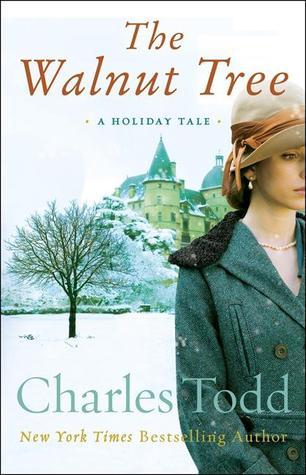
The Cover I'm guessing that the cover is meant to stand in for Elspeth's family home in Scotland and the three-quarter profile we have of Elspeth in her pre-war finery is to set the mood for the time period.
The title is Sister Blake's dream of home, The Walnut Tree at her family's cottage where Elspeth and Peter finish falling in love that Christmas.
I believe it's official. I am a complete Charles Todd fan now. I believe I've read at least 5 of his books and his writing style is incomparable to any other author I've read. Each time I read a Bess Crawford book, I truly believe I am seeing and hearing things from the characters own point of view and that's why I believe his books are so addicting. You begin to care about the characters, in this case Lady Elspeth Douglas, who is struggling the social binds that require her to marry into her social status while being care for by her Cousin Kenneth since her parents have both passed away. Now at the height of World War 1, in 1914, Elspeth finds herself in France caring for her dear friend Madeline, who has just learned her husband is being called up for duty and must leave just as she is about to deliver her first child.
During her stay with Madeline, Elspeth becomes enchanted with Madeline's brother, Alain who she also learns is about to leave to join the war. On their last night together, Alain asks Elspeth for permission to court her when he returns from the war, and offers her his mother's ring as a token of their promise, which she accepts. Alain begs her to return to England fearing that the Germans will overtake the city of Paris soon and he won't be able to protect her. She promises she'll return once Madeline has the baby.
As Elspeth begins her journey home to England, she encounters some of the horrors of war, too many wounded dying men in desperate need of care and very limited resources. She offers what care she can as she comes upon the victims trying to find a way back across the English Channel but soon finds herself in danger and an unlikely hero in a childhood friend, Peter Gilchrist who saves her from being shelled while caring for the men. He helps secure her a way back to England but not without their being a spark of feelings between the two. Elspeth feels she can't commit to Peter even though she possess a different more strong sense of affection for Peter, because she has promised herself to Alain.
However with the war continuing Lady Elspeth feels she can't simply return to her life of luxury while so many are in need, so she attempts to find a way to join the nursing corps but without securing the permission of her Cousin Kenneth she won't be able to based solely on her social status. But Elspeth is determined to find a way to help those that she deeply cares for that are serving in the war, and nursing seems to be the only open door for her to learn the fate of the men she is torn between.
In the novel, The Walnut Tree by Charles Todd is a poignant, compelling tale brimming with adventure, danger and love. This is a enchanting holiday gift and a wonderful companion to Charles Todd's acclaimed Bess Crawford series. Charles Todd is the New York Times bestselling author of the Inspector Ian Rutledge mysteries, the Bess Crawford mysteries, and two stand-alone novels. I received The Walnut Tree compliments of William Morrow, a division of Harper Collins Publishers for my honest review and I can honest say this one was a heartwarming 5 out of 5 stars. I love historical romance novels with the World Wars as a perfect backdrop and this is no exception!
I must learn to choose my books more wisely. This was nothing like I expected and thoroughly disappointing. What I expected: This is the story of a titled young Scots woman named Lady Elspeth Douglas and how she joins the nursing corps during World War I. Intriguing, no? How is this girl, raised on a landed estate with servants to cook, clean, see to her wardrobe, help her dress, how is she going to adjust to being on her own, facing danger with no one but herself to rely on? How will she endure the horrors of war? What I got: Lots of flitting about the countryside. I think there is more description of her actual travel from place to place than her actual nursing. There is much about how crowded are the ships, how crowded are the trains, how crowded are the roads, how crowded are the hotels. Okay, you get it, crowded. Then much about how this or that isn't proper behavior for a lady. There is perhaps one chapter on her training, nothing about what a challenge it is, she just does it. Also, there is a small mystery jabbed in for no apparent reason other than I believe the authors here are known for their mystery series so I guess they needed to put in mysterious elements for their fans, of which I am not one. This infinitesimal mystery bits fit in with the plot not at all and when it is revealed, I thought, huh, okay. *yawn* The ending is just silly. I kept waiting for some tension, some drama, other than the one Elspeth has made for herself by not being honest with either man, but there is nothing else to the story. I hoped to learn what life was life being in England during the war, but other than travel being something of a irritation, I know nothing about it still. I don't believe I'd pick another by this author.
Wow! I found new authors and a new series by reading this book. Charles Todd is actually a pseudonym for the mother and son writing team of Caroline Todd and Charles Todd and they write the Bess Crawford mystery series. Our heroine, Lady Elspeth Douglas was in Paris the day the French army mobilized in 1914 and her life was never the same. She wasn't the type to just sit there and rolled bandages like all the upper crust women of her society did. She wanted to do more for the war effort. She took a course in nursing then began helping the wounded soldiers at the front. Until her guardian got wind of it and forced her back to London. Being a nurse would make her unmarriageable. Upper-crust women don't do such things (There's a Downton Abbey like thing going on). Let's not forget the love triangle (it wouldn't be a Christmas romance without it) between Alain (her best friend's brother, the man she's promised to) and Captain Peter Gilchrist. Who will win her heart? All in all, I truly enjoyed this book and probably will read it again next Christmas!
🌟🌟🌟✨ “In 1914, while visiting her friend Madeleine, Lady Elspeth Douglas's life is thrown into chaos when war breaks out and the Germans quickly overrun Belgium, threatening France. Having just agreed to marry Alain, her friend, Madeleine's dashing brother, Lady Elspeth watches him leave to join his unit, and then she sets out for England, only to find herself trapped on the French coast. The restless Elspeth—daughter of a Highland laird whose distinguished family can trace its roots back to the court of Mary, Queen of Scots—decides to make herself useful, carrying water to weary soldiers near the Front. It is an act of charity that almost gets her killed.”
This was the first year that I read some Christmas novels and it was kind of fun. This one isn't really a Christmas read, which was fine, but an odd billing. It is a WWI and romance story, with a narrator who was fabulous on audio. She was able to seamlessly perform as all of the women and men, some with French accents, Scottish, and English. Bravo!! She gets 5 *
Pros: It is a WWI story and I love historical facts. It also shares details and viewpoints from Scottish and French standpoints. I admired the strong, female lead, Lady Elspeth, who despite the obstacles of a war and being a female, she was determined to be nurse..."a sister" to the wounded.
Cons: There are 2 romances in this story - not my usual interest. It was going fine until the end when the author wrapped it up neat and tidy, and abruptly. When so much is focused on the romances, something else gets shorted - in this case, there were fewer historical details about what life might have been like for all those involved. I also felt the ability of this young, woman, nurse, who traveled in England, Scotland, and France during WWI, pretty improbable but she was a good character and mineable. The language that this author team (mother and son) chose to use is very formal, old fashioned, and Proper English, so if that bothers you, you might want to skip it.
Long ago I started the Bess Crawford series and I do not remember enjoying it. After listening to this related novel, I am sure to start the Crawford books again as I thoroughly enjoyed this story. Bess was only mentioned, but the writing was excellent. All stories set during World War I are becoming more and more interesting to me. This one was greatly enhanced by narrator Fiona Hardingham, whose British, Scottish, and French accents were lovely.
This is not a mystery, but in some way, it is with Lady Elspeth's mini triangle of trying to decide which man she loves, of which I am not really a fan of, but circumstances allow themselves to show her who only it could be. I found this to be kind of tedious, in which Elspeth decided what she wants, and of course, I knew what I wanted her to do, it just took her a little longer to get to that conclusion as well. 3.5 stars
I've read and loved every single book written by Charles Todd, but this didn't do it for me. I think the problem is with the length of the novel, and the pacing. There was too much story crammed into too little story.
Usually in a Charles Todd novel, the major strength is in the characterization. The plot is usually good to excellent, but I've always found it to be secondary to the characters themselves. The characters, be they major or minor players, typically display complexity which slowly unfolds in subtle ways throughout the novel. It is never obvious, the writing is such high quality, but slowly the tiniest hints of behavior impresses itself upon you. Bit by bit, each character develops a distinct character throughout the book that is deeply and subtly complex.
Unfortunately for me, this was not done to the greatest extent in this novel. I did not find in Elspeth a character that I could understand. I think the problem is that this is such a short story compared to Charles Todd's previous works; it's a bit unfair of me to complain about one main character in a novella when I've had over ten novels to grow to love the characters of Ian Rutledge and Bess Crawford.
The other characters in the book were also not fleshed out. I didn't like the main or the projected love interest, and I couldn't understand Elspeth's attraction to the latter. I felt Alain's fate was a cheap and easy way out for the author, as a plot device. I am not diminishing his fate or his actions; I understand that it is completely believable that Alain chose to do what he did, I understand the impact of war, I am not judging him; what I meant was that within the pacing of the novel, his actions didn't feel right.
I found Peter to be a rogue; this may be my own prejudice speaking, I'm not too fond of rogues and playboys and characters who don't take themselves too seriously. I know that Peter is this way because it is his way of coping with the pain of his experience with the war, but his character is never fleshed out enough for me to see beyond the superficial.
I suspect it might be better if this book were written as a full length novel instead of a very short story. There was too much action going on, and I didn't find myself developing an attachment or empathy to any of the characters. It was just really boring despite the pacing and excitement/danger intrinsic to the atmosphere of the war.
I had been looking forward to reading this book and was so disappointed. I am a big fan of the Charles Todd team and love their other two series. This seemed to be written by someone completely different. No depth to it--plot was pedestrian. I kept waiting for it to really start, so I could enjoy it and be as captivated as I have been by their other novels. It never happened. I felt like someone was giving a book report of a book they read.
I liked this so much more than I was expecting. When Lady Elspeth Douglas is confronted with the suffering of soldiers and immediately starts helping out, she is actually transgressing. Transgressing against all her training as a Lady, which should have had her fainting or being too shocked and allowing herself to be rapidly relocated to some much more salubrious location. Problem is, out main character is made of much sterner stuff, and has a known stubborn streak (according to her wealthy family and guardian Kenneth in Scotland). Elspeth’s experiences in France while waiting to be transported back to Britain now that Britain and Germany are at war (Germany just walked through Belgium, activating a provision in a treaty between the two Bs) convince her to apply to be a nurse (again, not something a Lady is ever to do, and against the wishes of her conservative guardian’s wishes.) Along the way, she discovers she’s good at nursing, and likes the sense of accomplishment she gets from caring for the wounded, and the peace and comfort they feel. Elspeth also forms an attachment with two men, one the elder brother of a friend in France, the other a Scottish captain. Yes, this is a romance that does resolve around Christmas, but I was more interested in the historical details, which gave me a little more insight into what it was like being a nurse during WWI. It was also amusing seeing Bess Crawford and Mrs. Hennessy from Elspeth’s perspective.
If you're looking for something to tide you over until Downton Abbey finally starts up again in January, take a look at Charles Todd's World War I Christmas romance, The Walnut Tree.
And if you happen to be a fan of Todd's Bess Crawford mystery series, you're in for a real treat. The heroine of The Walnut Tree is one of Bess Crawford's London flatmates, so there is a glimpse into Bess' world from a slightly different perspective. There's even a touch of mystery.
But back to Downton. The heroine in this particular tale is Lady Elspeth Douglas. Like Sybil Crawley, she wants to do more in World War I than lament about the shortages and roll up bandages. Lady Elspeth goes through the rigorous training and becomes a surgical nurse, serving in France, until her guardian discovers where she is and forces her resignation from the service. Elspeth is well into her 20s at this point, but she is under her cousin's guardianship until age 30 according to her late father's will.
No one wants her to leave the nursing service. Elspeth is a damn good nurse and they need her. Badly. Desperately. But her cousin has the absolute legal right to do this. Makes you want to scream but this was quite legal. He thought, and many people quite agreed with him at the time, that serving as a nurse would make her unmarriageable. And, after all, that's what upper-crust women were supposed to do-get married and make upper-crust babies.
Never mind what Elspeth wanted to do.
About the story. Elspeth was always somewhat different. Her late father raised her to be independent. And she is Scottish, not English. It does matter. She begins the war in France, waiting for the birth of that friend's baby. And being courted by that friend's brother. A man she had a terrible crush on when she and her friend were in finishing school together.
During the course of Madeleine's pregnancy, Alain has been courting her quite assiduously, with the expectation that after the birth, he could go to Scotland to ask her cousin for her hand in marriage. All very proper. Elspeth thinks Alain is who she wants, but they never really have a chance to know each other. I'm not talking about sex. That's not what this is about. They never have the chance to talk about what they really want out of life or what their expectations are for the future. They assume that everything will go on as it has always been.
Then the war intervenes. Alain asks her for her promise, but they are not engaged. Exactly, because he can't ask her cousin's permission. She feels bound, yet there is nothing formal.
And the world goes to hell. Germany invades Belgium, and Britain is dragged into the war. Her friend stays in Paris, and begs her to stay with her, when Elspeth should, as a British citizen, leave while she can.
After the baby is born, she finally does leave, and is caught up in Calais by the British troop movements. There are no ships for a civilian to take. She ends up nursing the wounded. Even untrained, she is more help than nothing.
And she finds Captain Peter Gilchrist, a friend of her family from Scotland. He takes her with his company, and makes sure she gets back behind the lines to the coast. The harrowing experience binds them together in a way that her brief relationship with Alain does not. But she gave Alain a promise that she cannot break.
But her experience on the coast of France has changed her forever. Enough so that she defies the expectations of her class and goes through the rigorous training to become a nursing sister. Enough so that she spends the entire war dreaming of one man while fully committed to honoring her promise to another. Praying that both of them make it through the war whole.
Some prayers are not meant to be answered.
Escape Rating A: Charles Todd (actually a pseudonym for the mother and son writing team of Caroline Todd and Charles Todd) do an excellent, as always, job of invoking the time, the place and the sensibilities of life in England in the WWI and post-WWI era.
As much as the restrictions on Lady Elspeth chafe us, our world is not hers, those are the times in which she lived. She had to deal with her world as she found it, not as we would. The Todds let you slip into her skin, and see the world as she did.
We feel Elspeth's need to do her duty to the promise she made to Alain, and we understand why she feels it. Just as we feel her need to do her part in the war, no matter the personal consequences.
That those consequences are high, and different from what Elspeth initially imagined...well that's what makes the story so marvelous.
The extras at the end were great - Of the two male friends one was kind of ditsy(alain), all in the all the book was fairly romantic in a nice way. The young nurse did not at all times use her head and training unlike Bess Crawford does. A worthwhile read.
Didn’t like this much at all after I was part way through it. Usually I’ll warm to books, this one didn’t do the trick. Was willing to like it as I like several of the Ian Rutledge books by Todd but this mystery / romance left me unimpressed.
Lady Elspeth Douglass –an aristocratic girl who wanted to keep it from people so it didn’t change how they acted towards her. So how does she react toward other people: she lies to them, she manipulates them, she takes advantage of their goodwill and kindness almost as an entitlement, she is not particularly friendly, she acts frustrated when the ‘privileges’ of her birth are not upheld, and she talks of honor but doesn’t abide by it herself--sorry, couldn’t like her much.
For no reason that I could detect, people fell over themselves to be kind to her. All the military officers were in love with her (these would have been aristocratic men) and all the nurses (middle class girls) wanted to do whatever they could for her. I didn’t get it. What did she give in return? She took plenty—a cottage offered for a few days in which she stayed in for weeks; the labor and hospitality of neighbors; time away from a young woman on leave to drive her, Elspeth’s, boyfriend to the cottage; motorcars taken on loan with little or no explanation—unless it was a lie; the good will of a fellow nurse to write her letters…the list could go on and on.
There were multiple holes in the narration that required a leap of faith: Elspeth had automobiles and petrol during war; she had winter weight clothes left in Paris even though she stayed there the previous summer; acquaintances at every turn of the war were eager to aid her; the speed of her discharge from the nursing unit (when letters were delayed in all other instances); a boyfriend that people took great pains to inform her was such a gentleman and so kind and thoughtful—was getting a bit tedious to be told this but clearly the character’s dialogue and development wasn’t getting the message across; and a four-month old baby was crawling. But, the largest infraction of sense was the poor use of time--nurses training, multiple journeys to France to be stationed, weeks spent at the cottage, several days spent capturing the art looters and murderers, a trip to Scotland, days attending a convalescing cousin ….all in the span of three months. Really?!
The mystery? Such a slim portion of the book dealt with it—making it completely unnecessary.
2.5/5 - Incredibly predictable and cliche. The daughter of a Scottish Earl, deceased, goes to France to help her friend Madeleine as she prepares to give birth. War is breaking out and Lady Elspeth falls in love with Madeleine's brother (whom she had a crush on during their school years). The men are sent off to war, baby arrives, and then suddenly Elspeth decides she must return to England. But, by this point, the trains and ports are filled with soldiers arriving, wounded and dying.
At this point, the story goes off the rails. Elspeth starts running back and forth to give the men water and then unaccountably decides to dash off to the front to help out. At nearly every turn, she runs into someone she knows, placing all involved in danger. And, she becomes convinced that she must become a nurse. Her rebellious streak leads her to go through the nursing program without bothering to inform her cousin and guardian because she doubts he'd approve. She drops her title, goes off to serve as a nurse and falls in love with a different guy.
So . . . you KNOW who she is going to end up with (won't spoil that) from her inner monologue. But, you can't will a heroine in a book to just FESS UP, DAMN IT, all around. She lies to everyone about her place in society, the man she truly loves, etc. In the midst of this is a little mystery that is completely meaningless.
The book appears to have been rushed to press. The word "had" should have been stricken repeatedly from at least half of the pages. Did an editor look at this manuscript? I can't say. Other reviewers who have read the mother/son duo's mysteries note that this book is not of the same caliber. I'm not a mystery reader and was more interested in the time and place. I like a little romance mixed in with interesting events but the romantic aspect was not convincing. Really, quite disappointing.
This "holiday tale" only featured a mention of Christmas and a decorated tree. It was a romance (not my cup of tea) as Lady Elsbeth Douglas goes back and forth to France at the outbreak of World War I. Really? She becomes a nurse and going back and forth becomes easier. She becomes engaged to the brother of a French friend, and meets a Scottish officer and sparks fly. The story was hard to believe especially as Elsbeth keeps running into Scottish minor royalty who are part of the British army in France. You'd think there were only a few hundreds soldiers over there. But romance stories tend to be outlandish, sigh.
Sentimental fluff from the authors of the Bess Crawford & Ian Rutledge mysteries. Very basic uplifting holiday tale; there's none of the depth of their better mysteries. Eminently skippable.
My Interest A World War I “holiday” tale featuring a titled English lady? Sure, why not!
The Story
Lady Elspeth Douglas is in Paris with a heavily pregnant friend as war is declared. She thinks she may be in love with her friend’s brother, too. After staying on to help the friend deliver her baby, Elspeth set off on one of the more unlikely journeys of the war. Through amazing coincidences she runs into most of her former dance partners and her male cousins–all serving in highland regiments. She speaks Gaelic with the piper and French with port authorities. Along the way she ends up, briefly, at the front. She helps with the wounded. Eventually she lands back in ole Blighty to be a member of Queen Alexandra’s Imperial Military Nursing Services–but “forgets” to include her courtesy title on the application. She’s a fabulous nurse (Of course she! She has pluck! She’s the daughter of an Earl, of course she gets her way!).
Along the way she has doubts about the Frenchman she’s all but agreed to marry when she runs into a neighboring well-born chap who knows her cousins from their public school (American Prep School–like Bush and the Roosevelts and JFK attended). But then, yes, Then! Somehow–but HOW? Her guardian, whom she at least acknowledges is not evil, pulls the plug on her free-spirited life. And, somehow, yes SOMEHOW, she goes back to France and miraculously the Frenchman has survived injury, being taken as a Prisoner of War and being exchanged (well it COULD all happen, right?). But she is so conflicted! Which man is right for her?
My Thoughts Ok, I’m having a little fun with this review. It’s the sort of book where you must accept that people CAN run into each other at the Battle of Ypres, ok? And that no one, NO ONE, realized an Aristocrat who’d never uttered a word in any but the poshest of posh accents, could suddenly “pass” as a mere middle-class girl of good family-the people she encountered were so dim they couldn’t tell her origins form her accent at a time when accent was everything.
What I liked was: Elspeth had no modern ideas of hiding away “living in sin.” She knew she’d be ruined. She played as fast and loose with the “rules” of her world as far as she could. She knew her limits. She mostly respected the authority of her Guardian, even loved him (he was her uncle) and adored her cousins. Yes, she had “pluck” and even “spunk,” a quality that I’m in complete agreement with Mr. Lou Grant on.
I loved Elspeth’s romance with Peter–it was sweet and honorable. He was a good chap. She was a good girl. They did not hop into be ala 2021 but acted like folks pushing the outside of the envelope in 1915. I found it odd though that her Guardian looked down on nursing when the King’s only daughter trained as a nurse at this time and the King’s own mother founded the nursing service. Princess Mary, later the Princess Royal, was kept in London and only nursed mothers and children, but….in the two great period dramas, Upstairs, Downstairs (the real one–from the ’70s) and Downton Abbey, posh aristo’s Miss Georgina Worsley, ward of the Hon Richard Bellamy, M.P. and step-granddaughter of the Dowager Countess of Southwald and Lady Sybil Crawley were nursing sisters. Dear Georgina even went to France where, she naturally, just happened to stumble upon wounded cousin “Jumbo” aka Major James Bellamy. Of course, she did! See? It had to be acceptable to nurse! Georgina, like Lady Edith Crawly in Downton ended up a Marchioness!!! Of course, poor Sybil….
My only true complain with this book wasn’t titles–they were fine. It was a stupid mystery worked in. It was really more like it had been started in the first draft and forgotten. No one remembered to edit it out. It was awful, but mercifully it only took up a few lines. When pulling the cover for this post I discovered this was another “between the numbers” sort of tale in the Bess Crawford mystery series. Lady Elspeth was a colleague of Bess’s in Queen Alix’s nursing service. I don’t have any interest in Bess, but I’d love a sequel on Lady Elspeth.
I’ve poked fun at this story, but the truth is I really enjoyed it! The stupid mystery cost it some in my rating. A final comment, there is Christmas in this story but I would not really call this a “Christmas” book. Don’t let that stop you from enjoying it though.
Before I began, I read enough GR reviews to know that this novella was not a mystery but a straight-up romance. The publisher would have done well to add a subtitle or something on the cover indicating that the story is a romance. It's hard to enjoy a book if you expect one thing and get another. So I started out without troublesome misapprehensions that apparently tripped up some readers familiar with Charles Todd's other works and thereby was able to enjoy the book much more than I would have otherwise.
Why Walnuts Are Considered One of the Best Foods for Brain Health
There's a reason walnuts look like tiny brains. Wrinkled, folded, and nestled inside a hard shell - the resemblance is uncanny. And as it turns out, nature may have been giving us a clue all along. Walnuts are one of the most extensively studied foods when it comes to cognitive health, and the science behind their brain-boosting reputation is genuinely compelling. Whether you enjoy a handful as a daily snack, sprinkle them over your morning oatmeal, or source them as bulk walnuts for your household, understanding what they do for your brain makes every bite feel that much more worthwhile.
If you’ve ever looked closely at a walnut, you may have noticed something interesting. Its wrinkled surface and folded shape resemble the human brain. While that might seem like a coincidence, walnuts genuinely play an important role in supporting brain health. Modern nutritional research continues to highlight walnuts as one of the most beneficial foods for cognitive function.
Whether you enjoy them as a quick snack, mix them into breakfast dishes, or keep them stocked at home as bulk ingredients, walnuts offer a powerful combination of nutrients that contribute to mental clarity and long-term cognitive wellbeing.
In this article, we explore the science behind walnuts and how their unique nutritional profile supports brain function, protects against cognitive decline, and helps maintain mental sharpness throughout life.
The Link Between Nutrition and Brain Function The human brain may represent only a small portion of total body weight, yet it requires a large share of the body’s energy supply. To operate efficiently, the brain depends on a steady intake of nutrients such as healthy fats, antioxidants, vitamins, and minerals.
These nutrients help with several essential functions, including: Supporting neurotransmitter production Protecting brain cells from oxidative stress Maintaining healthy neural connections Regulating mood and cognitive performance
Diets that rely heavily on refined sugars, ultra-processed foods, and unhealthy fats have been associated with reduced cognitive performance and increased risk of neurodegenerative diseases.
On the other hand, nutrient-rich foods like nuts, seeds, and whole plant foods have been linked with better memory, improved concentration, and healthier brain ageing. Walnuts consistently appear among the top foods recommended by nutrition experts.
For those building a balanced diet with nutrient-dense ingredients, exploring options such as Healthy Snacks & Subscription Boxes UK can make it easier to incorporate wholesome foods like walnuts into everyday routines.
What Makes Walnuts Nutritionally Unique Walnuts stand out among other nuts because of their impressive nutrient profile. A 100-gram serving contains a wide range of essential compounds that benefit both the body and the brain.
Key nutrients found in walnuts include: Healthy polyunsaturated fats Omega-3 fatty acids (ALA) Plant protein Dietary fibre Vitamin E Vitamin B6 Magnesium Copper Folate Polyphenol antioxidants
What makes walnuts particularly valuable is how these nutrients work together. Few foods provide such a balanced mix of brain-supporting compounds in a single natural ingredient. For people who enjoy building a healthy pantry with nutrient-dense foods, many retailers also offer options to Buy Seeds Online UK with Free Delivery, making it convenient to combine walnuts with other nutritious ingredients like chia seeds, pumpkin seeds, and sunflower seeds.
How Walnuts Support Brain Performance
Regular consumption of walnuts may support the brain through several biological mechanisms. These effects can benefit people of all ages, from young adults to older individuals focused on maintaining cognitive health.
Improved Memory and Learning Walnuts contain compounds that support the hippocampus, a part of the brain responsible for memory formation and learning. Omega-3 fatty acids and plant antioxidants help maintain healthy neuron membranes, allowing faster communication between brain cells.
This may contribute to improved memory recall and stronger learning capacity over time. Mood Balance and Mental Wellbeing Magnesium and certain amino acid precursors found in walnuts play a role in regulating mood. Adequate magnesium intake has been linked with reduced anxiety and improved emotional balance.
Regularly consuming walnuts as part of a balanced diet may therefore help support overall mental wellbeing. Protection from Age-Related Cognitive Decline Oxidative stress and chronic inflammation are widely recognised contributors to cognitive decline. Walnuts contain powerful antioxidant compounds that help neutralise free radicals and reduce inflammation in the brain.
These protective effects may help lower the risk of neurodegenerative conditions such as Alzheimer’s disease over the long term.
Omega-3 Fatty Acids and Brain Structure Among all nutrients found in walnuts, omega-3 fatty acids deserve special attention. Walnuts are the richest plant-based source of alpha-linolenic acid (ALA), a type of omega-3 fat that supports brain function.
The brain itself is composed largely of fat, and omega-3 fatty acids help maintain the flexibility and health of neuron membranes. These membranes allow electrical signals to pass efficiently between brain cells.
When omega-3 intake is low, these membranes can become less responsive, which may affect concentration, cognitive processing speed, and mood regulation.
Regular walnut consumption helps provide a steady supply of these beneficial fats, supporting healthy brain performance throughout life.
Antioxidants in Walnuts and Brain Protection Because the brain is highly active metabolically, it produces large amounts of free radicals during normal energy production. Without sufficient antioxidant protection, these molecules can damage brain cells over time.
Walnuts contain several powerful antioxidants that help defend the brain, including: Vitamin E (gamma-tocopherol) Polyphenols such as ellagitannins Melatonin Selenium
These compounds work together to reduce oxidative stress and support long-term brain health.
In fact, research from the American Chemical Society has shown that walnuts possess significantly higher antioxidant activity than many other commonly consumed nuts.
Scientific Evidence Supporting Walnuts for Cognitive Health
A growing number of scientific studies support the benefits of walnuts. Research from UC Davis Health recommends consuming approximately 28 grams of walnuts daily to obtain their health benefits without excessive calorie intake.
Additional research published in the British Journal of Nutrition found that adults who regularly consumed walnuts performed better on tests measuring memory, attention, and cognitive processing.
Another large observational study published in the Journal of Nutrition, Health & Aging followed thousands of participants over several years. Individuals who consumed walnuts consistently showed higher cognitive function scores compared to those who rarely consumed them.
These findings reinforce the idea that walnuts provide meaningful benefits for brain health when included as part of a balanced diet.
Easy Ways to Include Walnuts in Your Daily Meals
Incorporating walnuts into everyday meals is simple and doesn’t require major dietary changes. Even small amounts consumed regularly can provide benefits.
Some easy ways to enjoy walnuts include: Adding chopped walnuts to oatmeal or yogurt Mixing them into smoothies Using them as a crunchy topping for salads Including them in homemade granola or baked goods Using crushed walnuts as a coating for fish or poultry
Keeping a small container of walnuts available at home or work also makes them a convenient snack option.
Households, cafés, and small food businesses often prefer to Buy Dried Fruits & Wholesale UK to ensure a reliable supply of high-quality ingredients like walnuts, almonds, and other nutritious nuts.
Walnuts as Part of a Plant-Based Snacking Lifestyle
Walnuts are naturally suitable for many modern dietary preferences, including vegetarian and plant-based diets. Their combination of healthy fats, fibre, and plant protein makes them a satisfying option for those looking for nutrient-dense snacks.
They also pair well with other nutritious plant-based foods, making them a popular ingredient in Vegan Snacks & Protein Snacks UK that focus on natural ingredients and balanced nutrition.
Final Thoughts Walnuts have earned their reputation as a brain-supporting superfood for good reason. Their unique blend of omega-3 fatty acids, antioxidants, vitamins, and minerals helps support memory, protect brain cells, and maintain cognitive health over time. Adding a small handful of walnuts to your daily diet is a simple yet powerful step toward better long-term wellbeing. Whether used in meals, snacks, or baking, they offer both nutritional value and versatility.
Choosing fresh, high-quality walnuts is equally important. Properly sourced and stored walnuts retain their natural oils and antioxidant potency, ensuring you receive the full benefits this remarkable nut has to offer.
This entire review has been hidden because of spoilers.
“The Walnut Tree” by Charles Todd is one of the best books I’ve read so far this year. It is published by William Morrow an Imprint of Harper Collins Publishers. The story begins in France, in July, 1914. The Germans are poised to enter France through Belgium. The British have issued an ultimatum that if the Germans invade Belgium then England will declare war on Germany. It is the start of World War I. Lady Elspeth Douglas of Scotland is visiting her friend Madeleine and her husband Henri. Madeleine is expecting and wants to travel to her home of Villard, France to await the birth of her baby. Because the threat of German invasion is so great, her husband wants her to stay in Paris with Lady Elspeth. Lady Elspeth fancies herself in love with Madeleine’s brother Alain Montigny.
Unfortunately, the Germans overrun the new, small country of Belgium and any British citizen who is still in Paris is trying to get home to England. Lady Elspeth wants to go home and see about her uncle and cousins and to try to do something for the war effort. Before she is able to leave, Alain comes home to say goodbye to his sister and Lady Elspeth and asks for Elspeth’s hand in a marriage to take place after the war is over. Both he and Henri are called to the front and are in the thick of the fighting. Elspeth accepts Alain’s ring with the understanding that he will approach her uncle and ask for her hand. Until then, the arrangement is to be kept secret.
As Lady Elspeth is trying to get to Calais to board a ship for Dover she was caught up in the exodus of the wounded from the front. She tried to help nurse those who were injured and subsequently found herself close to the battlefield and ran into an friend of her cousin’s Peter Gilchrist. He took her under his wing and helped her get back to Calais. In helping nurse the soldiers in the field, she decided that she would try to join Queen Alexandra’s Imperial Military Nursing Service. As a member of the peerage, Elspeth should have had the permission of her guardian, her uncle. However, knowing that he would refuse her she let it be known that she was alone in the world and did not refer to herself as Her Ladyship.
Lady Elspeth successfully completed her Sister’s training and then was sent to France to help tend the wounded. She would then make return trips to care for troops who were being transported back to England to recuperate. Along the way, she met up with Peter Gilchrist again and fell in love. The rest of the story has to be experienced as you read this book. Believe me you will not be sorry that you have this book in your library. I fell in love with the characters in this book and the time period. I truly felt as though I was there with Lady Elspeth as she and her countrymen came to grips with the war and their part in it.
I received a free Kindle copy of this book from Harper Collins in return for my honest review.
I'm a big fan of mother-son author team Charles Todd. I needed an audiobook to listen to and picked up The Walnut Tree, labeled as "a Holiday Tale." Set during the same time as the Bess Crawford series, some familiar characters like Bess and her landlady make appearances. The writing is fine, and it kept me interested, but I have some major problems with the plot and characters.
The narrator, Lady Elspeth Douglas, is not very admirable. In France with a school friend awaiting the birth of her child, she believes she has fallen in love with her friend's brother Alain. Even though it is not proper to do so, she gives him permission to speak to her uncle/guardian about marrying her since Alain is about to join the War.
After he leaves and her friend has her baby, Elspeth makes her way back to England. On the way she runs into and becomes reacquainted with an old friend, Peter Gilchrist. She feels an immediate connection with him. She returns to England, joins the nursing service (and shares a flat with Bess Crawford), and starts journeying back and forth between England and France. Along the way, she runs into an implausible number of people she knows, many of them more than once. She also falls for Peter Gilchrist.
It is clear that Peter is in love with her, but she never at any point tells him that she is promised to another man. She lets him go on about speaking to her uncle after the War, but she never finds the courage to admit the truth.
So now she is caught between the man she loves and the man she is promised to. Alain has been missing, and she receives a letter that he is injured but back at home in France. She leaves Gilchrist without a word and goes to France. Alain has lost his arm. He is depressed but Elspeth strives to convince him that she loves him the way he is, even though of course she only loves him as a cousin. She decides to forget Peter and devote herself to Alain. How does this dilemma get resolved? Alain shoots himself, leaving Elspeth free to return to Peter. (Which she decides not to do, out of guilt, but circumstances of course bring them together for a "happy" ending.)
As I said, this kept my interest because the writing is strong, but overall the mood of the story just did not work for me. It was hard to believe in happy ever after for Elspeth and Peter after her inability to be honest with him (really, he forgives her for that?) and after it took a suicide to bring them together.
I will however continue to read any new Charles Todd that comes along.
This entire review has been hidden because of spoilers.
Source: Free copy from William Morrow/Harper Collins in exchange for a review.
Summary: 1914, World War I. Lady Elspeth Douglas is in Paris, France when war with Germany begins. She is in Paris, visiting a long time friend named Madeleine, who will soon have her first baby. Elspeth, begins a relationship with her friends brother Alain; however, war calls him away before the relationship advances. During her journey to escape France, Elspeth encounters war first hand. She also reconnects with an old friend named Peter Gilchrist. Her firsthand experience of being on a battlefield and seeing the injured, both shakes and consumes her. Back in the safety of England, Elspeth makes a serious decision to become a nursing sister. Meanwhile, past decisions will haunt her until rectified.
Thoughts: I loved this story! Elspeth has lived a life of luxury, all her needs and wants are met with servants. Her mother died when she was age three. Her father died recently. Her guardian is an older second cousin with sons her age.When the story began I was unsure of her character. A person of high social status can sometimes be unable to conquer ego and pride. I admire Elspeth's ability to respond and engage herself in duties that are not common to a woman of her social status. In training to be a nursing sister she had to scrub floors and clean up excrement and other body messes that most of us would cringe at. When faced with an obstacle she perseveres with bravery. She is a person of faithfulness, despite fear. I felt that through her story of caring for injured soldiers I'm able to understand what a nursing sister's duties were. Elspeth is a compassionate, selfless, fearless, intelligent, mature, nurse. Her decision to become a nursing sister during war time is met with shock, dismay and negativity. This element is the main part of the story, a second element is her decision about two love interests, third is a mystery. This last part is so small I would not even state this is a mystery novel, but because Charles Todd is a mystery writing team, focusing on the World War I years and aftermath, readers of their books might be surprised that the mystery is miniscule. Bess Crawford is the main character and heroine in several of Charles Todd's books. She makes cameo appearances in The Walnut Tree.
Alain told Lady Elspeth Douglas not to worry as he went off to fight and she stayed home with his ring on her finger because the war would be over by Christmas. Little did they know that the war would NOT be over by Christmas.
Lady Douglas decided that she didn't want to just sit around and wait so she joined the Nursing Sisters...she meets Todd's famous Bess Crawford during this time. Since Lady Douglas was born and raised in a privileged household, it was unheard of for a woman of her class to join the nursing profession and treat wounded men. It was stated that anyone of her class wouldn't be acceptable as a wife to a gentleman if she was part of the nursing sisters. She thought otherwise. To avoid being turned down, she kept her title a secret when she applied to become a nurse.
The book follows Elspeth through her duties as a nurse in France and England during WWII. Of course, she met someone else even though she was engaged to Alain....this theme was the main part of the book. You will find out how she handles this situation and each situation that occurs whether the situation is traveling alone on trains and boats filled with soldiers, visiting relatives, or nursing.
The book is mixed with this love story and war. Mr. Todd takes the reader into the hospitals and gives details about the surgical and nursing units and the unpleasant tasks carried out by the nurses and doctors. He also brings the reader into the thick of the heartbreak, disasters, and ugliness of war. Elspeth's love story has a culminating scene under a walnut tree that binds her and her true love.
I enjoyed the book, but it was a bit of a tedious read. You will want to keep reading, though, because you will want to find out how the love part of the story turns out. WWII history buffs will love all the details that Mr. Todd so exquisitely and brilliantly knows how to portray. My rating is 4/5.
This book was given to me free of charge and without compensation by the publisher in return for an honest review.