There's an interesting moment in the third novel of this particular segment of Powell's series where our fearless narrator, Nick Jenkins, not only extensively quotes from Proust but winds up visiting the seaside villa where Proust's narrator experiences quite a few knotted clauses. Given how often the series is compared to Proust's magnum opus, it's either a sign of Powell having some fun with all the people who saw it as Proust clone, or his way of differentiating it from that other massive novel, putting the two prose styles against each other as if to say, "See, we're nothing alike." It's an odd meta moment in a series that has been more or less realistic, if not a bit comically so. Jenkins may have this odd knack of running into random friends in the most random places ("Here I am in some obscure French villa but . . . hey, I think I met that guy at a party one time!") but this series is grounded more in a darkly sardonic sense of the absurd. It's gentle mockery of a thing that I've probably never experienced, but fairly constant all the same.
This book pretty much comprises a mini-series of sorts within the series itself, as Jenkins finds himself embroiled in the war effort, much like every other British citizen over the age of two. To end that he winds up not on the front lines, which would probably have made this series at least four books shorter given the casualty rates in Europe, but basically on the homefront navigating the bizarre bureaucratic nightmare known as the military, where people seem to spend all their time scrambling around to get a whole lot of nothing done while convincing themselves everything is totally vital, once in a while reminding each other that people are off getting shot at somewhere.
People who complained that the first six books in the series weren't so heavy on plot aren't going to be much more thrilled here, as all semblance of anything resembling a plot becomes almost jettisoned entirely, instead focusing on a variety of scenes from within the war effort, as Jenkins observes what changes war does to a person, dealing with both superiors and junior officers. However, to me at least the first two books here are some of the best in the series thus far, as the war seems to be focus Powell's eye for observation to new degrees of sharpness, as well as allowing him to find a new balance between the comic and the tragic. Rest assured, this isn't the despairingly black humor of "Catch-22" but more of a sense that everyone is trapped inside this big machine called The War and everyone is doing their tiny, tiny part that they're told is supposed to add up to victory even though all the news coming from the continent is telling them the exact opposite. So they just shrug and plod on because what else can you do, really? The fact that Powell makes this at all amusing is probably a testament to his skill at constructing characters and placing them in scenes that are comic without being overwhelmingly slapstick.
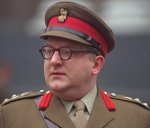
This is probably best illustrated by maybe the best moment in the entire series: Blackhead. An obscure civil servant who somehow manages to control the flow of pretty much everything with his stamp and a book of regulations, Jenkins gets exactly one scene with him that nails everything you need to know about the British military circa-1942, coming across as both terrifying realistic in its mundanity and hilarious in how true to life it rings. We've all experienced a guy like this, mostly at the DMV, and the fact this guy who is in the book for probably less than twenty pages and I can only imagine as a surprising Philip Seymour Hoffman cameo in the movie version of this (in some alternate universe where he was still alive) is probably the most memorable thing about all three books shows how well Powell can sketch his scenes so meticulously. Consider that I'm rating Blackhead this against such things as surprise suicides and at least two buildings being blown up with characters we know and it's high praise indeed.
Fortunately, he's in the last book here ("The Military Philosophers") so things don't peak too early. Unfortunately, he's in the beginning of that book so the rest of that novel winds up being all downhill from there, especially as Powell's careful precision starts to overwhelm him with a parade of characters and scenes that don't stick as well as the characters we met in the books before this. If anyone was to complain about the war books not being as good as the previous six, this would the one I'd agree with them on, as even the presence of the awe-inspiring tower of willpower that is Widmerpool can only do so much. He elevates every scene he's in, to the point where you don't even care that the rest of the Core Four characters we started out with barely appear anymore. A lot of this culminates in the book's second most memorable scene, as various characters come and go while everyone waits outside during a German rocket raid, showcasing the absurdity of life going on as normal even as death is raining down from the skies and could hit you at any moment. But by the time Jenkins gets out of the military and into regular clothes, we're about ready to leave the war as well. It's also gives Pamela Flitton more time to shine but while critics seem to praise her as a "beautiful and dangerous" presence, for the most part she's memorable because she's unrelentingly mean to everyone.
Still, it's telling that the first book in this set "Valley of Bones", is so strong that it can hold off on the obligatory Widmerpool appearance until almost the very end and you don't even especially notice. The characters are stronger this time out, as Jenkins has to deal with an entire unit of bankers who have suddenly become soldiers, and navigate the internal politics where the best he can say about the people around him is that one is incompetent and the other is a drunk. This one definitely feels more episodic than the previous novels and as a result comes across as more even . . . there's a lot here going on that's entertaining as all heck but it lacks the undercurrent of dramatic heft that would underscore the best moments of the next two books (the best scene is probably someone falling in love with a barmaid, which just like in real life, ends poorly) and it's mostly a series of very dry, very witty observations on what it's like to be in the sanest part of a madhouse and realize these are the people who are going to save you from tyranny. Stiff upper lip, indeed.
"The Soldier's Art" pretty much takes what was decent about the previous novel and ups the ante by adding the two things it was missing: more Widmerpool and a massive body count. It continues the plotless trend already started but gives us more frustrated bureaucracy to chew on, as Widmerpool pretty much heaves himself through the military ranks based on sheer naked ambition (with Jenkins forced to work under him) and winds up sparring with the men in other departments, most of whom don't like him but have to admire the singleminded of his trajectory. Meanwhile Powell starts to whittle down the supporting cast, almost mocking the series' tendency toward bald coincidence by having people Jenkins knows get caught in a rocket blast, not once but twice and fairly close together to boot. It's still a startling moment and a good depiction of what the war was like for people on the homefront. Sure, you didn't have to worry about a tank rolling over you but at any moment you could be minding your own business and then discover you had a front row seat to a bomb explosion. It adds an edge to the series that was lacking previously, an air of menace that all the genteel hanging out at parties or offices couldn't quite manage. Suddenly life isn't just a thing you drift through, gradually getting older and meeting all the people you knew in high school over and over again, but something you have to actively work to keep going, and even then the whims of fate could make it all for naught. Add into all this an appearance by one of the increasingly rare Core Four (the idea that the series was going to follow these four young men throughout the century seems to be abandoned once and for all in this volume, if that was ever really a plan) and you can understand why people feel the series is all downhill from here.
That's not completely true but it doesn't seem to ever achieve these peaks again. Much like the rest of England, the war forces the books into a kind of hyper-focus, automatically elevating the mundane into something fascinating and making the quest to file the right paperwork every day a struggle for survival, where every stamp you put down on a requisition for underwear means you made through another day and if God and Queen prevail, and as long as people complain that they don't have enough crummy towels, you can exult in the majesty of life and lay your head down on the pillow each night satisfied that you have done your part. It's war through the eyes of the office clerk and as its a perspective we so rarely see, it's worth it just for that glimpse.