

What do you think?

Jerry is a Man
Jerry is a genetically modified anthropoid who is roughly as intelligent as a man. In a world where genetically engineered animals are run of the mill Jerry and his sponsor, the 'World's Richest Woman,' decide that it is time to stand up for anthropoids' rights. In Jerry is a Man Grand Master Robert A. Heinlein explores what it means to be human and the importance of civil liberties.
44 pages, Paperback
First published January 1, 1947
About the author
Robert A. Heinlein
1,082 books10.8k followersRobert Anson Heinlein was an American science fiction author, aeronautical engineer, and naval officer. Sometimes called the "dean of science fiction writers", he was among the first to emphasize scientific accuracy in his fiction, and was thus a pioneer of the subgenre of hard science fiction. His published works, both fiction and non-fiction, express admiration for competence and emphasize the value of critical thinking. His plots often posed provocative situations which challenged conventional social mores. His work continues to have an influence on the science-fiction genre, and on modern culture more generally.
Heinlein became one of the first American science-fiction writers to break into mainstream magazines such as The Saturday Evening Post in the late 1940s. He was one of the best-selling science-fiction novelists for many decades, and he, Isaac Asimov, and Arthur C. Clarke are often considered the "Big Three" of English-language science fiction authors. Notable Heinlein works include Stranger in a Strange Land, Starship Troopers (which helped mold the space marine and mecha archetypes) and The Moon Is a Harsh Mistress. His work sometimes had controversial aspects, such as plural marriage in The Moon Is a Harsh Mistress, militarism in Starship Troopers and technologically competent women characters who were formidable, yet often stereotypically feminine—such as Friday.
Heinlein used his science fiction as a way to explore provocative social and political ideas and to speculate how progress in science and engineering might shape the future of politics, race, religion, and sex. Within the framework of his science-fiction stories, Heinlein repeatedly addressed certain social themes: the importance of individual liberty and self-reliance, the nature of sexual relationships, the obligation individuals owe to their societies, the influence of organized religion on culture and government, and the tendency of society to repress nonconformist thought. He also speculated on the influence of space travel on human cultural practices.
Heinlein was named the first Science Fiction Writers Grand Master in 1974. Four of his novels won Hugo Awards. In addition, fifty years after publication, seven of his works were awarded "Retro Hugos"—awards given retrospectively for works that were published before the Hugo Awards came into existence. In his fiction, Heinlein coined terms that have become part of the English language, including grok, waldo and speculative fiction, as well as popularizing existing terms like "TANSTAAFL", "pay it forward", and "space marine". He also anticipated mechanical computer-aided design with "Drafting Dan" and described a modern version of a waterbed in his novel Beyond This Horizon.
Also wrote under Pen names: Anson McDonald, Lyle Monroe, Caleb Saunders, John Riverside and Simon York.
Heinlein became one of the first American science-fiction writers to break into mainstream magazines such as The Saturday Evening Post in the late 1940s. He was one of the best-selling science-fiction novelists for many decades, and he, Isaac Asimov, and Arthur C. Clarke are often considered the "Big Three" of English-language science fiction authors. Notable Heinlein works include Stranger in a Strange Land, Starship Troopers (which helped mold the space marine and mecha archetypes) and The Moon Is a Harsh Mistress. His work sometimes had controversial aspects, such as plural marriage in The Moon Is a Harsh Mistress, militarism in Starship Troopers and technologically competent women characters who were formidable, yet often stereotypically feminine—such as Friday.
Heinlein used his science fiction as a way to explore provocative social and political ideas and to speculate how progress in science and engineering might shape the future of politics, race, religion, and sex. Within the framework of his science-fiction stories, Heinlein repeatedly addressed certain social themes: the importance of individual liberty and self-reliance, the nature of sexual relationships, the obligation individuals owe to their societies, the influence of organized religion on culture and government, and the tendency of society to repress nonconformist thought. He also speculated on the influence of space travel on human cultural practices.
Heinlein was named the first Science Fiction Writers Grand Master in 1974. Four of his novels won Hugo Awards. In addition, fifty years after publication, seven of his works were awarded "Retro Hugos"—awards given retrospectively for works that were published before the Hugo Awards came into existence. In his fiction, Heinlein coined terms that have become part of the English language, including grok, waldo and speculative fiction, as well as popularizing existing terms like "TANSTAAFL", "pay it forward", and "space marine". He also anticipated mechanical computer-aided design with "Drafting Dan" and described a modern version of a waterbed in his novel Beyond This Horizon.
Also wrote under Pen names: Anson McDonald, Lyle Monroe, Caleb Saunders, John Riverside and Simon York.
Ratings & Reviews
Friends & Following
Create a free account to discover what your friends think of this book!
Community Reviews
Displaying 1 - 11 of 11 reviews

July 30, 2016
Hilarious.
Jerry Is A Man was Grandmaster Robert A. Heinlein’s 1947 short work that explores the definitions of humanity, pushes the boundaries of civil libertarian ideals and throws a monkey wrench into conservative ideology.
And is laugh out loud funny.
First published in the October 1947 edition of Wonder Stories, Heinlein presents the story of genetic engineering and the legal and sociological consequences. A wealthy woman takes in a biologically manipulated ape and this takes us on a legal fun ride of Martians versus monkeys and everyone in between.
A fairly ubiquitous characterization in early Heinlein works is the crafty litigator and here RAH damn near outdoes himself with the licensed shyster.
One of his better short stories and worth the small investment in time. A MUST read for Heinlein fans and a good short story for any SF reader.
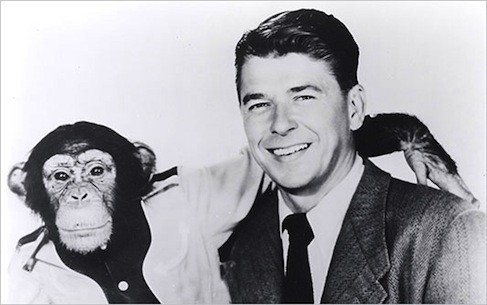
Jerry Is A Man was Grandmaster Robert A. Heinlein’s 1947 short work that explores the definitions of humanity, pushes the boundaries of civil libertarian ideals and throws a monkey wrench into conservative ideology.
And is laugh out loud funny.
First published in the October 1947 edition of Wonder Stories, Heinlein presents the story of genetic engineering and the legal and sociological consequences. A wealthy woman takes in a biologically manipulated ape and this takes us on a legal fun ride of Martians versus monkeys and everyone in between.
A fairly ubiquitous characterization in early Heinlein works is the crafty litigator and here RAH damn near outdoes himself with the licensed shyster.
One of his better short stories and worth the small investment in time. A MUST read for Heinlein fans and a good short story for any SF reader.

September 4, 2017
I couldn't help but think of Camus’ The Stranger while reading this trippy tale of Jerry the apeman. It's the same sort of stuff—the decision of one's humanity is decided in a courtroom. For Meursault, the crux of the matter lies in his lack of emotion about his mother's death. Jerry's fate boils down to his ability to mimic human culture and behaviors like distinguishing truth and singing “Suwanee River”, an old slave song. Both characters need to show that they are not nefarious or unprofitable outliers, that they are no threat of breaking our barrier between what it means to be us and what it means to be an other; or, whether or not we feel comfortable and safe. Early science fiction writers often addressed vital social issues, which made their work more significant than the sparse credit it was given by readers as a whole. I definitely felt Heinlein throwing some heat on conservative thought. Considering when this was published, I wonder if he had been thinking about minorities in the US or even abroad.
With all of that said, I still wonder. Was Jerry a man? He demonstrated rational thought, but it was based on reward. When on trial, he spoke and acted as instructed based on the promise of cigarettes and chocolate afterward. It is made clear that genetically engineered animals possessing speech is the norm, so that's not even a factor for Jerry's “peers”. I did not see Jerry as fighting for his rights, but serving as a parrot-puppet for Martha van Vogel, the richest woman on Earth, who felt sorry for the “Joes”—the neo-chimps or anthropoids that were utilized as workers until they grew old, at which point they are processed into dog food. Jerry appears to merely obey commands and seek reward. He states to Martha that he does indeed want to work, and even that he's sad about a lack of it, but first mentions the lack of cigarettes and candy. I think that Jerry was human. However, Heinlein gave Jerry these traits to represent the mindset of mistreated minorities, who were used as resources, given as little as possible to sustain their bodies and motivate them to continue working. The Grapes of Wrath and The Jungle come to mind—the wealthy use the poor like livestock; companies do the same, even literally when a worker falls into the meat processing equipment from time to time. And here, too, in Jerry's story, we see the argument over one's rights being fought between a wealthy individual and a corporation. Jerry is in the middle and doesn't even decide his own fate. An even more dangerous “other”, the Martians, who refer to themselves as the “Great Race”, make the decision that day in court, albeit inadvertently. Martians demonstrate intelligence above earthlings, and B’nah Kreeth, the Martian witness, says that while it is self-evident that they are superior to humans, it is not self-evident that the same can be said of anthropoids. The Martian is dismissed. Everyone's pretty upset. The tone immediately changes, and Jerry's lawyer demands that his manhood be declared by law, not with the right to hold property or vote or any other civil liberties, “but we do ask that he be adjudged at least as human as that aquarium monstrosity just removed from this court room!" Again, this is a fight against the “other”, but instead of Jerry, now it's the Martians.
Heinlein says so much about humans in such a silly short story. He speaks to our fears, biases, greed, caprice. He damns capitalism and conservatism for how common people suffer beneath them. He speaks to our hypocrisy while pulling images from our collective memory: slavery and Jim Crow in the US (Jerry singing a slave song and referring to everyone as “boss”) and World War II (“Great Race”, what it means to be human, racial superiority, even cigarettes and chocolate, which were great commodities, luxuries, and even currency depending on who and where you were). And I mean, really—his name is Jerry and he speaks with a Japanese accent.
All of this in a short story that also makes you laugh. This guy might be a genius.
I'm looking forward to hearing what else Heinlein has to say.
With all of that said, I still wonder. Was Jerry a man? He demonstrated rational thought, but it was based on reward. When on trial, he spoke and acted as instructed based on the promise of cigarettes and chocolate afterward. It is made clear that genetically engineered animals possessing speech is the norm, so that's not even a factor for Jerry's “peers”. I did not see Jerry as fighting for his rights, but serving as a parrot-puppet for Martha van Vogel, the richest woman on Earth, who felt sorry for the “Joes”—the neo-chimps or anthropoids that were utilized as workers until they grew old, at which point they are processed into dog food. Jerry appears to merely obey commands and seek reward. He states to Martha that he does indeed want to work, and even that he's sad about a lack of it, but first mentions the lack of cigarettes and candy. I think that Jerry was human. However, Heinlein gave Jerry these traits to represent the mindset of mistreated minorities, who were used as resources, given as little as possible to sustain their bodies and motivate them to continue working. The Grapes of Wrath and The Jungle come to mind—the wealthy use the poor like livestock; companies do the same, even literally when a worker falls into the meat processing equipment from time to time. And here, too, in Jerry's story, we see the argument over one's rights being fought between a wealthy individual and a corporation. Jerry is in the middle and doesn't even decide his own fate. An even more dangerous “other”, the Martians, who refer to themselves as the “Great Race”, make the decision that day in court, albeit inadvertently. Martians demonstrate intelligence above earthlings, and B’nah Kreeth, the Martian witness, says that while it is self-evident that they are superior to humans, it is not self-evident that the same can be said of anthropoids. The Martian is dismissed. Everyone's pretty upset. The tone immediately changes, and Jerry's lawyer demands that his manhood be declared by law, not with the right to hold property or vote or any other civil liberties, “but we do ask that he be adjudged at least as human as that aquarium monstrosity just removed from this court room!" Again, this is a fight against the “other”, but instead of Jerry, now it's the Martians.
Heinlein says so much about humans in such a silly short story. He speaks to our fears, biases, greed, caprice. He damns capitalism and conservatism for how common people suffer beneath them. He speaks to our hypocrisy while pulling images from our collective memory: slavery and Jim Crow in the US (Jerry singing a slave song and referring to everyone as “boss”) and World War II (“Great Race”, what it means to be human, racial superiority, even cigarettes and chocolate, which were great commodities, luxuries, and even currency depending on who and where you were). And I mean, really—his name is Jerry and he speaks with a Japanese accent.
All of this in a short story that also makes you laugh. This guy might be a genius.
I'm looking forward to hearing what else Heinlein has to say.

June 14, 2018
Tempted to give it four stars because it is so much better than so much other Heinlein. But that's not worth much, actually. I did have to edit the blurb, however.

December 9, 2021
Seventy years later, this is a relevant and extremely problematic story. It’s all about what rights should living beings have, and it judges itself against the legal fiction that a corporation is a person. But in order to do so, Heinlein went for an analogy that is both inappropriate and lacking sensitivity. In this future, humans have learned how to genetically modify living creatures, able to create chimera such as miniature elephants that can communicate, typically sold as pets, and anthropoids, or ape-like workers, used to do the manual labor once done by humans. Once the wealthy protagonist learns that they are euthanized when no longer productive, she decides to stop the practice, leading to a courtroom battle to determine “what is a man,” an argument that strangely prefigures Shakespeare’s argument in The Merchant of Venice. The story is at turns both amusing and disturbing, and the ending is all too cut and dried for the philosophical questions raised.

March 23, 2014
This is my first Heinlein and I don't know why I waited so long in reading this author. What an incredible commentary on what is "human".

April 28, 2017
This predated the whole of David Brin's Uplift Universe! Crazy!

February 17, 2020
When Martha van Vogel accompanied her husband to a genetics lab that alters DNA to make workers out of apes and vanity pets, she was unaware of how the mutated ape workers were treated once they were no longer useful, that they were euthanized. After raising hell, Martha is allowed to take one of the younger workers, whose eyesight had him put in the death pen, home with her against her husband’s wishes. Refusing to look the other way, Martha fights all the way to court to not only get Jerry free of the lab, but to help keep all the others alive, leading to a precedent making court case.
This is an incredibly uncomfortable story on so many fronts. I found it most disturbing that Jerry’s speech pattern is a caricature of poor uneducated blacks. I understand that this was intentional on the part of Heinlein. I’m hoping that it was to give his readers a unique viewpoint into their prejudices, especially considering that the story was copyrighted in 1947. Especially with the return of black American soldiers from World War II to a country that still considered them as less than human. 3.5 out of 5.
This is an incredibly uncomfortable story on so many fronts. I found it most disturbing that Jerry’s speech pattern is a caricature of poor uneducated blacks. I understand that this was intentional on the part of Heinlein. I’m hoping that it was to give his readers a unique viewpoint into their prejudices, especially considering that the story was copyrighted in 1947. Especially with the return of black American soldiers from World War II to a country that still considered them as less than human. 3.5 out of 5.
February 26, 2022
1947 short science fiction by author Rabert A. Heinlein. This piece starts off as a lighthearted look at genetic engineering producing Pekinese sized elephants and explaining the problems inherent in producing a winged horse that can actually fly. On a visit to the production facility, the woman financing her husband's Pegasus fantasy, encounters a genetically modified gorilla, "Jerry", capable of speech and being used as a farm laborer. Eventually a court battle ensues about whether Jerry is a person or property.
April 22, 2020
The first thing that jumps out at me about this story I've read many times over the last 5 decades is you have the title wrong. The Title is: Jerry Was a Man.
The title is the last line of the story.
It's a fun read.
The title is the last line of the story.
It's a fun read.
December 3, 2024
In the collection I have it was perhaps the most entertaining and imaginative story however the end leaves me wondering hard about contextual racism.

July 1, 2023
Holy mackerel! It just doesn't get any better than this! The Cohiba Esplendido or Springbank 35 of short stories!
Displaying 1 - 11 of 11 reviews