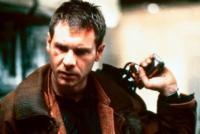
Martino was a very important scientist, working on something called the K-88. But the K-88 exploded in his face, and he was dragged across the Soviet border. There he stayed for months. When they finally gave him back, the Soviets had given him a metal arm...and an expressionless metal skull. So how could Allied Security be sure he actually was Martino ?
Called "AJ" by friends, Budrys was born Algirdas Jonas Budrys in Königsberg in East Prussia. He was the son of the consul general of the Lithuanian government, (the pre-World War II government still recognized after the war by the United States, even though the Soviet-sponsored government was in power throughout most of Budrys's life). His family was sent to the United States by the Lithuanian government in 1936 when Budrys was 5 years old. During most of his adult life, he held a captain's commission in the Free Lithuanian Army.
Budrys was educated at the University of Miami, and later at Columbia University in New York. His first published science fiction story was The High Purpose, which appeared in Astounding Science Fiction in 1952. Beginning in 1952 Budrys worked as editor and manager for such science fiction publishers as Gnome Press and Galaxy Science Fiction. Some of his science fiction in the 1950s was published under the pen name "John A. Sentry", a reconfigured Anglification of his Lithuanian name. Among his other pseudonyms in the SF magazines of the 1950s and elsewhere, several revived as bylines for vignettes in his magazine Tomorrow Speculative Fiction, is "William Scarff". He also wrote several stories under the names "Ivan Janvier" or "Paul Janvier." He also used the pen name "Alger Rome" in his collaborations with Jerome Bixby.
Budrys's 1960 novella Rogue Moon was nominated for a Hugo Award, and was later anthologized in The Science Fiction Hall of Fame, Volume Two (1973). His Cold War science fiction novel Who? was adapted for the screen in 1973. In addition to numerous Hugo Award and Nebula Award nominations, Budrys won the Science Fiction Research Association's 2007 Pilgrim Award for lifetime contributions to speculative fiction scholarship. In 2009, he was the recipient of one of the first three Solstice Awards presented by the SFWA in recognition of his contributions to the field of science fiction.
Budrys was married to Edna Duna; they had four sons. He last resided in Evanston, Illinois. He died at home, from metastatic malignant melanoma on June 9, 2008.
DAMMIT FELLOW SF FANS...how does Algis Budrys fly so silently under your radar?
The more sublimely penetrating stories I read by this quiet magician, the greater my bowel irritation that he isn't given his propers as a maestro of thoughtful, intelligent SF like this:
This is well-crafted, psychological journey that happens to be wrapped in the trappings of a fantastic science fiction mystery. At its heart, this is a keenly insightful discussion on the nature of identity and what makes a person WHO they are.
PLOT SUMMARY:
Written in 1958 at the paranoid height of the Cold War, the story is set against the backdrop of a future in which the east and west have each fused into separate super-states, the Allied National Government (ANG) and the Soviet International Bloc (SIB), and the Cold War rages on. Following an explosion at a top secret ANG base near the SIB border, a soviet team abducts the project leader, Dr. Lucas Martino. Dr. Martino is a brilliant, unorthodox physicist working on a mysterious project known as K-88 that could change the balance of power.
After several months of tense negotiations, Dr. Martino is returned to ANG. However, the doctor was severely injured in the lab explosion and required extensive, advanced reconstructive surgery, which leaves him more machine than man (see the book’s cover above for a representation). Thus, neither ANG nor the reader is sure whether the man returned to ANG is Lucas Martino or an imposter.
The rest of the book details the attempt to ascertain WHO the man returned to ANG really is.
THOUGHTS:
Now as interesting as the above (hopefully) sounds, it is only the calm, glassy surface hiding the raging tumult underneath. In reality, this story is about the nature of identity, a person’s connection with the world around them, and what it truly means to be a conscious, unique individual. The subtext and nuance Budrys brings to the narrative are just delicious.
At only 185 pages, you can breeze through the story in a few hours, but it is a story that can stay with you long after you finish. I don’t want to give away any spoilers but the final scene between Lucas and Shawn Rogers (the ANG intelligence officer assigned to follow Lucas) at Martino’s farm is both brilliant and chilling, especially in light of what the reader learns in the final three chapters.
Well written and intelligent, Budrys does not spoon feed his reader and makes you think through the narrative. But the payoff is well worth it. Not quite as good as Rogue Moon, but still head and shoulders above most of what was written in the 1950’s.
4.0 to 4.5 Stars. HIGHLY RECOMMENDED!!
Nominee: Hugo Award for Best Science Fiction Novel (1959) Nominee: British Science Fiction Award (Retro) for Best Novel (1958)
3.75; having now read two of his novels, I think Budrys is best approached as a pulp existentialist-humanist, one who uses fantastic concepts not so much for their own sake but for the light these throw on and allow study of their protagonists, and what this reveals of the human condition in general. This can be somewhat disappointing when the concepts themselves are fascinating and of equal if not greater interest as the characters, as I found the case with Rogue Moon, but works to Budrys' advantage in this smaller-scale novel. While the exploration of human identity is not as mindblowing as it could have been in say, PKD's hands, it is nonetheless surprisingly nuanced for its day; Budrys in particular deserves praise for his portrayal of a high-functioning aspergian character years before the concept was widely known -it rings so authentically true I'd wager this was based upon individuals close to him, if not personal experience. Ultimately, through the interplay of two different timelines, the novel closes on a note of maximum poignancy by ending right where the opening narrative began, answering the original question Who with another - How; comparisons with Frisch's I'm Not Stiller are not entirely farfetched.
I think I wanted to like this cold war espionage SF more than I did. The end makes up for a lot of the meandering middle, but unfortunately, there was a lot of normal everyday '50s feel to it with one notable exception: our hero has come back after a blown-up experiment, after having been saved by the Russians, a cyborg.
There is no genetic typing and no one can be entirely certain it is him. On top of that, everyone's weirded the hell out by his expressionless metal face. So on one level, it's just about how to get along when everyone mistrusts you. And then there's also the political level which is just as frustrating.
I am generous with my rating for one reason: the McCarthy Era crapdoodle. It was a load of shit that everyone had to go through. This novel evokes quite a bit of that, and it gets worse by the end.
It's a thought provoking piece that is better mostly on reflection -- rather than the actual reading.
Who? is a sadly overlooked classic science fiction novel from the Cold War era. It's the story of Lucas Martino, and the attempt to discover if the protagonist is really him or not. The character who claims to be Martino has been injured and is wearing an iron mask and has a metal arm. The question has been rendered anachronistic by modern technologies, obviously, but the theme is still a chilling picture of Eisenhower-era paranoia. The author was inspired to write a novelette by a Frank Kelly Freas painting he saw in the office of Leo Margulies, who was at the time the editor of a digest-sized science fiction magazine called Fantastic Universe. It appeared in the April issue in 1955 (with the Freas cover), and Budrys expanded it to novel length for Pyramid Books, who printed it in 1958. It was nominated for the Hugo Award as best novel of the year but lost to James Blish's A Case of Conscience. (I would have had to flip a coin to decide whether to vote for Who? or Heinlein's Have Space Suit - Will Travel.) The science fiction element was actually pretty thin, even at the time, but it was and still is an excellent suspenseful thriller. I saw a film version that wasn't too good a long time ago that starred Elliot Gould.
Lucas Martino, an American genius disfigured in a lab snafu and remade by the other side with metal parts, returns to his country. But as a hero or a traitor? How can the national security ascertain the identity of a man whose face they cannot see and mind they cannot read? Especially during the heightened paranoia of the ultimate stand off. Continuing with my recently acquired collection of old(er) scifi and finally a real treasure. A book that has completely lived up to its propitious reviews. Originally published in 1958 and yes it is dated, but only insomuch as conflict between Soviets and Allies (USA) is and really, have you read the news lately...So mainly it's the language that's aged, the writing itself though is terrific. Genuinely literary and reflective meditation on the nature of identity. Martino is a well drawn, interesting character trapped in a nightmarish situation, someone the reader can genuinely care about. The book moved along at a terrific pace with plenty of drama and thriller elements and even some surprises. Great read, well written, exciting, intelligent, engaging, fun...all the things you'd want in a story. Enthusiastically recommended.
It's a crying shame Budrys doesn't get the respect of the other science fiction greats. He should be right up there with Asimov or Clarke, but I digress.
Who? is a wonderful piece of Cold War-era SF that seems quaint by today's standards. The basic premise is that an Allied scientist named Lucas Martino is horribly disfigured in an explosion while working on the secret K-88 project. The Soviets get to him before the Americans can, and save his life by replacing some of his organs with synthetic devices, replacing his arm with a metal claw, and covering his crushed head with a metal helmet (for lack of a better term). When he's returned to the Americans, they have no way of knowing if the man behind the mask is really Lucas Martino.
Today they'd just do a DNA test, and we wouldn't even need a story here. But the storytelling is immensely entertaining. It's a blast from the past (no pun intended). If you like a fast-paced, sci-fi thriller, you'll dig it.
This is probably one of the best science fiction stories I've ever read. I know it's cliche to say, but I literally read this on the edge of my seat with a finger knuckle in my mouth. I'll briefly break down why I liked it so much, but first a synopsis.
Intelligence man Rogers and the Foreign Ministry man are waiting at the border of a Soviet Union check point. They are waiting to receive a scientist from the west who, while working on the classified K-88, was critically injured through an explosion. Somehow the Soviets got to him first and have had him for four months. The reason is because, for a reason that becomes clear later, the Western Allies chose to build this lab near the Soviet Union.
Rogers knows that the Soviets have had their man Azarin doing his utmost to extract information from the scientist, Lucas Martino. Knowing Azarin as he does, Rogers shudders at the thought.
Finally a limo on the Soviet side stops at the border. A man exits the vehicle and walks toward Rogers and the Foreign Minister. What they see freezes their blood. Martino is mostly made of metal.
His head is completely covered in metal, his eyes are artificial as are his ears. He speaks and eats through a grill where his mouth should be. His left arm is also artificial, made of metal. He has no heart or lungs. A machine inside does his breathing for him.
This sets in motion the problem that propels the plot through to the end. Is this Martino or is it a Soviet ringer that wants to return to the lab and find out about the K-88. The K-88 is some kind of nuclear device that would turn the Cold War in the West's favor.
Rogers is assigned to find out. How does one prove someone is who he is supposed to be? One can only prove if he's not by catching him in a mistake; but if he doesn't make a mistake, it still doesn't prove the metal man in front of him is Martino.
What makes this story successful is not simply a good plot concept but Budrys' ability to make all the characters human. Rogers is a tough intelligence man in his thirties who can view the (maybe) Martino with compassion but also pragmatism. We also learn about Martino through flashbacks of his life that eventually merge with the present, but don't think you're going to know if the metal man is the real Martino until the very end. And don't cheat! You find yourself caring about Rogers and the maybe Martino. You also get schooling on how Intelligence works in shadowing and tracing people.
What perhaps you don't get is the actual terror that was reigning in the Soviet Union. We in the West did not discover that until the archives were opened in the 1990s. If you want to read shocking accounts of what went on behind the Iron Curtain then read Orlando Figes, "The Whisperers" and Svetlana Alexievich's Second Hand Time. Those two books are non fiction accounts of individual lives that lived during the Soviet era.
Algis Budrys' parents came from Russia in the thirties and, while he was born in Russia, his family moved to America while he was young. Nevertheless, I think that his approach to the Cold War of the fifties, when this story was written, has some personal emotion involved which makes the story all the more compelling.
At just over two hundred pages I defy you to get up before you are finished.
Algis Budrys' 1958 Who? is an exquisite science fiction novel evoking the height of the Cold War, when the Iron Curtain was still almost impenetrable, and tit-for-tat incidents were escalated both as signals of military resolve and for propaganda value at home and abroad.
When the laboratory of American scientist Lucas Martino, who spearheaded the ultra-secret K-88 project, explodes near the East-West border in Europe, Soviet "rescue" teams reach the maimed survivor first. Yet who is the reconstructed, metal-faced man who eventually returns? Is it Martino or an enemy agent with the scientist's arm and hence correct fingerprints grafted on? Even if it is Martino, is he still loyal, or has he switched sides or even merely accidentally let some crucial piece of information slip? Can the all-important K-88 project be completed, or as something presumably compromised, must it be abandoned? And, in fact, what is K-88 anyway? Certainly it is important, but even Martino's Soviet interrogator has no clue as to whether it is "a bomb, a death ray, or a new means of sharpening bayonets," nor do the American security personnel who investigate the returnee. Whatever K-88 is, though, its price--in money, effort, and lives--is very, very high.
Who? thus piles question upon question upon question. Yet while the 1950s-style Cold War machinations are gripping, the novel is no mere rah-rah gung-ho. Yes, the Western side is presumed to be at least basically morally superior to the Soviet police state, a judgment that still seems correct. But as Budrys explores, very probingly, the "security" mindset and the paranoia inherent when two ideologies compete for control of the entire world, he also examines the precariousness of identity that, really, is always with us. Tense, thoughtful, and melancholy, Who? is a beautifully rendered tale of great sophistication.
Le he puesto 4 estrellas, pero serían más bien 3,5. La novela es corta pero más o menos intensa y los personajes interesantes y relativamente profundos. Hay reflexiones interesantes y una curiosa forma de ver el mundo completamente científica por parte del personaje principal. El arranque me ha recordado al de Michaelmas aunque en este caso el desaparecido es el protagonista y no un secundario. Bastante recomendable.
This is a psychological / espionage thriller in a cold war setting, with only a paper thin sci-fi veneer. The story is generally ponderous and wistful, lacking much suspense or intensity. It was hard for me to get on board with the plot's driving thesis, i.e. the enormous difficulty establishing the identity of Martino the scientist beyond any doubt after he's taken by the enemy and then returned. There were few unexpected twists, and a rush in the final chapter to pull everything together.
I stumbled across this "unrecognised classic of SF" (as the Locus review put it) almost by accident; I saw the 1973 filmic adaptation (starring Elliott Gould) on late night TV as a pre-teen kid back in the 1980s, recently decided to look up the film for nostalgic reasons, and learned of the book in the process. The novel is quite readable and enjoyable
RANDOM STREAM OF CONSCIOUSNESS NOTES AND OBSERVATIONS (and noteworthy passages):
--Shawn Rogers, from ANG Security Sector Chief in the hypothetical Allied Nations Government (ANG) superstate of the novel to FBI Special Agent in the film
--Ah, the way book and filmic writers approached personnel identity verification before DNA testing became commonplace public knowledge
--Ah, so the FBI *does* still exist in the novel (Finchley character).
--"this man did not breath [sic]." Typo, or simply the Brit way of writing "breathe?"
--The literary Rogers is a paunchy bearded redhead--quite a contrast to the filmic Elliott Gould version!
--"categorical imperative!" (Dr. Lamy would dig it!)
--Malaga Processing Corporation?!
--"K-Eighty-eight" project in the novel, Neptune project in the filmic adaptation
--Rogers is a bit more polite to Martino in the book than in the movie; meanwhile, the literary Martino comes across as a tad bit more assertive relatively speaking.
--Lucas's high school speech on physics in the book becomes an elementary school speech in the movie.
--Muzak back in 1958??
--"Technical Aptitude Examination" = the predecessor to the ASVAB?
--"Tedeschino" nickname in the novel vs. "Luke" in the film
--Plant explosion in the book vs. car crash in the film that causes Martino's injury
--Ah, wait, there's the "Luke" nickname
--"Commit a crime and the world is made of glass"--Emerson
--Edith has a 15-year marriage and daughter in the novel, remains a bachelorette.
--Martino's teenage/young adulthood home setting changed from NY/NJ to FL
--Luke drinks booze instead of coffee at his reunion with Edith, but otherwise the dialogue is fairly faithful to the novel.
--Deptford is a senior civilian security official in the novel, a U.S. Army Major General in the film
--"like pulling a tapeworm up his throat hand over hand" Haha
--Martino meets with Prof. Starke in the novel, but not in the movie
A thoughtful book about identity and state authority disguised as a sci-fi/cold-war-thriller mash-up.
I was listening to a news report yesterday about one of the Windrush Generation: his parents were invited to Britain from Jamaica when he was 8; he's gone to school, worked and paid tax, married and had children in the UK. 50 years after coming here, under Theresa May's "hostile environment for immigrants", the Home Office declares him "illegal".
Required to prove his identity and right to exist, the documents he produces are declared inadequate, the witness statements of employers, friends, and his wife are disregarded. He's imprisoned without trial in a detention centre, answering questions that cannot satisfy an authority determined not to believe him. This is the heart of Budrys's book, written in 1958. What a sorry state of affairs we find ourselves in today.
Leído en 2003. Físico del mundo libre a quien se quedan los rusos y, por un accidente, le convierten en un cyborg pero conservando solo el cerebro del físico original…y vuelve al mundo occidental.
¿Y quien es ese cyborg?¿Es realmente el que dice ser?.
Política internacional y espionaje de guerra fría con envoltorio de CF muy bien llevada (la novela es del 58, como curiosidad por eso de la guerra fría). Dadle una oportunidad.
Two giant military blocs are in eternal war. Lucas Martino was working on a secret project that for some reason exploded, leaving his body in pieces, barely alive. Abducted by the other side he has now been returned but with only a metal sphere for a head. Now he must be debriefed, but how can you tell if someone is telling the truth without the normal visual and emotional cues provided by a face?
Who? reads as much like a chilling spy thriller as a SciFi book. It's a forgotten gem with great writing.
It's a sad day when an already short novel manages to overstay its welcome. There were several points in the flashback half of this story where I was begging for Budrys to get on with it and stop belabouring the point. And yet, there is something worthwhile to this book. I believe it could have been an excellent short story, but as it is, it's a merely good novel.
The central conceit of this story is the ways a man can and cannot be a machine. A scientist of the Allies in the cold war, Lucas Martino, is maimed in an explosion, and transformed by Soviet science into a metal-headed cyborg. After he is returned to the Allied sphere, he expects to resume his life's great work. But like the legendary man in the iron mask, the metal man's true identity is unknown to those he returns to, and his old life proves to be over.
Flashbacks to Martino's past are alternated with scenes in the present as the man travels to America. The flashbacks provide necessary context to the events of the present narrative, and establish the existence of Martino's machine-like mind, but are excessively long for the ideas and moments they contribute to the story. The present segments, on the other hand, initially appear like a mere techno-spy story, but reveal greater and greater psychological depth as they go on.
Martino is psychologically machine-like in several ways. He is analytical, detached, and driven in ways few men are. In high school he plans out the whole course of his future life, and is almost able to make it come to pass. Yet at the same time, he cannot but he human, and when he realizes he will never do scientific work again, he responds with rage. In his youth, his careful plans are sidetracked by a sense of obligation to a girl he unintentionally strings along. The sense given is that Martino has tried to totally mold his personhood around his machine-like qualities, but cannot do so entirely.
Πραγματικά αριστουργηματικό βιβλίο, που δυστυχώς δεν είναι τόσο γνωστό όσο έπρεπε να είναι. Όχι ακριβώς βιβλίο επιστημονικής φαντασίας, όχι ακριβώς κατασκοπευτικό, αλλά κάτι ανάμεσα. Μου θύμισε λίγο Τζον Λε Καρέ και λίγο Φίλιπ Ντικ.
Η όλη ιστορία διαδραματίζεται κατά τη διάρκεια της παράνοιας του ψυχρού πολέμου, με τους Συμμάχους και τους Σοβιετικούς να φοβούνται για κατασκόπους που θα έστελναν ο ένας στον άλλο. Ο Λούκας Μαρτίνο, είναι ένας επιστήμονας που εργάζεται πάνω σε ένα πρόγραμμα της Συμμαχίας, το Κ-88. Τι είναι ακριβώς, δεν λέγεται. Το εργαστήριό του είναι κάπου στα σύνορα με την Σοβιετική Ένωση, φανερά μια επιλογή ενός Αμερικανού που δούλευε για τους Σοβιετικούς. Γίνεται μια έκρηξη, οι Σοβιετικοί παραλαμβάνουν το σώμα του Μαρτίνο, ο οποίος ήταν σε πάρα πολύ άσχημη κατάσταση. Μετά από μήνες, είναι έτοιμος να γυρίσει στους Συμμάχους, που πίεζαν πολύ τους Σοβιετικούς για να τον επιστρέψουν πίσω γρήγορα. Δεν είναι ίδιος με πριν όμως. Ένα ρομποτικό χέρι αντικατέστησε το κανονικό, και μια μεταλλική μάσκα με ηλεκτρονικούς μηχανισμούς, το κρανίο του. Και μπήκαν ψύλλοι στα αυτιά των Συμμάχων, και τους Ρότζερς, του υπεύθυνου. Είναι ο Μαρτίνο ή ένας κατάσκοπος; Πρέπει να τον αφήσουμε να δουλέψει πάλι το Κ-88; Κουβαλάει καμιά βόμβα για να ανατινάξει κάνα κυβερνητικό κτίριο; Τι είναι τέ��ος πάντων; Και έτσι περνάνε τα χρόνια, χωρίς να γνωρίζουν, παρακολουθώντας τον και ελέγχοντας τα πάντα, μήπως και ανακαλύψουν κάτι εκτός σχεδίου, κάτι που δεν θα έκανε ο παλιός Μαρτίνο...
Καταπληκτικό βιβλίο. Πιστευτοί διάλογοι, καταπληκτικά σκιαγραφημένοι χαρακτήρες, εξαιρετική γραφή, και πολλά flashbacks από τη ζωή του Μαρτίνο. Σαν μικρό παιδί, σαν φοιτητής, σαν επιστήμονας. Πως μεγάλωσε, ποιες ήταν οι σχέσεις του με τους άλλους ανθρώπους, γιατί έκανε ό,τι έκανε. Καταπληκτικές περιγραφές των πόλεων και των τοπίων που διαδραματίστηκε η όλη ιστορία, ��ης ζωής του Μαρτίνο, των κινήσεων και των παρακολουθήσεων των πρακτόρων, και πολλοί προβληματισμοί για την ταυτότητα του ανθρώπου, την παράνοια του ψυχρού πολέμου... Και το τέλος πολύ δυνατό. Λίγο πριν το τέλος ο Ρότζερς μιλάει στον Μαρτίνο, στο αγρόκτημα του Μαρτίνο. Και τον ρωτάει αν είναι ο Μαρτίνο ή όχι. Και έρχεται η απάντηση. Και στο τέλος, βλέπεις τις εμπειρίες του Μαρτίνο στο Σοβιετικό νοσοκομείο και τις συζητήσεις με τον Άζαριν, τον Σοβιετικό αντίπαλο του Ρότζερς. Και σε κάνει να σκέφτεσαι τι έγινε τελικά...
First published in 1958, this is a combination Cold War/Spy/SciFi thriller which deals with problems of identity. Lucas Martino is an American scientist working on a top secret project which explodes near the Soviet frontier, badly injuring him. The Soviets are able to seize him but to save him they have to replace a lot of his body parts with artificial stuff, including his left arm, his lungs and a good deal of his head which is enclosed in a metal helmet. When he is returned to the Allies, they realize they can't prove that he is really Martino and not an imposter sent over as a spy or some kind of Soviet agent. The rest of the book deals with how the Allied team, led by Shawn Rogers, tests him and follows him around trying to collect evidence that prove just who he is definitively. But also how the Martino character is thinking and his own inner struggles.
Okay - I read this because it was part of a collection and might not have otherwise picked it up. Interesting period piece about the Cold War and personal identity. Loved that all of the loose ends are not tied up with a bow. Wished that the themes could have been more richly explored. A good worthwhile read - had not read this author before and appreciated it.
I thought this pretty strong. Sci-fi light really but centred around a bionically reconstructed, and thus unrecognisable, anti hero. The novel is really about trust between nations - here is an extended Cold War set up - and between individuals and I thought it surprisingly literary and satisfying
Book 4 in the LOA volume: "American Science Fiction: Five Classic Novels 1956 - 1958". Thought it was time I started reading all these Library of America books we've been collecting.
I love science-fiction that is, ultimately, about bigger ideas. Budrys, with this treatise on what it means to be human coupled with an intriguing spy thriller, delivers in spades.
I thought I saw the ending coming and then I didn't. I almost wanted to immediately start this one over and reread it so that I can see how Budrys flawlessly wove this plot now that I know what to look for. This is a stellar piece of speculative fiction.
Who? by Algis Budrys is a psychologically tense Cold War SF story, twined around the titular question: who is this faceless cyborg sent back into Western territory by the Soviets – a spy or the brilliant American scientist he claims to be? Lucas Martino is horribly injured in an explosion while he’s working in a top-secret government research project. The Soviets kidnap him from the wreckage for questioning but he can only be saved by an operation that covers his head in an expressionless metal helmet, his eyes glittering lights and his mouth a grill filled with metal blades.
The novel alternates between flashbacks of Martino’s life up to the accident and the present-day story of the American spy who watches him to see if he betrays a Soviet allegiance. I was expecting lots of action – the cyborg man has a super strong prosthetic arm and eyes that can see into the infrared – but instead Budrys gives us a character study of a socially awkward scientist who wants to always know exactly how he fits into the universe but is instead cast adrift by both the Soviets who cure him and the Americans whom he hopes will welcome him back. There’s also some body horror as we watch the cyborg adapt to his body – for example, his lips and teeth are gone but his tongue remains, hidden behind metal blades that cut his food up for him.
Similar themes have been explored in great SF novels such as A Scanner Darkly by Philip K Dick and Memoirs Found in a Bathtub by Stanislaw Lem. I don’t think that Who? is at the same level as these masterpieces but the book is so short, with a great twist towards the end, that it’s worth a read.
I am rating this 3.75 stars. I am a fan of classic sci fi and I have wanted to read Who? since I read the plot description. It did not disappoint. It was a classic cold war sci fi paranoia story.
It is a product of its time, and I supposed you could say that the Western Allies (Allied National Government) and the Soviet/Communist cold war dates it, but instead it felt to me like an AU. To be honest I totally imagined this taking place in a slightly altered 60s and didn't really figure out it was supposed to be mid-80s until doing the math on Martino's age when it came time to write this review. It is helped along by the fact that the focus is not actually the technology that the Russians use to heal/repair Martino (if he is Martino?)
It is really an examination of what makes a person who they are and how others can identify them. Although Budrys would not have used these words, Martino is essentially a highly functioning autistic genius. The fact that he has no close relationships makes it that much more impossible for him to prove his identity once his face and finger prints are obliterated. (Clearly this book was written before we knew how DNA could be used to identify a person because that would make the central question very easy to answer.)
There's only two main characters in the story - Martino and the Allied security agent responsible for determining his identity - and the focus on these two is very tight. This tight focus helps me ignore the fact that although it should be taking place in the mid 80s comments inp assing still show women stuck in 50s gender roles. (This is very different from Algis Bdrys' slightly more famous Rogue Moon which was too misogynistic that I could not like it at all.)
The chapters alternate timelines - the "present" after the unidentifiable man is returned and Martino's life story. I was very happy that there was one chapter at the end told from the point of view of a Soviet/Russian security agent that answers all the lingering questions of what really happened. We are not left guessing (which I suspect would have been how a modern novel told the tale.)
Additionally this is an amazingly fast read - 150 pages in American Science Fiction: Five Classic Novels 1956-58. I didn't feel anything was missing. It is amazing to think how this 800 page book contains 5 late 50s era sci fi novel when a modern novel is most likely going to be closer to 800 pages than 150.
This is a novel of its time. If you appreciate classic sci fi and cold war paranoia and can view this as a novel of its time, you can enjoy this classic. I do and found it a joy to read. (I'm excited because after finding Rogue Moon such a disappointment, I feared that this would be as well.)
Lucas Martino, a brilliant research scientist working for the Allied Nations Government, is horribly mutilated when an accident at the top-secret K-88 project he leads causes a massive explosion. Spirited across the border by a rescue team from the rival Soviet International Bloc, he spends the next two months in captivity. When the ANG secures his return, though, they are given a figure who is more machine than man, with his destroyed features hidden behind a metal mask. Is it Martino? Or is it a highly-trained Soviet agent posing as him in order to learn the secrets of K-88? And how is it possible for them to determine the difference?
This is the second time that I’ve read Algis Budrys’s transcendent novel, and I’m still working through its many layers. On the surface, it’s a Cold War era tale of paranoia and espionage that is very much a product of its time. Upon this Budrys has built a more timeless meditation of what it means to be someone. This begins with flashbacks in which we follow young Martino from his childhood to his early years as an adult. Through these chapters, which are inserted between those of “Martino”’s return, we learn of the young man’s keen mind and how he used it to solve the problems before him.
These problems for Martino were not just scientific, but social as well. And it is here that we see the origin of the dilemma facing ANG security officials, which is that of a man so socially isolated as to have little identity to the people in his life. Even before much of his body was replaced by technology, he proved so mechanical in his approach to inter-personal relationships that the metal faceplate the rebuilt “Martino” wears becomes a symbol for the man presumably underneath it. All of this coheres into the question at the heart of Budrys’s book: what is it that makes a man who he is, and how can one determine this? Budrys’s exploration of it contributes to the enduring nature of this book, with part of the answer left to the readers to determine for themselves.
Fortunately this second book in my 'read selected Hugo winners and nominees' projects succeeds where the first (Clement's Mission of Gravity) didn't: it's gripping, well-paced, solidly written, and has an intriguing main character who's portrayed with some depth.
It's a Cold War situation: a prominent U.S. scientist, Martino, is whisked away by undercover Soviet agents when the top-secret project he was working on for the Allies blows up on him. When he's returned to the Allies, they find his horribly damaged body has been rebuilt with mechanical parts, including an expressionless metal skull, and the central question becomes 'Is this really Martino?'.
Budrys alternates between flashbacks to Martino's pre-accident life and the Martino's post-accident return to the US where he is questioned and surveilled by US govt. agents. It's a clever setup, as we're shown Martino's inner thoughts and feelings in the flashbacks, but we're not shown this inner life in the post-accident narrative. So the post-accident narrative puts the reader in the same position as the govt. agents, seeing only Martino's external features and actions, trying to puzzle out his motivations.
Budrys explores the concept of identity and Martino's psychology while keeping the book's pace taut, making a strong, meaningful tale that transcends its Cold War setting.
After an accidental explosion in his experimental lab near a Communist border, Lucas Martino is captured by the Russians. When he is returned to the allied sphere four months later, the questions begin: What, if anything, did Martino tell them about his top-secret research project? Where do Martino's loyalties now lie? Is this even the real Martino or a Soviet double?
It is this last question that is the real meat of the story, because what the Russians returned was only part human and part machine. With a mechanical arm and a metal head to repair the damage he sustained in the explosion, how can Martino prove that he is who he claims to be? How long will it take to prove to the allies keeping him under surveillance that he can still be trusted? What does it take for someone to prove that they are who they say they are?
Budrys did more than write a good science fiction story. He did even more than write a good espionage story. He wrote a great psychological thriller that is more about the human condition and how removing the physical aspects of a person's "humanity" can, ultimately, help to make them more human.
Who is Lucas Martin? Or rather, is the man who claims to be Lucas Martin real or an imposter? Lucas Martin is a physicist who had developed some kind of mystical new weapon called K-88. For some reason, he has an accident and is rescued by Soviets. We are in the Cold War. He returns but altered, with an iron mask as head. There is an arm with his fingerprints but maybe the bad Russians have put the right arm to their imposter? The US wants him to continue his work but is afraid he is not the real guy. This sounds rather boring and it is. What makes this a great book are the flashbacks. We see the guy as a young man who wants to go into science. Determinate. Very focused, probably with a touch of Asberger syndrome (this is not spelt out). And the very best scene, one of the best I have ever read, is when he goes strolling thru Central Park trying to meet a girl. Because he thinks this would be the right time before he really starts studying. Very good. We also get to learn something about the Soviet agent. In the end, Martin has to live as a farmer. Great book. And for a Science Fiction novel of great literary value.
More espionage thriller than science fiction. The story concerns a scientist injured in a lab experiment, captured by the Soviets, and bring him back to life using advanced medical technology that leaves him unrecognizable. The Allies demand his return, but the cybernetic stranger who is delivered to them can not be definitively identified as their man. The question of the book is "Who" is the man?
The mystery starts off well, but is dragged down through introspective scenes of the scientist's past life and the repetitive question of whether he is or is not the man he claims to be. All that is known of his work is that he was developing something called K-88. The secret of the project is never revealed and all the peripheral characters seem to fade away without any satisfactory resolution to their lives.
In the last few pages the story ramps back up again. It takes you through the events leading up to his return to the allied side and keeps you guessing until the end - which comes with a turn of the page and an unsatisfactory fade to white space.
Budrys, Algis. Who? Pyramid, 1958. Who? Is a classic Cold War espionage suspense story. It reads like an especially good Twilight Zone episode, which may have been a selling point of a 1974 film adaptation starring Eliot Gould. An explosion occurs in a research lab placed inexplicably near the Western/Soviet Bloc border. In the chaos, a seriously injured research scientist is kidnapped and taken to the Soviet side. Months later, a man claiming to be him is turned over, but he has had such extensive surgery, including a man-in-the-iron-mask robotic head, that he cannot be recognized. Note that this plotline would quickly become implausible once DNA analysis became a possibility. In any event, the story revolves around an investigation to discover whether the scientist has been turned or replaced by a sleeper agent. The novel is clearly a creature of its time, but the suspense and psychological issues are especially well handled.
Lucas Martino is one of the West's greatest physicists, working on the highly experimental K-eighty-eight. An explosion in the lab changes all that, as the Russians get to him first and keep him for four months. When he is returned he's as good as new... except for the metal replacement head they've given him. His Western masters are left with a dilemma: how can they tell that the man behind the metal head is Martino?
This is an intriguing novel of identity, although it shows its age both through its Cold War roots and the fact that DNA can't be used to establish identity. We see things both through Martino's eyes and those of the Government agent assigned to track him to try and determine just who he is. Mostly I found this a strong story, but the ending somewhat threw me. I'm still not sure what to make of it, but I'll certainly be looking out for more Budrys