V begins his broadcast and criticizes the human race itself, filling them in on their disappointing behavior. Meanwhile, Evey attempts to return to normal life after her abandonment.
Alan Moore is an English writer most famous for his influential work in comics, including the acclaimed graphic novels Watchmen, V for Vendetta and From Hell. He has also written a novel, Voice of the Fire, and performs "workings" (one-off performance art/spoken word pieces) with The Moon and Serpent Grand Egyptian Theatre of Marvels, some of which have been released on CD.
As a comics writer, Moore is notable for being one of the first writers to apply literary and formalist sensibilities to the mainstream of the medium. As well as including challenging subject matter and adult themes, he brings a wide range of influences to his work, from the literary–authors such as William S. Burroughs, Thomas Pynchon, Robert Anton Wilson and Iain Sinclair; New Wave science fiction writers such as Michael Moorcock; horror writers such as Clive Barker; to the cinematic–filmmakers such as Nicolas Roeg. Influences within comics include Will Eisner, Harvey Kurtzman, Jack Kirby and Bryan Talbot.
In the fifth issue of V for Vendetta, continuing on from issue four, V begins his television broadcast to criticize the human race, and to notify them of their disappointing behaviour; elsewhere Evey attempt to return to her normal life after the abandonment.
After taking a few days away from this series, I was worried at first that I might not remember what had happened before, and would have to binge read the first four issues again, however, Moore has written this series in such a way that its almost impossible to forget what's going on when you begin it after taking a break. The writing is so impeccable, I can almost remember every frame from previous issues, reassuring my anxiety of being able to take this slow if I need to take breaks for work.
The fifth issue itself, terrified me. This issue was published in 1988. It was first published by DC Comics 30 years ago give or take a few months. And everything that V says in this issue is 100% accurate to today's world. To the mess that the world has become, and it resonates with me, and it terrifies me. To think in the 80s, a fictional comic of a dystopian world would be so true in our own real lives in the year 2018, is really scary to think about.
Further on, this really ends on a cliffhanger and makes me more than anxious and desperate to find out what's going to happen next. Moore has a way with this story that grips into you, sinks its grimy fingers into you and really doesn't let you go. The story flows from one issue to the next with no issue, and really seeps into your memory.
One thing is for sure, I really want issue six as soon as possible, and need to stop reading this in one issue a time bursts, and to binge read it all when I have the time to. Excellent issue. I'm left speechless.
V for Vendetta takes place in a nightmarish version of London in the year 2032 after the world has been torn apart by a prolonged civil war and a mysterious virus that ravaged the population of America and Europe. The United Kingdom was overthrown by a Nordic supremacist who turned the country into an Orwellian police state where art, music, literature, free speech and every other basic right that people take for granted has been outlawed. On top of the society having Orwellian characteristics, it also has the teachings, punishment and disciplinary methods shared by Adolf Hitler’s Reich and Joseph Stalin’s rule over the Soviet Union. Anyone that doesn’t belong to the master race or refuses to fall in line with the extreme rules are viewed as undesirables and are sent to concentration camps where their existence is completely erased from society.
Millions of people were slaughtered without mercy, but a single man managed to escape from the hellish death sentence of the camps. He has no name and no one knows his face. He calls himself V and he has a vendetta against the monsters that stole everything he held dear, enslaved his people and destroyed his beloved homeland. He plans to lead a rebellion against the government by pulling the mask off their cruel brainwashing tactics and leading one small revolution at a time by introducing the common folk to the forgotten ideas of truth, art, freedom and individuality.
One such individual is a naive teenage girl selling her body on the street named Evie. She unknowingly offers services to men working for the fascist regime and they threaten to assault her before killing her. V appears from the shadows, killing the men in dazzling style all the while reciting forbidden verses from banned literature to mock the evil and enlighten any citizens that may be listening.
With no place to go, V takes Evie under his wing and re-educates her in his hidden base where he has access to banned books, films, plays, music and many more forgotten delights. This is what makes V such a fun character. He’s like Edmond from The Count of Monte Cristo with a touch of Erik from Phantom of the Opera and Inigo Montoya from The Princess Bride thrown into a violent dystopian society. He’s cunning, witty, playful and sadistic and it’s a joy to listen to him give grand speeches like an A+ theater student all while committing deadly acts of terrorism and genocide against the fascist regime.
Being around such an eccentric man changes Evie greatly in a short amount of time. The truths are revealed to her. She realizes that art and literature are banned because knowledge is the kryptonite to fascism. She slowly gains a sense of independence and awareness and we witness through her eyes how naive, innocent people that are easily manipulated can grow resistant to the people that prey on them by educating themselves. They can then pass on their knowledge and experiences to other naive individuals who can gain their own sense of independence.
Evie works as V’s accomplice for a time, acting as bait for men who abuse their power while V brings them to justice through brute force. She eventually separates from V and goes about carrying out his will in her own way, aiding V in empowering the people to stand up for their rights and take the world back into their own hands.
Though he fights for freedom, V is not a hero by any means of the word. He knows that people have to die and innocent people will get caught up in his revenge in order for his rebellion to succeed, but he knows it’s a necessary evil. He’s the vengeful ghost of what society once was and he’s willing to become a devil to return the world to its former glory.
Revenge isn’t enough for V, however. He has to make the people living in constant fear and indoctrination remember what the world used to be and remind them that society only became the way it did because of their own foolish actions. They’re the ones that voted such corrupt people into positions of power. They’re the ones that sold their own freedom. They’re the ones that sentenced themselves to a life of tyranny. All because they allowed themselves to be seduced by the lies and propaganda of evil politicians that sought to manipulate them and enslave them for their own benefit.
V has no problem becoming a villain if it means setting the world free in the end. The cruel and immoral acts of one can inspire others to learn from what they’ve done and apply what they’ve learned to their own lives in more moral and humanistic ways that don’t involve murder or terrorism, much like V inspired Evie and Evie inspired others in turn.
That’s the core theme of V for Vendetta. Society is often responsible for its own downfall and it’s our duty to hold ourselves accountable. As men like Adolf Hitler and Joseph Stalin would agree, the ignorance and indoctrination of the people is fascism's greatest weapon. As Hitler once said, If you tell a big enough lie and tell it frequently enough, it will be believed. It’s always good to keep your eyes peeled and take everything you hear with a grain of salt. You never know who wants to fill your head with false promises only to stab you in the back and destroy everything you love moments later.
A liar can only deceive you if you choose to remain ignorant of their ways, and they can only turn you into a monster if you choose to ignore the humanity of the good people that surround you. Don’t let other people control you and don’t let them turn you into something you’re not. Freedom, peace, art and knowledge are all irreplaceable treasures that we should never sell to people who view us as less than human.
V's message is broadcast across the network. Evey is living with Cordon now. All the little pieces coming together to the finale.
I have always loved comics, and I hope that I will always love them. Even though I grew up reading local Indian comics like Raj Comics or Diamond Comics or even Manoj Comics, now's the time to catch up on the international and classic comics and Graphic novels. I am on my quest to read as many comics as I can. I Love comics to bit, may comics never leave my side. I loved reading this and love reading more, you should also read what you love and then just Keep on Reading.
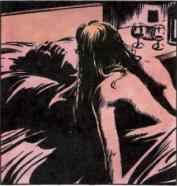
Found this issue quite boring because of such a nebula-tic (nebulozno :p) speech V delivered, having in mind that the ending of the previous issue was so exciting; left me wanting to go on to the next issue immediatley. Although, people in Bosnia could use one of those with a threat to be eradicated unless they do something within the two years deadline. I did like the illustration at the part where Ivey and Gordon end up in bed; lets your imagination work the details out.
[2.5] No se ve a V en esta parte. La historia se centra un poco más en Evey y lo que ha sido al salir de donde vivía con V. No me ha encantado pero tampoco disgustado.
V’s attacks escalate. The domino metaphor isn’t just visual — it’s literal. As one corrupt figure falls, the ripple effects reach every corner of society.
Evey grows bolder, yet the psychological tension intensifies. Who is the real prisoner: the people, the government, or herself?
The issue closes with V disappearing into shadows, leaving destruction and questions behind. The reader feels the weight of inevitability.
This whole issue was a big "what the hell did I just read?" for me.
The dates bounced back and forth, for one. Then I had no idea what was going on. We listen to V's speech in the first half. Which, okay, ties in to his "master plan" — whatever that may be.
Then the rest is just some shady-ness going on with some of the other characters. Evey found herself someone else to "mooch off" until he's killed, then cliffhanger!
But everything did not connect to one another or to any of the previous issues.
[I read [book:V for Vendetta] as a series eleven installments, of which ten are the actual story and one a summary of the creative process, so this will be one review repeated across each. I have individual marks for each installment, explained in part in the volume chronology (see the spoiler.)]
The book focuses on V, who fights against the totalitarian government. In the mid- to end-1990s, UK is one of the few surviving states; the other major powers have annihilated each other in a nuclear war. (This scenario has been popular with sci-fi writers from the mid-1950s, with books such as Brian Aldiss's Hothouse and movies such as On the Beach as prominent examples.) UK has been saved by the anti-nuclear policies of its ruling Labor party, but had to give up in the process---we don't learn why---all personal freedom and rights. As Labor quickly turns into a fascist party, labor camps are used to exterminate whoever the leaders deem undesirable, and the citizens live from day to day. In this setting, V is the modern hero who, having understood the structure and survived the murderous attempts of the government, attempts to topple the regime. Through ruthless action mixed with acts of genuine kindness, V will give spark to the revolution.
Overall, I was rather unimpressed with this graphical novel. I found the story rather cliched and linear, despite attempts to spice it up through alternative ploys. The depiction of V is artificially mystical, whereas everyone else, from the crowd to the state apparatus, receive sparing attention. Last but not least, the graphical novel format hinders the reader, as most of the dialogue stems from similarly-faced, similarly-dressed characters. (This also helps in understanding the disorientation of the crowds.)
Overall, I can recommend neither the movie or the graphical novel. There's much better material on the topic, out there.
“Also, please don’t think I’ve forgotten about your outstanding service record, or about all the invaluable contributions that you’ve made to the company. Fire, the wheel, agriculture..It’s an impressive list, old timer. A jolly impressive list. Don’t get me wrong.
But well...to be frank, we’ve had our problems , too. There’s no getting away from it. Do you know what I think? A lot of it stems from? I’ll tell you…
It’s your basic unwillingness to get on with the company. You don’t seem to want to face up to any real responsibility, or to be your own boss. Lord knows you’ve been given plenty of opportunities. We’ve offered you promotion time and time again, and each time you’ve turned us down…
I absolutely LOVED it! I adored V's speech at the start, it was so empowering and smart and straight out epic! I loved the character development Evey had! It was cruel and horrible but genius!
5/5 estrellas. Salto en el tiempo y preguntas sin respuesta. Para quien haya visto la película: el comic cuenta muchísimos más detalles y merece la pena. Además, ver la película antes, como es mi caso, hace que entienda mucho más algunos detalles que pueden ser confusos. Totalmente recomendado. No apto para niños. No recomendado para adolescentes, mejor cuando ya tengan asentada algo la cabeza.
Los personajes, en especial “V”, están diseñados con meticulosidad, y sus expresiones faciales y posturas corporales cuentan historias por sí mismos. La simetría y la asimetría visual se utilizan estratégicamente para resaltar temas de control y caos en la narrativa.