

What do you think?
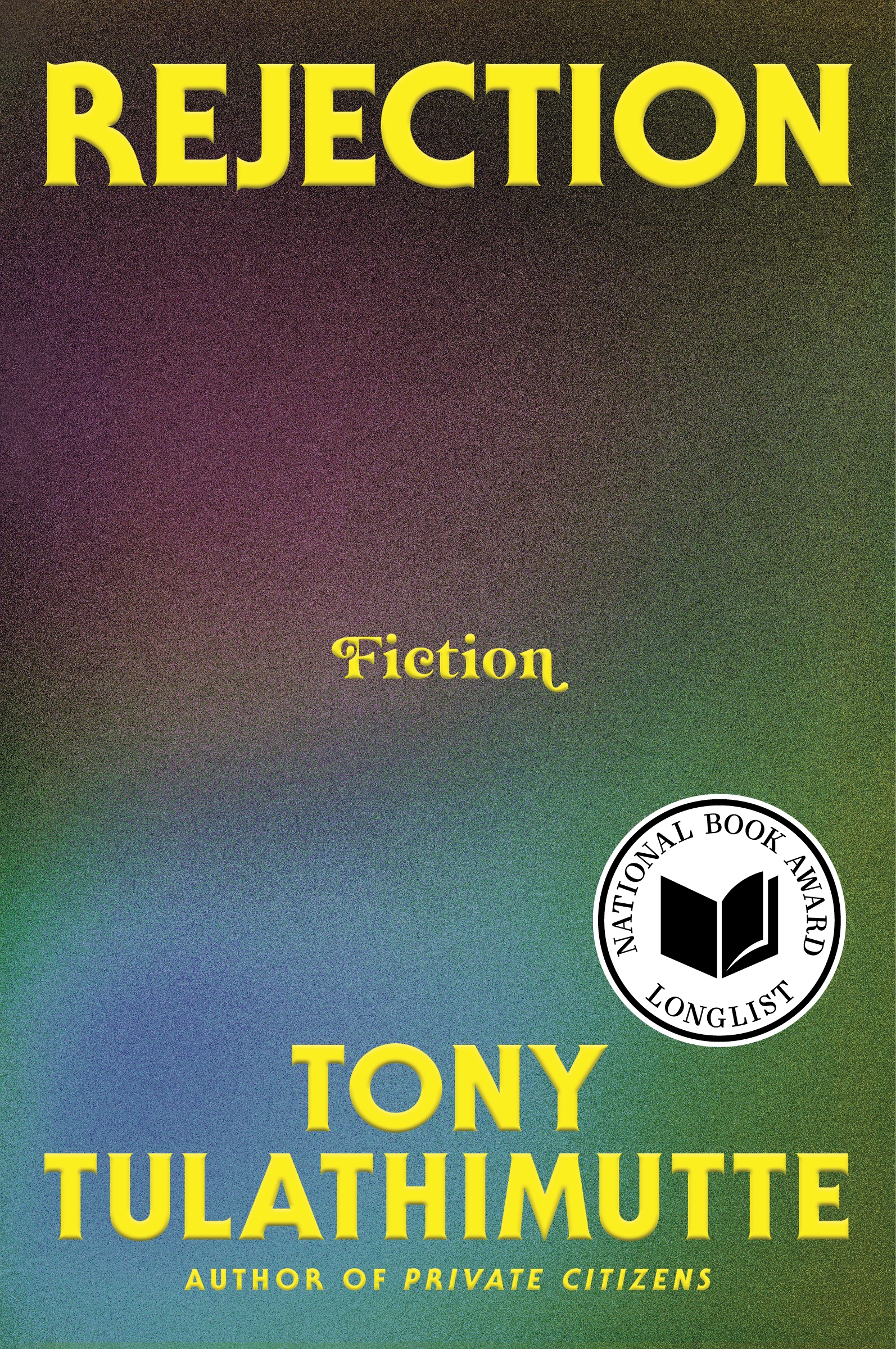
Rejection
An electrifying novel-in-stories that follows a cast of intricately linked characters as rejection throws their lives and relationships into chaos.
Sharply observant and outrageously funny, Rejection is a provocative plunge into the touchiest problems of modern life. The seven connected stories seamlessly transition between the personal crises of a complex ensemble and the comic tragedies of sex, relationships, identity, and the internet.
In “The Feminist,” a young man’s passionate allyship turns to furious nihilism as he realizes, over thirty lonely years, that it isn’t getting him laid. A young woman’s unrequited crush in “Pics” spirals into borderline obsession and the systematic destruction of her sense of self. And in “Ahegao; or, The Ballad of Sexual Repression,” a shy late bloomer’s flailing efforts at a first relationship leads to a life-upending mistake. As the characters pop up in each other’s dating apps and social media feeds, or meet in dimly lit bars and bedrooms, they reveal the ways our delusions can warp our desire for connection.
These brilliant satires explore the underrated sorrows of rejection with the authority of a modern classic and the manic intensity of a manifesto. Audacious and unforgettable, Rejection is a stunning mosaic that redefines what it means to be rejected by lovers, friends, society, and oneself.
Sharply observant and outrageously funny, Rejection is a provocative plunge into the touchiest problems of modern life. The seven connected stories seamlessly transition between the personal crises of a complex ensemble and the comic tragedies of sex, relationships, identity, and the internet.
In “The Feminist,” a young man’s passionate allyship turns to furious nihilism as he realizes, over thirty lonely years, that it isn’t getting him laid. A young woman’s unrequited crush in “Pics” spirals into borderline obsession and the systematic destruction of her sense of self. And in “Ahegao; or, The Ballad of Sexual Repression,” a shy late bloomer’s flailing efforts at a first relationship leads to a life-upending mistake. As the characters pop up in each other’s dating apps and social media feeds, or meet in dimly lit bars and bedrooms, they reveal the ways our delusions can warp our desire for connection.
These brilliant satires explore the underrated sorrows of rejection with the authority of a modern classic and the manic intensity of a manifesto. Audacious and unforgettable, Rejection is a stunning mosaic that redefines what it means to be rejected by lovers, friends, society, and oneself.
272 pages, Hardcover
First published September 17, 2024
About the author
Tony Tulathimutte
8 books2,005 followersTony Tulathimutte is the author of Private Citizens and Rejection. He has written for The Paris Review, N+1, The New York Times, VICE, WIRED, The New Yorker, The New Republic, and others. He has received an O. Henry Award and a MacDowell Fellowship, was longlisted for the National Book Award, and teaches the writing class CRIT in Brooklyn.
Ratings & Reviews
Friends & Following
Create a free account to discover what your friends think of this book!
Community Reviews
Displaying 1 - 30 of 14,622 reviews

September 20, 2024
Star ratings are an inadequate way of expressing my feelings for this book. It is perhaps best summed up in a single word: WOAH.
The first note I made while reading this was literally "yeah, wow, this is so good" which is funny and also a bit embarrassing next to the eloquence of Tulathimutte.
Rejection is a collection of depressing, intimate portraits largely about lonely, alienated people who just cannot get it right. The characters in the first three stories are desperate for love and connection-- emphasis on the "desperate" --but they keep being met with rejection. These people are cringe, pathetic, try-hard… and, even in their worst moments, somehow sympathetic. We meet people who get destroyed by rejection, allowing being a reject to become their entire personhood.
I feel for characters like this, I really do. Like, in a slightly different life I feel my very socially clueless self could have easily ended up one of them. They are like Sally Rooney characters x1000, super annoying and totally sabotaging their own happiness because they can't get out of their heads, yet there is something compelling about them.
As you move through the stories, it becomes clear they are all interlinked by more than just the theme of rejection. And it also becomes clear that the author is spinning an overarching metanarrative, one that somehow feels both serious and satirical at the same time.
There was a point, I will admit it, when I thought maybe this book was just a bit too mired in pretentious navel-gazing narcissism for me (probably right around the point I was shamed into googling some of the vocab) and I was thinking maybe four stars because, come on, Mr Tulathimutte, you're good, but it's all a bit cringe, a bit desperate and try-hard, isn't it?
And then I read the last story and I had to laugh at myself. Well played, sir. Well played.
The first note I made while reading this was literally "yeah, wow, this is so good" which is funny and also a bit embarrassing next to the eloquence of Tulathimutte.
Rejection is a collection of depressing, intimate portraits largely about lonely, alienated people who just cannot get it right. The characters in the first three stories are desperate for love and connection-- emphasis on the "desperate" --but they keep being met with rejection. These people are cringe, pathetic, try-hard… and, even in their worst moments, somehow sympathetic. We meet people who get destroyed by rejection, allowing being a reject to become their entire personhood.
I feel for characters like this, I really do. Like, in a slightly different life I feel my very socially clueless self could have easily ended up one of them. They are like Sally Rooney characters x1000, super annoying and totally sabotaging their own happiness because they can't get out of their heads, yet there is something compelling about them.
As you move through the stories, it becomes clear they are all interlinked by more than just the theme of rejection. And it also becomes clear that the author is spinning an overarching metanarrative, one that somehow feels both serious and satirical at the same time.
There was a point, I will admit it, when I thought maybe this book was just a bit too mired in pretentious navel-gazing narcissism for me (probably right around the point I was shamed into googling some of the vocab) and I was thinking maybe four stars because, come on, Mr Tulathimutte, you're good, but it's all a bit cringe, a bit desperate and try-hard, isn't it?
And then I read the last story and I had to laugh at myself. Well played, sir. Well played.

July 30, 2024
This book is very good and I did not enjoy it at all. May sound like a contradiction, but this is a book that wants to get you real deep into the worst of what we have to offer in the world of being extremely online, being a troll irl, being a truly terrible person who knows therapy words. The stories are so good, so precise, it's like watching a surgery video. Gut wrenching and precise.
It's not going to work for a lot of people because it really wants you to be uncomfortable. It is not going to present a single likable character for you to latch on to. But I did like how the connections of the stories gave you a few different angles on things. Not beating you over the head with it, just the slightest little nod.
It's not going to work for a lot of people because it really wants you to be uncomfortable. It is not going to present a single likable character for you to latch on to. But I did like how the connections of the stories gave you a few different angles on things. Not beating you over the head with it, just the slightest little nod.

May 8, 2024
oouuuuhghhghghghhhhghhghhhhhgoouohohggoghoogoghggggghgoggg

September 20, 2024
a fucking party

October 16, 2024
i’ve gotta stop reading millennial lit for real

March 31, 2025
This is one of the most online books I've ever read (together with The Sluts), and I mean that as a compliment: Tulathimutte knows everything about digital kayfabe, the oscillation between self-presentation and concealment, about impersonation and performance, and how loneliness and rejection connect to the digital age. And not only that: While his subject matter - people who experience different kinds of rejection and how they deal with it - is very bleak and he does not shy away from the graphic depiction of physical and emotional extremes, his interconnected stories are so playful, often funny, and smartly composed. The result is an absorbing emotional rollercoaster - what a feat!
Tulathimutte gives us seven texts, each with a different protagonist, but many of them are somehow personally connected: A straight white male who is a parody of the self-declared male feminist (this text, "The Feminist", has already been published here - the link leads to an excerpt); a straight white woman who can't get over a one-night stand with a friend; a gay Thai American man struggling to live out his kink; a self-optimization guru / entrepreneur trying to optimize his depressed girlfriend; a genderfluid person trying to hide in the real world and online. Then, we get "Sixteen metaphors" that function as a play on aphorisms, and finally a rejection letter to the author regarding the book we are reading. And not only the last text plays with the author's identity: All protagonists have or seem to have certain traits in common with Tulathimutte regarding age, gender, race, education, hobbies, nationality, hometown etc.
While some texts rely heavily on parody (the self-optimization guru is Elon Musk-coded and it's hilarious), others like the one about the lonely woman grieving a relationship that never materialized are psychologically deep examinations of shame, doubt, and loneliness. The author gives us a lot of convincing thought carousels and recognizable cases of weaponized identity politics, woke vocabulary and therapy speech. He also illuminates how the online world is just an extension of human performance that has always exited offline.
I was glued to this daring, whip-smart book, and this author needs to get some literary awards for it ASAP: It's super timely and aesthetically fresh, the kind of postmodern literary sociology we need more of.
You can now listen to the podcast gang discussing the German translation Fiasko feat. Tony himself here: https://papierstaupodcast.de/podcast/...
...and to my complete conversation with Tony (in English) here: https://papierstaupodcast.de/special/...
...and my radio review:
https://www.sr.de/sr/srkultur/home/ak...
Tulathimutte gives us seven texts, each with a different protagonist, but many of them are somehow personally connected: A straight white male who is a parody of the self-declared male feminist (this text, "The Feminist", has already been published here - the link leads to an excerpt); a straight white woman who can't get over a one-night stand with a friend; a gay Thai American man struggling to live out his kink; a self-optimization guru / entrepreneur trying to optimize his depressed girlfriend; a genderfluid person trying to hide in the real world and online. Then, we get "Sixteen metaphors" that function as a play on aphorisms, and finally a rejection letter to the author regarding the book we are reading. And not only the last text plays with the author's identity: All protagonists have or seem to have certain traits in common with Tulathimutte regarding age, gender, race, education, hobbies, nationality, hometown etc.
While some texts rely heavily on parody (the self-optimization guru is Elon Musk-coded and it's hilarious), others like the one about the lonely woman grieving a relationship that never materialized are psychologically deep examinations of shame, doubt, and loneliness. The author gives us a lot of convincing thought carousels and recognizable cases of weaponized identity politics, woke vocabulary and therapy speech. He also illuminates how the online world is just an extension of human performance that has always exited offline.
I was glued to this daring, whip-smart book, and this author needs to get some literary awards for it ASAP: It's super timely and aesthetically fresh, the kind of postmodern literary sociology we need more of.
You can now listen to the podcast gang discussing the German translation Fiasko feat. Tony himself here: https://papierstaupodcast.de/podcast/...
...and to my complete conversation with Tony (in English) here: https://papierstaupodcast.de/special/...
...and my radio review:
https://www.sr.de/sr/srkultur/home/ak...

December 28, 2025
decade defining

April 3, 2024
This is such a unique short story collection. Many people will have already read The Feminist in N+1, I think, and upon re-reading, I enjoyed it just as much. These stories are, on the whole, uncomfortable because they are cynical and brilliant and painfully honest. Lots of writing is described as "of the moment," but that truly applies here. These, are stories that reflect what it means to have grown up during the internet age. The characters of most of these stories are Very Online, and a lot of their thoughts and actions reflect that influence. I laughed as much as I cringed. As I read the novella, I was gasping as the narrator careened from one incredibly awkward situation to the next. The final stories are... just odd, very meta. Not sure I really got them but I enjoyed them nonetheless. I could not put this book down and I haven't stopped thinking about it all day. This one is going to be fun to talk about later this year when it's out.

Read
October 9, 2024In the end, this book exhausted me. It started out weird enough, one section after another of a sad sack looking for love and finding...rejection. Not your typical love-and-lose stuff, either. Cringe-worthy, really, like you're embarrassed to be witnessing it as a reader. And each character is, in some respect, related.
Eventually the novel begins to spiral a bit. It veers into hyperbolic satire for awhile, and then into the political culture wars of identity politics, mostly through the lens of online. And boy, howdy, does Tulathimutte know online. Lots of posting narrative, acronyms, emojis. Lots of terms that seem like they come out of a Gen Z (or is it Millennial?) dictionary. And let's face it, this writer has a good conventional vocabulary, too.
In the end, I can't say I enjoyed it so much as survived it. Hats off to his writing, and maybe somebody else's cup of Mountain Dew, but as a reader I felt...rejected.
Eventually the novel begins to spiral a bit. It veers into hyperbolic satire for awhile, and then into the political culture wars of identity politics, mostly through the lens of online. And boy, howdy, does Tulathimutte know online. Lots of posting narrative, acronyms, emojis. Lots of terms that seem like they come out of a Gen Z (or is it Millennial?) dictionary. And let's face it, this writer has a good conventional vocabulary, too.
In the end, I can't say I enjoyed it so much as survived it. Hats off to his writing, and maybe somebody else's cup of Mountain Dew, but as a reader I felt...rejected.
February 14, 2025
Stellar start but I liked each entry progressively less. I understand why people like this - it’s witty, dark, and unlike anything I’ve read before. I found the central theme of rejection to be repetitive and though I tend to appreciate unlikeable narrators, most of these characters felt unlikeable for the sake of it without the necessary context or motivation to make me engage with them. Some of the stories devolved into weirdness for the sake of it, and while there are definitely some funny moments, there are more moments of cringe and jokes that can’t stick the landing.
By 80% through Main Character (the longest story in the collection, at 74 pages) I just gave up on this. It feels very dense and unable to get to the point in any reasonable amount of time. The cameos between stories are interesting, but can’t salvage what is otherwise a very meh collection to me! I really thought I’d like this more from the premise, but unfortunately I didn’t connect with it like most other readers!
Substack | Bookstagram | BookTok | BookTube | Bookshop.org Store | Libro.fm Bonus Offer
By 80% through Main Character (the longest story in the collection, at 74 pages) I just gave up on this. It feels very dense and unable to get to the point in any reasonable amount of time. The cameos between stories are interesting, but can’t salvage what is otherwise a very meh collection to me! I really thought I’d like this more from the premise, but unfortunately I didn’t connect with it like most other readers!
Substack | Bookstagram | BookTok | BookTube | Bookshop.org Store | Libro.fm Bonus Offer

February 2, 2025
That was maybe the most insufferable, unpleasant, exhausting book I have ever read in my life? I would recommend this to NO ONE. I skipped one of the stories in the middle because I couldn't take it anymore and it's the same point hammered home over and over again. Every story goes like this: "I think I am extremely "woke", but actually I lack any self awareness and am INCREDIBLY racist or misogynistic or both and I don't understand why I am being rejected!!! Let me become even worse" and then the story ends.
Congrats to the author on being incredibly online and knowing every piece of millennial and gen Z slang, maybe that's why people are reviewing this saying it's funny? The last story is even more insufferable because the author tries to go all "GOTCHA" on the readers and I am sooooo over it. Zero stars.
Congrats to the author on being incredibly online and knowing every piece of millennial and gen Z slang, maybe that's why people are reviewing this saying it's funny? The last story is even more insufferable because the author tries to go all "GOTCHA" on the readers and I am sooooo over it. Zero stars.

October 25, 2024
Tony is clearly VERY online.

August 15, 2024
Before I even finished this novel I was sending it to my friends telling them to read it
Thank god the ending was as good as it was
Listen to my podcast interview with the author, Tony Tulathimutte himself: https://open.substack.com/pub/onl00p/...
Thank god the ending was as good as it was
Listen to my podcast interview with the author, Tony Tulathimutte himself: https://open.substack.com/pub/onl00p/...

December 19, 2024
These stories were filled with punchy and dynamic prose that kept me on my toes. I wasn’t bored reading the first set of stories in Rejection, I’ll give it that. Maybe I’m in the minority opinion here but I did find the tone to be cynical in a way that wasn’t that interesting to me? I felt like Tony Tulathimutte took common online social justice issues/dynamics and just put them in a blender of weird, graphic situations and we got this collection. When I finished these stories my reaction was generally “that was mildly interesting and very depressing and I’m not sure what the point of that was.” I also felt that a lot of the characters of color were one-dimensional and obsessed with white people, which seemed to be intentional/Tulathimutte was trying to make a point though I was like… contrived, next.
Three stars for doing something different though I’m not sure if my actual enjoyment measures up to three stars.
Three stars for doing something different though I’m not sure if my actual enjoyment measures up to three stars.

September 24, 2024
Jesus Christ. AAAAH, WHAT IS THIS? This murdered me. This was something else. I loved the author’s debut novel PRIVATE CITIZENS, but this was next level.
It’s holding up a mirror to our most unappealing and self-serving impulses. No one is spared. It’s like a takedown of millennial life, Internet culture, and fake wokeness. It’s a spectacular brain-busting train wreck.
You won’t believe what Tulathimutte has done here. It’s a book of interconnected short stories that then morphs into one of the wildest conclusions I’ve ever encountered. My jaw dropped and then it kept going. This man’s brain, wtf.
Jaw dropping, hilarious, outrageous, offensive, uncomfortable, unnerving, truthful; makes you reevaluate yourself and what you contribute (or not contribute) to the savagery of today’s world. This book is insane. And brilliant. What a monster. Putting us all in our place. Jeeeeez, Tony, you didn’t have to go this hard. We’re already dead.
My head is still spinning around and around.
“Online everyone is their own Citizen Kane, raging for monopolies of endearment. How easily you could make a name off scolding or inspo, or deploy politics as a cover for attention hunger, only to later be taken down for hideous indiscretions that were ultimately the most humanizing thing about you. Morality breeds grift, and the windbags and jagoffs who exploit people's sense of goodness, these are the ones who thrive. That volunteer sewer crew who found an endless source of engagement in reading everything in the worst faith, seeing every joke as directed at them personally, and tasked to sanitize them with outrage, even though trying to scrub diarrhea out of a carpet just grinds it in and spreads it around.”
It’s holding up a mirror to our most unappealing and self-serving impulses. No one is spared. It’s like a takedown of millennial life, Internet culture, and fake wokeness. It’s a spectacular brain-busting train wreck.
You won’t believe what Tulathimutte has done here. It’s a book of interconnected short stories that then morphs into one of the wildest conclusions I’ve ever encountered. My jaw dropped and then it kept going. This man’s brain, wtf.
Jaw dropping, hilarious, outrageous, offensive, uncomfortable, unnerving, truthful; makes you reevaluate yourself and what you contribute (or not contribute) to the savagery of today’s world. This book is insane. And brilliant. What a monster. Putting us all in our place. Jeeeeez, Tony, you didn’t have to go this hard. We’re already dead.
My head is still spinning around and around.
“Online everyone is their own Citizen Kane, raging for monopolies of endearment. How easily you could make a name off scolding or inspo, or deploy politics as a cover for attention hunger, only to later be taken down for hideous indiscretions that were ultimately the most humanizing thing about you. Morality breeds grift, and the windbags and jagoffs who exploit people's sense of goodness, these are the ones who thrive. That volunteer sewer crew who found an endless source of engagement in reading everything in the worst faith, seeing every joke as directed at them personally, and tasked to sanitize them with outrage, even though trying to scrub diarrhea out of a carpet just grinds it in and spreads it around.”

August 4, 2024
I was conflicted about giving this book a star rating at all. The book aims to make you feel uncomfortable and distorted and it succeeds at that. It’s like reading a pre 2020 twitter timeline made up exclusively of chronically online people, an experience i personally never wanted to repeat. So, the book succeeds at that goal yet I still don’t know what larger message it was trying to convey or if there was a message at all. Its self-awareness also just came across as pretentious and tedious, so I can’t say I’d really recommend this to anyone unless they really really wanted to read the thoughts of insufferably Online people.

October 11, 2024
Repeating one idea many times isn’t the same as having many ideas.

May 9, 2024
When Tony revealed the cover for his book I commented on his IG post about how I liked the prominent placement of the word “fiction” on the cover. Funny enough, during the experience of reading the book, I turned frequently back to that little word, placed so centrally on the cover, clinging to it like a life raft. It’s all made up right?
Rejection is a collection of stories that are essentially deep psychological dives / character studies of people we might deem to be overreacting to some experience of rejection. Theres a weird feminist straight dude, a lady, a gay dude, a tech bro, a person that rejects all identity labels, a prose-poem on the metaphor of catching fish, and then a meta-commentary on the book and rejection. What arises is that maybe maybe they are only slightly more exaggerated than what actual rejection feels like.
Take Ahegao. No spoilers but the huge monologue in the story is extended even further from the PR version, and its more fun because of it. It involves a gay character who struggles with coming out a second time as a kind of anime-Dom, the idiosyncrasy of his sexuality insufficiently housed in a term like “gay.” His sexuality bristles as it has to transfer from the place of fantasy to reality, and the result is a kind of anticipation of rejection that litters his life with lost boyfriends. I couldn’t stop reading the insane sexual fantasy monologue and I even read a bit aloud. You’ll know what part I’m talking about when you read it. (Ekin asked me from bed: “does reading that make you feel good?” I laughed but I’m still not sure.) Ahegao made me feel stimulated but hollow the way Nathan Fielder does sometimes, even though I don’t think Tony’s a nihilist in the same way. He’s more of a humanist really.
The stories are connected in a lithe and delicate way—people are lovers, siblings, and strangers. What the connections show you is that the people in the book think they’re a lot worse off than they appear, and that people have really distorted impressions of how they come off to people.
Because I took Tony’s class I understood the book as an exemplification of some of the best ideas of what it means to write well: write about those things that you think “handicap” you as a writer. They will l turn into your strengths. Write about things that you think are not fit for writing and things that allow you to channel your vernaculars. The book is something like a treatise on the status of fiction today, written in fiction. It encouraged me to write fiction that is smarter and more troubling, that intervenes in the current academic discourse on identity and media but is also a form of expression. In the book we are made privy to many of the characters deepest, darkest, most sexual, violent, and disturbing fantasies, and the the conditions that lead to the birthing of those fantasies is often the plot itself of each story. Its all made up, its all made up, i kept saying.
Is it? That seems to be part of the thrill, that Tony addresses in the latter chapters, where the fiction is less autofiction and more like metafiction; reflections that read like meditations on the roles of “reader” “author” “character” and “text.” “Main Charcter” is in particular an intense and troubling provocation of the themes of identity and character in the wake of social media and the internet. Its kindof the lore of a post that existed on reddit somewhere. I envisioned it in “the wild” somewhere, online, on an actual post, existing as it should. It’s about the rejection of identity, from a particularly Asian American perspective. The screed on Twitter made me happy that I am not so Twitter dependent but it did make me reflect on my other digital dependencies. Throughout the book, the Internet and social media serves only to exacerbate and exaggerate many of the distorted emotions that emerge out of various rejections: whether its the rejection of identity, romantic rejection, rejection of fantasy; rejecting the reader. (The last story is basically made for you to dislike, so you walk away with a sour taste.)
Tony has something to say about fiction the concept itself, and he has to implicate himself to say it. I mean, it’s ALL made up, but that doesn’t seem sufficient to describe the space that fiction occupies in our daily lives. He presents a kind of connection between fiction and the more mundane daily act of envisioning the kind of world we want to live in. When people don’t do what they want you to do, you invent what you want them to do. Then you live your life. The rest is fiction.
Rejection is a collection of stories that are essentially deep psychological dives / character studies of people we might deem to be overreacting to some experience of rejection. Theres a weird feminist straight dude, a lady, a gay dude, a tech bro, a person that rejects all identity labels, a prose-poem on the metaphor of catching fish, and then a meta-commentary on the book and rejection. What arises is that maybe maybe they are only slightly more exaggerated than what actual rejection feels like.
Take Ahegao. No spoilers but the huge monologue in the story is extended even further from the PR version, and its more fun because of it. It involves a gay character who struggles with coming out a second time as a kind of anime-Dom, the idiosyncrasy of his sexuality insufficiently housed in a term like “gay.” His sexuality bristles as it has to transfer from the place of fantasy to reality, and the result is a kind of anticipation of rejection that litters his life with lost boyfriends. I couldn’t stop reading the insane sexual fantasy monologue and I even read a bit aloud. You’ll know what part I’m talking about when you read it. (Ekin asked me from bed: “does reading that make you feel good?” I laughed but I’m still not sure.) Ahegao made me feel stimulated but hollow the way Nathan Fielder does sometimes, even though I don’t think Tony’s a nihilist in the same way. He’s more of a humanist really.
The stories are connected in a lithe and delicate way—people are lovers, siblings, and strangers. What the connections show you is that the people in the book think they’re a lot worse off than they appear, and that people have really distorted impressions of how they come off to people.
Because I took Tony’s class I understood the book as an exemplification of some of the best ideas of what it means to write well: write about those things that you think “handicap” you as a writer. They will l turn into your strengths. Write about things that you think are not fit for writing and things that allow you to channel your vernaculars. The book is something like a treatise on the status of fiction today, written in fiction. It encouraged me to write fiction that is smarter and more troubling, that intervenes in the current academic discourse on identity and media but is also a form of expression. In the book we are made privy to many of the characters deepest, darkest, most sexual, violent, and disturbing fantasies, and the the conditions that lead to the birthing of those fantasies is often the plot itself of each story. Its all made up, its all made up, i kept saying.
Is it? That seems to be part of the thrill, that Tony addresses in the latter chapters, where the fiction is less autofiction and more like metafiction; reflections that read like meditations on the roles of “reader” “author” “character” and “text.” “Main Charcter” is in particular an intense and troubling provocation of the themes of identity and character in the wake of social media and the internet. Its kindof the lore of a post that existed on reddit somewhere. I envisioned it in “the wild” somewhere, online, on an actual post, existing as it should. It’s about the rejection of identity, from a particularly Asian American perspective. The screed on Twitter made me happy that I am not so Twitter dependent but it did make me reflect on my other digital dependencies. Throughout the book, the Internet and social media serves only to exacerbate and exaggerate many of the distorted emotions that emerge out of various rejections: whether its the rejection of identity, romantic rejection, rejection of fantasy; rejecting the reader. (The last story is basically made for you to dislike, so you walk away with a sour taste.)
Tony has something to say about fiction the concept itself, and he has to implicate himself to say it. I mean, it’s ALL made up, but that doesn’t seem sufficient to describe the space that fiction occupies in our daily lives. He presents a kind of connection between fiction and the more mundane daily act of envisioning the kind of world we want to live in. When people don’t do what they want you to do, you invent what you want them to do. Then you live your life. The rest is fiction.

January 18, 2025
"Love is not an accomplishment, yet to lack it still somehow feels like failure."
"He only needs to make it through one life... No one literally needs love; you don't die without it. And a substitute isn't nothing."
These quasi-interconnected short stories are wild. I am tempted to say that these types of characters don’t exist in real life, but reality TV and the online world are pushing for them to come to life, so probably this is me rejecting reality. Pretentious and highly entertaining, this book is like watching a nightmare in real time.
It’s the book about social media that everyone wants to write. Because it is about identity in this environment, Tony Tulathimutte wrote more than a knowledgeable, trendy book about technology. He wrote a book that captures this crucial moment in time, when we create an identity online (fake or not) in order to hate someone we already hate in real life.
"if the grand promise of the internet was to be whoever you want, in reality it will make of you whatever it wants and beneath every mask is another mask mistaken for a face."
"He only needs to make it through one life... No one literally needs love; you don't die without it. And a substitute isn't nothing."
These quasi-interconnected short stories are wild. I am tempted to say that these types of characters don’t exist in real life, but reality TV and the online world are pushing for them to come to life, so probably this is me rejecting reality. Pretentious and highly entertaining, this book is like watching a nightmare in real time.
It’s the book about social media that everyone wants to write. Because it is about identity in this environment, Tony Tulathimutte wrote more than a knowledgeable, trendy book about technology. He wrote a book that captures this crucial moment in time, when we create an identity online (fake or not) in order to hate someone we already hate in real life.
"if the grand promise of the internet was to be whoever you want, in reality it will make of you whatever it wants and beneath every mask is another mask mistaken for a face."

October 2, 2025
Il problema principale di questa raccolta - scritta in maniera sbalorditiva, senz'altro - è anche il suo punto di forza: una serie di lunghi e biascicanti monologhi insopportabili, deliranti e vittimistici che mettono in luce uno dei più grandi problemi contemporanei: l'autocommiserazione che diventa un'arma sociale e un mezzo di auto affermazione personale.
I personaggi sono detestabili perché si dipingono come delle vittime sociali ma, in realtà, sono loro stessi causa del loro male e del loro isolamento, imprigionati nel loro ombelico. Quindi parlare con la loro voce - piagnucolosa, megalomane e totalmente deformata dalla solitudine - è la scelta perfetta per toccare con mano il sentimento del "rifiuto". È normale quindi che tutti siano logorroici, esagerati, esasperanti, ubriachi di ego, totalmente fuori dai binari.
Tuttavia, benché centratissimo il ritratto di questi personaggi, è triste constatare che oltre alla satira non c'è altro. Anzi, spesso la rappresentazione, per quanto divertente e intellettualmente stimolante, è davvero fin troppo esagerata e parossistica, fino al logoramento di qualsiasi resistenza nel lettore. In particolare, l'uso del linguaggio è così iperbolico da rasentare lo scimmiottamento maldestro: il gergo di internet, così come quello startupparo/motivante e il linguaggio inclusivo sono parodistici ma in maniera più seccante e boriosa che davvero pungente.
Sì, lo so, è un libro di satira ma, per quanto apprezzabile, risulta fin troppo esacerbato, fino a mancare l'obiettivo di farci riflettere davvero sul "rifiuto" come sentimento preponderante di una società narcisistica e iper-individualista. Che crede davvero che la felicità sia un diritto naturale, a scapito di tutti, tranne che di se stessi.
La letteratura deve essere morale o consolatorio? No, in alcun modo ma certamente mi aspettavo più angolazioni e prospettive, oltre a quella beffarda e nichilista che mette all'angolo queste persone come dei semplici sfigati patetici a cui succedono le cose peggiori possibili. La strada più semplice era quella di umiliare un'umanità detestabile, la strada più complessa era costruirci qualcosa attorno o, al limite, metterci davanti a uno specchio in cui dentro ognuna di queste storie vederci anche qualcosa di noi stessi. Invece, per via della loro assoluta implausibilità, siamo lontanissimi (e anche enormemente schifati) da queste persone.
I personaggi sono detestabili perché si dipingono come delle vittime sociali ma, in realtà, sono loro stessi causa del loro male e del loro isolamento, imprigionati nel loro ombelico. Quindi parlare con la loro voce - piagnucolosa, megalomane e totalmente deformata dalla solitudine - è la scelta perfetta per toccare con mano il sentimento del "rifiuto". È normale quindi che tutti siano logorroici, esagerati, esasperanti, ubriachi di ego, totalmente fuori dai binari.
Tuttavia, benché centratissimo il ritratto di questi personaggi, è triste constatare che oltre alla satira non c'è altro. Anzi, spesso la rappresentazione, per quanto divertente e intellettualmente stimolante, è davvero fin troppo esagerata e parossistica, fino al logoramento di qualsiasi resistenza nel lettore. In particolare, l'uso del linguaggio è così iperbolico da rasentare lo scimmiottamento maldestro: il gergo di internet, così come quello startupparo/motivante e il linguaggio inclusivo sono parodistici ma in maniera più seccante e boriosa che davvero pungente.
Sì, lo so, è un libro di satira ma, per quanto apprezzabile, risulta fin troppo esacerbato, fino a mancare l'obiettivo di farci riflettere davvero sul "rifiuto" come sentimento preponderante di una società narcisistica e iper-individualista. Che crede davvero che la felicità sia un diritto naturale, a scapito di tutti, tranne che di se stessi.
La letteratura deve essere morale o consolatorio? No, in alcun modo ma certamente mi aspettavo più angolazioni e prospettive, oltre a quella beffarda e nichilista che mette all'angolo queste persone come dei semplici sfigati patetici a cui succedono le cose peggiori possibili. La strada più semplice era quella di umiliare un'umanità detestabile, la strada più complessa era costruirci qualcosa attorno o, al limite, metterci davanti a uno specchio in cui dentro ognuna di queste storie vederci anche qualcosa di noi stessi. Invece, per via della loro assoluta implausibilità, siamo lontanissimi (e anche enormemente schifati) da queste persone.

October 24, 2024
REJECTION is a stinky pile of unabashed male hubris. At least the author is successful in nailing the contradictory narcissism at the heart of self-hate: when your self-worth is that low, and all your thoughts are spent pondering how much you suck, all you can think about is yourself. Reading this book is like talking to someone who turns every conversation back to how much they suck and then asks you to agree with how much they suck, over and over and over. And the ending!? How annoyingly wrapped up it is, how needlessly polemic, how smug the author is to say “ha! All your potential criticisms are moot because I predicted them all in advance and published this anyway! And I even predicted your anger at me predicting them! Hahahahaha!” Let’s go back to chameleonic authors who shapeshift with each character, let’s go back to authors whose voices are not so glaringly obvious in each separate character that reading each character’s supposedly distinct POV feels like the author reaching out from the page and choking you.
God I hated this ugly, ugly book - and if I’m being honest it’s because experiencing rejection is an ugly, ugly experience, so reading about it ad nauseum is like endless second-hand humiliation. In that sense, REJECTION is a success - it revels in its own abjection and dares the reader to hate it. And hate it I did! Bravo, I guess?
Damn I need a nap.
God I hated this ugly, ugly book - and if I’m being honest it’s because experiencing rejection is an ugly, ugly experience, so reading about it ad nauseum is like endless second-hand humiliation. In that sense, REJECTION is a success - it revels in its own abjection and dares the reader to hate it. And hate it I did! Bravo, I guess?
Damn I need a nap.

January 25, 2026
Autor ma zadziwiającą wiedzę na temat Internetu xd
Niektóre opowiadania podobały mi się bardziej, inne mniej. Nie była aż tak odkrywcza, jak się spodziewałam, ale cieszę się, że koniec końców sięgnęłam po tę książkę.
Niektóre opowiadania podobały mi się bardziej, inne mniej. Nie była aż tak odkrywcza, jak się spodziewałam, ale cieszę się, że koniec końców sięgnęłam po tę książkę.

September 27, 2024
The first 4 stories are great. I would probably give 4 stars to the first 4 stories if that’s all this book was.
However, the remaining chapters really devolve into total garbage. The endless description of Bee’s twitter drama feels really pointless. And the final chapter’s self-aware irony is such a cheap trick. I don’t have enough energy to explain in detail why I hated it so much, but if you read DFW’s 1993 essay “E Unibus Pluram” against irony, you will understand why I hated it.
It feels like what happened is Tulathimutte got a big advance for this book after writing The Feminist for n+1, which was genuinely great, then wrote another great story, but then rapidly started losing steam, resulting in this ultimately very disappointing book.
As far as I can tell the irony of the last couple chapters serve no purpose other than the writer trying to cover up his own insecurities for being a lazy, poor writer who doesn’t have the courage or skill to carry his concept to full fruition. It’s genuinely sad, because the potential is there.
However, the remaining chapters really devolve into total garbage. The endless description of Bee’s twitter drama feels really pointless. And the final chapter’s self-aware irony is such a cheap trick. I don’t have enough energy to explain in detail why I hated it so much, but if you read DFW’s 1993 essay “E Unibus Pluram” against irony, you will understand why I hated it.
It feels like what happened is Tulathimutte got a big advance for this book after writing The Feminist for n+1, which was genuinely great, then wrote another great story, but then rapidly started losing steam, resulting in this ultimately very disappointing book.
As far as I can tell the irony of the last couple chapters serve no purpose other than the writer trying to cover up his own insecurities for being a lazy, poor writer who doesn’t have the courage or skill to carry his concept to full fruition. It’s genuinely sad, because the potential is there.
March 13, 2025
Tulathimutte could be a great scribe of the modern era if he wasn’t busy jacking off in the mirror.

November 1, 2024
I seriously don't know what I've just read. The concept being interconnected short stories revolving around “rejection“, these writings feature the most kookie and opinionated characters I've ever read about. Wildly entertaining, though.
September 29, 2024
Exhausting

July 22, 2024
An absolutely brutal and brilliant collection. Rejection is short: there are seven stories, of which the first five are substantial character studies, and the last two a coda to those (the stories are all linked). The character studies, in the main, follow unhappy and self-sabotaging people: in ‘The Feminist’, a man who’s furious his status as a self-proclaimed feminist doesn’t get him dates; in ‘Pics’, a woman whose obsession with a crush destroys her life; in ‘Ahegao’, a gay guy who struggles not with his sexuality but with the fact that he can only get off on a particular, hard-to-articulate fetish. The broader themes here – dating, the internet, the soul-crushing combination of the two, repression, and, obviously, rejection – are explored in a lot of contemporary fiction, but it’s Tulathimutte’s writing that really makes it work: raw, shorn of any restraint, horribly true. The obvious point of comparison is Kristen Roupenian’s
You Know You Want This
– in particular, ‘The Feminist’ followed by ‘Pics’ reminded me of the one-two punch of ‘Cat Person’ and ‘The Good Guy’ – and I also thought a lot about Paul Dalla Rosa’s use of voice in An Exciting and Vivid Inner Life.
I received an advance review copy of Rejection from the publisher through Edelweiss.
I received an advance review copy of Rejection from the publisher through Edelweiss.
Read
December 9, 2024Maybe it's just a matter of getting older but I no longer find it that satisfying when a writer is hyper-aware of all of the potential criticism that could be leveled against them and is able to produce an itemized catalogue of all these failings, both literary and moral. These days I look to literature for something else, I'm not exactly sure what. Maybe something like courage.

Read
September 22, 2024A brilliant, scathing, merciless collection—REJECTION is hands down my favorite book of the year so far, and while it fully deserves its spot on the National Book Award longlist, I was surprised it made it. Not because it’s lacking in quality, but because it’s absolutely wild, evil, and cursed in the best way, lol.
These satirical stories tackle the shame and delusion of rejection. They’re at once hilarious, ridiculous, and cutting about identity in the age of the chronically online. Tulathimutte writes like a genius literary troll who knows you a little too well; what first feels like a playful jab quickly turns into a deep wound.
I love how this collection balances playful absurdity with an undercurrent of sinister control. The stories spiral and escalate to wild extremes, yet there’s an unmistakable aura of precision behind it all—like the narration itself has a devilish grin. There’s a unique authorial vision here; a kinetic intelligence and humor underlying these stories that I’ve never really encountered before.
Honestly, I’m a bit afraid of Tony Tulathimutte, which seems to be how I feel about all of my favorite writers. Don’t miss it.
These satirical stories tackle the shame and delusion of rejection. They’re at once hilarious, ridiculous, and cutting about identity in the age of the chronically online. Tulathimutte writes like a genius literary troll who knows you a little too well; what first feels like a playful jab quickly turns into a deep wound.
I love how this collection balances playful absurdity with an undercurrent of sinister control. The stories spiral and escalate to wild extremes, yet there’s an unmistakable aura of precision behind it all—like the narration itself has a devilish grin. There’s a unique authorial vision here; a kinetic intelligence and humor underlying these stories that I’ve never really encountered before.
Honestly, I’m a bit afraid of Tony Tulathimutte, which seems to be how I feel about all of my favorite writers. Don’t miss it.

Read
October 18, 2025TOPka roku! 🤣 Kocham to!
Displaying 1 - 30 of 14,622 reviews