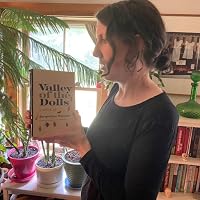
The way this book went was, when the protagonist tried to commit suicide in Chapter 13 I was crossing my fingers like “good luck buddy, hope it sticks this time!”
CWs for misogyny (subtypes: creepy Lolita stuff; domestic/intimate partner violence), anti-Semitism, brief anti-Asian racism, brief fatphobia, and a HORRIFICALLY anti-Black racist kicker that will make you want to burn things. Needless to say I will be spoiling the entire plot of this “classic”, originally published in 1955. (Yes, apparently, it’s a noir crime fiction classic which has inspired such luminaries as Quentin Tarantino. Draw your own conclusions about that one.)
Also spoilers for a few books from that same era, including The Expendable Man and In a Lonely Place by Dorothy B. Hughes, The Blunderer by Patricia Highsmith, and Invisible Man by Ralph Ellison. I also reference the show Beef on Netflix, but only with general spoilers as to tone.
This book follows Harry Jordan, a failed “non-objective” i.e. modern artist working in a diner in San Francisco, as he makes a series of more and more ridiculously nihilistic choices, including in roughly chronological order the following: quitting his job to spend every day getting drunk with a beautiful alcoholic named Helen, ranting internally about how fake the American Dream is, viciously assaulting someone, painting Helen nude in the style of Manet’s Olympia, making a suicide pact with Helen that involves him slitting both their wrists only for it to fail because he didn’t cut deep enough, checking into a psychiatric hospital with Helen, being offended by the psychiatrist’s creepy sexual questions, checking himself out of the hospital, finding Helen drunkenly out with various men at various bars including a memorable time with her and three Marines which makes Harry “perspire” as he imagines what they might be getting up to, strangling Helen to death as she passively goes along with it, trying to commit suicide by leaving the gas on in the apartment but again failing because he forgot to close the transom, confessing to Helen’s murder so that he can be “pleasant[ly]” executed, making friends with his jail guard, drawing portraits of various guards and detectives for free or in exchange for cigarettes, being sexually propositioned by and then violently assaulting a 21-year-old court stenographer (who is turned on by all of it), being offended by a foreign psychiatrist’s creepy sexual questions, finding out that he didn’t actually kill Helen because she had a heart condition (which killed her when he strangled her, but it’s not murder anymore), and being released again into the pointless fog of the world……. At which point we learn, in the last two lines of the novel, that he was Black the whole time!
!!!!!!!!!
Okay, this book is written for the audience to follow Harry along his journey, being shocked by some of the things he does but still finding themselves laughing at the ridiculousness of it. The audience is supposed to ask themselves whether they *like* Harry, whether they *should* like him, and what can really be expected of people who have no prospects for stability in this meaningless world… and then the last two lines are supposed to throw the audience’s conclusions on their head, making them question their own assumptions, biases, and understanding of the previous events of the book by 1) revealing that he isn’t white, and 2) painting him as a sympathetic figure, “tall, lonely” and “Walking in the rain.”
Because I guess Black men don’t have many prospects so it’s totally understandable (natural, even…) for them to viciously assault and/or kill people, especially white women - because yes, Helen is *very* explicitly described as white.
I will say briefly that all the references to how young Helen looks (“If it hadn’t been for the single strand of pure silver hair she wouldn’t have looked more than thirteen years old.” etc. etc.) are super creepy, if not unexpected for a book of this origin. I think this is intentional, i.e., Willeford intends this to be an aspect of the protagonist’s character that he is attracted to the child he sees in Helen (e.g., “The girl in the portrait [Harry painted] was Helen, a much younger Helen, and if possible, a much prettier and delicate Helen, but it was Helen as she appeared to me. Despite my attempts to create the faint, tiny lines around her eyes and the streak of silver hair, it was the portrait of a young girl.”) which just compounds the horrificness of the twist ending. Are we supposed to think he’s into young girls because he’s Black, or are we supposed to think he’s relatable and sympathetic even though he’s Black because he’s into young girls… I really don’t want to consider this further.
Now I actually heard of this book via a review of another book from this genre and era, which has the same “he’s Black actually” twist - The Expendable Man by Dorothy B. Hughes, published in 1963. In that book, the protagonist, Hugh, is a medical resident at UCLA driving home to Arizona for a relative’s wedding. On the way, he picks up a hitchhiker, a teenage girl, and then spends the rest of the drive alternately feeling bad for her and worrying that someone will see her in his car and get the wrong idea. She turns up dead after a botched abortion, and when the cops show up and are super racist to Hugh, you realize he’s Black. He of course gets named the number one suspect, and he has to spend the rest of the book investigating the crime himself so that he can prove who really did it before he gets framed for a murder he didn’t commit (all while hiding this from his family because he doesn’t want to disappoint them).
I’m giving all that context to say that actually a white author from that era *can* write noir crime fiction about a Black protagonist where the protagonist’s race is a plot point but the protagonist is still portrayed as an actual human being.
Charles Willeford, on the other hand, was clearly just a racist and I’m sure if he was alive today that would 100% still be the case. (Getting ahead of those “it’s of its time” arguments.)
Even before the twist ending, I spent most of this book writing notes like “sure, some of the plot points are funny in a shock value kind of way, but this protagonist resists all interiority because he’s just a patchwork of traits - hardboiled, violent, drunk, friendly, artistic, cynical, etc. as the scene calls for.” A sequence where the protagonist justifies his violence by comparing himself to a car that almost hits someone (“It was the man or woman *driving* the Buick who almost hit him. Not the Buick. And that was me. I was the automobile, a machine, a well-oiled vehicle now matured to my early thirties”) is particularly bad in hindsight.
The anti-Semitism was also wild, especially considering this book was written post-WWII and Willeford actually *fought in Europe* during the last year or two of the war and apparently won multiple awards following his actions in the Battle of the Bulge. Both psychiatrists in this book are portrayed super weirdly, inevitably asking Harry disgusting, invasive sexual questions, but Harry particularly hates the second one, the “swarthy” European Doctor Fischbach with his “cultivated, but definitely foreign accent” (“this refugee from Aachen”). Is Willeford trying for some commentary on how Black people must be anti-Semitic? Actually, it’s worse (better?) - because the questions the psychiatrists ask are so graphic and offensive that Harry’s hatred of them seems entirely justified. Yet given Harry’s unwillingness to open up emotionally and his general opacity as a character, you’re left with this impression that Willeford’s point is simply that Jewish people are perverts and Black people are objects, and we the readers should find that very comedic and then not think about it further.
……..
Here’s something I thought about as I was perusing Willeford’s Wikipedia page - is Harry him? Is this character just a way for him to fantasize about what he would like to do if he were Black and therefore, in Willeford’s white supremacist delusion, able to “get away with it”?
This occurred to me because a major aspect of Harry’s character is the fact that he is a failed modern artist. He attended the Chicago Art Institute before the war (although his paintings never sold), and afterwards, in order to continue painting, he skipped out on his wife and child in Chicago to go to art school in Los Angeles. However, he only managed to get an A.A. degree and then quit art altogether because he found himself unable to paint the way he wanted. He still has high (if vague) artistic standards and takes great pride in finding a magazine article where a former teacher of his praises him. However, he is never able to make a living from his art (although when he’s in jail his sketches go for $10 each, which he is annoyed and then amused to learn), and he never seriously considers going back to painting.
Willeford apparently dreamed about being a poet from a young age, and enrolled in an art and art history grad program in 1949, but was dismissed from the university after they learned he had not graduated high school (much less undergrad). He then re-enrolled in the military, where he remained until 1956, after this novel had been published. (He did eventually complete an advanced degree and become a professor; the only anecdote I could find about his teaching career indicates there’s a non-zero chance he would have been #MeToo’d if he’d still be alive.)
Harry and Willeford’s shared artistic aspirations, the shared veneration of higher education/advanced degrees in art combined with the failed attempt to pursue them…
Interestingly, Harry is written as having served during WWII but not seen combat, or at least that’s what he claims when he’s asked. Instead, he says army officials discovered his artistic skills and assigned him to paint inspirational murals in mess halls in the US. As I was reading I found that to be an odd detail because this book’s concept - WWII vet with unsuccessful artistic dreams who turns to vicious acts of violence - reminded me of, for example, In a Lonely Place, the (legitimate) noir crime fiction classic also by Dorothy B. Hughes, published in 1947, which follows a WWII vet, wannabe screenwriter, and serial killer of women who spends the book trying to romance his beautiful neighbor and outsmart the police detective investigating the murders. “He brought the violence of the war back to peaceful American soil”, “is masculine violence incompatible with the feminine domestic sphere”, etc. etc. - In a Lonely Place is probably the best iteration of this out there (you really see the selfishness of the protagonist, and the women win in the end) but it’s a very common theme. Why wouldn’t Willeford draw on that? Well, although according to his wife Willeford saw some horrific things in the war and didn’t like to talk about it so many he just didn’t want to address the topic head-on.
If any theme in the books seems related to the events of WWII, it’s actually, horrifically, Harry’s obsession with dying by gas/in a gas chamber: “The faint hissing of the gas jets grew louder. It filled the room like a faraway waterfall” when he tries to commit suicide, and later, fantasizing about his execution:
“What a nice, easy way to die! So painless. Silent and practically odorless and clean! [...] When I writhed on the floor and went into convulsions I wouldn’t even know about it. Actually, it would be a much more horrible experience for the witnesses than it would be for me. This knowledge gave me a feeling of morbid satisfaction.”
Right.
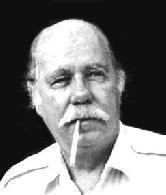
I did some research on Willeford (I felt like I shouldn’t definitively call him a monster until I checked to see if I’d missed something… although apparently he described *himself* as a sociopath in a memoir so I guess he got there ahead of me) and I discovered that surprise, surprise, he was known personally for his dark, crude, extreme sense of humor… and by the way, that he wrote an unpublished sequel to his most famous book, Miami Blues, in which the protagonist strangles his daughters to death and happily faces his arrest and sentence. Just like the protagonist strangles his “common-law” wife to death and happily faces his arrest and sentence in this book. Guess the possibility was on Willeford’s mind a lot?
Frankly the best-case scenario for Willeford/this book is that he wrote it to be racist and sexist and anti-Semitic because he thought it would be funny.
So why did I even put in the time to finish this book? Well, the plot itself was engaging. It was interesting (although more and more grotesque) to watch what Harry was going to do next - what he was going to fail at, and what he was going to get away with - and the twist ending was certainly shocking. The writing (from a style perspective alone) was decent.
But I actually started this book just a few days before I started watching the show Beef on Netflix - which is *also* about a man and woman who commit (and often fail at) more and more shocking acts of self-destruction and nihilistic violence as the story goes on. It was an unexpected and very odd parallel!
Of course Beef heads in a very very different direction from this book, tonally, and is better on a story/character level in pretty much every way. (It helps for the writers to believe their protagonists are actual human beings rather than sociopathic killing machines, as it turns out.)
Tonally this book turns out less like Beef and more like, say, The Blunderer by Patricia Highsmith, published a year earlier in 1954. An unsympathetic failure - in work, with women, in life - makes a series of poor choices that make his life worse and worse. The main difference, I would say, is that in *her* twist ending, Highsmith had the spine to kill him off. But hey, why *would* Willeford kill off Harry? That’s his hero, after all.
I’m talking about all these other books here because I want to make it super clear - it’s not the era. It’s not the genre. It’s not the tone. It’s not the premise. It’s not even the twist. All of these things can be done well - and have been, by other authors. (And for the record, if you wanted to read a post-WWII-era book about a Black man spiraling into what many would see as madness due to problems in American society, Ralph Ellison’s Invisible Man had been published two years earlier, in 1952.) When I criticize *this* book, I am criticizing it, and the choices and beliefs of its author, *very* specifically.
So read something (anything) else! Don’t read this.
(P.S. All that said, I did genuinely laugh when Harry, in both the psychiatric hospital and jail, is given “a fresh package of king-sized cigarettes furnished by the Red Cross.”)