Henri Matisse was a French artist, known for his use of colour and his fluid, brilliant and original draughtsmanship. As a draughtsman, printmaker, and sculptor, but principally as a painter, Matisse is one of the best-known artists of the 20th century. Although he was initially labeled as a Fauve (wild beast), by the 1920s, he was increasingly hailed as an upholder of the classical tradition in French painting. His mastery of the expressive language of colour and drawing, displayed in a body of work spanning over a half-century, won him recognition as a leading figure in modern art.
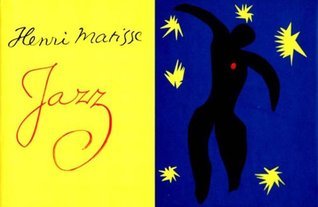
I was seduced by the cover of this book. I called the picture, a paper-cut, 'Star Man' and even after I knew it was Icarus, to me it was Star Man swimming strongly through the universe with a fiercly beating heart.
It inspired me and from that followed my love of Matisse. I wouldn't recommend this book over and above any of his others - anything that features Matisse's paintings or wonderful paper-cuts will be 5-star plus.
But Star Man inspires me and the idea of Icarus, the idiot Icarus thinking he could challenge the universe and win, well that doesn't.
The cover is the best part of the book, but I enjoyed perusing the rest. Even though Henri's notes are handwritten in French, translations are provided. There isn't much to the book, so I'd hesitate to recommend it to anyone other than Matisse admirers.
Icarus found his death disobeying his father’s warning and going too close to the sun. The light and the beauty of the star absorbed him and Icarus tried the impossible, aiming to reach the unreachable. The wax in his wings melted and he fell into the sea. Icarus’s image on the cover of Jazz was the main reason I wanted to know more about this book. And soon, reading it, I would understand that Matisse was ready to sacrifice his life for art’s sake.
"DO I BELIEVE IN GOD? Yes, when I am working. When I am submissive and modest, I feel myself to be greatly helped by someone who causes me to do things that exceed my capabilities. However, I cannot acknowledge him because it is as if I were to find myself before a conjurer whose sleight of hand eludes me. Therefore I feel robbed of the benefits of the experience that should have been the reward for my efforts. I am ungrateful and without remorse."
Jazz is a collection of bright, meaningful paper cut-outs accompanied by some of the painter’s poetic thoughts, an expression of his vitality and extraordinary creativity. When in 1941 Matisse was diagnosed with abdominal cancer, following a difficult surgery that left him chair bound and in impossibility to paint or sculpt, the painter found comfort in a new activity that could still transmit his exuberance – cutting out painted paper and transforming it into artistic compositions. Helped by assistants, Matisse transformed his room in a gallery, all walls pinned with cut-outs seeking perfection of form and meaning.
I enjoy Matisse as an artist, but did not know he made a book of works so to speak. The words are an artform not only in what they say but how they look on the page (as is explained in the intro). His cutouts are every bit as interesting and beautiful as his larger works. A short, thoughtful read.
This beautiful book translated from French tells the story of the production of his cut-out paper compositions and the problems with getting them to print properly in book form. Matisse used large script on the page opposite the images for balance.
Quick Review: Fantastic book (French with English translation) providing insight into Matisse's process/credo as an artist. Highly recommended for Matisse admirers and print aficionados.
As a Matisse enthusiast, I went into this with very high expectations. The quality of color and paper of the book is great. But there was a huge lack of education/context to the works. Maybe it’s intention is to be a coffee table book.