A pentalogy of adventure, mythological fiction and fantasy that details a conflict between Greek and Roman demigods and Gaea, the earth goddess. Riordan introduces Roman mythology into his sequel series as well as several new characters.
Did anyone notice their names (except book 1) have an Olympian name!? son of Neptune, Mark of Athena, House of Hades, Blood of Olympus omg! I noticed that in my 3rd re-read! Hail Rick Riordan! he is a Genius!
Heroes of Olympus, another series about Sacrifices, Love & Bravery. beautiful & compassionate.
The whole plot & everything was magnificent! & this Plot definitely needed such a beginning. & when they were altogether, the Seven Half-Bloods, the plot actually started to be more exciting, exhilarating, amazing & funny!
it deserves 5. Everything is gorgeous, epic, full of excitements & fun & believable & everything! the world expanded, the plot much complicated, the characters grew, amazing & lovable, I can't decide who I love more! (This always happened in my favourite series, or I love when it happens.) Percy, Jason, Annabeth, Nico, Coach Hedge, Will, Reyna, Piper, Frank, Hylla, Ella, everyone at Camp Half-blood. (Everyone except Octavian!) Riordan also knows how to make good villains; all of the main villains, Kronos, Gaea & their funny stupid minions are my favourites. I usually don't like female villains, because they're vicious, & screaming a lot when things not according to what they wanted, some of them sadistic, so I find them annoying. but here, in this series, with Riordan at the wheels, we have many fantastic female villains; Gaea herself, smart, plotter & know-it-all, Khione, Cold & taunting, Arachne & several more.
the writing style has changed comparing to 'Percy Jackson' series which was first person all the way, & this is third person (my all-time fav narration) & multiple POV characters, but Riordan has already proved how powerful & magnificent he can write, & different POV characters chapters totally has different voices & tunes which is truly awesome & enjoyable. the only problem with multiple POVs is sometimes I want to continue one's story with more enthusiasm than others & I should hold myself back not to skip chapters; for two reasons, story integrity & chapters are mostly connected. which is not really a problem. but I'm telling you, they all are interesting & exciting & funny by themselves too & author has put his effort & time on them. <3 Also I don't want to kill the suspense for myself! that actually the ignition to continue reading in a faster speed!
I remembered I kind of wished (in PJO) that it would be awesome if they too. & BOOM! My wish was granted! just in case, I kind of wished we had some story in I feel so lucky & so happy! I love when authors do that! they show us all the aspects of the world. here, the retelling of the myths & travel to the ancient lands.
I can't decide which series I love more, Percy Jackson or the Heroes of Olympus! Percy jackson was more fun & more middle grade, Heroes of Olympus has more dangerous serious business, complicated quests, the characters are older, a bit of romance & ships & less fun comparing. so I love them both in their own way! don't make me choose between my babies! - World building: ★★★★★/5 Plot: ★★★★★/5 Written style: ★★★★★/5 Characters: ★★★★★/5 Idea: ★★★★★/5
La verdad esperaba más de este libro , no es malo , la historia es fácil de leer , es entretenida pero me pareció tediosa porque los capítulos son muy largos!!!! Aún así lo terminé rápido y me gusto mucho la historia ✋🏻🧍🏻♀️
After Percy Jackson and the Olympians, we came to the next series. For my small children, I have some of the same regrets with letting them read it/reading it to them -- the romance, the language, the violence. Also, one of the main characters turns out to be gay. When reading with small children, it's nice to know going in, I think.
Speaking of that, I thought it was interesting that Rick Riordan clearly gave priority to diversity. The main characters are five white kids (one of whom is gay), one black kid, one Chinese Canadian kid, and one Mexican American kid. Three of the main characters are girls and the other five are boys. The funny thing I thought was that the two main couples are white. I know this is going to sound strangely critical when he made SUCH an obvious effort at diversity, but I still thought was interesting that he drew the line there.
Overall, I like the main characters. I like that they have different personalities, strengths, and powers. I like that the girls are as essential and powerful as the boys. And again it's fun to see the familiar myths modernized.
THIS WAS ONE OF THE FIRST FEW AMAZING BOOK SERIES I'D EVER READ AS A KID. This is the same kid's review. I had stumbled upon this so randomly that I think that most probably the Fates led me to read these series (including every other series by this author). The author very nicely weaves the story around a lot of intricate details and you keep wanting more. The characters are really, really good, each one, with their own unique personalities, and evermore. Their sense of humour, sarcasm, grit, determination, hope, and little bit of hero streak, makes you glued to the series. Though set in a fictional world, it almost makes you wish it was real and feel it was real, as it seems to coincide with stuff on the real world too, in some cases . I learnt a lot about the Greek and Roman mythology, and these nearly cover the stories accurately and creatively, and made me want to explore more about them too. It touches upon various issues people face in real-life, and deals with them positively. As a kid, I loved it. As a teenager, I keep re-reading it to experience its vast universe once more.
Amazing, funny and lighthearted- this series is really compelling with a lot of major decisions to be made by our protagonists, and as always: it is lighthearted, and never failed to make me laugh.
recommended for: those who haven't read it (you should give it a try)
"The Lost Hero" is the 1st book from the second series of Percy Jackson and the Olympians, and is another story about the Greek/Roman gods and goddesses, and their children, by the world-famous author, Rick Riordan. I read this book because I loved the first series, and wanted to read more about the characters, that starred in the first series. In the end I really LOVED this book, because of it’s wonderful explanations, that brought beautiful images to my head. In the story, 3 new half-bloods are once again brought to camp half-bloods, in need of safety. Leo, Jason and Piper embark on a mission to save queen Hera, and get Jason’s memory’s back from the queen of the heavens. During their quest to save Hera from the giants, the 3 friends have to fight many disastrous monsters, and others who serve the one that wants to destroy the gods. Desperate to save the world from the one who is trying to wake, they go to the place Jason started his journey, to try to save queen Hera.Do you think that they will succeed? Or that they bring the world to a desperate end?Read this amazing book to find out.
I liked this series more than I liked the original. Maybe because the characters were older in this. I loved the blend of Greek and Roman mythology and how Athena loses herself in Roman culture. I liked a lot of the new characters, especially Reyna and the Amazons (who run Amazon, lol).
I also loved the contrast between Jason and Percy, Jason being the more traditional hero and Percy being the unconventional goofball who gets lucky. Nico's coming out was a surprise, but I did like how Jason handled it. I thought he was sweet. And I enjoyed the perilous shadow-traveling across the world.
Overall great series, and now I want to see what will happen to Apollo in the upcoming series.
Since I finished this box set in July 2020, I now don't remember too much about it. But I know I love it! I kinda wish I had read it immediately after finishing the Percy Jackson series, as it follows after that series a few months later! I really liked the Roman demigods. Jason, Hazel, and Frank (I think those were their names), were great! And I loved being reunited with Percy, Annabeth, and Nico in these stories!
I really liked the Heroes of Olympus series, but I don't think it is as good as the original Percy Jackson books. I loved the first two books, The Lost Hero and the Son of Neptune, but I felt like the books lost their way a little bit during The Mark of Athena and The House of Hades. I think this is a function of the fact that there were so many characters to keep track of. Moreover, I guess I found the books challenging because there were characters that I liked more than others so I preferred their points of view. For example, I would much rather read chapters involving Percy, Annabeth, Frank, Hazel or Nico (in book 5) than chapter involving Jason, Piper or Leo. Perhaps I was being unfair to some of the newer characters because they were unfamiliar. However, I don't think that was the case. I found Jason to be very vanilla and Leo irritated me for about 2/3's of the series (I ended up being won over by him, but it took a long time.) Piper didn't bother me, but I wanted more out of her story-lines. That said some of the action is great and the idea of rival Greek and Roman camps who may go to war with each other is a great concept.
I give this entire series a 5/5 because, in short, it was awesome. I first read this series a year or two ago, and I liked it; it was good, but for some reason I always remembered it as, like, it was good... when I was fourteen, and that it was slightly childish. My prior notions about this series just disintegrated. Completely untrue. I just reread this series (because I was in a mood and wanted to) and I loved it. I loved it more than I did the first time I read this series. Somehow, this series got better with age, something I didn't think was possible but it did. This was an amazing series, the Greek and Roman mythology were artfully blended into the plot line and the twists were very smart. The entire series is very well done, and I loved the characters (especially the "brought back" characters). Overall, this series is mind-blowingly awesome and I would definitely recommend it to everyone.
A year ago, my friend and I reread this series to make a YouTube review. Today I'm mutilating it on Google Docs (and other YA books I suffered through in highschool) to see if I can put my money where my mouth is, and improve them. Here's what I've learned:
"Shimmering,""shining," "glittering," "sparkling" "bright," and other adjectives that have to do with light are go-to cliches when writers describe things.
Sticking the word "little," "big," or "old," before objects is usually redundant.
Dialogue tags are almost never necessary, let alone adjectives to describe how somebody said or did something. Most power comes from verbs.
Short, simple sentences are under rated.
Never state anything in narration you can show with an action.
Don't abuse dialogue (or character thoughts) by using them to tell the audience things the story doesn't otherwise prove.
Don't use characters thoughts to explain things.
You can always show examples of anything you state.
Broad terms rely on the readers imagination to do all the work. Don't say, "a gaggle of girls walked by." Describe one or two characters instead.
You only need a few sentences to set an atmosphere. It's obvious when an author doesn't know how to imagine their own setting.
Most adventure stories are only about eating food and getting rest. Sometimes bad guys show up and cause action scenes that work well enough as action paragraphs. There's rarely a mystery or goal that progresses meaningfully between one event and another. Main characters getting together substitutes resolution as nothing comes full circle.
You can delete most main characters in a group except two or three.
Describe a characters outfit or hairstyle in one or two sentences, if you must describe them at all.
Adding "-ish" at the end of words is weak.
Don't say "often," say "always," you coward. Or delete both.
Banter and nicknames aren't personalities. Deleting these makes personalities even clearer.
There's more power in the unironic than the painfully self aware ironic.
A character's reaction to something doesn't have to be the reaction you want the reader to have, and definitely shouldn't be a crutch to produce it (rather than through the thing they're reacting to itself).
The things that the story is about don't have to be the most intense version of it in the story. A relationship doesn't have to be described or portrayed as perfect. Anger doesn't have to be a searing hot, burning intensity that was definitely the deepest anger anyone in the universe ever felt.
Never use the cliches, "his blood turned to liquid fire." Or "The blood in his veins turned to ice." If it's about blood or veins and temperature, it's a cliche.
When a character is "suddenly pushed from behind" or "feels a pain searing through their head" don't say it. Show the mud they slid through as they were struck by a weight and hit their chin on the gravel.
If action scenes must exist, don't use one word sentences, sarcastic quips or shortcut terms: "Suddenly There was a *insert sound effect* Pain exploded through his head As if the day couldn't get even more like a Marvel Movie." etc.
Stories that self reference are over rated if they use it as a crutch. No need to go full last season of Phineas and Ferb about anything. The ideas weren't that great unless we remember them ourselves.
If there's a ridiculous, random, goofy floating table, don't force us to conclude it's random and ridiculous. Don't keep harping on how, "and if you think that sentence is normal, you should read it again. Just another day in my insane life!" Just tell us there's a floating table.
Cutesy words like, "abuzz" or "aflutter." "A gaggle of fairies flew by, abuzz with excitement." DELETE.
It's okay to use some shortcuts like telling vs. showing or some adjectives if you're summarizing for some reason (possibly to begin or end a story/chapter/scene). It's okay if you have sentences with these things if it's clever, funny, or otherwise has a point. Don't use this as an excuse, because the vast majority of the time it's not.
Why do YA authors describe everything as smelling bad? Smell is a sensory detail, so I get what they think they're doing. But when everything smells like cabbage, onions or dead fish, you're not embellishing reality at that point. And why is it always cabbage?
And why do they always eat bread and cheese? Or if it's the modern days, eggs and bacon?
The least time you spend hearing a characters "thoughts" the better. (Unless they're exceptionally clever or profound).
You always have to rewrite endings of YA books, because they don't actually have conclusions, only sequels.
Why do characters always have a special "face?" i.e. "It was her give-me-Percy-Jackson-or-I'll-Kill-You face." These sentences rarely add anything in the first place, and can be deleted.
Why do characters always roll their eyes at each other and get flustered with each other so easily? "As if, you know how to cook, Max." "Max shot him a glare." etc. Conflict can be a necessity in interaction, but this is cheap. The no-nonsense girl and goofy boy stereotype is overused anyway.
Why always shorten names whenever friends talk to each other? Why should Peter, Henry or Gabrielle, have to endearingly get called Pet, Hen, and Gab? I've never done this to my friends in real life or heard them do it.
How are teenage crushes so noble and beautiful that they save the universe? "Love is the most important thing of all." Not if you mean teenage crushes.
Rhetorical questions? NO.
When a writer says somebody "made their way" to something, it means they don't know what they're trying to picture and are using a band-aid. Same with words like: sprawled took off disappeared into the night crossed over to etc.
Of course, these are just some of the technical issues.
Another good series. I think I like the original series better, but this was still enjoyable to read. I especially liked book 2 because it had so much of Percy being cool. During books 3-5 the group did a lot of go somewhere, fight something, and move on, which, I suppose is okay, it just wasn't essential to the plot. Also, I found Percy didn't do quite as much as he did in the original series, but I guess that's to be expected since it's not HIS series anymore. This has an interesting twist at the end and a cool final battle. Certainly enjoyable, if not a favorite.
This series is my absolute favorite of all time! It has everything, comedy, action, romance and characters beyond my imagination. Rich Riordan is a god at writing and everything he touches becomes gold. These books simply cannot be unread by anybody. Once you start you will find that nothing will make you able to put down those books because something is always happening.
Como escritor que basa sus novelas en la mitología griega, creo que me toca ya hacer una reseña del mundo que ha creado este maravilloso escritor, mi referente, Rick Riordan!!!
PERCY JACKSON ⚡🌊🔥 😍😍😍
La historia la protagoniza el propio Percy Jackson, el hijo de un dios griego muy poderoso e importante y una humana, que se ve obligado a ir al Campamento Mestizo para estar a salvo de los monstruos que lo acechan y volverse más fuerte mediante el entrenamiento con otros hijos de dioses griegos, la mayoría héroes o también llamados semidioses. Con algunos de ellos entablará una bonita amistad y otros lo traicionarán!!!
Las historias que cuenta Rick Riordan sobre este personaje y sobre quienes lo acompañan son maravillosas, llenas de aventuras, de acción, de sentimientos encontrados!!! El autor crea una maravillosa visión moderna de la mitología griega y de cómo estaría esta a día de hoy, lo cual habría generado cambios, indicados en los libros por supuesto, como por ejemplo el cambio de posición del Olimpo!!!
Todo lo acontecido tiene sentido, la paja está justificada y la interacción de los personajes, así como sus propias historias por separado, son de un nivel creativo sin parangón!!! Además, creo que la simbiosis que existe entre los personajes inventados, como el propio Percy, Annabrth, Grover, Luke, Thalia, Tyson, Clarisse o Nico, y personajes pertenecientes a la mitología griega, como Zeus, Poseidón, Quirón Atenea o Dioniso, o monstruos como los titanes, las furias, los minotauros, las gorgonas o las ninfas, es excelente y se apoyan los unos a los otros para que todo funcione!!!
Solo le pondré un pero, y es que, personalmente, los libros deberían haber ido dirigidos a un público más mayor, pues la mitología griega funciona mucho mejor sin restricciones en cuanto a escenas explícitas o vocabulario, aunque esto ensalza más aún su obra, ya que incluso dirigidos a un público más infantil, los libros funcionan a las mil maravillas en todos los sentidos!!!
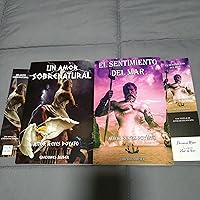
Espero que os haya gustado mi reseña y mi colección presente en la foto. Dejadme vuestros comentarios sobre lo que opináis, porfa. Os leo a todos!!!
A fantastic series. Dramatic and engaging from start to finish. The new character additions to the Percy Jackson universe were all equally yet uniquely interesting, plus the series also offers greater insights into previously established characters too.
Trigger warnings: Death, violence, and scary scenes
amazing amazing amazing holy crap rick riordan's book series are AMAZING and this one DID NOT DISAPPOINT !! just like his percy jackson series- this one blew my socks off :DDDDDD <3 <3 I LOVE IT please read it thank you !!!!!
Binge-read it again. I went through all five books when I was in high school. Now it's nice to go back and find the stories just as intriguing as they were as I remembered.
Llegando muy tarde al hit, pero de igual manera me parece un libro muy bueno. Rápido de leer, entretenido, educativo e interesante.
Si han visto la película y van al libro para saber mas, se van a dar cuenta que no es muy fiel a lo que el autor ha escrito, por lo que tiene muchísimo mas sentido el libro ya que el desarrollo de la historia cuadra más que en las películas.