Jump to ratings and reviews
Rate this book

Service Call

Rate this book
Service Call" is a science fiction short story by American writer Philip K. Dick.

25 pages, Unknown Binding

First published January 1, 1955

52 people want to read

About the author

Philip K. Dick

2,006 books22.4k followers
Philip Kindred Dick was a prolific American science fiction author whose work has had a lasting impact on literature, cinema, and popular culture. Known for his imaginative narratives and profound philosophical themes, Dick explored the nature of reality, the boundaries of human identity, and the impact of technology and authoritarianism on society. His stories often blurred the line between the real and the artificial, challenging readers to question their perceptions and beliefs.
Raised in California, Dick began writing professionally in the early 1950s, publishing short stories in various science fiction magazines. He quickly developed a distinctive voice within the genre, marked by a fusion of science fiction concepts with deep existential and psychological inquiry. Over his career, he authored 44 novels and more than 100 short stories, many of which have become classics in the field.
Recurring themes in Dick's work include alternate realities, simulations, corporate and government control, mental illness, and the nature of consciousness. His protagonists are frequently everyday individuals—often paranoid, uncertain, or troubled—caught in surreal and often dangerous circumstances that force them to question their environment and themselves. Works such as Ubik, The Three Stigmata of Palmer Eldritch, and A Scanner Darkly reflect his fascination with perception and altered states of consciousness, often drawing from his own experiences with mental health struggles and drug use.
One of Dick’s most influential novels is Do Androids Dream of Electric Sheep?, which served as the basis for Ridley Scott’s iconic film Blade Runner. The novel deals with the distinction between humans and artificial beings and asks profound questions about empathy, identity, and what it means to be alive. Other adaptations of his work include Total Recall, Minority Report, A Scanner Darkly, and The Man in the High Castle, each reflecting key elements of his storytelling—uncertain realities, oppressive systems, and the search for truth. These adaptations have introduced his complex ideas to audiences well beyond the traditional readership of science fiction.
In the 1970s, Dick underwent a series of visionary and mystical experiences that had a significant influence on his later writings. He described receiving profound knowledge from an external, possibly divine, source and documented these events extensively in what became known as The Exegesis, a massive and often fragmented journal. These experiences inspired his later novels, most notably the VALIS trilogy, which mixes autobiography, theology, and metaphysics in a narrative that defies conventional structure and genre boundaries.
Throughout his life, Dick faced financial instability, health issues, and periods of personal turmoil, yet he remained a dedicated and relentless writer. Despite limited commercial success during his lifetime, his reputation grew steadily, and he came to be regarded as one of the most original voices in speculative fiction. His work has been celebrated for its ability to fuse philosophical depth with gripping storytelling and has influenced not only science fiction writers but also philosophers, filmmakers, and futurists.
Dick’s legacy continues to thrive in both literary and cinematic spheres. The themes he explored remain urgently relevant in the modern world, particularly as technology increasingly intersects with human identity and governance. The Philip K. Dick Award, named in his honor, is presented annually to distinguished works of science fiction published in paperback original form in the United States. His writings have also inspired television series, academic studies, and countless homages across media.
Through his vivid imagination and unflinching inquiry into the nature of existence, Philip K. Dick redefined what science fiction could achieve. His work continues to challenge and inspire, offering timeless insights into the human condition a

Ratings & Reviews

What do you think?
Rate this book

Friends & Following

Create a free account to discover what your friends think of this book!

Community Reviews

5 stars
35 (26%)
4 stars
58 (43%)
3 stars
35 (26%)
2 stars
3 (2%)
1 star
1 (<1%)
Displaying 1 - 11 of 11 reviews
Profile Image for Tristram Shandy.
876 reviews265 followers
June 4, 2021
“‘Good Lord […] A world run by machines.‘“

Do you know what a swibble is?

If you don’t, you will be in the same situation as David Courtland, the protagonist of PKD’s short story Service Call, which was first published in Science Fiction Stories in 1955. One evening, he finds a repairman ringing at his doorbell who says that he has come to adjust his swibble. Being completely without any idea as to what a swibble is and having a lot of routine work for the next day to do, Courtland sends the men away rather impatiently, only to find out that the man has come from the future – it is later commented on how this could have happened – and that a swibble would be a very common device in the 60s. Now, Courtland is a clever businessman and he scents the money to be made by stealing the idea of the swibble – interestingly, his instinct for making money is stronger than his wonderment at just having spoken with a time traveller, and his first idea is to worm the secret of the swibble out of the repairman, who said that he would come back later in the evening. It is during this second encounter that Courtland and his colleagues, whom he has invited for the occasion, will learn the terrible truth and that the story, as so often is the case with PKD’s fiction, turns from comedy into nightmare – because he finds out that a swibble is much less a machine than an organism that adjusts its owner’s opinions and attitudes so that they conform with those of anyone else. Or, to quote the repairman’s own words:

”’[…] we don’t have to worry about wars or anything of that sort. There won’t be any more conflicts, because we don’t have any contrary ideologies. […] What’s important is that every one of us agrees completely; that we’re all absolutely loyal. […]’”


The drawback of the swibble is that if you do not own one in your own home, you will not be subjected to the constant process of ideological adjustment and then it may happen that you visit the home of a friend and his or her swibble ”’may just simply crack you open and drink you down.’” The repairman does not go into detail here, but as far as I am concerned death by being cracked open and drunk down has no particular allurement to me. We also learn that there is going to be a war in 1971 in the course of which the swibbles hunt down every single human who is opposed to the use of swibbles – these heinous people are referred to as Contrapersons – and make short work of them. Of course, Courtland and his co-workers are horrified at the prospect of living in a society controlled by machines that have turned into organisms, and they wonder if the repairmen are still in charge of the swibbles or whether it is the other way around. Then, suddenly, there is another ring at the door …

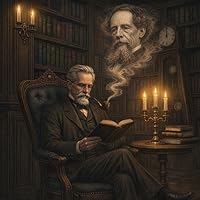
As usual, PKD makes a very good point with this story because we, too, live in a world in which we find our way of life and our thoughts and manners being shaped by machines. Dick was realistic enough to give a cold shoulder to horror visions of military robots subjugating terrified humans by sheer force. In 1976 he wrote,

”I always feared that my own TV set or iron or toaster would, in the privacy of my apartment, when no one else was around to help me, announce to me that they had taken over, and here was a list of rules I was to obey.”

Two years ago, I might have shrugged my shoulders at Dick’s fears but now, after more than one year of intermittent lockdown, I have the feeling that some of my communication habits have changed under the influence of digital media, and while I am still old enough to want my old life back, I am not so sure whether these changes have not influenced younger people more deeply than they did me. But you needn’t stick to such an extreme case as the lockdown. Just look at how our consumer habits have been shaped by the development of the products we are using: Who would, for instance, nowadays subscribe to the idea – which used to be perfectly solid in the old days – that a TV set was simply for watching TV channels? Like most other gadgets, it now has to go online.

Or take the Internet itself, which, on a small scale, already tends to adjust people’s opinions by entrapping them in certain bubbles and giving them the impression that most people think like they do about any given political or social question. At the moment, it seems that these filter bubbles are going to harden the entrenchments characterizing society by weaning people from listening to and dealing with conflicting opinions, and that the result will probably be a major ideological clash that may well lead to violence one day. But suppose that by and by, Internet logarithms will nudge everyone into the same direction. We can already see what is happening now to those who dare to deviate from certain “commonly” held beliefs, and this is a development that seems to be gaining momentum and which definitely profits from the Internet and its effect of encouraging so-called shitstorms. Dick’s term “Contrapersons” already reminds me a lot of the terms we use in order to label those who do not share our own beliefs and values.

In this light, Service Call may have become a more terrifying story than it was to many of Dick’s contemporary readers.
Profile Image for Bill Kerwin.
Author 2 books84.3k followers
June 18, 2019

First published in Science Fiction Stories (July 1955), “Service Call” is one of Philip K. Dick’s most concentrated and resonant short stories. It is variation on the door-to-door salesman trope—a cliché of ‘50’s science fiction—only this time the business type knocking on the door claims to be a repairman sent on a service call. His mission: to fix something that homeowner David Cartland not only has not purchased, but has not even heard of: something called a “swibble.” Turns out that it’s not surprising Cartland is ignorant of all of this, for the company the repairman works for was founded in1963 . . . which just so happens to be still eight years in the future.

I won’t tell you anything about what a “swibble” is or does, for that would spoil the story. What I will say is that, using this slender story idea, Dick manages to explore serious issues such as consumerism, conformity, the unforeseen consequences of warfare, the moral implications of biotechnology, permissible (and non-permissible) methods of social control and surveillance, and the desirability (or non-desirability) of cultural unity. Moreover, he ties it all up with a neat—and not corny!—surprising ending. Now what could be better than that.

Here’s something Philip K. Dick once said about “Service Call.” Among other things, it made me think about my very own Amazon Alexa:
“I never assumed that some huge clanking monster would stride down Fifth Avenue, devouring New York; I always feared that my own TV set or iron or toaster would, in the privacy of my apartment, when no one else was around to help me, announce to me that they had taken over, and here was a list of rules I was to obey.”
Profile Image for Austin Wright.
1,187 reviews26 followers
May 10, 2018
Swibbles!!!!!!! Swibbles!!!!!!! Swibbles!!!!!!! Swibbles!!!!!!! Swibbles!!!!!!! Swibbles!!!!!!! Swibbles!!!!!!! Swibbles!!!!!!! Swibbles!!!!!!! Swibbles!!!!!!! Swibbles!!!!!!! Swibbles!!!!!!! Swibbles!!!!!!! Swibbles!!!!!!!
Profile Image for Stijn.
Author 11 books8 followers
March 6, 2022
WTF is a 'swibble'? Is the 10M dollar question. I really liked this one. It makes you wonder, assume and eventually completely overwhelm with the thought of having a 'swibble'.
125 reviews
February 26, 2023
A really fun story about some nonsense technobabel, but exciting and tense all the way through!
I'll definitely be picking up a swibble next time I'm in town though! Can't wait!
Profile Image for Andy Hickman.
7,393 reviews51 followers
October 1, 2024
Service Call- Love this story for its retro feel, time traveling serviceman arrives too early. Clever ****
Profile Image for Greg.
2,183 reviews17 followers
February 25, 2025
A clever conceit: a repairman travels back in time to fix an invention not yet available. When the repairman finally understands his mistake, he disappears. Then, a twist.
Displaying 1 - 11 of 11 reviews

Can't find what you're looking for?

Get help and learn more about the design.