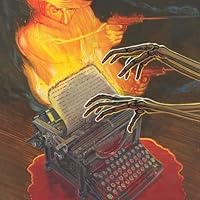
Hardboiled noir that picks up where legendary author Dashiell Hammett left off, telling the story of iconic private eye Sam Spade and the quest for the priceless Maltese Falcon.
THE GREATEST PRIVATE EYE OF ALL TIME RETURNS TO FINISH THE JOB
Legendary mystery writer Dashiell Hammett only wrote one novel about detective Sam The Maltese Falcon, the most famous private eye story ever told. But the case was never really solved – the priceless golden, bejeweled bird that men and women had been dying to possess turned out to be a fake.
Now, Mystery Writers of America Grand Master Max Allan Collins (author of Road to Perdition) brings closure to this crime classic, reuniting all the surviving members of the original cast alongside femme fatales, crooked collectors, and greedy gangsters for one more thrilling, deadly chase through the streets, wharves, morgues, bars, and back alleys of 1920s San Francisco – and finally answers the question, Whatever became of the Maltese falcon…?
Received the Shamus Award, "The Eye" (Lifetime achievment award) in 2006.
He has also published under the name Patrick Culhane. He and his wife, Barbara Collins, have written several books together. Some of them are published under the name Barbara Allan.
Book Awards Shamus Awards Best Novel winner (1984) : True Detective Shamus Awards Best Novel winner (1992) : Stolen Away Shamus Awards Best Novel nominee (1995) : Carnal Hours Shamus Awards Best Novel nominee (1997) : Damned in Paradise Shamus Awards Best Novel nominee (1999) : Flying Blind: A Novel about Amelia Earhart Shamus Awards Best Novel nominee (2002) : Angel in Black
"He's about as anonymous as they come. Got pulled out of the bay with no wallet or jewelry or identification of any kind." -- Lt. Dundy, SFPD homicide investigator, regarding a recovered body
"And you thought of me - I'm flattered. This is where Sherlock Holmes would figure out is was a robbery. Or maybe that a snake came down a rope and did it." -- Sam Spade, private eye
I was fortunate to hear the 'Hard Case Crime' co-founder/editor speak at the 2025 American Library Association annual convention, and he related that one of the upcoming 'HCC' titles would be a sequel to The Maltese Falcon, penned by the prolific crime writer Max Allan Collins. This caused a brief audible and appreciative ripple across the assembled crowd - and I'm guilty as charged in participating 😳 - because it did seem like Collins was a most appropriate author to present the continuation of Dashiell Hammett's characters and storyline from nearly one hundred years ago. Flash-forward fourteen months later and I've plowed through The Return of the Maltese Falcon - many thanks, GR friend Jen for obtaining a copy - in two days. Set less than two weeks after the events of the initial book (and, it should be mentioned, the 1941 cinematic adaptation is also an influence on this storyline), private eye Sam Spade is retained by no less than four separate parties to again locate 'the dingus' - his dual term of endearment and disgust for the desired black bird statuette containing countless prize jewels - while avoiding such expected pitfalls of bullets and beatdowns amidst the duplicitous dames, furious felons, and other shifty supporting types across Prohibition-era San Francisco. One of the strengths of the book was Spade's dialogue - Collins wrote it exactly right, as I had no issue hearing it all in actor Humphrey Bogart's clipped and simmering tone between his puffs on an ever-present cigarette. Additionally, the plot gets the job done in a tight 200 pages, presenting a properly hard-boiled story that doesn't overstay its welcome - or worse, gets boring or needlessly complicated - and still rings true to Hammett's original book and director John Huston's movie version, which are beloved and/or are considered classic by many readers and viewers.
“The Maltese Falcon” is both a seminal novel (1929) in the private eye genre and one of the most classic movies ever made. The 1941 film, which were are all intimately familiar with (or should be), starred Humphrey Bogart in an immortal role as well as Mary Astor, Gladys George, Peter Lorre, and Sydney Greenstreet. It is amazing that Sam Spade (the private eye character) only appeared in one Hammett novel (The Maltese Falcon) and a handful of short stories. The character, perhaps propelled by the silver screen success of John Huston’s version, has assumed proportions which are larger than life. Spade is perhaps more well known as a private eye than almost any other literary figure other than Sherlock Holmes, who was a product of a different era.
Collins’ “The Return of the Maltese Falcon” is a pastiche, that is, according to the American Heritage Dictionary, “[a] dramatic, literary, or musical piece openly imitating the previous works of other artists, often with satirical intent.” Collins tells us readers in an afterward that he based his novel solely on the original 1929 work and ignored the movies and other pastiches. He does admit though that he is, in doing this, like “a buzzard picking at the Falcon’s bones.”
The novel continues less than two weeks after the first one (the one that Hammett wrote) left off. Sam Spade is now in his office, savoring the fact that he put Brigid O’Shaughnessy in jail for Archer’s murder. He is satisfied that he has avenged his one-time partner, Miles Archer, though he candidly states he had no love for Archer and had been fooling around with Archer’s wife, blonde, blue-eyed and painfully pretty Iva, which made him a suspect in Archer’s murder. The match-up between Spade and Archer had never been a good match and their three-year contract was close to running out when Archer died. His name has now been razored off the door.
Effie Perine, his secretary, plays a strong role in this novel, with semi-romantic sparring between them. The story quickly switches to the Falcon as Rhea Gutman, the daughter of Casper Gutman, the infamous seeker of all things Falcon, approaches Spade and hires him to find the Falcon, once again, but this time the real one. She explains that her only inheritance is her father’s quest for that golden bejeweled bird.
What follows is a sort of trip down memory lane with Spade visiting both Brigid and Joel Cairo, soliciting their help. Along the way, Spade is hired by more than one person in their quest for the Falcon with him quietly pocketing retainers left and right, hoping that it will all sort itself out in the end. Brigid continues her femme fatale role as a “supplely shapely female” with “nearly violet eyes, half-lidded and languid under long lovely lashes.” She is still a siren’s song even in jail.
Spade, a former Continental Operative, but not Hammet’s famous unnamed Continental Op, admits that he has not been known to play things by any one’s rules but his own, and states that the assumption that he is “outright crooked misses the point.” He says he is in the detective trade and his partner was murdered so he had to do something about it. San Francisco has no shortage of suckers, he explains, and never think that he is one of them.
“The Return of the Maltese Falcon” is not the original “The Maltese Falcon,” but perhaps it is the next best thing. It offers us another chapter in that chase for the elusive treasure and the collection of odd ducks who are after it. It revisits familiar characters and breathes new life into them. And it is just plain fun to read.
Just like in the Hammett book, here the character of Joel Cairo is usually called “the Levantine.” Apparently this refers to the Mediterranean or part of it.
Excellent! I almost passed on this book when I saw it prominently displayed at my local library, because the last book I read by this author was a Mike Hammer novel that was trite and tired, and not up to par with the original Hammer books by Mickey Spillane. But this time Max Allan Collins delivers the goods. Rather than a sequel to Dashiell Hammett’s The Maltese Falcon, this is a continuation of it, picking up immediately where the original ended. And I am amazed to say that it is almost as good, heck, possibly just as good. Collins captures Hammett’s writing style and mood setting, and the storyline follows seamlessly from the first book. The narrative is written entirely in external third person, meaning we never read what Sam Spade or any of the characters are really thinking or feeling; only what they do and say is described. Needless to say, twists and surprises result. There is plenty of action and suspense, and the reader can vividly see, hear, and smell 1929 San Francisco. It made me miss my old town. In short, this is a wonderful tribute to Hammett’s classic and a delightful read. Highest recommendation.
An excellent sequel (continuation) of the original Maltese Falcon novel. It really catches the spirit of Hammet, and the pre-WWII style of hard boiled fiction. The setting of old San Francisco, when the Earthquake was still well within living memory added a lot to the story.
An excellent sequel (continuation) of the original Maltese Falcon novel.
Someone was going to write this book. I'm glad it was Max Allan Collins.
The dialogue is crisp (I should have written some down to quote later), the characterizations are vivid. Though this is a modern novel, it echoes the style of pulp writing. Collins makes it clear this is Dashiell Hammett's Sam Spade, but it's hard not to hear Humphrey Bogart tossing off his lines.
If someone ever films this, let's settle the debate now: Return of the Maltese Falcon will be a Christmas movie. As it is, it's a sentimental gift wrapped in hard-boiled paper. I thoroughly enjoyed it.
With one notable exception, Max Allan Collins revisits, a little over a week later, the characters and events from The Maltese Falcon. Collins calls his effort a "continuation" of the the original classic. Such "returns" generally leave me cold, but in this case Collins hits it out of the park. If anything, Collins captures even better than Hammett, 1928-29 San Francisco, with its speakeasies restaurants, trollies, jails, and slippery characters cracking wise. Collins did his homework, and that homework is seamlessly and economically packaged (196 pages) into the ongoing hunt for that elusive bird. The story is followed by a must-read piece by Collins on how he got to writing Return of the Maltese Falcon. My one complaint is that a circle is closed. The open ended nature of The Maltese Falcon, with its various questions and gaps of knowledge, are what add to the beauty of the story. But I'm sure Collins knew this going in to the project. His book is indeed a continuation, but it's also a homage of the highest kind. Highly recommended.
the writing is monotonous and repetitive, Sam is insufferable, and the plot is only mildly interesting :/ i'm sure a lot of this is due to the original, but it didn't mean i found it enjoyable.
This was a really fun read, clever in the way that it continues after the original Maltese Falcon. You can tell Max Allan Collins loved that book, and dedicated a lot of thought to what would have happened next, and where the damn bird was. I thought it was paced excellently and kept everything interesting throughout. I was glad not to be disappointed with this!
An incredibly thrilling, entertaining and ultimately fun continuation of The Maltese Falcon that only a handful of writers could have pulled off and MAC is one of them.
Max Allan Collins proves with The Return of the Maltese Falcon that it truly is possible to go home again. That was exactly the feeling I had while reading this novel. Much of what first captivated me in Dashiell Hammett’s The Maltese Falcon is wonderfully rekindled here, as Collins carries the story forward from where the original left off.
I’m glad I reread Hammett’s classic before diving into Collins’ continuation. Having seen the film far more often than I’ve read the novel, it helped me re-immerse myself in Spade’s world—especially because a major character from the book (present in both Hammett’s novel and Collins’ sequel) never appeared in the movie.
Collins delivers a seamless and deeply satisfying bridge between the two novels. His respect for Hammett’s original is evident on every page. As with the classic, I found myself fully engaged in the plot, characters, setting, and the rewarding conclusion.
Like its predecessor—which I first read in the late 1970s—The Return of the Maltese Falcon is a novel I will gladly revisit again and again.
Max Allan Collins is a real and productive novelist. He's a real rabbit hole to drop one's mind and eyes into, and I don't think I can do that yet. But a friend sent me this book, which continues the original narrative of Dash Hammett's The Maltese Falcon, and he makes it work. Very enjoyable and fun read. Not a masterpiece, but what is a masterpiece?
The Return of the Maltese Falcon by Max Allan Collins picks up two weeks after Sam Spade sent Brigid O’Shaughnessy to jail. The black bird from Hammett’s original was a fake, but what if the real jewel-encrusted falcon is still out there? Collins runs with this premise and doesn’t let up.
A girl calling herself “Rhea Gutman” walks into Spade’s office and slaps down a blood-stained grand to find the genuine Maltese falcon. She claims to be Casper Gutman’s daughter and has a bill of sale from Russian General Kemidov. Simple enough, except nothing in this world stays simple. Before long, Spade’s juggling retainers from five different clients, each with their own claim on the bird. There’s Rhea, Chicago gambler Dixie Monahan dodging mob enforcers, British Museum curator Steward Blackwood whose institution got swindled, the jailed Joel Cairo dangling a buyer’s contact info, and “Corrine Wonderly”—supposedly Brigid’s sister, the one Brigid swore she’d made up.
Collins nails the pacing. This thing moves. Spade gets jumped in his office by Phil Archer (Miles’s brother, now sleeping with the widow Iva), then coldcocked on the street. Wilmer Cook kidnaps him to a warehouse with two teenage thugs, and Spade has to fight his way out, breaking chairs and cracking skulls. When he finally kicks the unconscious Wilmer in the temple as payback, you feel it. These aren’t genteel drawing room mysteries—people get hurt, badly.
What impressed me most is how Collins weaves new material into Hammett’s original without breaking anything. Turns out Miles Archer and Floyd Thursby had Chicago history together involving Monahan’s casino operation. That’s why Miles jumped on Brigid’s case—he recognized Thursby’s name and kept it from Spade. Little additions like this enrich the backstory without contradicting what we know. We finally learn how Captain Jacobi knew to bring the falcon to Spade’s office (overheard the name during ship confrontations), why the Paloma caught fire (arson during a money dispute), how Brigid actually got the falcon from Kemidov (sex plus Thursby’s muscle). Collins fills gaps I didn’t know were there.
The characterization runs deeper than most noir. Effie Perine gets real development here. She’s not just the loyal secretary—she’s protective, morally clear-sighted, disappointed in Spade’s mess with Iva, and willing to carry a gun when things get dangerous. When the final showdown comes and we learn she was watching the whole time with her own weapon ready, it works because Collins earned it over the course of the book. Their relationship has layers—professional intimacy, unspoken feelings, genuine affection mixed with exasperation. It feels lived-in.
The real achievement is the nested deceptions. “Rhea Gutman” isn’t Casper’s daughter—the fat man never had kids, and his tastes ran to boys like Wilmer anyway. The auburn-haired “Corrine Wonderly” is actually Felice, Kemidov’s mistress. “Steward Blackwood” is Kemidov himself, who killed the real curator and stole his identity to collect the museum’s money while setting up another score. And the biggest twist: the real Corrine Wonderly was playing “Rhea” all along. She’s genuinely Brigid’s younger sister, dragged into the grift by her older sibling.
That relationship with the real Corrine gives the book unexpected weight. Spade sleeps with her while suspecting she might have killed Kemidov, calls it being “bribed,” and makes clear he won’t die or go to prison for anyone. Classic Spade. But he also recognizes her innocence underneath, sees how Brigid corrupted her, and gives her a clean exit. Their final scene—her holding a gun on him, torn between revenge and actual feelings—crackles. His line “Kill me, Corrine, and you kill yourself” callbacks an earlier story about a Continental detective who committed suicide over his role in a murder. It suggests Spade understands the cost of lost innocence better than his cynical shell lets on.
Collins captures Hammett’s prose style without xeroxing it. The dialogue snaps. Spade’s cigarette-rolling ritual becomes a thinking process made visible. San Francisco comes alive—waterfront dives, luxury hotels, Russian immigrant neighborhoods, the Ferry Building’s chaos. The Old Shipwreck Saloon sequence where Spade tracks down the Paloma’s first mate is terrific, all atmosphere and exposition delivered through character.
The Christmas party trap is audacious as hell. Spade invites all his clients to a holiday gathering, then unmasks each deception in front of the others. Picture it: Spade at his desk like a prosecutor, Christmas tree lights glowing, guests clutching Tom & Jerry punch while their lies collapse around them. When Kemidov’s cane becomes a gun and Tom Polhaus materializes from the shadows for the arrest, it’s pure pulp theater—the kind of big swing that could fall flat but doesn’t.
The mystery itself requires actual detective work. Spade figures Kemidov must have checked the falcon as baggage when traveling from London, bribes the Ferry Building clerk with escalating payoffs, retrieves the battered suitcase. The unwrapping sequence builds real tension—brown paper, excelsior, scraping away black enamel to reveal gold and rubies. When the genuine article appears, you’ve earned it alongside Spade.
Wilmer’s death delivers the novel’s blackest irony. After surviving Spade’s warehouse beating, the gunsel returns for one last play, holding Effie hostage. When she breaks free, Spade throws the heavy golden falcon at Wilmer’s head “like a football from an expert quarterback.” It kills him. The image of Wilmer dead with the bird on its back “as if a hunter had bagged it on the fly”—that’s pure noir poetry. The treasure becomes a murder weapon. The thing everyone’s killing for is just another blunt object when you get down to it.
Collins doesn’t flinch from period moral ambiguities. Cops take bribes. Hotel dicks work both sides. Everyone’s got an angle. Spade navigates this without getting dirty—he takes money from multiple clients but doesn’t betray any of them, lies to cops mostly through omission, sleeps with clients without losing his head. His ethics are situational but consistent, practical but not for sale.
The ending achieves something rare for noir—not happiness exactly, but justice of a sort. Kemidov and Felice get arrested. Brigid stays in jail. Cairo stays locked up. Wilmer’s dead. But the real Corrine, who only committed misdemeanors, walks away with five grand to start over. Monahan gets five grand for his mob debts. Spade keeps fifteen for himself. And the Maltese falcon, stripped of its disguise, goes on public display at the Legion of Honor museum. After all the lies and blood, the bird that caused so much suffering becomes beautiful and accessible to everyone.
The epilogue sells it. Weeks later, Spade and Effie visit the museum to see their “caged bird.” She thinks he donated it. His laugh: “Donation my eye. Gutman once offered me fifty grand though he never ponied up more than ten. I settled for twenty-five from some museum benefactor.” Pure Spade—he got paid, honored his obligations, did something approaching right, but damned if he’ll claim noble motives. “Lucky to get away with that.” “And your life,” Effie reminds him. “That too, angel. That too.” They’re arm-in-arm in Sunday best before the jeweled bird, and somehow it’s both cynical and genuinely warm.
Attempting this sequel took guts. Hammett’s original is untouchable. Collins could have produced fan fiction or something that betrays the original’s spirit. Instead he wrote a novel that stands alone while honoring what came before. The mystery’s genuinely complex. The solution requires logic and legwork. The action delivers. The dialogue works. The characters have depth without losing noir’s hard edges. The themes—greed, betrayal, identity, innocence lost—give it weight beyond plot mechanics.
Sure, there are weaknesses. Sometimes the callbacks feel forced—references to Gutman’s “By Gad, sir” or Cairo’s mannerisms occasionally read like nudges to fans rather than organic story beats. And the stacked false identities strain belief a bit. Could Kemidov really pass as a British curator? Could Corrine convincingly play Gutman’s daughter? You have to go with it.
The book works whether you know Hammett or not. Newcomers get a solid mystery with good twists. Fans get to revisit Spade’s world with a fresh case. Collins respects what Hammett created—the complex tough-guy protagonist, femme fatales with agency, the corrupt city, the MacGuffin that reveals human ugliness—while finding his own voice.
The Return of the Maltese Falcon is a fast, gritty noir that nails the genre’s dark humor and delivers genuine surprises. Collins proves you can continue a legend’s work without embarrassing yourself. In Spade’s world, the stuff dreams are made of turns out to be solid gold covered in jewels and centuries of blood. And sometimes it ends up in a museum instead of someone’s vault. That’s the closest noir gets to happy, and Collins earns it honestly.
This entire review has been hidden because of spoilers.
Max Allen Collins is one of the few authors who can write in an authentic voice that sounds right out of 1930. His continuation of the original work is fantastic.
Sam Spade is Sam Spade. Most of the characters of the original, and a few new ones, make an appearance, and Collins uses a couple of very minor characters to up the stakes and provide some twists.
Great prose, with Spade's traditional snappy dialogue, Effie as his conscious, and the cops still on his heels, this was a very enjoyable noir novel that reminds us of why Sam Spade is one of literature's greatest detective characters.
A fitting conclusion to the masterpiece, The Maltese Falcon. I love that original book but did always kind of feel cheated that we never got to see if the Falcon was real and/or still existed in the first place. The reader gets a definitive answer here and it feels quite satisfying.
Thoroughly enjoyed this, especially after being a hesitant at the very idea. The twisty plot and characters felt very of a piece with Hammett's original work.
Pastiche is tricky to pull off. Especially when you're making a sequel to a classic novel like The Maltese Falcon (1930) and yet I was still very excited to read this novel. So much so that I decided to rewatch the film adaptation of The Maltese Falcon (1942) starring Humphrey Bogart as a refresher, since this novel is a direct continuation taking place just two weeks after the original novel.
The first half of the novel was quite fun and intriguing. It had just enough callbacks, recurring characters, and action to have me excited to see how it was all going to play out. Sadly, the second half fell off a cliff. It completely lost my interest and became quite dull. Max Allen Collins prose got annoying. The constant description of Sam Spades's various smiles, grins, and him getting his bag of tobacco out and rolling a cigarette really got old. The characters introduced and decisions of each chapter became more and more baffling and each subsequent page became more and more of a chore to read. Luckily, the final three chapters are much more pleasurable to read. With a reveal regarding General Kemidov that I did find interesting. Although it all felt rushed and wrapped up too neatly in a bow, which ultimately left me unsatisfied.
After finishing the novel, it became all too apparent just how unnecessary a sequel was. The mystery of The Maltese Falcon didn't need to be solved, with every single detail laid out for us. There was power in the ambiguity. I'm sure Dashiell Hammett knew that deep down as well when he wrote the original novel. We could've just had a different case with Sam Spade instead.
Despite liking Road to Perdition, I've never been much of a fan of Collins' writing. But I love The Maltese Falcon and was curious to see where he would take the story. Turns out, not anywhere very interesting. He shoehorns every character even mentioned in Hammett's original (and a few who aren't) in another search for the bird -- the real one this time. Three of the four main suspects are (surprise, surprise) not who they're supposed to be. I lost track of how many times I rolled my eyes.
Plus, the writing is just lazy. Spade's V-shaped facial features are mentioned twice in the Hammett novel. Collins uses that visual once or twice each chapter. And he describes what Effie Perine looks like about half a dozen times. Why is this necessary?
“My experience with that [Maltese Falcon] is that a lot more money is talked about than actually shows itself.”
The falcon in San Francisco is a fake, just a worthless lead statue covered in black enamel…
Caspar Gutman is dead. Joel Cairo and Brigid O’Shaughnessy sit in jail. Wilmer Cook is in the wind…
And still Sam Spade wonders, where is the real Maltese Falcon?
The Maltese Falcon entered the public domain in the United States in 2026. While I rarely read a sequel not penned by the original author, I could not resist this one. It’s Max Allan Collins and Hard Case Crime. Count me in!
Collins nails the Sam Spade character, the locale, the twisty reveals, and the general ambience of the original. You can practically hear Bogart speaking the dialogue.
The book begins with Rhea Gutman hiring Sam Spade to find the real falcon with the ten thousand dollars found in her dead father’s pockets. (It is important to note that Collins is writing a continuation of the original novel, not the 1941 film. In the Hollywood version, Gutman lives, and his daughter Rhea never even appears.)
During the investigation, several characters who were mentioned in the original novel are finally allowed on stage: Phil Archer, Corrine Wonderly, Dixie Monahan, Sid Wise, and General Kedimov.
Collins includes a couple of clever plot twists:
General Kedimov sold multiple fake falcons to multiple potential buyers. As those buyers are revealed, each with their own agendas and secrets, the plot (as they say) congeals and coagulates…
Brigid suspected Kedimov might try to switch the real falcon for a fake, so she brought her sister Corrine in without telling Gutman, Cairo, or Thursby. (And before you start pointing out the plot inconsistencies this creates, just be patient… all will be revealed in the end—and it will make sense)…
A preexisting connection is revealed between Floyd Thursby and Miles Archer, which explains why Thursby did not try to kill Archer. This is why Brigid’s original plan to get rid of Thursby—the whole reason she went to Spade & Archer in the first place—did not work. This explanation shores up a weak plot point in the original book.
This sequel, however, has a significant flaw. Collins introduces a retcon that perplexes and frustrates me:
Brigid admits she shot Thursby (p. 36). Sam chides her that she might be able to invent a plausible self-defense scenario for one murder, but not two…
I cannot buy this retcon at all. First, it flatly contradicts canon. In the original, Gutman tells Spade that Wilmer shot Thursby. In the next chapter, Brigid confirms it was only when she learned of Thursby’s murder that she knew Gutman and Cairo had tracked her to San Francisco. This is why she did not go alone to The Paloma to get the Falcon from Jacobi.
Second, her entire motive for killing Archer was to frame Thursby and get him sent to jail on the forensic evidence. It makes no sense for her to shoot Archer if she is just going to murder Thursby herself.
Also, several times in this novel, Spade refers to the three killings from the earlier book, but there were actually four murders: Archer, Thursby, Jacobi, and Gutman. (The Gutman murder was after-the-fact and motivated by revenge, so presumably this was the one Spade was leaving out, even though he told Rhea “Three people were killed—including your father”)
4 stars -- This is a five-star reading experience, but I am deducting a star for the glaring continuity issue.
Those of us who have a long history with Dashiell Hammett's classic THE MALTESE FALCON--whether through the original Black Mask serialization, or the never-out-of-print novel, or the multiple film adaptations--were intensely excited to hear that MWA Grand Master Max Allan Collins (under the publishing guidance of Hard Case Crime) would be writing a sequel to the famous original. The reason a reader like me might anxiously await such a prospect? Simply because of the care that would doubtlessly be brought forth under the auspices of these names. These are people that today's noir folks can count on.
RETURN OF THE MALTESE FALCON starts not long after the conclusion of the original book--and, might I add, it's also a very satisfying continuation of the famous film. Rest assured, if you've never read the book, but you HAVE savored the Humphrey Bogart and Peter Lorre stylings of the 1941 movie, you'll be fine. MORE than fine. Actually, every page of Collins' fun, twisty sequel seems imbued with the specters of those black-and white icons, from Bogart to the devious Mary Astor to the massive Sydney Greenstreet to the weak and whining Elisha Cook Jr.
The sequel revs up quickly. It's still late 1928, and Rhea Gutman, Kaspaer (Greenstreet) Gutman's daughter, contacts Spade to finally, really track down the wily statue from the untrustworthy Russian general Kemidov, who may have swapped out the original to enrich himself. Spade is suddenly back on the case, and quickly there are several interested parties--British Museum curator Steward Blackwood, Brigid (Astor) O'Shaughnessy's sister Corrine Wonderly, and Chicago gambler lowlife Dixie Monahan--not to mention the reappearance of one Wilmer Cook. All of these players have cash in the pot, and some of them offer threats of violence to boot.
The story rolls out in satisfyingly nostalgic jolts of sharp prose that's mostly music to a pulp reader's ears: lean, hard-boiled, and almost perfectly objective in Hammett's way. Collins does bring his own more subjective voice to certain characterizations and segments, but all in an effort to put his own stylistic stamp on the proceedings. There's enough Hammett here to foster an easy Maltese Hangout, and there's enough of Collins to give it a more modern spin. (I'll deduct a quarter star for Collins' habit of resorting to some of Hammett's turns of phrase a BIT too often. "That wolfish grin" and those "wolfish eyes" come to mind, as well as Spade's tendency to hand-roll his cigarettes. But no matter: Each distinct character idiosyncrasy is a spark of nostalgic fire.)
RETURN OF THE MALTESE FALCON is like taking a luxurious soak in a warm bath of nostalgia--and it has the added benefit of being a cracking mystery. Collins does resort to penning a climax that features a meeting of all possible suspects in the same room by the end--and brute-forcing the solution to said mystery. But there's such great pleasure in seeing it happen among these familiar players that you come away from the book smiling warmly.
Just a great, fun read. Collins should take a rightful bow for resurrecting Hammett for a new audience.
It is hard to believe that the 1941 film The Maltese Falcon was based on the only novel that legendary mystery writer Dashiell Hammett penned featuring Detective Sam Spade. That story left some big questions unanswered, and now Max Allan Collins is returning to that world in an attempt to wrap things up.
RETURN OF THE MALTESE FALCON is set in San Francisco in 1928. Collins has recreated this setting and the characters brilliantly, allowing readers to step directly into the action that would have immediately followed the original story. I defy you not to have images of Humphrey Bogart, Mary Astor, Peter Lorre, Ward Bond and others swimming through your imagination as you are sent back into this classic noir mystery that was never truly solved.
The statue that everyone was pursuing, and dying over, in THE MALTESE FALCON was never found. Sure, there may have been facsimiles shown of the golden prize that was hidden beneath black tarnish to keep its value concealed. But where was the genuine article? Spade’s new client is Rhea Gutman, a young woman claiming to be the daughter of Casper Gutman, who lost his life in the initial pursuit of the Maltese falcon.
It is less than two weeks since Spade’s somewhat corrupt partner, Miles Archer, was killed. He is now going solo in his practice with just his able secretary, Effie Perine, to support him. It is a pleasure to walk alongside Spade as he begins his journey by speaking with his friends on the force and eventually meeting with two prominent figures from THE MALTESE FALCON who are now behind bars: Brigid O’Shaughnessy and Joel Cairo, the latter of whom claims that he has a “man” who would pay handsomely for the Maltese falcon once it’s been procured.
Spade expertly works everyone he meets for the information he needs. But he also must validate the location of General Kemidov, a mysterious Russian man who may be in possession of the statue. The entire time, Spade is being dogged by the local police chief and the district attorney, who are extremely vested in the case. This makes his continued pursuit more difficult to conceal.
Every turn Spade makes puts another figure in front of him who desperately wants the Maltese falcon --- from Chicago gangster Dixie Monahan to Brigid’s sister, Corinne Wonderly, to a museum curator from London claiming to be the true title holder of the statue. Spade collects fees from each of them but has no idea who he can trust and finds himself in dangerous situations more than a few times in this novel.
Of course, Spade’s suspicions are well founded. This is the beauty of the story as Max Allan Collins introduces plot twists and unique characters who drive the story to an explosive finale featuring all interested parties willing to do whatever it takes to nab the elusive prize.
RETURN OF THE MALTESE FALCON is a work of wonder, and I enjoyed every second of it. Collins has not just inhabited Hammett’s world but breathed new life into it and made it distinctly his own.
It is hard to believe that the 1941 film The Maltese Falcon was based on the only novel that legendary mystery writer Dashiell Hammett penned featuring Detective Sam Spade. That story left some big questions unanswered, and now Max Allan Collins is returning to that world in an attempt to wrap things up.
RETURN OF THE MALTESE FALCON is set in San Francisco in 1928. Collins has recreated this setting and the characters brilliantly, allowing readers to step directly into the action that would have immediately followed the original story. I defy you not to have images of Humphrey Bogart, Mary Astor, Peter Lorre, Ward Bond and others swimming through your imagination as you are sent back into this classic noir mystery that was never truly solved.
The statue that everyone was pursuing, and dying over, in THE MALTESE FALCON was never found. Sure, there may have been facsimiles shown of the golden prize that was hidden beneath black tarnish to keep its value concealed. But where was the genuine article? Spade’s new client is Rhea Gutman, a young woman claiming to be the daughter of Casper Gutman, who lost his life in the initial pursuit of the Maltese falcon.
It is less than two weeks since Spade’s somewhat corrupt partner, Miles Archer, was killed. He is now going solo in his practice with just his able secretary, Effie Perine, to support him. It is a pleasure to walk alongside Spade as he begins his journey by speaking with his friends on the force and eventually meeting with two prominent figures from THE MALTESE FALCON who are now behind bars: Brigid O’Shaughnessy and Joel Cairo, the latter of whom claims that he has a “man” who would pay handsomely for the Maltese falcon once it’s been procured.
Spade expertly works everyone he meets for the information he needs. But he also must validate the location of General Kemidov, a mysterious Russian man who may be in possession of the statue. The entire time, Spade is being dogged by the local police chief and the district attorney, who are extremely vested in the case. This makes his continued pursuit more difficult to conceal.
Every turn Spade makes puts another figure in front of him who desperately wants the Maltese falcon --- from Chicago gangster Dixie Monahan to Brigid’s sister, Corinne Wonderly, to a museum curator from London claiming to be the true title holder of the statue. Spade collects fees from each of them but has no idea who he can trust and finds himself in dangerous situations more than a few times in this novel.
Of course, Spade’s suspicions are well founded. This is the beauty of the story as Max Allan Collins introduces plot twists and unique characters who drive the story to an explosive finale featuring all interested parties willing to do whatever it takes to nab the elusive prize.
RETURN OF THE MALTESE FALCON is a work of wonder, and I enjoyed every second of it. Collins has not just inhabited Hammett’s world but breathed new life into it and made it distinctly his own.
It is hard to believe that the classic 1941 film “The Maltese Falcon” starring Humphery Bogart was based on the only novel legendary mystery writer Dashiell Hammett wrote featuring detective Sam Spade. That story left some big questions unanswered and now in 2026 author Max Allan Collins is returning to that world in an attempt to wrap things up.
Set in San Francisco 1928 RETURN OF THE MALTESE FALCON brings us back to the settings and hard-boiled storytelling that has made Sam Spade and the elusive statue at the center of this case. Collins has not only recreated this setting and the immortalized characters brilliantly but allows readers to step directly into the action that would have immediately followed the original story. I defy you to not have images of Bogart, Mary Astor, Peter Lorre, Ward Bond, and others swimming through your imagination as you are sent back into this classic noir mystery that was never truly solved.
The primary mystery that I allude to is the fact that the statue everyone was pursuing, and dying over, in the original novel --- the Maltese falcon --- was never actually found. Sure, there may have been facsimiles shown of the golden prize that was hidden beneath black tarnish to keep its’ value hidden, but where was the genuine article? This is the mystery that Private Detective Sam Spade is put immediately back on to, initially under the direction of his new client Rhea Gutman, a young woman claiming to be the daughter of Caspar Gutman, one of those who lost their life in the initial pursuit of the statue.
It is less than two weeks since Spade’s somewhat corrupt partner, Miles Archer, was killed and he is now going it solo in his practice with just his able secretary, Effie Perine, to support him. Christmas season is upon us, but the only present Spade wants under the tree is the real Maltese falcon whose value could be in the millions. It is a pleasure to walk alongside Spade as he begins his journey by speaking with his friends on the force and eventually getting time to meet with two prominent figures from the first story who are now behind bars --- Brigid O’Shaugnessy and Joel Cairo.
Spade not only expertly works everyone he meets for information he needs but also needs to validate the location of the mysterious Russian man named General Kemidov which Rhea Gutman put him on to as a principle figure that may be in possession of the Maltese falcon. He does not get much to work with from the incarcerated pair he meets with, although Joel Cairo does claim to have a ‘man’ that would pay handsomely for the falcon once procured. The entire time, Spade is being dogged by the local police chief as well as the D.A., who are extremely vested in this case, making his continued pursuit of the falcon more difficult to conceal.
Every turn Spade makes puts another figure in front of him that equally wants the Maltese falcon from Chicago gangster Dixie Monahan to Brigid’s sister Corinne Wonderly, to a museum curator from London claiming to be the true title holder of the missing statue. Spade collects fees from each of them to aid in his initial case but has no idea who he can trust and finds himself in dangerous situations more than a few times in this novel.
Of course, Spade’s suspicions are well founded, and this is the beauty of the story as Max Allan Collins introduces plot twists and unique characters who all drive this story to an explosive finale featuring all interested parties willing to do whatever it takes to possess the elusive prize. RETURN OF THE MALTESE FALCON is a work of wonder, and I enjoyed every second of it. Collins has not just inhabited Hammett’s world but breathed new life into it and made it distinctly his own in the process.
At long last, Return of the Maltese Falcon is a direct continuation of the 1930 classic noir book. A carefully constructed homage to Hammett's work that walks the line between pleasing fans of the original while also not simply rehashing it
Plot: The story picks up only about a week after the events of the original. A new client shows up to Sam Spade's office, wanting to hire him to track down the real Maltese Falcon this time. Spade will have to revisit many familiar characters to unravel the location of the real bird
Plot-wise, it's a decent mystery. The intrigue for me was mainly just curiosity about what direction the author would take, based on the source material. Many of the plot beats are similar to ones from the original story, which can be good or bad depending on your perspective. It makes it a bit more predictable, but these plot points can also be enjoyable nods to the original.
Collins does a great job of capturing Hammett's writing style. He maintains a lot of Hammett's writing quirks from the original novel. (eg. Sam as a V, his wolfish smile and Effie as his boyish secretary.) He also captures aspects of the time period and genre, making it feel like it could truly have been written right after the original rather than decades later. (eg. Sam's smoking, pert-breasted women throwing themselves at him). Of course, Collins admits he did make some changes, like adding in more descriptions of the setting. He also attempts to do what Hammett did in the original, of giving very little insight into the protagonist's thoughts. I never personally liked that aspect of it, but I can respect that he wanted to imitate that. I also think he does a wonderful job maintaining the essence of the characters from the original. It's fun to see familiar characters in new situations.
But it's not just a copy-paste version of the 1930 book, which is a good thing. The ending is original and satisfying. Thematically, it continues the conversation on the same themes, adding a surprisingly hopeful counterpoint.
"The Maltese Falcon" by Dashiel Hammett ends with a bunch of loose ends. For example, where is the real Maltese Falcon? Will Bridget O'Shaughnessy and Joel Cairo get convicted of murder? Does Wilbur get caught by the police for the murder of Gutman? What happened to the Russian General Kemidov ? Who supplied the phony Falcon?
In this recent Hard Case Crime book, Max Allan Collins sets out to answer those questions. The results are just OK.
In this book Archer runs in to almost all of the characters from the original novel including his secretary Effie Perrine, Gutman's daughter Rhea, Bridget Shaunessy's phony? sister and the cops who Archer has to deal with. We also get some new characters including a Chicago gangster and a few new thugs.
The plot gets convoluted pretty quickly. There are false identities, double crosses and liars galore. Archer beats up a bunch of guys and takes a few beatings himself. The ending ties up the loose endings in a forced kind of way.
I enjoy Collins' Quarry and Nathan Heller books, both of which have been published by Hard Core Crime. This book seems contrived. The writing is not as sharp as in most of Collins' books. I don't imagine Hammett saying, "The invitation to carnality stopped just short of being engraved." or having Archer use the word "happenstance"
If you are a big fan of "The Maltese Falcon", this is worth reading but it is not one of Collins' better books.
I never read the original Maltese Falcon book by Dashiell Hammett, but I have seen the movie made from it several times and going by that, I’d say this book is a worthy continuation of it. The time period, people and places, the dialog, it all fits and honors the original.
I might never have read this one on my own, but my husband recommended it and kept saying that he could just picture Humphrey Bogart saying these lines as Sam Spade again, as well as some of the other characters.
The story here brings up some of those original characters, but also adds new ones, fitting for the time and situations they are in. The book isn’t a sequel, but continues where the original left off. The search for the real Maltese Falcon has different people coming to Spade for help, each claiming they are the rightful owner of it, and not knowing about the others. They each have a mystery or secret that Spade needs to figure out, as he searches for the statue, in order to try to get it to the true owner.
The author explains how he kept “certain stylistic quirks” that were constant in the original. One of these is calling certain characters—especially females—by their full first and last names. And Spade is a constant smoker, rolling his own cigarettes.
I’m torn. On one hand, Collins clearly knows his noir. On the other hand, did we really need a Sam Spade reunion tour?
There are some things that should stay buried, and the mystery of the Falcon is one of them. The original worked because the case was left in the fog. By trying to solve the unsolvable, this sequel strips away the very thing that made Hammett’s masterpiece haunt you.
Some thoughts:
We get it. Spade says "dingus." Collins hits this beat so hard it stops being a character trait and starts feeling like a caricature.
The book stops in its tracks to explain what a "gunsel" actually is. In the original, it was a brilliant, subversive joke. Here, it feels like a trivia footnote.
Why is Wilmer back just to be a punching bag again? And don't even get me started on the Gutman family tree or the addition of Corinne Wonderly. It makes the gritty streets of San Francisco feel like a very small, very crowded stage. The only character from the original book (Outside those of Spade's daily life) that I felt made sense to make a "return" was Kemidov.
If you prefer your noir lean, mean, and mysterious, this one might feel a bit too much like a writer playing with his favorite action figures.