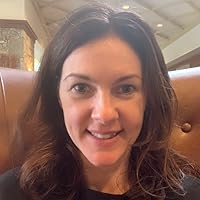
"With powerful stories and practical science, Maya examines how we find purpose after adversity and possibility under uncertainty.” —Adam Grant
"A rare combination of beautiful storytelling, cognitive science, and wholehearted wisdom. —Brené Brown
INSTANT NEW YORK TIMES BESTSELLER
A revelatory exploration of how we can find meaning in the tumult of change, from a renowned cognitive scientist and host of the critically acclaimed podcast A Slight Change of Plans
Life has a way of thwarting our best-laid plans. Out of nowhere, we’re confronting the end of a relationship, an unexpected diagnosis, the loss of a job, or some other twist of fate. In these moments, it can feel like we’re free-falling into the unknown.
As a cognitive scientist, Maya Shankar has spent decades studying the human mind. When an unwanted change in her own life left her reeling, she sought out people who had navigated major disruptions. In The Other Side of Change, Shankar tells their riveting, singular stories and weaves in scientific insights to illuminate universal lessons hidden within them. The result is a rich portrait of our complex reactions to change and a deep well of wisdom we can draw from during these experiences.
Shankar invites us to rethink our relationship with change altogether. When a big change happens to us, it can lead to profound change within us. The unique stresses and demands of being thrust into a new reality can lead us to uncover new abilities, perspectives, and values, transforming us in extraordinary ways. What if we saw moments of upheaval as an opportunity to reimagine who we can be, rather than as something to just endure? What potential could we unlock within ourselves?
Whether you're processing a past change, grappling with a present one, or bracing for a future one, this book is a wise and thought-provoking companion to help you discover who you can become on the other side of change.
This book is about what happens when life goes off script. Loss, illness, prison, exile. The moments that divide life into before and after.
I made a mistake with this book by going straight to the appendix to get an overview. It summarises each chapter and lists the tools, and nothing there looked particularly new. So I assumed this would be just another “wellbeing” book. If you’ve read a few books on mental health or psychological wellbeing, you’ll recognise most of the concepts here.
But once I actually read the chapters, I realised that’s not what this book is doing. Shanker doesn’t present ideas or give you strategies in an instructional way. She embeds them in powerful (vivid and deeply moving) real-life stories, the kind that stay with you. You might not remember every tool, but you’ll remember the stories.
One of my favourite lines, which I think sums up the main message, is:
When we’re feeling daunted at the outset of a change, there is comfort in knowing that the person who will undergo the full experience will be different from who we are in this very moment.
This book doesn’t tell you how to change. It gives you the tools, the courage and the comfort for when unexpected change happens.
Thank you to Riverhead Books and NetGalley for the ARC.
I loved this book. The book ends with a set of strategies, grounded in psychological research, that we can all use to navigate change. But the strength of the book is how Maya weaves those themes through the journeys of the people she profiles. She has thought deeply about how we experience the unexpected in our lives, and her insight, compassion, and wisdom shine through in every story that she tells -- like sitting down with a gentle and trusted friend. The core of the book is her belief that in navigating change, we face challenges and obstacles we could not have imagined but also tap inner reserves and develop capabilities we didn't know we had. At the end of the book, she shares her own story which is as touching as all of the others she tells. I'd strongly recommend this book not only to anyone navigating a change in their own lives (which at some point is all of us) -- but to anyone who appreciates a book that is honest and true.
Not a self help book but a reflect and grow book. I loved every word of it and every lesson and story! Looking forward to the amazing ways I will continue to grow and change as my life continuously evolves. Fantastic read!
Thank you to NetGalley for the advanced ebook of this text!
I really enjoyed this book, and I truly wish I could have had it 10-15 years ago, heck even 20 years ago, when I was going through some difficult life changes. The kind where you question if your life is going in the direction you thought it would, that kind of thing.
The book offers insight into several real individuals who have faced obstacles, fallen into common mental traps related to them, and come out on the other side changed. The book offers a glimpse into what helped those individuals find their way, mentally.
This isn’t a “how to fix your life with these easy tips!” kind of read; the advice is difficult but fruitful. It won’t make your divorce seem like a gift or the death of a parent like a meaningful tradition. Life is still full of traumatic, life-altering events, but the text does offer really good advice for how to view these events in new ways.
The best part? There’s a kind of tool kit/survival resource at the end of the book. This would have been PHENOMENAL when I needed it.
I only rated a 4 instead of a 5 because I knew much of the content already. It is a personal rating, not a reflection in the content itself (which is superb).
So interesting to think that we aren’t the same people at the beginning of change than we are at the end. I picked this up from the library because ads for this book were relentless on one of the podcasts that I listen to. I’m glad I did!
What a strange, uncomfortable experience this audiobook was. It feels written by a freshman-year journalism student and read by a Kardashian or one of their friends (grown women who still sound like high school girls trying to fit in). Shankar interviewed people with extraordinary, compelling stories, yet conveyed them with such lifeless reporting the impact was completely lost—their experiences bafflingly truncated to provide insight that doesn’t translate effectively. Everything feels borrowed, even her own story of a chronic hand injury which left her unable to continue a violin career begun in childhood. This, too, was shared with such flat affect, I began to question the validity of any of it. Throw in a few borrowed psychology and cognitive science concepts and their definitions, and the point and purpose were completely lost. I was left with the very strange feeling of having been told real-world adult stories by a sheltered kid who could gather facts and put them on paper with technical accuracy but did not yet have the life experience to inhabit them and understand where in the stories their wisdom was earned and why—which just makes this all the more strange because, having looked her up, I was shocked to learn Shankar is in her 40s and has led a quite extraordinary life herself: a child prodigy who attended Juilliard, Yale, and Oxford. This book very much felt neat and tidy like that. Sometimes, though, all the smarts and privilege in the world are their own barriers to deeply connecting to another’s experience, even, unfortunately, our own.
This has been one of the toughest years of my life and were not even halfway through 2026 yet! I've personally experienced change in many ways and it can be very isolating at times. Change is inevitable, but when it happens to you it can fully take over your mind and body. Reading this book is comforting in the way that everyone has gone through something. You are less alone than you may think. Change also isn't always bad. Sometimes you experience change in life to better yourself.
I got to hear Maya talk at the 2026 Tulane Book Festival, and it was truly beautiful. She has a way of making you feel seen. Hearing her story along with many others makes change seem less scary. You can tell she cares about people and their stories. Although it may be hard, change happens to everyone; you are not alone!
Maya Shankar has made a change of plans on several occasions. Haven't we all?
What we expect of life sometimes doesn't go the way we planned. How do we navigate those changes with grace and curiosity? This book shares several examples of people who've undergone intense change and found a way to adapt, flourish and grow.
You can expect a stroke, a prison sentence, hope, grief, cognitive theories and new directions.
An excellent and easy read. The author does a great job of storytelling and really brings each experience to life in a relatable way (connecting it back to science as well).
I enjoyed reading about how people navigated life changing events, their emotions, challenges, and how they coped and rebuilt. It’s a good reminder that life doesn’t always go as planned, you’re not alone, and it’s possible to start over.
This one was hard for me to rate—I'd really give it 3.5 stars, but I rounded up to 4. Shankar does a beautiful job weaving together real stories of resilience with her research, and a lot of those stories will stick with me. Personally, though, I wish there had been more about the broader behavioral science and how it applies to whole populations. Still, it was an easy read and I’d definitely recommend it, especially since we’re all trying to navigate a world that feels constantly uncertain and ever‑changing.
Listened to this on audiobook and immediately purchased a hard copy for myself before even finishing. This book altered my brain chemistry in the best way! Highly recommend to anyone going through a big life change or time of uncertainty. I found all of Maya’s stories captivating and heartwarming.
I enjoyed the first couple of chapters, but subsequent ones leaned heavily on examples of debilitating anxiety, which personally felt less accessible for me.
I appreciated the overall theme of the book: "What if we saw the hardest moments in our lives as a chance to reimagine ourselves, rather than as something to just endure? What potential could change unlock within us?" (page xvi)
My biggest takeaway: "I'm slowly learning to attach my identity not just to specific pursuits, but to the underlying features of those pursuits that make me light up—in other words, to define myself not simply by what I do but by why I do it. It's a way to give myself a softer landing the next time my 'what' is put at risk; my 'why' will still be there, and it can help steer me toward my next chapter" (29-30).
Dr. Maya Shankar’s The Other Side of Change is an insightful and deeply relatable exploration of how life’s unexpected challenges shape who we become. Through powerful stories and research, Shankar highlights a universal truth: every person experiences difficult moments and periods of change. What makes this book so impactful is the way she reframes those moments—not as setbacks, but as opportunities for growth.
One of the most meaningful takeaways from the book is the reminder that change is something everyone experiences. Whether the changes come from loss, career shifts, personal struggles, or unexpected life events, Shankar shows that these moments can lead to resilience, self-discovery, and new possibilities. The stories she shares demonstrate that while change can be uncomfortable and even painful, it often leads to lessons that shape stronger, more adaptable individuals.
Dr. Shankar’s approach is both compassionate and practical. She blends real-life stories with behavioral science, helping readers understand not only why change is difficult but also how people can navigate it more effectively. Her perspective encourages readers to reflect on their own experiences and see the value in moments that may once have felt overwhelming.
Overall, The Other Side of Change is an inspiring and thought-provoking book. It reminds readers that change is not something to fear, but something that connects us all and ultimately helps us grow. Dr. Maya Shankar provides a hopeful message: even in the hardest transitions, there are lessons and opportunities waiting on the other side.
People's stories serve as allegories with bits of advice and science mixed in for coping with change. While the stories tend toward the extreme, it's clear how they scale and can be applied to many types of changes. Told conversationally and narrated/read by the author herself, it's a quick, easy read/listen. I found myself taking notes, both of reminders I could look back on and topics to return to for checking in and reassessing as I go through life's changes.
I used to really look sideways at self-help books. It seemed they all offered lofty promises that they couldn't deliver on, from cure-alls to get-rich-quick schemes. But "The Other Side of Change" falls within the category of like... good, scientifically based, just some stuff to consider and work on kind of self-help. A therapist recommended this one to me and it's the third or so such rec that actually hit right and, y'know, helped.
This still isn't my genre of choice and it wasn't anything that totally blew me away. That's honestly where the 4 out of 5 stars comes in; it's a great book but not "5 stars amazing." That said, I'd recommend this broadly.
A great find, standing out for effectively walking the reader through specific cases, and also using the subjects' own words to convey their experiences.
Even better, this flows from one psychological concept to the next smoothly, citing the ideas and the researchers behind it, and tying back to previous case studies just enough to solidify relevance. This lends credibility to the work and the interpretations, and also afford the reader easy opportunity to explore further.
The ample Appendix supports looking further as well. However, the book moves into a long series of 'research shows' statements, without citing specific studies. Which brings to mind that not all research is of the same quality, and that too often 'conclusions' in papers do not in fact logically follow from the study design or the results reported.
So read with a bit of critical thinking, accept and use what works. Which is in fact the author's approach, presenting the concepts as 'tools' to use as needed.
This is a powerful resource for evaluating one's own life changes, and helpful for considering future choices too.
Plan to reread occasionally and reference this to others. This may be a powerful tool to connect with friends and family in new, meaningful ways. That is, the vocabulary, this lexicon of concepts, this way of thinking, makes asking meaningful questions SO much easier.
This is a collection of new and exciting thoughts to understand human behavior; it is relevant, articulate, accessible.
This is also hard to read, and most people will likely take some time to work through the stories and discussion. Also, it is well-referenced, with dozens of research efforts peppered throughout and cited at the end, allowing readers to delve further into any theories that resonate or challenge them.
IMO reading this book will allow crafting a better life experience, through a menu of approaches offering choices for how people approach and shape their own experiences. It is empowering, in the present, as well as for and in the future.
Wow this book! I listened to it at the gym and each chapter I had all the feels. I would be very close to tears especially the chapter on infertility. The heartbreak and tragedies that people went through was hard to listen to and yet at the end of each chapter I saw how the person had grown. It was a beautiful read with sadness and joy. I highly recommend it.
4.5 stars rounded up ⭐️⭐️⭐️⭐️⭐️ Really enjoyed listening to this book. Shankar does an excellent job of emphasizing the tools she offers to navigate change with relevant anecdotes. Listening to this book felt like receiving advice from a friend. Again, I wish I could’ve listened to this back in 2022 (but it didn’t exist! lol), but 2026 me definitely benefitted from taking the time to listen to the book now. Some chapters resonated with me more than others, but that is the beauty of this book. It has something for everyone.
I didn't love the audio - but I loved the message of this book. Who doesn't need powerful stories of people making the best of the unexpected? Great read.
Maya Shankar’s book was made available on January 13, 2026, and I read it when it was hot off the press. I have known Maya since she was in her mother’s womb and have seen her make giant strides at every phase of her life. At the age of six, Maya who was a phenomenal violinist, was admitted to the Juilliard School of Music’s pre-college program where she was a private student of Itzhak Perlman. After a B.A. from Yale, Maya did her Ph.D in Cognitive Psychology at Oxford as a Rhodes Scholar, and topped it off with a postdoctoral fellowship in Cognitive Neuroscience from Stanford. She worked as a senior advisor at the White House during President Obama’s tenure, was the first Behavioral Science Advisor to the United Nations under Ban Ki-Moon, and has many other distinctions to her name. This book is yet another quantum leap in her path to fame and recognition.
When Maya was in High School, her dream of becoming a concert violinist was punctured because a hand injury made it impossible for her to play the violin ever again. The violin was her life, her identity. She loved connecting emotionally with people through violin and to suddenly give it up was devastating. But Maya gradually bounced back from this major letdown. Being a creative, emotional person, her career as a cognitive scientist helped her establish that connection. A few years later Maya suffered another major disillusionment. She and her husband wanted so much to become parents but couldn’t. This led to so much isolation, sorrow, and a sense that her life was spiraling out of control that she began to reach out to others who suffered major upheavals to see how they overcame their challenges. By leveraging her skills as an interviewer, she surveyed people, including many famous personalities, for her podcast titled “A Slight Change of Plans” which she began in 2021. There was so much she learned from those interviews; “there were patterns emerging across their stories”. She discovered people were using shared strategies to face these challenges. “Those of us going through changes are far more connected than we thought. We can learn from one another’s stories even if they don’t look like our own,” writes Maya. The result of her findings from the interviews is this book which features stories of people who have overcome insurmountable changes that have led to a positive transformation. The stories are heart-wrenching but have constructive influence.
Here are a few stories from the book. Olivia Lewis, a senior at Virginia Commonwealth University suffered a massive brain-stem stroke which left her in a condition called locked-in syndrome. Her chances of survival were dubious but after several months in the hospital and an extensive period of rehabilitation, she made good progress. At first she was in denial about her condition, optimistic that she will eventually fully recover. Denial is a common reaction to a sea change. Right from a young age, other people’s opinions of her mattered a great deal to Olivia and this consequently stripped her of her self-assurance. The stroke caused her embarrassment because her condition made her drool. How will people react? What will they think of her? But she learned to reshape her identity by relying less on what others thought of her and by learning to accept that she may not recover fully. This psychological shift helped in her recovery. The positive outcome of her stroke was that it helped her reach her self-assured place faster than she would have otherwise.
Dwayne Betts, a high school student, was charged with carjacking and robbery and ended up in prison. He was ashamed and angry that he destroyed his life by his stupidity. He had a preconceived notion of prisoners and thought he had no future until he met Bilal, a fellow inmate, who looked and acted different from the others. He was always well-dressed, carried himself well, took other young prisoners under his wing and showed an “honorable willingness to bat for someone he didn’t even know.” Bilal made Dwayne realize that you don’t have to look and behave like the stereotypical poisoner - it is possible to be different and have a future. He began reading books in prison including books on poetry. Dwayne was impacted by a particular poem that he read which told the story of a young inmate who had been raped. So he began writing poems about his experiences in prison to share the horrors that prisoners endured. Five years later he was moved to a lower security prison and decided to submit his poems for publication. After many rejections, one of his poems got published in a literary magazine, making him a published writer. Following his release, Dwayne earned a B.A. , an M.F.A. in creative writing, and even got a law degree from Yale. He published his memoir in 2009 and President Obama appointed him to a task force on restoring juvenile justice and preventing delinquency. Betts created a non-profit called Freedom Reads in 2020 for starting small libraries in prison, and was the recipient of a MacArthur Fellowship in 2021. His experiences in prison turned him into a poet and earned him other glories.
Sometimes setting smaller goals for yourself after a major change can reap meaningful results as in the case of Christine Ha who became blind at the age of 24 due to an autoimmune disease. Her dream of becoming an ambitious cook was shattered then, but instead of letting it get to her, she pursued her ambition by started with small tasks such as cutting a slice of orange or making scrambled eggs. Concentrating on little things helped her achieve her aspirations and gain confidence. In due time she became a dexterous cook, wrote blogs about her experience, and went on to win season 3 of Master Chef!
ABC news correspondent, Matt Gutman, was suspended for reporting incorrect information relating to Kobe Bryant’s helicopter crash. After this incident, he began scouring the web for negative comments about himself, and was prone to severe panic attacks and self-denigration. He kept ruminating on his inaccurate reporting which prevented him from getting out of the rut. But through therapy, Matt was eventually able to distance himself from his negative thoughts by “zooming out” and seeking other points of view to approach his problem constructively. “New perspectives…help us forge new pathways,” writes Shankar.
Ingrid Rojas Contreras worked as a freelance Spanish-English translator for magazines and newspapers. When she lived in Colombia as a young girl, her mother told her stories about her family’s magical powers; they could heal people with herbs and medicines, speak to spirits, and predict the future. But Ingrid was ridiculed whenever she narrated some of those stories to her friends so her mother ordered her never to share her family stories with anyone. She tried writing a memoir about her family heritage in her freshman writing class but she was accused of fabricating stories. She never tried after that. One day she met with an accident while riding her bike which caused her to lose her memory; she had retrograde amnesia where she lost existing memories but could form new ones. During her recovery period she discovered that flashes of memory from the past would come to her occasionally. But she never let anyone know that she was slowly regaining her lost memory. Snapshots of her family history were scrolling past her mind’s eye, leaving her with a sense of wonder and nostalgia. She wanted so much to talk about her family when previously she was ashamed and avoided recounting those incidents. So she continued writing the memoir she started in her freshman year which was published in 2022 as “The Man Who Could Move Clouds”, and was a finalist for the National Book Award and the Pulitzer Prize. Her amnesia made her realize that her shame was just a block in her identity and gave her a new way of seeing things.
Maryann Gray accidentally killed a little boy when he darted in front of her car from behind a bush. She was plagued by anxiety, guilt, fear, and remorse after that incident. Although Maryann knew she was not morally responsible for the child’d death, she lived in constant fear that she might cause misfortune. She experienced dysfunctional relationships, refrained from having children fearing they may not be safe in her care, and she didn’t allow herself any enjoyment. Years later she read about an octogenarian who had lost control of his car in a farmers market and had killed ten and injured more than sixty. The incident was all over the news with people blaming the old gentleman. Maryann wrote an article to NPR about the crash stating that while she felt sorry for all those who lost their lives, she also felt empathy for Weller and forgave because she underwent a similar experience years ago. Her article drew a lot of support from everyone, contrary to her expectations. “All Things Considered” aired her piece and she received a lot of sympathy and kindness from the public who commended her for her bravery. This prompter Maryann to create a website, “Accidental Impacts” later renamed “Hyacinth Fellowship”, which contains her story and PTSD resources for accidental killers like herself all over the world. Change can present opportunities for us to refashion our lives and really make a difference in the lives of others, as in Maryann’s case.
Shankar concludes her narrative with this truth, “Change can transform us in unexpected ways. We just don’t know till we get there.”
The book is a great boon to anyone navigating a drastic change in their lives. The narrative is free-flowing; it is well-researched and is a good balance of emotion, observation, and science. The stories are touching, the scientific evidence is robust. The Appendix offers a Change Survival Kit which highlights the main concepts from each chapter with scientific terminology explained and what one can do in each instance. Exhaustive notes and a meticulously curated index are additional useful features of the book.
I appreciated the nuance of each story and the connections presented between humanity and science, specifically how it can and often times must go hand in hand
I loved this book and found it so helpful, I will be using some of the techniques Maya Shankar outlines in this book. Chapter 3 on rumination is absolutely the best thing I've read on the subject in terms of how to confront it. 10/10 recommend.
Author Maya Shankar is a cognitive scientist and podcaster, as well as a great writer.
This book is easy to read and contains some very practical guidance for anyone who is struggling with unexpected (and what can feel like unjust) change, particularly change resulting from loss of health, loss of a loved one, or even loss of career or position.
The main theme of the book is that while tough, seemingly unfair change can be perceived as a real negative, it can also be the catalyst for very meaningful change in our lives if we can reframe it and find purpose in it. Shankar writes: "Among the most valuable lessons I've learned from the people I've spoken with over the years is to stay curious when life makes other plans. Change can transform us in unexpected ways. We simply don't know how until we get there."
This book gives you lots to think about, which to me is always one of the hallmarks of great literature, whether fiction or nonfiction.
The conclusions at the end of each chapter were incredibly insightful and helpful. For me, the reason for 3 stars is that the stories, while real and a path for the conclusions, made the book heavy and difficult to pick up after a long day. Some times you want to read something insightful, but some of the stories were very sad and I found myself wanting to get through the chapters quickly just to get to the conclusions.
We always see ourselves in the books we read, but this was ridiculous.
The "Mind Spirals" chapter specifically. It focuses on a young, healthy guy (film buff with a thing for Woody Allen) who's struck with sudden hearing issues. He panics, sees specialists, worries about brain tumors. Then, after the MRI and the clean bills of health, he goes to the movies and starts to laugh. Over time, he begins settling into a new normal. The more he focuses on the external world, the softer the internal ringing in his head seems to sound.
"Its just my version of quiet now," he says.
There's no closure or clean fix. Adaptation, he learns, is a form of acceptance.
But what makes this book special is that it isnt about perspective shifts. It isn't telling you to change your mind and you change your life, or some other empty platitude. That hearing story, like almost every testimonial in the book, finds its resolution in connection, not clarity. Looking outward, to community or comedy or new careers -- whatever -- is the path forward, almost every time. The pattern seems to be: open up to people. Trust them with your secrets. Be vulnerable to be healed
This book also covers old, toxic ways that I, like so many overthinkers, have intellectualized hard transitions in the past -- ruminating as if to "outsmart" the problem; "No one else is thinking about this topic in this way!" And that's instructive too: a reminder of what to avoid at all cost.
The book is a loud reminder that change and loss are both constant and universal. And the more we try to control, the less room we give ourselves to grow.
Maybe closure is a myth but acceptance, intention and connection are not, and don't they lead to the same place?
This is a profound book that will linger with me long after finishing. Beyond its narrative elegance, it offers a practical compass for navigating the inevitable change each and every one of us will face in life.
At one point in my career, it seemed the corporate World put a whole lot of effort into training directed toward 'embracing change'. I have to admit, I wasn't always receptive to the movement, partially because I felt like we were often 'embracing' changes that were made simply for the sake of change! That experience drove me to pick out this audiobook. This short little narrative by cognitive scientist Maya Shankar is filled with little nuggets of wisdom and learning, using thought provoking anecdotal 'real life' examples. Shankar focuses less on 'embracing change' and more on shifting our perceptions during those times (and we've all faced them!) when the World deals us cards from that we not only didn't anticipate but had no idea they were even in the deck. I have to say, this time, I think I understood the message. Shankar doesn't address how to change but, rather, demonstrates a variety of tools while you make the choice. 3.75/5*