

What do you think?

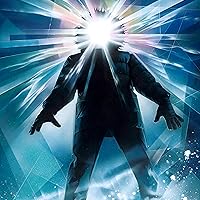
The Thing
It fell from the sky and lay buried in ice for 100,000 years.
Soon it will be free...
TWELVE MEN
Trapped in the Antarctic.
ELEVEN
Discover the intruder.
TEN
Battle the alien force.
NINE
Agonise for the answer.
EIGHT
Desperate to be spared.
SEVEN
Consumed one by one.
SIX...FIVE...FOUR...THREE...
They will all die.
Unless something, anything stops...
THE THING
-----------------------------
Novelization by American author Alan Dean Foster of screenplay to the 1982 Hollywood film The Thing directed by John Carpenter and written by Bill Lancaster, based on the short story Who Goes There? by John W. Campbell, Jr.
Soon it will be free...
TWELVE MEN
Trapped in the Antarctic.
ELEVEN
Discover the intruder.
TEN
Battle the alien force.
NINE
Agonise for the answer.
EIGHT
Desperate to be spared.
SEVEN
Consumed one by one.
SIX...FIVE...FOUR...THREE...
They will all die.
Unless something, anything stops...
THE THING
-----------------------------
Novelization by American author Alan Dean Foster of screenplay to the 1982 Hollywood film The Thing directed by John Carpenter and written by Bill Lancaster, based on the short story Who Goes There? by John W. Campbell, Jr.
196 pages, Mass Market Paperback
First published February 1, 1982
About the author
Alan Dean Foster
513 books2,089 followersBestselling science fiction writer Alan Dean Foster was born in New York City in 1946, but raised mainly in California. He received a B.A. in political science from UCLA in 1968, and a M.F.A. in 1969. Foster lives in Arizona with his wife, but he enjoys traveling because it gives him opportunities to meet new people and explore new places and cultures. This interest is carried over to his writing, but with a twist: the new places encountered in his books are likely to be on another planet, and the people may belong to an alien race.
Foster began his career as an author when a letter he sent to Arkham Collection was purchased by the editor and published in the magazine in 1968. His first novel, The Tar-Aiym Krang, introduced the Humanx Commonwealth, a galactic alliance between humans and an insectlike race called Thranx. Several other novels, including the Icerigger trilogy, are also set in the world of the Commonwealth. The Tar-Aiym Krang also marked the first appearance of Flinx, a young man with paranormal abilities, who reappears in other books, including Orphan Star, For Love of Mother-Not, and Flinx in Flux.
Foster has also written The Damned series and the Spellsinger series, which includes The Hour of the Gate, The Moment of the Magician, The Paths of the Perambulator, and Son of Spellsinger, among others. Other books include novelizations of science fiction movies and television shows such as Star Trek, The Black Hole, Starman, Star Wars, and the Alien movies. Splinter of the Mind's Eye, a bestselling novel based on the Star Wars movies, received the Galaxy Award in 1979. The book Cyber Way won the Southwest Book Award for Fiction in 1990. His novella Our Lady of the Machine won him the UPC Award (Spain) in 1993. He also won the Ignotus Award (Spain) in 1994 and the Stannik Award (Russia) in 2000.
Foster began his career as an author when a letter he sent to Arkham Collection was purchased by the editor and published in the magazine in 1968. His first novel, The Tar-Aiym Krang, introduced the Humanx Commonwealth, a galactic alliance between humans and an insectlike race called Thranx. Several other novels, including the Icerigger trilogy, are also set in the world of the Commonwealth. The Tar-Aiym Krang also marked the first appearance of Flinx, a young man with paranormal abilities, who reappears in other books, including Orphan Star, For Love of Mother-Not, and Flinx in Flux.
Foster has also written The Damned series and the Spellsinger series, which includes The Hour of the Gate, The Moment of the Magician, The Paths of the Perambulator, and Son of Spellsinger, among others. Other books include novelizations of science fiction movies and television shows such as Star Trek, The Black Hole, Starman, Star Wars, and the Alien movies. Splinter of the Mind's Eye, a bestselling novel based on the Star Wars movies, received the Galaxy Award in 1979. The book Cyber Way won the Southwest Book Award for Fiction in 1990. His novella Our Lady of the Machine won him the UPC Award (Spain) in 1993. He also won the Ignotus Award (Spain) in 1994 and the Stannik Award (Russia) in 2000.
Ratings & Reviews
Friends & Following
Create a free account to discover what your friends think of this book!
Community Reviews
Displaying 1 - 30 of 118 reviews

September 2, 2021
The Thing is one of my favorite film novelizations by Foster. The original story was published in 1938, and there was a very popular film version in 1951. This book is based on the John Carpenter version, but curiously was published several months prior to the release of the film in 1982. His novel is based on a very early draft of the script, and there are several differences, and he also added a lot of character background and detail in order to extend the story to book length. I felt that he tried to incorporate John W. Campbell's original story more than either of the films did. There were a large number of writers involved in the script for the film Carpenter made, but Foster did a good job of capturing Carpenter's vision and incorporating Campbell's original feel. Put on a sweater and grab a cup of hot chocolate...

July 20, 2024
The 1980s version of the thing that this knowledge is based on is one of my favorite movies of all time. So I thought it would be great to experience it in this new way. I find knowledge of books to be a good way to get in the characters heads little bit more thoroughly than then you can get in the movies. It’s one of the many benefits books have over movies.
Unfortunately, there was a little to be added in that regard. The last part was a drawn out, long-winded version of the movie with Fortas page account given to an important details.
I did find the extra spent on discussing the signs and functionality of the thing to be interesting was enough to save this book.
Unfortunately, there was a little to be added in that regard. The last part was a drawn out, long-winded version of the movie with Fortas page account given to an important details.
I did find the extra spent on discussing the signs and functionality of the thing to be interesting was enough to save this book.
January 3, 2013
My little stint of trying out novelizations comes to an end with The Thing, a treatment of my favorite movie of all time.
First, let's clear up the history behind the story.
In 1938, Joseph W. Campbell Jr. wrote a novella titled "Who Goes There?" about a shape-shifting organism infiltrating an Antarctic Station. This is the original source material for not only John Carpenter's The Thing but also Howard Hawks' The Thing from Another World. It is widely regarded as the first story of its kind, from which stories like Alien and Predator took inspiration.
I've read this story and don't care for it. Like all of his stories, Campbell concocts a brilliant premise but then squanders it with poor writing, too many characters and sloppy plotting.
That is not this book. This book is a novelization of the screenplay for John Carpenter's movie (written by Bill Lancaster).
So it's a novelization of an an adaptation of an original short book.
Got it?
Onto the review...
What stands out most about Allan Dean Foster's novelization is how different it is from the movie.
I'd say about 95% of the plot points are identical but most of the scenes and different versions of what you see in the movie. Virtually all of the dialogue is different, with some familiar lines interspersed throughout.
I have to assume that this book was based on an earlier draft of the screenplay and all of the eventual changes for the movie are improvements.
The movie's narrative is a streamlined version of this book.
Mainly this is due to the dialogue: where the book will take five sentences, the movie would use one. This is not only a more economical way of storytelling, but more inline with the straight-forward/tough-guy attitude of the story.
Also, there are a few more monster scenes in this version. Interesting how they were cut from the movie: while more sensational, they also hurt the claustrophobia and paranoia of the story.
Despite being an inferior version of the movie, I actually liked the book being different. This way, it wasn't a predictable read.
Also, some of the extra information is not bad to have: we get more insight into many of the characters; more of an idea of what it's like to live in the antarctic; and a more detailed explanation for how the Thing's biochemistry works.
On the last point: the book makes it clear that you do know if you are a Thing. It also makes the case for being infected and assimilated by the Thing erases your individuality.
But I still must say, much of this exposition tends to go on and on.
That's the same about most of the dialogue. It's hard seeing these familiar characters blab so much.
It even hurts characterization. Macready suffers the most with his whining about flying the chopper in the high winds. Not to mention his relationship with a blow up doll that basically turns one of my childhood heroes into a skeevy pervert.
Even in this less perfected form, The Thing is still one of my favorite stories, in any version.
The book is a fast and easy read. While it can't quite replicate the horror of the movie, it does get into the sense of despair against this monster.
And of course, the mysterious ending is still there, once again with more dialogue than is necessary.
First, let's clear up the history behind the story.
In 1938, Joseph W. Campbell Jr. wrote a novella titled "Who Goes There?" about a shape-shifting organism infiltrating an Antarctic Station. This is the original source material for not only John Carpenter's The Thing but also Howard Hawks' The Thing from Another World. It is widely regarded as the first story of its kind, from which stories like Alien and Predator took inspiration.
I've read this story and don't care for it. Like all of his stories, Campbell concocts a brilliant premise but then squanders it with poor writing, too many characters and sloppy plotting.
That is not this book. This book is a novelization of the screenplay for John Carpenter's movie (written by Bill Lancaster).
So it's a novelization of an an adaptation of an original short book.
Got it?
Onto the review...
What stands out most about Allan Dean Foster's novelization is how different it is from the movie.
I'd say about 95% of the plot points are identical but most of the scenes and different versions of what you see in the movie. Virtually all of the dialogue is different, with some familiar lines interspersed throughout.
I have to assume that this book was based on an earlier draft of the screenplay and all of the eventual changes for the movie are improvements.
The movie's narrative is a streamlined version of this book.
Mainly this is due to the dialogue: where the book will take five sentences, the movie would use one. This is not only a more economical way of storytelling, but more inline with the straight-forward/tough-guy attitude of the story.
Also, there are a few more monster scenes in this version. Interesting how they were cut from the movie: while more sensational, they also hurt the claustrophobia and paranoia of the story.
Despite being an inferior version of the movie, I actually liked the book being different. This way, it wasn't a predictable read.
Also, some of the extra information is not bad to have: we get more insight into many of the characters; more of an idea of what it's like to live in the antarctic; and a more detailed explanation for how the Thing's biochemistry works.
On the last point: the book makes it clear that you do know if you are a Thing. It also makes the case for being infected and assimilated by the Thing erases your individuality.
But I still must say, much of this exposition tends to go on and on.
That's the same about most of the dialogue. It's hard seeing these familiar characters blab so much.
It even hurts characterization. Macready suffers the most with his whining about flying the chopper in the high winds. Not to mention his relationship with a blow up doll that basically turns one of my childhood heroes into a skeevy pervert.
Even in this less perfected form, The Thing is still one of my favorite stories, in any version.
The book is a fast and easy read. While it can't quite replicate the horror of the movie, it does get into the sense of despair against this monster.
And of course, the mysterious ending is still there, once again with more dialogue than is necessary.

April 16, 2024
Well, I really enjoyed it. The lively pace of the narrative from start to finish. It's a very good scientific horror, where the fan assumption is thoroughly explained, with excellent atmosphere building, almost a detective-like element of who the "killer" in the room is. I got a lot of pleasure from it. The only Thing: I wasn't particularly scared, despite the excellent descriptions of the creature. Secondly, the relationships between the characters, their interactions, their selfishness in the situation. It is all very much resembles the behavior of teenagers at a school camp rather than adult men, workers at a camp in Antarctica. Otherwise - sheer delight!

September 18, 2017
The Thing by Alan Dean Foster is a novelization of the 1982 classic by John Carpenter. Based on the novella 'Who Goes There'(1938) by John. W. Campbell, the story involves an American research station tucked away in the solitary landscape of the Antarctic. The isolated crew is exposed to an alien creature which has been buried in the ice for centuries, an organism that digests and replicates its victims, and then hides behind a perfect imitation of its prey. Without a distinct corporeal form, the alien emerges only when threatened, its appearance announced by a grotesque display of shifting physical transformations. The metamorphoses made spectacular by hideous eruptions of half-formed limbs and mutated organs.'The Thing' is a representation of threats that could destroy civilization. But the story is not about what The Thing symbolizes; rather, it’s about the unrelenting acknowledgment that such a threat exists and, whether its form is psychological or physical, is what humans should be afraid of. The brilliance of the story rests on this psychological terror that is manifested with the fear of the unknown and manages to preserve a lasting place in our memory. The novel is a masterpiece of paranoia and monstrosity. It manages to combine a slow burn of tension and suspicion with bright flashes of inventive violence beneath the surface of which hides disturbing questions about what we truly know of one another and ourselves.
October 31, 2022
**** 4.5 STARS ****
The Thing by Alan Dean Foster is an excellent book. For the most part, it's John Carpenter's The Thing, pretty much verbatim. It does have, however, a nice little snowmobile chase scene, some extended conversations throughout, and an extended ending. It all amounts to very little, except maybe the snowmobile chase, and if anything, harms the pace of the story.
Alan Dean Foster does a good job of telling the story of The Thing. However, much like his novelizations of the Alien trilogy, his writing and style aren't anything special. It's just that he's writing novelizations of great films.
Despite my high grade for this book, I would much rather watch John Carpenter's The Thing, one of the greatest films ever made.
The Thing by Alan Dean Foster is an excellent book. For the most part, it's John Carpenter's The Thing, pretty much verbatim. It does have, however, a nice little snowmobile chase scene, some extended conversations throughout, and an extended ending. It all amounts to very little, except maybe the snowmobile chase, and if anything, harms the pace of the story.
Alan Dean Foster does a good job of telling the story of The Thing. However, much like his novelizations of the Alien trilogy, his writing and style aren't anything special. It's just that he's writing novelizations of great films.
Despite my high grade for this book, I would much rather watch John Carpenter's The Thing, one of the greatest films ever made.

June 8, 2021
Solo para los fans de la película. Es una novelización correcta pero nada más. Había esperado encontrar un poco más de profundidad en los personajes, que se describiera lo que sienten al hallarse en esa situación límite, pero casi diría que se ve mejor en la versión cinematográfica.
ENGLISH:
Only for fans of the movie. It's a good novelization but that’s all. I had hoped to find a little more depth in the characters, describing what they feel when they find themselves in this extreme situation, but I would almost say that it works better in the film version.
ENGLISH:
Only for fans of the movie. It's a good novelization but that’s all. I had hoped to find a little more depth in the characters, describing what they feel when they find themselves in this extreme situation, but I would almost say that it works better in the film version.

April 25, 2025
The Thing by Alan Dean Foster is the novelization of the wildly popular John Carpenter movie by the same name where twelve men are stuck in Antarctica as storms are closing in and an alien metamorph begins to take over the bodies of some of the men. This is an incredible genre blend of survival horror, science fiction, alien monster, haunted house.
The main character, MacCready, one of the helicopter pilots for a research facility in Antarctica, is part of the twelve scientists and support staff that comprise the team of stalwarts. When a dog chased by a neighboring Swedish team makes its way to the facility, the researchers unsuspectingly accept the beast. An alien has infected the dog and very quickly the dog infects the researchers.
This is an iconic 1980s movie with excellent visual effects to rival such movies like an American Werewolf in London. The transformation scenes are jaw dropping inspiration. To show how overwhelming the movie was, when Foster describes the action / gore scenes, I imagined the movie sequences instead of what Foster had written. Never mind that Alan Dean Foster is a knowledgeable science fiction writer with many such Media Tie-in credits, his words were secondary to what actually transpired on-screen.
The main character, MacCready, one of the helicopter pilots for a research facility in Antarctica, is part of the twelve scientists and support staff that comprise the team of stalwarts. When a dog chased by a neighboring Swedish team makes its way to the facility, the researchers unsuspectingly accept the beast. An alien has infected the dog and very quickly the dog infects the researchers.
This is an iconic 1980s movie with excellent visual effects to rival such movies like an American Werewolf in London. The transformation scenes are jaw dropping inspiration. To show how overwhelming the movie was, when Foster describes the action / gore scenes, I imagined the movie sequences instead of what Foster had written. Never mind that Alan Dean Foster is a knowledgeable science fiction writer with many such Media Tie-in credits, his words were secondary to what actually transpired on-screen.
June 29, 2014
A fantastic interpretation of the film, it's main advantage being no budget issues or other filming restraints. Lots of fun, has a few jarring differences too, such as Windows being called Spencer instead, and a few deaths are in a very different order. Highly recommend any fan of the 1982 movie to get a copy of this, and as always there's great writing from Alan Dean Foster who wrote the novelisation of the even more iconic 1979 Alien!

October 17, 2017
Well if you loved the movie, you’ll love the book! Not because they’re spot on, but because they are so different. Sure they’re are a few similarities, but the majority of it is altered so you get two of the same stories. The characters are flushed out more and don’t die in the same ways. The thing appears in different ways and the story is much longer and in greater detail. I loved it! Added to my already strong love of the story “WHO GOES THERE”.

August 2, 2008
The best novelization I've ever read. I thought it was better than the movie, and I "loved" the movie.

August 17, 2019
Okay, let us clear this up from the start: I LOVE THE THING! I own the original The Thing from Another World, all of the comics, and even work prints from Japan on it. I was lucky enough to meet John Carpenter a few years back and totally fanboyed out on him but that is another story. Anyway, back to the review of ADF's treatment of the original Lancaster screenplay. Alan Dean Foster is known for his work on the screenplay adaptations of Alien, Aliens, Alien 3, etc. and the original sequel to Star Wars: A New Hope (known as Splinter of the Mind's Eye) which was written before they found out that Star Wars was going to be box office gold.
AGAIN, back to the review: Certain liberties were taken by Foster in regard to the story as this was all based off an early draft and not the final on-screen work. Some characters have different names (Windows is Sanders) and personalities (MacReady is a skeevy perve, Palmer is a dedicated engineer and not as much of a burn out as portrayed by the awesome David Clennon) and overall the levels of distrust and paranoia that are so much an integral part of the movie are lost on the written page. The pacing, the tone, the scenes, and hell, most of the book is just not what you came to expect from this seminal work of science fiction horror.
The movie is without reproach in my mind (I did not mind the prequel, but it's not The Thing) but the book's changes and view into what could have been should remain in the cold, harsh wastelands of the Antarctic. They say "don't meet your heroes" and in this case, don't read them either ;)
5 stars for the name and the nostalgia, -1 star for ruining my childhood (just kidding)
AGAIN, back to the review: Certain liberties were taken by Foster in regard to the story as this was all based off an early draft and not the final on-screen work. Some characters have different names (Windows is Sanders) and personalities (MacReady is a skeevy perve, Palmer is a dedicated engineer and not as much of a burn out as portrayed by the awesome David Clennon) and overall the levels of distrust and paranoia that are so much an integral part of the movie are lost on the written page. The pacing, the tone, the scenes, and hell, most of the book is just not what you came to expect from this seminal work of science fiction horror.
The movie is without reproach in my mind (I did not mind the prequel, but it's not The Thing) but the book's changes and view into what could have been should remain in the cold, harsh wastelands of the Antarctic. They say "don't meet your heroes" and in this case, don't read them either ;)
5 stars for the name and the nostalgia, -1 star for ruining my childhood (just kidding)
This entire review has been hidden because of spoilers.

April 4, 2015
Better than his novelization of Alien by a long shot. Also since it was adapted from the original script it realizes scenes that never made it into the film for various reasons. Fun read.

April 3, 2023
This novelization was an interesting take on one of my favorite movies. If you like the movie, you'll like this.

February 2, 2026
The Thing is one of my favorite films ever. Ugh, it's so depressing...I love it! Foster's novelization is pretty good, but it's hard to keep up with so many characters. 3.5 rounded up!

January 24, 2024
8/10
Nowelizacja jednego z moich ulubionych filmów.
W większości jest to prawie to samo, co w filmie Johna Carpentera.
Czasem ktoś umrze inaczej, więcej dialogów, więcej backgroundu bohaterów.
Dodatkowa scena pościgu psów i starcie z nimi, którego nie było w filmie - świetne.
Całość powstała na podstawie wstępnego scenariusza, jeszcze zanim nakręcono film, stąd uważny fan filmu dopatrzy się drobnych zmian. Książkę czyta się równie dobrze, jak i ogląda film (polecam przy niej słuchać ścieżki dźwiękowej Ennio Morricone).
Aż mam chęć odświeżyć film (prequel z 2011 też:)
POLECAM!
Nowelizacja jednego z moich ulubionych filmów.
W większości jest to prawie to samo, co w filmie Johna Carpentera.
Czasem ktoś umrze inaczej, więcej dialogów, więcej backgroundu bohaterów.
Dodatkowa scena pościgu psów i starcie z nimi, którego nie było w filmie - świetne.
Całość powstała na podstawie wstępnego scenariusza, jeszcze zanim nakręcono film, stąd uważny fan filmu dopatrzy się drobnych zmian. Książkę czyta się równie dobrze, jak i ogląda film (polecam przy niej słuchać ścieżki dźwiękowej Ennio Morricone).
Aż mam chęć odświeżyć film (prequel z 2011 też:)
POLECAM!

December 2, 2023
Doesn't nearly live up to the film in tension or tone, but I did enjoy the added biographical and vocational details about the members of the expedition. A passable companion piece to the film, but I don't think it would work as a substitute. Overall worth a read if you can find a copy.
February 1, 2025
A pretty direct, albeit safe and a little PG version of the best movie ever made!

May 27, 2020
This is a novelization book though I haven't seen the movie but liked the book instead. Horror-Sci-fi and the story was really good. I loved it...
Bunch of researchers get together themselves in the side of Antarctica where a Norwegian helicopter pursues a sled dog to them. But soon the thing got more intense, all of sudden there's gunshot murder and the researchers at first didn't know what to make out of the incident. After the gunshot incident the story slowly moved on. We see there's some facts going on about those dogs. They out of nowhere experienced something very strange that they didn't believe if it was really happening with them. Station commander Garry, The American helicopter pilot, R.J. MacReady, and Dr. Copper, biologist Blair alongside with Child, Norris they all were yet to face something inexplicable which got no ground or truth about itself. In the middle of nowhere fighting with something unnatural they begun lost their power and struggled to find out the existence or knowledge of this things. Soon they find themselves in the kind of situations when just couldn't believe each other. Assuming always if the other one of their known face doing the event in the fake face of that unknown things? They can't be sure who's behind all of this. That's a total nightmare. They lost their dogs too, when one of them could make sense about what that thing might be that very time most of people of the group didn't believe him. The result was obvious to say, everything started to get out of control. To fight or say to defeat this invisible things they need to work together but not doubt each other. So what's the outcome? Can't say to spoil the fun. But the ending was much for me to read. It was good, too good to not to admire. I liked the last man standing situation of that end or was there any last man standing situation really occurred? As again - loved it...
Bunch of researchers get together themselves in the side of Antarctica where a Norwegian helicopter pursues a sled dog to them. But soon the thing got more intense, all of sudden there's gunshot murder and the researchers at first didn't know what to make out of the incident. After the gunshot incident the story slowly moved on. We see there's some facts going on about those dogs. They out of nowhere experienced something very strange that they didn't believe if it was really happening with them. Station commander Garry, The American helicopter pilot, R.J. MacReady, and Dr. Copper, biologist Blair alongside with Child, Norris they all were yet to face something inexplicable which got no ground or truth about itself. In the middle of nowhere fighting with something unnatural they begun lost their power and struggled to find out the existence or knowledge of this things. Soon they find themselves in the kind of situations when just couldn't believe each other. Assuming always if the other one of their known face doing the event in the fake face of that unknown things? They can't be sure who's behind all of this. That's a total nightmare. They lost their dogs too, when one of them could make sense about what that thing might be that very time most of people of the group didn't believe him. The result was obvious to say, everything started to get out of control. To fight or say to defeat this invisible things they need to work together but not doubt each other. So what's the outcome? Can't say to spoil the fun. But the ending was much for me to read. It was good, too good to not to admire. I liked the last man standing situation of that end or was there any last man standing situation really occurred? As again - loved it...

October 30, 2024
The Thing, but more.
This is basically that tale we all love to re-watch on screen, but with all the bits from the cutting room floor thrown back in for good measure. Thankfully, this doesn't leave an all-time classic feeling bloated in any which way.
And for those fans who know the film by heart, there are some interesting reimaginings to some key moments that make this worth while. Theres a whole new side of MacReady that I didn't know existed.
This is basically that tale we all love to re-watch on screen, but with all the bits from the cutting room floor thrown back in for good measure. Thankfully, this doesn't leave an all-time classic feeling bloated in any which way.
And for those fans who know the film by heart, there are some interesting reimaginings to some key moments that make this worth while. Theres a whole new side of MacReady that I didn't know existed.

September 3, 2021
I read this excellent novelization when the movie came out. The first lines remain with me after all these years:
"The worst desert on Earth never gets hot. It boasts no towering sand dunes like the Sahara, no miles and miles of barren gravel as does the Gobi. The winds that torment this empty land make those that sweep over the Rub al Khali seem like spring breezes."
"The worst desert on Earth never gets hot. It boasts no towering sand dunes like the Sahara, no miles and miles of barren gravel as does the Gobi. The winds that torment this empty land make those that sweep over the Rub al Khali seem like spring breezes."
April 30, 2023
Nice quick read. I liked the isolated setting, it played nicely into the atmosphere. I really enjoyed trying to work out where the Thing was! However, I found that there were a few too many characters for me to keep track of properly.
August 24, 2025
A very bleak view of humanity where the "other" evokes paranoia, distrust and self-interest.
Fighting it is self-destructive.
Yet, The "other " has historically been the marginalized. Rather than fearing or erasing them, isn’t it time we made space for their voices, enriching humanity by making it more inclusive and varied?
Fighting it is self-destructive.
Yet, The "other " has historically been the marginalized. Rather than fearing or erasing them, isn’t it time we made space for their voices, enriching humanity by making it more inclusive and varied?

March 7, 2014
I've been a fan of the 1984 John Carpenter movie 'The Thing' since I was a kid. The movie gave me nightmares at the time but I remember being so impressed and enthralled in the story and the special effects. Even by todays standards they are impressive. This book is based on the movie which in turn was based on John W.Campbell's 'Who Goes There?'
A Norwegian research team in Antarctica find an ancient alien spacecraft frozen in the ice. They thaw it out and soon discover its sole occupant is hostile in the extreme. The alien attacks, kills and absorbs organic life forms then assumes the physical identity of said lifeform. The creature is so convincing at mimicing its victims that it is almost impossible to tell it apart from the original. It isn't long before the Norwegians are dead and the alien attempts to escape Antarctica and find more lifeforms to absorb. The alien arrives at another research station disguised as a husky, this time the station is manned by an American team. Soon the alien attacks again and the Americans are fighting for their survival. Paranoid and unable to trust each other they know that one or more of them are the thing but are forced to work together if they are to prevail.
This book is what I would describe as a 'guilty pleasure' Alan Dean Foster writes entertaining fiction for movie fans but isn't going to win the Nobel Prize for Literature anytime soon. His writing is basic and action packed which is fine. If you liked the movie you will probably enjoy this as a light bit of fluff. Some aspects of the book are different from the movie but not in a huge way. I was slightly disappointed that some of the many questions raised in the movie were't answered but I plan to read 'Who Goes There|' soon which i'm certain is of a much higher standard.
A Norwegian research team in Antarctica find an ancient alien spacecraft frozen in the ice. They thaw it out and soon discover its sole occupant is hostile in the extreme. The alien attacks, kills and absorbs organic life forms then assumes the physical identity of said lifeform. The creature is so convincing at mimicing its victims that it is almost impossible to tell it apart from the original. It isn't long before the Norwegians are dead and the alien attempts to escape Antarctica and find more lifeforms to absorb. The alien arrives at another research station disguised as a husky, this time the station is manned by an American team. Soon the alien attacks again and the Americans are fighting for their survival. Paranoid and unable to trust each other they know that one or more of them are the thing but are forced to work together if they are to prevail.
This book is what I would describe as a 'guilty pleasure' Alan Dean Foster writes entertaining fiction for movie fans but isn't going to win the Nobel Prize for Literature anytime soon. His writing is basic and action packed which is fine. If you liked the movie you will probably enjoy this as a light bit of fluff. Some aspects of the book are different from the movie but not in a huge way. I was slightly disappointed that some of the many questions raised in the movie were't answered but I plan to read 'Who Goes There|' soon which i'm certain is of a much higher standard.

June 9, 2014
The novelization of my favorite film of all time and I really liked it despite the fact that my copy was OCR scanned by a random user on a forum. There were a few typos and some words felt off but overall it was a decent, readable copy. And I really appreciate that some people take the time to digitize old, out-of-print novels like that, so those of us that don't want to drop an unreasonable amount of money on a copy from Amazon can still read it. (Look at the price of the Halloween novelization. Yikes! If there was a Kindle edition I would buy it in a heartbeat, so don't give me any shit.) So a big thank you to those people from me.

November 23, 2020
I enjoyed this novelization of the Thing. It had more backstory for all the characters, which helped explain a little more about what I saw in the movie. It was based on the screenplay, and like others have commented, it might have been an earlier version that had different scenes and plot lines. It was nice to see more fleshed out profiles of Nauls, Palmer and Childs, since they were more one-dimensional in the film. Some of the story was different, but it wasn't worse or better. I'm happy to have read it.
September 21, 2022
Początek jest dosyć nudny, ale potem odejścia od końcowej wersji filmowej są na tyle duże, że zaczyna wciągać, np. wątek Benningsa.
Niestety w tłumaczeniu pojawią się błędy: kalki z angielskiego i zdania, które brzmią bardzo nienaturalnie. Żeby dodać zniewagę do kontuzji, jakby to przełożył polski tłumacz, korekta leży. Literówki, błędy, czasami jakby brakowało słów w zdaniach. Chyba ktoś w podstawówce opuścił lekcję, na której było tłumaczone, że nie z przymiotnikami pisze się razem. Nawet na okładce jest ten błąd! Oj, nie było tetowane.
Niestety w tłumaczeniu pojawią się błędy: kalki z angielskiego i zdania, które brzmią bardzo nienaturalnie. Żeby dodać zniewagę do kontuzji, jakby to przełożył polski tłumacz, korekta leży. Literówki, błędy, czasami jakby brakowało słów w zdaniach. Chyba ktoś w podstawówce opuścił lekcję, na której było tłumaczone, że nie z przymiotnikami pisze się razem. Nawet na okładce jest ten błąd! Oj, nie było tetowane.

December 9, 2020
Loved it!!! The movie is in my top five, so I knew the book was a must own. There are some differences between film and book, but I enjoyed them because it was like having a different version of the story. I also happened to see a real UFO while reading this 😳 lots of action, terrifying, and full of paranoia, this was a lot of fun to read!

April 20, 2013
In my opinion the third best film novelization ever.
July 3, 2013
If you love the movie, you will love the book. Or at least like it.
Displaying 1 - 30 of 118 reviews