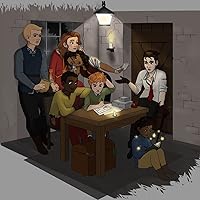
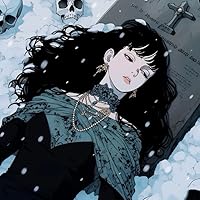
After her boat capsizes, Nine-year old Nefele is washed up on the Floating Forest, an infamous mythical prison-island, holding onto her father’s corpse and with little chance to survive in the wild. It appears miraculous that a herd of native elks guide her to a tree house, filled with all she needs to survive, as well as plenty of books.
As the years pass, Nefele gradually loses her identity to the secrets of the Floating Forest, but the transition is interrupted by the arrival of a second castaway. Nefele must choose between the witch she wishes to be, straight out of a fairytale, and the real, living person she actually is.
Inspired by the mythical prison island Aeaea, The Castaway and the Witch combines coming of age and romance with a dream-like storyline filled with symbolism and insight.Praise for The Castaway and the
"A haunting and thought-provoking twist on the fairytale narrative. Must we be only what others have foretold and experienced? Or can we make our own stories, flawed and complex as we are..."
-- Shauna Lawless, author of the critically acclaimed Gael Song series
"Captivating from the first page, this is a story about growing up and growing wise, a book-love story as harrowing as it is tender. With a touch of Piranesi, an undercurrent of fairy tales, and an ancestry of Greek myth, The Castaway and the Witch is a beautiful, deeply moving book."
-- Natalia Theodoridou, Nebula and World Fantasy Award-winning author of Sour Cherry
"A moving tale of families lost and magic found, an exploration of the power of enchantment and the enchantments of power - with the poetic register of a timeless fable and an island so vivid you'll want to wander its woods (and befriend the animals!)." -- Rose Biggin, author of The Belladonna Invitation
“The Castaway and the Witch is a wild, recursive fable of heartache, transformation, reclamation, and distortion. It casts a magical web that catches you in its unsettling whimsy even as it drags you further into its darker depths.” -- T.L. Bodine, author of Neverest and River of Souls
“As thoughtful as it is beguiling, set in an island that is both prison and promised sanctuary, Papadopoulou's The Castaway and the Witch is one of those stories you'll want to return to again and again. Its true spell is revealed slowly, in layers laden with lost folklore, hidden truths and tragedies—a powerful tale about choosing which parts of the lore to claim as your own, and where to pen a brave new start.” -- Danai Christopoulou, author of Vile Lady Villains
IOANNA PAPADOPOULOU is a Greek fantasy and speculative fiction author based in Scotland. Other than writing, she is passionate about art history and museology.
I received an advance reader copy of this book to read in exchange for an honest review via netgalley and the publishers.
The Castaway and the Witch is a beautifully written novella that is both captivating and haunting from the first page to the last. The story follows a young nine-year-old girl called Nefele, who washes ashore an island with the body of her deceased father. Clinging to him, she begs him to come back to her, then reluctantly accepts he's not going to. She then comes across a herd of elks who take her to a cave with a hidden tree house filled with all she could need to survive alone on the island. She then realises through reading books and journals that she is to be the new witch and this is now her island for she has arrived on the mythical Floating Forest, an infamous mythical-prison island, and she cannot leave. The years go by, and she receives the odd visitor who approaches - none with good intentions. We see Nefele grow up and into her powers and the tug of war she has within herself as she discovers who she is, what she can do, and right from wrong. When Simon washes ashore, Nefele is torn with what to do as emotions ripple through her. I loved the atmosphere of this book, which was both spooky and beautiful in its own ways. The main elk was also captivating to read about, and I loved the interactions between Nefele and him. The book made me think of Circe in some areas, which is my favourite Greek mythology book.
I am so excited that The Castaway and the Witch is finally on Goodreads! I hope you will enjoy this novella and all the different themes I have tried to incorporate into Nefele’s story.
What can you expect from this novella? Well, I am glad you asked!
This is a story that takes the desire for escapism from reality into extreme lengths! What would you do to escape reality? And is the fairytale really that much better?
Very confusing story to say the least but I’m sure I live in a different zip code from those other people who rated this as 5 stars (no judgment, we're all different). I thought on many occasions this was a take on ‘The Cast Away’ with Tom Hanks, until I read about the magic and even then, without the label of Fantasy on the book, I was still skeptical that this girl actually turned into a witch.
The Castaway and the Witch is a deeply perplexing book that defies simple genre categorization. The story opens with a grim and heartbreaking scene: a nine-year-old girl named Nefele floating in a boat with her dead father. The early pages are gut-wrenching as she tries to find comfort from his cold body, and it creates a powerful, somber atmosphere.
As Nefele reaches the shore, she is led by a stag into the forest, a journey that feels straight out of a fable. She survives for three years with animals as her only companions, finding shelter in a treehouse and using the old diaries of previous cast aways as tools to forge herself an identity. This process of self-discovery, shaped by her surroundings, is the most beautiful and compelling part of the story. The books and animals become her teachers, helping her grow into a functioning woman despite her isolation. The following years she simply perfected her new identity and acquired new companions.
The book has been labeled also as horror, but I have to disagree. Aside from the initial tragic scene, there's nothing in this story that fits the genre's definition. The horror seems to be more about a person's descent into a kind of psychological isolation or insanity, which makes me wonder if she's simply living out a delusion, but again, we have the Fantasy label and the strange magic Nefele used while on the island, so I’ll admit it might not be about insanity.
The romance subplot that is introduced later with a man named Simon feels forced and undermines the otherwise beautiful solo journey Nefele has been on. Simon's choice to remain on the island because "it's easier to live in a fairytale" speaks volumes about their connection, and I found myself questioning if their bond was genuine or simply an escape from reality. There was no chemistry, no spark, it was just…forced and while I understand the craving for human connection and touch while in isolation, I doubt it needed to be sexual in this instance (and again, nothing wrong with a sexual connection, but this felt just out of place). Perhaps the story was also too short to fully convey the message here.
Many, many thanks to Ioanna Papadopoulou, Ghost Orchid Press, and NetGalley for the ARC. This is a voluntary review, reflecting solely my personal opinion.
This is a spooky little horror gem. I will not be forgetting this book anytime soon. It is very unique, and I can tell this is a story that sat in Ioanna Papadopoulou mind and soul demanding to be written.
Nefele is a nine year old girl left in a boat with her father's dead body. This is her story of survival, when she's shipwrecked on a floating forested island. A wild elk seems to spy her upon being shipwrecked and takes her under his wing, and then takes her to what appears to be an unoccupied witch's house built to look like a tree.
Nefele spends many years on this floating island with only herself and her animal friends for company. Plus, the old house full of books and research. From reading the contents of the house, she finds out that there were many women before her that stayed in solitary confinement in the exact same house. That each person seems to have been brought to the island for the sole purpose of habituating on it, and learning and practicing witch craft.
I can't wait to see more from Ioanna Papadopoulou, and this book got me in the mood to dip my toe into more horror stories.
Themes/Tropes: 🍁Horror 🍁Survivalist 🍁Ship wrecked 🍁Princess Mononoke Vibes 🍁Evil witch origin story 🍁Wickedness born of isolation 🍁All who cross her path are destroyed 🍁
*Read Through NetGalley* This book hooked me right from the beginning and kept my attention the whole way through. I really enjoyed how it managed to feel both mystical and spooky while still weaving in moments of warmth and heart. Even though it is only a prequel novella and I have not read the main series yet, I never felt lost. Instead, it gave me just enough context and intrigue to make me excited to continue on with the main books. The balance between mystery and clarity worked really well, and I never felt like the story was withholding information just for the sake of it.
The storyline with Simon at the end did feel like it dragged in parts. There were a few sections that I thought could have moved along faster. However, once I reached the final few pages it was clear why those moments were included, and it made more sense in the bigger picture. It did not ruin the pacing of the book for me, but it did slow things down for a little while.
What really stood out were the descriptions. Auntie, in particular, was written in such a vivid and unsettling way. The details were gruesome and gut-wrenching, but they worked perfectly in contrast to the world of lighter magic that the rest of the story seemed to lean on. That balance made the setting much more memorable and layered. The elk was another highlight for me. It was such an unusual but fascinating detail, and it added a richness to the worldbuilding!
Overall, I would give this book 4 stars. It was atmospheric, engaging, and left me curious to see how these characters and ideas develop in the main series. It struck a nice balance between being satisfying on its own and still leaving me wanting more, which is exactly what a prequel should do
"All these were vague thoughts then, muddled together, and made little sense to Nefele. It was years later, when she wrote the experience down, that she clarified them. Such is the nature of memory, always creeping onto the edge of fiction."
Synopsis: We follow nine-year old Nefele, as she is washed up on the Floating Forest, an infamous mythical prison-island, holding onto her father’s corpse and with little chance to survive in the wild. Growing up in complete isolation, with only the island and its wild magic shaping to raise her, she rises to be the sorceress-queen of the island. And the subject of local folklore across the mainland as a witch to be feared... When, years later, a castaway boy washes up on her shores, having only heard of her through whispered tales of terror, Nefele must choose between the witch she wishes to be, straight out of a fairytale, and the real, living person she actually is.
My thoughts: I may have set myself up for failure with this one, as based on the synopsis alone, I was already not expecting a 5-star read. Romance and romantasy are genres I actively avoid, as they never fail to make me cringe out of my skin, and this seemed to lean very closely towards that territory. Still, I was interested enough in everything except said romance, to check this novella out regardless. The author took great inspiration from the character of Circe and her island Aeae as mentioned in the Odyssey. Which happens to be my one of the most interesting characters in Greek mythology, and a bit of a personal obsession of mine ever since I did a huge project on her for my high school graduation. This part of the story (the setting, the atmosphere, the misunderstood-witch-vibes) were impeccable. I loved the descriptions of the island, and the way its magic marries beauty and decay. The story reads much like a fairytale, and has a fittingly simple but clear story and central question at its core. It would’ve been too simple for a full length novel, but works fine within this shorter context. Unfortunately, I did cringe and resent the romance a lot. Mainly because the story hints at so many more interesting topics, but never explores them. There are themes of identity, trauma and mythologization (are you the story people tell about you, and can you change that narrative?), which are touched upon, but abandoned in favour of a bland romance based on proximity between two immature characters… Had i been a romantasy-fan, I might have rated this higher. As a matter of fact, I think I’d recommend it more to fans of that genre who aren’t looking for a romantic fairytale with some darker tones. For me however, it’s stuck at a maximum of 3 stars…
Thanks to Ghost Orchid Press for providing me with an ARC in exchange for an honest review. All opinions are my own.
After falling in love with Ioanna Papadopoulou’s writing in Winter Harvest, I couldn’t wait to read The Castaway and the Witch, and once again, her writing was stunning. Her words are so vivid and lyrical, painting every scene with a quiet, dreamlike beauty that stayed with me.
This novella reads like a timeless fairy tale, atmospheric, emotional, and deeply moving. The relationship between the castaway and the witch is gentle and layered, filled with subtle emotion. Themes of loneliness, healing, and connection are woven throughout with grace and care.
My only wish is that there had been a little more magic. While the setting and tone were enchanting, I hoped for more moments that leaned into the magical side of the story, perhaps more spells, more mystery, more of the witch’s world.
Still, The Castaway and the Witch is a lovely and thoughtful story, written with the same poetic style I admired in Winter Harvest. It’s quiet, tender, and leaves a lasting impression. I truly enjoyed it.
Jesus Christ, where to even start. Spoiler warning for everything that follows, I don't care enough to mark them right now. Scroll down for funny, spoiler-free quotes.
On a conceptual level, The Castaway and the Witch could be super interesting. 9-year-old Nefele washes up on the Floating Forest, an island that moves on its own and is said to have been used to imprison a powerful witch. Completely alone, she stumbles upon a home built into a tree and finds a multitude of diaries written in different languages - diaries written by all the women that washed up before her, adopting the PERSONA (keep that in mind) of the evil, powerful witch to scare off intruders that might harm them. That's cool, right? A child growing up with only elks and ghosts living between pages of diaries for company could make for such an interesting coming-of-age novel(la) in which they try to form their own identity amid the roles they have to play, trying to simultaneously place themselves among the women before them, keep a character from a myth alive, and detangle themselves from the role forced upon them. I think Ioanna Papadopoulou THINKS she wrote exactly that since she herself calls The Castaway and the Witch a "nearly cerebral novella which [she sees] as filled with allegories about morality, and the role of fiction within reality" - even though it's not even a distant third cousin of a supposed "cerebral novella" lol (and what are allegories about "morality", that's a bit broad, no?) To make things worse, the whole concept crumbles since the witch persona isn't actually just a persona - the inhabitants of the island can ACTUALLY wield magic. The magic in this novella is so poorly conceptualized and explained too - it's basically manifest desire and, theoretically, anyone can do magic if they just get rid of all their inhibitions and let themselves be filled by their desire (??), but since the greater population doesn't have access to the diaries, they can't learn how to do all that? And on the other hand, Nefele talks about the island needing someone to put blood and sweat into its soil by working the land or it wouldn't be happy with her, so there DOES seem to be a special bond between the current witch and the island? The rules don't make sense, and the way a very specific passage about Nefele working a spell "to end it all" is so utterly confusing and disjointed that I couldn't tell you what was going on at all. Plus, how this spell supposedly worked is completely beyond me; it's mentioned once in a while, but fuck if I know what it's supposed to have done (besides make her question if Simon does/says something out of his or her own desire, but do spells work that way? Can you just DELETE someone's personality?? That wouldn't make sense to me if DESIRE is its driving force - others' desires should remain untouched or at most slightly altered then).
So yes, there are questions surrounding identity in the book, but they are never explored DEEPLY. Instead, the story moves on to focus on a romance devoid of chemistry, which is how the novella fails on a structural level. The identity questions now only exist in relation to whether the love interest Simon, a good-looking sailor who gets left behind by his crew, will still like Nefele when he finds out what she's done. What she's done, btw, is the following: when a mother washed up on the shore in a boat with her two little children, Nefele tried and failed to intimidate her and, in the ensuing fight, turned her into a blob being without any features (albeit accidentally) that now follows her around the island. In a fit of what can only be complete insanity cause how the fuck would anyone do that, she then pushed the boat with her two terrified, crying children into the sea for them to die (not accidentally). Although Nefele sometimes professes how guilty she feels, the absolute evil of her actions gets pretty glossed over, the children are only mentioned once or twice, and the blob being she now calls Auntie (and also uses they/them pronouns for, which I find hilarious) is depicted in the vein of a clumsy animal companion more often than not. Nefele sometimes asks herself if Auntie has any free will left, but it's apparently not that important to her. Cool. So, apparently, the magic can completely erase a person? Whatever. Also, Simon is thoroughly unlikable and, which is even worse, incredibly boring. There's no reason to root for the two of them, especially since he arrives on the island talking about his wife and dead child, which gives Nefele pause when he later expresses his wish to stay on the island with her, only for him to basically say, "well, I actually didn't love my wife long before our child died so it's all good." ALSO also, after the two have sex, Nefele is revealed to be freshly 18 which made me feel a little icky.
There are so many other things I hated, but don't feel like going into right now, so I'll turn to the funniest thing about The Castaway and the Witch: the actual writing. On a sentence level, the book is laughably bad. I seriously think that this wasn't edited cause what the fuck. Here's my personal worst of bad writing:
"She closed her eyes and imagined walking in the apple and pear orchard with her brother and sisters. She could taste their juices; she could smell their sweetness." - Am I dumb or does it read like like she's referring to her siblings' juices and sweetness? Wtf ew.
"Nefele was greeted with the sight of two large dark eyes. She froze and stayed still as those two black orbs examined her." - Not the orbs, this isn't Wattpad
"The creature's brown face sniffed her, then took on a disgusted look, as if it could smell her sad wretchedness." - Is it detached...?
"... a tall, cylindrical house, smelling of wet mould and wood, and giving off a yeast-like odour." - It smells of things AND gives off an odor? Riveting.
"She turned and saw a black cat on the bed. Its hair was silky black ..." - The black cat was black. Also, shouldn't it be fur? Also, did ANYONE edit this?
"Whether she opened or not the door, Nefele realised she couldn’t avoid being broken." - Whether she opened OR NOT the door??
"'I know what I am doing,' she said, protesting Auntie’s silence—as if she could expect anything but it from them." - Anything BUT IT?????
"The loose diary pages, of a witch with a husband who abandoned her, were a foreshadow the house offered her" - A foreshadow????????? IT'S NOT A NOUN
"Even if this vessel doesn’t send boats here, another one will come and will." - This is relatively minor compared to the rest, but it does show how badly written/edited The Castaway and the Witch is. Just say "Even if this vessel doesn’t send boats here, another one will" WHAT'S WITH THE "WILL COME AND WILL"??? AAAAAAAAAAAAH
"She had banished them all, dirtied them with her wilful ignoring to extinction so she could be the witch and nothing else." - Why we didn't just say "willful ignorance", we will never know.
I think you get the idea. After this tirade of hatred, you might wonder why I'm giving it 2 stars - well, it was entertaining. You can fault this book for A LOT of things, but not for being boring, so it gets 2 stars from me. How this has a 4.16 average at the time of writing is beyond me, though. Please demand better for yourselves, folks.
"The Castaway and The Witch" is a haunting coming-of-age story that that follows Nefele, young girl who gets washed up on the Floating Forest, a mythical prison-island, when she's 9 years old. It's a character central story that's driven by Nefele's internal conflict, the choice between being the witch or being Nefele.
From the very beginning you are hooked by the vivid imagery, one of the core elements of the book. Everything and everyone exists in a world between fairytale and reality, aside from the atmospheric imagery I personally I found this idea of the borderline world only becoming stronger as I kept finding small details throughout the book that reminded me one way or another of fairy tales from my childhood. I didn't grew tired of the story for even one moment, there were times I couldn't put it down. I was so invested finished the book in no time!
I loved how Nefele's internal conflict matured and grew along with her and that it didn't remain static throughout the story, it was very realistic and only added to the climax of the story. Another element of Nefele that I really liked was her struggle with the consequences of her magic.
As much as I loved the scenes where Nefele used her magic I missed more scenes of her practicing it. During the book we see her using her magic once or twice for more mandane tasks but the biggest outbursts of her magic are very uncontrollable and unpredictable. I would have loved to see her practicing so that she could be more in control of her powers and limit the unwanted possible negative outcomes that come with it.
"The Castaway and The Witch" is a story that flows smoothly and with hidden little details throughout the story that enhance the tale that's told. It is a story loosely inspired by Circe's magical island and as a mythology enthusiast myself I believe that it is a good fit for readers who love stories related to mythology or for readers who want to try out something different.
I found myself wrapped up in this story, wanting to know what was going to happen to the castaway or the witch? Although somewhat different to what I usually read, the author’s talent managed to keep me wanting to know more about Nefele and her choices, after she found herself stranded on an island that will give her refuge, purpose and no escape.
The writing is enchanting and this retelling of Circe actually made me love Circe even more, given her bad reputation in the Odyssey. Nefele is such a relatable character, forced to decide her fate on the cusp of her adolescence, left to learn life and about her mistakes alone. Until she realises that it’s not external factors that give her strength and that her story is hers to tell however she decides to live, either as a witch or a castaway.
I found the romantic element well approached, especially for someone like me that doesn’t usually read books with romance. It is actually a defining moment for Nefele, and I would also venture to say it marks her adulthood, the realisation that she’s not the person she thought she was and her decision to pursue the life she wants.
Although I found lots of meanings in this book, I also think that it’s also a beautiful story of the creation of a timeless myth, easy to read and get lost into.
Thanks to the author for a copy and this is my honest opinion.
I've had the pleasure of being an early reader of the Castaway and the Witch and it's been a joy. The story pulled me in right from the start. Ioanna's prose is absolutely beautiful. Ioanna knows how to craft well rounded characters and the world building is mesmerizing. Death, loneliness, coming of age, survival, witches and a magical island - what more can one ask for.
I also loved the fact that the story was quite different than Ioanna's debut novel, Winter Harvest (excellent retelling of the myth of Demeter), which shows the range of her writing and ideas.
Look out for this little gem - it comes out in September! ❤️
Hidden gem alert! My thanks to Ghost Orchid Press and Net Galley for a free DRC of "The Castaway and The Witch" by Ioanna Papadopoulou. Dark witchy Fairytale meets Madeline Miller's "Circe". This is a Novella that I had the pleasure to devour in an afternoon and enjoyed it much more than "Circe". Coming of age, survival and romance all created a compelling story with a morally gray heroine. If you love Dark Fairytales and atmospheric reads, please give "The Castaway and the Witch" a try.
Thanks to NetGalley and Science Fiction and Fantasy Writers America (SFWA) for providing me with an eARC.
This was a really well written story. I really liked the way it gave the feeling of being both a greek mythology and a dark fairy tale retelling. The setting was very atmospheric and I liked the way the author brought out Nefele's thought process, especially the retrospective parts. The dynamic between Nefele and Auntie was done well, the emotion palpable. I personally didn't click with Simon's addition to this story that made it a romance. I was kind of hoping for a tragic ending (that's just me though), the build-up was perfect for it. It would have been even better if more of her magic/lore was explained instead of the romance but it's a short book so that's perfectly fine. I would recommend this to anyone looking for a short book with the protagonist coming to terms with her conflicting emotions, set on a remote island.
Many thanks to the author for providing me with an ARC in exchange for a honest review.
Having read The Winter Harvest with great pleasure, I was eager to dive into the author's new work. I was immersed in a novella that plucks you from reality, and keeps you prisoner in its magical world. The setting is vibrant with emotion and deep, personal history. The magic hides darkness, difficult feelings, and harsh decisions.
A child being forced into a fairytale sounds like a sweet premise in the beginning but it turns out it's cruel in all practical ways. In this book, the fairytale destroys and creates. Magic is further and closer than you think.
The story left me with a sense of grander meaning and a sense of something profound. And most of all, it felt real. The characters are intriguing, flawed, relatable. I loved their indecisiveness and awkwardness in unpredictable situations. The narrative captures all the big and small human feelings in a way that made me feel my flawed humanity more. A book that brings you in touch with your insecurities and hidden emotions is one to treasure.
There are hints to the mythical island of Circe and the stranger - clever Odysseus - who arrives on the island and changes the Witch's life. If you enjoy this type of dynamic, you will enjoy this book.
There was also a small twist that made me go "oh!" but I'll leave you to see for yourself! I also feel like the story title itself can be interpreted as a twist, which was pretty neat to realize once I finished the book.
I deducted one star because I felt a few small things missing: First, the writing left something to be desired. I also wanted a more satisfactory closure to the story. I feel like there was another way to end it while still being faithful to the themes. At times, the plot felt a bit sparse. I was hoping for more twists or narrative movement. A few scenes, like Nefele practicing and understanding the magic, or more scenes where magic was present, would be nice to see, as well. Finally, I believe we didn't see if the final strong wish of the Witch (related to some kind of "end") eventually manifested. Maybe it was shown in a subtle way and I missed it.
Nonetheless, the story stayed in my thoughts for days after I finished it, and I have not forgotten the distinct feeling it left me with. I meant to read this novella in small intervals due to my busy schedule but once I started it I couldn't stay far from it for long. Reading the Castaway and the Witch felt like a journey to another place entirely. I recommend this twisted, hopeful, magical story to all curious readers!
The Castaway and the Witch is a beautifully layered and emotional novella that blends myth, memory, and magic in a way that’s haunting and deeply human.
Nefele is a personable and loveable main character; she’s raw, uncertain, and powerful. Her journey of self-discovery is deeply moving, especially as she grapples with the labels thrust upon her; the idea of being called a "witch" before she’s even had the chance to decide who she really is (especially when she’s so young when she first arrives). That tension between identity and perception is handled with nuance, and gave the whole story a quiet emotional weight that I really loved.
The world-building is atmospheric and subtly mystical. The presence of the mysterious elk, adds a beautiful (I didn’t find them demonic!), symbolic thread throughout confirming something larger, older, and unknowable is a at play. I also found it interesting how the story treated death, it’s present and significant, but never overly dark or morbid. There’s a sense of acceptance and reflection around it that felt very human.
Simon wasn’t a favorite character of mine, but I wonder if that discomfort stemmed from my concern for Nefele, which honestly just shows how carefully crafted the perspective is.
I absolutely loved the reflective storytelling style. The diary entries and interwoven narrative layers gave the book a folktale-meets-memory feel, and added so much depth. It really plays with the idea that stories shape us, and that a fairytale is what we make of it. That’s one of the book’s strongest themes: that truth and fiction are not always separate things, and that becoming yourself often means figuring out what version of the story you want to believe (or rewrite).
Overall, this is a quiet, powerful and refreshing novella . Perfect for readers who love character-driven fantasy, and stories about finding your voice in a world that wants to define it for you.
Thank you to Netgalley, Ghost Orchid Press and Ioanna Papadopoulou for the ARC.
The story starts strong with a young girl hiding in her dead father's embrace under the scorching sun, both of them stranded on an island. When she finally accepts that her father is gone, she leaves to explore the island and finds a strange, almost mythical elk and a treehouse filled with books and she soon realizes that the island is a prison and it always wants a prisoner. As the years pass, she becomes a witch, like many women before her. And as she's about to become the witch, another castaway reminds her of the humanity in her.
I really liked the idea of the book: a magic island? a castaway turned witch? Yes please! And it absolutely delivers that. The reader grows with Nefele as she struggles with her magic, but most of all, her meaning in this small little world. Nefele was likeable and realistic and you'll want to give her a hug really badly.
Simon, the castaway, however... I didn't vibe with. I found him entitled, rude at times, and very needy and demanding, and he completely ruined the mood for me. Imagine being on an island, in total peace, surrounded with gentle animals, you always have food and water and books, and a man shows up and starts complaining about everything, from his previous life, his previous wife, to the secrets Nefele keep. No. I don't want that. I'm sorry. At least he gets a lot better in the last pages. I fell like the romance was rushed and one-sided. Unfortunately, the romance part is 1/4 of the book, if not 1/3.
Other than that, the good had a good pacing and the writing made it easy to imagine how wonderful the island and the treehouse were. The journal entries were a nice touch! I liked that things must not always be as they are written and that we sometimes overthink things a lot, and that it's ok to decide of our own fate. It's a really good and honorable twist of an existing myth!
As with my last review, the author reached out to me to ask if I could read her new novella since I had adored her previous work. Because of this, I wanted to reiterated that this has no influence on my thoughts for the novella as a whole. On to the review! 🥰
This was a wonderful reimagining of the mythical island of Aeaea, in which it not only draws from that myth, but the myths and tales of other floating islands from around the world. 🏝️
The follows Nefele, a young girl who suddenly finds herself stranded on this mysterious island after washing up on its shores alone. Nefele is rightfully terrified of her new predicament but takes to this new situation like any child would: through sheer curiosity. I really liked how independent and resourceful she is at such a young age because if that were me, I’d’ve probably just sat on the beach crying my eyes out in pure panic. 😳
Her growth is gradual through the story, and I liked how Simon pulls her even more so out of the shell that she has created to protect herself. I do wish we could’ve gotten just a smidge more into her life before she came to the island and understand the reason why she arrived the way she did. 🤔
Another thing that I would’ve liked (and this is just a personal want), is to know how the elks came to hold such a prominence on the island in the first place. Did they magically appear one day or did they arrive like all the other inhabitants over the years? 🌳
Despite these little lingering questions, I still had a wonderful time on this mysterious island with these two lost souls. It definitely gave off the feeling of a fairytale one knows, but can’t pinpoint exactly where. Thank you goes out to the author, Papadopoulou, for reaching out and offering this early copy in exchange for an honest review. I’m incredibly honored you thought of me in the first place and am so excited for your upcoming works! ❤️
This is my first time reading a book from Ioanna Papadopoulou and I have to say it was such a delightful read. Her writing style is simply captivating, I’m a huge sucker for beautiful prose. But I’m more of an aficionado of morally ambiguous themes.
Before I even began reading I immediately made my own assumptions, I was convinced that our castaway was the ML and the Witch was our FL. Needless to say, I’m very pleasantly surprised that it's the other way around although our FL is also a witch. Another thing I really enjoyed was how Ioanna strayed from the typical fluffy fairytale and gave us a more dark toned fairytale. This story was thought-provoking and cathartic, the exploration of morally ambiguous themes and topics was very introspective. On the other hand, this story began as a project of experimental writing, which worked really well for the way this story was told and recounting events and diving deeper into the emotional aspects of Nefele. The diary entries were such an ingenious and raw way to be able to connect with the characters, because that's what diaries are for!
My only issue with the whole entire story was how the ending felt very abrupt. Personally, it felt like we suddenly slammed on the brakes and left a lot of open-ended questions. The only reason I find an issue with it is because I craved more of the story and characters.
All in all, this was a beautifully quiet tale about finding your voice and identity in a world that sets up archetypes and dictates who you should and should not be. This was a refreshing novella to read that provided rich character complexity and enthralling fantasy.
Thank you to Ioanna, Net Galley and Ghost Orchid Press for this E-ARC!
Thank you to the publisher and NetGalley for an advanced reader copy
The Castaway and The Witch by Ioanna Papadopoulou is a third person-POV fantasy novella. When Nefele is nine-years-old, she lands a remote island and becomes one of a long line of witches. On the island, Nefele is surrounded by elks and other flora and fauna, but there are no other humans besides the few who are also washed ashore and leave. Until Simon, a young man, arrives and could change Nefele’s destiny for the better or for the worse.
This is kind of a loose reimagining of the island that Circe lives on that is mentioned in the Odyssey. Everything is from the Circe-esque character’s POV and there’s no real mention of the Trojan War or any war or the Greek gods. The characters are their own entities with their own pasts and possible futures and the Odyssey aspects are more archetypes rather than matching what we know of them from other iterations.
I would not personally call this a horror as, well it did have a sense of isolation, nothing felt truly horror to me. I am, however, not some kind of horror expert. The closest we really get is the fact that it is just Nefele and later Auntie and Simon plus the elks, but there wasn’t really any impending doom. The atmosphere felt more Narnia-ish but slightly grown-up to me. I also wouldn’t call this a romance or really romantic as it’s missing all of the classic markers except that Nefele gets a partner at the end. It’s a fantasy that is exploring how a nine-year-old would survive on a magical island that she cannot leave or perhaps doesn’t want to leave.
I would recommend this to fans of Greek mythology looking for a looser interpretation of Circe and readers of novellas who prefer less dialogue and more interiority
"The Castaway and the Witch" reads like a dark fairy tale for adults: Ioanna Papadopoulou's straightforward yet emotive and introspective writing turns this book into a profound examination of humanity and the nature of the ego. The characters mentioned in the book have many dimensions, and I couldn't possibly pinpoint one as the hero and the other as the villain. The writer's capacity to prismatically examine and write about her heroes, and to ask the right questions that yield difficult answers about herself and the world she (and we) live in, is her strongest asset. Partly a Circe retelling, other times a reimagining of the Odyssey, this small novel plays so well with questions about identity, truth, and vanity, while also heavily commenting on the ideas of sexuality, (a)romanticism, and the need for human connection regardless of attraction.
I'm also particularly proud of this book being out there because of my shared Greek origins with the author. We need more work published by Greek writers because we need to set the record straight and teach how our myth and folklore can be reimagined, rather than merely retold, and not at the expense of erasing other people's heritage in the process. This novella is proof that revisiting a particular set of myths and cultural work can raise important questions about the self and others in a way that's memorable for readers.
i find books about hidden secret magical domains so fascinating and this one definitely delivered in that part. it had such a desolate vibe what with the main character growing up alone in a hidden island with basically no real human beings by her side and teaching herself everything through books etc it was so interesting to read about. i think that the deserted island itself can be a metaphor for a lot of the main characters experiences with loneliness after being castaway. one thing i wished there had been more of would be the magic but it does well even without since its pretty well explained why she doesnt use it and such, but as a fantasy lover i would've loveed to see more of that. i must say though that i didnt particularly like the romance in this and it couldve really done with or without it honestly.
The Castaway and the Witch’s greatest strength is how surprisingly heartwarming it is despite its premise. I loved the focus on Nefele’s journey of self-discovery beyond the witch’s identity, and the exploration of fairy tales as escapism. I also really enjoyed Simon’s character and how he wasn’t by any means an ideal love interest—he’s as much a prisoner as Nefele, and part of his love for her stems from a desire to escape life’s pain and complexities.
That said, the first half of the novella feels a bit aimless at times, and I would have loved more insight into the other witches’ experiences via the journals. Elements like the elks and even “Auntie” could have benefited from a little more development, since by the time Simon appears, he somewhat overshadows everything else.
All in all, though, a beautiful and emotional reading experience. Thanks to NetGalley and the author for the ARC in exchange for an honest review!
This entire review has been hidden because of spoilers.
At first, I didn’t know if I liked this or not (when reading the first 50% of the book). This is a deep character exploration, one that parallels Circe by Madeline Miller, but in a shorter “straight to the point” way.
After finishing, I have decided that this was a very good read. I actually enjoyed this more than Circe. Nefele is a lot of us, convinced we are bad people because of the choices we have had to make. But the guilt that we feel from making those decisions is proof that we are not as bad as we make ourselves out to be.
I resonated with Nefele deeply. I think Ioanna has taken a huge self criticism and put it on paper. I have nothing but praise for this story, thank you for letting me read this.
Ionna’s level of story telling here is amazing. She immersed me in Nefele’s flow of thoughts, and once the world building was established my interest was piqued.
NetGalley has provided me an ARC of this story in exchange for an honest review.
Wow this novella packs a punch. It is an intense, dark fairytale that is loosely inspired by the Greek myth of Circe. It is told from the villan's perspective. The story follows a coming of age journey defined by isolation. I really enjoyed that throughout the tale, there are omniscient, insightful passages, that offer glimpses into what the character will feel in time or question the wisdom of her choices. This technique added another level of intrigue. The novella format works well with the intensity of the story and overall left a haunting impression on me.
Thanks to the author, Netgalley and Ghost Orchid Press for the e-ARC.
This was my second read by Ioanna Papadopoulou, and I was thrilled to get approved for the eARC (thank you so much Ghost Orchid Press and NetGalley)! The Castaway and the Witch is a gorgeous little novella that blends the power of stories, the timeless archetype of “The Witch”, and the reminder that even when life feels carved in stone, you can still shape your own path, all wrapped up in a deliciously dark, fairytale-like atmosphere.
I loved watching the FMC grow up, slowly claiming her place and strength through harsh lessons and the consequences of her choices, all so vividly written. The prose is atmospheric and whimsical, something I can never resist. My only real complaint was the ending: I felt like the MMC somewhat derailed the FMC’s arc, and that the romance slightly came across one-sided. Still, Papadopoulou’s writing has me hooked, and I’ll definitely be picking up more from her.
This entire review has been hidden because of spoilers.
Firstly, thank you to netgalley and Ghost Orchid Press for providing an arc in exchange for an honest review. This book was such a gem of a find. While it is a short story, I feel it perfectly encapsulate a mystery adventure that is excellent for getting out of a reading slump. Nefele felt very tangible as the lead character as does a good job of balancing the ideas of an ancient witch and a lost girl. Overall, just a really nice short story when you want something to dip your toes in for the cold weather.
A comforting fantasy. There is a Floating Island that occasionally appears and there is rumoured to be an evil witch on that island. This book is about Legacy, finding home, and fears about falling in love.
The future is not written in stone. You get to write your own story.