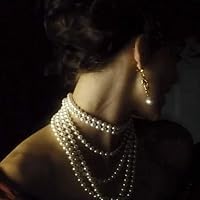
Forty-five-year old Jean Dornan cannot escape the shadow of something that happened several decades ago. During a study abroad program in France she had a deeply inappropriate relationship with her professor. When the professor contacts her out of the blue to invite her to his retirement ceremony, she is jolted out of her malaise and filled with the need to understand why the affair derailed her life.
Rereading her old diaries, she is shocked to realize her relationship with the professor occurred during the summer of the Bill Clinton–Monica Lewinsky scandal, yet she never saw the parallels. In a frenzy of guilt and regret, she finds herself praying to Monica Lewinsky—as if she were some kind of secular saint, the patron of persecuted and demonized women, perhaps?—and begging Monica’s forgiveness for not understanding everything they had in common. To her shock, Saint Monica appears to her and leads her back in time to reassess what happened. Had Jean merely been weak, stupid, and blind, as she has told herself for years? What was it about her that led to the affair? What did she really do that summer?
Told in flashbacks of those six weeks that changed Jean's life, interspersed with irreverent accounts of real female martyrs and visitations from Saint Monica, Dear Monica Lewinsky is a tender, hilarious, and thought-provoking examination of desire and how it shapes us. It is also a timely examination of what grace and forgiveness look like, in our lives and throughout history.
JULIA LANGBEIN, a sketch and standup comedian for many years, holds a doctorate in Art History and is the author of a non-fiction book about comic art criticism (Laugh Lines, Bloomsbury Visual Arts, 2022).
She wrote the viral comedy blog The Bruni Digest (2003-7), which reviewed New York Times critic Frank Bruni’s restaurant reviews every week and has since written about food, art and travel for Gourmet, Eater, Salon, Frieze and other publications.
A native of Chicago, she lives outside of Paris with her family.
* thanks to Doubleday for the NetGalley review copy (pub date: April 14, 2026)
This is one of those books that's going to be really hard for me to talk about without sounding like an absolute lunatic, and all I want to do is talk about how fantastic it is and how much I LOVED it. The entire concept of a woman (approximately) my age realizing how her own situation as a college student paralleled Monica Lewinsky's experiences -- and recognizing just how unbelievably terrible we all were in the way we thought about Monica -- and then praying to Saint Monica -- and then Saint Monica APPEARING and snarkily talking her through it all -- is nothing short of BRILLIANT.
The interstitial bits summarizing and retelling the stories of female martyrs, all led to their path of suffering due to gross men, were all so tragic and painfully hilarious, especially the opening section telling Monica's story. I absolutely adored everything about this book and want everyone to read it. Definitely picking it for book club!
This book was FANTASTIC. Julia Langbein is a brilliant writer. This book was so sharp, witty, smart, quirky, and unputdownable. Somehow, Julia Langbein can make trauma, nuns, and 11th century architecture both sassy and wildly funny.
It's clear by her writing that art history is a subject that is completely within the author's wheelhouse because that confidence shows on the page and makes for an extremely engaging read. I also read her other novel, American Mermaid, and loved it but this book is so wildly different and so much better (in my opinion).
This book alternates between present day Jean in New Jersey (unfulfilled and unsatisfied with work and love) and 1998 Jean (smart, hopeful, naive virgin from Rutgers) studying abroad in France for 6 weeks. For most of the book, Jean is reflecting on her time in France, enjoying life, making friends, and cooking in the time leading up to the event that she believes irreparably altered her future and the person she is today. During this trip, Jean has an experience eerily similar to that of Monica Lewinsky. Now seeing the parallels in the present, she regrets how she reacted to the news in 1998 and prays to Monica,"exalted as the patron saint of those who suffer venal public shaming and patriarchal cruelty."
Throughout Jean's reflection on her past, she talks and prays to Monica and in return, Monica delivers some truly hilarious one-liners.
The book is also punctuated with chapters of female martyrs throughout history. Many of whom had a church built on them after.
The common thread of women existing to please men and take responsibility for the actions of men against women runs throughout the book and affects every character. All the female characters in the study abroad program in France exist in relation to men in some way. Whether it be an eating disorder, leaving early for a boyfriend, settling for a man who can provide security instead of love, some just acting subservient to get what they want in the end, and some who are taken advantage of by the men in power. Reading this book through a lens with a subtle feminist edge also just shows how brilliant of a writer Julia Langbein is.
I strongly recommend everyone read this book - I can't wait to buy it when it comes out. Will be recommending to all my friends.
Thank you to NetGalley and Doubleday Books for the eARC!
Saint Monica’s words of “You can be the most virtuous woman in the world, and you’ll still carry the blame not just for your desire but everyone’s desire” have stuck with me specifically. This book really shows how powerful men take full advantage of women’s accomplishments and reputations, from the presidents to professors, and how it directly affects women afterward. As a woman, Jean’s journey with Monica felt so healing and validating to read from start to finish.
The imagery was also beautifully written and I felt like I was there visiting all the ancient French churches, joking around with Jean and her classmates at the castle lodging, eating the deliciously described Sunday meals, and receiving Saint Monica’s blessed kiss.
Thank you to NetGalley and DoubleDay Books Publishing for the early access!
I hate to say it, but I found this book really disappointing, which is a shame. I was really looking forward to it because I thought it would have interesting commentary about women being shamed and turned into pariahs and martyrs for their sexuality throughout history, but I just found the book to be boring. I think the idea was great and had a lot of potential, but I found the execution wasn't there, which is a shame because it is such a good idea, and the characters were interesting. I think the book being shorter would have helped keep the story moving and have the characters move faster.
Again, I think the concept and idea were so interesting, but the execution wasn’t as well as I think I could have been.
I love the concept of this book and couldn’t resist picking it up. Woman, haunted by the memory of an inappropriate relationship with a former teacher, revisits her memories (with the help of Saint Monica Lewinsky, no less) to attempt to free herself from the chains of these memories that suffocate her life. It is a fun and funny read that cleverly highlights very real ways the patriarchy has kept women down, but it’s about 75 pages too long and I nearly quit at the halfway point. The book starts and ends on such strong notes, but the middle drags. Perhaps it’ll be edited before final publication. I think many will find this to be a quirky and enjoyable read, and I could see it making for a great TV or movie adaptation.
Thank you to the publisher and NetGalley for providing an ARC in exchange for my honest review.
Interesting premise, but the execution was less solid. We get this frame narrative of the protagonist Jean summoning Saint Monica and recounting the details of her sexual encounter, but this telling is sludgy with detail and other threads. Because we know something happened between Jean and her professor, we are just sitting around waiting for it to unfold for a long time--which maybe wouldn't have been as big an issue if this novel had just been set firmly in 1998 without hammering home so much that important developments were yet to come.
We also suspect from early on that Jean will eventually confront her professor at his retirement gathering, which I assumed would be a much more substantial part of the novel, but it is crammed into a short 15-20 pages at the end and takes the form of a condensed hagiography (like the ones peppered throughout the book), which is a cool idea but ultimately robs us of the catharsis of the dramatic confrontation we've been holding off on for 300 pages.
I also have strange feelings about the use of Monica Lewinsky in this book--the author explicitly says in her acknowledgements that she has never spoken to Monica Lewinsky, so there is something strange about dragging a living person unsolicited into a work of fiction to serve...not much of a function? This book could have happened without the gimmick of Lewinsky, because after her initial appearance at the start of the story, her presence is reduced to a few interjections scattered across the retelling of Jean's past: sometimes questions that are just there to move the plot forward or refocus Jean's memory, and occasionally to espouse some profound observation about society. For a book that mentions how Lewinsky's personhood was erased in the wake of the Clinton investigation, it's strange that the story does the same thing to her here (although rather than demonizing her, it deifies her).
As soon as I saw this title, I knew I wanted to read it. Then, I read the book's description and was even more intrigued. And this book did not disappoint.
It starts with 40 year old Jean being reminded of the summer she was in college that she slept with her professor and realizing it was the same summer of the Lewinsky-Clinton scandal. Then she prays to Monica, which is such an outlandish concept, but it works. This is a very public example of the woman being vilified for a sexual relationship where the man was clearly in the wrong.
Interspersed with Jean's story were stories of female saints, heartbreaking stories of women being treated cruelly by men going back hundreds of years.
While the subject matter can be heavy, the book is witty and funny. Jean is an interesting and complex character. Overall, I really enjoyed her POV.
DNF at 28%. I really tried to give this book a chance, but the plot is somehow both ridiculous and boring. I wonder how Monica Lewinsky feels about being used for this unnecessarily.
I know that Dear Monica Lewinsky won’t be for every reader, but it sure feels like it was made in a lab for me. It’s all my favorite things: smart, weird, creative, fresh, funny, feminist, and thoughtful — and served with a heaping helping of art history and Christian saints. Be still my heart.
Jean is a 45 year old woman struggling with the trauma left after an inappropriate relationship with her professor 25 years earlier, when she gets an invitation to his retirement party. Distraught, Jean prays to Monica Lewinsky, as the patron saint of women denigrated and shamed by patriarchal power.
Most of the narrative takes place in the past, as Jean recounts her story to Saint Monica. Vignettes of women martyrs are woven in, and through these interjections, Jean’s story, and the everyday relationships and experiences of the young women surrounding Jean, Langbein investigates desire, power, shame, and womanhood under the patriarchy. She is never heavy-handed; she writes complex characters and asks nuanced questions.
I believe some readers may be turned off by the art, architectural, and historical content, but I loved it. Besides being fascinating to me, it expanded the scope of novel, demonstrating the universality of these issues that we still wrestle with today. All the stars.
Thank you to NetGalley and the publisher for the review copy.
I absolutely loved this book. First of all, I really enjoyed the way the chapters are structured, moving back and forth in time. The metaphor of Monica Lewinsky being portrayed as a kind of “saint” is especially powerful and striking.The subject matter itself is something that is not talked about enough, and presenting such sensitive and often overlooked issues in a satirical tone is, in my opinion, a real achievement. The academic world is also depicted in a very honest and realistic way, particularly from a woman’s perspective.Connecting these experiences to the figure of Monica Lewinsky is a smart and thought-provoking choice. It highlights the emotional and psychological intensity of situations that, unfortunately, can happen to someone during their university years. It almost feels like a nightmare scenario unfolding in an academic setting.
All hail Saint Monica! I wholeheartedly agree that, similar to the woman portrayed in the snippets we get throughout the book who were persecuted for refuting the advances of men throughout history, Monica was another woman in a long line of women that deserved better. I had hoped this story to be more of a love letter to young Monica. But other than a few bits of news coverage from 1998, the scandal felt more like an afterthought. I found the story to move quite slow with an unfulfilled ending. The best parts were the interactions between Jean and Saint Monica. I appreciate the portrayal of Monica as an omniscient God, and if this book helps more people see her that way, than by all means, read away!
5 stars but if i could have it my way it would be 4.8 or 4.7 because i wanted to know how she worked things out with her husband (not that he was essential to the story, i just don’t like loose ends). even if you don’t finish the book, i highly recommend getting through the first few chapters. especially the beginning “A Life of Saint Monica”. the author is a comedian and art historian. i listened on audiobook and was genuinely hootin and hollerin during some of it.
I did not know I needed this book. But everything about it is brilliant and thoughtful and nuanced. It surprised me in every possible way and I cannot wait to read more from Langbein
How humiliating and electric it is to be nineteen — to mistake attention for affection, to minimize your own heartbreak, to keep replaying a sentence or a look until it calcifies into mythology. This book is wickedly funny and impossibly sharp, but beneath all the snark and brilliance is something deeply, earnestly compassionate.
Forty-five-year-old Jean receives an invitation to her former professor’s retirement party and immediately comes undone (or was that already happening?), forced to revisit the six weeks she spent studying medieval churches in France at nineteen — a summer marked by sexual awakening, obsession, and the terrible choices that have quietly haunted the architecture of her entire adult life. In desperation, she prays to Monica Lewinsky, who appears not as a punchline or cultural artifact, but as a kind of patron saint for women who survived public shame, unequal power, and the lifelong task of trying to reinterpret what happened to them.
This novel clearly understands (with painful precision) what it feels like to be nineteen and unbearably open to the world — to be hungry, romantic to the point of self-destruction, convinced every older person who sees something in you is witnessing your brilliance rather than your vulnerability. Jean spends the novel intellectualizing herself in real time, narrating her own collapse, and it is rendered so specifically and mercifully that it doesn’t feel like reading fiction, but more like tuning into your own memory.
And somehow, despite all its brilliance about shame, desire, misogyny, power imbalances, religion, and the strange afterlife of girlhood, the novel never loses its warmth or humor. The ensemble cast is incredible— messy, pretentious, deeply lovable— and the France of it all feels sweaty, wine-drunk, overeducated, romantic, embarrassing, and so very alive. I genuinely mourned finishing it. I wanted another hundred pages just to remain in the company of these people and this voice.
2019 Jean is invited to a reunion for her study abroad program in France. David Harwell, a professor and scholar, is retiring. It's been over 20 years, but Jean is still affected by the inappropriate relationship that happened that summer between her and Harwell. After receiving the invitation, she has a small breakdown and seeks refuge in a church. There, Saint Monica (Lewinsky) appears to her and guides her back in time to remember the experience and gain new insight. Interspersed in the story are retellings from The Golden Legend of young female saints who were taken advantage of and killed by men (peep the book cover)
Beautiful prose (sumptuous, resplendent). Well-researched dive into medeival churches. Succulent decriptions of food and cooking. Devastating descriptions of Jean and David and that unique feeling of being a young woman in an ambivalent dalliance with a power imbalance. If books are a portable magic, I was teleported back to being a college student, alongside Jean and Saint Monica. I loved this so much, it hit so hard.
I found this book in the Goodreads’ news section – something like “Summer getaway” – but I was pleasantly surprised by it. I have never read a book like this, and, even though at times it was structurally complex (I had to reread multiple paragraphs because I kept losing the thread), I liked it. It was literally wild, both in the way it was written – I’d say it was, to say the least, a very creative way to tell a story – and the plot. It wasn’t nice to be in Jean’s mind, but it was real, raw, and that’s a quality I tend to appreciate – I like a little neurosis in my female characters. I also didn’t know about Monica Lewinsky story, so I’m happy I learnt about that too.
It is, in fact, a good “summer escape” book, to read on the beach and not think much.
Smart, funny, original, and deeply empathetic without ever becoming maudlin or overwrought.
The central theme here is not a new one, and literary spaces are overcrowded at the moment with books that visit the trauma of being taken advantage of by a man in power. The proliferation of these types of novels isn’t surprising given how sadly common the experience is, but I generally don’t find myself all that taken with fiction on the subject.
This book is a notable exception, through its humor, its stout refusal to wallow in tragedy porn, and its inventive structure. I wondered about what would happen to this story if you stripped the hagiography from it, but upon deeper examination, it still works, and mostly there’s no need to, as the integration of the hagiographic elements is one of the best parts of the way Langbein tells this story.
The dialogue between the narrator and Saint Monica was so cleverly conceived, and there’s so much here that is both touching and hilarious. The book has plenty of lighter humor that made me laugh out loud (“I hung out with a bunch of drunk girls for a while but they were always spraining their ankles”), but the real strength of the narrative is in how well it applies wry and observant humor to difficult and painful moments.
And finally, a slow clap for the dedication to the academic content, which I always want and almost never get in a book like this. Too many novels start off either in an academic setting or attempting to incorporate academics into the narrative only to abandon it entirely early in the novel. This one sees it through both in terms of atmosphere and plot detail, and it only serves to strengthen an already excellent story.
*I received an ARC of this book in exchange for an honest review.*
This novel shows the huge difference in pre- and post-#MeToo understandings of sexual dynamics, but it also deftly portrays the gulf between late adolescence and middle age. Readers, too, might find that they have come to revere Saint Monica Lewinsky. Full review on BookBrowse: https://www.bookbrowse.com/mag/review...
Amusing story about Jean who is in France with a group of students and a professor she lusts after. Still, she is plagued by guilt since women are not supposed to have desire like this. In comes Saint Monica to speak to Jean and offer insights. Alternating chapters had gorgeous women who being so desirable caused men trouble and had to be put to death. The humor is snarky and funny, but I think you will know early on if it is for you.
Overall, I liked it, and was certainly glad to see a new and wise take on Monica Lewinsky. This book probably will work best also if you grew up during the Clinton/Lewinsky Scandal and actually listened to the bashing of her. She was the seducer, the stalker, the psycho, yet at the same time was so fat and unbalanced. How exactly did Clinton get involved with her then? She set the stage for all these meeting and poor Bill just went along? That narrative it is easy to see was wrong and no one stepped up to protect her, yet it was allowed. Yet, this was not a big part of this story, just a few mentions back in the States of it going on. Would have enjoyed more connection to that.
This book went on a little long. Jean’s story stay stagnant at the middle. The best parts were definitely when Saint Monica offers comments and liked the Domed Saint Chapters. Those were the funniest.
Thank you NetGalley and Doubleday Books for a copy of this book.
I picked up Dear Monica Lewinsky because the premise immediately stood out to me. A woman, still burdened by the memory of an inappropriate relationship with a former teacher, begins revisiting her past with guidance from Saint Monica Lewinsky herself. The concept feels sharp, original, and layered with commentary about power, shame, and the ways women are often expected to carry the weight of experiences shaped by men.
The novel balances humor with heavier emotional themes, and at its best, the writing feels clever, self-aware, and painfully honest. I especially appreciated how the story explored the long shadow these experiences leave behind and the struggle to reclaim your own voice after years of silence.
What held the book back for me was the pacing in the middle section. The opening and ending are strong and memorable, but the story loses momentum halfway through and feels longer than necessary. I found myself wishing the narrative had been tightened by several chapters to keep the emotional impact sharper and more focused.
Even with those issues, I think many readers will connect with the book’s offbeat style, emotional honesty, and cultural commentary. I could also easily see this adapted into a film or limited series because the premise translates so well visually and emotionally.
I went into reading this book with trepidation because I worried about the use of Monica Lewinsky’s name without her permission. But alas….ALL HAIL SAINT MONICA!!! I was truly delightfully surprised. This book is a little insane with such a wild premise but it also has these moments of unexpected poignancy. I think the incorporation of stories about the martyred female saints was such a unique touch and gave perspective on the historical pattern where women are blamed for disgusting male behavior and men are absolved.
I honestly just thought this was brilliant and also hilarious at times.
The quote from the book that continues to stay with me after reading is: “You can be the most virtuous woman in the world, and you'll still carry the blame not just for your desire but for everyone's desire.”
I was so into this book that when I suffered from insomnia and woke up deep in the night, I was actually happy that I'd be able to read it. It was propulsive and witty and lots of fun.
The novel begins with an invitation. Main character Jean has been invited to a retirement party in France, where she spent the summer when she was 19 as part of a special school program studying the architecture of old churches. The party is for David, the teacher she had a sexual relationship with that summer, and the events of that summer have cast a shadow over her entire life. She looks back over old journals and realizes that that all of this occurred in 1998, the same summer that the Clinton scandal was splashed all over the headlines, but somehow, she'd never considered the similarity between her situation and Lewinsky's. In a bad moment, she sends a prayer to Monica- and poof! Monica appears. Or a version of Monica, anyway, Saint Monica, who then travels with her (and the reader) through the events of that summer, trying to help her realize some things.
We go through what happened, and occasionally Jean and Monica have a little conversation (often a funny one) about it. I may have never read a book that describes so well how it feels to be deeply focused on one forbidden, unacknowledged person. How you can track where they are in the room without even looking. At one point, Jean observes that when she says something perceptive in one of the churches, she feels the heat lamp of David’s smile go from low to medium even as she can’t see his face. And she talks about how she’s doubled. One person inside her is living her life, and the other part of her is observing- even when he’s not there- how what she is doing would look to him.
Jean at 19 is a great character, sly and witty, even as she’s callow in the way 19-year-olds necessarily are. I loved the way she talked, especially with the other students participating in this program, and with Monica, in the little asides.
The writing is sharp and kept giving me little zings of pleasure. The prince who owns the castle where participants and teachers in this program are living is very focused on the Clinton scandal and is waiting for the cable installers to show up so he can follow it live. Jean says, "He wants CNN and Sky News the way his ancestors wanted Flanders and Alsace.”