

What do you think?

Genius (collected editions) #1
Genius, Vol. 1
What if the greatest military mind of our generation was born to a people who are already supremely conditioned to wage war, who know nothing but violence from birth and must continually adapt to new predators in order to survive? This action-packed book contains the full story of a city that declares war on a brilliant young woman pushed to the edge.
Collects PILOT SEASON: GENIUS #1 & GENIUS #1-5.
Collects PILOT SEASON: GENIUS #1 & GENIUS #1-5.
160 pages, Paperback
First published April 7, 2015
Ratings & Reviews
Friends & Following
Create a free account to discover what your friends think of this book!
Community Reviews
Displaying 1 - 30 of 57 reviews

June 27, 2015
I was riveted while I was reading this, and the art is just fantastic.
But, now that I'm done, I'm not sure what was the point of the story. A young girl with genius level intelligence when it comes to tactical maneuvers decides to make a statement, and starts a war with the LAPD.
The things she does to take over all of the gangs in her area make her a less than sympathetic character. After witnessing her parents gunned down by the police department, Destiny embarks on a journey for vengeance and (possibly) change. She kills a fast-food worker (I'm assuming he was connected to a rival gang) to gain entrance to a gang as a young girl, kills her boyfriend to take over his gang, and kills off other gang leaders to cement her leadership over all of them. She uses people like chess pawns, deciding what are acceptable losses to win her war.
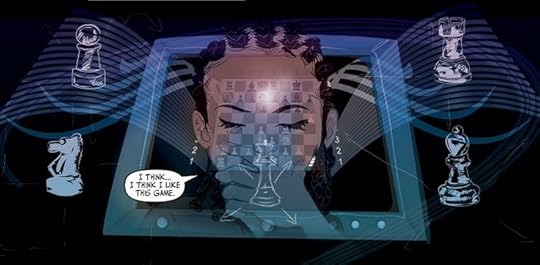
Thing is, she knows she can't win.
She admits to being the kind of person who wants to watch the world burn, and is only hoping to direct her talents toward a good cause. Nobody wins this war.
I guess this is a look at what happens when you feel like you have nothing to lose, and feel like the only way to change things is with violence.
Her intelligence level was so high, that it didn't ring true to me that she would see an unwinnable war as the only way to enact change.

If she was truly a master tactician, she wouldn't have wasted her time trying to blow up a few National Guard tanks. In the end, it felt like she was probably a sociopath that needed an outlet for her megalomania.
Or maybe this was just a revenge fantasy? Not sure.
Violence just begets more violence.
If Destiny were truly a Genius, she would have known that.
But, now that I'm done, I'm not sure what was the point of the story. A young girl with genius level intelligence when it comes to tactical maneuvers decides to make a statement, and starts a war with the LAPD.
The things she does to take over all of the gangs in her area make her a less than sympathetic character. After witnessing her parents gunned down by the police department, Destiny embarks on a journey for vengeance and (possibly) change. She kills a fast-food worker (I'm assuming he was connected to a rival gang) to gain entrance to a gang as a young girl, kills her boyfriend to take over his gang, and kills off other gang leaders to cement her leadership over all of them. She uses people like chess pawns, deciding what are acceptable losses to win her war.
Thing is, she knows she can't win.
She admits to being the kind of person who wants to watch the world burn, and is only hoping to direct her talents toward a good cause. Nobody wins this war.
I guess this is a look at what happens when you feel like you have nothing to lose, and feel like the only way to change things is with violence.
Her intelligence level was so high, that it didn't ring true to me that she would see an unwinnable war as the only way to enact change.
If she was truly a master tactician, she wouldn't have wasted her time trying to blow up a few National Guard tanks. In the end, it felt like she was probably a sociopath that needed an outlet for her megalomania.
Or maybe this was just a revenge fantasy? Not sure.
Violence just begets more violence.
If Destiny were truly a Genius, she would have known that.

July 5, 2016
A very intriguing premise. This generation's Alexander the Great has been born and she grew up in Compton. She unites the gangs declares war on authority. I wasn't familiar with Afua Richardson's art. She's quite talented.

May 8, 2015
Visit http://www.comicpow.com/2015/06/10/ge... for the original post which contains images and links
---
When I was doing my undergraduate degree, we were just getting cell phones that could take sub-megapixel images. There was no video in most phones, and those that did shot videos that would show the size of a postage stamp on today’s monitors. Some of my friends and colleagues who were of African descent would talk about how black people got higher prison sentences for weed possession in the USA than whites. When I heard this, from my position of privilege in which I’d only once ever had to deal with racism (I’m ethnically Hispanic, but racially white), it was hard to have sympathy. Yeah, it was profoundly unfair that the same crime did not get the same punishment, but it’s not like weed was legal back then. You knew what you were getting into if you chose to do something illegal. It’d be like getting mad for going to jail for stealing something.
Jump forward a decade and we have cell phones that can shoot high definition video and 4G networks and citizen journalism and YouTube for when the media wants to ignore a story until it’s viral. What I’ve learned over the past 2-3 years is that the weed issue was just the tippy top of a HUGE iceberg of abuses rained upon African Americans (with some run-off affecting others with non-white skin) that were easy to ignore before the video footage. The experience of someone with privilege is so radically different that depictions of cops drawing guns for no reason just sounded like hyperbole.
Then Genius came out exactly as Ferguson, Missouri was blowing up over the presumed wrongful death of an African-American young man at the hands of the cops. Regardless of the details that eventually emerged, it wasn’t so much that the cops shot this guy a year after stand your ground in Florida. It was as though a damn had burst and suddenly the media was paying attention to the videos being posted to the net. Soon another black man was killed over selling of cigarettes in New York City. Not that long ago, it was my city’s turn as Baltimore went nuts over the wrongful death of an African-American in police custody.
I am enough of a printed word nerd to understand how the publishing world works. The link above goes to an AV Club story in which writers Marc Bernardin and Adam Freeman discuss that this story was six years in the making. But even if you don’t believe that, the piplines in publishing are such that Top Cow (Image imprint) had to have sent the first issue to be made somewhere between two and four months before the events of Ferguson. It’s been in the air for a long time – we were just ignorant of it outside the community.
So how does this long introduction intersect with Genius? Well, if this somehow slipped under your radar (maybe you only read from the Big Two), Genius is the story of a tactical genius who happens to be born on the wrong side of the tracks. In times past, this would have relegated her to a footnote in history. Sure, some upstarts came from unimportant families, but many of the great leaders of history had privilege to place them in positions of power. But today. at this point in history, anyone can be disruptive. This loophole may eventually be closed by the powers that be, but with social media, cheap video production, and guerilla tactics, someone with the right brains could end up making quite the statement nowadays. Destiny, our main character, decides she’s had enough of the police misconduct and wages what is in effect a terrorist war on the police to make her point.
Without a doubt, Bernardin and Freeman take some liberties for the sake of plot. When Destiny makes the correct military decision to risk some casualties to inflict major casualties on the police, she finds herself at the wrong end of a bunch of guns from those upset they were used as pawns. She uses machismo to talk her way out of it. Similarly, when she social engineers her way into a police station, she certainly is using the important tactic of seeming like you belong to make sure no one questions you. But with the way things are nowadays with RFID badges and other checks and balances, it’s unlikely she would have been able to get in and out successfully.
That said, two things made the book stand out to me. First was Destiny’s use of every advantage possible to attain her goal. For her nothing is more important than the ends and all means are justified. She purposely tries to blend in until the time is right for her to strike. This involves, first of all, not rising above the mean in school. This is both a comment from the writers on her tactical planning as well as a statement on how African Americans often feel as though they shouldn’t try and stand out, lest they become a target for being beat up. Then she uses her female identity and sex in every possible way. First, she uses it literally to become the girlfriend of a gang leader and learn the system so she can move from a position of power. On the day that she takes over all the gangs, she uses her femininity and gender biases in her favor because no one suspects her of being a takeover threat. She also uses her female hairdo to hide weapons even though they’ve been frisked.
The second thing that made the book stand out to me was that, as I mentioned above, the tools are there for something like this to be real. Destiny takes advantage of the media situation to release information showing that the police they killed were corrupt. She also shows videos of regular folks from that area that have been harassed by the cops. The war of ideas quickly becomes one in which victims are fighting for their lives rather than the usual “thugs causing problems”. Bernardin and Freeman also ask the reader to think about how he’s viewing the situation as well. When Destiny is sent on her initiation killing it appears to be the heartless killing of a fast food worker. But in the last panel it’s revealed that he’s a member of the opposing gang. While that doesn’t make the killing right, it’s certainly not as random and cold blooded as it originally seemed.
The writers also use Detective Grey as an example of how biases lead us astray. Although he’s been working on this case for five years, it’s only a loud-mouthed kid that tips him off to the fact that the mastermind is a woman. Additionally, he’s an example of how the system fails those who need it most. There are many non-fiction accounts of how people’s lives are tuned upside-down by encounters with the police and most of the time they get a shrug and a non-apology. In the best case scenario they get some money that doesn’t return their dead family or make then un-disabled. Detective Grey was there when Destiny’s family was shot by the cops and the unfairness and inaction cemented her desire to screw with the system.
Ignoring the last page which is either the most accurate ending (think Frank Abdegnale or Kevin Mittnick) or the most wishful thinking ending, the book leaves us with the question that sparked my title for this post and that has been bouncing around my head after a year in which nothing has changed and my own backyard has become a battleground:
No. The question you should be asking is “when”? When will it happen in my neighborhood? When will they say “I’ve had enough”? Civilization is nothing but a collection of agreements made between people to work together towards a common goal. How long before people feel like those agreements aren't in their best interest?
After the evils of the financial crisis were met with a few months of protest and a yawn; after decades of mistreatment for African Americans, including a year in which incidents were caught on video without much action – I’ve been asking myself the same questions. Because, as a student of history I know that revolutions are never quite as neat as they seem when we read them in the history books. It would really be better if we could resolve this in a civilized and fair manner, before the social contract erodes. It’s not so easy to put it back together after it falls apart – ask the Egyptians.
---
When I was doing my undergraduate degree, we were just getting cell phones that could take sub-megapixel images. There was no video in most phones, and those that did shot videos that would show the size of a postage stamp on today’s monitors. Some of my friends and colleagues who were of African descent would talk about how black people got higher prison sentences for weed possession in the USA than whites. When I heard this, from my position of privilege in which I’d only once ever had to deal with racism (I’m ethnically Hispanic, but racially white), it was hard to have sympathy. Yeah, it was profoundly unfair that the same crime did not get the same punishment, but it’s not like weed was legal back then. You knew what you were getting into if you chose to do something illegal. It’d be like getting mad for going to jail for stealing something.
Jump forward a decade and we have cell phones that can shoot high definition video and 4G networks and citizen journalism and YouTube for when the media wants to ignore a story until it’s viral. What I’ve learned over the past 2-3 years is that the weed issue was just the tippy top of a HUGE iceberg of abuses rained upon African Americans (with some run-off affecting others with non-white skin) that were easy to ignore before the video footage. The experience of someone with privilege is so radically different that depictions of cops drawing guns for no reason just sounded like hyperbole.
Then Genius came out exactly as Ferguson, Missouri was blowing up over the presumed wrongful death of an African-American young man at the hands of the cops. Regardless of the details that eventually emerged, it wasn’t so much that the cops shot this guy a year after stand your ground in Florida. It was as though a damn had burst and suddenly the media was paying attention to the videos being posted to the net. Soon another black man was killed over selling of cigarettes in New York City. Not that long ago, it was my city’s turn as Baltimore went nuts over the wrongful death of an African-American in police custody.
I am enough of a printed word nerd to understand how the publishing world works. The link above goes to an AV Club story in which writers Marc Bernardin and Adam Freeman discuss that this story was six years in the making. But even if you don’t believe that, the piplines in publishing are such that Top Cow (Image imprint) had to have sent the first issue to be made somewhere between two and four months before the events of Ferguson. It’s been in the air for a long time – we were just ignorant of it outside the community.
So how does this long introduction intersect with Genius? Well, if this somehow slipped under your radar (maybe you only read from the Big Two), Genius is the story of a tactical genius who happens to be born on the wrong side of the tracks. In times past, this would have relegated her to a footnote in history. Sure, some upstarts came from unimportant families, but many of the great leaders of history had privilege to place them in positions of power. But today. at this point in history, anyone can be disruptive. This loophole may eventually be closed by the powers that be, but with social media, cheap video production, and guerilla tactics, someone with the right brains could end up making quite the statement nowadays. Destiny, our main character, decides she’s had enough of the police misconduct and wages what is in effect a terrorist war on the police to make her point.
Without a doubt, Bernardin and Freeman take some liberties for the sake of plot. When Destiny makes the correct military decision to risk some casualties to inflict major casualties on the police, she finds herself at the wrong end of a bunch of guns from those upset they were used as pawns. She uses machismo to talk her way out of it. Similarly, when she social engineers her way into a police station, she certainly is using the important tactic of seeming like you belong to make sure no one questions you. But with the way things are nowadays with RFID badges and other checks and balances, it’s unlikely she would have been able to get in and out successfully.
That said, two things made the book stand out to me. First was Destiny’s use of every advantage possible to attain her goal. For her nothing is more important than the ends and all means are justified. She purposely tries to blend in until the time is right for her to strike. This involves, first of all, not rising above the mean in school. This is both a comment from the writers on her tactical planning as well as a statement on how African Americans often feel as though they shouldn’t try and stand out, lest they become a target for being beat up. Then she uses her female identity and sex in every possible way. First, she uses it literally to become the girlfriend of a gang leader and learn the system so she can move from a position of power. On the day that she takes over all the gangs, she uses her femininity and gender biases in her favor because no one suspects her of being a takeover threat. She also uses her female hairdo to hide weapons even though they’ve been frisked.
The second thing that made the book stand out to me was that, as I mentioned above, the tools are there for something like this to be real. Destiny takes advantage of the media situation to release information showing that the police they killed were corrupt. She also shows videos of regular folks from that area that have been harassed by the cops. The war of ideas quickly becomes one in which victims are fighting for their lives rather than the usual “thugs causing problems”. Bernardin and Freeman also ask the reader to think about how he’s viewing the situation as well. When Destiny is sent on her initiation killing it appears to be the heartless killing of a fast food worker. But in the last panel it’s revealed that he’s a member of the opposing gang. While that doesn’t make the killing right, it’s certainly not as random and cold blooded as it originally seemed.
The writers also use Detective Grey as an example of how biases lead us astray. Although he’s been working on this case for five years, it’s only a loud-mouthed kid that tips him off to the fact that the mastermind is a woman. Additionally, he’s an example of how the system fails those who need it most. There are many non-fiction accounts of how people’s lives are tuned upside-down by encounters with the police and most of the time they get a shrug and a non-apology. In the best case scenario they get some money that doesn’t return their dead family or make then un-disabled. Detective Grey was there when Destiny’s family was shot by the cops and the unfairness and inaction cemented her desire to screw with the system.
Ignoring the last page which is either the most accurate ending (think Frank Abdegnale or Kevin Mittnick) or the most wishful thinking ending, the book leaves us with the question that sparked my title for this post and that has been bouncing around my head after a year in which nothing has changed and my own backyard has become a battleground:
No. The question you should be asking is “when”? When will it happen in my neighborhood? When will they say “I’ve had enough”? Civilization is nothing but a collection of agreements made between people to work together towards a common goal. How long before people feel like those agreements aren't in their best interest?
After the evils of the financial crisis were met with a few months of protest and a yawn; after decades of mistreatment for African Americans, including a year in which incidents were caught on video without much action – I’ve been asking myself the same questions. Because, as a student of history I know that revolutions are never quite as neat as they seem when we read them in the history books. It would really be better if we could resolve this in a civilized and fair manner, before the social contract erodes. It’s not so easy to put it back together after it falls apart – ask the Egyptians.

February 5, 2017
The premise is intereting: a black girl in a troubled neighborhood is the great military genius of our time, so she organizes the gangs into an army and fights against the police.
However, the weak points of the story...
- why did Destiny start a war that she had no way of winning and which would only get her people killed? Was it to get a job with the government? (Because it's absolutely obvious she can't win)
- she keeps *knowing* what the police will do, but we're never shown the process through which she figures out what will happen. She knows, okay? She knows. She's a genius, geniuses know these things.
- how did she train her people? Come on, she's got super-snipers.
- how much firepower *can* one single neighborhood get their hands on?
- she had way less trouble than many other gangsters when it came to acquiring power and holding on to it, didn't she?
Story, don't expect me to suspend my disbelief when you're not offering other things to base new beliefs on.
However, the weak points of the story...
- why did Destiny start a war that she had no way of winning and which would only get her people killed? Was it to get a job with the government? (Because it's absolutely obvious she can't win)
- she keeps *knowing* what the police will do, but we're never shown the process through which she figures out what will happen. She knows, okay? She knows. She's a genius, geniuses know these things.
- how did she train her people? Come on, she's got super-snipers.
- how much firepower *can* one single neighborhood get their hands on?
- she had way less trouble than many other gangsters when it came to acquiring power and holding on to it, didn't she?
Story, don't expect me to suspend my disbelief when you're not offering other things to base new beliefs on.

March 24, 2017
Every generation has its military genius- so what happens when it’s a teenage girl from LA?
Deliberately provocative, this story sets up the tale of Destiny, a black seventeen-year-old orphan who has a vendetta against the police who shot and killed her parents when she was a child. We get some of her back story, as a detective pieces together the escalating violence in South Central Los Angeles to a “Suspect Zero” who he believes is the mastermind behind the gang wars. He correctly has figured out that the gangs have aligned behind a central leader, and are now building their arsenal to fight the corrupt LA police department.
That this book came out a few months after the Ferguson MO shooting and had most likely been in production before it, was very timely. The Black Lives Matter movement is represented within the story, with opposing viewpoints. A full-page spread shows the media voicing different perspectives and some dialogue that I felt was spot on was, “What we have here is a people, not unlike this country’s forefathers. oppressed by the rule of tyrannical men. Why was it okay for the white settlers to rise against the British but not okay for today’s minorities to do the same?” Unfortunately, I felt this thought-provoking statement was canceled out by other cartoonish viewpoints and actions in the story, and the chance for an honest debate about political and racial issues was lost.
I tried so very hard to have a suspension of disbelief so I could just enjoy the scope of the book and not get bogged down in details, but there were a few glaring questions. How did Destiny train her militia? How did she afford all the technology that Gerald used? How did she afford and acquire all the sniper rifles, guns and bomb-making materials? How did she bluff her way into the police building without proper credentials? Surely, Destiny knew the final outcome, so were her deadly military maneuvers truly the work of a genius or a sociopath?
The artwork was a mixed bag for me. I felt it was overly stylized, and some of it was obviously computer-generated. It was dark-hued, with some panels bleeding into the next, otherwise having black borders. An effort was made to show a range of looks, with different body types, skin colors and fashion represented. However, Destiny was overly sexualized, with a gratuitous book cover.
Ultimately, I do give a recommendation to this comic, for it gave me a chance as a white suburban mom to broaden my mind about ethical and racial issues that I normally am not exposed to. While far from perfect, this series is worth looking into further to see if the writers finesse this culturally relevant story.
This review can also be found on my blog: https://graphicnovelty2.com/2017/03/2...
Deliberately provocative, this story sets up the tale of Destiny, a black seventeen-year-old orphan who has a vendetta against the police who shot and killed her parents when she was a child. We get some of her back story, as a detective pieces together the escalating violence in South Central Los Angeles to a “Suspect Zero” who he believes is the mastermind behind the gang wars. He correctly has figured out that the gangs have aligned behind a central leader, and are now building their arsenal to fight the corrupt LA police department.
That this book came out a few months after the Ferguson MO shooting and had most likely been in production before it, was very timely. The Black Lives Matter movement is represented within the story, with opposing viewpoints. A full-page spread shows the media voicing different perspectives and some dialogue that I felt was spot on was, “What we have here is a people, not unlike this country’s forefathers. oppressed by the rule of tyrannical men. Why was it okay for the white settlers to rise against the British but not okay for today’s minorities to do the same?” Unfortunately, I felt this thought-provoking statement was canceled out by other cartoonish viewpoints and actions in the story, and the chance for an honest debate about political and racial issues was lost.
I tried so very hard to have a suspension of disbelief so I could just enjoy the scope of the book and not get bogged down in details, but there were a few glaring questions. How did Destiny train her militia? How did she afford all the technology that Gerald used? How did she afford and acquire all the sniper rifles, guns and bomb-making materials? How did she bluff her way into the police building without proper credentials? Surely, Destiny knew the final outcome, so were her deadly military maneuvers truly the work of a genius or a sociopath?
The artwork was a mixed bag for me. I felt it was overly stylized, and some of it was obviously computer-generated. It was dark-hued, with some panels bleeding into the next, otherwise having black borders. An effort was made to show a range of looks, with different body types, skin colors and fashion represented. However, Destiny was overly sexualized, with a gratuitous book cover.
Ultimately, I do give a recommendation to this comic, for it gave me a chance as a white suburban mom to broaden my mind about ethical and racial issues that I normally am not exposed to. While far from perfect, this series is worth looking into further to see if the writers finesse this culturally relevant story.
This review can also be found on my blog: https://graphicnovelty2.com/2017/03/2...

Read
January 5, 2019A strategic genius arises in South Central LA, uniting the gangs against the LAPD and carving out an autonomous zone. It's an arresting idea, and a timely one, and not even an implausible one when you consider the backgrounds of some of history's great generals (though of course Napoleon's origins weren't half so lonely as some, both fans and opponents, have tended to paint them). Alas, the execution is another matter, proceeding through a series of deeply predictable beats (can you guess which game provides Destiny's first introduction to military tactics? Yep, it's chess, because heavens forbid we swap that tired old trope out and consider the games a modern kid might play, the lessons which could be found in them). And on the other team, the one cop whose genius for spotting patterns means he's inferred the existence of a mastermind? We could see him putting his case together, Wire-style. We don't; we see him with all the puzzle pieces except one, which he gets by sheer dumb luck while behaving out-of-character and heading for the frontlines. Oh, and he processed the case which made Destiny hate the LAPD, because apparently we also need the boring Hollywood notion that nemeses must have their lives intertwined across the decades.

April 22, 2018
This felt very 90's to me - revolution as brought on by gang truce vs. LAPD. It was nice to see a woman as the leader.

January 13, 2016
I thought about giving this 3 stars rather than 4 because it's too short. This feels like a comic book adaptation of a novel, more Cliff's Notes than complete. That said, it's really well written and the concept is interesting, so I decided to tip it over into 4-star land.
The basic idea is that the next military genius arises in the 'hood, specifically South Central Los Angeles, and it's a teenage girl named Destiny Ajaye. (Is that a shout-out to comedian Franklin Ajaye?) Events conspire to make her life a living hell, but instead of becoming self-destructive she turns her brilliance to getting revenge. At first this plays out in her gaming the system but she soon sets her sights higher. She wants to start a war with the police who killed her mother.
Thing is, she needs an army for that, so she begins to systematically use social engineering to achieve that end. For people who are gentler, such as the computer nerd she befriends in grade school, she uses persuasion. For criminals she uses violence and sex. She morphs her demeanor to suit the situation. She manipulates people for her own ends and they don't even realize they're being used because she knows exactly which buttons to push to get people to believe that what she wants is what they want.
I happen to know quite a few geniuses -- as in actual, out-think-you, always-five-steps-ahead-of-you geniuses -- so this rang true to me.
Being brilliant doesn't mean that you are rational. It frequently goes hand-in-hand with psychopathy. This is an extreme example, but when you are used to being the smartest person in the room all the time and it feels like the entire world is full of Joey Tribbianis, it does tend to make you think you're homo superior.
In my experience, genius comes in two distinct flavors: Mr. Spock/Sheldon Cooper types, and Genghis Khan types. Here we have the latter. The criminals who hack your computer or the guys at Enron are extremely smart; many of them are authentic geniuses. They just lack a conscience or empathy for others. For real-life examples, I refer you to The Smartest Guys in the Room: The Amazing Rise and Scandalous Fall of Enron and The Psychopath Test: A Journey Through the Madness Industry.
Destiny's story is an extreme example, but it's not actually impossible. You put someone like that in a situation that causes them to cross the line from productive member of society to destroyer and conqueror and you end up with Destiny.
The scariest part is the ending, which every review I've read so far has either missed or didn't think it pertinent to comment on: the war she starts with the LAPD, her dismembering of the local gangs as her army, the using of her friends and neighbors, the all-out street war she engages in with the National Guard... All of these are merely the prologue to her endgame. She literally did all of this, killed all of those people, just so she would get the attention of the federal government.
The entire story that you read here was preamble to her taking over the United States itself. What we have here is the origin story of a new Genghis Khan in the modern era, but it's merely the opening salvo of her ultimate goal.
Eep.
Some of this skates dangerously close to eugenics and if author Mark Bernardin were white instead of black, I could see someone calling it racist. But it's not. What we have here is a masterfully-told tale of an interesting idea that could conceivably happen if these specific events occurred. The fact that the confrontational aspects of this are currently playing out in the real world in places like Ferguson and Chicago underscores how this is just one step removed from reality.
Look at someone like Bree Newsome, the young black woman who took down the Confederate flag from in front of the Columbia, South Carolina, statehouse. She is articulate, intelligent, charismatic and willing to actually take big risks to accomplish her goals. Destiny Ajaye is the angrier Bree Newsome turned up to 11.
As I said up top, the only real failing of this story is that it is way, WAY too short. This needs to be an epic-length novel or a TV series like The Wire.
This is really good. Nearly as good as 100 Bullets. The art is likewise terrific, although I did want it to sometimes be a tad less stylized. That's such a minor point, though, it's hardly worth mentioning.
The basic idea is that the next military genius arises in the 'hood, specifically South Central Los Angeles, and it's a teenage girl named Destiny Ajaye. (Is that a shout-out to comedian Franklin Ajaye?) Events conspire to make her life a living hell, but instead of becoming self-destructive she turns her brilliance to getting revenge. At first this plays out in her gaming the system but she soon sets her sights higher. She wants to start a war with the police who killed her mother.
Thing is, she needs an army for that, so she begins to systematically use social engineering to achieve that end. For people who are gentler, such as the computer nerd she befriends in grade school, she uses persuasion. For criminals she uses violence and sex. She morphs her demeanor to suit the situation. She manipulates people for her own ends and they don't even realize they're being used because she knows exactly which buttons to push to get people to believe that what she wants is what they want.
I happen to know quite a few geniuses -- as in actual, out-think-you, always-five-steps-ahead-of-you geniuses -- so this rang true to me.
Being brilliant doesn't mean that you are rational. It frequently goes hand-in-hand with psychopathy. This is an extreme example, but when you are used to being the smartest person in the room all the time and it feels like the entire world is full of Joey Tribbianis, it does tend to make you think you're homo superior.
In my experience, genius comes in two distinct flavors: Mr. Spock/Sheldon Cooper types, and Genghis Khan types. Here we have the latter. The criminals who hack your computer or the guys at Enron are extremely smart; many of them are authentic geniuses. They just lack a conscience or empathy for others. For real-life examples, I refer you to The Smartest Guys in the Room: The Amazing Rise and Scandalous Fall of Enron and The Psychopath Test: A Journey Through the Madness Industry.
Destiny's story is an extreme example, but it's not actually impossible. You put someone like that in a situation that causes them to cross the line from productive member of society to destroyer and conqueror and you end up with Destiny.
The scariest part is the ending, which every review I've read so far has either missed or didn't think it pertinent to comment on: the war she starts with the LAPD, her dismembering of the local gangs as her army, the using of her friends and neighbors, the all-out street war she engages in with the National Guard... All of these are merely the prologue to her endgame. She literally did all of this, killed all of those people, just so she would get the attention of the federal government.
The entire story that you read here was preamble to her taking over the United States itself. What we have here is the origin story of a new Genghis Khan in the modern era, but it's merely the opening salvo of her ultimate goal.
Eep.
Some of this skates dangerously close to eugenics and if author Mark Bernardin were white instead of black, I could see someone calling it racist. But it's not. What we have here is a masterfully-told tale of an interesting idea that could conceivably happen if these specific events occurred. The fact that the confrontational aspects of this are currently playing out in the real world in places like Ferguson and Chicago underscores how this is just one step removed from reality.
Look at someone like Bree Newsome, the young black woman who took down the Confederate flag from in front of the Columbia, South Carolina, statehouse. She is articulate, intelligent, charismatic and willing to actually take big risks to accomplish her goals. Destiny Ajaye is the angrier Bree Newsome turned up to 11.
As I said up top, the only real failing of this story is that it is way, WAY too short. This needs to be an epic-length novel or a TV series like The Wire.
This is really good. Nearly as good as 100 Bullets. The art is likewise terrific, although I did want it to sometimes be a tad less stylized. That's such a minor point, though, it's hardly worth mentioning.

February 3, 2015
I find this series deeply problematic on some levels.
The premise strains my suspension of disbelief pretty consistently. It's the tale of a girl growing up in a poor neighborhood who masks her intelligence throughout school to fly under the radar, all the while building a criminal empire that she intends to use to attempt a revolt against American society.
It reminds me of the character Dexter, in that its a series of traits that don't seem to jive too well together. She has the controlled demeanor and willingness to deceive that I would associate with a psychopath. But she has the high ideals and sympathy required for a revolutionary.
I think the reason many revolutions start from the middle class is that a certain sense of entitlement is required in order to rouse others to defy their government. Those from lower economic tiers are often given an intensely negative view of authority and are taught to not expect anything and be grateful to get anything. It doesn't seem conducive to a Che Guevara type.
Not that plenty of smart people don't come out of economically disadvantaged situations, I've met plenty of them to know better, but most of them seemed to want to escape their circumstances. This is what leads to some countries getting brain-drain. It's hard to fix your problems if all your smartest people are trying desperately to get the hell away.
If this book's scenario made sense, this sort of thing would be happening all over America. But it doesn't, and I think it says something. I think there's a smarter book that could have been made of this premise, discussing how utterly unusual Destiny's behavior is.
It's nice to see a power fantasy that's geared towards someone other than white guys, but it feels like some opportunities for more cutting observations could have been inserted between guns blazing.
The premise strains my suspension of disbelief pretty consistently. It's the tale of a girl growing up in a poor neighborhood who masks her intelligence throughout school to fly under the radar, all the while building a criminal empire that she intends to use to attempt a revolt against American society.
It reminds me of the character Dexter, in that its a series of traits that don't seem to jive too well together. She has the controlled demeanor and willingness to deceive that I would associate with a psychopath. But she has the high ideals and sympathy required for a revolutionary.
I think the reason many revolutions start from the middle class is that a certain sense of entitlement is required in order to rouse others to defy their government. Those from lower economic tiers are often given an intensely negative view of authority and are taught to not expect anything and be grateful to get anything. It doesn't seem conducive to a Che Guevara type.
Not that plenty of smart people don't come out of economically disadvantaged situations, I've met plenty of them to know better, but most of them seemed to want to escape their circumstances. This is what leads to some countries getting brain-drain. It's hard to fix your problems if all your smartest people are trying desperately to get the hell away.
If this book's scenario made sense, this sort of thing would be happening all over America. But it doesn't, and I think it says something. I think there's a smarter book that could have been made of this premise, discussing how utterly unusual Destiny's behavior is.
It's nice to see a power fantasy that's geared towards someone other than white guys, but it feels like some opportunities for more cutting observations could have been inserted between guns blazing.

May 2, 2016
To use the same ghetto-slang as this book is written with: what a dumbass boring piece. The writer didn't really bother much with any story. Basically most of the book was about whiny faces and killing cops. Wow, what a "smart and epic" theme. Some criminals killing cops and feeling justified to do so. Did I already say the writing was bad? Artwork was great, but this is a great example that the quality varies highly with TopCow comics.

November 14, 2015
I little rushed and in need of more character development, but gorgeously illustrated and a riveting premise. Very curious to see where future volumes take the story, but any tale that has the balls to open with the protagonist killing forty LAPD officers has my full attention. Gutsy and timely, hopefully it lives up to the full potential of its premise.

Read
April 10, 2015... what? No.

June 4, 2015
Imagine the best living military genius of our time is found in the hard streets of LA and the law enforcement people are helpless to stop her. By the way, did I mention that she's a young lady.

March 3, 2023
On aime tous une bonne histoire où deux personnages brillants s'affrontent comme s'il s'agissait d'une partie d'échec. Comme dans Death Note ou certains Sherlock Holmes.
C'est ce que ce comic tente de faire sans vraiment y parvenir.
L'histoire : Destiny, jeune femme noire, a pris la tête du crime organisé de son quartier de L.A.. Elle a ensuite réussi à convaincre tous les criminels et les habitants du quartier de s'armer et de lui obéir au doigt et à l'oeil. Ce qu'elle leur demande? Tirer sur les policiers qui entrent dans le quartier.
On n'a aucune idée de ce qu'elle a dit ou promis à ces centaines/milliers de personnes qui embarquent dans son plan suicidaire. Les quelques flashbacks qu'ont a pour expliquer son plan et son backstory sont des scènes de male gaze (voir la couverture) où elle convainct des mecs en couchant avec eux.
L'antagoniste est un policier intellectuel qui avait vu tout ça venir mais que personne ne croyait. Honnêtement, son existence ne change rien à l'intrigue.
On a aussi un 3e génie. Une journaliste qui réussit à pénétrer la zone de guerre que devient le quartier de L.A. en... Se mettant quasi à poil.
Bref, tous ça devient presque une guerre civile. On pourrait s'attendre à ce que Destiny dévoile un objectif final expliquant pourquoi elle fait tout ça, pourquoi tant de gens l'ont suivi. Mais non.
Tout ce qu'on a, c'est une énième histoire avec un personnage qui "avait tout prévu", y compris les plus petites contingences, y compris les trucs qui n'ont aucun sens mais étaient nécessaires à l'intrigue. Des personnages qu'ont ne voient jamais été intelligents, mais qu'on sait qu'ils sont supposés l'être parce que... La narration et le titre du comic nous le martèle.
Et les deux génies féminins du livre finalement, les réussites qu'on les voit avoir, c'est en se déshabillant. Il faut bien justifier la page couverture vendeuse. (Le flic, lui, reste bien habillé pendant toute l'histoire.)
C'est ce que ce comic tente de faire sans vraiment y parvenir.
L'histoire : Destiny, jeune femme noire, a pris la tête du crime organisé de son quartier de L.A.. Elle a ensuite réussi à convaincre tous les criminels et les habitants du quartier de s'armer et de lui obéir au doigt et à l'oeil. Ce qu'elle leur demande? Tirer sur les policiers qui entrent dans le quartier.
On n'a aucune idée de ce qu'elle a dit ou promis à ces centaines/milliers de personnes qui embarquent dans son plan suicidaire. Les quelques flashbacks qu'ont a pour expliquer son plan et son backstory sont des scènes de male gaze (voir la couverture) où elle convainct des mecs en couchant avec eux.
L'antagoniste est un policier intellectuel qui avait vu tout ça venir mais que personne ne croyait. Honnêtement, son existence ne change rien à l'intrigue.
On a aussi un 3e génie. Une journaliste qui réussit à pénétrer la zone de guerre que devient le quartier de L.A. en... Se mettant quasi à poil.
Bref, tous ça devient presque une guerre civile. On pourrait s'attendre à ce que Destiny dévoile un objectif final expliquant pourquoi elle fait tout ça, pourquoi tant de gens l'ont suivi. Mais non.
Tout ce qu'on a, c'est une énième histoire avec un personnage qui "avait tout prévu", y compris les plus petites contingences, y compris les trucs qui n'ont aucun sens mais étaient nécessaires à l'intrigue. Des personnages qu'ont ne voient jamais été intelligents, mais qu'on sait qu'ils sont supposés l'être parce que... La narration et le titre du comic nous le martèle.
Et les deux génies féminins du livre finalement, les réussites qu'on les voit avoir, c'est en se déshabillant. Il faut bien justifier la page couverture vendeuse. (Le flic, lui, reste bien habillé pendant toute l'histoire.)

November 17, 2024
This was a great read, with this 1st volume wrapping up the introductory story arc perfectly. Destiny is a young inner-city girl who has been "gifted" with the generational innate military-political genius of an Alexander. That should be all you need to know to pick this up.
It's difficult to write from the perspective of a genius when you're not one, but this was done far better than I expected, if I'm honest. The greatest weakness was probably the lack of research done on actual SWAT & police tactics in the type of situations depicted, but it's a comic book, so... LOL
Thanks to my friend Anne (IIRC) for recommending this one.
It's difficult to write from the perspective of a genius when you're not one, but this was done far better than I expected, if I'm honest. The greatest weakness was probably the lack of research done on actual SWAT & police tactics in the type of situations depicted, but it's a comic book, so... LOL
Thanks to my friend Anne (IIRC) for recommending this one.
August 1, 2020
This book is really amazing. It follows Destiny, a revolutionary in southern L.A who wages a ill-fated war on the police. I loved this book and the characters in it, and found it fascinating. It doesn't show much of the terrible things the cops do, but chances are if you're reading a book that explicitly depicts a teenager's war against cops as morally correct in 2020, you know exactly why she's in the right. I wanted her to win, and was extremely grateful to find out there was a sequel, and likely more to come (Genius: Cartel). Destiny is a ruthless, take-no-shit character and it honestly made me love her. I hope this series continues so I can see her story continue.

February 3, 2023
A thoroughly engaging read, even if the art stilts beneath the weight of a digitized reliability that has not aged well. The art is rounded, it’s shadows blending too deep into the page to be appreciated, it’s color far too poppy for something so politically punctured and potently reflective of the rage contained in marginalized groups who are over-policed and over-harrassed. But it’s a story that feels restrained by time, a story that’s not going too far because it wasn’t allowed to, to run too fast when it was barely allowed to jog. It’s a comic that if written today would be bolder and deeper, I feel. Still, for what it is, it works incredibly well.

November 23, 2020
The book has a great concept – military genius grows up in LA's crime-ridden underword, unites the gangs and takes on a corrupt police force – and executes it very well. Every issue pounds with action set-pieces, while choice use of flashback does a good job of providing an origin story for the main character. Afua Richardson handles all the art and has a superb eye for design and layouts, although you can tell some corners were cut when it comes to the backgrounds, colouring and lighting effects.
March 5, 2018
Rebellion in South Central LA led by a genius – well-crafted comic collection
This violent comic collection revolves around Destiny, genius strategist of the title, and her led rebellion against the police in South Central LA. With plenty of supplementary characters from both sides, this comic collection is well worth reading as it's interesting, engaging and well-illustrated. I'd recommend this to all lovers of well-crafted comics. A fascinating insight for us non-Americans.
This violent comic collection revolves around Destiny, genius strategist of the title, and her led rebellion against the police in South Central LA. With plenty of supplementary characters from both sides, this comic collection is well worth reading as it's interesting, engaging and well-illustrated. I'd recommend this to all lovers of well-crafted comics. A fascinating insight for us non-Americans.

December 31, 2019
I dig Afua Richardson's art, and have had this on my want-list for a long time. The premise is intriguing... as other reviewers have noted, though, it feels like there could have been a little more meat to the story. Still, I am now looking forward to volume 2.

February 11, 2023
Brutal, beautiful, and tragic. A story of people playing roles that lead to a lot of bodies on the ground. Destiny is righteous and brilliant. Killmonger as a 18 year old girl in LA. Her rage is well deserved. But I don't know what her end game could possibly be.
January 13, 2025
Real cool concept. Wraps things up well enough but we really wonder what more would’ve looked like. Kinda get the idea this never would’ve sold much though, it’s pretty politically spicy and would’ve always been in the shadow of some current event.


December 16, 2017
It was great...until the end. Legit lost-a-star-rating with the ending.

March 17, 2018
Great premise and art fails to deliver.

Read
December 28, 2021TW: death of loved ones (on page), death, murder, gun violence, police brutality, blood, mini car accident (on page)
Not rating but not for me. I don't really read crime/mystery books
Not rating but not for me. I don't really read crime/mystery books

Read
February 5, 2026Thought provoking and with some fantastic art.

May 11, 2018
I like listening to Bernardin when he does his podcast with Kevin Smith. Interesting story & premise; the dialogue is pretty good. At times it seems like I’m watching a movie. Strongly recommend!

January 18, 2016
Too much happens in too short a period of time, so that you're not left with enough time to process what it all means. I wanted to know so much more about Destiny, more background info, more of what's in her head. There's honestly enough action here to power almost double the number of issues. There is a lot of violence (though it's not gory.)
That being said, the premise behind Genius is powerful and thrilling. The hero is an orphaned, teenaged black girl from South Central who has mastered the art of war and managed to unite and lead the disparate gangs of L.A. That's not a typo; the hero of his series is a young black woman. This is a BIG deal. Genius has a rare opportunity to tie commentary about the long and chilling history of social and economic racial oppression to this rousing and frenetic ride of a story. I don't think it really achieves this. But I do think Genius can improve in upcoming issues, and I think it will.
Side notes: I think it's funny that numerous reviewers mention how unrealistic they found certain plot points to be, yet they've given positive reviews to Superman and Batman comics. Also, there are a few alternate covers included in the collection that are much preferable to the gratuitously sexy cover that they went with.
That being said, the premise behind Genius is powerful and thrilling. The hero is an orphaned, teenaged black girl from South Central who has mastered the art of war and managed to unite and lead the disparate gangs of L.A. That's not a typo; the hero of his series is a young black woman. This is a BIG deal. Genius has a rare opportunity to tie commentary about the long and chilling history of social and economic racial oppression to this rousing and frenetic ride of a story. I don't think it really achieves this. But I do think Genius can improve in upcoming issues, and I think it will.
Side notes: I think it's funny that numerous reviewers mention how unrealistic they found certain plot points to be, yet they've given positive reviews to Superman and Batman comics. Also, there are a few alternate covers included in the collection that are much preferable to the gratuitously sexy cover that they went with.

December 26, 2014
I've been catching up on my comics reading this past week, and Genius is one of those titles that had been on my to-read list for awhile. I'm glad I finally read it, but I have to say this book hasn't wowed me in any way. It's an interesting premise, but the weak spots are in the actual telling. I entered this story feeling a little lost, and that may be due to the fact that there was a pilot issue (I think) that first introduced the concept. I wasn't familiar with this introduction, but I felt that the first couple of pages of the first issue/chapter tried to give a synopsis and then plunge into the new story proper. There are thin spots in the storytelling, unexplained or unexplored events or characters, that made it a little hard to take in at times. By the time I got to the end, I wondered if this was really all there was to the story. It's like a good idea that wasn't thoroughly -- or satisfyingly -- played out.
Displaying 1 - 30 of 57 reviews