

What do you think?

Taipei Story
From R.F. Kuang, the acclaimed #1 New York Times bestselling author of Katabasis and Yellowface, comes a wryly humorous and profoundly moving coming-of-age novel that grapples with grief, language, and culture shock—all set against the backdrop of an unforgettable summer in Taipei.
College freshman Lily Chen is off to spend the summer in Taipei at an intensive language program like so many Chinese American students before her, hoping to connect with the culture she inherited but never fully understood. But a promising start quickly unravels. Her classes are grueling, her roommate is driving her insane, and a reckless trip to the hot springs with a guy she barely knows soon has her classmates viciously gossiping. She feels adrift, a foreigner in a country she thought would feel like home.
Then shocking news Lily’s grandfather has passed away. The loss forces her to grapple with now-unanswerable questions about her family history. As Lily grieves, she’s drawn into a journey of self-discovery—piecing together memories, stories, and silences over a series of hilarious and devastating attempts at connection.
Taipei Story What if the diaspora fantasy of homecoming never comes true? What if learning a language can’t bring you any closer to the people you’re trying to reach? What if you search for your family’s history, but your family doesn’t want to share? What if you wait too long to ask the right questions? As Lily struggles for answers, her summer becomes a poignant search for understanding—of herself, her family, and the meaning of home.
College freshman Lily Chen is off to spend the summer in Taipei at an intensive language program like so many Chinese American students before her, hoping to connect with the culture she inherited but never fully understood. But a promising start quickly unravels. Her classes are grueling, her roommate is driving her insane, and a reckless trip to the hot springs with a guy she barely knows soon has her classmates viciously gossiping. She feels adrift, a foreigner in a country she thought would feel like home.
Then shocking news Lily’s grandfather has passed away. The loss forces her to grapple with now-unanswerable questions about her family history. As Lily grieves, she’s drawn into a journey of self-discovery—piecing together memories, stories, and silences over a series of hilarious and devastating attempts at connection.
Taipei Story What if the diaspora fantasy of homecoming never comes true? What if learning a language can’t bring you any closer to the people you’re trying to reach? What if you search for your family’s history, but your family doesn’t want to share? What if you wait too long to ask the right questions? As Lily struggles for answers, her summer becomes a poignant search for understanding—of herself, her family, and the meaning of home.
288 pages, Hardcover
First published September 8, 2026
About the author
R.F. Kuang
30 books101k followersRebecca F. Kuang is a Marshall Scholar, translator, and award-winning, #1 New York Times bestselling author of the Poppy War trilogy and Babel: An Arcane History, among others. She has an MPhil in Chinese Studies from Cambridge and an MSc in Contemporary Chinese Studies from Oxford; she is now pursuing a PhD in East Asian Languages and Literatures at Yale.
Ratings & Reviews
Friends & Following
Create a free account to discover what your friends think of this book!
Community Reviews
Displaying 1 - 30 of 2,544 reviews

Review of advance copy received from NetGalley
3.45 stars
"We spend our lives planning to ask the right questions once our language catches up. We never imagine running out of time before the vocabulary arrives."
This was everything i wanted from a book I’m not a huge fan of kuangs work (me saying that while only having read babel) but this was everything and more i loved how intricately kuang wrote this book. This book follows the story of lily chen who’s come to taipei for languages
The main problem i had with babel was how rf kuang was spoon feeding her readers and how overwhelmingly over explaining that book felt but this was the exact opposite case with this one. The book explores daily life in the context of diaspora and the routine of our fmc which might as well have been boring for some. One thing i know for certain is how kuang writes and explains grief. For me that is an important aspect as I consider myself to be the sadness connoisseur so i loved the exhaustion and sadness coming off in waves from this book.
“Am I sad? Should I be sad? Am I allowed to be sad?”
21 august 2026
I kept thinking to myself about my studies and my constant travels and my health and just my life in general and how I’ve been failing in every single way and how tired i am of failing. I cried that day that i need to pick myself up but I cried even harder when i realised how many times i picked myself only to fall back down again.
“I would always be straining for words, yanking my tongue back from incorrect tones, and it didn’t matter anyway because my Chinese was not good for anything, i did not live here and i didn’t have a family here.”
Some of my closest friends know how I’ve been travelling a lot these days so reading lily’s exhaustion felt comforting in a way. If i had picked this book at some other time I might’ve not liked it that much but safe to say this book felt like a companion to me how relatable the exhaustion, the fear and acceptance of failure and the suffocation from the lack of familiar surrounding felt. In this story lily’s grandfather dies (not a spoiler) so the acceptance of loss of life felt bittersweet too.
"He is a man Lily had been planning, in some vague distant way, to finally have real conversations with once her Mandarin caught up. Her Mandarin never caught up in time."
I resonate with this quote so deeply because i too have so many regrets of not talking sooner of not talking at all. I wanted to have conversations with someone i loved who died but i never had the chance to and i regret it so much i regret not speaking sooner I regret not speaking at all.
Now to the racial aspect i once tried reading the bell jar by sylvia plath but put it down because of the constant white supremacy and the use of racial slurs against black people i felt somewhat similar to that in some parts of this book.
"Chinese Americans always looked like Chinese people put through a broiler."
Uh wdym by that? Also the Israeli character. Lily goes to a concert and the first pianist she sees is israeli (kuang girl this contradicts almost all your previous beliefs wth) the pianist is shown in a positive to neutral light and that makes me so mad/sad because the pianist very well could have been of any other ethnicity him being Israeli didn’t help the story in any way whatsoever.
bottom thoughts
This book may feel very slow to some readers almost boring and mundane as it follows a girl’s journey through taipei eating random foods and doing everyday stuff. This book might as well have been a blog or article so that being said this book wasn’t heavy at all i liked it because I found lily relatable (she’s so self centred and so am i :) ) some emotional elements to this story just the cherry on top.
“Lost.”
"We spend our lives planning to ask the right questions once our language catches up. We never imagine running out of time before the vocabulary arrives."
This was everything i wanted from a book I’m not a huge fan of kuangs work (me saying that while only having read babel) but this was everything and more i loved how intricately kuang wrote this book. This book follows the story of lily chen who’s come to taipei for languages
The main problem i had with babel was how rf kuang was spoon feeding her readers and how overwhelmingly over explaining that book felt but this was the exact opposite case with this one. The book explores daily life in the context of diaspora and the routine of our fmc which might as well have been boring for some. One thing i know for certain is how kuang writes and explains grief. For me that is an important aspect as I consider myself to be the sadness connoisseur so i loved the exhaustion and sadness coming off in waves from this book.
“Am I sad? Should I be sad? Am I allowed to be sad?”
21 august 2026
I kept thinking to myself about my studies and my constant travels and my health and just my life in general and how I’ve been failing in every single way and how tired i am of failing. I cried that day that i need to pick myself up but I cried even harder when i realised how many times i picked myself only to fall back down again.
“I would always be straining for words, yanking my tongue back from incorrect tones, and it didn’t matter anyway because my Chinese was not good for anything, i did not live here and i didn’t have a family here.”
Some of my closest friends know how I’ve been travelling a lot these days so reading lily’s exhaustion felt comforting in a way. If i had picked this book at some other time I might’ve not liked it that much but safe to say this book felt like a companion to me how relatable the exhaustion, the fear and acceptance of failure and the suffocation from the lack of familiar surrounding felt. In this story lily’s grandfather dies (not a spoiler) so the acceptance of loss of life felt bittersweet too.
"He is a man Lily had been planning, in some vague distant way, to finally have real conversations with once her Mandarin caught up. Her Mandarin never caught up in time."
I resonate with this quote so deeply because i too have so many regrets of not talking sooner of not talking at all. I wanted to have conversations with someone i loved who died but i never had the chance to and i regret it so much i regret not speaking sooner I regret not speaking at all.
Now to the racial aspect i once tried reading the bell jar by sylvia plath but put it down because of the constant white supremacy and the use of racial slurs against black people i felt somewhat similar to that in some parts of this book.
"Chinese Americans always looked like Chinese people put through a broiler."
Uh wdym by that? Also the Israeli character. Lily goes to a concert and the first pianist she sees is israeli (kuang girl this contradicts almost all your previous beliefs wth) the pianist is shown in a positive to neutral light and that makes me so mad/sad because the pianist very well could have been of any other ethnicity him being Israeli didn’t help the story in any way whatsoever.
This book may feel very slow to some readers almost boring and mundane as it follows a girl’s journey through taipei eating random foods and doing everyday stuff. This book might as well have been a blog or article so that being said this book wasn’t heavy at all i liked it because I found lily relatable (she’s so self centred and so am i :) ) some emotional elements to this story just the cherry on top.
“Lost.”
Currently Reading
March 7, 20267/9/26 We are so close to release day🤭🤭
1/6/26 The book isn’t even out yet, and people are already mad at Kuang for supposedly including “Zionist propaganda”. I fear people may have taken things out of context. RFK’s inclusion of an Israeli character doesn’t automatically equate to circulating propaganda, especially given that no nuance or context has been provided
9/3/26 Cover reveal! I'm (im)patiently waiting for this one...
1/6/26 The book isn’t even out yet, and people are already mad at Kuang for supposedly including “Zionist propaganda”. I fear people may have taken things out of context. RFK’s inclusion of an Israeli character doesn’t automatically equate to circulating propaganda, especially given that no nuance or context has been provided
9/3/26 Cover reveal! I'm (im)patiently waiting for this one...
September 11, 2026
4.25
The way I related to SO MUCH in this book! All of the feelings of living in between two cultures. Wanting to connect to your heritage and expecting this great homecoming feeling... but when you arrive, you feel like an alien. Not being able to express nuance in another language and being unable to deeply connect to family members because of this barrier. It felt like RF Kuang took a peek into my soul.
While I expected this story to focus on the grief narrative more, I actually really enjoyed the study in language and identity that this book actually gave. The idea that you can sometimes have an entirely different personality while communicating in a different language was something that resonated so deeply with me. Also, the way Lily felt this insecurity and competitive feeling of "who can be the best at being Chinese?" was so interesting. Just gave me so much to think about!
Definitely enjoyed this one - it almost felt more like reading a memoir vs a fiction. I can see how one might yearn for a bit more plot, and there were some bits that felt too info-dumpy and could have been incorporated into the story smoother, but end the end - I loved this book!!!
The way I related to SO MUCH in this book! All of the feelings of living in between two cultures. Wanting to connect to your heritage and expecting this great homecoming feeling... but when you arrive, you feel like an alien. Not being able to express nuance in another language and being unable to deeply connect to family members because of this barrier. It felt like RF Kuang took a peek into my soul.
While I expected this story to focus on the grief narrative more, I actually really enjoyed the study in language and identity that this book actually gave. The idea that you can sometimes have an entirely different personality while communicating in a different language was something that resonated so deeply with me. Also, the way Lily felt this insecurity and competitive feeling of "who can be the best at being Chinese?" was so interesting. Just gave me so much to think about!
Definitely enjoyed this one - it almost felt more like reading a memoir vs a fiction. I can see how one might yearn for a bit more plot, and there were some bits that felt too info-dumpy and could have been incorporated into the story smoother, but end the end - I loved this book!!!

Review of advance copy received from NetGalley
I requested Taipei Story because I am, if nothing else, a huge language nerd. I started reading and thought, “Nope. This was not written for me.” And then, somewhere along the way, I started seeing myself in Lily despite all the reasons I thought I wouldn’t.
Lily Chen, a college freshman, spends ten weeks in Taipei at an intensive Chinese language program to relearn the language she has forgotten and reconnect with a culture she inherited but has only ever experienced from a distance. It’s supposed to be her homecoming. It should all be rather easy, right?
The story unfolds through vignettes of rather mundane everyday experiences. Lily goes to class. She struggles to order food. She can’t remember the correct word. Exactly what you’d expect to happen when someone doesn’t really know the language they are trying to speak. It reads a bit like a teenager’s travel blog where every vignette is a new blog post describing whatever Lily just did and the thoughts she had while doing it. The beginning is slow and, frankly, rather boring. What is the point of all these completely expected, everyday experiences? Where is the story? The conflict? I was stuck between “this isn’t even a story” and “maybe this just isn’t for me, because what the hell do I know about the diaspora experience?”
Except there is a story. Taipei Story reminds me of The Bell Jar because both are told through seemingly ordinary experiences that matter because of how the protagonist experiences them. It doesn’t really matter what Lily does that day. What matters is what she thinks and feels while doing it. There’s a lot of showing and basically no telling (yay). We are rarely told exactly how Lily feels. Instead, we are allowed to just sit inside her mind and observe the questions she asks herself and the conclusions she cannot quite reach. Am I sad? Should I be sad? The entire story, from conflict to resolution, is internal, and slowly, those pointless little scenes stop feeling pointless.
Kuang introduces this as a book about getting things wrong. My initial reaction was basically, “Getting things wrong while learning a language? Groundbreaking.” Clearly, I had no idea what she meant. Yes, Lily gets words wrong and sometimes meaning gets lost in translation, but the heart and soul of this book is about getting things wrong on a bigger level than just words. What is expected of Lily. How she should feel and act and study and learn. What is expected of her as a friend, a girlfriend, a daughter, a granddaughter, a Chinese person, a Chinese American person. She gets it all wrong. It’s about all the times we go into something with certain expectations and realize only too late that we should have acted or felt differently before we ran out of time.
Maybe the vignettes are mundane and shapeless on purpose. Maybe they become whatever you see in them, a little like a Rorschach test or an abstract painting. On the surface, it’s a bunch of nothing. A huge part of this book belongs specifically to experiences of diaspora and growing up in an Asian family, which I cannot personally speak to, but that didn’t make the book inaccessible to me. Lily is relatable in a lot of ways: her habit of trying to logic her way out of feelings, not knowing what she is supposed to feel in a given situation, the sinking feeling of walking into a room and believing everyone is talking about her, misunderstanding what other people expect of her, and all the ways we misunderstand what an experience is supposed to mean while we’re still living it. Other readers might see something completely different in the same scenes, and I think that’s the point. You are shown Lily’s experiences and how they affect her, but what do they make you feel? What do they make you think of? What does the “nothing” become when you look at it?
So what about the Israeli pianist? And yes, truly, what about him? His nationality is mentioned twice (once to introduce him, and once to refer to "the audience of the Israeli pianist"). Lily attends several of his concerts because she is lonely. Navigating Taipei’s cultural scene alone makes her feel capable and gives her a chance to immerse herself, while his music gives her something to feel. The book does not use him to discuss Israel or Palestine, and his nationality has no discernible political function. Kuang must have anticipated that people would react strongly, so it is an interesting and perhaps questionable choice to make him Israeli, especially when he could seemingly have been from anywhere since his nationality has no impact on his role in the story. Questioning that choice is completely fair. Negatively reviewing the book based only on knowing that an Israeli character appears in it is not criticism of the text. It is a reaction to one fact stripped of all its context. If Kuang is making a Zionist argument here, I could not find it.
I was so certain this wasn’t a story for me. Apparently, that was just one more thing I got wrong.
A big thank you to Netgalley, HarperCollins UK/HarperFiction, The Borough Press and R.F. Kuang for the ARC!
Lily Chen, a college freshman, spends ten weeks in Taipei at an intensive Chinese language program to relearn the language she has forgotten and reconnect with a culture she inherited but has only ever experienced from a distance. It’s supposed to be her homecoming. It should all be rather easy, right?
The story unfolds through vignettes of rather mundane everyday experiences. Lily goes to class. She struggles to order food. She can’t remember the correct word. Exactly what you’d expect to happen when someone doesn’t really know the language they are trying to speak. It reads a bit like a teenager’s travel blog where every vignette is a new blog post describing whatever Lily just did and the thoughts she had while doing it. The beginning is slow and, frankly, rather boring. What is the point of all these completely expected, everyday experiences? Where is the story? The conflict? I was stuck between “this isn’t even a story” and “maybe this just isn’t for me, because what the hell do I know about the diaspora experience?”
Except there is a story. Taipei Story reminds me of The Bell Jar because both are told through seemingly ordinary experiences that matter because of how the protagonist experiences them. It doesn’t really matter what Lily does that day. What matters is what she thinks and feels while doing it. There’s a lot of showing and basically no telling (yay). We are rarely told exactly how Lily feels. Instead, we are allowed to just sit inside her mind and observe the questions she asks herself and the conclusions she cannot quite reach. Am I sad? Should I be sad? The entire story, from conflict to resolution, is internal, and slowly, those pointless little scenes stop feeling pointless.
Kuang introduces this as a book about getting things wrong. My initial reaction was basically, “Getting things wrong while learning a language? Groundbreaking.” Clearly, I had no idea what she meant. Yes, Lily gets words wrong and sometimes meaning gets lost in translation, but the heart and soul of this book is about getting things wrong on a bigger level than just words. What is expected of Lily. How she should feel and act and study and learn. What is expected of her as a friend, a girlfriend, a daughter, a granddaughter, a Chinese person, a Chinese American person. She gets it all wrong. It’s about all the times we go into something with certain expectations and realize only too late that we should have acted or felt differently before we ran out of time.
Maybe the vignettes are mundane and shapeless on purpose. Maybe they become whatever you see in them, a little like a Rorschach test or an abstract painting. On the surface, it’s a bunch of nothing. A huge part of this book belongs specifically to experiences of diaspora and growing up in an Asian family, which I cannot personally speak to, but that didn’t make the book inaccessible to me. Lily is relatable in a lot of ways: her habit of trying to logic her way out of feelings, not knowing what she is supposed to feel in a given situation, the sinking feeling of walking into a room and believing everyone is talking about her, misunderstanding what other people expect of her, and all the ways we misunderstand what an experience is supposed to mean while we’re still living it. Other readers might see something completely different in the same scenes, and I think that’s the point. You are shown Lily’s experiences and how they affect her, but what do they make you feel? What do they make you think of? What does the “nothing” become when you look at it?
So what about the Israeli pianist? And yes, truly, what about him? His nationality is mentioned twice (once to introduce him, and once to refer to "the audience of the Israeli pianist"). Lily attends several of his concerts because she is lonely. Navigating Taipei’s cultural scene alone makes her feel capable and gives her a chance to immerse herself, while his music gives her something to feel. The book does not use him to discuss Israel or Palestine, and his nationality has no discernible political function. Kuang must have anticipated that people would react strongly, so it is an interesting and perhaps questionable choice to make him Israeli, especially when he could seemingly have been from anywhere since his nationality has no impact on his role in the story. Questioning that choice is completely fair. Negatively reviewing the book based only on knowing that an Israeli character appears in it is not criticism of the text. It is a reaction to one fact stripped of all its context. If Kuang is making a Zionist argument here, I could not find it.
I was so certain this wasn’t a story for me. Apparently, that was just one more thing I got wrong.
A big thank you to Netgalley, HarperCollins UK/HarperFiction, The Borough Press and R.F. Kuang for the ARC!
May 12, 2026
All the time while I read this, I kept thinking: if this had been written by anybody else, would I still be reading it? Or, alternatively: if this had been written by anybody else, would I be enjoying it?
I did not have fun with this. I think books can be not particularly fun and still be enjoyable, if they have other purposes, other meaningful bonds to form with the reader. I am still lost as to what is the purpose of this book.
Is this a glorified travel diary? An awkward college novel? An exploration of Self and Otherness in the context of diaspora? A multi-layered Wikipedia page? The book doesn't seem to decide on its identity, which could be a deliberate mirroring of Lily's own predicament… ooooor it could just be the new Kuang novel that wants to cram more sensitive knowledge and information than conflict into its seams. Cof Katabasis cof.
For the majority of the book, there is not much of a plot or presented conflict: just a sequence of hardships and complaints. Lily is a very uncompelling narrator, who is at once an accomplished straight-A’s workaholic student of Yale, majoring in East Asian Studies (!), as well as a completely apolitical, clueless and uncurious person. She is inert and indecisive and, as always seems to be the case with R. F. Kuang novels lately, doesn’t really like any woman in her life. I was very excited when straight away there was mention of a fun, carefree female friend who would accompany her in her travel, only for it to turn out that she is actually a detestable, literally filthy rival brat. Other than her decision to dislike all the women in her vicinity, she does not make up her mind about anything, holds no opinion, and reading her overthinking rambles regarding her indecisiveness is as fun as overthinking itself. Meaning it isn’t. It’s not that Lily is unlikeable (novels and readers nowadays seem to be so worried about making women unlikeable, as if the world doesn’t dislike women enough lol), it’s just that she’s a very dull, null character, without a voice, without direction and without a point of view.
When a conflict is at last presented, almost a hundred pages in, it is a soap-opera level of high school conflict, uninteresting and predictable, and folds within itself without any closure; when another conflict is presented, the one that apparently was meant to be the whole motivation for the story, it’s almost closing time for the book, and we just rush through a torrent of information until it’s time to go home. It’s not satisfying and doesn’t provide much depth of feeling to be moving in the way it is clearly intended to be.
I’ve decided that the main problem with the book is that it goes out of its way to be as nuanced as possible in regards to China-Taiwan matters, to present every possible side of the issues in a very sugarcoated, diffuse language so as to not ruffle any feathers. There is a wall of opaqueness surrounding what is very much at the center of the book, and that makes any exploration of its political issues – diaspora, otherness, generational trauma and loss – matter-of-factly impossible. It's sad to watch the narration squirming to slip itself out of any responsibility or commitment to the issue it endeavours to present to the public, failing at that as well: if you know nothing of China-Taiwan-USA relations, you'll come out of this book the same way you went into it.
(Oh, and in case you're worried this book contains any sort of israeli propaganda or validation, you can breathe easy. It doesn't contain enough bite to be that or the opposite. The mention of an israeli person is just a blip in the story that only alludes to a political possibility but it is, as everything else, vague and bland to that end.)
So, overall, this was not a good book, it made me happy to finish reading it, and though I'm not abandoning R. F. Kuang’s bibliography, I don't think I'll be as excited and anxious for her releases from now on as I was in the past.
I did not have fun with this. I think books can be not particularly fun and still be enjoyable, if they have other purposes, other meaningful bonds to form with the reader. I am still lost as to what is the purpose of this book.
Is this a glorified travel diary? An awkward college novel? An exploration of Self and Otherness in the context of diaspora? A multi-layered Wikipedia page? The book doesn't seem to decide on its identity, which could be a deliberate mirroring of Lily's own predicament… ooooor it could just be the new Kuang novel that wants to cram more sensitive knowledge and information than conflict into its seams. Cof Katabasis cof.
For the majority of the book, there is not much of a plot or presented conflict: just a sequence of hardships and complaints. Lily is a very uncompelling narrator, who is at once an accomplished straight-A’s workaholic student of Yale, majoring in East Asian Studies (!), as well as a completely apolitical, clueless and uncurious person. She is inert and indecisive and, as always seems to be the case with R. F. Kuang novels lately, doesn’t really like any woman in her life. I was very excited when straight away there was mention of a fun, carefree female friend who would accompany her in her travel, only for it to turn out that she is actually a detestable, literally filthy rival brat. Other than her decision to dislike all the women in her vicinity, she does not make up her mind about anything, holds no opinion, and reading her overthinking rambles regarding her indecisiveness is as fun as overthinking itself. Meaning it isn’t. It’s not that Lily is unlikeable (novels and readers nowadays seem to be so worried about making women unlikeable, as if the world doesn’t dislike women enough lol), it’s just that she’s a very dull, null character, without a voice, without direction and without a point of view.
When a conflict is at last presented, almost a hundred pages in, it is a soap-opera level of high school conflict, uninteresting and predictable, and folds within itself without any closure; when another conflict is presented, the one that apparently was meant to be the whole motivation for the story, it’s almost closing time for the book, and we just rush through a torrent of information until it’s time to go home. It’s not satisfying and doesn’t provide much depth of feeling to be moving in the way it is clearly intended to be.
I’ve decided that the main problem with the book is that it goes out of its way to be as nuanced as possible in regards to China-Taiwan matters, to present every possible side of the issues in a very sugarcoated, diffuse language so as to not ruffle any feathers. There is a wall of opaqueness surrounding what is very much at the center of the book, and that makes any exploration of its political issues – diaspora, otherness, generational trauma and loss – matter-of-factly impossible. It's sad to watch the narration squirming to slip itself out of any responsibility or commitment to the issue it endeavours to present to the public, failing at that as well: if you know nothing of China-Taiwan-USA relations, you'll come out of this book the same way you went into it.
(Oh, and in case you're worried this book contains any sort of israeli propaganda or validation, you can breathe easy. It doesn't contain enough bite to be that or the opposite. The mention of an israeli person is just a blip in the story that only alludes to a political possibility but it is, as everything else, vague and bland to that end.)
So, overall, this was not a good book, it made me happy to finish reading it, and though I'm not abandoning R. F. Kuang’s bibliography, I don't think I'll be as excited and anxious for her releases from now on as I was in the past.

September 11, 2026
This wasn't exactly what I expected.
The story mainly unfolds through telling rather than showing, which made it hard for me to get invested in Lily's struggles or feel truly connected to her character. Most of the narrative depends on exposition, leading to a somewhat detached reading experience.
The most engaging parts were the paragraphs describing Taiwan, China, and their complex relationship, especially given the current tense situation Taiwan faces. These sections caught my attention the most.
However, despite that, I felt the author only skimmed the surface of the issues she aimed to explore. She never delved deeper into the political, historical, or cultural nuances, leaving everything at a superficial level. This kept the story from fully addressing or developing these themes.
It didn't help that the protagonist, Lily, seemed uninterested in learning more about Taiwan itself. While I understand her main goal was to improve her Chinese language skills, it was strange that she showed so little curiosity about the country’s history or current events. This felt like a missed opportunity.
As a result, Lily was neither likable nor unlikable. She came across as a quiet, passive, or perhaps pushover type, someone whose personality lacked distinctiveness. Though I occasionally found her relatable, those moments were rare, and most of the time I found her frustrating.
On a different note, I’d like to address the elephant in the room: the Israeli pianist. Many readers have shared opinions on the author's choice to make the pianist Israeli, with some supporting and others criticizing it. I waited to form my opinion until I read the book myself. Now that I have, I can share my view. This is just my personal opinion, and I acknowledge others might disagree.
I think the author chose to keep her message subtle at a moment that felt inopportune. Knowing her audience expects straightforwardness, she opted for subtle hints, though this risked making her point less clear. Every author can change their style, but I believe it was a poor decision to start with this subject.
The scene with the Israeli pianist can be seen in two ways: either the audience remained silent because they didn't support his country or because they were captivated by his performance. Still, the later descriptions of other artists and audience reactions make the first explanation less likely. I think there was no need to specify the pianist was Israeli since there was no follow-up discussion; nothing came of it. If she was aiming for subtlety, it’s inconsistent because, in this story, she openly discusses past atrocities loudly and clearly, yet stays discreet about Israel. Similarly, while she talks about Taiwan's current tensions with China, she prefers to focus on history rather than addressing today’s realities directly.
In conclusion, the book was okay. The author clearly cares about past atrocities and speaks openly about them, but seems more cautious and subtle when it comes to current issues. I don’t believe she supports Israel, especially given her past comments. It seems she might deliberately avoid writing about today’s issues to ensure her work remains publishable because world leaders pretend to care while secretly dismissing the atrocities that are happening.
The story mainly unfolds through telling rather than showing, which made it hard for me to get invested in Lily's struggles or feel truly connected to her character. Most of the narrative depends on exposition, leading to a somewhat detached reading experience.
The most engaging parts were the paragraphs describing Taiwan, China, and their complex relationship, especially given the current tense situation Taiwan faces. These sections caught my attention the most.
However, despite that, I felt the author only skimmed the surface of the issues she aimed to explore. She never delved deeper into the political, historical, or cultural nuances, leaving everything at a superficial level. This kept the story from fully addressing or developing these themes.
It didn't help that the protagonist, Lily, seemed uninterested in learning more about Taiwan itself. While I understand her main goal was to improve her Chinese language skills, it was strange that she showed so little curiosity about the country’s history or current events. This felt like a missed opportunity.
As a result, Lily was neither likable nor unlikable. She came across as a quiet, passive, or perhaps pushover type, someone whose personality lacked distinctiveness. Though I occasionally found her relatable, those moments were rare, and most of the time I found her frustrating.
On a different note, I’d like to address the elephant in the room: the Israeli pianist. Many readers have shared opinions on the author's choice to make the pianist Israeli, with some supporting and others criticizing it. I waited to form my opinion until I read the book myself. Now that I have, I can share my view. This is just my personal opinion, and I acknowledge others might disagree.
I think the author chose to keep her message subtle at a moment that felt inopportune. Knowing her audience expects straightforwardness, she opted for subtle hints, though this risked making her point less clear. Every author can change their style, but I believe it was a poor decision to start with this subject.
The scene with the Israeli pianist can be seen in two ways: either the audience remained silent because they didn't support his country or because they were captivated by his performance. Still, the later descriptions of other artists and audience reactions make the first explanation less likely. I think there was no need to specify the pianist was Israeli since there was no follow-up discussion; nothing came of it. If she was aiming for subtlety, it’s inconsistent because, in this story, she openly discusses past atrocities loudly and clearly, yet stays discreet about Israel. Similarly, while she talks about Taiwan's current tensions with China, she prefers to focus on history rather than addressing today’s realities directly.
In conclusion, the book was okay. The author clearly cares about past atrocities and speaks openly about them, but seems more cautious and subtle when it comes to current issues. I don’t believe she supports Israel, especially given her past comments. It seems she might deliberately avoid writing about today’s issues to ensure her work remains publishable because world leaders pretend to care while secretly dismissing the atrocities that are happening.

May 13, 2026
Many thanks to William Morrow for the ARC. To start– I have read every single book RF Kuang has published. Yellowface and Babel are god-tier reads for me. But between Katabasis and Taipei Story, I’m TIRED. It feels like Kuang just lives to write stories that show how educated she is. Like Katabasis, Taipei Story felt like a dissertation. Except Taipei Story was more like a dully written travel foodie blog. I don’t think Lily was meant to be likable necessarily, but at least make her interesting! God this was so boring.

September 13, 2026
Wow si vous êtes enfant d’immigrés c’est pour vous mais si vous êtes un enfant d’immigrés qui a déjà fait ses études à l’étranger c’est juste too close to home. C’est fou comment avec un style qui peut paraître assez simple RF Kuang arrive à faire passer tant de messages, d’idées, et d’émotions
Peut-être mon livre préféré d’elle jusqu’à maintenant en vrai non je rigole Babel d’abord quand même
Peut-être mon livre préféré d’elle jusqu’à maintenant en vrai non je rigole Babel d’abord quand même

September 17, 2026
to start off positively: never have i related more to the experience of a person than in this book.
i mean, lily literally used the same textbook that i am currently using. she lives in San Francisco and specifically calls out the “Bay Area Asian who only drinks matcha and trys to flaunt their culture but it just comes off as disingenuous”.. which is just me, if i was described.
it’s so interesting to describe this to someone who hasn’t lived here and isn’t of the same race, but everyone in the Bay Area (San Francisco area in California) is a second generation Asian American immigrant who grew up with tech bro dads and doctor mothers. and what that trickles down to is all of us being heavily fluffed and protected, with the only thing expected from us is to excel in school and get into an Ivy League or something adjacent. i’m not sure if R.F. Kuang grew up here, but if she didn’t, it’s quite impressive that she managed to create a character so representative of the specific type of archetype that lives here.
i too, don’t feel fully connected to my culture. i am only connected in the way my skin reflects and that i can ( mostly ) understand 1/2 of my native languages. throughout the journey that lily goes through made me genuinely uncomfortable, because for a while now, i’ve thought that i’ve significantly improved my Chinese skills but apparently I have not come even close. while reading, i was just wondering if i could commit to and find a program similar to hers, as this book truly shined a glaring light on my cultural insecurities. thank you r.f. kuang, for making me feel so inadequate.
now that I got that out of the way.. i unfortunately think that this was a very mediocre book ☹️. if anyone else would’ve written it, i’m not so sure that i would’ve bought it.. r.f. kuang has been an auto-buy author for me ever since the release of babel and i own almost all of her books. but, i don’t know, this just felt like a very average (?) representation of an immigrant reconnecting with her culture. the ending was also kind of disappointing, I was just sitting there thinking.. that’s it? nothing else? the last sentence also offered no closure. the whole story was quite forgettable to me, in general.
overall, i still stand by the fact that r.f. kuang is a generational author and ‘babel’ may as well become a modern classic, but idk. maybe if you’re a staunch r.f. kuang lover, you’ll really enjoy this, but i suppose how the unfolded story laid out really didn’t live up to the summary for me.
⊹ ﹒ ⁺ ﹒ ⊹ ﹒ ⁺ ﹒ ⊹ ﹒ ⁺ ﹒ ⊹ ﹒ ⁺ ﹒ ⊹ ﹒ ⁺ ﹒ ⊹ ﹒ ⁺ ﹒ ⊹
˒ 🥡 pre read ˒˒࿐・xxvi 𖦞.˖
ꕥ ⸺ 9/17 ⋆˚✿˖°
i'm actually quite scared to pick this one up since the streets have been saying... not so good things. however, i'm willing to give it a try because i feel like i'll probably relate to it. ( plus i've always wanted to visit 台北/台湾! )
i mean, lily literally used the same textbook that i am currently using. she lives in San Francisco and specifically calls out the “Bay Area Asian who only drinks matcha and trys to flaunt their culture but it just comes off as disingenuous”.. which is just me, if i was described.
it’s so interesting to describe this to someone who hasn’t lived here and isn’t of the same race, but everyone in the Bay Area (San Francisco area in California) is a second generation Asian American immigrant who grew up with tech bro dads and doctor mothers. and what that trickles down to is all of us being heavily fluffed and protected, with the only thing expected from us is to excel in school and get into an Ivy League or something adjacent. i’m not sure if R.F. Kuang grew up here, but if she didn’t, it’s quite impressive that she managed to create a character so representative of the specific type of archetype that lives here.
i too, don’t feel fully connected to my culture. i am only connected in the way my skin reflects and that i can ( mostly ) understand 1/2 of my native languages. throughout the journey that lily goes through made me genuinely uncomfortable, because for a while now, i’ve thought that i’ve significantly improved my Chinese skills but apparently I have not come even close. while reading, i was just wondering if i could commit to and find a program similar to hers, as this book truly shined a glaring light on my cultural insecurities. thank you r.f. kuang, for making me feel so inadequate.
now that I got that out of the way.. i unfortunately think that this was a very mediocre book ☹️. if anyone else would’ve written it, i’m not so sure that i would’ve bought it.. r.f. kuang has been an auto-buy author for me ever since the release of babel and i own almost all of her books. but, i don’t know, this just felt like a very average (?) representation of an immigrant reconnecting with her culture. the ending was also kind of disappointing, I was just sitting there thinking.. that’s it? nothing else? the last sentence also offered no closure. the whole story was quite forgettable to me, in general.
overall, i still stand by the fact that r.f. kuang is a generational author and ‘babel’ may as well become a modern classic, but idk. maybe if you’re a staunch r.f. kuang lover, you’ll really enjoy this, but i suppose how the unfolded story laid out really didn’t live up to the summary for me.
⊹ ﹒ ⁺ ﹒ ⊹ ﹒ ⁺ ﹒ ⊹ ﹒ ⁺ ﹒ ⊹ ﹒ ⁺ ﹒ ⊹ ﹒ ⁺ ﹒ ⊹ ﹒ ⁺ ﹒ ⊹
˒ 🥡 pre read ˒˒࿐・xxvi 𖦞.˖
ꕥ ⸺ 9/17 ⋆˚✿˖°
i'm actually quite scared to pick this one up since the streets have been saying... not so good things. however, i'm willing to give it a try because i feel like i'll probably relate to it. ( plus i've always wanted to visit 台北/台湾! )

July 10, 2026
I 'm seeing a bunch of ridiculous complaints as I realize I forgot to update my review!:
"She didn't live in Taipei, what does she know?" Well, C.S. Lewis didn't live in Narnia either. Do you really need to live somewhere to write about it?
"She mentions there is an Israeli man". They do exist, and this doesn't make her anti anything quite frankly, you need to get a grip. It's immature and ignorant. And yes, I hate war and genocide.
One of the few FIVE star reads of 2026. I related SO much to what Kuang was discussing, whether it was the pressures of not just attending a good school, but comparing yourself to other students around you, with the forcible nature of just succeeding in a Chinese parents watchful eye.
I’ve never felt so seen and heard from an author, who clearly can articulate the Chinese diaspora like no other. I highlighted SO many quotes from this book!
“Chinese parents loved playing games like this: punishing you for the things they never taught you.”
"She didn't live in Taipei, what does she know?" Well, C.S. Lewis didn't live in Narnia either. Do you really need to live somewhere to write about it?
"She mentions there is an Israeli man". They do exist, and this doesn't make her anti anything quite frankly, you need to get a grip. It's immature and ignorant. And yes, I hate war and genocide.
One of the few FIVE star reads of 2026. I related SO much to what Kuang was discussing, whether it was the pressures of not just attending a good school, but comparing yourself to other students around you, with the forcible nature of just succeeding in a Chinese parents watchful eye.
I’ve never felt so seen and heard from an author, who clearly can articulate the Chinese diaspora like no other. I highlighted SO many quotes from this book!
“Chinese parents loved playing games like this: punishing you for the things they never taught you.”

Want to Read
March 7, 2026_Happy release day🤭.
OMG WE HAVE A COVER and it's giving OFF CHINESE CULTURAL VIBES😍

OMG WE HAVE A COVER and it's giving OFF CHINESE CULTURAL VIBES😍

September 8, 2026
Amidst all my books, coming of age novels are usually some of my favorite. I love stories about finding a sense of belonging from years of family silence or identity crisis. I am just not sure why R.F. Kuang really wrote this book. I’m going to sit and think on it a little while.
I did enjoy many aspects of this book, it’s clearly very Taipei culture-centric with a heavy emphasis on reintegration focus. Lily Chen, our protagonist, wants to reconnect with her roots but she wants to do it on her own terms. Through out the novel, I saw many sides of Lily- confident, anxious, observant, insecure..but mainly lonely. Growing up in America, Lily came to Taipei with some preset assumptions about China and Chinese identity. I understood Lily on many levels, as I too once felt out of place when my family relocated from Europe to the States and my ‘intro into America’ was culturally inadequate, making my assimilation and integration into American culture extremely difficult. Lily sort of experienced an identity crisis. The novel really asks the big question: can your born and bread identity coexist with another one? Can identity be fragmented?
Full review to follow.
I did enjoy many aspects of this book, it’s clearly very Taipei culture-centric with a heavy emphasis on reintegration focus. Lily Chen, our protagonist, wants to reconnect with her roots but she wants to do it on her own terms. Through out the novel, I saw many sides of Lily- confident, anxious, observant, insecure..but mainly lonely. Growing up in America, Lily came to Taipei with some preset assumptions about China and Chinese identity. I understood Lily on many levels, as I too once felt out of place when my family relocated from Europe to the States and my ‘intro into America’ was culturally inadequate, making my assimilation and integration into American culture extremely difficult. Lily sort of experienced an identity crisis. The novel really asks the big question: can your born and bread identity coexist with another one? Can identity be fragmented?
Full review to follow.

August 23, 2026
Thank you to The Borough Press and NetGalley for an ARC of Taipei Story in exchange for an honest review.
There's this quote by Jean-Paul Sartre that goes something like "I have lived a toothless life; I have never bitten into anything". I think Taipei Story was a toothless novel. Toothless and passionless, not even deigning to ask the reader to care about Lily Chen and her Mandarin journey. I want to emphasise that I, coincidentally, just got back from my own summer exchange programme in Europe, and so I thought I was uniquely positioned to enjoy R.F. Kuang's seventh novel. But I just found myself saying, time and time again, meh.
Without further preamble, let me get into why this novel didn't work. My first issue with Taipei Story is that it's barely a novel. This is essentially a YouTube travel vlog to Taiwan cosplaying as a novel. The first element missing is that there are no stakes whatsoever, and therefore, there is no story. The novel never incentivises you to care about the protagonist, Lily Chen. There is no plot propulsion. There is no question of why this intensive Mandarin language programme is important to her life or character development. We are not left wondering what the protagonist stands to lose or risk if she doesn't complete this programme or benefit from it. There is no intrigue, no urgency to the conflict at hand—if there is indeed a conflict—and no motivation to turn each page. This is the recounting of a kid's summer in Taiwan.
The author seems to believe that information-dumping about Mandarin linguistics or Taiwanese history compensates for the lack of interiority possessed by this character. We do not know what Lily Chen wants or needs, because the novel does not know either. Taipei Story does not try to convince us that Lily is a worthy protagonist; she has almost no character traits whatsoever. More concerningly, the novel does not seem to recognise this about Lily. I could not envision a more bland or empty-vessel protagonist than Lily Chen, who is, I must say, the cardboard cutout of an Asian-American college student. Lily, importantly, undergoes no real changes throughout the story. There is no catharsis, no epitome, and no katabasis (pun intended). Therefore, we're left with a character who has no character arc. This leads me to my next issue: that Lily Chen exists so that the author can tell us cool stuff about Taiwan, and for little else.
There are significant passages of this novel that go on for pages at a time and they are near-indistinguishable from a Wikipedia article on Taiwan/Mandarin/China/etc. Now, these sections are incredibly well-researched and they speak to the author's meticulous, first-hand experience with the subject matter. But they have no significance to the plot. They do not inspire anything meaningful in Lily, advance the storyline, nor even tell us anything about her character. These passage—which are usually about Taiwanese food or language particularities or Taipei infrastructure or Chinese history—have no voice. There's no bite, no rhetoric, no tension, no drama. It's just information, and if this was a debut work, the average agent would have shut the book almost immediately. This, in my opinion, is just poor novel writing. A novel is not an essay or a dissertation or an encyclopedia article. A novel is a novel, and these passages—which I am certain comprise about a third of the novel's content—do not aid the storytelling. They are just reflections that the author is excited to tell us about, because of the quantity of (great!) research completed on contemporary Taiwan.
Lily Chen is indistinguishable from any other Asian college student, which is rather irritating as the author eventually tries to bring in a subplot that involves Lily's family. This is about her paternal grandfather's death in China... Despite the fact that we heard nothing about the grandfather for the first half of the book. Again, we are expected to care, which is unfortunate, as this subplot arrives after the 50% mark. However, by this point, we are made to understand that Lily doesn't really think of her family. She isn't close with them, she doesn't communicate with the affected family member in particular, and most of the novel up until this point has revolved around two things: Lily is really into Taiwanese food, and Lily isn't as good at Mandarin as she would like to be. So, to then introduce this "conflict" after the halfway mark is something of a failure. Why should we care? We haven't been made to understand the relationship between Lily and the affected character. We haven't been given evidence that this person mattered or should matter (see: there's a general problem with copious telling and little showing in this book). This character was not even originally introduced as having served as a reason for Lily to come to Taiwan in the first place; they weren't part of the "hook" of the story. So, all in all, I thought this subplot was forced, made to attempt to convince us that Lily is a person with Thoughts and Feelings.
The issue is that Lily doesn't really think. She devotes pages upon pages to the most mundane details: buying breakfast at a cafe, struggling with an assignment in class, dealing with a storm warning. But these are all just presented as vignettes comprising Lily's summer in Taipei. There's no congruousness or coherence to these episodes that would paint the portrait of Lily Chen. She, and her whole group of friends and teachers, are generic. I think it's poor character work and poor storytelling, because there's no character and no story. See: my Wikipedia article accusations.
I do want to talk about the Israel mentions, by the way. Is it realistic that there would be acclaimed Israeli pianists in Taipei? Yes, of course. That's completely realistic, and this inclusion in the novel could function as subtle signal that Taiwan is aligned with the Western imperial powers (which, of course, includes Israel). However, what struck me is that Kuang generally devotes significant time to telling us about the backgrounds of different characters in the novel. If someone in Lily's Mandarin class is from Cambodia, there is usually an anecdote or a reflection about that. If someone is white and saying things that are clearly Orientalist in nature, Lily reflects about that, too. There's reflections and questions about all of the different nationalities that pop up in the novel. However, there's nothing about Israel or the pianist being Israeli. We have a lot of backstory about why X classmate is German or why Y classmate lives in Myanmar, but nothing about that Israeli pianist. I do not think that Kuang was endorsing Israel intentionally, but I do indeed think that the mention is a throwaway mention, now that I've read the whole novel. What most likely happened is that Kuang watched an Israeli pianist play when she was actually in Taiwan and wanted to reproduce that in the story. I don't know, it's just a guess. My conclusion: the Israel mention is not, and was never, necessary on a plot or thematic level.
This book wasn't all bad, and there's a reason I gave it two stars instead of one. The first thing I respected about the novel is the quantity and depth of research put into the story, as with all of the author's works. A lot of attention was devoted to the intricacies of Mandarin and language-learning (especially for heritage speakers and immigrant children). This novel wasn't bullshitting when it claimed to be about language, translation, and heritage. The second thing I admired about this book was that it didn't pull any punches about establishing why this Chinese-American character had picked Taiwan to reconnect with Mandarin. A lot of time was spent discussing important topics like the difficulties of getting a Chinese visa as an American, as well as the question as to who, exactly, gets to feel like they "own" a language or place. Lily is not Taiwanese, and neither are her parents, and yet she feels as though she belongs in Taipei. The novel makes it clear how this can be problematic or an incomplete assessment about belonging when it comes from a privileged American, given Taiwan's complex geopolitics. I appreciate that this discussion was at the heart of the novel, as it showed a great level of care dedicated to the concept of homelands and belonging.
Overall, I was not happy with this novel. I wanted to like Taipei Story. I'm literally a translator. I love transnational fiction. I've been in language learning classrooms since I was eleven. I'd thought this novel was written for me! However, I'm just not convinced this was really a novel.
There's this quote by Jean-Paul Sartre that goes something like "I have lived a toothless life; I have never bitten into anything". I think Taipei Story was a toothless novel. Toothless and passionless, not even deigning to ask the reader to care about Lily Chen and her Mandarin journey. I want to emphasise that I, coincidentally, just got back from my own summer exchange programme in Europe, and so I thought I was uniquely positioned to enjoy R.F. Kuang's seventh novel. But I just found myself saying, time and time again, meh.
Without further preamble, let me get into why this novel didn't work. My first issue with Taipei Story is that it's barely a novel. This is essentially a YouTube travel vlog to Taiwan cosplaying as a novel. The first element missing is that there are no stakes whatsoever, and therefore, there is no story. The novel never incentivises you to care about the protagonist, Lily Chen. There is no plot propulsion. There is no question of why this intensive Mandarin language programme is important to her life or character development. We are not left wondering what the protagonist stands to lose or risk if she doesn't complete this programme or benefit from it. There is no intrigue, no urgency to the conflict at hand—if there is indeed a conflict—and no motivation to turn each page. This is the recounting of a kid's summer in Taiwan.
The author seems to believe that information-dumping about Mandarin linguistics or Taiwanese history compensates for the lack of interiority possessed by this character. We do not know what Lily Chen wants or needs, because the novel does not know either. Taipei Story does not try to convince us that Lily is a worthy protagonist; she has almost no character traits whatsoever. More concerningly, the novel does not seem to recognise this about Lily. I could not envision a more bland or empty-vessel protagonist than Lily Chen, who is, I must say, the cardboard cutout of an Asian-American college student. Lily, importantly, undergoes no real changes throughout the story. There is no catharsis, no epitome, and no katabasis (pun intended). Therefore, we're left with a character who has no character arc. This leads me to my next issue: that Lily Chen exists so that the author can tell us cool stuff about Taiwan, and for little else.
There are significant passages of this novel that go on for pages at a time and they are near-indistinguishable from a Wikipedia article on Taiwan/Mandarin/China/etc. Now, these sections are incredibly well-researched and they speak to the author's meticulous, first-hand experience with the subject matter. But they have no significance to the plot. They do not inspire anything meaningful in Lily, advance the storyline, nor even tell us anything about her character. These passage—which are usually about Taiwanese food or language particularities or Taipei infrastructure or Chinese history—have no voice. There's no bite, no rhetoric, no tension, no drama. It's just information, and if this was a debut work, the average agent would have shut the book almost immediately. This, in my opinion, is just poor novel writing. A novel is not an essay or a dissertation or an encyclopedia article. A novel is a novel, and these passages—which I am certain comprise about a third of the novel's content—do not aid the storytelling. They are just reflections that the author is excited to tell us about, because of the quantity of (great!) research completed on contemporary Taiwan.
Lily Chen is indistinguishable from any other Asian college student, which is rather irritating as the author eventually tries to bring in a subplot that involves Lily's family. This is about her paternal grandfather's death in China... Despite the fact that we heard nothing about the grandfather for the first half of the book. Again, we are expected to care, which is unfortunate, as this subplot arrives after the 50% mark. However, by this point, we are made to understand that Lily doesn't really think of her family. She isn't close with them, she doesn't communicate with the affected family member in particular, and most of the novel up until this point has revolved around two things: Lily is really into Taiwanese food, and Lily isn't as good at Mandarin as she would like to be. So, to then introduce this "conflict" after the halfway mark is something of a failure. Why should we care? We haven't been made to understand the relationship between Lily and the affected character. We haven't been given evidence that this person mattered or should matter (see: there's a general problem with copious telling and little showing in this book). This character was not even originally introduced as having served as a reason for Lily to come to Taiwan in the first place; they weren't part of the "hook" of the story. So, all in all, I thought this subplot was forced, made to attempt to convince us that Lily is a person with Thoughts and Feelings.
The issue is that Lily doesn't really think. She devotes pages upon pages to the most mundane details: buying breakfast at a cafe, struggling with an assignment in class, dealing with a storm warning. But these are all just presented as vignettes comprising Lily's summer in Taipei. There's no congruousness or coherence to these episodes that would paint the portrait of Lily Chen. She, and her whole group of friends and teachers, are generic. I think it's poor character work and poor storytelling, because there's no character and no story. See: my Wikipedia article accusations.
I do want to talk about the Israel mentions, by the way. Is it realistic that there would be acclaimed Israeli pianists in Taipei? Yes, of course. That's completely realistic, and this inclusion in the novel could function as subtle signal that Taiwan is aligned with the Western imperial powers (which, of course, includes Israel). However, what struck me is that Kuang generally devotes significant time to telling us about the backgrounds of different characters in the novel. If someone in Lily's Mandarin class is from Cambodia, there is usually an anecdote or a reflection about that. If someone is white and saying things that are clearly Orientalist in nature, Lily reflects about that, too. There's reflections and questions about all of the different nationalities that pop up in the novel. However, there's nothing about Israel or the pianist being Israeli. We have a lot of backstory about why X classmate is German or why Y classmate lives in Myanmar, but nothing about that Israeli pianist. I do not think that Kuang was endorsing Israel intentionally, but I do indeed think that the mention is a throwaway mention, now that I've read the whole novel. What most likely happened is that Kuang watched an Israeli pianist play when she was actually in Taiwan and wanted to reproduce that in the story. I don't know, it's just a guess. My conclusion: the Israel mention is not, and was never, necessary on a plot or thematic level.
This book wasn't all bad, and there's a reason I gave it two stars instead of one. The first thing I respected about the novel is the quantity and depth of research put into the story, as with all of the author's works. A lot of attention was devoted to the intricacies of Mandarin and language-learning (especially for heritage speakers and immigrant children). This novel wasn't bullshitting when it claimed to be about language, translation, and heritage. The second thing I admired about this book was that it didn't pull any punches about establishing why this Chinese-American character had picked Taiwan to reconnect with Mandarin. A lot of time was spent discussing important topics like the difficulties of getting a Chinese visa as an American, as well as the question as to who, exactly, gets to feel like they "own" a language or place. Lily is not Taiwanese, and neither are her parents, and yet she feels as though she belongs in Taipei. The novel makes it clear how this can be problematic or an incomplete assessment about belonging when it comes from a privileged American, given Taiwan's complex geopolitics. I appreciate that this discussion was at the heart of the novel, as it showed a great level of care dedicated to the concept of homelands and belonging.
Overall, I was not happy with this novel. I wanted to like Taipei Story. I'm literally a translator. I love transnational fiction. I've been in language learning classrooms since I was eleven. I'd thought this novel was written for me! However, I'm just not convinced this was really a novel.
This entire review has been hidden because of spoilers.
Want to Read
March 8, 2026Not every book of hers is a win for me, but I love to see an author experimenting with different genres. Can't wait for a coming-of-age novel featuring grief and culture shock by R.F. Kuang. And what a cool cover too!

Read
July 3, 2026I've always found R.F. Kuang to be such an intelligent writer, full of ideas that she can't help but stuff into her novels. It's clear she cares a lot about her subject matter, no matter what she's writing about. But sometimes I feel like that takes precedence over the actually story she is telling, at least for me.
That is not the case in this lovely, quiet, and contemplative coming-of-age novel that follows a college sophomore studying at an immersive Chinese-language school in Taiwan over her summer break.
Lily Chen is Chinese-American but, as with many first generation children of immigrants, she doesn't have as strong of a grasp on her extended family's language as she'd like. So she sets off for 10 weeks to Taiwan to better understand it, and hopefully, through that understanding begin to grow closer to her parents, grandparents, and their family history.
This is, I believe, Kuang's first dip into true literary fiction -- a character focused story that doesn't have high highs or low lows, but instead follows a young adult coming to terms with their place in the world, and how that might differ from the expectations they feel are put on them, or at least that they put on themselves. I thought a bit about Sally Rooney throughout this book, in her earlier works, and how while 'nothing really happens' on the outside, so much is going on under the surface. Kuang balanced that listless, meandering quality that some litfic novels have, while adding depth through the discussions of linguistics, family history, and identity that Lily Chen interrogates.
Lily is a really relatable protagonist; despite our obvious differences, I saw a lot of myself in her in terms of her sense of self as a student. She asks so many questions, mainly of herself, that she uses to sketch a picture of herself. And over the summer we get to watch her fill that in with experiences that put her outside of her comfort zone as well as unexpected life events that shake up her world. This reminds her that having complete control over everything is neither possible nor conducive to growth.
I think many readers will find a lot to relate to in this book, though I'm not sure the style will be as immediately endearing to R.F. Kuang's fans. It was, however, for me, and I was pleasantly surprised by this one!
That is not the case in this lovely, quiet, and contemplative coming-of-age novel that follows a college sophomore studying at an immersive Chinese-language school in Taiwan over her summer break.
Lily Chen is Chinese-American but, as with many first generation children of immigrants, she doesn't have as strong of a grasp on her extended family's language as she'd like. So she sets off for 10 weeks to Taiwan to better understand it, and hopefully, through that understanding begin to grow closer to her parents, grandparents, and their family history.
This is, I believe, Kuang's first dip into true literary fiction -- a character focused story that doesn't have high highs or low lows, but instead follows a young adult coming to terms with their place in the world, and how that might differ from the expectations they feel are put on them, or at least that they put on themselves. I thought a bit about Sally Rooney throughout this book, in her earlier works, and how while 'nothing really happens' on the outside, so much is going on under the surface. Kuang balanced that listless, meandering quality that some litfic novels have, while adding depth through the discussions of linguistics, family history, and identity that Lily Chen interrogates.
Lily is a really relatable protagonist; despite our obvious differences, I saw a lot of myself in her in terms of her sense of self as a student. She asks so many questions, mainly of herself, that she uses to sketch a picture of herself. And over the summer we get to watch her fill that in with experiences that put her outside of her comfort zone as well as unexpected life events that shake up her world. This reminds her that having complete control over everything is neither possible nor conducive to growth.
I think many readers will find a lot to relate to in this book, though I'm not sure the style will be as immediately endearing to R.F. Kuang's fans. It was, however, for me, and I was pleasantly surprised by this one!

September 14, 2026
This is a strange and interesting book. It is not just a story about Taipei.
While reading it, I felt like I was also travelling around Taipei through its tourist spots, food, culture and Chinese literature. 📚
I have visited Taipei a few times, and I really like the freedom there. The people are generally peaceful, friendly and well-mannered, and I like the feeling of being in a democratic place.
So while reading this book, I could connect some of the things in the story with my own feelings about Taipei.
I also learned more about Chinese history, especially the relationship between mainland China and Taiwan. The book gives a feeling of what it is like to be an overseas-born Chinese and to have a complicated relationship with Chinese culture and identity.
What I really enjoyed is how the story shows how the West meets the East. It opened my eyes to many things about Chinese culture that I had not really thought about before. 🤩
Some parts are quiet and slow, but there is a lot to think about. For me, this is more than just a story. It is also a journey through Taipei, Chinese culture, history, food and identity.
I think this book is a real eye-opener for anyone who wants to understand more about Chinese culture and how Chinese people can feel when they are caught between different worlds.
While reading it, I felt like I was also travelling around Taipei through its tourist spots, food, culture and Chinese literature. 📚
I have visited Taipei a few times, and I really like the freedom there. The people are generally peaceful, friendly and well-mannered, and I like the feeling of being in a democratic place.
So while reading this book, I could connect some of the things in the story with my own feelings about Taipei.
I also learned more about Chinese history, especially the relationship between mainland China and Taiwan. The book gives a feeling of what it is like to be an overseas-born Chinese and to have a complicated relationship with Chinese culture and identity.
What I really enjoyed is how the story shows how the West meets the East. It opened my eyes to many things about Chinese culture that I had not really thought about before. 🤩
Some parts are quiet and slow, but there is a lot to think about. For me, this is more than just a story. It is also a journey through Taipei, Chinese culture, history, food and identity.
I think this book is a real eye-opener for anyone who wants to understand more about Chinese culture and how Chinese people can feel when they are caught between different worlds.

Review of advance copy received from Edelweiss+
When I first heard that Kuang was writing a novel called “Taipei Story,” I thought that was a stand-in title for a story she was writing that was set in Taipei; I didn’t realize it was actually the title of her next book! I was shocked when I saw the cover and realized that “Taipei Story” was, in fact, the title.
This novel didn’t initially sound like something I’d want to read as non-fantastical coming-of-age stories aren’t what I usually reach for, but I have read all of R. F. Kuang’s books so far and I will continue to read all future books she writes. I tend to like them, more or less. While I prefer her fantasy novels, I do really like seeing an author write in different genres, especially when they can write authentically about their experience. Kuang’s books feature Chinese characters and focus on moments from Chinese history or culture.
I feel like Taipei Story was an authentic portrayal of a what it’s like to be a Chinese-American student studying abroad in Taiwan for the summer and everything that entails, from difficulties with the nuances of learning a language to the suffocating humidity to the desire to explore the city instead of studying. I did a summer study abroad of sorts when I was in college (though nothing as intense as Lily’s program) in a foreign country that spoke a foreign language, and I could see a lot of similarities between Lily’s experience and mine. I do appreciate that this story feels authentic and realistic.
While I liked the overall story, I did not like that our protagonist Lily had no agency in this book. She let the entire plot happen to her; even if she didn’t like it and didn’t want it to happen, she did nothing to stop it. The hot springs scene made me realize this, and it honestly kind of disgusted me to read that scene. I wish that had never happened. Afterward, I felt like Lily was so detached and emotionless from anything going on around her. She did not connect with one other character in a meaningful way, and I really didn’t like that because it was not fun to read about her at times.
Taipei Story was rather depressing on the surface but had hopeful undertones, and I think that was the intention. Lily’s summer abroad is not going according to plan, but at least she’s learning Chinese so she can one day talk to her grandparents in their native tongue. We already know from the synopsis that Lily’s grandfather dies, and we get to see her live through that grief—not only about his passing but also about her inability to ever speak to him in Chinese and learn his story and history. The rest of the novel after his death is Lily grappling with this understanding and trying to find any sort of connection to him through learning Chinese language and history, but ultimately coming to the realization that her dream of hearing her gonggong tell his own story in Chinese will never come true. So yeah, that’s kind of depressing. But it was genuine in how it was written because her story is based on Kuang losing her own grandfather before she could connect to him in the same way.
In the end, though, I felt like I understood Lily. I understood her frustrations about learning a language she felt like she would never master while also taking pride in her being more fluent than other students she encounters. I understood her desire to connect with her past while also feeling like it wouldn’t matter for her life at all whether she developed that connection or not. I understood her love/hate relationship with her heritage and her family. I think a lot of people will read Lily’s story and understand her too.
Overall, I liked Taipei Story and I’m glad I read it, but I don’t think it’s a book I will revisit. I think it’s my second-least-favorite novel of Kuang’s (after Katabasis; I did not like that book). I would recommend this novel to anybody who has gone through a similar experience to Lily’s—whether that be losing a relative without being able to connect to them first, or experiencing a new culture and language for the first time. People interested in Taiwanese settings and culture will likely also enjoy this book. I’m looking forward to seeing what Kuang writes next.
Side note: I found out after finishing this book and reading some other reviews that apparently people are upset that this book contains mentions of an Israeli character. They are not a main character or a side character or even a tertiary character, they are only a background character. And people are mad at Kuang for writing this background character as being Israeli instead of any other race. Canceling an author or a book merely because it contains a character from a specific country of origin—that is racist, and there’s no other way to put that. Israeli people exist, both inside and outside of Israel, and they do not equal their government. The people do not deserve to be erased just because you disagree with the actions of their government.
I received a copy of this book for review from the publisher via Edelweiss.
This novel didn’t initially sound like something I’d want to read as non-fantastical coming-of-age stories aren’t what I usually reach for, but I have read all of R. F. Kuang’s books so far and I will continue to read all future books she writes. I tend to like them, more or less. While I prefer her fantasy novels, I do really like seeing an author write in different genres, especially when they can write authentically about their experience. Kuang’s books feature Chinese characters and focus on moments from Chinese history or culture.
I feel like Taipei Story was an authentic portrayal of a what it’s like to be a Chinese-American student studying abroad in Taiwan for the summer and everything that entails, from difficulties with the nuances of learning a language to the suffocating humidity to the desire to explore the city instead of studying. I did a summer study abroad of sorts when I was in college (though nothing as intense as Lily’s program) in a foreign country that spoke a foreign language, and I could see a lot of similarities between Lily’s experience and mine. I do appreciate that this story feels authentic and realistic.
While I liked the overall story, I did not like that our protagonist Lily had no agency in this book. She let the entire plot happen to her; even if she didn’t like it and didn’t want it to happen, she did nothing to stop it. The hot springs scene made me realize this, and it honestly kind of disgusted me to read that scene. I wish that had never happened. Afterward, I felt like Lily was so detached and emotionless from anything going on around her. She did not connect with one other character in a meaningful way, and I really didn’t like that because it was not fun to read about her at times.
Taipei Story was rather depressing on the surface but had hopeful undertones, and I think that was the intention. Lily’s summer abroad is not going according to plan, but at least she’s learning Chinese so she can one day talk to her grandparents in their native tongue. We already know from the synopsis that Lily’s grandfather dies, and we get to see her live through that grief—not only about his passing but also about her inability to ever speak to him in Chinese and learn his story and history. The rest of the novel after his death is Lily grappling with this understanding and trying to find any sort of connection to him through learning Chinese language and history, but ultimately coming to the realization that her dream of hearing her gonggong tell his own story in Chinese will never come true. So yeah, that’s kind of depressing. But it was genuine in how it was written because her story is based on Kuang losing her own grandfather before she could connect to him in the same way.
In the end, though, I felt like I understood Lily. I understood her frustrations about learning a language she felt like she would never master while also taking pride in her being more fluent than other students she encounters. I understood her desire to connect with her past while also feeling like it wouldn’t matter for her life at all whether she developed that connection or not. I understood her love/hate relationship with her heritage and her family. I think a lot of people will read Lily’s story and understand her too.
Overall, I liked Taipei Story and I’m glad I read it, but I don’t think it’s a book I will revisit. I think it’s my second-least-favorite novel of Kuang’s (after Katabasis; I did not like that book). I would recommend this novel to anybody who has gone through a similar experience to Lily’s—whether that be losing a relative without being able to connect to them first, or experiencing a new culture and language for the first time. People interested in Taiwanese settings and culture will likely also enjoy this book. I’m looking forward to seeing what Kuang writes next.
Side note: I found out after finishing this book and reading some other reviews that apparently people are upset that this book contains mentions of an Israeli character. They are not a main character or a side character or even a tertiary character, they are only a background character. And people are mad at Kuang for writing this background character as being Israeli instead of any other race. Canceling an author or a book merely because it contains a character from a specific country of origin—that is racist, and there’s no other way to put that. Israeli people exist, both inside and outside of Israel, and they do not equal their government. The people do not deserve to be erased just because you disagree with the actions of their government.
I received a copy of this book for review from the publisher via Edelweiss.

September 27, 2026
As someone who mostly lives in the thriller and mystery world, I picked up Taipei Story because I’ve been keen to branch out a bit more and try books outside my usual comfort zone. I want to discover other genres and styles of writing that I might enjoy, and this felt like a good place to keep testing the waters. Lily is a Chinese American college student who heads to Taipei for an intensive Mandarin programme, hoping to improve her skills while spending a summer immersed in the city and everything that comes with it.
Taipei was one of the strongest parts of this for me, with so much attention given to the food, transport, university life, cafés, heat and all the little inconveniences that come with actually living somewhere rather than simply visiting it. By the end, I felt like I knew Lily’s routine almost as well as she did, right down to the 7-Eleven breakfasts, bubble tea stops and permanently damp apartment.
I was probably most interested in the language side, even if I did feel a little lost in translation at times. Lily arrives as a heritage speaker of Mandarin, which leaves her with this interesting mix of instinctive knowledge and gaps in what she can actually express. She can understand things she doesn’t necessarily know how to explain, while more complicated thoughts can suddenly become much simpler once she has to put them into Mandarin.
A lot of that also resonated with me personally because I have my own experience of speaking another language and understanding how complicated fluency, confidence and identity can become. Lily’s experience is very different from my own, but the pressure to get things right, the judgement that can come with accents or mistakes, and the frustration of knowing exactly what you want to say without always being able to express it all stood out to me. I liked that fluency was treated as something much more complicated than simply whether you can speak or not, especially when Lily is constantly wondering whether she is Chinese enough, American enough, a foreigner or somehow sitting somewhere in between. She desperately wants to blend in and reach this other version of herself she imagines, but the more time she spends in Taipei, the more complicated that idea becomes.
Lily can also be incredibly critical of herself and the people around her, and there were definitely times I wanted her to get out of her own head. At the same time, I think that self-consciousness was very much the point because she spends so much of the book trying to work out how other people see her and where she stands among them.
This book also had no business making me this hungry, and the temptation to open Uber Eats while reading was very real. The food isn’t just there to make Taipei feel more vivid either, because it becomes another way for Lily to learn about the culture and even herself. Something as simple as ordering a meal can suddenly expose what she does and doesn’t know, which made those everyday interactions more meaningful than I expected.
As much as I appreciated a lot of what this was exploring, I did struggle with how loosely the story moved at times. It’s very observational, with a lot of time spent on language classes, books, films, concerts, cafés and day trips without always feeling like the story itself was moving forward. Some of that genuinely fascinated me, while other parts felt like they went on longer than I needed them to, and there were definitely stretches where I found myself a bit bored.
I became more invested later on when Lily’s family history, especially her grandfather, started tying more directly into everything she’d been thinking about. There was something quite sad in the idea that she had spent so long believing fluency would eventually give her access to the conversations she wanted to have with her family, only to realise that sometimes you can learn the words too late.
The ending worked for me too because Lily isn’t given some huge transformation where everything suddenly falls into place. She leaves Taipei with better Mandarin and a more realistic understanding of what that progress can and can’t give her, which felt like a fitting way to wrap up her time there.
In the end, I think I appreciated Taipei Story more than I loved the actual experience of reading it. There was plenty here to think about, but the slower style kept me at a bit of a distance. I also think part of that disconnect probably comes down to me still finding my feet with literary fiction and stepping quite a way outside my usual reading lane, but I’m glad I gave this one a go and it definitely hasn’t put me off exploring more beyond my usual reads. I’ve always been really curious about Yellowface, so I think that’ll be my next stop in Kuang’s backlist.
Taipei was one of the strongest parts of this for me, with so much attention given to the food, transport, university life, cafés, heat and all the little inconveniences that come with actually living somewhere rather than simply visiting it. By the end, I felt like I knew Lily’s routine almost as well as she did, right down to the 7-Eleven breakfasts, bubble tea stops and permanently damp apartment.
I was probably most interested in the language side, even if I did feel a little lost in translation at times. Lily arrives as a heritage speaker of Mandarin, which leaves her with this interesting mix of instinctive knowledge and gaps in what she can actually express. She can understand things she doesn’t necessarily know how to explain, while more complicated thoughts can suddenly become much simpler once she has to put them into Mandarin.
A lot of that also resonated with me personally because I have my own experience of speaking another language and understanding how complicated fluency, confidence and identity can become. Lily’s experience is very different from my own, but the pressure to get things right, the judgement that can come with accents or mistakes, and the frustration of knowing exactly what you want to say without always being able to express it all stood out to me. I liked that fluency was treated as something much more complicated than simply whether you can speak or not, especially when Lily is constantly wondering whether she is Chinese enough, American enough, a foreigner or somehow sitting somewhere in between. She desperately wants to blend in and reach this other version of herself she imagines, but the more time she spends in Taipei, the more complicated that idea becomes.
Lily can also be incredibly critical of herself and the people around her, and there were definitely times I wanted her to get out of her own head. At the same time, I think that self-consciousness was very much the point because she spends so much of the book trying to work out how other people see her and where she stands among them.
This book also had no business making me this hungry, and the temptation to open Uber Eats while reading was very real. The food isn’t just there to make Taipei feel more vivid either, because it becomes another way for Lily to learn about the culture and even herself. Something as simple as ordering a meal can suddenly expose what she does and doesn’t know, which made those everyday interactions more meaningful than I expected.
As much as I appreciated a lot of what this was exploring, I did struggle with how loosely the story moved at times. It’s very observational, with a lot of time spent on language classes, books, films, concerts, cafés and day trips without always feeling like the story itself was moving forward. Some of that genuinely fascinated me, while other parts felt like they went on longer than I needed them to, and there were definitely stretches where I found myself a bit bored.
I became more invested later on when Lily’s family history, especially her grandfather, started tying more directly into everything she’d been thinking about. There was something quite sad in the idea that she had spent so long believing fluency would eventually give her access to the conversations she wanted to have with her family, only to realise that sometimes you can learn the words too late.
The ending worked for me too because Lily isn’t given some huge transformation where everything suddenly falls into place. She leaves Taipei with better Mandarin and a more realistic understanding of what that progress can and can’t give her, which felt like a fitting way to wrap up her time there.
In the end, I think I appreciated Taipei Story more than I loved the actual experience of reading it. There was plenty here to think about, but the slower style kept me at a bit of a distance. I also think part of that disconnect probably comes down to me still finding my feet with literary fiction and stepping quite a way outside my usual reading lane, but I’m glad I gave this one a go and it definitely hasn’t put me off exploring more beyond my usual reads. I’ve always been really curious about Yellowface, so I think that’ll be my next stop in Kuang’s backlist.

Read
September 26, 2026firstly, thank you to the publisher for an arc!
i think i will take some time to write out my review, but this was an enjoyable audiobook as the narrator did a great job.
i was lucky enough to receive an arc of kuang’s latest novel, but i have been mostly spoiled by audiobooks lately and decided to wait for my libby hold to arrive to start reading.
i think many readers are not as nuanced as they would like to believe they are — i have seen the backlash in the reviews for taipei story, and wonder if they had the same reaction reading other historical fiction novels, especially during wartime or as the dust settles of the aftermath.
i have also been fortunate enough to be in kuang’s presence for the release of yellowface, and she is extremely intelligent and highly well read… so maybe we should read the book someone researched for before jumping down their throat…
i think i will take some time to write out my review, but this was an enjoyable audiobook as the narrator did a great job.
i was lucky enough to receive an arc of kuang’s latest novel, but i have been mostly spoiled by audiobooks lately and decided to wait for my libby hold to arrive to start reading.
i think many readers are not as nuanced as they would like to believe they are — i have seen the backlash in the reviews for taipei story, and wonder if they had the same reaction reading other historical fiction novels, especially during wartime or as the dust settles of the aftermath.
i have also been fortunate enough to be in kuang’s presence for the release of yellowface, and she is extremely intelligent and highly well read… so maybe we should read the book someone researched for before jumping down their throat…

Review of advance copy received from NetGalley
R.F. Kuang really has a talent for making readers emotionally spiral in completely different ways with every release. Some of her books punch you in the face immediately. This one slowly sits beside you, stares into your soul for 300 pages, and quietly asks questions you were not emotionally prepared to answer. Unfortunately for me, it also took a while to fully pull me in.
I’ll be honest: the beginning was rough for me. I struggled to connect with the story at first, mostly because the pacing leans heavily into introspection, routine, language study, and Lily’s internal alienation. There were moments I admired more than enjoyed during the first half. But somewhere along the way, almost without warning, the book started settling under my skin. That’s the dangerous thing about Kuang’s writing. Even when I’m frustrated, detached, or mentally begging a story to speed up, she always manages to sneak emotional damage through the back door.
Lily is not written to be effortlessly lovable, and honestly, I appreciated that. She’s awkward, isolated, emotionally messy, deeply unsure of herself, and constantly trapped between identities that never fully fit. There’s something painfully realistic about watching someone desperately want connection while also not knowing how to reach for it. Her relationship with language, grief, family history, and cultural belonging feels uncomfortable in the most intentional way. This is not a glossy “finding yourself abroad” story. It’s lonelier than that. Sharper too.
What resonated with me most was the grief threaded through the novel. Not loud, dramatic grief. The quieter kind. The kind filled with missed conversations, unanswered questions, and the horrifying realization that sometimes you wait too long to understand the people you love. Kuang captures that emotional paralysis incredibly well.
That being said, I don’t think I loved this as much as I expected to. Maybe my expectations were unfairly high because Babel and Yellowface absolutely consumed me. Taipei Story is much quieter, more observational, more restrained. For me, some sections felt repetitive and emotionally distant, and I occasionally wanted the narrative to dig deeper instead of circling the same emotional uncertainty. Still, even when this book frustrated me, I couldn’t deny the intelligence behind it or the emotional honesty running through its core.
Overall, this was a solid and thoughtful read for me. Maybe not my favorite R.F. Kuang novel, but still one that left me reflective long after finishing. And honestly, any author capable of making me emotionally question my entire existence while simultaneously making me feel academically underqualified deserves respect.
Special thanks to NetGalley and William Morrow for sharing the latest and highly anticipated work of R.F. Kuang with me in exchange for my honest thoughts.
medium.com
instagram
facebook
twitter
I’ll be honest: the beginning was rough for me. I struggled to connect with the story at first, mostly because the pacing leans heavily into introspection, routine, language study, and Lily’s internal alienation. There were moments I admired more than enjoyed during the first half. But somewhere along the way, almost without warning, the book started settling under my skin. That’s the dangerous thing about Kuang’s writing. Even when I’m frustrated, detached, or mentally begging a story to speed up, she always manages to sneak emotional damage through the back door.
Lily is not written to be effortlessly lovable, and honestly, I appreciated that. She’s awkward, isolated, emotionally messy, deeply unsure of herself, and constantly trapped between identities that never fully fit. There’s something painfully realistic about watching someone desperately want connection while also not knowing how to reach for it. Her relationship with language, grief, family history, and cultural belonging feels uncomfortable in the most intentional way. This is not a glossy “finding yourself abroad” story. It’s lonelier than that. Sharper too.
What resonated with me most was the grief threaded through the novel. Not loud, dramatic grief. The quieter kind. The kind filled with missed conversations, unanswered questions, and the horrifying realization that sometimes you wait too long to understand the people you love. Kuang captures that emotional paralysis incredibly well.
That being said, I don’t think I loved this as much as I expected to. Maybe my expectations were unfairly high because Babel and Yellowface absolutely consumed me. Taipei Story is much quieter, more observational, more restrained. For me, some sections felt repetitive and emotionally distant, and I occasionally wanted the narrative to dig deeper instead of circling the same emotional uncertainty. Still, even when this book frustrated me, I couldn’t deny the intelligence behind it or the emotional honesty running through its core.
Overall, this was a solid and thoughtful read for me. Maybe not my favorite R.F. Kuang novel, but still one that left me reflective long after finishing. And honestly, any author capable of making me emotionally question my entire existence while simultaneously making me feel academically underqualified deserves respect.
Special thanks to NetGalley and William Morrow for sharing the latest and highly anticipated work of R.F. Kuang with me in exchange for my honest thoughts.
medium.com

September 11, 2026
2.5
taipei story is a clear departure from kuang’s previous work. i admire the artistic vision and her attempt at something quieter and more intimate, but i don’t think it quite comes together in the way she intended.
there is a version of this novel that could have been deeply moving without explaining so much. an immigrant daughter reckoning with her cultural inheritance is already a story about belonging and estrangement. i wish the novel had trusted those tensions to emerge through character rather than exposition.
this is where the book feels caught between its ambitions. it wants to be a coming of age novel, but seems more interested in explaining its ideas than inhabiting its protagonist’s adolescence. her intellectualism becomes more vivid than her interior life.
the result is a strange tonal problem: the book feels simultaneously too young and too eager to sound intellectually mature. it never quite commits to the messiness of adolescence, but neither does it reach the philosophical depth it seems to be aiming for.
intellectual writing is not inherently profound. babel, for example, can sustain long passages of intellectual and historical discussion because those digressions ultimately serve a larger philosophical argument. its ideas accumulate toward questions of power and complicity, they are not simply presented as important, the novel gives them an argument to make.
this is ultimately where the novel lost me. in taipei story, i often felt it wanted me to recognize the profundity of an idea before it had really complicated it. cultural alienation and assimilation are important subjects, but importance alone does not make a treatment profound. eventually, i understood what the novel was trying to say, but i never felt the novel took the idea much further.
and that is what i missed here. i do not think taipei story is empty of ideas; i think it is too conscious of having them. the novel often seems to confuse intellectual articulation with intellectual depth, telling me what it wants me to understand before giving me enough of the character’s lived experience to make that understanding feel earned.
i can appreciate the choice not to tie everything up neatly. there is some philosophical value in leaving a question unresolved, especially with something as complicated as identity and belonging. i just wish the novel had made that ambiguity feel more intentional throughout, because for much of the book, it felt less like an open ended conclusion and more like the book had not quite decided what it wanted to say.
beating the illiterate allegations 🏹 + buddy read w ches ofc
taipei story is a clear departure from kuang’s previous work. i admire the artistic vision and her attempt at something quieter and more intimate, but i don’t think it quite comes together in the way she intended.
there is a version of this novel that could have been deeply moving without explaining so much. an immigrant daughter reckoning with her cultural inheritance is already a story about belonging and estrangement. i wish the novel had trusted those tensions to emerge through character rather than exposition.
this is where the book feels caught between its ambitions. it wants to be a coming of age novel, but seems more interested in explaining its ideas than inhabiting its protagonist’s adolescence. her intellectualism becomes more vivid than her interior life.
the result is a strange tonal problem: the book feels simultaneously too young and too eager to sound intellectually mature. it never quite commits to the messiness of adolescence, but neither does it reach the philosophical depth it seems to be aiming for.
intellectual writing is not inherently profound. babel, for example, can sustain long passages of intellectual and historical discussion because those digressions ultimately serve a larger philosophical argument. its ideas accumulate toward questions of power and complicity, they are not simply presented as important, the novel gives them an argument to make.
this is ultimately where the novel lost me. in taipei story, i often felt it wanted me to recognize the profundity of an idea before it had really complicated it. cultural alienation and assimilation are important subjects, but importance alone does not make a treatment profound. eventually, i understood what the novel was trying to say, but i never felt the novel took the idea much further.
and that is what i missed here. i do not think taipei story is empty of ideas; i think it is too conscious of having them. the novel often seems to confuse intellectual articulation with intellectual depth, telling me what it wants me to understand before giving me enough of the character’s lived experience to make that understanding feel earned.
i can appreciate the choice not to tie everything up neatly. there is some philosophical value in leaving a question unresolved, especially with something as complicated as identity and belonging. i just wish the novel had made that ambiguity feel more intentional throughout, because for much of the book, it felt less like an open ended conclusion and more like the book had not quite decided what it wanted to say.
beating the illiterate allegations 🏹 + buddy read w ches ofc

Review of advance copy received from Publisher
Incredibly addictive, relatable, and smart: I had a lovely time interviewing Kuang about this novel, which you can read here: https://lithub.com/learning-from-sham...

Review of advance copy received from NetGalley
੭୧ 5 stars . ۫
overall thoughts — I have been putting off writing this review because I don't know what else to say other than this was truly amazing!!! The haters can hate all they want, but R.F. Kuang really knows how to write about the Asian experience in such a raw, emotional, and painfully honest way.
Every single one of her books feels so intentional and emotionally sharp, and Taipei Story is no different. It follows Lily Chen during a summer language program in Taipei as she struggles to learn Chinese while trying to reconnect with her culture, identity, and family history. As an immigrant daughter who can understand but not fluently speak my heritage language, I FELT THIS BOOK DEEP IN MY BONES. The shame, the disconnect, the struggle, the fear of sounding unnatural - R.F. Kuang captured all of it perfectly.
She also absolutely hit the nail on the head with grief in this novel. What I loved most is that the grief here feels incredibly internal and realistic. So much of Lily's grief exists inside her own thoughts, memories, regrets, and the questions she realizes she can no longer ask. There's this constant feeling of loss hanging over the story, not just loss of a person but loss of connection, language, history, and understanding.
Some of the side characters are extremely unlikeable, but they're also just a group of young adults all struggling with their own insecurities and personal issues. Even Lily herself is not written to be a perfectly likeable protagonist. That being said, I was still rooting for Lily Chen every step of the way.
Something that really surprised me was the writing style. If you're expecting the style of Babel or even Katabasis, this was very different. The prose feels almost intrusive at times, like we are sitting directly inside Lily's head, experiencing every anxious thought and insecurity. For me, this style completely worked, and I found it very compelling! It made the story feel more intimate and realistic. I could not stop flipping the pages. I read this in one sitting 😭
I also know this book will not work for everyone, and honestly, I think that's part of what makes it interesting. People are going to experience this novel very differently depending on their own relationship with culture, language, identity, and family. R.F. Kuang's writing has always carried an academic quality to it, and yes, that is present here too, but I've always gravitated towards her writing BECAUSE of that. Her writing being intellectual does not make it any less emotional or compelling. If anything, I think it strengthens the themes she explores because there is so much intentionality behind every conversation and observation.
final thoughts — The more I sit with this novel, the more I love it. This one definitely did not disappoint me! I think the Yellowface enthusiasts can expect to love this one as well!! I still cannot believe I got the ARC for my most anticipated release of 2026 😭 YOU'RE KIDDING ME. Anyway, 5 stars (Are we even surprised??).
Thank you to R.F. Kuang and William Morrow for the ARC! Taipei Story releases September 8, 2026.
CW: grief, racism, death
────
finished: 05/09/26 𖥻𓈒 ꒱ ੭
manifested SO hard that i got the arc 😭 finished this a few days ago and basically read it in one sitting - full thoughts/review soon. this is definitely for the yellowface enthusiasts!
started: 05/06/26 𖥻𓈒 ꒱ ੭
ꗃ aapi read #2
overall thoughts — I have been putting off writing this review because I don't know what else to say other than this was truly amazing!!! The haters can hate all they want, but R.F. Kuang really knows how to write about the Asian experience in such a raw, emotional, and painfully honest way.
Every single one of her books feels so intentional and emotionally sharp, and Taipei Story is no different. It follows Lily Chen during a summer language program in Taipei as she struggles to learn Chinese while trying to reconnect with her culture, identity, and family history. As an immigrant daughter who can understand but not fluently speak my heritage language, I FELT THIS BOOK DEEP IN MY BONES. The shame, the disconnect, the struggle, the fear of sounding unnatural - R.F. Kuang captured all of it perfectly.
She also absolutely hit the nail on the head with grief in this novel. What I loved most is that the grief here feels incredibly internal and realistic. So much of Lily's grief exists inside her own thoughts, memories, regrets, and the questions she realizes she can no longer ask. There's this constant feeling of loss hanging over the story, not just loss of a person but loss of connection, language, history, and understanding.
Some of the side characters are extremely unlikeable, but they're also just a group of young adults all struggling with their own insecurities and personal issues. Even Lily herself is not written to be a perfectly likeable protagonist. That being said, I was still rooting for Lily Chen every step of the way.
Something that really surprised me was the writing style. If you're expecting the style of Babel or even Katabasis, this was very different. The prose feels almost intrusive at times, like we are sitting directly inside Lily's head, experiencing every anxious thought and insecurity. For me, this style completely worked, and I found it very compelling! It made the story feel more intimate and realistic. I could not stop flipping the pages. I read this in one sitting 😭
I also know this book will not work for everyone, and honestly, I think that's part of what makes it interesting. People are going to experience this novel very differently depending on their own relationship with culture, language, identity, and family. R.F. Kuang's writing has always carried an academic quality to it, and yes, that is present here too, but I've always gravitated towards her writing BECAUSE of that. Her writing being intellectual does not make it any less emotional or compelling. If anything, I think it strengthens the themes she explores because there is so much intentionality behind every conversation and observation.
final thoughts — The more I sit with this novel, the more I love it. This one definitely did not disappoint me! I think the Yellowface enthusiasts can expect to love this one as well!! I still cannot believe I got the ARC for my most anticipated release of 2026 😭 YOU'RE KIDDING ME. Anyway, 5 stars (Are we even surprised??).
Thank you to R.F. Kuang and William Morrow for the ARC! Taipei Story releases September 8, 2026.
CW: grief, racism, death
────
finished: 05/09/26 𖥻𓈒 ꒱ ੭
manifested SO hard that i got the arc 😭 finished this a few days ago and basically read it in one sitting - full thoughts/review soon. this is definitely for the yellowface enthusiasts!
started: 05/06/26 𖥻𓈒 ꒱ ੭
ꗃ aapi read #2
September 15, 2026
This was everything I hoped it would be. Recognised so many places, food etc. from my travels through Taiwan. Can highly recommend!
September 20, 2026
First things first: the cover's gorgeous.
The illustrator's Whooli Chen, and I have to give RF Kuang credit for choosing a Taiwan-based artist for it. For a book so concerned with Taiwan and cultural representation, it's a thoughtful choice. I seriously considered buying a special edition purely to have this artwork at home.
Unfortunately, that might be the thing I enjoyed most about it 😭
I'm starting to realise that RFK's books just aren't for me. I've tried Yellowface and Babel. They don't click. And that's okay! Not everything's going to work for me.
Disclaimer before I get into the review: I'm aware that this might land very differently for someone with a more personal or cultural connection to what Lily's experiencing. There are some things I can't understand because of my own experiences. Someone who shares more of Lily's background may read the same scenes and find something more intimate in them than I did.
I feel about this author a bit like I feel about Wilbur Smith. Both clearly put an enormous amount of research into their books, and I respect the grind. The amount of work, reading, knowledge, and intellectual curiosity involved is impressive. I can see the talent and ambition.
I just find their books incredibly boring.
I almost always find RFK's ideas more interesting than what she actually does with them. She's interested in complicated subjects, and there are fascinating questions buried in her work, but the execution never lives up to the premise for me.
With Taipei Story, I'm torn. The things I liked about this book, I really loved. But there were so many things I couldn't look past. So many nice moments and interesting ideas get buried beneath an air of pretentiousness and an attempt at an academic writing style.
And the thing I really can't get past is that I can feel the research.
Books like Pachinko, Shōgun, The Underground Railroad, and Daughters of Shandong are packed with history, cultural detail, politics, social structures, and ideas about identity, class, race, power, migration, and belonging. But the research melts into the story and becomes part of the world. The authors trust you to sit with the history and ideas and make the connections yourself.
Taipei Story and the author's other works repeatedly remind me that someone has done their homework. They constantly remind me that the author has a single viewpoint and demands you share it. Nuance? Never heard of her.
And, annoyingly, the beginning shows that the author can weave research and fiction together when she wants to.
When Lily's first getting settled in Taipei, the city feels daunting and unfamiliar. The differences between Taiwan and America are folded naturally into the narrative, and I felt like I was discovering the city alongside her. Those first days at school do a great job of making Lily feel like a fish out of water.
The city initially feels like a place rather than a subject.
Then the story repeatedly screeches to a halt so that the author can explain Taipei to me.
And suddenly Taipei starts feeling like a travel brochure.
📣📣 Here are the places you should visit! Here are the foods you should eat! Here's some history! Here's some politics! Language! Architecture! Here's another fascinating cultural detail!
There's a description of a night market in chapter one that could have been incredible if it were more than a list of foods. I was kind of excited when they got there because I wanted to experience it with Lily and her friends.
Give me the smells. The sounds. The lights. The crowds. The textures. What does the food actually look like when it's served? What's hot? What's chewy? What's crisp? What's slimy? What's sweet? What's spicy? What are people eating with it?
Let me walk through that night market with Lily. Let me hold my nose while trying stinky tofu. Let me burn the roof of my mouth on the inside of a takoyaki. Let me get jostled by a crowd while neon reflects in puddles and vendors shout over sizzling grills.
The closest the book gets is “takoyaki balls sizzling in their molds”, which is actually decent. I wanted more of that. Just enough detail to set the scene and make me feel like I'm there, rather than so much to make me feel like I'm reading a Wikipedia article about Taiwanese street food.
Way too often, I felt like I was reading about Taipei rather than experiencing it.
And then the story stops to present a numbered list of facts about Taiwan.
Seven facts. Over three pages. There's even a note between points two and three.
I genuinely stared at the page like, are you serious?? 🤯
And even after the numbered list ends, the exposition continues for another page and a half.
I've complained before about the author's use of footnotes, but at least with a footnote I can ignore it.
There's also a point where the characters go to see a film and I get a page and a half of background information and plot synopsis about the film.
Why???
I don't need a fucking Wikipedia entry before the characters can sit down and watch it. If the film's important to the characters or the themes, show me that through their reactions to it. If there's some relevant historical context, give me the bit I actually need. But a page and a half of background and plot summary for a film that's basically being used as a minor event in the characters' evening is another example of the book refusing to let anything simply exist without explaining it to death.
Rebecca, it's time to embrace your inner Kevin from The Office: “Why say many word when few word do trick?”
The only time I was okay with the list format was Lily compiling a whole ass dossier on everything her roommate Anna does that annoys her.
I can't be mad at that amount of shade 😭
After pages of clunky Taiwanese history, cultural identity, politics, and intellectual discourse, suddenly we're getting 29 Reasons Why My Roommate Is the Worst Person Alive.
Finally! Something I can work with.
It's funny, but it also tells us a lot about Lily. She's constantly observing, analysing, categorising, and judging the people around her, and Anna becomes the easiest target because she's right there. Lily sees herself as conscientious, considerate, academically serious, and thoughtful, while constantly judging people who display those same traits in ways she considers inferior.
The hypocrisy could have been fascinating. And I think that's such a missed opportunity with Lily.
There's something a bit adolescent about this book. Despite all the insistence on intelligence and sophistication, it sometimes feels like reading a very articulate 12 year old's diary. The MC and the author herself seem desperate to prove that they're smarter, more cultured, more politically aware, more academically accomplished, more authentic, more deserving, more cosmopolitan.
One of the most interesting ideas is Lily's obsession with authenticity. She wants to understand what it means to belong to a culture she feels connected to but also separated from. She's Chinese American and acutely aware of the distance between herself and the place she's trying to reconnect with. She wants to know what it means to be Chinese, American, Taiwanese, foreign, authentic, educated, cultured, and connected enough to a place to have some claim to it.
Those are fascinating questions. But the book spends far too much time explaining them instead of letting me see and feel them.
Occasionally, when it calms down for 3 seconds, it gets them exactly right. Like Lily's experience with the street signs:
The same goes for Lily thinking about QQ. She admits that feeling superior to other tourists because she likes gummy foods is silly, but in that moment she feels she has a right to the place and they don't because she understands this tiny cultural preference.
That could have been such a sharp exploration of identity: how quickly cultural familiarity becomes hierarchy, and how easily belonging turns into a way of deciding who gets to claim a place.
But then Lily explains the contradiction herself.
And, Lily, girl. You like chewy food. Please calm down 😭
RFK repeatedly arrives at an interesting idea and then won't let me do anything with it. She introduces the idea, explains the idea, explains why she explained the idea, gives me an example of the idea, explains what the example means, and then sometimes gives me a footnote.
“I was on a coming-of-age journey to reconnect with my culture..." That's the entire point of the book. Why are you announcing it on page 2? I got it. Let me work it out.
On the very rare occasion the author trusts the scene to do the work, she's capable of writing some genuinely perceptive stuff. Granted it's gew and far between. But when she doesn't, the book starts feeling like an essay that sometimes remembers it has characters.
And I think that's why I struggled to connect with Lily. I can see the insecurity underneath her superiority. I can see the yearning underneath the judgement. I can see the uncertainty underneath the certainty. She desperately wants to belong, and intellectual knowledge seems to become a way of convincing herself that she's earned that belonging.
But I rarely felt close enough to her to empathise.
For all the novel's interest in cultural hierarchy, Lily's constantly creating her own little hierarchies of taste, knowledge, authenticity, and intelligence. She wants to know who belongs, but she's also constantly deciding who belongs less than she does. That contradiction could have been the beating heart of the novel. But the book explains the contradiction before I have time to discover it.
And for all my complaining, I do think there are moments where it's perceptive about cultural hierarchy.
The Israeli pianist scene that everyone's mad about is one example. The way I read it, the contrast is that the concert hall can be packed for an artist perceived as culturally prestigious or Western while being empty when Taiwanese or other POC artists perform there. It's about whose work gets treated as important and whose culture gets coded as sophisticated.
Maybe I'm totally wrong with my analysis of the scene, but the amount of discourse around this one tiny part almost proves that RFK does need to hold her readers' hands.
It's a shame, because I think she really was making a good point. But maybe I've completely missed it and am now confidently explaining something that isn't there, which would be an extremely Taipei Story way to end this review 😂
I don't need a book to prove that it's clever. I want it to BE clever. I want characters to be allowed to be wrong without the narrative immediately correcting them. I want contradictions to sit there and make me uncomfortable. I want ideas to be interrogated rather than announced. I want to make some of the connections myself.
But too often, it feels like the author's standing beside me pointing at everything.
Look! This is about identity.
Look! This is about belonging.
Look! This is a contradiction.
Did you see it?
Yes. I saw it 😭😭
The illustrator's Whooli Chen, and I have to give RF Kuang credit for choosing a Taiwan-based artist for it. For a book so concerned with Taiwan and cultural representation, it's a thoughtful choice. I seriously considered buying a special edition purely to have this artwork at home.
Unfortunately, that might be the thing I enjoyed most about it 😭
I'm starting to realise that RFK's books just aren't for me. I've tried Yellowface and Babel. They don't click. And that's okay! Not everything's going to work for me.
Disclaimer before I get into the review: I'm aware that this might land very differently for someone with a more personal or cultural connection to what Lily's experiencing. There are some things I can't understand because of my own experiences. Someone who shares more of Lily's background may read the same scenes and find something more intimate in them than I did.
I feel about this author a bit like I feel about Wilbur Smith. Both clearly put an enormous amount of research into their books, and I respect the grind. The amount of work, reading, knowledge, and intellectual curiosity involved is impressive. I can see the talent and ambition.
I just find their books incredibly boring.
I almost always find RFK's ideas more interesting than what she actually does with them. She's interested in complicated subjects, and there are fascinating questions buried in her work, but the execution never lives up to the premise for me.
With Taipei Story, I'm torn. The things I liked about this book, I really loved. But there were so many things I couldn't look past. So many nice moments and interesting ideas get buried beneath an air of pretentiousness and an attempt at an academic writing style.
And the thing I really can't get past is that I can feel the research.
Books like Pachinko, Shōgun, The Underground Railroad, and Daughters of Shandong are packed with history, cultural detail, politics, social structures, and ideas about identity, class, race, power, migration, and belonging. But the research melts into the story and becomes part of the world. The authors trust you to sit with the history and ideas and make the connections yourself.
Taipei Story and the author's other works repeatedly remind me that someone has done their homework. They constantly remind me that the author has a single viewpoint and demands you share it. Nuance? Never heard of her.
And, annoyingly, the beginning shows that the author can weave research and fiction together when she wants to.
When Lily's first getting settled in Taipei, the city feels daunting and unfamiliar. The differences between Taiwan and America are folded naturally into the narrative, and I felt like I was discovering the city alongside her. Those first days at school do a great job of making Lily feel like a fish out of water.
The city initially feels like a place rather than a subject.
Then the story repeatedly screeches to a halt so that the author can explain Taipei to me.
And suddenly Taipei starts feeling like a travel brochure.
📣📣 Here are the places you should visit! Here are the foods you should eat! Here's some history! Here's some politics! Language! Architecture! Here's another fascinating cultural detail!
There's a description of a night market in chapter one that could have been incredible if it were more than a list of foods. I was kind of excited when they got there because I wanted to experience it with Lily and her friends.
Give me the smells. The sounds. The lights. The crowds. The textures. What does the food actually look like when it's served? What's hot? What's chewy? What's crisp? What's slimy? What's sweet? What's spicy? What are people eating with it?
Let me walk through that night market with Lily. Let me hold my nose while trying stinky tofu. Let me burn the roof of my mouth on the inside of a takoyaki. Let me get jostled by a crowd while neon reflects in puddles and vendors shout over sizzling grills.
The closest the book gets is “takoyaki balls sizzling in their molds”, which is actually decent. I wanted more of that. Just enough detail to set the scene and make me feel like I'm there, rather than so much to make me feel like I'm reading a Wikipedia article about Taiwanese street food.
Way too often, I felt like I was reading about Taipei rather than experiencing it.
And then the story stops to present a numbered list of facts about Taiwan.
Seven facts. Over three pages. There's even a note between points two and three.
I genuinely stared at the page like, are you serious?? 🤯
And even after the numbered list ends, the exposition continues for another page and a half.
I've complained before about the author's use of footnotes, but at least with a footnote I can ignore it.
There's also a point where the characters go to see a film and I get a page and a half of background information and plot synopsis about the film.
Why???
I don't need a fucking Wikipedia entry before the characters can sit down and watch it. If the film's important to the characters or the themes, show me that through their reactions to it. If there's some relevant historical context, give me the bit I actually need. But a page and a half of background and plot summary for a film that's basically being used as a minor event in the characters' evening is another example of the book refusing to let anything simply exist without explaining it to death.
Rebecca, it's time to embrace your inner Kevin from The Office: “Why say many word when few word do trick?”
The only time I was okay with the list format was Lily compiling a whole ass dossier on everything her roommate Anna does that annoys her.
I can't be mad at that amount of shade 😭
After pages of clunky Taiwanese history, cultural identity, politics, and intellectual discourse, suddenly we're getting 29 Reasons Why My Roommate Is the Worst Person Alive.
Finally! Something I can work with.
It's funny, but it also tells us a lot about Lily. She's constantly observing, analysing, categorising, and judging the people around her, and Anna becomes the easiest target because she's right there. Lily sees herself as conscientious, considerate, academically serious, and thoughtful, while constantly judging people who display those same traits in ways she considers inferior.
The hypocrisy could have been fascinating. And I think that's such a missed opportunity with Lily.
There's something a bit adolescent about this book. Despite all the insistence on intelligence and sophistication, it sometimes feels like reading a very articulate 12 year old's diary. The MC and the author herself seem desperate to prove that they're smarter, more cultured, more politically aware, more academically accomplished, more authentic, more deserving, more cosmopolitan.
One of the most interesting ideas is Lily's obsession with authenticity. She wants to understand what it means to belong to a culture she feels connected to but also separated from. She's Chinese American and acutely aware of the distance between herself and the place she's trying to reconnect with. She wants to know what it means to be Chinese, American, Taiwanese, foreign, authentic, educated, cultured, and connected enough to a place to have some claim to it.
Those are fascinating questions. But the book spends far too much time explaining them instead of letting me see and feel them.
Occasionally, when it calms down for 3 seconds, it gets them exactly right. Like Lily's experience with the street signs:
I never had to pause to decipher street signs at home. I didn’t have to think consciously about the act of reading at all: I just looked, and meaning was revealed. Here, text was a barrier to meaning.It communicates her alienation without needing a 6 page explanation of what cultural displacement means.
The same goes for Lily thinking about QQ. She admits that feeling superior to other tourists because she likes gummy foods is silly, but in that moment she feels she has a right to the place and they don't because she understands this tiny cultural preference.
That could have been such a sharp exploration of identity: how quickly cultural familiarity becomes hierarchy, and how easily belonging turns into a way of deciding who gets to claim a place.
But then Lily explains the contradiction herself.
And, Lily, girl. You like chewy food. Please calm down 😭
RFK repeatedly arrives at an interesting idea and then won't let me do anything with it. She introduces the idea, explains the idea, explains why she explained the idea, gives me an example of the idea, explains what the example means, and then sometimes gives me a footnote.
“I was on a coming-of-age journey to reconnect with my culture..." That's the entire point of the book. Why are you announcing it on page 2? I got it. Let me work it out.
On the very rare occasion the author trusts the scene to do the work, she's capable of writing some genuinely perceptive stuff. Granted it's gew and far between. But when she doesn't, the book starts feeling like an essay that sometimes remembers it has characters.
And I think that's why I struggled to connect with Lily. I can see the insecurity underneath her superiority. I can see the yearning underneath the judgement. I can see the uncertainty underneath the certainty. She desperately wants to belong, and intellectual knowledge seems to become a way of convincing herself that she's earned that belonging.
But I rarely felt close enough to her to empathise.
For all the novel's interest in cultural hierarchy, Lily's constantly creating her own little hierarchies of taste, knowledge, authenticity, and intelligence. She wants to know who belongs, but she's also constantly deciding who belongs less than she does. That contradiction could have been the beating heart of the novel. But the book explains the contradiction before I have time to discover it.
And for all my complaining, I do think there are moments where it's perceptive about cultural hierarchy.
The Israeli pianist scene that everyone's mad about is one example. The way I read it, the contrast is that the concert hall can be packed for an artist perceived as culturally prestigious or Western while being empty when Taiwanese or other POC artists perform there. It's about whose work gets treated as important and whose culture gets coded as sophisticated.
Maybe I'm totally wrong with my analysis of the scene, but the amount of discourse around this one tiny part almost proves that RFK does need to hold her readers' hands.
It's a shame, because I think she really was making a good point. But maybe I've completely missed it and am now confidently explaining something that isn't there, which would be an extremely Taipei Story way to end this review 😂
I don't need a book to prove that it's clever. I want it to BE clever. I want characters to be allowed to be wrong without the narrative immediately correcting them. I want contradictions to sit there and make me uncomfortable. I want ideas to be interrogated rather than announced. I want to make some of the connections myself.
But too often, it feels like the author's standing beside me pointing at everything.
Look! This is about identity.
Look! This is about belonging.
Look! This is a contradiction.
Did you see it?
Yes. I saw it 😭😭

Review of advance copy received from NetGalley
R. F. Kuang is truly testing and exploring different genres.
Lily is attending an intensive Summer school in Taiwan - a country she has never visited to learn a language she has long forgotten. The language of her parents which she had an infant’s knowledge of.
The story is a coming-of-age journey to supposedly reconnect with her culture. It’s about culture shock and the shame at failing at your heritage, at being corrupted by being too Americanised, or, on the other side, too other.
As someone who is a second-generation immigrant, whose entire family (outside my parents and siblings) live on another continent, as someone who also has the speaking capabilities of a seven year in what was my first language; I related to a lot of this.
I think this book will hit hard for a very niche audience. For others, it might seem like an indulgence, a mundane thought-experiment.
I knew how to handle a penis. Thoughts of milking a cow rose unbidden to my mind, but once the image was there I couldn’t get rid of it. Yes, this was what I would have to do—milk him dry, and then I could go to sleep.
Like Yellowface, the protagonist isn’t overly likeable and the cast isn’t that fleshed out. This is a very internal novel following a thought pattern that will either be intimately, uncomfortably relatable, or insightful but not impactful.
To address the critiques I’ve read about this being a pro-Israel book. Unless I had a totally different arc copy to those popular BookTokers or BookTubers, I vehemently disagree.
There is a concert featuring a pianist from Israel on two pages. That’s it.
I don’t think we should be propagating hate generically for a whole nation of people just because of the actions of the state and wider movement.
The ending of the novel felt unpolished and lacklustre. I had to check it truly was the end as it felt like it ended in the middle of a chapter, let alone the ending to a book.
Probably my least favourite by Kuang so far, but still good.
3.75 stars.🌟
Arc gifted by publisher.
Bookstagram
Tiktok
Lily is attending an intensive Summer school in Taiwan - a country she has never visited to learn a language she has long forgotten. The language of her parents which she had an infant’s knowledge of.
The story is a coming-of-age journey to supposedly reconnect with her culture. It’s about culture shock and the shame at failing at your heritage, at being corrupted by being too Americanised, or, on the other side, too other.
As someone who is a second-generation immigrant, whose entire family (outside my parents and siblings) live on another continent, as someone who also has the speaking capabilities of a seven year in what was my first language; I related to a lot of this.
I think this book will hit hard for a very niche audience. For others, it might seem like an indulgence, a mundane thought-experiment.
I knew how to handle a penis. Thoughts of milking a cow rose unbidden to my mind, but once the image was there I couldn’t get rid of it. Yes, this was what I would have to do—milk him dry, and then I could go to sleep.
Like Yellowface, the protagonist isn’t overly likeable and the cast isn’t that fleshed out. This is a very internal novel following a thought pattern that will either be intimately, uncomfortably relatable, or insightful but not impactful.
To address the critiques I’ve read about this being a pro-Israel book. Unless I had a totally different arc copy to those popular BookTokers or BookTubers, I vehemently disagree.
There is a concert featuring a pianist from Israel on two pages. That’s it.
I don’t think we should be propagating hate generically for a whole nation of people just because of the actions of the state and wider movement.
The ending of the novel felt unpolished and lacklustre. I had to check it truly was the end as it felt like it ended in the middle of a chapter, let alone the ending to a book.
Probably my least favourite by Kuang so far, but still good.
3.75 stars.🌟
Arc gifted by publisher.
Bookstagram
Tiktok

September 17, 2026
This book was written for me, so it is hard to know if it will resonate with all readers. Though not Chinese American like our MC Lily (and that relationship, or lack of relationship, to China is an essential part of Kuang's story), I became a person in Chinese.
Lily goes to Taiwan to study at Tai Da. (Which my BF did; my Chinese was pretty non-existent when I moved to Asia, and I would not have been admitted to an institution of that caliber). Lily is 19, and I was 21 when I moved to Taiwan, but I was figuring out who I was and what it meant to be an adult, and Lily is doing the same. I hate to lean into linguistic determinism, but I wholly agree that the meaning of life is not objective, that it changes based on the culture one is a part of and the language one is speaking (which, of course, develops to support communication in that culture). All this is to say that as someone who spent 2 crucial years in Asia, mostly Taiwan, I am a different person than I would have been if I spent those years mostly speaking English as I was defining my adult self. As a result, I had a relationship with Taipei Story that will differ from that of nearly all other readers, but I still believe other readers will love this book.
There are a lot of weird girl books around these days, especially campus weird girl books, and this does partially have a home in that subgenre. Lily is spectacularly awkward. Kuang's depiction of that brought me right back to that confusion and anxiety, that feeling that everyone is looking at you and you are mostly doing the wrong things; that was a part of my younger life. But that is just the ground beneath Lily's story. So much of this is about how language defines who and how we are in the world, and about the cliff dives out of our comfort zones that are necessary to become a happy(ish) functioning(ish) adult. It is about climbing out of our own asses and realizing how not unique our stories are, especially our perceived tragedies.
Lily comes to Taiwan to find her roots, which actually don't even lie in Taiwan, but hey, it is filled with Chinese people speaking Mandarin, and it is so much easier to get there and live there, so close enough! (Our decision to initially go to Taiwan rather than the Mainland did not differ much from Lily's, and that made me laugh at my unnuanced, deeply uncool 21-year-old self). On some level, Lily believes that fluency in Mandarin will connect her to her family and her forebearers. She brought up one weird thing about Mandarin that always baffled me when I was learning the language that is linguistically interesting but also a central theme of the book. In Chinese, the future is discussed in the past tense and the past in the future tense. (Or sort of; it is not the same definition of past and future tense we use.) This fact was just something to remember when I learned Mandarin, but Kuang explains it. We don't know what will happen in the future; we are blind, so we are looking forward at the past; it is right there to see, The future, on the other hand, is behind us -- we are sightless. Thank you ma'am! That was illuminating info. So much of this book is about linguistics, and I particularly loved those discussions. I also loved Lily's developing relationship to film and music and other definers of culture and providers of pleasure, and her journey to learning the difference between being smart and knowing stuff. Kuang just turned 30. It is easy to forget how young she is, having written 6 bestsellers, 7 if this one hits, and it should. This process of becoming is something still very much a part of her life. When she faces forward to see her past, it is right there in front of her like a 3d movie -- mine is on decaying microfilm, so it is hard to make out a lot of it. Seeing that journey through the eyes of a smart and knowledgeable person still living it is a gift.
This book is terrific.
Lily goes to Taiwan to study at Tai Da. (Which my BF did; my Chinese was pretty non-existent when I moved to Asia, and I would not have been admitted to an institution of that caliber). Lily is 19, and I was 21 when I moved to Taiwan, but I was figuring out who I was and what it meant to be an adult, and Lily is doing the same. I hate to lean into linguistic determinism, but I wholly agree that the meaning of life is not objective, that it changes based on the culture one is a part of and the language one is speaking (which, of course, develops to support communication in that culture). All this is to say that as someone who spent 2 crucial years in Asia, mostly Taiwan, I am a different person than I would have been if I spent those years mostly speaking English as I was defining my adult self. As a result, I had a relationship with Taipei Story that will differ from that of nearly all other readers, but I still believe other readers will love this book.
There are a lot of weird girl books around these days, especially campus weird girl books, and this does partially have a home in that subgenre. Lily is spectacularly awkward. Kuang's depiction of that brought me right back to that confusion and anxiety, that feeling that everyone is looking at you and you are mostly doing the wrong things; that was a part of my younger life. But that is just the ground beneath Lily's story. So much of this is about how language defines who and how we are in the world, and about the cliff dives out of our comfort zones that are necessary to become a happy(ish) functioning(ish) adult. It is about climbing out of our own asses and realizing how not unique our stories are, especially our perceived tragedies.
Lily comes to Taiwan to find her roots, which actually don't even lie in Taiwan, but hey, it is filled with Chinese people speaking Mandarin, and it is so much easier to get there and live there, so close enough! (Our decision to initially go to Taiwan rather than the Mainland did not differ much from Lily's, and that made me laugh at my unnuanced, deeply uncool 21-year-old self). On some level, Lily believes that fluency in Mandarin will connect her to her family and her forebearers. She brought up one weird thing about Mandarin that always baffled me when I was learning the language that is linguistically interesting but also a central theme of the book. In Chinese, the future is discussed in the past tense and the past in the future tense. (Or sort of; it is not the same definition of past and future tense we use.) This fact was just something to remember when I learned Mandarin, but Kuang explains it. We don't know what will happen in the future; we are blind, so we are looking forward at the past; it is right there to see, The future, on the other hand, is behind us -- we are sightless. Thank you ma'am! That was illuminating info. So much of this book is about linguistics, and I particularly loved those discussions. I also loved Lily's developing relationship to film and music and other definers of culture and providers of pleasure, and her journey to learning the difference between being smart and knowing stuff. Kuang just turned 30. It is easy to forget how young she is, having written 6 bestsellers, 7 if this one hits, and it should. This process of becoming is something still very much a part of her life. When she faces forward to see her past, it is right there in front of her like a 3d movie -- mine is on decaying microfilm, so it is hard to make out a lot of it. Seeing that journey through the eyes of a smart and knowledgeable person still living it is a gift.
This book is terrific.
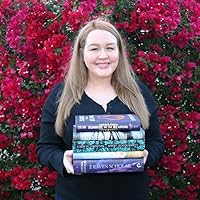
October 17, 2025
mini review to come! but this was really middle of the road for me 💔
♡ buddy read with maëlys
blog | instagram | youtube | wishlist | spotify | substack
➛ Babel: An Arcane History ★★★★★
➛ Yellowface ★★★★★
➛ Katabasis ★★★★
1.) The Poppy War ★★★★
2.) The Dragon Republic ★★★★★
2.5) The Drowning Faith ★★★★★
3.) The Burning God ★★★★★
♡ buddy read with maëlys
blog | instagram | youtube | wishlist | spotify | substack
➛ Babel: An Arcane History ★★★★★
➛ Yellowface ★★★★★
➛ Katabasis ★★★★
1.) The Poppy War ★★★★
2.) The Dragon Republic ★★★★★
2.5) The Drowning Faith ★★★★★
3.) The Burning God ★★★★★
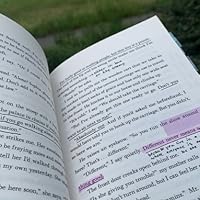
Review of advance copy received from NetGalley
2.75 ⭐️
I love R.F. Kuang and I’ll probably read anything she puts out, so I was really excited for this one, but unfortunately this was pretty meh for me. I honestly don’t even know what to think about it because it didn’t really give me much to feel strongly about. I didn’t hate it, but I also never found myself invested in what was happening.
I did enjoy some of the language and cultural aspects, and I liked the parts about Lily trying to connect with her family and her Chinese heritage. There were definitely interesting ideas here, but I wish the book would've done more with them. A lot of things were introduced and then moved on from pretty quickly, so I never felt like any of it had much impact. Lily was also a character I never became attached to. The overall story just gave me nothing.
🎧 I listened to the audiobook, and I think Carolyn Kang did a really good job with it. I especially liked hearing the Chinese pronunciation.
I love R.F. Kuang and I’ll probably read anything she puts out, so I was really excited for this one, but unfortunately this was pretty meh for me. I honestly don’t even know what to think about it because it didn’t really give me much to feel strongly about. I didn’t hate it, but I also never found myself invested in what was happening.
I did enjoy some of the language and cultural aspects, and I liked the parts about Lily trying to connect with her family and her Chinese heritage. There were definitely interesting ideas here, but I wish the book would've done more with them. A lot of things were introduced and then moved on from pretty quickly, so I never felt like any of it had much impact. Lily was also a character I never became attached to. The overall story just gave me nothing.
🎧 I listened to the audiobook, and I think Carolyn Kang did a really good job with it. I especially liked hearing the Chinese pronunciation.

September 21, 2026
🥢 3.25 stars ୨ৎ﹒
⚊ 25/9/26 ⊹ ɬ𐒅oꭎg𐒅ɬઽ
I liked it. Like, I genuinely enjoyed it. I loved all of Lily’s experiences and gathered so much information about Taiwan, its culture, and its food. I cringed at that part with Lily and JC..went to that trip....😕 I was having dinner and was about to puke😭 whatever Lily experienced, if I close my eyes, I could feel her. I mean, her experiences with life, family, friends, and her disconnection from her culture are my nightmares. some things about lily were a bit mean, tbh. I didn’t like how her friendship with anna went downhill or how she used mean flashbacks about her grandparents, because I had/could never do that😓
✦ sometimes books like these heal a different corner of your mind. taking away a few beautiful reminders to stay connected to your roots and family, prioritize and cherish the people who are present now cuz nothing stays forever. before childhood becomes just a memory and it’s too late. will be reading more of her works!
⊹ ⁺ ₊ ⊹ ⁺ ₊
⚊ 21/9/26 ⊹ ⍴rᥱrᥱᥲძ
my first R. F. Kuang, everyone!!! 🫶🏻 angelina has talked SO much about the author and her background that i can’t help but be intrigued by her already. so, let’s see what her works have in store for me!!! 🌠
「ꗃ」buddy fireworking with angelina 🩵
[ 🍜 ] ── thanks for introducing me to this beautiful author angelina♡ iconic as always!
⚊ 25/9/26 ⊹ ɬ𐒅oꭎg𐒅ɬઽ
I liked it. Like, I genuinely enjoyed it. I loved all of Lily’s experiences and gathered so much information about Taiwan, its culture, and its food. I cringed at that part with Lily and JC..went to that trip....😕 I was having dinner and was about to puke😭 whatever Lily experienced, if I close my eyes, I could feel her. I mean, her experiences with life, family, friends, and her disconnection from her culture are my nightmares. some things about lily were a bit mean, tbh. I didn’t like how her friendship with anna went downhill or how she used mean flashbacks about her grandparents, because I had/could never do that😓
✦ sometimes books like these heal a different corner of your mind. taking away a few beautiful reminders to stay connected to your roots and family, prioritize and cherish the people who are present now cuz nothing stays forever. before childhood becomes just a memory and it’s too late. will be reading more of her works!
⊹ ⁺ ₊ ⊹ ⁺ ₊
⚊ 21/9/26 ⊹ ⍴rᥱrᥱᥲძ
my first R. F. Kuang, everyone!!! 🫶🏻 angelina has talked SO much about the author and her background that i can’t help but be intrigued by her already. so, let’s see what her works have in store for me!!! 🌠
「ꗃ」buddy fireworking with angelina 🩵
Displaying 1 - 30 of 2,544 reviews