2026 WINNER Independent Author Award for best Autobiography - Literary Global Book Awards. 2026 WINNER Independent Author Award for Women's Issues - Literary Global Book Awards. 2026 FINALIST in four additional categories for Independent Author Award - Literary Global Book Awards: Non-fiction Cover Design, Non-fiction Book Interior, Health - General, Inspirational.
DOES EVERYTHING IN YOUR LIFE HAPPEN FOR A REASON?
AMOR FATI is a harrowing true story about survival, hope, and healing. It is the incredible testimony of Zoë Collins' fight for survival, against unthinkable odds, and the inspirational journey she took toward reclaiming her life. Written with emotional intensity and raw vulnerability, she takes readers inside the trauma that reshaped her life, and the long aftermath that followed. Zoë shares AMOR FATI as a beacon of hope and proof that, even after the darkest experiences, life can still take root again.
Aged sixteen in 1997, she was groomed and abducted by a man who held her captive for three months. Managing to escape, she turns up on her parents' front doorstep, barefoot, broken, and pregnant. After enduring experiences that no person should ever have to face, Zoë survived, but survival was only the beginning. Discouraged from seeking justice and forbidden to speak about what happened to her, what followed were years of silence, shame, and carrying all of the traumatic pain alone. Believing that speaking might cause more harm than healing, this memoir traces not just what happened to Zoë, but what it took for her to become truly free, and to finally begin living again.
WHAT HAPPENS AFTER SURVIVAL, WHEN THE DANGER ENDS BUT THE TRAUMA DOESN'T?
Unflinching in its detail yet deeply compassionate, the narrative moves through fear, resilience, and the search for meaning after devastation. Alongside the darkness are chapters filled with warmth, colour, unexpected light and even humour, reminding us that hope does not erase pain, but can grow beside it. This is not a softened account of what happened, nor a rushed portrayal of the recovery that followed. Instead, it sits in the truth: that survival is messy, nonlinear, and deeply human.
Acknowledging the devastating consequences of generational trauma, Zoë writes not only as a survivor, but as a mother, sharing how her own trauma shaped her parenting and how she learned to navigate her way through. Exploring the slow and uneven journey of recovery: the grief, the isolation, the setbacks, and the gradual rediscovery of connection, meaning, and hope. She reveals how healing often arrived quietly and unexpectedly, as she describes the incredible bond she had with horses throughout her life. Woven distinctively into her life's tapestry, they became a regular pattern, and played a vital part in her healing journey.
IS THERE LIFE AFTER TRAUMA?
AMOR FATI is not a story of forgetting the past, but of learning that pain does not have to be carried alone. It delivers the powerful message that suffering in silence deepens wounds rather than heals them, and that the most dangerous place to be held captive is in the unspoken traumas we lock deep within ourselves. It is an invitation to speak, to be seen, and to understand that healing often begins when silence ends.
It is brutal. It is honest. And it is, above all, a testament to survival, hope, and the possibility of healing. It is a story for anyone who has survived something that they should never have had to endure. It will appeal to readers drawn to powerful true stories that confront suffering, while ultimately affirming life. For trauma survivors, caregivers, and anyone navigating their own healing journey, this memoir offers comfort, understanding, and the reassurance that you are not alone in this world, and that your story matters.
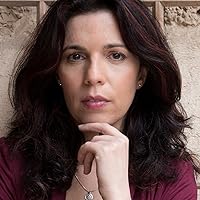
"Zoë Collins is an Irish author based in County Clare. Her writing explores themes of trauma, survival, healing, and human connection, drawing on lived experience and emotional truth.
With a reflective and compassionate voice, she weaves intimate personal narrative with themes of resilience and self-discovery. A lover of nature, poetry, and the arts, she lives by the Atlantic coast, where the landscape continues to inform and ground her work."
🌱🌸🌱🌸🌱🌸🌱🌸🌱🌸🌱🌸🌱🌸🌱🌸🌱
Now that's the official introduction out of the way, here's a bit more about me...
While I could talk for Ireland, I'm not actually a people person, and prefer the solitude of my own company. That said, I love being around those closest to me, including our goofy nine-year-old Boxer - who still thinks he's a puppy!
Since publishing my book and joining you all here, I've reignited my passion for reading, and forgot just how much I love discovering new books. There are positives when reading with my kindle, but personally I much prefer the experience of turning paper pages, and using homemade bookmarks. Somehow, I feel the narrative comes alive more in the weight of a book, compared to the ease of a screen.
Naturally, based on my own book, I'm drawn to other biographies/memoirs but I enjoy all genres really. Children's classics, new fantasy novels, and historical fiction have been some of my recent favourites - so quite a mixed bag!
My other interests (in no particular order) are painting acrylic landscapes, pottering in the garden, cooking up a Sunday roast, and collecting crystals. I appreciate the little things a lot more now since my cardiac arrest in 2017, and my hysterectomy in 2024. Life is so fragile and precious - I've wasted too many years stressing over things I simply cannot control.
I'm absolutely blown away to share this latest announcement of results today, from Literary Global Book Awards. Amor Fati: An Incredible True Story of Survival, Hope & Healing by Zoë Collins, has just been awarded two international book awards. It was also shortlisted as a finalist in a further four categories:
2026 WINNER Independent Author Award for best Autobiography - Literary Global Book Awards. 2026 WINNER Independent Author Award for Women's Issues - Literary Global Book Awards. 2026 FINALIST in four additional categories for Independent Author Awards - Literary Global Book Awards: Non-fiction Cover Design, Non-fiction Book Interior, Health - General, Inspirational.
I'm beyond grateful to all the readers and judges who read my story, and chose to award it such accolades - thank you!
This is an intensely personal memoir that chronicles the author's experiences with trauma, survival, and healing. Throughout the book, it is evident that sharing these experiences required tremendous courage and vulnerability. That said, I struggled with the book's length and structure. At nearly 400 pages, the narrative often felt repetitive, and there were moments when references to people or events became confusing, making the timeline difficult to follow. The memoir addresses extremely difficult subjects, including sexual violence and abuse, and readers should be prepared for graphic and potentially triggering content. While I understand the importance of documenting these experiences honestly, the level of detail may not be suitable for every reader. I respect the author's determination to tell her story. Readers interested in deeply personal memoirs that explore trauma, resilience, and the ongoing process of healing may find significant value in Zoë's journey.
A Survivor's Story of Courage, Resilience and Recovery
This was a very difficult memoir to read at times, but also an incredibly brave one to write.
The author's story took me through a whole range of emotions, though the strongest was anger - not only at what Joe did to her, but also at some of the responses she received from those who should have been protecting and supporting her. Reading about the long-term impact of those experiences was heart-breaking.
I appreciated the content warning before the captivity section. For my own wellbeing, I chose to skip that part, and I was grateful to have the opportunity to do so. There is a great deal of difficult material throughout the book, including detailed medical procedures and the lasting physical and emotional consequences of trauma.
What stayed with me most was the author's resilience. Time and again, despite everything she endured, she kept moving forward. I was particularly touched by the healing she found through nature, especially her connection with horses and dogs. Those moments provided welcome light amongst some very dark chapters.
The sections involving Marisa's birth were especially emotional. The separation that followed, and the frightening incident when she stopped breathing, were all deeply moving to read.
I also found myself reflecting on the passages where the author discusses the choices she made as a sixteen-year-old. The author wrote that she had two choices, but personally, I came away feeling that her younger self had been so traumatised and broken by what she had endured that those choices may never have been truly available to her. More than anything, she seemed to need love, compassion, support, and time to heal, and instead she was met with further pressure and coercion.
The memoir is very well written and engaging throughout, with only a little repetition here and there. I was glad to see that Amanda's inclusion in the book was done with permission, and I admired the honesty with which the author explored the complexities of family relationships alongside her own health challenges.
Above all, this is the story of a survivor. It is painful, honest, courageous, and ultimately hopeful. I hope it brings the author some measure of closure, and I believe it will inspire others who have experienced trauma by showing that recovery, while difficult, is possible. Most of all, I hope she knows that what happened to her was never her fault.
Amor Fati by Zoë Collins is an inspiring story of survival. I want to start by saying this book is super heavy on trauma, though it does give some hope when you need it.
I really liked that we're shown a lot--not told it. And that's hard to do in true stories especially if it is in a memoir or autobiography. But here, there's a good amount of scenes that show you the pain she endured. I also really enjoyed the writing. It was polished and well edited. Some of the accounts are super detailed, to include the beginning with Sharon Carr whom I did not know about and Zoë Collins' father and his glass eye.
The biggest struggle for me was the narrative jumped in a few places. While I like that we're shown a lot it does come at odd times. For example, during a harrowing recount with Joe there is a break in the linear timeline and I got disoriented. This happens in other story threads (particularly in the beginning) which can muddy the timeline for a reader. It did make me go "wait, I thought this was over?" But this is an isolated issue that does not detract from the overall story.
This is a powerful memoir that really made me want to give Zoë a hug. This is heavy but moving.
What tremendous compassion I feel for Zoe, this is a tome of pain and redemption
Amor Fati left an impact on me but it is looong. And painful. It’s an expose of anguish that puts you in the group therapy session with Zoe as she recalls every wrong and evil deed ever performed against her. Some of it is bad. Other parts occasionally reach unbelievability in the details but grant her that you’re looking in through the dirty window of a written account. There are numerous spelling and grammatical issues in the nearly 400 pages and massive trigger warnings—which, I would prefer they were plucked out of the narrative text. Structurally, there is a recurring problem of details and people being named or introduce after they are used in the telling of the story. I might be cautious about who I shared the recommendation with as it is about sexual violence and raw violence. Best I can say to that is I wish I were her uncle. We can cure that business when we find it in Texas… Zoe deserves praise for her courage to face these disturbing truths. I dread thinking about the details she must have kept to herself.
Amor Fati is Zoe Collins’ recounting of how three horrific months at the age of sixteen in the hands of a predator can shape the rest of a person’s life. While I think the book from a prose perspective is quite good, it has larger issues that keep it from shining the way it should. The problem is not one of readability, but of length, focus, and tone.
I recently read a biography of Bruce Sprinsteen that was roughly 175,000 words. I found the book riveting all the way through. It helps that he’s a famous artist and has lived a long and interesting life. Amor Fati is close to 170,000 words and I found myself exhausted less than halfway through. The book reads like an autobiography (adolescence to middleage) but would have been better as a memoir concentrating on the one incident that resounded over the decades, instead it delves into almost every major event in the author’s life over the last thirty years.
It was Hitchcock who said, “Drama is life with the dull bits cut out.”
In other words, remove the mundane and the uneventful so that the essential emotional and narrative core remains. I will say that the first one hundred pages or so held my interest. Anticipating that this was a book about trauma, the intro almost reads like a preamble to some psychological horror novel---the idyllic childhood that’s dotted with disturbing incidents, the passive-aggressive mother who was too caught up in ‘appearances’--- and in the author’s words, overly concerned with ‘never making a fuss’.
The months-long incident with Joe, an obvious sociopath, was harrowing to say the least, and not just the described abuse, but the helplessness of an immature and naïve 16-year-old who lacked the tools to deal with a monster. The scene where the author’s mum arrives in Bracknell and begs (with tears in her eyes) for her daughter to return home with her is both gripping and heartbreaking.
I understand the notion of coercive control and how it functions in these types of grooming situations, but I needed an explanation for why Zoe (the author) chose to stay in that house after the first 24 hours. The lead up to moving in with Joe happened so fast that it lacked proper context. What was she expecting? Just a housemate? A romance? At what moment did she truly feel that she was under his coercive control? These are the questions I asked myself as I read but it felt like key moments were glossed over. The reason I wanted answers is because of how quickly things spiraled out of control once she shared a home with Joe. Within the first twenty-four hours of being in Joe's company she was violently assaulted by him. Even naïve teenagers know they don’t want to be punched in the face repeatedly. ****edit**** The transition into the captivity chapter happens so quickly that, as a reader, I felt I was missing the psychological context of how Joe established such total control over her so fast.
Here is a brief passage.
“Trauma does not always arrive as chaos. Sometimes it arrives as normalization. I began to measure time not by days, but by patterns. Wondering which version of Joe would appear when he opened the door. The furious one, the wounded one, the charming one, or the quiet one. Each version required a different survival strategy.”
What’s missing from the ‘Held Captive’ chapter is the so-called “charming Joe”. That Joe never once makes an appearance, and it created a certain cognitive dissonance. Perhaps it was too painful to recall his fake charm, but it would have at least cast some light on why you stayed around after his first attack, and from a broader perspective, could serve as a powerful lesson for any young woman who find herself in a similar predicament, signs to look for, red flags to be aware of.
Once Zoe freed herself from his grip, the aftermath and her parents’ reaction to what happened to her kept my interest for a while--- I was genuinely curious about her recovery.
Unfortunately, from that point forward, the narrative acquired a ‘then this happened, and then that happened, and then this happened, and then that happened’ pattern that eventually wore me out. At times, the tone reminded me of an angry teenager making diary entries about how much she hates her parents. The author may not have intended it this way, but chapter after chapter was imbued with bitterness towards her parents, who seemed, as written, like perfectly imperfect people.
Her mother takes the brunt of the anger, but her father isn’t spared, and that created more cognitive dissonance for me. For instance, Zoe’s father, at various times over the years, visited her in the hospital after her botched termination procedure, suggested and paid for an Equine Studies course at a College because he knew Zoe liked horses, visited her in Ireland when she joined the Army, and even made her a laminate with ten motivational reminders of what to expect from her Army training. Later, after Zoe had two children and was going through a divorce, her father made sure she got an early inheritance from her Nana to help out with her financial situation.
Granted, her mother, as written, sounds like a person with a lot of unresolved emotional issues, harking back to her insistence on never ‘making a fuss’ and keeping up social appearances as for the reason why the author's trauma was never properly dealt with. But... her mother was the one who tried to stop her from moving out at 16 and seemed desperate to get her back home when she confronted her daughter in that pub in Bracknell. She also visited Ireland during both of her pregnancies to aid her postpartum. It’s not like she was completely absent, even if her ‘mothering style’ was not what you wanted or expected. She also had two other children, Zoe’s sister and brother, who incidentally, are hardly mentioned at all during an all-encompassing 400 pages. What happened to them? Were they absent in the author’s life? Did they not want any contact with their sister? If so, why? Questions worth asking and it gave me the feeling (reading between the lines) that there was much that was unwritten.
Worth mentioning is the author’s fracture with one of her daughters, Amanda, who is described as child prone to bullying and stealing things, and is broadly presented as a 'problem child'.
The author writes about searching her daughter's room; “Finding personal items of Marisa’s and mine, along with several hidden vapes, multiple expensive cosmetics and beauty products, that I knew none of us could possibly afford, I was raging. I was raging because none of her behaviour made sense and she couldn’t explain it either! Every single time when I asked her Why? She would mumble 'I don’t know'. It was simply infuriating, and I couldn’t excuse her behaviour anymore, I was at my wits end!”
Later she writes; "However, upon reflection, I knew that I was simply doing the best that I could, with what I knew at the time, and with the limited resources I had. No parent is perfect, and if they think they are then they are lying to themselves. There is always room for improvement, but no amount of shoulda coulda woulda will turn back time, as much as I may have wanted them too. That being said, I don't regret the choices I took or the decisions I made, but I do put my hands up and accept accountability for them all the same."
It does beg the question, would you grant your own parents the same grace? Because throughout the read you take every chance to ding your parents, for letting you down and for lacking the empathy you deserved. Even if they deserve to be criticized, it makes parts of this book feel like a polemic rather than a chance to reflect on your own life in a deeper way, while acknowledging that not every parent makes their children the center of their lives. It also gave me the feeling that there's STILL loads of unresolved anger toward them.
Even though I feel this book is far too long and gets bogged down in minutiae (like various stable jobs, multiple health scares, Australia, the Irish Army, moving house, newfound hobbies like bodybuilding and a passion for healing crystals), I still admire the author's embrace of her own wanderlust, the way she made a home in Ireland with the various 'found families' she encountered throughout her life, which provided examples of the kind of maternal affection she craved. Writing this book must have been a cathartic experience.
There is good stuff here. The author has a knack for taking her thoughts and feelings and putting them into words, and if she tried her hand at writing a psychological suspense novel, I'd give it a chance. As for "Amor Fati", a sharper focus and leaner word count (by half!) would help crystalize the story in the subtitle-- the one about one person's survival journey toward hope and healing.
“Amor Fati” by Zoe Collins is an amazing inspirational read. It is a true story about a real-life survivor of abuse – both mental and physical – who found her own inner-strength and chose to rise above adversity and not let her past define her. Instead, she accepts what life had dealt her and uses it to strengthen her resolve and decides to celebrate all that her life has to offer. It isn’t easy to do so – but like the title of the book “Amor Fati” (which means “Love of Fate”) – the author reflects on her life and focuses on healing tragedy and overcoming pain instead of being trapped by it.
The author’s writing style is very vivid and draws you in so that you not only empathize and sympathize with her, but you “live” her experiences alongside her. Her first-person narrative makes you feel her emotions from her perspective and reflects the inner-demons haunting her soul and tearing at her heart.
The author takes you on a rollercoaster ride of experiences – good and bad – humorous and horrific – with a heart-rending detail and in-depth sentiment. All this spans the gamut from starting out with strict parents who guard their emotions and lack sympathy, dismissing her problems and issues, to an ignored albeit dangerous health condition, to being bullied in school by a true psychopath, and further suffering the impasse of uncaring teachers and adults. The drama rises to new heights rather quickly as she is accosted by a bus driver, only to not be believed by anyone she tells. This sets the stage for much of her young life, where she falls victim to one circumstance after another and is either not believed, or is guilt-tripped into thinking it is somehow her fault, though the truth is quite the contrary. Perhaps most tragic of all, her family refuses to acknowledge any problems, and ignores the “giant elephant in the room”, even if they couldn’t deny its existence, deeming it to be an unnecessary shame upon their household, which is very traumatizing to a young teen trying to find her way into life and discover herself in the midst of tragedy. In the end, it makes her feel as if no one cares.
Alienated, ashamed, disgraced, and embarrassed, she feels like a stranger in her own home, and these vulnerable feelings of isolation lead her to fall prey to the worst kind of manipulative predator that ruins her life – yet the experience also gives her the strength to reclaim it, as she follows her spirit that tells her, “This is not how your story ends.” She escapes her captor and finds one devastating heartbreak after another.
I’m not ashamed to say, there were moments when her remarkable story literally brought tears to my eyes, and I think the bravery she showed in surviving her abuse was eclipsed only by the courage it took for her to write about it.
But her story isn’t done out of self-glorification or a plea for praise or pity. It is a testament of the human spirit. It is a torch that can be passed on to others to light the way for them to see through their own inner-darkness and inspire them to find the strength to not only survive – but live again. As the author puts it, “Everyone is the architect and executor of their own dreams.” And as the book goes on to cover her various methods of therapy and coping, from befriending horses, a brief stint in the Army, a loveable pet, more repeated health scares, and some memorable relationships, she becomes a parent herself and sees her own parents for the first time in Black and White. Despite fears, pain, scars, and memories – good and bad – and clash with an unruly daughter that makes her feel like “the sins of one generation are passed onto another”, she remains a survivor and more than that – a victor – because she empowered herself.
Anyone can become a victim, but it takes courage to find the will to survive. This book is a testament to the author’s courage, and it is an inspiration to us all. As the author says, “The deepest form of healing is not by forcing others to change, it is realizing that I no longer need them to.” And “Healing is not about forgetting – it is about remembering differently.” In the end, the author learns to “Let Go”, and is stronger for it.
Though there are many parts of this book that can “trigger” PTSD in those sensitive to trauma, and some graphic depictions can be off-putting to the faint of heart, (which the author gives full-warnings of before the aforementioned chapters), I highly recommend this book, because the story is more than just a catharsis for healing the painful memories of a tragic past – it is an emotional triumph that anyone who has suffered abuse, or knows someone who has suffered abuse, should read to help them find strength themselves. Amor Fati – love of fate – is a shining example of inspiration to find a bright future for those trapped in the shadows of the past.
This book is remarkable for several reasons, the main one being the author’s willingness to reveal so much about her life. It begins in childhood and extends to the recent past. Its main purpose is to share experiences of generational trauma and the harmful effects of conditional love in parenting. The author describes her early family life and a criminal assault she experienced at the age of sixteen. She was discouraged from laying charges against the offender and left the parental home permanently soon afterward.
The rest of the book describes how this trauma affected the author’s life and health. Several medical crises due to cardiac instability, as well as strokes and intense panic attacks are described in vivid detail. (The foreword contains trigger warnings for a number of situations.) Difficulties with parenting a child through episodes of unacceptable behaviour exacerbate the situation. At times I found it difficult to keep reading, but had to admire the author’s sense of hope and focus on healing. At no point is there any malice or negativity expressed toward family members. Memories of enjoyment and happiness are interwoven with the traumatic events.
I found some aspects of the author’s life quite interesting, specifically her work in various equestrian settings, and the world of body-fitness competitions, about which I knew nothing. I appreciated the charming images at the beginning of each chapter. The writing is clear and expressive, although I noticed quite a few sentences with so-called “dangling modifiers,” in which the first part of the sentence unintentionally applies to a different person than the second. Only a few of these were confusing, but for some reason I tend to notice them.
The book began as a journal for therapeutic purposes, something that should be kept in mind when reading it. Readers who have experienced generational trauma, gaslighting, lack of validation, and the effects of stress on physical health will find hope in this memoir. 4.5 stars, rounded up.
Some memoirs are difficult to read, not because they are poorly written, but because you know every page represents a real person's pain. Amor Fati was one of those books for me.
Zoë Collins shares her story with remarkable honesty and vulnerability, taking readers through unimaginable trauma while never losing sight of the resilience that carried her forward. What moved me most was that this isn't simply a story about surviving a horrific experience. It is about everything that comes afterward: the silence, the shame, the struggle to heal, and the long process of learning how to live again.
The sections exploring generational trauma, motherhood, and the lasting effects of unspoken wounds felt especially powerful. Healing is often portrayed as a straight path in books, but Zoë presents it as it truly is: messy, uneven, and deeply personal.
I was also touched by the role horses played throughout her life and recovery. Those moments brought warmth and hope into a story that could easily have been overwhelmed by darkness.
This is not an easy read, nor should it be. It is heartbreaking, courageous, and deeply human. More than anything, it serves as a reminder that survival is only the beginning and that healing, while difficult, is possible.
Amor Fati is an unimaginable, heart-wrenching and shocking account of Zoë Collins' journey of survival and healing. While I admire the author for candidly revealing extremely personal details of her life, I am shocked by the impulsive and irresponsible decisions she makes to escape a mother who appears to be indifferent and controlling. At the age of sixteen, she thinks she could handle herself, but walks into a self-created abyss. What a price she pays for freedom! Sadly, she doesn't have a single friend or well-wisher to guide her! This memoir is highly disturbing and difficult to read.
Despite the shame, self-depreciation, psychological scars, and the agony within her heart, Collins doesn’t give up and faces each challenge with grit and determination. Her resilience is noteworthy, her eagerness to please her parents is significant but absurd, and her endurance is monumental. She chose life and learned “the art of burning brightly in the storm.” She conveys a meaningful message through this voluminous book.
Zoe Collins' memoir engaged me from the start. Her writing has a lovely personal voice that makes the reader feel invited in as if there is a conversation going. The book is quite long and there are scenes of disturbing trauma, as well as some issues that have no resolution, as in real life. I admire Zoe's bravery and tenacity in adapting to the life she has lived, overcoming many hardships, and in writing her story to share with others. Her book is a real gift to those looking for inspiration in recovering from parental neglect, sexual violence and abuse, or serious health problems, which plague her in adulthood. While I loved the book and rooted for the author/narrator, my wish would be that this work could receive the attention of a professional edit to correct a few grammatical issues and to weed out repetitive parts. However, approaching this as reading a heartfelt journal allowed me to appreciate it fully and recognize the talents of this first-time memoirist. Highly recommend!
This entire review has been hidden because of spoilers.
This isn’t an easy book to read—and it isn’t meant to be. It’s the kind of book that, difficult as it is, should be read by girls and parents alike. Because there is simply no place for blaming or victimising survivors. What’s needed instead is awareness, open eyes, and a collective responsibility to protect children and keep them safe—no matter what.
Collins’ struggle, strength, battles, and victories deserve to be widely taught and acknowledged. Credit is due to the author for holding nothing back, and even more so to her for laying everything bare and exposing where the real shame lies. Not with her. Never with her. But with the world that failed to protect her.
She is a survivor and a hero, and this book should be essential reading—so that perhaps, just perhaps, we learn to pay closer attention and start holding the right people accountable, instead of punishing those who have already suffered.
It’s a story that’s filled with trauma pain and suffering. There’s a lot of awful and terrible things that have happened to the author, it’s almost as if she has been dealt with the worst possible hand in life. Being ignored, neglected, abused, and ultimately manipulated by practically everyone she’s met. Yet despite all this, the author still finds memories of happiness amongst all the hardship. It would be the ideal story for someone who has experienced trauma, knowing that they needn’t suffer in silence and that there are other stories like theirs.
Experiences Recounted So Vividly They Could Be Your Own
Amor Fati is the memoir of an abused woman, recounted in excruciating detail. It takes great courage to write a book like this, even though it can be somewhat cathartic. Zoe Collins does not flinch as she gives us the blow-by-blow of her life experiences, not seeking pity or even sympathy, but in the firm hope that they will help others undergoing similar trials. For that, she deserves immense respect and praise.
Ms Collins does not shy away from the gritty experience of being gaslight, emotionally and physically abused as a child and young woman. Reading her story elicited a deep sense of compassion for her and sadness towards what is unfortunately an all too common situation of young women being groomed and manipulated by male abusers. I admire Ms. Collins' courage and truthtelling. Not an easy read but a deeply moving one.