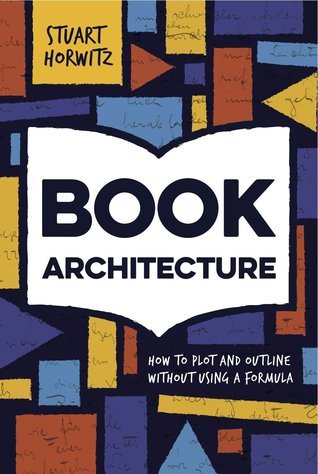
In Book Architecture: How to Plot and Outline Without Using a Formula, Stuart Horwitz returns with his trademark clarity to help writers craft a powerful plot and an effective outline for their works-in-progress. Whether your manuscript is an advanced draft or you are just starting out, whether you are working in fiction, film and TV, or creative nonfiction, you will learn a new approach to structure that will transform the way you look at your writing. Along the way, Horwitz offers detailed, concrete examples that reveal how the Book Architecture Method works with everything from literary classics to blockbuster films. And you won't have to resort to using a formula--which may seem risky! But it can be done.
Many people have the wrong impression about writing fiction. These authors believe that storytelling is simple and anyone can do it successfully. From my many years in publishing and even longer as a reader,I will tell you simply--they are wrong. The good news is every writer can learn how to write an excellent novel.
If you are a novelist, you need BOOK ARCHITECTURE by Stuart Horwitz. He has studied the structure of classic novels and teaches it in this well-written book. As he says in the opening page, "You will learn how to create an effective plot and a clear outline for your work-in-progress, whether your work is an advanced draft or you are just starting out, and whether you are working in fiction, film and television, or creative nonfiction. You will learn a new approach to structure, and you won't have to resort to using a formula, which may seem risky! But it can be done."
Yes, this is a great follow-up to "Blueprint Your Bestseller." I've found both books so helpful. I'm the kind of writer who runs from the room when someone's peddling "the formula" for great storytelling. I love that my material comes to me, that I'm following characters as I'm drafting. Horowitz isn't interested in messing with my mo-jo. Rather, he's got a method here, a way of thinking and working through the material once it's roughed out on the page toward clarity and--best of all--depth. His process is organic to content (hallelujah). It's an inside-out model. Form follows not an overlay but questions that arise from the story itself. It turns out we can have our wild, out-of-the-box, left-field creativity and shape it too. I highly recommend these tools.
The ideas in this book are solid. I'm a pantser, but he makes a good point when he mentions that pantsers still outline, they just do it more in their heads. (It's something I certainly do.) It's great to know how to physically add story layers so you're not keeping track of everything in your head. However, I am bummed on how vague the writing was. I had to re-read most of the sentences to grasp his meaning. Instead of all the story examples, I wish he would have spent some time explaining the process of how story series interact, intersect, and collide. He brings it up throughout the book but never fully explains the process. I'm giving this a four-star for the ideas; I do think I'll be able to apply a lot of the information.
This book revolutionized the way I organize and evaluate story beats in my head, throughout a novel, throughout an act, throughout every individual chapter.
I had to finish each part of this book to connect all the dots most effectively, which was a minor slog, but it's paid off immensely. Now my own planning is intuitive, productive, and simple. It's benefited my writing much more than expected, totally switching up my story structure, moving chapters around, adding and subtracting characters and emotional moments. All decisions made swiftly and with care, alongside new-found confidence and understanding.
My story's climax (something I've struggled with a long time) has never been stronger. And it's never been so easy to organize all the moving parts of the story and have immediate visibility into the flaws and strengths. Stuart Horwitz has given me an instinctual sense for what needs improving and what needs amplifying, and most importantly: how exactly to do that.
Den ger en ögonöppnare när det handlar om varför/varför inte man känner sig tillfredsställd när man läser en berättelse. Inte någon ny ”modell” utan snarare att dekonstruera texter i dess beståndsdelar och en möjlighet att vara mer medveten i sitt eget bygge av en berättelse.
I read this book in 3 days. I found the exercises and tips quite compelling, and already they are helping me to find new connections. Thank you, Mr. Horwitz!
I don't review books on here too often, but I feel compelled to review this one.
This book is a follow-up to Blueprint Your Bestseller, however you do not need to read the previous book to appreciate this one. The book is for writers of fiction primarily, but has merit for anyone who wants to write in general or wants to look at their favorite pieces of writing (whether that be fiction, screenplays, etc.) with a different lens.
The book presents a method that can be used by both those writers who like to plot out their stories before writing, those who like to write by the seat of their pants and see what they came up with, and primarily those who like to do both; which is the category I like to believe I fall into.
The methodology is presented in a very organized manner that has a bevy of both visual aids and real world examples. The real world examples range from children’s books to literary works to screenplays for popular, critically acclaimed movies.
The examples all hit home with me, though the works I was familiar with hit home with more than the one I was not (I’ve somehow never read even an excerpt, synopsis, or review of Metamorphosis). There are also clear steps for your own personal writing at the end of each chapter, though I decided to read the book as a whole before launching into any of the steps presented despite feeling very motivated to get to the writing process after each and every chapter.
The book has inspired me to get back at working on my series of novels that have been gestating for a considerable amount of time already and has given me confidence and tools to do so.
I’d say that this is a must read for any writer or aspiring writer.
Book Architecture is very much like Coyne's The Story Grid, a vice versa, and will appeal to Right Brained writers.
There was very little that was new here and as with many writing svengalis they tended to re-name concepts well known. Why this is reamains unclear, but many will have their suspicions.
Nonetheless, a competent entry in the world of story structure.
Worth a read by those who already have a grounding in story structure.
Uma coisa legal do livro é a ideia de criar uma tabela com todas as “séries” (enredos) que, creio eu, é a ideia central do livro. Contudo, várias coisas me incomodaram nele. A principal foi é que ele não ensina a construir a tabela antes de escrever, mas sim depois que já existe uma estória pronta. Ele dá dois exemplos bastante elaborados das tabelas, feitas por outros autores antes de escreverem seus respectivos livros, mas ensina apenas a fazer o detalhamento a partir de obras prontas.
Really interesting read. He takes repeating themes (or a *series* as he calls it) and uses them as driving plot points, using some great examples, including The Great Gatsby and Harry Potter. Glad it wasn't the first book on writing that I'd read, or a lot of it would have gone over my head. I definitely learned some things.
As a narrative non-fiction writer, I often find books intended to help novelists edit their work helpful. But they generally don't take into account that I can't 'invent' new material, add imaginary characters or change the order in which events happened to improve the story line. At best, I can only select what material I include or exclude, but I'm stuck with the facts as they happened. 'Book Architecture' suggests a different way of looking at a draft that is more applicable to non-fiction writing. Instead of following character arcs or plot lines, Horowitz uses what he calls 'series' or recurring motifs. These might be an aspect of a character's personality, a relationship, a phrase, an object or place that keeps re-appearing. He provides tools for analysing their placement and development so that the story has sufficient complexity and meaning to feel satisfying to the reader. It's more complicated than that, but that's the gist of it. He uses the tools to analyse several well known books and films, which is helpful to see how it works in practice.
For the longest time, I have been thinking about writing fiction, but I couldn't find a strategy that I liked. Over the past month, I not only read Stuart Horwitz's book called Book Architecture: How to Plot and Outline Without Using a Formula but I also picked up his other two books. I think I found a strategy that I can use to both improve my nonfiction writing and expand into fictional writing. Because of Book Architecture, I am seeing the world of literature and film in an entirely different way. If you are stuck in your writing process, I would certainly recommend Book Architecture. Read more
This approach isn't novel, as he shows examples of it from generations ago, but he presented it in a very concise manner. He says it renders formal structure unnecessary, but I think he simply renames it the Central Series. (I know he would argue with me on this point, but I still see it as a central structure from which all the other subplots and symbolism hangs.)
I have known of this approach of several series within a story (though I didn't apply that name to it), but I have never employed it myself. I am going to finally experiment with it in my own writing.
An interesting read. It was particulary useful to see how you can analyze the structure of the books, novels you like and learn from the authors you admire the most.
This book is phenomenal in giving me an entirely new, doable, approach to knowing how to weave and program a book for tightness and hitting all the beats.
As befits a book about planning the content of a book, this is exceptionally well structured, clear to read and supported by excellent illustrations. Each of the concepts is explained simply and then discussed using an example from popular culture. I found this to be easy to engage with and useful as a bridge to applying the ideas to my own work. It is on the shorter side and could be considered a resource (or even reference) after the first read-through. I say this because while the ideas are easy to take in, I will feel more comfortable referring to the guidelines for some of the steps when I apply them the first couple of times. More diligent students may not need to as they will have completed the exercises at the end of each chapter. Your mileage may vary. This is a useful structural editing tool for either planning a composition or for problem-solving a piece that isn't coming together.
If you’re writing a novel or a memoir or any full-length book–or planning to write one–you will want to purchase this book ASAP.
You haven’t started your book yet? Unlike his previous book, you don’t have to have written any pages. Dig in and learn how it’s done. He doesn’t provide you with a formula, but a clearcut and easy-to-follow guideline to create the bones of your unique book.
He uses a handful of books and films–one per chapter–to show how others have done it–and you can, too. You don’t have to be familiar with the stories ahead of time. Horwitz tells you what you need to know. If you are familiar, it’s even more fun. I knew some and not others.
The first chapter begins simply, with a children’s book, Corduroy.The other chapters cover the book The Great Gatsby, the film Slumdog Millionaire (I saw the movie, but it wasn’t until I read this chapter that I understood what it was all about!), the film The Social Network, the book Harry Potter and the Order of the Phoenix, the book Catch-22, and The Metamorphosis, a novella by Kafka. The last is the most complex, but by the time you get to the last chapter of the book you will easily understand Horwitz’ points.
His first book explained the concept of series and how to use them as building blocks for a book very well. But in Book Architecture we learn how to use series arcs and series grids to pull together a rich plot and subplots.
I have a different reason to love each chapter, but one of my favorites is the Joseph Heller/Catch-22 because Horwitz shares the series grid that Heller created for his novel. What a fascinating document–and so helpful to understand how it’s all done. It’s as if Horwitz pulls aside the curtain and lets us see the wizard at work.
Best yet? After reading Book Architecture, I was able to solve the remaining little problems with structure. I am happy with my structure now, plus I understand how it works so if I decide I want to change things around it won’t be a big deal because I have knowledge of my building blocks and how they can work together via series, series arcs, and series grids.
I have been a fan of Stuart Horwitz since I read Blueprint Your Bestseller. BYB is a book that will change the way you think about writing. It was the first book that provided any meaningful advice on discovering and / or developing the theme of a story. BYB and Book Architecture focus on finding the strongest scenes, building the best narrative order, and uncovering what your story's “one thing” is.
Both books demonstrate techniques for physically taking apart your story and laying it out to see what goes where and what goes...away. I created a digital version of the series grid in Excel. So far I really like it. (I haven't really been allowed to play with scissors since kindergarten.)
Book Architecture is one of those books that I believe will improve my writing now, but will also continue to improve it in the future. I feel that each story I apply the Book Architecture method to will be stronger and cleaner in the end. This is not a formula. It takes work.
I received an advanced reading copy, but halfway through the book, I just bought my own because the actual Kindle version is easier to navigate than the PDF and I really liked the method. Then I pulled Blueprint Your Bestseller to the front of my Kindle carousel for easier access as well.
Originality
I really appreciated the unique approach of BA and BYB. Plot is addressed, but not directly. Structure is important, but serves the writer. Character is critical, but developed in the narative order of the story. I have studied so many books on writing that at this point, a breath of fresh air really leaves an impression.
Many followers of Mr. Horwitz's advice may tell you this is the only book you need, other than style and grammar guides. These individuals might be correct. I am still applying all the lessons that I have learned and using several other good paradigms when they seem to work. I think, however, that the better I get at this method, the less of the others I will need to use.
Book Architecture is not going to go over the purpose of a scene or how to create good dialogue. It's not going to inspire writing hopefuls to pick up a pen and start their first story. It doesn't even have a diagram of the hero's journey. It simply offers a new technique for writers wrestling with the structure of their book.
Horwitz explores the concept of a recurring element (which he calls a "series") and the various ways it can be used to tighten up a story. While most writers probably have already used recurring elements in their stories subconsciously, this book brings it to the forefront and shows how to use this concept as part of our writing tool kits.
The book is more of an instructional manual--explaining three practical ways to use recurring elements, giving examples of each, and getting out before the 200-page mark. It may feel like a letdown for anyone who was expecting more of traditional how-to-write book. But the examples have serious street cred - author-written "series grids" (a way to chart recurring elements) for Harry Potter and the Order of the Phoenix and Catch-22, as well as grids for The Social Network screenplay and The Metamorphosis.
I'm already catching myself spotting recurring elements in my work, and thinking about how to use them more effectively. If all the "Character arc! Rising climax!" writing books have lost their shine, this is worth checking out.
I recently finished Stuart Horwitz's brilliant follow-up to Blueprint Your Bestseller, and I am in the midst of applying the method to my own novel at the moment. I'm a card-carrying member of the "pantsers" club, (For non-writers, I know this sounds like some kind of junior high school hazing ritual, but it simply means I don't do outlines, at least not as a pre-writing activity) and the method which Horwitz unfolds expertly in this book is perfect for me. That's because it allows me to take my "pantsed" manuscript and "outline" it without subscribing to some kind of "Rising Action - Climax - Falling Action - Resolution" formula. His use of classic literature, children's stories and blockbuster screenplays in breaking a work down to series to determine theme and story arcs is an accessible tool for understanding a complex topic. It's in that complexity that the writer who applies the method can find his own nuggets of brilliance. Here's why it works for me: I take what I have already written and examine it through the lens of series arcs (I have ten series arcs, by the way), and I can weave a finished manuscript that is rich and layered; everything will make sense, and anything that doesn't belong will vanish. Highly recommend for all writers, even if you are an outliner in the traditional sense. At the end of the day, you’ll have a better finished product.
I found this one on accident and figured, what could it hurt?
I spent yesterday going through this, and while everyone has an approach to plotting or outlining or mapping their story, this is one that I had heard of a while back without explanation. Now that I have seen the examples in work, and it makes more sense, now I think that this is a technique for my toolbox, as Stephen King calls it.
This definitely is not a perfect system for everyone, but that is the point in the world of writing. There is no one way to do things. It is like that scene in City Slickers where Curly tells Mitch about finding that one thing. And then later on, Mitch finds it. But, then he explains to his pals, that the One Thing is different for everyone. That is how it also is with writing. You have to find your one thing. And with some writers, they find their one thing and keep to it. Others modify it with every book. The key is to never give up, and to find what helps you get from "Once upon a time" to "They lived happily ever after".
Definitely an interesting read, and though he explains with the use of diverse books, each one is a good example of the process.
I just finished reading Book Architecture yesterday, and I am excited to incorporate series grids into my personal and professional editing processes. I appreciated the format of the book, how each element was broken down and given a "real life" example. I immediately began noticing series everywhere.
I recommend this book for people who want to break out of the "traditional" plot formula, or who have already and are now wondering how to make sense of their manuscript. Series, and tracking series in a grid, can help you identify the important elements of your narrative, and can help you organize those elements for maximum emotional and/or intellectual impact.
Stuart Horowitz lays out a new way of looking at your works-in-progress. Many writers struggle with planning and outlining their books before they sit down to write while others start writing and get lost in the middle of the story. Book Architecture helps a writer see the larger structure of your novel. Based on the concept of "series," the book helps you see how scenes and characters and images connect to make up a novel. Horowitz uses The Great Gatsby, Catch-22, and Corduroy as examples of how series work within a story to construct a complete novel.
Although Book Architecture would be useful at the beginning of a novel project, I think it would be most useful for a writer to read during the revision phase when an author is looking to strengthen the themes and deepen the narrative of a novel.
Conteúdo refrescante para os livros de escrita. O autor deixa de lado os pontos-chave da trama, explicados em praticamente qualquer outra obra sobre o assunto, e cria um método original de delineação baseado em séries.
As séries devem conter repetições (pelo menos duas) e variedade. Horwitz apresenta três ferramentas para planejarmos as séries do nosso livro — grade, arco e alvo — e demonstra sua utilização em clássicos da literatura, como Ardil-22, Harry Potter e A Metamorfose (nos dois primeiros, o autor usou os outlines dos próprios autores e, no último, ele criou as séries do zero).
Uma forma diferente e, na minha opinião, mais divertida de planejar uma história, não importa a forma como você prefere escrever.
Got recommended this book by CS Plocher, a scholar of JK Rowling's Harry Potter book plotting.
The quality of this book is great, and I learned a lot about plotting and outlining, but the color diagram of Order of the Phoenix really should have outlined Philosopher's Stone instead, as that's what most entry-level writers would be relating to, in terms of a breakthrough first novel, both length-wise and audience-wise.
Still worthwhile for the lessons learned and the careful breakdown of the Order of the Phoenix, though.
This book uses some interesting examples to frame a new way of looking at repeating motifs/themes in stories, and how to manipulate them for more impact. I found the concept a little challenging at first, but by the end I think I had a pretty good grasp of the concept and will definitely be trying it on my next book.
The book was easy to follow. Stuart used common examples. The first few chapters have a ton of information, but you need to keep reading! Chapters 5-7 brings everything together. Great book for writers.