Norman Osborn’s Green Goblin persona, once thought forgotten by Peter Parker, has returned. Now, Spider-Man must battle his greatest enemy over the skies of Manhattan.
Stan Lee (born Stanley Martin Lieber) was an American writer, editor, creator of comic book superheroes, and the former president and chairman of Marvel Comics.
With several artist co-creators, most notably Jack Kirby and Steve Ditko, he co-created Spider-Man, the Fantastic Four, Thor as a superhero, the X-Men, Iron Man, the Hulk, Daredevil, the Silver Surfer, Dr. Strange, Ant-Man and the Wasp, Scarlet Witch, The Inhumans, and many other characters, introducing complex, naturalistic characters and a thoroughly shared universe into superhero comic books. He subsequently led the expansion of Marvel Comics from a small division of a publishing house to a large multimedia corporation.
The Green Goblin is back and in full swing! He doesn't miss the opportunity to finally finish off Spider-Man! Fortunately, the wall crawler is able to trick the goblin glider and plan his next step. While that is happening, Peters friendships are put to the test as MJ and Harry's relationship turns rocky! Again, there is an underlying but clear message here and it works well with the story line.
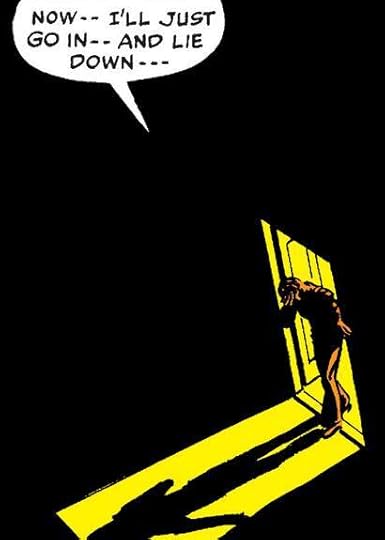
Last issue had the near death of an unfortunate soul that was high on drugs, this time Stan Lee goes full steam ahead into this theme with poor Harry Osborn now popping pills, between daddy issues and MJ flirting with Parker, Harry just can’t get a break. On reading this single issue in isolation in 2021 you can be forgiven to take the subject matter for granted, however when going through the run back-to-back from the beginning in short succession, like I have, you really feel the gears changing on the book. When you compare these past handful of issues to the early Ditko and Lee days (which seem outright whimsical now) it feels like a line has been drawn and we’re now into the 1970s proper starting a new era for Marvel comics. It’s not long before Stan Lee departs the book as writer, so I am looking forward to seeing how the book evolves under Gerry Conway.
You’d expect a landmark issue such as this to be drawn by Romita Snr. however, Gil Kane is on pencils and Frank Giacoia, his debut credit on ASM, is on inking duties.
“After drawing each panel in pencil, they next have to be rendered in ink and, as you probably know, a great inker can bring out the very best in any penciler’s artwork while a mediocre inker can actually detract from the quality of the pencilled art. Marvel has always been lucky enough to have the most skilful inkers of all. That’s why its only fitting that they received the credit that’s due to them on this very page so that their names will be enshrined in the list of Marvel Masterworkers for all time to come. Of course I’m referring to such truly great inkers as Jolly Jim Mooney, Super Sal Buscmea and Fearless Frank Giacoia. Each of them are fabulous pencilers in their own right, but they were always willing to lend a hand with the inking chores when needed.” – John Romita Snr.
ASM #97 continues the bold direction Marvel took in the early ’70s, as Stan Lee steers Spider-Man into deeper, more socially conscious waters—this time with Harry Osborn’s spiraling drug addiction at the forefront. What once began as a high-flying superhero romp has now matured into something far more grounded and emotional, marking a clear shift from the more whimsical tone of the early Ditko days.
The Green Goblin is back, and with him comes all the chaos and trauma that Norman Osborn brings to Peter’s life. But it’s Harry’s descent into addiction that gives this issue its weight. Between pressure from his father, feelings of inadequacy, and his jealousy over Mary Jane’s attention toward Peter, Harry turns to pills—and the consequences are immediate and tragic.
Stan Lee’s choice to tackle drug use without the Comics Code Authority’s approval was groundbreaking at the time, and the fact that the story still reads as sincere and impactful today is a testament to the writing. When read in the context of the run, you can feel the tonal shift—a movement away from colorful capers toward more serious, real-world stakes.
Gil Kane’s pencils, backed by Frank Giacoia’s inking debut on ASM, give the action and drama a dynamic edge. The aerial fight between Spider-Man and Green Goblin is thrilling, but the emotional moments—Harry collapsing, Peter’s anguish—hit just as hard, if not harder.
This issue doesn’t wrap up neatly, and that’s part of what makes it great. It embraces complexity and consequence, and in doing so, ushers in a new era for Spidey.
A raw, progressive, and unforgettable chapter in Spider-Man’s history. Essential reading for fans of the series, and for anyone interested in how comics began confronting the real world—head-on.