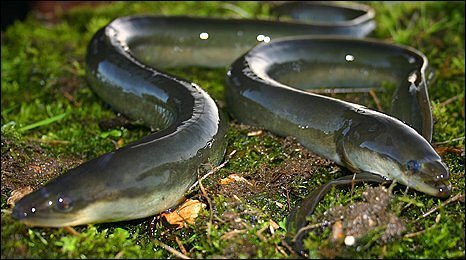
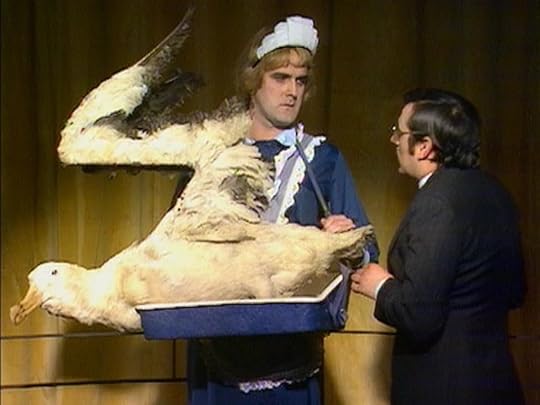
Daisy Johnson’s Fen is a liminal land. Real people live their lives here. They wrestle with familiar instincts, with sex and desire, with everyday routine. But the wild is always close at hand, ready to erupt. This is a place where animals and people commingle and fuse, where curious metamorphoses take place, where myth and dark magic still linger. So here a teenager may starve herself into the shape of an eel. A house might fall in love with a girl. A woman might give birth to a – well what?
The author of Sisters (2020) Everything Under (2018) and Fen (2016).
Shortlisted for the Man Booker Prize for Everything Under, her debut novel.
Winner of the Edgehill prize for Fen.
She has been longlisted for the Sunday Times Short Story Award and the New Angle Award for East Anglian writing. She was the winner of the Edge Hill award for a collection of short stories and the AM Heath Prize.
Reviews for Fen:
"Within these magical, ingenious stories lies all of the angst, horror and beauty of adolescence. A brilliant achievement." (Evie Wyld)
"There is big, dangerous vitality herein - this book marks the emergence of a great, stomping, wall-knocking talent" (Kevin Barry)
"Reading the stories brought the sense of being trapped in a room, slowly, but very surely, filling up with water. You think: this can't be happening. Meanwhile, hold your breath against the certainty it surely is. " Cynan Jones
"I've been working my way slowly through Fen and not wanting it to end - Daisy marries realism to the uncanny so well that the strangest turnings ring as truth. The echoes between stories give the collection a wonderfully satisfying cohesion, so that the whole is greater than the sum of its parts. I cannot wait to see what she does next." (Sara Taylor, author of The Shore)
Reviews for Everything Under:
"Everything Under grabbed me from the first page and wouldn’t let me go. To read Daisy Johnson is to have that rare feeling of meeting an author you’ll read for the rest of your life." (Evie Wyld)
"Surprising, gorgeously written, and profoundly unsettling, this genderfluid retelling of Oedipus Rex will sink into your bones and stay there." (Carmen Maria Machado)
"Daisy Johnson is a genius." (Jeff VanderMeer)
"Hypnotic, disquieting and thrilling. A concoction of folklore, identity and belonging which sinks its fangs into the heart of you." (Irenosen Okojie)
"Everything Under seeped through to my bones. Reaching new depths hinted at in Fen, language and landscape turn strange, full of creeping horror and beauty. It is precise in its terror, and its tenderness. An ancient myth masterfully remade for our uncertain times. " (Kiran Millwood Hargrave)
A collection of short stories as a literary debut which are really difficult to classify but are impressive. They are set in the fens. The fenlands cover parts of East Anglia, Cambridgeshire and southern Lincolnshire. I am a Lincolnshire lad: I wasn’t born or brought up in the fens, but I know them fairly well. One thing you do get a lot of in the fens is eels (not quite as many as there used to be). Coincidentally I went to a farmers market this morning and inevitably there were eels (filleted and smoked, whole and smoked and jellied). Although reading the first story in this collection may make you wary of eating any. The fens are flat and can be bleak depending on the weather. There is a sort of edgelessness to them because of the flatness and there is a real wildness. Daisy Johnson herself uses the word liminal to describe the fens and the stories (look the interview up on you tube). You could describe the stories as surreal, but that wouldn’t quite describe them. They contain myth, a kind of wild magic and metamorphosis. The wildlife of the fens plays a significant role; eels and especially foxes, the lines between animals and people blur. The protagonists are all women and there are interesting explorations of female sexuality, and women’s relation to men. The story about three women living together stands out in this respect; they lure men back home not just for the usual reasons, but to eat them and the analysis of men is interesting: "When we were younger we learnt men the way other people learnt languages or the violin… We did not care for their thoughts; they could think on philosophy and literature and science if they wanted, they could grow opinions inside them if they wanted. We did not care for their creed or religion or type; for the choices they made and the ones they missed. We cared only for what they wanted so much it ruined them. Men could pretend they were otherwise, could enact the illusion of self-control, but we knew the running stress of their minds." The stories totally ditch the idea that the male gaze is what matters and Johnson can write pastoral gothic like no one else I have read; she starts ominous and gets more so. These are modern stories and are unsentimental, as in How to Lose It: "Virginity was a half-starved dog you were looking after, wanted to give away as quickly as possible so you could forget it ever existed. It was the lingo of sales and stocks; what was the best deal, when was the right time to sell it all." And “You do not shave your legs or pubic hair. It is not a wedding night, nor a parade or a party or an invitation. You are not a welcome mat.” Along with some sharp analysis: “You watch yourself pretend you’ve never known anything in your life and never much felt the compulsion to. You want to make him think you have no history or education; that you might have had language once but it’s gone now. You want to make him think you’re so scrubbed clean of any sort of intelligence that he can lay himself out on you and you’ll soak him up.” The stories continue to surprise. The first one Starver seems set up to be a standard teenage anorexia story when a girl announces she is going to stop eating, and does. But metamorphosing into an eel is very much not part of the standard script. And is there a link to the last story where a female lighthouse keeper encounters a fish that seems to have almost human qualities. Look out in that one for the representations of male sexuality which wants to possess rather than enjoy. There are touches of fairy story, myth and magic: a house that falls in love, a woman made of fen clay reading Madame Bovary (“she would not tell him about being more field than human ... On hot days she heard the internal crackings of her baked insides, felt the make-up run from her clay skin.”), a young man who dies tracking a fox whose spirit may now be in the fox and look out for the one with the albatross (not a bird you see on the fens) which comes out of leftfield. Then there is an earthiness about them as well, as in How to Fuck a Man you Don’t Know: “When he says he likes your boobs or that your bottom is tight or that you’re pretty fun aren’t you, you tell him words are cheap enough to spit and push his face the place you want it to go.” These stories are inventive, well written and quite brilliant. The writing and language sometimes seem to flatten like the landscape, there is much that is wild and other, but rooted in people we can recognize and places that are real. People brought up in small towns may recognize these reflections from a fifteen year old girl: “There wasn’t anything special about either of them except they thought they didn’t belong there. But didn’t everybody, she’d say while her friends leant back and watched the mudded thighs of the boys playing football on the school field, didn’t everybody want to bloody leave? … We’re boring. It was the truth. In a town where there was nothing to do they did well at doing nothing…they had never gone further than the nearest city; they had never done anything worth doing.”
These stories will haunt you. I already have her first novel, just published and on the Booker longlist.
“She was threaded through with cynicism, taut with anti-belief.” Me too, usually, and yet I was bewitched.
I loved slipping in and out of these elemental short stories. Like the eponymous marshy Fens, which were drained centuries ago, but retain an aura of folkloric mystery to this day, the stories are infused with a hazy liminal quality, and a dash of lurking menace. Watery myths, magic, and superstitions seep through the gaps (and gaps, spaces, and blanks recur with significance) in beautiful, unsettling ways, scouring the lives of the poor inhabitants - poor in many senses.
Image: Baston Fen, in light mist, by Terry Barnatt (Source)
There’s power in words, especially in secrets and confession. Language and memories are distorted and even stolen. The pages are splattered with sex, love, earthy sensuality, blood, brutality, loss, death, and transformation, crossing the boundaries of land, water, species, and reality.
“Everything was a threat, or promise, or a joke.” Or a symbol.
Connections
All the stories focus on women, most of them young, and there are faint threads linking some of the stories. There are clear similarities of themes and tone with Johnson’s first novel, Everything Under (see my review HERE), but I think this earlier work is better.
It’s magical - and I say that as a confirmed unbeliever in the supernatural. I enjoyed this collection in a similar way to Angela Carter’s adult fairy tales, The Bloody Chamber and Other Stories (see my review HERE), and several of the individual stories reminded me of other works, but with a fresh and unique angle. I also read Max Porter's Lanny soon after this. The writing style in that is more experimental, but the mythic feel is similar (see my review HERE).
STORY BY STORY
Starver The Romans were the first to drain the Fens, but it’s ongoing, never permanent: nature is strong. This opens with unexpected consequences of recent drainage: eels everywhere, but there’s something not quite right about them, nor with Katy’s sister - and there’s a connection. It explores identity, sisterhood, and transformation in a very similar way to Han Kang’s The Vegetarian (see my review HERE).
Blood Rites “When we were younger we learnt men the way other people learnt languages or the violin.” A sinister opening to a deliciously dark tale. “England was the language of breaking and bending and it would suit our mouths better. None of us would ever fall in love with English. We would be safe from that.” I guessed the premise early on, but that didn’t detract from it. “Fen men were not the same as the men we’d had before. They lingered.”
A Bruise the Shape and Size of a Door Handle When she’s nine, Salma’s mother dies, so she goes to live with the father she barely knows. There’s an immediate suggestion of something disturbing, though not from her indifferent father, and starting her period presents practical problems, as well as symbolising something much deeper. She experiments with who she is, which includes an obsession with the arthouse film director, January Hargrave, who appears in another story, as does the pregnant barmaid at the Fox and Chickens, while a fox is totemic in yet another story. But this is a story about the transformative power of sex: “It changed the way the fields looked and the way she moved at school… She had to tell someone. The words scalded her insides.” And about obsession: “[Pronoun] loved her darkly and greatly and with a huge, gut-swallowing want… love spun often into hate.”
How to Lose It “Virginity was a half-starved dog you were looking after. Wanted to give away as quickly as possible so you could forget it ever existed.” Choices have consequences, and destiny can ripple down the generations.
How to Fuck a Man you Don’t Know This one’s told backwards, in nine short sections, starting with the breakup, and ending with how they hooked up. “There’s no clear moment when you decide it is too late and you like him.” It cleverly blurs the lines about who’s making the decisions and if either party is taking advantage of the other.
Language “Nora… was good at all those things nobody much wanted to be good at… she was logical and somewhat cold… She was larger than was fashionable.” Nevertheless, she embarks on an improbable relationship, which is unexpectedly cut short and even more unexpectedly transformed. “She could feel the spiky pressure of letters against her gut, the sticks of Ks and T and Ls on her insides..” The literal, physical pain of language, and the desperate ingenuity to find ways circumvent it, was very like Ben Marcus’ The Flame Alphabet (see my review HERE) and also Kafka’s In The Penal Colony (see my review HERE), though the causes, situations, and consequences are utterly different.
The Superstition of Albatross “She… saw the ends and starts of conversations swimming up and then receding into the loud. Boat words she knew from Ruben caught at her like hooks.” A pregnant barmaid, searching for what she’s lost, is reading and rereading letters. Since Coleridge’s The Rime of the Ancient Mariner, albatross have been symbolic of innocence, beauty, and suffering, and sailors believe killing them is very bad luck.
A Heavy Devotion This starts with a distraught mother greeting people who are enquiring after her absent son, who used to draw crowds for mysterious reasons: “I almost forgot… what he was… The first time it happened… I was not afraid of him then.” There are hints of miracles and resurrection. I immediately thought of Colm Tóibín’s The Testament of Mary (see my review HERE). But this is darker than Tóibín’s novella, and without the explicitly Biblical framework, it’s more unknown and unknowable.
The Scattering “Marco and Arch looked so like one another, like a mistake doubled across space. She looked like leftovers.” Arch is a gifted storyteller, whose stories include a couple of those earlier in this collection, and Mattie develops an interest in the films of January Hargrave, linking to another. DH Lawrence’s The Fox (see my review HERE) also seems relevant. However, this is about family bonds, difference, fitting in, and maybe reincarnation.
Birthing Stones Having a child (or anyone you love) is a prelude to loss, whether yours or theirs. The more you want it, the more you have to lose. This story is an allegory for growing up and leaving home. AS Byatt’s short story, The Stone Woman (see my review see my review HERE) came to mind.
The Cull Grim and opaque: sick and injured animals, an arena, knives, blood, more injuries. (I almost wondered if the final letter of the title was a typo.)
The Lighthouse Keeper “A storm was unbuckling itself from somewhere… She womanned the radio all night.” It’s a lonely job, and the pull of tides and sea creatures is stronger than the pull of the nearby townsfolk. For another magical look at such themes, see Jeanette Winterson’s Lighthousekeeping (see my review see my review HERE).
• “She thought that his time away had lost them nothing, had given them only a perspective of loss. A knowledge of absence.”
• “I like cocks… but I’m trying to be bisexual, even if it doesn’t take. I think, in this day and age, it’s wrong to be straight.” [Said by a teen.]
• “You feed him cigarettes as if they were words.”
• “He didn’t write the sort of words that could hide anything anywhere.”
• “He loved… the secret codes of fear and belief the boats ran on.”
• “She wanted to tell him the truth. A gift he’d not asked for or wanted.”
• “It was important there were no gaps for thinking or spare moments for thoughts to slip in.”
• “She was how she imagined tiredness must feel.”
Enigma
All the stories are set in the Fens (eastern England, covering parts of Lincolnshire, Norfolk, and Cambridgeshire), so why is the grid reference in the introduction to Oxford city centre?
Daisy Johnson's first novel Everything Under was one of the highlights of this year's Man Booker longlist, so I was very keen to get hold of a copy of this collection of stories, which is also very accomplished for such a young writer.
This collection is slippery, liminal and atmospheric, blending fairytale elements with the lives of real people and an earthy sexuality. The most impressive and fully formed story is The Scattering, which is also the longest. Its narrator is the younger sister of a warring pair of twins, one of whom tells her stories that match others in this collection. Like those this one also involves an element of shapeshifting.
The fens are a constant brooding backdrop, and as in Everything Under the book is full of aquatic imagery.
I came to this book, after reading Daisy Johnson’s wonderful Everything Under – a book I described, alliteratively as a “literary novel of the liminal, language, leaving and legend, longlisted for the 2018 Man Booker prize.”
Many reviews of that book have I feel concentrated on the legend part, an even within that legend part on the Greek legend whose plot underlies the novel (and looking for other Greek parallels) whereas I saw the other elements of equal importance and the legend part as drawing on a more modern range of English countryside (or perhaps more accurately) waterside legend.
My thoughts lead me to this book – the author’s debut book, a short story collection. Like Everything Under its main setting is the rivers, and land/water boundaries of an area near an English ancient university – but in this case of a light rather than dark blue hue.
Having spent the first 17 years of my life in South West Norfolk, and (following a brief Thames estuary break) the next four years in Cambridge – the foundational part of my life was spent in areas which bounded the Fens – the eponymous district in which this collection is set, where water becomes land, and land can lie below water, and where the dark, earthy soil is heavy and fertile.
It is an area which has featured in Graham Swift’s Waterland (which while a very different book, has in common that the Fens themselves almost end up a character, and has a slight obsession with eels) and is the historical setting for Paul Kingsnorth’s wonderful The Wake.
The distinctiveness of this collection is set from the first story – what at first seems to be a tale of teenage anorexia turns into a story of land drainage and transformation into an eel – and is followed by a story of men-eating women who are then possessed by the men they eat and then by a jealous house, and later by a new mother who experiences the visitation of a sailor’s superstition, and by a woman fashioned from the Fen earth and magical belief.
Themes in this collection include: transitions; boundaries; sexuality; earth and mud; water, rivers, boats and barges; metamorphosis and shapeshifting; legend, English folklore and ancient magic, grounded in the landscape; language and the power of words.
Immediately the inspiration and ground work (should that be water and earth work) for Everything Under is apparent and this collection serves both as a fascinating book in its own right, as well as a great way to understand Daisy Johnson’s interests as a writer.
Imaginative something... I guess I just don't appreciate all the liminality and all the fen-ness spreading throughout the stories and all the foggy quality of the writing. Basically, all the stories felt... like a good pshychiatrist was very much needed in order to set things and people right.
I read Fen on the back of the 2018 Booker shortlisted Everything Under Fen was written some two years previously. Its a collection of short stories, and had received praise from a relatively small number of readers. The stories are in many ways more striking than the better known Everything Under, and this is in part the nature of short stories that cannot meander (Sarah Hall's term for the more forgiving nature of longer novels). Daisy Johnson doesn’t meander here; the majority of the stories are striking and shocking, and certainly mystical. Daisy Johnson has a fertile imagination, and a dark side it would appear (!) My favourite line is taken from How To F**K A Man You Don’t Know: “Talking about Iraq and the Booker shortlist.. You think this makes him knowing and intellectual”(60).
I heard Daisy Johnson talking at Waterstones, Covent Garden, in September 2018- newly Booker shortlisted. I was surprised how much of the conversation came back to Fen, rather than the more illustrious Everything Under.
In conversation:
* Fen came out of her University Masters work (Somerville College, Oxford University) * Fen introduces the pub "Fox and the Hounds" . Daisy had read how Anthony Horowitz gets bored and plays little games with the text/storylines in his books. Daisy's choice was a pub- this is a fictitious pub! This pub appears, subsequently, in Everything Under * Fen as a female perspective on life? Daisy said it was in part a reaction to feeling angry as a teenager because there were not enough female characters. Daisy cited Sarah Hall (a big influence) - I will stop writing about female characters when you stop asking me about female characters" * The first story "Starver" features a girl who metamorphoses into an eel. Daisy has been asked, is this a literal transformation, or is this a metaphor? Her answer? Either; both; it's what you, the reader, want it to be. I asked Daisy a direct question about a bit I was puzzled by in Everything Under, and she gave me a similar, ambiguous answer. I think this is a sensible, and intelligent, way of dealing with the ranks of amateur sleuths and book critics. But not having a definitive answer it keeps the books alive, debate continues; it’s not an entity with a cut and dried answer... like life itself.
It is going to be very difficult to knock this off the spot of best book of the year for me.
I have always enjoyed books set around harsh landscapes (am I the only person to find Wuthering Heights a 'cosy' novel?) and that is part of what this book is, set on the flat english Fenlands, is. It also appeals to the small town/village girl in me.
The writing is beautiful, and made the elements of magic injected into most of the stories completely plausible, as well as being magical each was so human. Reading this was a joy, I had to stop reading to save some for the next evening.
My particular favourites were 'How to Fuck a Man You Don't Know' and 'Language'. Each story I read I found myself cursing my imagination for not coming up with such simple and natural ideas for myself.
I perceive 'Language' 'Starver' 'A Bruise the Shape and Size of a Door Handle' and 'A Heavy Devotion' as mythical fairytales and know I shall repeatedly re-read them as such.
Not to mention: this book is so bloody beautiful on the outside too.
Some nice writing, but this was unfortunately another letdown for me - though if magical realism is your thing you might find some stories to enjoy here. For me the stories ended up being pretty repetitive, with protagonists which became interchangeable as the collection went on. Like some other reviewers have mentioned, I feel like this could have been more enjoyable if there were fewer stories but they were more fleshed out, as a few of them definitely had potential.
I'm sorry, I really didn't want to finish this. I just found something very unfinished and alienating about the writing style. I was totally disconnected from each story (which were all somewhat repetitive in nature to the extent that they seemed to blend into one and were, ultimately, forgettable).
It is a debut collection by a loosely related short stories. They are all set in the east part of England with its plains, canals, river estuaries and pylons distorting the horizontality of the place. Miss Johnston’s artistic treatment of the area, her imagination transforms it into weary dark, atmospheric setting. This is the place were young girls are coming of age or becoming mothers without having the time to grow. The border between people and animals are fluid as well. And one cannot easily escape. This sense of place is very strong feature of this collection.
The overwhelming feeling i had reading it - as if i digested a bunch of psychedelic mushrooms (which i actually never tried so cannot compare) and going through a series of weird and often unpleasant dreams. Her writing is very imaginative. All her sentences work perfectly. But the ideas and symbols of the stories are starting to repeat themselves, especially at the second part of the collection. And while she is very good describing the feelings of adolescent girls, she is a bit out of her depth when it comes to mothers, babies and the profound transformation of motherhood. I would not blame her for that as she is still young, but for me it was very noticeable. Men in these stories are a little more than the decorations, it seems. (And in one stories they are literally used for food).
Two stories which stood out for me were “A bruise the Shape and Size of a Door Handle” where the house appeared to be jealous of the first love of the girl living in it; and “The Superstition of Albatross” about waiting without hope. Another story worth noting is ‘Starver” which is about a girl with anorexia and her sister. The story conveys the powerlessness of anyone to help her and it is deeply moving. However, I’ve seen very similar symbolism in “The Vegetarian” by Hang Kan. And there, it is more beautifully crafted and explored.
Overall, it is a promising writer and a worthwhile debut collection. Her writing is very atmospheric and imaginative. However, I hope her next work is more profound and diverse in terms of content.
Als er plaats is in je hoofd en de schrijver schrijft goed, dan kan er veel gebeuren. Je begint bij de eerste alinea, en je zult het zien: wat zich op de eerste pagina aandient, neem je na een paar bladzijden aan als waar. Een gezin verhuist, een grootmoeder sterft, een liefde gaat uit.
Misschien zijn dingen die in de realiteit gebeuren gemakkelijk te beschrijven, omdat we ze kennen, of omdat we ze ons kunnen voorstellen. Maar natuurlijk is er geen garantie. Het is niet omdat een schrijver woorden gebruikt om iets uit het echte leven te beschrijven, dat alles geloofwaardig wordt.
Ik bots niet vaak op boeken waarin iets gebeurt wat niet in de realiteit kan gebeuren. Het genre van de fantasy zoek ik niet op, en aan de pure science fiction heb ik me nog niet vaak gewaagd. Toch komt er af en toe een boek op mijn pad waarvan ik lichtjes ga duizelen, omdat ik tijdens het lezen zaken zie gebeuren die ik niet voor mogelijk hield.
In mijn hoofd zong de naam Daisy Johnson al rond sinds 2018, toen ze de shortlist van de Man Booker Prize haalde. Haar debuut, de verhalenbundel ‘Fen’ (in vertaling ‘Veenland’) legde ik blind op mijn stapeltje aankopen in de boekhandel, en later begon ik onvoorbereid aan de eerste alinea. Het was meteen raak.
In het openingsverhaal verandert de zus van de vertelster in een paling. Ik zeg het je maar. In een paling. Sinds ik Daisy Johnson heb gelezen, maak je mij niet meer wijs dat dit onmogelijk is. Natuurlijk kun je door te stoppen met eten in een paling veranderen, wat dacht je?
Niet alle verhalen uit deze bundel zijn even sterk, maar ik hou een slag om de arm, omdat Johnson op het eerste gezicht moeilijk te vertalen is. Elk woord heeft gewicht. Terwijl ik las heb ik vaak gedacht dat Engels echt mijn moedertaal had moeten zijn, en dat ik dit boek in de oorspronkelijke taal had moeten lezen, omdat ik dan elk detail van Johnsons smeuïge, zinnelijke taal zou hebben meegekregen.
‘Veenland’ is uit het Engels vertaald door Callas Nijskens.
I first read Jonhson's latest novel Sisters and much admired it, so was intrigued enough to buy her other books. First up is FEN, her first story collection. I loved how the stories all centered around this haunting, watery, mucky, rural area called the fen, which is haunted by talking foxes and folklore and people so close to the natural world, they become one with it. You also see the seeds of SISTERS in this early exploration of her imagination and craft.
I especially fell for the last batch of stories: "A Heavy Devotion" ("there is no loyalty in language") and the following stories of 4 women in part II from the fen and sea coast that are linked more by skill and style and purpose than by subject matter. These last stories feature dark choir singers attempting to all sing out for something, or someone, from within their limited human forms. You can see a novelist, in these short stories, beginning to venture further out, testing the waters of what is to come, daring herself to push out further.
I'd end with the fact that one can never be totally sure of what you have read or are made to understand when reading a Johnson story.
So be prepared to be a bit off kilter, and enjoy the ride!
This was disappointing. I loved both of Daisy Johnson's novels but this did not work for me. I found this repetitive and sad and weirdly sex negative in its outlook.
Daisy Johnson’s debut short story collection “Fen” is a delightful magical collection set in the grassy marshes, forested swamps, and peaty bogs and of the Fen. Mixing reality with folklore, it’s beautiful and lyrical, conjuring an atmospheric setting that leaves you with a strange, eerie feeling in your chest as you read on. Perfect for anyone who loves their short stories with a dash of strange and the peculiar.
Story ratings:
1. Starver - ★★★✩✩ 2. Blood Rites - ★★★★★ 3. A Bruise the Shape and Size of a Door Handle - ★★★★✩ 4. How to Lose It - ★★✩✩✩ 5. How to Fuck a Man you Don't Know - ★★✩✩✩ 6. Language - ★★★★★ (Favourite story) 7. The Superstition of Albatross - ★★★★★ 8. A Heavy Devotion - ★★★★★ 9. The Scattering - ★★★✩✩ 10. Birthing Stones - ★★★★✩ 11. The Cull - ★★★✩✩ 12. The Lighthouse Keeper - ★★★✩✩
“I know who you are though in a moment I will not. It is getting. I do not remember the word. Soon it will be. How easily they go again. There is no loyalty in language. There is no...”
I was first introduced to Daisy Johnsons writing with her debut novel Everything Under, which became one of my favourites of 2019. As such I was very interested to go back and read her collection of short stories, so when my local bookstore had it in stock I couldn’t resist. Overall I really enjoyed this collection. More specifically, I adored Johnsons writing that has a certain mesmerizing, almost haunting effect on me. There’s a certain daunting undertone to it, like something lurking just beneath the surface that you can’t quite make out fully. With Everything Under, I wasn’t quite sure whether this was a stylistic choice for that novel, as it so perfectly fits the themes of shifting memories and murky canal waters. After this collection, I feel like it might be inherent to Johnsons style.
I personally don’t like it when reviewers “explain” individual stories in depth in their review, so as always I’ll mention only the titles of some of my favourite stories, and leave the rest up to yourself to discover. Instead, I’d like to talk about the title of the collection for a little bit, as I feel it’s a good representative of the content in this case. Being a non-native English speaker, I didn’t actually know what a “Fen” was, so I had to google it. Unprepared as I was, I found myself tumbling down a rabbit hole of secondary meanings and Norse mythology, that make a lot of sense in the context of the book, and if intentional, make Daisy Johnson quite a genius for packing so much in just the title alone. The same goes for many of the stories inside: there’s a lot to unpack in most of them, and I feel like this is the perfect kind of collection to read multiple times, discovering new things upon every return. With many short-story collections, I’m content reading them just once or twice, only to then pass them on to a friend or a second-hand bookstore. Fen is one that will join my small shelf of collections that I do keep around, joining the likes of The Beginning of the World in the Middle of the Night and The Girl Aquarium (both by Jen Campbel) and By Light We Knew Our Names by Anne Valente. I feel like Fen would fit perfectly among them on my shelf, as it reminds me in many ways of them.
With its darker tones and, for lack of a better word, “murky” atmosphere, this collection probably won’t be everyone’s cup of tea, but if you happen to have a taste for this type of story, this one will be a treat.
My favourite stories: The Superstition of Albatross, A Heavy Devotion, Language and The Lighthousekeeper
I think we all know what it feels like to be on the outside, the spectacle for the spectators. This is a tale about not letting the cacklers get under your skin. About venturing forth, with a purpose, no matter how ridiculous it seems. And giving into the magic of the sea, the creatures, and the belief that I'm not crazy! I cared for the woman and her struggles; great listen, read by Levar Burton!!!
Stories which came after “The Scattering: a story in three parts” faltered for me. The author still has some wicked writing skills so I would love to read more of her work in the future.
Mofo GR Librarians strike AGAIN. The review below was for ONE story, but for whatever reason GR Librarians decide to combine short story reviews into the compilation where they can be found, WITHOUT telling the reviewer OR noting the story the review is to, it looks like I gave the ENTIRE book 2 stars and my review makes NO sense.
So thanks, thanks for deciding you were going to take the power you were given and to use it for evil instead of good.
Review for the ONE story below this point/rant.
Ok, Levar, love you, love you reading to me, don't love this story so much. I just didn't get it. I don't see what he saw in it, about how a lone woman in a non-traditional job was courageous and went after what she wanted, despite the nay-sayers.
I just saw a mentally unbalanced woman and equally imbalanced towns-people who apparently were very bored and used her and her fish as entertainment. Maybe. We saw the others via the MC. She could have been imagining their interest.
2, I wish I could rate this higher because I love Levar, but I really didn't like this story, stars.
This entire review has been hidden because of spoilers.
i liked it. but i was expecting more landscape.. i'd thought that's what the book would be made of, the way other people speak of it.
it is very wild, but somehow also very domestic. i wanted it to break free and run off across the fens and tell me more about that land.
maybe 'the lighthouse keeper' is my favourite, because i like lighthouses and a girl living alone and doing her own thing and celebrating a fish.
but also 'the scattering' which i think was the strongest story. and the longest.
some of the stories felt a bit too weighed down by towns and houses and humanity. the wild is there and creeping in at the edges, and her girls are strange little animals, but i'd been hoping for more of the flatlands and marshes and a real sense of being in a part of the country i'm not familiar with.
i like Daisy Johnston's writing style, her story structures, her mysterious half-revealed characters. i would very much like to read more work by her, but i just hope and wish she'd run a little wilder.
Superbly written but disturbing stories. Although some stories are stronger than others, particularly the first few stories which I thought were the strongest.But for me, the same stories were also creepier than I like. But that's my personal taste.
If you enjoy fiction that plays at the boundaries of the possible, with strange creatures that sometimes become (sort of) human, this is the best of it. Her images of the fens (a marshy, barren area in rural England) and strange goings-on are haunting and stayed with me.
I did try to understand the stories on a more profound level. I enjoy the magical realism which I sought through these stories. This book unfortunately fell flat for me. A lot of the stories felt very similar, and I had a hard time staying invested. The only reason I finished this is that it's a short book.
I picked this up from my local library after seeing Jeff VanderMeer tweet about it. I wasn’t sure what to expect, but I figured it would probably be a bit strange. And I was not wrong. I was very intrigued by the weirdness of some of the stories. I had never read anything by Daisy Johnson before, but I’m looking forward to reading more because of Fen.
Overall, I am very glad that I read this collection of short stories. I loved many of them, but others felt like they were lacking something for me personally so I’m giving this book four stars. I definitely want to reread some of the stories, so I already picked up my own copy of the book!
If anyone is looking to read Fen, I would recommend not looking too much up beforehand. I think not knowing much about the stories before really enhanced my reading experience by adding surprise and keeping me on edge.
Some beautifully crafted stories, with folk-tale analogies spun into modern metamorphic fables. Johnson has a real knack for a striking image or a telling phrase, and the first few paragraphs of the opening story are sentences I keep returning to. The stories, all seen through adolescent, coming-of-age journeys set in the same backwater town in the fens, are subtly intertwined, with characters and narrative threads trickling into one another. Some interesting structural devices occasionally hint at or obscure these inter-connections. As enjoyable as it was, by the end I felt the collection was lacking substance overall.
We're not here for a laugh. We're here for the grim determination, overcast skies, lingering dampness...
We see short stories of pale, young women, searching for love and fulfillment. But their environment is fenland, and most of their socialization occurs in pubs, or while fishing. Some travel to a larger town for their jobs. Others are still teens in school.
No one is happy. No one cracks a joke. No one is surprised if a girl slowly transitions into an eel. Or if her boyfriend is raised from his peat-covered burial plot. Now he walks around the house again, but doesn't talk much. Understandably.
Every story is deliberate and stark. Even as I read simple exchanges, it seems like the characters are meant to be lit via chiaroscuro...
In the morning, she heard the sound of the van driving down the straight rocky path that ran along the spit. Went out to meet it.
You busy? Lionel said, shifting forward.
Yeah. She took the first crate, upping it on her hip. She did not know why he always asked; she felt always busy: out every morning sifting for goods through the sands, scanning the water for something left behind. He didn't think magpie work amounted to much; he didn't know any better.
Not stormy, though, Lionel said, not really, is it?
Tinged with a mixture of folklore, sexuality and nature ‘Fen’ by Daisy Johnson is a brilliant collection of odd and alluring short stories.
From modern witches feasting on unsuspecting men to a sexually aroused house, a girl who turns into a fish to a young man whose spirit is absorbed by a fox; Johnson’s collection is perfect for fans of the weird and wonderful.
Here’s what you will encounter when reading Daisy Johnson’s short story collection Fen:
Bodies, boats, marshes,eels, good sex, bad sex, confusing sex, weird sex, female emancipation, rivers, foxes, dogs, Albatrosses, flesh, bones, flesh disappearing, flesh reappearing, bicycles, arms, legs, touch, touch, touch, tongue, mouth. Breath a sigh of relief.
Honestly that’s the best way I can describe Daisy Johnson’s unique point of view. In her world women are constantly breaking free from the shackles of society, be it food or freedom from a dead man. This quirky set of stories will be bound to affect the reader in some way.
It’s also surprisingly consistent. There are loads of highlights. The epic meta The Scattering is a fave. I also liked the opener Starver, The Superstition of Albatross and Language were ones which kept me riveted in my bus seat (I read half the book on a long commute)
Earlier this year I read Johnson’s debut novel Everything Under and I thought it was fantastic. Fen does not reach those heights but it does display a singular voice and an interesting worldview, which begs to be expanded upon (No worries in Everything Under, it does)
Already looking forward to reading more of Johnson's work. The first 3 or 4 stories started off so strongly, that I felt a little let down by the end of the collection, but overall, just a wonderful volume. The stories have a haunting quality to them that brings into question the boundaries between human and animal, gender, identity, nature and civilization, etc.
Here's an older video on The Fens (the backdrop of Johnson's stories in this book) from jauntier times: https://www.youtube.com/watch?v=XluhT9JIZiY --------------------------------- Upon rereading this collection, I'm bumping it from 4 to 5 stars. It's really a wonderful collection and the blending of myth, supernatural, horror, and nature is well done.