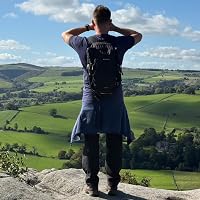
His name was Rambo, and he was just some nothing kid for all anybody knew, standing by the pump of a gas station at the outskirts of Madison, Kentucky. He had a long heavy beard, and his hair was hanging down over his ears to his neck, and he had his hand out trying to thumb a ride from a car that was stopped at the pump. To see him there, leaning on one hip, a Coke bottle in his hand and a rolled-up sleeping bag near his boots on the tar pavement, you could never have guessed that on Tuesday, a day later, most of the police in Basalt County would be hunting him down.
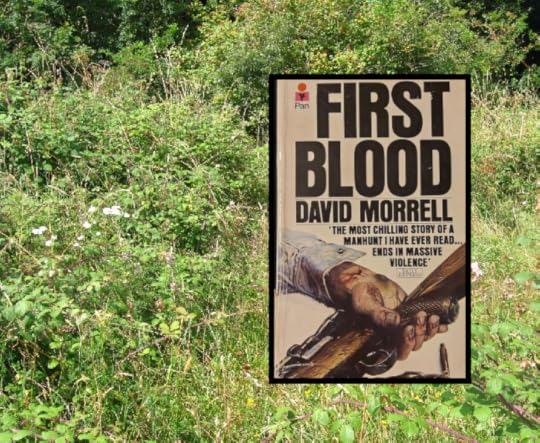
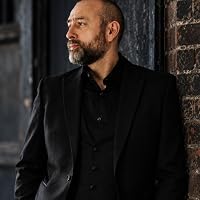
I'm not a big fan of Silvester Stallone, in fact I believe he's a hack, but "First Blood" is arguably the best he ever did on the silver screen. I only saw the film version once, back in the late eighties when the video players and small colour TV's were sprouting like mushrooms all over the country to fill in the gap left by increasing censure in official cinema houses. Yet I remember the story, 30 years later, and that made me wonder where this enduring appeal comes from. Turns out it is mostly the merit of the original story, penned by David Morell at the tail end of the sixties, a time when the American nation was torn apart by an unjust and inhumane war. Watching the news on TV this debut author had a stroke of inspiration that turned into a cultural icon:
... made me decide to write a novel in which the Vietnam War literally came home to America. There hadn't been a war on American soil since the end of the Civil War in 1865. With America splitting apart because of Vietnam, maybe it was time for a novel that dramatized the philosophical division in our society, that shoved the brutality of the war right under our noses.
The major difference between the book and the movie is this very attitude towards violence. Most viewers, my own twenty-something self included, saw only the underdog Rambo fighting the system and kicking a$$ in a spectacular way. Yes, this is part of the story, but the themes run much deeper in the novel and Morell finds a way to paint in between the black & white, right & wrong, good guys & bad guys easy assumptions. Both Rambo and Sheriff Teasle have more depth and more nuance than the movie I remember.
Rambo is clearly dealing with a split personality and post-traumatic shock (this being one of the first novels to explore the condition in detail). He has his pride and his anger, yet he is not a blind killing machine and would have liked to be able to fit in, if only the 'squares back home could look beyond his hippie appearance and engage him in a respectful manner.
Teasle is the product of an older generation and of a previous war (Korea), one war when the Americans still could pretend to be the knights in white saving the world from anarchy and terror. Teasle feels threatened by the new world order and by the younger generation with their protests, their drugs, long hair and free love. He takes refuge in a conservative, paternalistic worldview that will ultimately set him on a collision course with the drifter Rambo.
"And let him do this to somebody else? Screw. He has to be stopped.
"What? That's not why you're doing this? Admit you wanted all this to happen. You 'asked' for it – so you could show him what you knew, surprise him when he found you were the wrong guy to try and handle. You 'like' this"
"I didn't ask for anything. But damn right I like it. That bastard is going to pay."
I found the level of explicit violence in the novel surpasses the movie version but it is not gratuitous : it serves the declared purpose of making the horrors of war on distant shores real for the sheltered people back home. A lesson that is sadly already forgotten in this third millennium when new war hawks seem only to eager to start new conflicts in Syria, Korea or Iran.
—«»—«»—«»—