William Dean Howells (1837-1920) was an American realist author and literary critic. He wrote his first novel, Their Wedding Journey, in 1871, but his literary reputation really took off with the realist novel A Modern Instance, published in 1882, which describes the decay of a marriage. His 1885 novel The Rise of Silas Lapham is perhaps his best known, describing the rise and fall of an American entrepreneur in the paint business. His social views were also strongly reflected in the novels Annie Kilburn (1888) and A Hazard of New Fortunes (1890). While known primarily as a novelist, his short story "Editha" (1905) - included in the collection Between the Dark and the Daylight (1907) - appears in many anthologies of American literature. Howells also wrote plays, criticism, and essays about contemporary literary figures such as Ibsen, Zola, Verga, and, especially, Tolstoy, which helped establish their reputations in the United States. He also wrote critically in support of many American writers. It is perhaps in this role that he had his greatest influence.
Willam Dean Howells (1837-1920) was a novelist, short story writer, magazine editor, and mentor who wrote for various magazines, including the Atlantic Monthly and Harper's Magazine.
In January 1866 James Fields offered him the assistant editor role at the Atlantic Monthly. Howells accepted after successfully negotiating for a higher salary, but was frustrated by Fields's close supervision. Howells was made editor in 1871, remaining in the position until 1881.
In 1869 he first met Mark Twain, which began a longtime friendship. Even more important for the development of his literary style — his advocacy of Realism — was his relationship with the journalist Jonathan Baxter Harrison, who during the 1870s wrote a series of articles for the Atlantic Monthly on the lives of ordinary Americans.
He wrote his first novel, Their Wedding Journey, in 1872, but his literary reputation took off with the realist novel A Modern Instance, published in 1882, which described the decay of a marriage. His 1885 novel The Rise of Silas Lapham is perhaps his best known, describing the rise and fall of an American entrepreneur of the paint business. His social views were also strongly represented in the novels Annie Kilburn (1888), A Hazard of New Fortunes (1890), and An Imperative Duty (1892). He was particularly outraged by the trials resulting from the Haymarket Riot.
His poems were collected during 1873 and 1886, and a volume under the title Stops of Various Quills was published during 1895. He was the initiator of the school of American realists who derived, through the Russians, from Balzac and had little sympathy with any other type of fiction, although he frequently encouraged new writers in whom he discovered new ideas.
Howells also wrote plays, criticism, and essays about contemporary literary figures such as Henrik Ibsen, Émile Zola, Giovanni Verga, Benito Pérez Galdós, and, especially, Leo Tolstoy, which helped establish their reputations in the United States. He also wrote critically in support of American writers Hamlin Garland, Stephen Crane, Emily Dickinson, Mary E. Wilkins Freeman, Paul Laurence Dunbar, Sarah Orne Jewett, Charles W. Chesnutt, Abraham Cahan, Madison Cawein,and Frank Norris. It is perhaps in this role that he had his greatest influence. In his "Editor's Study" column at the Atlantic Monthly and, later, at Harper's, he formulated and disseminated his theories of "realism" in literature.
In 1904 he was one of the first seven people chosen for membership in the American Academy of Arts and Letters, of which he became president.
Howells died in Manhattan on May 11, 1920. He was buried in Cambridge Cemetery in Massachusetts.
Noting the "documentary" and truthful value of Howells' work, Henry James wrote: "Stroke by stroke and book by book your work was to become, for this exquisite notation of our whole democratic light and shade and give and take, in the highest degree documentary."
Welcome to a book with no plot, no suspense, no conflict, no scary-sexy vampires, and no (thankfully,) surprise twist at the end. The book is Their Wedding Journey and the author is the forgotten American savant, William Dean Howells (1837-1920.) Howells dominated American literature between the Civil War and the Great War. He was the man most responsible for what came to be known as Literary Realism, which was a reaction to the Romantics (including my favorite author, James Fennimore Cooper, who was, let’s be honest, a hopeless romantic.)
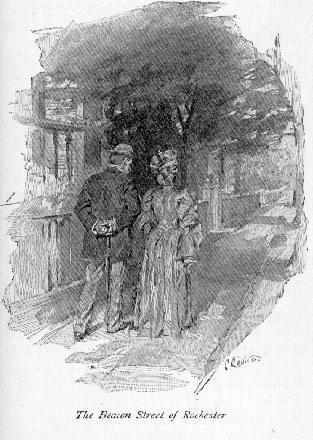
Howells' Their Wedding Journey, his first novel, might better be described as a travelogue or a sketch than a novel and you might as well understand this before you read it – nothing much happens. The story follows Basil and Isabel March on their honeymoon journey. It’s sometime shortly after the Civil War and the honeymooners travel from Boston to New York and up the Hudson River and west to Rochester and Niagara Falls and along the Thousand Islands to Montreal and Quebec and south, home to Boston, going by carriage and train and boat. Basil and Isabel aren’t young marrieds, he’s early thirties, she’s late twenties, a point Howells impresses upon us because it’s important to the realist. A newlywed couple ten years younger than ours might be silly and immature, might be too caught up in themselves to notice the people and things around them and since noticing what’s around them is a big part of what this book is about, Howells gives his couple an additional ten years apiece. That’s realism, folks.
Did I say there was no conflict? Well, there’s a lover’s spat - to take a two-horse carriage or a one-horse carriage in a trip around a mountain. Isabel is for two horses, Basil is for one. Isabel wins. Excitement? How about shooting the rapids along the St. Lawrence? Here Howells proves he can write adventure when he chooses, his characters shooting the rapids just like Cooper's characters, well, not quite the same, not remotely the same, but Howells was good at it, although it wasn't particularly important to him, the adventure part of it.
Howells tells us in the very first paragraph of the book how a skilled romantic could turn the romance of Basil and Isabel to “excellent account.” That is, throw in some villains and some perils and there’s your conflict. They could maybe somehow almost go over Niagara Falls or get robbed by highwaymen, but again, not interested. They just go along their journey and observe and comment (never in a catty way,) about the folks and things they see. Some of those folks they get to know, most they don’t, they just infer with regard to peoples’ lives based on what little they see and hear and maybe the inferences are correct, maybe not, it doesn’t really matter, and what they see and who they meet are some very interesting, if ordinary, folks, folks interesting because they are ordinary. There’s the gullible German immigrant who gets bamboozled on a train and doesn’t realize it; the southern gentleman in the hotel, so arrogant before the war and so broken down now in spirit, his arrogance gone, you might say, with the wind. The nuns of old Quebec. The encounters are more observation than engagement; few of them would be worth commenting on if the commenter was someone other than Howells.
The book is not long, just two hundred pages, but it’s the mark of the writer, to carry the reader along, to enchant the reader without ever doing anything more than presenting him, or her, with some solid writing.
One argument I would make with Mr. Howells: He claims his book is not a romance and I suppose it isn’t, if you’re talking about Romance in literary terms, but it’s romantic enough, riding the trains and the boats and the carriages with the amiable newlyweds and without the apprehension of something awful happening. If you’re looking for two very ordinary people in love, you can’t do much better than this book. And as kind of a spoiler, although I hope I’ve already made this clear, Howells will, in the course of the book, remain true to his style and his vision. Our heroine isn’t going to get a fatal disease or swallow poison and die, leaving our hero bereft like in some other famous love stories. No, they’re just going to conclude their honeymoon and get on with the rest of their lives and the rest of their lives will include revisiting, ten years later, some of the places they visited on their honeymoon, this time with the kids in tow, and surprise, surprise, nothing much will happen.
(My ranking of Howells' best novels: https://azleslie.com/posts/howells-ra...) Having failed at a couple juvenile novels and succeeded at a couple travel narratives, Howells decided to try an experiment: he would ease his way into the novel form by writing a travel narrative with characters. The result would be a watershed for American realism. It is, to be clear, mostly boring--despite the fact that it was quite liked in his own time, when the travel narrative enjoyed a special place in literature that it no longer holds. But the lessons of Howells' experiment - that the impact or importance of events is not proportional to their size, that character is most revealed in minor passing moments, that social life is composed of a string of small hypocrisies that don't matter until they do - would come to shape all his successful fiction and criticism to come. In this light, if no other, Their Wedding Journey is interesting.
When the stewards of the car came round successfully with tropical fruits, ice-creams, and claret-punches, they felt a heightened assurance that they were either enchanted princes -or Americans... the general appearance of the passengers hardly suggested greater wealth than elsewhere; and they were plainly in that car because they were of the American race, which finds nothing too good for it than its money can buy. 32
Her husband looked at her with the gravity a man must feel when he begins to perceive that he has married the whole mystifying world of womankind in the woman of his choice, and made no answer. But to his own soul he said: "I supposed I had the pleasure of my wife's acquaintance. It seems I've been flattering myself." 45
Not sure why I picked this up...I think I read a review that compared a contemporary book to Howells, called him underrated, etc. This was amusing but I have so little patience for the prolix style I had a hard time making myself finish it. Interesting to read about Niagara Falls circa 1870, wedding trips by train and carriage, social strata of the time...maybe I should have started with one of his more famous books rather than his first publication.
Published in 1872 Their Wedding Journey is the author's first novel, in which he deftly describes the things seen, heard, and experienced by two Bostonians on their wedding trip to Canada and back. The Table of Contents includes: The Outset, A Midsummer-day's Dream, The Night Boat, A Day's Railroading, The Enchanted City, and Beyond, Niagara, Down the St. Lawrence, The Sentiment of Montreal, Homeward and Home, and Niagara Revisited Twelve Years after Their Wedding.
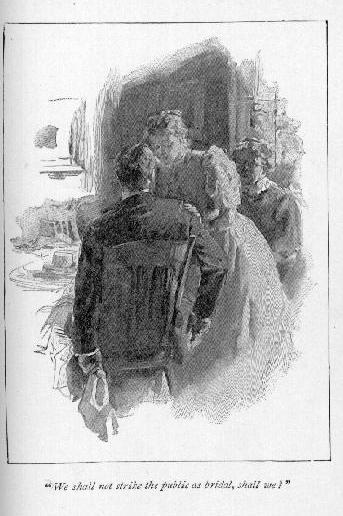
The story follows Basil and Isabel March on their honeymoon journey. It's sometime shortly after the Civil War and the honeymooners travel from Boston to New York and up the Hudson River and west to Rochester and Niagara Falls and along the Thousand Islands to Montreal and Quebec and south, home to Boston, going by carriage and train and boat. It sounds extremely tiring. They are going to need a vacation from their honeymoon. They don't start on their journey not that same day of their wedding, but some weeks later, that way no one cares whether you go or stay, according to Isabel anyway. She says they are past their first youth and shall not strike the public as bridal. It is her one horror in life to be an evident bride. But Basil did not think her at all too old to be taken for a bride, if she is of a good heart and temper, age doesn't matter. It seems to Basil that his wife was quite as fair as when they first met, eight years before.
But now they are married, and a few weeks have passed, and they can begin their wedding journey. Unfortunately, it picks this moment when they are about to walk out the door for a storm to come along. They watched the horses jumping when the hail would hit them. Should they go? They finally decide that yes, they will go, just not the way they planned. Basil had said that as this was their first journey together in America, he wished to give it as national a journey as possible, and that as he could imagine nothing more peculiarly American than a voyage to New York by a Fall River boat. So much upholstery, so much music, such variety of company, he understood, could not be got in any other way. I'm not sure why he thought that. But although Isabel had agreed, now that vivid flashes of lightning, pouring down rain and hail is raining down on them she is afraid of going by boat. And so Basil gives in and they go by train, we're told it was the first time he yielded to his wife, but not the last, though it had certainly begun early.
But the wait is over, the train is there and before too long they are in New York and in their first argument:
"Why, how shabby the street is!" said Isabel, at last.
"When I landed, after being abroad, I remember that Broadway impressed me with its splendor."
"Ah! but you were merely coming from Europe then; and now you arrive from Burton, and are contrasting this poor Broadway with Washington Street. Don't be hard upon it, Isabel; every street can't be a Boston street, you know," said Basil. Isabel, herself a Bostonian of great intensity both by birth and conviction, believed her husband the only man able to have thoroughly baffled the malignity of the stars in causing him to be born out of Boston; yet he sometimes trifled with his hardly achieved triumph, and even showed an indifference to it, with an insincerity of which there can be no doubt whatever.
"O stuff!" she retorted, "as if I had any of that silly local pride!
Though you know well enough that Boston is the best place in the world.
But Basil! I suppose Broadway strikes us as so fine, on coming ashore from Europe, because we hardly expect anything of America then."
"Well, I don't know. Perhaps the street has some positive grandeur of its own, though it needs a multitude of people in it to bring out its best effects. I'll allow its disheartening shabbiness and meanness in many ways; but to stand in front of Grace Church, on a clear day,—a day of late September, say,—and look down the swarming length of Broadway, on the movement and the numbers, while the Niagara roar swelled and swelled from those human rapids, was always like strong new wine to me. I don't think the world affords such another sight; and for one moment, at such times, I'd have been willing to be an Irish councilman, that I might have some right to the pride I felt in the capital of the Irish Republic. What a fine thing it must be for each victim of six centuries of oppression to reflect that he owns at least a dozen Americans, and that, with his fellows, he rules a hundred helpless millionaires!"
I will never, ever stand in front of Grace Church looking down Broadway. Not ever. I can't say much more about this book mostly because every time I would go back to it I would find myself staring at the page after a short while not seeing a word. This must be one of the most boring books I have ever read. Maybe it's just the mood I'm in, but if this book were longer I would get nothing else done today simply because I will sleep through most of the day.
I actually read this as an etext - my memories of it have faded, but I know I enjoyed it at the time. Pleased to see that it is now out in a print edition.
"... o calatorie - o binecuvantare necunoscuta intr-un tinut necunoscut." "Decanul" a lasat in urma sa o multitudine de opere: carti de calatorie, piese de teatru, poezii, eseuri, critica si peste 20 de romane. Este principalul reprezentant al scolii realiste americane alaturi de Henry James. "Am fost calator inainte de a fi romancier", spunea Howells despre sine si toata aceasta bogata experienta a calatoriilor se reflecta in operele sale precum: "Viata venetiana", "Drumuri italiene", "Orase din Toscana", "O noua vizita la Niagara", dar si in romanul sau de debut: "Calatorie de nunta". Nu intamplator am mentionat Niagara deoarece cartea de fata, ce nu este doar roman ci si schita de calatorie, infatiseaza voiajul de nunta al cuplului Isabel si Basil March. Numai ca, pana acolo, drumul este lung si alaturi de ei, noi cititorii bifam mai multe destinatii si puncte de atractie: se porneste din Boston, gara Worchester, de unde se ia trenul spre New York. Orasul este zugravit in toata efervescenta sa matinala. Mai ales Broadway-ul sclipeste in toiul arsitei si forfotei. Mai apoi ne imbarcam in vaporul de noapte spre Albany, unde admiram frumusetea fluviului Hudson. Dupa aceea urcam iarasi in tren, alaturi de cei doi soti si nu ne mai oprim pana nu ajungem la Rochester. Locul acesta pitoresc ne aminteste de Verona. Curand, primim doua bilete de tren cu destinatia Niagara, care este descrisa ca fiind splendida: "E ca si cum Niagara isi tine in rezerva maretia si prefera sa-ti castige sufletul cu frumusetea". Isabel este putin speriata totusi de maretia acestei cascade. Dupa admirarea ei proaspetii casatoriti se vor indrepta inapoi spre casa, lucru care se va face prin Quebec si Montreal. Prima data vom poposi la Montreal unde ne vom exersa franceza si vom admira stralucirea moderna a orasului, in special catedralele. La Quebec tragem la hotelul Musty si gata calatoria, ne indreptam spre casa la Boston. Iata deci cum arata luna de miere a unui cuplu in acea perioada. Foarte interesant, dupa 12 ani, cuplul se va intoarce iarasi la Niagara si cei doi vor evoca amintirile din tinerete alaturi de copiii lor. A fost o carte extrem de placuta, cu descrieri frumoase, deloc coplesitoare sau incarcate. Howells are o observatie fina, comentariul fiind uneori spiritual, alteori amuzant sau ironic. In niciun caz nu e monoton sau "ennuye" (plictisitor) si surprinde foarte bine specificul american al acelor timpuri. A fost o incantare sa calatoresc alaturi de cei doi si nu-mi ramane decat a va recomanda cu insistenta sa descoperiti frumoasele opere ale lui Dean Howells.
"Her husband looked at her with the gravity a man must feel when he begins to perceive that he has married the whole mystifying world of womankind in the woman of his choice" (45).
"'We're in sight of Quebec,' he said. 'Come out as soon as you can – come out unto the seventeenth century" (77).
"It was this willingness to find poetry in things around them that kept his life and Isabel's fresh, and they taught their children the secret of this elixir" (100).