Jump to ratings and reviews
Rate this book

Mrs Caliban

Rate this book
It all starts with the radio. Dorothy’s husband, Fred, has left for work, and she is at the kitchen sink washing the dishes, listening to classical music. Suddenly, the music fades out and a soft, close, dreamy voice says, “Don’t worry, Dorothy.”

A couple weeks later, there is a special interruption in regular programming. The announcer warns all listeners of an escaped sea monster. Giant, spotted, and froglike, the beast—who was captured six months earlier by a team of scientists—is said to possess incredible strength and to be considered extremely dangerous.

That afternoon, the seven-foot-tall lizard man walks through Dorothy’s kitchen door. She is frightened at first, but there is something attractive about the monster. The two begin a tender, clandestine affair, and no one, not even Dorothy’s husband or her best friend, seems to notice.

128 pages, Hardcover

First published January 15, 1982

516 people are currently reading
22246 people want to read

About the author

Rachel Ingalls

21 books134 followers
Rachel Ingalls grew up in Cambridge, Massachusetts. She held various jobs, from theatre dresser and librarian to publisher’s reader. She was a confirmed radio and film addict and started living in London in 1965. She authored several works of fiction—most notably Mrs. Caliban—published in both the United States and the United Kingdom.

Ratings & Reviews

What do you think?
Rate this book

Friends & Following

Create a free account to discover what your friends think of this book!

Community Reviews

5 stars
2,846 (21%)
4 stars
5,442 (41%)
3 stars
3,774 (28%)
2 stars
992 (7%)
1 star
214 (1%)
Displaying 1 - 30 of 2,291 reviews
Profile Image for emma.
2,562 reviews91.9k followers
November 8, 2025
this is a book about a woman falling in love with a frog man, and somehow that was not the most silly and unrealistic part.

honestly, i'll take the frog man part all day. the beginning of this (very tiny) book was very witty, and full of good points about gender roles, and an all-around good time.

then it turned into a soap opera. melodrama city, population the reader of this book.

but it was fun while it lasted!

bottom line: all good things must come to an end.

---------------
pre-review

well. it was better than the shape of water.

review to come / 3.5 stars

---------------
tbr review

i might as well read a book about a woman falling in love with a frog man. why not
Profile Image for Navessa.
449 reviews876 followers
January 2, 2018
"The water ran over the sand, one wave covering another like the knitting of threads, like the begetting of revenges, betrayals, memories, regrets."


Oh, wow. This is not your average human/monster romance. I totally understand why this landed on the BBMC’s “top 20 American novels of the post-World War II period.”

From the book blurb, this seems straight forward enough: giant, frog-like male humanoid wanders into kitchen of neglected housewife. Bonking commences.

And while, yes, sure, that does actually happen, there is so much more to this story than that. What’s mind-blowing to me is that while most of the reviews that I’ve read for this short novel agree that there’s something surreal and compelling and almost compulsory to it, they don’t do a good job of explaining why.

It’s quite simple, really. Subtext.

You know how in high school your teachers forced you to pour over Catcher in the Rye, and examine every action of Holden Caulfield, and then asked you to explain, in detail, how he was an ingeniously written antihero that shone a light on some of our more problematic beliefs and behaviors, and all the while you were just sat there in front of an empty essay, thinking to yourself that he was just an obnoxious teenage boy and all he shone a light on was how toxic masculinity can be?

This is the book they should have had you analyze instead.

It’s one of the best tongue-in-cheek social satires that I’ve ever read. It delves into gender politics. It takes a long, hard look at mental health. It addresses female sexual freedom and agency. It asks the reader to examine what it means to be human.

Larry, the frog-man love interest, looks like a monster to most. And so is treated monstrously by them. Revealing how monstrous humans can be to anything that is different.

And then there’s that ending. I won’t write too much about it, because spoilers, but suffice to say that when you reach it, you’ll probably set the book down, frown, and then reexamine every word you just read and every action of the protagonist and wonder over the relationship between reality and imagination, all while questioning whether this is a genius work of subliminal metafiction, or if Rachel Ingalls sole intent with this story was to nuke our paper thin social construct of civilization from the orbit.

I still don’t know.

This is going to be one of those books that I think about for a long time after finishing it. And re-read several dozen times over the course of my lifetime in search of more deeper meaning.

The fact that it was written in 1982 and is still SO RELEVANT makes it even more impressive.

This review is also available on The Alliterates.
Profile Image for Robin.
575 reviews3,654 followers
September 4, 2018
A few days ago I reviewed Bear, a book about a woman who... you know... does it with a bear. So, continuing in the theme of stories about women who take unusual lovers, I read Mrs. Caliban, which tells the tale of a woman who... you know... with a frog-man. I know, you're all questioning my morals and the condition of my soul. Don't be so quick to judge! This book is quite wonderful.

First of all, it's got a big thumbs up from deceased demigod John Updike, whose approbation probably means too much to me, but there it is. Reading a story that he read (and loved) makes me feel like I'm in the right place. As I was reading it, I smiled. OF COURSE John Updike liked this book. It's about a miserable married couple, inflicted with the nightmare of infidelity. The couple is so unhappy, they're "too unhappy to get a divorce". God, help me.

They've got good reasons to be unhappy, after two devastating losses and the husband's subsequent wandering eye. Dorothy, our protagonist, is terribly lonely in her grief. She has a friend in whom she confides, but is otherwise alone. When Larry, the frog-man who escaped from the laboratory where he was being tortured, appears one day in her kitchen, she finds almost instant solace. Solace, and love.

You could choose to read this as though it is a story of magical realism. Like, this frog-man is a real creature, mysterious and polite and virile (not necessarily in that order). He's a being who makes life bearable for Dorothy, and he helps with the housework too. That's how I was reading it until the final few pages, which caused everything to stand on its head, and put into question what I'd just read.

It became much more than the charming story of female self-discovery I had been enjoying, and morphed into something far more clever, deliberate and real. There's a kernel of something bitter and sinister in its plot. Something biting in regards to humankind and friendship and marriage. I fully believe I'll re-read this, and when I do, this story will have something new to reveal.

But who knew, about frogs?
Profile Image for Orsodimondo.
2,457 reviews2,430 followers
October 13, 2020
LA FORMA DELL’ACQUA


Copertina

Mrs Caliban è la signora Calibano, lady Caliban.
Calibano, cioè Caliban, che suona un po’ cannibal, era l’essere mostruoso schiavo di Prospero in La tempesta di Shakeaspeare, un cucciolo deforme e lentigginoso non onorato con forma umana - anche immaginato come selvaggio, essere bestiale, ibrido uomo-pesce.
Dorothy che si innamora di lui diventa la signora Calibano.


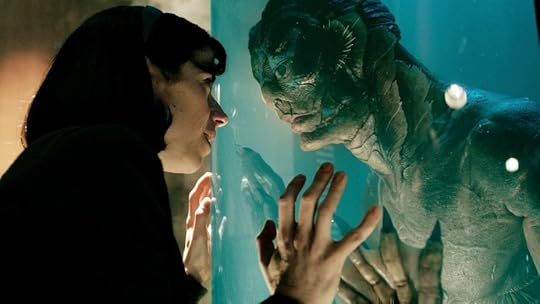
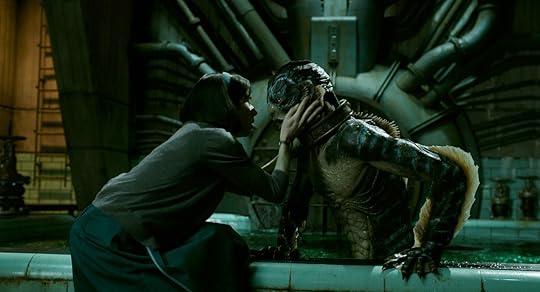
Sally Hawkins in “The Shape of Water” di Guillermo del Toro, film premiato con quattro Oscar nel 2018.

Lui, inteso come il mostruomo di questa sorprendente novella, in effetti ha aspetto acquatico, uomo-pesce, ma è deforme solo a occhi disattenti, perché a quelli di Dorothy (anche chiamata Dot) appare decisamente attraente: alto, forte, bello, tenero e dolce.
Infatti, se ne innamora a prima vista. Ricambiata. S’innamorano come due adolescenti.
Appena si vedono per la prima volta, lei gli offre un sedano: lui lo prende senza paura, nel farlo le sfiora sensualmente e teneramente la mano, poi divora la verdura. E amore fu.


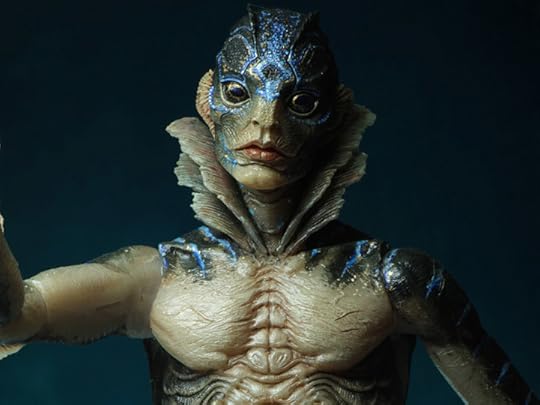
L’uomo-pesce, il calibano del film “The Shape of Water”.

Fecero l’amore sul pavimento del salotto e sul divano della sala da pranzo e seduti sulle sedie in cucina, e al piano di sopra, nella vasca da bagno. E parlarono. La maggior parte del loro dialogo era costituita dal fare domande e dare risposte.

Ingalls descrive tutto con un tono molto matter-of-fact, naturale, semplice, dolcemente divertente, morbidamente ironico, quasi naive, innocente. Pura delizia.
E nel farlo, lancia messaggi politici, strali contro la società. A cominciare da appena trattenute istanze femministe. Proseguendo con una presa per i fondelli della paura del diverso, del razzismo, del concetto di razza (e specie).


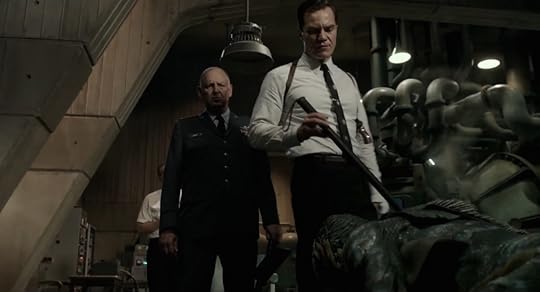
Il cattivo dei cattivi, Michael Shannon, eccellente come sempre.

”Da dove vieni, fanno l’amore così tante volte al giorno?”
“Sono troppe?”
“No. Per me è il numero perfetto.”


L’essere, la Bestia, è intelligente e sensibile, senza essere supereroe né onnisciente. L’hanno catturato nel Golfo del Messico, portato nella Città degli Angeli e chiuso nell’Istituto Oceanografico per presunti motivi di studio e ricerca in quanto così diverso e alieno. Studiando e ricercando, scienziati e responsabili non hanno potuto esimersi dal torturarlo e, tenuto a bada da scariche elettriche, coinvolgerlo in imbarazzanti umilianti giochetti erotici. Nessuna meraviglia che l’essere voglia scappare: e che per farlo ammazzi un paio di umani così poco umani, facendoli proprio a pezzi.


È nato un amore.

La caccia si scatena. La preda è descritta dai media come una belva.
In realtà, è una vittima.
Dorothy lo capisce probabilmente prima di vederlo: gli annunci radio sulla fuga dell’essere si mischiano alle voci che Dorothy ha l’impressione di sentire, messaggi vocali diretti proprio a lei, inframmezzati alle trasmissioni.
Forse segnale che l’intera novella è surreale, che l’apparizione dell’essere acquatico, del gigantesco magnifico ranocchio è solo frutto dell’immaginazione di Dorothy. Chissachilosa, vattelapesca.


Doug Jones interpreta l’Uomo Anfibio, il mostruomo.

Perché Dorothy è moglie trascurata che vive un deprimente matrimonio.
Il primo figlio è morto per un’anestesia sbagliata, il secondo è morto d’aborto spontaneo. A quel punto hanno preso un cagnolino, che però è finito sotto le ruote di una macchina.
Il marito ha un’altra storia, forse più di una, e ha imposto di dormire in letti separati. Dorothy accetta, senza particolare sofferenza: ma sviluppando un bisogno d’amore, un desiderio di contatto e vicinanza che farà scoccare immediata scintilla nel momento in cui incontra l’essere acquatico. Il mostruomo.
Che ricambia il sentimento.


Perfetta la copertina: il grembiule, la cucina a gas, il forno, la radio, e poi il frigorifero, la televisione, tutti gli elettrodomestici della ricca America…
Che meraviglia e che delizia le descrizioni dei giri, le gite e passeggiate della coppia di innamorati: a piedi nudi su erba o sabbia, in boschetti giardini e a fare il bagno nell’oceano, annusando fiori e cespugli nell’aria sempre tiepida.


Lo so, lo so: è solo una novella e io la commento come se fosse un libro di mille pagine. Fatto è che oltre piacermi molto, mi ha acceso tante luci interne.
Viva queste operazioni di ripescaggio.
Sì, perché Mrs Caliban è del 1982, è piaciuta a Updike, Oates, Le Guin, ma da un pezzo era fuori catalogo. Ora se ne parla, ora la si recensisce. E io devo ringraziare Veronica Raimo che ne ha parlato su Robinson facendomi più che incuriosire.


Lo so, lo so, suona molto familiare: il film di Guillermo Del Toro premio Oscar 2018 sembra nascere proprio tra queste pagine, il nucleo è molto molto simile, pressoché identico. Ma tante altre cose sono diverse, a cominciare dal finale, splendido questo, struggente quell’altro.


William Hogarth: Calibano (dettaglio).
Profile Image for Andrea.
30 reviews
February 15, 2008
If you like avocados you will like this book.
Profile Image for Paromjit.
3,080 reviews26.3k followers
July 30, 2021
This short acclaimed cult classic, a novella by Rachel Ingalls was first published in 1982, here we have a new informative and insightful foreward by Irenosen Okojie. In the Californian suburbs, Dorothy Caliban is hearing strange things on her radio, including the warning of the escape of a dangerous 6'7'' green sea monster, named Aquarius from the Jefferson Institute of Oceanographic Research. She is grieving the loss of her young son, Scotty, has suffered a miscarriage, traumatic events that have created a chasm between her and her husband. Fred. He has moved into another bedroom and is cheating on her. Trapped in the disappointing tedium of the conventional expectations of women, Dorothy faces humdrum days of housework and loneliness, brightened only by the time she spends with her divorced best friend, Estelle, who has a stormy relationship with her children, Joey and Sandra.

There is plenty of charm, wit and unexpected surprises in this fantastical story of a strange love. Dorothy is cooking for Fred and Art Gruber, when Larry, the wanted frogman turns up at her home, she doesn't bat an eyelid, feeling not an iota of fear, feeding and hiding him in a bedroom. It turns out Larry had been shamefully tortured and abused by the scientists, which is why he killed 2 of them as he made his bid for freedom. Having so much common ground in the trauma each has experienced and the limits they experience in life, the two bond and embark on a love affair, that has them going out at night with Larry in disguise in the car. He proves to be thoughtful and helpful, a vegetarian with a passion for avocadoes. They have philosophical discussions, comparing and contrasting the nature of humans with those from Larry's community.

There is an undercurrent of understanding that their passionate relationship will have a limited shelf life, Larry finds it increasingly difficult to curb his desire for freedom, willing to take more risks that endanger his safety, whilst Dorothy cannot imagine the depth of betrayal and tragedy heading her way, embedding her inner conviction that everyone dies or leaves her. This amphibious feminist storytelling is horrifying, enthralling and compulsive, and likely to appeal to many readers. Many thanks to the publisher.
Profile Image for Dan.
3,204 reviews10.8k followers
December 6, 2017
Dorthy's marriage is stagnant and falling apart when a frogman escapes from captivity. While Dorothy teaches him about the world, she winds up learning a lot of things herself...

I first learned of Mrs. Caliban on Book Riot, I think. I saw it was on sale for $1.70 earlier today and snapped it up.

It's a slim book, probably more novella than novel, but I thoroughly enjoyed this quirky, weird, sweet book. A woman falling in love with a frogman could easily be played for laughs or venture into monster porn territory but their relationship is very well done.

Dorthy is trapped in a loveless marriage, alone and childless, while her husband Fred philanders around. When a 6'7 aquatic monster named Larry shows up, she has no choice but to take him in and make him her lover. Seriously, how had I never heard of this book until recently?

Mrs. Caliban is an exploration of love and marriage, shown through Dorothy's eyes as she explains the ways of the world to Larry, telling him about life, the universe, and everything. Larry's ignorance about most things leads her to questioning a lot of those things herself. Things go pretty well until Larry starts venturing out on his own.

I don't have anything bad to say about this quirky masterpiece. Four out of five stars.
Profile Image for Justin Tate.
Author 7 books1,456 followers
December 30, 2017
UPDATE: if you want to see a good unofficial movie adaptation of this novel, see Shape of Water.

Hmm... Well this was a Goodreads discovery that I'm mostly glad I picked up. The writing was great. I highlighted many brilliant passages as a testament to this. Plot-wise, I'm always a fan when weird mixes with domestic reality, and we certainly have that. I don't know that it will leave any lasting impression on me though. Fortunately as a novella it never got dull. A few segments were even great. The end was satisfactory enough, but still kinda "eh". Overall, I'm certainly glad this out-of-print novel is back in print - just don't feel a burning need to read it right away.
Profile Image for Caroline .
483 reviews712 followers
January 18, 2025
***SPOILERS HIDDEN***

"Bland" and "monster love affair" don't belong in the same sentence, but that's Mrs. Caliban in a nutshell. This short simplistic story is about Dorothy, who one day starts an affair with an amphibious monster named Larry. The book is similar to the enchanting 2017 movie The Shape of Water, but while that movie has suspense, charm, and emotion, Mrs. Caliban has matter-of-factness, flat characters, and no point.

As a monster, Larry deserved a better portrayal. He could have brought sadness, humor, or terror to the story—or even commentary on the ethics of scientific experimentation. As his ordinary human name suggests, Larry could be a human male and the story would change little.

Mrs. Caliban has an identity problem. Did author Rachel Ingalls write a portrait of a delusional woman or a bizarre fantasy-romance? Frustratingly, that's left up to interpretation. The only thing that's obvious is that the story could be one hundred times better.
Profile Image for ♑︎♑︎♑︎ ♑︎♑︎♑︎.
Author 1 book3,799 followers
March 21, 2019
In his 1986 review of this novel in the New York Times , Michael Dorris called it "a tight, intriguing portrait of a woman's escape from unacceptable reality." Maybe. But it doesn't fit into any easy box for me. It's uncharacterizeable, a perfect, unrepeatable literary expression of love and sacrifice. This was my fourth read or so.
Profile Image for Flo.
487 reviews527 followers
May 13, 2023
It kept me thinking about The Shape of Water all the time. Maybe a bit simpler, but it captures very well how monotonous desperation can be for a housewife caught in a failed marriage, even when it involves a love affair with a frog man.
Profile Image for Jaguar Kitap.
48 reviews348 followers
April 5, 2019
Yakında Prospero Kitaplığı'nın dördüncü kitabı olarak yayımlayacağız.
Profile Image for Thom.
33 reviews74 followers
March 3, 2014
Mrs Caliban is your typical story of a housewife’s love for an enormous sea monster. Virtually ignored on its release in 1982, it was unexpectedly hailed as one of the 20 greatest post-war American novels by the British Book Marketing Council (the same people who bought us the inaugural Best of Young British Writers list).

The novel’s protagonist is Dorothy, a housewife whose marriage is failing. Her son, Scotty, died young, of complications from routine surgery, and her husband Fred is frequently absent. He claims to be working late, but Dorothy suspects him of having an affair. The couple sleep in different beds, and inhabit different rooms in their house. Psychologically, she is showing signs of extreme stress – she hears strange, personal messages in radio broadcasts: ‘the first time was during a commercial for cake-mix and the woman’s voice had said in a perfectly ordinary tone, ‘don’t worry Dorothy, you’ll have another baby all right. All you need to do is relax and stop worrying about it’.

This isn’t the strangest message she hears on the wireless; one day, a news report includes a bulletin about ‘Aquarius the Monsterman’, ‘a giant lizard-like animal capable of living both underwater and on dry land’ which has attacked its keepers and escaped. That evening, as she makes spaghetti bolognese for Fred and a colleague, there is a knock at her door, and the ‘monsterman’ walks in.

Ingalls’ style puts the Realist in Magical Realist. A practical woman, Dorothy immediately assimilates the fact of the giant amphibian into her life. It is established that he prefers to be known as 'Larry', that he is housetrained, and has a fondness for vegetables. He is also frightened. Far from rampaging through the country, as the radio reports suggested, he is seeking sanctuary from his captors: 'They will kill me. I have suffered so much already'. This need stirs something in Dorothy. In The Tempest, Caliban says of Prospero ‘you taught me language, and how to curse’; by contrast, Dorothy goes about teaching Larry how to drive, and do the housework. By stressing these aspects of their relationship, Ingalls’ narrative raises an interesting question about masculinity, and desire.

Although it is never made explicit, there is the possibility that Larry exists solely in Dorothy’s head, a kind of mental wish-fulfilment. Regardless, he appears at a time when she is feeling vulnerable and alone. Larry’s huge bulk, and primal appearance, leads the reader to assume that he will represent some form of sturdy, physical manliness, a contrast to the insubstantial-seeming Fred. In fact, though, Larry couldn’t be further from the cliché of the red-meat eating ‘real man’. His diet is akin to ‘that of the average man on a health-food kick' - more avocados than steaks. He notices little changes in Dorothy’s appearance (‘You think [this dress] is fancier? And my hair this way?’), and helps around the house ('he enjoyed housework. He was good at it, and found it interesting').

Larry and Dorothy have a sexual relationship, but even this is complex. They sleep together in every room of the house, several times a day at first. Dorothy finds this new regime is 'just the right amount for me. It's perfect'. But Larry’s experiences of sex are coloured by his experiences at the research centre, where he was subject to sexual humiliations by his handlers. Larry is a surrogate son, as much as a husband replacement; he is rendered vulnerable by his past mistreatment, so that Dorothy feels even his polite manners are ‘as poignant as if they had been scars on his body’; he is to be protected, and cossetted from the hardships of the outside world like a toddler. Although this is not stressed during the narrative, it opens the book up to some interesting Freudian interpretations.

A long way from home, trapped in a confusing and hostile environment (it is not safe for him to walk the streets at night, even with the wigs and cosmetic masks Dorothy supplies), Larry's situation mirrors Dorothy’s sense of alienation. Although the novel is set decades later, Dorothy’s experiences in the home mirror those described by Betty Friedan in The Feminine Mystique. The arrival of a sympathetic presence in her life allows Dorothy to begin thinking of the future again, Larry’s strangely calming influence helping her to focus on something more than the domestic. She begins to assert herself in her relationship with her husband and in-laws, and even contemplates becoming pregnant by her amphibian lover, allowing Ingalls to gleefully satirise the American Dream: ‘born on American soil, to an American mother – such a child could become President’.

At the same time as Dorothy’s anthropomorphic adultery is going on, her friend Estelle is also engaged in a complex relationship with two men, both of whom repeatedly propose marriage. Although Estelle appears to be liberated and glamorous, the sight of her two lovers escorting younger women at a fashion show makes her re-evaluate her position: ‘I wasn’t the one who kept asking to get married. That’s what makes it so horrible. They’ve got to have somebody to do all their domestic drudgery full-time, and substitutes when the fancy one is out with somebody better’. Estelle’s realisation propels this short novella towards its denouement. Beginning to kick against their domestic confinement, Dorothy and Larry begin roaming farther afield, placing themselves in potentially harmful situations.

Mrs Caliban still feels fresh more than three decades on, and could well be due a revival. There is an appetite now for novels which chart the breakup of marriages from a female perspective, and Ingalls brings elements of satire and surrealism to the topic. Fans of recent novels like Season to Taste or Lightning Rods would enjoy this wryly subversive novella; who knows, with the right backing maybe it could the surprise hit of the summer?
Profile Image for Roman Clodia.
2,895 reviews4,647 followers
August 1, 2021
*** Spoilers below ***

And she was halfway across the checked linoleum floor of her nice safe kitchen when the screen door opened and a gigantic six-foot-seven-inch frog-like creature shouldered its way in front of her, crouching slightly, and staring straight at her face.

Such a slippery, allusive and elusive novella that manages to be charming and witty while also being subversive and even tragic. There were so many intertexts crowding into my head from the B-movie human-meets-alien/'monster' (ET, King Kong), Mary Shelley's poignant Frankenstein, Angela Carter-esque subversive retellings of fairy tales from a feminist slant (The Frog-Prince), Shakespeare's Caliban from The Tempest, and even Plath's The Bell Jar for the insufferable airlessness of domestic suburban labour.

But it's interesting that it's Dorothy (The Wizard of Oz?) who is already Mrs Caliban, indentured to the home, slaving over her domestic duties while her husband ignores her in between his various affairs. There are serious themes, too, of trauma and memory , and Dorothy's failure to forget (and, anyway, should she?) is contrasted with her best friend's failure to remember.

There's whimsy here (Larry gulping down huge bowls of buttered spaghetti) and a lovely recuperating of female desire as Dorothy and her 'sea-monster' make love throughout the day. But there's always a question of whether this is just an extension of Dorothy's desperate fantasy: 'she had been hearing things on the [radio] programmes that couldn't possibly be real' - and a wonderful ambiguity at the end: solace... or something more deadening?
The water ran over the sand, one wave covering another like the knitting of threads, like the begetting of revenges, betrayals, memories, regrets. And always it made a musical, murmuring sound, a language as definite as speech. But he never came.


Many thanks to Faber for an ARC via NetGalley
Profile Image for Kristina Dauksiene.
280 reviews56 followers
November 20, 2024
Filmas-knyga-filmas...
Anksčiau žiūrėtas filmas "The shape of water" neleido pažvelgti į knygos herojus naujai...Nors siužeto vingiai skiriasi, tačiau matyti herojai nepaliaujamai šmekščiojo knygos puslapiuose. Filme sukurta mistinė atmosfera, perdavė ryškų jausmą -"tu esi nepritapėlis/-i, to esi kitoks/-ia", kuomet knygoje tai skambėjo per plokščiai...
Profile Image for Jolanta (knygupė).
1,270 reviews232 followers
March 31, 2023
3.5*
Labai faina yra atradinėti man negirdėtus autorius. Ne naujus šiuolaikinius, bet senesnius ir primirštus. Rachel Ingalls (1940 – 2019) – kaip tik tokia JAV rašytoja ilgą laiką gyvenusi Anglijoje. Trumputis jos romanas “Mrs. Caliban” parašytas 1982-iais ir paskutiniu metu JAV ir Anglijoje perleidžiamas jau trečią kartą.

Vieniša namų šeimininkė, pavargusi nuo kasdienybės, vyro nedėmesingumo priglaudžia namuose pabėgusį iš kokio tai tyrimų instituto ir visų tarnybų ieškomą varliažmogį. Ne tik priglaudžia, bet ir užmezga su juo intymius santykius.

Siužetas panašus į Guillermo del Toro filmo “The Shape of Water”, bet tas panašumas toks paviršutiniškas. Filmas man, beje, nepatiko. Ir ne tik dėl pabaigos, Kabino jis kai kurias tas pačias temas (vienatvė/izoliacija, bėgimas į kitą realybę), bet man tiesiog labai kliuvo klišinės detalės.
O va knyga patiko. Ji – kitokia. Patiko išskirtinis autorės stilius (balsas), saviti dialogai, keista, puikiai sukurta erdviška nerealybės atmosfera. Aš ją perskaičiau, kaip knygą apie vienatvę, bėgimą nuo realybės, apie tą neretai labai kitokį vidinį gyvenimą, kurį gyvenam paraleliai su išoriniu, jų persipynimą. Man patiko autorės nutylėjimai, kuomet skaitytojai verčiami nuspėti – kas gi čia (ne)(į)vyksta.

Apie knygą sunku kalbėti jos nespoilinant. Tiesiog rekomenduoju, tikrai verta dėmesio. Tuo labiau, kad tik ką leidykla RARA išleido lietuviškai - Ponia Kaliban.
Profile Image for Sinem A..
481 reviews292 followers
June 12, 2020
Kitap enteresan bir absürdlüğe sahip yani absürd demeye de niyeyse çok dilim varmıyor , çok saçma olabilecekken birden her şey çok da yerine oturuyordu. Kısa ama üzerine çok düşünülebilecek bir hikaye. Belkide okumak için çok doğru bir zamandı.
Profile Image for Argos.
1,259 reviews490 followers
March 19, 2021
Gerçeküstü sürükleyici bir roman. Aslında fantastik yaratık yerine etiyle kemiğiyle bir insan koyarsak tüm insanlık halleri, cinselliğiyle, mutsuzluğuyla, kıskançlığıyla gerçekçi bir roman olarak ortaya çıkıyor. Basit bir mutsuz evlilikten insanları sorgulayan güzel bir kısa roman çıkmış. Edebi olarak çok iddialı değil belki ama kafa boşaltmak ve yeni bir Anglosakson yazar tanımak için ideal bir örnek.
Profile Image for Paula Mota.
1,662 reviews561 followers
May 11, 2021
Este livro, publicado em 1983 e recentemente redescoberto pela crítica internacional, podia ter caído no esquecimento que não se perdia nada.
O bom de frequentar uma biblioteca é poder ler coisas duvidosas sem remorsos de ter gastado dinheiro com elas. Duvidava que fosse para mim uma obra sobre uma dona de casa americana deprimida que se apaixona por um homem-sapo fugido de um instituto para onde fora levado para ser estudado, mas não resisto a publicidade (enganosa) como esta: “Um dos 20 melhores livros do pós-Segunda Guerra Mundial”.
Uma noite, enquanto Dorothy prepara o jantar, entra-lhe a grunhir pela cozinha adentro este Caliban dos tempos modernos. Ela, sem pestanejar, faz aquilo que se espera: estende-lhe uns quantos caules de aipo e esconde-o no quarto de hóspedes. Normalíssimo. No dia seguinte, inicia uma escaldante relação com o batráquio que tem predilecção por abacates. Kinky a valer! Sei que quem feio ama bonito lhe parece, mas acho falta de gosto uma mulher num casamento infeliz acabar por se apaixonar por um homem que é descrito da seguinte forma...

Uma criatura gigantesca, com dois metros de altura, semelhante a uma rã. (...) Só o nariz era muito achatado, quase inexistente, e a testa sobressaía formando duas pregas.

Se é um fetiche com membranas interdigitais, acho que Dorothy ficaria mais bem servida com o Homem da Atlântida (Referência para maiores de 40).
Profile Image for Jessica Sullivan.
568 reviews621 followers
Read
January 30, 2022
I recently saw The Shape of Water and, feeling underwhelmed by the execution of its brilliant premise, figured I'd read this book that presents a very similar story.

Larry is a talking sea monster who loves avocados. (Who can blame him, honestly?) After escaping from a duo of sadistic scientists who captured him, he shows up at the door of a lonely housewife named Dorothy and reinvigorates her mundane life.

This being a slim novella, there's very little room for setup or explanation. In fact, the casual and matter-of-fact way that the relationship between Larry and Dorothy plays out is part of its charm. She accepts him into her life immediately, allowing him to fill the void left by her unhappy marriage and the recent death of her child.

Is Larry real, or is he merely Dorothy's fantasy—the antithesis of her husband and her boring existence? This quirky and charming little novel is also a biting work of social satire and feminist fiction, existing in the gap between reality and fantasy, grief and joy, acquiescence and agency.
Profile Image for Caro the Helmet Lady.
833 reviews462 followers
June 27, 2023
Is it ok to call it magical realism? Because I will.
Yes, yes, "Shape of Water" blah, blah, but it was written long before, also to me it made more sense than the aforementioned SOW, while I liked the SOW quite all right.
The Author sort of gently laughs in the face of all kind of monsters from black lagoon and the good old trope itself, but it's also a good study on humans.
And it's quite an ambiguous story, actually, don't you think? Because I am going to ask you, well, was there really a frog?.. Heh heh...
Also, to me it had very nice early Murakami vibes, which I loved. Also, also I recall some short story of his which - MAYBE, just maybe - was influenced by this novel?
Definitely 5 nice fat stars for entertainment with a grain of sadness and an old school monster.
Profile Image for Nancy.
1,903 reviews474 followers
December 21, 2017
I read this slender volume in an evening while my spouse was watching a Hallmark Christmas movie.

Really.

While he was vegging out to a feel-good wish fulfillment movie, I was reading a feel good wish fulfillment novel about a housewife estranged from her husband after the loss of two kids and a dog and his series of affairs, which housewife meets a frog man named Larry who escaped from a science lab where he underwent cruel tests and learned English with the help of electric shocks, so that Larry killed the scientists to escape, and the sad wife and Larry commence an affair that includes her hiding him in the guest room and serving him avocado salad and their enjoying night time swims and walks in other people's gardens, then some punks attack Larry and he has to defend himself and, well, the kids don't make it...

Really.

And the housewife's best friend is dating two men and her kids are troubled and the ending is very convoluted with the philandering husband meeting an appropriate end.

Did I wish I had watched the Hallmark movie instead of reading about a frogman creature learning about human experience and a housewife telling her story of alienation and loss and loneliness?

Heck, no.

Mrs. Caliban was first published in 1982, which explains the use of the phrase "pontificating" because I remember people did that back then, and author Rachel Ingalls had a flash of fame before people forgot her novel. But it was noticed by some very important writers such as Ursula la Guin and Joyce Carol Oates and John Updike and Eleanor Cotton (The Luminaries) and New Directions said it knocked their socks off and so they republished it this year and I am sure it will make connections with readers today.

Is Larry real or an alienated housewife's fantasy? Who cares. Just read it.

I received a free book from the publisher in exchange for a fair and unbiased review.
Profile Image for Malacorda.
598 reviews289 followers
September 25, 2019
Raffinatissimo nella forma come nel contenuto. Con ogni evidenza è un racconto dell'assurdo, ma usa il surreale per esporre brevemente un ben preciso esperimento in tema di solidarietà, accettazione della diversità, e in tema di solitudini. Vi ho trovato un scopo più concreto e preciso di quanto accade (in tema di umano anfibio-morfo o anfibio antropomorfo...) ne L'iguana della Ortese, dove lo scopo della fantasticheria è molto più vago, forse solo estetico, o forse parodia ma non si sa bene di cosa o di chi.

E al contrario di quanto appena letto in Eva dorme, il libro della Melandri che ho appena terminato, dove c'è una storia concretissima e realissima che però viene rovinata da piccoli dettagli improbabili e irreali, qui si trova una gran quantità di colossali assurdità a cui però l'autrice riesce a dare un tono di credibilità e soprattutto piacevolezza.

Il paragone non può non essere fatto anche con La forma dell'acqua di Del Toro, che a questo racconto si è evidentemente ispirato e neanche tanto liberamente: le sole modifiche da lui apportate sono state quelle per conformarsi al plot tipico hollywoodiano e per dare una parvenza di verosimiglianza scientifica alla vicenda, ma invece di guadagnarci, ci perde alla grande.
Quindi, per chi è incuriosito dalla trama de La forma dell'acqua, prima che faccia un passo falso: è questo il libro da leggere. Per chi come la sottoscritta ha già letto il libro, o anche per chi ha già visto il film: era questo il libro da leggere.

Il racconto è breve, la trama ancor più breve e semplice: incontro della classica casalinga trascurata dal marito, con un uomo-rana o uomo-pesce, alto oltre due metri, di color verde scuro, muscoloso e perfetto, in pratica un bronzo di Riace.
Prendendo questa trama bislacca come un dato di fatto, è ovvio intuire quanto sarebbe stato facile buttarla in ridere e farne un racconto comico - diciamo la sceneggiatura di un cartone animato - o all'opposto, quanto sarebbe stato facile andarci giù pesante e farne un racconto porno. Ma la Ingalls non segue nessuna di queste due facili strade: sceglie di maneggiare questo strampalato materiale con grazia e delicatezza, riuscendo così nell'impossibile obiettivo di rendere credibile e convincente una storia dell'assurdo.

Come dicevo, quanto ci avrebbe guadagnato Del Toro se avesse mantenuto la storia originale senza apportare le modifiche per scopi hollywoodiani e per scopi pseudo-scientifici.
Alcuni esempi:
E soprattutto il finale: in Del Toro il guizzo conclusivo non mi era dispiaciuto, anzi era stato l'unico lumicino in un libro pessimo sotto ogni punto di vista. Qui è tutta un'altra storia, lascia l'amaro in bocca, e neanche un amaro da medicina, è un amaro ancor più bruciante e sconsolante, ma va una volta in più a dimostrare la validità e la profondità dell'opera.

Sono soddisfatta: di solito faccio fatica ad approcciarmi ai racconti surreali e/o dell'assurdo, e invece questa volta sono stata capace di godermelo. Vuol dire che quando c'è un lavoro di qualità, un po' so riconoscerlo anche io. Quattro stelle e mezza.
Profile Image for Laurie Neighbors.
201 reviews213 followers
April 26, 2019
Update: Sad but of course not surprised to hear that Rachel Ingalls passed earlier this year. She was a mere mortal, but one of my favorites. Here's a lovely Longread by Ruby Brunton about Ingalls that I think you should read to honor her passing.


I read it at the yurt, under four hundred pounds of blankets, and also in some very unexpected reading positions. I laughed, until the end. And when it was done, I turned the book over and over again in my hands, looking to see if maybe there was more of it hidden somewhere that I could keep reading.
Profile Image for A. Raca.
768 reviews171 followers
April 19, 2020
Aaa çok bambaşka bir şey bekliyormuşum.

Sıradan, mutsuz bir ev hanımı tek düze hayatına devam ederken, bir yaratıkla karşılaşıyor ve her şey tamamen değişiyor.
Deneylere maruz bırakılmış, işkence görmüş, aranan bir yaratıkla ilişki kuran onu koruyan karakterimizin bir yandan eşiyle, arkadaşıyla olan sorunlarını irdelemesini okuyoruz.

80'lerde yazılmış bu roman neden bu kadar farklı geldi, yani ne bekliyordum bilmiyorum. Larry'e ne oldu çok merak ediyorum...

Jaguar🖤

"İlk olarak sana ne düşündüklerini söylerler ve ardından onları öyle düşündüğüne inandırman gerekir."
Profile Image for Ludmilla.
363 reviews211 followers
May 25, 2020
Mutsuz bir evliliğe sıkışmış bir ev hanımı, tutulduğu enstitüden kaçmış bir canavarla aşk yaşamaya başlarsa ne olur?

Ingalls'ın kısa ve sürükleyici kitabı Bayan Caliban, bu konuyu klasik insan-canavar hikâyelerinden farklı bir şekilde ele alıyor. Öncelikle bu anlatının temeli dış tehditlere ve korkuya dayanmıyor. Bunlar hikayenin arka planında yer alarak gerilimin devamını sağlasa da temelde bu anlatı, bir kadının değişimini ve özgürleşmesini içeriyor. Kitabın henüz başında Dorothy'nin algılarına ve deneyimlerine pek güvenilmeyecek biri olduğunu bilmemiz ise durumu daha da ilginçleştiriyor. Rüya-gerçek arasında gezindiğimiz bu tekinsiz atmosferde, kadın-erkek ilişkilerine, cinsiyet rollerine, dostluğa, ebeveynliğe dair pek çok mesele hakkında düşünme fırsatı buluyoruz. Ingalls'ın kullandığı tanıdık metaforlarsa masalsılığı ve akıcılığı başarıyla sağlıyor.

Bayan Caliban bir oturuşta okunan, heyecanı ve gerilimi hiç azalmayan, ama bundan da fazlasını içeren bir novella. Ve bu kitabın, yıllar sonra bir "en iyiler" listesinde ismi zikredilmese neredeyse kaybolup gideceğini bilmek oldukça şaşırtıcı. Gözden kaçmış, değeri bilinmemiş başka neler var, diye de düşünmeden edemiyor insan. Neyse, en azından bunu kurtardık. 4/5
Profile Image for Teresa.
Author 9 books1,031 followers
January 28, 2022
After recently watching The Shape of Water, I was reminded I’d heard of this 1982 book when its author died in 2019. And just to get it out of the way, Guillermo del Toro’s film is not like the novella, though apparently there were allegations of plagiarism. Similarities in the beginning of both works are likely due to the auteur’s and author’s separate love for Creature from the Black Lagoon: del Toro takes his love into a different place than Ingalls did and hers is more complex (and ambiguous).

The setting is an American suburb that almost seems as if it’s of the 50’s or 60’s, but a reference to Jim Jones proves otherwise. In the beginning, impressively choreographed, a wife is preparing hors d’ouevres and dinner on short notice for her husband and a colleague, who are conducting unspecified business in the living room. The reader learns from Dorothy’s thoughts that she and Fred sleep in separate bedrooms—his choice— after their young son has died and another child has been miscarried. Dorothy knows Fred has been unfaithful, though she hasn’t let on. Betrayal becomes a big theme. An online reviewer compared this story to Richard Yates’s Revolutionary Road and I wish I’d thought of that.

Of the monstrous amphibian that's escaped from a nearby aquarium research-institute, it’s best to leave everything else about it unsaid.

The name in the title never appears in the text, though the end holds a confusion of first names.
Profile Image for Janelle.
1,619 reviews344 followers
August 9, 2021
Dorothy is a Californian housewife, grieving for her son and a miscarriage. Her husband has had at least one affair and they sleep in single beds. She’s bored and a little bit mental (she hears messages addressed to her on the radio). Then a frog/man monster(named Larry!) that has escaped from a scientific institute turns up on her back doorstep. Does she scream? No she hands him a stick of celery, which he eats, then some more and of course they eventually make love! First published in 1982 this book isn’t a horror story unless the picture of suburbia that it portrays is the true horror story. Dorothy’s husband Fred is faithless and ungrateful. Her divorced best friend Estelle, borderline alcoholic, has two boyfriends currently and her teenage children are running wild. This novella is well written in a totally believable way, I never once doubted the reality as I was reading it, although afterwards I did wonder if Larry was all in her mind. Entertaining and thoughtful.
Profile Image for fantine.
249 reviews754 followers
September 10, 2023
If he wanted to, he would. And if he won't, a 7-foot frog-man who just escaped from a government testing facility definitely will.

Dorothy goes grocery shopping, visits her friend for coffee, meets with the gardener, and is always home in time to make her husband dinner. Her work as a 1950s housewife is pre-ordained. Besides, keeping busy keeps the bad thoughts away. That is until a dangerous sea monster appears in her kitchen.

But Larry the frog-man is anything but monstrous and is everything her cheating, neglectful husband isn't. He is interested in her life, her world. He vacuums and washes dishes. Best of all, he touches her, more tenderly than her husband has in a long time.

'He concentrated on polishing spoons with a silver cloth: six teaspoons from a great-aunt. One leg was slung over the other, which would have looked strange enough, but he was also wearing a flowered apron fastened around his waist, and it contrasted stunningly with his large, muscular green body, his nobly massive head. Dorothy thought he looked, as always, wonderful.'

A compelling, surprising novella about those who do not fit within social ideals and norms, and the cruel contrariety of life on earth. Dorothy is a wife and mother with an absent husband and no living children. Larry is a highly intelligent and sensitive yet-discovered species who has no reason to trust. And they understand one another, what each has had to do to survive the hand they've been dealt.

I found the character of Estelle, Dorothy's closest friend, particularly interesting. I was delighted whenever we returned to the relationship between the two women which proves to be, like many female friendships, more complex than initially thought. Estelle sees her philandering as liberation and looks down upon Dorothy's housewifedom, but both of their lives revolve around and are determined by men. In the end, they are doomed to the same fate under patriachy.

My only real issue is the ending. Perhaps a marker of the era published in, but I felt the final chapter - particularly the dialogue - made this literary work feel a lot more commercial and melodramatic. A little disappointing.

A biting commentary on gender roles and post-war family life, with bursts of hilarity and warmth.

Larry + Dotty 4eva<3
Displaying 1 - 30 of 2,291 reviews

Can't find what you're looking for?

Get help and learn more about the design.