

What do you think?
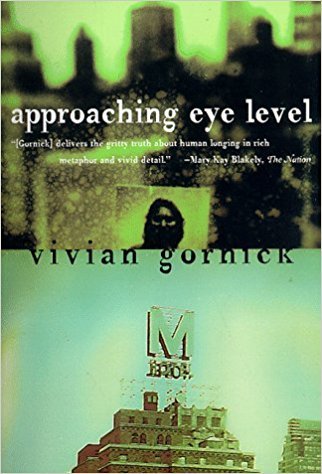
Approaching Eye Level
"[Approaching Eye Level is] about the day-to-day struggle to face down the brutality of growing loneliness, to accept the limitations of friendship and intimacy, to honor the process of becoming oneself. . . . Vivian Gornick's strength lies in her refusal to give up."-Mary Hawthorne, The New York Times
176 pages, Paperback
First published September 1, 1996
About the author
Vivian Gornick
52 books1,245 followersVivian Gornick is the author of, among other books, the acclaimed memoir Fierce Attachments and three essay collections: The End of the Novel of Love, Approaching Eye Level, and, most recently, The Men in My Life. She lives in New York City.
Ratings & Reviews
Friends & Following
Create a free account to discover what your friends think of this book!
Community Reviews
Displaying 1 - 30 of 385 reviews

September 15, 2020
What a treat!
For more thoughts, see this great review:
https://www.goodreads.com/review/show...
For more thoughts, see this great review:
https://www.goodreads.com/review/show...

December 13, 2020
3.5 rounded up.
“I have loved these people..(her 5 closest friends) and all for the same reason, I am hungry for the sentence structure in their heads... Responding to the shape of their sentences my own grow full and free. Thoughts become expressive, emotions clarify... Nothing makes me feel more alive...than the sound of my own mind working in the presence of one that's responsive. Connected to myself I am now connected to others."
This slim book of essays comprises seven chapters, each exploring themes of loneliness, friendship, and the process of self-discovery within different settings and times in Vivian Gornick's life. Most importantly, these essays are essentially about Gornick’s reflections on connecting with herself and with others and what interferes with these connections. When she does not feel connected with herself or others she feels lonely and depressed and is unable to write. Her essays are equally about a writer trying to understand what gets in the way of writing which is the same thing that gets in the way of her self-understanding. In some of the essays, not all, this struggle is described in such detail it sometimes felt wonderful to be in the presence of such an insightful and open writer. At other times the detail felt like too much of a good thing. I had a similar experience while reading Gornick’s Fierce Attachments; it’s like reading the minute and repetitive details of her psychoanalytic sessions. Some of the details are interesting but the only people truly interested in the minutiae and the repetition involved in a person’s psychoanalysis are the psychoanalyst and the analysand.
My favorite chapter was the first, which is set in NYC. Having lived in NYC I could easily relate to Gornick's experiences and smiled knowingly and with great nostalgia throughout this chapter. There are several nice anecdotes about living in NYC which include walking the streets, making plans with friends and feeling a sense of peaceful solitude or loneliness while alone in her apartment. In one anecdote Gornick feels lonely and goes outside where she knows that she will feel better.
"Thank God for the street. ...Those of us who can't shake off ..melancholy walk the streets. The pavements of New York are filled with people escaping the prison sentence of personal history into the promise of an open destiny…. There is no friend, lover or relative I want to be with as much as I want to swing through the streets being jostled and bumped, catching the eye of the stranger, feeling the stranger’s touch. In the street I am grinning like an idiot to myself walking fast at everyone coming my way; children stare, men smile, women laugh right into my eyes. ….The tenderness I feel in that mood it soothes beyond reasonable explanation. I feel such love then for the idea of the city as well as the reality….nothing heals me more…. Never am I less alone than alone in a crowded street.”
In another chapter Gornick is teaching outside of NYC and living on campus. She comments at length and gives many examples about the fact that no one wants to talk to her. People say they will make plans but never do. Gornick is not shy. She approaches people she has met at organized functions and attempts to make dinner plans but people are always too busy. Eventually, Gornick gives up and feels depressed and isolated. Eventually Gornick runs into a scientist she knows and tells him that everyone is avoiding her. He explains to her:
"One thing you have to know about academics: either you're too good for them or they're too good for you."
Gornick ponders this for a few moments and then quips:
"You mean I'm too famous for the timid and not famous enough for the ambitious."
Scientist: "You got it."
I liked this book but having read and enjoyed two other books by Gornick far more, I was a bit disappointed in this book by comparison. Unfinished Business: Notes of a Chronic Re-Reader and The Odd Woman and the City: A Memoir are my favorite books by Gornick. Fierce Attachments: A Memoir, mentioned above, was similar to this book only in terms of the overly detailed self-analysis but in every other way is a very different book. Having said all of that, I'll be the first one in line for Gornick's next publication.
.
“I have loved these people..(her 5 closest friends) and all for the same reason, I am hungry for the sentence structure in their heads... Responding to the shape of their sentences my own grow full and free. Thoughts become expressive, emotions clarify... Nothing makes me feel more alive...than the sound of my own mind working in the presence of one that's responsive. Connected to myself I am now connected to others."
This slim book of essays comprises seven chapters, each exploring themes of loneliness, friendship, and the process of self-discovery within different settings and times in Vivian Gornick's life. Most importantly, these essays are essentially about Gornick’s reflections on connecting with herself and with others and what interferes with these connections. When she does not feel connected with herself or others she feels lonely and depressed and is unable to write. Her essays are equally about a writer trying to understand what gets in the way of writing which is the same thing that gets in the way of her self-understanding. In some of the essays, not all, this struggle is described in such detail it sometimes felt wonderful to be in the presence of such an insightful and open writer. At other times the detail felt like too much of a good thing. I had a similar experience while reading Gornick’s Fierce Attachments; it’s like reading the minute and repetitive details of her psychoanalytic sessions. Some of the details are interesting but the only people truly interested in the minutiae and the repetition involved in a person’s psychoanalysis are the psychoanalyst and the analysand.
My favorite chapter was the first, which is set in NYC. Having lived in NYC I could easily relate to Gornick's experiences and smiled knowingly and with great nostalgia throughout this chapter. There are several nice anecdotes about living in NYC which include walking the streets, making plans with friends and feeling a sense of peaceful solitude or loneliness while alone in her apartment. In one anecdote Gornick feels lonely and goes outside where she knows that she will feel better.
"Thank God for the street. ...Those of us who can't shake off ..melancholy walk the streets. The pavements of New York are filled with people escaping the prison sentence of personal history into the promise of an open destiny…. There is no friend, lover or relative I want to be with as much as I want to swing through the streets being jostled and bumped, catching the eye of the stranger, feeling the stranger’s touch. In the street I am grinning like an idiot to myself walking fast at everyone coming my way; children stare, men smile, women laugh right into my eyes. ….The tenderness I feel in that mood it soothes beyond reasonable explanation. I feel such love then for the idea of the city as well as the reality….nothing heals me more…. Never am I less alone than alone in a crowded street.”
In another chapter Gornick is teaching outside of NYC and living on campus. She comments at length and gives many examples about the fact that no one wants to talk to her. People say they will make plans but never do. Gornick is not shy. She approaches people she has met at organized functions and attempts to make dinner plans but people are always too busy. Eventually, Gornick gives up and feels depressed and isolated. Eventually Gornick runs into a scientist she knows and tells him that everyone is avoiding her. He explains to her:
"One thing you have to know about academics: either you're too good for them or they're too good for you."
Gornick ponders this for a few moments and then quips:
"You mean I'm too famous for the timid and not famous enough for the ambitious."
Scientist: "You got it."
I liked this book but having read and enjoyed two other books by Gornick far more, I was a bit disappointed in this book by comparison. Unfinished Business: Notes of a Chronic Re-Reader and The Odd Woman and the City: A Memoir are my favorite books by Gornick. Fierce Attachments: A Memoir, mentioned above, was similar to this book only in terms of the overly detailed self-analysis but in every other way is a very different book. Having said all of that, I'll be the first one in line for Gornick's next publication.
.

October 24, 2019
Los escritores que más me gustan son los que escriben sobre su propia vida. El problema es que, al contrario de los que escriben ficción, cuando los escritores autobiográficos ya han convertido en literatura los episodios más interesantes de su vida están destinados a caer en un problema que veo insalvable: o se repiten volviendo a narrar lo ya narrado o se enredan en episodios de su vida cada vez más secundarios y de menor interés.
Esto último es lo que me ha pasado con Gornick: el primero de sus libros que leí, “Apegos feroces”, me pareció sin lugar a dudas una obra maestra; “La mujer singular y la ciudad” me pareció un buen libro que iba a rebufo del primero; este tercero me ha parecido un conjunto deslavazado de anécdotas menores, absolutamente inconexas, que no solo no dan para un libro completo sino que, en algunos de los casos, no dan ni para un capítulo.
Por supuesto que Gornick escribe como dios, que es una persona fascinante y que tiene una capacidad de análisis (de lo que le rodea y de ella misma) absolutamente asombrosa... pero los temas elegidos en este libro (gente que se encuentra por la calle, su opinión sobre la importancia de escribir cartas, las conversaciones telefónicas con sus conocidos) son, en mi humilde opinión y siendo generosos, temas demasiado menores que dan más para un post que para un capítulo de un libro.

September 14, 2020
Memoirist and essential New Yorker Vivian Gornick displays such a fierce appetite for connection: this book holds a rich collection of real-life encounters, often featuring strangers, for her to revisit and you to reflect upon. Whether she gives each encounter a handful of pages or a mere few lines depends on the moment, but she keeps the stories coming. Her observations on people in public places can be a riot: as her impressions remain superficial in the middle of a crowd, she makes short work of sizing up passersby. The seven essays making up this thin book vary in length and interest; the ones on city dwellers, academics and hotel workers particularly captivated me.
Gornick achieves variable levels of success in connecting with the people around her and sometimes flat out fails, but she's nothing if not determined. She keeps coming back for more.
On the Sixth Avenue bus I get up to give an old woman my seat. She’s small and blond, wearing gold jewelry and a mink coat, her hands a pair of blotchy claws with long red fingernails. “You did a good thing, dear,” she says to me and smiles coyly. “I’m ninety years old. I was ninety yesterday.” I smile back at her. “You look fantastic,” I say. “Not a day over seventy-five.” Her eyes flash. “Don’t get smart,” she says curtly.
Gornick achieves variable levels of success in connecting with the people around her and sometimes flat out fails, but she's nothing if not determined. She keeps coming back for more.
On the Sixth Avenue bus I get up to give an old woman my seat. She’s small and blond, wearing gold jewelry and a mink coat, her hands a pair of blotchy claws with long red fingernails. “You did a good thing, dear,” she says to me and smiles coyly. “I’m ninety years old. I was ninety yesterday.” I smile back at her. “You look fantastic,” I say. “Not a day over seventy-five.” Her eyes flash. “Don’t get smart,” she says curtly.

March 30, 2019
I enjoy everything Gornick writes very much. Her sentences open and stimulate at every turn. She's always a wonderful read, always makes connections with everything that happens in her life, or that she chooses to write about. One of my favourite writers, and one of my favourite people.

May 23, 2020
What a remarkable writer. I've never read Vivian Gornick, though vaguely remember seeing her byline in the New Yorker. I'd bought this book years ago... where? No idea. Maybe a used bookshop, where I recognized the name, and was attracted to the physical object--a small hardbound book, the cover nicely designed: New York apartment buildings, blurry skyline, memory... it looked gritty and smart. And then I stuck it on a shelf and never opened it.
Until now.
These seven essays were the smartest things I'd read in a long long time. Why had I never heard of her except the echo of a name? Why hadn't anyone told me how remarkable, how honest, how rigorously insightful this book would be? Maybe I had to wait until this lockdown moment, where I'm going back through the books I already own, looking for something that's not quite the usual. I'm feeling particularly raw these days, and seeking out reasonable voices, quieter than my norm, radiant with intelligence, and especially books about big cities which I cannot at the moment physically access.
And along comes Ms. Gornick. The first essay, "on the street: nobody watches, everyone performs", give us the psyche of the true city dweller, reminding us why there are 10 million people who call New York home, why they need it, love it, what it is. It's the bleed between the citizen and the city, the way they affect one another. The chance encounters. The philosophical exchange with the old guys at the hardware store, the New York conversations, daily life which becomes street theater, infinite in its variety:
"At Thirty Eighth street two men were leaning against a building one afternoon in July. They were both bald, both had cigars in their mouths and each one had a small dog attached to a leash. In the glare of noise, heat, dust and confusion, the dogs barked nonstop. Both men looked balefully at their animals. "Yap, yap, stop yapping already."one man said angrily. "Yap, yap, keep on yapping," the other said softly. I burst out laughing. The men looked up at me and grinned. Satisfaction spread itself across each face. They had performed and I had received. My laughter had given shape to an exchange that would otherwise have evaporated in the chaos. The glare felt less threatening. I realized how often the street achieves composition for me: the flash of experience I extract again and again from the endless stream of event."
The wealth of New York conversations--and thoughts about conversation. The ones that feed us, the ones that draw out our expressiveness, make us feel alive. It's how I feel every time I go to New York, and reading this book is like having those conversations. About the fragmentation of urban life, the mystery of relationships, the persistence of loneliness, the illusion of community. Gornick is a serious thinker and pursues truth through all the softball stuff we'd like to believe to the bedrock of what she really has observed.
"The street keeps moving, and you've got to love the movement. You've got to find the composition of the rhythm, lift the story from the motions, understand and not regret that all is dependent on the swiftness with which we come into view and pass out again. The pleasure and the reassurance lie precisely in the speed with which connection is established and then let go of. No need to clutch. The connection is generic not specific. There's another piece of it coming right along behind this one."
One wonderful essay describes her service over a series of summers as a young waitress at a Catskills resort--and the same eye, unsentimental but fond, nostalgic but deeply honest, recreates that vanished world, that true coming of age. Here, a rich woman on a holiday weekend, the end of the season, demands the headwaiter fire her for missing a course:
"You're fired," the headwaiter said to me. "Serve your morning meal and clear out."
"The blood seemed to leave my body in a single rush. For a moment I thought I was going to faint. Then I realized that tomorrow morning my regular guests would be back in the seats, most of them leaving after breakfast, and I, of course, would received my full tips exactly as though none of this had happened. The headwaiter was not really punishing me. he knew it, and now I knew it. Only the blond woman didn't know it. She required my dismissal for the appeasement of her lousy life--her lined face, her hated husband, her disappointed New Year's Eve--and he, the headwaiter, was required to deliver it up to her.
"For the first time I understood something about power. I stared into the degraded face of the headwaiter and saw that he was as trapped as I, caught up in the working life that required someone's humiliation at all times."
There's an essay about her friendship with a complicated woman, a well-known thinker, who took her up very intimately, and then pushed her into a circle of those who she had once similarly taken up:
"No one she knew could fill her up. If she swallowed all of us at once, she'd still be hungry. She required constant replacements. Some of those replacements might be more talented, more interesting or entertaining, than others but in the end we'd all have to be replaced...."
Her experiences as a traveling professor gives up incredible insights into why academic life is so soul-killing, an essay in its way as brave and devastating as Who's Afraid of Viriginia Woolf, the absence of connection among long time colleagues she had observed: Here she has been considering the relationship of two professors in the English department, men with tremendous understanding of literature, who should have been best friends, feeding each other with wonderful conversation. Instead they couldn't stand to be in a room together:
"Each longing for the kind of conversation the other could supply, yet each one locked into insult and injury less than a mile apart. At that moment, the littleness of life seemed insupportable, its impact large and its consequence inevitable.... The situation was indeed Chekhovian. My turn--like that of the doctor in Ward Six who understand confinement only when he himself is at last imporisoned--lay just ahead."
Loneliness, connection, the city, the bracing impact of feminism in the early '70s, what draws us together and what pushes us apart, urbanism, and most importantly--good conversation, these are her subjects, and this is an author I will seek out now, when I need a shot of that social commentator, that questing mind, a bit of New York.
Until now.
These seven essays were the smartest things I'd read in a long long time. Why had I never heard of her except the echo of a name? Why hadn't anyone told me how remarkable, how honest, how rigorously insightful this book would be? Maybe I had to wait until this lockdown moment, where I'm going back through the books I already own, looking for something that's not quite the usual. I'm feeling particularly raw these days, and seeking out reasonable voices, quieter than my norm, radiant with intelligence, and especially books about big cities which I cannot at the moment physically access.
And along comes Ms. Gornick. The first essay, "on the street: nobody watches, everyone performs", give us the psyche of the true city dweller, reminding us why there are 10 million people who call New York home, why they need it, love it, what it is. It's the bleed between the citizen and the city, the way they affect one another. The chance encounters. The philosophical exchange with the old guys at the hardware store, the New York conversations, daily life which becomes street theater, infinite in its variety:
"At Thirty Eighth street two men were leaning against a building one afternoon in July. They were both bald, both had cigars in their mouths and each one had a small dog attached to a leash. In the glare of noise, heat, dust and confusion, the dogs barked nonstop. Both men looked balefully at their animals. "Yap, yap, stop yapping already."one man said angrily. "Yap, yap, keep on yapping," the other said softly. I burst out laughing. The men looked up at me and grinned. Satisfaction spread itself across each face. They had performed and I had received. My laughter had given shape to an exchange that would otherwise have evaporated in the chaos. The glare felt less threatening. I realized how often the street achieves composition for me: the flash of experience I extract again and again from the endless stream of event."
The wealth of New York conversations--and thoughts about conversation. The ones that feed us, the ones that draw out our expressiveness, make us feel alive. It's how I feel every time I go to New York, and reading this book is like having those conversations. About the fragmentation of urban life, the mystery of relationships, the persistence of loneliness, the illusion of community. Gornick is a serious thinker and pursues truth through all the softball stuff we'd like to believe to the bedrock of what she really has observed.
"The street keeps moving, and you've got to love the movement. You've got to find the composition of the rhythm, lift the story from the motions, understand and not regret that all is dependent on the swiftness with which we come into view and pass out again. The pleasure and the reassurance lie precisely in the speed with which connection is established and then let go of. No need to clutch. The connection is generic not specific. There's another piece of it coming right along behind this one."
One wonderful essay describes her service over a series of summers as a young waitress at a Catskills resort--and the same eye, unsentimental but fond, nostalgic but deeply honest, recreates that vanished world, that true coming of age. Here, a rich woman on a holiday weekend, the end of the season, demands the headwaiter fire her for missing a course:
"You're fired," the headwaiter said to me. "Serve your morning meal and clear out."
"The blood seemed to leave my body in a single rush. For a moment I thought I was going to faint. Then I realized that tomorrow morning my regular guests would be back in the seats, most of them leaving after breakfast, and I, of course, would received my full tips exactly as though none of this had happened. The headwaiter was not really punishing me. he knew it, and now I knew it. Only the blond woman didn't know it. She required my dismissal for the appeasement of her lousy life--her lined face, her hated husband, her disappointed New Year's Eve--and he, the headwaiter, was required to deliver it up to her.
"For the first time I understood something about power. I stared into the degraded face of the headwaiter and saw that he was as trapped as I, caught up in the working life that required someone's humiliation at all times."
There's an essay about her friendship with a complicated woman, a well-known thinker, who took her up very intimately, and then pushed her into a circle of those who she had once similarly taken up:
"No one she knew could fill her up. If she swallowed all of us at once, she'd still be hungry. She required constant replacements. Some of those replacements might be more talented, more interesting or entertaining, than others but in the end we'd all have to be replaced...."
Her experiences as a traveling professor gives up incredible insights into why academic life is so soul-killing, an essay in its way as brave and devastating as Who's Afraid of Viriginia Woolf, the absence of connection among long time colleagues she had observed: Here she has been considering the relationship of two professors in the English department, men with tremendous understanding of literature, who should have been best friends, feeding each other with wonderful conversation. Instead they couldn't stand to be in a room together:
"Each longing for the kind of conversation the other could supply, yet each one locked into insult and injury less than a mile apart. At that moment, the littleness of life seemed insupportable, its impact large and its consequence inevitable.... The situation was indeed Chekhovian. My turn--like that of the doctor in Ward Six who understand confinement only when he himself is at last imporisoned--lay just ahead."
Loneliness, connection, the city, the bracing impact of feminism in the early '70s, what draws us together and what pushes us apart, urbanism, and most importantly--good conversation, these are her subjects, and this is an author I will seek out now, when I need a shot of that social commentator, that questing mind, a bit of New York.

October 30, 2020
You know the feeling: You spend an evening in the company of an alert and lucid mind. The conversation is expansive, the insights effervescent. For the moment, you forget your petty anxieties – the looming deadlines, the unresolved burdens – and lose yourself in the energizing exchange. This is what it’s like to consume Gornick’s writing.
In a series of personal essays published in the 90s, Gornick shares intimate details on her life and work. Topics under her gaze include: the performative quality of street walking, the alluring harshness of life in a big city, the textures and modulations of friendship, the melancholy of the expressive arts, the pleasures and agonies of living alone. A common throughline: our dual longing for solitude and connection.
Unusually for non-fiction, the pleasure in this collection was not linked to thematic interest for me. As a writer grappling with an overabundance of alone time, Gornick’s concerns are very different to mine (a busy mother of two). No, the pleasure derives entirely from the process: time spent in the company of someone who thinks deeply about matters large and small, whose lucidity gives shape to one’s own thinking.
This collection is ultimately notable for its generosity – writing that feels less like narration and more like conversation, a gradual induction into the inner circle of the writer’s confidences. This intimacy, this open-hearted clarity, is Gornick’s gift to the reader. The sense of a meaningful friendship, newly formed.
Mood: Stimulating
Rating: 9/10
Also on Instagram.
In a series of personal essays published in the 90s, Gornick shares intimate details on her life and work. Topics under her gaze include: the performative quality of street walking, the alluring harshness of life in a big city, the textures and modulations of friendship, the melancholy of the expressive arts, the pleasures and agonies of living alone. A common throughline: our dual longing for solitude and connection.
Unusually for non-fiction, the pleasure in this collection was not linked to thematic interest for me. As a writer grappling with an overabundance of alone time, Gornick’s concerns are very different to mine (a busy mother of two). No, the pleasure derives entirely from the process: time spent in the company of someone who thinks deeply about matters large and small, whose lucidity gives shape to one’s own thinking.
This collection is ultimately notable for its generosity – writing that feels less like narration and more like conversation, a gradual induction into the inner circle of the writer’s confidences. This intimacy, this open-hearted clarity, is Gornick’s gift to the reader. The sense of a meaningful friendship, newly formed.
Mood: Stimulating
Rating: 9/10
Also on Instagram.

March 10, 2024
tant de bo pogués parlar amb la vivian... tan llesta i tan la millor... solucionaria tots els meus problemes
"I és per això que anhelem l'amor i la comunitat. Totes dues son coses lloables de voler a la vida, però no d'anhelar. L'anhel és assassí. L'anhel et torna sentimental. La sentimentalitat et fa tornar romàntic. La bellesa del feminisme, per a mi, era que m'havia fet valorar la dura veritat per damunt de l'amor romàntic. Era la dura veritat, la que encara perseguia."
"Els he estimat, aquesta gent -i tant!- i tots per la mateixa raó. Tinc ganes de les frases que els surten del cap. És la conversa entre nosaltres el que em fa estimar-los. Responent a la forma de les seves frases, les meves creixen i s'alliberen: el pensament s'expressa, les emocions s'aclareixen i soc feliç, més feliç que en qualsevol altre moment. Res em fa sentir més viva i en el món que el so de la meva ment en marxa en presència d'algú receptiu."
"No hi ha res que em curi més el cor ferit i enfadat que un passeig per la mateixa ciutat que sovint em sembla que em rebutja. Veure al carrer les cinquanta maneres diferents que té la gent de lluitar per seguir sent persones fins a l'últim moment (la diversitat i la inventiva de les tècniques de supervivència) és notar com la pressió afluixa i l'excés s'eixuga. M'afegeixo al neguit. Comparteixo aquest estat. Noto en les meves terminacions nervioses el rebuig col·lectiu a scumbir. No estic mai menys sola que quan estic sola en la multitud. Sola, m'invento. Sola, aprofito el temps."
"I és per això que anhelem l'amor i la comunitat. Totes dues son coses lloables de voler a la vida, però no d'anhelar. L'anhel és assassí. L'anhel et torna sentimental. La sentimentalitat et fa tornar romàntic. La bellesa del feminisme, per a mi, era que m'havia fet valorar la dura veritat per damunt de l'amor romàntic. Era la dura veritat, la que encara perseguia."
"Els he estimat, aquesta gent -i tant!- i tots per la mateixa raó. Tinc ganes de les frases que els surten del cap. És la conversa entre nosaltres el que em fa estimar-los. Responent a la forma de les seves frases, les meves creixen i s'alliberen: el pensament s'expressa, les emocions s'aclareixen i soc feliç, més feliç que en qualsevol altre moment. Res em fa sentir més viva i en el món que el so de la meva ment en marxa en presència d'algú receptiu."
"No hi ha res que em curi més el cor ferit i enfadat que un passeig per la mateixa ciutat que sovint em sembla que em rebutja. Veure al carrer les cinquanta maneres diferents que té la gent de lluitar per seguir sent persones fins a l'últim moment (la diversitat i la inventiva de les tècniques de supervivència) és notar com la pressió afluixa i l'excés s'eixuga. M'afegeixo al neguit. Comparteixo aquest estat. Noto en les meves terminacions nervioses el rebuig col·lectiu a scumbir. No estic mai menys sola que quan estic sola en la multitud. Sola, m'invento. Sola, aprofito el temps."

May 11, 2023
Revisando cómo me relaciono con cada ser humano después de leer este libro

July 5, 2022
« Thé street does for me what I cannot do for myself. On the street nobody watches,
everyone performs. »
« They return the narrative impulse to me. Let me make sense of things. Remind me to tell the story I cannot
make my life tell. »
« Suddenly I felt lonely inside the lie,
and I begged her with my eyes to acknowledge the truth between us. »
« remains one of life's great mysteries--in politics as well as in love-readiness: that moment when the elements are sufficiently fused to galvanize inner change. »
« romantic love was injected like dye into the nervous system of my emotions, laced through the entire fabric of longing, fantasy, and sentiment. »
« everyone who had ever cared to investigate the nature of human loneliness had seen that only one's own working mind breaks the solitude of the self. »
« I may not be making love myself but the air I breath is charged; I am not doing politics, it is true, but there is politics in the daily exchange; my own appetite is without edge yet appetite is clearly the coin of the realm. »
“when people find themselves in spirit-diluting proximity three times in a single week they have no urge to search each other out for an evening of real conversation.”
“It's easier actually to be alone that to be in the presence of that which arouses the need but fails to address it. For then we are in the presence of an absence and that, somehow, is not to be borne.”
everyone performs. »
« They return the narrative impulse to me. Let me make sense of things. Remind me to tell the story I cannot
make my life tell. »
« Suddenly I felt lonely inside the lie,
and I begged her with my eyes to acknowledge the truth between us. »
« remains one of life's great mysteries--in politics as well as in love-readiness: that moment when the elements are sufficiently fused to galvanize inner change. »
« romantic love was injected like dye into the nervous system of my emotions, laced through the entire fabric of longing, fantasy, and sentiment. »
« everyone who had ever cared to investigate the nature of human loneliness had seen that only one's own working mind breaks the solitude of the self. »
« I may not be making love myself but the air I breath is charged; I am not doing politics, it is true, but there is politics in the daily exchange; my own appetite is without edge yet appetite is clearly the coin of the realm. »
“when people find themselves in spirit-diluting proximity three times in a single week they have no urge to search each other out for an evening of real conversation.”
“It's easier actually to be alone that to be in the presence of that which arouses the need but fails to address it. For then we are in the presence of an absence and that, somehow, is not to be borne.”

January 14, 2024
Crec que és el que necessitava i m'emociona joder perquè quan penses que ningú ho entendrà com tu ho fas de cop et trobes amb això i et consola i et reconcilies una mica amb tot (només una mica, que ja és molt)

January 9, 2024
Another wonderful book by Gornick, master essayist, memoirist, feminist, and—above all—stylist. I especially loved the hilarious essay on her time as a waitress in the Catskills and her penatrating essay on the dysfunctions of university life. Only four stars on this one because a few essays seemed a little diffuse or abstract, as if she was stretching to make a difficult personal theme clear but never quite got there.

February 5, 2019
It's your first day in New York City. The air is edged with an in-your-face-ness that blurs all traces of an identity. Miniaturized, you hear conversation but can't seem to explicate any context, none of the narrative but all of the urgency. Who does this woman think she is crying over a misplaced Uniqlo sweater? What does it matter to me that you won't get alimony? But there is a narrative. Look deeper, Vivian Gornick asks us, find the humanity in these flashes.
Across the seven essays—all personal and soul-searching—which make up this collection, Gornick retraces her flashes in the Big City and beyond: a stint as a waitress at the Catskills, rooming with writer Rhoda Munk, mourning her relationship with the written letter. Despite the incongruity of these experiences, Gornick miraculously manages to flesh them out thoroughly and coherently. It's miraculous because her voice makes it happen.
Being present alongside Gornick's voice—at once immediate and fuzzy around the edges—is like meeting a stranger at a reunion. There's an air of familiarity but there's also a distance which is—how do I put it—intoxicating? It's leave-your-doubts-at-the-door intoxicating, because who needs attunement? Listen:
There is thrust but also comfort in the world of that paragraph. That seamless merging is a testament to Gornick's panoramic perspective, her unflinching eye for the casual. Some may find her voice too precious, convinced of its own sentimentality, a power that is somehow also a weakness. But despite that (gendered) criticism, at the core is a woman grappling with her loneliness, with the necessary epiphanies of adulthood. Approaching Eye Level is a glimpse at this woman coming to those uneasy terms, and in the process, coming alive.
Across the seven essays—all personal and soul-searching—which make up this collection, Gornick retraces her flashes in the Big City and beyond: a stint as a waitress at the Catskills, rooming with writer Rhoda Munk, mourning her relationship with the written letter. Despite the incongruity of these experiences, Gornick miraculously manages to flesh them out thoroughly and coherently. It's miraculous because her voice makes it happen.
Being present alongside Gornick's voice—at once immediate and fuzzy around the edges—is like meeting a stranger at a reunion. There's an air of familiarity but there's also a distance which is—how do I put it—intoxicating? It's leave-your-doubts-at-the-door intoxicating, because who needs attunement? Listen:
My acquaintanceship—like the city itself—is wide-ranging but unintegrated. The people who are my friends are not the friends of one another. Sometimes—when I am feeling expansive and imagining life in New York all of a piece—these friendships feel like beads on a neckless loosely strung, the beads not touching one another but all lying, nonetheless, lightly and securely against the base of my throat, magically pressing into me the warmth of connection.
There is thrust but also comfort in the world of that paragraph. That seamless merging is a testament to Gornick's panoramic perspective, her unflinching eye for the casual. Some may find her voice too precious, convinced of its own sentimentality, a power that is somehow also a weakness. But despite that (gendered) criticism, at the core is a woman grappling with her loneliness, with the necessary epiphanies of adulthood. Approaching Eye Level is a glimpse at this woman coming to those uneasy terms, and in the process, coming alive.

January 21, 2020
"Vincles ferotges i La dona singular i la ciutat van deixar tota una família de fans assedegats de més reflexions de la flâneuse que passejava amb la seva mare per Nova York. A Mirar-nos de cara, un recull d’articles escrits als 90, Vivian Gornick hi passeja sola i observa la ciutat per entendre com funcionen la intimitat i la comunicació als espais que transitem. Sense dissimular el menyspreu que sent per la vacuïtat, fa una crida a la necessitat de viure conscientment, noció que desenvolupa minuciosament a l’assaig «Viure sola», un dels més destacables del recull, mentre examina el fet de reconèixer els límits de les relacions humanes i els vincles intermitents (que no són pas per això menys ferotges). Acollir la solitud com a sofisticació esdevé crucial per assolir les condicions en què es pot treballar el qüestionament personal. Un cop més, Gornick ens ho dona tot sense que ens n’adonem. Dissecciona la part més real de les relacions i ens l’entrega, amb una sinceritat punyent, en primer pla. Mirar-nos de cara és un diàleg de mirades, una dansa d’intercanvis inevitables amb un lector ja entregat, perquè la seva prosa no es pot llegir des de la distància, s’ha de llegir ja des de dins". Clara Rosell
October 9, 2023
la segunda vez que leo a Gornick, está vez para decidir de forma definitiva si las sensaciones que tuve con «apegos feroces» de disipaban o si por el contrario, se reafirmaban. ha sucedido lo último.
hay momentos en los que creo que zarandearia a esta señora para gritarle: ¿pero porqué?!!!!! porqué descuartiza situaciones o temáticas de una forma tan detallada para luego llegar a conclusiones de mierda.
lo que más me molesta de Gornick son sus comentarios racistas y clasistas dejados entre párrafos como si así pudiesen pasar desapercibidos.
lo vi en la primera novela y aquí lo ha vuelto a hacer.
le voy a dar un punto solo por el capítulo de «vivir sola», en el que creo que algunas reflexiones pueden ser rescatadas con pinzas.
se acabó mi historia con ella.
hay momentos en los que creo que zarandearia a esta señora para gritarle: ¿pero porqué?!!!!! porqué descuartiza situaciones o temáticas de una forma tan detallada para luego llegar a conclusiones de mierda.
lo que más me molesta de Gornick son sus comentarios racistas y clasistas dejados entre párrafos como si así pudiesen pasar desapercibidos.
lo vi en la primera novela y aquí lo ha vuelto a hacer.
le voy a dar un punto solo por el capítulo de «vivir sola», en el que creo que algunas reflexiones pueden ser rescatadas con pinzas.
se acabó mi historia con ella.

March 9, 2018
Though I don't agree with Gornick's view on life and loneliness (and I am sure we wouldn't be friends if we met) some of her descriptions of relationships and work and communication felt undeniably true. Interesting collection of essays on friendship, love, routine, shaping and being shaped by your environment.

March 20, 2020
A few of these essays delve so beautifully into the nature of loneliness and self and being a woman, and the space you take up and inhabit. They have stayed with me for ages since reading.

May 31, 2021
Cortito. Retazos de historias, trocitos de vida...extraordinariamente bien escrito.

June 18, 2023
wow, wow, wow! extremely intelligent thinking expressed through very clear and easy-to-read writing. one of the best books i've read in 2023 so far.

May 31, 2020
Creo que le sobran las últimas 4 páginas pero aún así está bien. En esta ocasión son diferentes ensayos donde ronda sobre todo el tema de la soledad y el poder de la conversación. En el último capítulo retoma 100% la estructura de los anteriores: collage de escenas urbanas.

October 11, 2019
¿Alguna vez has pensado en qué le dirías a tu yo del pasado si tuvieses la oportunidad de viajar en el tiempo y hacerle una visita? Seguro que te has imaginado a ti misma abriéndole los ojos a esa versión más joven, temeraria e inocente que algún día fuiste.
El caso es me pasa algo curioso y difícil de explicar con Gornick: no puedo evitar tomarme algunas de las lecciones vitales que comparte en sus memorias como si fuese mi yo del futuro la que intenta decirme algo.
Sí, ya sé cómo suena esto pero, aún así...
Lo que intento decir es que de los tres libros de Vivian (me permito la licencia de llamarla por su nombre de pila a estas alturas) he sacado reflexiones importantes que a mis 34 años me han servido de mucho. Pero es que estoy segura de que me seguirán sirviendo, probablemente de otra manera, dentro de una década o dos. 'Mirarse de frente' de pronto me parece un título acertadísimo.
Recomendaría leer este libro sin compararlo con los dos anteriores. Son los tres muy diferentes entre sí, pero la esencia de Gornick está en cada una de las páginas que los componen. Sobre ésta última entrega la propia autora decía esta semana en El Cultural:
“En realidad, como ve, no se trata de un volumen de ensayos unitarios sino de una recopilación de piezas literarias, autobiográficas, escritas a lo largo de los años pero reunidas ahora como una serie de ensayos personales. La palabra personal es crucial aquí. No me di cuenta de que estaba escribiendo ensayos personales hasta que recopilé estas piezas y descubrí que juntas daban una entidad diferente al libro”.
Me consta que hay personas que se han sentido ligeramente decepcionadas por el formato de Mirarse de frente. A quienes dudáis si leerlo o no, os diré, por si os sirviera de algo, que no es Apegos feroces; no es La mujer singular y la ciudad (ni siquiera estos dos son iguales), pero sigue siendo Gornick.
El caso es me pasa algo curioso y difícil de explicar con Gornick: no puedo evitar tomarme algunas de las lecciones vitales que comparte en sus memorias como si fuese mi yo del futuro la que intenta decirme algo.
Sí, ya sé cómo suena esto pero, aún así...
Lo que intento decir es que de los tres libros de Vivian (me permito la licencia de llamarla por su nombre de pila a estas alturas) he sacado reflexiones importantes que a mis 34 años me han servido de mucho. Pero es que estoy segura de que me seguirán sirviendo, probablemente de otra manera, dentro de una década o dos. 'Mirarse de frente' de pronto me parece un título acertadísimo.
Recomendaría leer este libro sin compararlo con los dos anteriores. Son los tres muy diferentes entre sí, pero la esencia de Gornick está en cada una de las páginas que los componen. Sobre ésta última entrega la propia autora decía esta semana en El Cultural:
“En realidad, como ve, no se trata de un volumen de ensayos unitarios sino de una recopilación de piezas literarias, autobiográficas, escritas a lo largo de los años pero reunidas ahora como una serie de ensayos personales. La palabra personal es crucial aquí. No me di cuenta de que estaba escribiendo ensayos personales hasta que recopilé estas piezas y descubrí que juntas daban una entidad diferente al libro”.
Me consta que hay personas que se han sentido ligeramente decepcionadas por el formato de Mirarse de frente. A quienes dudáis si leerlo o no, os diré, por si os sirviera de algo, que no es Apegos feroces; no es La mujer singular y la ciudad (ni siquiera estos dos son iguales), pero sigue siendo Gornick.

October 8, 2019
Algunos de vosotros ya os habéis hecho con el nuevo libro de Gornick y habéis dado vuestra opinión. Yo tenía infinitas ganas de comprarlo, porque para mí es una autora muy importante (por no decir la que más).
A diferencia de muchos, debo decir que no me ha defraudado. Sí es cierto que la conexión entre los capítulos es nula, pero a mi parecer, eso da absolutamente igual. Lo que más disfruto cuando leo a esta autora es el acercamiento que se produce entre ella y yo. Con la lectura, puedo saber de sus pensamientos, de sus ideales feministas y de su trayectoria vital en general. De hecho, me he dado cuenta -igual que me ocurrió las dos primeras veces- que el mensaje que emite es importante, pero lo que más me cautiva es la forma que utiliza, la estructura de su narrativa, la manera en que lo explica. Gornick es tierna cuando debe y dura cuando se le exige; a veces es cómica, a veces triste; en ocasiones distante, en otras cercana. Se muestra según su estado de ánimo, cual poeta. Cual persona humana. Cual igual. Cual tú.
Así pues, que no exista un vínculo entre el capítulo uno y el capítulo cinco ni me turba ni me produce inquietud; disfruto igual leyendo de sus retazos y de sus ideas, por breves que estas sean. Su voz me llega tan adentro que soy capaz de imaginármela aquí, sentada a mi lado, tomándose un café.
Y os lo juro: sería la mejor merienda del mundo.
A diferencia de muchos, debo decir que no me ha defraudado. Sí es cierto que la conexión entre los capítulos es nula, pero a mi parecer, eso da absolutamente igual. Lo que más disfruto cuando leo a esta autora es el acercamiento que se produce entre ella y yo. Con la lectura, puedo saber de sus pensamientos, de sus ideales feministas y de su trayectoria vital en general. De hecho, me he dado cuenta -igual que me ocurrió las dos primeras veces- que el mensaje que emite es importante, pero lo que más me cautiva es la forma que utiliza, la estructura de su narrativa, la manera en que lo explica. Gornick es tierna cuando debe y dura cuando se le exige; a veces es cómica, a veces triste; en ocasiones distante, en otras cercana. Se muestra según su estado de ánimo, cual poeta. Cual persona humana. Cual igual. Cual tú.
Así pues, que no exista un vínculo entre el capítulo uno y el capítulo cinco ni me turba ni me produce inquietud; disfruto igual leyendo de sus retazos y de sus ideas, por breves que estas sean. Su voz me llega tan adentro que soy capaz de imaginármela aquí, sentada a mi lado, tomándose un café.
Y os lo juro: sería la mejor merienda del mundo.

March 3, 2022
After spending a weekend that felt terribly isolating, I stumbled on the first page of this on the Internet and felt compelled to finish the rest of book. This is my first Vivian Gornick and it couldn’t be more timely to discover her essays. I expected the reading experience to revolve around living vicariously through Gornick’s observations of New York, yet as I delved deeper I found so much of myself, surprised that I could feel this exposed and acknowledged in the writing of this 86 y/o American black woman known as a radical feminist critic. Her reflections on loneliness, connection and work; the hard truths and trivialities of living, and there are too many to list; along with the accuracy to which she articulated her experience parallels so many of mine. It surprises me at how universal some quiet struggles are - here I am grappling with discontent that I cannot fully elucidate, but Gornick has lived through it, expressed and explained it all in her poignant, vulnerable prose, and had it published 26 years ago. At the end of this book I can’t help but marvel how reading can yield such remarkable revelations and comforts when you meet the right piece of writing at the right time.
Tldr: I’ve found my soul sister (& our birthdays are only a day apart! I must cite them Gemini stars for our shared temperaments?!) in a book.
Tldr: I’ve found my soul sister (& our birthdays are only a day apart! I must cite them Gemini stars for our shared temperaments?!) in a book.

May 4, 2016
Sometimes you find a book that just speaks to you (thanks to the best website ever, The Toast). Many of these essays circle around loneliness and they all at some point come back to the idea of humiliation, either at the hand of someone else, or being dealt out by Gornick, and that was surprising to me as I don't really think about humiliation a lot, and yet I was identifying with the writing. Which is apropos because these essays are also about starting out at one place, seeing a different side of things, and realizing both have a truth. These essays are not about me, but I can see some of myself in them, and they are valuable to me for both reasons. Recommended particularly for those who walk a lot, people who have worked or experienced academia, those who want to delve into the hows and whys of partnership and aloneness, and those who need to hear a writer say things about female friendships and life giving conversations that they don't have the words for yet.

April 17, 2018
Here is a lively, inquiring mind eager to stay awake, struggling against the sorts of innervating forces most of us face: loneliness, depression, alienation. Few people describe this struggle in such detail, in such an enlightening way, as Vivian Gornick. I read and re-read everything she writes, for her immediacy and for the insights that, as she says, she forgets (overcome by the innervating forces again) and I will too.

April 1, 2020
De los libros que más me han gustado en los últimos años. En él, Vivian Gornick reflexiona sobre varios de los temas sobre los que más pienso desde hace un tiempo: La soledad, la ciudad, el feminismo, estar en pareja... pero también sobre la importancia de pasear, de acompañarnos a nosotras mismas y de aprovechar la soledad. Es una maravilla de libro, con una prosa impecable y una narración muy fluida. Bueno, que he flipado, vaya.

December 2, 2020
Quiero nadar en la cabeza de Vivian Gornick.

January 18, 2021
Un goce. Vivan las autoras reales y honestas. No es un libro sobre feminismo, pero su enfoque feminista es muy refrescante.

March 26, 2024
#43. Sobre encontrar la identidad, 52 book club 2024
"Comprendí entonces lo corriente que era mi depresión. Corriente y predecible, corriente y diaria. Depresión diaria, no era otra cosa. Comprendí, como por primera vez, que la depresión diaria te come la energía; sin energía la vida interior se evapora; sin vida interior no hay vivacidad; sin vivacidad no hay trabajo. Una vida sometida a la depresión diaria está condenada a la mediocridad.
Y al mismo tiempo, comprendí también que 'eso' era la soledad, la cosa en sí. La soledad era la evaporación de la vida interior. Soledad era yo seccionada de mí misma. La soledad era la cosa que nada podía curar".

October 20, 2022
favourites were "the catskills remembered," "on living alone," and "on letter writing." still thinking about these lines, towards the end:
"The world I find myself in. Now there's a phrase to linger over. A phrase that furrows the brow; resonates unpleasantly in the head; even presses on the heart. What does it mean to find yourself in the world, rather than that you struggle to take your place in the world? Sounds amnesiac, somehow; anesthetised; stopped in place."
"The world I find myself in. Now there's a phrase to linger over. A phrase that furrows the brow; resonates unpleasantly in the head; even presses on the heart. What does it mean to find yourself in the world, rather than that you struggle to take your place in the world? Sounds amnesiac, somehow; anesthetised; stopped in place."
Displaying 1 - 30 of 385 reviews