

What do you think?

Forbidden Line
Forbidden Line is a challenging, dazzling intellectual achievement. It’s also a book about love and companionship; a novel simultaneously touching and hilarious. Above everything else, it’s a pleasure to read – even if it makes you feel like you’re on a careering train, with all the stops and destinations rubbed off, and no idea where you’re heading...
Forbidden Line is fat, uncompromising and gloriously eccentric. Which is as it should be – since it’s a retelling of Don Quixote combined with a recreation of the Peasant’s Revolt, a gleeful hybrid of science, pseudo-science, absurd theory and profound, ingenious philosophy.
Don and Is career around Essex and London, tilting at windmills, abusing petrol station assistants, fighting with each other and everyone around them. They are on a quest – as far as Don is concerned – to reveal the truth about history (he says there's no such thing) and to uncover the secrets of the hyperfine transition of hydrogen... But Is – like most of us – isn’t really sure what Don is talking about. And all he really wants to do is get through to the next day – and back to his family. Both of which turn into extremely tricky propositions. , as Don takes him ever deeper into danger, and the very structure of reality – as well as the narrative of Forbidden Line itself – begins to turn against them both....
There’s never been a book quite like Forbidden Line. Never been anything close.
Forbidden Line is fat, uncompromising and gloriously eccentric. Which is as it should be – since it’s a retelling of Don Quixote combined with a recreation of the Peasant’s Revolt, a gleeful hybrid of science, pseudo-science, absurd theory and profound, ingenious philosophy.
Don and Is career around Essex and London, tilting at windmills, abusing petrol station assistants, fighting with each other and everyone around them. They are on a quest – as far as Don is concerned – to reveal the truth about history (he says there's no such thing) and to uncover the secrets of the hyperfine transition of hydrogen... But Is – like most of us – isn’t really sure what Don is talking about. And all he really wants to do is get through to the next day – and back to his family. Both of which turn into extremely tricky propositions. , as Don takes him ever deeper into danger, and the very structure of reality – as well as the narrative of Forbidden Line itself – begins to turn against them both....
There’s never been a book quite like Forbidden Line. Never been anything close.
474 pages, Paperback
First published November 30, 2016
Ratings & Reviews
Friends & Following
Create a free account to discover what your friends think of this book!
Community Reviews
Displaying 1 - 17 of 17 reviews

July 28, 2019
Please welcome your regular host, the ever popular Stephennnnnnnn Kiiiiing!!!!
(Applause. Stephen King bounds on to the stage)
SK : Hello, and welcome once again to our popular panel game
BORE THE READER TO DEATH
Each week four authors compete to bore their randomly assigned reader the most in their attempt to reach the grand final and become the world’s most tiresome writer. First of all, let’s meet our brave readers for this week.
(Four ordinary people troop onto the stage.)
SK : Can you please introduce yourselves?
I’m Emma, from Uxbridge.
Heather, from Glasgow.
Mohammed from London.
And I’m David from Carlisle.
(Applause)
SK : Okay, and as usual we ask each reader what, up to now, was the most boring book they have ever read. Emma?
Atlas Shrugged.
SK : Nice one. Heather?
Middlemarch.
SK : Hmmm – Mohammed?
4 3 2 1.
SK : Pardon?
It’s by Paul Auster.
SK : Oh, okay. And David?
Ulysses.
SK : A very popular choice. So…..let’s meet this week’s boresome foursome!
(Theme music. The four authors creep timorously into the glare of the lights and take their seats.)
SK : Now, can you please introduce yourselves and tell us which of your books you have brought along today.
I’m Lucy Ellmann, I’ve brought along my latest novel Ducks, Newburyport.
My name is Alan Moore, I’ve brought my immense work Jerusalem.
My name is Paul Stanbridge, I’ve brought Forbidden Line.
I am one yclept John Bunyan and yea verily I vouchsafe unto thee – Pilgim’s Progress.
(Applause)
SK : Okay, so now – readers, enter your reading booths. Now, for any newcomers to the show, here is how it works. Above each booth you will see a boreometer. Our authors will select a short passage from their book and the designated reader will read it. The boreometer will display how bored the reader was. And as you know, the author who bores their reader the most will be tonight’s winner and will go forward to next week’s semifinals.
Alan, we’ll start with you. Your designated reader is Emma.
Alan Moore : Thank you. The passage I’ve chosen is where a guy called Mick is opening a packet of cigarettes.
Mick nodded, fumbling in his jacket for the brand new pack of fags he'd picked up half an hour back on the way down Barrack Road. He peeled the cuticle of cellophane that held the packet's plastic wrap in place down to its quick, shucked off the wrapper's top and tugged the foil away that hid the tight-pressed and cork-Busbied ranks beneath, the crinkled see-through wrapping and unwanted silver paper crushed to an amalgam and shoved carelessly into Mick's trouser pocket. Taking one himself he aimed the flip-top package at the grateful teenager in offer and lit up for both of them using his punch-drunk Zippo with the stutter in its flame. As they both blew writhing, translucent Gila monsters made of blue-brown vapour up into the Boroughs air the boy relaxed a little, letting Mick resume his pep-talk.
(We see Emma reading this passage and as she does so the boreometer above her booth starts to creep up, up up, into the 60s, then the 70s, and finally peaks at 78.)
(Applause.)
SK : That’s a pretty good score to start us off with. Next, it’s Lucy. Now, I believe Ducks, Newburyport has been long listed for this year’s Booker Prize?
Lucy : Yes, that’s right. I was so surprised. I mean, god help the judges.
SK : And I’ve heard it described as a single sentence lasting 1000 pages! Wow! Anyways, your designated reader is Heather. So, which passage have you picked Lucy?
Well, I just opened it at random, because pretty much any page would have done. But anyway, it’s from page 357.
The fact that once I tried to hatch grocery store eggs as a kid, nothin’ doin’, the fact that being a child is so frustrating, the fact that Gillian was so disappointed she couldn’t make scrambled eggs the first time she tried, shirred eggs, sunny side up, egg foo yong, Young’s Jersey Dairy, the fact that people are so down on mice, the fact that they’ll go to any length to buy a gerbil or a degu, or a chipmunk or chinchilla or duprasi from a pet store, get it the right food give it a running wheel and a habitrail and one of those water-drip things and sawdust and all the other stuff a rodent’s supposed to want, and even take it to the vet if he looks sick, but if a poor little wild mouse comes into the house uninvited and makes off with a bread crumb it’s like a national emergency, exterminators, Terminix, Pulveriser, drone attacks, Yemeni children
(Heather reads this passage, appears to doze off, wakes with a start, and the boreometer peaks at 76.)
SK : Aw, tough going there, Lucy, you just missed. Moving on now to Paul, your designated reader is Mohammed, and what is your passage please?
Paul Stanbridge : My character Don has a theory, and he loves to spout on about it. It doesn’t make the least sense, but that doesn’t stop him. So the passage I’ve chosen is from page 76.
If I was not strictly forbidden the remembrance of any act in time, a mere phantasm of the mind which populates that ignominious invention the Past – yes, if I deemed it at all possible to remember anything whatsoever, I would be as certain as anything that on not one, not two, but three separate occasions the word “heavy” has been uttered without due diligence to its meaning, which is null and void (not that any meaning is not null and void, such is the nature of each and every word). And so in reproof of all three of these word-acts let me not only tell you that weight, mass, heaviness and any other item if gravity and its auxiliary figurations are empty gestures, but also prove it by the transaction of this unrivalled demonstration of True Science, which can only be apprehended within the epistemic kernel vouchsafed by a firm and unwavering consideration and acknowledgement of the hyperfine transition of hydrogen!
(Mohammed reads the passage. The boreometer creeps up steadily, and very soon zooms past 78 up to a final peak of 93.)
(Applause)
SK : Paul, that is very impressive. 93! Going to be hard to beat. I think we ought to check if Mohammed is okay in his booth.
(Laughter.)
SK : And finally, John Bunyan – we’re honoured to have you here tonight, 331 years after your death.
John Bunyan : Verily.
SK : So which passage have you chosen for us?
John Bunyan : Pluck any an one, it matters not.
SK : All right then, I will open my copy of Pilgrim’s Progress and…. Page 217 it is. And your designated reader is David.
They also gave us a note of directions about the way, for our more sure finding thereof; but therein we have also forgotten to read, and have not kept ourselves from the paths of the destroyer. Here David was wiser than we; for, saith he, "Concerning the works of men, by the word of thy lips, I have kept me from the paths of the destroyer." [Ps. 17:4] Thus they lay bewailing themselves in the net. At last they espied a Shining One coming towards them with a whip of small cord in his hand. When he was come to the place where they were, he asked them whence they came, and what they did there. They told him that they were poor pilgrims going to Zion, but were led out of their way by a black man, clothed in white, who bid us, said they, follow him, for he was going thither too. Then said he with the whip, It is Flatterer, a false apostle, that hath transformed himself into an angel of light. [Prov. 29:5, Dan. 11:32, 2 Cor. 11:13,14] So he rent the net, and let the men out. Then said he to them, Follow me, that I may set you in your way again.
(David reads the passage and again the boreometer climbs steadily, up into the 80s, and finally nudges 90.)
SK : Ah, a great score, John, but you were up against a very strong competitor tonight. And so, Paul Stanbridge, with your excruciatingly tiresome riff on Don Quixote, as if the world needed another of those, I declare you to be tonight’s clear winner.
(Applause. Paul Stanbridge stands and bows.)
So you will be going through to the semi finals. And please everyone join us next week for another edition of
(audience and SK all shout out together)
BORE THE READER TO DEATH!
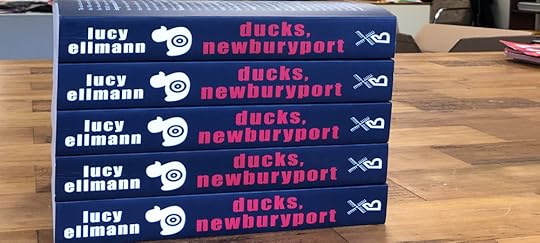
Lucy Ellmann : I think I'm sorry I didn't win. It's hard to know on a show like this.
(Applause. Stephen King bounds on to the stage)
SK : Hello, and welcome once again to our popular panel game
BORE THE READER TO DEATH
Each week four authors compete to bore their randomly assigned reader the most in their attempt to reach the grand final and become the world’s most tiresome writer. First of all, let’s meet our brave readers for this week.
(Four ordinary people troop onto the stage.)
SK : Can you please introduce yourselves?
I’m Emma, from Uxbridge.
Heather, from Glasgow.
Mohammed from London.
And I’m David from Carlisle.
(Applause)
SK : Okay, and as usual we ask each reader what, up to now, was the most boring book they have ever read. Emma?
Atlas Shrugged.
SK : Nice one. Heather?
Middlemarch.
SK : Hmmm – Mohammed?
4 3 2 1.
SK : Pardon?
It’s by Paul Auster.
SK : Oh, okay. And David?
Ulysses.
SK : A very popular choice. So…..let’s meet this week’s boresome foursome!
(Theme music. The four authors creep timorously into the glare of the lights and take their seats.)
SK : Now, can you please introduce yourselves and tell us which of your books you have brought along today.
I’m Lucy Ellmann, I’ve brought along my latest novel Ducks, Newburyport.
My name is Alan Moore, I’ve brought my immense work Jerusalem.
My name is Paul Stanbridge, I’ve brought Forbidden Line.
I am one yclept John Bunyan and yea verily I vouchsafe unto thee – Pilgim’s Progress.
(Applause)
SK : Okay, so now – readers, enter your reading booths. Now, for any newcomers to the show, here is how it works. Above each booth you will see a boreometer. Our authors will select a short passage from their book and the designated reader will read it. The boreometer will display how bored the reader was. And as you know, the author who bores their reader the most will be tonight’s winner and will go forward to next week’s semifinals.
Alan, we’ll start with you. Your designated reader is Emma.
Alan Moore : Thank you. The passage I’ve chosen is where a guy called Mick is opening a packet of cigarettes.
Mick nodded, fumbling in his jacket for the brand new pack of fags he'd picked up half an hour back on the way down Barrack Road. He peeled the cuticle of cellophane that held the packet's plastic wrap in place down to its quick, shucked off the wrapper's top and tugged the foil away that hid the tight-pressed and cork-Busbied ranks beneath, the crinkled see-through wrapping and unwanted silver paper crushed to an amalgam and shoved carelessly into Mick's trouser pocket. Taking one himself he aimed the flip-top package at the grateful teenager in offer and lit up for both of them using his punch-drunk Zippo with the stutter in its flame. As they both blew writhing, translucent Gila monsters made of blue-brown vapour up into the Boroughs air the boy relaxed a little, letting Mick resume his pep-talk.
(We see Emma reading this passage and as she does so the boreometer above her booth starts to creep up, up up, into the 60s, then the 70s, and finally peaks at 78.)
(Applause.)
SK : That’s a pretty good score to start us off with. Next, it’s Lucy. Now, I believe Ducks, Newburyport has been long listed for this year’s Booker Prize?
Lucy : Yes, that’s right. I was so surprised. I mean, god help the judges.
SK : And I’ve heard it described as a single sentence lasting 1000 pages! Wow! Anyways, your designated reader is Heather. So, which passage have you picked Lucy?
Well, I just opened it at random, because pretty much any page would have done. But anyway, it’s from page 357.
The fact that once I tried to hatch grocery store eggs as a kid, nothin’ doin’, the fact that being a child is so frustrating, the fact that Gillian was so disappointed she couldn’t make scrambled eggs the first time she tried, shirred eggs, sunny side up, egg foo yong, Young’s Jersey Dairy, the fact that people are so down on mice, the fact that they’ll go to any length to buy a gerbil or a degu, or a chipmunk or chinchilla or duprasi from a pet store, get it the right food give it a running wheel and a habitrail and one of those water-drip things and sawdust and all the other stuff a rodent’s supposed to want, and even take it to the vet if he looks sick, but if a poor little wild mouse comes into the house uninvited and makes off with a bread crumb it’s like a national emergency, exterminators, Terminix, Pulveriser, drone attacks, Yemeni children
(Heather reads this passage, appears to doze off, wakes with a start, and the boreometer peaks at 76.)
SK : Aw, tough going there, Lucy, you just missed. Moving on now to Paul, your designated reader is Mohammed, and what is your passage please?
Paul Stanbridge : My character Don has a theory, and he loves to spout on about it. It doesn’t make the least sense, but that doesn’t stop him. So the passage I’ve chosen is from page 76.
If I was not strictly forbidden the remembrance of any act in time, a mere phantasm of the mind which populates that ignominious invention the Past – yes, if I deemed it at all possible to remember anything whatsoever, I would be as certain as anything that on not one, not two, but three separate occasions the word “heavy” has been uttered without due diligence to its meaning, which is null and void (not that any meaning is not null and void, such is the nature of each and every word). And so in reproof of all three of these word-acts let me not only tell you that weight, mass, heaviness and any other item if gravity and its auxiliary figurations are empty gestures, but also prove it by the transaction of this unrivalled demonstration of True Science, which can only be apprehended within the epistemic kernel vouchsafed by a firm and unwavering consideration and acknowledgement of the hyperfine transition of hydrogen!
(Mohammed reads the passage. The boreometer creeps up steadily, and very soon zooms past 78 up to a final peak of 93.)
(Applause)
SK : Paul, that is very impressive. 93! Going to be hard to beat. I think we ought to check if Mohammed is okay in his booth.
(Laughter.)
SK : And finally, John Bunyan – we’re honoured to have you here tonight, 331 years after your death.
John Bunyan : Verily.
SK : So which passage have you chosen for us?
John Bunyan : Pluck any an one, it matters not.
SK : All right then, I will open my copy of Pilgrim’s Progress and…. Page 217 it is. And your designated reader is David.
They also gave us a note of directions about the way, for our more sure finding thereof; but therein we have also forgotten to read, and have not kept ourselves from the paths of the destroyer. Here David was wiser than we; for, saith he, "Concerning the works of men, by the word of thy lips, I have kept me from the paths of the destroyer." [Ps. 17:4] Thus they lay bewailing themselves in the net. At last they espied a Shining One coming towards them with a whip of small cord in his hand. When he was come to the place where they were, he asked them whence they came, and what they did there. They told him that they were poor pilgrims going to Zion, but were led out of their way by a black man, clothed in white, who bid us, said they, follow him, for he was going thither too. Then said he with the whip, It is Flatterer, a false apostle, that hath transformed himself into an angel of light. [Prov. 29:5, Dan. 11:32, 2 Cor. 11:13,14] So he rent the net, and let the men out. Then said he to them, Follow me, that I may set you in your way again.
(David reads the passage and again the boreometer climbs steadily, up into the 80s, and finally nudges 90.)
SK : Ah, a great score, John, but you were up against a very strong competitor tonight. And so, Paul Stanbridge, with your excruciatingly tiresome riff on Don Quixote, as if the world needed another of those, I declare you to be tonight’s clear winner.
(Applause. Paul Stanbridge stands and bows.)
So you will be going through to the semi finals. And please everyone join us next week for another edition of
(audience and SK all shout out together)
BORE THE READER TO DEATH!
Lucy Ellmann : I think I'm sorry I didn't win. It's hard to know on a show like this.

January 29, 2017
A modern day retelling of https://en.wikipedia.org/wiki/Don_Qui... culminating in an modern day re-inactment of the https://en.wikipedia.org/wiki/Peasant..., and shot through with copious references to the Hyperfine transition of Hydrogen.
Don Waswill (like his Spanish namesake and predecessor) is a well-spoken eccentric, who has spent 21 years living in a Water Tower, writing an Encyclopedia and developing his thesis that the Hyperfine transition of hydrogen provides the basis for what he calls “the restitution of all being”, a task that he now wishes to undertake at the end of 21 years.
He assigns the number 21 (the length in centimeters of the spectral line of the transition - https://en.wikipedia.org/wiki/Hydroge...) special significance, treats Chance as his mistress (like Dulcinea in “Don Quixote”) and in particular rejects all concepts such as: the past and future (of course of significance given his surname); cause and effect; progression; order; presence and absence; fixed character attributes – and hence by extension all writing (both historical and fictional).
The above quote captures well the spirit of the book - and a variation on it can probably be found by opening up the book to a random page.
Similarly I have deliberately included three Wikipedia links - as this is one of the books where I often felt the need to quickly consult Wikipedia and on almost all occasions, understood some of the text at a deeper level as a result.
Isaiah Olm plays the role of Sancho Panza, initially being rescued by Don after he is struck by lightning (which he finds enables him to remember all speech) and is recruited by Don for his quest – roaming Essex according to the dictates of chance with Is hauling a bizarre chest that Don has cobbled together containing the written records of his encyclopedia references.
The relationship of Is to Don is brillianly similar to that of Sancho Panza and Don Quixote – despite being a clearly simple character of limited education (Is cannot even read), Is’s incomprehension at much (if not all) of Don’s frequent philosophical discourses mirrors that of the readers, and further Is’s bafflement and Is’s earthy and basic interpretation of the various escapades in which he and Don find themselves is normally on the face of it much more accurate than Don’s bizarre and constant desire to “tilt at windmills” and interpret everything according to his over-arching theory.
Over time Is queries why Don is keeping a written record given his rejection of writing and when he reveals his memory, Don instead uses him as an "Is-Encyclopaedia", the chest and papers though keep returning despite being burned or otherwise disposed of several times as events (rather than just Don’s interpretation of them) increasingly depart from the conventional.
Like “Don Quixote” the second part of the book becomes more self-consciously meta-fiction, in this case the narrator, disgusted at Don’s increasingly hostile denunciations of fiction and writers, starts to actively intervene in the story, initially to simply skip forwards, but over time to directly influence the novel. Don and Is find to their bafflement that their wanderings in Essex and inadvertent involvement in a few plots against a local landowner, have been the cause of a movement designed to commemorate and then to re-enact the Peasant’s revolt.
On one level this departure is welcome, the gentle humour and the originality of the story starting to pale as Is and Don’s escapades and Don’s rantings become increasingly repetitive, however the Peasant’s Revolt part of the plot (where huge crowds descend on London from Essex and Kent and try to enact the written chronicles of the Revolt as literally as possible – with copious rioting and hangings) becomes implausible and when Don and Is realise they are in a book and need to escape it, the reader feels from sheer exhaustion rather than from any lack of enjoyment feels like joining them.
As I read the book I was unsure whether this was a case of literary genius or Emperor's new clothes and therefore how I should review it. And even as I have written this I am still not clear. However given the sheer audacity of the author in attempting such a book and the vision of the independent small publisher in backing it, I have ended as a 4* review and I would hope this book makes the Goldsmith shortlist for 2017 (assuming its publication date makes it eligible).
Don Waswill (like his Spanish namesake and predecessor) is a well-spoken eccentric, who has spent 21 years living in a Water Tower, writing an Encyclopedia and developing his thesis that the Hyperfine transition of hydrogen provides the basis for what he calls “the restitution of all being”, a task that he now wishes to undertake at the end of 21 years.
He assigns the number 21 (the length in centimeters of the spectral line of the transition - https://en.wikipedia.org/wiki/Hydroge...) special significance, treats Chance as his mistress (like Dulcinea in “Don Quixote”) and in particular rejects all concepts such as: the past and future (of course of significance given his surname); cause and effect; progression; order; presence and absence; fixed character attributes – and hence by extension all writing (both historical and fictional).
Please don’t say the word “cause” in my presence said Don. In fact don’t use it at all, because owing to the fallacy of space, presence and absence are neither different from one another nor do they have reality at all. Cause and effect are the great story telling delusions of human culture, and they are about to take a hiding to none. If I believed it was possible that the past existed, I might suggest to you that I have in fact reminded you of this on several occasions previously.
The above quote captures well the spirit of the book - and a variation on it can probably be found by opening up the book to a random page.
Similarly I have deliberately included three Wikipedia links - as this is one of the books where I often felt the need to quickly consult Wikipedia and on almost all occasions, understood some of the text at a deeper level as a result.
Isaiah Olm plays the role of Sancho Panza, initially being rescued by Don after he is struck by lightning (which he finds enables him to remember all speech) and is recruited by Don for his quest – roaming Essex according to the dictates of chance with Is hauling a bizarre chest that Don has cobbled together containing the written records of his encyclopedia references.
The relationship of Is to Don is brillianly similar to that of Sancho Panza and Don Quixote – despite being a clearly simple character of limited education (Is cannot even read), Is’s incomprehension at much (if not all) of Don’s frequent philosophical discourses mirrors that of the readers, and further Is’s bafflement and Is’s earthy and basic interpretation of the various escapades in which he and Don find themselves is normally on the face of it much more accurate than Don’s bizarre and constant desire to “tilt at windmills” and interpret everything according to his over-arching theory.
Over time Is queries why Don is keeping a written record given his rejection of writing and when he reveals his memory, Don instead uses him as an "Is-Encyclopaedia", the chest and papers though keep returning despite being burned or otherwise disposed of several times as events (rather than just Don’s interpretation of them) increasingly depart from the conventional.
Like “Don Quixote” the second part of the book becomes more self-consciously meta-fiction, in this case the narrator, disgusted at Don’s increasingly hostile denunciations of fiction and writers, starts to actively intervene in the story, initially to simply skip forwards, but over time to directly influence the novel. Don and Is find to their bafflement that their wanderings in Essex and inadvertent involvement in a few plots against a local landowner, have been the cause of a movement designed to commemorate and then to re-enact the Peasant’s revolt.
On one level this departure is welcome, the gentle humour and the originality of the story starting to pale as Is and Don’s escapades and Don’s rantings become increasingly repetitive, however the Peasant’s Revolt part of the plot (where huge crowds descend on London from Essex and Kent and try to enact the written chronicles of the Revolt as literally as possible – with copious rioting and hangings) becomes implausible and when Don and Is realise they are in a book and need to escape it, the reader feels from sheer exhaustion rather than from any lack of enjoyment feels like joining them.
As I read the book I was unsure whether this was a case of literary genius or Emperor's new clothes and therefore how I should review it. And even as I have written this I am still not clear. However given the sheer audacity of the author in attempting such a book and the vision of the independent small publisher in backing it, I have ended as a 4* review and I would hope this book makes the Goldsmith shortlist for 2017 (assuming its publication date makes it eligible).

August 20, 2019
Fucking amazing.*
* (Yes, I am investing less time in reviewing these days).
* (Yes, I am investing less time in reviewing these days).

February 1, 2017
"The sole true and good use of the hyperfine transition of hydrogen will be to enable the enactment of the Salvation of Being, which is the duty of the author: providing as it does a means of ceasing all strife; being as it is the base matter of the universe; penetrating as it has into every level of the scalar iteration of being, from the atom, up through the soil, the water, the fields, the flowers, the gardens, the window box, the birthday gift, the pet-name, the brooch, the word spoken in every emotion, the handshake of the self-made custodians of the land, the horrid stench of power, the market, the flow of capital, the burial of the dead - and beyond, to the view of the earth, and the rotation of the planets, and infinite time - each of which omits the ululation of strife and unrest at every moment by its entrapment in a state of dis-ease. The Forbidden Line is that moment of transition, the present of which infinitesimal moment is bliss, but around which, on either side, is the infinitely large and visible past and future, which is suffering. I am hear to grasp that spin-flip, make it cease, and exist without orientation, without polarity, and by unforbidding that line, to make it eternal annihilating all other false lines, and thereby the categories they create, opposite for opposite,. And there shall be only ecstasy.
- Well sir, said Is, I understand all that about as much as a dog understands its own shadow."
Forbidden Line was shortlisted for the inaugural Republic of Consciousness Prize, which aims to reward ‘hardcore literary fiction and gorgeous prose’ from independent presses.
Published by the wonderful Galley Beggar Press, best known for the publishers who first brought us the wonderful A Girl Is a Half-formed Thing: A Novel, Forbidden Line certainly meets the prize criteria. A memorably unique novel, and one I struggle to do justice in a review.
I would point people to the reviews by Neil and Gumble's Yard as they say, more eloquently than I am able, much of what I also thought.
And two external reviews also provide excellent summaries:
David Collard's whose "unsolicited encomium" is quoted on the publisher's website “What grips at once is Stanbridge's beautiful, stately, eccentric and richly rewarding prose. He never lets up, never falters…breathtaking, magisterial, uniquely demented and hilarious - a lavish comic masterpiece."
And Scott Manley Hadley's whose more qualified review ("Forbidden Line wore me out, but if it was a lover, a squash game, a meal or a dog, I’d definitely consider that a good thing. A unique read, worth a go if you’re up to it") includes a telling line, which perfectly expresses one of my key reservations: "My big fear right now is that my lack of enjoyment of Forbidden Line comes down to this: either I’m not as clever as I think I am or Paul Stanbridge isn’t."
--------------------
Forbidden Line is, in it's simplest terms, a modern day version of Don Quixote, which remains, 500 years after it's publication, still one of the finest novels ever written and one that still puts most modern and post-modern novels to shame in its innovative style. So Paul Stanbridge immediately sets the bar for his own book very high.
Our Don, Donald J. Waisall, has spent 21 years living inside the Jumbo Water Tower in Colchester, writing an "Encyclopaedia of Being, Synthesised in Accordance with the Eternal Verities Delineated by the Spectral Line of the Hyperfine Transition of Hydrogen". He discovers his Sancho, Isaiah Olm ("Is") when he is struck "twice Twenty-One"(*) times by lightning at the foot of the water tower. Together they embark on an Adventure through Essex to bring enlightenment to the world, and to the glory of Don's own Dulcinea, Chance.
On the way they get caught up in various encounters, usually ending with Is taking a beating, with the Essex locals (these parts of the novel had a Nicola Barker feel to me), discussing Don's theories and ending up entrapped in an odd re-enactment of the 1381 Peasant's Revolt.
Twenty-One, which Don insists must be capitalised even in speech, the Triseptimum, is a sacred number to him, representing as it does the vacuum wavelength of the hydrogen line, caused by the, technically forbidden (hence the book's title) hyperfine transition of hydrogen, with which Don is obsessed (for reasons that were no clearer to me after 600 pages than they were at the novel's start). Actually the wavelength is 21.106114054... cm, so the 21 is both an approximation, and also a feature of the metric system: it would have been more logical for Don to have insisted on re-measuring distance using this wavelength (rather than the metre) as a base unit, or time using the corresponding electromagnetic frequency. It isn't clear to me whether Stanbridge himself appreciates this and this odd too-clever-for-the-reader-and-perhaps-for-the-author-as-well erudition is very characteristic of the book, as noted in the Scott Manley Hadley review above.
The first half, as the two adventures wander Essex, much like Don Quixote and Sancho Panza, adventuring and talking, especially talking, is unusual but not overly challenging to read. And some of the descriptions of the Essex countryside, amidst the rambunctious humour and off-beat philosophy, are beautifully poetic. This on the estuary of the River Stour near Bradfield:
The darkly shimmering surface of the estuary, which was once again visible to their left, grew in magnitude and luminescence, acquiring a sheen as they gradually became elevated by their prominence up a shallow hill. From within the blackness, effulgence: lambency rising out of an apparent void, like an idea. Beneath the darkness, a gloaming; behind the manifold scintillation, black - an unsolvable riddle, interdependent, conjoined twins which share a heart, as do joy and sorrow. It lay there, at their side, an enormous expanse, and filled Is's self with an absolutely physical response to its presence. He could feel the myth of things swelling up out of the damp country night and rubbing the length of its flanks against him, curling around him, eyeing him all the time through animal eyes.
But around half way through the narrator himself loses patience with "their usual aimless prattling" and intervenes so that "some sense of a story might be extorted out of their existence." This is when the Peasant's Revolt story rises to the fore as well as increasingly metaphysical speculations on the nature of time, history and fiction. And as the novel progresses, it feels as if Stanbridge is throwing more and more into the mix, in part challenging the reader to keep-up, almost with the aim that the reader can't.
One typically oblique interlude has Don temporarily hospitalised after a road accident, and visited by those in the car responsible, a group that comprises Ian McEwan, Claude Menard and his daughter Berenice Colimacon. The first appears to be the real-life author Ian McEwan, but for no obvious reason. Claude Menard is a more obvious literary nod to Borges' Pierre Menard, Author of the Quixote, apparently his grandfather, and indeed here the book spells out the link in unnecessary detail, and without adding anything to the, admittedly wonderful, Borges story. [The line from Don Quixote which plays a key role in the Borges story, "... truth, whose mother is history, who is the rival of time, depository of deeds, witness of the past, example and lesson to the present, and warning to the future." is particularly inspiring to Stanbridge's Don]. And Berenice Colimaçon? My guess, but purely a guess, is another Borges nod, this time to the The Library of Babel, with its spiral staircase (l'escalier en colimaçon).
In another, more inventive set-piece, Don explains in detail to a crowd of followers how Wordsworth' Tintern Abbey foresaw the internet, before admitting to Is that he didn't believe a word he'd said and made it up to emphasise that there are no limits to communication.
Confused? I think you are supposed to be.
But if I have made the book sound difficult and unenjoyable I have done it a disservice. It is in fact very funny. Here is a typical Don and Is conversation, with Don's usual tortuous attempts to discuss their journey while denying the existence of the past or future, as meaningless concepts:
- If days and dates and measures of the year existed, said Don, which clearly they do not, then we could say without any doubt that that the day of judgement is closing in. Very soon the true secrets of the hyperfine transition of hydrogen will become apparent to me, and the whole world will be cured.
- Is there anything that the hyperfine transition of hydrogen is unable to do? asked Is.
- A pernicious and misguided fool it would be who claimed that there was. Do you remember what I told you about the atom at the filling station?
- I do, said Is. But surely you do not. You are after all the sworn enemy of memory.
- I like the phrase you have invented there. Should we succeed in our quest, it might function as part of my appellation, which will require some solemnity to it. Such ways with names seem to have passed out of fashion. But yes, you're right.
- How then can you ask me to remember something?
- I never said that you had to imitate me in that respect, said Don.
- But the very asking of the thing means that you remember the thing you are referring to, said Is.
- I do not have to remember that I spoke of the atom at the filling station, I merely have to be lucky. Did I speak of the atom in that place?
- Yes, said Is.
- Well, there you go, I wasn't aware of that.
Is emitted an inarticulate utterance signifying scepticism.
- I think, he said, that there might be more of the normal to you than you let on. Maybe the playing-the-part-of began a long time ago.
- Are you insinuating that I am a pretender? A charlatan? said Don. Are you implying that I would treat my true mistress and only love, Science, or Chance, or Time, or whatever her name is, as if she were a whore? Are you accusing me of not being genuine in my commitment to discovering the nature of the force which drives every flower to its blooming, from the origin of the universe down to the springing of water out of one of hydrogen plus two of oxygen?
- The answer I give is dependent on what its consequences will be, said Is. If you are feeling violent, I would change my mind.
At one point Don, no fan of literature, remarks that: A writer is an abortive thing; a monstrous, bristling, entusked infant whose rage at those it competes with can only be soothed by a relentless feeding from the nasty dugs of its collective readership, and especially of the reviewers and prize-givers, whom if it is lucky congratulate it on its creativity without commenting on the meagreness of its talent"
Paul Stanbridge is creative but his talent is certain not meagre, and I would love to see him win a literary prize, starting with the Republic of Consciousness, I hope and expect to see this on the Goldsmiths list, but I fear the Man Booker committee wouldn't be brave enough to tackle it.
- Well sir, said Is, I understand all that about as much as a dog understands its own shadow."
Forbidden Line was shortlisted for the inaugural Republic of Consciousness Prize, which aims to reward ‘hardcore literary fiction and gorgeous prose’ from independent presses.
Published by the wonderful Galley Beggar Press, best known for the publishers who first brought us the wonderful A Girl Is a Half-formed Thing: A Novel, Forbidden Line certainly meets the prize criteria. A memorably unique novel, and one I struggle to do justice in a review.
I would point people to the reviews by Neil and Gumble's Yard as they say, more eloquently than I am able, much of what I also thought.
And two external reviews also provide excellent summaries:
David Collard's whose "unsolicited encomium" is quoted on the publisher's website “What grips at once is Stanbridge's beautiful, stately, eccentric and richly rewarding prose. He never lets up, never falters…breathtaking, magisterial, uniquely demented and hilarious - a lavish comic masterpiece."
And Scott Manley Hadley's whose more qualified review ("Forbidden Line wore me out, but if it was a lover, a squash game, a meal or a dog, I’d definitely consider that a good thing. A unique read, worth a go if you’re up to it") includes a telling line, which perfectly expresses one of my key reservations: "My big fear right now is that my lack of enjoyment of Forbidden Line comes down to this: either I’m not as clever as I think I am or Paul Stanbridge isn’t."
--------------------
Forbidden Line is, in it's simplest terms, a modern day version of Don Quixote, which remains, 500 years after it's publication, still one of the finest novels ever written and one that still puts most modern and post-modern novels to shame in its innovative style. So Paul Stanbridge immediately sets the bar for his own book very high.
Our Don, Donald J. Waisall, has spent 21 years living inside the Jumbo Water Tower in Colchester, writing an "Encyclopaedia of Being, Synthesised in Accordance with the Eternal Verities Delineated by the Spectral Line of the Hyperfine Transition of Hydrogen". He discovers his Sancho, Isaiah Olm ("Is") when he is struck "twice Twenty-One"(*) times by lightning at the foot of the water tower. Together they embark on an Adventure through Essex to bring enlightenment to the world, and to the glory of Don's own Dulcinea, Chance.
On the way they get caught up in various encounters, usually ending with Is taking a beating, with the Essex locals (these parts of the novel had a Nicola Barker feel to me), discussing Don's theories and ending up entrapped in an odd re-enactment of the 1381 Peasant's Revolt.
Twenty-One, which Don insists must be capitalised even in speech, the Triseptimum, is a sacred number to him, representing as it does the vacuum wavelength of the hydrogen line, caused by the, technically forbidden (hence the book's title) hyperfine transition of hydrogen, with which Don is obsessed (for reasons that were no clearer to me after 600 pages than they were at the novel's start). Actually the wavelength is 21.106114054... cm, so the 21 is both an approximation, and also a feature of the metric system: it would have been more logical for Don to have insisted on re-measuring distance using this wavelength (rather than the metre) as a base unit, or time using the corresponding electromagnetic frequency. It isn't clear to me whether Stanbridge himself appreciates this and this odd too-clever-for-the-reader-and-perhaps-for-the-author-as-well erudition is very characteristic of the book, as noted in the Scott Manley Hadley review above.
The first half, as the two adventures wander Essex, much like Don Quixote and Sancho Panza, adventuring and talking, especially talking, is unusual but not overly challenging to read. And some of the descriptions of the Essex countryside, amidst the rambunctious humour and off-beat philosophy, are beautifully poetic. This on the estuary of the River Stour near Bradfield:
The darkly shimmering surface of the estuary, which was once again visible to their left, grew in magnitude and luminescence, acquiring a sheen as they gradually became elevated by their prominence up a shallow hill. From within the blackness, effulgence: lambency rising out of an apparent void, like an idea. Beneath the darkness, a gloaming; behind the manifold scintillation, black - an unsolvable riddle, interdependent, conjoined twins which share a heart, as do joy and sorrow. It lay there, at their side, an enormous expanse, and filled Is's self with an absolutely physical response to its presence. He could feel the myth of things swelling up out of the damp country night and rubbing the length of its flanks against him, curling around him, eyeing him all the time through animal eyes.
But around half way through the narrator himself loses patience with "their usual aimless prattling" and intervenes so that "some sense of a story might be extorted out of their existence." This is when the Peasant's Revolt story rises to the fore as well as increasingly metaphysical speculations on the nature of time, history and fiction. And as the novel progresses, it feels as if Stanbridge is throwing more and more into the mix, in part challenging the reader to keep-up, almost with the aim that the reader can't.
One typically oblique interlude has Don temporarily hospitalised after a road accident, and visited by those in the car responsible, a group that comprises Ian McEwan, Claude Menard and his daughter Berenice Colimacon. The first appears to be the real-life author Ian McEwan, but for no obvious reason. Claude Menard is a more obvious literary nod to Borges' Pierre Menard, Author of the Quixote, apparently his grandfather, and indeed here the book spells out the link in unnecessary detail, and without adding anything to the, admittedly wonderful, Borges story. [The line from Don Quixote which plays a key role in the Borges story, "... truth, whose mother is history, who is the rival of time, depository of deeds, witness of the past, example and lesson to the present, and warning to the future." is particularly inspiring to Stanbridge's Don]. And Berenice Colimaçon? My guess, but purely a guess, is another Borges nod, this time to the The Library of Babel, with its spiral staircase (l'escalier en colimaçon).
In another, more inventive set-piece, Don explains in detail to a crowd of followers how Wordsworth' Tintern Abbey foresaw the internet, before admitting to Is that he didn't believe a word he'd said and made it up to emphasise that there are no limits to communication.
Confused? I think you are supposed to be.
But if I have made the book sound difficult and unenjoyable I have done it a disservice. It is in fact very funny. Here is a typical Don and Is conversation, with Don's usual tortuous attempts to discuss their journey while denying the existence of the past or future, as meaningless concepts:
- If days and dates and measures of the year existed, said Don, which clearly they do not, then we could say without any doubt that that the day of judgement is closing in. Very soon the true secrets of the hyperfine transition of hydrogen will become apparent to me, and the whole world will be cured.
- Is there anything that the hyperfine transition of hydrogen is unable to do? asked Is.
- A pernicious and misguided fool it would be who claimed that there was. Do you remember what I told you about the atom at the filling station?
- I do, said Is. But surely you do not. You are after all the sworn enemy of memory.
- I like the phrase you have invented there. Should we succeed in our quest, it might function as part of my appellation, which will require some solemnity to it. Such ways with names seem to have passed out of fashion. But yes, you're right.
- How then can you ask me to remember something?
- I never said that you had to imitate me in that respect, said Don.
- But the very asking of the thing means that you remember the thing you are referring to, said Is.
- I do not have to remember that I spoke of the atom at the filling station, I merely have to be lucky. Did I speak of the atom in that place?
- Yes, said Is.
- Well, there you go, I wasn't aware of that.
Is emitted an inarticulate utterance signifying scepticism.
- I think, he said, that there might be more of the normal to you than you let on. Maybe the playing-the-part-of began a long time ago.
- Are you insinuating that I am a pretender? A charlatan? said Don. Are you implying that I would treat my true mistress and only love, Science, or Chance, or Time, or whatever her name is, as if she were a whore? Are you accusing me of not being genuine in my commitment to discovering the nature of the force which drives every flower to its blooming, from the origin of the universe down to the springing of water out of one of hydrogen plus two of oxygen?
- The answer I give is dependent on what its consequences will be, said Is. If you are feeling violent, I would change my mind.
At one point Don, no fan of literature, remarks that: A writer is an abortive thing; a monstrous, bristling, entusked infant whose rage at those it competes with can only be soothed by a relentless feeding from the nasty dugs of its collective readership, and especially of the reviewers and prize-givers, whom if it is lucky congratulate it on its creativity without commenting on the meagreness of its talent"
Paul Stanbridge is creative but his talent is certain not meagre, and I would love to see him win a literary prize, starting with the Republic of Consciousness, I hope and expect to see this on the Goldsmiths list, but I fear the Man Booker committee wouldn't be brave enough to tackle it.

January 24, 2017
”The following Work is a work in progress, as must be all things if they are to have Reality, owing to the existence only of the Present, which is Process, and the non-existence of Past and Future, which are nothing but delusions invented to comfort the fearful minds of our species. Mark well the fact of the matter: The human mind refines the fallacy Duration out of the reality Moment. This work will restore us to the Now-Eternity, and the turning of all things shall cease. The wanderings of the author and his assistant have been conducted with Chance as their guide, and without aim. This is befitting the ways of the hyperfine transition of hydrogen, which does not intend or mean, but simply does. What is more, it is the irruption of the Present Moment into Time, and therefore an exemplum to us all!
It is hard to know where to start when reviewing this book. And, even if you can decide where to start, where to go next becomes a problem! One thing is for sure: you haven't read a book like this before.
At its simplest, it is a re-telling of Don Quixote set in modern day Essex, England. I haven't read Don Quixote and I don't know if that is a good or bad thing when it comes to reading this (and I only know it is a re-telling because I read it in the blurb!). Two men, Don and Is (short for Isaiah) go on a journey around Essex and London. Don, as we have seen in the quote above, does not believe the past or the future exist and lives entirely for the moment with every action directed purely by chance (sorry, Chance - you will see what I mean if you read it). Or so he claims. He makes a lot of intellectual speeches. Is is a simpler man who, like the reader, does not understand most of what Don says and just wants a pint of beer and some home comforts. If you know Blackadder and Baldrick and their relationship, then you are in the right ball park. There is mayhem and violence. There is philosophy and science. There is confusion for the reader!
But this book is far more complex than that and it works on many levels. It is self-consciously a book. There are exhortations to the reader to "Read on!" And there are several sections that tell us the story requires something to happen so we (the story and the reader) had better think of a way to make it happen. There is even a bit where the story backtracks and repeats a bit of itself with a different outcome so that characters are in the right place for the story to continue. Time means very little. There is a piece of luggage that refuses to be destroyed despite numerous efforts. Things appear out of nowhere to the surprise of the characters (for example, one does not know how he comes to be wearing a shirt when he lost his a few pages earlier).
Then, to add to the mayhem and confusion, there is the prose style which imitates prose of yesteryear despite the book being set "now". This anachronistic feel to the writing adds to the reader's disorientation, especially as many of the sentences are long and contain unusual words. Given the main character's rejection of past and present, I think it is the author's intention to leave the reader feeling anchorless and confused. Our lives are based on memories and plans, both of which Don rejects.
Then, there are the references to various versions of Don Quixote. And the re-enactment (or is it repeat?) of the Peasants' Revolt. And the scientific theories. And the philosophy.
Goldsmith's Prize material, I think. It is certainly a book like no other.
You have to be prepared to make an effort with this book. It demands complete attention as you read. It sort of assumes you know a lot about history (well, bits of it) and science. Actually, I say that, but I don’t know about the bits of history it refers to and only a bit about some of the science gobbledegook and it didn’t spoil it for me.
But, if you are willing to concentrate there are rewards as it is a very clever book.
My only concern is that it feels rather like the author thought he might only get one chance at writing a novel so he threw absolutely everything into it. Maybe too much, but that's a personal thing and many will disagree.
A worthwhile if slightly exhausting read.
It is hard to know where to start when reviewing this book. And, even if you can decide where to start, where to go next becomes a problem! One thing is for sure: you haven't read a book like this before.
At its simplest, it is a re-telling of Don Quixote set in modern day Essex, England. I haven't read Don Quixote and I don't know if that is a good or bad thing when it comes to reading this (and I only know it is a re-telling because I read it in the blurb!). Two men, Don and Is (short for Isaiah) go on a journey around Essex and London. Don, as we have seen in the quote above, does not believe the past or the future exist and lives entirely for the moment with every action directed purely by chance (sorry, Chance - you will see what I mean if you read it). Or so he claims. He makes a lot of intellectual speeches. Is is a simpler man who, like the reader, does not understand most of what Don says and just wants a pint of beer and some home comforts. If you know Blackadder and Baldrick and their relationship, then you are in the right ball park. There is mayhem and violence. There is philosophy and science. There is confusion for the reader!
But this book is far more complex than that and it works on many levels. It is self-consciously a book. There are exhortations to the reader to "Read on!" And there are several sections that tell us the story requires something to happen so we (the story and the reader) had better think of a way to make it happen. There is even a bit where the story backtracks and repeats a bit of itself with a different outcome so that characters are in the right place for the story to continue. Time means very little. There is a piece of luggage that refuses to be destroyed despite numerous efforts. Things appear out of nowhere to the surprise of the characters (for example, one does not know how he comes to be wearing a shirt when he lost his a few pages earlier).
Then, to add to the mayhem and confusion, there is the prose style which imitates prose of yesteryear despite the book being set "now". This anachronistic feel to the writing adds to the reader's disorientation, especially as many of the sentences are long and contain unusual words. Given the main character's rejection of past and present, I think it is the author's intention to leave the reader feeling anchorless and confused. Our lives are based on memories and plans, both of which Don rejects.
Then, there are the references to various versions of Don Quixote. And the re-enactment (or is it repeat?) of the Peasants' Revolt. And the scientific theories. And the philosophy.
Goldsmith's Prize material, I think. It is certainly a book like no other.
You have to be prepared to make an effort with this book. It demands complete attention as you read. It sort of assumes you know a lot about history (well, bits of it) and science. Actually, I say that, but I don’t know about the bits of history it refers to and only a bit about some of the science gobbledegook and it didn’t spoil it for me.
But, if you are willing to concentrate there are rewards as it is a very clever book.
My only concern is that it feels rather like the author thought he might only get one chance at writing a novel so he threw absolutely everything into it. Maybe too much, but that's a personal thing and many will disagree.
A worthwhile if slightly exhausting read.
February 17, 2017
Blimey, where to begin...it's mammoth. The other books on my bedside table will have to stay there, I'm going to immediately read this book again. I've been folding back little corners of pages where there are gems: love is reduced through the derivation of words to 'love is but a word and two bollocks', butterflies come to mean cottages; the inequities of English land law are philosophised.
It starts off more like a travelogue (although far more paced, gripping & humorous than Sebald..) and crescendos through London sewers, up into the Peasants Revolt.
I think that even a second reading of Forbidden Line will still not be enough to take it all in. When I'm finally done, I'll try to finish Don Quixote.
There is so much intolerable modern crap available it's so good to know epic books like this are still being written. Read it - you'll be mesmerised too.
It starts off more like a travelogue (although far more paced, gripping & humorous than Sebald..) and crescendos through London sewers, up into the Peasants Revolt.
I think that even a second reading of Forbidden Line will still not be enough to take it all in. When I'm finally done, I'll try to finish Don Quixote.
There is so much intolerable modern crap available it's so good to know epic books like this are still being written. Read it - you'll be mesmerised too.

September 1, 2020
Lotsa fun, fatiguing in spots, overall a playfully sage gallop through intellectual thickets. The Drear Reader must needs abide mock-rarefied post-meta-crypto-quasi-books about books and Monty Pythonian antics alike. It's like mulling a seriously big bite of literary pudding only to spit-take splatter all passersby.

September 2, 2017
A delightful, comic, gratuitously erudite, surreal, metafictional extravaganza of a novel. It defies easy categorization or summarization, although it could be described as a story of a friendship and of a quest. It is pretty surely postmodernist, and quite possibly post-structuralist (certainly if there is a deep structure in there, it is truly deeply hidden). The book is seems to me to made of two different books: chapters 1 to 18 are at least (mostly) physically (if not psychologically) realistic, but all that changes in chapters 19 through the epilogue, where the book becomes increasingly metafictional and surreal.
A long read, but a fun one!
A long read, but a fun one!
March 22, 2026
A charming, immersive narrative of Don and Is, who roam the Essex countryside before going to London where they become entangled in a violently realistic re-enactment of the Peasant's Revolt. As they walk and meet various characters, who aren't always friendly, Don reveals his philosophies about life and the dangers of the written word to the long-suffering Is.
May 17, 2026
3/4 a bizarre Don Quixote retelling set in rural Essex; 1/4 the depiction of a rioting London mob based on the Peasants' Revolt. Significant portions of the book written in faux 18th century literary language. Far too long and I found it utterly dull in places. But where it was good - especially in the first 200 pages - it completely shone.
Will read a normal book next.
Will read a normal book next.
October 14, 2018
Worst, flatulent excesses of the modern picaresque, with a view that the manner of cod-18th century is somehow intrinsically funny. Wears its research heavily. Put down after 40 pages, had a flick through the rest of the pages before that but it looked of a piece. tremendously fatiguing to read.

April 26, 2020
Very clever book- it was certainly a journey. I'm clearly not intelligent enough to understand it all but I certainly enjoyed the ramble through the Essex countryside of my youth.

August 4, 2020
Exorbitant. Na 25 blz. genoeg.
October 31, 2022
I got to page 330 and I’m afraid I gave up. More or less in the equivalent place I gave up with Don Quixote. Life’s far too short. It didn’t engage me in the slightest.

November 16, 2016
Forbidden Line, by Paul Stanbridge, is such an original work of fiction it is hard to simply explain what it is about. At its most basic it tells a story of two men, Don and Is, who walk around Essex and into London together discussing their lives and what they hope to achieve. Both are highly unusual characters.
Don has spent the last twenty-one years writing a book. When Is is struck by lightning in a field, Don takes him into his improvised home to recover. Don believes their coming together in this way is a sign and the pair set off on their perambulations.
Don says of Is
“You pilot the least penetrative mind I have ever encountered”
“I do not think there is a man or woman alive who can persuade you out of these beliefs […] But that doesn’t mean they are not founded on error”
However, Is’s mind has a redeeming feature. He may not be able to read or write but, since the lightning strike, he remembers everything he is told.
Don wishes to be married to chance. He refuses to accept that anything other than the here and now exists. He eschews all plans, accepting that whatever happens along the way is as it is meant to be.
“From whence does order spring? From the impulse to tidy-up. But the very tidying-up is what creates the notion of disorder and mess”
He recognises that society functions on a very different premise.
“There can be no chaos! screams the neurosis of the West”
“It is the chaos our culture has sought to smother, good manners and right behaviour being the puritanical bedfellows of rationalism and logical argument”
The pair wander through the fields and lanes of Essex indulging in rambling dialogue, much of which appears nonsensical. However, in amongst the many monologues reside nuggets of wisdom.
They partake in a series of misadventures with others they meet. Some of these strangers accept or ignore Don’s pronouncements, politeness dictating that those who appear mad should be tolerated until escaped from. Others are less accepting leading to brawls when a new acquaintance reaches
“the limit of his own tolerance for an insult he could not understand”
Don’s determination to accept whatever chance offers leads to some very funny scenes. The pair are followed by a herd of curious cows. They steal a horse. They cast aside their clothes. When the forces of law and order step in to punish their offences it is for behaving differently more than causing harm.
“The clan is an oppressive institution, asserting identities, managing normativities, punishing dissent in order that it be a single manageable body”
Don, choosing to live only in the present, questions the excitement of anticipation when others make plans.
“This is a feature of human pleasure, the enjoyment of something which hasn’t yet happened”
The plans that Don and Is eventually get caught up in are a re-enactment of The Peasants Revolt. They have been assigned the role of leaders against their will. The crowds gathering listen to Don’s words but hone in only on the message they want to hear.
This latter section of the book, which takes up well over a hundred pages, was in places wearing to read. Don is struggling to square his rejection of history and newly found dislike of the written word with what he now feels he can achieve.
“I had drifted perilously close to that normative human activity which leads from desire, through exertion, to satisfaction. It is a disposition on the one hand praised as aspirational and on the other denigrated as depraved, depending on the object of desire”
Inexplicable events occur. The suffering systematically meted out by the wealthy on the poor becomes manifest to the perpetrators, yet still they will not desist. Retaliation is merciless. It is hard to know what to believe.
There is much in the prose that I loved, for example, a town viewed from a distance is described as “draped over a hill”. The droll manner in which the author portrays the protagonists’ peculiarities is a pleasure to read.
“Here Don paused in order to become miserable; this having been achieved, he continued”
The story is, apparently, a retelling of Don Quixote. Perhaps I would have enjoyed some of the seemingly abtruse sections more had I been familiar with the original.
This is not a book to be rushed. There are penetrative insights to be gleaned from a cast of characters whose questionning of what is regarded as normal will make the reader ponder accepted behaviours anew. The story may be challenging in places but any effort required to uncover its essense will be rewarded.
“anything can be made to symbolise anything with the right approach”
Don has spent the last twenty-one years writing a book. When Is is struck by lightning in a field, Don takes him into his improvised home to recover. Don believes their coming together in this way is a sign and the pair set off on their perambulations.
Don says of Is
“You pilot the least penetrative mind I have ever encountered”
“I do not think there is a man or woman alive who can persuade you out of these beliefs […] But that doesn’t mean they are not founded on error”
However, Is’s mind has a redeeming feature. He may not be able to read or write but, since the lightning strike, he remembers everything he is told.
Don wishes to be married to chance. He refuses to accept that anything other than the here and now exists. He eschews all plans, accepting that whatever happens along the way is as it is meant to be.
“From whence does order spring? From the impulse to tidy-up. But the very tidying-up is what creates the notion of disorder and mess”
He recognises that society functions on a very different premise.
“There can be no chaos! screams the neurosis of the West”
“It is the chaos our culture has sought to smother, good manners and right behaviour being the puritanical bedfellows of rationalism and logical argument”
The pair wander through the fields and lanes of Essex indulging in rambling dialogue, much of which appears nonsensical. However, in amongst the many monologues reside nuggets of wisdom.
They partake in a series of misadventures with others they meet. Some of these strangers accept or ignore Don’s pronouncements, politeness dictating that those who appear mad should be tolerated until escaped from. Others are less accepting leading to brawls when a new acquaintance reaches
“the limit of his own tolerance for an insult he could not understand”
Don’s determination to accept whatever chance offers leads to some very funny scenes. The pair are followed by a herd of curious cows. They steal a horse. They cast aside their clothes. When the forces of law and order step in to punish their offences it is for behaving differently more than causing harm.
“The clan is an oppressive institution, asserting identities, managing normativities, punishing dissent in order that it be a single manageable body”
Don, choosing to live only in the present, questions the excitement of anticipation when others make plans.
“This is a feature of human pleasure, the enjoyment of something which hasn’t yet happened”
The plans that Don and Is eventually get caught up in are a re-enactment of The Peasants Revolt. They have been assigned the role of leaders against their will. The crowds gathering listen to Don’s words but hone in only on the message they want to hear.
This latter section of the book, which takes up well over a hundred pages, was in places wearing to read. Don is struggling to square his rejection of history and newly found dislike of the written word with what he now feels he can achieve.
“I had drifted perilously close to that normative human activity which leads from desire, through exertion, to satisfaction. It is a disposition on the one hand praised as aspirational and on the other denigrated as depraved, depending on the object of desire”
Inexplicable events occur. The suffering systematically meted out by the wealthy on the poor becomes manifest to the perpetrators, yet still they will not desist. Retaliation is merciless. It is hard to know what to believe.
There is much in the prose that I loved, for example, a town viewed from a distance is described as “draped over a hill”. The droll manner in which the author portrays the protagonists’ peculiarities is a pleasure to read.
“Here Don paused in order to become miserable; this having been achieved, he continued”
The story is, apparently, a retelling of Don Quixote. Perhaps I would have enjoyed some of the seemingly abtruse sections more had I been familiar with the original.
This is not a book to be rushed. There are penetrative insights to be gleaned from a cast of characters whose questionning of what is regarded as normal will make the reader ponder accepted behaviours anew. The story may be challenging in places but any effort required to uncover its essense will be rewarded.
“anything can be made to symbolise anything with the right approach”

January 26, 2017
At times the literary tone of the book threatened to hide the humour of this book and it took me a little while to get into the story but once there, I found it a really enjoyable ride. Despite the references to the 'hyperfine transition of hydrogen' which I found slightly irksome, although this was the main reason for the quest of the two heroes, the relationship that developed between Don and Is carried the book through. The bizarre situations they often found themselves in and the sufferings of Is - who later became known as Is-Book - were wonderful. Very Quixotic.

February 2, 2017
It has my favourite joke in this. It's about a duck (the joke, not the whole book). Otherwise, this is an odd one that I'm not sure quite how much I would recommend, despite enjoying it. I think.
Displaying 1 - 17 of 17 reviews