

What do you think?
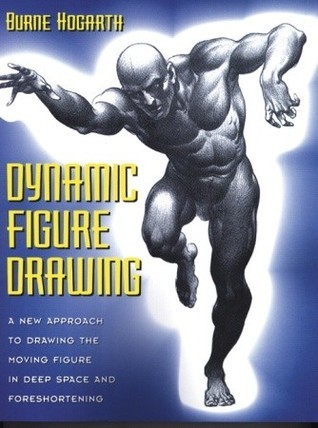
Dynamic Figure Drawing
This powerful book offers a systematic approach to rendering action figures that seem to leap off the page.
176 pages, Paperback
First published January 1, 1970
About the author
Burne Hogarth
105 books90 followersBurne Hogarth started young. Born in 1911, he was enrolled in the Chicago Art Institute at the age of 12 and an assistant cartoonist at Associated Editors' Syndicate at 15. At the age of 26, he was chosen from a pool of a dozen applicants as Hal Foster's successor on the United Features Syndicate strip, "Tarzan". His first strip, very much in Foster's style, appeared May 9, 1937. It wasn't long before he abandoned the attempt to maintain the original look of the strip and brought his own dynamic style to the Sunday comics page.
In 1947, Hogarth co-founded (with Silas Rhodes) the School of Visual Arts which became his new direction in life. He was able to pass his unique methods on illustration to his students in the classroom and, in 1958, to the readers of his first book, Dynamic Anatomy.
Hogarth retired from the SVA in 1970 but continued to teach at The Parsons School of Design and, after a move to Los Angeles, The Otis School and Art Center College of Design in Pasadena. During his years teaching, Hogarth authored a number of anatomy and drawing books that have become standard references for artists of every sort, including computer animators. Dynamic Anatomy (1958) and Drawing the Human Head (1965) were followed by further investigations of the human form. Dynamic Figure Drawing (1970) and Drawing Dynamic Hands (1977) completed the figure cycle. Dynamic Light and Shade (1981) and Dynamic Wrinkles and Drapery (1995) explored other aspects relative to rendering the figure.
After more than 20 years away from strip work and being hailed in Europe as "the Michelangelo of the comic strip," Hogarth returned to sequential art in 1972 with his groundbreaking Tarzan of the Apes, a large format hardbound book published by Watson Guptill in 11 languages. It marks the beginning of the sober volume of integrated pictorial fiction, what is currently understood to be a graphic novel.
Burne Hogarth passed away in 1996 at the age of 84.
In 1947, Hogarth co-founded (with Silas Rhodes) the School of Visual Arts which became his new direction in life. He was able to pass his unique methods on illustration to his students in the classroom and, in 1958, to the readers of his first book, Dynamic Anatomy.
Hogarth retired from the SVA in 1970 but continued to teach at The Parsons School of Design and, after a move to Los Angeles, The Otis School and Art Center College of Design in Pasadena. During his years teaching, Hogarth authored a number of anatomy and drawing books that have become standard references for artists of every sort, including computer animators. Dynamic Anatomy (1958) and Drawing the Human Head (1965) were followed by further investigations of the human form. Dynamic Figure Drawing (1970) and Drawing Dynamic Hands (1977) completed the figure cycle. Dynamic Light and Shade (1981) and Dynamic Wrinkles and Drapery (1995) explored other aspects relative to rendering the figure.
After more than 20 years away from strip work and being hailed in Europe as "the Michelangelo of the comic strip," Hogarth returned to sequential art in 1972 with his groundbreaking Tarzan of the Apes, a large format hardbound book published by Watson Guptill in 11 languages. It marks the beginning of the sober volume of integrated pictorial fiction, what is currently understood to be a graphic novel.
Burne Hogarth passed away in 1996 at the age of 84.
Ratings & Reviews
Friends & Following
Create a free account to discover what your friends think of this book!
Community Reviews
Displaying 1 - 30 of 44 reviews

November 23, 2012
Burne Hogarth was the artist for the early Tarzan comics- his style is brilliant but rather mannered and at times odd looking with stylised poses and over-sized feet (to my eyes). There is a lot to get out of this book however it is a perseverance test to get at it and you will be best advised to work at it yourself and spare yourself the trouble of trying to get through his TERRIBLE prose. He really suffers for not having an editor who could stand up to him I guess- the prose is quasi-accademic as though a 4th former had grabbed a dictionary and a thesaurus and for every straightforward one syllable word had substituted a four syllable obscure one. Some of his prose is simply laughable, for example:
Where the approach to the figure is neither tactual nor visual, spatial orientation may depend on the total positional stress of the third form concept.That is to say the viewer is given the task of interacting with the figure; it is a case where the viewing angle of the total figure form demands special notice
This was taken at random and gives a good indication of his style- florid, wordy, use of jargon, never use one word where a few will do
so, look at the pictures, don't bother with the text- it will defeat you after a couple of pages
Where the approach to the figure is neither tactual nor visual, spatial orientation may depend on the total positional stress of the third form concept.That is to say the viewer is given the task of interacting with the figure; it is a case where the viewing angle of the total figure form demands special notice
This was taken at random and gives a good indication of his style- florid, wordy, use of jargon, never use one word where a few will do
so, look at the pictures, don't bother with the text- it will defeat you after a couple of pages
August 29, 2014
I'm not saying this technique will work for you, especially if you aren't already decent at sketching people, but if you have a good eye and need to improve your grasp of underlying shapes and how to make them look fluid this may be the book for you. While the poses are often comic-book extreme and the musculature too that doesn't bother me for two reasons 1) I found this book in a comic book store AND flipped through it before buying so it was expected and 2) the exaggeration compared to average physiques and poses makes it easier see what the artist is talking about.

June 27, 2008
Hogarth's figures look a little too much like spaghetti people for my taste. I recommend Loomis if you are looking for a good book on figure drawing.

Read
March 11, 2020Great for reference, but I doubt this guy ever saw boobs in real life ¯\_(ツ)_/¯

May 11, 2022
Great reference manual on dynamic and static poses. One of the best anatomy books for artist's.
You cannot go wrong with any Hogarth reference manual. It will stay with you for the rest of your career.
You cannot go wrong with any Hogarth reference manual. It will stay with you for the rest of your career.
June 16, 2024
His style is very distinctive and you shouldn’t aim to copy it. What’s so amazing about his book is how he shows how everything interlocks together. Amazing book, changed my life as a young art student.

August 12, 2010
So much to learn from Burne Hogarth! One of the most analytic minds I've ever encountered in art. I love how he's always trying to think of new approaches to view the human figures, from volumes to inside lines and trying to find rules and coincidences to increase the number of points of view. All his illustrations are also the best I know for studying and learning, very clear and a great reference. One of the best books on human anatomy!
The only thing that got me confused was that I believe he does all this thinking and measurements in orographic projection, which lead to me doing a lot of head scratching over many pages as he declared some solutions found (especially with the long diagonal of an ellipse) where it seemed to me still problematic... or maybe I just didn't get some things. Anyway, gone through this book like the 2nd or third time now and I still have so much to learn from it. It remains a core book in my artist's library even as others I give away after having read them. Amazing book!
The only thing that got me confused was that I believe he does all this thinking and measurements in orographic projection, which lead to me doing a lot of head scratching over many pages as he declared some solutions found (especially with the long diagonal of an ellipse) where it seemed to me still problematic... or maybe I just didn't get some things. Anyway, gone through this book like the 2nd or third time now and I still have so much to learn from it. It remains a core book in my artist's library even as others I give away after having read them. Amazing book!

September 7, 2012
I dig this book. It's Not an intro book but a definite must-read for those looking to better understand and strengthen their art skills. If you give it a chance, this will help you to better understand some of the fundamentals of drawing a body in perspective (i.e. - One of the hardest things for some artists to wrap their heads around). I still turn to this guide when I need a refresher in drawing arms or legs in space.

January 12, 2014
An amazing reference for pencil drawing on the topic of dynamic figures. Very detailed on anatomy, finding different approaches and perspectives on drawing human body (parts or whole, doesn't matter).
However, it is definitely an advance techniques drawing guide. I have struggled on some of the author's approaches. I am however not a professional artist, nor an art student. Just a plain engineer without any background in art :-)
However, it is definitely an advance techniques drawing guide. I have struggled on some of the author's approaches. I am however not a professional artist, nor an art student. Just a plain engineer without any background in art :-)

June 11, 2007
Why do I get the impression that learning more about art will only enable me to understand that Burne Hogarth is still better than me?

July 13, 2010
Awesome book! Gotta love Hogarth :) He's concise and his instruction is wonderful. Highly recommend!

August 13, 2012
Great dynamic art by Hogarth. A must read for comic book artists - and in particular, fans of Gil Kane.
August 30, 2013
Fantastic book! Wish I had found it 20 years ago.
July 17, 2019
Definitely not a book for a beginner. Heavily stylized drawings, which can be hard to read if you don’t really know all the muscles.
There are a few good ideas how to draw human figure in perspective but overall I’m more impressed by the author’s skill to draw all from imagination without any reference than actually learning and practicing along with him.
There are a few good ideas how to draw human figure in perspective but overall I’m more impressed by the author’s skill to draw all from imagination without any reference than actually learning and practicing along with him.

July 11, 2019
I find the entire series by Burne Hogarth quite helpful. Not necessarily recommended for a beginner but someone who has studied anatomy before would understand it better.
December 22, 2020
the virgin loomis vs the chad hogarth

August 28, 2021
Hogarth draws strange looking bulbous figures with a lot of curvy lines but there are some good tips in here for drawing foreshortened dynamic figures

December 29, 2025
This one is interesting. It teaches you to draw some interesting overdeveloped bodies.

May 30, 2026
PROBABLY THE BEST resource!
A TOP FAVORITE!
A TOP FAVORITE!

October 20, 2023
"Dynamic Figure Drawing" is an excellent guide for artists seeking to infuse energy and life into their figure drawings. Burne Hogarth's expertise shines through in this book, offering detailed insights into capturing the dynamic and expressive qualities of the human form. With a focus on movement, anatomy, and dramatic poses, it's a valuable resource for artists looking to elevate their figure drawing skills and create compelling, dynamic illustrations.

December 19, 2023
I've had this book as a pdf for long.
But only now, in the form of a physical book in my hand, have I been able to extract the real gem of knowledge that it holds.
To master figure drawing, so many concepts need to be understood! No one book can suffice. No matter how in depth and masterful it may be.
Burne Hogarth is a fabulously gifted draftsman and teacher. This book of his in particular, brings home such important ideas about dealing with the human figure and it's interpretation on paper.
Highly recommended for any serious student of this subject. Lots to learn from it. The presentation is so clear, the fundamentals get ingrained on a thorough read.
Making notes is always beneficial & attempting the drawings will be another level of deeper understanding.
Go for it!
But only now, in the form of a physical book in my hand, have I been able to extract the real gem of knowledge that it holds.
To master figure drawing, so many concepts need to be understood! No one book can suffice. No matter how in depth and masterful it may be.
Burne Hogarth is a fabulously gifted draftsman and teacher. This book of his in particular, brings home such important ideas about dealing with the human figure and it's interpretation on paper.
Highly recommended for any serious student of this subject. Lots to learn from it. The presentation is so clear, the fundamentals get ingrained on a thorough read.
Making notes is always beneficial & attempting the drawings will be another level of deeper understanding.
Go for it!
Read
February 1, 2011“Dynamic Figure Drawing by Brune Hogarth is an excellent book for an artist who knows what they are talking about. Not for beginners this book explains in an older geometric style of mapping out the human body. It features a large amount of drawings so you aren’t short on examples or poses plus they all include great descriptions. Hogarth uses his language to describe his process to someone who can understand him and think like him. Simply browsing through this book would advance a draftsman's understanding of the puzzle that is the figure.”

August 13, 2013
This is my goto book for anatomy. There are better books for learning to draw the human figure, but this is the best for learning to draw the muscles and form of anatomy. It's a must for comic book artists as well, IMHO.
This in combination with How To Draw Comics The Marvel Way does the trick.
I am also a lover of Burne Hogarth's style, its creapy as hell.
This in combination with How To Draw Comics The Marvel Way does the trick.
I am also a lover of Burne Hogarth's style, its creapy as hell.
December 2, 2014
I think this book might be really interesting and would help me increase my drawing skills better. based on the rating on the book i think its in the middle 5/10. I would like to read it and see whats it mostly drawn about and whats its about the most. Also it looks cool based on the over but can't judge a book form its cover. according to everything in this page im really interested in reading this book. Where can I find it?

March 27, 2014
While it's currently to advanced for me, when my anatomy improves I will probably buy a reference copy. While there are manga equivalents of this book, this is a non-cartoon approach so the characters shown are much more realistic.

January 4, 2016
Nice, essential book for any kind of storybook illustration. I went to art school, and none of this is covered. Burne's method might not be the only method, and plenty of people point out it's limitations, but it helps you understand the flow and foreshortening of muscles in motion.

July 30, 2016
This book had several good tips that gave me the confidence to draw more varied and active figures. It's not the easiest to read at times but you can generally get the gist of what he's saying from his illustrations. Recommended if you feel like your drawings have gotten stagnant.

July 3, 2007
most of highschool was spent sitting up late drawing from this book.
November 22, 2008
The pictures are amazing, the writing a awefull.
January 8, 2009
Great figure drawing book.
Displaying 1 - 30 of 44 reviews