

What do you think?
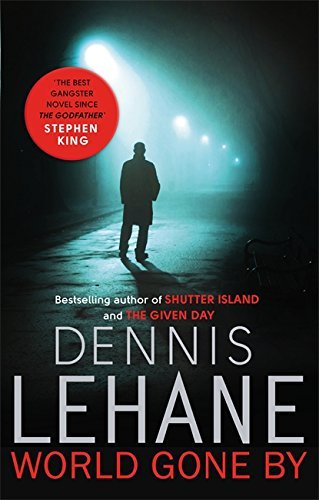
Coughlin #3
World Gone By
World Gone by
416 pages, Paperback
First published March 10, 2015
Ratings & Reviews
Friends & Following
Create a free account to discover what your friends think of this book!
Community Reviews
Displaying 1 - 30 of 1,293 reviews

April 5, 2015
What they didn’t tell you about absolute power was that it was never absolute; the instant you had it, someone had already lined up to try to take it away. Princes could sleep soundly, but never kings. The ear was always tuned for the creak on the floorboard, the whine of a hinge.The princes would probably do well to stay alert as well. Remember Richard the Third? World Gone By is the final volume of Dennis Lehane’s Coughlin Family trilogy. The series began ambitiously with The Given Day, set in Boston, among other places, in the late 19-teens. That book cast a perceptive eye on the social movements of the era, and the underlying problems that called them into being. It was an opus magnus, big canvas, big ideas, well realized. The second of the Coughlin books, Live by Night, shifted the focus to Florida in the roaring twenties, Prohibition, rum trade, a fair bit on the DNA of violence. It was smart, literary, insightful, and a damn fine read. It took a lot of wordsmith ordnance to produce the first two. But it seems that there were only a few cartridges left when it came time for the third. This is not to say it is not a good book. I liked it. But, compared to its older siblings, it is disappointing for the reduction in scope, and the feeling one might get that Lehane was dashing through this one to finish the series so he could move on to something else.
Joe Coughlin, in Live by Night, had carved out a nice little chunk of the Florida crime market. Even bought himself some public respectability. But now he has scaled back. Maintains a low public profile. Although he is still a member of the organized crime council, he functions as a freelancer, an advisor, a voice of wisdom, a gangland statesman almost.
“So was I a gangster?” He nodded. “Yes. Now I’m an advisor to people.”He is doing well, plenty of money, a son he adores, a gorgeous, connected girlfriend. He hobnobs with the movers and shakers financial and civic, also has working relationships with the military and the police. But he gets wind that there is a hit out on him, and the game is afoot. Who, when, why? This gives the story structure, a ticking bomb, with tension ramping up as the deadline approaches.
“Criminals.”
He shrugged. “A friend of mine was Public Enemy Number Three about six years ago—“
She sat up quickly. “See, that’s what I’m saying. Who could begin a sentence, ‘A friend of mine was Public Enemy’ anything?”
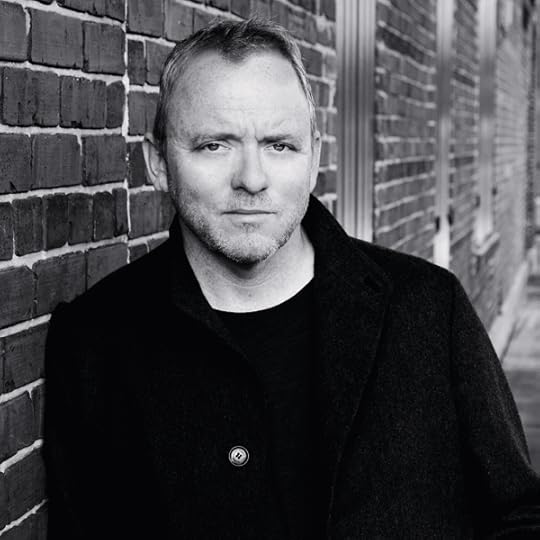
Dennis Lehane -from Boston Magazine
Lehane brings back plenty of the cast from the last episode, but there is enough new blood to keep things pumping. Joe’s pal, boss of bosses Dion Bartolo, appears to have a mole in his organization. People are dying or being locked up. It’s bad for business and needs to end. One of Joe Coughlin’s challenges is to unearth the snitch. There is enough organizational politicking, back-stabbing (literally, as the case may be) and maneuvering for fans of Wolf Hall or Game of Thrones. The seats of power may be smaller, but the desire, and willingness to do whatever it takes is just as high.
The scale of this book is far different from that of its elders, 309 pps for this one, versus 402 for Live by Night and 704 for The Given Day. This one takes place within a few weeks, whereas the prior two covered decades. But thematic strains persist.
the gangster genre to me has always been a metaphor for unfettered capitalism. It’s the American system run completely amok without regulation, without anything. So whereas in the real world you have, say, Exxon buying off the State of New Jersey (a recently proposed [and accepted] pollution settlement) — well, in the gangster novel, that would just be somebody would get killed. - from the U-T San Diego interviewFamily figures large here, again. Lehane brings back issues of fathers and sons, how violence by elders scar and steer their children. Can the cycle ever be broken? Moms have a hard time of it, mostly by their absence. Although one, who is, delightfully, a floral arranger and contract killer, makes a well-deserved dent in her abusive hubby’s cranium to achieve her widowhood. Widowers abound, usually with sons. It’s a man’s world, more so than in the earlier books, probably because the female characters have been killed off.
I didn’t realize that until after the book was pretty much going to print. I could have thought that one through a little bit more. Where the hell are all the women in this? - from LA Review of Books interviewLehane touches on race as well, most poignantly in a scene where Joe Coughlin talks with his mixed race son, Tomas, about being called a nigger.
There are some wonderful characters here. A top-hatted Montooth Dix conjures images of Baron Samedi. A mob doctor has a particularly interesting tale to tell. An unaffiliated don has a group of bodyguards with a particularly daunting rep. One of the mob bosses has a gambling problem. Contract killers have kids, and even a big deal like Joe Coughlin has to cope with his kid getting chicken pox. So there are both broad and fine brushes in Lehane’s set.
Throughout the book Joe sees a young boy. He is uncertain if the boy is real, a message from the other side, maybe manifestation of a brain tumor. But the sightings trouble him. And this is not the only potentially spectral child presence in the book. He wrestles with feeling alone in the world as well, the larger family of which he was a member having, despite the lie about putting family first, done an excellent job of making orphans.
Joe gives some thought to the hereafter, making up for his crimes, sure, but more interestingly, offers up a very interesting notion of time
“Do you think she’s happy? Wherever she is?”So, what’s not to like? Were this the first book in the series, or a stand-alone volume, one might look at World Gone By differently. But it is part of a trilogy, so the first two parts must be taken into account as well. How does it compare? The Given Day is a big-time historical novel. An epic, a saga, about a time and place, covering considerable time, considerable history. It is a book with heft, and not just from its 700+ pages. Live By Night, while not sharing the same scope as its predecessor, was an amazing book that carried the Coughlin family gangster story forward in the context of American history. There were added artistic elements that gave the work some extra oomph. With World Gone By the scope of the first, and even the second book is abandoned for a smaller tale. The ghostly visitation by a young boy that Joe experiences would be more interesting if Lehane had not played a very similar card already in Live by Night. The sociopolitical concerns persist, and I suppose there is nothing wrong with flogging a theme, but it seemed to me that this had been done pretty clearly in the previous volumes, so that when we stop by there again this time it was a case of been-there-done-that. There is a strain of melancholy here that exceeds that of his prior books. Check out Ivy Pochoda’s interview with Lehane in the LA Review of Books on that. There are reasons.
His father turned on the seat and faced him. “Matter of fact, I do.”
“But she must be lonely.”
“Depends. If you believe time works like it does down here, then, yeah, she’s only got her father for company and she didn’t much like him.” He patted Tomas’s knee. “But what if there’s no such thing as time after this life?”
“I don’t understand.”
“No minutes, no hours, no clocks. No night turning into day. I like to think your mother’s not alone, because she’s not waiting for us. We’re already there. “
I liked the book. There is a lot of substance surrounding the gangster tale. Some of the secondary characters were wonderful. The ramping up of tension worked well. You might not have the same sort of reaction I did to what seemed recycled material. That is mostly what kept me from liking it more. (Wish I could give it three and a half stars) Joe Coughlin is an engaging character and, despite his chosen profession, one can relate to him. World Gone By completes the Coughlin trilogy, day, night, gone.
Lehane has already begun work on another trilogy, this one set in more contemporary Boston.
Review first posted – 5/1/15
Publication date – 3/10/15
=============================EXTRA STUFF
Links to the author’s personal, Twitter and FB pages
Other books in the Coughlin series
-----The Given Day - #1
-----Live By Night - #2
Lehane's Kenzie and Gennaro series
-----#1 - 1994 - A Drink Before War
-----#2 - 1996 - Darkness, Take My Hand
-----#3 - 1997 - Sacred
-----#4 - 1998 - Gone, Baby Gone
-----#5 - 1999 - Prayers for Rain
-----#6 - 1999 - Moonlight Mile
Interviews
-----Ivy Pochoda for the LA Review of Books
-----John Wilkens for the Union Tribune San Diego
-----Colette Bancroft for the Tampa Bay Times

October 7, 2021
IL MONDO PASSATO
Questo è il terzo capitolo della storia e della vita di Joseph “Joe” Coughlin, figlio di irlandesi, padre poliziotto: The Given Day – Quello era l’anno, Live By Night – La legge della notte, e World Gone By-Tutti i miei errori.
Ho letto il primo senza sapere che volendo il percorso narrativo continuava: e ho preso in mano questo senza sapere che a quello si riallacciava.
Ma sono comunque storie autoconclusive, non è necessario né seguire l’ordine di pubblicazione, né averne letto altre.
<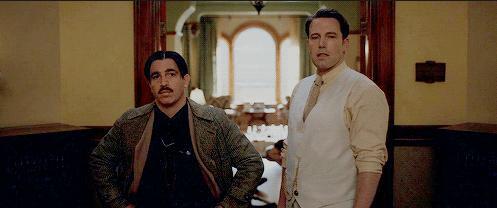
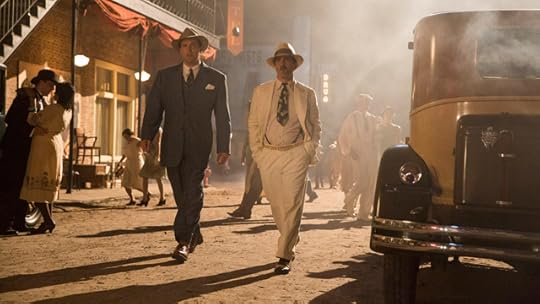
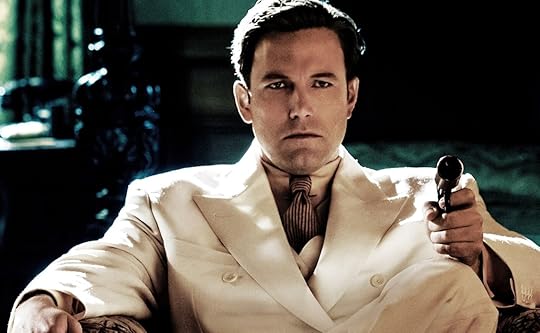
Il regista, sceneggiatore, produttore e attore protagonista Ben Affleck interpreta Joe Coughlin in “Live By Night – La legge della notte”. Accanto Chris Messina che interpreta Dion Bartolo.
Joe Coughlin partì volontario nel 1917 per andare in Francia a combattere contro i barbari, quelli che lui definiva gli Unni. Qui ha visto morirgli accanto brava gente, brave persone, e non riusciva a capirne né la ragione né il motivo.
Ma, aveva capito che le regole alle quali loro obbedivano erano bugie e non valevano per quelli che le avevano create.
Così giura a se stesso che se mai fosse riuscito a non morire e a tornare a casa non avrebbe mai più obbedito a un ordine. S’era imbarcato da soldato: quando è tornato a casa era pronto a vivere da fuorilegge.
Ma poi, col tempo, Joe capisce che infrangere la legge non basta. Quello che conta è stabilire le proprie regole.
E Joe lascia Boston per trasferirsi in Florida e fare la sua fortuna. Si sistema a Ybor, la Harlem di Tampa.
E da fuorilegge diventa gangster.
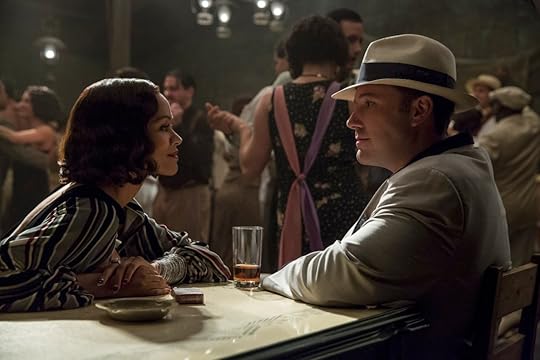
A sinistra Zoe Saldana/Graciela, il grande amore di Joe, la madre di suo figlio.
Joe non fa differenza tra bianchi e neri, tra neri e caffelatte o cappuccino o caramello. E se differenza deve fare, non è certo a livello umano: per lui hanno tutti pari dignità. E così il suo piccolo (ma non poi così piccolo) impero cresce e si consolida con l’ok di Cosa Nostra, ma facendo business con cubani e afroamericani.
Dopo essere stato l’uomo di riferimento della mafia in Florida, i suoi boss capiscono che per quanto di gente ne abbia uccisa, ha comunque il cuore troppo tenero per essere il numero uno. E così gli chiedono di farsi da parte, di lasciare il timone al suo amico d’infanzia Dion Bartolo, che almeno è di chiara origine italiana: e Joe diventa il consigliere, il diplomatico, il vero uomo d’affari della mafia in Florida.

A sinistra Sienna Miller in un’altra notevole performance. Trovo che sia un’attrice sottovalutata.
Joe era sposato alla cubana Graciela e con lei aveva fatto un figlio, Tomas: ma quando il piccolo ha due anni, la madre muore in una sparatoria. E Joe non riesce a dimenticarla e a perdonarsi d’averla coinvolta nei suoi giri violenti. Ora, la cosa sulla quale investe tutto, è Tomas, che nel frattempo ha nove anni: padre e figlio hanno un gran bel rapporto, è molto tenero il senso di paternità di Joe.
E accanto a questo caldo e affettuoso angolo di mondo, spaccio, traffico, droga, liquori, prostituzione, corruzione, omicidio, violenza. Un mondo del quale Joe è sempre parte portante e fondamentale. Un mondo da tenere nascosto e lontano dal piccolo Tomas.
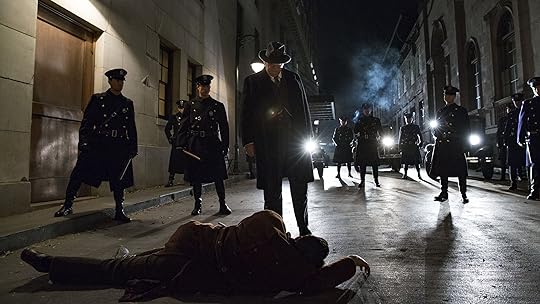
È il 1943, i Giapponesi hanno già attaccato Pearl Harbour e il “nano crucco” rompe il cazzo a mezzo mondo. Sbarcherà mai in America? Forse no, se i Russi lo mandano al diavolo a casa loro. Echi lontani di guerre lontane ma molto presenti: perché le materie prime sono diventate oro e per Joe e Cosa Nostra è un’altra buona occasione di far quattrini e per giunta farli in modo (quasi) legale.
Eppure c’è spazio per la nostalgia di un mondo che è stato e ormai passato: quando Joe e Dion svaligiavano banche, o quando muovevano i primi passi in Florida.
Adesso sembra già tardi. E trentasei anni sono come sessanta.
Molto bravo Lehane a mischiare ricostruzione storica (e che storia: storia del gangsterismo), thriller, suspense, onirico e plot di fantasia. Trecento pagine che si leggono con una sola grossa difficoltà: interrompere, chiudere il libro e posarlo.
Questo è il terzo capitolo della storia e della vita di Joseph “Joe” Coughlin, figlio di irlandesi, padre poliziotto: The Given Day – Quello era l’anno, Live By Night – La legge della notte, e World Gone By-Tutti i miei errori.
Ho letto il primo senza sapere che volendo il percorso narrativo continuava: e ho preso in mano questo senza sapere che a quello si riallacciava.
Ma sono comunque storie autoconclusive, non è necessario né seguire l’ordine di pubblicazione, né averne letto altre.
<
Il regista, sceneggiatore, produttore e attore protagonista Ben Affleck interpreta Joe Coughlin in “Live By Night – La legge della notte”. Accanto Chris Messina che interpreta Dion Bartolo.
Joe Coughlin partì volontario nel 1917 per andare in Francia a combattere contro i barbari, quelli che lui definiva gli Unni. Qui ha visto morirgli accanto brava gente, brave persone, e non riusciva a capirne né la ragione né il motivo.
Ma, aveva capito che le regole alle quali loro obbedivano erano bugie e non valevano per quelli che le avevano create.
Così giura a se stesso che se mai fosse riuscito a non morire e a tornare a casa non avrebbe mai più obbedito a un ordine. S’era imbarcato da soldato: quando è tornato a casa era pronto a vivere da fuorilegge.
Ma poi, col tempo, Joe capisce che infrangere la legge non basta. Quello che conta è stabilire le proprie regole.
E Joe lascia Boston per trasferirsi in Florida e fare la sua fortuna. Si sistema a Ybor, la Harlem di Tampa.
E da fuorilegge diventa gangster.
A sinistra Zoe Saldana/Graciela, il grande amore di Joe, la madre di suo figlio.
Joe non fa differenza tra bianchi e neri, tra neri e caffelatte o cappuccino o caramello. E se differenza deve fare, non è certo a livello umano: per lui hanno tutti pari dignità. E così il suo piccolo (ma non poi così piccolo) impero cresce e si consolida con l’ok di Cosa Nostra, ma facendo business con cubani e afroamericani.
Dopo essere stato l’uomo di riferimento della mafia in Florida, i suoi boss capiscono che per quanto di gente ne abbia uccisa, ha comunque il cuore troppo tenero per essere il numero uno. E così gli chiedono di farsi da parte, di lasciare il timone al suo amico d’infanzia Dion Bartolo, che almeno è di chiara origine italiana: e Joe diventa il consigliere, il diplomatico, il vero uomo d’affari della mafia in Florida.
A sinistra Sienna Miller in un’altra notevole performance. Trovo che sia un’attrice sottovalutata.
Joe era sposato alla cubana Graciela e con lei aveva fatto un figlio, Tomas: ma quando il piccolo ha due anni, la madre muore in una sparatoria. E Joe non riesce a dimenticarla e a perdonarsi d’averla coinvolta nei suoi giri violenti. Ora, la cosa sulla quale investe tutto, è Tomas, che nel frattempo ha nove anni: padre e figlio hanno un gran bel rapporto, è molto tenero il senso di paternità di Joe.
E accanto a questo caldo e affettuoso angolo di mondo, spaccio, traffico, droga, liquori, prostituzione, corruzione, omicidio, violenza. Un mondo del quale Joe è sempre parte portante e fondamentale. Un mondo da tenere nascosto e lontano dal piccolo Tomas.
È il 1943, i Giapponesi hanno già attaccato Pearl Harbour e il “nano crucco” rompe il cazzo a mezzo mondo. Sbarcherà mai in America? Forse no, se i Russi lo mandano al diavolo a casa loro. Echi lontani di guerre lontane ma molto presenti: perché le materie prime sono diventate oro e per Joe e Cosa Nostra è un’altra buona occasione di far quattrini e per giunta farli in modo (quasi) legale.
Eppure c’è spazio per la nostalgia di un mondo che è stato e ormai passato: quando Joe e Dion svaligiavano banche, o quando muovevano i primi passi in Florida.
Adesso sembra già tardi. E trentasei anni sono come sessanta.
Molto bravo Lehane a mischiare ricostruzione storica (e che storia: storia del gangsterismo), thriller, suspense, onirico e plot di fantasia. Trecento pagine che si leggono con una sola grossa difficoltà: interrompere, chiudere il libro e posarlo.

August 24, 2020
A book with cover artwork that includes a faux-sticker with a Stephen King quote about this book: "The best gangster novel since The Godfather" A book so compelling, that when I found out it was the last of a trilogy, not only did I order the two preceding books, I kept on reading this one! A book so absorbing that I delayed almost everything in my life whilst absorbed in this reality.
It's 1943, the United States is at war, and back in Tampa, Joe Coughlin retired gangster and now middleman between the legitimate world and the underworld is virtually everyone's ally, but can anyone be untouchable in the world of organised crime? The gangster and associated life is but a matter of a flick of a coin right?
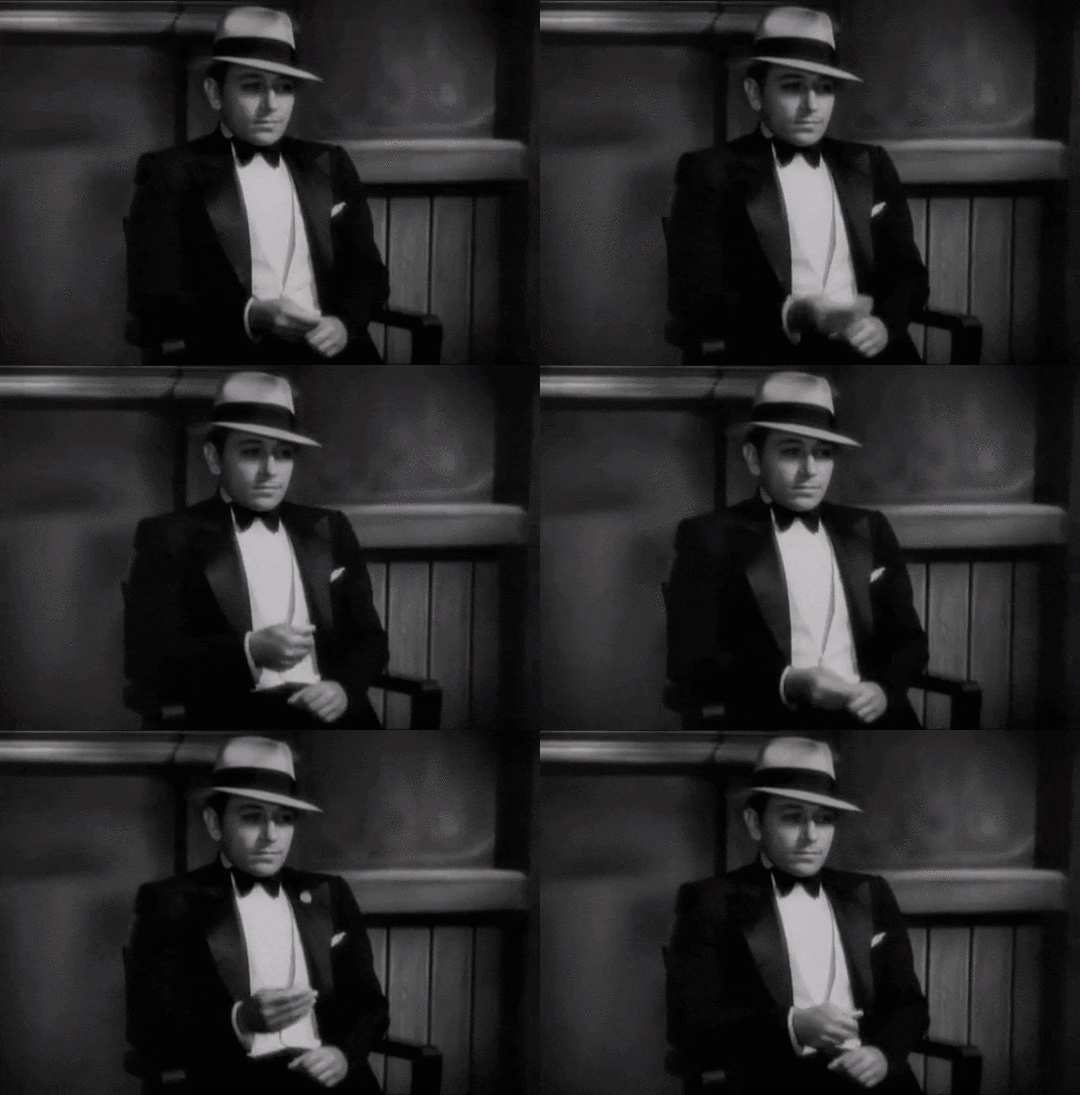
A wonderful real feeling look at Tampa in the 1940s, and the reach and power of organised crime headed by the American-Italian mafia. A book that lovingly and unrelentingly, world builds as it also winds up the tension and drama in a book that starts of by telling you most people that attended the biggest party of the year awhile back are all dead now. This is the 1940s version of The Sopranos and The godfather mafia realities, and definitely belongs in that class! 8.5 out of 12, firm Four Star read.
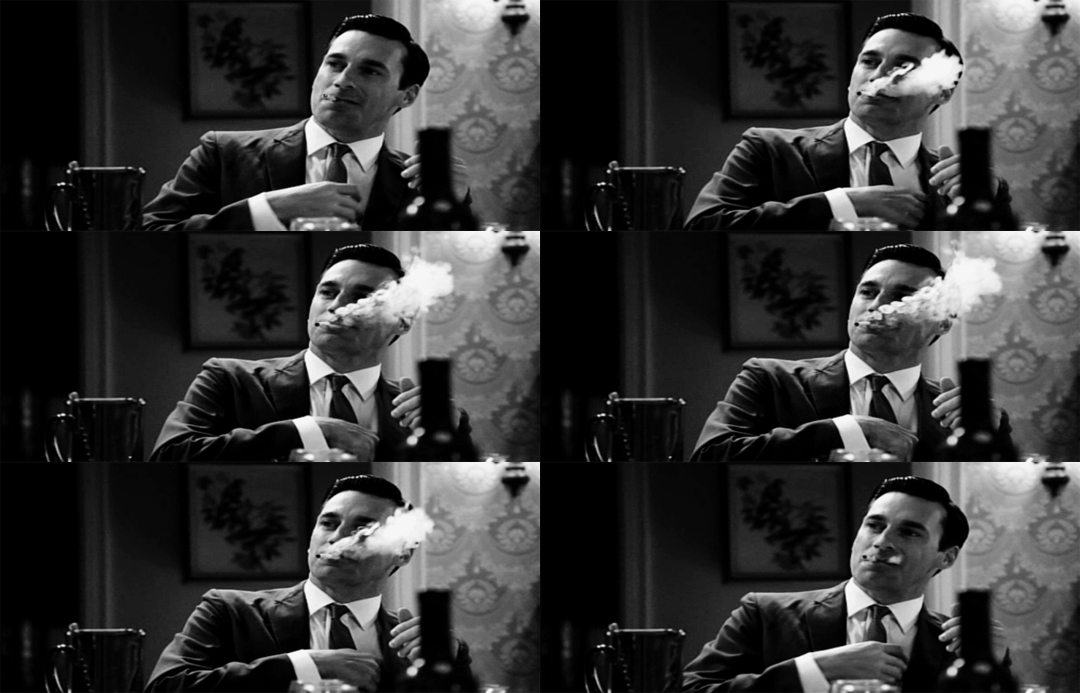
It's 1943, the United States is at war, and back in Tampa, Joe Coughlin retired gangster and now middleman between the legitimate world and the underworld is virtually everyone's ally, but can anyone be untouchable in the world of organised crime? The gangster and associated life is but a matter of a flick of a coin right?
A wonderful real feeling look at Tampa in the 1940s, and the reach and power of organised crime headed by the American-Italian mafia. A book that lovingly and unrelentingly, world builds as it also winds up the tension and drama in a book that starts of by telling you most people that attended the biggest party of the year awhile back are all dead now. This is the 1940s version of The Sopranos and The godfather mafia realities, and definitely belongs in that class! 8.5 out of 12, firm Four Star read.

November 24, 2020
Broche de oro a la magnífica trilogía compuesta por “Cualquier otro día”, “Vivir de noche” y esta última. Joe Coughlin se enfrenta a sus peores pesadillas, tras más de veinte años de una vida dedicada al crimen y a la extorsión. “Cualquier otro día” nos trasladó al Boston sangriento de los años 20, más concretamente, a la huelga policial de 1919. Fue un arranque espectacular. En “Vivir de noche” asistimos al ascenso de Coughlin como jefe de la mafia en Florida, y a sus actos más salvajes. En “Ese mundo desaparecido”, nuestro protagonista ya no tiene un rol como mandatario en la organización, aunque se sigue manteniendo en ella. Sabe que sus días están contados. Sin embargo, tiene un hijo por el que luchar. Un hijo que ya se quedó sin madre en un suceso sangriento, y que ahora puede quedarse también sin padre. ¿A quién acudir? ¿En quién confiar? En esos círculos, absolutamente en nadie.
Y así llegaremos a Cuba, en espera de una conclusión que, aunque lógica, no por ello resultará menos dolorosa al lector que, como yo, le haya cogido cariño a este entrañable mafioso.
Aunque el autor no haya vuelto a alcanzar la maestría narrativa de su primera parte (“Cualquier otro día” es una joya en cada una de sus páginas), tanto la segunda como la presente han estado a una altura muy similar. Dennis Lehane es un autor muy a tener en cuenta en el panorama literario mundial. “Shutter island” y la tan celebrada “Mystic River” lo encumbraron a lo más alto. Lo lógico hubiese sido dormirse en los laureles. Afortunadamente, compruebo que no.
Y así llegaremos a Cuba, en espera de una conclusión que, aunque lógica, no por ello resultará menos dolorosa al lector que, como yo, le haya cogido cariño a este entrañable mafioso.
Aunque el autor no haya vuelto a alcanzar la maestría narrativa de su primera parte (“Cualquier otro día” es una joya en cada una de sus páginas), tanto la segunda como la presente han estado a una altura muy similar. Dennis Lehane es un autor muy a tener en cuenta en el panorama literario mundial. “Shutter island” y la tan celebrada “Mystic River” lo encumbraron a lo más alto. Lo lógico hubiese sido dormirse en los laureles. Afortunadamente, compruebo que no.

January 8, 2015
I like crime stories set back in the days of fedoras and trenchcoats, and I’m a big fan of Dennis Lehane’s. So this should be perfect, right? Sadly, the best I can say is that it isn’t bad.
Set 10 years after the previous book, Live By Night, Joe Coughlin has left behind his days of building a criminal empire based on bootlegging to the more respectable position of being a prominent man in Tampa. Joe runs several successful businesses but his real job is to work as an advisor and fixer for the Mob. As World War II rages, the same shortages of men and resources have hit even organized crime. Thanks in part to Joe’s help the drugs, gambling, prostitution, and various other criminal enterprises are still doing well as he splits time between Florida and Cuba.
As a man who makes no enemies and is a cash cow for the Mob, Joe’s days of danger seem to be behind him so he’s shocked to get a tip that a contract has been put out on his life. As Joe tries to find out if there’s any truth to the rumor he also has to deal with an escalating conflict between a white mobster trying to muscle in on the turf controlled by a black man as well as being leaned on by the war department to help them try to root out spies on the docks.
I wanted to love this one, and I found Joe a fascinating character in a lot of ways, this really comes across as kind of a generic gangster story. The last book was Joe’s rise to power and made for the more interesting of the two as he fought to build a bootlegging empire, and this one just didn’t do anything that adds anything new or different to the genre.
The whole trilogy is a little weird because the first one, The Given Day, was more of a look at post-World War I Boston from a social and economic perspective with elements of a crime story that focused on Joe’s family when he was supporting character as a kid. Shifting from that to Joe as a reckless bootlegger and then into the older, wiser counselor was a good story, but didn’t really seem to match up to the first book.
Set 10 years after the previous book, Live By Night, Joe Coughlin has left behind his days of building a criminal empire based on bootlegging to the more respectable position of being a prominent man in Tampa. Joe runs several successful businesses but his real job is to work as an advisor and fixer for the Mob. As World War II rages, the same shortages of men and resources have hit even organized crime. Thanks in part to Joe’s help the drugs, gambling, prostitution, and various other criminal enterprises are still doing well as he splits time between Florida and Cuba.
As a man who makes no enemies and is a cash cow for the Mob, Joe’s days of danger seem to be behind him so he’s shocked to get a tip that a contract has been put out on his life. As Joe tries to find out if there’s any truth to the rumor he also has to deal with an escalating conflict between a white mobster trying to muscle in on the turf controlled by a black man as well as being leaned on by the war department to help them try to root out spies on the docks.
I wanted to love this one, and I found Joe a fascinating character in a lot of ways, this really comes across as kind of a generic gangster story. The last book was Joe’s rise to power and made for the more interesting of the two as he fought to build a bootlegging empire, and this one just didn’t do anything that adds anything new or different to the genre.
The whole trilogy is a little weird because the first one, The Given Day, was more of a look at post-World War I Boston from a social and economic perspective with elements of a crime story that focused on Joe’s family when he was supporting character as a kid. Shifting from that to Joe as a reckless bootlegger and then into the older, wiser counselor was a good story, but didn’t really seem to match up to the first book.

April 3, 2015
In this 3rd book in the 'Joe Coughlin' series, the gangster/businessman is in the midst of deadly mob rivals. The book can be read as a standalone.
*****
As the book opens World War II is raging. Joe Coughlin, a former crime boss in the Tampa area, is now more of a businessman gangster living a (more or less) respectable life with his 9-year-old son Tomas.


Joe is an advisor to current Florida crime boss Dino Bartolo and friends with top lieutenant Rico DiGiacomo, whom he's known since childhood. He's also on good terms with other gang bosses because he makes lots of money for everyone and doesn't skim or cheat.

So Joe is surprised when a hit-woman needing his help tells Joe that a hit on him is scheduled for Ash Wednesday.

Meanwhile Bartolo's gang is short on personnel because so many men have been drafted. This opens lieutenant spots for some ambitious but less than brilliant criminals, like Rico's brother Freddy DiGiacomo. Freddy wants to push out Montooth Dix who rules 'Brown Town', the neighborhood where African-Americans and Cubans live.

Freddy tries to kill Montooth but fails, losing two men in the skirmish. Freddy then insists that Montooth be murdered because he killed two white men - though Freddy started the trouble. Joe, who likes Montooth, is ordered to set him up. Joe's life is further complicated by his torrid affair with the mayor's wife and by the ghost of a young boy who seems to be related to him.


The author does an excellent job creating a dangerous atmosphere as Joe hobnobs with various gangsters who might be about to kill him. It's clear that being a gang boss is a tricky business, as there's always someone ready to bump you off and take your place.
The dramatic climax of the book takes place on a luxury yacht.

The book should have ended right after this but the story drags on for a bit to a somewhat surprising ending. All in all this is a good story with vivid, interesting characters - recommended for fans of mystery/thriller or gangster books.
You can follow my reviews at http://reviewsbybarbsaffer.blogspot.com/

December 27, 2015
Joe stared out at all the prehistoric flora and told himself that's exactly what was troubling him, that's what was gnawing at his soul - the difference between him and a savage.
He told himself - and then he pledged to himself - that there was a difference.
There was.
There was.
A couple more snorts of rye, and he almost believed it.
This is the last book in Lehane's Coughlin trilogy and it is the most disappointing. I feel like Lehane has really lost the thread here. The first book, The Given Day, was amazing. The second book, Live by Night, was good. This one is just meh.
Joe Coughlin has evolved into a real mob boss. A 'grown men kiss his hands' mob boss. This is already bad, because I don't really like mob bosses or enjoy reading about them. It's hard to remember when Joe was just a kid living with his controlling father, or when he was just a young punk on the street doing his first robberies. He's been so rich and so powerful for so long.
He's been raising his son as a single father ever since This book takes place only over the course of about 10 days. Joe hears that there is a contract out on his head. Who put it there and why?
You may say this is a thriller, you may say this is a mystery novel, you may describe this as historical fiction - but the truth is (as it often is with Lehane) that this book is a chance for Lehane to philosophize a lot.
Lehane is a great writer and sometimes what he's doing really works. He's really strong in two areas:
1.) Race. Talking about race and race relations and racism etc. He really writes this well and I enjoy listening to him speak through his characters about this.
Besides being vain, arrogant, and secretly convinced that he'd never met a man as smart as himself, Joe Coughlin had also killed, stolen, maimed, and assaulted his way through his 37 years on the planet. So he rarely felt like he held the moral high ground over anyone. But he could live a hundred lives and never understand the bigots in his midst. Seemed every race had been the niggers of someplace at some point in their history. And as soon as the black niggers got respectable, the next scapegoat race would be duly designated, maybe by the very niggers who'd just escaped into respectability.
Joe is someone who married an Afro-Cuban woman and that gives Lehane a lot of material to go on, including raising Tomas, Joe's multiracial son.
"Am I a nigger?" Tomas asked.
Joe's head snapped on its neck. "What?"
Tomas chin-gestured at the radio. "Am I?"
"Who called you that?"
"Martha Comstock. Some kids were calling me a spic, but Martha said, 'No, he's a nigger."
I thought the issues he tackled in this book and the things he had to say about racism and race relations were very interesting.
2.) Another area in which Lehane's writing excels is in romance. Joe is always with some woman - well, there's only been three serious women - and his women are always strong, hard, forces of nature* (*which is not necessary for me to enjoy romance. I adore many romances about women who are not "strong," it's just that I find it interesting that Joe is always attracted to female badasses, given his background, family, and life choices).
Not only does Lehane always pair Joe with strong women, but he writes romance and sex very convincingly (most of the time. I was befuddled when he had a long, coherent conversation during allegedly good sex, that was a mistake). I still (after reading this entire trilogy back-to-back) am convinced that Lehane has a good shot at becoming a successful romance novelist. He actually writes relationships that are sweet, yet real, and convincing, and sexy. It's a very rare talent and I want to compliment him on this.
Sometimes when he and Vanessa made love it felt like being wrapped in an undertow, spinning softly in a warm dark world, with no guarantee he'd resurface.
However, I didn't enjoy this book nearly as much as the first two. This is probably due to the inevitable conclusions Joe has to reach after living 36 very violent, murderous years as a criminal - and that's on me. I don't have the kind of stomach it takes to read mob thrillers. I freely admit this. The book is dismal, but that's to be expected due to the subject matter.
On the other hand, there was some stuff that was definitely Lehane's bad.
One is his penchant for disgusting, vile shit. This book has a child molester, it has incest - unrelated to the child molester, and (unrelated to either of these) it also has a man murdering his pregnant wife. It has a lot of sick, disgusting stuff in it and with no real point that I could see. Now, as I said earlier, there's also romance and Joe truly loves his son - so it's not as if Lehane is saying "Life is shit," but it's pretty close to this. Too close for me to be happy as a reader. I hate reading about child molesters and incest and the murder of pregnant women. I HATE IT. If you can't stomach this stuff, avoid this book. The scene of the man killing his pregnant wife and it's surrounding circumstances is one of the most stomach-churning I've ever read.
Two is when Lehane's tendency for philosophy turns into weird, random bullshit that I can't make heads or tails out of. This happens more frequently than I'd like:
"Girl thinks she has power in her pussy, and maybe sometimes she's right, for a while. We think we have it in our balls and our muscle. And maybe we're right. For a while." Rico shook his head ruefully. "A little, little while."
Joe nodded. Power - most power anyway, certainly Vidalia's brand of it - was the fly that called itself a hawk. It could only govern those who agreed to call it a hawk instead of a fly, a tiger instead of a cat, a king instead of a man.
I have no idea what the fuck he is talking about. Even in context (knowing the story that leads up to this little tirade) it makes no sense. This happens a few times in the novel.
He also insists on putting ghosts in this book. Which is hella strange, considering this is historical fiction and then ghosts are being thrown into the plot like that's normal. Some people can pull this off, if they have the right tone (I'm thinking of Susan M. Boyer's Lowcountry Boil here) but in this book it's like, "WTF are you doing?"
And Joe might be having a mental breakdown. If Lehane was just saying Joe was having a mental breakdown due to stress, and that's why he was seeing apparitions, that would be fine. Perfectly fine. I was ready to accept this explanation. Until Joe goes to his primary care physician to get checked out, and Dr. Lenox:
After Joe left, Ned Lenox lit a cigarette and noticed, not for the first time, how yellow the nicotine had made the flesh between the index and middle fingers of his right hand. The nails too. He ignored the baby who sat shivering under the examining table. She'd sat there the whole of Joe Coughlin's visit, rocking and shivering in place, even as her father had lied about the afterlife being too boring a place for a ghost to live. Unlike in life, however, her eyes were open, her face unscrunched. She looked a bit like her mother, around the jawline mostly, but the rest of her was all Lenox.
Ned Lenox got down on the floor across from her because he had no idea how long she'd stay and he liked her company. In the first few years after he'd killed her and killed her mother, she had come to him nightly, crawling around on the floor and the bed and even the walls a few times. For the first year, she made no noise, but by the second she was squawking, letting loose high-pitched and hungry cries. To avoid going home, Ned worked himself to the bone in his office...
[Cue 4 paragraphs of philosophical bullshit, and then]
Ned crossed his legs and watched his baby stare back at him, a gnarled and malignant almost-infant. When she opened her toothless mouth and spoke for the first time in twenty-four years, he wasn't surprised. Nor was he surprised that her voice was her mother's.
"I'm in your lungs," she told him.
Okay, what the fuck is this shit? Is this a horror novel? I mean, come on. And you got lung tumors because you smoke three packs a day. Not because you killed your wife and almost-born child. I have NO IDEA what Lehane was trying to pull with all this shit. None.
Tl;dr - The weakest of the whole trilogy. While The Given Day was strong and hard-hitting, and Live by Night was bleak yet addicting, Lehane has lost the thread here. He had to complete the trilogy. He had to carry Joe Coughlin's story to its inevitable conclusion. However, this is not pleasant to read. And not even Lehane's wordcraft can save the day here, as it did in Live by Night. I'm very disappointed. Bleak, vile, with a very tragic ending in more ways than one, this book will leave a bad taste in your mouth. Read The Given Day and just stop there. Or read its sequel, Live by Night, and just stop there. I understand if you feel compelled to read this book in order to finish out the trilogy (I did) but you're probably not going to enjoy it.
P.S. This book is not available in Spanish and I'm doubly pissed off because they translated Book 1 and Book 2. Don't start to translate a trilogy and not finish it! It makes me very angry.
He told himself - and then he pledged to himself - that there was a difference.
There was.
There was.
A couple more snorts of rye, and he almost believed it.
This is the last book in Lehane's Coughlin trilogy and it is the most disappointing. I feel like Lehane has really lost the thread here. The first book, The Given Day, was amazing. The second book, Live by Night, was good. This one is just meh.
Joe Coughlin has evolved into a real mob boss. A 'grown men kiss his hands' mob boss. This is already bad, because I don't really like mob bosses or enjoy reading about them. It's hard to remember when Joe was just a kid living with his controlling father, or when he was just a young punk on the street doing his first robberies. He's been so rich and so powerful for so long.
He's been raising his son as a single father ever since This book takes place only over the course of about 10 days. Joe hears that there is a contract out on his head. Who put it there and why?
You may say this is a thriller, you may say this is a mystery novel, you may describe this as historical fiction - but the truth is (as it often is with Lehane) that this book is a chance for Lehane to philosophize a lot.
Lehane is a great writer and sometimes what he's doing really works. He's really strong in two areas:
1.) Race. Talking about race and race relations and racism etc. He really writes this well and I enjoy listening to him speak through his characters about this.
Besides being vain, arrogant, and secretly convinced that he'd never met a man as smart as himself, Joe Coughlin had also killed, stolen, maimed, and assaulted his way through his 37 years on the planet. So he rarely felt like he held the moral high ground over anyone. But he could live a hundred lives and never understand the bigots in his midst. Seemed every race had been the niggers of someplace at some point in their history. And as soon as the black niggers got respectable, the next scapegoat race would be duly designated, maybe by the very niggers who'd just escaped into respectability.
Joe is someone who married an Afro-Cuban woman and that gives Lehane a lot of material to go on, including raising Tomas, Joe's multiracial son.
"Am I a nigger?" Tomas asked.
Joe's head snapped on its neck. "What?"
Tomas chin-gestured at the radio. "Am I?"
"Who called you that?"
"Martha Comstock. Some kids were calling me a spic, but Martha said, 'No, he's a nigger."
I thought the issues he tackled in this book and the things he had to say about racism and race relations were very interesting.
2.) Another area in which Lehane's writing excels is in romance. Joe is always with some woman - well, there's only been three serious women - and his women are always strong, hard, forces of nature* (*which is not necessary for me to enjoy romance. I adore many romances about women who are not "strong," it's just that I find it interesting that Joe is always attracted to female badasses, given his background, family, and life choices).
Not only does Lehane always pair Joe with strong women, but he writes romance and sex very convincingly (most of the time. I was befuddled when he had a long, coherent conversation during allegedly good sex, that was a mistake). I still (after reading this entire trilogy back-to-back) am convinced that Lehane has a good shot at becoming a successful romance novelist. He actually writes relationships that are sweet, yet real, and convincing, and sexy. It's a very rare talent and I want to compliment him on this.
Sometimes when he and Vanessa made love it felt like being wrapped in an undertow, spinning softly in a warm dark world, with no guarantee he'd resurface.
However, I didn't enjoy this book nearly as much as the first two. This is probably due to the inevitable conclusions Joe has to reach after living 36 very violent, murderous years as a criminal - and that's on me. I don't have the kind of stomach it takes to read mob thrillers. I freely admit this. The book is dismal, but that's to be expected due to the subject matter.
On the other hand, there was some stuff that was definitely Lehane's bad.
One is his penchant for disgusting, vile shit. This book has a child molester, it has incest - unrelated to the child molester, and (unrelated to either of these) it also has a man murdering his pregnant wife. It has a lot of sick, disgusting stuff in it and with no real point that I could see. Now, as I said earlier, there's also romance and Joe truly loves his son - so it's not as if Lehane is saying "Life is shit," but it's pretty close to this. Too close for me to be happy as a reader. I hate reading about child molesters and incest and the murder of pregnant women. I HATE IT. If you can't stomach this stuff, avoid this book. The scene of the man killing his pregnant wife and it's surrounding circumstances is one of the most stomach-churning I've ever read.
Two is when Lehane's tendency for philosophy turns into weird, random bullshit that I can't make heads or tails out of. This happens more frequently than I'd like:
"Girl thinks she has power in her pussy, and maybe sometimes she's right, for a while. We think we have it in our balls and our muscle. And maybe we're right. For a while." Rico shook his head ruefully. "A little, little while."
Joe nodded. Power - most power anyway, certainly Vidalia's brand of it - was the fly that called itself a hawk. It could only govern those who agreed to call it a hawk instead of a fly, a tiger instead of a cat, a king instead of a man.
I have no idea what the fuck he is talking about. Even in context (knowing the story that leads up to this little tirade) it makes no sense. This happens a few times in the novel.
He also insists on putting ghosts in this book. Which is hella strange, considering this is historical fiction and then ghosts are being thrown into the plot like that's normal. Some people can pull this off, if they have the right tone (I'm thinking of Susan M. Boyer's Lowcountry Boil here) but in this book it's like, "WTF are you doing?"
And Joe might be having a mental breakdown. If Lehane was just saying Joe was having a mental breakdown due to stress, and that's why he was seeing apparitions, that would be fine. Perfectly fine. I was ready to accept this explanation. Until Joe goes to his primary care physician to get checked out, and Dr. Lenox:
After Joe left, Ned Lenox lit a cigarette and noticed, not for the first time, how yellow the nicotine had made the flesh between the index and middle fingers of his right hand. The nails too. He ignored the baby who sat shivering under the examining table. She'd sat there the whole of Joe Coughlin's visit, rocking and shivering in place, even as her father had lied about the afterlife being too boring a place for a ghost to live. Unlike in life, however, her eyes were open, her face unscrunched. She looked a bit like her mother, around the jawline mostly, but the rest of her was all Lenox.
Ned Lenox got down on the floor across from her because he had no idea how long she'd stay and he liked her company. In the first few years after he'd killed her and killed her mother, she had come to him nightly, crawling around on the floor and the bed and even the walls a few times. For the first year, she made no noise, but by the second she was squawking, letting loose high-pitched and hungry cries. To avoid going home, Ned worked himself to the bone in his office...
[Cue 4 paragraphs of philosophical bullshit, and then]
Ned crossed his legs and watched his baby stare back at him, a gnarled and malignant almost-infant. When she opened her toothless mouth and spoke for the first time in twenty-four years, he wasn't surprised. Nor was he surprised that her voice was her mother's.
"I'm in your lungs," she told him.
Okay, what the fuck is this shit? Is this a horror novel? I mean, come on. And you got lung tumors because you smoke three packs a day. Not because you killed your wife and almost-born child. I have NO IDEA what Lehane was trying to pull with all this shit. None.
Tl;dr - The weakest of the whole trilogy. While The Given Day was strong and hard-hitting, and Live by Night was bleak yet addicting, Lehane has lost the thread here. He had to complete the trilogy. He had to carry Joe Coughlin's story to its inevitable conclusion. However, this is not pleasant to read. And not even Lehane's wordcraft can save the day here, as it did in Live by Night. I'm very disappointed. Bleak, vile, with a very tragic ending in more ways than one, this book will leave a bad taste in your mouth. Read The Given Day and just stop there. Or read its sequel, Live by Night, and just stop there. I understand if you feel compelled to read this book in order to finish out the trilogy (I did) but you're probably not going to enjoy it.
P.S. This book is not available in Spanish and I'm doubly pissed off because they translated Book 1 and Book 2. Don't start to translate a trilogy and not finish it! It makes me very angry.

July 30, 2016
This excellent novel concludes the Coughlin Family trilogy that Dennis Lehane began with The Given Day. Through the three books, the story ultimately comes to focus on Joe Coughlin and is set against background of the nation's turbulent history from the end of World War I to the middle of World War II. Joe is the son of a Boston cop, Danny Coughlin, but he ultimately rises to become a major crime boss with principal interests in Tampa and in Cuba. He's associated with the noted gangsters of the day, including Meyer Lansky and Charles "Lucky" Luciano.
As this book opens in the spring of 1943, Joe, though still a young man, has essentially retired from active duty and now acts as a consigliere to the Bartolo crime family. He's the man who mediates disputes and smooths the path so that other criminals can play well together. He's a major earner who fronts a number of legitimate businesses and plays a critical role as organized crime makes a fortune out of the raging world war.
As a practical matter, Joe is the Essential Man, and as a result, he's untouchable--or at least that's what everyone thinks. But then someone tells Joe that there's a contract out on his life. At first he can't believe it, but then he gradually comes to realize that it may be true. Even more than fearing for his own life, Joe worries about the fate of his young son. Joe is a widower and naturally wonders what would become of his son were he to be killed.
Joe has precious little time to determine who might want him dead or why and even less time to figure out what he might do about it. And as we watch him sort through his options and react to the forces arrayed against him, the reader finds him or herself in a serious moral dilemma: Why are we rooting so hard for a man who is pretty much the essence of evil?
This is a gripping, thought-provoking story with a great protagonist and a very well-drawn set of supporting characters. As he has demonstrated in so many books by now, Dennis Lehane is a very powerful and gifted writer, and this is easily my favorite of his books since Mystic River. It's a great conclusion to the Coughlin family trilogy. I usually give very little weight to author blurbs, but in this case I would make an exception. Stephen King calls this "The best gangster novel since The Godfather," and he'll get no argument from me. 4.5 stars.
As this book opens in the spring of 1943, Joe, though still a young man, has essentially retired from active duty and now acts as a consigliere to the Bartolo crime family. He's the man who mediates disputes and smooths the path so that other criminals can play well together. He's a major earner who fronts a number of legitimate businesses and plays a critical role as organized crime makes a fortune out of the raging world war.
As a practical matter, Joe is the Essential Man, and as a result, he's untouchable--or at least that's what everyone thinks. But then someone tells Joe that there's a contract out on his life. At first he can't believe it, but then he gradually comes to realize that it may be true. Even more than fearing for his own life, Joe worries about the fate of his young son. Joe is a widower and naturally wonders what would become of his son were he to be killed.
Joe has precious little time to determine who might want him dead or why and even less time to figure out what he might do about it. And as we watch him sort through his options and react to the forces arrayed against him, the reader finds him or herself in a serious moral dilemma: Why are we rooting so hard for a man who is pretty much the essence of evil?
This is a gripping, thought-provoking story with a great protagonist and a very well-drawn set of supporting characters. As he has demonstrated in so many books by now, Dennis Lehane is a very powerful and gifted writer, and this is easily my favorite of his books since Mystic River. It's a great conclusion to the Coughlin family trilogy. I usually give very little weight to author blurbs, but in this case I would make an exception. Stephen King calls this "The best gangster novel since The Godfather," and he'll get no argument from me. 4.5 stars.
December 16, 2024
Otra gran novela para cerrar una excelente trilogía. No me voy a repetir mucho diciendo lo que me gusta este autor, así que solo diré: A sus pies señor Lehane.
4,5⭐ para esta novela y 5⭐ para la serie completa. Una maravilla.
Esta tercera entrega continua en el mismo punto donde acabó la anterior por lo que es necesario leerlas en orden a pesar de que fueron publicadas como novelas independientes. Me resulta curioso que ninguna edición ya sea de aquí o estadounidense no haga referencia a eso. Alguien que lea este libro sin tener conocimiento de los dos anteriores obviamente andará un poco perdido de quien es realmente Joe Coughlin, como fue su niñez y sus primeros años como gángster.
Seguimos en el género de novela negra aunque centrada más en la parte emocional. La paternidad de nuestro protagonista le hace ver las cosas de otra manera. Las posibles traiciones, creer que cualquier persona está ahí para matarte... Yo nunca he sido gángster pero entiendo que emocionalmente tiene que ser muy estresante.
❝... y sin embargo, en aquel negocio eso no era una excepción, sino la regla en sí misma. Tus enemigos casi nunca se acercaban lo suficiente para matarte. Así que el trabajo sucio solía recaer en los amigos❞.
Con Lehane disfruto más como lo cuenta que qué cuenta. Esta serie en sí podría ser una más de entre las muchas que hay dentro del género, no inventa nada ni le da una vuelta de tuerca, ni siquiera es demasiado violenta ni con demasiada acción. Tampoco los personajes son pintorescos ni peliculeros. Pero con sus diálogos y su estilo te engancha y te hace partícipe de todo lo que ocurre. Cuando conectas con un autor importa poco lo que te cuente, te dejas llevar.
Para este próximo 2025 me leeré con calma la serie de Kenzie & Gennaro.

October 3, 2025
Actual rating is 3.5 stars.
This is the third book of a trilogy and should not be used as an entry point. We have a time jump from the last book. Joe has gone more or less legit with his daily business with little ties to the mob underworld. One day he receives a message that he is going to be killed. This sends his world in disarray.
I thought this was a really good read but not nearly as good as the second book. In all honesty it would have been difficult to match that one as I really loved the second novel from this series. Once again we are thrust back in Tampa and it is during WWII. Lehane just excels at setting the atmosphere. It is just so palpable as we get the daily on goings of Joe Coughlin. We see him being on the periphery of the mob and being a father. The problem is that we know that Joe being content cannot last. The buildup of the tension from content to Joe's world being shattered because of his association with the mob was excellent. I did think it did start off a little slow and why I could not give this the full four stars. At the beginning I was wondering what we are we doing here. But in true Lehane fashion he brings along a path to an explosive finale that I could not read fast enough.
Going into a Lehane book I expect grittiness and a dark book that entertains me throughout. This novel delivers on that account. It did start off a little slow but before I knew it I was hooked. While it borrows from some mob related tropes it is different in its own way with the atmosphere and the time frame. This was a splendid finale of this trilogy.
This is the third book of a trilogy and should not be used as an entry point. We have a time jump from the last book. Joe has gone more or less legit with his daily business with little ties to the mob underworld. One day he receives a message that he is going to be killed. This sends his world in disarray.
I thought this was a really good read but not nearly as good as the second book. In all honesty it would have been difficult to match that one as I really loved the second novel from this series. Once again we are thrust back in Tampa and it is during WWII. Lehane just excels at setting the atmosphere. It is just so palpable as we get the daily on goings of Joe Coughlin. We see him being on the periphery of the mob and being a father. The problem is that we know that Joe being content cannot last. The buildup of the tension from content to Joe's world being shattered because of his association with the mob was excellent. I did think it did start off a little slow and why I could not give this the full four stars. At the beginning I was wondering what we are we doing here. But in true Lehane fashion he brings along a path to an explosive finale that I could not read fast enough.
Going into a Lehane book I expect grittiness and a dark book that entertains me throughout. This novel delivers on that account. It did start off a little slow but before I knew it I was hooked. While it borrows from some mob related tropes it is different in its own way with the atmosphere and the time frame. This was a splendid finale of this trilogy.

March 17, 2014
Do I really need to tell you in this day and age that this is a very well-written crime saga filled with fully-drawn characters and a page-turning plot? I don't think so. I could just tell you that it's a new Dennis Lehane book and you should already know what to expect.
World Gone By is the sequel to Lehane's Edgar-Award-winning Live by Night and you should definitely read that book before tackling this one. It leads to a much more rewarding experience. Set in the middle of World War II in 1943, years after the events in Live By Night, former South Florida crime boss Joe Coughlin has sort-of gone legit, a member of the Commission with Meyer Lansky, but now he just runs his sugar cane and import/export business, acting as the legal front and consigliere to the present Florida crime lords. He leads a relatively quiet life between Cuba and Ybor City with his son Tomas. But everything changes once Joe hears the rumours of a contract put out for his assassination, a hit scheduled on Ash Wednesday, eight days away.
This book is understandably not the epic crime saga that Live By Night was (which tracked the bloody rise of Joe Coughlin from a small-time hood in South Boston to the most powerful crime lord in Florida); it's more intimate and narrower in scope but still just as exciting, the ticking clock of the assassination providing tension and suspense as the story moves forward. But more importantly the book deals with the theme of consequences that come home to roost when you live the lives that these characters do, with each one forced to take stock of the things that they've done in the past and what their lives have amounted to. Yet again, another good piece of work from one of my favorite authors.
World Gone By is the sequel to Lehane's Edgar-Award-winning Live by Night and you should definitely read that book before tackling this one. It leads to a much more rewarding experience. Set in the middle of World War II in 1943, years after the events in Live By Night, former South Florida crime boss Joe Coughlin has sort-of gone legit, a member of the Commission with Meyer Lansky, but now he just runs his sugar cane and import/export business, acting as the legal front and consigliere to the present Florida crime lords. He leads a relatively quiet life between Cuba and Ybor City with his son Tomas. But everything changes once Joe hears the rumours of a contract put out for his assassination, a hit scheduled on Ash Wednesday, eight days away.
This book is understandably not the epic crime saga that Live By Night was (which tracked the bloody rise of Joe Coughlin from a small-time hood in South Boston to the most powerful crime lord in Florida); it's more intimate and narrower in scope but still just as exciting, the ticking clock of the assassination providing tension and suspense as the story moves forward. But more importantly the book deals with the theme of consequences that come home to roost when you live the lives that these characters do, with each one forced to take stock of the things that they've done in the past and what their lives have amounted to. Yet again, another good piece of work from one of my favorite authors.
"You have put a lot of sin out into the world Joseph. Maybe it's rolling back in on the tide. Maybe men like us, in order to be men like us, sacrifice peace of mind forevermore."

September 25, 2017
Description: 'The best gangster novel since The Godfather' Stephen King Joe Coughlin is untouchable. Once one of America's most feared and prominent gangsters, he now moves effortlessly between the social elite, politicians, police and the mob. He has everything he could possibly want; money, power, a beautiful mistress, and anonymity. But in a town that runs on corruption, vengeance and greed, success can't protect Joe from the dark truth of his past -- and ultimately, the wages of a lifetime of sin will finally be paid in full ...Chilling, heart-breaking and gripping, this is the most complex and powerful novel to date from Dennis Lehane, writer on The Wire and author of modern classics such as Shutter Island, Gone, Baby, Gone and The Given Day
 Nope, I am reading in English, yet the isbn is correct *shrugs*. Set in Tampa, which, thanks to the horrors of Chris Cuomo's reporting during hurricane Irma from the west coast of Florida, I am now fully confident that I know where this small city lies. It used to be wars which improved geography, and now it is man-made climate change that does the job. *shakes a fist at the knowingly denialist Tillerson et al*
Read during:
Hurricane Maria: Puerto Rico
private emails: kushanka, jr., preibus, bannon
chemo
luther strange v westworld cowboy bot in alabama
sport kneel downs
Dotard's 250 days
worst mass shooting in US history, Las Vegas
oh, and don't forget noko taunts
Nope, I am reading in English, yet the isbn is correct *shrugs*. Set in Tampa, which, thanks to the horrors of Chris Cuomo's reporting during hurricane Irma from the west coast of Florida, I am now fully confident that I know where this small city lies. It used to be wars which improved geography, and now it is man-made climate change that does the job. *shakes a fist at the knowingly denialist Tillerson et al*Read during:
Hurricane Maria: Puerto Rico
private emails: kushanka, jr., preibus, bannon
chemo
luther strange v westworld cowboy bot in alabama
sport kneel downs
Dotard's 250 days
worst mass shooting in US history, Las Vegas
oh, and don't forget noko taunts

January 20, 2015
I completely enjoyed this book for a number of reasons. I’m not a fan of ‘bad boys’ so when I found myself drawn to Joe Coughlin I was shocked. Yes, he’s a gangster, however, he possesses a bit of a conscious or at least twinges of guilt in some instances and his devotion to his son was the deal breaker forcing me to become a fan. Joe walks the tight rope of morality and immorality, questions right and wrong, searching deep within for justification of ugly tasks performed. Joe is a walking contradiction as flawed as flawed can be. Lehane allows the reader into his head and heart, the gritty lonely questionable life of a gangster.
Plenty of action, all characters were colorful, a few more vibrant than others. I had no idea where Lehane would take Joe – was there a hit placed on him or was it merely a rumor? Who would be the assassin? The story unravels hitting a monumental apex with twists galore. I was pleased with the ending, admittedly I didn’t see it coming.
I’m a sucker for a narrative questioning morality, you will find yourself pondering much along with Joe. I enjoyed the era too, the harsh and cruel life in the mob, but Joe draws you in without hesitation.
A well crafted narrative leaving you with much to consider, a compelling character, all around good read. A psychological adventure without a doubt.
Plenty of action, all characters were colorful, a few more vibrant than others. I had no idea where Lehane would take Joe – was there a hit placed on him or was it merely a rumor? Who would be the assassin? The story unravels hitting a monumental apex with twists galore. I was pleased with the ending, admittedly I didn’t see it coming.
I’m a sucker for a narrative questioning morality, you will find yourself pondering much along with Joe. I enjoyed the era too, the harsh and cruel life in the mob, but Joe draws you in without hesitation.
A well crafted narrative leaving you with much to consider, a compelling character, all around good read. A psychological adventure without a doubt.

July 19, 2022
El broche de oro de una trilogía maravillosa.

July 8, 2018
Seven years after the events of Live By Night, Dennis Lehane’s World Gone By picks up as Joe Coughlin settles into a position acting as a bridge between the criminal underworld and high society. Coughlin makes a lot of people a lot of money, which means a lot of people are very happy – so why has a hit been ordered on him?
Over the past few years, Dennis Lehane has slowly crept into Lawrence Block territory for me in that he’s quickly becoming one of my favorite living crime writers (although, I’m not sure Block has written a book I disliked as strongly as Since We Fell – but that’s neither here nor there).
World Gone By weaves a rich tapestry of characters and settings. All the major players are interconnected through alliances and rivalries that consistently raise the stakes based on actions by outside forces. Joe is put through the wringer as he tries to nail down the person responsible for offering up a contract on his life. He becomes so stressed during the ordeal that he hallucinates regularly, adding another layer of complexity upon his predicament. Despite this, he’s a hard character to have sympathy for. While Joe’s relationship with his ten year old son certainly lightens his character, Lehane won’t let you forget just how little empathy Joe has for others and isn’t shy about showing the more ruthless side of the self-made gangster.
There’s more than enough gangland politics and violence in here to satisfy ardent Lehane fans. Some scenes – one in particular involving a tense standoff between two foes at a kitchen table – were so intense I caught myself speed reading. Although it is not as strong as its predecessor Live By Night, World Gone By is a great conclusion (if he so chooses to conclude here) to his Coughlin series that began with a sprawling epic defining post-War American life in the early twentieth century – The Given Day. Lehane has noted in past interviews that he views this as less of a trilogy and more a group of three standalone novels that are connected through a family bloodline. I suppose that’s true – Joe is barely a character in the first novel while Joe’s older brothers are seldom mentioned in the later books, so it isn’t exactly linear. Either way, I wouldn’t read any of these books without reading the others. It’s an intricate story that I feel requires all three books be read in order.
With a particularly haunting ending, World Gone By provides a good finish line for the series, although I would not be against a continuation should he choose to do so. Any subsequent sequels or spin offs would likely be very different. Along with his Kenzie & Gennaro series, Dennis Lehane has ownership of two of my favorite modern crime sagas out there.
Over the past few years, Dennis Lehane has slowly crept into Lawrence Block territory for me in that he’s quickly becoming one of my favorite living crime writers (although, I’m not sure Block has written a book I disliked as strongly as Since We Fell – but that’s neither here nor there).
World Gone By weaves a rich tapestry of characters and settings. All the major players are interconnected through alliances and rivalries that consistently raise the stakes based on actions by outside forces. Joe is put through the wringer as he tries to nail down the person responsible for offering up a contract on his life. He becomes so stressed during the ordeal that he hallucinates regularly, adding another layer of complexity upon his predicament. Despite this, he’s a hard character to have sympathy for. While Joe’s relationship with his ten year old son certainly lightens his character, Lehane won’t let you forget just how little empathy Joe has for others and isn’t shy about showing the more ruthless side of the self-made gangster.
There’s more than enough gangland politics and violence in here to satisfy ardent Lehane fans. Some scenes – one in particular involving a tense standoff between two foes at a kitchen table – were so intense I caught myself speed reading. Although it is not as strong as its predecessor Live By Night, World Gone By is a great conclusion (if he so chooses to conclude here) to his Coughlin series that began with a sprawling epic defining post-War American life in the early twentieth century – The Given Day. Lehane has noted in past interviews that he views this as less of a trilogy and more a group of three standalone novels that are connected through a family bloodline. I suppose that’s true – Joe is barely a character in the first novel while Joe’s older brothers are seldom mentioned in the later books, so it isn’t exactly linear. Either way, I wouldn’t read any of these books without reading the others. It’s an intricate story that I feel requires all three books be read in order.
With a particularly haunting ending, World Gone By provides a good finish line for the series, although I would not be against a continuation should he choose to do so. Any subsequent sequels or spin offs would likely be very different. Along with his Kenzie & Gennaro series, Dennis Lehane has ownership of two of my favorite modern crime sagas out there.

January 16, 2015
The finale to the Joe Coughlin series, which started with The Given Day in 2008 (where Joe was not the main character) and continued in Live By Night in 2012 (where he was.) Joe Coughlin has basically left the mob business and "gone straight,” making decent money in legitimate businesses, but he remains an advisor to the local underworld. His main focus is protecting his young son, and bedding the mayor's wife, but he becomes embroiled in a power play. Frankly, a bit slow and uninteresting. With this one done, perhaps Lehane will provide us with some more Patrick McKenzie and Angie Gennaro, his gritty Boston PI's.

February 5, 2025
I didn’t like this as much as other Lehane works. I went into this totally blind, not knowing what it was about, I got a story about gangsters. Not normally something I would read about. I thought I would like this a little more than I did. The ending kind of fell flat and I was hoping for something more exciting to happen that never came. I was almost bored by the end of this.

June 15, 2017
Joe Coughlin is described by one man, a coroner, who had met him, as a man defined by “infinite capacity.” His wife had asked, “Capacity for what?” The coroner replied, “Anything.” In their brief meeting, he had “felt emanating from the man more grief, love, power, charisma, and potential for evil than he’d come across before or since.”
As World Gone By begins, World War II is waging. Prohibition has ended. Joe Coughlin has “retired” as boss of a powerful crime syndicate. His beloved African-Cuban wife is dead, and his heart belongs to their nine-year-old son, Tomas. Joe and his cronies, Dion, Rico, and others still do their “thing”, but Joe mainly works as a consigliore to the Bartolo family. He does his best to protect his son from learning exactly what his work entails, and throughout most of the novel, that is one of his most admirable strengths – his love and devotion for his son.
When a convicted murderess requests a favor, she also tells Joe that there is a contract out on him. Those closest to him assure him it’s not possible, but Joe finds himself constantly looking over his shoulder. It doesn’t help that there’s a rat in the organization. Is one of his most trusted allies about to betray him? Or is someone just trying to get him rattled?
So far so good. But the plot drags in places. The dialogue, while well written, seemed to slow things down quite a bit. Then the action picks up again when Joe or his men think they know who’s trying to make a move on their territory, and of course, someone needs to be “taken care of.” These are not kind, gentle men, after all. This is a story of gangsters in all their wicked “glory”. There is also the obligatory illicit romance, which Lehane writes quite well.
The most curious aspect of the book is the mysterious boy who keeps appearing. Joe even visits his doctor to discuss this ghost. That in itself was a very strange, disturbing scene. But the continuing manifestations of this boy show us the state of Coughlin’s mind and spirit. He is a complex person, full of contradictions. He believes in loyalty. Joe is intelligent. I would even call him sensitive. He dearly loved his wife, a non-white Cuban. He seems to have no prejudice toward minority groups. He is a loving father; he reads to his son, answers his questions about life – in all respects, he appears to be a good father. But is he a good person? Even Joe cannot say that he is. He does not think that he is truly evil, but he admits that he is not virtuous by any stretch of the imagination.
World Gone By is filled with complexities as well. Several of its characters are richly drawn; despite their apparent lack of morals, these criminals do have values and a code that they live by. When others in their confederation fail them, they must pay the price. As in the previous books in this trilogy, Lehane makes a strong impression when he focuses on race issues and attitudes. He brings in all sorts of events and issues of the day; some of them are pretty horrible.
As for readability, however, I found this to be a mixed bag. At times I was enthralled and could hardly put the book down. At other times, I struggled to get to the end. Parts of this one were slow and dull. Of the three, (The Given Day and Live by Night are the first two) this one is my least favorite. It had its bright spots, and the psychological and spiritual aspects are intriguing, but that didn’t quite do enough to wow me this time.
3 stars
As World Gone By begins, World War II is waging. Prohibition has ended. Joe Coughlin has “retired” as boss of a powerful crime syndicate. His beloved African-Cuban wife is dead, and his heart belongs to their nine-year-old son, Tomas. Joe and his cronies, Dion, Rico, and others still do their “thing”, but Joe mainly works as a consigliore to the Bartolo family. He does his best to protect his son from learning exactly what his work entails, and throughout most of the novel, that is one of his most admirable strengths – his love and devotion for his son.
When a convicted murderess requests a favor, she also tells Joe that there is a contract out on him. Those closest to him assure him it’s not possible, but Joe finds himself constantly looking over his shoulder. It doesn’t help that there’s a rat in the organization. Is one of his most trusted allies about to betray him? Or is someone just trying to get him rattled?
So far so good. But the plot drags in places. The dialogue, while well written, seemed to slow things down quite a bit. Then the action picks up again when Joe or his men think they know who’s trying to make a move on their territory, and of course, someone needs to be “taken care of.” These are not kind, gentle men, after all. This is a story of gangsters in all their wicked “glory”. There is also the obligatory illicit romance, which Lehane writes quite well.
The most curious aspect of the book is the mysterious boy who keeps appearing. Joe even visits his doctor to discuss this ghost. That in itself was a very strange, disturbing scene. But the continuing manifestations of this boy show us the state of Coughlin’s mind and spirit. He is a complex person, full of contradictions. He believes in loyalty. Joe is intelligent. I would even call him sensitive. He dearly loved his wife, a non-white Cuban. He seems to have no prejudice toward minority groups. He is a loving father; he reads to his son, answers his questions about life – in all respects, he appears to be a good father. But is he a good person? Even Joe cannot say that he is. He does not think that he is truly evil, but he admits that he is not virtuous by any stretch of the imagination.
World Gone By is filled with complexities as well. Several of its characters are richly drawn; despite their apparent lack of morals, these criminals do have values and a code that they live by. When others in their confederation fail them, they must pay the price. As in the previous books in this trilogy, Lehane makes a strong impression when he focuses on race issues and attitudes. He brings in all sorts of events and issues of the day; some of them are pretty horrible.
As for readability, however, I found this to be a mixed bag. At times I was enthralled and could hardly put the book down. At other times, I struggled to get to the end. Parts of this one were slow and dull. Of the three, (The Given Day and Live by Night are the first two) this one is my least favorite. It had its bright spots, and the psychological and spiritual aspects are intriguing, but that didn’t quite do enough to wow me this time.
3 stars

August 22, 2016
The Coughlin saga ends in a satisfying hail of bullets with WOLD GONE BY reaffirming Lehane’s place as one of my go-to-for-a-great-mob-book authors.
Joe Coughlin has lost his wife and buried many friends during his life as a fedora wearing, smooth dressing gangster but WORLD GONE BY takes his time in ‘this thing of ours’ to new extremes. Learning of a contract being placed on his head by a less than reputable source does little to crease Joe’s smooth veneer – after all, he’s more a businessman these days, too valuable to the underworld to lie six deep but when the threat steadily emerges and the pieces align to a pistol pointed his way, Joe does what he does best – lean on his standing in the crime community to negotiate a deal to keeps his lungs full of air, and his enemies/friends pockets lined with cash.
Yeah, that doesn't quite work out.
WOLD GONE BY is an emotionally charged book thanks to some very good writing and solid plotting. Joe and his crime compatriots are well defined characters that give life the underworld. I’m still left reeling from the conclusion and suspect I will for some time yet – Lehane has crafted cinematic quality structured scenes written to make an impact – and that they do.
http://justaguythatlikes2read.blogspo...
Joe Coughlin has lost his wife and buried many friends during his life as a fedora wearing, smooth dressing gangster but WORLD GONE BY takes his time in ‘this thing of ours’ to new extremes. Learning of a contract being placed on his head by a less than reputable source does little to crease Joe’s smooth veneer – after all, he’s more a businessman these days, too valuable to the underworld to lie six deep but when the threat steadily emerges and the pieces align to a pistol pointed his way, Joe does what he does best – lean on his standing in the crime community to negotiate a deal to keeps his lungs full of air, and his enemies/friends pockets lined with cash.
Yeah, that doesn't quite work out.
WOLD GONE BY is an emotionally charged book thanks to some very good writing and solid plotting. Joe and his crime compatriots are well defined characters that give life the underworld. I’m still left reeling from the conclusion and suspect I will for some time yet – Lehane has crafted cinematic quality structured scenes written to make an impact – and that they do.
http://justaguythatlikes2read.blogspo...

July 23, 2020
This is the third and last book in the Coughlin trilogy by Dennis Lehane. When I finished the 2nd book a couple of days ago, I had a clue on how the third book would end. I called it, but I didn't like seeing it happen. Really no other ending would have felt right, but still.....I didn't like it.
I like this author. His writing feels so complete in character development, world building, and plot. Even when I don't want to see what is going to happen, it's like I can't look away....not even for a moment. I like his writing that much. So 4 stars.
I like this author. His writing feels so complete in character development, world building, and plot. Even when I don't want to see what is going to happen, it's like I can't look away....not even for a moment. I like his writing that much. So 4 stars.

April 25, 2021
Dennis Lehane, in my view, can't write a poor book nor even a mediocre one. He is truly an artist with words, not in the sense that his writing uses the most sophisticated language imaginable. In fact, it is quite the opposite; he uses the everyday language with which most of us communicate but the pictures he paints with those words are, at the same time, simple, three-dimensional, elegant and beautiful.
World Gone By is the third book of a three-book Joe Coughlin series and, although I haven't read the first two, I loved the third and feel that it stands on its own, quite nicely.
Joe once ran the underworld of Tampa but, more or less retired in his early thirties and turned it over to his best buddy, Dino Bartolo, with whom he grew up in the mean streets of Boston, where he learned his trade. Since Joe was of Irish descent, this transition was inevitable and I would guess that it's detailed in one of the earlier books in the series.
In a sense, World Gone By simply chronicles the life and times of the Tampa underworld during the mid-1940s. The characters are vividly portrayed. The events, often brutal, are described in just the right amount of detail and there are a couple of very nice twists.
If you enjoy stories about the old-time mafia, you'll almost certainly enjoy this one although, unlike myself, you might consider starting with the first book in the series. I'm undecided as to whether I'll read books one and two.
Over and Out
World Gone By is the third book of a three-book Joe Coughlin series and, although I haven't read the first two, I loved the third and feel that it stands on its own, quite nicely.
Joe once ran the underworld of Tampa but, more or less retired in his early thirties and turned it over to his best buddy, Dino Bartolo, with whom he grew up in the mean streets of Boston, where he learned his trade. Since Joe was of Irish descent, this transition was inevitable and I would guess that it's detailed in one of the earlier books in the series.
In a sense, World Gone By simply chronicles the life and times of the Tampa underworld during the mid-1940s. The characters are vividly portrayed. The events, often brutal, are described in just the right amount of detail and there are a couple of very nice twists.
If you enjoy stories about the old-time mafia, you'll almost certainly enjoy this one although, unlike myself, you might consider starting with the first book in the series. I'm undecided as to whether I'll read books one and two.
Over and Out
April 15, 2015
Listen, I'm the biggest Dennis Lehane fan there is. He's one of the few authors from whom I've read every publication. It hurts to admit, but I was pretty darn disappointed by WORLD GONE BY. I wasn't the biggest fan of the Coughlin series, but I thought the leap made from THE GIVEN DAY to LIVE BY NIGHT was bold and ambitious. THe third novel of the series isn't stale or lifeless, it's just so cliché and so unlike everything endearing about Dennis Lehane's fiction, it's actually quite irksome.
To borrow a video game expression, WORLD GONE BY is basically the expansion pack from LIVE BY NIGHT. It features the same protagonist, entangled with the same world and the same moral struggled with what he does. I usually love it when Dennis Lehane discusses morals through his characters, but what Joe Coughlin says and what Joe Coughlin lives through are two different things and what ends up shaping WORLD GONE BY isn't all that different from all the gangster fiction you know. WORLD GONE BY could've went in interesting directions, but decided to tread the water of the last novel.
Don't get me wrong, it's still a decent crime novel, but nowhere near the quality of what Dennis Lehane got us used to.
To borrow a video game expression, WORLD GONE BY is basically the expansion pack from LIVE BY NIGHT. It features the same protagonist, entangled with the same world and the same moral struggled with what he does. I usually love it when Dennis Lehane discusses morals through his characters, but what Joe Coughlin says and what Joe Coughlin lives through are two different things and what ends up shaping WORLD GONE BY isn't all that different from all the gangster fiction you know. WORLD GONE BY could've went in interesting directions, but decided to tread the water of the last novel.
Don't get me wrong, it's still a decent crime novel, but nowhere near the quality of what Dennis Lehane got us used to.

July 7, 2015
The whole time I read this, I kept thinking that I should be enjoying it more than I was because I’ve loved Lehane’s other books.
The protagonist, Joe Coughlin, is described as “slightly more corrupt than average,” but the only difference he sees between a thief and a banker “is a college degree.” Though the book is set in the 1940s, I have to say that’s an applicable insight to modern-day economics and politics, unfortunately.
I didn’t like this novel as much as the other Joe Coughlin books that preceded it or Lehane’s other work. There were definitely gripping, page-turning, heart-stopping scenes, but this was interrupted by scenes that ran too long (and it’s a short book) and repeated information we readers already knew. Lehane is a master of dialogue, no question, but I would not start your journey of Lehane’s work with this book (which I’d give 3.5 stars if giving half points were an option).
The protagonist, Joe Coughlin, is described as “slightly more corrupt than average,” but the only difference he sees between a thief and a banker “is a college degree.” Though the book is set in the 1940s, I have to say that’s an applicable insight to modern-day economics and politics, unfortunately.
I didn’t like this novel as much as the other Joe Coughlin books that preceded it or Lehane’s other work. There were definitely gripping, page-turning, heart-stopping scenes, but this was interrupted by scenes that ran too long (and it’s a short book) and repeated information we readers already knew. Lehane is a master of dialogue, no question, but I would not start your journey of Lehane’s work with this book (which I’d give 3.5 stars if giving half points were an option).

March 17, 2015
Dennis Lehane has a real talent for writing bad guys. And I don't mean thieves with hearts of gold; I mean unapologetic, make their own justice, murdering bad guys. His gangsters are nasty and vengeful, impossible to forgive and quick to pull the trigger. But Lehane's brilliance comes in his ability to also make them complex, even nuanced human beings.
I have so enjoyed this trilogy of novels centered around bad-guy Joe Laughlin. Everything about this one is steamy and rumbling with danger. Once I was about half way in, I just couldn't put it down. And then the ending...just wow!
I suppose this novel could stand alone, but I highly recommend all three books in this series. Each is excellent in its own way.
I have so enjoyed this trilogy of novels centered around bad-guy Joe Laughlin. Everything about this one is steamy and rumbling with danger. Once I was about half way in, I just couldn't put it down. And then the ending...just wow!
I suppose this novel could stand alone, but I highly recommend all three books in this series. Each is excellent in its own way.

December 17, 2024
La tercera parte final de la historia sobre Joe Coughlin, el hijo menor de un apitán de la policía de Boston. La acción comienza aproximadamente 10 años después del final de la parte anterior: Estados Unidos en la década de 1940, después del estallido de la guerra con Japón y la entrada de Estados Unidos en la Segunda Guerra Mundial. La prohibición ya estaba olvidada, la mafia comenzó a ocuparse de otras cosas como el contrabando de alcohol - drogas, juegos de azar, prostitución, sindicatos - Joe, como consigliere de la familia criminal Bartolo, intenta realizar negocios legales y semilegales en Tampa, Florida. y Cuba, gobernada por un coronel Batista a sueldo de la misma,
Joe ya lo tiene todo: dinero, poder, contactos en el mundo de la política, anonimato, pero la oscuridad del pasado regresa a buscarlo.
Básicamente, cuando comencé el libro, sentí cómo terminaría: el bien y el mal cometido por el hombre van a tener sus consecuencias. Karma. Novela apasionante, cautivadora, y moralmente ambigua. Muy recomendable.
Joe ya lo tiene todo: dinero, poder, contactos en el mundo de la política, anonimato, pero la oscuridad del pasado regresa a buscarlo.
Básicamente, cuando comencé el libro, sentí cómo terminaría: el bien y el mal cometido por el hombre van a tener sus consecuencias. Karma. Novela apasionante, cautivadora, y moralmente ambigua. Muy recomendable.

March 29, 2015
World Gone By is the third novel in Dennis Lehane’s ambitious set of historical novels, and an immensely satisfying crime novel in its own right.
Against the backdrop of World War II, World Gone By is set a decade after the events of Live By Night. Joseph Coughlin has left behind his gangster past and now serves behind the scenes of the Florida crime syndicate as an advisor; completely hands-off, consultant work only. At the same time, he walks among the Tampa elite as a respected businessman. For all intents and purposes, despite a bloodied past, which turned him into a widower, Coughlin lives a comfortable existence. But all of that is about to change.
It starts with the appearance of a ghost. It has the appearance of a young boy, whose face remains indiscernible regardless of Joe’s angle. A manifestation of Joe’s father? Perhaps Joe himself? Or the ethereal reincarnation of one of Joe’s victims? He can’t make sense of it; why now, at this juncture of life, is he being haunted? His woes continue when he learns he is the target of an assassination. But who wants Joe dead? And why? The life he has constructed for himself, and his young son, wiped his criminal slate clean. He no longer has enemies. Joe Coughlin may no longer wield a fearful presence, but he maintains a respected one, and respectability holds a certain amount of cache in any spectrum of society, criminal or aboveboard.
World Gone By is a novel about morality. Joe never denies his tainted past. He doesn’t pretend to be a good man, but would say he’s trying to be a better one for the sake of his son. He’s played the cards he was dealt, and has done so successfully. And despite the inherent criminality of his actions, he’s never betrayed his code of ethics. Gangsters, contrary to what their profession might suggest, have a code. But Lehane’s novel demonstrates just how fallible that code is, and how easily empires can collapse when one oversteps those boundaries. World Gone By puts long-standing friendships and alliances to the test. When you’re a gangster, who can you can trust? And once you’ve been a gangster, once you’ve been steeped in immorality, is there really such a thing as renewal? Can you remove yourself from that life? Such themes have been explored previously, but few have done so as adeptly as Lehane.
With its cracking pace and white-knuckled conclusion, World Gone By is a stunning historical crime novel. While it might lack the overt ambitiousness of The Given Day, it’s a fine demonstration of Lehane’s literary prowess. More please.
Against the backdrop of World War II, World Gone By is set a decade after the events of Live By Night. Joseph Coughlin has left behind his gangster past and now serves behind the scenes of the Florida crime syndicate as an advisor; completely hands-off, consultant work only. At the same time, he walks among the Tampa elite as a respected businessman. For all intents and purposes, despite a bloodied past, which turned him into a widower, Coughlin lives a comfortable existence. But all of that is about to change.
It starts with the appearance of a ghost. It has the appearance of a young boy, whose face remains indiscernible regardless of Joe’s angle. A manifestation of Joe’s father? Perhaps Joe himself? Or the ethereal reincarnation of one of Joe’s victims? He can’t make sense of it; why now, at this juncture of life, is he being haunted? His woes continue when he learns he is the target of an assassination. But who wants Joe dead? And why? The life he has constructed for himself, and his young son, wiped his criminal slate clean. He no longer has enemies. Joe Coughlin may no longer wield a fearful presence, but he maintains a respected one, and respectability holds a certain amount of cache in any spectrum of society, criminal or aboveboard.
World Gone By is a novel about morality. Joe never denies his tainted past. He doesn’t pretend to be a good man, but would say he’s trying to be a better one for the sake of his son. He’s played the cards he was dealt, and has done so successfully. And despite the inherent criminality of his actions, he’s never betrayed his code of ethics. Gangsters, contrary to what their profession might suggest, have a code. But Lehane’s novel demonstrates just how fallible that code is, and how easily empires can collapse when one oversteps those boundaries. World Gone By puts long-standing friendships and alliances to the test. When you’re a gangster, who can you can trust? And once you’ve been a gangster, once you’ve been steeped in immorality, is there really such a thing as renewal? Can you remove yourself from that life? Such themes have been explored previously, but few have done so as adeptly as Lehane.
With its cracking pace and white-knuckled conclusion, World Gone By is a stunning historical crime novel. While it might lack the overt ambitiousness of The Given Day, it’s a fine demonstration of Lehane’s literary prowess. More please.

March 10, 2015
The third book in Dennis Lehane's brilliant Joe Coughlin Trilogy finds Joe and his son Tomas living in the Ybor City section of Tampa and a sugar plantation in Cuba during World War 2. Joe is essentially a smart, charismatic bootlegger from Boston who over the years (and the two previous books in the series), has risen through the ranks to a position of general facilitator to Meyer Lansky and his fledgling national crime syndicate. Next to his beloved son Tomas, Joe values loyalty above all and is incredulous when he learns there is a contract out on him due to be exercised on Ash Wednesday. What follows is a series of events that will hit you like a runaway freight train.
Dennis Lehanne has not only created an exceptionally complex and dangerous world of organized crime in the form of a "Boardwalk Empire"-like life and times history but has created a truly unforgettable protagonist and supporting characters that I'm still thinking about. Lehanne is first and foremost a truly gifted storyteller and this is his masterpiece to date. I highly recommend it!
Dennis Lehanne has not only created an exceptionally complex and dangerous world of organized crime in the form of a "Boardwalk Empire"-like life and times history but has created a truly unforgettable protagonist and supporting characters that I'm still thinking about. Lehanne is first and foremost a truly gifted storyteller and this is his masterpiece to date. I highly recommend it!

April 2, 2015
World Gone By is the third in a trilogy by Dennis Lehane. I found it the most rewarding of the three novels. Joe Coughlin has presumably left the crime world, but is still consigliori to a crime family, and learns that a contract has been put on his life. Without spilling the plot, I will only say that Lehane is a master at piling on drama, suspense, and a literary gloss to his storytelling. You will encounter Lansky-Luciano mob thugs, the ruthlessness of the Batista regime in Cuba, and the ins-and-outs of the Florida crime scene in this vividly told novel of life, love, guilt and redemption. A must-read from a novelist whose world view is reflected in the moral ambiguity of his works. Five well-deserved stars.
Mark Rubinstein
Mark Rubinstein
June 13, 2015
World Gone By Dennis Lehane is a mess of a novel. Part ghost story which doesn't make sense and part crime fiction, the work flounders from almost page one. It conjures two tired tropes: I have to find out why and I have to do it before (insert date). In between Lehane sets the action with a false setting of Tampa, 1943. There is really nothing to like about this work. It's disorganized and confused. I have enjoyed the author's works in the past, but in this case Homer has not nodded. He has blinded himself with a tire iron.

April 10, 2015
Here is a masterful piece of historical fiction from a veteran novelist with extraordinary talent. World Gone By follows the interior struggle of a man with a tragic past he cannot escape and an uncertain future. In her review of the book in The New York Times, Marilyn Stasio refers to that struggle as “the existential agonies of a moral man working at an immoral profession in a corrupt world.”
World Gone By is the third in a trio of interlinked novels that span the years from 1918 to 1943. The Given Day launched the series with a powerful tale of a troubled family in Boston during its most momentous period in the wake of World War I, focusing on the Boston police strike of 1919. Live By Night took up the story of young Joe Coughlin, the black sheep of that family in his early years as a hoodlum and his emergence as a powerful figure in the Florida mob. In World Gone By, Coughlin has retired as the head of the mob, remaining as consigliere to his childhood friend who succeeded him as capo. Coughlin remains a member of the Commission that monitors the activities of its branches in cities throughout the country, thus dealing face-to-face with familiar figures such as Meyer Lansky (his partner in Cuba) and Lucky Luciano.
In action shifting from Ybor City, Florida, to Cuba, the tension builds relentlessly to a shattering conclusion. It’s very difficult to put the book down during its final chapters. World Gone By is a masterpiece of plotting.
If you’re attuned to popular culture, you’ve probably been exposed to the work of Dennis Lehane. He has written twelve novels, including his magnum opus, A Given Day, plus three others which have (already) been adapted into popular, attention-getting films: Gone, Baby, Gone; Mystic River; and Shutter Island. Lehane has also written extensively for television, including such notable series as The Wire and Boardwalk Empire.
World Gone By is the third in a trio of interlinked novels that span the years from 1918 to 1943. The Given Day launched the series with a powerful tale of a troubled family in Boston during its most momentous period in the wake of World War I, focusing on the Boston police strike of 1919. Live By Night took up the story of young Joe Coughlin, the black sheep of that family in his early years as a hoodlum and his emergence as a powerful figure in the Florida mob. In World Gone By, Coughlin has retired as the head of the mob, remaining as consigliere to his childhood friend who succeeded him as capo. Coughlin remains a member of the Commission that monitors the activities of its branches in cities throughout the country, thus dealing face-to-face with familiar figures such as Meyer Lansky (his partner in Cuba) and Lucky Luciano.
In action shifting from Ybor City, Florida, to Cuba, the tension builds relentlessly to a shattering conclusion. It’s very difficult to put the book down during its final chapters. World Gone By is a masterpiece of plotting.
If you’re attuned to popular culture, you’ve probably been exposed to the work of Dennis Lehane. He has written twelve novels, including his magnum opus, A Given Day, plus three others which have (already) been adapted into popular, attention-getting films: Gone, Baby, Gone; Mystic River; and Shutter Island. Lehane has also written extensively for television, including such notable series as The Wire and Boardwalk Empire.
Displaying 1 - 30 of 1,293 reviews