Jump to ratings and reviews
Rate this book

Pastel

Rate this book
Frances, the oldest of two sisters, feels constantly overshadowed by her younger sister, Evelyn. Frances meets Oliver Fayre, an extremely handsome man that her aunt tries to set her up with. It seems to be going well, then one day Oliver stops by to visit Frances, sees beautiful Evelyn and forgets that Frances exists.

One of the four "contemporary" novels Georgette Heyer had suppressed.

313 pages, Hardcover

First published January 1, 1929

60 people are currently reading
486 people want to read

About the author

Georgette Heyer

251 books5,507 followers
Georgette Heyer was a prolific historical romance and detective fiction novelist. Her writing career began in 1921, when she turned a story for her younger brother into the novel The Black Moth.

In 1925 she married George Ronald Rougier, a mining engineer. Rougier later became a barrister and he often provided basic plot outlines for her thrillers. Beginning in 1932, Heyer released one romance novel and one thriller each year.

Heyer was an intensely private person who remained a best selling author all her life without the aid of publicity. She made no appearances, never gave an interview and only answered fan letters herself if they made an interesting historical point. She wrote one novel using the pseudonym Stella Martin.

Her Georgian and Regencies romances were inspired by Jane Austen. While some critics thought her novels were too detailed, others considered the level of detail to be Heyer's greatest asset.

Heyer remains a popular and much-loved author, known for essentially establishing the historical romance genre and its subgenre Regency romance.

Ratings & Reviews

What do you think?
Rate this book

Friends & Following

Create a free account to discover what your friends think of this book!

Community Reviews

5 stars
44 (16%)
4 stars
46 (17%)
3 stars
84 (31%)
2 stars
63 (23%)
1 star
28 (10%)
Displaying 1 - 21 of 21 reviews
Profile Image for Carol, She's so Novel ꧁꧂ .
966 reviews839 followers
January 25, 2025
"Evelyn is a drawing in sharp black and white, and I'm - I'm just a subdued pastel."

Frances constantly feels overshadowed by her brilliant & vivacious younger sister, Evelyn. It isn't intentional - being a people magnet is as natural to Evelyn as breathing.

The dialogue near the start was very pedestrian, which had me worried as dialogue is normally GH's strength. then comes the 3★ part of this book for me is where Frances explores her conflicting feelings of love & envy. Relationships can be very complicated - & none more so than with sisters!

Unfortunately this is a very brief part of the book.

The book gets worse as it goes along. In one chapter we even get things from the POV of Frances's dog! This book has a lot of telling rather than showing. & an arch way of capitalising certain words for example;

The Man, at first glance, had seemed to him to be an omnipotent person, a Ruler of Destinies..


& let's just say that GH's very conservative values & belief in male superiority don't align with my ideas. This book was written very early in her married life, so GH couldn't have foretold that she would have spent a significant part of her married life financially supporting her husband!

GH probably would have said "More fool you for reading this! Why do you think I suppressed this one!"

Which is indeed true. GH in her lifetime suppressed a few of her books including her four 'contemporaries'. It has been speculated that these were written to try to curry favour with the (mostly male) literary book reviewers. I own Georgette Heyer: A Critical Retrospective so I may look through & found out what her peers thought at the time.

Unless you are a completist like me, I would only read Instead of the Thorn This one was written a lot earlier than the other three (1923) & is by the normally conservative & reserved GH a study of feminine sexuality. & GH was only around 21 at the time! 4★

Like Pastel I gave Barren Corn (1930) 2★, but although it is better written than Pastel, for me it was a worse reading experience because of the appalling class consciousness & mostly unlikeable characters. Really depressing.

But as bad as Barren Corn is (& it is really bad!) for sheer awfulness it doesn't compare to GH's worst book, Helen (1928) Don't bother looking for my review on Goodreads - I read it before I joined here & it combines all the worst features of GH's bad writing when she isn't on top of her game. It is as leaden as GH's worst historicals, a deeply unlikable heroine (supposed to be at least partly autobiographical) & extremely conservatives views. The worst conventionally published book I have ever read was written by my favourite author! 1★

My copy has a very helpful list of GH's titles, & other than These Old Shades (1926) GH's best books were published after this.

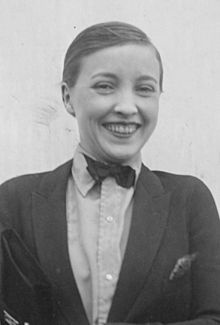
& anyone curious about the Eton Crop hair cut favoured by Evelyn, here it is, modelled by actress Bessie Love.


Public Domain

This is how I imagine the sparkling Evelyn looking. Sorry Frances - I prefer Evelyn too!

Edit: I am a completist with GH, & with this book I have finally read all her known works. Go me!

& I checked Georgette Heyer: A Critical Retrospective Three contemporary reviews, the first two mildly positive. The third (from The Times Literary Supplement) while positive about the beginning of the book, finishes with this line (about how GH's opinions shine through);

...but as soon as we begin to suspect the author's disinterestedness our belief in the story wavers.


A zinger!


https://wordpress.com/view/carolshess...
Profile Image for Marlene.
557 reviews127 followers
September 5, 2022
(Pulled from my 2010 review on Amazon)

I was hoping for a Regency book when I read this one, not one set in the 1920's, in post-WWI. And, as another reviewer said, this book was not as lighthearted as her regency books I've read. That being said, I think that Georgette Heyer did a nice job with her characters. Georgette Heyer's ability to write books in different genres and of different types within the genre is pretty impressive.

The romance in this book was on some levels depressing. I don't mind some disappointments happening to my heroines, but the disappointment in this book was long-lived. About a year. You feel that the character is settling for the man that becomes her husband, and a lot of the book just seems to be about a young lady's view of the world and her life through a crush, her dashed hopes, inner turmoil over the differences between herself and her sister, marriage to someone she is not passionately in love with, and then her married life. Not my sort of romance. It feels more like a "slice of life" than a romance.
21 reviews2 followers
April 25, 2008
Okay, this is totally silly, but I *loved* this in high school. This is the story of a middle-upper class English woman in the 1900-1910s who is eclipsed in everything by her younger, cleverer, more beautiful sister. Despite the stylized prose, the emotions were very real and human and transcended the 75 years between when it was written and when I read it. One thing I noted on re-read recently was how very pre-pre-feminist it was, but that didn't deter me from loving it as a young teenager
Profile Image for Kate.
1,198 reviews23 followers
November 2, 2011
Not as bad as Barren Corn but not the Heyer I love. Too many easy conclusions and 20s mysogyny.
Profile Image for Dropspun.
70 reviews
June 12, 2013
Well, I read "Pastel" by Georgette Heyer. It was set in 1920's England and used the same plot as her book "A Convenient Marriage". And frankly, I thought she did a better job with the latter.

It covers the story of two sisters -- one of whom has everything handed to her on a silver platter, while the second (the elder of the two) has to struggle for everything. And then the older sister meets the man of her dreams.

Read it if you're a confirmed Hedyer addict (I know I am) or are into historical romances.

I wonder if she used this as a draft for "A Convenient Marriage"? Wish I had noticed the copyright date so I could find out.

I've rated it as "Okay" (two stars). Since I usually give Heyer's romance novels four or five stars, this is saying a lot.
Profile Image for Margo Thaxton.
34 reviews3 followers
July 14, 2017
This book is poorly rated, but in my opinion it is beautifully written! You have to have the capacity for this type of book and not be looking for the story to start. Today we expect so much in the way of excitement. This isn't a book of exciting events. It is a lovely story about a lovely women who doesn't quite see her own worth because she is too distracted by what others think and how she perceives their lives to be. I enjoy watching her develop and absolutely love the mood of this book!
1 review4 followers
February 11, 2025
I have just read one of the novels that Georgette Heyer suppressed in her lifetime – They were printed in the 1920s and then she decided to pull them.

One of the books she withdrew was a very early work, produced when she was only. The Great Roxhythe is set in the seventeenth century – not the period she usually wrote in – and is an adventure tale – not the genre she usually wrote in.

I suggest that she withdrew Pastel (1929), a contemporary novel set in the 1920s, for similar reasons – it was weak and also off-brand. Heyer is the romantic novelist par excellence but this is not a romance. Heyer is renowned for her regency romances but she also wrote mysteries with strong romance lines set contemporaneously. The problem with Pastel is not the fact is set in the 1920s; the problem is it is not a romance.

It looks like one at first as it is about a pair of sisters, one vivid and always the centre of attention and the other a lesser, pastel version. Pastel meets a young man – a young Adonis as he is floridly described in the text – but as soon as he encounters her sister he falls for the younger, more vivacious one. Pastel is terribly jealous but hides her broken heart behind a mask of civility. She marries a beige stockbroker because she has nothing better to do. He is so average and normal that his name is Norman. Normal Norman, the blandest man alive.

She very much settles: ‘She thought of marriage with Norman, and saw a home of her own, a secure future, and companionship. She could picture herself as Norman’s wife; she would like it, and she would love Norman, not fiercely and primitively as she would have loved Oliver, but placidly and sufficiently. Norman would never be a god to be adored, but he would be a friend, and a Good Husband.’ (p. 124). Pastel describes this as being ‘content with the second best’. (p.124)

Then comes the emotional crescendo of the novel - the moment of true love! Pastel has a baby! She loves her from the second moment she sees her.

‘[Pastel] said: ‘Oh dear, I can’t even produce a boy!’ in a faint voice and turned her head away.

But later, when the red-faced infant was put into her arms, she forgot that she had wanted a boy. She held her daughter in the crook of her arm and said: ‘Oh… isn’t it Angel? Oh she has Norman’s nose! The precious!’ (p 304).

Pastel acknowledges that her sister may well produce a more glamourous child – probably blond like his god-like father – but this is irrelevant. No baby can ever match her baby, the supreme baby, the centre of her life.

There’s then some unconvincing guff about her beige husband suddenly becoming more important in her life, but it is very much the afterthought.

The novel has a clunky perspective shift at this point, and Norman narrates how frustrating it is that he is not allowed in to the bedroom to see Pastel and the baby. Pastel, her mother and the nurse all conspire to make a female-only zone and he spends some time being jealous of the baby before grudgingly thinking that he had better like the child since Pastel does.

Norman is sidelined, and Pastel concludes the novel thinking that he had better spend more time at work so they can afford a bigger house with a larger nursery for the further children she intends to have. This is framed as her valuing Norman but it is very much valuing Norman at a distance, earning money, to support Pastel and the important people in her life (ie. the baby, future babies, her mother, her sister).

The publishers produced a very lurid cover for *Pastel* that proclaimed in massive letters that it was a ROMANCE. However, I really don’t think it meets the definition of a traditional romance that centres an adult relationship.

I think this would explain why Heyer surpressed the novel.

Having said all of that, it is also possible that Heyer decided that the frankness of Pastel was not in line with her image.

Being set in the 1920s, there is talk of contraception. A naïve reader could miss it but Miss Vivid states that she will be entering her marriage with a copy of Marie Stopes in one hand. Stopes of course being the famous family planning advocate who was frequently sued for offending public morality. She also mentions the double bed of married life and shocks her in-laws by stating that they won’t be having children at first.

I cannot recall another Heyer that addresses birth control.

And finally, of course, *Pastel* is a minor work of Heyer in stylistic terms. There is a lot of telling, not showing. Pastel insists that her feelings for her husband have been transformed in the final pages of the novel but there is no evidence of it and no indication that anyone would be attracted to such a nonentity.

Profile Image for Susan Molloy.
Author 149 books88 followers
February 6, 2025
Just Keen!

🖊 This was one of the most fun and entertaining old books I read. The plot was cohesive and well-organized. The characters’ dialogue was presented well, and entirely believable. The British speaking style, in fact, was right on the money. This was enjoyable to read.

📕Published – 1929.

જ⁀🟣 Kindle.
༺ ༅ ✬ ༅ ༻ ༺ ༅ ✬ ༅ ༻
Profile Image for Julia.
112 reviews10 followers
October 31, 2025
Would not recommend, unless you're looking for a mirror of a Woman's Day mindset in the 1920s.
Profile Image for Jill.
2,211 reviews62 followers
November 18, 2013
While I don't think the story is the best or most profound, the concept is very enlightening and worthwhile. The concept of this story involves two sisters - Frances and Evelyn. Evelyn outshines Frances in everything, and Frances gets carried away in her idealism. She gradually grows up during her marriage, and although there are many scenes which show how idiotic and immature she frequently is, there are some great scenes of good philosophical conversation as well as some brilliantly cheap shots at what would have been the hipsters of the early 1900s. I will have to concede that some of the subject matter is extremely difficult (emotionally) if you're single much longer than you anticipated and never had any desire to be in the first place - so I'll throw out that word of warning to those in my boat. However, if you were married during the last 5 or so years, you'll probably relate much better than I would to most of this book. A favorite segment from this one, "Discontent was the deadliest of the vices, she [Frances] thought, and knew that she indulged in it. After all, Happiness is what you bring to life, and has nothing to do with Circumstance. It is not life that is dull, but your own outlook upon it; for you can, if you look for it, find as much Romance in the choosing of a new teapot as in the exploration of an unknown land. Frances thought, dismayed, that it was all a condition of the mind. If she indulged discontent to such an extent that the ordinary things seemed dull to her, perhaps the extraordinary things would seem dull too - yet more of life's disappointments."
This entire review has been hidden because of spoilers.
Profile Image for Joy.
1,409 reviews23 followers
January 18, 2009
Frances expects to lose every man who is attracted to her as soon as he sees her sister Evelyn, and Oliver is no exception. For Evelyn he is an exception, though -- Oliver is her match in brilliance. Frances must watch them marry, and herself settle for her childhood friend Norman, who has been pursuing her unexcitingly for years. PASTEL is about Frances coming to terms with her kind of life.

PASTEL was first published in 1929, according to Heyer's internet bibliography, and is very dated by its characters' discussions of Life, the Universe, and Everything. Its views of the proper roles of men and women especially must be read as a historical document, not as applicable to today's life. Heyer suppressed the book in later years.
Profile Image for Duckpondwithoutducks.
539 reviews13 followers
December 11, 2016
This is one of Georgette Heyer's four contemporary social commentary novels. I much prefer her historical romances and mysteries, but I love Georgette Heyer's writing so much, I read anything written by her. Pastel is the story of two sisters, and how their choice of whom they marry affects their lives. It is called Pastel because the one sister feels like a pale faded version of her prettier wittier sister. It is not a typical love story, but accurately portrays the little things that cause discord in a relationship. You can also tell that the author was a dog person - the way she described "His Nibs" was adorable!
Profile Image for Ang.
236 reviews13 followers
October 26, 2009
Normally reading Georgette Heyer is like eating cake with and inch thick layer of frosting--indulgent, sugary and you can only eat one piece at a time. This book was more like cracked wheat cereal--rather wholesome but hard to get down. Ms. Heyer certainly thought a lot about why people get married as this was the main theme. She also was making a bold statement against the 60s culture and thought. I would have to agree on the culture and thought--it was bizarre nonsense and very self-centered. Unusual book for her. Made me think.
Profile Image for Angie Taylor.
Author 8 books50 followers
February 18, 2010
This was a different Heyer book than any I have read. It isn't historical fiction or a regency romance novel, but instead is an exploration into the details of relationships between siblings, and spouses before and after marriage, and all the false expectations accompanied. The main character really resonated with me for many reasons, making this book a nice read and time to reflect what I think about my relationships, and how I can make or break them.
Profile Image for Melinda Ross.
311 reviews1 follower
May 30, 2011
This was not what I was expecting. Instead of a Regency romance, it was set in the 1920's. A lot of time spent debating and thinking about what is love and what each person needs. It was very slow and I have to admit I started skimming through some of the longer introspective paragraphs. It ends where it needs to though so it was redeemed.
Profile Image for Audra.
47 reviews18 followers
July 29, 2007
Although this book isn't as explicit in theme as, say, A Civil Contract, it's just as interesting in its own way. And it's set between the wars, so it's a departure from the Regency era, but Heyer captures it (as usual) well.
Profile Image for Darla.
292 reviews
May 10, 2011
Just got this from ILL. The last suppressed contemporary novel. We'll see. It can't be as depressing as Barren Corn, can it?

Not as depressing but rather a dull run. A light little story about sisters and the importance of blooming where you are planted. S'okay.
Profile Image for Terri.
2,349 reviews45 followers
May 9, 2011
Story about a spoiled girl getting married to a man she doesn't love, and finds true happiness. She's jealous of her sister, and seems to like to whine a lot. Supposed to be an detailed story, but I sure did get tired of reading this girl's whining.
Profile Image for RiverShore.
116 reviews5 followers
January 21, 2009
I read more than half of this book waiting for the story to "start"....finally, I realized that Heyer wrote it as a kind of commentary on relationships. Not was I was looking for......
Displaying 1 - 21 of 21 reviews

Can't find what you're looking for?

Get help and learn more about the design.