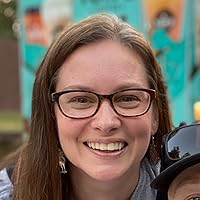
Robert Tallant was one of Louisiana’s best-known authors. Born in New Orleans in 1909, he attended the city’s local public schools. Before “drifting” into writing, Tallant worked as an advertising copywriter, a bank teller, and a clerk. It was his friendship with Lyle Saxon that led Tallant to his position as editor on the Louisiana WPA Writers Project during the 1930s and 1940s. In that position, he coauthored Gumbo Ya-Ya: Folk Tales of Louisiana (pb) with Lyle Saxon and Edward Dreyer.
By 1948, Tallant’s career had launched, and over the next eleven years, he produced eight novels, six full-length works of nonfiction, and numerous short stories and articles on subjects of local interest. He is also known to have corresponded with, as well as applied to, the Julius Rosenwald Fund for a fellowship in creative writing. During the last years of his life, he was a lecturer in English at Newcomb College as well as a reporter for the New Orleans Item. Robert Tallant died in 1957.
It was an exceptional history book. It was informative in easy to follow way. I honestly did realize how much murkiness there was to the actual purchase of the territory. Getting more than just this happened in this year, and actually getting the background knowledge, motivation, and consequences to such reverberating change to the very structure of America at the time was enlightening. I would definitely recommend this book as good historical read.
God's providence it so clearly involved in American history that anyone who denies it must either be blind, or intentionally shutting his eyes to the truth. From Napoleon's failed invasion of America, to the weak king of Spain's indecision, to the plague in Haiti, to the staggering deal only possible by someone who loved power, everything about this event is providential. Read this book with eyes for what God is doing.
I really appreciate the Landmark book series in general for homeschool history reading, but this title was less of a favorite for me. First on the positive side - I personally learned quite a bit about the historical situation leading up to the purchase of the Louisiana territory. This is a topic that got a brief mention in texts I've read before, so I knew very little of France's negotiations with Spain, or about the dynamics in New Orleans.
On the negative side, however, it was a bit too dry and detailed for my intended audience (my 9 and 12 year olds). The nine year old admitted to zoning out for most of it. He's found other Landmark books to be far more engaging.
The potential reader should also be aware of dated, offensive language used in a couple places in the book ("savages" used to refer to slaves of African descent), and the author displays some attitudes that seem out of place today in terms of how much upward mobility was possible in Jefferson's Virginia. I can discuss with my children that when Tallant wrote that "Virginia was always democratic and did not have the great differences in class that were features of life in England..." and "Any young man who showed talent was given his chance to rise," he clearly only meant people of European descent, not the many thousands of slaves also living in Virginia at the time. But, this Landmark might be a less-suitable title to hand directly to a young reader so that these biases can be discussed.
Pre-read for upcoming school year. I really enjoy the Landmark Series books. Even with all of my extensive history readings, I learned quite a bit from this book. When I was in high school, all I ever read about the Louisiana Purchase was a small blurb about the land, Napolean, and Jefferson. When I took a Western America history class in college that included a large chunk of time spent on expansion, this was still a very small portion. What I like about this book is that it will be read coming off a completion of Minn of the Mississippi talking about the vast waterway and seeing how incredibly important the Mississippi River is to American life. The Louisiana Purchase talks about the importance to trade the river and ports are to America but also how the smallness of America at the time and its relation to foreign powers made it a fragile construct. I also liked that the book talked about whether or not America should expand. I hope this book will bring forth ideas for my son and I to discuss as he does his readings and narrations.
I appreciate that this was an easy read for my homeschooler as a source for his research paper. I was able to read it quickly as well. I will say it was more detailed about the events leading up to the Purchase than the actual Purchase and after imo.
Informative Landmark book, but not particularly well written. I got an overview of the issues relating to the Louisiana Purchase and that's what I wanted.
Except for a few unfortunate uses of the word “savage,” this was an interesting and quick read about the events leading up to and including the Louisiana Purchase.
I read a bunch of the Landmark series books as a kid. Our school library had a huge collection of them, so I just made my way down the shelves. I remember enjoying them, but I was too young at the time to question the narrative or the quality of writing. I just liked reading biographies and histories, and there wasn't a lot of interesting non-fiction for kids at that time. Most of what did exist was either boring or more myth than fact. (And these do suffer from a bit of the latter.)
Would I read it to kids today? Nah. The whole "Great White Race has God-given right to take, kill, abuse, and exploit whatever and whoever in the name of making America Great" slant doesn't sit well. It never did; we just were too indoctrinated in it to know better 50+ years ago when these came out. I'm rating them on the memory of enjoyment alone, not on accuracy or how they would go over today. Fortunately, kids today have a lot better from which to choose.