

What do you think?
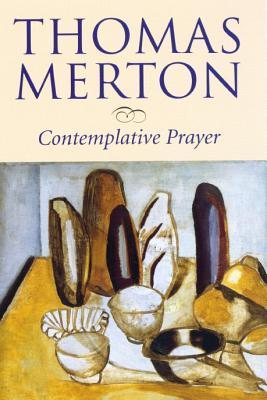
Contemplative Prayer
In this classic text, Thomas Merton offers valuable guidance for prayer. He brings together a wealth of meditative and mystical influencesâ from John of the Cross to Eastern desert monasticismâ to create a spiritual path for today. Most important, he shows how the peace contacted through meditation should not be sought in order to evade the problems of contemporary life, but can instead be directed back out into the world to affect positive change.
Contemplative Prayer is one of the most well-known works of spirituality of the last one hundred years, and it is a must-read for all seeking to live a life of purpose in todayâ s world.
In a moving and profound introduction, Thich Nhat Hanh offers his personal recollections of Merton and compares the contemplative traditions of East and West.
Contemplative Prayer is one of the most well-known works of spirituality of the last one hundred years, and it is a must-read for all seeking to live a life of purpose in todayâ s world.
In a moving and profound introduction, Thich Nhat Hanh offers his personal recollections of Merton and compares the contemplative traditions of East and West.
144 pages, Paperback
First published January 1, 1969
About the author
Thomas Merton
598 books1,980 followersThomas Merton, religious name M. Louis, was an American Trappist monk, writer, theologian, mystic, poet, social activist and scholar of comparative religion. In December 1941 he entered the Trappist Abbey of Gethsemani and in May 1949 he was ordained to priesthood. He was a member of the convent of the Abbey of Our Lady of Gethsemani, near Bardstown, Kentucky, living there from 1941 to his death.
Merton wrote more than 50 books in a period of 27 years, mostly on spirituality, social justice and a quiet pacifism, as well as scores of essays and reviews. Among Merton's most enduring works is his bestselling autobiography The Seven Storey Mountain (1948). His account of his spiritual journey inspired scores of World War II veterans, students, and teenagers to explore offerings of monasteries across the US. It is on National Review's list of the 100 best nonfiction books of the century.
Merton became a keen proponent of interfaith understanding, exploring Eastern religions through his study of mystic practice. His interfaith conversation, which preserved both Protestant and Catholic theological positions, helped to build mutual respect via their shared experiences at a period of heightened hostility. He is particularly known for having pioneered dialogue with prominent Asian spiritual figures, including the Dalai Lama XIV; Japanese writer D.T. Suzuki; Thai Buddhist monk Buddhadasa Bhikkhu, and Vietnamese monk Thich Nhat Hanh. He traveled extensively in the course of meeting with them and attending international conferences on religion. In addition, he wrote books on Zen Buddhism, Confucianism, and Taoism, and how Christianity is related to them. This was highly unusual at the time in the United States, particularly within the religious orders.
Merton wrote more than 50 books in a period of 27 years, mostly on spirituality, social justice and a quiet pacifism, as well as scores of essays and reviews. Among Merton's most enduring works is his bestselling autobiography The Seven Storey Mountain (1948). His account of his spiritual journey inspired scores of World War II veterans, students, and teenagers to explore offerings of monasteries across the US. It is on National Review's list of the 100 best nonfiction books of the century.
Merton became a keen proponent of interfaith understanding, exploring Eastern religions through his study of mystic practice. His interfaith conversation, which preserved both Protestant and Catholic theological positions, helped to build mutual respect via their shared experiences at a period of heightened hostility. He is particularly known for having pioneered dialogue with prominent Asian spiritual figures, including the Dalai Lama XIV; Japanese writer D.T. Suzuki; Thai Buddhist monk Buddhadasa Bhikkhu, and Vietnamese monk Thich Nhat Hanh. He traveled extensively in the course of meeting with them and attending international conferences on religion. In addition, he wrote books on Zen Buddhism, Confucianism, and Taoism, and how Christianity is related to them. This was highly unusual at the time in the United States, particularly within the religious orders.
Ratings & Reviews
Friends & Following
Create a free account to discover what your friends think of this book!
Community Reviews
Displaying 1 - 30 of 187 reviews

October 17, 2015
If you've never read Merton, this is NOT a good place to start. If you want to know about HIM, his life choices, and general philosophy, Seven Story Mountain might be a better choice.
But I read this book specifically to learn about his views on Christian mystical meditation and I loved it. He synthesizes sources from the most renowned Catholic and Protestant mystic thinkers and does so brilliantly.
A word---I read almost everything Merton says when it comes to Christ metaphorically. So I think it's important to say that this book isn't only for Christian seekers. As a Buddhist practitioner, a once observant Jew, a secularist, and a naturalist, I found Merton's discussion of meditation inspiring and brilliant. When you consider the way that Jewish, Muslim, Christian, Buddhist and secular contemplatives all say the same things, almost verbatim! it warms the heart and makes me wonder why we ever fight wars over water and land when, if you go deep enough, we're all sustained by the same well.
But I read this book specifically to learn about his views on Christian mystical meditation and I loved it. He synthesizes sources from the most renowned Catholic and Protestant mystic thinkers and does so brilliantly.
A word---I read almost everything Merton says when it comes to Christ metaphorically. So I think it's important to say that this book isn't only for Christian seekers. As a Buddhist practitioner, a once observant Jew, a secularist, and a naturalist, I found Merton's discussion of meditation inspiring and brilliant. When you consider the way that Jewish, Muslim, Christian, Buddhist and secular contemplatives all say the same things, almost verbatim! it warms the heart and makes me wonder why we ever fight wars over water and land when, if you go deep enough, we're all sustained by the same well.

February 28, 2012
Every time I read this book I glean new information from it and am less intimidated by it. five or so more readings and I might even say I actually 'get' most of it. As I'm also reading other things by/about Merton right now, it's all of a piece, with plenty of overlapping coverage.
<><><><><><><><><><><><><><><><><><><><><><>
I am so glad that I just read Pope Benedict's book, The Fathers. It is giving confidence and a general familiarity with these great men and their writings as Thomas Merton hurries through centuries of monastic contemplative life. It's easy to see how some would find this book difficult, foreign or of absolutely no use. Merton assumes a high level of expertise in his reader. His writing reminds me of university lectures where I used to kick myself for not having done all the requisite homework beforehand. Would that I had read all the authors he cites in the original myself! How much better I might appreciate his meaning and benefit from this book... As it is, I know I am deriving more from this reading than from my previous encounters with it.
And yet, reading aside, how many today even have much experience with the terminology, the rituals and practices Merton describes? For example in the chapter I just finished, he writes about the debate between meditation and liturgy. This assumes the reader has attended a formal liturgical service, which given the current state of entertainment-style-worship and 'popcorn churches' is something which cannot be taken for granted anymore.
<><><><><><><><><><><><><><><><><><><><><><>
I am so glad that I just read Pope Benedict's book, The Fathers. It is giving confidence and a general familiarity with these great men and their writings as Thomas Merton hurries through centuries of monastic contemplative life. It's easy to see how some would find this book difficult, foreign or of absolutely no use. Merton assumes a high level of expertise in his reader. His writing reminds me of university lectures where I used to kick myself for not having done all the requisite homework beforehand. Would that I had read all the authors he cites in the original myself! How much better I might appreciate his meaning and benefit from this book... As it is, I know I am deriving more from this reading than from my previous encounters with it.
And yet, reading aside, how many today even have much experience with the terminology, the rituals and practices Merton describes? For example in the chapter I just finished, he writes about the debate between meditation and liturgy. This assumes the reader has attended a formal liturgical service, which given the current state of entertainment-style-worship and 'popcorn churches' is something which cannot be taken for granted anymore.

October 18, 2020
This was much better than I thought, though it perhaps suffers from bad marketing. In college a bunch of liberal hippies loved Merton, so I put off reading him. Having a Buddhist monk write the foreword didn't help, either.
The book, however, isn't a Christian path to seeking Nirvana. It's simply a restatement of the Desert Fathers in modern language. Merton reminds us that contemplative prayer cannot be divorced from a daily reading of the psalms.
Mental prayer just means bringing the nous down into a purified heart. The heart is the "ground of one's personality" (Merton 33).
The book, however, isn't a Christian path to seeking Nirvana. It's simply a restatement of the Desert Fathers in modern language. Merton reminds us that contemplative prayer cannot be divorced from a daily reading of the psalms.
Mental prayer just means bringing the nous down into a purified heart. The heart is the "ground of one's personality" (Merton 33).

February 4, 2009
A wonderful read. Review to follow.

December 23, 2020
"The monk searches not only his own heart: he plunges deep into the heart of that world of which he remains a part although he seems to have 'left' it. In reality the monk abandons the world only in order to listen more intently to the deepest and most neglected voices that proceed from its inner depth. This is why the term 'contemplation' is both insufficient and ambiguous when it is applied to the highest forms of Christian prayer. The way of monastic prayer is not a subtle escape from the Christian economy of incarnation and redemption. It is a special way of following Christ, of sharing in his passion and resurrection and in his redemption of the world. For that very reason the dimensions of prayer in solitude are those of man's ordinary anguish, his self-searching, his moments of nausea at his own vanity, falsity and capacity for betrayal...
The peculiar monastic dimension of this struggle lies in the fact that society itself, institutional life, organization, the 'approved way,' may in fact be encouraging us in falsity and illusion. The deep root of monastic 'dread' is the inner conflict which makes us guess that in order to be true in God and to ourselves we must break with the familiar, established and secure norms and go off into the unknown. 'Unless a man hate father and mother...' These words of Christ give some indication of the deep conflict which underlies all Christian conversion--the turning to a freedom based no longer on social approval and relative alienation, but on direct dependence on an invisible and inscrutable God, in pure faith...
The monk confronts his own humanity and that of the world at the deepest and most central point where the void seems to open out into black despair. The monk confronts this serious possibility, and rejects it, as Camusian man confronts 'the absurd' and transcends it by his freedom. The option of absolute despair is turned into perfect hope by the pure and humble supplication of monastic prayer...From the abyss there comes, unaccountably, the mysterious gift of the Spirit sent by God to make all things new, to transform the created and redeemed world, and to re-establish all things in Christ...
The concept of 'the heart'...refers to the deepest psychological ground of one's personality, the inner sanctuary where self-awareness goes beyond analytical reflection and opens out into metaphysical and theological confrontation with the Abyss of the unknown yet present--one who is 'more intimate to us than we are to ourselves'...
From these texts we see that in meditation we should not look for a 'method' or 'system,' but cultivate an 'attitude,' an 'outlook': faith, openness, attention, reverence, expectation, supplication, trust, joy...Those who think they 'know' from the beginning will never, in fact, come to know anything...We do not want to be beginners. But let us be convinced of the fact that we will never be anything else but beginners, all our life...
Very often, the inertia and repugnance which characterize the so-called 'spiritual life' of many Christians could perhaps be cured by a simple respect for the concrete realities of every-day life, for nature, for the body, for one's work, one's friends, one's surroundings, etc. A false supernaturalism which imagines that 'the supernatural' is a kind of Platonic realm of abstract essences totally apart from and opposed to the concrete world of nature, offers no real support to a genuine life of meditation and prayer. Meditation has no point and no reality unless it is firmly rooted in life. Without such roots, it can produce nothing but the ashen fruits of disgust, acedia, and...negation. "
The peculiar monastic dimension of this struggle lies in the fact that society itself, institutional life, organization, the 'approved way,' may in fact be encouraging us in falsity and illusion. The deep root of monastic 'dread' is the inner conflict which makes us guess that in order to be true in God and to ourselves we must break with the familiar, established and secure norms and go off into the unknown. 'Unless a man hate father and mother...' These words of Christ give some indication of the deep conflict which underlies all Christian conversion--the turning to a freedom based no longer on social approval and relative alienation, but on direct dependence on an invisible and inscrutable God, in pure faith...
The monk confronts his own humanity and that of the world at the deepest and most central point where the void seems to open out into black despair. The monk confronts this serious possibility, and rejects it, as Camusian man confronts 'the absurd' and transcends it by his freedom. The option of absolute despair is turned into perfect hope by the pure and humble supplication of monastic prayer...From the abyss there comes, unaccountably, the mysterious gift of the Spirit sent by God to make all things new, to transform the created and redeemed world, and to re-establish all things in Christ...
The concept of 'the heart'...refers to the deepest psychological ground of one's personality, the inner sanctuary where self-awareness goes beyond analytical reflection and opens out into metaphysical and theological confrontation with the Abyss of the unknown yet present--one who is 'more intimate to us than we are to ourselves'...
From these texts we see that in meditation we should not look for a 'method' or 'system,' but cultivate an 'attitude,' an 'outlook': faith, openness, attention, reverence, expectation, supplication, trust, joy...Those who think they 'know' from the beginning will never, in fact, come to know anything...We do not want to be beginners. But let us be convinced of the fact that we will never be anything else but beginners, all our life...
Very often, the inertia and repugnance which characterize the so-called 'spiritual life' of many Christians could perhaps be cured by a simple respect for the concrete realities of every-day life, for nature, for the body, for one's work, one's friends, one's surroundings, etc. A false supernaturalism which imagines that 'the supernatural' is a kind of Platonic realm of abstract essences totally apart from and opposed to the concrete world of nature, offers no real support to a genuine life of meditation and prayer. Meditation has no point and no reality unless it is firmly rooted in life. Without such roots, it can produce nothing but the ashen fruits of disgust, acedia, and...negation. "

January 26, 2011
Can't go wrong with Merton. The foreword by Thich Nhat Hahn just adds to the spiritual sweetness.

February 28, 2022
To read is to commune with the dead. Thomas Merton speaks to me today, and I’m thankful for his voice.
While not necessarily his most accessible read, this book impressed upon me the connection between despair/emptiness and prayer. The way is up is down, and when we have suffered and struggled, we can experience prayer with God is a more intimate and fuller way. It felt validating of my own experience over the last two years.
I’d love for all my Reformed friends to read some Merton tbh. I think we’re weak at experientially knowing God and call fall into the empty religion Merton calls out.
While not necessarily his most accessible read, this book impressed upon me the connection between despair/emptiness and prayer. The way is up is down, and when we have suffered and struggled, we can experience prayer with God is a more intimate and fuller way. It felt validating of my own experience over the last two years.
I’d love for all my Reformed friends to read some Merton tbh. I think we’re weak at experientially knowing God and call fall into the empty religion Merton calls out.

July 26, 2020
Thomas Merton is an incredible writer and thinker. This book is a collection of short essays (meditations, I suppose) on the nature and history of contemplative prayer in monastic tradition. It is not a manual or how-to on contemplative prayer, as Merton presumes the audience is primarily monks who are being guided by spiritual directors. Of course, much of the path of contemplative prayer can be gleaned anyways.
As has been noted by many, the similarities between the Christian contemplative tradition and others are many, and as such this suggests that the path one takes whether through Christian prayer or Buddhist meditation will lead through a similar territory, suggesting the path is not one owned by a religious or spiritual tradition, but is rather a very human path. In this sense, I suppose contemplative prayer could be considered a type of spiritual technology that leads one to lose their sense of self and towards enlightenment.
In fact, it may be the best spiritual technology for many of us in the Western world. Merton's reflections on the use of ritual, images, icons, and other aesthetic and material objects suggest that for those of us who grew up in the Christian tradition, the Christian tradition may be the most efficient and effective for transforming our selves. But what is that Christian tradition? The final essay is one that those who rail against Christianity and its current manifestation will particularly enjoy as they find Merton heavily criticizing what feels like the vast majority of Christians and the Christian Church. In fact, this whole book clearly places him historically in the same social justice tradition as Thich Nhat Hanh and MLK. Through this, Merton implicitly invites the reader to start his own journey of authentic living and honest looking at the world and his own soul.
Merton's diagnosis of the existential dread that one feels was so thorough and cutting that I am positive I will be rereading this book another time with a pencil and page markers. It is a fun coincidence to read this so soon after Camus' The Plague, particularly as Merton references Camus, acknowledging they are pointing to something similar.
As has been noted by many, the similarities between the Christian contemplative tradition and others are many, and as such this suggests that the path one takes whether through Christian prayer or Buddhist meditation will lead through a similar territory, suggesting the path is not one owned by a religious or spiritual tradition, but is rather a very human path. In this sense, I suppose contemplative prayer could be considered a type of spiritual technology that leads one to lose their sense of self and towards enlightenment.
In fact, it may be the best spiritual technology for many of us in the Western world. Merton's reflections on the use of ritual, images, icons, and other aesthetic and material objects suggest that for those of us who grew up in the Christian tradition, the Christian tradition may be the most efficient and effective for transforming our selves. But what is that Christian tradition? The final essay is one that those who rail against Christianity and its current manifestation will particularly enjoy as they find Merton heavily criticizing what feels like the vast majority of Christians and the Christian Church. In fact, this whole book clearly places him historically in the same social justice tradition as Thich Nhat Hanh and MLK. Through this, Merton implicitly invites the reader to start his own journey of authentic living and honest looking at the world and his own soul.
Merton's diagnosis of the existential dread that one feels was so thorough and cutting that I am positive I will be rereading this book another time with a pencil and page markers. It is a fun coincidence to read this so soon after Camus' The Plague, particularly as Merton references Camus, acknowledging they are pointing to something similar.
Of course, it is true that religion on a superficial level, religion that is untrue to itself and to God, easily comes to serve as the "opium of the people." And this takes place whenever religion and prayer invoke the name of God for reasons and ends that have nothing to do with him. When religion becomes a mere artificial facade to justify a social or economic system--when religion hands over its rites and language completely to the political propagandist, and when prayer becomes the vehicle for a purely secular ideological program, then religion does tend to become an opiate. It deadens the spirit enough to permit the substitution of a superficial fiction and mythology for this truth of life. And this brings about the alienation of the believer, so that his religious zeal becomes political fanaticism. His faith in God, while preserving its traditional formulas, becomes in fact faith in his own nation, class or race. His ethic ceases to be the law of God and of love, and becomes the law that might-makes-right: establishing privilege justifies everything. God is the status quo.

July 7, 2026
This was much more moving than I expected; I especially appreciated his treatment of certain themes of St. John of the Cross that I was hitherto leerily about, such as the darkness of God (understood as God's superluminosity and the blinding effect of his essence upon the human mind), and the dread of God.

May 5, 2020
The first introduction is by a Buddhist Thich Nhat Hanh (1926- ). He writes that Buddhists practice “mindfulness” or “what is going on inside us and all around us in each moment.” We pray for what we necessarily need such as “freedom from anger, fear, and craving.” He quotes a Buddhist prayer for love called “The Nine Prayers.” Thich refers to St. Macarius, a Desert Father, who simplified praying to a simple “Lord, have pity on me as you desire and as you well know how.” He writes that St. Macarius found that calling to mind the name of Jesus Christ dwelling within us is sufficient to meditate perfectly. We must concentrate and abandon distracting thoughts to attain peace and calm. Anger, fear, craving, and forgetfulness obstruct us from obtaining them. “The greatest relief we can obtain is available when we touch the ultimate, which is the total, unconditional surrender to God.”
Thich calls Thomas Merton a “wise visionary” and considers Merton’s writing here as a way to “a contemplation, a mediation, a prayer of the heart.”
There is a “Forward” here by Douglas V. Steere. (1901-1995) I see him described as a Quaker ecumenist and a professor at a Quaker founded college in Pennsylvania.
He thinks that Morton intended this work on prayer above all for monks. Merton does say that in his Introduction that follows. Steere tells us this was Merton’s last written piece. It is not a manual of how to pray but rather an essay on the “very nature of prayer.” Merton was aware of thinkers in his time and before him who have “looked into the face of death” and “have cried out for his (man’s) liberation.” Merton found as Pascal did that man’s “infinite abyss can only be filled by an infinite and immutable object, that is to say, only by God himself.”
Thomas Merton has his own Introduction to this work. He describes in it monasticism as renunciation of active life for devotion to repentance and prayer. Every Christian is bound to pray and should however find this study on prayer of interest. But this intention does not make this guide to prayer more difficult but on the contrary it shows simple approach and rudimentary liturgy learned from the Desert Fathers. A quote from St. Macarius illustrates it well: “It is not necessary to use many words. Only stretch out your arms and say: Lord, have pity on me as you desire and as you well know how! And if the enemy presses you hard, say: ‘Lord, come to my aid!’” (Psalm 69: 2) St. Macarius advises further to simply invoke the Name of Jesus and keep it in your “prayer of the heart” to control and abandon distracting thoughts and ward off temptations. Our age and the unavoidable fact of death and our need of genuine spiritual liberation calls for what a monk is searching in his contemplation and prayer. Prayer comes from the Scriptures. The Psalms provide ample source of passionate meditation.
Chapter one through five are a general introduction to prayer, its purpose and approaches to praying.
Chapters six through ten are a historical survey of how monasteries defined active and contemplative praying styles in the early middle Ages (300-600 AD). The important figures in this period are Saints Benedict, Basil, and Gregory.
Merton discusses in chapters twelve and thirteen his approach to enlightenment through self-denial and a achieving a new association with God.
Chapters fourteen and fifteen explore further the purification process and explains how it will lead to higher awareness.
The closing chapters defend contemplative prayer as a necessary process to be born again. We must be purged from the ego and recognize the emptiness of the self. This is possible only by confronting the “dark night” or the dread, which every individual will need to confront. “The experience of ‘dread,’ ‘nothingness’ and ‘night’ in the heart of man is then the awareness of infidelity to the truth of our life.”
There are paradoxes to deal with in contemplative prayer. Merton’s own words must illustrate these better:
“The contemplative is one who would rather not know than know. Rather not enjoy than enjoy.”
“This is the necessary condition, and a very paradoxical condition, for the mystical experience of the reality of God’s presence and of his love for us. Only when we are able to “let go” of everything within us, all desire to see, to know, to taste and to experience the presence of God, do we truly become able to experience that presence with the overwhelming conviction and reality that revolutionize our entire inner life.”
“What is the explanation of this paradox?”
“the true contemplative is not the one who prepares his mind for a particular message . . . He waits on the Word of God in silence,”
“All the paradoxes about the contemplative way are reduced to this one: being without desire means being led by a desire so great that it is incomprehensible.”
Thich calls Thomas Merton a “wise visionary” and considers Merton’s writing here as a way to “a contemplation, a mediation, a prayer of the heart.”
There is a “Forward” here by Douglas V. Steere. (1901-1995) I see him described as a Quaker ecumenist and a professor at a Quaker founded college in Pennsylvania.
He thinks that Morton intended this work on prayer above all for monks. Merton does say that in his Introduction that follows. Steere tells us this was Merton’s last written piece. It is not a manual of how to pray but rather an essay on the “very nature of prayer.” Merton was aware of thinkers in his time and before him who have “looked into the face of death” and “have cried out for his (man’s) liberation.” Merton found as Pascal did that man’s “infinite abyss can only be filled by an infinite and immutable object, that is to say, only by God himself.”
Thomas Merton has his own Introduction to this work. He describes in it monasticism as renunciation of active life for devotion to repentance and prayer. Every Christian is bound to pray and should however find this study on prayer of interest. But this intention does not make this guide to prayer more difficult but on the contrary it shows simple approach and rudimentary liturgy learned from the Desert Fathers. A quote from St. Macarius illustrates it well: “It is not necessary to use many words. Only stretch out your arms and say: Lord, have pity on me as you desire and as you well know how! And if the enemy presses you hard, say: ‘Lord, come to my aid!’” (Psalm 69: 2) St. Macarius advises further to simply invoke the Name of Jesus and keep it in your “prayer of the heart” to control and abandon distracting thoughts and ward off temptations. Our age and the unavoidable fact of death and our need of genuine spiritual liberation calls for what a monk is searching in his contemplation and prayer. Prayer comes from the Scriptures. The Psalms provide ample source of passionate meditation.
Chapter one through five are a general introduction to prayer, its purpose and approaches to praying.
Chapters six through ten are a historical survey of how monasteries defined active and contemplative praying styles in the early middle Ages (300-600 AD). The important figures in this period are Saints Benedict, Basil, and Gregory.
Merton discusses in chapters twelve and thirteen his approach to enlightenment through self-denial and a achieving a new association with God.
Chapters fourteen and fifteen explore further the purification process and explains how it will lead to higher awareness.
The closing chapters defend contemplative prayer as a necessary process to be born again. We must be purged from the ego and recognize the emptiness of the self. This is possible only by confronting the “dark night” or the dread, which every individual will need to confront. “The experience of ‘dread,’ ‘nothingness’ and ‘night’ in the heart of man is then the awareness of infidelity to the truth of our life.”
There are paradoxes to deal with in contemplative prayer. Merton’s own words must illustrate these better:
“The contemplative is one who would rather not know than know. Rather not enjoy than enjoy.”
“This is the necessary condition, and a very paradoxical condition, for the mystical experience of the reality of God’s presence and of his love for us. Only when we are able to “let go” of everything within us, all desire to see, to know, to taste and to experience the presence of God, do we truly become able to experience that presence with the overwhelming conviction and reality that revolutionize our entire inner life.”
“What is the explanation of this paradox?”
“the true contemplative is not the one who prepares his mind for a particular message . . . He waits on the Word of God in silence,”
“All the paradoxes about the contemplative way are reduced to this one: being without desire means being led by a desire so great that it is incomprehensible.”

November 15, 2009
This book was written for an audience that does not include me, so the fact that it did not speak to me is not surprising. Nonetheless, I found much to think about in the discussion of what contemplative living and meditation is, and even more specifically, what it isn't. The last few chapters of the book discuss the pitfalls of assuming certain superficial adjustments to beliefs and lifestyles constitutes entering the contemplative or religious life, when in fact what is entered is a life of emptiness built on ego or self-definition. Here Merton is able to describe much better than I ever have some of the problems I have had with the religious life encouraged upon me by well meaning people, and I am grateful to now have the wording to think about some of the sources of my resistance.

March 18, 2021
Overall, this book is by a Trappist for a Trappist.
Contemplative Prayer is not as devotional or accessible as Thoughts in Solitude, partly because its purpose, as Merton himself says, is not for a wide audience, but for Trappists who seek deeper reflection on the contemplative life. I still enjoyed it, even if I skimmed the parts that are not for a layperson, per se.
My favorite insight is what Merton calls the necessity of undergoing a “dark night of the senses.” Contemplation is an attempt to encounter and abide in “nothingness,” letting go of everything so that we may receive everything (Merton loves paradox).
Attempting to abandon all ideas and formulas for God is quite scary and dreadful, though, because we must become totally powerless. In contemplative prayer we risk any and all conceptual frameworks for God dissolving. But, only in that existential and spiritual dread can we echo the words of Christ: “My God, why have you abandoned me?” Eventually contemplation will feel like resurrection, but it must first feel like abandonment.
Contemplation is only for the brave.
Contemplative Prayer is not as devotional or accessible as Thoughts in Solitude, partly because its purpose, as Merton himself says, is not for a wide audience, but for Trappists who seek deeper reflection on the contemplative life. I still enjoyed it, even if I skimmed the parts that are not for a layperson, per se.
My favorite insight is what Merton calls the necessity of undergoing a “dark night of the senses.” Contemplation is an attempt to encounter and abide in “nothingness,” letting go of everything so that we may receive everything (Merton loves paradox).
Attempting to abandon all ideas and formulas for God is quite scary and dreadful, though, because we must become totally powerless. In contemplative prayer we risk any and all conceptual frameworks for God dissolving. But, only in that existential and spiritual dread can we echo the words of Christ: “My God, why have you abandoned me?” Eventually contemplation will feel like resurrection, but it must first feel like abandonment.
Contemplation is only for the brave.

March 29, 2021
pretty sure I know some irl people who must love Merton, and that i shouldn't have had to find out about him from watching First Reformed... but anyways, i think this might be one of those slowly pivotal books that reorients my whole life, no big deal

August 12, 2024
"...monastic prayer, especially meditation and contemplative prayer, is not so much a way to find God as a way of resting in Him whom we have found, who loves us, who is near to us, who comes to draw us to Himself."

May 23, 2026
This is the second Merton book I’ve read and, like the first one, it’s filled with wisdom, though much of it is difficult to grasp fully on a first pass. I will definitely be revisiting this. But one thing that comes through quite clearly is the idea that prayer need not be discursive, that it can just involve being empty and resting in the acknowledgment of your own weakness and utter dependence on God.

September 7, 2021
A very insightful and meditative synthesis on contemplative prayer, drawing from a wide range of sources. Merton really has a wonderful blend of monastics and existentialists, and pulls it off in a way that is quite devotional.

January 7, 2020
“Real contemplatives will always be rare and few. But that is not a matter of importance, as long as the whole Church is predominately contemplative in all her teaching, all her activity, and all her prayer.”
“Without the adoration and love of God above all because he is God- the liturgy will not nourish a really Christian apostolate.”
“Without contemplation and interior prayer the Church can not fulfill her mission to transform and save mankind.”
Written as a study on monastic prayer, the principles in this book are relevant to every interiorly oriented Christian. Will they be granted the graces to implement a truly authentic contemplation, Thomas Merton would not presume to know, but they will be better prepared to recognize what does and does not fit the bill!
“Without the adoration and love of God above all because he is God- the liturgy will not nourish a really Christian apostolate.”
“Without contemplation and interior prayer the Church can not fulfill her mission to transform and save mankind.”
Written as a study on monastic prayer, the principles in this book are relevant to every interiorly oriented Christian. Will they be granted the graces to implement a truly authentic contemplation, Thomas Merton would not presume to know, but they will be better prepared to recognize what does and does not fit the bill!

April 16, 2018
Meditations by a now-deceased monk, explaining the merits of silent, contemplative prayer. Often one neglects prayer as they feel they just recite a learned string of words without attaching any thoughtful meaning. That's not to say recited prayer is a bad thing. I often decline to consciously speak - mentally or verbally - off the cuff in prayer because I find I ramble and struggle to get to the core of what I desire: to give thanks to God in private communion. The Lord's Prayer and Hail Mary and even the Apostle's Creed are always good to focus on. But certainly, contemplative prayer should not be ruled out as a lazy, effortless replacement for new age weirdos who can't afford the time for God. It is just another, subjectively less riddled way of surrendering one's self to the universal glory Our Lord.

January 29, 2023
4.5: This book is very short but deep, intelligent, thought provoking, and takes mental energy to read and digest. I reread lines and paragraphs multiple times to try to understand them. I underlined, questioned, checked references, and looked up words I didn't know. After all that, I'm still not sure I got more than about half of it. This is one to be reread and pondered, a rich book for sure.
June 4, 2023
Some Profound Thoughts Amidst an In-house Discussion
Far be it from me to criticize Thomas Merton. He’s brilliant and understands contemplative prayer far more than I do. This book has flashes of brilliance with deep and profound truths sprinkled through. If you are learning about contemplative prayer, this book should be on your list, but further down on your list. At times Merton’s arguments appear to be against an opponent I do not know and so can be hard to follow and uninteresting. He is writing to monks first, the broader community of priests in Roman Catholicism, and then to anyone interested in contemplation, and it shows. The general (or specific) things he says about contemplative prayer are helpful. You just have to get through the other stuff to get to them.
Far be it from me to criticize Thomas Merton. He’s brilliant and understands contemplative prayer far more than I do. This book has flashes of brilliance with deep and profound truths sprinkled through. If you are learning about contemplative prayer, this book should be on your list, but further down on your list. At times Merton’s arguments appear to be against an opponent I do not know and so can be hard to follow and uninteresting. He is writing to monks first, the broader community of priests in Roman Catholicism, and then to anyone interested in contemplation, and it shows. The general (or specific) things he says about contemplative prayer are helpful. You just have to get through the other stuff to get to them.

August 14, 2025
Have actually been reading this book for months. Made it 75% through. Realized I actually have no idea what I’m reading. Started over. Second time through was better. There were things in here that were what I needed for that day. But those days did not pass frequently. I think this is a book for another time in my life, and maybe then it will get a higher rating

April 5, 2026
I wasn't too sure about this book until about 2/3 of the way in. He talks a lot about the Dark Night of the Soul (which I've read and get), but I felt like it was kind of too much and didn't make sense with the topic. But then EVERYTHING clicked, and I almost fell on my face weeping.
I'm very glad this book is so short -- it might even be a few pages longer than it needs to be -- but I appreciate an author who can make a point and get out of there.
I'm very glad this book is so short -- it might even be a few pages longer than it needs to be -- but I appreciate an author who can make a point and get out of there.

February 13, 2019
Thomas Merton primarily wrote Contemplative Prayer for the monastic community, but this book contains words of wisdom for all who want to deepen their prayer life. Merton's book is written from a Christian perspective, but I suspect its insight would be appreciated by other faith traditions as well.

August 23, 2025
I didn’t like the first half of this book at all. It seemed like a drawn out discussion around whether contemplative prayer or liturgical prayer is better.
The second half, however, goes deep, and provided me a lot to pray about and consider for my own life and walk with God.
The second half, however, goes deep, and provided me a lot to pray about and consider for my own life and walk with God.
August 14, 2017
“Contemplative Prayer” is Thomas Merton’s guide to its subject. Laced with numerous quotations from saints and others who have addressed the topic it is thought provoking and profound. Although clearly written for monks, it is of benefit to the laity and others outside the monatery.
I listened to the audio CD version. I think that this work requires reflection and the ability to review what has been read to really appreciate its meaning. I feel that I have a better appreciation of the Dark Night of the Soul than I had before listening to this, but I recommend a written version and time for anyone desiring to derive the maximum benefit from this book.
I listened to the audio CD version. I think that this work requires reflection and the ability to review what has been read to really appreciate its meaning. I feel that I have a better appreciation of the Dark Night of the Soul than I had before listening to this, but I recommend a written version and time for anyone desiring to derive the maximum benefit from this book.

September 5, 2018
Just awesome. One of the best books about prayer I have ever read.

April 6, 2020
A classic. To be nibbled on and enjoyed in tiny pieces.

May 25, 2026
“From this we can see what makes a good meditation and what makes a bad one. All methods of meditation that are, in effect, merely devices for allaying and assuaging the experience of emptiness and dread are ultimately evasions which can do nothing to help us. Indeed, they may confirm us in delusions and harden us against that fundamental awareness of our real condition, against the truth for which our hearts cry out in desperation.
What we need is not a false peace which enables us to evade the implacable light of judgment, but the grace courageously to accept the bitter truth that is revealed to us; to abandon our inertia, our egoism and submit entirely to the demands of the Spirit, praying earnestly for help. and giving ourselves generously to every effort asked of us by God.”
What we need is not a false peace which enables us to evade the implacable light of judgment, but the grace courageously to accept the bitter truth that is revealed to us; to abandon our inertia, our egoism and submit entirely to the demands of the Spirit, praying earnestly for help. and giving ourselves generously to every effort asked of us by God.”

February 23, 2019
Thomas very honestly tells it like it is. The truth path of mature, Christian growth being raw, humbling, contemplative prayer.

February 13, 2018
Reading Merton is good for the soul.
Displaying 1 - 30 of 187 reviews