

What do you think?

Countdown to Infinite Crisis #1
The OMAC Project
Written by Greg Rucka, Geoff Johns and Judd Winick Art by Jesus Saiz, Rags Morales, Ed Benes, Phil Jimenez, Ivan Reis, and various Cover by Ladronn
Spinning out of IDENTITY CRISIS, COUNTDOWN TO INFINITE CRISIS was a Special that laid the groundwork for events in the DCU for the year to come. Now COUNTDOWN is collected with the hot miniseries that directly spun out of it: THE OMAC PROJECT! This crackerjack thriller by Greg Rucka (ADVENTURES OF SUPERMAN, WONDER WOMAN) features the moody, gorgeous art of Jesus Saiz (MANHUNTER). Every hero and villain in the DCU is under the gaze of an unbelievably powerful spy satellite. It's a technological marvel that answers to only one person - and he's got plans for it that are completely unknown to the superspy organization he controls: Checkmate! In a world where men can fly and melt metal with their eyes, there's now an army created specifically as an answer to them: the OMACs Batman and old ally Booster Gold are about to learn the chilling truth behind the OMAC Project - but will they work with or against each other?
This volume includes COUNTDOWN TO INFINITE CRISIS, THE OMAC PROJECT #1-6, and WONDER WOMAN #219.
Spinning out of IDENTITY CRISIS, COUNTDOWN TO INFINITE CRISIS was a Special that laid the groundwork for events in the DCU for the year to come. Now COUNTDOWN is collected with the hot miniseries that directly spun out of it: THE OMAC PROJECT! This crackerjack thriller by Greg Rucka (ADVENTURES OF SUPERMAN, WONDER WOMAN) features the moody, gorgeous art of Jesus Saiz (MANHUNTER). Every hero and villain in the DCU is under the gaze of an unbelievably powerful spy satellite. It's a technological marvel that answers to only one person - and he's got plans for it that are completely unknown to the superspy organization he controls: Checkmate! In a world where men can fly and melt metal with their eyes, there's now an army created specifically as an answer to them: the OMACs Batman and old ally Booster Gold are about to learn the chilling truth behind the OMAC Project - but will they work with or against each other?
This volume includes COUNTDOWN TO INFINITE CRISIS, THE OMAC PROJECT #1-6, and WONDER WOMAN #219.
256 pages, Paperback
First published December 1, 2005
About the author
Greg Rucka
1,527 books1,953 followersGreg Rucka, is an American comic book writer and novelist, known for his work on such comics as Action Comics, Batwoman: Detective Comics, and the miniseries Superman: World of New Krypton for DC Comics, and for novels such as his Queen & Country series.
Ratings & Reviews
Friends & Following
Create a free account to discover what your friends think of this book!
Community Reviews
Displaying 1 - 30 of 96 reviews

September 23, 2011
4.5 stars
Re-read 2018
I've had this one on my favorites list for a long time, so I wanted to do a re-read to see if it was as good as I remembered. After having read tons of shitty arc and events over the years, I feel like I have a better grasp on what constitutes a garbage comic or throwaway storyline. And like most everyone else, I've walked away from some of my favorites feeling a bit embarrassed that I'd been recommending them to other humans.
But this?
This was still fantastic.
Ted crawled into my feelings AGAIN and kicked me in the gut. *sobs*
God, Batman is such an asshole.
Gonna have to go read 52 Pick-up now...

Original Review: 2011
I enjoyed reading The OMAC Project way more than I thought I would. To me, this Countdown to Infinite Crisis was a lot more engaging than Infinite Crisis itself.
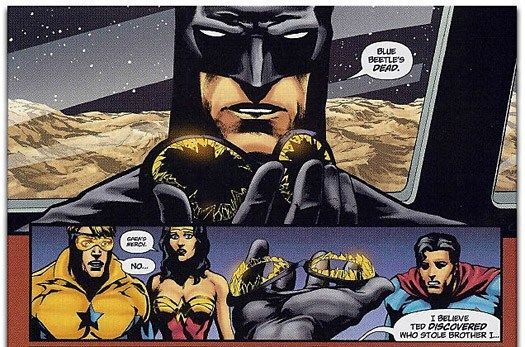
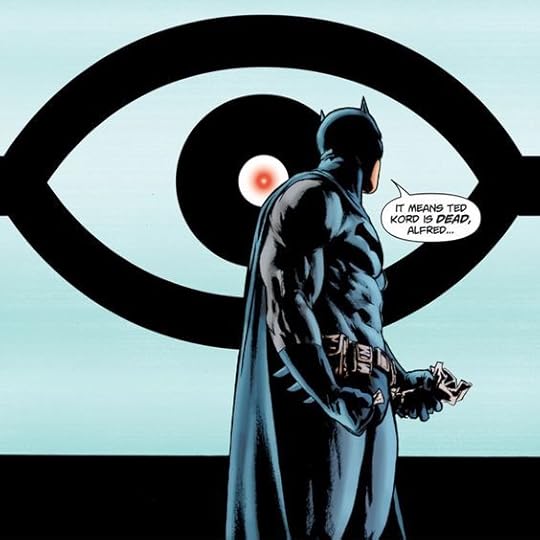
Poor Blue Beetle! Even though I knew what was going to happen to Ted Kord, it was still shocking...and sad. I wish I had known to read this before I read Booster Gold: 52 Pick-Up and Booster Gold: Blue and Gold, but it was still one of the better Deaths that I've read so far. I get annoyed when they kill off someone and don't give them proper page time. That's not a problem in this one. You can really feel the tension in this story as Ted gets closer and closer to the truth. The stress escalates as he begs the other members of the Justice League for help, only to find that none of them believe him. It was truly well done!
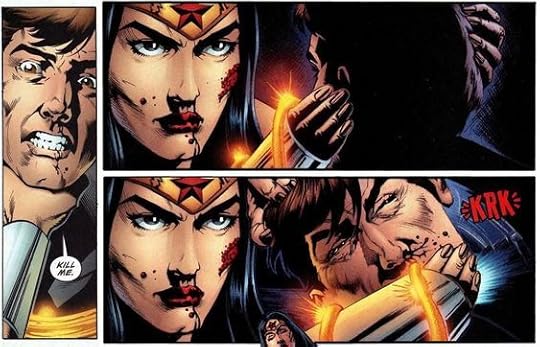
This is also where Wonder Woman kills Maxwell Lord. The scene is rather short considering all of the ripple effects that her actions caused. And since there are references it this event all over the place, and I'm glad I finally got to see what exactly happened.
In the end, I would say that The OMAC Project is a definite must-read for any fan of the DC Universe.
Re-read 2018
I've had this one on my favorites list for a long time, so I wanted to do a re-read to see if it was as good as I remembered. After having read tons of shitty arc and events over the years, I feel like I have a better grasp on what constitutes a garbage comic or throwaway storyline. And like most everyone else, I've walked away from some of my favorites feeling a bit embarrassed that I'd been recommending them to other humans.
But this?
This was still fantastic.
Ted crawled into my feelings AGAIN and kicked me in the gut. *sobs*
God, Batman is such an asshole.
Gonna have to go read 52 Pick-up now...
Original Review: 2011
I enjoyed reading The OMAC Project way more than I thought I would. To me, this Countdown to Infinite Crisis was a lot more engaging than Infinite Crisis itself.
Poor Blue Beetle! Even though I knew what was going to happen to Ted Kord, it was still shocking...and sad. I wish I had known to read this before I read Booster Gold: 52 Pick-Up and Booster Gold: Blue and Gold, but it was still one of the better Deaths that I've read so far. I get annoyed when they kill off someone and don't give them proper page time. That's not a problem in this one. You can really feel the tension in this story as Ted gets closer and closer to the truth. The stress escalates as he begs the other members of the Justice League for help, only to find that none of them believe him. It was truly well done!
This is also where Wonder Woman kills Maxwell Lord. The scene is rather short considering all of the ripple effects that her actions caused. And since there are references it this event all over the place, and I'm glad I finally got to see what exactly happened.
In the end, I would say that The OMAC Project is a definite must-read for any fan of the DC Universe.

April 4, 2021
Blue Beetle is done so well here. The fact that he is looked upon as a joke. That he's really quite smart and intuitive. I really wish we'd gotten more of this Blue Beetle. The post Crisis Justice League International does not make out well here. I really like how they are all brought back and used here after being forgotten for a decade. Checkmate is awesome. Max Lord is scary. Wonder Woman is a badass. There's just so much to like about this series and it has repercussions throughout the DC universe for years.
Jesus Saiz is the main artist on this and I really dig his art. I like his thick lines and shading. It's a clean, distinctive look.
Jesus Saiz is the main artist on this and I really dig his art. I like his thick lines and shading. It's a clean, distinctive look.

March 17, 2018
To be clear, I’ve always been more of a Marvel fan than of DC.
My youngest son and I play a game sometimes: Guess the character. The first question is invariably, DC or Marvel.
It will go something like this:
Q: DC or Marvel?
A: DC
Q: hero or villain?
A: hero
Q: Does he wear a cape?
A: yes
Q: man or woman?
A: Man
Q: color of uniform?
A: predominantly … blue.
Q: powers?
A: several
Q: name a couple
A: super strength, flight, some others
Q: Superman?
A: nope
Q: is he human?
A: no
And so on. But also to be clear, DC has some great storylines and some remarkable characters.
Some fans may think about Jack Kirby’s alternate history Jack Kirby's OMAC: One Man Army Corps with Buddy Blank. This is similar in that there is the Brother Eye concept but this is a part of the Infinite Crisis storyline where Batman has created an over watch satellite and then there is the Checkmate organization and some enthralling character development.
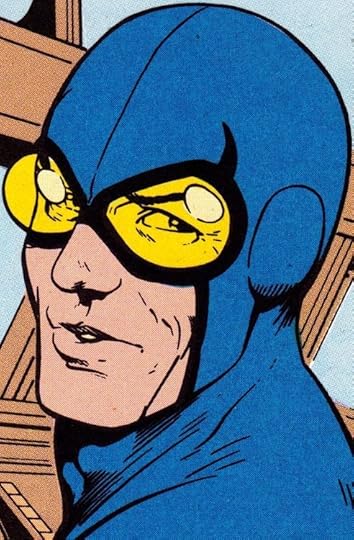
The artwork was the outstanding illustrations that we’ve come to expect from DC and this team did a phenomenal job. What stands out to me most about this work, though, was the explorations of the different characters and seeing different sides to some of our most familiar heroes, particularly Ted Kord / Blue Beetle and Wonder Woman.
The allusions to Watchmen and the similarities to Marvel’s Ultron storyline also makes this a very enjoyable graphic novel.
**** BTW, anyone guess which hero I was referencing?
My youngest son and I play a game sometimes: Guess the character. The first question is invariably, DC or Marvel.
It will go something like this:
Q: DC or Marvel?
A: DC
Q: hero or villain?
A: hero
Q: Does he wear a cape?
A: yes
Q: man or woman?
A: Man
Q: color of uniform?
A: predominantly … blue.
Q: powers?
A: several
Q: name a couple
A: super strength, flight, some others
Q: Superman?
A: nope
Q: is he human?
A: no
And so on. But also to be clear, DC has some great storylines and some remarkable characters.
Some fans may think about Jack Kirby’s alternate history Jack Kirby's OMAC: One Man Army Corps with Buddy Blank. This is similar in that there is the Brother Eye concept but this is a part of the Infinite Crisis storyline where Batman has created an over watch satellite and then there is the Checkmate organization and some enthralling character development.
The artwork was the outstanding illustrations that we’ve come to expect from DC and this team did a phenomenal job. What stands out to me most about this work, though, was the explorations of the different characters and seeing different sides to some of our most familiar heroes, particularly Ted Kord / Blue Beetle and Wonder Woman.
The allusions to Watchmen and the similarities to Marvel’s Ultron storyline also makes this a very enjoyable graphic novel.
**** BTW, anyone guess which hero I was referencing?

December 22, 2011
Possibly what people remember most about Infinite Crisis is the death of Blue Beetle. Which doesn't actually happen in the main Infinite Crisis book, it happens here. In a way, you can see it coming. Ted does. But it is definitely a rough scene. Especially for his internal monologue in the previous scenes. But the story just gets moving with his death. It comes out that Batman has been conducting secret surveillance on Earth's heroes, because of the mind wiping revealed in Identity Crisis. It's a logical follow up. Batman is pretty damn paranoid, and you could say that he has trust issues. The long and short is that it's actually quite well-written, and the art is pretty good, too. Oddly, the Superman: Sacrifice trade has a hefty part of this storyline, which isn't included here. Probably just should have been one, larger trade, instead of two. And you need to read both to get it all, or even to fully understand what's going on here.

September 23, 2020
I good event!
It’s a bit dense at first, but the last act is very exciting and the resolution is interesting. Reminds me of an Ultron story, but with a bit more of a human element.
I look forward to seeing how this flows into Infinite Crisis. Overall really fun!
It’s a bit dense at first, but the last act is very exciting and the resolution is interesting. Reminds me of an Ultron story, but with a bit more of a human element.
I look forward to seeing how this flows into Infinite Crisis. Overall really fun!

January 26, 2016
Excellent story and art. Nice surprising turn of events on some of the mainstay heroes of the DC universe. Very enjoyable read. Very recommended

November 23, 2007
As part of the Countdown to Infinite Crisis, DC had Batman go even more ape-shit paranoid than usual. That's where the Blue Beetle and the OMAC Project come in, a 6-part mini with the Countdown to Infinite Crisis (and a key issue of Superman) thrown in as part of the deal in this trade.
First off, I'm not a big fan of the Bats against the World idea. Not even Frank Miller did that in Dark Knight, where Ollie is brought in to help Bruce ride off into the sunset. That being said, if the goal is to show Bats that Max Lord is the boss of him, and has been since the Bwa-ha-ha days, then this is about as well as it could be done.
The basic idea is that after the shoehorned-into-continuity Identity Crisis, where we didn't kill anyone big, Bats goes nuts and puts together a Satellite that--and this is my biggest problem--Superman can't see, Green Lantern rings can't sense, magic-users can't ferret out, and oh yeah, a Luthor-led government never notices. Then the Satellite gets taken over by Max Lord, former bankroller of the Justice League and now head of Checkmate, an organization with a mad-on for Bats. In the end, the people who die to the Omac Project are---no one big.
Don't get me wrong. I love Ted Kord, I love him to death. But for such a big project, we need a bigger name to fall. John Stewart. Kyle Raynar. Cyborg. Someone just big enough for this to matter in more than the, "Oh shit, we let Ted down" sort of way. It's like the only thing DC killed was any sense of fun left in the their comics.
The OMACs created by Max start activating and taking on DC heroes everywhere while Wonder Woman tries to keep a Max-controlled Superman (Umm, huh? Why didn't he do it before? Why now?) at bay and Bats gets shown he can't run with the big dogs when it comes to a fight. The OMACs can only be stopped by someone with the power granted by their creator, but can that person stop the OMACs in time...or will they be taken over, too?
Overall, the book is clearly designed to drive Crisis, though we never see exactly what--if any--connection Superboy Prime and Alexander Luthor had to Max, which is a shame. I'd love Max to have been a good guy corrupted, not just an evil mastermind wanna-be. We also set up Sasha, one of my least-favorite Bat-cast in the last 10 years, to be a new player in the DC Universe.
Ted Kord dies so Sasha can live. This is why I'm pulling less comics every month.
It's good for what it is, a way for DC to set up Crisis. For those of us who have been in comics for a long time, and have collections going back even further, it's a little hard to swallow. Read it before Infinite Crisis, though, if you still haven't gotten to IC yet.
First off, I'm not a big fan of the Bats against the World idea. Not even Frank Miller did that in Dark Knight, where Ollie is brought in to help Bruce ride off into the sunset. That being said, if the goal is to show Bats that Max Lord is the boss of him, and has been since the Bwa-ha-ha days, then this is about as well as it could be done.
The basic idea is that after the shoehorned-into-continuity Identity Crisis, where we didn't kill anyone big, Bats goes nuts and puts together a Satellite that--and this is my biggest problem--Superman can't see, Green Lantern rings can't sense, magic-users can't ferret out, and oh yeah, a Luthor-led government never notices. Then the Satellite gets taken over by Max Lord, former bankroller of the Justice League and now head of Checkmate, an organization with a mad-on for Bats. In the end, the people who die to the Omac Project are---no one big.
Don't get me wrong. I love Ted Kord, I love him to death. But for such a big project, we need a bigger name to fall. John Stewart. Kyle Raynar. Cyborg. Someone just big enough for this to matter in more than the, "Oh shit, we let Ted down" sort of way. It's like the only thing DC killed was any sense of fun left in the their comics.
The OMACs created by Max start activating and taking on DC heroes everywhere while Wonder Woman tries to keep a Max-controlled Superman (Umm, huh? Why didn't he do it before? Why now?) at bay and Bats gets shown he can't run with the big dogs when it comes to a fight. The OMACs can only be stopped by someone with the power granted by their creator, but can that person stop the OMACs in time...or will they be taken over, too?
Overall, the book is clearly designed to drive Crisis, though we never see exactly what--if any--connection Superboy Prime and Alexander Luthor had to Max, which is a shame. I'd love Max to have been a good guy corrupted, not just an evil mastermind wanna-be. We also set up Sasha, one of my least-favorite Bat-cast in the last 10 years, to be a new player in the DC Universe.
Ted Kord dies so Sasha can live. This is why I'm pulling less comics every month.
It's good for what it is, a way for DC to set up Crisis. For those of us who have been in comics for a long time, and have collections going back even further, it's a little hard to swallow. Read it before Infinite Crisis, though, if you still haven't gotten to IC yet.

August 22, 2018
The OMAC Project was among the reading that I had to do before Infinite Crisis. And I was very surprised with how much I ended up liking the whole thing. I also picked it up because it follows threads from Identity Crisis which I also really liked.
There is back story with Batman and his lady friend of the time Sasha, whom he became acquainted with when he was accused of murder, I have the whole storyline just haven't gotten around to reading it yet, but I am familiar with it.
The trade that I have also had summary pages that caught you up to speed with a Superman storyline that of course crossed between like 3 titles making it hard to follow however many years on.
Alright so Blue Beetle, Booster Gold, Batman, and Wonder Woman are the stars here. As they all have narration rolls. Oh and Sasha who works for checkmate.
I like the Ted Kord Blue Beetle and he's the one in this. Booster Gold is great too, and Batman is ALWAYS great. Because I love him and his presence makes me happy. Even if it is kind of his fault.
The writing bar the last issue is strong with things tying in and leading up. Though at first it presents itself as a mystery and I don't think it's a very good one. But it's consistently interesting without it. The art is a bit funky at times but gets the job done and is visually clear as to what is happening.
OMAC Project is something that was a really fun read leading up to one of the continually relevant DC comics. And I think it's worth checking out if you read Identity Crisis at all.
4 stars.
There is back story with Batman and his lady friend of the time Sasha, whom he became acquainted with when he was accused of murder, I have the whole storyline just haven't gotten around to reading it yet, but I am familiar with it.
The trade that I have also had summary pages that caught you up to speed with a Superman storyline that of course crossed between like 3 titles making it hard to follow however many years on.
Alright so Blue Beetle, Booster Gold, Batman, and Wonder Woman are the stars here. As they all have narration rolls. Oh and Sasha who works for checkmate.
I like the Ted Kord Blue Beetle and he's the one in this. Booster Gold is great too, and Batman is ALWAYS great. Because I love him and his presence makes me happy. Even if it is kind of his fault.
The writing bar the last issue is strong with things tying in and leading up. Though at first it presents itself as a mystery and I don't think it's a very good one. But it's consistently interesting without it. The art is a bit funky at times but gets the job done and is visually clear as to what is happening.
OMAC Project is something that was a really fun read leading up to one of the continually relevant DC comics. And I think it's worth checking out if you read Identity Crisis at all.
4 stars.

April 12, 2023
A evil computer program made by Batman, to not originally be evil, but to monitor everyone after he learns what happened to him in Identity crisis (Heroes altered his mind/memories) and so this evil computer of course falls into the wrong hands and goes fucking psycho, leaving the world truly screwed if they can't figure out a way to stop it.
Some real tense moments, good deaths, and a sense of dread throughout. A little jumpy, and best read in line with Sacrifice storyline, and also a bitter ending leaves it not feeling completed but still enjoyable. 3.5 out of 5.
Some real tense moments, good deaths, and a sense of dread throughout. A little jumpy, and best read in line with Sacrifice storyline, and also a bitter ending leaves it not feeling completed but still enjoyable. 3.5 out of 5.

July 22, 2025
3.5
loved the Blue Beetle and Booster Gold stuff.
loved the Blue Beetle and Booster Gold stuff.

September 6, 2021
Before reading this comic, I had to read Identity Crisis, which ended up being one of the most unpleasant experiences when it comes to reading comic books. It was a murder mystery that seems to reflect on the horrible tropes in comic book history and even if the creators were taking cues from works like Watchmen, there is a grim note that is injected in DC’s well-established brightly-coloured superheroes that I found unwelcoming. Now that story is over, DC began a series of titles serving as a countdown for the next big event that is Infinite Crisis.
Following the events of Identity Crisis, in which Batman discovered a shady side to some of the members of the Justice League, he created the Brother MK I, a satellite that tracks the planet’s citizens, including the superhero community. Beginning with the one-shot publication Countdown to Infinite Crisis, Ted Kord/Blue Beetle investigates the theft of funds from his company that has left him nearly bankrupt, which leads to him finding that Batman’s satellite has secretly been taken over by Maxwell Lord, who has also taken over the Checkmate organisation. Before Kord could do anything to warn his fellow heroes, Lord executes him with a fatal gunshot to the head.
Although the one-shot publication was co-written by Geoff Johns, Judd Winick and Greg Rucka, the latter solely wrote the six-issue miniseries that sets up a lot of interesting ideas. For starters, the idea of Batman being suspicious towards his fellow Leaguers is not new as it was explored in the JLA storyline “Tower of Babel”. However, Rucka takes a new approach with the inclusion of Brother I, which is also used by Maxwell Lord, who considers metahumans as a threat to the human race, and throughout the book, he makes a strong point, despite his evil plans.
No doubt with crossover events like these, the juggling of numerous characters and in the case of this comic, it’s part of an ongoing narrative that is told through other titles as well. For instance, The OMAC Project sets up a moment where Maxwell Lord, with his ability of telepathic persuasion, takes control of Superman, which is then explored in Superman: Sacrifice, of which its final issue is presented here. The issue itself is a well-done epic fight between Wonder Woman and a mind-controlled Superman, as well as an infamous death sequence that sets up the next stage of The OMAC Project, as well as the consequence of such an action, if you have to be committed to reading all the companion pieces to get the full picture.
There are a handful of characters that serve as protagonists throughout the book, starting with the one-shot solely focusing on Ted Kord, whose unfortunate demise sets up other heroes into action, such as Batman, Booster Gold, and Guy Gardner/Green Lantern, all of which were part of Justice League International. With Checkmate now under the ruling of Maxwell Lord, the question of allegiance becomes a recurring theme, with Sasha Bordeaux being the book’s unlikely protagonist, who has the biggest development and a character I want to know more of, from before and after this title.
Inspired by the 1974 Jack Kirby creation OMAC, which is where the Brother Eye satellite was introduced, Rucka and artist Jesus Saiz modernises Kirby’s concept as the OMACs are cyborgs, human bodies transformed by a virus into living machines to assassinate any and all beings with superpowers. The designs of the OMACs and Brother I look high-tech and menacing, as well as serving as compelling obstacles to how numerous members of the Justice League battle them. With his thick lines and shading, Saiz’s art is a typical art-style that you would expect in superhero comics, but he embraces the variety of costumed heroes and locations within the DC universe.
Despite tying in with numerous other titles that play a part in the transition from one big event to the next, The OMAC Project is a fun and compelling outing featuring plenty of superhero action, as well as the morality that comes with it.
Following the events of Identity Crisis, in which Batman discovered a shady side to some of the members of the Justice League, he created the Brother MK I, a satellite that tracks the planet’s citizens, including the superhero community. Beginning with the one-shot publication Countdown to Infinite Crisis, Ted Kord/Blue Beetle investigates the theft of funds from his company that has left him nearly bankrupt, which leads to him finding that Batman’s satellite has secretly been taken over by Maxwell Lord, who has also taken over the Checkmate organisation. Before Kord could do anything to warn his fellow heroes, Lord executes him with a fatal gunshot to the head.
Although the one-shot publication was co-written by Geoff Johns, Judd Winick and Greg Rucka, the latter solely wrote the six-issue miniseries that sets up a lot of interesting ideas. For starters, the idea of Batman being suspicious towards his fellow Leaguers is not new as it was explored in the JLA storyline “Tower of Babel”. However, Rucka takes a new approach with the inclusion of Brother I, which is also used by Maxwell Lord, who considers metahumans as a threat to the human race, and throughout the book, he makes a strong point, despite his evil plans.
No doubt with crossover events like these, the juggling of numerous characters and in the case of this comic, it’s part of an ongoing narrative that is told through other titles as well. For instance, The OMAC Project sets up a moment where Maxwell Lord, with his ability of telepathic persuasion, takes control of Superman, which is then explored in Superman: Sacrifice, of which its final issue is presented here. The issue itself is a well-done epic fight between Wonder Woman and a mind-controlled Superman, as well as an infamous death sequence that sets up the next stage of The OMAC Project, as well as the consequence of such an action, if you have to be committed to reading all the companion pieces to get the full picture.
There are a handful of characters that serve as protagonists throughout the book, starting with the one-shot solely focusing on Ted Kord, whose unfortunate demise sets up other heroes into action, such as Batman, Booster Gold, and Guy Gardner/Green Lantern, all of which were part of Justice League International. With Checkmate now under the ruling of Maxwell Lord, the question of allegiance becomes a recurring theme, with Sasha Bordeaux being the book’s unlikely protagonist, who has the biggest development and a character I want to know more of, from before and after this title.
Inspired by the 1974 Jack Kirby creation OMAC, which is where the Brother Eye satellite was introduced, Rucka and artist Jesus Saiz modernises Kirby’s concept as the OMACs are cyborgs, human bodies transformed by a virus into living machines to assassinate any and all beings with superpowers. The designs of the OMACs and Brother I look high-tech and menacing, as well as serving as compelling obstacles to how numerous members of the Justice League battle them. With his thick lines and shading, Saiz’s art is a typical art-style that you would expect in superhero comics, but he embraces the variety of costumed heroes and locations within the DC universe.
Despite tying in with numerous other titles that play a part in the transition from one big event to the next, The OMAC Project is a fun and compelling outing featuring plenty of superhero action, as well as the morality that comes with it.

July 1, 2018
Countdown to Infinite Crisis. What better way to begin a sequel to Crisis on Infinite Earths than with a big one-shot that highlights Blue Beetle and Booster Gold, two of the core members of the JLI, one of the most memorable and unique comics to come out of the original Crisis?
And, Countdown is very much the intro to that sequel, Infinite Crisis. It's primarily a lead-in for The OMAC Project and Superman: Sacrifice, but it also touches upon the other two introductory series, Day of Vengeance and The Rann-Thangar War. Honestly, that makes it a lot less of its own book. It's primarily a setup that leads up to a single inciting event. Fortunately, the writing is sharp and interesting enough that it's an intriguing setup, and particularly today when you can read straight on to the rest of the story, you don't mind it's incomplete nature.
Of course one can't speak of Countdown without addressing the elephant in the room: the fan favorite character killed within and the other fan favorite character who was darkened irrevocably. In its day, that generated very angry responses from fans, in part because it sabotaged the JLI reunion that Keith Giffen was even then writing. Today? I think the uproar hardly matters. The characters are both back due to the total continuity f*** known as the Nu52, and who knows how all this fits any more. And honestly, people remember Infinite Crisis, not Giffen's short-lived JLI reunion. So, we can now enjoy this particular story without that drama.
The OMAC Project. Of all the Infinite Crisis miniseries, The OMAC Project is the one that most obviously continues on from Countdown to Infinite Crisis. That means it's the continuing story of Max Lord, a regathered JLI, and the OMACs. These are all great elements, with the OMACs and Brother I (Eye) in particular being a strong addition to the modern-day DC universe. There's also some fun mystery and some good interactions between DC heroes.
However, The OMAC Project does have two flaws. First, the fact that Superman: Sacrifice goes right in the middle detracted from the classic collections of this book (though they did at least include Wonder Woman #219). Second, after the cataclysmic events of Sacrifice, the story drags, having lost its human focus. Still, this is an intriguing and ground-breaking story. [4/5]
And, Countdown is very much the intro to that sequel, Infinite Crisis. It's primarily a lead-in for The OMAC Project and Superman: Sacrifice, but it also touches upon the other two introductory series, Day of Vengeance and The Rann-Thangar War. Honestly, that makes it a lot less of its own book. It's primarily a setup that leads up to a single inciting event. Fortunately, the writing is sharp and interesting enough that it's an intriguing setup, and particularly today when you can read straight on to the rest of the story, you don't mind it's incomplete nature.
Of course one can't speak of Countdown without addressing the elephant in the room: the fan favorite character killed within and the other fan favorite character who was darkened irrevocably. In its day, that generated very angry responses from fans, in part because it sabotaged the JLI reunion that Keith Giffen was even then writing. Today? I think the uproar hardly matters. The characters are both back due to the total continuity f*** known as the Nu52, and who knows how all this fits any more. And honestly, people remember Infinite Crisis, not Giffen's short-lived JLI reunion. So, we can now enjoy this particular story without that drama.
The OMAC Project. Of all the Infinite Crisis miniseries, The OMAC Project is the one that most obviously continues on from Countdown to Infinite Crisis. That means it's the continuing story of Max Lord, a regathered JLI, and the OMACs. These are all great elements, with the OMACs and Brother I (Eye) in particular being a strong addition to the modern-day DC universe. There's also some fun mystery and some good interactions between DC heroes.
However, The OMAC Project does have two flaws. First, the fact that Superman: Sacrifice goes right in the middle detracted from the classic collections of this book (though they did at least include Wonder Woman #219). Second, after the cataclysmic events of Sacrifice, the story drags, having lost its human focus. Still, this is an intriguing and ground-breaking story. [4/5]

September 14, 2014
I am not a avid comic book reader but I just read the Infinite Crisis novel and I wanted to know more about the events that led up to it. This collection's main arc is how Blue Beetle proceeds with an investigation that none of the Justice League give any importance to this investigation.
Let me first start off by saying I thought the artwork was fantastic. These iconic characters leapt from the page and I was really impressed. The story itself was dark. I am not a fan of Blue Beetle but by the end of his storyline I grew to respect him. The problem I had with this collection is that it contained singular issues of a storyline instead of the whole collection. Even though these issues are part of the main storyline it felt like I jumped in the middle of something even bigger. That being said I was never lost but that could be a case of me reading the above stated novel.
This was a excellent read and I enjoyed the appearances by many of the DC universe. The storyline was a little more mature than I expected and it is a pleasant surprise. I plan on reading more of the Countdown to Infinite Crisis.
Let me first start off by saying I thought the artwork was fantastic. These iconic characters leapt from the page and I was really impressed. The story itself was dark. I am not a fan of Blue Beetle but by the end of his storyline I grew to respect him. The problem I had with this collection is that it contained singular issues of a storyline instead of the whole collection. Even though these issues are part of the main storyline it felt like I jumped in the middle of something even bigger. That being said I was never lost but that could be a case of me reading the above stated novel.
This was a excellent read and I enjoyed the appearances by many of the DC universe. The storyline was a little more mature than I expected and it is a pleasant surprise. I plan on reading more of the Countdown to Infinite Crisis.

March 18, 2013
“The OMAC Project” was part of DC’s “Countdown to Infinite Crisis” and came after their previous event “Identity Crisis”. A brief background note to understand this book: in “Identity Crisis”, Doctor Light, a super-lame villain, somehow manages to get into the JLA’s Watchtower without being seen or stopped by anyone and rapes the Elongated Man’s wife Sue Dibny who is conveniently on her own. Some members of the JLA walk in on this scene and are so shocked they decide to permanently alter Light’s personality so he will never again do anything so heinous, nor remember what he did. Full review here!
May 3, 2019
3.75 Stars. Pretty good, I'm trying to read some of the big event books & the books leading up to them in the DC library. I read this one to get up to speed for Infinite Crisis. This was pretty good, & it had some good moments, but it wasn't that difficult to put down. Minor spoiler ahead: Wonder Woman snapping Maxwell Lord's neck & killing him was pretty awesome!

July 28, 2026
I love how C-list heroes, especially Blue Beetle, get a major focus. The heroes uncovering a grand conspiracy is fun and all, but then Batman starts making out with some chick. It’s hard being a Batman fan who hates romance. If Batman sees a black-haired lady clad in leather, they will end up making out.

February 9, 2023
This was a solid tie-in to the run up to Crisis. I really enjoyed the Blue Beetle storyline, as it was terrific. What came after though, was nowhere near as strong. *Sigh* Tell me DC why do you insist on adding filler to the back of your books?

February 27, 2014
I finally got around to reading this!
I might be one of the few who loved the Infinite Crisis event, so why did it take me so long to get this? F**k knows, either way I enjoyed it.
This take place after Identity Crisis, which is also amazing, when Batman finds out that his Justice League bros had given him a mind wipe back in the day. Bats is pissed as hell and designs Brother Eye, a mass surveillance satellite to keep an eye on all the meta humans. Turns out Max Lord, leader of the Checkmate organisation, thought that was a great idea too and decided to steal it off him. Then he proceeds to fill it with hatred for all meta humans because apparently earth would be better off without them. Eventually Brother Eye realises he can get shit done by himself and begins a mission to rid the world of all meta humans.
I was stoked to fill in the gaps between Identity and Infinite here. There area one great moments that helps me understand what went on after this more. You will need to read Infinite Crisis to get an absolute conclusion to this story, although this has a somewhat climax. Enough to be satisfying anyway.
The main shining point in this book is the opening story revolving around Ted Kord aka Blue Beetle II. This has to e one of the best hero death stories I've read in comics. I felt every emotion as it followed him through his last days. In my opinion this section is worth paying for in itself.
The only cons I can think of here is the fact that the story jumps in the middle, where the issues are collected in Superman: Sacrifice. It was only 3 issues, and although they give you a run down of what went down in those issues, I don't understand why they didn't just put them in the collected issue. Since that would have made the story complete? Stupid move DC, tut tut. Other than that I want a little upset that more of the heroes didn't feel the impact of Blue Beetles death more, especially after so many of them treated him like shit right before he died, I'm looking at you Martian Manhunter/Batman. Seemed like such a waste after the beautiful death they wrote for him.
If your like me and you love filling in the gaps between big events then definitely give this a read. I can't wait to get my hands on Day of Vengeance, another Countdown to Infinite Crisis book based around the magical side of DCU.
I might be one of the few who loved the Infinite Crisis event, so why did it take me so long to get this? F**k knows, either way I enjoyed it.
This take place after Identity Crisis, which is also amazing, when Batman finds out that his Justice League bros had given him a mind wipe back in the day. Bats is pissed as hell and designs Brother Eye, a mass surveillance satellite to keep an eye on all the meta humans. Turns out Max Lord, leader of the Checkmate organisation, thought that was a great idea too and decided to steal it off him. Then he proceeds to fill it with hatred for all meta humans because apparently earth would be better off without them. Eventually Brother Eye realises he can get shit done by himself and begins a mission to rid the world of all meta humans.
I was stoked to fill in the gaps between Identity and Infinite here. There area one great moments that helps me understand what went on after this more. You will need to read Infinite Crisis to get an absolute conclusion to this story, although this has a somewhat climax. Enough to be satisfying anyway.
The main shining point in this book is the opening story revolving around Ted Kord aka Blue Beetle II. This has to e one of the best hero death stories I've read in comics. I felt every emotion as it followed him through his last days. In my opinion this section is worth paying for in itself.
The only cons I can think of here is the fact that the story jumps in the middle, where the issues are collected in Superman: Sacrifice. It was only 3 issues, and although they give you a run down of what went down in those issues, I don't understand why they didn't just put them in the collected issue. Since that would have made the story complete? Stupid move DC, tut tut. Other than that I want a little upset that more of the heroes didn't feel the impact of Blue Beetles death more, especially after so many of them treated him like shit right before he died, I'm looking at you Martian Manhunter/Batman. Seemed like such a waste after the beautiful death they wrote for him.
If your like me and you love filling in the gaps between big events then definitely give this a read. I can't wait to get my hands on Day of Vengeance, another Countdown to Infinite Crisis book based around the magical side of DCU.

September 22, 2009
The death of the blue beetle is one of the sadder moments in any comic I have. Well, not so much the death scene itself, although that is brutal, but the way all his friends don't take him seriously as a hero and brush him off which is why he has no one watching his back when he finally figures out what's going on. His friends don't take him seriously and he dies alone trying to fix something that batman at the very least should have been on top of. The whole blue beetle storyline is how he is isolated and then killed. Just a pointless and sad way to kill off a character, although I think that was the point. And at least his death wakes everyone else up, although I still would like to have seen more "oh, I feel bad because if I'd listened for one second Ted wouldn't be dead now" remorse from the people he was asking for help. Anyway, the best prelude to infinite crisis. Starting with identity crisis and going through infinite crisis is a pretty good storyline.

May 10, 2016
Note: Also read all the other tie-ins... I think that's what made it even better then just reading this.. (Only didn't like the ones from Robin, not the story telling nor the artwork)
Seeing the struggle from Superman.. Diana's decision.. the entire continuity of the story unraveling.. So many good things in here. Too bad it ended rather peculiar...
Seeing the struggle from Superman.. Diana's decision.. the entire continuity of the story unraveling.. So many good things in here. Too bad it ended rather peculiar...

November 15, 2021
We're on the road to Infinite Crisis!
The OMAC Project essentially kicks off the Infinite Crisis event, known as the spiritual successor to Crisis on Infinite Earths and Identity Crisis. The OMAC Project lays the ground work for DC's epic of the era here and takes a look at the occurances that led up to the main event.
Firstly, there's no getting around the fact that this is a tie-in book so I'd not recommened you go into this one without at least some prior reading due to its connections to Identity Crisis and the Justice League, Superman and Wonder Woman books of the time (and more!). That said, as far as tie-in books go this one is actually a pretty engaging one, especially if judged alongside some of the other mini-series' that spun out of this. Personally I feel The OMAC Project overshadows the actual event itself! Yep, I actually find this much more digestable that the Infinite Crisis event itself.
The plot is pretty good by the standards of its time time with some clever choices regarding the utalisation of the DC continuity. The reinvention of Jack Kirby's OMAC and the shadowy Checkmate organisation had their roots in DC prior to this, but they get new purpose and direction here thanks to the clever writting and imaginations of its authors. You can't really faul the art and illustation for its time, but it does feel very inconsitant from moment to moment in places.
Overall, if you're the sort that likes a good crossover event or even a large scale team-up atmosphere then this will be one you're definitely intested in. On the flipside, I'd read with caution because the mapping of this event in its entirity seems slightly more complicated than it needs to be - for example; if you're reading The OMAC Project you'll need to stop and read Superman: Sacrifice about half way through before resuming the conclusion, which almost has this event having mini-series' within mini-series'. You'll find a fair bit of this going on so completionists beware!
The OMAC Project essentially kicks off the Infinite Crisis event, known as the spiritual successor to Crisis on Infinite Earths and Identity Crisis. The OMAC Project lays the ground work for DC's epic of the era here and takes a look at the occurances that led up to the main event.
Firstly, there's no getting around the fact that this is a tie-in book so I'd not recommened you go into this one without at least some prior reading due to its connections to Identity Crisis and the Justice League, Superman and Wonder Woman books of the time (and more!). That said, as far as tie-in books go this one is actually a pretty engaging one, especially if judged alongside some of the other mini-series' that spun out of this. Personally I feel The OMAC Project overshadows the actual event itself! Yep, I actually find this much more digestable that the Infinite Crisis event itself.
The plot is pretty good by the standards of its time time with some clever choices regarding the utalisation of the DC continuity. The reinvention of Jack Kirby's OMAC and the shadowy Checkmate organisation had their roots in DC prior to this, but they get new purpose and direction here thanks to the clever writting and imaginations of its authors. You can't really faul the art and illustation for its time, but it does feel very inconsitant from moment to moment in places.
Overall, if you're the sort that likes a good crossover event or even a large scale team-up atmosphere then this will be one you're definitely intested in. On the flipside, I'd read with caution because the mapping of this event in its entirity seems slightly more complicated than it needs to be - for example; if you're reading The OMAC Project you'll need to stop and read Superman: Sacrifice about half way through before resuming the conclusion, which almost has this event having mini-series' within mini-series'. You'll find a fair bit of this going on so completionists beware!

Read
July 13, 2022This was an easy breezy spy read, a return to form for Rucka after several underwhelming Superman books and some fun but often slow volumes of Wonder Woman. This continues the tale of Sasha Bordeaux after the cliffhanger conclusion to Rucka’s Batman run, and her conflict as the right hand woman to a spymaster she opposes but cannot turn against for fear of retribution is an exciting twist on the relationship we saw with her and Bruce, where she wanted so badly to get close but was always pushed away.
The book is dragged down by its ties to the overarching meta-narrative of Identity and Infinite Crisis, a push and pull between the “grim” modern world and the older purer silver age manufactured by the very writers and editors hoping to comment on it. This forced the book to be needlessly gruesome and violent at times, or force characters to swing wildly into new characterization with very little explanation. Maxwell Lord is guilty of the latter, but this new characterization is so exciting I found myself wishing we saw more of him. His new maniacal face would be believable if it were just a little less malevolent and if we spent a tad more time with him. He is needlessly cruel at times yet his ideology of holding super-humans accountable is compelling. The book both gains and loses by killing him off so quickly- on the one hand we never fully understand his motivations, conflicts, or plans, but on the other the book shifts our focus away before we can figure out how flimsy they all are.
It never rises to the heights of Villains United (AKA the most tops Infinite Crisis tie in), but Rucka makes the book sing how he always does, through character interactions and clear internal lives. I liked the surprising amount if post-JLI material. While not anything special, the varied art team does commendable work in conveying the emotions of these characters during a fast paced action book and remaining largely consistent. Except Rags Morales, his faces can be so wack.
Side note, weird that this does not collect the single issue OMAC Project: Infinite Crisis Special that concludes the story.
The book is dragged down by its ties to the overarching meta-narrative of Identity and Infinite Crisis, a push and pull between the “grim” modern world and the older purer silver age manufactured by the very writers and editors hoping to comment on it. This forced the book to be needlessly gruesome and violent at times, or force characters to swing wildly into new characterization with very little explanation. Maxwell Lord is guilty of the latter, but this new characterization is so exciting I found myself wishing we saw more of him. His new maniacal face would be believable if it were just a little less malevolent and if we spent a tad more time with him. He is needlessly cruel at times yet his ideology of holding super-humans accountable is compelling. The book both gains and loses by killing him off so quickly- on the one hand we never fully understand his motivations, conflicts, or plans, but on the other the book shifts our focus away before we can figure out how flimsy they all are.
It never rises to the heights of Villains United (AKA the most tops Infinite Crisis tie in), but Rucka makes the book sing how he always does, through character interactions and clear internal lives. I liked the surprising amount if post-JLI material. While not anything special, the varied art team does commendable work in conveying the emotions of these characters during a fast paced action book and remaining largely consistent. Except Rags Morales, his faces can be so wack.
Side note, weird that this does not collect the single issue OMAC Project: Infinite Crisis Special that concludes the story.

November 15, 2024
The first or four miniseries that make up the bulk of the Countdown to Infinite Crisis, the OMAC Project rolls out of the paranoia created in Identity Crisis to weave a web of international intrigue and espionage by way of Checkmate, Batman’s co-opted Brother Eye satellite, and OMAC sleeper agents.
At the start of this story, Blue Beetle is a hero on the outs; none of his peers have much respect for him, and no one really listens when he finds the strands that will lead to Checkmate and the superhero surveillance state it seeks to impose (that all of this is due to Batman’s paranoia is worth noting).
By the end of the series, trust of superheroes will be at an all time low, setting the stage for a series of events that continues beyond Infinite Crisis, at lease as far as 52.
Greg Rucka’s writing is top notch, both generally and on this series specifically; the mystery is satisfying, the stakes are high, and each reveal is as impactful as you could hope. Rucka also knows the sandbox he’s playing in, drawing on DC history and portraying each character in a pitch perfect manner. While all of the Countdown to Infinite Crisis series are excellent, I’d single this out as the best of them, and would recommend it to anyone.
At the start of this story, Blue Beetle is a hero on the outs; none of his peers have much respect for him, and no one really listens when he finds the strands that will lead to Checkmate and the superhero surveillance state it seeks to impose (that all of this is due to Batman’s paranoia is worth noting).
By the end of the series, trust of superheroes will be at an all time low, setting the stage for a series of events that continues beyond Infinite Crisis, at lease as far as 52.
Greg Rucka’s writing is top notch, both generally and on this series specifically; the mystery is satisfying, the stakes are high, and each reveal is as impactful as you could hope. Rucka also knows the sandbox he’s playing in, drawing on DC history and portraying each character in a pitch perfect manner. While all of the Countdown to Infinite Crisis series are excellent, I’d single this out as the best of them, and would recommend it to anyone.

September 22, 2020
Infinite Crisis was a good solid read back when I read it a couple years ago or so, but lots went over my head and so the overall effect wasn't as positive as it could have been...
What have I learned since?
Infinite Crisis is like the final concluding pages to a great novel, and if you skip the build up, its still beautiful, but largely confusing.
Recently I collected OMAC Project, and whoa what a Revelation that book was, instantly made me want to reread Infinite Crisis with fresh newly updated eyes.
But I won't, not until I get through the rest of the countdown to Infinite Crisis.
Here's what's on my nightstand
Rann Thanagar War
Superman Sacrifice
Infinite Crisis Companion
Villians United
JLA Crisis in Conscious
The Countdown is essential to enjoying Infinite Crisis and I'm thrilled to be reading through this series and look forward to collecting the other half dozen or so books in the Countdown.
Then I'll have fresh eyes to revisit Infinite Crisis.
Highly recommend this series! And OMAC is just purely fantastic must read story.
What have I learned since?
Infinite Crisis is like the final concluding pages to a great novel, and if you skip the build up, its still beautiful, but largely confusing.
Recently I collected OMAC Project, and whoa what a Revelation that book was, instantly made me want to reread Infinite Crisis with fresh newly updated eyes.
But I won't, not until I get through the rest of the countdown to Infinite Crisis.
Here's what's on my nightstand
Rann Thanagar War
Superman Sacrifice
Infinite Crisis Companion
Villians United
JLA Crisis in Conscious
The Countdown is essential to enjoying Infinite Crisis and I'm thrilled to be reading through this series and look forward to collecting the other half dozen or so books in the Countdown.
Then I'll have fresh eyes to revisit Infinite Crisis.
Highly recommend this series! And OMAC is just purely fantastic must read story.

March 5, 2010
Leído y poseído en la edición argentina en revistas de Sticker Design, más el capítulo correspondiente del tomo "Sacificio" con el que se cruzaba.

October 21, 2011
Yes! Managed to find this out of print book at my LCS. It's been years since I read it, and I can't wait to rediscover it.

March 1, 2015
An interesting read. Probably more of a 3 and a half star rating. But It was a solid story.

November 2, 2015
I'm 100% wonder woman trash

November 13, 2018
Batman's secret surveillance satellite Brother Mark I has been taken over by Max Lord. The heroes must face the consequences of their past choices. Things go poorly in a great way in this thriller miniseries, but it is ultimately too messy an integrated into the greater DC universe for its own good.
Picking up directly after the events depicted in Countdown to Infinite Crisis, The OMAC Project carries that story's tense spy action torch, though the stakes are upped considerably. Metahumans, including the Justice League and their allies, are all targets of Max Lord's new Checkmate, and they have a number of significant advantages. While I found the overall plot exciting, this book in particular suffers because key events are depicted in other runs' tie-in issues. One battle and its resolution in particular feels like so major a development for this series and its future, it's kind of baffling that it was glossed over in the event book. I'm all for tie-ins that enhance and flesh out the main story, but I believe central events should be depicted in the core mini-series. But maybe that's just me.
The art by (predominantly) Jesus Saiz is solid. I enjoy the dark, inky shadows that give the book an appropriately noir feel, and it's decently detailed throughout, though there are several moments where character faces look... iffy to me. The action is effective, and there are some great shots showing off the threat faced by the heroes.
While I enjoyed the premise and most of the execution, The OMAC Project somehow left me not entirely satisfied by the end, and not because it serves as set-up for Infinite Crisis. Still, its strengths outweigh its weaknesses, resulting in a mostly compelling adventure with major repercussions for stories to come.
Picking up directly after the events depicted in Countdown to Infinite Crisis, The OMAC Project carries that story's tense spy action torch, though the stakes are upped considerably. Metahumans, including the Justice League and their allies, are all targets of Max Lord's new Checkmate, and they have a number of significant advantages. While I found the overall plot exciting, this book in particular suffers because key events are depicted in other runs' tie-in issues. One battle and its resolution in particular feels like so major a development for this series and its future, it's kind of baffling that it was glossed over in the event book. I'm all for tie-ins that enhance and flesh out the main story, but I believe central events should be depicted in the core mini-series. But maybe that's just me.
The art by (predominantly) Jesus Saiz is solid. I enjoy the dark, inky shadows that give the book an appropriately noir feel, and it's decently detailed throughout, though there are several moments where character faces look... iffy to me. The action is effective, and there are some great shots showing off the threat faced by the heroes.
While I enjoyed the premise and most of the execution, The OMAC Project somehow left me not entirely satisfied by the end, and not because it serves as set-up for Infinite Crisis. Still, its strengths outweigh its weaknesses, resulting in a mostly compelling adventure with major repercussions for stories to come.
May 9, 2025
On partait bien avec Countdown to Infinite Crisis, mais tout retombe à plat beaucoup trop vite.
Je suis toujours très étonné des notes positives sur cette mini-série, comme si les lecteurs jugeaient la Crisis entièrement plutôt que la mini-série en elle-même. Car oui, il y a des choses intéressantes – cela serait difficile d'enlever ça à Rucka – comme le changement inattendu de Maxwell Lord, l'implication de Checkmate, mais le reste, tout cela n'a pas vraiment de sens.
Comment Maxwell Lord a-t-il pris possession de OMAC, comment Bruce en a-t-il perdu le contrôle et ne s’en est même pas rendu compte, comment OMAC a-t-il pu autant changer et devenir aussi puissant ? Nous n'avons aucune réponse cohérente, et le récit ne semble même pas vouloir se préoccuper d’en fournir.
Nous avons un statu quo qui aide bien à la Crisis à venir, mais qui semble être là uniquement comme décision éditoriale et non comme un élément cohérent de l'univers.
Alors oui, c'est sympa de voir les OMAC faire des apparitions dans toutes les séries de DC le même mois, oui, c'est fun de voir des têtes obscures et se dire "oui, lui là, je le connais, je l'ai déjà vu une fois dans un comics quand j'avais 9 ans", mais on se retrouve avec un truc sur les bras qui n'a aucun sens.
Et encore plus énervant, l'événement le plus attendu, le plus important de la mini-série, ne se passe même pas dans la mini-série mais dans le tie-in de Wonder Woman.
Bref, on est loin de la meilleure des quatre mini-séries de l'event...
Je suis toujours très étonné des notes positives sur cette mini-série, comme si les lecteurs jugeaient la Crisis entièrement plutôt que la mini-série en elle-même. Car oui, il y a des choses intéressantes – cela serait difficile d'enlever ça à Rucka – comme le changement inattendu de Maxwell Lord, l'implication de Checkmate, mais le reste, tout cela n'a pas vraiment de sens.
Comment Maxwell Lord a-t-il pris possession de OMAC, comment Bruce en a-t-il perdu le contrôle et ne s’en est même pas rendu compte, comment OMAC a-t-il pu autant changer et devenir aussi puissant ? Nous n'avons aucune réponse cohérente, et le récit ne semble même pas vouloir se préoccuper d’en fournir.
Nous avons un statu quo qui aide bien à la Crisis à venir, mais qui semble être là uniquement comme décision éditoriale et non comme un élément cohérent de l'univers.
Alors oui, c'est sympa de voir les OMAC faire des apparitions dans toutes les séries de DC le même mois, oui, c'est fun de voir des têtes obscures et se dire "oui, lui là, je le connais, je l'ai déjà vu une fois dans un comics quand j'avais 9 ans", mais on se retrouve avec un truc sur les bras qui n'a aucun sens.
Et encore plus énervant, l'événement le plus attendu, le plus important de la mini-série, ne se passe même pas dans la mini-série mais dans le tie-in de Wonder Woman.
Bref, on est loin de la meilleure des quatre mini-séries de l'event...
Displaying 1 - 30 of 96 reviews