

What do you think?

The Chandelier
Fresh from the enormous success of her debut novel Near to the Wild Heart, Hurricane Clarice let loose something stormier with The Chandelier. In a body of work renowned for its potent idiosyncratic genius, The Chandelier in many ways has pride of place. “It stands out,” her biographer Benjamin Moser noted, “in a strange and difficult body of work, as perhaps her strangest and most difficult book.” Of glacial intensity, consisting almost entirely of interior monologues—interrupted by odd and jarring fragments of dialogue and action—the novel moves in slow waves that crest in moments of revelation. As Virginia seeks freedom via creation, the drama of her isolated life is almost entirely internal: from childhood, she sculpts clay figurines with “the best clay one could desire: white, supple, sticky, cold. She got a clear and tender material from which she could shape a world. How, how to explain the miracle ...” While on one level simply the story of a woman’s life, The Chandelier’s real drama lies in Lispector’s attempt “to find the nucleus made of a single instant ... the tenuous triumph and the defeat, perhaps nothing more than breathing.” The Chandelier pushes Lispector’s lifelong quest for that nucleus into deeper territories than any of her other amazing works.
304 pages, Kindle Edition
Published March 27, 2018
About the author
Clarice Lispector
259 books10.1k followersClarice Lispector was a Brazilian writer. Acclaimed internationally for her innovative novels and short stories, she was also a journalist. Born to a Jewish family in Podolia in Western Ukraine, she was brought to Brazil as an infant, amidst the disasters engulfing her native land following the First World War.
She grew up in northeastern Brazil, where her mother died when she was nine. The family moved to Rio de Janeiro when she was in her teens. While in law school in Rio she began publishing her first journalistic work and short stories, catapulting to fame at age 23 with the publication of her first novel, 'Near to the Wild Heart' (Perto do Coração Selvagem), written as an interior monologue in a style and language that was considered revolutionary in Brazil.
She left Brazil in 1944, following her marriage to a Brazilian diplomat, and spent the next decade and a half in Europe and the United States. Upon return to Rio de Janeiro in 1959, she began producing her most famous works, including the stories of Family Ties (Laços de Família), the great mystic novel The Passion According to G.H. (A Paixão Segundo G.H.), and the novel many consider to be her masterpiece, Água Viva. Injured in an accident in 1966, she spent the last decade of her life in frequent pain, steadily writing and publishing novels and stories until her premature death in 1977.
She has been the subject of numerous books and references to her, and her works are common in Brazilian literature and music. Several of her works have been turned into films, one being 'Hour of the Star' and she was the subject of a recent biography, Why This World, by Benjamin Moser.
She grew up in northeastern Brazil, where her mother died when she was nine. The family moved to Rio de Janeiro when she was in her teens. While in law school in Rio she began publishing her first journalistic work and short stories, catapulting to fame at age 23 with the publication of her first novel, 'Near to the Wild Heart' (Perto do Coração Selvagem), written as an interior monologue in a style and language that was considered revolutionary in Brazil.
She left Brazil in 1944, following her marriage to a Brazilian diplomat, and spent the next decade and a half in Europe and the United States. Upon return to Rio de Janeiro in 1959, she began producing her most famous works, including the stories of Family Ties (Laços de Família), the great mystic novel The Passion According to G.H. (A Paixão Segundo G.H.), and the novel many consider to be her masterpiece, Água Viva. Injured in an accident in 1966, she spent the last decade of her life in frequent pain, steadily writing and publishing novels and stories until her premature death in 1977.
She has been the subject of numerous books and references to her, and her works are common in Brazilian literature and music. Several of her works have been turned into films, one being 'Hour of the Star' and she was the subject of a recent biography, Why This World, by Benjamin Moser.
Ratings & Reviews
Friends & Following
Create a free account to discover what your friends think of this book!
Community Reviews
Displaying 1 - 30 of 311 reviews

July 20, 2022
An adolescent girl and her inner world – her life is so simple and her inner world is so complex.
Right from the start everything is immersed in the atmosphere of desolation…
She adores her older brother but nonetheless she is so lonely… To express herself and her innermost feelings she finds a solitary occupation…
A few years pass and now she is a young woman living in the city…
But despite anything she fails to find her place in the sun… No purpose, no friends, no satisfaction… She exists in seclusion… Loneliness prevails… She remains a stranger… Her grandmother dies and she returns to the place of her birth…
Some are sentenced to be infinitesimal motes in the crowd and some are sentenced to everlasting solitude.
Right from the start everything is immersed in the atmosphere of desolation…
The days on Quiet Farm were breathing as long and empty as the mansion. The family didn’t receive guests all together. Mother would rarely cheer up for the arrival of two neighbor ladies, she’d whisk them to her own bedroom as if trying to protect them from the long hallways.
She adores her older brother but nonetheless she is so lonely… To express herself and her innermost feelings she finds a solitary occupation…
But sometimes she’d remember the wet clay, run fearful out to the courtyard – plunge her fingers into that mixture, cold, mute, constant as waiting, kneading, kneading, slowly extracting forms. She’d make children, horses, a mother with a child, a mother alone, a girl making things out of clay, a boy at rest, a happy girl, a girl seeing if it would rain, a flower, a comet with a tail sprinkled with washed and sparkling sand, a wilted flower beneath the sun, the cemetery of Upper Marsh, a girl looking… Much more, much more. Little shapes that meant nothing but that were in fact mysterious and calm.
A few years pass and now she is a young woman living in the city…
Love had come in a single surge extinguishing the wait. But the power she’d possessed when she was a virgin she’d never have again. At the same time she felt the firm awareness that nothing had changed, nothing. Not exactly that…
But despite anything she fails to find her place in the sun… No purpose, no friends, no satisfaction… She exists in seclusion… Loneliness prevails… She remains a stranger… Her grandmother dies and she returns to the place of her birth…
After her coffee she smoked and while she was smoking she tried to focus, understand her life in that instant. She was seeking while observing herself – but was seeing nothing but the ashen sky as always happened whenever she tried to think with profundity. She was apparently seeking the connection that must exist between the elfin thing she’d been until her teens and the woman of reasonable, solid, and cautious body that she was now.
Some are sentenced to be infinitesimal motes in the crowd and some are sentenced to everlasting solitude.

July 27, 2020
This fourth book by Clarice Lispector dazzles to the point of confusion while illuminating crucial aspects of her fiction. It tells the story of an incestuous relationship between siblings Virginia and Daniel, and Virginia's safe solitude, which she uses to shape what is real, distort it, project misunderstandings, and reveal the fragility of how we relate to others and the world. Virginia's uncompromising gaze penetrates those corners of the self we adults agree to hide. When the surprising outcome quickly arrives, we all understand it is the only possible ending.

November 22, 2023
this book is the exact feeling of sitting alone on a train philosophising, watching the sunset outside the window

April 26, 2026
⭐⭐⭐✨
Lo que más admiro en Clarice Lispector es su manera de exponer una voz absolutamente propia, está en su terreno, domina un lenguaje de introspección extrema que piensa mientras se lee. Se nota una necesidad expresiva real.
Tal vez porque vengo de leer novelas muy intensas emocionalmente, esta no es explosiva, pero sí constante, muy interiorizada, a veces asfixiante.
Resulta muy abstracta, aunque hay una lógica interna en torno a la conciencia me ha parecido muy difusa, no hay una trama clara, es la conciencia de la protagonista. Hay mucho pensamiento con poca concreción.
Lo que más admiro en Clarice Lispector es su manera de exponer una voz absolutamente propia, está en su terreno, domina un lenguaje de introspección extrema que piensa mientras se lee. Se nota una necesidad expresiva real.
Tal vez porque vengo de leer novelas muy intensas emocionalmente, esta no es explosiva, pero sí constante, muy interiorizada, a veces asfixiante.
Resulta muy abstracta, aunque hay una lógica interna en torno a la conciencia me ha parecido muy difusa, no hay una trama clara, es la conciencia de la protagonista. Hay mucho pensamiento con poca concreción.

August 30, 2022
Questo romanzo giovanile di Clarice Lispector è diverso dagli altri suoi romanzi che ho letto. Sicuramente è più complesso e nelle prime due parti ho faticato a riconoscere le immersioni psicologiche che contraddistinguono questa scrittrice. Nella terza parte, mentre la protagonista è sul treno di ritorno nella sua casa d’origine (letta mentre io fisicamente sono sul treno che mi porta dalla mia casa di origine a quella di adozione), la nebbia si dirada, i pezzi tornano al loro posto e Virginia si va via via sovrapponendosi alla Virginia per antonomasia, Virginia Woolf.
Bellissimo l’articolo che compare su TuttoLibri del 27 agosto 2022, scritto dal traduttore Roberto Francavilla, in cui emerge tutta la sua fatica come traduttore di questa scrittrice così unica, così complessa: “che cosa vuoi dire qui, Clarice?”
Quante volte pure io mi sono persa come lettrice: un continuo andare avanti per poi tornare indietro perché mi ero nel frattempo persa, soprattutto nel passaggio tra la seconda e la terza parte.
Virginia e Daniel, due fratelli inscindibilmente uniti durante l’infanzia e poi persi da giovani, persi come si può perdere un cappello, per sbadataggine, per difetto di comunicazione. E Virginia sembra sempre altrove , a vagare all’interno di sé stessa, per afferrare ciò che sembra sfuggirle in continuazione.
La sua perenne difficoltà di amare, la sua inquietudine nell’essere, nel vivere.
“e adesso, straordinariamente quieta, purificata delle proprie fonti di energia, cedendo persino le possibilità future – ah! non avere riconosciuto quella sorta di gesto, quasi una postura del pensiero, la testa piegata di lato, così, così... non avergli dato allora importanza... come si sarebbe impaurita se lo avesse capito – però adesso non aveva paura, l’impulso era inferiore alla qualità più segreta dell’essere, nella penombra gelata nasceva un’esattezza nuova: no! no! non era una sensazione decadente! ma desiderando oscuramente, oscuramente interrompersi, la difficoltà, la difficoltà che veniva dal cielo, che veniva. Il primo fatto reale, l’unico fatto che sarebbe servito come inizio della sua vita, libero come lanciare un calice di cristallo dalla finestra, il movimento irresistibile che non si sarebbe più potuto trattenere.”
E Virginia riuscirà ad afferrare la sua essenza quando si consegnerà al per sempre: “Il campo vuoto d’erba al vento senza di lei, interamente senza di lei, senza di lei, senza alcuna sensazione, solo il vento, l’irrealtà che si avvicinava in colori iridescenti, a velocità alta, lieve, penetrante. Nebbie che si dissolvono scoprendo forme solide, un suono muto che esplode dall’intimità indovinata delle cose, il silenzio che comprime particelle di terra buia e nere formiche lente e alte che camminano su grosse zolle di terra, il vento che corre alto in avanti, un cubo limpido che fluttua nell’aria e la luce che scorre parallela a ogni punto, lei era presente, era stato così, sarebbe stato così, e il vento, il vento, lei che era stata così costante. ”
Traduzioni e pubblicazioni: Adelphi ripubblica “Il lampadario”, a distanza di dodici anni, in una nuova traduzione, ad opera di Virginia Caporali e Roberto Francavilla: il titolo originale del romanzo è “O lustre”, pubblicato da Clarice Lispector nel 1946, quando aveva ventisei anni circa; in Italia il romanzo è stato pubblicato nel 2010 per Dalai editore, con il titolo “Il segreto” (ho questa edizione in cartaceo) e poi di nuovo nel 2015 con lo stesso titolo per La tartaruga.
Commento a caldo, a fine lettura: Mamma mia che romanzo!!!
Amo questa scrittrice!!! È unica 🥰🥰🥰
Bellissimo l’articolo che compare su TuttoLibri del 27 agosto 2022, scritto dal traduttore Roberto Francavilla, in cui emerge tutta la sua fatica come traduttore di questa scrittrice così unica, così complessa: “che cosa vuoi dire qui, Clarice?”
Quante volte pure io mi sono persa come lettrice: un continuo andare avanti per poi tornare indietro perché mi ero nel frattempo persa, soprattutto nel passaggio tra la seconda e la terza parte.
Virginia e Daniel, due fratelli inscindibilmente uniti durante l’infanzia e poi persi da giovani, persi come si può perdere un cappello, per sbadataggine, per difetto di comunicazione. E Virginia sembra sempre altrove , a vagare all’interno di sé stessa, per afferrare ciò che sembra sfuggirle in continuazione.
La sua perenne difficoltà di amare, la sua inquietudine nell’essere, nel vivere.
“e adesso, straordinariamente quieta, purificata delle proprie fonti di energia, cedendo persino le possibilità future – ah! non avere riconosciuto quella sorta di gesto, quasi una postura del pensiero, la testa piegata di lato, così, così... non avergli dato allora importanza... come si sarebbe impaurita se lo avesse capito – però adesso non aveva paura, l’impulso era inferiore alla qualità più segreta dell’essere, nella penombra gelata nasceva un’esattezza nuova: no! no! non era una sensazione decadente! ma desiderando oscuramente, oscuramente interrompersi, la difficoltà, la difficoltà che veniva dal cielo, che veniva. Il primo fatto reale, l’unico fatto che sarebbe servito come inizio della sua vita, libero come lanciare un calice di cristallo dalla finestra, il movimento irresistibile che non si sarebbe più potuto trattenere.”
E Virginia riuscirà ad afferrare la sua essenza quando si consegnerà al per sempre: “Il campo vuoto d’erba al vento senza di lei, interamente senza di lei, senza di lei, senza alcuna sensazione, solo il vento, l’irrealtà che si avvicinava in colori iridescenti, a velocità alta, lieve, penetrante. Nebbie che si dissolvono scoprendo forme solide, un suono muto che esplode dall’intimità indovinata delle cose, il silenzio che comprime particelle di terra buia e nere formiche lente e alte che camminano su grosse zolle di terra, il vento che corre alto in avanti, un cubo limpido che fluttua nell’aria e la luce che scorre parallela a ogni punto, lei era presente, era stato così, sarebbe stato così, e il vento, il vento, lei che era stata così costante. ”
Traduzioni e pubblicazioni: Adelphi ripubblica “Il lampadario”, a distanza di dodici anni, in una nuova traduzione, ad opera di Virginia Caporali e Roberto Francavilla: il titolo originale del romanzo è “O lustre”, pubblicato da Clarice Lispector nel 1946, quando aveva ventisei anni circa; in Italia il romanzo è stato pubblicato nel 2010 per Dalai editore, con il titolo “Il segreto” (ho questa edizione in cartaceo) e poi di nuovo nel 2015 con lo stesso titolo per La tartaruga.
Commento a caldo, a fine lettura: Mamma mia che romanzo!!!
Amo questa scrittrice!!! È unica 🥰🥰🥰

June 11, 2024
From the moment she woke up she’d start thinking about the instant of going to bed.
Same. But then…
How horrible, pure, and irrevocable it was to live. There was some silent and inexpressible thing beneath her darkening forearm. Atop each day she’d balance on the tips of her toes, atop each fragile day that from one instant to the next could snap and fall into darkness. But she miraculously would cross it and exhausted from joy and fatigue reach sleep in order on the next day to begin again surprised. That was the reality of her life, she was thinking so distantly that the idea was getting lost in her body like a sensation and now she was already sleeping. This was the secret and daily event, which was still beneath her forearm, even if she shut herself in a cell and spent all her hours there, that was the reality of her life: to escape daily. And exhausted from living, to exult in the darkness.
Not too shabby for a book written by a 24 year old. Clarice was one serious young lady. Way too overwritten, the stream of consciousness would’ve benefited by editing out a lot of repetitive dull musings and made this novel more memorable. I think this is one of her two longest novels and it was just too sprawling and, again, repetitive, so that her more interesting thoughts and observations got lost in the minutia. Yet, again, she was 24.
Anyway, I’m glad I gave her another chance after the painful reading experience I had with the unbearable Apprenticeship or The Book of Pleasures, perhaps partly because this was predominantly a coming of age and understanding yourself type of story with less dominant love story in the mix. I don't think I enjoy her writing about love, or whatever she calls love.
This reminded me of Jean Rhys but not as miserable (thankfully, cause she was only 24); of Woolf but not as precise and intellectual; and of Elizabeth Bowen but less comprehensible and less dreamy.
The ending was weak and a bit of a cop-out. She went for the drama, but then she was 24...

May 16, 2018
Drowning in Sensation, or Lost in Translation?
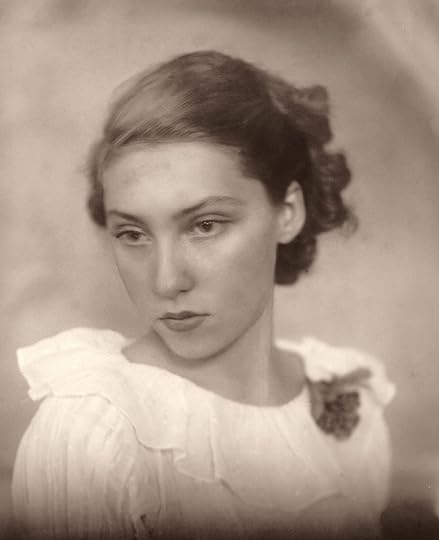
The young Clarice Lispector (photo: Paulo Gurgel Valente)
Sensation:
So far as I know, the chandelier of the title is mentioned once only, on page 10. It makes as good a place to start as any:
Without knowing why, she’d nonetheless halt, fanning her bare thin arms; she lived on the verge of things. The parlor. The parlor filled with neutral spots. The smell of an empty house. But the chandelier! There was the chandelier. The great spider would glow. She’d look at it immobile, uneasy, seeming to foresee a terrible life. That icy existence. Once! once in a flash—the chandelier would scatter in chrysanthemums and joy. Another time—while she was running through the parlor—it was a chaste seed. The chandelier. She’d skip off without looking back.The "she" is Virgínia, a young girl living on an estate in the country, Quiet Farm. where she grows up worshipping, but also dominated by, her older brother Daniel. The long middle section (there are no chapters) will see her as a young woman in the city, getting to know other men. Towards the end, she will return home for a while, only to change her mind and go back to the city. Apart from the stunning final pages, that is basically the entire story. The few lines I quoted above contain it all: the chaste seed, the terror, the chrysanthemums and joy. This is something I realize only now; while actually reading, I was reeling from the delirium of words.
For Virgínia may "live on the verge of things" as a girl, but the feelings that flood from her awareness of everything around her take total possession of her, inside and out; she is drowning in sensation. Here is another example, from near the beginning of her life in the city. Lispector is writing in longer sentences now, but there is still that extraordinary use of language:
She opened the door of her little apartment, penetrated the cold and stuffy surroundings of the living room. Slight stain was rippling in one of the corners, expanding like a light nearly erased coolness. She screamed low, sharp—but they’re lovely!—the room was breathing with half-closed eyes in the silence of mute pickaxes of the construction sites. The flowers were straightening up in delicate vigor, the petals thick and tired, damp with sweat—the stalk was tall, so calm and hard. The room was breathing, oppressed, asleep.Lispector apparently said that her writing was "trying to photograph perfume." Almost literally so here, the boundaries totally erased between the woman and the flowers, their scent, and the absence of sound from the street. Inanimate things take on feelings; the woman becomes one with the things.
Translation:
But such writing does make it an extraordinarily hard book to read. Take the second sentence in the passage above, "Slight stain was rippling in one of the corners, expanding like a light nearly erased coolness." It reads almost like a parody, doesn’t it, as though spit out by Google Translate unaltered.* On the very first page, when Virgínia is described as looking down at a river "with her serious mouth pressed against the dead branch of the bridge," and that word "branch" appeared again a few pages later, I got hold of the original Portuguese text online for comparison; could it mean "railing"? But no. I read Spanish, not Portuguese, but that was enough to suggest that, for the most part, the translators, Benjamin Moser and Magdalena Edwards, have indeed stuck close to the original. But close or not, it left an uneasiness in my mind: if I could not totally trust the translation, what was the point of reading on? I continued, though, but in a more rapid fashion that did not leave time to agonize over details.
Halfway through, I stopped to read the marvelous review in the New York Times by Parul Sehgal. Here’s what she says about Lispector’s language:
No one sounds like Lispector—in English or Portuguese. No one thinks like her. Not only does she seem endowed with more senses than the allotted five, she bends syntax and punctuation to her will. She turns the dictionary upside down, shaking all the words loose from their definitions, sprinkling them back in as she desires (along with a few eyelashes, toast crumbs and dead flies)—and doesn’t the language look better for it?Sehgal also points out that the editor and co-translator here, Benjamin Moser, is also the author of the 2009 biography of the writer that did much to put Lispector back on the map of modernist originals, so it seems I am wrong to complain. All the same, I have a sneaky feeling that closeness to the original is not necessarily the best criterion for those who do not know the original. If an author makes her reputation by rearranging the syntax and dictionary in her own language, surely the best kind of translation would be one that takes similar scissors and tongs to English, without being constrained by the patterns of Portuguese?
Submission:
Parul Sehgal quotes Moser as saying "in a strange and difficult body of work, as perhaps her strangest and most difficult book." She goes on in her own words: "The Chandelier is uniquely demanding—it’s baggy, claggy and contentedly glacial." It is that; the sensation of reading it was like struggling with a dream from which you cannot wake. But I could sense that this second novel of Clarice Lispector (1920–77), written when she still under 25, heralds a truly original artist. You might think of a Latin-American Virginia Woolf, except that I now know she had not read her at the time, so very much her own person. I surrendered as though submitting myself to sleep.
One more example must suffice. It comes at the end of a scene between Virgínia and her lover. Everything he says and does (typical male!) is all in mental quotes, as he imagines how he will describe it to a friend later. But then Lispector switches back to her:
She suddenly felt pain commingle with flesh, intolerable as if each cell were being stirred and shredded, divided in a mortal birth. Her mouth abruptly bitter and burning, she was horrified, rough and contrite as if in the face of spilled blood, a victory, a terror. So that was happiness.Such immediacy, such violence! From this point on, the novel seemed to accelerate—whether because Lispector had her foot on the pedal or I was just getting used to her driving. But the last few pages—again I thought of Virginia Woolf—were simultaneously a tour-de-force of modernist abstraction and totally, devastatingly clear.
*
Here is the sentence in Portuguese: Leve mancha ondulava num dos cantos, expandia como uma luz frescuras quase apagadas. And here is what Google Translate does in fact spit out: "A slight spot rippled in one of the corners, it expanded like a light, almost obliterated." A lot more normal, isn't it? I have noticed that the translators seem to go almost out of their way to use less usual words ("stain" is a particular favorite), and odd syntactic constructions, such as the omission of articles and strange plurals. Google simply ignores the word "frescuras" (coolness). Moser and Edwards get it in, but so awkwardly. Surely translation can do better than this?

June 17, 2022
Wenn eine Autorin über das eigene Werk sagt, man müsse es langsam lesen, bestenfalls gleich mehrfach, da sonst die Feinheiten verloren gingen, vielleicht sollte man dann vorsichtig sein. Eigenlob stinkt bekanntlich und Autoren, die vom eigenen Schaffen derart eingenommen sind, sind vielleicht so oder so nicht unbedingt daran interessiert, verständlich zu sein.
Clarice Lispector gehört zu dieser Spezies von Autoren, die recht eingenommen sind vom eigenen Können. Liest man sich jedoch in die ersten Seiten ihres großen Romans DER LÜSTER (O LUSTRE/1946; Dt. 2016) ein, bleibt nicht viel anderes, als zuzustimmen: Das ist derart dicht, sprachlich so verwoben und fein gesponnen, so nah zumindest an der Hauptfigur, daß es dem Roman wirklich nicht gerecht würde, ihn zu überfliegen oder auch nur eine einzige Zeile mit nachlassender Aufmerksamkeit zu lesen. Was die Lektüre natürlich dementsprechend anstrengend macht. So sei also gewarnt, wer sich überlegt, Lispector im Vorübergehen zu lesen oder irgendwo einzuschieben. Das gelingt nicht und versucht man es, wird die Lektüre schlichtweg enervierend.
Erzählt wird die Geschichte von Virgínia, die mit ihren Eltern und zwei Geschwistern – der sehr viel älteren Esmeralda und dem nur wenig älteren Daniel – in einer der nördlichen Provinzen Brasiliens aufwächst. Behütet könnte man dies wohl nennen. Zwischen ihr und Daniel entwickelt sich zusehends eine Gemeinschaft, die immer hermetischer, immer abgeschotteter gegen das Außen wird, eine Art Geheimbund, in dem Virgínia ihrem allzeit cholerischen Bruder verfallen zu sein scheint und seinen oft furchtbaren Ideen unhinterfragt folgt. Später gehen die beiden gemeinsam in eine größere Stadt, wo Daniel sich verliebt, dann heiratet und bald mit seiner Angetrauten wieder in die alte Heimat entschwindet, während Virgínia durch ihre Tage gleitet, sich beobachtend, die Diskrepanz zwischen ihrer Innen- und der Außenwelt durchdringend und wieder und wieder reflektierend, später unterhält sie eine Art lose Beziehung zu einem Mann namens Vicente, doch findet sie hier weder Erfüllung, noch Befriedigung. Als die Großmutter stirbt, kehrt Virgínia ins Elternhaus zurück, macht dort eine tiefgreifende Entfremdungserfahrung durch und kehrt dann in die Stadt zurück – entschlossen, ihr bisheriges Leben aufzulösen und endgültig in das Haus des Vaters zurückzukehren. Während ihres Besuchs in der Stadt erfüllt sich jedoch ihr Schicksal, final.
Von Spoilern braucht man hier nicht zu reden, denn in der äußeren Handlung passiert nahezu nichts. Lispector führt ihre Heldin, um sie einmal – fast despektierlich – so zu nennen, durch eine Reihe von Alltagssituationen – Treffen im Park, ein Abendessen, eine Nacht mit Vicente, eine Fahrt in einem furchtbar überfüllten Bus usw. Dabei passiert zumeist nichts Bemerkenswertes. Außer vielleicht, daß der Leser vermehrt feststellt, daß Virgínia nicht sonderlich beliebt zu sein scheint, selbst allerdings auch oft schroff auf ihre Umwelt reagiert, vor allem aber, daß die Interaktion mit dieser Umwelt nicht annähernd dem Innenleben entspricht, daß Lispector Virgínia angedeihen lässt.
Denn das ist die eigentliche Sensation dieses Romans: Selten wurde das Innenleben, wurde die Verfasstheit einer literarischen Figur derart unter die Lupe genommen, seziert, wie es hier der Fall ist. Seitenlang folgen wir einer Sprache, die zwar nicht ganz so hermetisch ist, wie es das Verhältnis der kindlichen Geschwister einst war, die es dem Leser allerdings durch eine Reihe von Eigenarten, schrägen Bildern und Metaphern und immer wieder verunsichernden Satzkonstruktionen, die auch erfahrene Leser ins Leere laufen lassen, enorm schwer macht, einzudringen, sich hier umzuschauen und einzurichten. Wagt man es dennoch, wird man mit einer Weltbetrachtung belohnt, die aufs Ganze geht, die sich nicht scheut, immer auf letzte Fragen zu schielen und dort Antworten zu suchen, wo die allermeisten sich scheuten, überhaupt nachzuschauen, lauern dort doch meist die wahren Ungeheuer. Virgínia hat keine Angst vor den Monstren ihres Lebens, im Gegenteil, immer wieder führt sie sich und damit den Leser in Bereiche ihrer selbst, an denen angekommen der reine, nackte Mensch steht, das Individuum in all seinen Facetten, Farben, Ängsten und Widersprüchen, von denen es nicht einmal ein Viertel je wird seiner Umwelt mitteilen können. Und wo sich das Individuum der Wirklichkeit des eigenen Ungeheuerlichen stellen muß, mit dem Monster in sich Frieden schließt oder für immer und ewig in den Kampf mit dem Ungetüm zieht – und untergeht.
Zweimal unterbricht Lispector diese Introspektion und lässt anderen Figuren eine ähnliche, wenn auch nahezu ausschließlich auf Virgínia bezogene Innenansicht zuteilwerden. Es sind Vicente und Esmeralda, deren Reflektion auf die Geliebte, respektive die Schwester, das Bild von Virgínia vervollständigen und zugleich für weitere Verwirrung hinsichtlich deren Charakters sorgen. Denn genau das ist Lispecors Anliegen, scheint es: Ihren Lesern das ganze Spektrum der menschlichen Seele, ihrer Psyche, in all dem darzulegen, was sie ausmacht und auch gefährlich macht. So entstehen hier zwei Welten. Eine ist die schier unendliche in Virgínias Kopf und Herzen, die andere jenes Außen, jene Alltagswelt, in der die Protagonistin sich zwar zurecht-, jedoch keinen Halt findet. Ihre Versuche scheitern oft kläglich. Sie lädt den Hausmeister des Hauses, in dem sie wohnt, zum Abendessen ein und will nicht begreifen, daß dies in einer so religiös und von engen Vorstellungen und Konventionen geprägten Gesellschaft wie der brasilianischen, zwangsläufig zu Mißverständnissen und auch Vorwürfen führen wird. Einmal mehr eckt sie also an und scheitert an einer Wirklichkeit, die sie zwar versteht, nicht aber akzeptiert.
Die beiden Ausflüge in die Innenwelten von Geliebtem und der Schwester zeigen allerdings auch, daß Virgínia eben nur ein Wesen ist, das kaum etwas Besonderes auf andere ausstrahlt. Vicente denkt fast zwangsläufig über andere Frauen nach und beginnt, Virgínia mit denen zu vergleichen, wobei sie nicht sonderlich gut abschneidet. Esmeralda bezeugt in ihrem Nachdenken über die so viel jüngere Schwester, die ihr einst mit einer unbedachten Äußerung möglicherweise alle Zukunftschancen als Gattin oder Geliebter verbaut hat, was wiederum der Mutter zupasskam, denn die will und wollte die älteste Tochter am liebsten immer bei sich behalten, daß auch sie vor allem um sich selbst, das eigene Schicksal kreist und wenig wahrnimmt von dem inneren Reichtum, der ihre Schwester ausmacht.
Lispector scheint geradezu zu erschauern vor dieser Diskrepanz und dem Mißverhältnis, vor dem Unerkannt-Bleiben in einer Welt, in der die oder der einzelne eigentlich nur noch sich selbst genügen kann, wenn er oder sie nicht verloren gehen will, ertrinken in einem Fluß aus Banalität und Gleichgültigkeit. Für genau diese Gleichgültigkeit steht der Bruder, Daniel. Von dessen Charisma, das im Buch durch Virgínia immer wieder behauptet wird, spüren wir nichts, im Gegenteil. Daniel, wenn er denn einmal auftritt, entpuppt sich als ewig geifernder, offenbar immer schlecht gelaunter kleiner Diktator, der gern über andere herrscht, am liebsten über die kleine Schwester, die ihm so verfallen scheint. Seine spätere Abwesenheit im Buch, die erst wieder auf den letzten Seiten, wenn Virgínia sich zuhause einfindet, nachdem die Großmutter gestorben ist, durchbrochen wird und darin lediglich bestätigt, daß dieser Kerl offenbar keine sonderliche Wandlung durchlaufen hat, diese Abwesenheit exemplifiziert die Distanz zwischen den Menschen – oder den Welten/Planeten, die sie darstellen – aufs Grausamste. Niemand, nicht der Geliebte, nicht einmal die Familie, niemand, auch nicht jene, die wir zu unseren Führern auserkoren haben (die vielleicht am allerwenigsten) werden uns wahrnehmen, werden wir sein wollen. Wir sind allein, immer; erst recht aber in jenen Momenten, in denen wir unsere vielleicht einprägsamsten Erfahrungen machen.
Clarice Lispector kann vielleicht als Solitär betrachtet werden. Als Frau zur Mitte des 20. Jahrhunderts, in einem stark konservativ geprägten Land, schreibt sie offenbar aus einer enorm reichen Innenwelt heraus und in eine Außenwelt hinein, die ihr fremd blieb und die ihr, vielleicht, auch Angst machte. Geschult an Virginia Woolf – manches Mal denkt man bei der Lektüre von DER LÜSTER an MRS. DALLOWAY (1925), gelegentlich auch an TO THE LIGHTHOUSE (1927) – und anderen Autoren und Autorinnen der Moderne, scheint hier eine Autorin einen sehr einsamen Kampf gekämpft zu haben. Einen Kampf mit der Sprache, den Bildern und sich selbst. Entstanden ist dabei ein wahrlich großer Roman, auf den sich Leserinnen und Leser, letztere vielleicht sogar noch etwas mehr, wirklich einlassen müssen. Einen Roman, den man möglichst langsam, vielleicht sogar mehrfach lesen sollte.
Clarice Lispector gehört zu dieser Spezies von Autoren, die recht eingenommen sind vom eigenen Können. Liest man sich jedoch in die ersten Seiten ihres großen Romans DER LÜSTER (O LUSTRE/1946; Dt. 2016) ein, bleibt nicht viel anderes, als zuzustimmen: Das ist derart dicht, sprachlich so verwoben und fein gesponnen, so nah zumindest an der Hauptfigur, daß es dem Roman wirklich nicht gerecht würde, ihn zu überfliegen oder auch nur eine einzige Zeile mit nachlassender Aufmerksamkeit zu lesen. Was die Lektüre natürlich dementsprechend anstrengend macht. So sei also gewarnt, wer sich überlegt, Lispector im Vorübergehen zu lesen oder irgendwo einzuschieben. Das gelingt nicht und versucht man es, wird die Lektüre schlichtweg enervierend.
Erzählt wird die Geschichte von Virgínia, die mit ihren Eltern und zwei Geschwistern – der sehr viel älteren Esmeralda und dem nur wenig älteren Daniel – in einer der nördlichen Provinzen Brasiliens aufwächst. Behütet könnte man dies wohl nennen. Zwischen ihr und Daniel entwickelt sich zusehends eine Gemeinschaft, die immer hermetischer, immer abgeschotteter gegen das Außen wird, eine Art Geheimbund, in dem Virgínia ihrem allzeit cholerischen Bruder verfallen zu sein scheint und seinen oft furchtbaren Ideen unhinterfragt folgt. Später gehen die beiden gemeinsam in eine größere Stadt, wo Daniel sich verliebt, dann heiratet und bald mit seiner Angetrauten wieder in die alte Heimat entschwindet, während Virgínia durch ihre Tage gleitet, sich beobachtend, die Diskrepanz zwischen ihrer Innen- und der Außenwelt durchdringend und wieder und wieder reflektierend, später unterhält sie eine Art lose Beziehung zu einem Mann namens Vicente, doch findet sie hier weder Erfüllung, noch Befriedigung. Als die Großmutter stirbt, kehrt Virgínia ins Elternhaus zurück, macht dort eine tiefgreifende Entfremdungserfahrung durch und kehrt dann in die Stadt zurück – entschlossen, ihr bisheriges Leben aufzulösen und endgültig in das Haus des Vaters zurückzukehren. Während ihres Besuchs in der Stadt erfüllt sich jedoch ihr Schicksal, final.
Von Spoilern braucht man hier nicht zu reden, denn in der äußeren Handlung passiert nahezu nichts. Lispector führt ihre Heldin, um sie einmal – fast despektierlich – so zu nennen, durch eine Reihe von Alltagssituationen – Treffen im Park, ein Abendessen, eine Nacht mit Vicente, eine Fahrt in einem furchtbar überfüllten Bus usw. Dabei passiert zumeist nichts Bemerkenswertes. Außer vielleicht, daß der Leser vermehrt feststellt, daß Virgínia nicht sonderlich beliebt zu sein scheint, selbst allerdings auch oft schroff auf ihre Umwelt reagiert, vor allem aber, daß die Interaktion mit dieser Umwelt nicht annähernd dem Innenleben entspricht, daß Lispector Virgínia angedeihen lässt.
Denn das ist die eigentliche Sensation dieses Romans: Selten wurde das Innenleben, wurde die Verfasstheit einer literarischen Figur derart unter die Lupe genommen, seziert, wie es hier der Fall ist. Seitenlang folgen wir einer Sprache, die zwar nicht ganz so hermetisch ist, wie es das Verhältnis der kindlichen Geschwister einst war, die es dem Leser allerdings durch eine Reihe von Eigenarten, schrägen Bildern und Metaphern und immer wieder verunsichernden Satzkonstruktionen, die auch erfahrene Leser ins Leere laufen lassen, enorm schwer macht, einzudringen, sich hier umzuschauen und einzurichten. Wagt man es dennoch, wird man mit einer Weltbetrachtung belohnt, die aufs Ganze geht, die sich nicht scheut, immer auf letzte Fragen zu schielen und dort Antworten zu suchen, wo die allermeisten sich scheuten, überhaupt nachzuschauen, lauern dort doch meist die wahren Ungeheuer. Virgínia hat keine Angst vor den Monstren ihres Lebens, im Gegenteil, immer wieder führt sie sich und damit den Leser in Bereiche ihrer selbst, an denen angekommen der reine, nackte Mensch steht, das Individuum in all seinen Facetten, Farben, Ängsten und Widersprüchen, von denen es nicht einmal ein Viertel je wird seiner Umwelt mitteilen können. Und wo sich das Individuum der Wirklichkeit des eigenen Ungeheuerlichen stellen muß, mit dem Monster in sich Frieden schließt oder für immer und ewig in den Kampf mit dem Ungetüm zieht – und untergeht.
Zweimal unterbricht Lispector diese Introspektion und lässt anderen Figuren eine ähnliche, wenn auch nahezu ausschließlich auf Virgínia bezogene Innenansicht zuteilwerden. Es sind Vicente und Esmeralda, deren Reflektion auf die Geliebte, respektive die Schwester, das Bild von Virgínia vervollständigen und zugleich für weitere Verwirrung hinsichtlich deren Charakters sorgen. Denn genau das ist Lispecors Anliegen, scheint es: Ihren Lesern das ganze Spektrum der menschlichen Seele, ihrer Psyche, in all dem darzulegen, was sie ausmacht und auch gefährlich macht. So entstehen hier zwei Welten. Eine ist die schier unendliche in Virgínias Kopf und Herzen, die andere jenes Außen, jene Alltagswelt, in der die Protagonistin sich zwar zurecht-, jedoch keinen Halt findet. Ihre Versuche scheitern oft kläglich. Sie lädt den Hausmeister des Hauses, in dem sie wohnt, zum Abendessen ein und will nicht begreifen, daß dies in einer so religiös und von engen Vorstellungen und Konventionen geprägten Gesellschaft wie der brasilianischen, zwangsläufig zu Mißverständnissen und auch Vorwürfen führen wird. Einmal mehr eckt sie also an und scheitert an einer Wirklichkeit, die sie zwar versteht, nicht aber akzeptiert.
Die beiden Ausflüge in die Innenwelten von Geliebtem und der Schwester zeigen allerdings auch, daß Virgínia eben nur ein Wesen ist, das kaum etwas Besonderes auf andere ausstrahlt. Vicente denkt fast zwangsläufig über andere Frauen nach und beginnt, Virgínia mit denen zu vergleichen, wobei sie nicht sonderlich gut abschneidet. Esmeralda bezeugt in ihrem Nachdenken über die so viel jüngere Schwester, die ihr einst mit einer unbedachten Äußerung möglicherweise alle Zukunftschancen als Gattin oder Geliebter verbaut hat, was wiederum der Mutter zupasskam, denn die will und wollte die älteste Tochter am liebsten immer bei sich behalten, daß auch sie vor allem um sich selbst, das eigene Schicksal kreist und wenig wahrnimmt von dem inneren Reichtum, der ihre Schwester ausmacht.
Lispector scheint geradezu zu erschauern vor dieser Diskrepanz und dem Mißverhältnis, vor dem Unerkannt-Bleiben in einer Welt, in der die oder der einzelne eigentlich nur noch sich selbst genügen kann, wenn er oder sie nicht verloren gehen will, ertrinken in einem Fluß aus Banalität und Gleichgültigkeit. Für genau diese Gleichgültigkeit steht der Bruder, Daniel. Von dessen Charisma, das im Buch durch Virgínia immer wieder behauptet wird, spüren wir nichts, im Gegenteil. Daniel, wenn er denn einmal auftritt, entpuppt sich als ewig geifernder, offenbar immer schlecht gelaunter kleiner Diktator, der gern über andere herrscht, am liebsten über die kleine Schwester, die ihm so verfallen scheint. Seine spätere Abwesenheit im Buch, die erst wieder auf den letzten Seiten, wenn Virgínia sich zuhause einfindet, nachdem die Großmutter gestorben ist, durchbrochen wird und darin lediglich bestätigt, daß dieser Kerl offenbar keine sonderliche Wandlung durchlaufen hat, diese Abwesenheit exemplifiziert die Distanz zwischen den Menschen – oder den Welten/Planeten, die sie darstellen – aufs Grausamste. Niemand, nicht der Geliebte, nicht einmal die Familie, niemand, auch nicht jene, die wir zu unseren Führern auserkoren haben (die vielleicht am allerwenigsten) werden uns wahrnehmen, werden wir sein wollen. Wir sind allein, immer; erst recht aber in jenen Momenten, in denen wir unsere vielleicht einprägsamsten Erfahrungen machen.
Clarice Lispector kann vielleicht als Solitär betrachtet werden. Als Frau zur Mitte des 20. Jahrhunderts, in einem stark konservativ geprägten Land, schreibt sie offenbar aus einer enorm reichen Innenwelt heraus und in eine Außenwelt hinein, die ihr fremd blieb und die ihr, vielleicht, auch Angst machte. Geschult an Virginia Woolf – manches Mal denkt man bei der Lektüre von DER LÜSTER an MRS. DALLOWAY (1925), gelegentlich auch an TO THE LIGHTHOUSE (1927) – und anderen Autoren und Autorinnen der Moderne, scheint hier eine Autorin einen sehr einsamen Kampf gekämpft zu haben. Einen Kampf mit der Sprache, den Bildern und sich selbst. Entstanden ist dabei ein wahrlich großer Roman, auf den sich Leserinnen und Leser, letztere vielleicht sogar noch etwas mehr, wirklich einlassen müssen. Einen Roman, den man möglichst langsam, vielleicht sogar mehrfach lesen sollte.

April 16, 2018
It is agonizing to bail on this book because I have heard SO much about the author and I really wanted to connect with it. The way this novel is written, the characters feel almost manic, and it is like my own brain gets pushed out of the way, as their thoughts demand all the space and air in the room. It makes it hard to understand what is going on (the relationship between the brother and the sister is the most clear but I have no idea what is real and what's not) and difficult to navigate as a story.
I think I'll bail on the novel and at some point return to the short stories, and see if I have a better experience with them. Perhaps they will aid in my understanding of this novel as well. I got about halfway after multiple attempts before calling it quits, because I really felt like this would be for me!
Thanks to the publisher for approving my request through Edelweiss, and apologies for not making it through.
I think I'll bail on the novel and at some point return to the short stories, and see if I have a better experience with them. Perhaps they will aid in my understanding of this novel as well. I got about halfway after multiple attempts before calling it quits, because I really felt like this would be for me!
Thanks to the publisher for approving my request through Edelweiss, and apologies for not making it through.

August 31, 2018
There is famously a fairly lengthy gap in the supernaturally brilliant Clarice Lispector's literary output, to be accounted for by the fact that she spent more than a decade-and-a-half of her life, starting at the age of twenty-four, the globetrotting wife of a Brazilian diplomat. Generally when people write about or praise Lispector it is with regards to the stories and novels she began to produce upon returning to Brazil and getting back down to work as a writer at the beginning of the 1960s. Indeed, the stories and two novels I have read from the longer and I suppose "mature" period are awe-inspiring masterpieces. Please note, however, that I throw scare quotes around the word "mature." It is to my great shame that I confess to having embarked upon reading THE CHANDELIER with some trepidation regarding the prospect of reading something composed by a twenty-three-year-old, despite the fact that I had already read and been wowed by stories Lispector wrote during this period collected in the New Directions volume of COMPLETE STORIES published in 2015. If THE CHANDELIER, like those stories, could be said to focus on the awkwardness and vulnerability of the embodied experience of a young woman in the world, there is nothing whatsoever awkward about the writing itself, which is totally assured and of a unimpeachable modernist cultivation. As when I read those early stories, I though frequently of Virginia Woolf when reading Lispector's second novel. Though Woolf is a giant and anybody of sound mind would have to revere her without quibble, I believe that Clarice at twenty-three was more or less her equal. Yes, it is remarkable. Starting in the 60s, Clarice would begin to develop a more wholly idiosyncratic style and approach, but in her early work we already encounter, bracingly, a voice melded to an utterly unique slant of mind. The opening sentence of THE CHANDELIER is: "She'd be flowing all her life." This may well be the most declarative-with-respects-to-method opening line ever for a stream-of-consciousness novel. And it is a stream-of-consciousness novel, primarily--though it regularly switches reference frames and perspectives--about a young woman who, though enclosed and restrained by worldly particulars, contains the universe, as a cell its often said to. The thing about Lispector's stream-of-consciousness it that its syntax is so unconventional and her insights at times so curiously opaque that, though the novel does "flow" like the life of its protagonist, it were as though the author wanted to systematically slow you down and make you breath it all in. Lispector doesn't want you to have a smooth ride. She wants you jostled. That said, this is a cozy novel, strangely, almost a womb. Every time I got back into it I found my nervous system almost instantaneously pacified. There is a quality of exhale. When I think back on the book I will always especially remember two metaphysical train journeys and the mystical metaphor of the chandelier itself (elaborated near the end of the book and during the second train journey in question). The chandelier is early Lispector personified: crystal and plurality of refraction. (I love the line during the passage about the chandelier that speaks of "intimate spherical movements," which itself follows the pining observation that "old people" benefit from "the imponderable living of all the incomprehensible instants of sleep and wakefulness.") THE CHANDELIER has an additional layer of resonances for me personally, as it focuses in no small part on the emotional and spiritual bonds between a brother and sister. The protagonist, Virgínia, makes me think of my younger sister. That would make me the brother, Daniel. I recognize in Daniel my own cruelty and miserliness with tenderness. I knew my sister admired me and craved my approval when we were young and I think I resented her for it. I routinely failed to comport myself admirably. THE CHANDELIER, beginnings with a talismanic sign and terminating in a startling consummation, ends up above all being a reminder that the whole universe exists inside that mortal and exposed person you neglect. Another lesson from the novel: the meaning of a firefly is that it disappears.
April 1, 2018
“Oh the calm sadness of memory.”
.
“At those same instants her body was living fully in the living room such was she divining the need to surround with solitude the beginning erected in the half-light. Beneath an appearance of calm and hard brightness she was addressing herself to nobody and abandoning herself watchful as to a dream she would forget. Behind secure movements she was trying with danger and delicateness to touch the same light and elusive, to find the nucleus made of a single instant, before the quality came to rest on things, before what really came unbalanced tomorrow—and there’s a feeling ahead and another falling away, the tenuous triumph and the defeat, perhaps nothing more than breathing. Life making itself, the evolution of the being without the destiny—the progression from the morning not aiming for the night but attaining it.”
.
To see language and the world through the eyes of Clarice Lispector, is to enter a new plane of perception, of existence, an otherworldly experience, and one that is pure magic. Here Lispector is working with experience, with environment, both internal and external, in fascinating ways, and relentlessly exploring her lifelong pursuit of capturing “the nucleus made of a single instant". A breathtaking and breathgiving read. There are bursts, moments, of her inventive syntax, where sentence structuring gets put on its head, which would later become a trademark quality of her prose, but here the flow is more fluid, less jarring, and I had an easier time dropping into the stream, finding the rhythm. This is a prose that sings, one that spirals and spirals, returns, her breath held longer, the language more liquid, perfectly paced. Just a brilliant piece of literature. Such energy, such command, such rawness. Reminded of Woolf and Quin, and hold her in the same regard. A must read for any who live to explore language. Bliss bliss bliss. Translation wizardry. How is it possible that this was written between the age of 23 and 24! She is a master. And look out, mid way through, when the page comes, you'll know when I mean!
.
“At those same instants her body was living fully in the living room such was she divining the need to surround with solitude the beginning erected in the half-light. Beneath an appearance of calm and hard brightness she was addressing herself to nobody and abandoning herself watchful as to a dream she would forget. Behind secure movements she was trying with danger and delicateness to touch the same light and elusive, to find the nucleus made of a single instant, before the quality came to rest on things, before what really came unbalanced tomorrow—and there’s a feeling ahead and another falling away, the tenuous triumph and the defeat, perhaps nothing more than breathing. Life making itself, the evolution of the being without the destiny—the progression from the morning not aiming for the night but attaining it.”
.
To see language and the world through the eyes of Clarice Lispector, is to enter a new plane of perception, of existence, an otherworldly experience, and one that is pure magic. Here Lispector is working with experience, with environment, both internal and external, in fascinating ways, and relentlessly exploring her lifelong pursuit of capturing “the nucleus made of a single instant". A breathtaking and breathgiving read. There are bursts, moments, of her inventive syntax, where sentence structuring gets put on its head, which would later become a trademark quality of her prose, but here the flow is more fluid, less jarring, and I had an easier time dropping into the stream, finding the rhythm. This is a prose that sings, one that spirals and spirals, returns, her breath held longer, the language more liquid, perfectly paced. Just a brilliant piece of literature. Such energy, such command, such rawness. Reminded of Woolf and Quin, and hold her in the same regard. A must read for any who live to explore language. Bliss bliss bliss. Translation wizardry. How is it possible that this was written between the age of 23 and 24! She is a master. And look out, mid way through, when the page comes, you'll know when I mean!

September 29, 2022
Challenging but rewarding. This is probably Clarice's most beautiful, flowing text, but it's also her most exhausting. Very glad I read it though.
May 2, 2026
Beautiful writing, charged and exhilarating, deliciously introspective. It's probably my favourite Lispector book so far (a close call between it and Near to the Wild Heart).
.
.

April 12, 2022
Out of all her existential books this one felt the heaviest to me, it took me a lot of time to read.
I like her more when she’s more abstract to be honest, it’s still impressive that she wrote this so young but personally I like more her works that are full of secrets, of mystery, full of her inner self, when there’s no plot, just stream of counciousness, the maze of Clarice’s thoughts. In her later books she constantly says how she’s unable to write novels, I agree, her most outstanding work are the ones in which she writes in a genre of her own.
It starts a bit slow, more in the descriptive style and it’s about half of the book that I find her “staples signature” she goes full into the existentialism although there are great moments too when she’s young playing with the mud. One can't help but wonder if this book too is autobiographic in a way, here’s this little girl with a huge world inside of her, incapable of externalizing her inner world and thoughts, there’s a moment in “La Sociedad de las Sombras” where Daniel constantly punish her and calls her vulgar for not being a deep thinker, but we know as readers that she’s the most deep thinker little girl in South American literature (maybe?) yet this doesn’t seem to trouble her as she already thinks she doesn’t mean much, a feeling we often see in her books.
Again, I have to admit I like her more when she write less but says more, when she writes in code and I have to decipher her or decipher myself as most of the times happens when I read her.
I want her alone, she’s the interesting one, not her characters and this is why I have some struggle with some of her short stories, I wonder if she was trough pressure in making this one “easier”
She’s the queen of existentialism, her best subject is herself.
Not a favorite but still a great work by the wonderful Clarice.
I like her more when she’s more abstract to be honest, it’s still impressive that she wrote this so young but personally I like more her works that are full of secrets, of mystery, full of her inner self, when there’s no plot, just stream of counciousness, the maze of Clarice’s thoughts. In her later books she constantly says how she’s unable to write novels, I agree, her most outstanding work are the ones in which she writes in a genre of her own.
It starts a bit slow, more in the descriptive style and it’s about half of the book that I find her “staples signature” she goes full into the existentialism although there are great moments too when she’s young playing with the mud. One can't help but wonder if this book too is autobiographic in a way, here’s this little girl with a huge world inside of her, incapable of externalizing her inner world and thoughts, there’s a moment in “La Sociedad de las Sombras” where Daniel constantly punish her and calls her vulgar for not being a deep thinker, but we know as readers that she’s the most deep thinker little girl in South American literature (maybe?) yet this doesn’t seem to trouble her as she already thinks she doesn’t mean much, a feeling we often see in her books.
Again, I have to admit I like her more when she write less but says more, when she writes in code and I have to decipher her or decipher myself as most of the times happens when I read her.
I want her alone, she’s the interesting one, not her characters and this is why I have some struggle with some of her short stories, I wonder if she was trough pressure in making this one “easier”
She’s the queen of existentialism, her best subject is herself.
Not a favorite but still a great work by the wonderful Clarice.

sampled
November 12, 2021Made it to p. 100 before it was due back at the library. To be honest, she was starting to lose me a bit around this point, anyway. I preferred the time when they were younger and living on the estate. I will certainly return to Lispector again, but maybe not to this.

June 13, 2022
Hello, a trying Lispector-completionist here.
Probably the most difficult Lispector I've read thus far. Mainly because there are rarely any paragraph breaks so you're trapped in the claustrophobic metaphysical realms that Lispector is known for. It was hard to leave a paragraph because too much was happening and I couldn't breathe.
Doubles. Echoes. Siblingship, the intimacy we share with them, the ways in which we love and hate (at the same time), and how we live and die and become at war with one another, bound by blood.
If I'm not mistaken, when I read Lispector, I truly think of the first person narrative. But here we are in the third person, bouncing between Virginia and Daniel, attempts to feel from both characters through the God-like eye. This is interesting because it's through the first person that her narrators dig towards to find "God," but here, God finds them, and in essence, they find each other through the anxious mysteries that cloud them. In ways, both siblings become singular, sharing intimacies that verge on incest or, simply, the unspeakable odd things we do as families, that make no sense but to our own dysfunctions as dysfunctional families.
The ending nods to her posthumous work, 𝘛𝘩𝘦 𝘏𝘰𝘶𝘳 𝘰𝘧 𝘵𝘩𝘦 𝘚𝘵𝘢𝘳, which I read a few months back, and it's interesting to see the parallels, the ways in which her writing develops and refines itself over time. She wrote this freakin' thing at 26!!!
!!!
Along with siblingship, there are mass explorations into nature, bringing the body back to the foundations of creation itself (the mud scene) and because that scene is woven so beautifully into the narrator's childhood, some interesting things occur when we move through meditations on the female body, from girl to woman, and all of its anxieties and desires, bloody interiors.
Will definitely revisit this sometime in the future. There is plenty here that I missed but would love to discover and rediscover with every new reading.
Probably the most difficult Lispector I've read thus far. Mainly because there are rarely any paragraph breaks so you're trapped in the claustrophobic metaphysical realms that Lispector is known for. It was hard to leave a paragraph because too much was happening and I couldn't breathe.
Doubles. Echoes. Siblingship, the intimacy we share with them, the ways in which we love and hate (at the same time), and how we live and die and become at war with one another, bound by blood.
If I'm not mistaken, when I read Lispector, I truly think of the first person narrative. But here we are in the third person, bouncing between Virginia and Daniel, attempts to feel from both characters through the God-like eye. This is interesting because it's through the first person that her narrators dig towards to find "God," but here, God finds them, and in essence, they find each other through the anxious mysteries that cloud them. In ways, both siblings become singular, sharing intimacies that verge on incest or, simply, the unspeakable odd things we do as families, that make no sense but to our own dysfunctions as dysfunctional families.
The ending nods to her posthumous work, 𝘛𝘩𝘦 𝘏𝘰𝘶𝘳 𝘰𝘧 𝘵𝘩𝘦 𝘚𝘵𝘢𝘳, which I read a few months back, and it's interesting to see the parallels, the ways in which her writing develops and refines itself over time. She wrote this freakin' thing at 26!!!
!!!
Along with siblingship, there are mass explorations into nature, bringing the body back to the foundations of creation itself (the mud scene) and because that scene is woven so beautifully into the narrator's childhood, some interesting things occur when we move through meditations on the female body, from girl to woman, and all of its anxieties and desires, bloody interiors.
Will definitely revisit this sometime in the future. There is plenty here that I missed but would love to discover and rediscover with every new reading.

January 4, 2022
Gorgeously written (I jotted down countless quotes & phrases), but wild & bewildering—there's something deliberately elusive & even evasive about the narrative technique, which often felt like trying to grasp at quicksilver as it flows between the fingers. Can only liken it to Woolf at her most ecstatic, only for 320 pages straight. Which is, to put it bluntly, both extremely impressive & a lot (perhaps too much?).
[Read #21 of "2021: My Year of (Mostly) Midcentury Women Writers"]
[Read #21 of "2021: My Year of (Mostly) Midcentury Women Writers"]

March 7, 2019
"e le sembrava inoltre di essere arrivata al limite di se stessa, là dove gioia, innocenza e morte si confondevano."
Secondo romanzo di Clarice Lispector, Il segreto segue di un paio d'anni Vicino al cuore selvaggio, e per certi aspetti ne continua la ricerca interiore che caratterizza del resto tutta la produzione letteraria della scrittrice brasiliana.
La trama di per sé è sottile ma l'opera è importante e ricca di spunti: romanzo di formazione, dramma psicologico e flusso di coscienza in puro stile tardo-modernista. Lispector scava nella personalità di Virginia: prima adolescente che vive di passioni, di devozione verso il fratello Daniel e che soprattutto si nutre di istanti, di ognuno dei quali cerca di arrivare al nucleo per succhiarne il nettare e poi ragazza che non sa (non vuole) liberarsi della sua parte infantile.
Virginia è consapevole di una diversità che la condanna alla solitudine ma è troppo attratta dalla sua interiorità per curarsi di quello che accade fuori da lei. Basta una vertigine, uno svenimento, o una specie di auto-ipnosi a sprofondarla dentro a se stessa, a proiettarla in quel mondo "ignoto e folle" del quale non sa fare a meno. E una volta sprofondata negli abissi della coscienza Virginia non sa più uscirne ("sì, sì, per poter esistere lei aveva bisogno di una vita segreta"), o meglio, quello a cui aspira è una coscienza "espansa", che attraverso il sogno le faccia superare i limiti della natura umana.
Nella geografia del suo mondo la realtà diventa menzogna, finzione che nasconde la verità e le parole strumenti inutili i quali lei preferisce le sensazioni. Vivere diventa così un gioco d'equilibrio "orribile e irrimediabile", una passeggiata sul filo che non può concludersi che con la caduta di Virginia.
Secondo romanzo di Clarice Lispector, Il segreto segue di un paio d'anni Vicino al cuore selvaggio, e per certi aspetti ne continua la ricerca interiore che caratterizza del resto tutta la produzione letteraria della scrittrice brasiliana.
La trama di per sé è sottile ma l'opera è importante e ricca di spunti: romanzo di formazione, dramma psicologico e flusso di coscienza in puro stile tardo-modernista. Lispector scava nella personalità di Virginia: prima adolescente che vive di passioni, di devozione verso il fratello Daniel e che soprattutto si nutre di istanti, di ognuno dei quali cerca di arrivare al nucleo per succhiarne il nettare e poi ragazza che non sa (non vuole) liberarsi della sua parte infantile.
Virginia è consapevole di una diversità che la condanna alla solitudine ma è troppo attratta dalla sua interiorità per curarsi di quello che accade fuori da lei. Basta una vertigine, uno svenimento, o una specie di auto-ipnosi a sprofondarla dentro a se stessa, a proiettarla in quel mondo "ignoto e folle" del quale non sa fare a meno. E una volta sprofondata negli abissi della coscienza Virginia non sa più uscirne ("sì, sì, per poter esistere lei aveva bisogno di una vita segreta"), o meglio, quello a cui aspira è una coscienza "espansa", che attraverso il sogno le faccia superare i limiti della natura umana.
Nella geografia del suo mondo la realtà diventa menzogna, finzione che nasconde la verità e le parole strumenti inutili i quali lei preferisce le sensazioni. Vivere diventa così un gioco d'equilibrio "orribile e irrimediabile", una passeggiata sul filo che non può concludersi che con la caduta di Virginia.

August 24, 2018
Clarice Lispector’s writing is the baroque epitome of modernist styling. The prose is poesy, and essentially resistant to interpretive work. It’s an arpeggiation of language where Lispector bends words to her will, with the image and feeling of the syntax as the most important factor in choice and placement rather than sparkling clarity. This makes for a heady, vivid, difficult read.
Whereas Near to the Wild Heart has vague trappings of a plot—or at least, Joana has a beginning, middle, and end to her life, The Chandelier is much looser with its convictions to narrative. Opting instead to dive deeper into the mind of her protagonist, Lispector’s fluid language is in a lot of ways as impenetrable as it is evocative and precise. Perhaps only Joseph McElroy has come as close to expressing the interiority of human consciousness in its truest form—ie. what lives on the page is a person’s chaotic, spontaneous thoughts, often unfiltered through the organizing functions of consciousness.
I will admit to “enjoying” Near to the Wild Heart more than this, Lispector’s second novel, though The Chandelier is inarguably the more significant and important piece of literature. It’s just wonderful to see Benjamin Moser and New Directions working together to shine a much-deserved bright-beaming light on this woman’s oeuvre, and bring new translations of her work to the world. I will enjoy future trips into Hurricane Clarice’s novels of innerspace.
Whereas Near to the Wild Heart has vague trappings of a plot—or at least, Joana has a beginning, middle, and end to her life, The Chandelier is much looser with its convictions to narrative. Opting instead to dive deeper into the mind of her protagonist, Lispector’s fluid language is in a lot of ways as impenetrable as it is evocative and precise. Perhaps only Joseph McElroy has come as close to expressing the interiority of human consciousness in its truest form—ie. what lives on the page is a person’s chaotic, spontaneous thoughts, often unfiltered through the organizing functions of consciousness.
I will admit to “enjoying” Near to the Wild Heart more than this, Lispector’s second novel, though The Chandelier is inarguably the more significant and important piece of literature. It’s just wonderful to see Benjamin Moser and New Directions working together to shine a much-deserved bright-beaming light on this woman’s oeuvre, and bring new translations of her work to the world. I will enjoy future trips into Hurricane Clarice’s novels of innerspace.
July 3, 2022
The sheer interiority of Lispector's The Chandelier is dizzying. The novel is violently sincere in its dialogue, which acutely examines thematic concerns regarding the construction of thought and existence, the intricate nature of relationships and the complexities (and at times the overwhelming reality) of our subjective mediations on childhood. The prose of Lispector's idiosyncratic novel reminded me of Virginia Woolf's most experimental work The Waves at its most eccentric and expansive. I think I will need time to fully and earnestly digest this book, but for now, I will summarise it as such: The Chandelier is a hauntingly stirring work that is both deeply gratifying yet profoundly existential.
However, in a book with practically no paragraphs or formal structure this novel is uniquely dense - which makes it difficult to follow at times. I sympathise with those who have left previous reviews that they struggled to make it past page 100, yet mourn the rich experience of Lispector's prose they are forgoing.
However, in a book with practically no paragraphs or formal structure this novel is uniquely dense - which makes it difficult to follow at times. I sympathise with those who have left previous reviews that they struggled to make it past page 100, yet mourn the rich experience of Lispector's prose they are forgoing.

August 14, 2024
Non è una cosa la mia esistenza?
Perché nel profondo del suo essere, sotto l'avambraccio che la sprofondava nel buio, avvertiva una lieve tensione, occhi aperti che vigilavano contro. Era questo il destino – sembrava notare – perché senza di esso sarebbe stata libera di lasciarsi penetrare da tante di quelle possibilità... lei, che si manteneva nel buonsenso con un'ostinazione che stranamente non pareva nascere da un desiderio profondo ma come da un capriccio dei nervi, un presentimento. Occhi aperti vigilanti e una lieve tensione che impediva... che cosa? Forse dietro i suoi occhi non c'era niente di così amato e vivo da dover essere protetto con tanta devozione, forse solamente il vuoto che si univa all'infinito, sentiva lei confusa quasi appisolandosi – unendo la propria profondità all'infinito senza la minima coscienza, senza estasi, solo una cosa che vivesse senza essere vista né sentita, secca come una verità ignorata”.
Nel libro di Clarice Lispector non è insolito che il cuore del lettore si senta perso, ingannato, persino disperato. Sono tante le contraddizioni e le complessità dentro quali la protagonista Virginia avvolge la capacità di comprensione comune, tanto da farne la vittima di un turbamento monotono, di una profondità egoista. Non c'è più uscita dal livello sotterraneo, non si vuole raggiungere quella calma e quella assenza, che annunciano tanto l'ombra quanto l'errore. La critica scrive che Lispector è un'enigma, irresolubilmente solitario, come un'isola, come pura collera di tempo ormai trascorso. Virginia nega di provare quel senso di disillusione, di immane sconforto: non ammette di desiderare alcun uomo, si impone di scordarne l'importanza. Il cuore le duole sempre, per ogni simbolo, per ogni promessa, per ogni trauma: come quel lampadario-ragno che dichiarava di apprezzare così tanto perché immagine di semplicità e di modestia. Quasi di vuoto. Per lei è difficile parlare con quel fratello che ama senza condizioni, cui si sottomette come in una nebbia spoglia di alberi e nel suono di acque che fluiscono. Il suo nome è pieno e guarda al mondo – interno ed esterno – con sincerità, e compenetrandosi nella natura, cerca il segreto del reale, ne lacera l'insensata intransigenza. Lispector veste le sue pagine di monologhi sul significato della vita, sul nucleo dell'istante, sulla tristezza silenziosa che è presagio di qualcosa di terribile ma anche impulso che ripiega intensamente sull'intuizione. Clarice compose giovanissima l'esordio, era nata in uno shtetl che non risultava nemmeno sulle mappe ed era fiera della sua brasilianità nordestina e amava quel linguaggio confuso e imperfetto che nasceva dalla mescolanza dei suoi viaggi e delle sue esperienze. Sposa a un diplomatico, scrisse Il Lampadario a Napoli nel 1944, dove fece anche l'infermiera, e poi si spostò in Svizzera prima di rientrare a Rio e emigrare infine a Washington. Nomade quanto la sua interiorità insonnolita e pericolosa. Tutto si frantuma e il tempo procede per grandi pause. Lei capta vibrazioni e tremori, tra felicità magnetiche e conclusioni stregonesche. Virginia, concentrata e magica, dice addio alle cose in un'ultima luce di coscienza, sa nell'oscurità che quelle cose sono vive e morte ”come i suoi animali", e così misteriosamente possiede la realtà, il suo centro emotivo: la gran parte del suo esistere è percepito come cosa e come oggetto, facendo del suo intimo inesprimibile una parola inquieta.
“Lei che non aveva mai perso tempo – confuso, sordo, rapido, chiaro, dissonante, il rumore che proviene dall'orchestra che si accorda e continua ad accordarsi per il concerto e un moto di benessere in cerca di conforto, il cuore insolito. Quello che accadeva era così semplice che non sapeva da che parte capirlo. Nella penombra gelata corridoi neri, stretti, vuoti e umidi, una sostanza dormiente e silenziosa: e di colpo! di colpo! di colpo! la farfalla bianca che svolazzava nei corridoi ombrosi, perdendosi in fondo all'oscurità- lei desiderava oscuramente interrompersi. La strada esalava fumo, fredda e insonnolita, il suo stesso cuore si stupiva, la testa pesante, pesante di una grazia fragorosa – mentre le vie di Brejo Alto si incamminavano veloci e vacillanti nel loro odore di mele, truciolato, import-export, quella mancanza di mare. E di colpo entusiasta del suo stesso spirito. Era un momento estremamente intimo e strano – tutto questo lei lo riconosceva, quante volte, quante volte lo aveva provato senza saperlo; e adesso, straordinariamente quieta, purificata delle proprie fonti di energia, cedendo persino le possibilità future – ah! non avere riconosciuto quella sorta di gesto, quasi una postura del pensiero, la testa piegata di lato, così, così... non avergli dato importanza... come si sarebbe impaurita se l'avesse capito – però adesso non aveva paura, l'impulso era inferiore alla qualità più segreta dell'essere, nella penombra gelata nasceva un'esattezza nuova: no! no! non era una sensazione decadente! ma desiderando oscuramente, oscuramente interrompersi, la difficoltà, la difficoltà che veniva dal cielo, che veniva. Il primo fatto reale, l'unico fatto che sarebbe servito come inizio della sua vita, libero come lanciare un calice di cristallo dalla finestra, il movimento irresistibile che non si sarebbe più potuto trattenere.
Perché nel profondo del suo essere, sotto l'avambraccio che la sprofondava nel buio, avvertiva una lieve tensione, occhi aperti che vigilavano contro. Era questo il destino – sembrava notare – perché senza di esso sarebbe stata libera di lasciarsi penetrare da tante di quelle possibilità... lei, che si manteneva nel buonsenso con un'ostinazione che stranamente non pareva nascere da un desiderio profondo ma come da un capriccio dei nervi, un presentimento. Occhi aperti vigilanti e una lieve tensione che impediva... che cosa? Forse dietro i suoi occhi non c'era niente di così amato e vivo da dover essere protetto con tanta devozione, forse solamente il vuoto che si univa all'infinito, sentiva lei confusa quasi appisolandosi – unendo la propria profondità all'infinito senza la minima coscienza, senza estasi, solo una cosa che vivesse senza essere vista né sentita, secca come una verità ignorata”.
Nel libro di Clarice Lispector non è insolito che il cuore del lettore si senta perso, ingannato, persino disperato. Sono tante le contraddizioni e le complessità dentro quali la protagonista Virginia avvolge la capacità di comprensione comune, tanto da farne la vittima di un turbamento monotono, di una profondità egoista. Non c'è più uscita dal livello sotterraneo, non si vuole raggiungere quella calma e quella assenza, che annunciano tanto l'ombra quanto l'errore. La critica scrive che Lispector è un'enigma, irresolubilmente solitario, come un'isola, come pura collera di tempo ormai trascorso. Virginia nega di provare quel senso di disillusione, di immane sconforto: non ammette di desiderare alcun uomo, si impone di scordarne l'importanza. Il cuore le duole sempre, per ogni simbolo, per ogni promessa, per ogni trauma: come quel lampadario-ragno che dichiarava di apprezzare così tanto perché immagine di semplicità e di modestia. Quasi di vuoto. Per lei è difficile parlare con quel fratello che ama senza condizioni, cui si sottomette come in una nebbia spoglia di alberi e nel suono di acque che fluiscono. Il suo nome è pieno e guarda al mondo – interno ed esterno – con sincerità, e compenetrandosi nella natura, cerca il segreto del reale, ne lacera l'insensata intransigenza. Lispector veste le sue pagine di monologhi sul significato della vita, sul nucleo dell'istante, sulla tristezza silenziosa che è presagio di qualcosa di terribile ma anche impulso che ripiega intensamente sull'intuizione. Clarice compose giovanissima l'esordio, era nata in uno shtetl che non risultava nemmeno sulle mappe ed era fiera della sua brasilianità nordestina e amava quel linguaggio confuso e imperfetto che nasceva dalla mescolanza dei suoi viaggi e delle sue esperienze. Sposa a un diplomatico, scrisse Il Lampadario a Napoli nel 1944, dove fece anche l'infermiera, e poi si spostò in Svizzera prima di rientrare a Rio e emigrare infine a Washington. Nomade quanto la sua interiorità insonnolita e pericolosa. Tutto si frantuma e il tempo procede per grandi pause. Lei capta vibrazioni e tremori, tra felicità magnetiche e conclusioni stregonesche. Virginia, concentrata e magica, dice addio alle cose in un'ultima luce di coscienza, sa nell'oscurità che quelle cose sono vive e morte ”come i suoi animali", e così misteriosamente possiede la realtà, il suo centro emotivo: la gran parte del suo esistere è percepito come cosa e come oggetto, facendo del suo intimo inesprimibile una parola inquieta.
“Lei che non aveva mai perso tempo – confuso, sordo, rapido, chiaro, dissonante, il rumore che proviene dall'orchestra che si accorda e continua ad accordarsi per il concerto e un moto di benessere in cerca di conforto, il cuore insolito. Quello che accadeva era così semplice che non sapeva da che parte capirlo. Nella penombra gelata corridoi neri, stretti, vuoti e umidi, una sostanza dormiente e silenziosa: e di colpo! di colpo! di colpo! la farfalla bianca che svolazzava nei corridoi ombrosi, perdendosi in fondo all'oscurità- lei desiderava oscuramente interrompersi. La strada esalava fumo, fredda e insonnolita, il suo stesso cuore si stupiva, la testa pesante, pesante di una grazia fragorosa – mentre le vie di Brejo Alto si incamminavano veloci e vacillanti nel loro odore di mele, truciolato, import-export, quella mancanza di mare. E di colpo entusiasta del suo stesso spirito. Era un momento estremamente intimo e strano – tutto questo lei lo riconosceva, quante volte, quante volte lo aveva provato senza saperlo; e adesso, straordinariamente quieta, purificata delle proprie fonti di energia, cedendo persino le possibilità future – ah! non avere riconosciuto quella sorta di gesto, quasi una postura del pensiero, la testa piegata di lato, così, così... non avergli dato importanza... come si sarebbe impaurita se l'avesse capito – però adesso non aveva paura, l'impulso era inferiore alla qualità più segreta dell'essere, nella penombra gelata nasceva un'esattezza nuova: no! no! non era una sensazione decadente! ma desiderando oscuramente, oscuramente interrompersi, la difficoltà, la difficoltà che veniva dal cielo, che veniva. Il primo fatto reale, l'unico fatto che sarebbe servito come inizio della sua vita, libero come lanciare un calice di cristallo dalla finestra, il movimento irresistibile che non si sarebbe più potuto trattenere.

September 2, 2026
¿Por qué me hiciste esto Clarice?¿por qué? No lo entiendo. No entiendo porque hacerme esto. Por que ese final, después de todo lo que pase leyendo este libro ¿por qué?
No puedo reseñarlo, no puedo decir mas que es increíble y me duele en todo el cuerpo. Es la 1:17 de la mañana y yo estoy llorando. No estaba preparado. Yo no seré fluido durante toda mi vida.
Necesito ser abrazado después de esto.
Clarice, te amo. Pero ¿por qué hacerme esto?
No puedo reseñarlo, no puedo decir mas que es increíble y me duele en todo el cuerpo. Es la 1:17 de la mañana y yo estoy llorando. No estaba preparado. Yo no seré fluido durante toda mi vida.
Necesito ser abrazado después de esto.
Clarice, te amo. Pero ¿por qué hacerme esto?

August 21, 2020
Brilliant & so painstakingly alive, as always.

August 23, 2026
Clarice Lispector’s second novel is famously a difficult read, but one that I found deeply rewarding.
Virgínia spends 300-odd pages trying to locate herself: first through her brother, then through a lover she can’t decide if she loves, and finally through a childhood home that turns out to be gone the moment she goes looking for it again.
It’s suffocatingly interior. Lispector will spend two pages on a single glance across a dinner table, and it requires more patience than plot-driven fiction usually asks for. But the prose earns it. On making clay figures as a child: “the best clay one could desire: white, supple, sticky, cold.” On the slow, wordless dawning of self-awareness: “Yes, yes, little by little, softly, from her ignorance the idea was being born that she possessed a life.”
Then she’s just… hit by a car, mid-thought, on the second-to-last page. No lesson, no closure; the book just ends.
Not an easy read, and I wouldn’t recommend it as an entry point to Lispector. But if you’re willing to sit inside someone else’s consciousness for a few hundred pages with no real payoff except the sitting itself, it’s genuinely something.
Virgínia spends 300-odd pages trying to locate herself: first through her brother, then through a lover she can’t decide if she loves, and finally through a childhood home that turns out to be gone the moment she goes looking for it again.
It’s suffocatingly interior. Lispector will spend two pages on a single glance across a dinner table, and it requires more patience than plot-driven fiction usually asks for. But the prose earns it. On making clay figures as a child: “the best clay one could desire: white, supple, sticky, cold.” On the slow, wordless dawning of self-awareness: “Yes, yes, little by little, softly, from her ignorance the idea was being born that she possessed a life.”
Then she’s just… hit by a car, mid-thought, on the second-to-last page. No lesson, no closure; the book just ends.
Not an easy read, and I wouldn’t recommend it as an entry point to Lispector. But if you’re willing to sit inside someone else’s consciousness for a few hundred pages with no real payoff except the sitting itself, it’s genuinely something.

May 2, 2020
I just read a very unusual novel, The Chandelier by Clarice Lispector, by a Brazilian, first published during World War II. It's difficult to explain how a book so convoluted, so devoid of incident could be readable, much less pleasurable and uniquely memorable.
The bulk of the book is written from the perspective of a young woman, Virginia, whose perceptions and turns of phrase are often surprising and sometimes delightful. Her stream of consciousness shatters and rambles. Then, often with no break in the text, the perspective shifts to her brother David, her sister Esmeralda, and her lover Vicinte. And at the very end we get the perspective of random bystanders.
In Faulkner's Sound and Fury, the tale is told by an idiiot, and its a jumbled story, a puzzle to be solved, there is a plot to be deciphered. In this book, there is no puzzle. There are a few minor events - Virginia moving from the country to the city and then back to the country and then back to the city - but there is no story.
Sometimes the lyrical stream of consciousness makes me think of Virginia Woolf. , but distorted and deliberately confused.
There are no chapter divisions. Many sentences and paragraphs ramble long. There is very little dialogue.
But many surprising turns of phrase (in this sparkling translation), make this distorted picture of reality memorable like a painting by Van Gogh.
Here are a few of the many passages that I marked as I read.
p. 21
In Upper Marsh there was no sea, yet a person could look quickly at the broad meadow, then close her eyes, clutch her own heart and like a child, like a child being born, smell the sweetly rotten odor of the sea.
that was free and light as if someone were walking along the beach
The unexpected didn't exist and the miracle was the revealed movement of things; had a rose blossomed in her body, Virginia would have plucked it with care and with it adorned her hair without smiling.
p. 23
looking at the sun until she cried without pain
p. 26
he didn't have the courage to make things up and she was always the one who with a surprising facility would lie for both of them
p. 27
above all else, she'd always been serious and false
p. 29
A frog was jumping from the shadows, finding itself for an instant in the brightness and plunging into the darkness of the shrubbery.
the hard and inflexible greenness of life in his heart
p. 37]
so hard to take the things born deep inside someone else and think them
p. 42
recopying existence itself
p. 43
in order to be born things must have life, for birth is a movement
p. 45
attaining misunderstanding like a discovery
p. 61
unable to explain to him that she'd lived a day of excessive inspiration, impossible to be directed by a single thought, just as the excess of light could impede vision - her soul exhausted, she was breathing in pure pleasure without a solution and feeling so alive that she could have died without realizing it.
p. 83
she could feel the deadened rays of light like somber translucent music tumbling down the mountain in a supple torrent abandoned to the power of its own destiny.
p. 93
she not-thought for an instant, her head bent.
p. 105
His face like a shoelace coming undone
p. 113
I can't stand people whose convulsions of intelligence I have to watch
[/ 120
Virginia held onto herself like a black stain.
p. 125
I felt your mood when you spoke, I felt how the words were... I know what you meant... it doesn't matter what you said
p. 129
He had the gift of jolting other people's words by merely repeating them
p. 137
she was feeling an unchangeable and calm pain in her chest as if she'd swallowed he own heart and could hardly stand it
p. 184
He would without words let her know about things that she had never seen.
p. 199
Somehow whatever she was living was being added to her childhood and not to the present, never maturing her.
p. 201
One has the impression that one has known someone for quite some time upon seeing them for the first time, when one manages at a glance to perceive the harmony of their features with their soul
p. 261
The bigger waves would burst salty smells of foam into the air. After the war would strike the rocks and return in a rapid reflux, a desert resonance would linger in her ears, a silence made of small words scratched and short, made of sands.
p. 279
She saw around her the bedroom being born from the darkness in silence.
p. 287
until Daniel asked, suddenly pushing an icy tack into her heart
You know, always the same, I couldn't be happier than I am, I couldn't be unhappier than I am.
p. 289
dry like an unknown truth. How horrible, pure, and irrevocable it was to live.
p. 303
Her own face had lost its importance
p. 306
her deepest sensation of existence as if things were made of the impossibility of not being what they were
p. 307
she wasn't up to understanding her on thoughts
p. 309
the white butterfly fluttering int he shadowy corridors, getting lost at the end of the darkness
p. 310
Mists fraying and uncovering firm shapes, a mute sound bursting from the divined intimacy of things, silence pressing down on particles of earth in darkness and black ants slow and tall walking atop thick grains of earth
p. 313
Death had unfinished forever anything that could be known about her.
The bulk of the book is written from the perspective of a young woman, Virginia, whose perceptions and turns of phrase are often surprising and sometimes delightful. Her stream of consciousness shatters and rambles. Then, often with no break in the text, the perspective shifts to her brother David, her sister Esmeralda, and her lover Vicinte. And at the very end we get the perspective of random bystanders.
In Faulkner's Sound and Fury, the tale is told by an idiiot, and its a jumbled story, a puzzle to be solved, there is a plot to be deciphered. In this book, there is no puzzle. There are a few minor events - Virginia moving from the country to the city and then back to the country and then back to the city - but there is no story.
Sometimes the lyrical stream of consciousness makes me think of Virginia Woolf. , but distorted and deliberately confused.
There are no chapter divisions. Many sentences and paragraphs ramble long. There is very little dialogue.
But many surprising turns of phrase (in this sparkling translation), make this distorted picture of reality memorable like a painting by Van Gogh.
Here are a few of the many passages that I marked as I read.
p. 21
In Upper Marsh there was no sea, yet a person could look quickly at the broad meadow, then close her eyes, clutch her own heart and like a child, like a child being born, smell the sweetly rotten odor of the sea.
that was free and light as if someone were walking along the beach
The unexpected didn't exist and the miracle was the revealed movement of things; had a rose blossomed in her body, Virginia would have plucked it with care and with it adorned her hair without smiling.
p. 23
looking at the sun until she cried without pain
p. 26
he didn't have the courage to make things up and she was always the one who with a surprising facility would lie for both of them
p. 27
above all else, she'd always been serious and false
p. 29
A frog was jumping from the shadows, finding itself for an instant in the brightness and plunging into the darkness of the shrubbery.
the hard and inflexible greenness of life in his heart
p. 37]
so hard to take the things born deep inside someone else and think them
p. 42
recopying existence itself
p. 43
in order to be born things must have life, for birth is a movement
p. 45
attaining misunderstanding like a discovery
p. 61
unable to explain to him that she'd lived a day of excessive inspiration, impossible to be directed by a single thought, just as the excess of light could impede vision - her soul exhausted, she was breathing in pure pleasure without a solution and feeling so alive that she could have died without realizing it.
p. 83
she could feel the deadened rays of light like somber translucent music tumbling down the mountain in a supple torrent abandoned to the power of its own destiny.
p. 93
she not-thought for an instant, her head bent.
p. 105
His face like a shoelace coming undone
p. 113
I can't stand people whose convulsions of intelligence I have to watch
[/ 120
Virginia held onto herself like a black stain.
p. 125
I felt your mood when you spoke, I felt how the words were... I know what you meant... it doesn't matter what you said
p. 129
He had the gift of jolting other people's words by merely repeating them
p. 137
she was feeling an unchangeable and calm pain in her chest as if she'd swallowed he own heart and could hardly stand it
p. 184
He would without words let her know about things that she had never seen.
p. 199
Somehow whatever she was living was being added to her childhood and not to the present, never maturing her.
p. 201
One has the impression that one has known someone for quite some time upon seeing them for the first time, when one manages at a glance to perceive the harmony of their features with their soul
p. 261
The bigger waves would burst salty smells of foam into the air. After the war would strike the rocks and return in a rapid reflux, a desert resonance would linger in her ears, a silence made of small words scratched and short, made of sands.
p. 279
She saw around her the bedroom being born from the darkness in silence.
p. 287
until Daniel asked, suddenly pushing an icy tack into her heart
You know, always the same, I couldn't be happier than I am, I couldn't be unhappier than I am.
p. 289
dry like an unknown truth. How horrible, pure, and irrevocable it was to live.
p. 303
Her own face had lost its importance
p. 306
her deepest sensation of existence as if things were made of the impossibility of not being what they were
p. 307
she wasn't up to understanding her on thoughts
p. 309
the white butterfly fluttering int he shadowy corridors, getting lost at the end of the darkness
p. 310
Mists fraying and uncovering firm shapes, a mute sound bursting from the divined intimacy of things, silence pressing down on particles of earth in darkness and black ants slow and tall walking atop thick grains of earth
p. 313
Death had unfinished forever anything that could be known about her.

January 19, 2022
As with Lispector's first novel Near to the Wild Heart, in the first part of this, her second novel, we find something that becomes a major characteristic of Lispector's entire body of work: a remarkable portrayal of childhood consciousness. As a child, the main character Virginia has a close relationship with her older brother Daniel, who is cold and domineering in the way older siblings often are. At Daniel's direction, they form the 'Society of Shadows' - a secret society composed of just the two of them, and devoted above all other things to solitude. As they traipse through the countryside surrounding their childhood home, nothing much happens, but we get a window into the workings of Virginia's mind, which has that quality peculiar to children, in which the walls between reality and fanciful games of pretend are porous; in which the dark wondrousness of the world has not yet faded. Daniel constantly mocks her as idiotic because she's incapable of 'thinking'. But really, she simply has yet to be tamed by thought's desire for mastery over the world. She is contentedly, gloriously caught up in the unmasterable flow of things.
In the second, much longer part, Virginia is a young adult, and we find that, as she announces in the first sentence of the book, "She'd be flowing all her life". Again, as in the Joanna of Lispector's first novel, she is someone who hasn't quite 'grown up', someone whom life has still failed to tame. Living in the city, she has a lover, friends, classes, but through her we get a window into how that wonderstruck consciousness of childhood can sustain itself into adulthood.
One of the dominating techniques of Lispector's prose is the anacoluthon. Was Daniel right? Are the strange turns of Virginia's thoughts just the symptom of a scattered, imprecise mind? Or are they simply articulations of insights and connections that are inaccessible to the discipline of well-ordered thought? I think a reader's enjoyment of the text will turn on how they answer this question. Many readers here on Goodreads seem like they're on Daniel's side: they grow impatient with the text, because it's so difficult to extract conventional sense from Virginia's thoughts. Often, the prose reads like philosophical reflection, but without arguments, theses, or clear dialectical organization. I for one am on the other side. Virginia's mind is not the sort that suits her to being an 'intellectual'. Just as Daniel always told her, she isn't a 'thinker' in that sense. But she has a vivid, incredibly nuanced sense for the world nonetheless, and Lispector's genius lies in conveying to us just how much what we call 'thinking' pales in comparison to that.
In the second, much longer part, Virginia is a young adult, and we find that, as she announces in the first sentence of the book, "She'd be flowing all her life". Again, as in the Joanna of Lispector's first novel, she is someone who hasn't quite 'grown up', someone whom life has still failed to tame. Living in the city, she has a lover, friends, classes, but through her we get a window into how that wonderstruck consciousness of childhood can sustain itself into adulthood.
One of the dominating techniques of Lispector's prose is the anacoluthon. Was Daniel right? Are the strange turns of Virginia's thoughts just the symptom of a scattered, imprecise mind? Or are they simply articulations of insights and connections that are inaccessible to the discipline of well-ordered thought? I think a reader's enjoyment of the text will turn on how they answer this question. Many readers here on Goodreads seem like they're on Daniel's side: they grow impatient with the text, because it's so difficult to extract conventional sense from Virginia's thoughts. Often, the prose reads like philosophical reflection, but without arguments, theses, or clear dialectical organization. I for one am on the other side. Virginia's mind is not the sort that suits her to being an 'intellectual'. Just as Daniel always told her, she isn't a 'thinker' in that sense. But she has a vivid, incredibly nuanced sense for the world nonetheless, and Lispector's genius lies in conveying to us just how much what we call 'thinking' pales in comparison to that.

August 7, 2020
Il luogo nel quale si è stati felici non è il luogo nel quale si possa vivere.
Clarice Lispector fa parte di quegli scrittori per cui l'uso della parola e la ricerca introspettiva sono molto più importanti della trama in se.
Il segreto è un romanzo ostico, non è una lettura semplice, a tratti anche faticoso, ma che ripaga con pensieri/flussi di coscienza di rara bellezza.
La protagonista Virginia è così complessa, che a tratti te ne innamori e in altri momenti la gonfieresti di schiaffi.
Non aveva quasi desideri, non aveva quasi forza, viveva nella parte finale di se stessa e in quella iniziale di ciò che lei non era, equilibrandosi nell'indistinto.
Oh, ti prego, liberati di me, che mi pesa una vita così legata alla mia.
Com’era sottilmente semplice lei, a quel tempo. Non c’era l’inatteso e il miracolo era il movimento rivelato delle cose. Se le fosse spuntata una rosa nel corpo, Virginia l’avrebbe colta con cura e, senza sorridere, ci si sarebbe ornata i capelli.
Pensieri semplici e chiari i suoi. Pensava una musica breve e limpida che si allungava in un unico filo e si arrotolava chiara, fluorescente e umida, acqua nell’acqua, meditando un elementare arpeggio. Pensava intraducibili sensazioni distraendosi in segreto come se canterellasse, profondamente incosciente e caparbia Virginia pensava a un solo tratto fugace: per nascere le cose devono avere vita, nascere è un movimento.
Clarice Lispector fa parte di quegli scrittori per cui l'uso della parola e la ricerca introspettiva sono molto più importanti della trama in se.
Il segreto è un romanzo ostico, non è una lettura semplice, a tratti anche faticoso, ma che ripaga con pensieri/flussi di coscienza di rara bellezza.
La protagonista Virginia è così complessa, che a tratti te ne innamori e in altri momenti la gonfieresti di schiaffi.
Non aveva quasi desideri, non aveva quasi forza, viveva nella parte finale di se stessa e in quella iniziale di ciò che lei non era, equilibrandosi nell'indistinto.
Oh, ti prego, liberati di me, che mi pesa una vita così legata alla mia.
Com’era sottilmente semplice lei, a quel tempo. Non c’era l’inatteso e il miracolo era il movimento rivelato delle cose. Se le fosse spuntata una rosa nel corpo, Virginia l’avrebbe colta con cura e, senza sorridere, ci si sarebbe ornata i capelli.
Pensieri semplici e chiari i suoi. Pensava una musica breve e limpida che si allungava in un unico filo e si arrotolava chiara, fluorescente e umida, acqua nell’acqua, meditando un elementare arpeggio. Pensava intraducibili sensazioni distraendosi in segreto come se canterellasse, profondamente incosciente e caparbia Virginia pensava a un solo tratto fugace: per nascere le cose devono avere vita, nascere è un movimento.

February 22, 2020
Este é o segundo romance publicado pela autora. Aqui temos uma narração e, vamos dizer, um objetivo literário semelhantes ao primeiro livro.
Clarice pegou a divagação interna de Perto do Coração Selvagem e amplificou ainda mais. O Lustre possui mais descrições ambientais e longas passagens que revelam até o menor pensamento dos personagens. Não vou mentir, as vezes cansa. Porém, é incrível a capacidade de escrita da autora de expressar sentimentos, ações e pensamentos.
A escrita é única. Muitas vezes parei num trecho e pensei "como uma pessoa consegue escrever desde jeito? Usando essas palavras?". É uma viagem pela alma humana (nesse caso, a alma de Virginia).
Gostei muito mais do primeiro romance. Nesse eu me perdi um pouco e realmente me cansei em alguns momentos. Como é dito na biografia dela: O Lustre é para ser lido um pouco de cada vez, 3 a 5 páginas para alcançar todo o potencial do livro.
Clarice pegou a divagação interna de Perto do Coração Selvagem e amplificou ainda mais. O Lustre possui mais descrições ambientais e longas passagens que revelam até o menor pensamento dos personagens. Não vou mentir, as vezes cansa. Porém, é incrível a capacidade de escrita da autora de expressar sentimentos, ações e pensamentos.
A escrita é única. Muitas vezes parei num trecho e pensei "como uma pessoa consegue escrever desde jeito? Usando essas palavras?". É uma viagem pela alma humana (nesse caso, a alma de Virginia).
Gostei muito mais do primeiro romance. Nesse eu me perdi um pouco e realmente me cansei em alguns momentos. Como é dito na biografia dela: O Lustre é para ser lido um pouco de cada vez, 3 a 5 páginas para alcançar todo o potencial do livro.

June 14, 2023
La scrittura di Clarice Lispector è lirica, oniricamente precisa. Il centro del libro non è la storia in sé, bensì è il vortice di sensazioni, di proiezioni interne e caleidoscopiche che vive la protagonista, Virgìnia.
Nonostante l'intensità del suo modo di raccontare non mi ha presa più di tanto, almeno molto meno di "Acqua viva".
Il finale mi ha fatto cascare le braccia.
Si potrebbe citare quasi ogni frase del libro. In particolare citerò questa:
"«A volte si ha l'impressione, vedendo qualcuno per la prima volta, di conoscerlo da sempre, quando si riesce a cogliere con un'occhiata l'armonia fra lineamenti e anima» era stato più o meno questo che
le aveva detto spiegandole la ragione per cui si era sentito attratto dalla sua persona."
Nonostante l'intensità del suo modo di raccontare non mi ha presa più di tanto, almeno molto meno di "Acqua viva".
Il finale mi ha fatto cascare le braccia.
Si potrebbe citare quasi ogni frase del libro. In particolare citerò questa:
"«A volte si ha l'impressione, vedendo qualcuno per la prima volta, di conoscerlo da sempre, quando si riesce a cogliere con un'occhiata l'armonia fra lineamenti e anima» era stato più o meno questo che
le aveva detto spiegandole la ragione per cui si era sentito attratto dalla sua persona."

Want to Read
August 11, 2024I seem to have ended up in the worst reading slump ever while reading this so I’m putting it to one side now. Clarice Lispector I will be back!!
Displaying 1 - 30 of 311 reviews