Jump to ratings and reviews
Rate this book

Dogs of War #1

Dogs of War

Rate this book
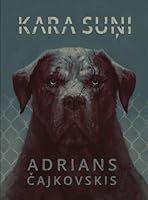
My name is Rex. I am a good dog.

Rex is also seven foot tall at the shoulder, bulletproof, bristling with heavy calibre weaponry and his voice resonates with subsonics especially designed to instil fear. With Dragon, Honey and Bees, he's part of a Multiform Assault Pack operating in the lawless anarchy of Campeche, south-eastern Mexico.

Rex is a genetically engineered Bioform, a deadly weapon in a dirty war. He has the intelligence to carry out his orders and feedback implants to reward him when he does. All he wants to be is a Good Dog. And to do that he must do exactly what Master says and Master says he's got to kill a lot of enemies.

But who, exactly, are the enemies? What happens when Master is tried as a war criminal? What rights does the Geneva Convention grant weapons? Do Rex and his fellow Bioforms even have a right to exist? And what happens when Rex slips his leash?

262 pages, ebook

First published November 2, 2017

1792 people are currently reading
15994 people want to read

About the author

Adrian Tchaikovsky

191 books17.4k followers
ADRIAN TCHAIKOVSKY was born in Lincolnshire and studied zoology and psychology at Reading, before practising law in Leeds. He is a keen live role-player and occasional amateur actor and is trained in stage-fighting. His literary influences include Gene Wolfe, Mervyn Peake, China Miéville, Mary Gently, Steven Erikson, Naomi Novak, Scott Lynch and Alan Campbell.

Ratings & Reviews

What do you think?
Rate this book

Friends & Following

Create a free account to discover what your friends think of this book!

Community Reviews

5 stars
6,689 (42%)
4 stars
6,469 (41%)
3 stars
2,204 (13%)
2 stars
327 (2%)
1 star
74 (<1%)
Displaying 1 - 30 of 1,629 reviews
Profile Image for Trish.
2,386 reviews3,744 followers
January 2, 2018
I finished this late last night (has been a while since I stayed up so late to finish a book) but had to seriously ponder how to write this review.

Only recently I read Adrian Tchaikovsky's Children of Time and it is clear from these two books that the author has a wonderful sense of bringing the thoughts and feelings of animals (sorry, bioforms) to life. It is also clear that the author doesn't consider animals to be "just animals" but sees them on the same level as humans if not even one above. A notion with which I completely agree.

This book, then, is about Rex, a dog-like bioform engineered for war. He combines canine senses with sentience, human DNA and then also got cybernetically integrated weapons systems. He is the leader of one of the first few multi-form squads, meaning teams that consist of more than one kind of animal/bioform. It is also about what the engineers designed him to be and be capable of and what he actually is and is capable of. The same goes for the rest of his team.

The book uses multiple POVs from doctors to lawyers to all kinds of bioforms in order to explore topics such as the role of artificial intelligence in society (there is a history of robotics too), responsibility and guilt, what exactly we humans define as humanity, the ethics of conflict resolution and the manufacturing of sentient biological life. The different angles allow the author to give the reader many different perspectives with which to identify or not and allow for an objective as well as emotional exploration.
And he shows that there are never easy answers, easy solutions, and we often revert back to the old ways just because their familiarity offers comfort while new ways are often scary.
making choices is the price of being free
Nevertheless, at some point I was wondering where the author will take this because I had thought we had reached the end of the narrative. However, the author had a lot of threads that he weaved into a complex web of a lot of other important questions. Thanks to the fact that the entire book was interspersed with all kinds of wars and conflicts, it never got boring or too preachy / theoretical.

What I loved about this book was in what detail the author described each individual bioform and therefore gave them actual life and personality. We have the typical mammals but also marine bioforms, reptiles and even hive-minds (a very intriguing concept).
Rex has a lot of canine traits, while Dragon is a typical reptile, Bees' consciousness is literally buzzing all over the place, and the felines are ... well, cats (there was an enormously funny moment in the book when a character actually said
Even chipped to the eyeballs you can't get cats to do what you want them to do.
and it definitely nails their best-known character trait).
However, this realistic portrayal of the bioforms' characters was also what was very difficult to read and especially after / because of their development I cried more than once.

Last but not least, I like how thorough the author is with his exploration of a topic. It would have been easy to end this book after the events in Campeche / Retorna but we went much further because the topic is and would be complex and winning one battle does in no way mean you'll win the war.
Moreover, as far as I can tell from conversations with veterans, he's really done a great job in realistically portraying what it means to be part of something bigger, wanting to protect and having a purpose - and being stripped of it later. He teaches the reader about integrity and sacrifice.

A true gem in this book was his criticism of current social and political problems in the world:
Perhaps the idealism of the Anarchistas had decayed into the sort of backbiting rabies that such popular movements so often devolved into, not fighting for, just fighting against.

flavour-of-the-month outrage

Technology is not Good Tech or Bad Tech. It is the Master who is guilty for what it does.
Sounds like comments to very current topics to me.

To me, this is one of the most important books when it comes to considering the future of bio-tech, human engineering and the ethics that should not be forgotten but go with the territory and the author has quickly become one of my favourites simply for having a fantastic way of making the reader THINK.

Now, does anyone have the author's address so I can send him the bill for all the tissues I needed? :P

Thanks go to Netgalley and the publisher / author for giving me the opportunity to read this early.
Profile Image for Bradley.
Author 9 books4,867 followers
October 10, 2017
What at first appeared to be a straight tale of totally augmented dogs and other animals refitted with all the glorious technology of war, designed to be true monsters completely obedient to their masters, eventually became a tale of ethics and morality couched in legal-drama, societal commentary, and complicated decisions.

I'm quite impressed. This isn't just a war-dog story taken literally. It's a full-blown discussion on what makes humanity, transhumanism rights, and the pitfalls of certain kinds of tech, focusing more or less on those that remove free-will, but it's not always about the tech.

What are any of us? Truly? We hide behind entities and justifications just as damning as the operant conditioning so tightly discussed in this novel.

Good boy, Rex, you're a good dog. lol yeah, indeed.

It's similar to Tchaikovsky's other novels in that he's got a big thing going on about personified animals or a wide variation on the theme, but like his other SF novel, Children of Time, I really like his SF much better than his fantasy. :) There's a lot more depth that I can sink my teeth into, IMHO. It's not as epic as CoT, either, but it's certainly a very interesting ride.

Don't go into it expecting the same thing it starts out with. The novel changes with the MC... or I should say the MCs. Damn, I love Honey. It's worth reading just for her.

Profile Image for Alice.
86 reviews77 followers
September 20, 2025
This human being manages to get to my heart every god d*mn time. I love him and hate him at the same time. Amazing work.
Profile Image for Barbie.
109 reviews359 followers
Read
May 29, 2019


My thoughts in a nutshell

I don’t read sci-fi, I can’t enjoy it, but I’m always trying to find an exception. I understood why people love this book.
It has a lot of important questions. What makes us human? What if the bioform (half human/half animal) are intelligent species with emotions. Do they have rights or they just weapons?
Rex is a dog, and he wants to be a good dog. His master wants Rex to kill the enemies, but who is the real enemy? What makes someone an enemy?
Lots of ethics, lots of mortality. Brilliant.
I won’t rate this book because I’m not the right audience, but I highly recommend it to sci-fi lovers.
Profile Image for Justine.
1,419 reviews380 followers
April 17, 2023
4.5 stars

Excellent near future SF that delves deep into the ethical questions that arise from augmenting animals and transforming them into a state of personhood. It is just as heartwrenching as you might expect.

I was made to be a weapon but I have lived a life. I was born an animal, they made me into a soldier and treated me as a thing. ...Servant and slave, leader and follower, I tell myself I have been a Good Dog. Nobody else can decide that for me.
Profile Image for Zala.
580 reviews145 followers
July 19, 2025
I really enjoyed this book, but something was missing for me, and I can't quite put my finger on what. Maybe it's the constantly reappearing Murray, who comes across as cartoonish by the third time he appears (mentions like "if there's no war, we'll make one" don't help the case unless this sci-fi world is actually better than the real one and the only war is the one in Mexico), and maybe it's the fact that the same message is repeated in the different mini-arcs our protagonist, Rex, goes through. Then again, maybe it's the fact that I didn't like the AI sub-plot and Honey's omnipresence all that much.
Probably, it was a combination of all of those things, but I still had a good time reading this. I loved Bees (a swarm of bioform bees that make up one consciousness), Rex' development throughout the story, and the commentary on who counts as a person, free will, AI, war, and societal issues. On that note, though, I didn't understand why the bioforms wouldn't denounce the making of new bioforms, considering the process. 3.5 stars
Profile Image for Emma.
1,009 reviews1,212 followers
September 27, 2017
Bioform Rex is trying to be a Good Boy, the kind of Good Dog his Master wants him to be. But when he is cut from that hierarchy, he must make his own decisions with the help of his friends in the Multi-form Assault Pack: Bees, Dragon, and Honey. Reminiscent of Flowers for Algernon, Rex's story is one of self-discovery, changing perceptions, and the building of personal morality. His evolving situation, from military asset to something more, means he must ask himself questions he was never programmed to consider: what is the right thing to do? And what happens when his Master orders him to go against this burgeoning understanding?

Told through multiple perspectives, including some of the other bioforms, the books presents a complex picture of humanity, especially when being human does not necessarily mean you are humane. It gives the larger issues of the book a real vibrancy and immediacy. And there's lots in there: the right to life, the viability of artificial intelligence, genetic manipulation, the rights of animals, ethical warfare... The sci-fi setting only enhances the ability of the author to ask these big questions, they are our current concerns writ large. On top of all that, it's full of action and has a serious emotional punch. My only criticism is that the end section felt overly long, even if the climax was both moving and apropos. Overall, a fun and thought-provoking read.

ARC via Netgalley
Profile Image for André Oliveira.
172 reviews59 followers
March 4, 2019
4.5*

Ok. Adrian Tchaikovsky is becoming one of my favourite authors!

After reading Children of Time, I knew I needed to read something else from the same author.

Rex just wants to be a Good Dog. Rex has a Master. Rex kills enemies because his Master says so. But what makes someone/something an enemy?

The development of Rex throughout the story is phenomenal. I don't want to spoil anything, but the way the author chose to show us that is fantastic!

Less thought-provoking than Children of Time but still an excellent book with some really interesting ideas and discussions.
Profile Image for Lyn.
2,009 reviews17.6k followers
October 9, 2025
I am Rex. I am a good dog.

Adrian Tchaikovsky has been on my radar for years and so I finally pulled the trigger and this was solid SF.

Not gonna lie though, the more I read, the less I liked. The first part was awesome and it was good throughout but the second part was a reboot of Little Fuzzy and then the rest of the book was about what it means to be sentient and this became a social commentary.

Tchaikovsky kept swinging for the fence for quotable passages and it became tedious.

Remember the Dan Aykroyd SNL skit, Fred Garvin - Male Prostitute? Dan would deliver the line and the camera would zoom in and there was a funny but kind of overplayed moment where he comically broke the fourth wall. Tchaikovsky kind of did that with all the anti war / social justice lines.

OK. Got it.

And it was cool, but also corny. But it was mostly campy and fun and I loved the way he described the Bioform soldiers and especially Honey.

And Bees!

I love it when a character steals scenes and this one had two or three really good players.

Don’t get me wrong, this was a very well written and fun SF story, just got a little preachy.

I’ll read more from him.

description
Profile Image for Josh.
1,732 reviews174 followers
May 1, 2018
Dogs of War was not the book I was expecting to read - in a good way. I've long been a fan of Adrian Tchaikovsky, his Shadows of the Apt epic fantasy series is great and I really enjoyed his fantasy/adventure novel Spiderlight. In Dogs of War, Tchaikovsky turns his talents towards sci-fi with genetically engineered bioforms - animals enhanced by weaponised technology and given the smarts to communicate with humans on near like-for-like levels.

The protagonist is Rex, a genetically enhanced dog who carries out deadly missions as instructed by his master. Along with his team of bioforms which includes bees, a bear, and a reptile named Dragon, Rex is subjected to brutal combat on near-suicide missions, fighting in a war he knows nothing about. Intelligent is his own right, it takes Honey, the enhanced bear, to release Rex and co from the confines of their masters' pull strings for him to see a world beyond violence, a world where bioforms can be more than weapons.

I loved the way these characters evolved from combat team to individuals with their own goals, each with a unique voice to go along with their unique physical attributes and all with a surprising amount of character depth.

Dogs of War isn't all about combat; it's a novel which takes war and broadens the concept to include peacetime ramifications of this new frontier technology through sociopolitical commentary which in turn gives the characters and theme a 360 feel delivered through a multi POV narrative.

My rating: 5/5 stars.In short, this book is great, read it.
Profile Image for Lindsay.
1,405 reviews266 followers
January 29, 2018
"My name is Rex. I am a Good Dog."

Rex is definitely a Good Dog. He's also a nearly eight-feet tall bio-engineered cybernetically-enhanced dog soldier with access to heavy weaponry and networked to a whole squad of other artificial bioweapons. (Being introduced to each of them is a really well-done in text - I won't spoil it here).

"Most of the humans who are hiding are the small humans, the immature ones. Master says we must kill all of them."

Rex is a smart dog, but he's bred and programmed to obey his Master who is busy prosecuting an illegal personal war using horrific methods and is using Rex's squad to cover it all up. But while Rex is smart, he's not the smartest person on his team, nor is he without friends even if he doesn't know they exist or why they care.

An enduring theme in science fiction is the way humans are going to interact with non-human intelligences. In the last few years the focus of a lot of serious works in the field have shifted from space aliens as the likely intelligences that we will interact with to the looming and ever more likely Artificial Intelligence. I made this point in other recent reviews (of Autonomous and Sea of Rust), and there are certainly lots of great books about AI in science fiction at the moment.

In this, Adrian Tchaikovsky postulates uplifted animals as another likely contact between humans and non-humans, and he does so with brilliant self-consistency in his extremely believable world. Rex is far more human than animal, but he's also recognizably non-human with a lot of basic behavior coming from his canine ancestry. He's also a very relatable character who over the whole book has to contend with his programming and whether what he does is moral or not.

I loved Rex. I loved his squad and the people who befriend him. A really wonderful book from an author who has become a must-read for me.
Profile Image for Laura Tenfingers.
578 reviews116 followers
October 11, 2022
Dog-loving sci-fi fans, this is it!! Run, don't walk, to get your hands on this book.

Here is a look at what happens if humans create sentient AI made partly out of animal DNA and in animal form. But killing machines. AI rights, risks, potential, all with a side helping of humans being nasty, nasty. Our main character AI is a dog named Rex. Rex is a Good Dog. And by far the best book dog ever.

I didn't give it 5 stars, even though the first half was definitely 5-star worthy, because towards the end I admit to getting a little bit bored... but I still highly recommend it and will definitely continue the series.
Profile Image for Matt (Fully supports developing sentient AGI).
152 reviews65 followers
April 20, 2023
If we want to become gods, we must make dogs gods first.

Initially I was a tiny bit disappointed with Dogs of War. Then I grokked the central thesis, or, at least it sparked my runaway imagination. A new vision of one Golden Path to the future took shape and it was alien and wondrous. All because humans will almost certainly adopt cybernetics to take advantage of networking, processing speed, and AGI. But, before the first chip is interfaced with a human nervous system, we will experiment on animals first. And, weird things will start to happen beyond our control.

If diversity makes us strong as a species, think of the diversity available across all life on our planet. Adrian Tchaikovsky gives us a taste with our main bioform unit. Rex the dog. Honey the bear. Dragon the anole/monitor. All pretty cool. But, Bees. Bees was a revelation. After humans network all these minds enhanced with genetic engineering, humanity will redefine itself. Where in taxonomic nomenclature will we place an immortal bee superhive with human genes who can communicate with and participate as a full member of a vast networked super-culture?

Animals (and other Kingdoms) may march alongside humanity into the singularity. Or, they may beat us to it. After all, many other species are far superior at acting collectively. Buzz buzz.

Profile Image for K.J. Charles.
Author 65 books12.1k followers
Read
August 19, 2019
A fascinating updating of the Dr Moreau story, with corporations creating bioforms (engineered human/animal hybrids) as effectively a slave army. It's really well worked out, as we see Rex (seven foot tall slavering dog-monster who just wants to hear he's a Good Boy), Honey (giant genius bear) and Bees (bees) edge their way towards independent thought, freedom and a new morality. Compellingly intelligent SF with a lot of heart as well as much violence.
Profile Image for Theresa Ijachi.
103 reviews73 followers
November 2, 2017
e-arc given to me via netgalley in exchange for an honest review

”Life is constant creation and destruction. The trick is knowing one from another”

This book is about a group of engineered bioform animals. They're used as weapons in the war cause they can carry out orders given to them by their master. Rex is a dog, also the leader of the group which consists of a bear, a giant lizard/dragon and bees.

Something about this book is that you will find the animals more intriguing than the humans. I loved reading from Rex’s perspective and anytime it was a person's POV, I got very bored.

The author did a great job with the animals, they had emotions, thoughts and different personalities. They even went through an intense character development, especially Rex.

”My name is Rex. I am a good Dog”

At first, Rex was a dog that worried about not pleasing his master and not making the right decisions but am glad that I got to see him getting over those fears and being himself.

The reason am not giving this book five stars is because it was so boring at times. The writing was a little bit difficult to get into at first but I got used to it whenever it was Rex speaking but anytime it was humans, I found their whole dialogue boring. I don't even think they should have their own point of view, it wasn't too necessary.

I'd recommend this book to Sci-fi fans looking for something different and animal lovers.
Profile Image for Jake Bishop.
372 reviews574 followers
January 30, 2025
I have now read two Tchaikovsky books and I am most impressed with how much ground he is able to cover in them. He explores his premises so completely, and goes so wide in how the main idea of his book interacts with themes.

All I knew about this book was the protagonist was a good, who people call a good dog constantly(he is a good dog), so I was expecting a more emotional, maybe even a more wholesome book. This instead ended up being more intellectually interesting, and was extremely thought provoking. It still was emotionally compelling, and had a compelling narrative, it was just even better in the ways I wasn't expecting it to be. Also it literally could have been a 5 book series, instead it's a relatively short novel. Maybe I would like the massive series even more, I like indulgent books. (I think the shorter book worked well, as I feel like it lets it build the setting and themes super wide, without having to go as deep as you need to, to have a 5 book series that isn't superfluous.)

8.8/10
Profile Image for Montzalee Wittmann.
5,212 reviews2,340 followers
April 23, 2023
Dogs of War
By Adrian Tchaikovsky
What a Good Dog Rex! Loved this book! Very exciting, action packed, science fiction fun fest! (With big deadly modified dogs of war!) Killing, thinking, hybrids, of all kind of animals under the control of a crooked general. Rex just wanted to get the reward feedback of "Good Boy" from his master.
It's a great read and will be starting on the next book soon! You can't go wrong with this book!
Profile Image for Graeme Rodaughan.
Author 17 books405 followers
May 28, 2022
UN Shocker: Dog Soldier Fronts Task Force! "Indeed, Rex is a very Good Boy!"

I loved this book, high concepts, action, beautifully drawn characters and villains worthy of the name. All the best things that I read a book for.

Set in a near future, genetically engineered, cybernetically enhanced, human-animal hybrids are the disposable weapons for corporate sponsored black-ops wars in desperate regions of the world.

Rex, is a human-canine leader of a 'multi-form,' pack executing the orders of his human master - until he's let off the leash and along with his squad mates begins thinking for themselves.

Against a backdrop of conflict between two possible futures: Rex finds his truest self.

Will Humanity become an enlightened civilization of distributed, interconnected intelligences where social power is peripheralized or will we become a Borg-like master-slave hierarchy where social power is deeply centralized to a single point based on implanted devices and electrochemical conditioning.

You'll have to read this book to find out.

EDIT: 18Sept2020: '“Our defenders employed the robot dogs,” said Master Sgt. Lee Boston, 321st CRS loadmaster and the CR team chief for the exercise. “These robot dogs are a new technology that we’re testing as part of the exercise. The dogs give us visuals of the area, all while keeping our defenders closer to the aircraft.”'


It begins with robots then moves to bioforms... draw your own conclusions.

REF: https://www.expeditionarycenter.af.mi...

Absolutely recommended. 5 'Who Let the Dogs Out!' Stars
Profile Image for Sherry.
1,024 reviews107 followers
January 15, 2025
This is my fifth novel by Tchaikovsky in this last month and it was by far, my favourite. The pacing, the characters and plot were pitch perfect for me. I found the deeper questions thought provoking as Rex wrestles with what is good and bad and what agency he has. What makes him good or bad? On the surface, this appears a simple straightforward question but as the story progresses, that question and the possible answers becomes more complex as Rex finds himself having to decide whether he is a creature of agency, or a creature who’s choices are made by those who master him. I really enjoyed Rex and the other biotech creatures and I think Tchaikovsky shines as an author when he’s writing from the perspective of animals and other sentient nonhuman beings. Also, I appreciated that this page total came in under 400 pages which made for a quick read. All in all, I really enjoyed this and I’m glad I picked it up after finishing The Final Architecture trilogy so that I finished with Tchaikovsky on a high note.
Profile Image for Pranav Prabhu.
208 reviews77 followers
September 8, 2021
“Change hurts, but it hurts most those who shackle themselves to the past.”

Dogs of War is a phenomenal, thought-provoking, and emotional read that is probably among the best books I've read. I decided to pick it up after really enjoying Tchaikovsky's Children duology, and this did not disappoint.

The story follows Rex, a canine bioform, and his squad of Honey, Dragon, and Bees, alternating between Rex's perspective and various important human characters. There are also occasional short chapters where an unknown, mysterious narrator seems to comment on and influence the story. The switching of tenses and the style of narration between the Rex chapters and the human chapters were very well-done, displaying the more in-the-moment mindset of Rex compared to the other characters.
“I have a vision of tomorrow’s war, between people who have made themselves the slaves of entities that only exist in the heads of men, and people who want to be free. I hope I am wrong.”

About halfway through, the book took a very unexpected turn into much deeper topics and themes, and I think this what was made the book for me. It explores the ethical, moral, legal, and political implications of bioform existence, and how different groups of people react to how they are treated or dealt with. It asks pointed questions about the nature of created sentience and their rights, and about their freedom to exist and think without being beholden or enslaved to any one master, also extrapolated and juxtaposed with how humanity thinks of itself. It is also an exploration of how people will respond in different ways to the application of transhumanist philosophies, and the definition of what makes someone human.

What brought everything together were the characters. Rex and his squad, even for the little time we know them, are fantastically written and imagined. They are distinct and given depth in very little page time. The way Rex is written: how he thinks and interacts with his squad and the other characters immediately endeared me to him. There was a quick emotional investment in his character, and how he changed over the course of the book as he learned more about the complicated world around him and had to grapple with difficult ideas and decisions were amazing to read. There is a profound simplicity to how he thinks, how he strips down complex ideas into their various components and makes choices based on what he feels is right, that made him the ideal character to follow.
“Sometimes it is hard because we have to make choices. I remember when having to make choices scared me more than anything else except Master being angry with me. Now I know that making choices is the price of being free.”

The ending was a fitting one, it tied up the themes and the character arcs while providing a glimpse at future events and how what happened in this book will affect the future of humanity. Tchaikovsky managed to draw emotion with simple and evocative writing. All the emotional beats of the story hit hard, the story went in many unexpected yet logical directions, posing and providing insight into very interesting questions. It's difficult to convey exactly how much I loved this book without discussing major plot points, but it is probably among my favourite science fiction books ever and I would recommend it to pretty much everyone. Rex is a Good Dog.
Profile Image for Oleksandr Zholud.
1,541 reviews155 followers
April 9, 2019
This is a SF novel, which on surface may appear as a near-future mil-SF, but in reality is much deeper.

The main protagonist is Rex. Rex is a Good Dog. He is a Bioform created to fight human wars, when robots were deemed unreliable. He is part of the squad (which also include a bear – Honey, bee swarm – Bees and lizard-chameleon Dragon), its leader and servant to a human master. He is 2 meters high and weight about 200 kg, all of it muscle and bone, he carries machine guns and in addition to his genetic improvements, which include hands, has cyborg implants. The story starts showing how such Bioforms without mercy or pangs of conscience maybe used against anyone, including civilians.

Dogs are eager to follow orders, it main desire is to please the master. However, what if another member of the squad (who accidently is cleverer than its creators intended) as well as some humans try to take him from his leash, will he follow? Especially if it is easier to follow the orders than decide for oneself. Adrian Tchaikovsky does a great job by creating SF analogues to the real life problems. Here we have a Nuremberg trials question: is 'I just followed orders' is a valid excuse?

What I don't like is usual for modern SF bashing of corporations, for the history shows that states kill much more people, esp. the ones that formally fight corporations.
Profile Image for Lata.
4,922 reviews254 followers
January 25, 2021
4.5 stars.
It’s impossible not to think of Doctor Moreau’s human-animal hybrid creatures when reading this excellent story. Tchaikovsky actually makes a punny reference, partway through this book, to the classic, and actually improves on the classic and its ideas.
He posits a future for war that includes bioengineered human-animal beings, but with advanced tech in their heads and reinforced bodies, all to augment their particular existing mammalian traits, and give them huge advantages in battle as terrifyingly effective weapons. The author doesn’t just give us automata resembling mastiffs and grizzlies and crocodiles and bees (which all happen to be members of main character Rex’s multi-bioform squad), but thinking beings with preferences, developing emotions and thoughts. None of which the original scientists and biomechanical engineers ever intended. But with the growing neural complexity and increasing experiences, the multi-bioforms begin, unbeknownst to their master Murray, exceeding his commands. Murray has been waging his own unsanctioned battles in Mexico, while under contract to deploy the multi-bioform squad to troubled spots.

Tchaikovsky poses many questions, many of them ethical, including
-running wars through contracted, unmonitored corporations; who deals with the inevitable abuses and atrocities?
-what status do the created, hybrid creatures have? They’re significant investments, but they’re also intelligent beings, with increasingly complicated emotions, thoughts and behaviours.
The bioforms, for all their terrifying appearances, are developed beautifully, with Honey becoming the real brains behind the squad’s actions and Rex a tragic hero, as he’s manipulated and pulled and pushed in many directions, even while trying to find a way to consistently be a Good Dog. Dragon cracked me up (“Bang!”) and I loved the potential and abilities of Bees. And all the chapters dealing with a secret project happening alongside Rex’s development, leading to the open ending and me anxious to read Tchaikovsky’s next in this series.
Profile Image for Lita.
280 reviews32 followers
July 30, 2020
Uhhh... Čajkovskis atkal pierāda, ka spēj saviem lasītājiem iedot žanra cienīgu saldo ēdienu. Interesants stāsts par mūsu iespējamo nākotni, kas risina morāles, ētikas un tiesību jautājumus jau citā līmenī. Un kurš gan spēs nejust līdzi Reksam, jo viņš taču tikai vēlas būt labs suns. 

Manai gaumei gan pietrūka mazliet dziļuma, bet bija par daudz ideoloģiskā piesitiena... vienkārši gribējās detalizētāku izpratni par bioformām, ko es zinu, ka Čajkovskis būtu pilnībā spējīgs paveikt. Bet šī jau ir piekasīšanās, ko var arī vienkārši ignorēt.
Profile Image for Austra.
809 reviews115 followers
July 8, 2020
Lasot šo grāmatu, es izgāju cauri pilnam emociju spektram, un man vairākkārt nācās mainīt domas par to, kas tad šī ir par grāmatu. Salīdzinoši īsā gabalā Čajkovskis ir pacenties blīvos slāņos saklāt dažādas tēmas - kari, nākotnes ieroči, bioformas, feminisms, drusku detektīva, katru kārtu dāsni aplaistot ar morāles pārdomu mērci. Gaidīju, ka šis būs vairāk pif-paf gabals (bet man vajadzēja zināt labāk, jo tas ir Čajkovskis, nevis Čailds), bet ar robotsuņiem. Dabūju viskautko un daudz.

Bija daudz pārdomu, daudz dusmu, kaut kur arī apraudājos. Rekss, protams, ir aizkustinošs (un daudzviet arī kaitinošs) savā suniskajā uzticībā, bet arī viņš ir tikai suns. Mans spirit animal noteikti bija Pūķis, kuram ir lieliski ciniska humora izjūta un dažreiz tikai gribas papeldēties un pasauļoties. Un tomēr arī būt brīvam no citu uzspiestā “labi” un “slikti”. Lai nu ko, bet domāt Čajkovskis jums liks - gan par to, kā darbojas izkliedētais saprāts, gan par cilvēka atbildību. Par pieradināto un radīto. Un vai korekti radīt domājošu, jūtošu būtni, lai izmantotu tās stiprās un vājās vietas savam pašlabumam. Dzīve ir nemitīgu pārmaiņu virkne, kaut kas top, kaut kas iznīkst. Kur ir tā trauslā robeža starp “labi” un “slikti”, “drīkst” un “nedrīkst”. Un kāpēc mēs nemitīgi cenšamies radīt ko tādu, no kā pašiem ir bail.

“Pārmaiņas sāp, bet visvairāk tās sāp tiem, kas pieķēdē sevi pie pagātnes.”

“Es zinu, kas ir bezmaksas un kas ir cena, un kāpēc nekas, kas ir par brīvu, nav uzticams.”
Profile Image for RG.
3,084 reviews
January 25, 2018
4.5*

This was nearly a 5 star. It starts with a bang of action. Bio-engineered dogs plus other animals working for an organisation with crwzy weaponary destroy a civilian outpost. You can feel the pull of freedom or questioning his master in Rexs voice through his chapters. Great action and characters, as well as an intriguing plot. It changes tact and slowly becomes a different novel or "beast" altogether. The novel changes direction and approaches questions about politics, ethics n relation to the use and creation of these war machines, what makes us human, freedom of speech and also AI in our workforce and its issues and problems it could create with increasing change. The last 50 pages I felt just didnt close it the way I'd hoped for. Still one of the better reads this year so far. Cant wait for more from this author. This is a more complex book than just war machine animals going aroind on tactical missions. It really deals with issues that we potentially will face if they havent already occurred. Great worldbuilding, perfectly written epescially the different tones of the characters, just fell short at the end.
Profile Image for Andris.
382 reviews89 followers
December 25, 2020
Reksis ir labs suns. Un Čajkovskis ir vienkārši monstrs. Superkvalitatīva un moderna zinātniskā fantastika.
Profile Image for River.
404 reviews128 followers
December 21, 2025
4.25/5

We are here because we are dangerous. I do not understand: they made us to be dangerous. I do not see how they can be surprised when we were.

Adrian Tchaikovsky never fails to write the most compelling themes. I am constantly thinking back to his stories, to the haunting truths and intelligent exploration within them. Dogs of War is certainly no different.

I adore themes of monstrosity, of what it means to be a monster and what it means to be human. I also adore Tchaikovsky's insightful execution and deep thematic exploration, so I knew I would love whatever he accomplished in this book, and yet it was even more fascinating than I had anticipated.
The world he creates is vast and complex, the new technology within it affects every aspect of the world and Tchaikovsky's hand is as nuanced as ever in its creation. He also splits the story into five very distinct parts that allow for a much deeper understanding of how the Bioforms' journeys develop.

But I'm getting ahead of myself. Let me start first with the premise.
Rex is a Bioform, part human, part dog, not truly either, but something else entirely. He is part of a group of Bioforms deployed to fight in a war. They were made for one purpose; they were made to be weapons. Listening to his feedback chip calling him a Good Dog, obeying the commands that are written into him to obey, Rex must do what his Master orders. And Master wants him to kill enemies. But who decides what makes an enemy? Who decides what the taste of fear means? Who decides what rights a weapon has to think for itself?

I understand more now than I did. I know that fear does not just mean that they want to run away. Humans destroy the things they are scared of.

As always, I sit in admiration of Tchaikovsky's immense skill. He's a prolific writer and yet the quality is consistently high, there is always something important to be said. Tchaikovsky books are ones that you chew on, ones that will be brewing in the back of your mind that suddenly come to the forefront when you read a particularly egregious headline or a comment that boils your blood. He covers such a vast array of topics and themes within his novels, yet each one is steeped in complexity and understanding. He delves into subjects that I am aggressively nodding my head at alongside him and then twists the story down avenues I might never have considered. It is a broad expansion in whatever thoughts and opinions you might have gone in with on any particular subject, he challenges you to think closely about every component, even the ones you might not have considered before as malevolent. He leads you to the questions, but does not necessarily presume the place of answering. You must decide for yourself what you take away from his intricately woven themes.

Tchaikovsky's books are such an honest representation of the best of sci-fi (I even think this about his fantasy) because they are so ferociously about a theme or idea. His characters are interesting and propel the story along well, the plots are distinctive and compelling, but it is the exploration of his themes that bring my thoughts forever back to his stories. I greatly admire how gentle his touch is, as they are never loud and screaming, yet they accomplish far more with their subtlety and nuance than they ever would if they had been printed in bold letters. It's a brilliant representation of the best of sci-fi and I'm incredibly glad to have found his works.

The longer we go without barking, the more they will come to the bars of our cage and taunt us and prod us. Over and over they will do it. And we only need to snap at them once for them to call us animals.

Dogs of War is everything I hoped it would be and more. Tchaikovsky once again strikes with his unrivalled skill of writing non-human protagonists you come to empathise with and care for deeply. I haven't actually written all that much about the plot because the premise alone covers a large portion of the book and I do not want to spoil it more from there. It has such a unique structure (Tchaikovsky always seems to invent or reinvent unique forms of storytelling) and it is a joy to discover the many intriguing facets of this story. If the premise and the promise of these themes interest you, I implore you to read it. I think Tchaikovsky is a genius and such an underrated talent. I cannot wait to read more and more from him, there is always so much to think about.

I never wanted to have choices. Choices are hard. Choices can be wrong.
Profile Image for Little Timmy.
7,388 reviews61 followers
August 22, 2024
Tchaikovsky is one of my top 3 new writers of SiFi and Fantasy. Ever book of his I have read he takes an idea and twists it in new and different ways. This is another great read. Very recommended
Profile Image for Gyalten Lekden.
606 reviews143 followers
July 19, 2025
I continue to be surprised and delighted by Adiran Tchaikovsky! This novel is tight and fast-paced, playing with scale and world-building in smart ways. This is the first novel of his that I have read that takes place on a recognizable Earth with known countries and governments and so on, and the tech that the story is built around is not so wildly advanced to be inconceivable in the relatively near future. In some ways this makes the story feel smaller, or at least less epic, than many of his other stories; it feels more known. With that said the world-building, including the atmosphere and the social expectations, is still meticulous and carries the story, and by narrowing the world it really allows him to make the characters shine.

Our main character, Rex, is absolutely incredible, as are the whole slew of ancillary characters. They are all unique and engaging, each bringing something different to the story. There is a substantial and meaningful inner journey on the part of our main character, and it was a (sometimes painful) delight to see him grow into who he became. The story isn’t incredibly plot-heavy, with the five sections each moving quickly with different contained storylines that then built the platform for the next section to launch from. Instead of a single driving plot across the novel there is a single character that is growing and expanding and learning what it means to be, in the world. Each section feels complete and whole, and the whole story has an anxious momentum as a result. If you appreciate a more luxurious pace this won’t be for you, as it is constantly moving. There are some really fun action scenes mixed throughout, all executed with a gritty, real-world edge to them that felt cinematic and also really clear. Whether describing a violent battlefield or exploring the inner philosophical battle of recognizing your self-worth beyond external validation the writing is heartfelt and to the point, with wit and humor to help carry some of the more emotional and wrenching moments. The point of view shifts across chapters, contrasting the earnest devotion of Rex with political intrigue and thrill of a shady character mostly referred to as “[Redacted],” giving the reader the chance to balance an intimate and personal story with a much larger, possibly less trustworthy, perspective. The tone shifts across the different perspectives which keeps everything feeling fresh and active.

Even though this story may be smaller, in some ways, than his other works it doesn’t mean Tchaikovsky skimps on exploring important and heady ideas. Autonomy and self-worth, and what it means to break free of external validation, are immediately at the front of mind. But those are combined with ideas about responsibility for others, accountability, concepts of loyalty and the greater good, personhood in the face of crass militarism, the burden of economic discrepancies and the terror of greed and capitalism, faceless corporations buying power with violence and murder made acceptable through creative paperwork and media spin. None of these ideas feel forced, there is nothing didactic about this story, but everything fits together in such a way so that these are the natural, indeed inevitable, emotional explorations for the story to undertake. While some of the smaller plot points follow an unsurprising trajectory it was always with impressive and exciting ideas centered on character and emotional truth. Other times the story went places I did not expect at all, and that is part of the beauty of the ambitious pacing. Regardless of where it went I was eager to follow, thinking constantly about the novel and the characters during all the times when I wasn’t able to be actually reading it.

I would really enjoy this novel even if I hadn’t read other work by Tchaikovsky, but since I have I am even further impressed by the breadth of his skill. This doesn’t feel like his other novels and yet it fits perfectly into his body or work, with the same ferocious and curious heart that keeps me engaged no matter what the story. This novel is short, it gets in and out, without dallying or treading water in any way, and yet it brings with it ideas and experiences that linger far beyond the page. The story brings in great characters, characteristically witty writing, action, and heart, and left me excited to continue the series.
Displaying 1 - 30 of 1,629 reviews

Can't find what you're looking for?

Get help and learn more about the design.