

What do you think?

Midnight Blue
From Simone Van Der Vlugt comes her European bestselling novel of a young woman's rise as a painter in Holland's Golden Age—perfect for readers of The Miniaturist, Tulip Fever, and Girl with a Pearl Earring.
Amsterdam 1654: against the backdrop of Holland's Golden Age, a dangerous secret threatens to destroy a young widow's new life.
Following the sudden death of her husband, twenty-five-year-old Catrin leaves her small village and takes a job as a housekeeper to the successful Van Nulandt merchant family. Amsterdam is a city at the peak of its powers: science and art are flourishing in the Golden Age and Dutch ships bring back exotic riches from the Far East. Madam Van Nulandt passes her time taking expensive painting lessons from a local master, Rembrandt van Rigin, and when Catrin takes up a brush to finish some of her mistress's work, Rembrandt realizes the maid has genuine talent and encourages her to continue.
When a figure from her past threatens her new life, Catrin flees to the smaller city of Delft. There, her gift as a painter earns her a chance to earn a living painting pottery at a local workshop. Slowly, the workshop begins to develop a new type of pottery to rival fancy blue-on-white imported Chinese porcelain—and the graceful and coveted Delft Blue designs she creates help revolutionize the industry. But when tragedy strikes, Catrin must decide whether to defend her newfound independence or return to the village that she'd fled.
Amsterdam 1654: against the backdrop of Holland's Golden Age, a dangerous secret threatens to destroy a young widow's new life.
Following the sudden death of her husband, twenty-five-year-old Catrin leaves her small village and takes a job as a housekeeper to the successful Van Nulandt merchant family. Amsterdam is a city at the peak of its powers: science and art are flourishing in the Golden Age and Dutch ships bring back exotic riches from the Far East. Madam Van Nulandt passes her time taking expensive painting lessons from a local master, Rembrandt van Rigin, and when Catrin takes up a brush to finish some of her mistress's work, Rembrandt realizes the maid has genuine talent and encourages her to continue.
When a figure from her past threatens her new life, Catrin flees to the smaller city of Delft. There, her gift as a painter earns her a chance to earn a living painting pottery at a local workshop. Slowly, the workshop begins to develop a new type of pottery to rival fancy blue-on-white imported Chinese porcelain—and the graceful and coveted Delft Blue designs she creates help revolutionize the industry. But when tragedy strikes, Catrin must decide whether to defend her newfound independence or return to the village that she'd fled.
332 pages, Paperback
First published February 1, 2016
About the author
Simone van der Vlugt
56 books709 followersSimone van der Vlugt is an acclaimed Dutch author, well known for her young adult novels. The reunion was her debut novel for adults, it sold over 200,000 copies and was translated into German, French and English.
Ratings & Reviews
Friends & Following
Create a free account to discover what your friends think of this book!
Community Reviews
Displaying 1 - 30 of 990 reviews

April 1, 2017
Catrijn is a Dutch farm girl who has always wanted more than to stay on a farm forever, so when her husband dies she sells the property he leaves her and goes to the city. While she's there working as a maid one of her old farm hands finds her and threatens her with a secret from her past so she flees further away and finds a job painting pottery. I really enjoyed this book and I loved the writing. It's translated but the writing didn't seem to lose any dept or sound awkward at all. I loved Catrijn and I really am glad that the book ended the way it did. It's a good pleasure read, it's well written and kept me engaged through out. The main character meeting Rembrandt and Vermeer was a little questionable though and I'm not sure about the historical accuracy but I'm pretty sure the historical accuracy isn't the point of the book so.

December 9, 2025
Why I chose to listen to this audiobook:
1. I love underrepresented historical fiction, and GR friend, Annette's review (https://www.goodreads.com/review/show...) intrigued me;
2. my loan was available via Hoopla; and,
3. November 2025 is my "U and V Authors" Month!
Praises:
1. the setting was so vividly described! I felt like I was living in 17th-century Holland during the Dutch Golden Age; and,
2. I love the insertion of Rembrandt and Vermeer as characters, the inclusion of Dutch Porcelain from Delft, and how the Delft Explosion of 1654 and the 1655 Plague affected the citizens of the Netherlands.
Niggles:
1. this story could be classified as historical romance, which isn't my cup of tea;
2. MC Catrin has a mysterious backstory, but in my opinion, the story could've worked just fine without it. Oftentimes, Catrin's excuses for her behavior were frustratingly lame;
3. a story couldn't be a story without a coincidence (or two). Unfortunately, too many convenient coincidences were set up to get Catrin out a pickle time and time again;
4. although author Simone van der Vlugt goes into detail about the Dutch Porcelain from Delft in her Afterword, I was really hoping for the narrative to incorporate more detail about the history of this famous pottery, and less about Catrin's woes and romantic liaisons; and,
5. the narrator has a pleasant voice with a soothing tone, but her British accent for the characters was quite distracting to me, considering that this story is set in 17th-century Holland with Dutch characters.
Overall Thoughts:
I must admit that I liked this story better than Girl with a Pearl Earring by Tracy Chevalier. Visiting Holland has been on my "bucket list" for decades, and the descriptiveness in this story allowed me to "visit" this fascinating country.
1. I love underrepresented historical fiction, and GR friend, Annette's review (https://www.goodreads.com/review/show...) intrigued me;
2. my loan was available via Hoopla; and,
3. November 2025 is my "U and V Authors" Month!
Praises:
1. the setting was so vividly described! I felt like I was living in 17th-century Holland during the Dutch Golden Age; and,
2. I love the insertion of Rembrandt and Vermeer as characters, the inclusion of Dutch Porcelain from Delft, and how the Delft Explosion of 1654 and the 1655 Plague affected the citizens of the Netherlands.
Niggles:
1. this story could be classified as historical romance, which isn't my cup of tea;
2. MC Catrin has a mysterious backstory, but in my opinion, the story could've worked just fine without it. Oftentimes, Catrin's excuses for her behavior were frustratingly lame;
3. a story couldn't be a story without a coincidence (or two). Unfortunately, too many convenient coincidences were set up to get Catrin out a pickle time and time again;
4. although author Simone van der Vlugt goes into detail about the Dutch Porcelain from Delft in her Afterword, I was really hoping for the narrative to incorporate more detail about the history of this famous pottery, and less about Catrin's woes and romantic liaisons; and,
5. the narrator has a pleasant voice with a soothing tone, but her British accent for the characters was quite distracting to me, considering that this story is set in 17th-century Holland with Dutch characters.
Overall Thoughts:
I must admit that I liked this story better than Girl with a Pearl Earring by Tracy Chevalier. Visiting Holland has been on my "bucket list" for decades, and the descriptiveness in this story allowed me to "visit" this fascinating country.

March 15, 2018
This story is set during the 17th century Netherlands, period known as the Dutch Golden Age, and during that time art was among the most acclaimed in the world. The story briefly weaves in such artists as Rembrandt and Vermeer, focusing majorly on the Dutch Porcelain.
It starts in 1654 in a small village of De Rijp. The fictional heroine, Catrin, after the death of her husband, moves out of her village, which is unheard of. She follows her dream to be in a city. She sells all her belongings and the only thing she takes with her is the talent for painting. She dreams of having her own business of painting pottery.
In Amsterdam, Catrin takes a job as a housekeeper to the successful Van Nulandt merchant family. As a merchant he trades with China, bringing exquisite porcelain. No one in Europe knows how to make it. And what catches Catrin’s eye are the figures and landscape painted on big vases. But when the past catches up with her, she moves to Delft with recommendations from Van Nulandt’s.
In Delft, she gets her dream job as pottery painter. Van Nulandt’s father started working with majolica – “rough earthenware with an ornamental glaze that originated in Italy.” His oldest son who took over the business shifted to faience – “a finer type of earthenware,” something of porcelain, but not so delicate. Catrin is introduced to the pottery when it is already in decline. An idea comes to her mind to introduce new motifs, not just the flowers that have been painted thousands of times already. She convinces her boss to try something new. She draws first Chinese figures and landscape, which later are copied on thousands of pottery. A revival starts, giving birth to Dutch Porcelain, later it was named Delftware or Delft pottery, also known as Delft Blue.
The story also intertwines the Delft Explosion of 1654, gunpowder explosion caused by an inspector with a lantern. As well as 1655 plague; as with any previous epidemic that ravaged Europe, this one is no exception, leaving thousands dead.
There is one part of the story, something in Catrin’s past which follows her throughout the story. I didn’t care for this part and I think the story would have been even stronger without it. But at the same time, I can see how this could be a great hook for others. Overall, it is an interesting story, reviving the Dutch Porcelain in history.
@FB/BestHistoricalFiction
@https://bestinhistoricalfiction.blogs...
It starts in 1654 in a small village of De Rijp. The fictional heroine, Catrin, after the death of her husband, moves out of her village, which is unheard of. She follows her dream to be in a city. She sells all her belongings and the only thing she takes with her is the talent for painting. She dreams of having her own business of painting pottery.
In Amsterdam, Catrin takes a job as a housekeeper to the successful Van Nulandt merchant family. As a merchant he trades with China, bringing exquisite porcelain. No one in Europe knows how to make it. And what catches Catrin’s eye are the figures and landscape painted on big vases. But when the past catches up with her, she moves to Delft with recommendations from Van Nulandt’s.
In Delft, she gets her dream job as pottery painter. Van Nulandt’s father started working with majolica – “rough earthenware with an ornamental glaze that originated in Italy.” His oldest son who took over the business shifted to faience – “a finer type of earthenware,” something of porcelain, but not so delicate. Catrin is introduced to the pottery when it is already in decline. An idea comes to her mind to introduce new motifs, not just the flowers that have been painted thousands of times already. She convinces her boss to try something new. She draws first Chinese figures and landscape, which later are copied on thousands of pottery. A revival starts, giving birth to Dutch Porcelain, later it was named Delftware or Delft pottery, also known as Delft Blue.
The story also intertwines the Delft Explosion of 1654, gunpowder explosion caused by an inspector with a lantern. As well as 1655 plague; as with any previous epidemic that ravaged Europe, this one is no exception, leaving thousands dead.
There is one part of the story, something in Catrin’s past which follows her throughout the story. I didn’t care for this part and I think the story would have been even stronger without it. But at the same time, I can see how this could be a great hook for others. Overall, it is an interesting story, reviving the Dutch Porcelain in history.
@FB/BestHistoricalFiction
@https://bestinhistoricalfiction.blogs...

July 15, 2021
It’s been a while since I’ve read a Dutch book. I’m happy Midnight Blue was my choice to end this break because it focuses on something I feel strongly about:

But why would I feel strongly about porcelain?
If you’ve read my review of The Little Book of Hygga, you know that last year I moved to Denmark and faced several elements of culture shock. One of them being the Danes’ willingness to spend an ungodly amount of money on luxury goods.
I have two main issues with this:
1. The wastefulness of it all. I come from a culture which falls on the left side of the The Inglehart-Welzel World Cultural Map, meaning it scores high on Survival values. Seeing someone spend a sum that would feed a family for half a year on a single designer cup hurts my soul.
2. Some of these luxury items are not even high quality, or functional, or pretty.
I recently bought a couple of these plates for my kitchen. The store is in Copenhagen, but it’s not a luxury brand:
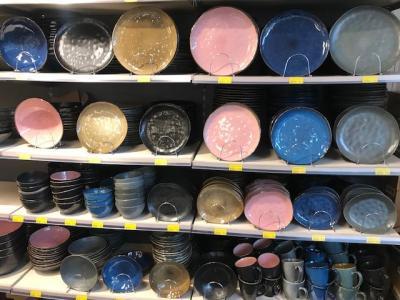
It cost me one tenth of the price of this fancy Royal Copenhagen plate:

I mean…
Which one do you like better? Am I missing something? What’s going on? Am I crazy???

Once again, I’m happy I’m using a penname on Goodreads because what I’m about to say next will surely get my Danish residence permit revoked…
I was recently shopping for a wedding gift and thought a Royal Copenhagen item would work nicely. Royal Copenhagen is huge here. Everyone is obsessed, so much that the poorest people are saving up to buy the cheapest item on the catalogue so that they have it in their homes. I walked into the store determined to buy something in spite of the exuberant cost… and I didn’t like almost anything. I know I sound like a barbarian, but the majority of items were plain boring. If I was shopping for myself, I wouldn’t have bought any of them even if they cost 5 Euros.

You think I’m exaggerating when I say my residence permit would be revoked for saying this, but I’m not sure I am. I mean, some of the questions on the Danish citizenship test are about the history of designer vases. I’m not kidding.
Okay, I have to admit a few items in the shop were quite pretty. Like this plate:
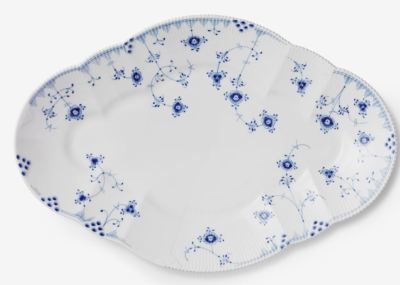
I’d totally spend 10 Euros on this one. Maybe even 20. Okay, it’s a wedding gift, and it’s fancy designer porcelain, so let’s go for 100. Well, it costs 330 Euros.
And I still keep converting Danish kroner prices into Euro in my head so that I can cry.
This fruit bowl is also beautiful:
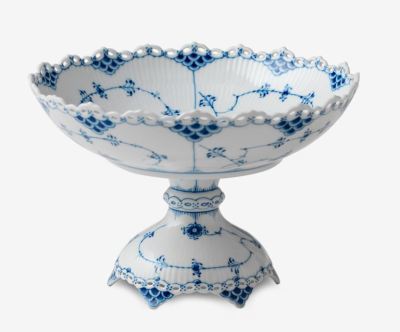
And it’s 870 Euros.
...
In the end, after lots of searching and going through multiple stores across the city, I managed to find a single beautiful plate with an over 50% discount. The price was still insane, and I still felt bad spending so much on a plate, but it was for a wedding and Royal Copenhagen has a deep meaning for some people, so I thought I could do it just once.
I took the plate to the pay desk, strangely excited that I’m buying a Royal Copenhagen item for the first time after living in the country for a year and a half. I almost felt like a local! And then, the lady refused to sell it to me.
Apparently, she didn’t have the right box to pack it. I said I didn’t need a box, I could gift wrap it myself. She was shocked. She said a Royal Copenhagen item cannot be sold without a box and she cannot in good conscience sell it to me.
Do people actually keep the boxes???
Or perhaps she took one look at me and realized I’m an uncultured barbarian who could never appreciate this artistry.
Sigh. I’m sorry, Royal Copenhagen. I tried, I really did, but it was not meant to be. It’s not you, it’s me, and all that.

But why am I blabbering about Royal Copenhagen instead of reviewing the book??
This book is about porcelain. About this special type of blue-and-white porcelain, it’s history, the artistry and complexity of its preparation in the 17th century. About the ingenuity of those pioneers who figured out the techniques and formulas to get just the right shade of midnight blue.
And now, after reading this book, I’ve grown to appreciate Royal Copenhagen a bit more. I still don’t completely understand the obsession, and I still wouldn’t buy it for myself, but I get the history of porcelain in Northern Europe and the craft and meaning behind it.
Waaaaait a moment… But then why are Dutch and German (especially Delft and Meissen) blue-and-white pottery so famous worldwide, but I had never heard about Copenhagen pottery or any type of Danish pottery until coming to Denmark? *googles* Hmmm… Apparently, Royal Copenhagen was founded in 1985… Not in the 17th century like the start of Delftware production, or in the very beginning of the 18th century when Meissen porcelain was developed, but in 1985. But then… what’s the big deal? Argh, forget what I just said about learning to appreciate Royal Copenhagen, it’s all an overpriced scam.
If we ignore my newfound obsession with porcelain history and authenticity, Midnight Blue is a decent novel, but nothing more. The story and characters are a bit simplistic, and all conflicts are resolved all too easily. The main character is unreasonably lucky and her issues get sorted out way too conveniently. Some parts that should have been emotional were rushed through. Also, the language sounded modern, but that might have been an issue with the translation. Famous historical figures kept popping up for no reason and with no impact on the story. Nevertheless, it’s a fun and well-researched glimpse of the 17th century.
But why would I feel strongly about porcelain?
If you’ve read my review of The Little Book of Hygga, you know that last year I moved to Denmark and faced several elements of culture shock. One of them being the Danes’ willingness to spend an ungodly amount of money on luxury goods.
I have two main issues with this:
1. The wastefulness of it all. I come from a culture which falls on the left side of the The Inglehart-Welzel World Cultural Map, meaning it scores high on Survival values. Seeing someone spend a sum that would feed a family for half a year on a single designer cup hurts my soul.
2. Some of these luxury items are not even high quality, or functional, or pretty.
I recently bought a couple of these plates for my kitchen. The store is in Copenhagen, but it’s not a luxury brand:
It cost me one tenth of the price of this fancy Royal Copenhagen plate:
I mean…
Which one do you like better? Am I missing something? What’s going on? Am I crazy???
Once again, I’m happy I’m using a penname on Goodreads because what I’m about to say next will surely get my Danish residence permit revoked…
I was recently shopping for a wedding gift and thought a Royal Copenhagen item would work nicely. Royal Copenhagen is huge here. Everyone is obsessed, so much that the poorest people are saving up to buy the cheapest item on the catalogue so that they have it in their homes. I walked into the store determined to buy something in spite of the exuberant cost… and I didn’t like almost anything. I know I sound like a barbarian, but the majority of items were plain boring. If I was shopping for myself, I wouldn’t have bought any of them even if they cost 5 Euros.
You think I’m exaggerating when I say my residence permit would be revoked for saying this, but I’m not sure I am. I mean, some of the questions on the Danish citizenship test are about the history of designer vases. I’m not kidding.
Okay, I have to admit a few items in the shop were quite pretty. Like this plate:
I’d totally spend 10 Euros on this one. Maybe even 20. Okay, it’s a wedding gift, and it’s fancy designer porcelain, so let’s go for 100. Well, it costs 330 Euros.
And I still keep converting Danish kroner prices into Euro in my head so that I can cry.
This fruit bowl is also beautiful:
And it’s 870 Euros.
...
In the end, after lots of searching and going through multiple stores across the city, I managed to find a single beautiful plate with an over 50% discount. The price was still insane, and I still felt bad spending so much on a plate, but it was for a wedding and Royal Copenhagen has a deep meaning for some people, so I thought I could do it just once.
I took the plate to the pay desk, strangely excited that I’m buying a Royal Copenhagen item for the first time after living in the country for a year and a half. I almost felt like a local! And then, the lady refused to sell it to me.
Apparently, she didn’t have the right box to pack it. I said I didn’t need a box, I could gift wrap it myself. She was shocked. She said a Royal Copenhagen item cannot be sold without a box and she cannot in good conscience sell it to me.
Do people actually keep the boxes???
Or perhaps she took one look at me and realized I’m an uncultured barbarian who could never appreciate this artistry.
Sigh. I’m sorry, Royal Copenhagen. I tried, I really did, but it was not meant to be. It’s not you, it’s me, and all that.
But why am I blabbering about Royal Copenhagen instead of reviewing the book??
This book is about porcelain. About this special type of blue-and-white porcelain, it’s history, the artistry and complexity of its preparation in the 17th century. About the ingenuity of those pioneers who figured out the techniques and formulas to get just the right shade of midnight blue.
And now, after reading this book, I’ve grown to appreciate Royal Copenhagen a bit more. I still don’t completely understand the obsession, and I still wouldn’t buy it for myself, but I get the history of porcelain in Northern Europe and the craft and meaning behind it.
Waaaaait a moment… But then why are Dutch and German (especially Delft and Meissen) blue-and-white pottery so famous worldwide, but I had never heard about Copenhagen pottery or any type of Danish pottery until coming to Denmark? *googles* Hmmm… Apparently, Royal Copenhagen was founded in 1985… Not in the 17th century like the start of Delftware production, or in the very beginning of the 18th century when Meissen porcelain was developed, but in 1985. But then… what’s the big deal? Argh, forget what I just said about learning to appreciate Royal Copenhagen, it’s all an overpriced scam.
If we ignore my newfound obsession with porcelain history and authenticity, Midnight Blue is a decent novel, but nothing more. The story and characters are a bit simplistic, and all conflicts are resolved all too easily. The main character is unreasonably lucky and her issues get sorted out way too conveniently. Some parts that should have been emotional were rushed through. Also, the language sounded modern, but that might have been an issue with the translation. Famous historical figures kept popping up for no reason and with no impact on the story. Nevertheless, it’s a fun and well-researched glimpse of the 17th century.

March 6, 2017
I cannot believe that this is the best writer to come out of Holland. I will not believe it.
For a large portion of "Midnight Blue", I was willing to blame a shoddy translation job for the mediocrity. The writing is absent of vividness, painfully bare, and I'd have struggled to imagine the settings of Amsterdam and Delft if I hadn't already read "The Miniaturist" and "The Girl With A Pearl Earring". The dialogue is laughable - did people in the 1600s really milk cows "in a jiffy"? And, a classic hallmark of bad writing - we're often told, not shown ("the only thing I feel is all-consuming terror").
It was towards the end that I accepted that the author, and not the translator, was to blame. The plot is a succession of disasters/tragedies, which our protagonist Catrin always avoids thanks to other people, including in the climatic scene. As well as being the damsel in distress in her own story, Catrin is utterly unlikeable, apart from the one bright point of the book when she cares for a stranger's child dying of plague.
Actually, avoid this book like the plague.
For a large portion of "Midnight Blue", I was willing to blame a shoddy translation job for the mediocrity. The writing is absent of vividness, painfully bare, and I'd have struggled to imagine the settings of Amsterdam and Delft if I hadn't already read "The Miniaturist" and "The Girl With A Pearl Earring". The dialogue is laughable - did people in the 1600s really milk cows "in a jiffy"? And, a classic hallmark of bad writing - we're often told, not shown ("the only thing I feel is all-consuming terror").
It was towards the end that I accepted that the author, and not the translator, was to blame. The plot is a succession of disasters/tragedies, which our protagonist Catrin always avoids thanks to other people, including in the climatic scene. As well as being the damsel in distress in her own story, Catrin is utterly unlikeable, apart from the one bright point of the book when she cares for a stranger's child dying of plague.
Actually, avoid this book like the plague.

January 16, 2018
Meh. This was an easy quick read that was enjoyable but not memorable. I didn’t feel as though the characters were developed well enough to feel any sincere attachment to and things happened so quickly it was hard to ever feel engrossed.

September 19, 2023
O carte buna, cu subiect interesant, dar cu un final puțin grăbit. O cunoaștem pe Catrijn, o tânără văduva care pleacă în căutarea unui trai mai bun. Cunoaște oameni, o ia de la capăt, trece printr-o serie de tragedii. Și cunoaște iubirea. Dar a fost o fază ciudata cu povestea asta de iubirea, deoarece nu mă așteptam la destinul rezervat de scriitoare. Iar Catrijn mi s-a părut foarte naivă. Și avem și ciuma, care a bântuit puternic în secolul 17.
http://www.stildescriitor.ro/2023/11/...
http://www.stildescriitor.ro/2023/11/...

February 15, 2018
This was an OK historical novel focusing on life as a pottery painter in Delft around the time the Delft Blue pottery exploded in popularity. Catrin is a pottery painter there. She has left her hometown under mysterious circumstances, is followed by a fellow townie who knows her secret, and finds herself alone and vulnerable.
Catrin's story is OK. There's some interest in how a woman of the time would have handled her life with its restrictions and vulnerabilities. The historical part, including some cameos by famous painters, is also OK. Rembrandt, Vermeer, et al, make some appearances but don't add anything to Catrin's story or our understanding or appreciation of their own art.
The writing was so-so. I was particularly struck with the ridiculous anachronisms characters use in speech and action. Catrin has sexual relationships with her first husband before they're married, as well as with Matthias, when even she correctly recognizes that a pregnancy would ruin her life and make her destitute. Aside from that, the mores of the time would not have put it into Catrin's head to do such things. In general, the characters act much more modern than they should. At one point, Catrin and a friend acknowledge that 17 is "much too young" to be married. In Delft, 1600s????? Not even slightly true.
The mannerisms and language are equally out of place. Catrin puts a companionable hand over Evert's in a sympathetic gesture: a totally inappropriate thing to do for a single woman. Catrin also speaks to her employers very informally. Historically, she'd have been slapped for such presumption.
Phrases like "in a jiffy," "What the hell were you thinking?" "going all the way" etc are just ridiculous.
Catrin's story is OK. There's some interest in how a woman of the time would have handled her life with its restrictions and vulnerabilities. The historical part, including some cameos by famous painters, is also OK. Rembrandt, Vermeer, et al, make some appearances but don't add anything to Catrin's story or our understanding or appreciation of their own art.
The writing was so-so. I was particularly struck with the ridiculous anachronisms characters use in speech and action. Catrin has sexual relationships with her first husband before they're married, as well as with Matthias, when even she correctly recognizes that a pregnancy would ruin her life and make her destitute. Aside from that, the mores of the time would not have put it into Catrin's head to do such things. In general, the characters act much more modern than they should. At one point, Catrin and a friend acknowledge that 17 is "much too young" to be married. In Delft, 1600s????? Not even slightly true.
The mannerisms and language are equally out of place. Catrin puts a companionable hand over Evert's in a sympathetic gesture: a totally inappropriate thing to do for a single woman. Catrin also speaks to her employers very informally. Historically, she'd have been slapped for such presumption.
Phrases like "in a jiffy," "What the hell were you thinking?" "going all the way" etc are just ridiculous.

March 17, 2016
3,5 sterren. Mooi boek, maar had er helaas meer van verwacht: het is zeker niet slecht geschreven of stom, maar ik vond het gewoon niet zo bijzonder. Duurde lang voor het op gang kwam en de schrijfstijl bleef erg aan de oppervlakte. Uitgebreide recensie: http://thebookreview.nl/recensies/rom...

October 5, 2019
3.5 stars! Really quick and interesting read!

April 29, 2016
Leuk boek met interessante informatie over Delfts blauw.
December 10, 2018
Me ha gustado mucho, mucho. Una lectura ágil y súper entretenida y gustosa, además de bien escrita y documentada. No será el único libro que lea de esta autora holandesa... ¡Buen descubrimiento! 📖⭐

June 24, 2018
I've always loved the blue and white Chinese porcelain, so when I saw the cover of Midnight Blue, it immediately captured my attention. Set in 17th century Netherlands, the book tells the story of a young woman with a talent for painting that stumbles into the world of pottery making and how her talent sets her life on a new course.
Catrin finds herself widowed and alone in Amsterdam with a big secret and the hope that no one will discover her secret. She is hired by a pottery maker who soon discovers her talent and the story really picks up after that.
I did expect a bit more historic detail about the blue delft pottery, but in spite of that, I really enjoyed the story. I recommend this book to readers who love historical fiction, the Netherlands, and the blue and white porcelain.
Catrin finds herself widowed and alone in Amsterdam with a big secret and the hope that no one will discover her secret. She is hired by a pottery maker who soon discovers her talent and the story really picks up after that.
I did expect a bit more historic detail about the blue delft pottery, but in spite of that, I really enjoyed the story. I recommend this book to readers who love historical fiction, the Netherlands, and the blue and white porcelain.

March 26, 2021
I really enjoyed this historical fiction that had all the right things for me. A suspicious death, danger, romance tinged with inappropriateness, painting and pottery, plague, and 1654 Netherlands. So, a very compelling novel!

October 11, 2018
Reseña en Español | Reseña en Inglés
A pesar de haber devorado este libro en prácticamente dos días y medio, y de haberme entretenido muchísimo durante la lectura, no puedo darle una calificación más alta. Azul de Medianoche tiene todos los elementos que hacen que una novela histórica me atrape: ambientada en la Europa de finales del siglo XVII, específicamente Países Bajos; arte, enfocado en particular en la pintura holandesa y con cameos de Vermeer, Rembrandt y otros; y una protagonista mujer cuya vida resulta interesante y atraviesa bastantes peripecias.
En realidad, el relato es muy ágil y es imposible dejar de leer porque cada capítulo presenta situaciones muy interesantes y bien complejas. La protagonista es Catrjin, una mujer de 25 años, quién recién acaba de enviudar en De Rijp, un pueblito perdido de Países Bajos. No han pasado sino unas cuantas semanas de la muerte de su marido cuando Catrijin toma la decisión de irse a buscar otra vida, a un pueblo mucho más grande. De esta forma termina en Ámsterdam, en casa de un rico comerciante, quien tiene una esposa interesada en la pintura Brigitta (pero sin talento), y un hermano, Matías, que pronto se interesa por ella. Catrjin cumple su trabajo como ama de llaves a la perfección, pero a los pocos meses, se reencuentra con uno de sus criados, quien empieza a chantajearla. Aquí descubrimos el gran secreto de Catrjin, quien demuestra ser una mujer de carácter y como se dice en México, “de armas tomar”.
Huyendo de su criado Jacob, Catrijn se muda a Delft, a casa del hermano de Matías, quien tiene una fábrica de cerámica y de pronto nuestra protagonista se encuentra trabajando como ayudante en este lugar. Cabe mencionar que ella siempre estuvo interesada por la pintura y desde niña decoraba muebles y lo que podía en casa, pero, como tantas mujeres de la época, no había recibido una instrucción formal ni disponía de mucho tiempo para dedicarse a ello. Sin embargo, ya en Ámsterdam con Brigitta y ahora en Delft, de pronto Catrjin se dedica a su verdadera pasión, la pintura. Asimismo, a nivel personal las cosas continúan complicándose porque Evert, su jefe y hermano de Matías, se enamora de ella y comienza a cortejarla, toda vez que el hermano ha partido a Oriente en un viaje de más de un año.
La reconstrucción del Delft de la época me ha gustado y me he emocionado bastante por el hecho que la protagonista haya convivido con el mismismo Vermeer, si bien antes que se convirtiera en pintor. Las apariciones de Rembrandt y Fabritius también me han encantado, porque la pintura de esta época en particular es mi favorita. La recreación de las ciudades y pueblos, y de su gente también ha sido espectacular, logrando que podamos sumergirnos en la época de Catrjin y caminar por Ámsterdam o Delft. Finalmente, he disfrutado muchísimo los pasajes relacionadas con la pintura y la industria de la cerámica y de cómo una mujer talentosa pudo dedicarse a este trabajo y hacer que este arte creciera.
Entonces, ¿cuál fue el problema que encontré en la novela? La verosimilitud. Creo que muchos elementos no son creíbles. No en cuanto a la reconstrucción histórica de las ciudades o de las pinturas sino de los personajes y sus formas de pensar. Por ejemplo, Catrjin es una mujer independiente, pero, ¿qué tanto grado de independencia podría tener una mujer en el siglo XVII? Creo que, si bien era viuda y con dinero, su familia simplemente no hubiera visto con buenos ojos que ella se marchara a servir en la casa de quien sabe quién. Otro aspecto que me pareció poco creíble fue el propio pensamiento de Catrjin. Por ejemplo, al enterarse que una mujer se casó a los 17 años piensa que era “demasiado joven” cuando, en esa época, si una mujer no había contraído matrimonio a los 18 ya empezaba a considerarse como solterona. Es decir, la norma de la época no solo en Europa sino en diversas sociedades era casarse lo más joven posible. Otro aspecto es, por ejemplo, la facilidad con que Catrjin tiene relaciones con hombres fuera del matrimonio -tanto con su primer esposo como con Matías. Y no se trata de que esté mal ni mucho menos, pero si nos ubicamos en el contexto histórico, nuevamente -creo que se aleja un poco de la mentalidad de la época, de la credibilidad. Esto es algo que en general he visto que muchas novelas históricas adolecen o han hecho a un lado en aras de crear personajes románticos principalmente femeninos, sin apegarse al rigor que regía las vidas de las mujeres en esa época.
Finalmente, me pareció poco verosímil el hecho que todo se resuelva sin problema y sin consecuencias para la protagonista o bueno, prácticamente casi todo. Es decir, hay situaciones muy complejas y terribles (abortos, asesinatos, la peste) pero la realidad de las cosas es que al final pareciera que todo funciona y la protagonista escapa por un pelo de cualquier amenaza cuando en la vida el resultado posiblemente fuera menos optimista. Y no es que no me gusten los finales felices, pero creo que de una serie de situaciones que vive Catrjin, mínimo en una tuvo que haber habido una consecuencia y… no fue el caso.
En resumen, es una novela ágil, entretenida, bien escrita y con una interesante construcción histórica pero poco verosímil principalmente por las actitudes y destinos de los personajes.
___
Despite having devoured this book in almost two and a half days, and being quite entertained, I cannot give it a higher rating. Midnight Blue has all the elements that make me love historical novels: set in the Europe of the late seventeenth century, specifically the Netherlands; art, focused on Dutch painting and with cameos by Vermeer, Rembrandt and others; and a protagonist whose life is interesting and goes through many adventures.
In fact, the story is very agile, and it is impossible to stop reading because each chapter gets more interesting and complex. The main character is Catrjin, a 25-year-old woman who has just widowed in De Rijp, a small town in the Netherlands. It's been only a few weeks since her husband's death when Catrijin decides to go and find another life in a much larger town. She ends up in Amsterdam, at the home of a wealthy merchant, who has a wife interested in painting Brigitta (but without talent), and a brother, Matias, who soon becomes interested in her. Catrjin fulfills her job as a housekeeper to perfection, but a few months later, she encounters one of her servants, who begins to blackmail her. Thus a secret is revealed, and we learn that Catrjin is a strong-willed woman.
To avoid any further encounters with his servant Jacob, Catrijn moves to Delft, to the house of Matias's brother, who has a pottery factory. Soon our protagonist is working as an assistant in this place. It is worth mentioning that she was always interested in painting and since she was a child she decorated furniture and what she could at home, but, like so many women of the time, she had not received a formal instruction or had much time to dedicate herself to it. However, in Amsterdam with Brigitta and now in Delft, suddenly Catrjin is able to work on her true passion, painting. Also, things continue to get complicated because Evert, her boss and brother of Matías, falls in love with her and begins to woo her, since his brother has sailed to the East for a trip which will last more than a year.
The depiction of Delft is wonderful, and I was quite excited by the fact that the protagonist had contact Vermeer himself, although before he became a painter. The appearances of Rembrandt and Fabritius were also a plus because the art and painting of this period is one of my favorites. The recreation of the cities and towns, and of its people has also been spectacular, allowing us to immerse in the time of Catrjin and walk through Amsterdam or Delft. Finally, I really enjoyed the passages related to painting and the ceramic industry and how a talented woman could dedicate herself to this work and make this art grow.
So, what was the problem I found in the novel? I think mainly that some elements are not credible. Not regarding the historical reconstruction of the cities or the paintings but of the characters and their ways of thinking. For example, Catrjin is an independent woman, but how much independence could a woman have in the seventeenth century? I think that although she was a widow and with money, her family simply would not have approved that she left to serve in the house of who knows who. Another aspect that seemed implausible to me was Catrjin's own thought. For example, upon learning that a woman was married at age 17, she thinks she was "too young”. At that time, if a woman had not married at 18 she was already considered an old maid or spinsters because the norm at the time not only in Europe but around the world was to marry as young as possible.
Another aspect is, for example, the ease with which Catrjin has relationships with men outside of marriage-both with his first husband and with Matias. And it is not that it is wrong but if we place ourselves in the historical context, again - I think it contradicts not only the ideas but the norms of the time. This is something that I have seen that many historical novels do in the sake of creating feminine romantic characters, without adhering to the rigor that governed the lives of women at that time.
Finally, I also found it unlikely that every inconvenience Catrjin faces was solved without problems and without consequences. Surely there were very complex and terrible situations (abortions, murders, the plague) but the truth is that in the end it seems that everything works and the protagonist escapes of any threat when in life the result could be less optimistic. It's not that I do not like happy endings, but I think that from the situations that Catrjin faced, at least one had to have been a consequence and ... it was not the case.
In short, it is an agile, entertaining novel, well written and with an interesting historical construction but unlikely mainly because of the attitudes and destinies of the characters.
A pesar de haber devorado este libro en prácticamente dos días y medio, y de haberme entretenido muchísimo durante la lectura, no puedo darle una calificación más alta. Azul de Medianoche tiene todos los elementos que hacen que una novela histórica me atrape: ambientada en la Europa de finales del siglo XVII, específicamente Países Bajos; arte, enfocado en particular en la pintura holandesa y con cameos de Vermeer, Rembrandt y otros; y una protagonista mujer cuya vida resulta interesante y atraviesa bastantes peripecias.
En realidad, el relato es muy ágil y es imposible dejar de leer porque cada capítulo presenta situaciones muy interesantes y bien complejas. La protagonista es Catrjin, una mujer de 25 años, quién recién acaba de enviudar en De Rijp, un pueblito perdido de Países Bajos. No han pasado sino unas cuantas semanas de la muerte de su marido cuando Catrijin toma la decisión de irse a buscar otra vida, a un pueblo mucho más grande. De esta forma termina en Ámsterdam, en casa de un rico comerciante, quien tiene una esposa interesada en la pintura Brigitta (pero sin talento), y un hermano, Matías, que pronto se interesa por ella. Catrjin cumple su trabajo como ama de llaves a la perfección, pero a los pocos meses, se reencuentra con uno de sus criados, quien empieza a chantajearla. Aquí descubrimos el gran secreto de Catrjin, quien demuestra ser una mujer de carácter y como se dice en México, “de armas tomar”.
Huyendo de su criado Jacob, Catrijn se muda a Delft, a casa del hermano de Matías, quien tiene una fábrica de cerámica y de pronto nuestra protagonista se encuentra trabajando como ayudante en este lugar. Cabe mencionar que ella siempre estuvo interesada por la pintura y desde niña decoraba muebles y lo que podía en casa, pero, como tantas mujeres de la época, no había recibido una instrucción formal ni disponía de mucho tiempo para dedicarse a ello. Sin embargo, ya en Ámsterdam con Brigitta y ahora en Delft, de pronto Catrjin se dedica a su verdadera pasión, la pintura. Asimismo, a nivel personal las cosas continúan complicándose porque Evert, su jefe y hermano de Matías, se enamora de ella y comienza a cortejarla, toda vez que el hermano ha partido a Oriente en un viaje de más de un año.
La reconstrucción del Delft de la época me ha gustado y me he emocionado bastante por el hecho que la protagonista haya convivido con el mismismo Vermeer, si bien antes que se convirtiera en pintor. Las apariciones de Rembrandt y Fabritius también me han encantado, porque la pintura de esta época en particular es mi favorita. La recreación de las ciudades y pueblos, y de su gente también ha sido espectacular, logrando que podamos sumergirnos en la época de Catrjin y caminar por Ámsterdam o Delft. Finalmente, he disfrutado muchísimo los pasajes relacionadas con la pintura y la industria de la cerámica y de cómo una mujer talentosa pudo dedicarse a este trabajo y hacer que este arte creciera.
Entonces, ¿cuál fue el problema que encontré en la novela? La verosimilitud. Creo que muchos elementos no son creíbles. No en cuanto a la reconstrucción histórica de las ciudades o de las pinturas sino de los personajes y sus formas de pensar. Por ejemplo, Catrjin es una mujer independiente, pero, ¿qué tanto grado de independencia podría tener una mujer en el siglo XVII? Creo que, si bien era viuda y con dinero, su familia simplemente no hubiera visto con buenos ojos que ella se marchara a servir en la casa de quien sabe quién. Otro aspecto que me pareció poco creíble fue el propio pensamiento de Catrjin. Por ejemplo, al enterarse que una mujer se casó a los 17 años piensa que era “demasiado joven” cuando, en esa época, si una mujer no había contraído matrimonio a los 18 ya empezaba a considerarse como solterona. Es decir, la norma de la época no solo en Europa sino en diversas sociedades era casarse lo más joven posible. Otro aspecto es, por ejemplo, la facilidad con que Catrjin tiene relaciones con hombres fuera del matrimonio -tanto con su primer esposo como con Matías. Y no se trata de que esté mal ni mucho menos, pero si nos ubicamos en el contexto histórico, nuevamente -creo que se aleja un poco de la mentalidad de la época, de la credibilidad. Esto es algo que en general he visto que muchas novelas históricas adolecen o han hecho a un lado en aras de crear personajes románticos principalmente femeninos, sin apegarse al rigor que regía las vidas de las mujeres en esa época.
Finalmente, me pareció poco verosímil el hecho que todo se resuelva sin problema y sin consecuencias para la protagonista o bueno, prácticamente casi todo. Es decir, hay situaciones muy complejas y terribles (abortos, asesinatos, la peste) pero la realidad de las cosas es que al final pareciera que todo funciona y la protagonista escapa por un pelo de cualquier amenaza cuando en la vida el resultado posiblemente fuera menos optimista. Y no es que no me gusten los finales felices, pero creo que de una serie de situaciones que vive Catrjin, mínimo en una tuvo que haber habido una consecuencia y… no fue el caso.
En resumen, es una novela ágil, entretenida, bien escrita y con una interesante construcción histórica pero poco verosímil principalmente por las actitudes y destinos de los personajes.
___
Despite having devoured this book in almost two and a half days, and being quite entertained, I cannot give it a higher rating. Midnight Blue has all the elements that make me love historical novels: set in the Europe of the late seventeenth century, specifically the Netherlands; art, focused on Dutch painting and with cameos by Vermeer, Rembrandt and others; and a protagonist whose life is interesting and goes through many adventures.
In fact, the story is very agile, and it is impossible to stop reading because each chapter gets more interesting and complex. The main character is Catrjin, a 25-year-old woman who has just widowed in De Rijp, a small town in the Netherlands. It's been only a few weeks since her husband's death when Catrijin decides to go and find another life in a much larger town. She ends up in Amsterdam, at the home of a wealthy merchant, who has a wife interested in painting Brigitta (but without talent), and a brother, Matias, who soon becomes interested in her. Catrjin fulfills her job as a housekeeper to perfection, but a few months later, she encounters one of her servants, who begins to blackmail her. Thus a secret is revealed, and we learn that Catrjin is a strong-willed woman.
To avoid any further encounters with his servant Jacob, Catrijn moves to Delft, to the house of Matias's brother, who has a pottery factory. Soon our protagonist is working as an assistant in this place. It is worth mentioning that she was always interested in painting and since she was a child she decorated furniture and what she could at home, but, like so many women of the time, she had not received a formal instruction or had much time to dedicate herself to it. However, in Amsterdam with Brigitta and now in Delft, suddenly Catrjin is able to work on her true passion, painting. Also, things continue to get complicated because Evert, her boss and brother of Matías, falls in love with her and begins to woo her, since his brother has sailed to the East for a trip which will last more than a year.
The depiction of Delft is wonderful, and I was quite excited by the fact that the protagonist had contact Vermeer himself, although before he became a painter. The appearances of Rembrandt and Fabritius were also a plus because the art and painting of this period is one of my favorites. The recreation of the cities and towns, and of its people has also been spectacular, allowing us to immerse in the time of Catrjin and walk through Amsterdam or Delft. Finally, I really enjoyed the passages related to painting and the ceramic industry and how a talented woman could dedicate herself to this work and make this art grow.
So, what was the problem I found in the novel? I think mainly that some elements are not credible. Not regarding the historical reconstruction of the cities or the paintings but of the characters and their ways of thinking. For example, Catrjin is an independent woman, but how much independence could a woman have in the seventeenth century? I think that although she was a widow and with money, her family simply would not have approved that she left to serve in the house of who knows who. Another aspect that seemed implausible to me was Catrjin's own thought. For example, upon learning that a woman was married at age 17, she thinks she was "too young”. At that time, if a woman had not married at 18 she was already considered an old maid or spinsters because the norm at the time not only in Europe but around the world was to marry as young as possible.
Another aspect is, for example, the ease with which Catrjin has relationships with men outside of marriage-both with his first husband and with Matias. And it is not that it is wrong but if we place ourselves in the historical context, again - I think it contradicts not only the ideas but the norms of the time. This is something that I have seen that many historical novels do in the sake of creating feminine romantic characters, without adhering to the rigor that governed the lives of women at that time.
Finally, I also found it unlikely that every inconvenience Catrjin faces was solved without problems and without consequences. Surely there were very complex and terrible situations (abortions, murders, the plague) but the truth is that in the end it seems that everything works and the protagonist escapes of any threat when in life the result could be less optimistic. It's not that I do not like happy endings, but I think that from the situations that Catrjin faced, at least one had to have been a consequence and ... it was not the case.
In short, it is an agile, entertaining novel, well written and with an interesting historical construction but unlikely mainly because of the attitudes and destinies of the characters.

September 22, 2026
MY FAVORITE HISTORICAL FICTION OF THE YEAR!
Wow. This was a work of art.
Could see this becoming a comfort read in years to come tbh.
I want to start with a quick note that I would not recommend this to anyone under 16. It has no spice but contains graphic violence, murder, domestic abuse, and stalking,
With that being said, this was an INCREDIBLE read! I am not the biggest historical fiction reader, but this hit all the right spots for me
It contained interesting historical facts, including cameos of Johannes Vermeer, Rembrant and several of their apprentices. I love when you can learn from a story and this book certainly taught me a lot.
It had several different sub plots of romance, which in the end I'm actually not 100% satisfied with based on who I wanted her to be with but I can agree with the author's creative direction.
The plot was good and well-paced. The first 25 pages were slow but immediately after that I was absolutely engulfed in this story.
I loved all of the characters Catrin met and how they formed a community around her.
The storytelling, especially for this being translated fiction, was magnificent.
My only complaint was that I thought the faith themes in this were a bit messy (which makes sense—the author does not practice any religion) and Catrin had an odd character arc.
Catrin herself was very likeable, even when you realize she did something very bad... You still root for her.
Evert, Adraaian, and Matthias were all extremely likeable too.
Simone does a fantastic job building side characters and making them feel like real people and not NPCS, as well as making you like vs not like certain people.
Note on one of the romantic interests:
The way that Simone wrote the love interest really touched my heart. I love a good swoony, banter-filled relationship with smirks and getting on each other's nerves, but this was different in the best possible way. It felt so real. So sweet. It felt like love. Love in its pure, realistic form. I'm not even sure how to describe it. Read it for yourself and see. But the way she worked the relationship between him (won't say for spoilers sake) and Catrin really made a mark on me.
Overall, I really enjoyed this story and all of its historical action. It was educational and a great story, though somber at times.
It certainly made me want to visit the Netherlands and see some Delft pottery!
⭐5 stars
Would recommend for older readers (16+)
Super underrated!
⚱️🖌️🎨🇳🇱🌷
"Maybe it's the familiar way he talks to me, the way the skin around his eyes cringles when he laughs or the sound of his voice that make me edge closer to him. He's nice. Really nice. Apparently, he thinks the same of me because he keeps leaning toward me and touching me now and again as we talk. His face is alive with enthusiasm and I can't stop looking at him. A tingling feeling spreads in my body, like little bubbles of air under my skin."
book 5 of rainbow tbr 🩵
Wow. This was a work of art.
Could see this becoming a comfort read in years to come tbh.
I want to start with a quick note that I would not recommend this to anyone under 16. It has no spice but contains graphic violence, murder, domestic abuse, and stalking,
With that being said, this was an INCREDIBLE read! I am not the biggest historical fiction reader, but this hit all the right spots for me
It contained interesting historical facts, including cameos of Johannes Vermeer, Rembrant and several of their apprentices. I love when you can learn from a story and this book certainly taught me a lot.
It had several different sub plots of romance, which in the end I'm actually not 100% satisfied with based on who I wanted her to be with but I can agree with the author's creative direction.
The plot was good and well-paced. The first 25 pages were slow but immediately after that I was absolutely engulfed in this story.
I loved all of the characters Catrin met and how they formed a community around her.
The storytelling, especially for this being translated fiction, was magnificent.
My only complaint was that I thought the faith themes in this were a bit messy (which makes sense—the author does not practice any religion) and Catrin had an odd character arc.
Catrin herself was very likeable, even when you realize she did something very bad... You still root for her.
Evert, Adraaian, and Matthias were all extremely likeable too.
Simone does a fantastic job building side characters and making them feel like real people and not NPCS, as well as making you like vs not like certain people.
Note on one of the romantic interests:
The way that Simone wrote the love interest really touched my heart. I love a good swoony, banter-filled relationship with smirks and getting on each other's nerves, but this was different in the best possible way. It felt so real. So sweet. It felt like love. Love in its pure, realistic form. I'm not even sure how to describe it. Read it for yourself and see. But the way she worked the relationship between him (won't say for spoilers sake) and Catrin really made a mark on me.
Overall, I really enjoyed this story and all of its historical action. It was educational and a great story, though somber at times.
It certainly made me want to visit the Netherlands and see some Delft pottery!
⭐5 stars
Would recommend for older readers (16+)
Super underrated!
⚱️🖌️🎨🇳🇱🌷
"Maybe it's the familiar way he talks to me, the way the skin around his eyes cringles when he laughs or the sound of his voice that make me edge closer to him. He's nice. Really nice. Apparently, he thinks the same of me because he keeps leaning toward me and touching me now and again as we talk. His face is alive with enthusiasm and I can't stop looking at him. A tingling feeling spreads in my body, like little bubbles of air under my skin."
book 5 of rainbow tbr 🩵

June 6, 2024
1,5 stelute ☹️
Singurul merit, din punctul meu de vedere, este plasarea referintelor istorice - dialogurile nu par deloc credibile pentru perioada respectiva, personajele sunt superficiale, iar povestea in sine nu m-a cucerit cu nimic.
Singurul merit, din punctul meu de vedere, este plasarea referintelor istorice - dialogurile nu par deloc credibile pentru perioada respectiva, personajele sunt superficiale, iar povestea in sine nu m-a cucerit cu nimic.

March 10, 2025
Nachtblauw lag al een lange tijd op mijn stapel om te lezen en ik heb 'm er nu toch echt bijgepakt. Misschien kwam het omdat ik het onderwerp minder interessant vond, want Delfts Blauw is niet hetgeen waar ik het snels warm voor loop. Toch was ik ook wel weer benieuwd en, zoals we van Simone van der Vlugt gewend zijn is het boek vol van intrige en kommer en kwel. In dit geval ook de pest, en een groot geheim. Het boek heeft me erg verrast en ik vond het zelfs best wel spannend. Er gebeurde ook wel veel en uiteindelijk denk ik dat ik 'm misschien nog wel een tweede keer moet lezen om echt goed door te hebben wat er allemaal wel niet voorbij kwam. Toch was het ook niet mijn favoriet, want Simone van der Vlugt heeft betere boeken geschreven, maar ik gaaf Nachtblauw toch 4 dikke sterren. Ik vind het bijna jammer dat ik nog maar een paar van haar historische romans te gaan heb voor ik ze allemaal gelezen heb.

March 13, 2016
Vanaf de eerste bladzijde word je opgeslorpt door het verhaal. Catrijn verlaat "De Rijn" in de hoop een beter leven te leiden wat na een teleurstelling uiteindelijk lijkt te lukken tot ze terug op de vlucht moet. De Gouden eeuw, zoals die periode genoemd wordt, is alvast geen gouden leven voor Catrijn, maar wordt in gouden woorden tot een prachtig historisch verhaal gesponnen. Simone Van der Vlugt schetst hier dan ook prachtig hoe het "Delfts Blauw" is ontstaan. Tijdens het lezen, was ik precies Catrijn zelf en leek alles zo dichtbij, waardoor ik eigenlijk niet besefte gewoon aan het lezen te zijn. Een fantastisch verhaal!!! Zowel voor de schrijfstijl, het verhaal en de cover geef ik met overtuiging 5 sterren.

February 5, 2017
An interesting story about the creation of Delft Blue pottery but wrapped up in a simplistic romance vehicle. There's little sense of history here (though that might be a function of translation) and Cat could be a farming girl/brilliant artist/widow/lover in any number of historical periods going by the way she thinks and speaks.
I never believe historical novels where the protagonists are brought to meet all the famous people however unlikely: here Rembrandt and Vermeer,
So I wanted something much richer, denser and more complicated: this is easy reading romance with a bit of business/art thrown in - good if you like your history lightweight and accessible.
Thanks to the publisher for an ARC via NetGalley
I never believe historical novels where the protagonists are brought to meet all the famous people however unlikely: here Rembrandt and Vermeer,
So I wanted something much richer, denser and more complicated: this is easy reading romance with a bit of business/art thrown in - good if you like your history lightweight and accessible.
Thanks to the publisher for an ARC via NetGalley

July 7, 2023
2,5 stars, rounded up.
This novel is set in 17th century Holland but I had a hard time feeling immersed in the Golden Age period, mainly because the language used in dialogues felt too modern. There are also many allusions to inequality between men and women, which did not feel natural. While they are true, they felt too much like our current view of the past, rather than something that women would keep complaining about at the time. And especially, not something men would so readily agree with. Take this dialogue, for instance:
‘She thought her life was meaningless. She can’t have children and she didn’t know what to do with herself. It was only when she started painting that she rediscovered her lust for life. That was wonderful, of course, but she loses herself in it. As if there was nothing more to life than painting. I don’t understand. There’s so much to discover and enjoy.’
‘For a man, yes.’
‘And not for a woman?’ He looks askance at me. (…)
‘When a woman casts her life into chaos, it tends to be out of necessity, Matthias. It’s men who leave everything behind because they want to have fun. (...)’
He mulls over my words for a moment and then nods. ‘You’re right. (...)’
Mmmm… does not sound credible to me. And then again: “Why would you tie yourself down when the whole world is calling to you? Perhaps I would have done the same if I’d been born a man. But I’m not a man, and the world is very different for women.”
There are more examples like this throughout the book. Maybe if the author had not kept insisting on them, these characters wouldn’t have sounded so unrealistically forward-thinking.
This being said, this was still an overall nice and entertaining read, as I still enjoyed parts of the novel, especially those related to the growth of the Dutch porcelain industry, the details of pottery manufacture and the inclusion in the story of historical figures like Vermeer and Rembrandt.
This novel is set in 17th century Holland but I had a hard time feeling immersed in the Golden Age period, mainly because the language used in dialogues felt too modern. There are also many allusions to inequality between men and women, which did not feel natural. While they are true, they felt too much like our current view of the past, rather than something that women would keep complaining about at the time. And especially, not something men would so readily agree with. Take this dialogue, for instance:
‘She thought her life was meaningless. She can’t have children and she didn’t know what to do with herself. It was only when she started painting that she rediscovered her lust for life. That was wonderful, of course, but she loses herself in it. As if there was nothing more to life than painting. I don’t understand. There’s so much to discover and enjoy.’
‘For a man, yes.’
‘And not for a woman?’ He looks askance at me. (…)
‘When a woman casts her life into chaos, it tends to be out of necessity, Matthias. It’s men who leave everything behind because they want to have fun. (...)’
He mulls over my words for a moment and then nods. ‘You’re right. (...)’
Mmmm… does not sound credible to me. And then again: “Why would you tie yourself down when the whole world is calling to you? Perhaps I would have done the same if I’d been born a man. But I’m not a man, and the world is very different for women.”
There are more examples like this throughout the book. Maybe if the author had not kept insisting on them, these characters wouldn’t have sounded so unrealistically forward-thinking.
This being said, this was still an overall nice and entertaining read, as I still enjoyed parts of the novel, especially those related to the growth of the Dutch porcelain industry, the details of pottery manufacture and the inclusion in the story of historical figures like Vermeer and Rembrandt.

February 11, 2016
Het is Simone van der Vlugt weer gelukt om een goede historische roman te schrijven. Nachtblauw leest echt heel makkelijk weg en het verhaal bleef me aantrekken. Ik heb het in minder dan een dag uitgelezen. De Gouden Eeuw is mijn lievelingsperiode uit de geschiedenis van Nederland en een thema zoals de pest boeit mij ook altijd. Ik kan me moeilijk inbeelden hoe mensen bij bosjes neervielen en wat voor een doodsangsten mensen hebben uitgestaan, niet wetende wat de oorzaak is en hoe het te genezen.
★★★★: Vroeger als kind las ik alle historische kinderboeken van Simone van der Vlugt, ik hou ervan om me helemaal te kunnen inleven in het verleden en mijzelf af te vragen hoe de levens van mensen er toen uitzagen. Dit heeft er eigenlijk toe geleid dat ik nu geschiedenis studeer. Ook met dit boek verloor ik mezelf weer in het verleden en ben ik er weer aan herinnerd waarom ik ook alweer geschiedenis studeer (ik was de laatste tijd een beetje mijn motivatie kwijt geraakt hihi ^^⁾.
Een aanrader dus :)
★★★★: Vroeger als kind las ik alle historische kinderboeken van Simone van der Vlugt, ik hou ervan om me helemaal te kunnen inleven in het verleden en mijzelf af te vragen hoe de levens van mensen er toen uitzagen. Dit heeft er eigenlijk toe geleid dat ik nu geschiedenis studeer. Ook met dit boek verloor ik mezelf weer in het verleden en ben ik er weer aan herinnerd waarom ik ook alweer geschiedenis studeer (ik was de laatste tijd een beetje mijn motivatie kwijt geraakt hihi ^^⁾.
Een aanrader dus :)

February 26, 2017
“Midnight Blue”, written by Dutch author Simone Van Der Vlugt and translated by Jenny Watson is an interesting book.
It follows a short period in the life of a Dutch woman, Catrin. During this time, she marries Govert, but very soon, she realises her mistake, as Govert is a wife beater. It is with a certain amount of relief that her husband dies quite soon after their marriage, but Catrin feels she must sell her property and leave her home village. On her travels, she works in a several towns and cities, including Amsterdam and Delft.
The year or so in which we come to know Catrin is a tumultuous time for her. She falls in love, discovers a great talent for painting pottery, but also faces uncertainty and threats from her past. The plague is also a fearful enemy. As I read this story, I came to admire Catrin more and more. Some of her choices in life may not have been completely sound or moral, but her ability to rise above adversity is admirable, I think. I found that I cared about what became of her and followed her tale with interest.
Although set in the 17th century, this is a genre-defying novel. Yes, it is historical, but it is also a murder mystery and a love story, which makes it appealing on several levels. I also enjoyed the descriptions of Holland and especially of Delft; for anyone interested in the development of Dutch Porcelain, this is a good read, as the process is described in considerable detail. Using some real historical figures in the story also piqued my interest – Quentin and Angelika van Cleynhoven, Rembrandt, Nicolaes Maes and Johannes Vermeer are all part of this novel.
I thoroughly enjoyed “Midnight Blue” and wish to thank Netgalley for the opportunity to read and review.
It follows a short period in the life of a Dutch woman, Catrin. During this time, she marries Govert, but very soon, she realises her mistake, as Govert is a wife beater. It is with a certain amount of relief that her husband dies quite soon after their marriage, but Catrin feels she must sell her property and leave her home village. On her travels, she works in a several towns and cities, including Amsterdam and Delft.
The year or so in which we come to know Catrin is a tumultuous time for her. She falls in love, discovers a great talent for painting pottery, but also faces uncertainty and threats from her past. The plague is also a fearful enemy. As I read this story, I came to admire Catrin more and more. Some of her choices in life may not have been completely sound or moral, but her ability to rise above adversity is admirable, I think. I found that I cared about what became of her and followed her tale with interest.
Although set in the 17th century, this is a genre-defying novel. Yes, it is historical, but it is also a murder mystery and a love story, which makes it appealing on several levels. I also enjoyed the descriptions of Holland and especially of Delft; for anyone interested in the development of Dutch Porcelain, this is a good read, as the process is described in considerable detail. Using some real historical figures in the story also piqued my interest – Quentin and Angelika van Cleynhoven, Rembrandt, Nicolaes Maes and Johannes Vermeer are all part of this novel.
I thoroughly enjoyed “Midnight Blue” and wish to thank Netgalley for the opportunity to read and review.

February 1, 2017
2.5*
Historische fictie is een van mijn favoriete genres, dus het lezen over de Gouden Eeuw vond ik erg interessant. De bekende schilders zoals Vermeer komen in het boek voor, je leest over het ontstaan van Delfts blauw, en het angstige leven tijdens de pestepidemie.
Wat dat betreft is het feitelijk allemaal goed geschreven, je krijgt een duidelijk beeld van hoe het leven in die tijd was (een weekloon van 4 gulden? dat kun je je toch niet meer voorstellen? ).
Hoewel ik het geschiedenis aspect van het boek erg leuk vond, vond ik de rest van het verhaal wat oppervlakkig geschreven, weinig diepgang.
Gewoon, een leuk tussendoortje.
Historische fictie is een van mijn favoriete genres, dus het lezen over de Gouden Eeuw vond ik erg interessant. De bekende schilders zoals Vermeer komen in het boek voor, je leest over het ontstaan van Delfts blauw, en het angstige leven tijdens de pestepidemie.
Wat dat betreft is het feitelijk allemaal goed geschreven, je krijgt een duidelijk beeld van hoe het leven in die tijd was (een weekloon van 4 gulden? dat kun je je toch niet meer voorstellen? ).
Hoewel ik het geschiedenis aspect van het boek erg leuk vond, vond ik de rest van het verhaal wat oppervlakkig geschreven, weinig diepgang.
Gewoon, een leuk tussendoortje.

July 30, 2019
2.5 ⭐
Novela entretenida y con alguna pincelada histórica interesante, pero poco más. Narración y diálogos simples. La protagonista piensa y actúa prácticamente como una mujer de hoy en día ¡qué fácil le resulta abrirse paso como mujer independiente en el siglo XVII!. Me ha resultado inevitable la comparación (y sale perdiendo, claro) con "La joven de la perla", que está mucho mejor escrita y creo que refleja más fielmente la sociedad de la época.
Como divertimento le doy el ok, pero como ficción histórica no me ha gustado.
Novela entretenida y con alguna pincelada histórica interesante, pero poco más. Narración y diálogos simples. La protagonista piensa y actúa prácticamente como una mujer de hoy en día ¡qué fácil le resulta abrirse paso como mujer independiente en el siglo XVII!. Me ha resultado inevitable la comparación (y sale perdiendo, claro) con "La joven de la perla", que está mucho mejor escrita y creo que refleja más fielmente la sociedad de la época.
Como divertimento le doy el ok, pero como ficción histórica no me ha gustado.

February 9, 2023
Mishandeling die leidt tot miskraam, dan nog slaapapneu, moord, verslaving aan alcohol en laudanum, kunstschilderende vrouwen en hun mannen die dat meteen goed vinden, eerst met de ene broer slapen, dan met de ander, en passant het Delfts Blauw uitvinden, relatie zijn van én Rembrandt én Vermeer, chantage, de Pest, een hazenlip, wéér een moord.
Good God, Van der Vlugt, heeft niemand je bij de schrijverscursus verteld dat less is more?!
Good God, Van der Vlugt, heeft niemand je bij de schrijverscursus verteld dat less is more?!

March 30, 2019
Fast-paced, plot-driven, catchy at times, but alas! not remarkable. You simply cannot have Rembrandt, Vermeer, and Fabritius as book characters at the same time, and must definitely refrain from casually mentioning famous paintings that served as book plots.

February 9, 2018
a good tale told well. the book does lack depth tho a good lazy afternoon read

April 21, 2017
Every now and again a novel comes along that so clearly calls out to me it might be a bespoke title written for me alone.
Midnight Blue is one of these books.
It was the cover which first drew me towards this book, I think its just gorgeous!
But between the covers I became enchanted with the story.
Firstly it’s set in the vividly described, enticing location of Holland and the centre of Amsterdam, a city with which I am so familiar I could conduct my own guided tours around the canals, having spent much time there some years ago.
This book is set in a bygone era, located in a Holland of the past, the mid 17th century to be precise. My love of authentic historical settings and a longing to time travel back to days gone by and witness life as it used to be, gives this another huge tick in my box.
The heroine, Catrin, is a strong willed and determined individual, a trait I admire. I love to read about books with a strong female protagonist in whose clogs I can firmly place myself.
The cover instantly indicates that the book features the emergence of the Dutch pottery industry and the development of Delft blue, a decorative form I adore which remains popular today.
So now I’ve told you why it’s the perfect read for me, I’ll try and explain how it exceeded every expectation and why YOU need to read this wonderful, enthralling historical novel for yourself.
It’s believable:
The story is narrated by a very authentic young woman of 25, Catrin, who is suddenly widowed. Feeling unable to stay in the stifling small village where everyone knows everyone else business, she moves away from her family to the bustling city of Amsterdam, where she lands on her feet being offered a job as a housekeeper.
Life in Amsterdam is busy and exciting and the family she is working for are interesting and considerate. Soon opportunities present themselves for her to expand her horizons far more than would ever have been possible in a little rural village.
It’s colourful:
Catrin has an artistic streak, until now, little more than the ability to decorate simple household objects and make them colourful and pretty with basic paints. When her bored mistress takes art lessons, Catrin absorbs the information and techniques and a longing to use her own artistic talents is born, we even meet some famous historical faces from the art world as Catrins path crosses theirs.
It’s romantic and mysterious:
When romance appears for Catrin and awakens passions of a different kind to those which she feels for art, it leads to possibly disastrous consequences and Catrin finds herself feeling threatened and pursued and is soon on the move yet again. Always there is an air of mystery about her past, especially when a figure from her previous life appears on the scene threatening to disrupt the new life she has built.
Its heartbreaking:
It’s an ill wind that blows nobody any good and fortune smiles on her, presenting her with further opportunity and more grief. It seems as soon as fortune finds her, misfortune follows behind and we watch her life unfold amidst a series of lucky coincidences and terrible disasters.
In an era when plague threatens and drama is quick to turn to tragedy, Catrin does all she can to hold her head high and achieve a decent life for herself. Who wouldn’t?
It’s immensely enjoyable:
Midnight Blue is a wonderfully entertaining story of a very determined young woman, whom at times I thought was excessively fortunate and at others felt so unlucky my heart almost broke for her. On occasions her streak of determination shows a manipulative nature and she often makes impulsive and unwise decisions but she genuinely charmed me and I was hooked into experiencing her life as it unfolds.
There is romance, violence, mystery and death amongst the pages to satisfy readers with a wide variety of tastes and in Midnight Blue there is never a dull moment and I loved every moment of my journey through time.
Midnight Blue is one of these books.
It was the cover which first drew me towards this book, I think its just gorgeous!
But between the covers I became enchanted with the story.
Firstly it’s set in the vividly described, enticing location of Holland and the centre of Amsterdam, a city with which I am so familiar I could conduct my own guided tours around the canals, having spent much time there some years ago.
This book is set in a bygone era, located in a Holland of the past, the mid 17th century to be precise. My love of authentic historical settings and a longing to time travel back to days gone by and witness life as it used to be, gives this another huge tick in my box.
The heroine, Catrin, is a strong willed and determined individual, a trait I admire. I love to read about books with a strong female protagonist in whose clogs I can firmly place myself.
The cover instantly indicates that the book features the emergence of the Dutch pottery industry and the development of Delft blue, a decorative form I adore which remains popular today.
So now I’ve told you why it’s the perfect read for me, I’ll try and explain how it exceeded every expectation and why YOU need to read this wonderful, enthralling historical novel for yourself.
It’s believable:
The story is narrated by a very authentic young woman of 25, Catrin, who is suddenly widowed. Feeling unable to stay in the stifling small village where everyone knows everyone else business, she moves away from her family to the bustling city of Amsterdam, where she lands on her feet being offered a job as a housekeeper.
Life in Amsterdam is busy and exciting and the family she is working for are interesting and considerate. Soon opportunities present themselves for her to expand her horizons far more than would ever have been possible in a little rural village.
It’s colourful:
Catrin has an artistic streak, until now, little more than the ability to decorate simple household objects and make them colourful and pretty with basic paints. When her bored mistress takes art lessons, Catrin absorbs the information and techniques and a longing to use her own artistic talents is born, we even meet some famous historical faces from the art world as Catrins path crosses theirs.
It’s romantic and mysterious:
When romance appears for Catrin and awakens passions of a different kind to those which she feels for art, it leads to possibly disastrous consequences and Catrin finds herself feeling threatened and pursued and is soon on the move yet again. Always there is an air of mystery about her past, especially when a figure from her previous life appears on the scene threatening to disrupt the new life she has built.
Its heartbreaking:
It’s an ill wind that blows nobody any good and fortune smiles on her, presenting her with further opportunity and more grief. It seems as soon as fortune finds her, misfortune follows behind and we watch her life unfold amidst a series of lucky coincidences and terrible disasters.
In an era when plague threatens and drama is quick to turn to tragedy, Catrin does all she can to hold her head high and achieve a decent life for herself. Who wouldn’t?
It’s immensely enjoyable:
Midnight Blue is a wonderfully entertaining story of a very determined young woman, whom at times I thought was excessively fortunate and at others felt so unlucky my heart almost broke for her. On occasions her streak of determination shows a manipulative nature and she often makes impulsive and unwise decisions but she genuinely charmed me and I was hooked into experiencing her life as it unfolds.
There is romance, violence, mystery and death amongst the pages to satisfy readers with a wide variety of tastes and in Midnight Blue there is never a dull moment and I loved every moment of my journey through time.

.jpg)
August 3, 2017
Leggendo questo libro credevo di rivivere l'atmosfera e la pienezza de La ragazza con l'orecchino di perla, invece, l'accostamento con il libro della Chevalier trova l'unico punto di contatto nell'ambientazione geografica e null'altro. I personaggi sono delle inconsistenti figurine e, come tali, completamente privi spessore; la storia è una farsa, banale, scontata e inverosimile; il ritmo è più piatto delle pianure in cui si svolgono i fatti. Desolante. La copertina però non è male...
Displaying 1 - 30 of 990 reviews