

What do you think?
Trilogi #3
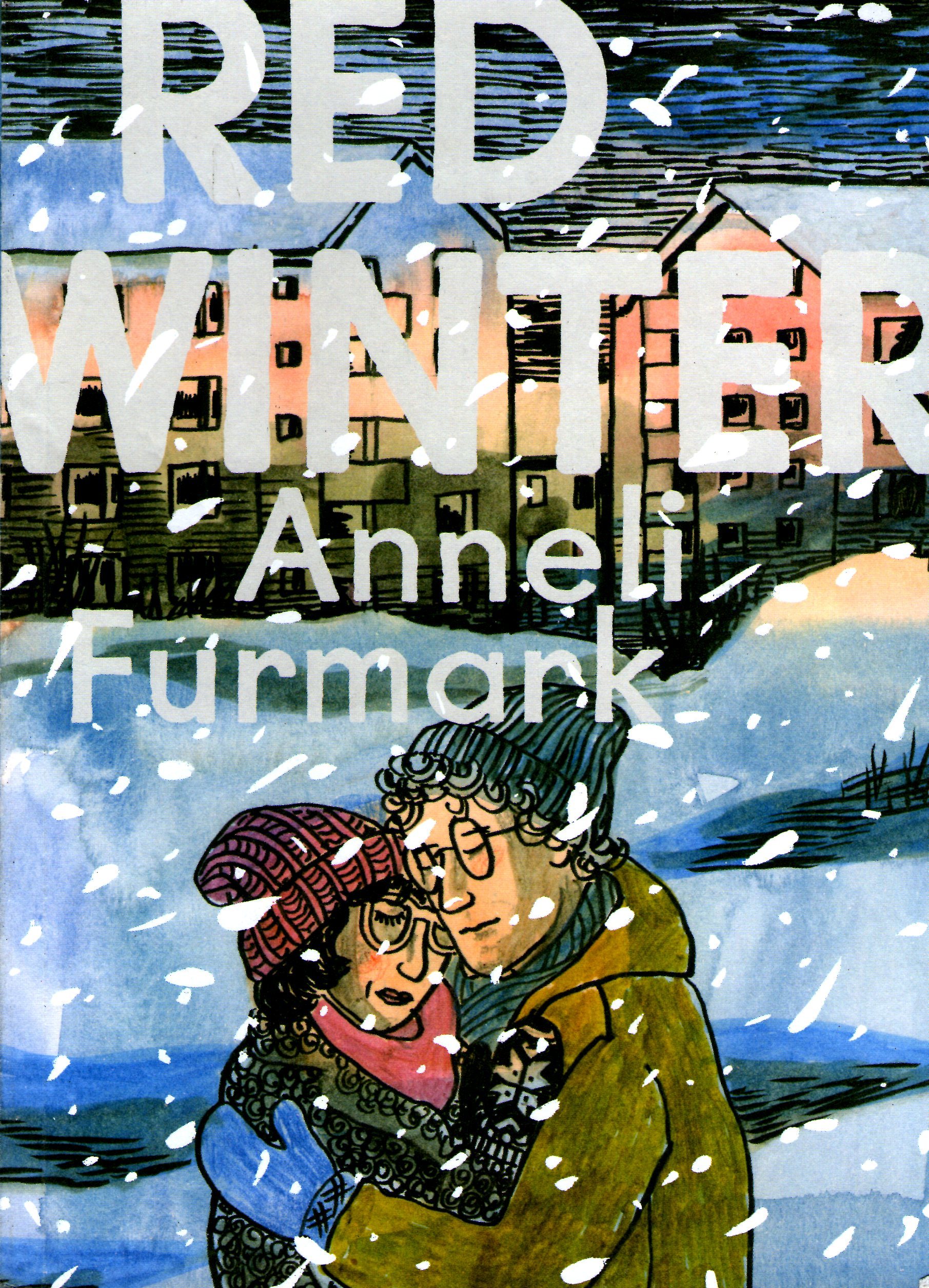
Red Winter
Political tensions flare as an adulterous romance blossoms in the heart of a barren, Swedish winter.
The scene is late seventies Sweden: the four-decade-long reign of the once indestructible socio-democratic party has come to an end. Parties on the far left begin to mobilize, hoping to overcome the prevailing capitalist model on a national scale, but also in the streets, factories, and small towns to the North. This is where we meet Siv: a married mother of three employed by the youth sector of her local socio-democratic chapter. Without warning, Siv falls in love with a young Maoist, Ulrik, who recently arrived from the south of Sweden to militarize—and gain control—of the steelworkers union.
Anneli Furmark's Red Winter weaves together the story of Siv, Ukrik, and the concentric circles of tension that slowly build around them, threatening to disintegrate her family's foundation. Her three children look on, noticing a shift in their mother without fully understanding it. Siv and Ulrik drift through the season, musing on their actions, their politics, their love, and its inevitable consequences—while Furmark's delicate hues of blue and orange heighten the cinematic qualities of northern Sweden's isolated landscape. Red Winter is a tale of a love that haunts in the darkness of winter.
The scene is late seventies Sweden: the four-decade-long reign of the once indestructible socio-democratic party has come to an end. Parties on the far left begin to mobilize, hoping to overcome the prevailing capitalist model on a national scale, but also in the streets, factories, and small towns to the North. This is where we meet Siv: a married mother of three employed by the youth sector of her local socio-democratic chapter. Without warning, Siv falls in love with a young Maoist, Ulrik, who recently arrived from the south of Sweden to militarize—and gain control—of the steelworkers union.
Anneli Furmark's Red Winter weaves together the story of Siv, Ukrik, and the concentric circles of tension that slowly build around them, threatening to disintegrate her family's foundation. Her three children look on, noticing a shift in their mother without fully understanding it. Siv and Ulrik drift through the season, musing on their actions, their politics, their love, and its inevitable consequences—while Furmark's delicate hues of blue and orange heighten the cinematic qualities of northern Sweden's isolated landscape. Red Winter is a tale of a love that haunts in the darkness of winter.
168 pages, Paperback
First published January 1, 2015
About the author
Anneli Furmark
31 books39 followersAnneli Furmark är en av de främsta serieberättarna i Sverige idag. På ett oemotståndligt sätt beskriver hon människor från helt skilda positioner; grabbar och tjejer, hetero eller homo. Hon är något så ovanligt som en mästare i både ord och bild. Det är som om hon skildrar hur själva det norrländska landskapet tänker och känner. Här har vi samlat elva av hennes starkaste serienoveller. De handlar om längtan att få älska någon, om att vara på väg att bli vuxen, om att pröva sina vingar och om att längta bort.
Anneli Furmark har ritat serier i snart tjugo år. Hon har givit ut två böcker tidigare och erhållit seriefrämjandets pris Urhunden för bästa svenska seriealbum 2005. Två gånger har hon prisbelönats vid den nordiska seriefestivalen i Kemi i Finland. Hon har varit publicerad i Kanada, Finland, Nederländerna samt i ett flertal svenska tidningar.
Anneli Furmark har ritat serier i snart tjugo år. Hon har givit ut två böcker tidigare och erhållit seriefrämjandets pris Urhunden för bästa svenska seriealbum 2005. Två gånger har hon prisbelönats vid den nordiska seriefestivalen i Kemi i Finland. Hon har varit publicerad i Kanada, Finland, Nederländerna samt i ett flertal svenska tidningar.
Ratings & Reviews
Friends & Following
Create a free account to discover what your friends think of this book!
Community Reviews
Displaying 1 - 30 of 89 reviews

January 22, 2018
This is Furmark’s first book translated into English, according to the author bio. And I’ve read that this is the third book of a trilogy, the others being Fiskarna i havet (The Fishes in the Sea) and Jordens medelpunkt (The Center of the Earth). This story is right up my alley, a realistic narrative that focuses on relationships, personal choices, and conflicts between individual desires and larger communities. I wonder, though, when Drawn and Quarterly with publish the other two books in the trilogy (assuming that they do)...or for that matter, why they decided to publish the final book first.

February 5, 2015
The final volume in the critically lauded trilogy by Sweden's foremost literary comics artist. It's strange, but even though Anneli Furmark is a celebrated fine artist, as well as cartoonist, and the art in her graphic novels really is beautiful, it is always her writing that impresses me the most.
The trilogy, consisting of Fiskarna i havet (The Fishes in the Sea) and Jordens medelpunkt (The Centre of the Earth) as well as this new book, The Red Winter, have been launched as a loosely connected series of books, where the landscape and the weather are integral parts of the stories. I would add that they all have genuinely heartfelt description of relationships, on a level that is unusual in comics. Furmark manages to write believable characters, believable relationships, and good dialogue. All of this is rare in comics. I read a lot of comics, and often at best the artists manages one of these. Furmark masters them all. Reading a graphic novel by Furmark is like reading a really good theatre play.
Furmark has also turned into the master of uncomfortable relationships, often making me squirm a bit when reading. In this book, which is set in Sweden during the 1970s, the main character is a mother of three who has a relationship on the side with a young maoist. The story is told in chapters named after different characters, and you thus get different perspectives on what is going on, but you can still tell that the relationship is not going to work. There is an impending doom waiting to happen, and as you sympathise heavily with the main character, this makes you cringe a bit while reading.
Having read this book has me glamouring for a re-read of both the two earlier volumes, as well as Gunnar Krantz´ graphic novel Vänster, vänster! (Left, left!), another depiction of the leftist movement in Sweden in the 1970s.
Oh, and the books in this trilogy have been launched continuously in French, but not in English. This is strange, as I can see them working well in the US, where there is a lack of mature, adult (as in this is actually worth reading for an adult, and not porn ...) graphic novels for both male and female readers. So, publishers, take note and contact Anneli as soon as possible.
The trilogy, consisting of Fiskarna i havet (The Fishes in the Sea) and Jordens medelpunkt (The Centre of the Earth) as well as this new book, The Red Winter, have been launched as a loosely connected series of books, where the landscape and the weather are integral parts of the stories. I would add that they all have genuinely heartfelt description of relationships, on a level that is unusual in comics. Furmark manages to write believable characters, believable relationships, and good dialogue. All of this is rare in comics. I read a lot of comics, and often at best the artists manages one of these. Furmark masters them all. Reading a graphic novel by Furmark is like reading a really good theatre play.
Furmark has also turned into the master of uncomfortable relationships, often making me squirm a bit when reading. In this book, which is set in Sweden during the 1970s, the main character is a mother of three who has a relationship on the side with a young maoist. The story is told in chapters named after different characters, and you thus get different perspectives on what is going on, but you can still tell that the relationship is not going to work. There is an impending doom waiting to happen, and as you sympathise heavily with the main character, this makes you cringe a bit while reading.
Having read this book has me glamouring for a re-read of both the two earlier volumes, as well as Gunnar Krantz´ graphic novel Vänster, vänster! (Left, left!), another depiction of the leftist movement in Sweden in the 1970s.
Oh, and the books in this trilogy have been launched continuously in French, but not in English. This is strange, as I can see them working well in the US, where there is a lack of mature, adult (as in this is actually worth reading for an adult, and not porn ...) graphic novels for both male and female readers. So, publishers, take note and contact Anneli as soon as possible.

March 10, 2021
The goodreads blurb for this book describes the setting as late 1970s, but nowhere in the text is that indicated. There was much to admire in this graphic novel; the point of view kept shifting around each of the many characters — but at the same time, this shifting focus meant we never really find out that much about the main characters.
Also — a wealth of nuance about the difference in Sweden between the communists and other political parties such as the Social Democrats. Even the communists were not just one thing, but were splintered into many competing micro-parties. At this distance from the 1970s, and from Sweden and the Swedish political landscape, these discussions and details were not very interesting (as a polite understatement).
There is a love story here, but is that the main story? Or is is a broken family story, or is it really about the clash between trade unionists and communist infiltrators?
This is the first graphic novel by Anneli Furmark to be translated into English, but this book is listed here (presumably by her Swedish publisher) as part 3 of a trilogy. Someone commented on another review that the books are completely independent, but I have to wonder — why suggest 3 books are a trilogy if indeed they are completely independent? The English volume, which I have here in my hands, makes no mention anywhere that it might be part of a trilogy.
3 stars means, I like it, and this is probably about 3.5 stars, because it is thought-provoking, and very realistic.
Also — a wealth of nuance about the difference in Sweden between the communists and other political parties such as the Social Democrats. Even the communists were not just one thing, but were splintered into many competing micro-parties. At this distance from the 1970s, and from Sweden and the Swedish political landscape, these discussions and details were not very interesting (as a polite understatement).
There is a love story here, but is that the main story? Or is is a broken family story, or is it really about the clash between trade unionists and communist infiltrators?
This is the first graphic novel by Anneli Furmark to be translated into English, but this book is listed here (presumably by her Swedish publisher) as part 3 of a trilogy. Someone commented on another review that the books are completely independent, but I have to wonder — why suggest 3 books are a trilogy if indeed they are completely independent? The English volume, which I have here in my hands, makes no mention anywhere that it might be part of a trilogy.
3 stars means, I like it, and this is probably about 3.5 stars, because it is thought-provoking, and very realistic.

February 4, 2018
Mooi liefdesverhaal dat zich afspeelt in het Zweden van de jaren 70 over de verhouding van de vrouw van een vakbondsafgevaardigde met een veertien jaar jongere communist. De impact op het gezin en hoe idealen kunnen verschuiven is knap in beeld gebracht. Sterke grafiek, aquarellerig met herfstige pasteltinten. Eerste Engelse vertaling van deze Zweedse in eigen land veelvuldig bekroonde grafiste.

March 15, 2018
I think this graphic novel is very hard to comprehend. Too much of it felt like you needed to know about the political climate in Sweden. I wasn't sure what time period it was. I also felt like the music lyrics were specific to pop artist I knew nothing about. The ending left me dissatisfied and like too much was up in the air.
You can read my full review at http://www.noflyingnotights.com/blog/...
You can read my full review at http://www.noflyingnotights.com/blog/...

February 2, 2026
i really like anneli furmak’s work; she has a way of evoking deep feeling and empathy in few words and a limited palette (the dark blues and oranges used in this one very much contrasted cold and warmth wrt to various narrative arcs, ofc but also were pleasing to the eye and evocative of love and wonder) and for such a small gn there’s a large cast of pov characters, all of which you feel for and whom are perfectly slotted in this story that is, i think ultimately about loneliness and idealism and that deep sense of wonder that is only found in childhood and when one is very in love.
December 26, 2020
En choisissant cette lecture pour le #booksnowchallenge (auteur scandinave), je ne me suis pas rendue compte que c'était le dernier tome d'une trilogie, mais je fut quand même captivée. Je crois que je lirai les deux premiers afin de pouvoir me faire une opinion sur celui-ci.

October 19, 2020
Drawn & Quarterly have certainly made an odd publishing decision in releasing the third part of a trilogy first as an English translation. I feel like I'm missing something. Don't get me wrong--I adore this book--but by the time I reached the end I was confounded in trying to understand where this was placed in terms of series continuity. (Obviously, the ending isn't much of an ending because it's not the ending. I think. Whatever.)
I don't my confusion to waylay what I was enthralled with in Red Winter--Anneli Furmark is an outstanding artist, one whose character designs remind me of Natsume Ono's graphic novels. The color palette is remarkable, and it makes me curious of how her interpretations of weather elements and literary metaphor will be visualized in the other books of the series.
A complaint as consistent as any other for a piece as gripping as this is that I wanted more. In fact, if we considered Red Winter just as a standalone book without awareness of the other two books, Red Winter could easily have been twice as long. And I would have been more than fine with that. Pacing the story through so many characters' perspectives/narratives causes the novel to go way too fast without dwelling on the parts and characters I wanted to so badly to have more time to develop. This gets problematic when we see Peter's section where he's trying to get home late at night but it seems like it could have been cut entirely.
Anyway, I can't stop imagining this book as longer and all that I would hope from it, which must means that's Red Winter's mortal flaw--it's only half a book, but the half we get is so rich and evocative. There's no reason I couldn't have cared more about the characters, because the ways in which Furmark draws their sadness, bliss, and uncertainty is utterly authentic and says more than her words. (Gosh, every section with Marita is simply gorgeous, especially when she's home alone and just hanging out in the bathroom.)
The problem is I can't consider this book a must-read when I'm left with so much to speculate since this is all we have of Furmark's work in English so far. If you're willing to seek Red Winter out regardless and appreciate the book for the brief loveliness there is of it, you might not be fulfilled, but you'll find that the book is undoubtedly a uniquely cold, yet intimate experience.
I don't my confusion to waylay what I was enthralled with in Red Winter--Anneli Furmark is an outstanding artist, one whose character designs remind me of Natsume Ono's graphic novels. The color palette is remarkable, and it makes me curious of how her interpretations of weather elements and literary metaphor will be visualized in the other books of the series.
A complaint as consistent as any other for a piece as gripping as this is that I wanted more. In fact, if we considered Red Winter just as a standalone book without awareness of the other two books, Red Winter could easily have been twice as long. And I would have been more than fine with that. Pacing the story through so many characters' perspectives/narratives causes the novel to go way too fast without dwelling on the parts and characters I wanted to so badly to have more time to develop. This gets problematic when we see Peter's section where he's trying to get home late at night but it seems like it could have been cut entirely.
Anyway, I can't stop imagining this book as longer and all that I would hope from it, which must means that's Red Winter's mortal flaw--it's only half a book, but the half we get is so rich and evocative. There's no reason I couldn't have cared more about the characters, because the ways in which Furmark draws their sadness, bliss, and uncertainty is utterly authentic and says more than her words. (Gosh, every section with Marita is simply gorgeous, especially when she's home alone and just hanging out in the bathroom.)
The problem is I can't consider this book a must-read when I'm left with so much to speculate since this is all we have of Furmark's work in English so far. If you're willing to seek Red Winter out regardless and appreciate the book for the brief loveliness there is of it, you might not be fulfilled, but you'll find that the book is undoubtedly a uniquely cold, yet intimate experience.

May 24, 2018
NOTE: This is a review of the recent Drawn & Quarterly reissue, since there’s no Goodreads entry for that.
Infidelity is a tough nut to crack, story-wise. It’s hard for a reader to sympathize with a protagonist who lies to, cheats on, and betrays their family, particularly if they seem like otherwise perfectly nice people. That’s the problem with Anneli Furmark’s first graphic novel to be translated into English, the icy and intimate “Red Winter.” Siv has a pleasant, unremarkable husband and a curious teenage daughter and they seem happy, yet she insists on carrying on an affair with Ulrik, a young and passionate Communist. Romantic and political tensions simmer throughout “Red Winter” but Furmark never really brings the whole thing to a boil.
Barren, frigid Sweden seems like an appropriate setting for a comic about the loneliness and isolation that can grow in a marriage; there’s a coldness and a feeling of detachment that blankets the pages like fresh snowfall. Maybe it’s because John Ajvide Lindqvist’s exquisite vampire fable “Let The Right One In” is set in the same type of environment, but I also felt a current of dread running through “Red Winter.” Or maybe watching a family collapse is innately nerve-wracking. Regardless, the book has a lot of buildup but not a lot of payoff. Political conversations meander, secret rendezvous fizzle, and the book just sort of ends suddenly. Furmark’s art is beautiful, however: subtly-colored, sketchy, and appropriately analog; it would be jarring to see a story like this illustrated in an obviously digital style.
Supposedly this comic is the third volume of a trilogy about Siv and Ulrik so - who knows? - it’s very possible that I can’t appreciate it without some more context. “Red Winter” certainly seems to begin and end pretty abruptly. As is, this version feels incomplete though, honestly, I didn’t care enough about the characters and their misdeeds to want to know more.
Infidelity is a tough nut to crack, story-wise. It’s hard for a reader to sympathize with a protagonist who lies to, cheats on, and betrays their family, particularly if they seem like otherwise perfectly nice people. That’s the problem with Anneli Furmark’s first graphic novel to be translated into English, the icy and intimate “Red Winter.” Siv has a pleasant, unremarkable husband and a curious teenage daughter and they seem happy, yet she insists on carrying on an affair with Ulrik, a young and passionate Communist. Romantic and political tensions simmer throughout “Red Winter” but Furmark never really brings the whole thing to a boil.
Barren, frigid Sweden seems like an appropriate setting for a comic about the loneliness and isolation that can grow in a marriage; there’s a coldness and a feeling of detachment that blankets the pages like fresh snowfall. Maybe it’s because John Ajvide Lindqvist’s exquisite vampire fable “Let The Right One In” is set in the same type of environment, but I also felt a current of dread running through “Red Winter.” Or maybe watching a family collapse is innately nerve-wracking. Regardless, the book has a lot of buildup but not a lot of payoff. Political conversations meander, secret rendezvous fizzle, and the book just sort of ends suddenly. Furmark’s art is beautiful, however: subtly-colored, sketchy, and appropriately analog; it would be jarring to see a story like this illustrated in an obviously digital style.
Supposedly this comic is the third volume of a trilogy about Siv and Ulrik so - who knows? - it’s very possible that I can’t appreciate it without some more context. “Red Winter” certainly seems to begin and end pretty abruptly. As is, this version feels incomplete though, honestly, I didn’t care enough about the characters and their misdeeds to want to know more.

May 5, 2018
A low-stakes domestic drama is not helped by its dreary Swedish winter setting. A boring waste of time.

April 28, 2021
this was fine, definitely would have been a better experience if i knew literally anything about the setting or content, but the art was choice

March 1, 2025
I'm annoyed with myself for having let this sit on my shelf for three years (I know because according to the review of the last Furman I read, I bought this in 2022!).
It's sad, melancholy, frustrating. A group of people all of whom are somehow stuck in a situation they're not particularly happy with. Lovely art of a bitter, dark winter.
Nothing gets resolved. No one works out an answer. They just exist in this tense moment.
Would be a good companion piece to Furman's "Walk Me to the Corner", I feel like they've got a similar tone, similar wistfulness, similar dissatisfaction with life.
It's sad, melancholy, frustrating. A group of people all of whom are somehow stuck in a situation they're not particularly happy with. Lovely art of a bitter, dark winter.
Nothing gets resolved. No one works out an answer. They just exist in this tense moment.
Would be a good companion piece to Furman's "Walk Me to the Corner", I feel like they've got a similar tone, similar wistfulness, similar dissatisfaction with life.

August 9, 2022
Les couleurs choisies pour le dessin donnent une ambiance vraiment particulière que j'ai adorée et qui me pousse à mettre 4 étoiles, l'intrigue et l'histoire étant assez classiques (on y parle de passion et d'adultère) si ce n'est qu'elle a lieu dans la société suédoise des années 70. J'ai quand même bien aimé la plongée dans les milieux politiques et militants de l'époque, ce qui la fait peut-être d'ailleurs un peu sortir du lot.
April 22, 2018
"Passion and politics unfold against the darkness of winter in 1970s Sweden." I kind of feel like that tells you most of what you need to know. I quite loved the drawing, but the story was mostly beyond me - perhaps I would have appreciated it more if the first two books had come out in English prior to the third in the trilogy!

August 1, 2025
This is the third book in the series, and honestly, it just didn’t click for me. I couldn’t get into the cheating storylines or the artwork, and most of the political themes felt like they were out of reach. Not having the first two books available in translation made it even tougher to follow what was going on.

December 31, 2022
Love, love, love the art. This is the third book in a trilogy (Why have the first two not been translated, I wonder?), plus I know next to nothing about communism in Sweden in the 1970s, but I appreciated the story, the family dynamics, the mother's loneliness.
December 1, 2018
3.5
Bra story med jättefin och annorlunda art! Slutet var lite utav en beskivelse för mig dock.. Därav 3.5 istället för 4
Bra story med jättefin och annorlunda art! Slutet var lite utav en beskivelse för mig dock.. Därav 3.5 istället för 4

March 16, 2020
So i guess I read book 3 first, but it didn't grab me enough to go back and read the others.

September 3, 2024
Bra, men klart att en relation mellan en mogen 40-årig sossekvinna och en 24-årig omogen kommunist aldrig kan sluta väl 🤭
This entire review has been hidden because of spoilers.
November 10, 2024
In einem Winter in Schweden betreibt eine sozialistische Frau Ehebruch mit einem Kommunisten. Das führt zu Problemen sowohl auf persönlicher als auch auf politischer Ebene.

June 10, 2018
The artwork in this is gorgeous, but I didn't get into the story that much- maybe if I knew more about 70s Swedish politics it might have helped!

March 19, 2023
2.5 stars
January 27, 2023
Set in Sweden mother of three Siv has an affair with a much younger man- communist Ulrik. Her children are aware without being aware. And all affairs have consequences, seldom turning out you think or hope they will. I’m having a Scandi phase and also revisiting my love of graphic novels.

December 16, 2024
This was a complete surprise. I had no concept for what this was about and just picked it up at the library due to the winter setting.
This Swedish graphic novel was translated and is more literary than anything else. There are some more complex ins and outs of 70s Swedish politics here but I think it's easy enough to follow as the emotions are the central conflict of this story.
Great art, great characters, and incredibly tragic.
This Swedish graphic novel was translated and is more literary than anything else. There are some more complex ins and outs of 70s Swedish politics here but I think it's easy enough to follow as the emotions are the central conflict of this story.
Great art, great characters, and incredibly tragic.

May 23, 2019
I truly loved this book. The honest conversations and interactions between characters, the moody ink stained pages, the imminent tragedy of the conflict and the blunt, moodily drawn world is stunning and hits you like a good indie movie. This book is thoroughly Swedish/Scandinavian in its inherent darkness (meaning LITERAL darkness, as it is DARK there in winter) and it's themes of struggle, love in bleak times and political turmoil. Anneli Furmark was unknown to me before this experience (which I read all in one take at a coffee shop yesterday) so imagine how delighted I was to see she has written seven other books....only to THEN realize this may be the only one translated into English from French (correct me if I'm wrong, please). I may, at some point when I'm in the money, order one of her French books but I am heartbroken not more of her work is available to English readers! She is also featured in a Drawn and Quarterly compilation so, out of desperation I may seek that out but...please MORE translations! My absolute favorite moment in this book was when a young man, Ulrik, a communist having an affair with an older socialist-democrat woman, walks into a coffee shop where the young barista CLEARLY has a crush on him and he doesn't even notice because he is so wrapped up in his party and, more importantly, his affair with this older woman, Siv. Don't those things just happen to you every day? I recognized what was happening immediately, from the drawing of the barista - and I was so impressed with this artists subtlety and writing ability.

November 29, 2015
Anneli Furmarkin "Punainen talvi" (Suomen sarjakuvaseura, 2015) kuvaa ruotsalaisen perheen elämää 1970-luvun vasemmistolaisesti värittyneessä ilmapiirissä. Tehdastyö on politisoitunut kommunistien ja sosiaalidemokraattien väliseksi pelikentäksi, perheenäiti ja hänen neljätoista vuotta nuorempi rakastajansa harrastavat seksiä Marxin kuvan alla ja vallankumoukseenkin valmistaudutaan. Miljöö on siis samankaltainen kuin Laura Honksalon erinomaisessa romaanissa Sinun lapsesi eivät ole sinun tai Lukas Moodyssonin komeediassa Kimpassa.
Sarjakuvan henkilöhahmot ja ihmissuhdekuviot ovat erittäin kiinnostavia, mutta tämmöisenä katkelmana teos jää auttamatta vähän irrallisen tuntuiseksi tuokiokuvaksi. Lukija jää väkisinkin miettimään, eikö samalla vaivalla olisi voitu kääntää koko teostrilogiaa?
Sarjakuvan henkilöhahmot ja ihmissuhdekuviot ovat erittäin kiinnostavia, mutta tämmöisenä katkelmana teos jää auttamatta vähän irrallisen tuntuiseksi tuokiokuvaksi. Lukija jää väkisinkin miettimään, eikö samalla vaivalla olisi voitu kääntää koko teostrilogiaa?

March 14, 2018
Red Winter has a lot of potential. It's got wonderfully atmospheric art and a story that deals with an affair during a bitter winter, intermingled with complex politics. Unfortunately, the book doesn't do much with these things as the narrative jumps around, spending an oddly weird amount of time with the kids of the family who don't have much to add to the story. I hear that this is actually the latter part of a trilogy; perhaps it makes more sense in context? Alas, at least the art was moody and enjoyable?

December 31, 2018
Bought this out of sheer curiously as it was named one of the best graphic novels of the year by The Guardian and well it's set in Sweden in the 70s, so that's me sold. Very evocative of the cold, dark winters. Whilst the political content was ok, it was the children and the mother who were most interesting.

September 21, 2015
An interesting look into 1970s Sweden, but seems very much like a fragment. I understand this is a part of a trilogy, but so far this is the only part published in Finnish. Even as a part of a trilogy, this seems like a small slice of something larger (and more interesting).

December 27, 2019
An interesting read, but the ending was extremely abrupt. I even checked to see if pages were ripped out. I really liked it until it fell off the cliff.
An interesting look at revolutionary love
An interesting look at revolutionary love
Displaying 1 - 30 of 89 reviews