How many parents does it take to make a baby? In the case of Rosalind Melrose Smithson it took four: one birth mother; one legal father; one interfering neighbor; and one turkey baster filled with the defrosted essence of an anonymous donor. Or not so anonymous, as it turned out. For donor no. 116349, "6ft 1in, blue eyes, blond hair, BA (Oxon), action man..." is the 9th Earl of Dilberne, who gave his seed back in 1979 as a stripling of 22, and has now conceived a daughter—unknowingly—at the riper age of 42. As they say, the truth will out. And what will our Rozzie do when she finds out about her patrimony? All we know is that as a true Millennial, she will not take it lying down.
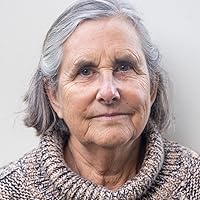
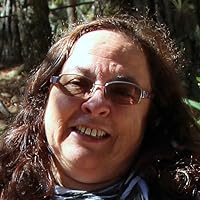
Fay Weldon CBE was an English author, essayist and playwright, whose work has been associated with feminism. In her fiction, Weldon typically portrayed contemporary women who find themselves trapped in oppressive situations caused by the patriarchal structure of British society.
To tell the truth, I couldn't finish this book. I was about half way through when I gave up... the narrative bounced around between this woman named Gwinny (who was super annoying and couldn't stop talking about "millennials") and a 3rd person narrative and it bounced without warning! I really did like the idea of the storyline: young woman finds her biological, donor father who turns out to be an aristocrat - what's not to love?! But this book did not tick any of my boxes and I really did not care to find out how it ended.
I couldn't actually finish this book and that saddens me, as I've been a fan of Fay Weldon's previous works. This was over long, and seemed to go over the same ground over and over again. The narrator was not only unreliable, but also a bit dull. I couldn't relate to any of the characters, the setting or the problems these people had. It had its funny moments, but not enough to keep me interested.
Okay, theoretically a "sequel" in a series of books generally means the second book shares many of the same characters and plot as the previous one. That's what it's supposed to be, but not in the case of British author Fay Weldon's "Spoils of War" series. Her first book, "Before the War", published in 2017, was a typically quirky and off-center story with quirky and off-center characters. The book was well-written and enjoyable and I was looking out for it's sequel, due out in 2018. But, unfortunately, that book, "After the Peace", is a mishmash of different characters - and less interesting than those in "Before the War" - and a plot that is becomes more and more cracked as the book progresses.
"After the Peace" has an actor-with-vocal-problems, his wife, and their next-door-neighbor living near Hampstead in London. The novel is told in the completely unreliable voice of the next-door-neighbor, Gwynnie. Facts - some true, some not - are presented by Gwynnie, in her attempt to control the lives of Clive and Xandra, right down to the turkey-baster impregnation of Xandra with someone other than Clive's sperm. The resultant child, a daughter, Rozzie, causes more trouble than anyone else in this band of world-class trouble-makers.
I kept reading this mess of a book, hoping to encounter at least some of the characters from "Before the War". A few sorta/kinda showed up towards the end. I wonder if Fay Weldon wrote the story she wanted to write and to hell if it wasn't really the sequel. I'd say that if you read and enjoyed "Before the War', you might want to read a few other reviews of "After the Peace". Reader beware...
Not Fay Weldon's best. The novel tends to ramble at points, and the device of including commentary from the narrator's book group left me cold; it seemed like Weldon's opportunity to get revenge on interfering editors. However, the novel does feature Weldon's inimitable style and pithy character observations (e. g. her comment that her handsome neighbor is lavish with words of praise but not with ready cash). As often happens in a Weldon novel, the author cleverly weaves fairy tale or mythic elements into the plot (the fairy godmother figure, the changeling child, the princess-figure raised by humble parents, etc.), recalling Robertson Davies assertion that mythic pattern repeats itself in everyday modern life but we are too blind to notice it.
I see that Fay Weldon has written a lot of books and wonder if I would like them better. This one is short on plot and long on words.
It is, however, an interesting example of a narrator who announces that she's unreliable. Is she? Is she not?
And while I laughed at the bracketed material about the narrator's writers group, I wonder if it would be lost on those who have not run that gauntlet, themselves.
Times Literary Supplement 23.11.18. Review by Gerri Kimber of After the Peace Fay Weldon, now eighty-seven, a published writer for more than fifty years, and one of the grandes dames of English literature, is technically a ‘crumbly’, the nickname given by the millennials in her latest novel to anyone born in the ‘pre-computer age’. However, judging by After the Peace, the second and final in her ‘Spoils of War’series (and the fifth to chronicle the lives of the aristocratic Dilberne dynasty), her virtuosity remains undiminished with age. Rozzie Smithson (the great-granddaughter of Vivien Ripple, the protagonist in Before the War), was born on the very cusp of the new millennium at one second past midnight, and it is her life which is supposedly the focus of this self-referential narrative. Indeed, barely a chapter goes by without reference to Rozzie’s conception via some anonymous, though aristocratic (Dilberne), twenty-year-old sperm of questionable quality and therefore half-price. However, the first two-thirds of the novel mostly relate the lives of Rozzie’s parents, Xandra -a hard-working, underpaid nurse, and Clive (not Rozzie’s biological father), an out-of-work actor, as well as Gwinny Rhyss (Lady Gwyneth Petrie) their next door neighbour, whose life becomes inextricably bound with theirs,mainly on account of the limitless depths of her wallet, and her obsession with them one day producing a baby – and preferably a girl. In fact, the real protagonist – and narrator – is Gwinny, sometime model, courtesan and former wife to two very elderly, wealthy men, who leave her a couple of million pounds richer on their deaths. From the outset, Gwinny informs us, brightly, “I have done my course in creative writing. I will do my best to be a reliable narrator”; she then proceeds to spend the rest of the novel confounding such a statement. We soon learn that she has apparently been diagnosed ·as having “a defensive paranoid personality disorder cluster complicated by a distorted thinking pattern”. She spends a good deal of time talking to us in the first person, then sometimes changes tack and continues in the third, still as herself -or even, occasionally, as someone else. Never mind. As she explains, “My hope is that the reader will overlook Gwinny's occasional descent into schizotypal personality disorder, with a hint of paranoia... Gwinny is the only narrator available who knows or can imagine the totality of this rather startling story about sperm banks, the druggy life, the guilt of the past and the revenge of the Millennials.” As if that wasn’t complex enough, another – more judgmental, though hilarious – voice creeps in: that of the ‘Writers' Huddle’, a local creative writing group Gwinny joins following her decision to pen her story, and whose comments on the drafts she sends them are left in the text: “[Writers’ Huddle: ‘Gwinny, are you sure about all these timeline changes?’]”, or “[Writers’ Huddle: Do you think this is the right group for you, Gwinny? These days you don’t seem willing to take our advice. Can we recommend the Hampstead Huddle? It’s much more experimental!’].” By the end of the novel we are left hypnotically perplexed; uncertain what to believe having been faced with continual asides such as “I implied earlier that there was never latterly anything sexual between me and Clive but I lied”. It's all part of the author's artful game plan. Weldon has created a thought provoking, condition-of-England novel for the new millennium. The crumblies may well have ‘fxxxed up’ the millennials’ world, but one of them is still showing the generations of authors following her how to excel at the craft of novel-writing.
A satirical and humorous novel. Fay Weldon at her mischievous best as she dissects the foibles of human nature, and its contradictions laid bare in this tale of societal and generational differences. Exacerbated by the changing social mores and the increasing technological change that propels those changes the characters display human fallibility, selfish endeavour, the irrational and quirky behaviour that culminates into the predicted trouble that occurs in this story of our times. Our narrator and writer of this tale being Gwinny who has lived a less than conventional life and may not be considered an entirely reliable witness. Her tragi/comedy life unfolds as does her inter relationships with the other characters as she relates her story in the form of this book. The characters display the attitudes and beliefs defined by the generation and circumstance in which they were brought up from post war baby boomers, the hippies through to the new millennials. Each exhibiting the traits associated with the culture and technology they grew up with defines the manner of their behaviour whilst all share the eternal failings and triumphs that are common to man and woman kind throughout all ages.
I loved this book. I read a lot of Fay Weldon in the 80’s and 90’s. Not read anything since. Now as a 63 year old grandmother I’ve returned. Weldon has not disappointed. Her wit and observations of culture, people and relationships is spot on. I wonder if younger women and modern feminists don’t quite get the many levels and depth of Weldon. So many laugh out loud bits for me. It was a bit disjointed and rambling in parts but I forgive her for that. I’d forgotten how much she taught us back then.
Entertaining. The theme is genetics and inheritance. I lost track of the characters' antecedents! The main narrator has all sorts of religious views and pwarticularly tees to the Tibetan place where children wait choosing to be born again. I think Fay Weldon really does believe that there is a person separate from the body in some way so I couldn't quite engage with the book. The style became a bit trying.
Although I managed to finish it, I just could not connect with this book at all. It is imaginative, humorous and well crafted but also rambling and repetitive. Towards the end I could not make sense of the story at all but this might be laid at the door of the lockdown. Although I lived through the time, she is describing , I did not recognise it at all. I usually enjoy Fay Weldon's books but not this one .
She spends most of the book complaining about and making stereotypes of Millennials, but Rozzie isn't a Millennial. I quite liked Gwinney as a character and the little asides from the writing group were slightly amusing, but it wasn't enough to save this book from promising to have something to say, but not really saying anything at all. Maybe this is a problem with the Silent Generation. 🤔
Disappointing, have previously enjoyed Fay Weldon’s books. Good plot but moved at a very slow pace, repetitive, hard to follow. Skim read through the continuous quotes from one character. As usual the author throws in some interesting and entertaining observations, clearly well researched but overall I didn’t enjoy this book and struggled to finish it.
After the Peace is a clever, if sometimes cynical, look at the "hangover" following the cultural revolutions of the mid-century. While it may not have the same iconic status as The Life and Loves of a She-Devil, it remains a brilliant example of Weldon’s ability to turn the "domestic novel" into a battlefield of ideas.
A wickedly smart look at the mess we leave behind in the pursuit of progress.
I found no redeeming qualities in this book -- the characters were unlikeable at best. It wandered from one thing to another without anything interesting happening. A woman was impregnated with sperm in a turkey baster and had a child who was smart but also unlikeable. A true waste of time.
Drawn in by the blurb and the author's reputation. I loved the idea but found the treatment irritating, erratic and boring. Gave up trying about 20 pages in. Flicked through but could not find anything to hold my attention.
Curious and confusing written both in the third and first person yet with the same narrative voice. Strangely compelling but the key narrative strand around Rozzie never really felt completely resolved with too much dwelling around her 'beginnings', as it were.
I listened to the audio book - read by Julian Clary - who imbues the narrative with a camp overtone. Amusing enough to keep me interested until the end, I felt like there was quite a bit of repetition that could have been edited out.
I didn't realise this was book 3 of a trilogy, so maybe I didn't give it its best chance, but it didn't do it for me. A bit dull, repetitive and the ending then felt rushed. Have enjoyed other books by Fay Weldon previously, but this one wasn't for me.