

What do you think?

The Periodic Table
The Periodic Table by Primo Levi is an impassioned response to the Holocaust: Consisting of 21 short stories, each possessing the name of a chemical element, the collection tells of the author's experiences as a Jewish-Italian chemist before, during, and after Auschwitz in luminous, clear, and unfailingly beautiful prose. It has been named the best science book ever by the Royal Institution of Great Britain, and is considered to be Levi's crowning achievement.
233 pages, Paperback
First published April 12, 1975
About the author
Primo Levi
191 books2,516 followersPrimo Levi was an Italian Jewish chemist, writer, and Holocaust survivor whose literary work has had a profound impact on how the world understands the Holocaust and its aftermath. Born in Turin in 1919, he studied chemistry at the University of Turin and graduated in 1941. During World War II, Levi joined the Italian resistance, but was captured by Fascist forces in 1943. Because he was Jewish, he was deported to the Auschwitz concentration camp in 1944, where he endured ten harrowing months before being liberated by the Red army.
After the war, Levi returned to Turin and resumed work as a chemist, but also began writing about his experiences. His first book, If This Is a Man (published in the U.S. as Survival in Auschwitz), is widely regarded as one of the most important Holocaust memoirs ever written. Known for its clarity, restraint, and moral depth, the book offers a powerful testimony of life inside the concentration camp. Levi went on to write several more works, including The Truce, a sequel recounting his long journey home after liberation, and The Periodic Table, a unique blend of memoir and scientific reflection, in which each chapter is named after a chemical element.
Throughout his writing, Levi combined scientific precision with literary grace, reflecting on human dignity, morality, and survival. His later works included fiction, essays, and poetry, all characterized by his lucid style and philosophical insight. Levi also addressed broader issues of science, ethics, and memory, positioning himself as a key voice in post-war European literature.
Despite his success, Levi struggled with depression in his later years, and in 1987 he died after falling from the stairwell of his apartment building in Turin. While officially ruled a suicide, the exact circumstances of his death remain a subject of debate. Nevertheless, his legacy endures. Primo Levi’s body of work remains essential reading for its deep humanity, intellectual rigor, and unwavering commitment to bearing witness.
After the war, Levi returned to Turin and resumed work as a chemist, but also began writing about his experiences. His first book, If This Is a Man (published in the U.S. as Survival in Auschwitz), is widely regarded as one of the most important Holocaust memoirs ever written. Known for its clarity, restraint, and moral depth, the book offers a powerful testimony of life inside the concentration camp. Levi went on to write several more works, including The Truce, a sequel recounting his long journey home after liberation, and The Periodic Table, a unique blend of memoir and scientific reflection, in which each chapter is named after a chemical element.
Throughout his writing, Levi combined scientific precision with literary grace, reflecting on human dignity, morality, and survival. His later works included fiction, essays, and poetry, all characterized by his lucid style and philosophical insight. Levi also addressed broader issues of science, ethics, and memory, positioning himself as a key voice in post-war European literature.
Despite his success, Levi struggled with depression in his later years, and in 1987 he died after falling from the stairwell of his apartment building in Turin. While officially ruled a suicide, the exact circumstances of his death remain a subject of debate. Nevertheless, his legacy endures. Primo Levi’s body of work remains essential reading for its deep humanity, intellectual rigor, and unwavering commitment to bearing witness.
Ratings & Reviews
Friends & Following
Create a free account to discover what your friends think of this book!
Community Reviews
Displaying 1 - 30 of 1,647 reviews
February 20, 2008
You know how you read a sentence and copy it down because it's so good? In this book, I'd find a sentence, and go to copy it and realize it relied on the one before it, which relied on the one before that for its complete meaning. So I'd copy down whole paragraphs, whole pages, because Primo writes in integrated, seamless blocks of meaning. Which is enviable.
Other than that, I want to give Primo a big kiss, buy him a beer, and ride bikes with him in Italy.
Other than that, I want to give Primo a big kiss, buy him a beer, and ride bikes with him in Italy.

November 13, 2016
In an interweaving between the elements and stories, Primo Levi tells his life. But he chooses episodes to relate carefully and never discusses his children. At the end he tells us, that his writing was only ""partial and symbolic". The man who wrote so much and so tellingly of Auschwitz in If This Is a Man remains a mystery.
The greatest mystery of all, to me, was his death. At 67 he fell over the balustrade of the stairs down from the 3rd floor of the house he'd lived in all his life (except when he was imprisoned in Auschwitz). How do you fall over a stair rail? Was it suicide? Was he the last victim of the concentration camps?
The greatest mystery of all, to me, was his death. At 67 he fell over the balustrade of the stairs down from the 3rd floor of the house he'd lived in all his life (except when he was imprisoned in Auschwitz). How do you fall over a stair rail? Was it suicide? Was he the last victim of the concentration camps?

July 8, 2017
The autobiographical story of an Italian-Jewish scientist imprisoned as a chemistry lab worker at Auschwitz.
Each chapter is named for an element. Some chapters are essays and some are vignettes of people he knew and their careers in chemistry. They include two short stories about metal prospecting and mining with hints of fantasy. Most chapters are autobiographical and through these we learn a bit of the author's childhood and his boyish fascination with chemistry experiments which led to his college education and career as a chemist. We learn of his puppy loves and courtship, and his imprisonment in a labor camp during WW II.
There’s a lot about language derivation, especially of names. For example, the mixed Jewish/Piedmontese dialect in the fabric shops of the region around Turin gave Italy a lot of its fabric terms. And he worries that while he can speak it (Piedmontese is essentially a spoken language), it loses its authenticity from his book learning rather than native fluency. It’s fascinating to learn things such as 'urstoff' in German means element or primal substance.
Here’s a quote chemists will love: “…the nobility of Man, acquired in a hundred centuries of trial and error, lay in making himself the conqueror of matter.”
We even have a passage about fake news: “…how could he ignore the fact that the chemistry and physics on which we fed…were the antidote to Fascism…because they were clear and distinct and verifiable at every step, and not a tissue of lies and emptiness, like the radio and newspapers?”
Apparently fake news is a theme of the great Italian writers of this era because it reminds me of a related passage I quoted recently in my review of Italo Calvino’s If on a Winter’s Night a Traveler: “We’re in a country where everything that can be falsified has been falsified: paintings in museums, gold ingots, bus tickets. The counterrevolution and the revolution fight with salvos of falsification: the result is that no one can be sure what is true and what is false, the political police simulate revolutionary actions and the revolutionaries disguise themselves as policemen.”
Occasionally there is a theme of chemical mixing and the mixing of Jewish and Christian cultures. The author was forced to work as a chemist in the Auschwitz labor camp. He later corresponded with his German supervisor at the camp. Several passages deal with the tense relationship between the Italian fascists and the Jews such as:
“…one could be polite, one could even help him [a Jew], and even boast (cautiously) about having helped him, but it was not advisable to have human relations with him, nor to compromise oneself too deeply, so as not to be forced later to offer understanding or compassion.”
Levi could not receive his college degree since awarding a degree to Jews was prohibited; nor could he initially get a job because "the racial laws forbade it.”
The author makes some humorous but nasty comments about librarians. With apologies to my many friends on GR who are librarians, here’s one passage:
“The librarian…presided over the library like a watchdog, one of those poor dogs that are deliberately made vicious by being chained up and given little to eat; or better, like the old, toothless cobra, pale because of centuries of darkness…she was small, without breasts or hips, waxen, wilted, and monstrously myopic…She gave the impression of never having been young, although she was certainly not more than thirty, and having been born there, in the shadows, in that vague odor of mildew and stale air…she stank of mothballs and looked constipated."
When the book was published in 1975 the Royal Science Institution of Great Britain called it the best science book ever written. No, I prefer Richard Feynman, but it’s very good. Translated from the Italian.
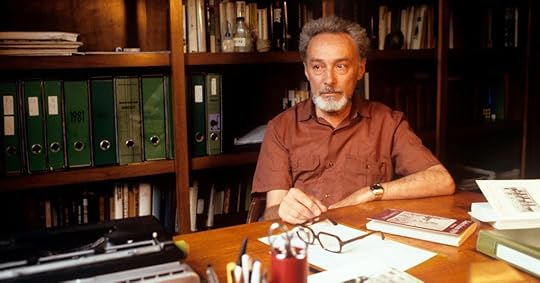
The author (1919 – 1987) was a writer and scientist; an Italian Jew who was imprisoned at Auschwitz. That experience informed this book, as well as his most-read work, Survival at Auschwitz. He was one of 650 Italian Jews imprisoned at Auschwitz and one of only 20 who survived.
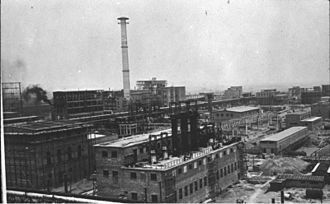
Top photo: the chemical factory and laboratory, near the Auschwitz camp where Levi was enslaved by the Nazis. From Wikipedia
The author from chemistryworld.com
[Revised; pictures and shelves added 8/10/23]
Each chapter is named for an element. Some chapters are essays and some are vignettes of people he knew and their careers in chemistry. They include two short stories about metal prospecting and mining with hints of fantasy. Most chapters are autobiographical and through these we learn a bit of the author's childhood and his boyish fascination with chemistry experiments which led to his college education and career as a chemist. We learn of his puppy loves and courtship, and his imprisonment in a labor camp during WW II.
There’s a lot about language derivation, especially of names. For example, the mixed Jewish/Piedmontese dialect in the fabric shops of the region around Turin gave Italy a lot of its fabric terms. And he worries that while he can speak it (Piedmontese is essentially a spoken language), it loses its authenticity from his book learning rather than native fluency. It’s fascinating to learn things such as 'urstoff' in German means element or primal substance.
Here’s a quote chemists will love: “…the nobility of Man, acquired in a hundred centuries of trial and error, lay in making himself the conqueror of matter.”
We even have a passage about fake news: “…how could he ignore the fact that the chemistry and physics on which we fed…were the antidote to Fascism…because they were clear and distinct and verifiable at every step, and not a tissue of lies and emptiness, like the radio and newspapers?”
Apparently fake news is a theme of the great Italian writers of this era because it reminds me of a related passage I quoted recently in my review of Italo Calvino’s If on a Winter’s Night a Traveler: “We’re in a country where everything that can be falsified has been falsified: paintings in museums, gold ingots, bus tickets. The counterrevolution and the revolution fight with salvos of falsification: the result is that no one can be sure what is true and what is false, the political police simulate revolutionary actions and the revolutionaries disguise themselves as policemen.”
Occasionally there is a theme of chemical mixing and the mixing of Jewish and Christian cultures. The author was forced to work as a chemist in the Auschwitz labor camp. He later corresponded with his German supervisor at the camp. Several passages deal with the tense relationship between the Italian fascists and the Jews such as:
“…one could be polite, one could even help him [a Jew], and even boast (cautiously) about having helped him, but it was not advisable to have human relations with him, nor to compromise oneself too deeply, so as not to be forced later to offer understanding or compassion.”
Levi could not receive his college degree since awarding a degree to Jews was prohibited; nor could he initially get a job because "the racial laws forbade it.”
The author makes some humorous but nasty comments about librarians. With apologies to my many friends on GR who are librarians, here’s one passage:
“The librarian…presided over the library like a watchdog, one of those poor dogs that are deliberately made vicious by being chained up and given little to eat; or better, like the old, toothless cobra, pale because of centuries of darkness…she was small, without breasts or hips, waxen, wilted, and monstrously myopic…She gave the impression of never having been young, although she was certainly not more than thirty, and having been born there, in the shadows, in that vague odor of mildew and stale air…she stank of mothballs and looked constipated."
When the book was published in 1975 the Royal Science Institution of Great Britain called it the best science book ever written. No, I prefer Richard Feynman, but it’s very good. Translated from the Italian.
The author (1919 – 1987) was a writer and scientist; an Italian Jew who was imprisoned at Auschwitz. That experience informed this book, as well as his most-read work, Survival at Auschwitz. He was one of 650 Italian Jews imprisoned at Auschwitz and one of only 20 who survived.
Top photo: the chemical factory and laboratory, near the Auschwitz camp where Levi was enslaved by the Nazis. From Wikipedia
The author from chemistryworld.com
[Revised; pictures and shelves added 8/10/23]
July 11, 2021
In a series of interconnected stories (a loose structure that inspired my own book), straddling the border between memoir and autobiographical fiction, Levi tells the story of his life: his centuries-old family origins, his years as a socially awkward young man, the nightmare of Auschwitz and the years of obscurity as an industrial chemist who also happens to write a bit on the side - books that no one wants to read. Told with candour, precision and humility, this is a true tour-de-force.
This entire review has been hidden because of spoilers.

August 6, 2026
The Periodic Table is a unique work. I say this not because a Holocaust survivor wrote it but because it was written in an uncommonly creative style. Primo Levi was a chemist before his arrest and subsequent transfer to Auschwitz. He owed a debt to chemistry for his survival at the concentration camp. Had he not been given the chance to work at the camp's chemical laboratory, he probably wouldn't have lived until the Russians liberated it. On his return, he resumed work again as a chemist, got married, and raised a family. All his life, chemistry had been an interest and passion. So, it was natural for him to combine the chemical elements of the Periodic Table with the story of his life. The autobiography has twenty-one chapters, and each is named after an element. Levi interweaves his stories with elemental properties to bring us an incredibly creative narrative of his life.
Levi begins his autobiographical narrative with an introduction to his ancestry in Piedmont, Italy, showing their marginalized existence. Then he proceeds to narrate how he developed a passion for chemistry and the challenges he faced to earn his degree in chemistry from the University of Turin. The racial laws introduced in 1938 by Mussolini's fascist government stripped Jewish people of their basic human rights. Education and work were denied to them. They were prohibited from contracting mixed marriages. Jewish people always had a marginal existence, which Levi says they accepted. But this was a next-level cruelty from which the community severely suffered. His degree certificate bore the official remark "of Jewish race", thus effectively barring him from securing work. In Levi's own words, the certificate was a "dubious document, half glory and half derision, half absolution and half condemnation".
The narrative continues with his struggle to secure a job, his frustrated love for a co-worker due to racial prohibitions, and his involvement with the anti-fascist resistance movement, his subsequent capture and transfer to Auschwitz. Levi's time at Auschwitz is excluded from this autobiography, since he had written a comprehensive account of it in If This Is a Man, and so, the narrative jumps back to his life as a chemist back in post-war Italy. Levi then chronicles his progress as a chemist and eventually finding love, which considerably helps heal his traumatic experiences at the concentration camp and boosts his will to live. He concludes his life account by narrating his correspondence with the German chemist who supervised the laboratory in which Levi worked at Auschwitz. Levi comes across the man in a chemical dispute with a German firm of suppliers. Levi writes a personal letter to him requesting accountability for his involvement with the SS. He denies any knowledge of the cruelties and horrors of the camp and seeks self-absolution, which deeply disturbs Levi. The chemist (named Dr. Müller) insists on meeting Levi, but his death (presumed suicide) prevents them from any physical meeting, symbolizing the irremediable nature of the historical wounds.
Three chapters of the book are dedicated to fictitious stories, but the work can be concluded as an autobiography. It is a deeply moving account. The narrative is light in the beginning, but this tone of levity soon changes into a deeply reflective account full of quiet gravity. The book doesn't call for sympathy but for understanding. Above all, it's an unofficial treatise, along with If This Is a Man, that cries out to the world that such an atrocious history should never be repeated. Unfortunately, it looks like in this third decade of the 21st century, we are slowly forgetting the lessons taught by history.
More of my reviews can be found at http://piyangiejay.com/
Levi begins his autobiographical narrative with an introduction to his ancestry in Piedmont, Italy, showing their marginalized existence. Then he proceeds to narrate how he developed a passion for chemistry and the challenges he faced to earn his degree in chemistry from the University of Turin. The racial laws introduced in 1938 by Mussolini's fascist government stripped Jewish people of their basic human rights. Education and work were denied to them. They were prohibited from contracting mixed marriages. Jewish people always had a marginal existence, which Levi says they accepted. But this was a next-level cruelty from which the community severely suffered. His degree certificate bore the official remark "of Jewish race", thus effectively barring him from securing work. In Levi's own words, the certificate was a "dubious document, half glory and half derision, half absolution and half condemnation".
The narrative continues with his struggle to secure a job, his frustrated love for a co-worker due to racial prohibitions, and his involvement with the anti-fascist resistance movement, his subsequent capture and transfer to Auschwitz. Levi's time at Auschwitz is excluded from this autobiography, since he had written a comprehensive account of it in If This Is a Man, and so, the narrative jumps back to his life as a chemist back in post-war Italy. Levi then chronicles his progress as a chemist and eventually finding love, which considerably helps heal his traumatic experiences at the concentration camp and boosts his will to live. He concludes his life account by narrating his correspondence with the German chemist who supervised the laboratory in which Levi worked at Auschwitz. Levi comes across the man in a chemical dispute with a German firm of suppliers. Levi writes a personal letter to him requesting accountability for his involvement with the SS. He denies any knowledge of the cruelties and horrors of the camp and seeks self-absolution, which deeply disturbs Levi. The chemist (named Dr. Müller) insists on meeting Levi, but his death (presumed suicide) prevents them from any physical meeting, symbolizing the irremediable nature of the historical wounds.
Three chapters of the book are dedicated to fictitious stories, but the work can be concluded as an autobiography. It is a deeply moving account. The narrative is light in the beginning, but this tone of levity soon changes into a deeply reflective account full of quiet gravity. The book doesn't call for sympathy but for understanding. Above all, it's an unofficial treatise, along with If This Is a Man, that cries out to the world that such an atrocious history should never be repeated. Unfortunately, it looks like in this third decade of the 21st century, we are slowly forgetting the lessons taught by history.
More of my reviews can be found at http://piyangiejay.com/

September 22, 2013
Every suicide is like a nail bomb full of vicious questions and the questions don’t care where they land. Why didn’t somebody do something? – there’s one. Surely there must have been signs. Right there is a triple blow delivered to the bereaved partner and immediate family. They’re reeling from the event, then they have to conclude this depression, this malaise, was so acute it blotted out even thoughts of themselves in the suicide’s final minutes. And after that comes the unspoken accusations and avoidings by friends and associates. (Why didn’t they see and having seen taken steps?). Some suicides still hang like paradoxically visible black holes of misery up in our skies, Sylvia Plath, van Gogh, David Foster Wallace, Kurt Cobain, Ernest Hemingway, BS Johnson, Mark Rothko.
Primo Levi committed suicide at the age of 67 in 1987. The repercussions were uniquely distressing. He had been the embodiment of an idea that is so cherished it’s nearly unbearable to think it may not be true. The idea that a person can go through the worst and most inhuman experiences, in his case Auschwitz, and survive not only in body but in spirit too, and not become corrupted, and not destroyed. Levi’s books were and are the clearest-eyed, most lucid, most carefully discerning, and most humane books about the Holocaust I have come across. The idea that Auschwitz finally got him, 42 years later, that Hitler had extracted one more posthumous victory, was horrible.
And this final act now throws a long shadow over all his great writings, so that we loop round on ourselves and almost catch us yelling and denouncing Levi for doing such a thing, and then feel instant shame at such a thought. This suicide involves Levi’s readers inevitably in these psychological traps.
Of course you can argue that the depression and anguish which led to the suicide might have a whole other aetiology of which we are completely ignorant. It’s possible, and it’s a comforting thought, were it not for the continuous theme in his various writings being Auschwitz and the Holocaust from If This is a man (1947) to The Drowned and the Saved (1986). Or - you can argue that it wasn’t a suicide at all, it was an accident – an old man fell over a balcony. There was no note. The concierge of the block of flats had spoken to him minutes before he died. He seemed okay. But both his biographers think it was suicide.
We have to say that it doesn’t matter. The work is the thing. Rothko’s canvasses are not affected one way or another by his death just as Wuthering Heights would be just as great a novel if Emily Bronte had celebrated her 100th birthday on 30 July, 1918, as World War One was coming to an end. It doesn’t matter.
The Periodic Table is a quirky memoir of a Jewish-Italian chemist. There are elements of cool humour throughout and hardly a trace of bitterness.

August 31, 2013
Chemistry as a metaphor for life. Blurb writers love phrases like that. They are short, succinct and intriguing. But how hard is it to write something that would deliver on such a promise?
I had never read anything quite like ‘The Periodic Table’. It more than delivered – it exceeded my expectations. The book is a beautiful marriage of life and science, perfectly accessible to a regular reader. The truth is that anything can be fascinating provided it’s explained by a person truly passionate about the subject (and it doesn’t hurt if they are also mind-blowingly good writers like Primo Levi).
You might know Primo Levi as an Auschwitz survivor and you might worry that ‘The Periodic Table’ would be too dark of a read. But it is not ‘If This is A Man’. Holocaust is still lurking around shadowy corners of this book and it is quite obvious that Primo Levi would be a different kind of writer if it weren’t for that trauma (some might even ask if he would be a writer at all) but this collection of anecdotes, recollections, allegory and glimpses is, I would venture to say, an ultimately almost positive (if not downright optimistic) work.
The very first story might be a little odd and discouraging but either soldier on or skip it altogether – it’s not really representative of the rest of the book. I found reading about the intricacies of a Piedmont dialect with its borrowings from Hebrew rather fascinating. I am interested in the process in which words change their meaning entirely (not unlike they did in cockney rhyming slang) but I can appreciate that such linguistic elaborations are not to everyone’s taste.
Further chapters – each named after a different chemical element document Levi’s life as a chemist and they are often funny, tender and bitter-sweet. They are intersected with fictional short stories which read like fairy tales and where chemical elements take on almost mythical qualities.
The most striking story is the penultimate one in which Levi comes across a German who oversaw his work in the laboratory in Auschwitz. Like a true scientist Levi wants to rationalise and understand his feelings. He wants to know what it is he expects from the encounter. His struggle to organise the swarm of emotions is probably the most touching part of the book.
‘The Periodic Table’ is not a science book, whoever calls it that has no idea what they are talking about. It’s a book about the love for science. It’s about what every scientist wants us to believe – that their subject is not some obscure knowledge of interest to few, but it’s life and reality that makes us breathe, move and think. The last story in the collection spells it out for you in case you missed the more subtle hints in the previous chapters. I liked it a lot because it reminded of the times when, as a little girl, I fantasised about the history of atoms in my body – where they had been before me. I imagined them as a part of dinosaurs, king and queens, old houses, wild horses… The story is Levi’s crown argument for his thesis that it is only through matter (not sprit) we can know the universe. (And this is a thesis I can easily believe in – it appeals to me. I am not what you call ‘spritual’).
If you made it this far in my review, I will reward you with a link to an excellent interview with Primo Levi in the Paris Review of Books: http://www.theparisreview.org/intervi...
I had never read anything quite like ‘The Periodic Table’. It more than delivered – it exceeded my expectations. The book is a beautiful marriage of life and science, perfectly accessible to a regular reader. The truth is that anything can be fascinating provided it’s explained by a person truly passionate about the subject (and it doesn’t hurt if they are also mind-blowingly good writers like Primo Levi).
You might know Primo Levi as an Auschwitz survivor and you might worry that ‘The Periodic Table’ would be too dark of a read. But it is not ‘If This is A Man’. Holocaust is still lurking around shadowy corners of this book and it is quite obvious that Primo Levi would be a different kind of writer if it weren’t for that trauma (some might even ask if he would be a writer at all) but this collection of anecdotes, recollections, allegory and glimpses is, I would venture to say, an ultimately almost positive (if not downright optimistic) work.
The very first story might be a little odd and discouraging but either soldier on or skip it altogether – it’s not really representative of the rest of the book. I found reading about the intricacies of a Piedmont dialect with its borrowings from Hebrew rather fascinating. I am interested in the process in which words change their meaning entirely (not unlike they did in cockney rhyming slang) but I can appreciate that such linguistic elaborations are not to everyone’s taste.
Further chapters – each named after a different chemical element document Levi’s life as a chemist and they are often funny, tender and bitter-sweet. They are intersected with fictional short stories which read like fairy tales and where chemical elements take on almost mythical qualities.
The most striking story is the penultimate one in which Levi comes across a German who oversaw his work in the laboratory in Auschwitz. Like a true scientist Levi wants to rationalise and understand his feelings. He wants to know what it is he expects from the encounter. His struggle to organise the swarm of emotions is probably the most touching part of the book.
‘The Periodic Table’ is not a science book, whoever calls it that has no idea what they are talking about. It’s a book about the love for science. It’s about what every scientist wants us to believe – that their subject is not some obscure knowledge of interest to few, but it’s life and reality that makes us breathe, move and think. The last story in the collection spells it out for you in case you missed the more subtle hints in the previous chapters. I liked it a lot because it reminded of the times when, as a little girl, I fantasised about the history of atoms in my body – where they had been before me. I imagined them as a part of dinosaurs, king and queens, old houses, wild horses… The story is Levi’s crown argument for his thesis that it is only through matter (not sprit) we can know the universe. (And this is a thesis I can easily believe in – it appeals to me. I am not what you call ‘spritual’).
If you made it this far in my review, I will reward you with a link to an excellent interview with Primo Levi in the Paris Review of Books: http://www.theparisreview.org/intervi...

January 25, 2021
Levi names each chapter by a different chemical element and compares and draws parallels between the elements, or their characteristics, with the features and traits of his experiences. What a marvellous idea.
The Periodic Table (1975) is a collection of illustratively written autobiographical essays about the authors triumphs, tribulations, and ordinary events that took place in Italy: before, during, and after WWII.
Primo Levi (1919-1987) was an Italian-Jewish chemist and Holocaust survivor. In an originale manner he narrates the story of his life mostly through his observations and interactions with people, his evolving profession, and environment by which he was surrounded.
The book also includes two fictional tales, each named by a certain element too, but embodied in alchemical symbolism. He must have written them during the time he needed an escape from the uncomfortable reality. They seem to be a metaphor for Levi's state of emotion (I sensed frustration and regret) and discontent with his personal life and endured discrimination.
I would have liked if some of the stories topics were a bit more intimate. Also, the book did not include the period the author spent in the concentration camp. Although, Levi, mentions in the book that this was done for logical reasons as he wrote about it in two of his other books. But their absence felt like a gap in the periodic table and a break in the timeline. I would highly recommend this book to those interested in chemistry and learning about the Piedmont Jewish community.
The Periodic Table (1975) is a collection of illustratively written autobiographical essays about the authors triumphs, tribulations, and ordinary events that took place in Italy: before, during, and after WWII.
Primo Levi (1919-1987) was an Italian-Jewish chemist and Holocaust survivor. In an originale manner he narrates the story of his life mostly through his observations and interactions with people, his evolving profession, and environment by which he was surrounded.
The book also includes two fictional tales, each named by a certain element too, but embodied in alchemical symbolism. He must have written them during the time he needed an escape from the uncomfortable reality. They seem to be a metaphor for Levi's state of emotion (I sensed frustration and regret) and discontent with his personal life and endured discrimination.
I would have liked if some of the stories topics were a bit more intimate. Also, the book did not include the period the author spent in the concentration camp. Although, Levi, mentions in the book that this was done for logical reasons as he wrote about it in two of his other books. But their absence felt like a gap in the periodic table and a break in the timeline. I would highly recommend this book to those interested in chemistry and learning about the Piedmont Jewish community.

March 28, 2020
There was an occasion last year when I had to hang around for a few hours in a town about 40 miles from where I live – my car was in for repair. As is my wont, I spent the time in a bookshop, and eventually was there long enough to feel guilty about not buying anything. I’d heard of Primo Levi and of some of his books, so decided to settle on taking this one away.
I found this kind of wonderful. Mainly, it consists of snippets from the author’s life and especially his career as a chemist, with each chapter ingeniously linked to one of the atomic elements. Some of the events described are commonplace (others anything but) but each story forms part of a meditation on life. The quality of the writing is outstanding. I realise of course that I’ve read a translation, so credit to translator Raymond Rosenthal for creating such a superb version of the original. The edition I read was in paperback form, but if I’d had this on my Kindle there would have been so much text highlighted that it might have formed the majority the book.
My only slight reservation was that, along with the autobiographical pieces, the book included 3 fictional short stories. I liked the last chapter, “Carbon” but was bit less taken with the other two stories, “Lead” and “Mercury”. The author more or less tells us what he was trying to achieve with “Lead” and I thought that was OK, but I was a bit less keen on “Mercury”. I would maybe take a half-star off for those aspects, but overall, 4.5 stars rounded up. Deservedly a classic.
I found this kind of wonderful. Mainly, it consists of snippets from the author’s life and especially his career as a chemist, with each chapter ingeniously linked to one of the atomic elements. Some of the events described are commonplace (others anything but) but each story forms part of a meditation on life. The quality of the writing is outstanding. I realise of course that I’ve read a translation, so credit to translator Raymond Rosenthal for creating such a superb version of the original. The edition I read was in paperback form, but if I’d had this on my Kindle there would have been so much text highlighted that it might have formed the majority the book.
My only slight reservation was that, along with the autobiographical pieces, the book included 3 fictional short stories. I liked the last chapter, “Carbon” but was bit less taken with the other two stories, “Lead” and “Mercury”. The author more or less tells us what he was trying to achieve with “Lead” and I thought that was OK, but I was a bit less keen on “Mercury”. I would maybe take a half-star off for those aspects, but overall, 4.5 stars rounded up. Deservedly a classic.

March 4, 2012
There are so-called inert gases in the air we breathe. They bear curious Greek names of erudite derivation which mean "the New", "the Hidden", "the Inactive", and "the Alien".
Thus begins Primo Levi's book of a score or so mini-memoirs. Each of these is named for one of the elements, thus the name of the book. The elements used are in no particular order – not alphabetical, not by atomic number (the ordering of elements in the periodic table). They range from Argon (the first chapter) to Carbon (the last), from Hydrogen to Uranium, from Nitrogen to Arsenic.
Each of Levi's unnumbered chapters is launched with something about the element used for its name. "Argon" begins with the sentence above, and continues for a rather lengthy paragraph along these lines, ending with "… argon (the Inactive) is present in the air in the considerable proportion of 1 per cent, that is, twenty or thirty times more abundant [by volume] than carbon dioxide, without which there would not be a trace of life on this planet."
But then the next paragraph (in "Argon") begins
Here ends my newer update to original review, continuing below …
- - - - - - - - - - - - - - - - - - - -
I read this book several years ago, and every so often see something about it here on GR. Perhaps I will write a real review someday, but I would need to re-read it.
(For a real review of Levi's book here on Goodreads, check out https://www.goodreads.com/review/show...)
Levi is well known as a survivor of Auschwitz, a writer of great talent and great humanity. He died (a probable suicide) in 1987.
I thought what I'd do here is give a link to a recent article in the New Yorker by James Wood. It's basically a Levi retrospective, and (without mentioning the new book at all, unless I missed it in a sentence) presumably written to coincide with The Complete Works of Primo Levi, published about a week ago in three slip-cased volumes, with an Introduction by Toni Morrison.
Wood discusses The Periodic Table extensively in the piece, and also writes movingly of Levi's memoirs, available together in If This Is a Man / The Truce.
http://www.newyorker.com/magazine/201...
. . . . . . . . . . . . . . . . . . . .
Previous review: Ornament of the World
Random review: Classics for Pleasure
Next review: Almost No Memory Lydia Davis
Previous library review: My Brilliant Friend Elena Ferrante
Next library review: The Wine-Dark Sea
Thus begins Primo Levi's book of a score or so mini-memoirs. Each of these is named for one of the elements, thus the name of the book. The elements used are in no particular order – not alphabetical, not by atomic number (the ordering of elements in the periodic table). They range from Argon (the first chapter) to Carbon (the last), from Hydrogen to Uranium, from Nitrogen to Arsenic.
Each of Levi's unnumbered chapters is launched with something about the element used for its name. "Argon" begins with the sentence above, and continues for a rather lengthy paragraph along these lines, ending with "… argon (the Inactive) is present in the air in the considerable proportion of 1 per cent, that is, twenty or thirty times more abundant [by volume] than carbon dioxide, without which there would not be a trace of life on this planet."
But then the next paragraph (in "Argon") begins
The little that I know about my ancestors presents many similarities to these gases. Not all of them were materially inert, for that was not granted them. On the contrary, they were – or had to be – quite active, in order to earn a living and because of a reigning morality that held that "he who does not work does not eat." But there is no doubt that they were inert in their inner spirits, inclined to disinterested speculation, witty discourses, elegant, sophisticated, and gratuitous discussion. It can hardly be by chance that all the deeds attributed to them, though quite various, have in common a touch of the static, an attitude of dignified abstention, of voluntary (or accepted) relegation to the margins of the great river of life. Noble, inert, and rare: their history is quite poor when compared to that of other illustrious Jewish communities in Italy and Europe …
Here ends my newer update to original review, continuing below …
- - - - - - - - - - - - - - - - - - - -
I read this book several years ago, and every so often see something about it here on GR. Perhaps I will write a real review someday, but I would need to re-read it.
(For a real review of Levi's book here on Goodreads, check out https://www.goodreads.com/review/show...)
Levi is well known as a survivor of Auschwitz, a writer of great talent and great humanity. He died (a probable suicide) in 1987.
I thought what I'd do here is give a link to a recent article in the New Yorker by James Wood. It's basically a Levi retrospective, and (without mentioning the new book at all, unless I missed it in a sentence) presumably written to coincide with The Complete Works of Primo Levi, published about a week ago in three slip-cased volumes, with an Introduction by Toni Morrison.
Wood discusses The Periodic Table extensively in the piece, and also writes movingly of Levi's memoirs, available together in If This Is a Man / The Truce.
http://www.newyorker.com/magazine/201...
. . . . . . . . . . . . . . . . . . . .
Previous review: Ornament of the World
Random review: Classics for Pleasure
Next review: Almost No Memory Lydia Davis
Previous library review: My Brilliant Friend Elena Ferrante
Next library review: The Wine-Dark Sea

July 28, 2018
Un po' di chimica e tutta la vita
E' una autobiografia per elementi chimici -parziale – perchè di elementi ce ne sono solo una ventina e Primo Levi parla solo di sé, lasciando fuori doverosamente i congiunti: ma elargendo storie sugli antenati, dei quali fa quadretti molto spassosi, un po' irriverenti (I gas nobili). Unica eccezione alla sua discrezione, una giovane collega della quale era innamorato da neolaureato e che portava in bici a raggiungere il fidanzato, lei presente con nome e cognome e che frequentava ancora ai tempi della pubblicazione del libro; ma era ormai un'amica e se ne poteva ridere insieme, dopo tutte le vicissitudini successive.
Il libro è imperdibile per due categorie: gli ammiratori di Primo Levi e gli studenti di Chimica.
PL ci racconta, insieme, capitoli della sua vita e il suo amore per la chimica e per la vita. La scrittura è garbata, sobria, ironica e divertente ma attraverso il tono lieve si sentono echeggiare i suoi stati d'animo, mai dimenticati. L'amore per la montagna, quella praticata in roccia con l'attrezzatura degli anni '30, e si potrebbe dire Silicio. L'insofferenza per la sorte dell'Italia dopo l'8 settembre, che è stata raccontata così bene da Fenoglio. L'energico e istintivo attaccamento alla vita, raccontato da lui stesso in Se questo è un uomo. Dopo il ritorno a casa, il desiderio di avere un amore, nel cui tepore sciogliere i propri nodi -storia di tanti, in tutti i tempi. In molte occasioni, il desiderio di superare l'ostacolo facendo uso del proprio ingegno – conoscenza e razionalità- sono le sue storie di chimico; senza dimenticare i fallimenti, il rispetto per la verità è più grande della vanità professionale. C'è anche qualche racconto a sé stante, quello del cercatore d'oro incontrato nel carcere di Fossano; quello dell'omino che aveva ereditato dal padre scandinavo il mestiere di cercatore di piombo ed era finito in Sardegna, migliaia di anni fa. La musica del caso è quella che gli fa riincontrare, da chimico, un chimico per il quale aveva lavorato ad Auschwitz (vanadio).
E' un libro bellissimo, che resiste bene alle riletture, perchè contiene in sé una vita vissuta, intera e scritta bene.
E' una autobiografia per elementi chimici -parziale – perchè di elementi ce ne sono solo una ventina e Primo Levi parla solo di sé, lasciando fuori doverosamente i congiunti: ma elargendo storie sugli antenati, dei quali fa quadretti molto spassosi, un po' irriverenti (I gas nobili). Unica eccezione alla sua discrezione, una giovane collega della quale era innamorato da neolaureato e che portava in bici a raggiungere il fidanzato, lei presente con nome e cognome e che frequentava ancora ai tempi della pubblicazione del libro; ma era ormai un'amica e se ne poteva ridere insieme, dopo tutte le vicissitudini successive.
Il libro è imperdibile per due categorie: gli ammiratori di Primo Levi e gli studenti di Chimica.
PL ci racconta, insieme, capitoli della sua vita e il suo amore per la chimica e per la vita. La scrittura è garbata, sobria, ironica e divertente ma attraverso il tono lieve si sentono echeggiare i suoi stati d'animo, mai dimenticati. L'amore per la montagna, quella praticata in roccia con l'attrezzatura degli anni '30, e si potrebbe dire Silicio. L'insofferenza per la sorte dell'Italia dopo l'8 settembre, che è stata raccontata così bene da Fenoglio. L'energico e istintivo attaccamento alla vita, raccontato da lui stesso in Se questo è un uomo. Dopo il ritorno a casa, il desiderio di avere un amore, nel cui tepore sciogliere i propri nodi -storia di tanti, in tutti i tempi. In molte occasioni, il desiderio di superare l'ostacolo facendo uso del proprio ingegno – conoscenza e razionalità- sono le sue storie di chimico; senza dimenticare i fallimenti, il rispetto per la verità è più grande della vanità professionale. C'è anche qualche racconto a sé stante, quello del cercatore d'oro incontrato nel carcere di Fossano; quello dell'omino che aveva ereditato dal padre scandinavo il mestiere di cercatore di piombo ed era finito in Sardegna, migliaia di anni fa. La musica del caso è quella che gli fa riincontrare, da chimico, un chimico per il quale aveva lavorato ad Auschwitz (vanadio).
E' un libro bellissimo, che resiste bene alle riletture, perchè contiene in sé una vita vissuta, intera e scritta bene.

February 4, 2013
Various autobiographical stories in more or less chronological order, randomly arranged according to a chemical element (Levi studied chemistry and worked as a chemist in a paint factory). It contains nice, deeply human portraits of the people around him. There's remarkably little attention to his concentration camp period (the topic of other books). Predominant focus: the author as a pathetic anti-hero, the chemist who muddles with matter. Especially the last story stands out.

July 18, 2016
I have to admit as I spent most of my science and chemistry lessons staring out the window daydreaming my knowledge of the Periodic Table sucks, Primo Levi has now changed all that. Using each element to fascinating effect in his own experiences, from the classrooms and studies of his youth through fascist Italy to his capture by the Nazi's and ultimate test of the human spirit to rally and remain mentally strong to survive to tell of the aftermath also. The linking of stories to eponymous elements is in a few cases purely metaphorical — in the opening piece the inertness of Argon represents characteristics of his ancestors, Sephardic Jews in Savoy. Levi worked as a chemist, however, and a thread running through the books is what it is to be a chemist, to wrestle with matter; the connection of the stories with elements is usually quite immediate, though sometimes circumstantial rather than substantial. One thing I learned in the second half of reading, he was a seriously intelligent guy and as a free-lance chemical consultant and problem solver the talk baffled the hell out of me!. The shifts in tone make this stand out from similar writings and each small segment can quickly change your perceptions. An interesting and important piece of true life story telling.

March 2, 2021
“Идеални са само историите, които се разказват, не и онези, които се живеят.”
Клишето, че трудът е славно нещо, може би има някакво оправдание. Особено когато един дълбок и проницателен ум, съставен от равни части наука и литература, се захване да го остойности в писането си. Химикът с най-хубавите книги Примо Леви доказва на дело и в слово, че животът е химия не само в материалния, но и в метафизичния смисъл в “Периодичната система”, в която всяка отделна история носи името на химичен елемент.
Има един кратък епизод в биографията на Леви, едно житейско и донякъде професионално “прекъсване”, което при всеки друг писател вероятно би захранвало всичките му творби в терапевтичен опит да надговори демоните – когато е само двадесет и пет годишен, химикът попада в концлагера “Аушвиц”, откъдето е освободен година по-късно от войниците на Червената армия.
Затова и очаквах, че тази книга се върти около лагерните премеждия и чудодейното избавление, но вместо това те имат само епизодично място в “Периодичната система”. С жизненост, рядка и у далеч по-малко препатили, Примо Леви описва ежедневието на химика – безкрайната проза на рудата, с тук-таме жилки от професионално удовлетворение и много редките благородни проблясъци на откривателството.
Работа като всяка друга. Работа като на всеки човек. Нито твърде ужасна, нито покриваща се с представата за вълшебник в бяла престилка, който прелива някакви пушливи субстанции от колба в колба.
Защо тогава тези разкази за химични елементи (но не само) са толкова очарователни дори за тези от нас, които са на разстояние няколко бездни от науката? Отношението към нещата е това, което преобразява самите неща. То може да одухотвори и прашасал архив, ако в него свещенодейства някой, който вижда смисъл в това да сортира папки и го прави ако не с любов, то със съзнание за полезността на извършеното. Защо тогава във филтрирането и дестилирането да няма магия?
Можем ли да не вярваме в ентусиазма на човек, заставен да върши обратния вид работа - принудителна, робска, безмислена и унизителна, която по циничните думи на нейните изобретатели е работа, която “освобождава”.
Забелязали ли сте, че всеки, който върши работата си с удоволствие, винаги намира някоя много сполучлива метафора, с която да я опише; винаги разполага със запас от чудни истории, които разказва сладкодумно на всеки, склонен да го изслуша. У Примо Леви има и от едното, и от другото. А неговите химични елементи са досущ като нас, хората – някои са по-ковки и лесно подлежат на обработка, други упорито не желаят да се свързват в съединения, трети дават неочаквани реакции.
Между другото, в “Периодичната система” става дума и за приятелство, любов, еврейски деди, неуспехи и фашизъм. Книгата твърде богата, за да бъде разказана отведнъж и осмислена само с едно четене.
Клишето, че трудът е славно нещо, може би има някакво оправдание. Особено когато един дълбок и проницателен ум, съставен от равни части наука и литература, се захване да го остойности в писането си. Химикът с най-хубавите книги Примо Леви доказва на дело и в слово, че животът е химия не само в материалния, но и в метафизичния смисъл в “Периодичната система”, в която всяка отделна история носи името на химичен елемент.
Има един кратък епизод в биографията на Леви, едно житейско и донякъде професионално “прекъсване”, което при всеки друг писател вероятно би захранвало всичките му творби в терапевтичен опит да надговори демоните – когато е само двадесет и пет годишен, химикът попада в концлагера “Аушвиц”, откъдето е освободен година по-късно от войниците на Червената армия.
Затова и очаквах, че тази книга се върти около лагерните премеждия и чудодейното избавление, но вместо това те имат само епизодично място в “Периодичната система”. С жизненост, рядка и у далеч по-малко препатили, Примо Леви описва ежедневието на химика – безкрайната проза на рудата, с тук-таме жилки от професионално удовлетворение и много редките благородни проблясъци на откривателството.
Работа като всяка друга. Работа като на всеки човек. Нито твърде ужасна, нито покриваща се с представата за вълшебник в бяла престилка, който прелива някакви пушливи субстанции от колба в колба.
Защо тогава тези разкази за химични елементи (но не само) са толкова очарователни дори за тези от нас, които са на разстояние няколко бездни от науката? Отношението към нещата е това, което преобразява самите неща. То може да одухотвори и прашасал архив, ако в него свещенодейства някой, който вижда смисъл в това да сортира папки и го прави ако не с любов, то със съзнание за полезността на извършеното. Защо тогава във филтрирането и дестилирането да няма магия?
Можем ли да не вярваме в ентусиазма на човек, заставен да върши обратния вид работа - принудителна, робска, безмислена и унизителна, която по циничните думи на нейните изобретатели е работа, която “освобождава”.
Забелязали ли сте, че всеки, който върши работата си с удоволствие, винаги намира някоя много сполучлива метафора, с която да я опише; винаги разполага със запас от чудни истории, които разказва сладкодумно на всеки, склонен да го изслуша. У Примо Леви има и от едното, и от другото. А неговите химични елементи са досущ като нас, хората – някои са по-ковки и лесно подлежат на обработка, други упорито не желаят да се свързват в съединения, трети дават неочаквани реакции.
Между другото, в “Периодичната система” става дума и за приятелство, любов, еврейски деди, неуспехи и фашизъм. Книгата твърде богата, за да бъде разказана отведнъж и осмислена само с едно четене.

March 9, 2022
A series of 21 short stories based on chemical elements and events or people from the author’s own life. Chronologically, Levi wends his way through school and chemistry training, trying to make a living before and after WW2, and his year as a prisoner in an Auschwitz satellite camp (which he covered beautifully in If This is a Man, which was published years before this work). Unique, engaging, ethereal and humanistic, I loved every story, but Iron and Carbon especially. In Vanadium, he comes across one of the Germans who ran the lab where he worked in the forced labor camp, as part of a regular business transaction years later. They exchange correspondence (though they didn't meet again). Breathtaking.
Chosen as one of the best books in science in the 20th century, it’s so much more. One of the witness voices that everyone should hear. Highly recommended.
Chosen as one of the best books in science in the 20th century, it’s so much more. One of the witness voices that everyone should hear. Highly recommended.
April 1, 2011
The Connotations of the Elements
All elements have been named in a more or less arbitrary manner: after people, places or mythological characters.
To those who named them, if not necessarily us, these names had metaphorical connotations. For non-scientists, this significance might be lost in the scientific haze that befuddles us.
One achievement of Primo Levi's novel is to revive the power of the metaphors.
Each element he has chosen represents a person, an experience or a story. Each chapter named after an element assumes both an individual and a collective power.
The collective power resides in the periodic table. The tabular presentation of elements not only identifies each element, but, because of the way it has been structured, it also defines their relationships.
In this way, Levi's periodic table symbolises individuals, families, societies and nations.
A Literate Chemist
Science is the foundation of society, even if most of us have forgotten.
It took a literate chemist capable of striding over the two cultures, scientific and creative, to remind us.
Levi recognised that elements rarely manifest themselves to us in a pure, unadulterated form. They appear in combinations, either as mixtures (such as air) or compound molecules.
It was only in the 17th century that scientists started to devote a lot of effort to distinguishing the elements from each other. They had to be separated. They had to be purified, but only for analytical purposes.
Then, with greater knowledge of their properties, they could be artificially joined as new compounds.
There was no particular functional value in the unadulterated purity of a single element in its own right (apart from any beauty that precious metals like silver and gold might be perceived to have).
Enchantment and Adulteration
Levi reached this conclusion from a scientific point of view. The nature of matter is what is of concern to a scientist or chemist.
Still, he managed to find enchantment in matter and its adulteration. It is the stuff of life. Without adulteration, there would be no life and no diversity.
Bit by bit, over the course of the book, he communicates his enthusiasm, happiness and satisfaction to us. It is the wonder of someone who is truly alive.
Racial Purity
Equally importantly, Levi extended the metaphor of adulteration to the type of social and political discourse that emerged in the time of Fascism.
The German and Italian Fascists were trying to achieve purity of their respective races (Professor Googlewiki informs me that in 1921 Mussolini referred to the Italians as the Mediterranean branch of the Aryan race. He later denounced "Nordicism", although the issue continued to simmer).
They regarded other races, in particular Jews, as threats to racial purity. Jews supposedly adulterated Aryan perfection. They had to be eliminated.
What was missing was a perception of different races as different elements in the periodic table.
The universe does not consist solely of one element. There are numerous elements, and all of them have a role, large or small, in making the particular universe that we inhabit. No one element can be said to adulterate the universe.
Matter and Spirit
Race is a product of matter. The Fascists tried to add weight, ironically a rhetorical mass or gravitas, to their arguments by resorting to the language of spirituality.
They believed that a race, the matter behind the physical manifestation of the race, has a spirit.
However, the spirit, according to Fascism, is superior to and dominates matter. It is the desire to preserve and perpetuate the spirit that motivated the political movement behind Fascism.
To do so, other mass, other spirit had to be perceived as inferior, incorrect, defective, deviant, an impurity, something deserving of elimination.
Just as in metallurgy, ore had to be refined: the target metal had to be separated and the impurities discarded on the mullock heap of life or death.
The Fascist modus operandi was to send Jews to extermination camps. Levi, a Jewish chemist, was fortunate to survive the experience, because of the value of his scientific skills.
Tales of Militant Chemistry
For all the horror that the author experienced and witnessed, his novel is not just a compendium of "tales of militant chemistry".
It is an exercise in tolerance of those who would commit or permit evil, as long as they are prepared to repent. His message is one of forgiveness for those who acknowledge the wrong they did.
The chapters are named after 21 elements. I haven't tried to analyse why each one of these elements was chosen or whether there is any significance in the order.
I'm sure that, if you were prepared to put in the effort, it would be like understanding the structure of Joyce's "Ulysses".
These are a Few of My Favourite Elements
The novel starts with Argon, an inert gas, one incapable of aggregation with other elements. Levi applies it to his Jewish family, although he denies that they were wholly inactive:
"The little that I know about my ancestors presents many similarities to these gases. Not all of them were materially inert...on the contrary, they were - or had to be - quite active, in order to earn a living and because of a reigning morality that held that 'he who does not work shall not eat.' But there is no doubt that they were inert in their inner spirits, inclined to disinterested speculation, witty discourses, elegant, sophisticated, and gratuitous discussion.
"It can hardly be by chance that all the deeds attributed to them, though quite various, have in common a touch of the static, an attitude of dignified abstention, of voluntary (or accepted) relegation to the margins of the great river of life. Noble, inert, and rare: their history is quite poor when compared to that of other illustrious Jewish communities in Italy and Europe...
"They were never much loved or much hated...Nevertheless, a wall of suspicion, of undefined hostility and mockery, must have kept them substantially separated from the rest of the population...As is always the case, the rejection was mutual."
Phosphorus, a rare but vital element, applies to a brief love interest, which never really eventuated because of the war:
"We are not dissatisfied with our choices and with what life has given us, but when we meet we both have a curious and not unpleasant impression (which we have both described to each other several times) that a veil, a breath, a throw of the dice deflected us onto two divergent paths, which were not ours."
Gold is the river Dora, which represents youth, joy, life and friendship (even when it is lost).
The Silver chapter details the reunion of two friends, "two positive heroes," at the 25th anniversary of their graduation:
"Each of us would gather more stories like this one, in which stolid matter manifests a cunning intent upon evil and obstruction."
The name of the element Vanadium derives from the Old Norse "Vanadis", which is one of the variants of the name of the goddess of love, Freya or Freydis (who might also be familiar to W. T. Vollmann fans). It is the chapter in which Levi explores forgiveness and repentance, a way out of the horror of the Holocaust.
This is What Matters
The final chapter is Carbon.
Here, Levi acknowledges that his book is neither a chemical treatise nor an autobiography, except to the extent that, like every other piece of writing, it is "partial and symbolic".
Instead, it is a "micro-history" with a scattering of "sad tatters [and] trophies", both failures and successes.
Yet, this chapter asserts how fundamental to life are atoms, elements of the periodic table. Carbon atoms travel from one form of life to another, from an organic form to an intermediate inorganic form, back to organic life. Carbon atoms travel through time, passing on their characteristics to other matter around them.
The focus of this chapter is elements, atoms, molecules. Chemical energy becomes mechanical energy, and mechanical energy generates heat. "Such is life."
Yet, the great beauty of the novel is that it tells the story of people living, loving, giving birth, parenting, and perpetuating both life and love over the ages.
This is matter. This is what matter does. This is what matters.
The Marvel of Diversity
By the end of the novel, you marvel at humanity and its diversity. You value each and every life. No thing doesn't matter. No life doesn't matter.
The novel subtly encourages you to care. It makes you want to behave like you care. Conversely, you struggle to understand that Fascists might have looked at the same people as we do, and didn't care.
This novel is almost an afterthought to two earlier works by Levi about the Holocaust ("If This Is a Man" and The Truce"). It even leaves gaps where the earlier books would have fit. It houses them, makes a home for them. It is a periodic table into which these other elements fit perfectly.
This novel is rich in its own right, but it invites us to read his other works, to wander around the whole periodic table, one element at a time.
The sense of this man, Primo Levi, who is now no longer with us, makes me want to read his other works, so that, like an atom of carbon, his legacy of vitality, creativity, love and forgiveness, can live on, transcending both his life and his death.
All elements have been named in a more or less arbitrary manner: after people, places or mythological characters.
To those who named them, if not necessarily us, these names had metaphorical connotations. For non-scientists, this significance might be lost in the scientific haze that befuddles us.
One achievement of Primo Levi's novel is to revive the power of the metaphors.
Each element he has chosen represents a person, an experience or a story. Each chapter named after an element assumes both an individual and a collective power.
The collective power resides in the periodic table. The tabular presentation of elements not only identifies each element, but, because of the way it has been structured, it also defines their relationships.
In this way, Levi's periodic table symbolises individuals, families, societies and nations.
A Literate Chemist
Science is the foundation of society, even if most of us have forgotten.
It took a literate chemist capable of striding over the two cultures, scientific and creative, to remind us.
Levi recognised that elements rarely manifest themselves to us in a pure, unadulterated form. They appear in combinations, either as mixtures (such as air) or compound molecules.
It was only in the 17th century that scientists started to devote a lot of effort to distinguishing the elements from each other. They had to be separated. They had to be purified, but only for analytical purposes.
Then, with greater knowledge of their properties, they could be artificially joined as new compounds.
There was no particular functional value in the unadulterated purity of a single element in its own right (apart from any beauty that precious metals like silver and gold might be perceived to have).
Enchantment and Adulteration
Levi reached this conclusion from a scientific point of view. The nature of matter is what is of concern to a scientist or chemist.
Still, he managed to find enchantment in matter and its adulteration. It is the stuff of life. Without adulteration, there would be no life and no diversity.
Bit by bit, over the course of the book, he communicates his enthusiasm, happiness and satisfaction to us. It is the wonder of someone who is truly alive.
Racial Purity
Equally importantly, Levi extended the metaphor of adulteration to the type of social and political discourse that emerged in the time of Fascism.
The German and Italian Fascists were trying to achieve purity of their respective races (Professor Googlewiki informs me that in 1921 Mussolini referred to the Italians as the Mediterranean branch of the Aryan race. He later denounced "Nordicism", although the issue continued to simmer).
They regarded other races, in particular Jews, as threats to racial purity. Jews supposedly adulterated Aryan perfection. They had to be eliminated.
What was missing was a perception of different races as different elements in the periodic table.
The universe does not consist solely of one element. There are numerous elements, and all of them have a role, large or small, in making the particular universe that we inhabit. No one element can be said to adulterate the universe.
Matter and Spirit
Race is a product of matter. The Fascists tried to add weight, ironically a rhetorical mass or gravitas, to their arguments by resorting to the language of spirituality.
They believed that a race, the matter behind the physical manifestation of the race, has a spirit.
However, the spirit, according to Fascism, is superior to and dominates matter. It is the desire to preserve and perpetuate the spirit that motivated the political movement behind Fascism.
To do so, other mass, other spirit had to be perceived as inferior, incorrect, defective, deviant, an impurity, something deserving of elimination.
Just as in metallurgy, ore had to be refined: the target metal had to be separated and the impurities discarded on the mullock heap of life or death.
The Fascist modus operandi was to send Jews to extermination camps. Levi, a Jewish chemist, was fortunate to survive the experience, because of the value of his scientific skills.
Tales of Militant Chemistry
For all the horror that the author experienced and witnessed, his novel is not just a compendium of "tales of militant chemistry".
It is an exercise in tolerance of those who would commit or permit evil, as long as they are prepared to repent. His message is one of forgiveness for those who acknowledge the wrong they did.
The chapters are named after 21 elements. I haven't tried to analyse why each one of these elements was chosen or whether there is any significance in the order.
I'm sure that, if you were prepared to put in the effort, it would be like understanding the structure of Joyce's "Ulysses".
These are a Few of My Favourite Elements
The novel starts with Argon, an inert gas, one incapable of aggregation with other elements. Levi applies it to his Jewish family, although he denies that they were wholly inactive:
"The little that I know about my ancestors presents many similarities to these gases. Not all of them were materially inert...on the contrary, they were - or had to be - quite active, in order to earn a living and because of a reigning morality that held that 'he who does not work shall not eat.' But there is no doubt that they were inert in their inner spirits, inclined to disinterested speculation, witty discourses, elegant, sophisticated, and gratuitous discussion.
"It can hardly be by chance that all the deeds attributed to them, though quite various, have in common a touch of the static, an attitude of dignified abstention, of voluntary (or accepted) relegation to the margins of the great river of life. Noble, inert, and rare: their history is quite poor when compared to that of other illustrious Jewish communities in Italy and Europe...
"They were never much loved or much hated...Nevertheless, a wall of suspicion, of undefined hostility and mockery, must have kept them substantially separated from the rest of the population...As is always the case, the rejection was mutual."
Phosphorus, a rare but vital element, applies to a brief love interest, which never really eventuated because of the war:
"We are not dissatisfied with our choices and with what life has given us, but when we meet we both have a curious and not unpleasant impression (which we have both described to each other several times) that a veil, a breath, a throw of the dice deflected us onto two divergent paths, which were not ours."
Gold is the river Dora, which represents youth, joy, life and friendship (even when it is lost).
The Silver chapter details the reunion of two friends, "two positive heroes," at the 25th anniversary of their graduation:
"Each of us would gather more stories like this one, in which stolid matter manifests a cunning intent upon evil and obstruction."
The name of the element Vanadium derives from the Old Norse "Vanadis", which is one of the variants of the name of the goddess of love, Freya or Freydis (who might also be familiar to W. T. Vollmann fans). It is the chapter in which Levi explores forgiveness and repentance, a way out of the horror of the Holocaust.
This is What Matters
The final chapter is Carbon.
Here, Levi acknowledges that his book is neither a chemical treatise nor an autobiography, except to the extent that, like every other piece of writing, it is "partial and symbolic".
Instead, it is a "micro-history" with a scattering of "sad tatters [and] trophies", both failures and successes.
Yet, this chapter asserts how fundamental to life are atoms, elements of the periodic table. Carbon atoms travel from one form of life to another, from an organic form to an intermediate inorganic form, back to organic life. Carbon atoms travel through time, passing on their characteristics to other matter around them.
The focus of this chapter is elements, atoms, molecules. Chemical energy becomes mechanical energy, and mechanical energy generates heat. "Such is life."
Yet, the great beauty of the novel is that it tells the story of people living, loving, giving birth, parenting, and perpetuating both life and love over the ages.
This is matter. This is what matter does. This is what matters.
The Marvel of Diversity
By the end of the novel, you marvel at humanity and its diversity. You value each and every life. No thing doesn't matter. No life doesn't matter.
The novel subtly encourages you to care. It makes you want to behave like you care. Conversely, you struggle to understand that Fascists might have looked at the same people as we do, and didn't care.
This novel is almost an afterthought to two earlier works by Levi about the Holocaust ("If This Is a Man" and The Truce"). It even leaves gaps where the earlier books would have fit. It houses them, makes a home for them. It is a periodic table into which these other elements fit perfectly.
This novel is rich in its own right, but it invites us to read his other works, to wander around the whole periodic table, one element at a time.
The sense of this man, Primo Levi, who is now no longer with us, makes me want to read his other works, so that, like an atom of carbon, his legacy of vitality, creativity, love and forgiveness, can live on, transcending both his life and his death.

March 28, 2022
Splendido. La passione e competenza chimica di Levi lo conduce a utilizzare alcuni elementi della tavola periodica a mo' di spunto (figurato o meno) per narrare un'autobiografia straordinaria. Felice e originale l'idea. Meravigliosa la narrazione, nella quale, a ogni riga, si coglie sentimento, passione, forza d'animo, l'indole tenace dell'autore. Sono brevi capitoli che esprimono il mistero della vita e la profondità dei rapporti, il desiderio di crescita, cambiamento, autorealizzazione, la gioia di una giovinezza spezzata troppo presto, che ha ritrovato nella testimonianza e nel lavoro la forza di riprendere il sentiero perduto.

February 9, 2023
Come è noto, la perfezione è delle vicende che si raccontano, non di quelle che si vivono
In questi racconti Levi fa un parallelo fra i più noti elementi della tavola periodica e la sua vita; prende spunto dai suoi studi e dal suo lavoro per estendere i concetti e le loro applicazioni alla filosofia. Lo spunto è costantemente autobiografico, Levi non lo nasconde, lo mette in evidenza lo attraversa e poi lo interfaccia con le proprietà di qualche metallo, gas o roccia, nonché con i reagenti che li fanno mutare. Ho apprezzato molto passaggi come questo:
Sulle dispense stava scritto un dettaglio che alla prima lettura mi era sfuggito, e cioè che il cosí tenero e delicato zinco, cosí arrendevole davanti agli acidi, che se ne fanno un solo boccone, si comporta invece in modo assai diverso quando è molto puro: allora resiste ostinatamente all’attacco. Se ne potevano trarre due conseguenze filosofiche tra loro contrastanti: l’elogio della purezza, che protegge dal male come un usbergo; l’elogio dell’impurezza, che dà adito ai mutamenti, cioè alla vita…
Perché la ruota giri, perché la vita viva, ci vogliono le impurezze, e le impurezze delle impurezze: anche nel terreno, come è noto, se ha da essere fertile. Ci vuole il dissenso, il diverso, il grano di sale e di senape: il fascismo non li vuole, li vieta, e per questo tu non sei fascista; vuole tutti uguali e tu non sei uguale. Ma neppure la virtú immacolata esiste, o se esiste è detestabile. Prendi dunque la soluzione di solfato di rame che è nel reagentario, aggiungine una goccia al tuo acido solforico, e vedi che la reazione si avvia: lo zinco si risveglia, si ricopre di una bianca pelliccia di bollicine d’idrogeno, ci siamo, l’incantesimo è avvenuto, lo puoi abbandonare al suo destino e fare quattro passi per il laboratorio a vedere che c’è di nuovo e cosa fanno gli altri.
Mi riconosco nella ricerca indefessa della metafora, della similitudine e dell’allegoria: è ma potrebbe anche essere.
La biografia per elementi di Primo Levi si srotola dalla sua storia familiare, ai suoi studi, al suo impiego, alla resistenza, alla prigionia e infine alla liberazione dal campo di sterminio. Al posto delle idee folgoranti di altri autori ci sono le situazioni estreme a cui la storia lo ha sottoposto (leggi razziali, deportazione, fame, sopruso) la sua abilità è stata ricondurle alla chimica e con essa tramutarle in metafore.
In calce alla mia edizione c’è un’intervista rilasciata da Levi niente meno che a Philip Roth. In quell’intervista Primo conferma un’impressione che avevo avuto leggendo questi racconti, ossia quanto siano più ragionati e letterari rispetto a “Se questo è un uomo” che fu scritto nell’unico modo possibile, ovvero come una testimonianza. Mi è piaciuta la spontaneità e la trasparenza con cui ha risposto ad una delle domande di Roth
Philip Roth - Se non ora, quando? è diverso da tutto ciò che ho letto di tuo. Pur essendo puntualmente tratto da reali eventi storici, il libro è presentato come un puro racconto picaresco delle avventure di un piccolo gruppo di partigiani ebrei di origine russa e polacca, che tendono imboscate ai tedeschi dietro le loro linee sul fronte orientale.
Primo Levi - Se non ora, quando? è un libro che ha avuto un destino imprevisto. I motivi che mi hanno spinto a scriverlo sono diversi: li enumero qui per ordine di importanza.
Avevo fatto una specie di scommessa con me stesso: dopo tanta autobiografia aperta o mascherata, sei o non sei uno scrittore a pieno titolo, capace di costruire un romanzo, di creare personaggi, di descrivere ambienti in cui non sei stato? Mettiti alla prova!
Dopo aver letto “Se questo è un uomo” (a cui non ho dato una valutazione in stelle) non avevo letto nient’altro di Levi e mi ero chiesto se andasse considerato uno scrittore oppure un testimone colto. Dopo questi racconti lo annovero fra i testimoni colti che sanno scrivere. Qualcosa mi suggerisce che “Se non ora, quando?” non varrà La città dei ladri o Bastardi senza gloria, ma lo leggerò.
In questi racconti Levi fa un parallelo fra i più noti elementi della tavola periodica e la sua vita; prende spunto dai suoi studi e dal suo lavoro per estendere i concetti e le loro applicazioni alla filosofia. Lo spunto è costantemente autobiografico, Levi non lo nasconde, lo mette in evidenza lo attraversa e poi lo interfaccia con le proprietà di qualche metallo, gas o roccia, nonché con i reagenti che li fanno mutare. Ho apprezzato molto passaggi come questo:
Sulle dispense stava scritto un dettaglio che alla prima lettura mi era sfuggito, e cioè che il cosí tenero e delicato zinco, cosí arrendevole davanti agli acidi, che se ne fanno un solo boccone, si comporta invece in modo assai diverso quando è molto puro: allora resiste ostinatamente all’attacco. Se ne potevano trarre due conseguenze filosofiche tra loro contrastanti: l’elogio della purezza, che protegge dal male come un usbergo; l’elogio dell’impurezza, che dà adito ai mutamenti, cioè alla vita…
Perché la ruota giri, perché la vita viva, ci vogliono le impurezze, e le impurezze delle impurezze: anche nel terreno, come è noto, se ha da essere fertile. Ci vuole il dissenso, il diverso, il grano di sale e di senape: il fascismo non li vuole, li vieta, e per questo tu non sei fascista; vuole tutti uguali e tu non sei uguale. Ma neppure la virtú immacolata esiste, o se esiste è detestabile. Prendi dunque la soluzione di solfato di rame che è nel reagentario, aggiungine una goccia al tuo acido solforico, e vedi che la reazione si avvia: lo zinco si risveglia, si ricopre di una bianca pelliccia di bollicine d’idrogeno, ci siamo, l’incantesimo è avvenuto, lo puoi abbandonare al suo destino e fare quattro passi per il laboratorio a vedere che c’è di nuovo e cosa fanno gli altri.
Mi riconosco nella ricerca indefessa della metafora, della similitudine e dell’allegoria: è ma potrebbe anche essere.
La biografia per elementi di Primo Levi si srotola dalla sua storia familiare, ai suoi studi, al suo impiego, alla resistenza, alla prigionia e infine alla liberazione dal campo di sterminio. Al posto delle idee folgoranti di altri autori ci sono le situazioni estreme a cui la storia lo ha sottoposto (leggi razziali, deportazione, fame, sopruso) la sua abilità è stata ricondurle alla chimica e con essa tramutarle in metafore.
In calce alla mia edizione c’è un’intervista rilasciata da Levi niente meno che a Philip Roth. In quell’intervista Primo conferma un’impressione che avevo avuto leggendo questi racconti, ossia quanto siano più ragionati e letterari rispetto a “Se questo è un uomo” che fu scritto nell’unico modo possibile, ovvero come una testimonianza. Mi è piaciuta la spontaneità e la trasparenza con cui ha risposto ad una delle domande di Roth
Philip Roth - Se non ora, quando? è diverso da tutto ciò che ho letto di tuo. Pur essendo puntualmente tratto da reali eventi storici, il libro è presentato come un puro racconto picaresco delle avventure di un piccolo gruppo di partigiani ebrei di origine russa e polacca, che tendono imboscate ai tedeschi dietro le loro linee sul fronte orientale.
Primo Levi - Se non ora, quando? è un libro che ha avuto un destino imprevisto. I motivi che mi hanno spinto a scriverlo sono diversi: li enumero qui per ordine di importanza.
Avevo fatto una specie di scommessa con me stesso: dopo tanta autobiografia aperta o mascherata, sei o non sei uno scrittore a pieno titolo, capace di costruire un romanzo, di creare personaggi, di descrivere ambienti in cui non sei stato? Mettiti alla prova!
Dopo aver letto “Se questo è un uomo” (a cui non ho dato una valutazione in stelle) non avevo letto nient’altro di Levi e mi ero chiesto se andasse considerato uno scrittore oppure un testimone colto. Dopo questi racconti lo annovero fra i testimoni colti che sanno scrivere. Qualcosa mi suggerisce che “Se non ora, quando?” non varrà La città dei ladri o Bastardi senza gloria, ma lo leggerò.

March 27, 2017
Il fascino della chimica e delle sue metafore
Primo Levi iniziò la sua carriera lavorativa dopo la laurea in chimica conseguita nel 1941. Era una persona razionale, concreta, dotata di un approccio e un pensiero lineare che influenzerà successivamente la sua scrittura, iniziata dopo l'esperienza del campo di concentramento.
Un chimico, quindi, prima di tutto.
Che nel 1975, per raccontare gli episodi più interessanti della propria vita, decise di scrivere una serie di ventuno racconti intitolandoli a altrettanti elementi chimici che lo avevano colpito o segnato in qualche modo. I racconti sono prevalentemente autobiografici, anche se sconnessi dal punto di vista temporale.
"Trovare qualcosa di interessante nella propria vita è sempre un’impresa vana; la straordinarietà sembra appartenere sempre agli altri, mentre chi scrive sembra sempre di aver vissuto una vita troppo ordinaria. Col tempo ho capito che non è vero. Quello che conta davvero è l’educazione nell’osservare e il talento nel decidere cosa vale la pena ricordare e cosa no."
Ne scaturisce un libro decisamente originale. Argon, idrogeno, potassio, zinco, zolfo, stagno, uranio, argento, cromo, titanio, azoto, arsenico, vanadio, cerio, oro, carbonio e molti altri servono come stimolo, come pretesto, per esplorare le attività, le esperienze, le disavventure e i fallimenti di una vita.
"Provavo ora nello scrivere un piacere complesso, intenso e nuovo, simile a quello sperimentato da studente nel penetrare l’ordine solenne del calcolo differenziale.
Era esaltante cercare e trovare, o creare, la parola giusta, cioè commisurata, breve e forte; ricavare le cose dal ricordo, e descriverle col massimo rigore e il minimo ingombro. Paradossalmente, il mio bagaglio di memorie atroci diventava una ricchezza, un seme; mi pareva, scrivendo, di crescere come una pianta."
La chimica, professione e passione di Levi, è usata come uno strumento “razionale” per provare a interpretare fatti che spesso appaiono insensati. I racconti, se da una parte descrivono particelle della vita lavorativa di Levi, dall'altra fotografano da lontano anche gli anni del fascismo, la guerra, le deportazioni (ma i campi di concentramento qui sono solamente sfiorati), il dopoguerra. La visione è sempre quella del chimico, del tecnico, che è abituato a cercare di capire le ragioni, a misurare con precisione, a esaminare con attenzione i fenomeni senza preconcetti.
"La silice mesoporosa è in grado di trattenere una sostanza con cui entra in contatto stabilendo dei legami di tipo attrattivo, e può lasciarla andare quando le condizioni ambientali sono cambiate. In un certo senso accade allo stesso modo con la memoria: si passa una vita ad assorbire elementi dall’ambiente, si seleziona ciò che vale la pena ricordare e quando si è nelle condizioni adatte i ricordi vengono liberati, ritornano come immagini, suoni, parole."
Un libro che ho apprezzato non subito, ma con un crescendo lento pagina dopo pagina. Lucido, limpido, ironico quanto basta, lineare, mai noioso, efficace.

December 29, 2019
4.5 stars
This is a collection of short stories, twenty-one in all, each one named after an element of the periodic table. In the UK the Royal Institution has voted it the best science book ever. There is a variety of stories: some are very personal memoirs, a few are fictional, some look at industrial processes and there is a good deal about the nature of words. Sometimes Levi does describe a search for a particular element, but in others he uses the fundamentals of the element for comparative purposes. In Argon he uses its almost complete inertness as a symbol for the marginalisation of his Piedmontese Jewish ancestors.
Levi explains his passion for chemistry and the reasons for his pursuit of it as a career; as always the reasons are complex:
“I have often suspected that, deep down, the motives for my boyhood choice of chemistry were different from the ones I rationalised and repeatedly declared. I became a chemist not (or not only) from a need to understand the world around me; not in reaction to the cloudy dogmas of Fascism; and not in the hope of riches or scientific glory; but to find, or create, an opportunity to exercise my nose.”
Levis also writes well and tells a good story and there is a lyricism to his writing and even humour:
“Zinc, Zinck, zinco: they make tubs out of it for laundry, it is not an element which says much to the imagination, it is grey and its salts are colourless, it is not toxic, nor does it produce striking chromatic reactions; in short, it is a boring metal. It has been known to humanity for two or three centuries, so it is not a veteran covered with glory like copper, nor even one of those newly minted elements which are still surrounded by the glamour of their discovery.”
There is a poignancy to it as well, as when he leaves a job at a nickel mine to go to a lab in Milan, describing his essential belongings:
“..my bike, Rabelais, the Macaronaeae, Moby Dick translated by Pavese, a few other books, my pickaxe, climbing rope, logarithmic ruler, and recorder.”
The most powerful piece in the collection is Vanadium. It is post war and the firm Levi is working for has a query about the quality of some compound being purchased from a firm in Germany. He begins a correspondence with his opposite number. Gradually he realizes that he knows the man, a civilian scientist in the war who worked for the Nazis and he met him in Auschwitz. Levi explores his feelings and reactions to a man who was not unkind to him, but who essentially was a moral coward in the face of evil. The last chapter on carbon could be described as a little sentimental, but I can forgive Levi that.
This isn’t a book about science, although there is plenty of science in it; it’s about humanity and the quirks and idiosyncrasies of everyday life. Levi is a good storyteller expressing human warmth, puzzlement and a sense of justice. A must read.
This is a collection of short stories, twenty-one in all, each one named after an element of the periodic table. In the UK the Royal Institution has voted it the best science book ever. There is a variety of stories: some are very personal memoirs, a few are fictional, some look at industrial processes and there is a good deal about the nature of words. Sometimes Levi does describe a search for a particular element, but in others he uses the fundamentals of the element for comparative purposes. In Argon he uses its almost complete inertness as a symbol for the marginalisation of his Piedmontese Jewish ancestors.
Levi explains his passion for chemistry and the reasons for his pursuit of it as a career; as always the reasons are complex:
“I have often suspected that, deep down, the motives for my boyhood choice of chemistry were different from the ones I rationalised and repeatedly declared. I became a chemist not (or not only) from a need to understand the world around me; not in reaction to the cloudy dogmas of Fascism; and not in the hope of riches or scientific glory; but to find, or create, an opportunity to exercise my nose.”
Levis also writes well and tells a good story and there is a lyricism to his writing and even humour:
“Zinc, Zinck, zinco: they make tubs out of it for laundry, it is not an element which says much to the imagination, it is grey and its salts are colourless, it is not toxic, nor does it produce striking chromatic reactions; in short, it is a boring metal. It has been known to humanity for two or three centuries, so it is not a veteran covered with glory like copper, nor even one of those newly minted elements which are still surrounded by the glamour of their discovery.”
There is a poignancy to it as well, as when he leaves a job at a nickel mine to go to a lab in Milan, describing his essential belongings:
“..my bike, Rabelais, the Macaronaeae, Moby Dick translated by Pavese, a few other books, my pickaxe, climbing rope, logarithmic ruler, and recorder.”
The most powerful piece in the collection is Vanadium. It is post war and the firm Levi is working for has a query about the quality of some compound being purchased from a firm in Germany. He begins a correspondence with his opposite number. Gradually he realizes that he knows the man, a civilian scientist in the war who worked for the Nazis and he met him in Auschwitz. Levi explores his feelings and reactions to a man who was not unkind to him, but who essentially was a moral coward in the face of evil. The last chapter on carbon could be described as a little sentimental, but I can forgive Levi that.
This isn’t a book about science, although there is plenty of science in it; it’s about humanity and the quirks and idiosyncrasies of everyday life. Levi is a good storyteller expressing human warmth, puzzlement and a sense of justice. A must read.

January 7, 2015
Сам на себе си сладкодумен Бокачо. Двайсет и един разказа с имена на химични елементи, които звучат много различно, нищо че са автобиографични. "Декамерон", в който правенето на любов е правене на химия, а чумата е фашистката напаст (но не само едното и не само другото). Не знам колко точно вещ е Примо Леви в литературната материя и не знам дали някой някога ще го цитира пред друг, за да впечатли и остави без дъх този друг, но знам следното: той е един от най-големите италиански и европейски автори на ХХ век и освен на ерудицията и на почтителното му отношение към живота това се дължи на гигантската му любов към хора и явления, към труд и мисъл, към проба и грешка. Любов осезаема, дейна, внимателна, радостна, въодушевена. Левиевата литература е от старата школа със солидните основи и основания, с познаване на класиците, с огромен хуманистичен заряд и постоянна доза философия. Обичам го от все сърце.

October 27, 2017
Uno dei capolavori della nostra letteratura del secondo Novecento. Riletto ultimamente alla radio "Ad alta voce" (Radio 3) si conferma un libro scritto felicemente, sotto tutti gli aspetti, concentra tutto ciò che si può dire di bello e importante in 240 pagine, lo fa con una scrittura esatta, ispirata, curiosa, umoristica, umanissima: da far leggere nelle scuole per mostrare la nostra migliore prosa.
Anzi, da far leggere a tutti, italiani per primi, perché alle volte mi viene il sospetto (oggi più che mai) che Primo Levi noi non ce lo meritiamo.
Anzi, da far leggere a tutti, italiani per primi, perché alle volte mi viene il sospetto (oggi più che mai) che Primo Levi noi non ce lo meritiamo.

August 10, 2026
This collection of twenty-one short stories has a chemical element as the title of each chapter. Primo Levi was a Jewish chemist who was sent to Auschwitz in 1944. He managed to survive because his knowledge of chemistry made him useful in the laboratory. The stories range from his childhood/student days to his later laboratory work which required both chemical knowledge and the skills of a detective.
There is a feeling of integrity and respect for others throughout the stories. Levi had seen the best and the worst of humanity, and had survived through it all. His intelligence, strong ethical manner, sense of humor, and lovely language shine through every chapter.
There is a feeling of integrity and respect for others throughout the stories. Levi had seen the best and the worst of humanity, and had survived through it all. His intelligence, strong ethical manner, sense of humor, and lovely language shine through every chapter.

August 26, 2026
A remarkable and unique memoir from an Italian Jew who survived Auschwitz. Primo Levi was a scientist, a chemist by trade, and apparently a both talented and highly skilled one. He sets his book up by heading the chapters with the names of elements and then including stories that both use the elements and reveal the progression of his life toward the war and its horrors, skipping the Auschwitz years and picking up again in the aftermath.
Could anything be more organized than the periodic table? It classifies every element and sorts them according to their similarities and properties. Was there ever a time more chaotic than the years when Nazis and Fascists took over Europe and human decency disappeared? Science, for a scientist, is made of knowns and welcomed discoveries; Levi’s life from 1941 onward was made of unknowns and unwelcomed discoveries.
Primo Levi was swept into a world in which people were categorized and rated and discarded, just like insentient bits of metal. The elements he dealt with were dangerous, volatile and often explosive, but they were predictable and always the same. Life in the 1940s and the people who controlled the world were as dangerous and far less predictable.
I found this book to be beautifully constructed and delivered with exactly the right balance of truth, hopefulness, and remembered horror. It is told with the precision of the scientific mind, there is no attempt at being sensational, it is horrifyingly calm and clear. I can only imagine the feeling that one would have when emerging as a survivor from an experience of so much cruelty and evil, and having so many memories of people who were not as fortunate, who did not ever exit the terror.
I am classifying this book as non-fiction because, while it also contains his imaginings in the form of tales that he constructs to deal with the memories of his life, this was his life–truly his life, and deserves to be recognized as such.
On a historical note, Biography.com states:
“In January 1945, the Red Army liberated Auschwitz and Levi made his journey home. Of the more than 7,000 Italian Jews who had been deported to concentration camps during the war, Levi was among the fewer than 700 who survived.”
I believe that writing helped Levi to process the events of his life, but also helped him to understand the uniqueness of it. He was one of millions who had this experience, and yet he was the only one in the world who had HIS experience. The final chapter of this book-Carbon-is exactly about this paradox and the final sentence brought it home for me.
Just a Note: Books of this nature are sometimes difficult to read, but very important. Without the bravery of men like Primo Levi and Elie Wiesel, to share their experience, how could we know what it was to be one of the millions? Who would speak for those who can never, ever now speak for themselves? Very soon now, every person who lived through this era will be gone, and what we will have will be only these words on paper to remind us of something we should never allow to happen again.
Could anything be more organized than the periodic table? It classifies every element and sorts them according to their similarities and properties. Was there ever a time more chaotic than the years when Nazis and Fascists took over Europe and human decency disappeared? Science, for a scientist, is made of knowns and welcomed discoveries; Levi’s life from 1941 onward was made of unknowns and unwelcomed discoveries.
Primo Levi was swept into a world in which people were categorized and rated and discarded, just like insentient bits of metal. The elements he dealt with were dangerous, volatile and often explosive, but they were predictable and always the same. Life in the 1940s and the people who controlled the world were as dangerous and far less predictable.
I found this book to be beautifully constructed and delivered with exactly the right balance of truth, hopefulness, and remembered horror. It is told with the precision of the scientific mind, there is no attempt at being sensational, it is horrifyingly calm and clear. I can only imagine the feeling that one would have when emerging as a survivor from an experience of so much cruelty and evil, and having so many memories of people who were not as fortunate, who did not ever exit the terror.
I am classifying this book as non-fiction because, while it also contains his imaginings in the form of tales that he constructs to deal with the memories of his life, this was his life–truly his life, and deserves to be recognized as such.
On a historical note, Biography.com states:
“In January 1945, the Red Army liberated Auschwitz and Levi made his journey home. Of the more than 7,000 Italian Jews who had been deported to concentration camps during the war, Levi was among the fewer than 700 who survived.”
I believe that writing helped Levi to process the events of his life, but also helped him to understand the uniqueness of it. He was one of millions who had this experience, and yet he was the only one in the world who had HIS experience. The final chapter of this book-Carbon-is exactly about this paradox and the final sentence brought it home for me.
Just a Note: Books of this nature are sometimes difficult to read, but very important. Without the bravery of men like Primo Levi and Elie Wiesel, to share their experience, how could we know what it was to be one of the millions? Who would speak for those who can never, ever now speak for themselves? Very soon now, every person who lived through this era will be gone, and what we will have will be only these words on paper to remind us of something we should never allow to happen again.

February 20, 2019
This was a pleasant surprise: not at all the mournful account I had expected. The Periodic Table is Levi’s autobiography told thorough his work; an expression of his love for the chemists’ art and trade, and though the war and holocaust (being inseparable from his life) are part of the story, they not central to it (he wrote about these in more detail in other books, which I have not yet read).
I enjoyed Levi’s light, enthusiastic tone, his intimacy and passion, and the stories themselves, which are a mix of the real and the whimsical. Through these stories Levi hints at a human world filed with as many potential permutations and ways of being as the underlying chemical world; a world where all matter shares a common ontology and a common teleology.
When I was young I had an interest in chemistry, which faded after a year of classes that were preoccupied with esoteric theory and taxonomy. Had I read The Periodic Table during this time in my life, Levi’s impassioned accounts of trial and discovery may have convinced me to persevere.
I enjoyed Levi’s light, enthusiastic tone, his intimacy and passion, and the stories themselves, which are a mix of the real and the whimsical. Through these stories Levi hints at a human world filed with as many potential permutations and ways of being as the underlying chemical world; a world where all matter shares a common ontology and a common teleology.
When I was young I had an interest in chemistry, which faded after a year of classes that were preoccupied with esoteric theory and taxonomy. Had I read The Periodic Table during this time in my life, Levi’s impassioned accounts of trial and discovery may have convinced me to persevere.

March 30, 2018
This is a book of memoirs by Italian chemist, Primo Levi. On one level, the book is an autobiography. Each chapter has the name of an element of the periodic table, and the chapter relates some episode in Levi's life that has some relationship to that element.
On another level, the book is about the tragedy of the Holocaust. Primo Levi and his fellow chemists lived through the beginning of the war by pushing the war out of their minds. They saw the war for what it was; they had a fateful attitude, in that they could not do anything about it. But, in 1944 Levi was sent to the Auschwitz concentration camp. The life expectancy for an inmate at the camp was three months, but Levi defied the odds. He remained alive for 11 months, when the Soviet Army liberated the camp. Perhaps the most poignant chapter is about a post-war meeting he had with one of the German guards at the concentration camp.
This book is written in beautiful prose, on a high aesthetic level. Levi comes across as a gentle soul, but does not wallow in sentimentalism. Much of the book is about his studies and his early jobs as a chemist. His writing about the Holocaust is very matter-of-fact. The book is rather short, and it is not a difficult book to read.
On another level, the book is about the tragedy of the Holocaust. Primo Levi and his fellow chemists lived through the beginning of the war by pushing the war out of their minds. They saw the war for what it was; they had a fateful attitude, in that they could not do anything about it. But, in 1944 Levi was sent to the Auschwitz concentration camp. The life expectancy for an inmate at the camp was three months, but Levi defied the odds. He remained alive for 11 months, when the Soviet Army liberated the camp. Perhaps the most poignant chapter is about a post-war meeting he had with one of the German guards at the concentration camp.
This book is written in beautiful prose, on a high aesthetic level. Levi comes across as a gentle soul, but does not wallow in sentimentalism. Much of the book is about his studies and his early jobs as a chemist. His writing about the Holocaust is very matter-of-fact. The book is rather short, and it is not a difficult book to read.

March 27, 2016

The Periodic Table consists of 21 stories and each story refers to one of the 21 chemical elements.
Chemistry was vital in Primo Levi's life. He not only worked as a chemist before and after the war, but it probably also saved him in Auschwitz, where he was selected for work in a laboratory.
Chemistry also gave him security, in a world in which he felt himself insecure.
The stories give an insight in Primo Levi's life history and in his work as a chemist. There are also a couple of fictional stories.

For me, the most interesting stories were his autobiographical stories.
I didn't like his fantasy stories (Lead and Mercury), nor the final story which I found too mystical (Carbon).
Although for the most part the theme of chemistry in his stories was really fascinating, there were also a few moments that I felt the chemistry theme was too elaborate.


July 6, 2026
Each chapter is named for an element, and mostly each chapter is an anecdote from the authors life as a chemist before during and after Auschwitz (there’s a couple of chapters that are more short historical stories about mining). Beautifully written and a brilliant read.

April 2, 2021
Avevo questo libro sullo scaffale da un bel po' e l'avevo sistematicamente ignorato un po' perchè di Primo Levi già si sa abbastanza, un po' perchè non avevo capito bene in cosa consistesse questo Sistema periodico.
Ebbene, mi rimangio la parola: di Levi ci sono un sacco di dettagli che si possono sempre scoprire, e direi che questo è il libro migliore per farlo; una raccolta di racconti, tutti o quasi a sfondo autobiografico, accomunati dalla chimica, il mestiere cui Levi ha dedicato la sua vita (oltre che la scrittura, ovviamente).
Nella presente edizione vi è anche l'intervista di Philip Roth a Primo Levi, estremamente interessante.
Si ripercorre un po' tutta la vita dell'autore, dalla gioventù alla Laurea in Chimica, da Auschwitz al ritorno alla normalità nel dopoguerra, e la carriera di chimico/scrittore.
La questione Olocausto fa solo qualche sporadica comparsa perchè, citando Levi, "se ne è già discusso abbastanza altrove"; ciononostante si avverte come quasi ogni episodio della sua vita sia legato a quella questione in un modo o nell'altro (e ci mancherebbe, direi).
Molto significativo è il racconto "Vanadio" a tal proposito.
Per concludere, c'è una sottile ironia nello stile dell'autore che rende la lettura deliziosa.
Ebbene, mi rimangio la parola: di Levi ci sono un sacco di dettagli che si possono sempre scoprire, e direi che questo è il libro migliore per farlo; una raccolta di racconti, tutti o quasi a sfondo autobiografico, accomunati dalla chimica, il mestiere cui Levi ha dedicato la sua vita (oltre che la scrittura, ovviamente).
Nella presente edizione vi è anche l'intervista di Philip Roth a Primo Levi, estremamente interessante.
Si ripercorre un po' tutta la vita dell'autore, dalla gioventù alla Laurea in Chimica, da Auschwitz al ritorno alla normalità nel dopoguerra, e la carriera di chimico/scrittore.
La questione Olocausto fa solo qualche sporadica comparsa perchè, citando Levi, "se ne è già discusso abbastanza altrove"; ciononostante si avverte come quasi ogni episodio della sua vita sia legato a quella questione in un modo o nell'altro (e ci mancherebbe, direi).
Molto significativo è il racconto "Vanadio" a tal proposito.
Per concludere, c'è una sottile ironia nello stile dell'autore che rende la lettura deliziosa.

July 18, 2016
 Janet Suzman introduces a major new dramatization of Primo Levi's stories about our human relationship with the chemical elements that make up our universe - a book the Royal Institution of Great Britain named 'the best science book ever'. She begins with a short feature about Levi's life and writing, featuring archive interviews with Levi himself.
 http://www.bbc.co.uk/programmes/b07kp709
 Episode 1/11: Vanadium: In the course of his work as a chemist in a paint factory in the 1960s, Primo Levi receives a letter from one of the factory's German clients, signed by a Doktor Muller. Could this be the Doktor Muller who had overseen Levi's work as a prisoner in the lab at Auschwitz?
 Older Primo Henry Goodman
Cometto John Rowe
Dr Muller Erich Redman
Younger Primo Akbar Kurtha
Lucia Juliet Aubrey
Polish Overseer Chris Pavlo
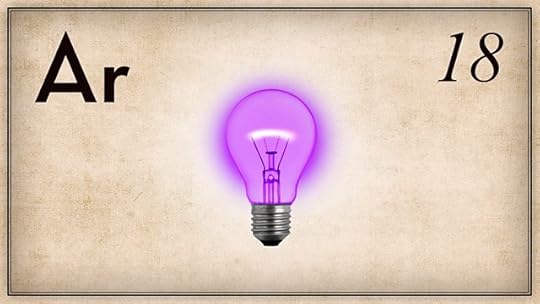 Argon: Primo imagines a fantasy meeting with his Piedmontese ancestors, who share a number of characteristics with the noble, rare and inert gases, such as Argon.
Older Primo Henry Goodman
Cesare John Rowe
Jacob David Horovitch
Moses David Hounslow
Samuel Sam Dale
Abigail Jessica Turner
Zepora Debra Baker
 1) Sulphur - Ben Crowe plays a boilerman who saves Primo's factory from disaster.
2) Titanium - Evie Killip reads this short story about a little girl who is fascinated by a man painting with white paint
 In 'Lead', set in the ancient world, a prospector travels from northern to southern Europe in search of the valuable, but toxic, lead rock. Read by Paul Copley.
  Mercury: 1820s - an English captain and his wife live on a remote Atlantic island, with strange chemical properties.
Abrahams Paul Hilton
Maggie Amelia Lowdell
Hendrik Nicholas Murchie
Willem Leo Wan
Andrea Chris Pavlo
Gaetano George Watkins
Burton Richard Pepple
Rebecca Debra Baker
Woman Katie Redford
 Iron: The story of Primo Levi's early life as a chemist in Mussolini's Italy, from his student days, his early crushes and his first experiences as a professional chemist, at a time when it was increasingly hard for Jewish Italians to find work.
 Gold: The Nazis invade Italy and Primo's friends are forced to scatter. Primo and Vanda head into the mountains in order to join the partisans.
 Vanda Rebecca Hamilton
Silvio Leo Wan
Lina Evie Killip
Aldo George Watkins
Militiaman 1 David Hounslow
Militiaman 2 Caolan McCarthy
Fossa Stephen Critchlow
Cagni Nicholas Murchie
Prisoner David Hounslow
 Cerium: Primo's training as a chemist helps him to survive the terrible conditions of Auschwitz.
 Alberto Leo Wan
Guard Erich Redman
Prisoner 1 David Hounslow
Prisoner 2 Sam Dale
 Arsenic and Silver: At his retirement party, Primo recounts amusing stories from a professional chemist's life.
Versino Jessica Turner
Lentini Nicholas Murchie
Bruni David Horovitch
Cometto John Rowe
Lucia Juliet Aubrey
Gallery Director Stephen Critchlow
Emilio Caolan McCarthy
Farmer David Hounslow
Customer Ben Crowe
Bonino Sam Dale
Gina Rebecca Hamilton
 Vanadium Part 2: In the course of his work as a chemist in a paint factory in the 1960s, Primo Levi has received a letter from one of the factory's German clients, Doktor Muller. The same Doktor Muller who had overseen Levi's work as a prisoner in the lab at Auschwitz. And now Muller wants to meet.
  Carbon: Levi imagines the incredible, centuries-long journey of a single atom of carbon.
Displaying 1 - 30 of 1,647 reviews