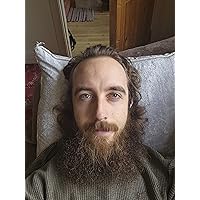
The narrator of Rob Doyle's Threshold has spent the last two decades traveling, writing, and imbibing drugs and literature in equal measure, funded by brief periods of employment or “on the dole” in Dublin. Now, stranded between reckless youth and middle age, his travels to far-flung places have acquired a de facto purpose: to aid the contemporary artist's search for universal truth.
Following Doyle from Buddhism to the brink of madness, Threshold immerses us in the club-drug communalism of the Berlin underworld, the graves of myth-chasing artists in Paris, and the shattering and world-rebuilding revelations brought on by the psychedelic DMT, the so-called “spirit molecule.”
Exulting in the rootlessness of the wanderer, Doyle exists in a lineage of writer-characters-W. G. Sebald, Ben Lerner, Maggie Nelson, and Rachel Cusk-deftly and subversively exploring forms between theory and autobiography. Insightful and provocative, Threshold is a darkly funny, genuinely optimistic, compulsively readable celebration of perception and desire, of what is here and what is beyond our comprehension.
Rob Doyle’s first novel, Here Are the Young Men, is published by Bloomsbury, and was chosen as a book of the year by The Irish Times, Sunday Times, Sunday Business Post, and Independent. It was shortlisted for the Irish Book Awards Newcomer of the Year. His second book, This Is the Ritual, will be published in January 2016 (Bloomsbury / Lilliput). Rob’s fiction, essays, and criticism have appeared in The Dublin Review, The Stinging Fly, The Irish Times, Sunday Times, Sunday Business Post, Gorse, Dalkey Archive’s Best European Fiction 2016 and elsewhere.
Firstly, let’s be clear, most of this book is centred around recreational drugs. Taking them. And enjoying them. So if that’s a problem for you, do yourself a favour and don’t read it. You’ll be much happier.
It’s also quite hard to categorise. It’s part travel journal, part autobiography, part novel (so Doyle says). And who really cares? It’s just a bloody good read.
I came to it because I was told it has a chapter on Berlin’s Berghain. (The chapter is really about living in Berlin, but yes Berghain is featured.) As a (now retired) techno DJ, I have quite a long history and love affair with Berghain, so of course my interest was peaked.
However there’s so much more in here. Doyle’s literary heroes play a big part - namely EM Cioran, Bataille and Bolaño (who each pretty much have their own chapters). So I think you can see the territory we’re in.
Doyle himself doesn’t always come across in the best light, and that’s obviously entirely intentional. He’s written the bloody thing about himself after all. Though I do think he fancies himself as somewhat more interesting, complicated and philosophical than he probably is in real life. And again, who cares? It’s his book.
There are a few things that are certainly questionable and difficult to defend him on. He comes across as pretty misogynistic in places. But full disclosure, as a gay man, I don’t really understand heterosexual relationships. However I do know that if heterosexual men treated women the way some gay men treat each other, things would not be looking good for them! (Doyle’s accounts of Berghain are quite comical to read in that he definitely comes across as somewhat overwhelmed by it all.)
There are quite a few things in here that could potentially upset quite a few people, and clearly have, judging by some of the reviews.
But what Doyle definitely is, is a damn good writer. At the end of the day, it’s an account of a young person fucking-up his way across Europe. As millions of young people do. Every year. And they live to tell the tale.
This is supposedly a novel but seems like a collection of personal essays - much more "auto" than "fiction". The narrator/author seems to think it's edgy to write down every sexist thought that crosses his mind, but in a world where sexist behavior and language from straight men is the exhausting norm, this is not a daring narrative act - it just reads like more tedious everyday misogyny. (The extended, graphic bit regarding fantasizing about a teenage student, whom he was teaching at the time, is particularly repugnant.) The anecdotes about drugs are uninteresting and come off as though the narrator/author thinks he's the first person to have a high or a comedown and the generically ecstatic or despairing thoughts associated with them. The chapters are interspersed with letters or emails to someone in which the narrator/author engages in more embarrassing middle-aged fantasies about barely legal girls. The only reason this is not a one-star review is the quality of the writing. He can write very well. But the material is terrible. On page 230 the narrator/author says "I used to write mainly to hurt people, to violate them... Sometimes I still like to hurt, to abuse." Mission accomplished?
Nothing—no friend’s impassioned recommendation, no innate desire, no travel article—has ever, ever made me want to drop acid and go to a three-day rave at a Berlin nightclub. This book did.
Later: Doyle seems to have written a type of autofiction, one in which all he does for at least a decade and a half is travel around Europe, writing in a desultory fashion and taking a lot of drugs. As a human being, narrator-Doyle is faintly insufferable—he’s not good to women and remarkably solipsistic—but of course the relationship of narrator-Doyle to author-Doyle is indirect. Rachel Kushner writes, on the front cover, that she “learned to stop worrying (about what sort of novel this is) and love the narrator”; I never quite loved him, but I did warm to his earnest, encyclopedic informativeness, and the postcard-from-Europe style of his perambulations around various cities. And no description of the effects of hallucinogens has ever entranced me half so much.
“A wild, sleazy, drug-filled odyssey…”. Isn’t it about time we grew out of such solipsistic ramblings? Is taking vast quantities of dangerous drugs something to celebrate? Especially since listening to someone’s experiences on drugs is as tedious as listening to someone’s dreams. And just what is this book? A novel? Auto-fiction? A series of boring essays on boring subjects like…well, drugs? Does it matter? And more importantly, do I care? The answer to that at least is simple. No. I’m not interested in the narrator/author’s self-indulgent descriptions of his travels, his sexual fantasies, his masturbation. Especially when his sexual fantasies are distasteful to say the least, and usually misogynistic, often about young girls. And there are such banalities here, too, expressed as though they are the revelation of some insightful truths. “The Parisians were also, of course, exceptionally beautiful….Even the staff at the McDonald’s were stunning.” Really? There’s lazy writing as well. When he goes to see his friend Zoe’s play it is so predictably avant-garde and ridiculous. Inconsistencies – is it really that easy to send drugs through the mail? Bataille and Cioran obviously impress the author/narrator – but long disquisitions about them hardly add to the narrative drive. If this book is supposed to be some sort of quest narrative, a search for meaning, a search for transcendence, then in my view it fails as it is just so dull. Doyle admits that the book is 80% non-fiction, about his lived experience, so it was obviously important to him to write about it all, but that simply does not make for engaging reading. As he is now on the threshold of middle age, I suggest that he grow up and face the real world and leave his adolescent angst behind.
I’ve known of Rob Doyle for quite a while and have read a few of his erudite book reviews in the Irish Times. However, much as I like to keep up with contemporary Irish writing, I had never gotten around to reading anything else by him - despite the rave reviews his books Here are the Young Men and This is the Ritual have received. Instead, I marked them as want-to-reads on Goodreads, but that list is a long one and not getting any shorter. I was also interested enough in what I knew of him to follow him on Twitter. I don’t spend much time in that universe, but it established a tentative and ethereal link.
Then a month or so ago, (this is my fourth week in lockdown and days have attained a certain fungibility that makes precise estimations – there’s a useless oxymoron if ever there was one - difficult) I read one of his essays on Granta, detailing his adventures with mushrooms. Yes, that kind of mushroom.
I was immediately taken with the underlying self-awareness and the direct honesty of his prose, but it was his evocation of the Phoenix Park, a place almost any Dubliner has childhood memories of, that really struck – after three decades of exile I hesitate to use the word ‘home’ – but wherever it struck it struck, particularly his description of the Wellington Monument as an ‘erratic’ - a word familiar to me from having once-upon-a-time spent several years living and working at the foot of a glacier. Erratics are rocks left behind by glaciers, baggage too heavy to carry, dropped on the path of retreat. But Doyle didn’t explain any of this.
A different reader, less acquainted with the terminology pertaining to glaciology, could easily have passed the word without giving it much thought, or perhaps even without necessarily knowing what the term meant, or might have been acquainted with the word but have casually passed without a further thought because it held no particular personal resonance. But I am not a different reader, having little choice in the matter.
Erratic. I further extrapolated, seeing this huge phallic monolith, upon whose base I had played in the half-forgotten Kodachrome-toned memories of long summer childhood evenings, light softly filtering through the paw-like leaves of chestnut trees, as a cultural boulder left behind by a former colonial power whose reach and influence had retreated and was rapidly melting.
I like that kind of writing, the kind of writing that assumes that the reader is capable of keeping up, or of weighing the import of the writer’s choice of words.
I tweeted something to that effect, tagging the writer, and jokingly congratulated him on resisting the old Dublin puns about the Pope’s Cross (is he?) made about the gigantic crucifix that stands in that same park, marking the day in 1979 when a million people – a full third of the Irish population at that time – made their way to the Phoenix Park to attend the papal mass, an eleven-year-old me, not yet with the wit or maturity to question organized religion, but already skeptical as to the existence of a higher power, among them.
I was surprised when the author replied, but was once again reminded that writers are people, just like anyone else, or almost, and live their lives in the same world as the rest of us, more or less.
I won’t say that having my tweet answered was the reason I got my hands on a copy of Doyle’s latest book Threshold, but it would be dishonest to say that it didn’t at least partially contribute to my decision to spend my ever-diminishing reading time (ever-diminishing because lifetimes are finite) on his book.
I’ve seen Threshold described as a novel, including on the book's cover, but it reads as a series of essays interspersed with brief epistolary interludes to an unknown correspondent, or perhaps a plurality of correspondents.
It joins the ranks of a lot of contemporary writing that is confessional in style, call it creative non-fiction, if you must, reminding me, in form at least, but in almost all other regards not reminding me at all, of books like Sinéad Gleeson’s Constellations, or perhaps the work of writers like Roxane Gay.
I mention Gay because of her divisive edict. While writers have long been exhorted to write-what-you-know, Gay takes it a step further and urges (some might say warns) other writers to stay-in-your-own-lane. There are all sorts of perfectly good and painfully woke reasons to respect this, but it certainly shackles and hobbles much of what might previously have been considered as valid, even admirable endeavours in fiction writing, namely of not writing what you know, but simply making things up. The world changes. Eggshells are laid out. Any writer who dares misstep, or encroach beyond the boundaries that have been stricturally if not structurally delimited, risks the wrath, ire, and general mouth-frothiness of certain sections of the Twitterverse.
In Threshold Doyle, like many/some/a few/a mere handful of his contemporaries, side-steps all this by writing what he knows most intimately, namely himself, or at least so it would appear. By calling it a novel the author is free to disclaim or invent any episode.
The first essay in the book is the mushroom one that was featured in Granta, the essay that brought me back to the Phoenix Park, the excitement of childhood sightings of deer, and sending me on my own detour to the glacier I used to babysit and explore.
Just another white guy who thinks he is woke because he has done a lot of drugs. This book was just drugs and sexism.
It's clear that Rob Doyle is a good writer, his use of language is masterful, but the subject matter was awful. I mean, I don't know who could write like this knowing women would read it... It actually upset me as it served as a big fat reminder that there are still men out there just see women as something to ejaculate in.
I wasn't really sure how to approach this book - whether to take it as a work of autofiction or fiction. However, in the end, it doesn't really matter. My summations on the characters and events are much the same whether it's based in truth or imagination.
What we have here is a rather pathetic, cringing, entitled man who considers himself to be a philosopher provocateur; full of bile and spleen and hatred. This character is a man who loves aphorisms because they are "distinctly suited to provocation...you can experience the glee of being hated...the venting of aggression was necessary to prevent one from imploding with fury, a constant danger if one were inclined to view the world as ugly, dangerous and swarming with horrible morons."
Rob Doyle considers himself to be at war with the world and all its liberal niceties, believing himself to be a glorious creative genius; a life-despising mash-up of his heroes, Gaspar Noe, Emil Cioran, Georges Bataille, Jean Baudrillard, Terrence McKenna, Michel Houllebecq, Tino Sehgal, Antonin Artaud and Thomas Pynchon. His mission: to be insufferable.
"I had set myself a sort of Oulipian constraint whereby, on my nightly Twitter forays, I would be as aggressive, offensive and hateful as possible...coating my slander and vituperation with just enough charm or panache that people would stick around for more...Could I resist this ocean of bollocks without perishing in convulsions of hatred?"
Rob Doyle regales us with his endless tales of drug taking, with a mixture of flagellation and self-congratulation. He charts the way through his myriad, fleeting obsessions (with writers, with films, with drugs) before falling back into a bitter nihilism that blocks any personal insight or growth, if such an attempt were to be taken.
“Here I am, years older and none the wiser.”
The structure, I suppose, is a twisted version of Nietzschean eternal return; the stories loop round again and again, the very same trajectory each time, the same death by overdose in various parts of the world, the same lessons not learnt, the same personality persevering and failing.
“I swam in the sea and had the ecstatic drunken insight that everything is transient, everything is eternal, both statements are true. Also: that living your truth means loving even your suffering, and not masochistically.”
You can expect lots of this pseudo-philosophical waffling, along with those interminable descriptions of all the exciting drugs he has taken and the vile acts he allowed himself to commit whilst under the influence. (the most memorable being a scene in the Berlin club, Berghain, where he pisses in a man's face, relishing the abject gratitude of his victim, and his own cruel sense of power). There is endless misogyny - “the hatred I felt for my mother, who had done nothing to deserve it except create me, was extreme and pathological...I look back on my youth as a campaign of revenge against women - a war of attrition with unforgivable crimes committed.”
Doyle is preoccupied with the examining the Void, the emptiness at the heart of his life, and the origins of his unfeeling character. But he searches only in the same places: seeking transcendence through half-hearted forays into religion or, more successfully, through drugs. He muses on the Void of the Buddhist Heart Sutra (The world is the same as the Void. The Void is the same as the world”, and the Noe movie Enter the Void, which seems to have been the blueprint for the entire novel. If you love self-important, sexist, bullying men getting fucked up and being unbearable, then this book is for you.
‘Imagine this. Even if the most extreme pessimism accords with how things are, and existence is a nightmare, and consciousness is a chamber of hell, and Western civilisation is awaiting its coup de grace, and we’re all adrift in the Unbreathable, or the Irreparable, or the Incurable, or all these things he writes about; what if, in spite of all this, the very articulation of this pessimism was so exquisite, so profound, that it redeemed our moments here in the nightmare? What if the writing itself, the beauty of it, not only pointed towards but provided reason enough to stick around a while longer?”
I can't help but feel that Doyle feels that the sentiment above applies to his writing. I have to disagree with him.
An Irish writer with a hunger for travel and self-discovery meanders through his 30s with a homebase in Paris with trips to Sicily, Southeast Asia, Catalonia and an extended stay in Berlin. Sometimes on assignment to write a magazine piece and other times chasing his own demons fueled by a fascination for psychedelics and new doors of perception, with a particular interest at times bordering on obsession with the writers EM Cioran, George Bataille, Roberto Bolaño and Nietzsche.
The narrator is also suffers from a deep despair heightened with a trip to Bataille’s gravesite resulting in his rejection of Bataille’s “sickly deathliness…a veil had been lifted and there was no boundary between me and all else: to have lived once was to live forever, merged with all that is an infinite churning, where individuality is no more substantial than the patterns thrown up on the foam of the sea.”
Travelling to Kassel Germany to cover The Documenta (a cultural festival that the Spanish writer, Enrique Vila-Matas also used as a setting for his novel), formed in 1955 “to put Germany back in dialogue with the continent it had done so much to decimate, and show case the kind of art that the National Socialists had suppressed as ‘degenerate’”. There, viewing a sculpture of banned books a subject first done by the Argentine artist Marta Minujin’s The Pantheon of Books, the narrator musing “I knew I was born too late to be in much hope of a career-boosting ban. You could write anything you liked now, and it didn’t matter; everything was permitted because nothing was of consequence.” While in Kassel he makes contact with a mysterious on-line dominatrix and attends underground night clubs where sexual acts are wildly and openly exhibited. The narrator/writer, who is clearly a stan-in for Doyle, is forever pushing boundaries and the book’s title, Threshold, represents straddling on the cusp of a new awareness.
In Catalonia he follows the “Ruta Literaria Bolaño en Blanes” which encompasses visiting 17 both significant and mundane spots Bolaño frequented while living and writing there.
Lastly, the story ends in Berlin, a city that attracts artists and creators from around the world. A decade has now past and the narrator’s interior dialogue fluctuates between desires to live and love, and the darker side of solitude, despair and death, while medicating his demons with a variety of psychedelics. Now older and wizened “the thought hit me: I was jaded. The suicidal mania I’d endured in Paris and Spain had relented, but it had left in its stead a condition of surfeit and indifferences…it seemed to me more shameful to be jaded than it did to be heartbroken or suicidal…jadedness was a more contemptible kind of defeat, a death in life without dignity or valor.” Immersed in the Berlin scene of techno music his ambition is sparked to perhaps now “write the great Berlin techno novel…about an ageing expat druggie who dances a lot”. He again finds himself in darkened sex clubs and acts of debauchery; when a friend tells him she reads his books and describes his writing as being “brave” — “it made me think I’d humiliated myself in ways I hadn’t quite intended…my life was the research for the book I was writing about my life, and that this book, which was many books, would justify that life. Linda might have then smiled sadly and concluded that writing was a symptom of the sickness for which it was also the cure.”
The last section, entitled Threshold, entails his inhaling increasing amounts of DMT and describes a “breakthrough dose” leaving him dumbfounded in the presence of a god-like entity he could only simply “behold”. As a writer he realized it was an “indescribable event”, something that was beyond words: “And then I began to be pulled out past it all, into the unfathomable, with the sense, euphoric and terrifying, that everything was possible again.”
In Threshold, Rob Doyle has indeed written a brave and engrossing tale which apparently reflects some seminal experiences he himself had journeyed while tempting the fates of consciousness and come out on the “other side” on the “threshold” of a new perception, one filled with hope and heightened awareness.
Finishing this book, I am reminded of other writers I have enjoyed: William Burroughs’ Naked Lunch, Jack Kerouac’s On The Road, Rudolph Wurlitzer’s Hard Travel to Sacred Places, and Geoff Dyer’s Jeff In Venice/Death in Varanasi.
I was very fortunate to be sent a copy of this by a friend who thought I would get a kick out of it, and she was unerringly correct. Threshold is not perfect. It's not even always enjoyable. But it's never less than compelling, and the writing is extraordinarily fluent, perceptive and constantly imaginative. The imagination extends not just to the prose, but to the form itself. Threshold is not extravagantly avant-garde, but it absolutely blurs the line between a fully fictional account of a struggling writer travelling through Europe and Asia snorting and smoking anything narcotic that happens to find itself in his orbit, and the pseudo memoirs of a struggling writer travelling through Europe and Asia snorting and smoking anything narcotic that happens to find itself in his orbit. In this liminal space, Doyle finds an authenticity of voice that it unmistakeable. Indeed, it is this authenticity that ultimately saves Threshold from its possible fate as the desultory ramblings of a middle-class dilettante, who is privileged enough to have the opportunity to meander around the not insalubrious global locations in search of transcendent experiences and meaningful philosophy. Instead, despite the at times thoroughly objectionable and repulsive behaviour of the semi-fictional Doyle, the reader ends up beguiled by a figure who is also capable of fascinating ruminations on Bolano, the nature of art, and crucially, is self-aware enough to realise that he may just be an arsehole. Another reviewer has referred to (approved by Doyle himself) Threshold as 'Tropic of Cancer with Twitter', and this is a better and more pithy summary than I could generate myself. At times, it recalls not just Miller, but Kerouac or Bukowski, and this is fine company for a relatively inexperienced writer to find himself in. It will be intriguing to see where Doyle goes next, he may just have a classic novel in him.
'Describing psychedelic experiences to those who have never had them is as futile as describing music to someone who was born deaf,'
That pretty much sums this up for me. I'm not sure what I was expecting, but this book just didn't interest me at all. Autofiction, autobiography, novel, journalism... Whatever you want to call it, the book declares itself as 'a long chunk of prose', so at least that's accurate. I'm not quite sure what book merits the rave reviews from John Boyne or Geoff Dyer, amongst others, so presumably I'm completely missing the trick here, but I found it self-indulgent navel-gazing, and a story of a man and a life that just didn't interest me. Like I say, not my kind of book, so I hope that it finds its market, and I wish the author well.
A book of firsts for me: I had never made notes of things to read, see and do from a book before this. I had never highlighted quotes and reread passages to find gems of language I may have missed. I’ll be using this as a “life reference book” for years to come. Rob Doyle truly makes me want to travel, experience and live as he described (for better or worse). And if you aren’t as fixated on the insanity of it all, Rob Doyle’s elucidations are a close second to the experiences themselves.
There were some moments I liked, and that was about it. The author muses on philosophy, art, consciousness, and western society, but when I try to think back to any insights that were particularly poignant I draw a blank.
When discussing women and his fantasies, I felt like he was trying to be Michel Houellebecq (who he references often) without the self loathing and awareness Michel can bring to, quite frankly, misogynistic ramblings. He does reflect on contemporary art as something that has become political and moral and that he likes artists that aren't trying to be any of that, so maybe this is his attempt at doing so. But it just fell flat and came across as crude.
The author also takes the adolescent view that drugs are "cool" and an end in themselves rather than a means to experiencing truths about the universe or life in a different way, or merely an activity to be enjoyed. Judging by the fact that it was written by a narrator intended to be in his 30s I found this a little embarrassing.
I usually love a traveller/drifter story, but this book felt more like someone who was trying to portray themselves as such, when they were really just an awkward, geeky kid visiting sites where his favorite authors lived.
The book started out as funny, but then it took a turn to really depressing and pointless. A collection of experiences from someone who's always feeling lost and lonely. Meaningless experiences that only leave him emptier. At least the main character, I assume the author himself, seems aware that he sometimes surrounds himself with people who try to be different, avant-garde as they call themselves, so they can feel a bit superior to others. To me, they're just a bunch of sleazy, lazy people with first world problems, who have never actually worked hard in their lives and think they are contributing anything to society by getting high and writing about nothing. They also take a ride on well-established authors and write essays about their work to try to gain some credibility for themselves. The book itself was an curious read for me to get to know a little bit about a group of so-called artists and writers. It's also a good source of information on drugs in case one ever wishes to do them. I was never into psychedelics, but I'm always curious to know why some people are and feel the need to get high.
absolutely hated it, like kind of embarrassed to have finished it. reads like the worst film major u met in college got a book deal and forgot how to act. the writing is very good at points which kept me hanging on but rob did not redeem himself.
Threshold is a diary novel about Rob Doyle’s own struggle to figure out life. Its narration is brutally honest. Failing to find his peace of mind in a Buddhist monastery, he travels restlessly around the world in search of a shortcut to Nirvana. Meanwhile, time keeps going by and his age pressures him to stay on an open path, instead of gazing down closed ones.
What really keeps this travel journal interesting, is Doyle’s approach to life. He knows about his flaws and shortcomings, but is willing to change and try new ways. He’s self-aware enough to judge his own ideas and interests. His taste in art might be the best ingredient in this freshly served piece. Hot takes on Cioran, Nietzsche, Ligotti, Bolaño, and Houellebecq come with a lot of charm and witticism.
A refreshing audiobook to listen to while cooking or washing up.
This was one of the most fun reads I've had, even with the themes of aging, failure to find fulfilment, and at times, nihilism, which aren't particularly 'fun', but Doyle's writing is so engaging and even funny. I also loved getting more context on the several authors mentioned throughout, and for even confirming that I still do not want to read Nadja by Breton.
I'd known this book's charm to be in its relatability, and in particular, to 35+ year olds. However, I still found it mostly relatable, a decade younger, and was genuinely locked in for every chapter. I am a big fan of travelogues, so it certainly added to the experience when I heard about the exact place where I had either been or was while reading. The chapters that focused heavily on drug use were my least fav since they are similar to reading about dreams in that they can become tiresome.
When I looked at art in galleries and museums, the first thing I always did was read the accompanying text on the plaque beside it, and in many cases I was happy to leave it at that, the work itself adding nothing besides a sense of disparity between what the text on the plaque told me I was supposed to think and feel, and what the artwork actually provoked me to think and feel, which was often nothing. Some of them were really quite stimulating, the texts, the concepts. Under the reign of conceptualism, it wasn’t enough to produce art, you needed to be able to articulate precisely why you had done it, and this ‘why’, this articulation, was the art.
Fun cynical gallop through a nihilistic and very male few decades of drugs, drinking and literature.
3.5 - while not a slow start, it took until the end for the author to figure out what he was saying. sometimes it was written for him and sometimes it was written so other people will understand him. but really enjoyed hearing a different person's take on Berlin, Paris, London, and Sicily. the DMT segment slapped; although Doyle fell into the usual drug pitfall of attempting to convince the world that everybody needs to try it. final take-away: yay drugs?
Probably as good as Millennial straight man autofiction is going to get, make of that what you will. Procrastination, apathy, terminal horniness, musings on life & (the politicisation of) art, drugs, Berghain etc. etc. It's all in there.
*“At the root of my interest in both drugs and art was the longing for an encounter with otherness, a seeking-out of astonishment for its own sake. ...The counterpoint to this hunger for the strange and sublime was the profound boredom I felt for the world I had grown up in, the revulsion for what seemed to me a crushingly drab, incurious, cultureless environment.”*
Thanks to this quote, Threshold hooked me very early. I have never related more with words I’ve read in a book. The dreary greyness of rural Irish culture almost drove me insane as a teenager. My small school of 500 had two suicides in two years. The emotionless, cold, judgemental, and colourless vibes that were prominent in the school and town made drugs the only rational option in my eyes. They broke my fellow weirdos and I out of the oppressive box that the environment made us feel we were in. Hard drugs led us to crisis, which led us to psychedelics, which led us to healing. For this reason I look on the rising issue of drug abusive amongst youth in Ireland with a glimmer of hope that it will at least lead to some positives. The idea of the archaic revival comes to mind. Through hedonism, and straying outside of the culturally decided boundaries, we are shaking off the old redundant skins that we’ve been ordered to wear, skins which disconnect us from our humanity and our natural states of consciousness, which in turn leads to dire consequences like a lack of emotion and alienation from one another.
The next paragraph in the book further strengthened my sense of resonance with the author;
*“I remember telling a friend, when I was twenty or so, that I took drugs so that one day I wouldn’t have to take drugs. The idea was that, by gaining access to the weirder potentialities of consciousness, my basic stance towards existence would be altered: shorn of the tedium and banality that oppressed me in those years, I hoped I could come to experience consciousness itself, and the bare fact of being in the world, as ineffable, awesome, impregnably mysterious. The funny thing is that this really did happen. The occasional mushroom excursion aside, I rarely bother with drugs any more.”*
I too have reached a stage where I no longer require substances to enjoy life. I used them to become more capable and aware, then I made adjustments to my software/perception/subconscious/beliefs/consciousness, so that I am now rewired in a way that stops me from becoming depressed or apathetic. Drugs led to hallucinogens, which led to meditation and books and music, which led to a greater quality of life and a seemingly permanently altered state of awareness.
*“I spent part of my youth oppressed by a boredom I now consider to have been a delusion, born of the depressive belief that the world around me was mundane, paltry, comprehensible. Bitterly at odds with my surroundings, I needed certain jolts to get me back in touch with my own capacity for wonder, which I now happily find to be a self-replenishing source”*
*“Was it perhaps the coldness of the sea that gave life in Ireland its harsh and sullen quality, produced such coarse, tormented, lumpen people?”*
I always figured it was the weather mixed with the inherited trauma from Irelands history. The troubles, the famine, English invasion, and the toxic parasitic influence that the guilt and shame peddling catholic church was. Alcohol being so prevalent doesn’t help the situation. Too many Irish people, young and old, consider getting wasted and talking shit an actual hobby.
*“Never, even as a child, had I felt proud of my country, or even that I really belonged to it.... People of other nationalities romanticized Ireland but to me it was an uninteresting place, a backwater of banal, misshapen people.”*
It was really cathartic seeing someone else articulate the frustrations I had felt as a child and adolescent. I always felt disconnected from this countries culture. I’ve always appreciated the nature here, but the people always felt cold and antagonistic. Despite growing up in a rural town since birth, I was always a *blown in, an outsider*, simply because I didn’t have 3 cousins within arms reach of me at all times. ‘A bunch of inbred wankers’ I remember thinking to myself when bullied by the GAA boys.
*“The effect meditation had one me was dramatic and immediate. My psyche was like a virus-clogged laptop that had been defragged and rebooted. Meditating for around half an hour every day, I was amazed at how clear and focused I felt, how in control of my habitually racing thoughts I was. I decided that, in order to explore this new-found source of clarity, I would quit all the stimulants I’d been greedily consuming since my teenage years”*
Another paragraph which struck as relatable. I too found miraculous benefits in meditation when I was quitting substance abuse. It became my source of healing, and replacement. Meditation initially stops the pain or discontentment which fuels drug abuse. When you continue with the discipline, it then brings you sincere bliss and euphoria. It increases your life quality to the point where drug use is a downgrade. At least this was my experience. To feel at the wheel of your ship is an amazing feeling, especially after suffering from addiction for years, along with the compulsivity that comes with it.
*“I would never become any kind of Buddhist. The dharma was a refuge where I could alight for a while, recover vital energies lost to terrible times, and then move on. The Buddhists insist that sensual delight is fleeting, can only lead to attachment and misery and therefore must be renounced.”*
The denial of the senses and material life isn’t the point, complete engagement with it but while having no attachment is possible. As Rudolf Steiner said, one who cuts himself off from the world of the senses becomes like a flower that cannot draw in light for energy. *Full extract below.*
**Extract from Rudolf Steiner’s “Knowledge of the Higher Worlds”**
*The student is told to set apart moments in his daily life, in which to withdraw into himself, quietly and alone. He is not to occupy himself with the affairs of his own Ego, in such moments. This would result in the contrary of what is intended. He should rather let his experiences and the messages from the outer world, re-echo within his own completely silent self. Every flower, every animal, every action will unveil to him in such silent moments, secrets undreamed of. And thus he will prepare himself to receive quite new impressions of the outer world, through quite different eyes. For the desire to enjoy impression after impression merely blunts the faculty of cognition; the latter, however, is nurtured and cultivated, if the enjoyment once experienced is allowed to reveal its message. Thus the student must accustom himself not merely to let the enjoyment reverberate, as it were, but rather to renounce any further enjoyment, and work upon the past experience. The peril here is very great. Instead of working inwardly, it is very easy to fall into the opposite habit of trying to exploit the enjoyment. Let no one undervalue the fact that unforeseen sources of error here confront the student. He must pass through a host of tempters of his soul. They would all harden his Ego and imprison it within itself. He should rather open it wide for all the world. It is necessary that he should seek enjoyment, for only through enjoyment can the outer world reach him. If he blunts himself to enjoyment, he becomes as a plant which cannot any longer draw nourishment from its environment. Yet if he stops short at the enjoyment, he shuts himself up within himself. He will only be something to himself and nothing to the world.*
The bible also hints towards this when it says “*be in the world, but not of the world*”. Here is an explanation of the quote which I found on Quora: *”To ‘be in the world’ is to serve, and partake of the pleasure and pain, in pure awareness that is equanimous.*
*To be, ‘of the world’ is to be constituted by the world, and therefore be controlled and dominated by the psychological elements of the world.*
*Fire is in the world,, and of the wood, a worldly object, and therefore fire is subject to control and dominance.*
*Space is ‘in the world’ but not ‘of the world, and therefore Free.*
*To be in the world and not of the world, is to be Free despite intimately involving in the affairs of the world.”*
Rob says “*I had grown weary of asceticism; I missed being ruled by my appetites. The same factors that had drawn me to Buddhism now repelled me from it”.*
I would argue meditation and mindfulness merely make ones appetites stronger, and the fulfilment of them more pleasurable. Hunger is the best sauce. To appeal to Rob, if one just fucks until they can fuck no more, then they truly will be really fucked. And then fucking is no good. Intermittent ascetism is the key, perhaps.
Rob’s description of the k-hole experience was by far the best attempt I’ve come across so far, and I’ve read plenty trip reports.
*“There was pure existence, and this immanence was me, I was the cosmos moving through an event of sublime magnitude. The everything folded into the nothing till there was no longer any distinction: the world was the same as the void, the void was the same as the world. I had a sense of vast privilege at witnessing this transcendental climax. Then the void grew tight and hot and ragged, as if Being were birthing and dying at once. It occurred to me that this was the end of it all, the eschaton. And then nothing.”*
I have gone through this exact experience several times, but my god is it hard to remember. One only gets glimpses of it post-experience. And it fades like a dream, so the memory becomes less and less. The feeling of the ‘end of it all’ sticks with me though, the ‘eschaton’. I remember on a couple occasions feeling severe anxiety because, as Rob felt he was creating the music with his thoughts during the trip, I felt like I had caused the eschaton with my thoughts. I had single handedly collapsed all of reality. I’ve really done it this time, I remember thinking to myself, while floating in the vacuum of nothing. This happened twice, I felt like a right knob the second time. This part of the k-hole seems to always precede the end of the experience. It doesn't happen everytime, thankfully.
“*This was what all our devices were leading to: a world of perfect communication wherein nobody was interesting enough to be worth communicating with.”*
Rob speaks of his DMT experience: “*I encountered a being so beyond my capacity to comprehend it, so dwarfing of my categories of thought and belief, that it may as well have been a god. Scepticism was no longer possible: I was flung into the presence of something whose very existence was an affront to all that my society believed in, all it didn’t believe in. There was no message, no communication in the encounter beyond that which can be summed up in a single word: Behold. Intuitively I knew I was in a realm absolutely without morality, beyond good and evil, where my values, beliefs and concerns were terrifyingly insignificant. The encounter left me dumbfounded, aghast, and haunted by questions I suspected would never yield adequate answers... This is what makes DMT in particular so maddening: the inherent frustration of being unable to talk about it.*”
Amen! I also met a ‘*being so beyond my capacity to comprehend it*’ on a DMT trip. Here’s the story:
I wrote in my journal an intention for the trip before hand. My intention was to break bad habits, to regain more freewill and freedom over my compulsivity, and to remove my self-imposed limitations.
I sit down and take 3 or 4 hits. Everything melts and I’m in the DMT place. I then encounter the Indian Elephant God, whom I found out after is named Ganesha.
They didn’t say anything to me, we just floated, acknowledging each others presence. Beholding each other. Ganesha looked like they were in stunning 4k resolution, but only better. The weirdest thing about the DMT place is that it often looks more real than here, the graphics of default reality appearing cartoon like in comparison to the crystal clear clarity one has in the other side.
I come out of the trip and research the ‘Indian elephant god’. First of all I find out their name is Ganesha. Cool. But the next thing is what blew my mind. They are a symbol for, or associated with, the removing of limitations and obstacles. Remember my intention before going into the trip? I asked for limitations to be removed. How could that have happened? A major coincidence? I knew nothing about that God beforehand, aside from what they look like on a tapestry (much less vivid and complexly designed than how I witnessed them in the 10 minute trip DMT launched me on). It’s one of the weirder synchronicities I have had so far.
***Closing note:***
I really enjoyed this book. I resonated a lot with the author. Honestly, the book made me quite annoyed that I hadn’t been better at documenting my experiences over the past few years. I’m very much inspired to journal more, and perhaps learn how to actually write essays or blog posts, as I presume they are what lead to writing a book, which I would like to eventually do when I’m older and not a mere 20 year old, because, as Rob says, “Youth is the season of rapture: its fruits were sex and bliss”. So I best be busying myself with fruits while I’m young. Collect experiences like acorns for the winter that is aging, in which I may relive them thanks to diligent consistent journaling, and perhaps use the documented experiences to create a work not unlike Threshold.
This entire review has been hidden because of spoilers.