Jump to ratings and reviews
Rate this book

Lands of Memory

Rate this book
Lands of Memory presents a half-dozen wonderful works by one of the greatest yet least-known Latin American writers of the twentieth century. Felisberto Hernández's extraordinary stories have been always greatly prized by other writers, and the two novellas and four stories collected in Lands of Memory show why. "Lands of Memory" and "In the Times of Clemente Colling" are two dreamlike novellas, which are carried along like pieces of otherworldly music by odd rhapsodic memories. Curiously haunting, the four stories also included in Lands of Memory turn upon small improbable events—small unpredictable, off-the-wall events which turn upside-down a first recital or a salesman's calling. These works have been long overdue for translation into English, and New Directions is pleased to have them in Esther Allen's stunning versions.

192 pages, Hardcover

First published January 1, 1983

12 people are currently reading
1587 people want to read

About the author

Felisberto Hernández

95 books163 followers
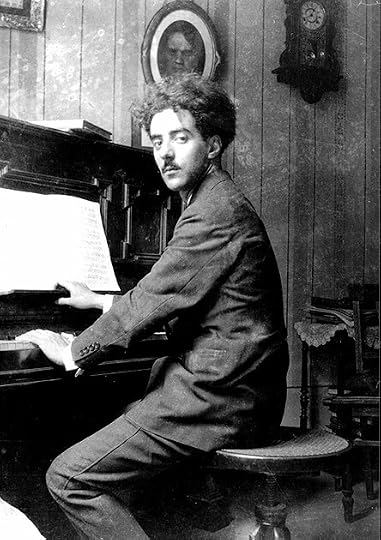
Uruguayan writer and pianist.
Considered to be the forefather of fabulism, predating writers such as Gabriel García Márquez, Italo Calvino and Julio Cortázar, who all note Hernández as a major influence.

Ratings & Reviews

What do you think?
Rate this book

Friends & Following

Create a free account to discover what your friends think of this book!

Community Reviews

5 stars
91 (36%)
4 stars
96 (38%)
3 stars
39 (15%)
2 stars
19 (7%)
1 star
4 (1%)
Displaying 1 - 30 of 39 reviews
Profile Image for Vit Babenco.
1,783 reviews5,784 followers
January 8, 2021
Ourselves and our memories… Those who surround us and our memories of them…
The memories come, but they don‘t keep still. And some very foolish memories clamor for attention, too. I don’t yet know whether, despite their childishness, these have some important connection to the other memories, or what meanings and reflections memories exchange among themselves. Some seem to protest the selection the intellect claims to make among them.

Childhood and poverty… Music and despondency… Memories of the blind music teacher and improviser… First musical lessons, playing music in cafés, weird musical jobs, strange piano concerts…
If I stopped running, I might get used to this unhappiness that contained a small amount of happiness, and never emerge from it. My house was like a sea of greenish waters never subject to great wraths. We navigated across it like pour pirates with little heart for seizing any booty.

The stories are written in the rich metaphorical language and they are colourful, peculiar and sad… Memories distant and close… Memories within memories…
I had the deficiency or weakness of being entirely unable to isolate myself from the people around me. I couldn’t forego the task of imagining what anyone near me might be thinking. They, and their way or experiencing their lives, were entering a little into mine, and the sensation of the moments I spent in their vicinity depended on what kind of people they were.

Our memories are always with us and our memories are our lives.
Profile Image for Jimmy.
513 reviews905 followers
July 15, 2013
Look, Felisberto, I'm not gonna lie. You're no good at this short story thing. You might as well give it up now. Your 'stories' are like the slow kid in the back of the room who stares out of the window at the ballfield and gets hit by spitballs when the teacher's not looking. All the other stories are gung-ho, raising their hands, answering questions with purpose, drive. But your story is still lost in thought, he's barely aware that he's in class.
And the rails would spend all their time waiting, with their backs to the sun, for the monstrous egotists in the train--always riding along thinking about the direction they were heading in--to go over them. Then the rails would bask once more in the admiration of all the grasses that dwelled so peaceably around them. p132
Fortunately, everyone has their perfect match in this world. Even the homely girl gets a date to the prom. And for your non-stories, I am that fool. The fact is, I don't often like stories. They are too single-minded in their trajectory. But your stories lie on the outer perimeter of what a short story is or should be. Your stories take on the appearance of a story while inwardly they are anything but!

When I talk with short story writers--I knew quite a few back in the day--they would always critique each other's work by saying how "there's a story here", or "there's no story here" as if excavating bones from an archeological site. But if a story has no story in it, what's left? I often find myself loving just this unnameable thing that's left, which you have written many. I like them because there is none of that anxiety that comes with the form. One of my favorite filmmakers, Abbas Kiarostami, once said that he disliked most contemporary movies because they "take the viewer hostage". They don't allow any room for daydreaming, reflection, even deep sleep. I feel that you and Kiarostami would agree on many things.
"Furthermore, I will ask you to interrupt your reading of this book as many times as possible," a character of his writes, in a story titled "Gangster Philosophy," "and perhaps--almost certainly--what you think during those intervals will be the best part of the book" (from the Foreword)
Reading your stories is like admiring the shadows of tree branches on the ground as a storm brews, the light and shade moving in the mind of the story beating out a singular path from image to image. The sentences each crystal clear, but without any higher understanding or purpose. Despite this lack, perhaps because of it, there is a higher enjoyment. Not only are your stories unsolveable, there is nothing there to solve, so one must take them as they are.

The nonstory of yours that I loved the most from this book was 'Mistaken Hands'. In it, you talk about the unknown. But that's exactly what this story is to me, a complete unknown. I have no idea why I am so attracted to it, but I feel I can return to it again and again. It is like a pebble that I've mistaken for hard candy, and I have it in my mouth right now, and it will never dissolve.
While we were speaking, there was something that had nothing to do with words; the words served to attract us to each other's silence. p.102
PS - I hope you will forgive me for addressing you so directly, and rousing you from your peaceful state. But your stories, in their immense privacy, seem to call for such direct addresses. In the foreword that Esther Allen has written, there is an excerpt by Cortazar where he has also written to you directly. I think it's a testament to the extreme intimacy you're able to form with the reader...
Profile Image for Ben Winch.
Author 4 books418 followers
December 9, 2021
For a long time I've wondered what it is about literature in translation. Why does so much of it read so well? I swear, judging by Esther Allen's work on this title, Felisberto Hernandez is, line for line, one of the greatest writers of the 20th century, and his is not the only example. Thomas Bernhard - is it he or his translators who have revolutionised narrative, the sentence, the parenthesis? Or is it teamwork? Is it the extra read-through with fresh eyes, the final draft started from scratch? Could this be the secret of Beckett's late prose, why it cuts so sharply, is so sleek, so honed? Of course there are exceptions - clunky translations and works revered in their own language which never achieve the same power in ours - but I begin to wonder if translators, like music producers, are the great unsung heroes of their artform.

That said, there is strong evidence that Felisberto Hernandez is a genius, whether or not Esther Allen is too. The level of adulation of him is something special - Marquez, Calvino, Cortazar (whose blurb on this edition says simply, 'Felisberto, I will always love you!'), Latin American scholar Ilan Stavans, all revere him. Though never achieving much financial success, he was supported throughout his life by friends, who arranged piano concerts and publications of his books and, in 1955, wrote to the Uruguayan government to request that he be offered a 'modest and dignified employment so that his creative process can be uninterrupted'. Add to this that everyone (not just Cortazar) refers to him as Felisberto (never Hernandez) and that Esther Allen's introduction is possibly the most gushing, poetic description of a writer by a translator that I have ever read, and you have the picture of a much-loved man. Ironically, the reason that he is not widely-loved in Anglo culture may just be that he is too universal - that he doesn't conform at all to any stereotype of 'Latin-ness', that he is urban, sophisticated and (but for his obscurity) might as well be European. True, Bruno Schulz, whose sensibility is similar, has never become quite famous either, but moreso than Felisberto, and to me it is Felisberto who is the more accessible.

What makes him so great? Here's some fragments from the novella 'Lands of Memory':

I believe that thoughts inhabit the whole body, though not all of them travel to the head to be clothed in words. I know that some thoughts walk barefoot through the body. When the eyes seem to be absent - their gaze lost because the intellect has withdrawn for a few moments and left them empty while the thoughts in the head deliberate behind closed doors - the barefoot thoughts move up through the body and settle in the eyes. From there, like snakes that hypnotize birds, they seek an object to fix the gaze on. They also hypnotize the thoughts in the closed meeting, forcing them to abandon their deliberations.

With that and a smile he could stay afloat on any social surface. What was more, he seemed to have abandoned his secret land at a very young age; he had forded a river and was now on the other side with the world, exchanging smiles and dance steps.

Whenever one of them met another... he would start trying to dress the other in one of two suits, the sharp suit or the dimwit suit... The second fellow had only to pull on a sleeve or one leg of the pants for the first one forever after to think of and see the second in the suit he had initially brought over for him to put on.


These are pretty much random examples, all within a couple of pages of each other; the book is studded with metaphors, to the point where they are a large part of the substance. But more than just metaphor, there is a whole way of seeing here:

I knew how to isolate the hours of happiness and enclose myself within them. First, with my eyes, I stole anything left carelessly out on the street or inside a house, then I bore it back to my solitude. Going over it in my head gave me such pleasure that if people had known they would have hated me.

('The Crocodile'.)


It's strange to me that Felisberto is seen, like Marquez or Calvino, as a 'fabulist', because if these 4 stories and 2 novellas are representative then there is nothing in his writing that goes beyond the everyday, except that transformative gaze he has, which renders what, after all, are virtual memoirs (made up of various and interlinked memories) into a hazy tapestry of impressions. So. Impressionistic, yes. Lush, tremulous, haunting. And maybe, in the character of Felisberto (it's always him, always a shy pianist who willingly yet misleadingly dons the 'dimwit suit'), not dissimilar to Kafka or Walser or Schulz, those other quiet champions of a mild-mannered, eccentric underclass of abstract thinkers. There is mystery here, and humour, and vision. But don't come looking for plot or tricks or striking architecture. This is the kind of writing that is complete on every page, no matter where it starts or finishes.
Profile Image for S̶e̶a̶n̶.
978 reviews581 followers
July 30, 2020
Although partly overshadowed by his regional comrades in South American experimental letters Jorge Luis Borges and Julio Cortázar, Felisberto Hernández very much deserves to be read alongside those writers. This is the second collection of his that I’ve read and between these it seems that his fiction falls into one of two categories: relatively structured fabulist narratives; or dreamy, sprawling realist texts that feel very autofictional and feature narrators with a penchant for sifting through their memories while carrying on circuitous interior monologues. These latter works can ramble for pages as Hernandez tends to veer wildly and expansively in his inimitable way. When he applies himself, his prose is astonishing, but as he is such a dreamy kind of writer we as readers must follow around beneath the cloud he floats upon while waiting for his fully formed thoughts to descend to the page.

This book is organized with two novellas bookending one longer story and a few shorter stories. And actually the longer story, ‘My First Concert in Montevideo,’ contains content that Hernández turned (virtually verbatim) into two shorter stories that appear in the collection Piano Stories. I didn’t realize this until I read the note at the end of the story, after having wondered as I read why so much of it was familiar to me. Personally I prefer Hernández in the shorter fabulist form, as it’s where I find him to be the most compelling, but I can see how others might really enjoy his epic memory-mining expeditions.

And finally, here is a passage from one of my favorite stories in the collection, ‘The New House’, the elegant construction of which sent me to my own place of silence:
A few years earlier, I’d awoken in a room in a country inn to discover that our thoughts are produced in a region of our innermost being marked by the quality of silence. Even amid a great city’s most strident clamor we think in silence about where we’re going or what we have to do, or whatever it is that corresponds to our desires. And the silence in which our feelings take shape is still deeper. We feel love in silence, before the thoughts come, and then the words, and then the acts, always moving farther towards the outside, toward the noise. Some thoughts can hide within silence and never become words, though they may carry out hidden acts. But there are also feelings that hide in silence behind deceptive thoughts. The silence where feelings and thoughts are formed is the place where the style of a human being’s life and life work is formed.
Profile Image for Greg.
1,128 reviews2,147 followers
September 7, 2011
Felisberto Hernandez is another writer I 'discovered' in Bartleby & Co. (review maybe forthcoming). He's another of writers who make up the literature of No. In this case he's not an author who refuses to write but an author who refuses to finish what he writes. That feeling is sort of here in these stories, but it's not in the meta-fictional vein where endings are subverted for theoretical reasons, here the stories just sort of peter out, but not in a totally unpleasant way, the stories don't begin with any great promise of something to come. They sort of amble out of the gate, look around a bit, sort of wander this way, and then that way and look around a bit enjoying the scenery and then they just sort of wander off home. Julio Cortazar has a blurb on the back cover, and is said to have loved Felisberto (everyone calls him that, get with it). I had pretty much the same feeling feeling of being spectacularly unmoved in anyway positive or negative reading this book as I did reading Blow Up and Other Stories.

As a person I think Felisberto was a total fucking champ. Up there with people like Strindberg at making their life a real work of art. I found the biographical introduction to be the best part of the book. I can't think of another book that I loved the introduction and then felt ambivalently ill about the book. Maybe there is something interesting about him on the internet you can read, perhaps on wikipedia.

Maybe I didn't like this book because I started it when I was waiting at CVS for a prescription to be filled for an infection in my mouth from an impacted wisdom tooth that would be removed a few days later. I read this book while having an aching mouth. Maybe if I did have a hurt mouth or an infection in my face I would have enjoyed this book better.

But, parts of the book were nice. Yes, Felisberto some of your stories had nice parts. Doesn't that sound so fucking condescending. Yes, I have you two stars but there is something nice in some of the stories.

Here is a part I liked

For a while now I've been jotting down shorthand symbols in front of a friend who's across from me. I've asked him to forgive me, explaining that I have to make some notes. He won't take it badly. He always expects me to do something that's somehow remote from reality. What I truly want is to give my eyes a rest--writing is less tiring to them--along with my face and my soul. If I weren't writing I'd have to display a smile or a gesture to my friend, and say some words that fit in with his ida of me, which it suits me for him to keep.

That is the start of one of his stories, and I think it's great. I can't remember at all what happens in the rest of the story. He probably talks about music some, and maybe manipulates people through being socially inept. Those things happen quite a bit in his stories.

These stories are all like an undisciplined Proust. They are journeys into memory but more of a meander through the halls of past events and thoughts than a full-on excavation. Whereas Proust I found totally absorbing, I just couldn't find the energy to be interested in these trips down memory lane. Maybe it was because the short story form doesn't allow the depth, maybe it's because it's a treacherous path to take in fiction and Marcel was able to make a masterpiece out of it but in lesser or less disciplined hands the affect won't be the same. Or maybe it's because I only had a blown out knee and I was in physical therapy so I could walk without being in total pain when I read the first couple of books of Proust, and leg pain is more conducive to enjoying this type of literature than a mere tooth ache.

Profile Image for Héctor Genta.
401 reviews87 followers
January 16, 2019
Una cinquantina d'anni fa, il critico letterario Ángel Rama pubblicò un elenco di scrittori sudamericani definiti raros, nel senso di "eccentrici", difficilmente inquadrabili in altre categorie. Credo che Felisberto Hernández possa essere considerato uno dei più rappresentativi della lista e questo libro testimonia in pieno la mia impressione.
Si tratta di tre racconti, i primi due Ai tempi di Clemente Calling e Il cavallo perduto, scritti nei primi anni '40 e quello che da il titola alla raccolta degli anni '60, che si muovono seguendo due direttive che si intersecano: da un lato lo scavo interiore del protagonista e dall'altro una riflessione sulla memoria ed i suoi meccanismi, su come il tempo modifichi i ricordi e di come essi seguano percorsi sconosciuti, al punto che certi episodi importanti si cancellano, altri insignificanti si depositano e altri ancora riemergono dopo anni di silenzio.
Quello di Hernández è un punto di vista originale, l'occhio che scruta il mondo è quello del bambino e del bambino mantiene lo stupore, la curiosità, il gusto per il segreto, la confusione tra reale e immaginario, considerati non territori distinti ma di ambiti che si mescolano e fanno nascere riflessioni, supposizioni, linee di pensiero che portano lontano, fino a sfociare nel surreale e nel meta-letterario. La vita e le vite alle quali i protagonisti di questi racconti si avvicinano, diventano così universi misteriosi, regolati da leggi altrettanto insondabili, da movimenti sotterranei che disegnano rapporti invisibili e inspiegabili tra gli oggetti.
Inutile pensare di potersi avventurare tra le pagine di Hernández con la convinzione di non perdere la rotta: sono pagine che ingoiano il lettore e lo trasportano in un mondo dove ogni confine è sfumato e l'unica luce in grado di illuminare la strada è quella fioca e ingannatrice dell'immaginazione. Folle è il tentativo di conciliare "gli occhi di adesso" con "gli occhi del bambino", perché l'uomo che ricorda e il bambino che era finiscono per sovrapporsi e ingannarsi a vicenda. Folle eppure seducente, un viaggio da gustare lasciando a casa la logica, un viaggio da godersi lasciandosi guidare per una volta dal sentimento.
Profile Image for Cosimo.
443 reviews
April 23, 2015
Il verde che hai negli occhi

“Non solo non ero più un altro, ma ero più sensibile che mai: qualunque pensiero, persino l'idea di una brocca d'acqua, si presentava piena di tenerezza. Amavo le mie scarpe, che se ne stavano sole, slacciate e sempre una accanto dell'altra. Mi sentivo capace di perdonare qualsiasi cosa, perfino i rimorsi. Sarebbero stati loro, piuttosto, a dovermi perdonare”.

Per questo artista irregolare, il teatro del corpo e il gioco del pensiero intonano una melodia romantica e naif, in un susseguirsi di immagini enigmatiche: la foresta interiore è luogo di avvenimenti onirici e musicali. Felisberto fu sposato alla spia sovietica Africa de La Heras, visse segnato dall'immaturità e dalla sconfitta e infine recluso in uno scantinato. Il sonnambulismo della fantasia si mescola alla vitalità verbale, in un continuo contrasto di memorie, suoni e associazioni. In queste pagine, il mistero della carne conduce alla messinscena del caso, la sfortuna è lo sguardo privilegiato sul mondo dove donne segrete e poetiche recitano corrispondenze e premonizioni, secondo uno spartito imprevedibile e bizzarro. Tra le note visionarie di questo surrealista rioplatense, si ripercorre la geografia nobile e molteplice del fantastico, vedendo la nostra immagine riflessa, tra un pianoforte e la luce di una lampada.

“Ero sicuro di avere grande esperienza in amore; non importava che non conoscessi ancora l'istante in cui gli innamorati hanno bisogno di stare soli. Conoscevo i sentimenti che portano sull'orlo della solitudine; questa era la cosa più importante”.
Profile Image for Cherisa B.
706 reviews96 followers
February 9, 2022
An incredible collection of short stories from a writer that shouldn’t be obscure. I’d love to read it in the Spanish, but the translator Esther Allen has done beautiful work, “There are memories that live in dimly lit spaces; then they reappear and I feel again the moments…”

The writing is unstrained, almost leisurely, nothing expedient. Images unfold and drop away then rise up again for completion in another place. I’ve never felt such delicacy and wholeness, experienced such powerful impressions evoked on such minimal brushstrokes. I’m absolutely floored.

A slow read to savor fully.
Profile Image for Jeff Jackson.
Author 4 books527 followers
December 6, 2021
Felisberto Hernandez's reveries on dirt-encrusted teachers, small town piano recitals, emotional breakdown as a sales technique, and other mythical realms of everyday life. His prose reaches fantastical heights worthy of Bruno Schulz. It's no surprise he was a favorite of Julio Cortazar and Gabriel Garcia Marquez. Gorgeous translation, too.
Profile Image for Autoclette.
38 reviews47 followers
October 7, 2016
"I was sad in the afternoon. At first, I was as delighted with Colling's composition as a child with a present. But a gradual sadness overcame me. And I realized that the sadness was already starting even in my initial delight It was the sadness evoked, after the first moment, by certain toys that belong to other children, toys that you find quite ugly, but you see that the other child loves them very much. It was also the sadness of the worn out relic someone else is preserving."

The originality, musicality, and depth of beauty found in these pages, is like discovering a secret garden.

Profile Image for Xavier Roelens.
Author 5 books63 followers
February 2, 2024
Een man met lichtgevende ogen, zoals een kat. Of een man die in een paard verandert. Een meisje dat haar huis niet uit kan en haar balkon als enige vriend heeft. Een weduwe die woont in een kasteel dat deels onder water staat, zodat je met een bootje naar bed moet. Ja, er zitten zeker bijzondere personages in en dat hij een voorloper is van het Zuid-Amerikaanse magisch-realisme en een belangrijke invloed op Garcia Marquez en Cortazar, zoals de achterflap vermeldt, valt gemakkelijk aan te duiden. Maar de echt rauwe vervreemding ontstaat door de kernloosheid van de verhalen. De ik-persoon (voor zover ik mij goed herinner, hebben alle verhalen een ik-verteller, net zoals ik vermoed alle verhalen een pianist als hoofdpersonage hebben, zoals Hernandez zelf ook was) begint bijvoorbeeld met zich de boottochtjes rond het kasteel te herinneren, waar hij naartoe gevraagd werd om er piano te spelen, en eindigt met het afscheid. Maar wat zich tussen a en z afspeelt, loopt vast. De ik-persoon probeert te snappen waarom de weduwe haar huis liet onderlopen. Hij probeert haar geheim te ontdekken. Maar we komen niet dichter bij het mysterie. Het zich herinneren leidt tot een meeslepend verhaal, maar zonder oplossing.
In het tweede deel schrijft hij daadwerkelijke herinneringen op. En met daadwerkelijk bedoel ik: je leest als lezer vanuit een grote geloofwaardigheid. Maar ook daar komen vervreemdende elementen in voor: reflecties over het herinneren, herinneringen ingebed in herinneringen, opsplitsingen tussen ik en het lichaam, ... Hij schetst een prachtig beeld van zijn blinde pianoleraar Clemente Colling, warm en walgelijk tegelijk. Hij beschrijft lichamelijke aantrekkingskrachten met een gedurfde eerlijkheid. Reizen. Mensen. Zichzelf.

Deze verhalenbundel brengt alle werk van Hernandez samen dat nog uitgegeven (en dus ook vertaald) mag worden. Ik ben eerlijk gezegd benieuwd geworden naar de 'korte, experimentele verhalen' uit zijn eerste periode, maar daar zal ik eerst Spaans voor moeten leren.
De vertalers Mariolein Sabarte Belacortu en Arie Van der Wal hebben mooi werk afgeleverd. Qua toon moest ik in het begin aan Pirandello denken, maar de meanderende herinneringenmachine kan ik met niemand anders vergelijken.
Profile Image for Marcia Letaw.
Author 1 book39 followers
September 19, 2017
Dear Felisberto,
I have just completed reading Lands of Memory, a book which, now that you have become a part of the land of memory, you probably have no awareness of except as a shadow of yourself, for events and ideas have shadows as you have said, but does a memory possess a shadow? If it does, one could say that this collection of 4 short stories and two novellas first published in translation in 2002 is the shadow of the memory of you. But wait! If it is a memory, does it have anything to do with reality, for When writers and psychologists believe they have illuminated reality, they are referring to something else: they transform the dark reality into a bright reality and then it's no longer reality. Are you not guilty of that as well? You who with your eyes stole anything left carelessly out on the street; you who could not pass the two suit test, neither choosing the dimwit suit, not the sharp suit electing instead to remain a minor for your whole life, or am I mixing up the real person and the shadow person? Or is Lands of Memory the dreams of a sleeping memory? So many questions, and truly they have distracted me from my purpose which was to thank and commend you for your meanderings in the world of literature.
Profile Image for Yuri Sharon.
270 reviews30 followers
February 18, 2021

Perhaps not everyone’s cup of mate, but you know that old tag – “a writer’s writer”? Well ...

Profile Image for Paul Dembina.
694 reviews163 followers
May 31, 2021
This wasn't quite my cup of tea. Some of various reveries I couldn't focus on although the title piece (called a novel even though only 60 pages in length) was the best one. The various elements dovetailed together quite nicely
Profile Image for Tom Lichtenberg.
Author 83 books77 followers
June 7, 2013
Felisberto Hernandez is a Uruguayan writer of the mid-twentieth century, often cited as a major influence by other South American writers such as Gabriel Garcia Marquez and Julio Cortazar. I heard of him through 'Bartyleby &Co' by Enrique Vila-Maltas. Felisberto (as he is known) was primarily a musician, a pianist who performed throughout Uruguay and Argentina, and many of the stories in this collection feature a first-person narrator who is also a touring pianist. Like many writers, his narrator blurs the line between fiction and autobiography and one would have to know much more about him to sift through the differences.

His narrators are often concerned with problems of memory - why we remember certain things and not others, and his memnomic associations of people, objects and events are often quite unusual and striking. Impressions once made are hard to shake and so he cannot recall a certain person without also evoking a specific image, color or scent. These associations lead the reader through a maze of memories, though always returning, when you least expect it, to the original thread of the tale.

My favorite of this collection is "The Crocodile". Here an itinerant pianist is attempting to augment his meager income with sales of ladies stockings, and finding success in neither endeavor. He voyages from town to town trying to both organize a concert and convince retailers to stock his hose. One day he breaks down and starts crying in frustration, drawing the nearby lady customers over to console him. Their attentiveness helps convince the retailer to place an order, and in lieu of this unexpected achievement, our hero adopts this as a regular practice. Soon he is known as the wandering weeping salesman. Our amusement at his folly is tempered by our sympathy with his plight. As readers we are drawn so far inside the narrator that we cannot laugh at him without somehow offending ourselves!

Some samples of his imagery:

That afternoon she appeared and disappeared like a light rain interrupted by sunshine

But she was the one who was pushing her way into the story as forcefully as if it were a crowded bus
Profile Image for Jacob Wren.
Author 15 books419 followers
Read
January 9, 2012
From the introduction:

In a 1954 letter to Reina Reyes, his fourth wife, Felisberto Hernández outlined a story he had just “discovered”: Someone has had the idea of changing the Nobel Prize so as to give the writer who wins it “a more authentic happiness,” and prevent the fame and money currently attendant upon it from disrupting his life and work. The new idea consists of not revealing the identity of the winner even to the winner himself, but using the prize money to assemble a group of people – psychologists for the most part – who instead would secretly study and promote the writer and his work for the duration of his life. The conferral of the prize would be publicly announced only after the winner’s death.
Profile Image for Tait.
Author 5 books62 followers
June 12, 2008
Felisberto Hernández draws on the influence of Rilke and Proust, and in turn influenced Marquez, Calvino, and Cortazar, in order to craft this wonderful gem of short "fictions:" semi-autobiographical memories of his own childhood and early adulthood as a piano player for silent films. I was reminded of a use of magically real events similar to that of Bruno Schulz's "Street of Crocodiles," which allow the author's themes of music and obsession to jump off the page. While many critique Hernández for beginning and ending his stories in the middle of his plots, this technique is not jarring and instead adds to the intricacy of the work, like reading a series of nested puzzle boxes.
Profile Image for elise amaryllis.
152 reviews
September 12, 2019
4.5/5
i’ve been reading a lot of magical realism & stories that are just weird as hell lately. i love the stories in this book so so much. sometimes i think about the invisible (or rather often forgotten i guess) collaboration between author and translation, and how perfectly it works in this case. i love the way everything flows. at the start of the first story i felt kind of like meh, but as that story came to an end and i got farther and farther into the book i fell in love. i’m so very glad that i didn’t end up ditching it. also enjoyed getting some background on Hernàndez because it definitely bleeds into his work. the story i loved the most was “the crocodile.”

quotes i loved, separated into their stories:

Around the Time of Clemente Calling

Memories begin climbing slowly down from the cobwebs they’ve made for themselves in the favorite corners of childhood.

Perhaps they were so happy at those moments because the other hours of their lives were occupied with many things, those strange, infinite tasks that responsible people generally have, and many moral qualms and many sorrows.

Every night before I go to sleep I’m curious to know not only what the following morning will be like, but also how I will see my memories in the morning, and what those memories will be like. Sometimes I concentrate on them so hard that the present moment startles me.

Perhaps, in order to be profoundly sad for someone, would have needed, among many other things, an excellent imagination.

My First Concert in Montevideo

The general distress in my home was like a sickness, but I didn’t know if we’d had some predisposition to it and then contracted it from my fathers enemies, or if the contagion had come from numbers. My father knew that number would always fill him with illusions and then betray him, but he was Gond of them nonetheless and walked around all day with them.

Mistaken Hands

Things welled up out of you that I remember less for your words than for the way you held yourself as you talked, and when I was lying I gelt as if I wasn’t speaking at all but only containing to feel what you’d been saying with your gestures.

A few days have gone by. I haven’t wanted to stir up my memories, preferring to let them sleep, but they have dreamed.

For many days now I’ve been doing things that I somehow feel to be external to me; even when they’re spontaneous and linked to my innermost being, I experience them as if they were outside me.

The Crocodile

I knew how to isolate the hours of happiness and enclose myself within them. First, with my eyes, I stole anything left carelessly out on the street or inside a house, then I bore it back to my solitude. Going over it in my head fave me such pleasure that if people had known they would have hated me.

She spoke once more. “Talk to me, just talk. I have children. I know what heartache is.”
I’d already imagined a face for that woman and that green skirt. But when she said this about heartache and children, I imagined a different one.

The New House

I’m bored with this; I think that if I let myself drop to the very bottom of my sadness I might be able to react better afterward. I must give myself over now to foreseeing the worst.

He wept on and off, like an intermittent rain.

Lands of Memory

I now believe that at that point in my life I traveled without memories. instead. I was creating them, and I intervened in things for the purpose of creating them.

I’d never been much at ease with my body or even had much knowledge of it. I maintained certain clear or obscure relations with it, but always with intermittences in the form of length oblivions or sudden bursts of attention.

Away from home, my body was perfectly capable of hurling itself into an abyss, and me with it. I’ve always felt it living beneath my thoughts.

My anguish was slowly moving to fill up an unknown space within me.

After I had let out the scream that made the walls of my dream collapse and left me with my eyes wide open in the middle of the night, I kept sifting through the rubble to see where the scream had come from.
Profile Image for Daniel Polansky.
Author 35 books1,249 followers
Read
April 16, 2018
Apart from children’s fantasy and religious conflict I’ve been working through the lights of early 20th century South American literature, among whom Felisberto XX stands (I gather) in particular regard. In this selection of half a dozen of the man’s most beloved short stories, you can find a lot of threads of later authors – not only Borges’s obsession with memory and perspective, but also Bolano’s constant oblique expression of meance, and his preference for ending a story abruptly. The writing is the kind of pretty where you enjoy every sentence and then get to the end of a long paragraph and realize you have no idea what’s going on, which is to say that’s it’s both invigoratingly difficult and somewhat repetitive. I probably can’t say that I preferred Felisberto to the writers he inspired, though the stand out stories, Crocodile and the first one, about the stinky pianist, basically, are weird and mean and worth the cost of admission.
Profile Image for Miguel Lupián.
Author 20 books143 followers
October 29, 2018
Aunque se aleja del Felisberto raro y fantástico que todos amamos, este texto nos muestra esa otra faceta del autor: la de la crónica y el diario. En palabras de Leda Rendón (en el Seminario de Literatura Fantástica Hispanoamericana), de este texto (en sus diversas e inacabadas versiones) el autor tomó escenas para sus cuentos. Además, sintetiza lo que Felisberto buscaba en su literatura: la reescritura, la fragmentación, la teatralidad, la oralidad y el devenir. Lectura recomendable sólo si ya leíste su obra más conocida.
Profile Image for Matt Vickers.
Author 1 book8 followers
June 7, 2009
I'll be frank: this pretty much bored the hell out of me. As sentences drifted into emotional reflection after emotional reflection that piled up on one another like the free associations of a mental patient, I found my mind wandering off despite any effort I made to keep it focused on the work. I wonder whether Hernandez's stories lose something in translation but I suspect not: he's just extraordinarily neurotic. Inventive, but neurotic all the same.

There were occasional moments of brilliance, and a couple of ideas I'd be happy to steal, but my attention saccaded through most of the book latching on to only the most grounded passages.

What did I like? The old maestro Clemente Colling was a real and compelling character, and on the whole I enjoyed both My First Concert in Montevideo and The Crocodile as actual stories that had a bit of pace and tension. And you have to admire Hernandez's imagery: which I think is the reason he is so well regarded: he infuses the mundane with the most vivid and animistic of metaphors. But in the end, for this modern reader, it's all a bit effete and lush and ornate, and I just don't have the time for it.
Profile Image for Gulliver's Bad Trip.
282 reviews30 followers
July 6, 2013
Another one of the rare strangers to enter the canon of the smallest men in the world. Their insignificant shadows never overlapped each other and yet they follow the same flow in harmony. A canny loser whose comicality reminds us that life is not a mere bad joke.

The opening lines of the novella that gives the book its name:

'I'm tempted to believe that my first acquaintance with life began at nine o'clock one morning on a train. I was twenty-three years old.'
Profile Image for Phinehas.
78 reviews20 followers
August 30, 2009
A master. Hernandez is criminally unknown in the United States. Of the same milieu as Robert Walser and Bruno Schultz, I give both of his books available in English my highest possible recommendation.
Profile Image for A2.
206 reviews11 followers
May 10, 2019
Felisberto Hernandez, like many of his continental compatriots, has a talent for making stories out of fragmented memories. He is able not only to give small things meaning, but to give them life, often with expansive metaphors. (For example, a broken molar is called the "ruins of a village.") These stories are buoyed by a desire for deeper connections--to go beyond the ordinary realm of feeling and observation--to know the unknowable, which includes other people. His writing hypnotizes (not always at first); the phrase "between infinity and a sneeze" (or "between the infinite and a sneeze") appears three times, curiously, and it's so good. "My eyes would gaze up at her as if she were a cathedral" (133) is one of the best similes I've read in years. When a young woman ("eating grapes beneath an arbor") opens her eyes, "it was as if she were peeling two large grapes" (164). The most obviously strange story is "The Crocodile," in which a stockings salesman cries in every shop he visits. Every story involves music in some way; many of the narrators are piano players (just like Felisberto himself) and the title story details the revelatory experience of learning a new piece. Offbeat characters are everywhere, like Clemente Colling, Senora Muneca, and the Mandolion. You'll witness some love, of the innocent kind. And you'll see why Julio Cortazar will always love Felisberto.

*Kudos to Esther Allen for not only the translation, but also the best prologue ever.
Profile Image for Castles.
683 reviews27 followers
November 21, 2021
This book took me a ridiculous amount of time to finish, but if to believe the introduction, Felisberto would approve this pace, encouraging you to dwell on the 'in between' of sentences and paragraphs, putting the book down, live your life, and coming back to it again.

I enjoyed his other book much better ("piano stories"), but this one was great as well. those short stories which are read as a diary sometimes, seem to reveal more about his own character than tell a story, and while he's admitting to being a dreamy man, sometimes maybe clumsy, still there is a lot of self-awareness, humor, and great moments of observation, as well as some brilliant passages that astonished me.
Profile Image for Pixie Bird.
19 reviews
November 30, 2020
A marvelous painting with words. I think he cleverly hits on the subtleties of nostalgia that one is less perceptive to in their day to day. A very unique work and would recommend to anyone who would like to experience a work of art. I take one star away because of the pace at which one can read this book. It is very claustrophobic at times and I tended to linger on lines for way too long because of their intensity. Which is fine, but did not provide much relief as a reader on their journey through the book.
Profile Image for Lina.
68 reviews
July 1, 2022
Throughout reading this book, I was under the impression I would be giving it 3 stars. However, on my walk home after finishing the book, I couldn’t stop thinking about its six stories, their endings turning around and around my little head. +1 star for impact. Hernández is said to have inspired writers like Marquez and Cortazar and I can see why. His narratives are poetic but never flowery, his characters gloomy without ever really knowing why.
Profile Image for Maurizio Manco.
Author 7 books131 followers
October 1, 2017
"Lo sforzo fatto per afferrare i ricordi e lanciarli verso il futuro, somiglierà a qualcosa che mi mantiene in aria mentre la morte passa sulla terra." (Ai tempi di Clemente Colling, p. 43)

"Credo che in tutto il corpo abitino dei pensieri, anche se non tutti arrivano fino alla testa e si vestono di parole." (Terre della memoria, p. 135)
Profile Image for David Rice.
Author 12 books126 followers
January 11, 2020
Spacier and more discursive than Felisberto's "Piano Stories," and in that sense less immediately gripping, but still full of his wonderful and totally unique worldview, and some truly unforgettable sentences and similes.
Displaying 1 - 30 of 39 reviews

Can't find what you're looking for?

Get help and learn more about the design.