Jump to ratings and reviews
Rate this book

Seven Dreams #6

The Rifles

Rate this book
The story of John Franklin’s doomed 1845 attempt to discover a Northwest Passage, from the National Book Award-winning author of Europe Central

Vaulting through time to another flashpoint in the long struggle between Indians and Europeans, William T. Vollmann's visionary fictional history now focuses on the white explorers of the mid-1800s, desperately dreaming of forging a Northwest Passage. As Sir John Franklin embarks on his fourth Arctic voyage, he defies the warnings of the native people, and his journey ends in ice and death. But his spirit lingers in the Canadian north, where 150 years later, in 1990, Inuit elders dream of long-gone seal-hunting days and teenagers sniff gasoline. And when a white man seduces and leaves pregnant a young Indian woman, he becomes Franklin reincarnated, bound for the same fate. Vollmann's vivid characters and landscapes weave together the stories of the past and present to live out America's ongoing tragedy of greed, ignorance, and violence.

432 pages, Paperback

First published February 24, 1994

20 people are currently reading
1882 people want to read

About the author

William T. Vollmann

99 books1,454 followers
William Tanner Vollmann is an American author, journalist, and essayist known for his ambitious and often unconventional literary works. Born on July 28, 1959, in Los Angeles, California, Vollmann has earned a reputation as one of the most prolific and daring writers of his generation.

Vollmann's early life was marked by tragedy; his sister drowned when he was a child, an event that profoundly impacted him and influenced his writing. He attended Deep Springs College, a small, isolated liberal arts college in California, before transferring to Cornell University, where he studied comparative literature. After college, Vollmann spent some time in Afghanistan as a freelance journalist, an experience that would later inform some of his works.

His first novel, You Bright and Risen Angels (1987), is a sprawling, experimental work that blends fantasy, history, and social commentary. This novel set the tone for much of his later work, characterized by its complexity, depth, and a willingness to tackle difficult and controversial subjects.

Vollmann's most acclaimed work is The Rainbow Stories (1989), a collection of interlinked short stories that explore the darker sides of human nature. His nonfiction is equally notable, particularly Rising Up and Rising Down (2003), a seven-volume treatise on violence, which was a finalist for the National Book Critics Circle Award.

Over the years, Vollmann has continued to write prolifically, producing novels, short stories, essays, and journalistic pieces. His work often delves into themes of violence, poverty, and the struggles of marginalized people. He has received several awards, including the National Book Award for Fiction in 2005 for Europe Central, a novel about the moral dilemmas faced by individuals during World War II.

Vollmann is known for his immersive research methods, often placing himself in dangerous situations to better understand his subjects. Despite his literary success, he remains somewhat of an outsider in the literary world, frequently shunning public appearances and maintaining a low profile.

In addition to his writing, Vollmann is also an accomplished photographer, and his photographs often accompany his written work. Painting is also an art where's working on, celebrating expositions in the United States, showing his paintings. His diverse interests and unflinching approach to his subjects have made him a unique voice in contemporary American literature.

Ratings & Reviews

What do you think?
Rate this book

Friends & Following

Create a free account to discover what your friends think of this book!

Community Reviews

5 stars
205 (33%)
4 stars
254 (41%)
3 stars
127 (20%)
2 stars
18 (2%)
1 star
5 (<1%)
Displaying 1 - 30 of 76 reviews
Profile Image for Vit Babenco.
1,784 reviews5,791 followers
July 19, 2021
In the middle of nowhere… In the heart of emptiness…
And you went over another little rise and there was a lake whose waters rippled black and blue and orange and silver, and there was a jet-black ridge behind it topped with blue clouds, and the lake went on and on and on and there was another lake behind it and streams ran out of that lake in all directions…

Man is a predator… Man is a hunter… Man hunts everything: animals, gold, treasures, females, other men… The progress provides weapon… Civilization ruined the wild life and indigenes of the North…
The reason for the rapid diminution in the population of this country is undoubtedly to be found in the diseases which have been taken thither by the whalers. Of all these, syphilis has made the greatest ravages among the natives.
Franz Boas The Central Eskimo (1898)

I’ve got an impression that at times William T. Vollmann confuses causes and effects… And quite soon the narration turns into an insipid stream of truisms and trivialities…
All books are like this; they stand shoulder to shoulder in the library stacks; perhaps they are “popular” at first, perhaps not, but eventually they stand anonymous, unread, forgotten; and that is how it should be, for that is how it is with lives.

At first, there are memories of the past then gradually everything becomes covered with oblivion…
Profile Image for Josh.
379 reviews260 followers
February 8, 2023
Suppose you draw a straight line.
Suppose that line breaks.
Suppose that line goes on into an infinite direction into other straight lines.
Suppose that line is time.
Suppose that time is a man-made object.
Suppose that time is not real.
Suppose that our perception of life relates to which area we spatially observe and not when we are.
Suppose that point where we stand is when we are.
Suppose we fly with our arms like a bird.
Suppose this rock, this ice, this crevice in the rock and ice, the green permafrost makes a sound as I walk on it, but doesn't emit that vibration until I'm dead.
Suppose we don't give the act of being an exact point.
Suppose we don't know what we are or how to perceive ourselves.

Oh, Bill, you're a funny one. You take Franklin and leave him for dead. Is he dead? Was he alive? He was, but when? He died. Not in the way we knew or suppose we knew. Bill is Franklin and Franklin is there and here, everywhere.

The whole time I was reading, all I could think of was the straight line as I describe above, where time doesn't go forward, but takes a hiatus; humanity pushes that button, on or off and I am you, you are me, I am who I want to be. Certain people still exist in our minds as we think of them, through our conversations and through our writing and Vollmann's Dreams reflect that very well.

Warming up to Vollmann's style was at once difficult, but also left me with a curious feeling throughout. He didn't take me where I expected to go, but where he wanted me to go. This dream was his and his alone; he branches through history with his own rules.

It might be awhile before I try him again, but I shall, oh I shall.

Edit: It's almost been 6 years since I've read Vollmann and I'm thinking about making 2022 the year to check him out again.

Edit: Let's make that 2023.
Profile Image for Tony.
1,030 reviews1,911 followers
Read
August 5, 2017
Ice. Cold.

Cold. Cold. Cold.

A place so cold that I have not been; and I'm guessing you have not been either.

Sir John Franklin went there four times, trying to find the Northwest Passage.

The Inuit went there because they were not wanted below the Arctic line.

The Author went there, I guess, for the existential experience.

Some fared better than others.

----- ----- ----- ----- -----

If you've read any of Vollmann's Seven Dreams series, you will know that this will be equal parts interpretative, self-indulgent, and illuminating. That's art, right?

----- ----- ----- ----- -----

So the Esquimaux are coaxed north. And Franklin ventures again through the same place. Vollmann invents characters, spirits really, who shift through time. Franklin, long dead, listens to King Crimson and drinks Seven-Up. The author, pretentiously re-invented as Captain Subzero, impregnates 19th century Inuits. And in case you aren't paying attention - (I was) - Vollmann explains himself:

Ask yourself: are you behaving differently at this very moment because someone not yet born for a century or more will someday think about you? You cannot prove the contrary. - What's the difference anyway whether it's so? Ice-floes, no matter how white, and water, no matter how blue or grey, eventually reach the same color in the distance.

----- ----- ----- ----- -----

So the Author become Franklin; Franklin becomes the Author; and Reepah becomes this Inuit female who has a purchase on them all.

I am he as you are he as you are me and we are all together. Goo goo goo joob g'goo goo goo joob goo goo.

That's the point of this, I think. The Walrus? Hmmmm.

----- ----- ----- ----- -----

Then the Author travels north. To that same place. Alone. Intrudes himself on the novel. I wished he hadn't called himself Captain Subzero, but that's Vollmann.

He's kind of stupid there; almost dies there. What's the point?

----- ----- ----- ----- -----

The point is the cold. The Cold.

I know it's cold up there. You know it's cold up there. But . . .

From time to time, he'd unmitt a gloved finger and scrape away what he could. If he squinted, that eye would freeze shut, and then he'd have to pick and pull at the frozen eyelashes before it could open again; then he'd need to blink vigorously half a hundred times to dissolve the gluey white ropes of half-congealed tears that latticed his vision.

----- ----- ----- ----- -----

Who calls themselves Captain Subzero? Why intrude yourself on a so-so novel?

Because we don't know how cold it is.

Men went there, again and again for glory. They died of leaden meat, but cold, too. Three years there, compared to Subzero's eleven days.

Men and women went there, forced there. And somehow survived.

----- ----- ----- ----- -----

Vollman went there. And found a poem:

In the sand, another button.

In the sand, a Bible.

In the sand, a red tin unopened, stamped with Goldner's patent.


----- ----- ----- ----- -----

Cold. Cold. Cold
Profile Image for E. G..
1,175 reviews797 followers
November 15, 2018
List of Maps
Rifle-Text: The Quest for Polar Treasures (1933)


--The Rifles

Straight Shots (1741-1991)
Note

I Glossary of Personal Names
II Glossary of Nations, Organizations and Kinship Terms
III Glossary of Places
IV General Glossary

A Chronology of the Sixth Age of Wineland
Sources and a Few Notes
Exchange of Letters on the Relocation Allegations
Equipment List for Isachsen Trip
Acknowledgements
Profile Image for Geoff.
444 reviews1,525 followers
January 11, 2014
~~

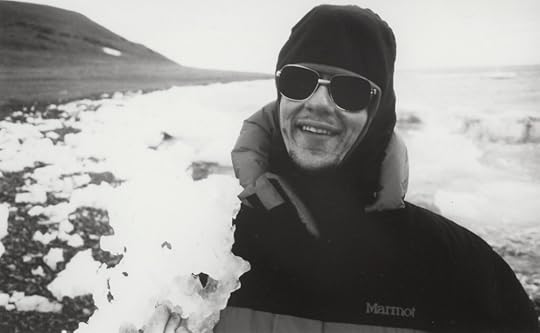
Excerpt from a letter to the Makivik Corporation from William T. Vollmann, found in the appendices to his novel The Rifles:
"I have just completed a book which is partially concerned with the relocation of Inuit families from Inukjuak, Quebec and Pond Inlet, Baffin Island, to Resolute Bay and Grise Fiord in the 1950’s...

...The basic theme of my book is one that you might disagree with as being too gloomy: that non-Inuit are rapidly and irrevocably destroying most Inuit lifeways, leaving in their wake welfare dependency, alcoholism, violence, gasoline sniffing, and an unbridgeable gap between older and younger people, and that within the next 20 years the Canadian Arctic will become so ecologically damaged (by, say, oil spills in Lancaster Sound, mining, bulldozing, etc.) as to finish the job. This is how things seem to me, and obviously I do not want to believe that I am right. In my view the relocation is a typical example of non-Inuits’ wanton disregard of Inuit life and priorities. I would be interested in your thoughts on this. Tell me if there is anything that can be done, anything that you are doing, that has hope of addressing these longterm problems, and if there is anything that my readers (by and large, US and British people of average decency, without much real knowledge of the Inuit) can learn from you, do with you, or help you with. As a US citizen I have a great envy of and respect for your heritage. I go to the Arctic whenever I can, and want nothing better than that it be preserved for itself and for your use…

Yours sincerely,
William T. Vollmann

No reply received"
~~

A reminder that in this dream of the 6th age of Vinland, recounting Franklin’s doomed expedition through the Northwest Passage, wherein time, space, character, and narrator are as slippery as shelf ice and as mercurial as the midnight sun’s play on barren frozen tundra, the meat of the matter is sometimes most fatty in the glossaries. Read every word.

~
Profile Image for Jonathan.
1,009 reviews1,230 followers
March 18, 2014
From interviews with Bill:

"All these worlds that I see and write about are equally real and can coexist, so it’s not like I have to leave my own world in order to inhabit them. That’s my ability, I guess. But this also means that these different worlds are also equally unreal, so I can’t take anything too seriously. None of them take precedence over any others."

"Later on, I began to realize that it’s pretty hard to know yourself, harder still harder to know the other, and what’s hardest of all to know something that is really foreign."

"People would be better off if they realized that their own particular world is not privileged. Everyone’s world is no more and no less important than everyone else’s. To have as many worlds as possible that are invested with interest or meaning is a way of making that point. I’ve gradually begun to see that I can use even my footnotes and glossaries and other sorts of materials to create some of this sense."

"AL: Your novels are attempts to get to know the self, and simultaneously they are about knowing the other.
WTV: It's so hard. Everyone lives in his or her own world. You don't realize how small that world is. You exclude all these people in all these different worlds. They're just these featureless blurs that go on. It takes a lot of effort to get into these other worlds. There's an infinite number of them, so you can never know them all. But at least you can see a few of them."


They are his Dreams of course, though they are his Dreams of a dreaming continent, a dreaming nation. And, because it is his permeable self sleeping on the page, his past, his present and his fluid personality saturate the text. The only honest route to the Marginalised is through the Self. Bill's work stands in opposition to Memoirs of a Geisha, he does not presume to speak for them.

But this can be dangerous for a Reader. Our minds are wired to find the Person in the words, to find the features in the fog and give them prominence above all else. We know Bill was in the Arctic. So, when we meet a Bill, who seems so similar to our imagined Author, we may well presume the autobiographical. This would be a mistake. When one finds reviews of this novel that reference Bill's relationship with Reepah, and his child left up there, we know that the Reader lost his way.

The heart of this novel, as in all the Dreams, is myth, and the kind of truth about ourselves and our history that only myth can provide. The link between the penetration of the North and of the Brown-Skinned-Woman is as old as its enacting. The hard prow of a vessel forcing its way between ice-thighs. And the consequences. Death, dishonour, devastation. The Rifle-as-penis should similarly not need explanation.

In dreams Time moves in eddies, in whirlpools, rapids and tidal waves. It is not linear. It behaves both as particles and as waves. It is both of these and neither. Bill's technique is unique in its ability to reflect this. It is, I think, his genius.

The prose is not always perfect, and he falls foul of a rather naïve Romanticism at times, slipping into evocations of the Woman and of sex which would not be out of place in a (rather experimental, I must admit) Mills&Boon novel. But, when the following pages are so wonderful, we can forgive this, can't we?

I have read all of the four of the seven published so far, and am convinced that this project ranks amongst the greatest and most important of our time. I only hope his publishers recognise this fact and let him bring out the final three in the form he intended.
Profile Image for Jim Elkins.
361 reviews455 followers
Read
June 1, 2022
Writing with no distance from your subject

In the last couple of years I've read a fair number of Arctic and Antarctic stories, including Christoph Ransmayr's well-reviewed 'Terrors of Ice and Darkness.' My wager is that many will fade away before this one.

This one is simple, although it's not clear from some other reviews here or on Amazon. Vollmann really put his heart into this: he lived in the North (he fell in love there, and he may even have fathered a child there), and he subjected himself to brutal conditions near the North Magnetic Pole. The result is naked writing: there is no comforting sense of traditional heroism, no stage machinery of clearly predestined tragedy, no armchair respinning of dusty tales from yesteryear, no recondite reporting from the archives (as in Ransmayr's book). This reminded me, in a different register, of Peter Matthiessen's 'Far Tortuga.' They are both naked: reading is like looking at the author's skin.

Vollmann's drawings are hokey and childish, his persona is often over the top, his theories about rifles are as heartfelt as they are slippery and abstract, his conceits about time are artificial and distracting, his sense of form is entirely undependable (the book could have been 5,000 pages, or 50, and it ends with a funny fizzle), but his emotions can have a sometimes unbearable strength and his distance from his subject is subatomic.

A tremendous achievement. It puts the other arctic books on lounge chairs in a tropical resort.
Profile Image for Wes Allen.
61 reviews70 followers
January 31, 2022
Review to come, hopefully. Vollmann's Seven Dreams project is hugely ambitious.

Vollmann in the Arctic

Bill Vollmann’s The Rifles is a compelling mesh of history and fiction, executed with the acumen of a master. And, since we’re dealing with Vollmann, after all, there remains a patina of the autobiographical throughout, adding a dose of realism often absent from historical fiction.

John Franklin and his fourth expedition into the Arctic constitute the historical focal point of The Rifles. His goal was to forge a northwest passage through the tundra wastes of Canada; ultimately it ended in sickness, cannibalism and death. In the (more) modern era, the lens shifts to Capt. Subzero, who is an ersatz Bill Vollmann. He, too, spends time in the Canadian Arctic, making attempts to befriend the Inuk people there—many are interested in him, but most maintain a stand-offish position. Capt. SZ does, however, manage to hook one Inuk lass by the name of Reepah, who is deeply troubled and depressed.

The two primary timelines do not remain disparate for long, beginning to merge noticeably somewhere around p 110 (perhaps earlier if you’re a sharper reader than I). Throughout The Rifles, there is an opaque dialectic between Franklin and Subzero. Vollmann writes that this cosmic link makes Franklin and SZ “grave twins.” In many ways, they are the same: Both have an insatiable desire to explore/conquer; they lack a healthy fear of the elements; and both men take Inuk mistresses. In their travels, Franklin and Subzero assert themselves as subjects, appropriating the world around them in an effort to consume it: they are sovereign. Throughout The Rifles, there are numerous pairings between Franklin’s men and acquaintances of Subzero; some are obvious and others deeply hidden.

One of the more difficult connections to draw is Reepah’s—she constitutes another link in the Franklin/Subzero pairing. She is the third grave twin (grave triplet?). Reepah is perhaps the strongest character in the novel: Her despair is visceral, but pathetic. “I want to go to hell,” she says on p. 79. She tenaciously grips her childlike Christian faith, but also realizes she is living outside of traditional moral precepts. After all, her child was born out of wedlock, and now she sleeps around with Captain Subzero, dilettante adventurer. Straddling the fence between what she believes and her own powerful desires, Reepah is miserable. Her conflicted position in the novel never changes. Later it is implied that she has died, presumably a suicide.

“Life is a terminal disease,” remarks Capt. Subzero wryly (260). Indeed, The Rifles is rife with death, but it is also concerned with the struggles of the living. A less explored, but present theme of the book is the relocation of the Canadian Indians, against their wishes, by the government. This relocation to Resolute (now Nunavut) occurred in the 1950s. While this move by the Canadian government has elicited mixed responses over the years, it does smack of the authoritarian—pushing the Inuit into the far reaches of the continent in an effort to claim land—presence equated to ownership.

These dismal themes make Vollmann wonder: Is this continent getting worse (132)? And does knowing one way or the other matter? If this deterioration—this decline—is happening, what are its causes? These questions are posited, but left unanswered for the reader to puzzle over at his leisure. One correlation could feasibly be drawn: As guns have become more developed, the state of affairs for the Inuk people has worsened. In this novel, rifles almost always “speak”; they are alive, sentient. In the back of The Rifles, there is a detailed timeline which uses gun development as its benchmark. As time passes, food sources are depleted and people groups are dominated. Of course, one could rebut that these are but the sins of humanity and have nothing to do with firearms. An argument can be made for either side.

Leaving aside the themes of the book, The Rifles is unequivocally good writing. Vollmann’s ability to research a topic and skillfully synthesize all the information is astounding; it is a gift not widely spread among writers. He is both technically impressive and empathetic—certainly not a cold man (though anyone would be cold at -30 degrees). This is my fifth foray into his prolific output, but only the first of The Seven Dreams. I look ahead with anticipation to the others.
Profile Image for Cody.
992 reviews302 followers
July 12, 2017
Allow me to lose whatever credibility or goodwill you may have for me...

Of WTV's nearly countless iterations and interests (full-length novels, connected shorts collections, photography, ethnography, essaying, poetry, journalism...), the one that holds the least interest to me is the Seven Dreams project. I know it's because I'm a killjoy and am supernaturally averse to historical fiction—trust me, I get it. And it's not as though the few that I've read haven't worked and worked well for me. I've just always found myself drawn to his other pursuits instead. If this makes me a bad fan, at least I'm an honest one.

So it is with an entire face-full of snowpack and sans eyebrows that I report back from the magnetic north pole that, hot shit damn, The Rifles was amazing. Just goes to show how misguided most preconceptions are. While the first entry took more than half the book to grab me, this was absolutely superb from word one.

I see that some people—I'll call them motherfuckers—have an issue with the Captain Subzero sections. Hmmmm. Considering that its page-count is at the very least the equal of all the historical jazz— which, to me, interstitially pops up to remind us that we're aboard a ghost ship in the pack-ice and going nowhere but to cook up a First Mate and not much more—that means you took issue with more or less half of the book. To which I ask, are you just being difficult? Those sections soar! They're the very reason we Vollmann fellatists elect him to mythopoeic Hero status.

The centerpiece here, undoubtedly, is Bill famously almost freezing to death at the pole; misguided, under-prepared, and just fucked a half-dozen ways to the day after Saturday. The whole section is in the clutch of his most bracing work and puts an asshole like Bear Grylls to shame. Not shabby for a twerpy writer from the Bay Area. I hope the remaining books in the series are on par with this because, if so, what an achievement we will have witnessed. Maybe historical fiction doesn't have to be terrible, just ladled from the pot of WTV's polyglot gumbo.

***
SOME THING'S NEED TO BE SAID

A GR friend commented to me yesterday that "Vollmann can't write." Whatever. Apparently I spent a few hours looking at squiggles. I woulda swore I saw writing. This binary value system—this person can/this person can't write—is complete and utter bullshit, especially here behind the wi-fi wall of anonymity. And it's not as if my friend is alone in this or not a fan of WTV. Hell, it's not as though he's even wrong. It's that there continues to be a pernicious streak on Goodreads that has been exponentially worsening over the last months that has people attacking others for expressing their opinion. And it's ALL opinion. And fuck is it exhausting. I get it: x has the biggest ____ because they have read ____ in the original ____ while studying at ____ with _____ as their _____. Fantastic. I still don't give a shit. Or, x understands a work better than others because they have lived it, been there, or, my personal favorite, have mental issues. Well welcome to the fucking club! The more friends I meet on here, the more I recognize the correlation between our similar reading habits and mental disorders. Which is to say, don't be an asshole solely because you think your pain is original. Everyone's pain is original to them. Plus, I'm right there with you, as are likely more than half of your friend's list; in the trenches of pharmacopeia, chemical imbalance, anxiety, depression, phobia, hoodoo, and all-around bad mumbo jumbo.

ALL of which is to say this: if we recognize that we're in varying levels of mental anguish and recognize that the world is a big ball of scary, why be mean to one another and just make life all that much harder? I bow out. If I've been a cock to you in the past, I'm sorry. If you're reading this, chances are that you are an amazing human who has added to the net sum of my joy. Thank you. You are all diamonds. Be good to one another. Sorry for testifying.

(PS: I'm doing great; don't read too much into this! Just something that's kept me away a lot lately that, aired, I feel a load lifted off my chest. Someone put on a record, someone come and dance with me. I'm singing "My Way.")
Profile Image for sigurd.
207 reviews33 followers
Read
November 20, 2018
Sono stato l'unica persona in Italia ad averlo in anteprima nazionale... Me lo hanno giurato al Pisa book festival quelli di minimum fax... compralo che sarai l'unico... per 10 giorni ho tenuto in mano questo libro solo io... tze'. Vanità delle vanità, tutto è vanità. #crediamoci
Profile Image for Neal Adolph.
146 reviews106 followers
November 25, 2015
William T. Vollmann’s name sounds serious, laden with that extra weight provided by a great germanic name. It’s that second ‘n’, right at the very end, a bit of a surprise for the reader who thinks that one suffices but discovers that they are wrong and that his name, like his identity, would be incomplete without that dual duals in his family name, the one dual in his given name, and that T, like some cross between two great names, the point where they meet, the hint of some great mystery. What could it be the start of? What middle name could fit between these two heavy titles and seem like it deserved to be there?

There are great many mystery’s in Vollmann’s The Rifles as well, and, like his name, this fascinating novel is serious. Perhaps this was the novel that his family tree meant for him to write, or perhaps this is only one of the many novels, written in this style, this approach, that his special name gives him special powers to write in a special way.

It is a story of two very different but alarmingly similar Franklins. The one is Franklin of the famous ill-fated arctic explorer who attempted to find the Northwest Passage and died on the sheets of wintry ice which covered the Canadian Arctic for much of the year in the middle nineteenth century. It is a story of a brave man, to say the least. The second is a second Franklin - a fictional character who lives in New York but has many of the same features as the first. A wife named Jane, an Inuit woman who he falls in love with and attempts to bring home, much to Jane’s disdain. His name is also Subzero for some playful reason, which speaks, in many ways, to the trivial ways in which many people understand life in the Arctic. And there is a third character, the narrator, William the Blind, who may actually be Subzero and who may actually be a separate character, it isn’t easy to tell, but he certainly is a character, even if he is only a narrator.

Vollmann uses these Franklins and his William to look at how little our understanding of the Arctic has changed over the past 150 years, to explore the continuity despite the life-altering changes that have characterized a region that is increasingly globalized, increasingly dependent, increasingly challenged by climate change, increasingly modern, increasingly addicted to rifles and processed foods. It is a complex project, and Vollmann’s goals are plenty, but it is clear by the end that his efforts focus most clearly on the destruction of a massive, sustainable, sophisticated culture by the silly efforts of white men. But this is a big project - one which historians of colonialism have been undertaking for centuries and, with a great deal more fervour, at least four decades. And it is multifaceted in many remarkable ways.

Vollmann recognizes that the heart of the process is irreversible historical change, like the introduction of a thing like The Rifle, or the arrival of boat and it’s people to the land of the Inuit, or the forced relocation of dozens from their ancestral lands to another, more barren, unfamiliar land. Irreversible historical change, it seems. But it isn’t without agency - it is change for a purpose, largely manipulative in nature. Somebody has something to gain. The white man has something to gain and has made it so that the Inuit has everything to lose which they have no already lost. Vollmann seems to understand essential violence in history and the present.

He also understands that the destruction of a culture is much broader in shape than we give it credit, and is a project that requires a good deal of accidental fortune. It is one which is singularly violent to women. It attacks tradition, seeks to alter it benignly and slowly in micro-transactions of human behaviour. It changes land, changes buildings, changes transportation. It alters food stuffs, collapses entire branches of language trees, challenges traditional hierarchies. It makes the environment seem like an enemy and modernity seem like a necessary evil. The destruction of a culture, a process that takes generations and generations, is a project run by many people with many different goals, and at its heart is manipulation and extraction.

Vollmann, though, with his second ‘n’ powering his seriousness, doesn’t always communicate this all that well, and one wonders if he gets caught up in some of his writing techniques a bit more than he gets caught up in how clearly he is communicating these incredibly complex ideas. Of course, I’m not saying that he is a bad writer - quite the opposite. I was struck by how easily so much of this read, how swiftly his often beautiful sentences flowed and caught the imagery of the far north. But for a writer like Vollmann it is clear that technical mastery is just as important as the ideas he is trying to show off. And certainly there is a mastery here of many techniques. Stream of consciousness, multiple consciousness, timeshifts and flows and movements. It is all, appropriately, rather like a dream. It is perhaps the most ambitious novel I’ve read in quite some time.

But there is one element that never quite sat well with me, and that is Reepah. You see, she is a love interest of Subzero - the Inuit woman that she brings down to New York - and she seems like a character rather than a person, just as Subzero at times seems like a character rather than a person. It is interesting. A transition from the idea of the noble savage from the 19th century transferred to the presentation of the addicted First Nations of the 20th. It isn’t flattering to either Vollmann or the Franklins or (for that matter) Reepah, and you never get the sense that you are working with a serious, full body of characters.

Perhaps that is the point, though. Again, this is in a series called Seven Dreams, and maybe the looseness of the characters (the Old Franklin being nothing more than a silly, self-important explore, the New Franklin being nothing more than a silly, self-important bleeding heart) is part of that, filling in with the looseness of the time shifts and the place shifts (the far north all looks the same, no? regardless of when and where and how you are there?) but never giving any more than looseness, vagueness, beautiful haziness in a blizzard of time and ideas and consciousness. And certainly none of these characters are made out to be heroes or villains, just perhaps variations of an innocent. I’ll give Vollmann the benefit of the doubt.

Early into the pages of this book I was thinking that this was the best Canadian novel not written by a Canadian that I’ve read, and ranked up there with many of those which are written by Canadians. I think I still stand with that assessment. It is an ambitious work, and it doesn’t always do what it wants to do, but I think it is worth noting how it does and when it does, and admiring its beauty in between.

And do read the footnotes. There are some alarming revelations in there worth every bit of the effort of pushing forward after the conclusion of the Sixth Dream.
Profile Image for Griffin Alexander.
218 reviews
January 22, 2016
My first of WTV's Seven Dreams. This book made me feel physically cold—it impressed, upset, and transfixed me (I dreamt of reading this book every night after putting it down). The moments of deep emotional weight here occupy instances of slippage between time and/or character—through reincarnation that works both ways, intense lead poisoning, extreme exposure to cold coupled with privation, or all of the above. This aspect of hallucination ultimately impressed me most: the hallucination of human dream as history, of human history as dream, all within the uncaring and unyielding world frozen solid. Unrelentingly real, unforgiving, and there is still something of compassion here, beneath the ice.
Profile Image for Kevin Adams.
476 reviews143 followers
March 20, 2022
A million ⭐️ is more like it. I don’t have a ton to say about this but a few measly remarks. When the Seven Dreams is completed I’m pretty sure it will be the greatest piece of literature ever created. Seriously, I know it sounds crazy but those that have read thus far might agree. He is truly unlike any other writer in the world (that I at least know of). His mind. His words. His bravery to tackle these subjects is incredible. I honestly would pick the 5 for a desert island trip (and, if 4 and 7 have been completed). That’s all. If you ain’t heard of or read WTV, please start. You’ll be better for it.
Profile Image for Travis Meyer.
49 reviews32 followers
February 1, 2022
I've been wanting to read William T. Vollmann for quite some time. Years ago, I had tried reading his National Book Award winning 'Europe Central' but quickly got overwhelmed and set it aside. I've made clear more than once on various social media platforms how I am simply now a much better reader. I suppose what I mean by this is that I read with more persistence, insistence and passion! Vollmann's books are not easy to track down where I live, but I was lucky enough to stumble upon a hardcover copy of 'The Rifles' at a thrift store, where no doubt a gigantic smile and audible giggle came over me as I picked it up for a whopping dollar!

While his work no doubt remains intimidating, I thought his erudite and ambitious Seven Dreams project was as good a place to start as any, and this book certainly did not disappoint. To me, this is historical fiction at its finest. Vollmann blends very effectively fiction, fact and fantasy into a novel that immerses the reader into the cold, frozen Canadian Arctic. Again, I'm not here to rehash the plot, but rather briefly communicate my experience with the hopes that you will overcome any potential reluctance you might have in exploring this man's work. It was un utterly unique reading experience, complemented by occasional sketches, charts and maps. It also contains a very useful glossary and timeline, as well as Vollmann's own correspondence with members of the Canadian government with respect to the very real relocation program of the 1950's, which saw various Inuit peoples forcibly relocated from northern Quebec to frigid locales further north where they endured hardship and trauma. It was incredibly interesting reading about this real history and Vollmann's tactful and endearing approach to attempting to get to the bottom of it all.

The book often shifts in time from present(ish) day to the trials and tribulations of Sir John Franklin, who is a 'grave brother' of the main character, who may or may not also be meant to represent Vollmann himself. The only knock I would put on this book is that for me the descriptions of the scenery and landscapes became a little bit repetitive and muddled at times, but the fact that Vollmann, with his journalistic nature, completely, and I mean completely, immersed himself in the actual setting of this book made me enjoy it that much more. The guy is immensely talented. The sections dealing with Franklin's expeditions were totally riveting and absorbing. I was also really impressed with his ability to write tenderly and poignantly, since this is also a love story that transcends time and space.

It was so so good, and what Vollmann is doing with this Seven Dreams series is truly impressive. I'm all in for it, and I've since been able to pick up a copy of Argall (the third Dream) and I very much look forward to exploring this truly original and breathtaking writing project. Bravo W.T.V!
Highly recommended.
Profile Image for Ploppy.
43 reviews32 followers
November 1, 2021
A spectacularly uneven book. Often presented as a retelling of John Franklin's doomed 4th expedition to the Arctic in search of the ever-elusive Northwest Passage, much of the novel (and by much I mean at least half) is concerned with a certain Captain Subzero, a brilliant name as he spends a lot of time in temperatures below zero and is also a bit of a loser. He is also an alter ego of the author, wandering around the Arctic in search of something without being quite sure what, and hooking up with an Inuit woman called Reepah. One of the best sections and probably the most autobiographical is the 40 pages devoted to his 15 days spent on an isolated base, where he faces extreme cold. The whole thing is told in magnificently self-deprecatory fashion, and he gives the (long) list of equipment used in an appendix.

So how does Vollmann tie all this together? Well, this is where things get a little tricky. He presents Subzero as some sort of reincarnation of Franklin, the two timelines and two persons often merge, as they are both apparently obsessed with this Inuit woman called Reepah, who is more of a metaphor for something or other than an actual character to me. Many pages are devoted to Subzero's relation with Reepah and these sequences are either faintly creepy or sickly-sweet. Reepah comes off as not particularly bright and very temperamental. It's one of those annoying cases where a character is obsessed with another character but you never understand why, other than the fact that she has beautiful breasts or something. Maybe this is a conscious indictment of the Western male fantasy of the Exotic Other, but I'm not entirely sure. Perhaps she is the embodiment of the Arctic, in a fusion of geographical landscape and traditional culture, expressing how the former remained elusive to 19th century explorers and the latter elusive to contemporary Westerners (and even contemporary locals).
Vollmann also spends a lot of time describing the Arctic landscape, but he has trouble finding new ways to describe it. So you get a lot of orange and pink mixing together and blue-gray icebergs and clouds that look like something or other.

Aside from these quibbles, the depiction of the John Franklin expedition is brilliantly done, the characters are well drawn, with their little squabbles and jealousies, their unwavering hope or gradual apprehension. The sequences with Subzero where Reepah isn't present, where he spends time talking to locals and - rather pathetically - trying and half-managing to befriend them, are also interesting.

All in all, an uneven achievement but still worth reading. I much preferred The Ice-Shirt though, and especially Fathers and Crows which is a fucking masterpiece.
Profile Image for Jim.
420 reviews288 followers
June 14, 2015
This is the fourth book I've read from Vollmann's Seven Dreams series, and for me, it was the easiest to follow, despite the twinning and tripling of characters, times, and places - often within the same paragraph.

Modern day Captain Subzero is exploring the same territory - geographic and gynecologic - as the 19th-century British Arctic explorer, John Franklin. Metaphorically, and possibly metempsychotically, Franklin and Subzero are pursuing the same woman, Reepah, but in different time-spaces. It is, after all, a dream, but in this volume, Vollmann's shape-shifting, time-travelling characters are conceived and written very effectively. What should have been completely confusing, somehow holds together very well, and I found myself turning the pages much faster than I usually do with Vollmann's novels.

Big thumbs up!
Profile Image for Jonfaith.
2,146 reviews1,748 followers
July 9, 2011
Much like Vollmann's earliest works, there is a hefty ick factor in The Rifles surrounding his advances on an Eskimo woman. That plot recedes and is supplanted by an account of his time camping above the Arctic Circle and a historical recreation of the doomed Franklin expedition, the latter is deftly paced situated: an absurdist comedy of manners. There is a curious essay iwthin about the advances of firearms, which I found intriguing but ultimately disparate.
Profile Image for Doubledf99.99.
205 reviews95 followers
December 2, 2017
This book is part history about Franklin's last Expedition to discover the Northwest Passage and his demise, and part travelogue on Vollmann's wanderings and camping in the Arctic. I enjoyed reading Vollmann's Arctic trip, the people he met and stayed with, what to take, what equipment works good and not so good. At the back of the book he includes a packing list of items along with some other good information.
Profile Image for David M.
477 reviews376 followers
December 26, 2015
"He knew that cold was only a negation, not a substance, but what sharp teeth it had" - pp 288 (growing up in a city where it would regularly fall below zero for weeks at a time, you were never in danger, but there's a sense of active persecution, forced confinement; the cold is death; Eros and Thanatos, vollmann certainly pays tribute)
Profile Image for AB.
220 reviews5 followers
August 29, 2021
Is lead truly at the root of our problems? It scarcely matters to me whether I talk about the effects of repeating rifles on the Inuit or the effects of tin cans on the Englishmen.

My third volume in the Seven Dreams series and I think it just might be my favorite (so far). It felt like a change from The Ice-Shirt and Fathers and Crows. I felt that the narrative was more daring and interesting (although I loved Fathers and Crows narrative style). Timelines are muddled together with the main characters, 19th century John Franklin and 20th century Subzero, blurring together into the same character and the same timeline. The narrative of Franklins doomed expedition would feature brief interjections about Franklins ‘second life’ as Subzero or vice-versa.

At its core, the lead of the preserved food slowly poisons Franklin and his men as it is also poisoning the way of life of the Inuit. Vollmann focuses on the destruction of Inuit lifestyles, tracing the issue to what he believes is its source: rifles. Out of all the books I have read from this series, the present-day implications of the conflicts Vollmann focus on has a real presence. Franklin really serves as just the root of what later is so harmful: be it disease, over hunting, forced relocation etc. The whole book is given this air of tragedy.

I would highly recommend The Rifles.

Profile Image for Dillon Strange.
31 reviews
February 10, 2010
This is the book that has sparked my current William Vollmann obsession. This guy gets a bad rap for being "difficult" but I found this book to be really accessible. It is book 6 in his 7 dreams series that explores the history of the exploitation of native north american people, in this case the Inuit or eskimos, by colonization. If that sounds like a downer to you, it's because it totally is, but Vollmann pulls this off by writing a book unlike any other I had ever read. The story is partly the retelling of the Franklin Expedition, a failed British attempt to find the NorthWest Passage that ended in cannibalism and madness, and his own personal trips to the extreme Canadian north. So essentially you get a memoir travel story mixed together with a history story. It starts getting weird (and really badass) when Vollmann's character named in the book Captain Subzero and Captain Franklin start to switch places. This leads to all sorts of surreal passages where time and history are completely irrelevant. Highly recommend! I'm totally stoked becase he's written tons of books and they are all huge. I'm gonna read all of them bitches!!
Profile Image for Jordan.
Author 10 books29 followers
October 27, 2010
Vollmann does it again with this amazing ride into the Arctic and into the past. North America's history and landscapes are laid bare in this series of seven books/dreams (not yet finished) and this volume is unique and as amazing as the others. It reads beautifully, all the landscape work and meta-textual blending of time and characters as they all experience the same landscapes and the harshness it brings. Sad and pathetic what befalls relocated Inuit by the Canadian government as well as what befalls the doomed Franklin Expedition in its search for a northwestern passage.
Profile Image for Levi.
203 reviews34 followers
December 1, 2020
3.5* but not out of apathy or indecisiveness. Quite the opposite!

I don’t really love historical fiction so it is a bit of a wonder that my caprice lured me towards one of the volumes in Vollmann’s Seven Dreams Series.

But alas. I’d been meaning to read Vollmann for a while, and I’ve been collecting as many of his books as is possible, motivated by their scarcity (“rare” is a wholly accurate term if a person is going to limit their search to local bookshelves).

Perhaps contrary to popular opinion, I found the sections on John Franklin quite boring here (again, historical fiction isn’t really my jam, especially when the history is >150ish years ago). This is an odd opinion to have about a book that is advertised as being about John Franklin’s famous journey Northward, I realize. But, lucky for me, this book is just as much about Franklin as it is Vollmann (or some Ship-of-Theseus-like version of Vollmann). And these sections about Vollmann (“Captain Subzero”) are, I think, fantastic. Captivating is, perhaps, the word. Vollmann is overflowing with empathy, and his skill set is perfectly suited for empathizing with captial-O Others. And this, I think, is was what drew me to Vollmann in the first place: his prostitutes and neonazis and freighthoppers and vagrants and runners and hiders and fighters and seekers and all those who have a story but lack a voice. And when Vollmann finally recounts the time “Subzero” almost froze to his death, the reader can’t help but feel that the best stories are the ones that are lived, not told.

Also, the quality of this physical book is very impressive. Vollmann’s drawings (I’m assuming they’re Vollmann’s drawings), the typographic symbols, the lists and glossaries and all the other printed details create the impression (alongside Vollmann’s writing too, of course) of something very thoughtfully made.
Profile Image for Alexander Weber.
276 reviews55 followers
May 24, 2017
I'm falling in love with William the Blind. So far I have only read the abridged version of Rising Up and Rising Down (4/5 stars) and The Atlas (4.5/5 stars). I really loved The Atlas, as I felt there was real beauty and true human loneliness dripping from that book. Vollmann actually manages to get you to share a deep human emotion, which is all too rare. He just comes off as so honest and sincere...and oh so lonely.

The Rifles is the best of the three, sharing features from both. It is part historical novel about the Franklin Expeditions, part historical account of the (in Vollmann's opinion) forced migration of people from a region in northern Quebec to Resolute Bay...where they then experienced sexual and physical abuse, and forced labour, and humiliation, and what I can only surmise and part fiction party autobiography of the narrator's love (?) affair with an Inuit woman named Reepah. There is also a beautiful chapter about Vollmann's attempt to camp up at the Magnetic North Pole...which ends in disaster.

The book manages to tell these stories in a post-modern way, with Franklin becoming Captain Subzero (the narrator) and Cpt Subzero becoming Franklin, Subzero's wife becoming Miss Jane Franklin and vice versa... all the while exploring the history of rifles and how they changed Inuit culture (along with European and colonial influence), the transformation of Reepah into the Inuit goddess Sedna, and so much more.

The novels begins with:
“The gravel- ridges were endless, they were all around you like the waves of that Arctic ocean that you had tried to reach; now you were in the middle of it and there was nothing else but its rising falling insidiousness; nevertheless you insisted on following your stream to its origin; you were determined to come to someplace definite …. And you went over another little rise and there was a lake whose waters rippled black and blue and orange and silver, and there was a jet-black ridge behind it topped with blue clouds, and the lake went on and on and on and there was another lake behind it and streams ran out of that lake in all directions and at last you understood that the river you had followed had no one source; that these lakes were from permafrost melt; the whole island was permafrost; when you were on the island you were in a world of rivers that came from everywhere.”

from enotes.com:
"This novel is volume six of Vollmann’s ambitious series entitled SEVEN DREAMS: A BOOK OF NORTH AMERICAN LANDSCAPES. The first and second segments, THE ICE-SHIRT (1990) and FATHERS AND CROWS (1992), have also been published. THE ICE-SHIRT deals with Norse landings in Greenland in the year 981 and the Norsemen’s subsequent interaction with the native Inuit population. FATHERS AND CROWS recounts in exhaustive detail the sixteenth century French settlement of present-day southeastern Canada and the European-Indian conflicts over two centuries.

Proficient in history, with well-developed side interests in anthropology and sociology, William Vollmann focuses here on the forced 1950’s Inuit relocation by the Canadian government to regions north of the Arctic Circle. His focus is especially on the small group relocated near the physically daunting Resolute Bay where his sometimes autobiographical protagonist, Captain Subzero, first meets Reepah, a twenty-four-year-old Inuit, whom he impregnates.

Throughout the novel, the protagonist shares a second, almost doppelganger, identity with John Franklin, the Arctic explorer, who roved widely in the area where the novel is set and whose fourth and final voyage in quest of the Northwest Passage proved fatal. Vollmann concocts a fictional Reepah who supposedly was Franklin’s paramour, a supposition lacking historical validity, as Vollmann freely admits.

In this work, Vollmann moves toward creating a new fictional genre, doing so impressively. The novel and the larger work of which it is a part are massive undertakings that hold considerable literary promise."
Profile Image for Rachel C..
2,055 reviews4 followers
March 12, 2018
Alex was the first of my guy friends to complete my International Women's Day challenge and this is the book he wanted me to read in exchange.

The evocation of the Arctic is very detailed and visceral, both the beauty and the harshness of the environment. I've read a few other things about the Arctic and the human stories are among the most memorable and horrifying I have ever encountered. This is a fairly tame example from the book: "Hood remembered a pair of new shoes his father had given him for his seventh birthday, the leather soft and supple, and he began to weep because he could not have those shoes to eat. He tried not to consider other food; even fantasies of an ordinary dinner were too rich for him."

As evinced by the quote, Vollmann is really amazing at getting inside the heads of these historical men and recreating what such a doomed trip might have felt like while in progress.

There is also, intermittently, a heartbreaking and shameful story of the Inuit who were forcibly relocated by the Canadian government to a harsh and isolated Arctic outpost, then further victimized by the RCMP once there. Once again, Vollmann has a spare but impactful way of describing the atrocities. I say intermittent because this story takes up about 10-15% of the page count.

The balance is taken up with the author's own fumbling Arctic trip, his fantasies about the lost Franklin expedition from the 1840s*, and his encounters with an Inuit woman named Reepah. Which brings me to my biggest problem with this book: the portrayal of women. It's deeply problematic. (Practically the calling card of the Po-Mo White Guy.)

To start with, Reepah and Jane Franklin basically only ever show up in the context of providing sex or emotional comfort to the men. It's extra creepy that, after taking advantage of a deaf Inuit woman himself, Vollmann then creates an avatar of Reepah in Franklin's time so that she can be victimized by him as well. I mean, what the hell? Is this some sort of meta admission of white guilt?

The whole thing culminates with an unnamed Arctic wanderer dreaming about literally cannibalizing women: "How could he stay alive? By eating meat. If Jane were lying dead here he would cheerfully eat her fatty breasts. ... The best steaks were marbled with [fat]. A girl with a good figure was a girl with fat in the right places."

CREEPY.
CREEPY.


[*bringing home to me how much exploration was driven by male hubris]
Profile Image for James Murphy.
982 reviews26 followers
April 5, 2010
This is the Sixth Dream in Vollmann's ongoing series called Seven Dreams: A Book of North American Landscapes in which he recounts the history of European contact with aboriginal Americans. The Rifles concerns contact with the Inuit, both by the doomed Franklin expedition of the 1840s and by a modern day reincarnation of Franklin called Captain Subzero who visits a settlement on Baffin Island, in the Arctic. I'd read Wanting by Richard Flanagan several months ago. It included John Franklin as a character. Because that novel sparked my interest I'd particularly looked forward to The Rifles, so my lukewarm appreciation of it is a little disappointing. Taken separately, the Franklin story of icebound ships and starvation and the Subzero story of falling in love with an Inuit woman named Reepah are engaging. The novel's confusing, however, because the characters of the Victorian Franklin and the modern Subzero impinge upon one another. The characters blur together at times during the novel. Because the shifting between the characters is often even within the same paragraph, it's difficult to keep sorted out. And to my mind doesn't strengthen the novel. The effect does reinforce the idea of dreaming, a major theme of Vollmann's series. Dreaming is also a frame of mind for men under stress in the harsh conditions of a landscape made up of frozen seas, wind and rocky, barren shores. However, I thought the novel worked best when the atmosphere was less the thin ice of dreams and more the solid crags of the islands dotting that landscape. For that reason I liked it less overall than the other completed novels in the series.
Profile Image for stew.
42 reviews7 followers
May 21, 2008
Vollmann raids the survival couture closet, grabs his Mossberg 12 GA. and heads to the magnetic north pole. While trying to keep from freezing to death he manages to hook up with an unstable eskimo girl and write brilliant, penetrative prose about his surroundings, the people that inhabit the surroundings, and the people that discovered and/or set out in age old expeditions to said surroundings. I haven't read Argall yet, but at this point, this is my favorite of the Seven Dreams Series. A classic.
Profile Image for Sean.
1,145 reviews29 followers
November 13, 2014
Another dreamy, sad, surreal slice of history from Vollmann. Much like The Ice Shirt, something of a sequel, as Vollmann says. Not as powerful as Fathers And Crows or Argall, but still I liked it. Much more of Vollmann's own adventures in this one, as he becomes the reincarnation of Franklin, who died on his attempt to find the northwest passage. Sort of. Possibly Franklin is the reincarnation of Vollmann, and the woman Vollmann falls for his is own northest passage. It's a bit strange, is what it is. Good, though. Who else writes anything like this?
Profile Image for Tyrone_Slothrop (ex-MB).
843 reviews113 followers
July 18, 2025
Siamo tutti John Franklin


Ultima (solo in un senso cronologico rispetto alle vicende storiche) opera dei ciclo dei "Sette Sogni" (ancora incompleta) che Vollmann ha dedicato ai complessi rapporti tra colonizzatori e nativi in Nord America, questo titolo si occupa della celeberrima "spedizione perduta" di John Franklin del 1845-1848.

Come in tutti i testi di Vollmann, questo evento storico (seppur analizzato e commentato con rigore storico e precisione filologica) è in realtà solo uno strumento per creare
una «storia simbolica», ovverossia un racconto di origini e metamorfosi che spesso è falso,

In questo viaggio, Vollmann vuole indagare lo spazio onirico, simbolico, esistenziale e filosofico dell'America e delle Armi che l'hanno creata e sostenuta (e che sono, innegabilmente, uno dei pilastri dell'identità e del concetto stesso di quella nazione)

le asce di ferro erano state quasi decisive a Vinland e gli archibugi avevano prevalso in Kebec, che ruolo avevano avuto i fucili qui ?

"Qui" sono gli immensi spazi del Canada subartico, le isole sperdute e inospitali dove gli equipaggi dell'Erebus e del Terror hanno trovato una morte tragica ed agghiacciante, gli insediamenti sperduti dove gli inuit sono stati trasferiti a forza dal governo canadese negli anni '50, le basi abbandonate oltre il Circolo Polare Artico dove Vollmann è andato a vivere per giorni, solo ed al limite della sopravvivenza.

E Vollmann mescola tutto, rompendo i limiti di identità dei personaggi e le costrizioni di una "trama narrativa": ne risulta un indefinito e onirico testo sulla spedizione Franklin condita da simbolismi nebbiosi: rapporti dolorosi e irrisolti tra uomo bianco e inuit, tra un personaggio chiamato Sottozero (che è sia l'autore, sia John Franklin) e Rippah, una ragazza inuit ma forse anche una divinità simbolica.

In tutto il libro i tempi si mescolano e i personaggi si confondono, in un vertiginoso e scatenato intreccio di identità, dimensioni temporali e simbolismi. A cui si accompagnano parti di estrema complessita' in cui si descrivono deliri, allucinazioni e sogni: una unione di saturnismi (dei marinai intossicati dal piombo) e sciamanesimi (la cultura atavica degli inuit)

Certo neanche Franklin, che sarei io, ha mai pensato in questi termini.

problema di Reepah – che ovviamente esisteva solo nella misura in cui sir John era Sottozero; misura in cui sir John era appunto fuori dalla portata di sir James – una creatura di tutt’altra specie, di un’epoca diversa! – tuttavia lei esisteva, e quindi il suo amico sir John non era più soltanto sir John.

lei esisteva, e quindi il suo amico sir John non era più soltanto sir John. Aiutarlo a tornare alle latitudini di Reepah non era altro che complicità con l’adulterio e i viaggi nel tempo

avrebbe lasciato in uno stato ontologico equivalente; no, tu volevi possedere altre personalità per poter essere io e l’altro. Avendo tripartito la tua natura

E Vollmann sa anche giocare con i lettori, in rapidi e gustosi accenti metaletterari che rendono la lettura godibilissima (sempre che il lettore sia disposto a questi vertiginosi salti letterari)

non capite cosa c’entri Reepah con questa storia; volete veder morire il signor Franklin; vi accontenterò (mi conoscete), ma non adesso, perché non siamo armati di tutto

Non si tratta, ovviamente, di un gioco letterario fine a se stesso, ma di una complessa azione artistica che ha obiettivi alti e complessi: stimolare riflessioni sulla Storia che si alzino a livelli esistenziali e filosofici.
La discussione di Vollmann è stratificata e tocca più livelli contemporaneamente:
- Tema di primo livello: la distruzione dell'autonomia Inuit attraverso le armi dei bianchi.
- secondo livello : violenza e armi come simbolo concettuale della conquista bianca in America: forse inevitabili ed irrinunciabili
- Terzo Livello : sogni, segni, simboli che attraversano il tempo che possono creare letteratura che può divenire perfino profetica, ma probabilmente rimane inutile nell'incapacità di agire sul reale

[gli inuit] dipendono interamente dagli europei per i mezzi che assicurano la loro sussistenza, poiché hanno bisogno dei fucili e di una fornitura costante di polvere da sparo e munizioni... Ditemi voi se non è un cattivo segno. Ma serve a qualcosa riconoscere un cattivo segno?

Non solo vogliamo quel che non possiamo avere, vogliamo anche quello che non dovremmo avere. E lo otterremo, non importa come.

Non ci sono soluzioni semplici, non ci sono conclusioni edificanti: con i fucili i bianchi hanno distrutto la cultura inuit, con i fucili hanno conquistato spazi immensi, ma gli stessi fucili non hanno salvato i marinai dispersi sull'Isola di Re Guglielmo - gli ultimi suoni prima della morte per inedia sono stati gli inutili spari degli inglesi che tentavano di cacciare qualsiasi cosa, prima di cedere al cannibalismo, ultimo gradino della discesa nel'orrore.
E l'ultimo incontro (vero o sognato) tra una famiglia inuit e gli ultimi sopravvissuti ha il sapore acre della nemesi: gli inuit abbandonano al loro destino questi morti ambulanti, forse per il ricordo di colpi di fucili sparati da una spedizione bianca anni prima, forse per la coscienza che a quelle latitudini era impossibile sfamare tante persone e a nulla servivano le armi.

Il tutto concluso con le solite perfette, complete e stupende appendici: glossari, bibliografie e i resoconti relativi alle vicende legali degli inuit trasferiti a forza negli sperduti insediamenti sub-artici. La capacità di Vollmann di mescolare realtà e finzione, riuscendo a mantenere sempre chiara la distinzione tra l'una e l'altra è sempre unica ed impareggiata.

Un libro meraviglioso, ma non per tutti - anzi per pochi. Sconsigliato a chi in un testo cerca leggibilità, narrazione lineare, chiarezza di trama e realismo dei personaggi.
Displaying 1 - 30 of 76 reviews

Can't find what you're looking for?

Get help and learn more about the design.